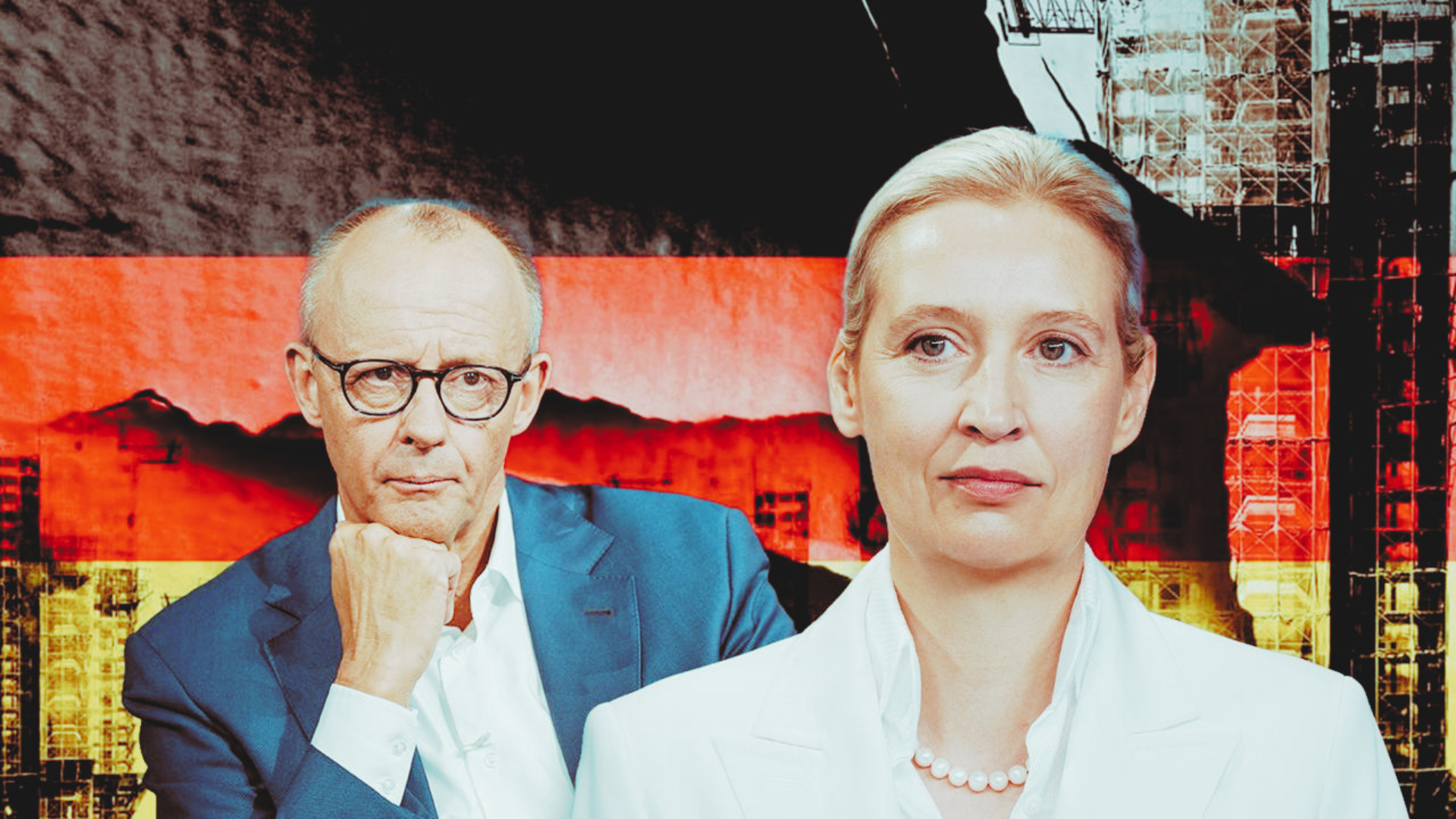
Der Bericht des Deutschland-Korrespondenten, den das russische Fernsehen am Sonntagabend in seinem wöchentlichen Nachrichtenrückblick ausgestrahlt hat, zeigt anschaulich, wie anders man von außerhalb der westlichen Medienblase auf den deutschen Polit-Zirkus blickt. Daher habe ich seinen Bericht übersetzt. Beginn der Übersetzung: Europa versucht in der Hoffnung, wieder die Notbremse ziehen zu können, auf den letzten Waggon […]
Registrations of fully electric cars across 17 European markets increased by 70.3 per cent in September, according to industry figures published on Monday, 19 October, as France and Germany seek to ease the European Union’s emissions requirements for new vehicles.
The data show that 300,202 battery-electric cars were registered during the month, accounting for 32.6 per cent of new passenger-car registrations in the markets surveyed.
The figures emerge three days after Paris and Berlin announced a joint position on the future of Europe’s automotive industry, proposing greater flexibility in the EU’s 2035 emissions regime while introducing measures intended to favour vehicles manufactured in Europe.
Electric vehicles gain market share
The latest figures, compiled by E-Mobility Europe, New Automotive and Fier Automotive, indicate that electric vehicle demand accelerated sharply during September.
According to the industry data published on 19 October, approximately 1.98 million battery-electric cars have been registered across the 17 markets during the first nine months of 2026, an increase of 38.1 per cent compared with the equivalent period last year.
Higher oil prices, government incentives and the introduction of more affordable electric models have all contributed to demand.
The figures represent a substantial change in the composition of European new-car sales, although they cover selected markets rather than constituting a complete statistical account of the EU’s 27 Member States.
France recorded 65,243 battery-electric registrations in September, representing 41.7 per cent of its new-car market. Germany registered 88,724 electric vehicles, giving the technology a market share of 34.6 per cent.
Both countries have substantial automotive manufacturing industries and are directly involved in negotiations over Europe’s future emissions legislation.
Significant differences between European markets
Despite the overall increase, electric vehicle adoption remains uneven across the continent.
Norway retained its position as Europe’s most electrified new-car market, with battery-electric vehicles accounting for 98.8 per cent of registrations in September.
Denmark followed with 88.8 per cent, while Finland recorded 62.7 per cent and Sweden 49 per cent.
Electric models also accounted for approximately half of new-car registrations in Belgium, the Netherlands, Ireland and Portugal.
At the other end of the market, battery-electric vehicles represented only 11.2 per cent of registrations in the Czech Republic, 7.6 per cent in Italy and 6.2 per cent in Poland.
These differences illustrate the difficulty of establishing a uniform European transition timetable.
Household incomes, purchase incentives, vehicle prices and charging infrastructure differ substantially between countries. The availability of affordable electric cars is particularly important in markets where buyers are more sensitive to the initial purchase price.
The varying national figures also complicate the EU’s industrial calculations, since manufacturers must operate across markets progressing at different rates.
France and Germany reach automotive compromise
On 16 October, French President Emmanuel Macron and German Chancellor Friedrich Merz agreed on a joint approach to changes in European automotive regulations.
Under the proposed compromise, car manufacturers would be required to reduce carbon dioxide emissions from new vehicles by 90 per cent by 2035 compared with the 2021 reference level.
The agreement would also remove a proposed requirement to compensate for the remaining emissions through measures such as the use of low-carbon steel.
The change would create additional opportunities for manufacturers to continue selling vehicles powered by combustion engines beyond 2035, subject to the final legislative framework.
In their joint declaration on the automotive industry’s future, the French and German governments argued that emissions reduction must be combined with industrial competitiveness, investment and European manufacturing capacity.
The agreement also envisages preferential treatment for vehicles produced in Europe under certain public procurement and subsidy arrangements.
Britain could potentially benefit from provisions allowing selected European partners to qualify under the proposed industrial framework.
The Franco-German understanding is not, however, a final EU legislative decision. Changes to the regulatory regime require agreement through the relevant European legislative procedures.
Automotive competitiveness enters the debate
The principal argument advanced by supporters of greater regulatory flexibility is that European manufacturers need additional time to adapt production, protect employment and compete with international rivals.
German manufacturers retain extensive investment in combustion-engine and hybrid technology, while French producers have placed considerable emphasis on electric vehicles and maintaining European supply chains.
The negotiations therefore concern more than emissions limits. They also involve battery production, access to raw materials, manufacturing costs and the ability of European companies to compete with producers in China and other markets.
Supporters of the existing transition timetable argue that weakening long-term requirements could discourage investment in electric manufacturing capacity just as consumer demand is increasing.
Manufacturers seeking greater flexibility maintain that regulatory targets must account for uneven market conditions and the cost of developing new technologies.
September’s sales figures provide evidence that electric vehicle adoption is accelerating, but they do not establish whether the same rate of growth will continue without existing incentives.
The debate now centres on whether regulatory relaxation will preserve Europe’s automotive industry during the transition or slow investment in the technology that is already capturing an increasing share of the market.
The Trump administration’s reported proposal to restore Russian gas supplies to Europe through Ukraine marks a reversal of Washington’s longstanding energy policy. Behind the promise of an economic incentive for peace lies a more consequential question: whether Europe is being asked to restore the very dependence on Moscow that it has spent four years dismantling.
The administration of US President Donald Trump is considering the restoration of Russian natural gas supplies to Europe, including through Ukraine’s pipeline network, as part of a proposed settlement to end Russia’s war against Ukraine. The initiative would offer Moscow renewed energy revenues while potentially opening opportunities for American investors to participate in the trade.
According to a New York Times investigation published on 17 October, presidential envoys Steve Witkoff and Jared Kushner have raised the proposal with Ukrainian and European officials, including President Volodymyr Zelenskyy. The White House has confirmed that economic incentives for Russia and Ukraine form part of its peace diplomacy, although no agreement on renewed gas transit has been announced.
The proposal would require Ukraine to reopen a transit route that ceased operating for Russian exports in January 2025, while European governments would be expected to resume purchases they have spent years reducing. American negotiators reportedly regard the prospect of renewed commercial revenues as an incentive for President Vladimir Putin to reach a settlement.
There is, however, a considerable difference between offering Russia a commercial opportunity after a verified peace agreement and restoring a source of revenue and political influence before Moscow has demonstrated any willingness to abandon its territorial objectives.
From opposition to Russian gas to facilitating its return
The reported initiative represents a reversal of Trump’s earlier position on European energy security.
During his first presidency, Trump repeatedly warned Germany that its dependence on Russian energy exposed it to political pressure from Moscow. Speaking at the United Nations General Assembly in September 2018, he accused Berlin of becoming dangerously dependent on Russian supplies. Members of the German delegation visibly smiled at his remarks.
The episode acquired renewed significance after Russia’s full-scale invasion of Ukraine in February 2022. Germany had developed an extensive commercial relationship with Gazprom, while the Nord Stream pipelines were intended to facilitate Russian gas deliveries directly to Germany, bypassing traditional transit countries, including Ukraine.
Trump maintained his opposition to those energy relationships well into his second presidency. As EU Today reported in September 2025, he told European governments that continuing to purchase Russian energy amounted to financing the war against themselves.
Washington is now reportedly considering precisely the commercial relationship that Trump previously identified as a strategic danger.
The change cannot be explained solely by the objective of ending the war. It also coincides with discussions about a substantially different economic arrangement, in which American commercial interests could participate in infrastructure and transactions previously dominated by Russia and European energy companies.
American investors and the economics of peace
On 8 October, Reuters disclosed negotiations involving Kushner and Kirill Dmitriev, Putin’s investment envoy, concerning possible American investment in the Nord Stream pipelines.
The discussions included the prospect of US investors profiting from renewed Russian gas deliveries to Europe. Separate negotiations have involved assets belonging to the Russian energy company Lukoil.
The White House has denied that Nord Stream was a subject of recent discussions and has said any agreements must benefit American taxpayers and companies. There is no established evidence that Witkoff, Kushner or members of Trump’s family would personally profit from the proposed gas arrangements.
Nevertheless, the possibility of American participation changes the commercial equation. Russian gas returning to Europe through infrastructure involving US investors would no longer be exclusively a Russian-European business relationship.
That distinction matters financially, but it does not necessarily resolve the underlying security problem. American ownership of transit infrastructure would not eliminate Moscow’s ability to influence production, supply volumes or export decisions.
The European Union has already confronted the consequences of allowing an energy relationship to become a source of geopolitical leverage. Introducing American intermediaries would not, by itself, remove that vulnerability.
Europe’s legal and political obstacles
The proposal also conflicts with legislation already adopted by the European Union.
Consequently, restoring substantial Russian supplies would require changes to existing EU policy or the use of legally available exceptions. Neither Washington nor Moscow can make that decision on Europe’s behalf.
Germany has already opposed the reported American initiative. Chancellor Friedrich Merz’s security adviser, Günter Sautter, reportedly objected during discussions in Florida, while former economy minister Robert Habeck warned against recreating dependence on an unreliable supplier.
The economic attraction remains understandable. European industry faces substantial energy costs, and cheaper pipeline gas could offer relief to some consumers and manufacturers. Yet commercial prices do not account for the wider costs associated with supply disruption, strategic exposure and the potential use of energy exports as political leverage.
Europe’s decision to reduce Russian gas imports was therefore not simply a change of supplier. It was a response to the security implications of its previous energy model.
The consequences for European politics
The initiative also intersects with divisions inside European politics, particularly in Germany.
Alternative for Germany (AfD) has repeatedly advocated restoring Russian energy imports, arguing that sanctions and expensive replacement supplies have damaged German industry. Sahra Wagenknecht’s left-wing BSW has advanced similar arguments concerning energy prices and relations with Moscow.
A US-backed proposal to restore Russian gas could give these parties an additional argument against the federal government’s existing approach. They would be able to point to Washington’s own negotiations when questioning the economic and strategic rationale for maintaining restrictions on Russian energy.
This does not establish that the Trump administration’s gas initiative is intended to strengthen particular European political movements. It does demonstrate how the same policy could serve several objectives simultaneously: commercial rapprochement with Russia, a negotiating incentive for Moscow and a change in the European debate over sanctions.
A peace incentive that could restore Russian leverage
The central uncertainty concerns the relationship between renewed revenues and Russian military objectives.
Washington’s argument assumes that the prospect of substantial future gas income could persuade Putin to accept a settlement. Yet negotiations over commercial cooperation have so far produced no demonstrated change in Moscow’s fundamental territorial demands.
Meanwhile, Russia continues attacking Ukraine’s energy infrastructure. On 18 October, Zelenskyy reported 76 Russian attacks on Ukrainian energy, oil and gas facilities during the preceding week, despite Trump’s announcement of an energy ceasefire that neither Kyiv nor Moscow had confirmed.
There is also an unresolved contradiction in Washington’s wider sanctions policy. Having previously demanded that Europe stop financing Russia through energy purchases, Trump has recently suspended additional American sanctions against Moscow while his representatives explore new economic arrangements.
For Ukraine, renewed transit could restore revenue lost when the previous gas agreement expired. For Russia, however, the potential benefits extend beyond immediate export earnings. Access to European markets would restore commercial relationships and a degree of political influence that Moscow lost after the invasion.
The distinction is fundamental. A peace settlement that permits carefully regulated economic cooperation after Russian withdrawal and enforceable security guarantees would be different from an agreement that restores Moscow’s commercial advantages in anticipation of concessions that have not yet been secured.
The question for European governments is therefore not merely whether Russian gas could once again become cheaper than alternative supplies. It is whether restoring that trade would leave Europe better protected against another confrontation with Moscow, or recreate the vulnerabilities that became apparent in 2022.
Washington’s proposed economic bargain cannot answer that question on Europe’s behalf.
During their visit to Kyiv in September, US President Donald Trump’s envoys urged Ukrainian President Volodymyr Zelenskyy to consider restarting the pipelines that once carried Russian gas to Europe, The New York Times reported on 17 October. They presented it as part of a peace deal with Russia. In the weeks that followed, they pressed the idea with European officials, while Washington freed Russian diesel and spared Russia’s oil buyers from new US penalties.
Energy sales fund Russia’s war, and Ukraine’s halt of transit in January 2025 left TurkStream as Gazprom’s only pipeline route into the EU. Meanwhile, Russia has kept bombing Ukraine’s grid through the energy truce Washington declared on 11 October.
The pitch in Kyiv
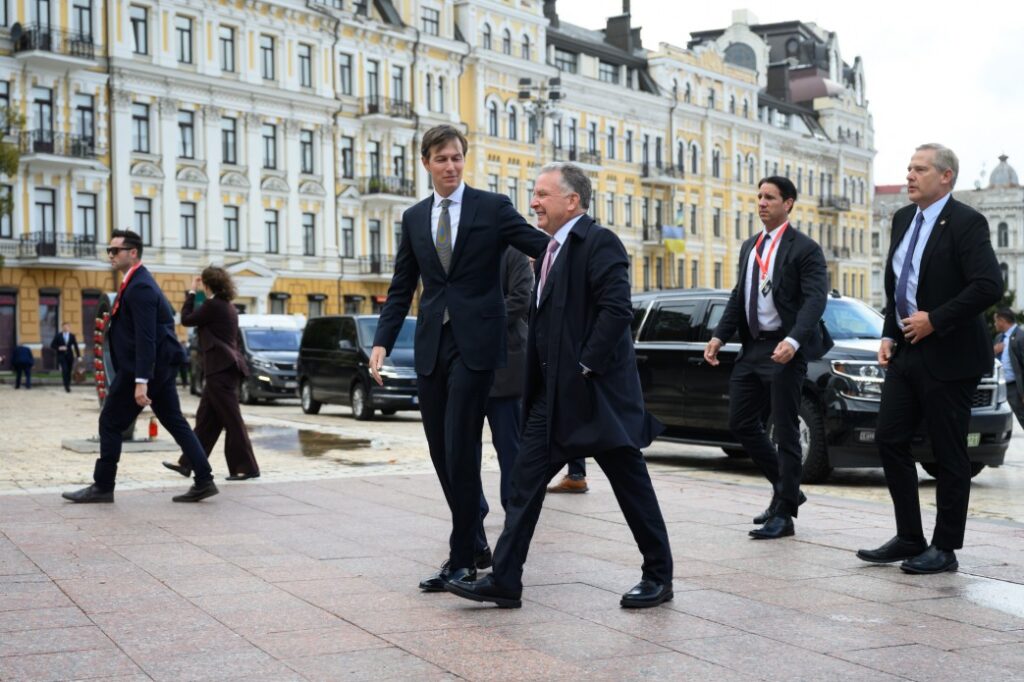
Envoys Steve Witkoff and Jared Kushner put the idea to Zelenskyy when they met him in Kyiv, the newspaper reported, citing people familiar with the talks. Trump officials argued that transit fees, which Ukraine gave up at about $1 billion a year, would benefit Kyiv, and that European voters would eventually want cheaper energy. Russia’s share of EU gas imports had fallen from 45% in 2021 to 13% last year.
The envoys presented renewed Russian gas sales as one of the economic incentives in a wider settlement covering Russia’s relationship with NATO, security guarantees for Ukraine, and territorial control. Some European and Ukrainian officials suspected Washington would seek a cut of the profits. The White House denied that the Nord Stream pipeline had been a subject of recent discussions. Kremlin spokesman Dmitry Peskov claimed that resuming energy cooperation is in Russia’s interest and, right now, even more in Europe’s.
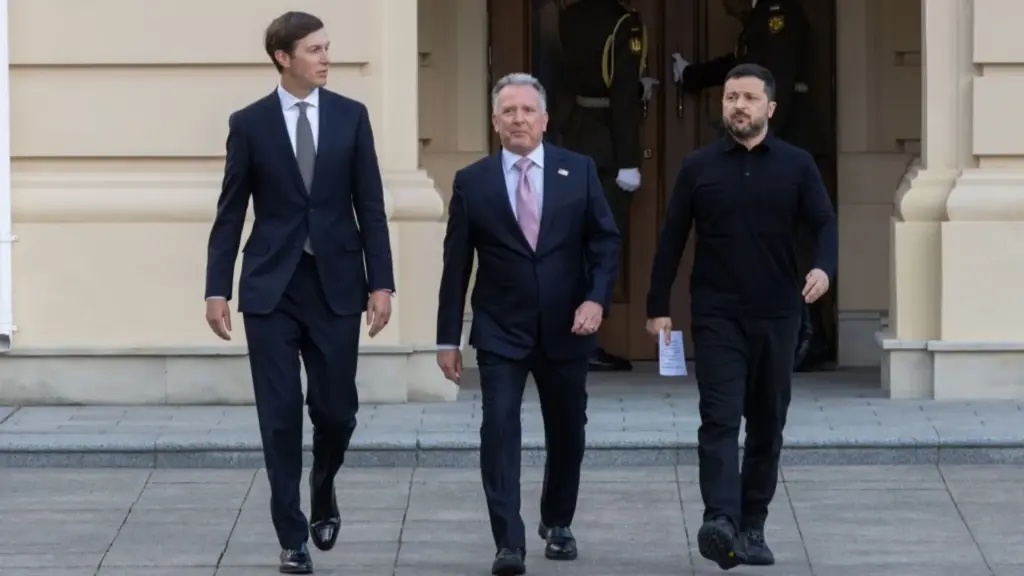
US President Donald Trump’s envoys Steve Witkoff and Jared Kushner in Kyiv, 6 September 2026. Photo: President's Office of Ukraine
Germany pushes back
At Ukraine talks the envoys hosted in Florida last week, Günter Sautter, security adviser to German Chancellor Friedrich Merz, forcefully opposed the idea. German lawmakers have called a return to Russian deliveries a disaster for European security, even treason, as the far-right AfD courts Gazprom to bring the gas back. Former Economy Minister Robert Habeck, who steered Germany off Russian gas after 2022, said Trump “seems to have more sympathies with Vladimir Putin than he has with the Ukrainians.”
Explore further
Congress gave Trump 30 days to hit Russia’s oil buyers with 100% tariffs. He waives them two days before deadline, citing US interests. Moscow calls it historic
One concession after another
Rather than pressure Putin or strengthen Ukraine, the administration has spent much of its peace effort on economic incentives for Russia, the newspaper wrote. The US Treasury cleared imports of Russian diesel on 9 October. On 16 October, Trump waived the penalties on Russia’s oil buyers that Congress had passed in the Graham Act. Washington is also weighing relief for sanctioned shadow fleet tankers. And the White House ordered limits on the military satellite service Ukraine’s forces rely on, Reuters reported.
Putin’s economic envoy Kirill Dmitriev claimed the ice had broken and more joint initiatives would follow, including data centers powered by Russian nuclear energy. The talks also cover the sale of Lukoil’s foreign assets to a group that includes the US government, the newspaper reported earlier this month. Zelenskyy, who had heard the pitch in Kyiv, alluded to it in a Financial Times interview this week.
“The question will be when will the next deal be? Maybe it will be gas. Definitely it will be gas,” he said.
Reopening the pipelines could hand Moscow back significant revenue and strengthen its sway over Europe’s energy market, Liga noted. Each new concession lowers the price Russia pays for continuing the war.
EU leaders have failed to settle their differences over the 2028–2034 budget, with Germany demanding further reductions to the proposed spending framework and the European Council taking charge of negotiations ahead of a difficult December deadline.
European Union leaders have ended their Brussels summit without agreement on the bloc’s next seven-year budget, after German Chancellor Friedrich Merz rejected the scale of spending envisaged under the latest compromise proposal and demanded deeper cuts.
The discussions on 15–16 October exposed the continuing division between governments determined to contain national contributions and those seeking to protect agricultural subsidies, regional development and new European investment programmes. The dispute now threatens the political timetable for approving the 2028–2034 Multiannual Financial Framework, the budget that will determine the Union’s spending priorities over the next seven years.
In their formal summit conclusions, leaders invited European Council President António Costa to take negotiations forward towards a timely agreement. No new spending settlement was endorsed, despite the Irish presidency having presented revised figures immediately before the summit.
Germany rejects the compromise
The European Commission originally proposed a framework approaching €2 trillion in current prices, arguing that Europe needed greater financial capacity to meet its growing responsibilities in defence, competitiveness, technological development, migration and external security.
Ireland, which holds the rotating Council presidency, submitted a revised negotiating document on 10 October intended to narrow the differences between governments. The latest proposal includes substantial reductions compared with the Commission’s initial ambitions while seeking to preserve financing for established EU programmes.
Those concessions have not satisfied Berlin. Merz argues that the Union must recognise the difficult fiscal position facing national governments and that the proposed increases in common spending remain excessive.
Germany, the largest contributor to the EU budget in absolute terms, has been working with other budget-conscious governments to seek reductions from the original Commission proposal.
The Irish compromise has done little to bridge the divide. The revised framework seeks to combine greater financial restraint with protection for agricultural and cohesion policies, while retaining significant investment in security, research and competitiveness.
Yet every attempt to rebalance the proposed spending exposes another political conflict.
Agriculture, cohesion and defence compete for funding
The Common Agricultural Policy and cohesion funding remain among the largest and most politically sensitive components of the EU budget. Agricultural payments support farmers across the Union, while cohesion programmes finance infrastructure, regional investment and economic development, particularly in less prosperous territories.
Governments benefiting heavily from those programmes are reluctant to accept reductions, particularly when national finances are already under pressure.
France, Italy and other countries defending traditional EU expenditure have therefore resisted attempts to transfer the burden of budget restraint disproportionately onto agriculture and regional support.
At the same time, the Commission has argued that the EU cannot simply preserve the spending structure of previous decades while promising a stronger role in European defence, industrial development and economic security.
The contradiction is increasingly apparent. European governments demand greater independence from external suppliers, stronger military capabilities and sustained financial support for Ukraine, yet remain unwilling to agree on the larger common budget that might help deliver those objectives.
Cuts to research, innovation, cross-border infrastructure or defence-industrial programmes would not necessarily produce immediate political costs. Their consequences would emerge later, through investments postponed, capabilities not developed and projects left dependent on national budgets.
Conversely, reducing agricultural payments or regional investment would produce more immediate resistance from farmers, local authorities and national governments.
The Council’s budget negotiations had been intended to deliver a political agreement before the end of 2026. That would leave 2027 for the European Parliament and member states to complete the legislation required for the new financial framework to operate from January 2028.
Failure to reach that timetable would not immediately stop EU expenditure. It would, however, compress the period available for completing the detailed legal arrangements underpinning individual programmes and could complicate the uninterrupted delivery of funding at the beginning of the next budget cycle.
The political environment is hardly favourable. Several governments face difficult domestic debates over public spending, taxation and the demands of European integration. In France, the approach of the 2027 presidential election adds another complication to negotiations requiring sensitive national concessions.
Agreement on the seven-year framework requires unanimity among member states, followed by the consent of the European Parliament. The latter has already argued that the EU needs sufficient financial resources to match the responsibilities its governments have assigned to it.
Costa now faces the task of converting competing national positions into a financial settlement that all 27 governments can accept. That will require decisions not only about the overall ceiling but also about the balance between national allocations and programmes managed at European level.
The Brussels summit has demonstrated that the principal disagreements remain unresolved. The next negotiating round will determine whether governments are prepared to compromise on spending priorities or whether their ambitions for a more capable European Union will once again run ahead of their willingness to finance it.
Die Ukraine bekommt immer mehr Probleme, weshalb Kanzler Merz mal wieder nach Kiew gefahren ist, um über eine Milliarde Euro deutscher Steuergelder zu verschenken. Deutschland bekommt auch immer mehr Probleme, aber für die Deutschen hat Merz kein Geld, denn sonst reicht es nicht für Kiew. Aber was sind die Gründe für die aktuellen Probleme der […]
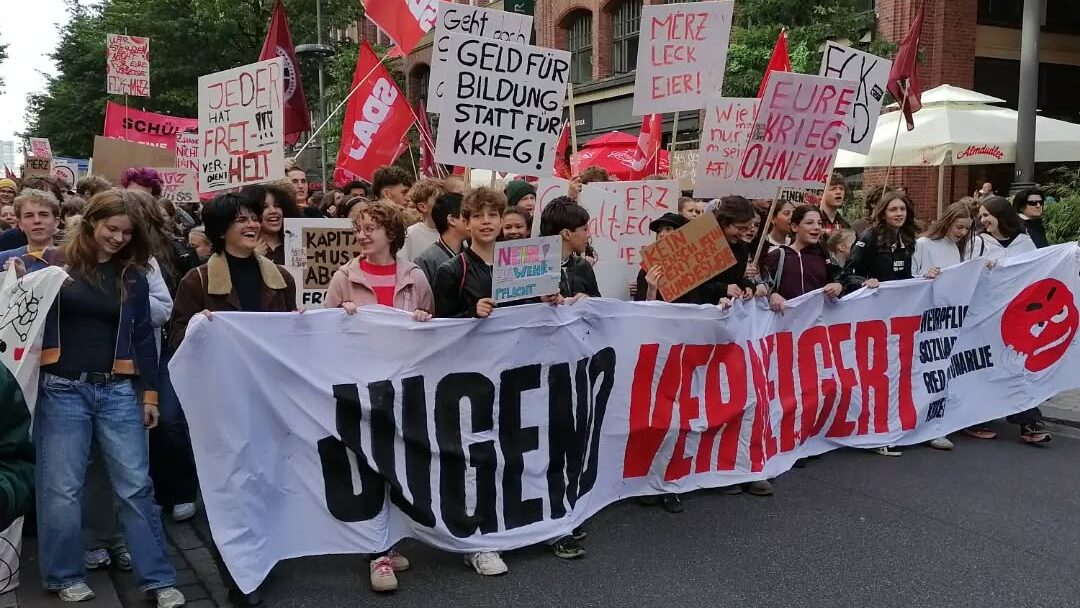
Thousands of students across Germany were once again on strike against conscription and militarization on Friday, September 25. Actions took place in at least 100 localities as young people demanded a sharp turn from the government’s chosen path.
“We don’t want to be forced into military service and we don’t want to go to war,” the students wrote in declaration after their last strike in May.
This is the fourth time students have exchanged classrooms for streets since the end of 2025. The mobilization has strengthened in resistance to the Merz administration’s plans to build the “strongest conventional army in Europe” – including by drawing more people into the Bundeswehr, the German armed forces.
While authorities insist military recruitment remains voluntary, students have warned of a clear tendency toward outright conscription. Local strike committees and activists also emphasized the widespread repression ahead of actions. This included scheduling of exams on strike days and locking-in students on school grounds, they pointed out.
Billions for the Bundeswehr, cuts for schools and youth services
Over recent months, the government has sent thousands of questionnaires to map voluntary interest in joining the armed forces. According to German media, the response has been underwhelming: tens of thousands of students have disclaimed no interest whatsoever. Not even a multi-million-euro budget allocated to promoting the army has been able to shake this opinion.
“They sell us war service as an ‘adventure’ while we know that what awaits us is coertion, humiliation, sexism, right-wing extremism, and racism,” the student declaration adds.
Instead of taking the message seriously, authorities recently advanced the implementation of medical checks among their targeted population, drawing further frustration from students.
“We don’t want compulsory questionnaires, fines, draft physical examinations, conscription assessment centres across the country, nor planned integration of the Federal Volunteer Service into military service,” they wrote. “These are means to prepare the reintroduction of the draft and thus another war originating from Germany.”
“In case of conscription, we’ll be trained as cannon fodder, forced into the trenches,” students added. “War costs us our lives, while corporations like Rheinmetall make record profits.”
Students on strike have expressed solidarity with other ongoing struggles against militarization and budget cuts. They stated they would join peace demonstrations planned for early October in Berlin and Stuttgart, as well as a trade union-backed mobilization against budget cuts on Saturday, September 26.
Their decision reflects the widespread understanding that youth and education services are among those impacted by this round of austerity. According to junge Welt, the federal ministry responsible for education will face close to €1 billion in cuts – while €140 billion will be made available for so-called defense in 2027.
“Every tank, every rocket we pay for with dilapidated schools and social cuts,” students remarked.
The anti-immigration Alternative for Germany (AfD) won the Saxony-Anhalt state election by a wide margin but fell short of an absolute majority. Nevertheless, the party may still come to power if it can garner enough support from BSW or peel off a few MPs from rival parties. This possibility has thrust an unused and radical clause of the German constitution, federal coercion or “Bundeszwang,” to the center of a fight over how far Berlin can go if the right-wing party takes power.
The AfD took 43.8 percent of the vote in the Sept. 6 election, but the AfD remains three seats short of an absolute majority. However, Ulrich Siegmund, the AfD’s 35-year-old lead candidate, could still become minister-president. The German government has plenty of tools for dealing with Siegmund if he steps out of line.
Germany’s establishment threatens to use “federal coercion” clause
Federal coercion is one of the most radical mechanisms in the German constitution. Article 37 allows the federal government or a representative it appoints to issue binding orders to the states and their agencies. The Federal Republic of Germany has never resorted to this clause before.
Anna-Bettina Kaiser, a law professor at Humboldt University in Berlin, told Deutsche Welle the bar is extremely high.
“The term ‘dramatic’ is most apt here. This is why federal coercion has never been introduced in the history of the Federal Republic — it is treated as a last resort,” she told Deutsche Welle, a state outlet that receives approximately €415 million a year in taxpayer money.
Until now, fights between Berlin and the states have been settled mainly in court.
“It is usually assumed that in the event of a specific legal dispute, the case will go to the Federal Constitutional Court and the given state will comply with the judgment issued by that body,” Kaiser said.
Deutsche Welle reported that an extreme use of Article 37 could include naming a federal representative with power to issue binding orders in specific areas.
“Article 37 actually provides for the appointment of such a representative who has the power to issue binding orders,” Kaiser said.
Any step would have to match the violation and meet constitutional tests. However, Article 37 lists no catalog of penalties. It speaks only of “necessary measures,” leaving the article vague and open to interpretation.
Bundesrat consent would be essential. Under the chamber’s rules, the affected state keeps its vote on Article 37 decisions.
Union parliamentary leader Thorsten Frei has since called Article 37 an option of last resort if an AfD state government acted against the constitution. Social Democratic floor manager Dirk Wiese said it was “good to know” the Basic Law allows constitutional conduct to be compelled by instruction if an “AfD-BSW Putin coalition” installed a far-right politician as premier. The Greens and the Left have not ruled the tool out.
Saxony-Anhalt’s Office for the Protection of the Constitution classifies the state AfD as “confirmed right-wing extremist.”
Cutting funding to an AfD government
On top of the constitutional power that Article 37 offers, the tried-and-tested method of cutting funding is also being discussed and it is not even clear yet if the AfD will be able to assume power in the state.
German officials have also discussed suspending some federal budget transfers to Saxony-Anhalt, which is still dependent on such transfers to prop up its economy. Tagesschau reported that structural funds could be frozen if an AfD government breached EU fundamental rights or rule-of-law conditions.
However, beyond these federal transfers, powerful German Green MEP Daniel Freund said after the vote that the European Commission should, if necessary, withhold money if an AfD-led state government acted against EU principles.
Freund was a notorious foe of Hungarian Prime Minister Viktor Orbán and a longtime advocate of the EU cutting funding to Hungary while his government remained in power. Freund not only succeeded in lobbying the EU to cut funding but this tool is generally seen as one of the primary contributing factors in toppling Orbán from power.
The reality is that this method of cutting or freezing funds has worked remarkably well for the EU, also in the case of Poland’s previous conservative government. When funding is cut, the population suffers, and when they suffer, they punish politicians at the voting booth. Orbán could point the finger all he wanted at Brussels. It did him no good in the end.
If the EU or the German federal government cuts funding, Saxony-Anhalt will suffer, and there is nothing an AfD government can do about it.
For now, it appears for the EU establishment has a virtually fool-proof method for dealing with any voter rebellions or unfavorable democratic results.
A CDU-led federal government also has every incentive to make an example out of a regional AfD-led government. Shortly after the Saxony-Anhalt election, Chancellor Friedrich Merz said Berlin would act if Saxony-Anhalt crossed lines set by the constitutional order.
“If boundaries are crossed there, I assure you that from the federal government’s point of view we will do everything to correct it. The Basic Law also applies in Saxony-Anhalt,” Merz said.
Merz pointed to migration and foreign policy. He also cited the unwritten duty of “federal loyalty.” A state must act loyally towards the standards of the federal state. That covers “the entire immigration and foreigners policy,” he said.
Fact-checkers later noted that Merz did not use the word “federal coercion,” or “Bundeszwang.” Nevertheless, the debate that followed is freely using the term and how it can be applied against the AfD.
The AfD casts itself as a “rule-of-law party”
However, simply winning an election would not, by itself, justify federal coercion. Article 37 of the Basic Law allows the tool only if a state fails to fulfill duties imposed by the constitution or other federal law. The federal government may then, with the consent of the Bundesrat, take the measures needed to compel those duties.
The AfD’s answer has been that it would govern inside the law, and that Berlin is trying to cancel a democratic result.
The morning after the vote, Siegmund again called the AfD a “rule-of-law party,” and said he would act lawfully. He later thanked the Berlin press sarcastically for portraying him as a threat to democracy and said he wanted to “extend a hand” to every actor in the legislature.
AfD co-leader Alice Weidel called the result a mandate to govern, said Merz was the most unpopular chancellor Germany has had and told him his time was up. In the Bundestag she argued that the CDU-SPD coalition had failed. Merz accused her of pushing Siegmund into “electoral fraud” by urging him to hunt for a majority after he had promised to take office only with an absolute majority.
The issue of mass immigration, in the end, always appears to be the real point of contention. According to the European and German establishment, it must continue at all costs. In a 2024 ARD summer interview, co-leader Tino Chrupalla said an AfD-led state would no longer apply the “Königstein key,” which apportions asylum seekers among the states.
“We would no longer go along with that,” he said at the time.
Siegmund has promised “deportations from minute one” and a remigration offensive.
However, a federal government that wants to prove the AfD weak and ineffective is unlikely to allow such a remigration offensive to move forward. There are plenty of tools at its disposal to stymie the AfD and even sabotage its government. Siegmund may be facing a wave of funding cuts, litigation, and ultimately the federal government stepping in and essentially seizing power if he manages to gain power in the state.
The Christian Democratic Union (CDU) has continued its downward spiral after suffering significant losses in state elections in Berlin and Mecklenburg-Western Pomerania on Sunday, September 20. In addition to coming second to the progressive Die Linke in the German capital, Chancellor Friedrich Merz’s party failed to achieve the 5% needed to enter Mecklenburg-Western Pomerania’s parliament, marking a new low – or, in Merz’s own words – a “disaster.”
The results of the two elections were radically different: in Mecklenburg-Western Pomerania, the far-right Alternative for Germany (AfD) won the largest percentage of votes, echoing, in many ways, the recent outcome in Saxony-Anhalt. In Berlin, Die Linke emerged as the winner, claiming a quarter of the vote after a campaign focusing on housing, the cost of living crisis, and public transport.
Part of the local reports note that while the AfD and Die Linke lie on opposite ends of the political spectrum, both gained ground thanks to the perception that they bring the best chance of breaking with the policies implemented by the government coalition between CDU and the Social Democrats (SPD).
These policies – pursuing extensive cuts to the social and welfare system and attacks on labor rights in order to fund a massive rearmament drive – have completely eroded the support for Merz’s conservatives. Despite this administration’s unprecedented unpopularity, the German Chancellor is showing no sign of changing course, stating after Sunday’s election that “reforms must come.”
Die Linke’s Berlin result: reforms must be implemented – but which reforms?
Reforms must be implemented, voters in several German states apparently agree with Merz – just not those envisioned by the CDU. Die Linke’s campaign, led by Elif Eralp, offered an alternative list of policy reforms addressing Berlin’s inhabitants’ most pressing concerns. This meant a focus on accessible housing – including a follow-up on the 2021 referendum where voters backed expropriating the property of private real-estate companies with 3,000 or more units in the city.
Five years ago, over one million people supported the referendum’s idea of socializing the housing pool, yet no action was taken by the local administration. Since then, the housing situation has grown worse, leading to widespread frustration. Die Linke’s campaign recognized the general discontent and promised it would not give up on socialization.
“Die Linke’s successful campaign in Berlin was driven by its strong focus on affordable housing and rent control, which resonated deeply with voters facing massively rising living costs,” Kirsten Schubert, a general practitioner active in the party’s local chapter, told BreakThrough News. “The party integrated large-scale door-to-door campaigning strategy, allowing volunteers to connect personally with hundreds of thousands of residents directly at their doorsteps. By those means, strong social media presence and a huge range of community activities, they successfully mobilized a diverse coalition of non-voters, progressive urban youth, and traditional working-class voters.”
Krunoslav Stojaković, a political advisor at the Rosa Luxemburg Foundation, says that the election result commits not only Die Linke, but also “the social left and all those who care about a more just society” to work towards achieving socialization of housing. “At this point, there can be no going back […] The people of Berlin have given us this mandate.”
“There will be resistance,” he emphasizes. “Potential coalition partners are only tentatively supportive of Die Linke, and some are already making demands against the socialization of those profiting from the housing crisis as a condition for political cooperation.”
Progressive measures to face opposition from center
The approach adopted in Berlin marked a welcome break from Die Linke’s campaigning in other states. Stojaković pointed out to the portal H-alter that the party’s earlier choices – such as joining coalitions that implemented austerity measures – contributed to a fall in popularity. The recent success offers an opportunity to reclaim lost ground and reshape the party’s approach to fieldwork. But it should not be taken for granted that this will happen.
For now, the party faces talks with potential coalition partners SPD and the Greens. Figures from both parties signaled there are significant misalignments between them and Die Linke. While the SPD does not share the commitment to socialization of housing, the Greens’ Franziska Brantner said the party would not cooperate with “anti-semites from Neukölln.” With this, Brantner indicated that the political mainstream in Germany will persist in pressuring those criticizing Israel – even if this criticism remains timid at best.
On the other hand, left and progressive parties across Europe recognized in Die Linke’s result an important rupture within the predominating context of the far right gaining electoral ground. From Jean-Luc Mélenchon in France to Slovenia’s Levica, reactions emphasized the significance of shaping grounded and unequivocally left programs. “Politics begins with the daily problems of millions of people,” wrote Peter Mertens, General Secretary of the Workers’ Party of Belgium (PTB-PVDA). “It is not just about talking about tenants and workers, but about organizing them so they can impose change themselves.”
This article was updated on Wednesday, September 23, to incorporate comments from Kirsten Schubert.
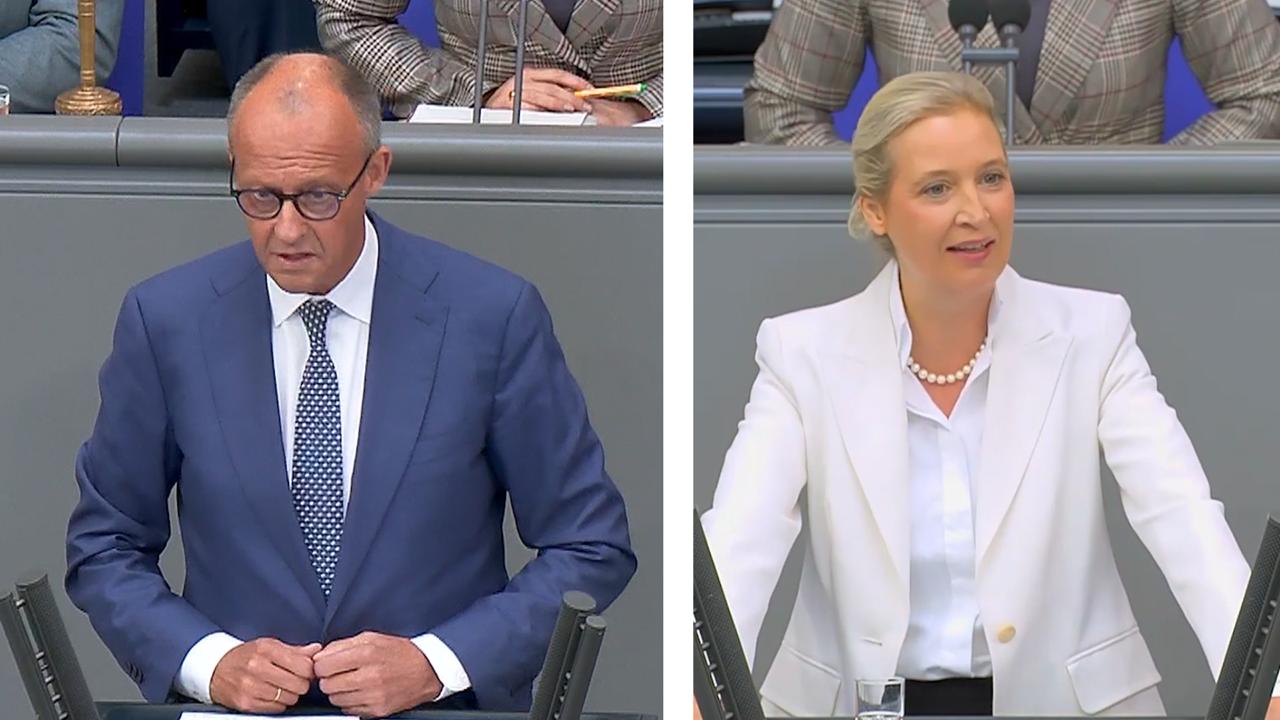
Three days after the Alternative for Germany’s (AfD) landslide in Saxony-Anhalt, the Bundestag’s general budget debate turned into a verbal battle between AfD co-chair Alice Weidel and Chancellor Friedrich Merz, with the two battling it out over mass immigration, democracy, crime, Ukraine, and the future of Germany.
Heckling filled the chamber. Bundestag President Julia Klöckner repeatedly intervened. The exchange was the first direct parliamentary clash between the two leaders since Sunday’s vote, in which the AfD took 43.8 percent and the CDU collapsed to 17.2 percent.
Weidel opened the debate and treated the election results as a verdict on the ruling federal government coalition led by Merz.
“The voters in Saxony-Anhalt have made it abundantly clear to you, in the language of the democratic sovereign: the Black-Red coalition is over,” she said. Citizens wanted “a change of policy,” she added, “and they do not want more of the same.”
JUST IN: After AfD's landslide victory, Weidel tells Merz that "the voters in Saxony-Anhalt have communicated to you in the language of the democratic sovereign with all clarity: Black-Red (CDU-SPD ruling coalition) is over."
Addressing Merz directly, she said he had failed to hear that message.
“That is not especially relevant, because your time has run out anyway. Citizens want a change of policy, and they will get it,” she said.
She turned next to the draft federal budget. Weidel called it a “declaration of surrender” and accused Finance Minister Lars Klingbeil of “unserious budget management.”
““Despite record tax revenues, you are incapable of managing the public’s money wisely. Why? Because you are unwilling to free yourselves from the shackles of green ideology, left-wing mass migration, and socialist redistribution.”
She said the CDU-SPD government planned more than €1 trillion in new borrowing over its term, a figure she described as unprecedented in the Federal Republic. The result, she argued, would destroy future room for maneuver and leave “scorched earth.”
“You are driving Germany into national bankruptcy in record time,” she said.
Weidel also continued to slam Merz on mass migration, a sore spot for the ruling government.
“You declare the migration crisis to be over. Yet, every year, a six-figure number of migrants enters the country through the back door of asylum, plus another major city through family reunification—most of them from Muslim tribal cultures,” she stated, adding: “More than a million refugees live whose asylum application has been rejected more than once. What are these people actually still doing in this country? They should be deported!”
Weidel accused the coalition of declaring the crisis over while still admitting large numbers of people through asylum procedures and family reunification. She claimed more than a million people whose asylum claims had already been rejected remained in the country and should be deported. Ordinary workers, she said, were paying the price.
“Because [Germans] have to deal daily with the consequences of mass migration, with the hatred of foreign groups toward their own, with hatred of Christians, with hatred of Germans, with hatred of Germany, and you are even providing financial support to these people. This must finally come to an end!”
After AfD's victory in Saxony-Anhalt, Alice Weidel takes Chancellor Merz to task during a raucous debate.
"Because [Germans] have to deal daily with the consequences of mass migration, with the hatred of foreign groups toward their own, with hatred of Christians, with… pic.twitter.com/lBjLNPt9hM
Energy policy drew the sharpest interjections from the government benches. Weidel called the energy transition “the greatest millstone dragging our economy into the abyss” and “lost, burned money.” Germany, she said, was facing a possible winter gas shortage after the destruction of Nord Stream 2 while still sending billions to Ukraine.
She demanded renewed Russian gas deliveries, a return to nuclear power, and peace talks.
“While the United States is making another attempt to end the murderous Ukraine war, you are stepping up the war propaganda and the confrontation with Russia,” she told the chancellor. When SPD deputies laughed, she snapped: “Do you find that funny? Voters out there can see that the SPD finds deindustrialization funny. So stop laughing.”
Merz responds
Merz came out swinging against Weidel, conceding the Saxony-Anhalt result was “remarkable,” but said the AfD had missed its actual goal: an absolute majority of seats.
“Fifty-six percent of voters in Saxony-Anhalt did not vote for you,” he said. “And you will not achieve that anywhere in Germany with this policy.” He accused Weidel of having pushed lead candidate Ulrich Siegmund, within hours of the polls closing, to seek a governing majority after having promised before the election to govern only with an absolute majority.
“You are, and you will remain, Ms. Weidel, a destructive force,” he accused.
The sharpest attack from Merz concerned remigration. He said the concept is “nothing other than a synonym for ethnic cleansing based on origin and skin color.”
Germany
The anti-immigration AfD party is pursuing a plan of "ethnic cleansing based on skin color and origin," said Chancellor Friedrich Merz during a Bundestag debate.
If that program were carried out, he claimed, skilled trades, nursing homes, hospitals, and restaurants would cease to function, because one in six workers in the crafts already holds a foreign passport and millions of people with a migration background keep essential services running. The coalition, he said, agreed on deporting people without a right to stay, but distinguished between those who work and contribute and those who must leave. AfD deputies erupted. Several shouted that the claim was false.
On Ukraine, Merz accused the AfD of reversing perpetrator and victim. Neither NATO, the European Union nor Germany had threatened Russia, he said.
“The only thing that truly threatens Russia and Putin is the radiance of democracy.”
The AfD, he added, still stood with Moscow.
“Right there runs the deep rift between you and us, in foreign policy, in European policy, in social policy and in peace policy,” he said.
He also charged that Weidel had said nothing about a failed drone incident at Leipzig Airport, a hacking attack on Berlin infrastructure, or this year’s fires and weather extremes.
“Not a word from you, Ms. Weidel, about what has been going on in this country this year, he accused her.
At one point in Merz’s speech, Klöckner told the AfD that heckling is part of parliamentary life, “but it is not part of constantly interrupting a speaker. You also have to accept that there are other opinions.”
When the noise continued, she warned one deputy: “We are not on the football pitch here right now. Save this for the weekend.” Later she threatened MPs with expulsion.
Merz thanked her and said the interruptions themselves showed the AfD’s “contempt for the German Bundestag,” adding that “listening is not your strong suit.”
With the battle brewing over who controls Saxony-Anhalt still to be decided, and with Merz’s CDU crashing below 20 percent in the latest poll, political tensions are set to rise in the coming month
Dire economic news continues to roll in as Germany faces deepening deindustrialization and an economic downturn under Chancellor Friedrich Merz. Reports today say Volkswagen’s management board is proposing to wind down production at four major German plants and shift much of that work abroad.
Just days before, Merz warned that investors would shun an AfD-governed federal state in the future.
“I cannot imagine international investors showing up for a groundbreaking ceremony with an AfD state premier to establish new plants or set up new businesses in Saxony-Anhalt,” said Merz during an ARD summer interview on Aug. 30.
He added that if a right-wing populist party won an absolute majority in the coming election, international investors would think twice about whether to invest in Saxony-Anhalt.
However, VW’s management board has now recommended closing four German production sites. The AfD has seized on the reports.
“In four VW plants, the group board is turning off the lights. The energy transition and electric planned economy are pulling the plug on the German automotive industry. With an AfD government, the economic turnaround will return to reason,” wrote AfD co-chair Alice Weidel.
Gleich in vier VW-Werken lässt der Konzernvorstand die Lichter ausgehen. Energiewende und Elektro-Planwirtschaft ziehen der deutschen Autoindustrie den Stecker. Mit einer AfD-Regierung kommt die Wirtschaftswende zurück zur Vernunft.https://t.co/6BEVQlIf3y
The plan was unanimously adopted by the VW management board and will be presented to the Supervisory Board on Sept. 3. While not an immediate shutdown, it would end production in the early 2030s in Emden, Zwickau, Hanover, and Neckarsulm, with production transferred to Poland, Slovakia, and the Czech Republic.
Germany’s anemic growth is almost entirely debt-fueled and focused on public sector and defense. Its once world-class industrial base is meanwhile rapidly eroding, with Normura reporting that investors are increasingly receptive to right-wing victories, as ZeroHedge reported.
The AfD is using Merz’s economic record to argue that investors would welcome an AfD victory in the state.
AfD candidate Ulrich Siegmund told Welt TV that “exactly the opposite” would happen and that an AfD government would instead encourage firms to launch projects in Saxony-Anhalt.
Conservative-governed states abroad would see “a competitive advantage if we finally have long-term planning security again, if we have no climate targets, no quota targets,” argued Siegmund.
“[Merz’s] current economic policy speaks for itself here. We are currently experiencing deindustrialization in this country. Businesses are closing, businesses are leaving this country. That means reality speaks a clear language here,” he said.
Weidel also attacked Merz after his warning of “significant damage.”
“No German Chancellor has advanced the economic misery and deindustrialization of our country as much as Friedrich Merz,” she said. “His arrogant threats towards the responsible voters in Saxony-Anhalt show the political elite in Berlin is trembling.”
Zerohedge further discussed Normura’s take on the issue, which may be generally supportive of the AfD’s stance.
Andrzej Szczepaniak, senior European economist and executive director at Nomura, wrote “the seeds of political change” adding that “politics in Europe is lurching towards more populism.”
Szczepaniak said: “Five years ago, financial markets would not have seemed so at ease with such a prospect. But then again, these populist right-wing political parties were previously not as fiscally prudent as they are perceived to be today. Indeed, Italy’s Giorgia Meloni is the standard-bearer for financial markets of how a populist right-wing political party can govern: fiscally prudent enough to show investors that the party can govern responsibly while focusing heavily on social issues, including immigration and culture wars, to keep grassroots supporters happy.”
“Financial markets are much more concerned about populist left-wing parties being elected due to their desire to increase spending, often paid for through higher borrowing or higher taxes, which are likely to shut the engine off of already stuttering economies.”
VW’s leaders point to Germany’s high costs
While VW plans for plant closures have not been finalized, they are a sign of general industrial trends across Germany.
VW CEO Oliver Blume, at works council meetings in Emden, said that labor costs at Emden are more than twice those at comparable European plants. He noted that factory costs at other group plants are “clearly cheaper.”
“That is not an accusation, it is the reality we have to be measured against,” he said.
He added that cost cutting “is not enough to stay competitive long-term in a world of such massive change.”
On Aug. 31, CFO Arno Antlitz in Hanover said, according to Reuters, that: “We build good cars but earn too little because our costs are too high.”
“Because of the large cost differences versus other European plants, we currently have no economically viable follow-on production for four German sites once current products run out in the early 2030s,” he warned.
Companies across Germany have either cut production or closed plants entirely, with VW now one of the most high-profile corporate giants eyeing taking the same action.
Am nächsten Wochenende stehen die Wahlen in Sachsen-Anhalt an, wo die AfD erstmals eine Regierung stellen könnte. Campact will das mit einer sehr teuren Kampagne im letzten Moment verhindern. Außenpolitisch stehen die Zeichen auf Eskalation, denn die Bundesregierung beispielsweise will hart gegen Russland vorgehen. Außerdem stehen Ende September auch in Russland Wahlen an, nach denen […]

 Login


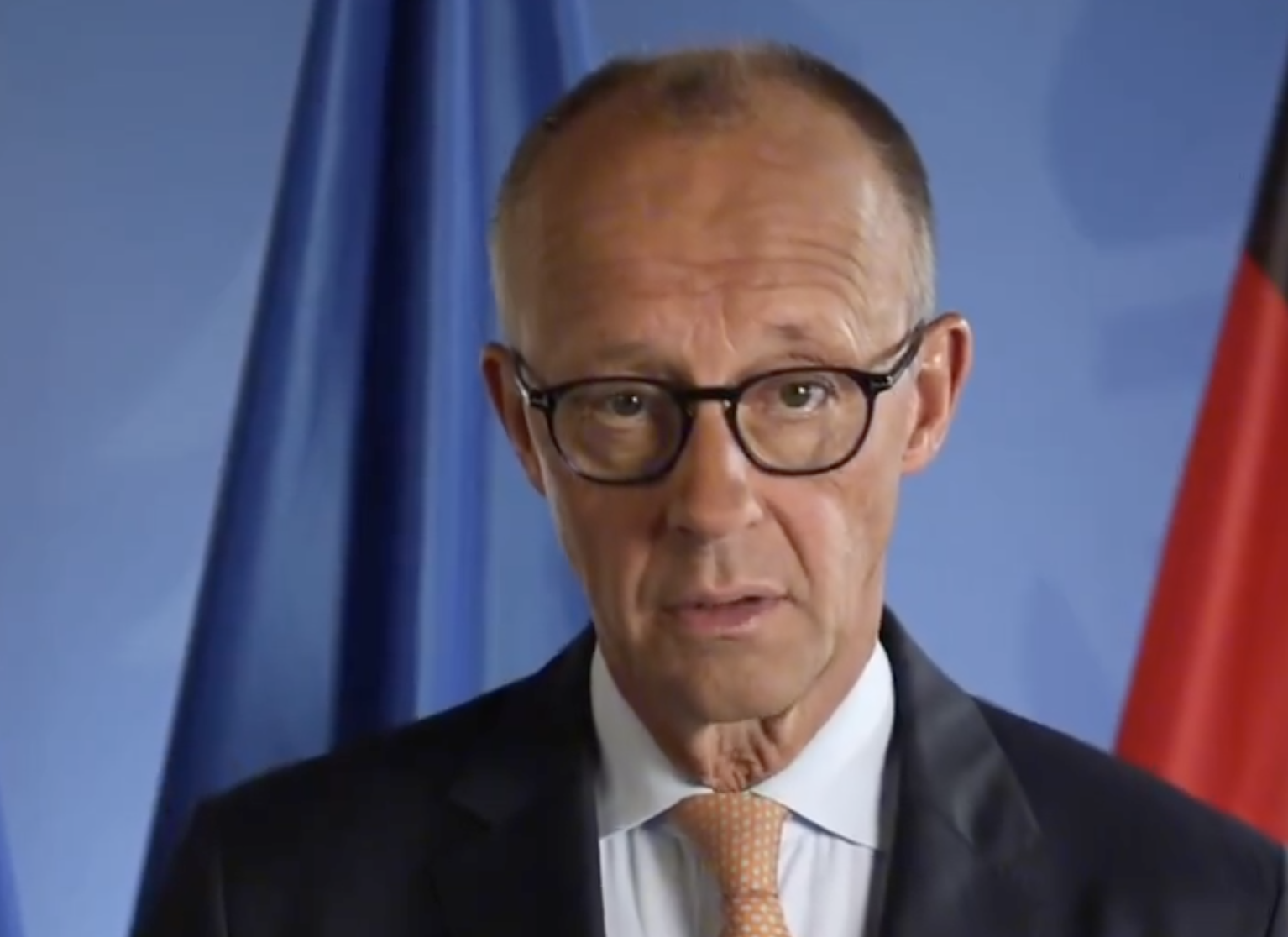


 JUST IN: After AfD's landslide victory, Weidel tells Merz that "the voters in Saxony-Anhalt have communicated to you in the language of the democratic sovereign with all clarity: Black-Red (CDU-SPD ruling coalition) is over."