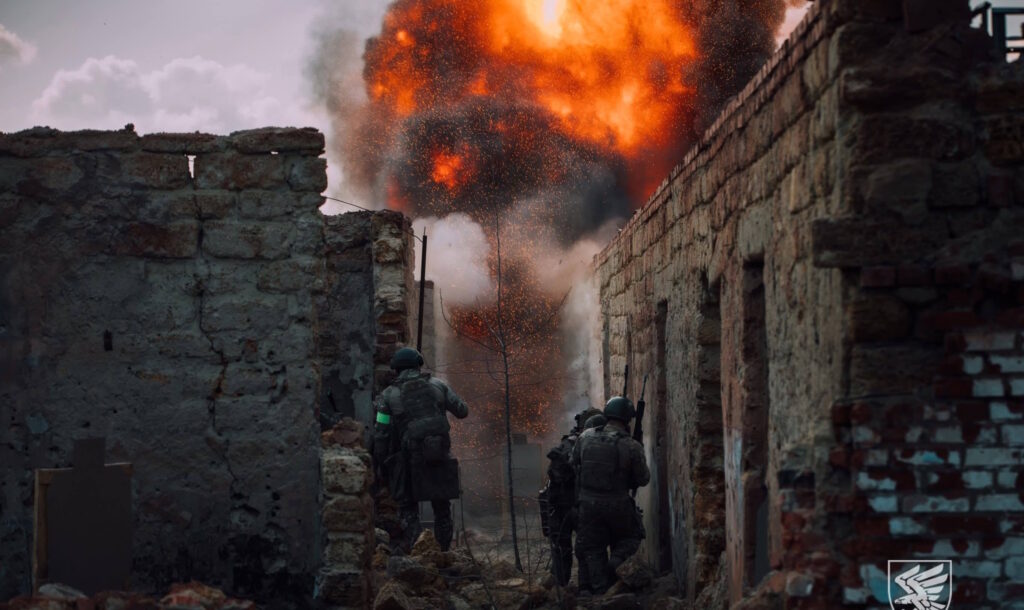
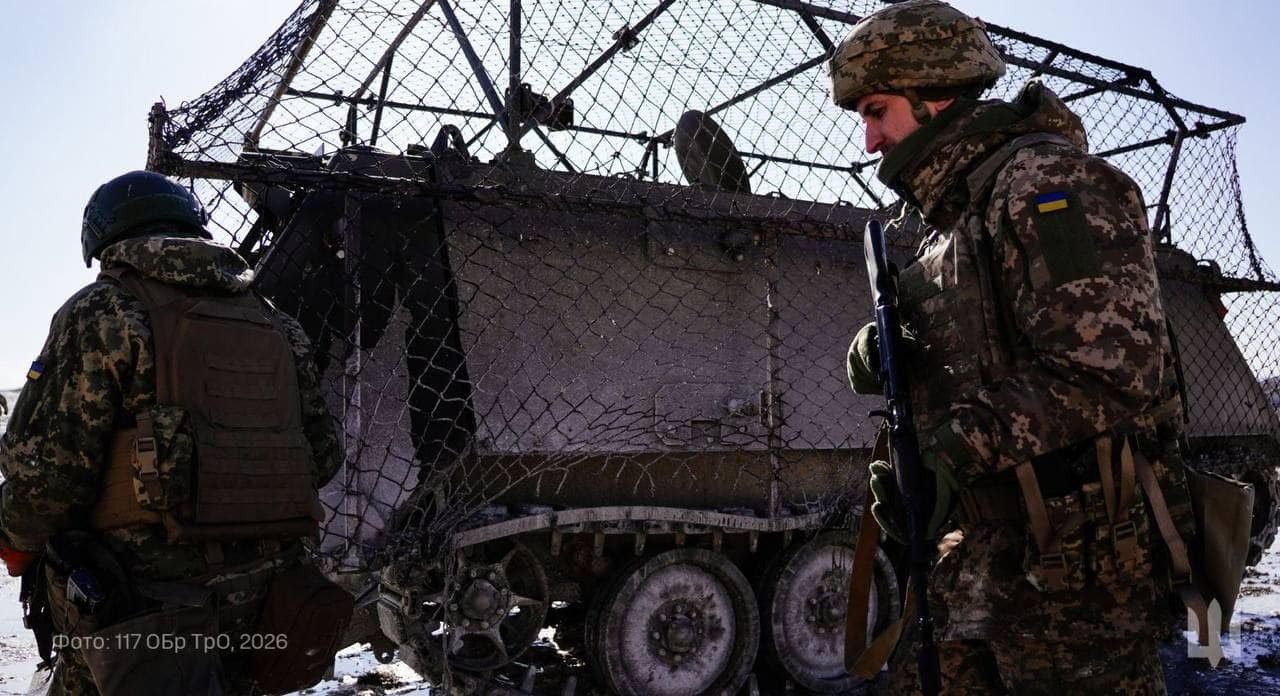
Ukraine's Defense Forces advanced more than 15 km through underground utility tunnels into Russia's rear on the Kupiansk axis in Kharkiv Oblast, the Khartiia Corps of Ukraine's National Guard reported on 22 October. The corps called it Operation Veles. The underground advance was paired with attacks on the surface and drone strikes, hitting Russian forces from two directions, the corps told Militarnyi.
Russian troops have repeatedly crawled through gas pipelines around Kupiansk to get behind Ukrainian lines, even after Ukraine reported confident control of the city in February. This time, Ukraine went underground itself. The operation took away Russia's chance to get into Kupiansk's rear, the corps said.
The corps reported more than 30 Russian soldiers captured and Russian losses of more than 100. Militarnyi, citing the unit, put the number of Russian troops killed at over 100.
Khartiia studied how Russian troops moved through pipes before going underground itself, the corps commander, Brigadier General Ihor Obolenskyi, said.
"We watched how the enemy works underground and studied how they do it. The Russians intended to use gas pipelines to get into the rear of our troops. So we went underground ourselves. We anticipated the enemy's actions and mastered the tactics of underground combat," he said.
Boots under ground!
Asymmetric breakthrough in the Kharkiv Region: Khartiia Corps conducts the subterranean counteroffensive Operation VELES, advancing 15 km underground.
For the operation, troops trained physically and psychologically to fight in confined spaces, sappers and engineers prepared the underground route, and special communications, navigation, silent logistics, and life-support systems were put in place, Khartiia told Militarnyi. The operation was named after Veles, the Slavic pagan god of the underworld.
Khartiia's brigade, the R.U.H. assault regiment, the Lava drone regiment, the Achilles drone brigade, and units of Ukraine's military intelligence, including the Freedom of Russia Legion and the Russian Volunteer Corps, took part, the corps said.
Russia has used pipelines to infiltrate before
By September 2025, Russian forces had used pipelines to move troops behind Ukrainian lines three times, Ukrainian monitoring project DeepState reported on 12 September 2025. The first was in Avdiivka, the second near Sudzha, and the third near Kupiansk, where groups crossed the Oskil River through a gas pipe.
Near Sudzha in March 2025, Russian special forces walked through a pipeline that until recently had carried Russian gas to Europe, the Associated Press reported. A pro-Kremlin blogger claimed they covered about 15 km and that some spent several days inside.
Russian troops kept using the pipeline near Kupiansk this year. On 27 September, Khartiia's reconnaissance drones recorded Russian forces leading nine civilians, including children, elderly people, and a person on crutches, through the gas pipeline out of the Kupiansk community. Men of military age in civilian clothes walked alongside them, and the corps believes they were Russian soldiers using the group as cover to withdraw. Ukrainian troops held fire because of the civilians, the corps said, adding that the case has been documented for a war crimes investigation.
Civilians led through a gas pipeline out of the Kupiansk community, Kharkiv Oblast, by people the Khartiia Corps identifies as Russian forces, 27 September 2026. Screenshot: Khartiia Corps
Why the war is moving underground
Drones, constant surveillance, and AI-assisted targeting have made the battlefield surface transparent and deadly, argue John Spencer, chair of urban warfare studies at West Point's Modern War Institute, and Col. Drew Craig, principal military engineering staff officer at NATO's Allied Rapid Reaction Corps. In an August analysis, they write that soldiers in Ukraine describe a "death zone" of some 30 km, where moving above ground can draw an attack within minutes. When firepower makes the surface too dangerous, armies have historically gone underground, as they did in World War I and Vietnam, and more recently in Gaza and Lebanon.
"Armies that cannot survive above ground must adapt below it," the authors write.
Fighting in tunnels brings its own requirements, the authors write: detecting the enemy by sound and vibration, and specialized unmanned systems that cannot rely on GPS or stable radio links. Long stretches underground also take a severe psychological and physical toll on soldiers.
Western militaries are not ready for this, Spencer and Craig write. No NATO partner maintains even general capabilities for large-scale underground warfare, and US and British efforts focused mainly on detecting and clearing tunnels rather than occupying and operating in them.
Russian forces are preparing to resume mechanized assaults in southern Ukraine after a pause of several months and are moving armored vehicles toward areas where they plan to launch offensives, Anastasiia Shevchenko, deputy spokesperson for the Southern Forces Grouping, told Ukrinform on 22 October. The Huliaipole axis remains the hottest in the Southern grouping’s zone, with 10 to 20 combat engagements reported on an average day, she said.
On the Huliaipole axis, one of Russia’s largest force groupings is fighting Ukrainian forces, comprising units from several Russian combined-arms armies, the spokesperson says. Over the past week, as the weather worsened, Russian forces began local assaults there with infantry, motorcycles, and armored vehicles, seeking to break through toward Zaporizhzhia and blockade the city, Ukraine’s 7th Air Assault Corps reported, adding that the area is one of Russia’s key priorities in southern Ukraine. Russia has used fog this way before: last November, Russian troops moved under its cover to avoid detection by Ukrainian drones as they advanced on Huliaipole, the Institute for the Study of War assessed.
Russian forces have abandoned large-scale assaults across a broad front and are attempting to infiltrate Ukrainian positions in small groups. They periodically use motorcycles and quad bikes for assaults, Shevchenko said, adding that these vehicles are fast and maneuverable.
However, Russian forces should not expect to advance unimpeded, the spokesperson noted. Ukrainian units control Russian supply routes and systematically detect and strike Russian personnel and equipment while they are still moving toward their launch positions, she added.
“Specifically, speaking in numbers, since the beginning of October alone, units of the Southern Forces Grouping (Forces) have destroyed more than 3,000 occupiers and 1,300 pieces of weapons and military equipment. Thus, the enemy is suffering significant losses in the operational zone of the Southern Forces Grouping (Forces),” the spokesperson concluded.
Ukrainian drones disrupt Russian logistics
Russian forces had stopped using military vehicles because Ukraine’s unmanned systems forces controlled their logistics, Shevchenko said in comments to Ukrinform on 16 September. Ukrainian drones spotted Russian troops and equipment in time and struck them mostly on their routes of advance, she said.
Ukrainian air strikes destroyed bridges near Polohy in Zaporizhzhia Oblast, complicating Russian supply operations along the Huliaipole axis, Ukraine’s 7th Air Assault Corps reported on 21 September. Russian forces had used these bridges to move personnel, heavy equipment, and ammunition for their offensive toward Orikhiv. Disruptions to logistics have forced Russian units to rely more on motorcycles, which are more vulnerable to Ukrainian strikes, the corps said.
Explore further
Ukraine timed its Huliaipole operation around the weather — and it worked. Here’s why that won’t happen again soon
Russian forces are also expected to use fog and rain as cover for assaults, Mykola Zinko, deputy commander of the unmanned systems battalion of the 5th Assault Brigade, said on 19 October. Russia has brought up reserves, and its heavy equipment will move out under the fog, he said.
Intercepting a jet-powered Geran can cost anywhere from $2,000 to $4 million depending on the weapon used. Cheap interceptor drones are the only option that keeps air defense affordable, the foundation of Ukrainian top war volunteer Serhii Sternenko said on Telegram.
Russia’s jet Gerans now carry every characteristic of a small cruise missile, and Russians keep raising their speed in answer to each Ukrainian countermeasure. Former commander-in-chief Valerii Zaluzhnyi has framed the shift bluntly: an expensive Cold War missile has become a cheap weapon fired in bulk, and the drone is now “a missile in all but name,” affordable to any side, not only wealthy countries.
Sternenko heads a charitable foundation that has purchased 291,502 FPV drones, which have helped Ukraine’s military down more than 12,954 aerial targets. Also, has advised the team of former Defense Minister Mykhailo Fedorov.
Three ways to kill a jet Geran, and what each costs
The foundation laid out the price of each method:
Aircraft (F-16, MiG-29, Su-27, Mirage 2000): $25,000 to $1.2 million per kill. Effective, but the stock of missiles is critically low, and some air-to-air types are no longer being replenished.
Surface-to-air and shoulder-fired systems (IRIS-T, NASAMS, Vampire, Avenger): about $30,000 to $4 million. Good for shielding key sites, but a missile capable of reaching a jet Geran at 6 to 7 kilometers costs $0.5 million to $4 million.
Interceptor drones (makers undisclosed): from $2,000. Cheap, with trained operators ready, but not yet scalable.
Why the cheapest option is the one that matters
No single tool is enough, the foundation stresses. Downing jet Gerans still needs aircraft, small aviation and missile systems together, but it is the interceptors that make the defense affordable, taking out the cheaper Shaheds and saving costly missiles for targets nothing else can reach.
The foundation says it has found a way to counter drones that already match small cruise missiles, working with Ukrainian manufacturers, without disclosing details. The method is far cheaper than other ways of downing jet Gerans and significantly strengthens air defense, it says, as part of a wider Ukrainian push to field interceptor drones fast enough to catch Russia’s fastest weapons.
The commander of an interceptor battalion in Ukraine’s 3rd Army Corps said his unit destroyed several thousand Russian aerial targets during Operation Vivaldi, ArmyInform, the Defense Ministry’s news agency, reported on 21 October.
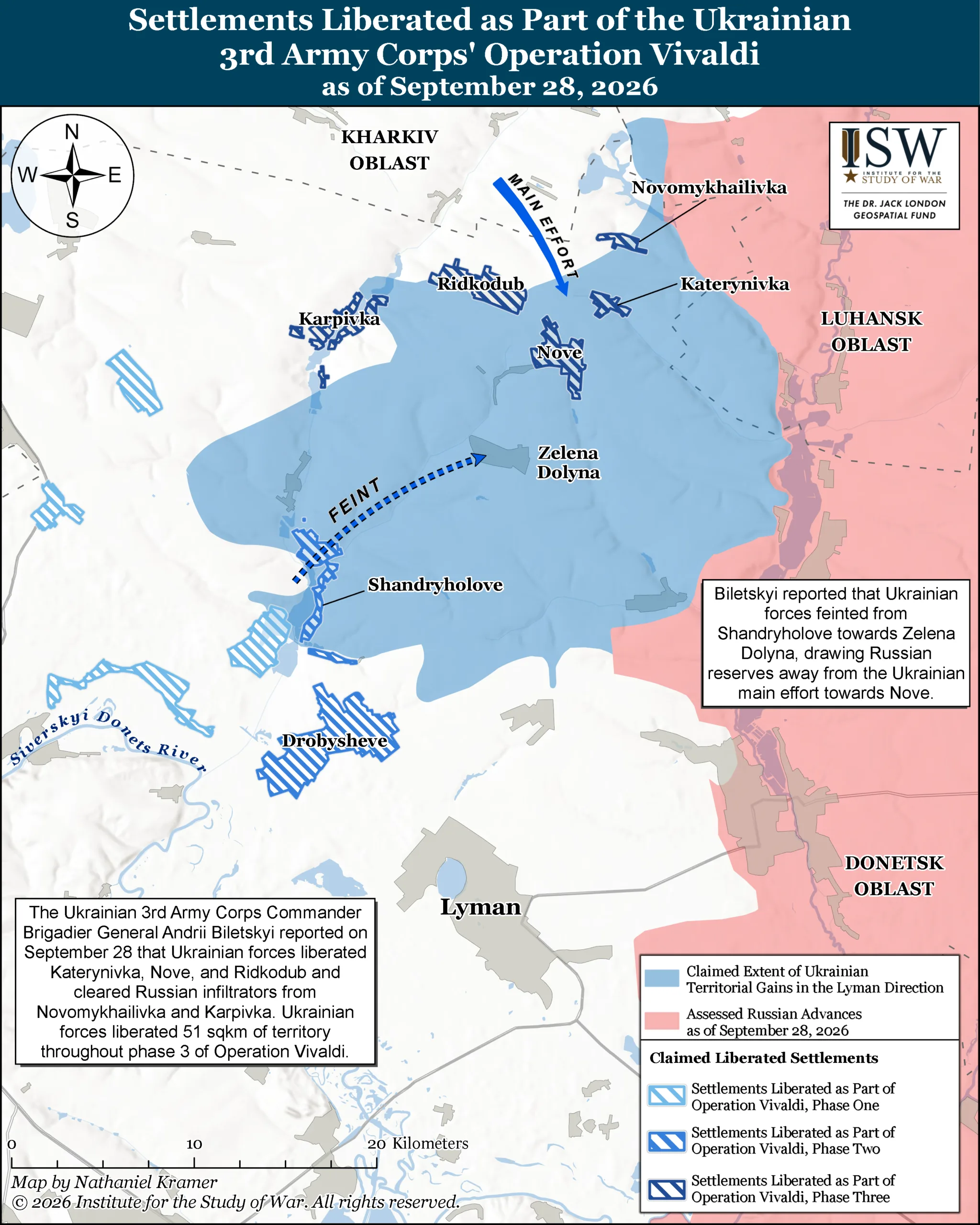
Operation Vivaldi is a Ukrainian counteroffensive north of Lyman in Donetsk Oblast, where the 3rd Army Corps has reported liberating settlements. In its third phase, Ukrainian forces reclaimed five settlements and expanded their gains to 176 square kilometers. Strikes on Russian logistics and electronic warfare likely neutralized Russia’s drone defenses before Ukraine sent in armor, the Institute for the Study of War assessed.
The commander, who uses the callsign “Betsyk,” leads the interceptor battalion of the 1030th Anti-Aircraft Missile-Artillery Regiment “Aquila,” part of the 3rd Army Corps. He said Russian forces deployed large numbers of reconnaissance drones to locate Ukrainian positions after the corps began advancing.
Betsyk named Zala, Orlan, Supercam, Merlin, and Knyaz Veshchiy Oleg among the reconnaissance drones used by Russian forces.
Russia also brought in reinforcements and units operating strike drones, including first-person-view (FPV) quadcopters, Molniya fixed-wing FPV drones, and Lancet crews, he said. At one stage, Russian forces deployed crews from their Rubicon drone unit to disrupt the advance, but the move did not change the situation.
Explore further
Ukraine retook Kolodiazi north of Lyman as its drones hit 200-plus Russian vehicles in Operation Vivaldi’s last phase, Ukrainian drone officer says
Betsyk said his battalion’s work deprived Russian forces of the ability to strike Ukrainian troops and track their movements.
Jet-powered Shaheds: speed is the main challenge
The regiment also works against Russian strike drones heading for targets behind the front line. Betsyk said interceptor crews had destroyed some jet-powered drones, but not in significant numbers.
The main difficulty is speed, he said. Interceptor drones need to reach 500–600 km/h to intercept Russian jet-powered attack drones, according to Betsyk.
For now, the regiment mainly uses conventional air-defense systems against these targets: self-propelled anti-aircraft systems, surface-to-air missile systems, and portable surface-to-air missile systems. Betsyk said these systems were historically designed to engage jet-powered targets.
He compared the current challenge with the early use of piston-powered Shaheds. Those drones initially posed a serious threat but later became easier for Ukrainian air defenses to counter. Russia has largely stopped using piston-powered Shaheds on most fronts since summer, he said, but continues to use piston-powered Gerbera drones, which are relatively cheap and can partly exhaust Ukrainian air defenses. The main drones Russian forces use now are jet-powered Shaheds, he said.
Betsyk expects Russian forces to adapt if Ukraine fields effective interceptors against jet-powered drones. They will seek ways to evade the interceptors, increase speed, improve navigation, and change their tactics, he said. However, he added that the battalion had not observed a major evolution so far and did not expect the drones’ speed to double.
What the corps says Vivaldi achieved
Separately, 3rd Army Corps commander Andrii Biletskyi said Ukrainian forces retook 277 square kilometers and 16 settlements during Operation Vivaldi, Ukrainska Pravda reported. Biletskyi also said Russian losses exceeded 8,000 personnel, according to ArmyInform. These figures are Ukrainian claims and have not been independently verified.
Russia’s Rubicon drone unit, which is sent to hunt Ukrainian drone pilots, was not used to being hunted itself, Brigadier General Andrii Biletskyi told journalists on 19 October. He was summing up Operation Vivaldi, which his Third Army Corps fought in northern Donetsk Oblast from May to mid-October. Once its pilots realized they were being killed, Rubicon’s morale dropped sharply, he said.
Russia has fought for 12 years to take all of Donetsk Oblast, and Sloviansk and Kramatorsk anchor the fortress belt of cities Ukraine still holds there. Vivaldi retook 277 km² in northern Donetsk Oblast. Biletskyi says it destroyed Russia’s bridgehead on the Chornyi Zherebets River and forced Moscow to drop its plan to bypass Lyman from the north and encircle the two cities. On that front, the Third Corps had flagged Rubicon, Russia’s elite drone unit, as a threat.
Hunting the hunters
Once a Rubicon position was found, the Third Assault Brigade and the KRAKEN drone regiment committed any number of FPV and bomber drones to destroy its crews, Biletskyi said.
The brigade’s commander, Yaroslav Levenets, said his troops prepared for Rubicon’s arrival and concentrated on killing its pilots. He gave no details.
“Not stable in defense,” Levenets said of Rubicon’s troops.
They dislike sitting in trenches, he said, and under pressure they grow nervous and change positions.
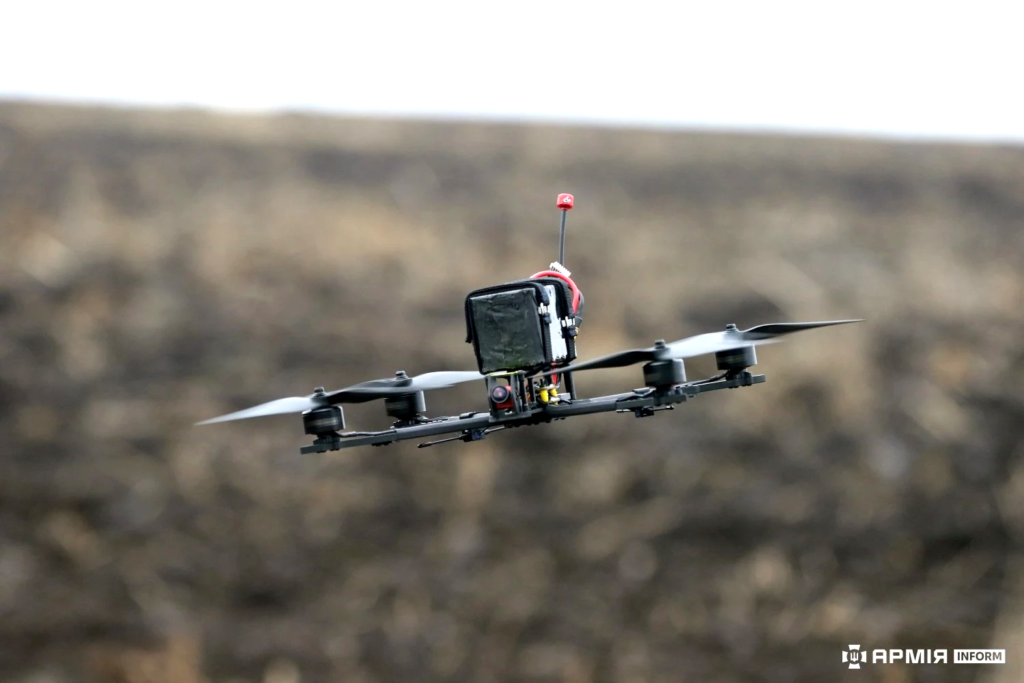
An FPV drone. Illustrative photo: ArmyInform
Named for four seasons
Biletskyi said the name was chosen at the very start of planning, in winter 2025–2026, many months before the operation began. The original plan had four stages, one for each season, and later grew to slightly more, ArmyInform reported.
When he first unveiled the operation in September, he put it this way:
“Vivaldi, as is known, has four seasons. And this is only the first one.”
He credited two planners, known by the call signs Yurist and Leshyi. Leshyi, an assault soldier wounded seven times who later moved to staff work, was killed. Yurist was seriously wounded.
Explore further
Ukraine blocks Russia from outflanking its fortress cities in Donbas, retaking 277 square kilometers and hitting 8,000 Russian troops
A new hand at the Third Corps
Major Dmytro Rohoziuk is now acting commander of the Third Army Corps, the corps press service said on 20 October. The press service said the move is not a transfer, and Biletskyi keeps his formal post as corps commander while he leads the “Center” grouping of the Third, 11th, and 19th corps.
Major Dmytro Rohoziuk, acting commander of Ukraine’s Third Army Corps. Photo: Armed Forces of Ukraine
Rohoziuk took over the 60th Mechanized Brigade in October 2025. Its previous commander was arrested in January after the State Bureau of Investigation accused him of embezzling about $1 million in weapons procurement. The brigade fought in all four phases of Vivaldi and retook Kolodiazi without street fighting.
Ukrainian troops capture a Russian infiltrator carrying a Russian flag during Operation Vivaldi in northern Donetsk Oblast. Photo: Third Army Corps
Biletskyi also declined command of the Ground Forces, which oversee mobilization.
“There’s no point taking on something you don’t truly believe you can improve,” he said.
Biletskyi’s count
Russian losses in Vivaldi topped 8,000 troops, and about 270 Russian soldiers were taken prisoner, Biletskyi said. More than 20 officers surrendered, including a chief of staff and three company commanders.
The territory matters less than disrupting Russia’s strategic plan, he said. Russian forces still press toward Dobropillia, where Ukraine is counterattacking.
Reports that SpaceX temporarily restricted its satellite internet service for Ukraine’s armed forces have generated serious concern in Kyiv and among the country’s allies. SpaceX operates the civilian Starlink system and its lesser-known military-grade counterpart, called Starshield. But many news stories leave an important question unanswered: what does a Starshield “slowdown” mean on the battlefield? […]
Ukrainian infantry encircled and retook the village of Kolodiazi north of Lyman without getting drawn into street fighting, while a drone battalion kept the sky above them shut, the battalion’s chief of staff told Suspilne on 18 October. The village fell during the fourth and final phase of Operation Vivaldi, Ukraine’s counteroffensive in northern Donetsk Oblast.
For years now, Russia has aimed to seize Lyman and cross the Siverskyi Donets River. It needs this area to encircle Ukraine’s fortress belt of Donetsk Oblast cities from the northwest, ISW assesses. Vivaldi’s four phases retook 277 km² and 16 settlements on that approach, and a veteran of the operation has said Ukraine’s assault troops suffered more than ten times fewer casualties than Russian forces doing it.
Drones over the infantry
The 60th Mechanized Brigade fought in all four phases of Vivaldi and took Kolodiazi in the last one, said the chief of staff of the brigade’s Fatum unmanned systems battalion, callsign Krash.
“Our task, as an unmanned systems battalion, was to escort and ‘close’ the air in front of our infantry to make it impossible for the enemy to hit it. To suppress all the firing assets possible,” he said.
The brigade’s 3rd Mechanized Battalion, the main striking force, encircled Kolodiazi and retook it without getting drawn into street fighting, Krash said. The 1st Mechanized Battalion kept Russian reinforcements out of the area, while drone crews suppressed artillery, hit supply runs, and worked against Russian drone operators.
Explore further
Vivaldi counteroffensive advanced after Ukraine took Russia’s drones out of the fight, ISW assesses
500 troops and 200-plus vehicles
The drone battalion killed or wounded about 500 Russian troops during the fourth phase and struck Russian armored vehicles, trucks, and motorbikes, its chief of staff said.
“More than two hundred pieces of various equipment: Grad and Uragan multiple rocket launchers, various armored vehicles, tanks, armored combat vehicles. Most of all motorbikes and quad bikes, there the count runs into the hundreds. This is our enemy’s main logistics tool,” he said.
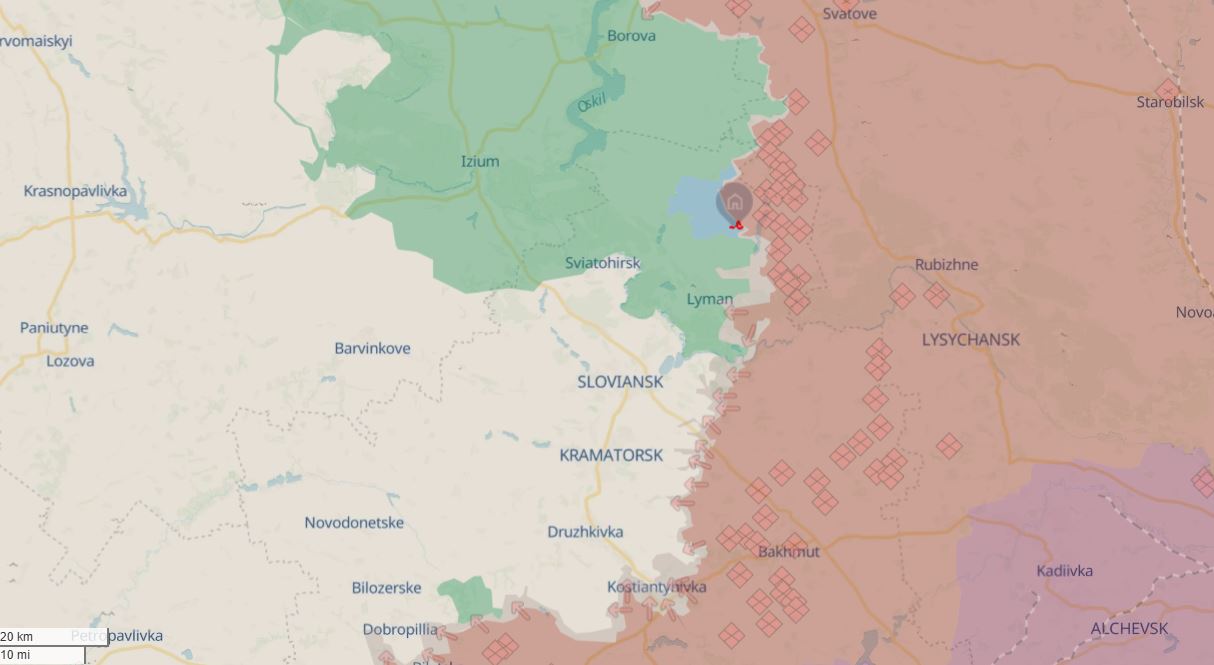
Lyman sector now. Map: ISW
Ghost villages
The villages retaken in northern Donetsk Oblast are nearly empty of civilians, Krash said.
“It’s very typical for de-occupied settlements: these are ghost towns. You can see right away where the occupier stepped. All the settlements are under the control of the Third Army Corps, our forces stand there and prevent enemy infiltration. But civilian life in these towns is either absent or very scarce,” he said.
Third Army Corps commander Brigadier General Andrii Biletskyi reported Kolodiazi’s liberation, along with Zelena Dolyna and Lypove, when he summed up Vivaldi’s fourth phase, which secured 101 km².
A recent breakthrough in airborne drone control has offered a tangible glimpse into the future of US air combat, signaling the US Air Force’s accelerating push to integrate autonomous wingmen alongside frontline fighters. This month, The War Zone (TWZ) reported that a US Air Force F-22 Raptor pilot successfully controlled an uncrewed YFQ-44A Fury fighter […]
The drone has become the signature weapon of the Russo-Ukraine war. On any day in Ukraine, tens of thousands of drones are out hunting the battlefield for targets. These could be individual enemy soldiers or vehicles, or they could be larger targets such as depots, headquarters, bridges or power plants. Yet, this drone war has […]
Russia’s drone and missile attacks on Ukraine’s population and infrastructure continue to dominate coverage of the conflict. But on the ground, Ukraine has been making significant, if still limited, gains. In mid-September, Ukraine formally announced the existence of Operation Vivaldi, which has retaken territory near Lyman and disrupted a Russian advance toward the fortified cities […]
On October 4, the US pulled its 12 B-1 strategic bombers out of Fairford, UK and returned them to the United States. Reports say the planes returned to Ellsworth Air Force Base in Rapid City, South Dakota. The bombers were pulled out when intelligence reported that an attack by armed drones against Fairford was imminent. […]
The Russians are struggling on land and at sea, and are having real difficulty protecting themselves from Ukrainian long-range attack. That has left them with one real strategic “advantage” and that is what we will see the next few months. As reports this week made clear, the Russian strategy is now to make Ukraine unlivable, […]
 Login