Former FBI Director James Comey on Monday slammed his new charges from the Trump administration. “Well, they’re back, again. It would almost be funny if it weren’t such an appalling abuse of the Department of Justice, one that we cannot become numb to. Nothing’s changed with me,” Comey said Monday in a video posted to…
President Trump has announced a $1 million reward for voter fraud tips, about a week out from this year’s midterms. “Anybody reporting Voter Fraud in the past Elections, or the upcoming 2026 Midterm Election, will be paid $1,000,000 upon the arrest and conviction of those that created the Fraud!” Trump said in a Monday afternoon…
Stephen Moore, a former economic adviser to President Trump, said Monday that Federal Reserve Chair Kevin Warsh is in a “tough” position ahead of the central bank’s meeting regarding interest rates this week. “It’s a tough position for my friend Kevin Warsh because I think job number one for the Fed [is to] get that…
Treasury Secretary Scott Bessent mocked former President Obama outside a Cheesecake Factory in Washington on Monday after Obama likened recent White House renovations to the famous restaurant chain during a Saturday rally. “Well, two things. This is the man who built the museum that looks like Darth Vader’s tomb,” Bessent said while exiting a Cheesecake…
MS NOW’s Joe Scarborough on Monday slammed negative reactions to former President Obama’s recent joke about the Cheesecake Factory and the White House. “Can you believe how stupid the reaction is and how stupid they think Americans are?” he said on his show, “Morning Joe.” “Every time Donald Trump opens his mouth now, especially in…
Health and Human Services (HHS) Secretary Robert F. Kennedy Jr. announced Monday that more than 250 hospitals have signed a pledge to serve healthier meals to patients, advancing his “Make America Healthy Again” (MAHA) agenda’s focus on treating food as medicine. Speaking at a press conference hosted at the Corewell Health Lifestyle and Culinary Medicine…
The NBA announced Monday it is partnering with prediction markets Kalshi and Polymarket, as multiple states have sued those companies in an attempt to establish their regulatory authority over them. The league said in a release it entered into a memorandum of understanding with the Commodity Futures Trading Commission (CFTC) to designate Kalshi and Polymarket…
Six individual citizens — a civics teacher, a legal journalist, a student journalist, a human rights advocate, a historian and a media watchdog — are suing the president and Trump administration officials over the White House’s bans and restrictions on the press, according to the lawsuit filed Monday. The complaint, which named President Trump alongside…
Bill Pulte, the director of the Federal Housing Finance Agency (FHFA), said Monday he will not tolerate “abusive monopolies” dominating the mortgage market. “Abusive monopolies will not be allowed to take advantage of consumers anywhere in the mortgage market,” Pulte wrote Monday on social platform X. Pulte said last month that Fannie Mae and Freddie…
Former Rep. Marjorie Taylor Greene (R-Ga.) criticized President Trump, saying Sunday he had “become a curse to Republican candidates” ahead the November midterm elections when the GOP is projected to lose the House. “He has no idea how bad he is doing in GA. And to threaten our state that he would refuse to help…
The Pentagon is pressing Congress to keep measures in the annual defense policy bill that would formally authorize the name change from Department of Defense to “Department of War.” “President Donald Trump and Secretary of War Pete Hegseth had the conviction to say so plainly. Many in Washington would have left the name alone. The…
Billy Crystal — the recipient of two of the Kennedy Center’s most prestigious awards — says what’s happening at the Washington performing arts institution amid President Trump’s legal battle “really hurts.” “I’m one of the few who has been awarded the Mark Twain Prize and the Kennedy Honor with an elite group of people that…
The Republican National Committee announced Monday that President Trump will campaign in Rock Hill, S.C., on Thursday, marking his second trip to the Palmetto State within the span of a week. Trump campaigned last week in Clemson, in an effort to boost Sen. Darline Graham (R-S.C.) in her race against Democrat Annie Andrews. The campaign…
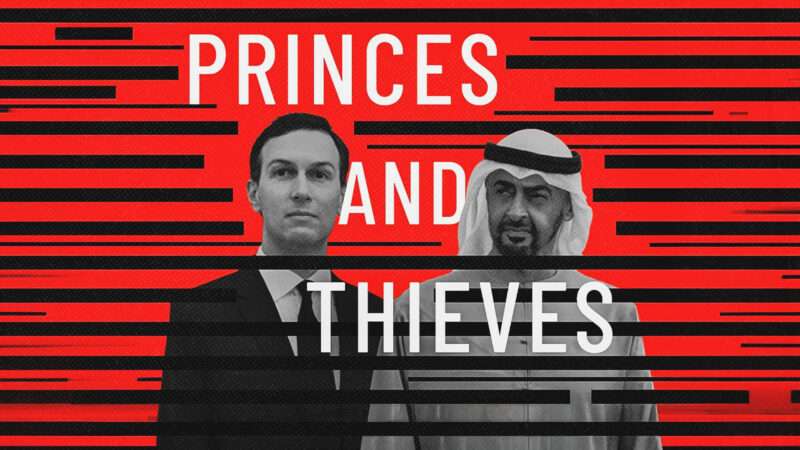
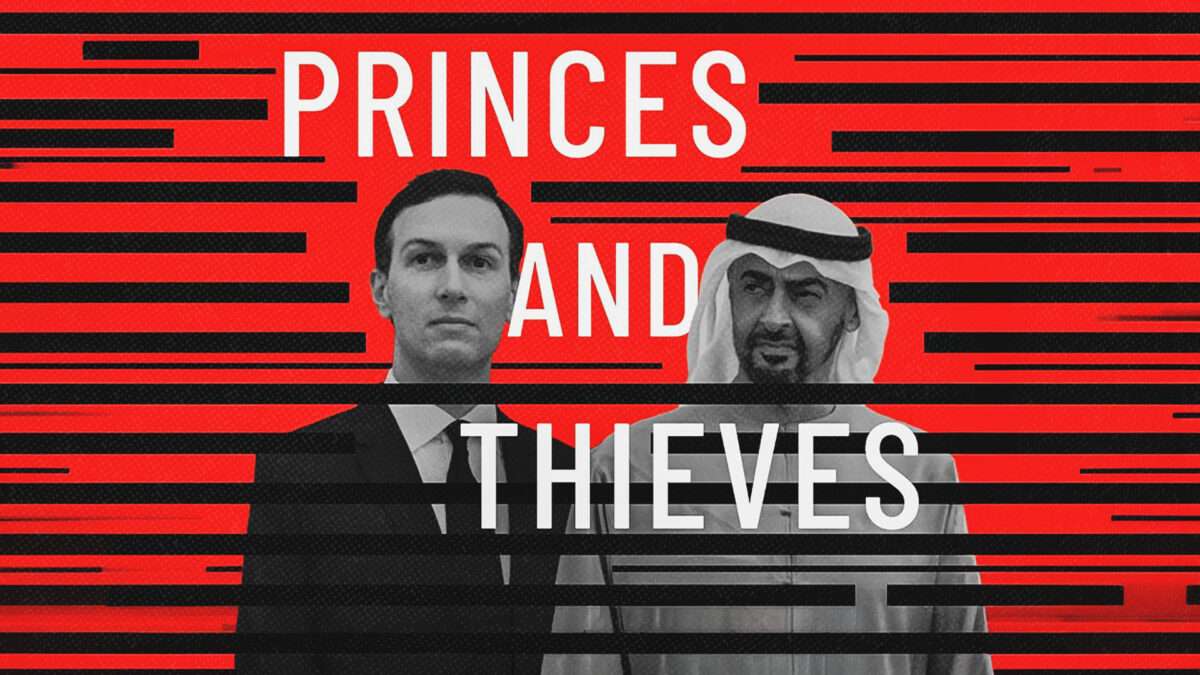
Princes and Thieves, a new book by investigative journalist Matthew Cole, may open a rabbit hole into financial connections between Middle Eastern dictators and President Donald Trump's family. Cole accuses Emirati monarch Mohamed bin Zayed (MBZ) of sending billions of dollars to various mercenaries and political operators, including Jared Kushner, son-in-law to President Donald Trump. Cole's reporting combines well-documented connections with secondhand accounts from anonymous sources.
On Thursday, Vanity Fairpublished an excerpt from the book, reporting that Dutch military intelligence hacked into Kushner's phone in 2018 and discovered hundreds of millions of dollars in bank transfers connected to MBZ. Also on Thursday, Kushner published a letter from his lawyers to Cole categorically denying the "incredible and false" allegations in the book. "Mr. Kushner never accessed foreign accounts and always followed all rules and regulations and only pursued goals that were in the best interest of the United States as directed by the President of the United States," they wrote.
Cole had originally written on his blog that the book was scheduled for release on October 27, but the publication date was pushed forward over the weekend.
The book purports to tie Kushner to a vast web of Emirati influence operations around the world. In Cole's telling, which matches other journalists' accounts, MBZ wants to reshape the Middle East and eastern Africa into an alliance of U.S.-backed dictatorships, where "tolerance" is enforced through high-tech surveillance and "democracy" is a synonym for terrorism. MBZ's use of mercenaries in pursuit of these goals is well-documented. So is Kushner's personal affinity with the Emirati monarch and his business ties with the Arab monarchies.
Soon after Trump won the 2016 election, MBZ held a widely reported meeting with Kushner. According to the book—and according to much of that earlier reporting—the monarch complained about the Obama administration's failure to back Arab regimes against popular revolutions, its decision to end the Iraq War, and its diplomacy with Iran.
Going much further than past reporting, Cole now claims Kushner was personally involved in MBZ's mercenary operations. MBZ and Saudi Crown Prince Mohammad bin Salman put a collective $2 billion into Emirati and Israeli bank accounts which were managed (but not technically owned) by Kushner, according to Cole's sources. Those same sources claim that parts of this secret "slush fund" went to Libyan warlord Khalifa Haftar, American military contractor Erik Prince, and Cuban hitman Felipe Vidal.
Haftar, a former CIA asset, became a general in Libya's 2011 revolution and then attempted to overthrow the new government with Emirati backing in 2014. Despite a 2020 ceasefire, his forces continue to control much of Libya. Prince, founder of the military contractor formerly known as Blackwater, moved to the UAE and helped build a secret army of Colombian mercenaries. He sued Cole for defamation after Cole reported on Prince's role in helping Haftar, but a judge threw out the case. Cole's sources claimed that Vidal, a self-described "hit man," helped the United Arab Emirates (UAE) fake an Iranian attack on oil tankers in May 2019, meant to provoke Trump into war.
Kushner's lawyers have denied any relationship with any of those three men, apart from a single meeting with Prince after the 2016 election. (According to Cole, both Vidal and Prince refused to comment for the book.) The position of the U.S. government is that the May 2019 incident was a genuine Iranian attack, not an Emirati false flag.
After the Vanity Fair article was published last week, Israeli negotiator Gershon Baskin pointed out in The Jerusalem Post that the Central Bank of Israel "does not offer private banking services to individuals," which would make it impossible for Kushner's money to be deposited in the Central Bank of Israel, as Cole claimed. The book addresses that argument, claiming that the money was deposited "in what would appear to be a government account," with Kushner and Israeli Prime Minister Benjamin Netanyahu jointly authorizing transactions.
The Abraham Accords, which include an alliance between Israel and the UAE, have often been touted as a way for the U.S. to "spend less time and less resources in the Middle East," in the words of Vice President J.D. Vance. But Cole argues that the UAE actually used its alliance to entangle American interests in a future conflict. The book states that Kushner set up "a rainy-day defense fund" for war with Iran, using Emirati money deposited in a separate Central Bank of Israel account.
Cole also claims to have evidence that Kushner was on the take from the UAE's regional frenemy Qatar. In 2017, the UAE and Saudi Arabia issued an ultimatum for Qatar to rein in its foreign policy and blockaded the small nation. The Intercept later reported that Kushner's father had sought a Qatari bailout for the family real estate business just before the crisis, and the Qatari-linked company Brookfield ended up providing the needed investment in August 2018, leading to a congressional investigation into the deal.
Democrats are still digging for information on Kushner's business ties to Qatar, but three sources told Cole that the Qatari royal family authorized and paid for the Brookfield deal. The Qatari government "asked the White House how to resolve the blockade. And the Kushners kept saying, 'We have this great property that needs investment.' Eventually, the Qataris realized the only way to settle the blockade was to buy the building," a former U.S. intelligence officer said.
Kushner's lawyers write that they have "no evidence that Qatar impacted the investment decision. Any suggestion of his involvement in the transaction or any allegation of quid pro quo with the Qatari government is false and defamatory."
Other parts of the book are better-documented. Cole obtained a draft of Prince's autobiography, text messages from one of Prince's colleagues, and emails from Emirati government adviser George Nader, who was convicted of fraudulently funneling money into Hillary Clinton's 2016 presidential campaign. If nothing else, the book is a comprehensive account of the UAE's unofficial empire and its American ties. But the most explosive claims about Kushner's involvement in those activities rest on anonymous sources, making it a matter of Cole's word against Kushner's.
"I considered the responses from Kushner's attorneys carefully and consulted multiple sources about them. During the five years I have spent working on this book, I have tried to keep an open mind, and I am confident that my reporting is accurate. Kushner's lawyers' responses did not change that conclusion," Cole writes in the book's epilogue.
When the White House rolled back tariffs on coffee, fruit, beef, and farm equipment, it was effectively an admission that the tariffs were raising prices—and that Americans, not foreigners, had been paying for them.
Now, in the closing stages of the midterm campaign, the White House is once again rolling back some of those import taxes—and once again making an awkward implicit admission.
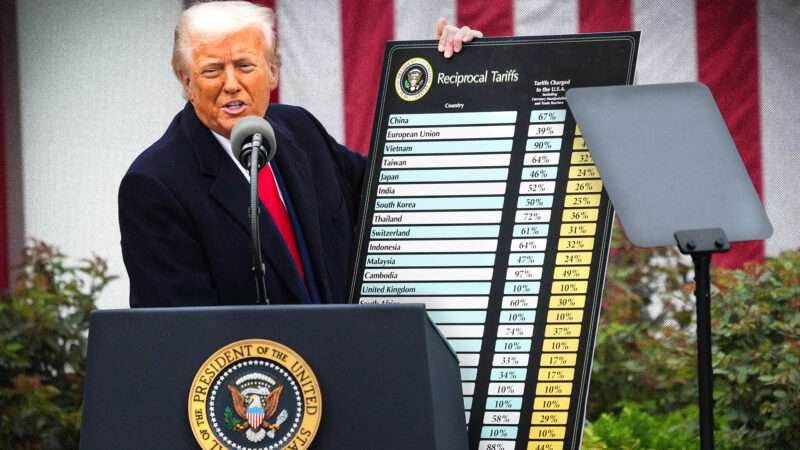
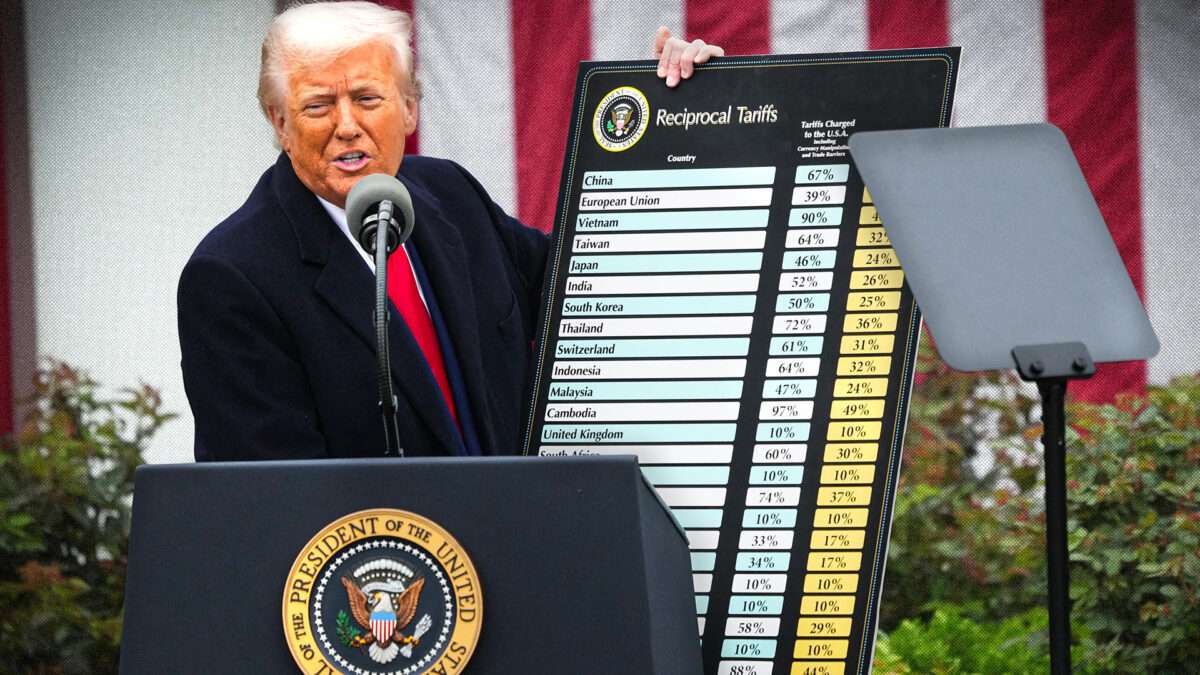
President Donald Trump's tariffs have become politically toxic.
The administration announced late last week that it would lift the 50 percent tariffs on some Canadian imports, apparently in an attempt to help Sen. Susan Collins (R–Maine) survive a tough reelection campaign in which the tariffs have played a significant role.
If this is indeed an attempt to sway voters in Maine, it is not a very convincing one. The Trump administration is removing tariffs on some agricultural and mechanical goods, as well as packaging and plywood, The Wall Street Journalreports. But Trump is also imposing new 50 percent tariffs on "other Canadian goods, including carpet, certain valves, and waste products."
Collins issued a statement thanking the White House for the changes. This is what members of the U.S. Senate have been reduced to—begging the president to cast his capricious, tariff-happy eyes toward products that will hurt people in other states more than in your own. (In fairness to Collons, she has voted repeatedly to roll back Trump's tariffs, but not enough of her fellow Republicans went along with it.)
Still, it's worth asking: What exactly is the pitch to voters here? Here's a tariff cut, now vote for Republicans so the president can continue to arbitrarily tax imports whenever the mood strikes?
It's easy to see why Trump's tariffs have become so unpopular. They are a huge and broad tax increase—the Tax Foundation estimates that 54 percent of imports are subject to Trump's tariffs, which are costing the average household about $1,000 annually—that was imposed without congressional authorization or popular support. They create more losers than winners, as downstream businesses and consumers pay the price for the protectionism offered to American manufacturers. Even the supposed "winners" of the tariff policy tend also to be "losers," since so much manufacturing depends on importing raw materials and intermediate goods.
Perhaps more surprising is how unwilling Republicans are to defend the president's signature economic policy. Or to even talk about it.
The Wall Street Journal's Greg Ip crunched the numbers and found that House GOP candidates have not run a single ad talking about the tariffs during this election cycle.
That silence speaks volumes. Trump says "tariff" is "the most beautiful word in the dictionary." But it is now "one of the most hated words in politics," writes Ip.
The only Republicans to mention trade or tariffs in a campaign ad, as far as I've seen, is former Rep. Mike Rogers, who is now running for the Senate seat in Michigan (and thus was not included in Ip's analysis). And he's calling for an end to the "tariff war."
There is a lesson here that hopefully will linger beyond the next week: If you support a policy that deliberately and unlawfully raises taxes and prices, voters will not reward you for it.
It's a lesson that the Republican Party learned long ago, but apparently forgot.
Against economists' advice, a Republican-led government in 1930 implemented a huge tariff hike intended to protect American farms and factories at the start of the Great Depression. Instead, those tariffs worsened economic conditions and triggered foreign retaliation.
When voters went to the polls in 1930, the first midterm after the Smoot-Hawley tariffs were passed, they registered their displeasure. The GOP lost 52 seats in the House that year. Two years later, an even larger landslide would sweep Democrats into power in Congress and the White House, ushering in the New Deal era that reshaped the federal government forever. The two lawmakers who lent their names to the legislation were among those who lost their seats, fittingly.
The most notable difference this time around is that Congress didn't actually pass a tariff bill. The trade barriers were instead imposed directly by the executive. Voters don't seem to care. Republicans were too cowardly to stand up to Trump's unilateral power grab, and now they seem too ashamed to try to defend that policy (and their largely complicit response) on the campaign trail.
As they say, those who don't learn from history are doomed to repeat it. And "doomed" may be a fitting way to describe the Republican majority in Congress right now, thanks in no small part to Trump's tariffs.
There will be more than pumpkins and candy at the White House’s Halloween celebration — this year’s fright-filled festivities are also poised to scare up some support for Trump Accounts. The first lady’s press office announced plans Monday for the annual spooky tradition at 1600 Pennsylvania Ave. President Trump and Melania Trump will hand out…
President Trump said progressive firebrand Rep. Alexandria Ocasio-Cortez (D-N.Y.) doesn’t “bug” him much at a Sunday rally in Michigan. While criticizing Rep. Ilhan Omar (D-Mich.), a common foe for the president, Trump struck a more positive tone on Ocasio-Cortez, a popular Democrat and potential 2028 presidential candidate. Ocasio-Cortez is a member of the Democratic Socialists…
President Trump said Sunday his trade war with Canada will be over “soon,” as the dispute poses ongoing political problems for Republicans in the midterms. During a rally in Port Huron, Mich., Trump reiterated his view that Canada “has been ripping off” the U.S. “for years.” The president used that justification in imposing 50 percent…

 Login