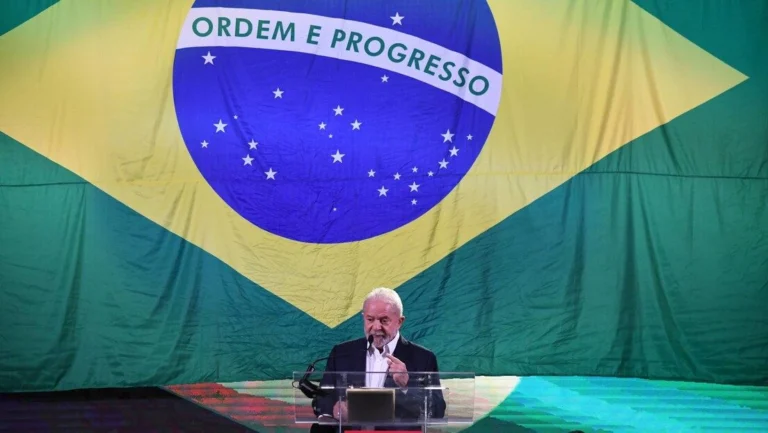
In a closely watched election, Brazilian President Luiz Inácio Lula da Silva defeated right-wing and Trump-aligned challenger Flávio Bolsonaro. Transport and weather disruptions in parts of Brazil led to a chaotic final stretch at the polls. Bolsonaro is refusing to concede, and President Trump called the outcome "rigged." Stephanie Sy reports.
The re-election of President Luiz Inácio Lula da Silva is expected to lead to continued rainforest protections. His opponent wanted to make it easier to clear land.
Far-right senator banned from leaving country as supreme court judge’s ruling cites money-laundering case
The far-right senator Flávio Bolsonaro was banned from leaving Brazil and ordered to surrender his passports just hours after his dramatic loss in the presidential election to the leftist president Luiz Inácio Lula da Silva.
The ruling was issued by Alexandre de Moraes, the same supreme court justice who oversaw the trial of the senator’s father, the former president Jair Bolsonaro, for attempting a coup.
President Luiz Inácio Lula da Silva won another term on Sunday, with the help of a seismic social media campaign that convinced Brazilians to reject his rival.
President Luiz Inácio Lula da Silva’s army of supporters, mobilized over a WhatsApp chat group, delivered an unexpected victory over Flávio Bolsonaro, the right-wing challenger.
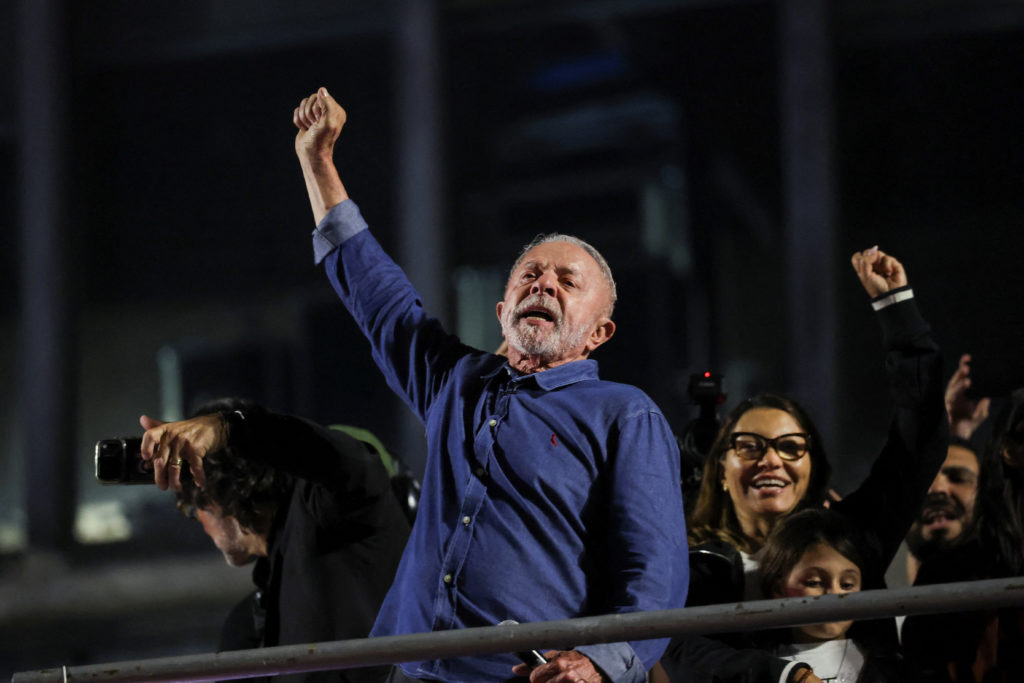
Brazilian progressive leader and incumbent president Luiz Inácio Lula da Silva made history last night, defeating far-right Flávio Bolsonaro of the Liberal Party in the second round after coming in second in the first round.
The results were awaited with bated breath after a judge ordered polls to be open for two more hours following complaints from voters who claimed they had been unable to reach polling places due to transportation problems. First the Workers’ Party (PT), and then the Liberal Party (PL), requested the extension, which paused the vote count until 7:00 pm in Brasília, the capital.
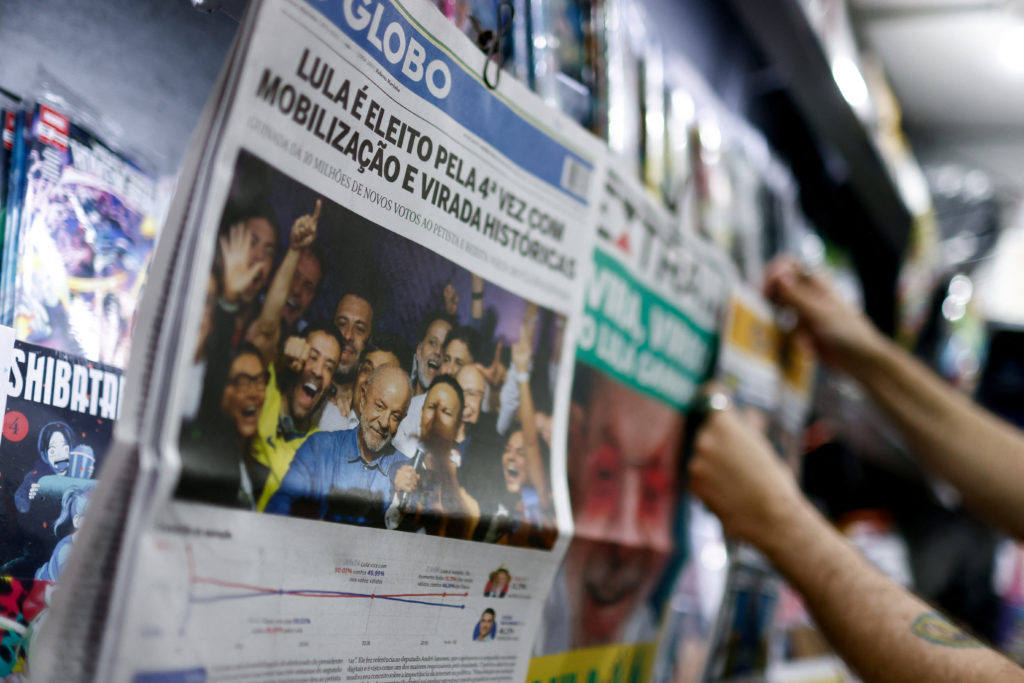
With 51.79% of the valid votes, the former union leader, metalworker, and head of the Workers’ Party staged a historic comeback against Bolsonaro, who lost the initial momentum he had in the first round and barely reached 48.21%. This is the first time a candidate who finished second in Brazil’s first round has staged a comeback and won the election in the runoff.
Bolsonaro entered the runoff with a relative – though significant – lead following his victory in the first round of voting on October 4, where he received 47.03% (approximately 56,104,503 votes), while Lula, to the surprise of many, came in second with 45.16% (53,879,538 votes).
In other words, there was a gap of nearly 3 million votes between the two candidates that seemed very difficult for Lula to overcome, especially considering that the remaining votes were split among candidates who were mostly from the right and center-right – a fact that led many to believe that Bolsonaro, the son of former president and currently imprisoned Jair Bolsonaro, would win the runoff.
But Lula, a true legend of Brazilian politics (a labor leader during the dictatorship who won the presidency three times), achieved the unthinkable. Between the first and second rounds of voting, he managed to gain more than 10 million votes compared to the first round – an astronomical figure, considering that Bolsonaro barely managed to gain some 3.7 million votes.
Lula’s victory
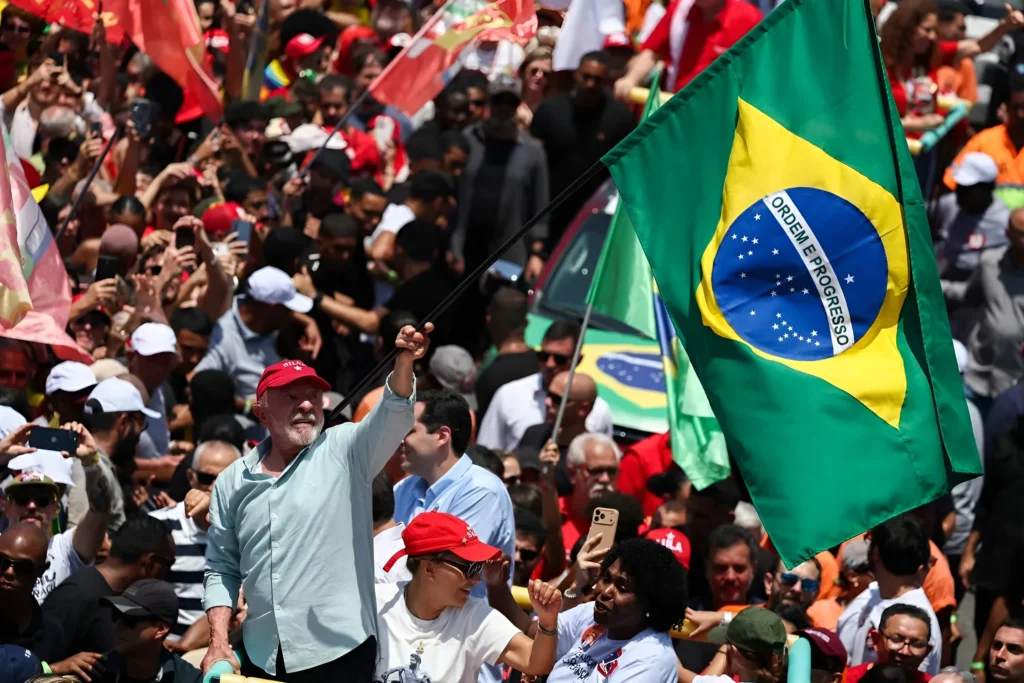
After it was clear that Lula’s victory was irreversible, the Brazilian streets were filled with people wearing the traditional red of the Workers’ Party. However, the victory was celebrated by a sort of broad coalition that had formed to overturn the result – one that spanned the political spectrum from classical left-wing parties and movements, to progressive liberals, and even some center-right groups that saw Bolsonaro as a threat to democracy.
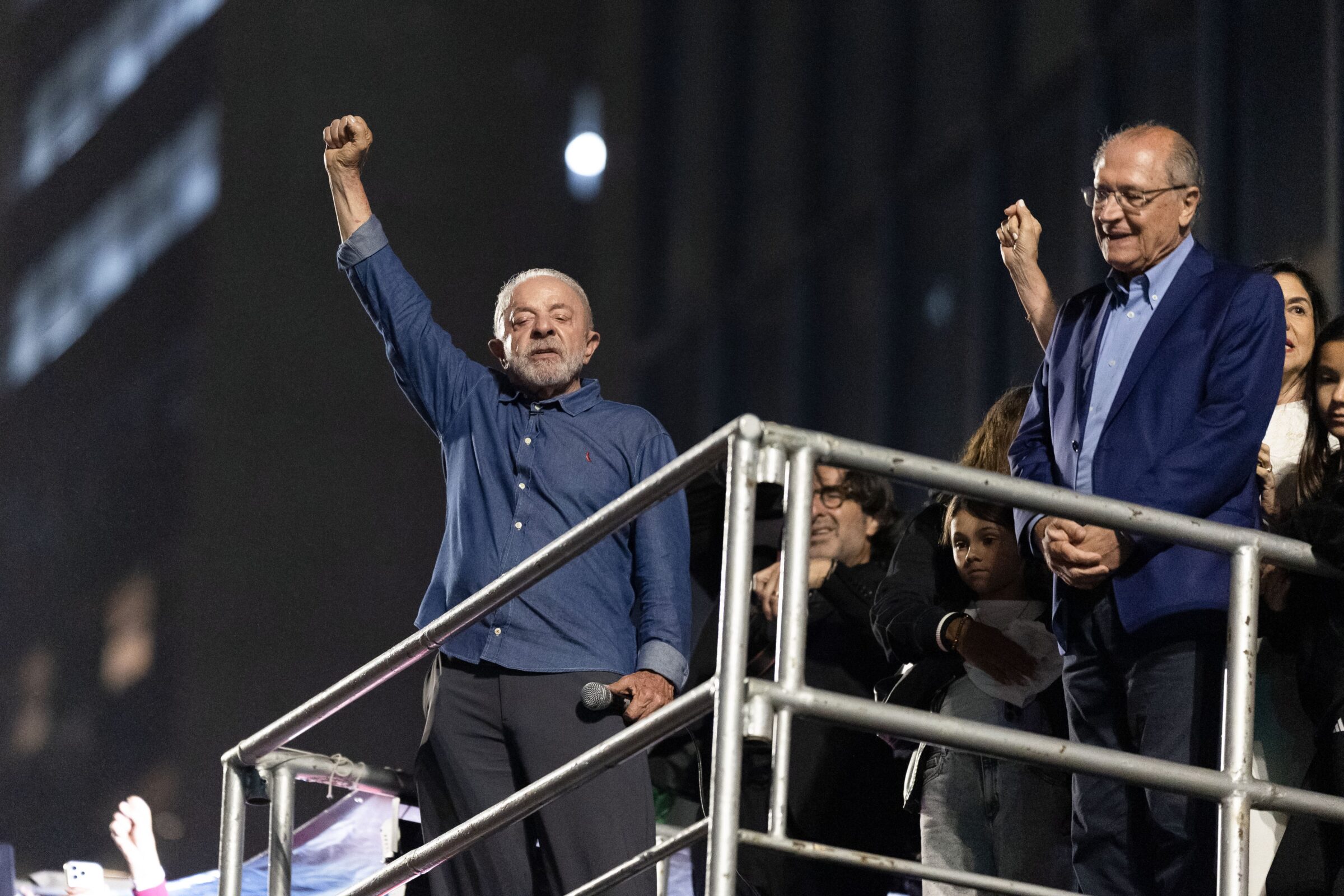
In his speech marking his fourth presidential victory, Lula said: “I want to thank the Brazilian people – those who have stood by me for so long – and express my gratitude for the generosity of Brazil’s young people … We are going to change the way this country is governed … we are going to involve the people more. Digital communication will play a very significant role in this administration. I will deliver the best presidential term this country has ever seen.”
“Following our victory, we will have to discuss a new way of governing this country. The people’s participation in this campaign – the students, women, and workers who took to the streets – will compel us to find a new way of governing. This country will never be the same again,” said the reelected president.
Lula also stated that the debates against Bolsonaro and the PL campaign were riddled with lies and “denialism”: “I never thought a person could lie so much in this country, with such brazenness, as if there were not a single shred of humanity within him.”
Finally, he also addressed the problems his campaign faced regarding the dissemination of its messages on social media. The PT repeatedly denounced that the major social media platforms hindered or outright prevented the spread of its political messages, while Bolsonaro’s messages faced no such issues.
Is Meta meddling in Brazil's elections? With Sunday's runoff neck and neck, new reporting raises serious questions.
The pattern is hard to ignore: Lula's campaign was blocked from boosting Instagram posts for nearly 24 hours, his ad account was previously restricted, and… pic.twitter.com/DVjDWJa7Xw
Hence, he suggested placing limits on the power of the major corporations behind social media platforms – a stance he has taken on other occasions and which has caused friction with tech giants: “We cannot fail to recognize that a crime in the digital world must be treated the same as a crime in real life. We cannot have monstrous companies of this size – which make billions without paying taxes to our country – trying to alter election results,” Lula said in his victory speech.
Bolsonaro’s reaction
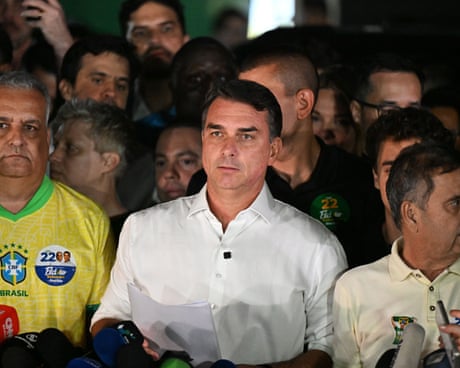
For his part, far-right politician Flávio Bolsonaro said he “rejects” the election results and announced that he will seek to have the election annulled: “We are going to consult with our legal team; we are going to request that these elections be annulled. I will not accept that the rules of the game have been changed in the middle of the game – once again – by Lula’s friends on the Federal Supreme Court.”
Bolsonaro, who delivered his speech to his supporters, was referring to the extension of voting hours. According to his team, the extension was ordered after the polling stations had closed, which, they claimed, violates Brazilian electoral rules – even though the PL itself had also requested the extension.
This is not the first time that Bolsonaro’s supporters have rejected Lula’s victory. In 2022, it was Jair Bolsonaro who refused to acknowledge his defeat. Months later, during Lula’s inauguration, hundreds of Bolsonaro supporters violently stormed several government buildings, after which investigations were launched into an alleged attempted coup d’état. One of those found guilty in the case was Jair Bolsonaro himself, who is currently serving a sentence for that crime.
However, it will be difficult for Bolsonaro’s allegations to gain traction in Brazil’s immediate future. With the exception of Argentina’s far-right politician Milei, South American countries – through their heads of state and foreign ministries – have publicly congratulated Lula on his victory, which amounts to a de facto recognition of his win.
However, the Bolsonaros still have the Trump administration as a last resort, as it has publicly supported the PL candidate, just as it did with his father in the past. This is the first time since Trump began his second term that a candidate he supported in a Latin American country has failed to win, which still raises questions about what Washington’s stance will be regarding Lula’s historic victory – a victory in which, against all odds, he managed to defeat Washington’s candidate and thus halted a wave of far-right victories in Latin America.
Brazilian voters have denied Latin America's resurgent right its ultimate prize. Lula's reelection limits U.S. President Trump's influence in the region and cements Brazil as a counterweight to Washington.
The week before October 25 in Brazil was frenetic. It appeared that every one of the over 200 million Brazilians had a political opinion about the presidential election. The country was fundamentally polarized. Polls showed that the vote was going to be tight, with most polls favoring the challenger Flávio Bolsonaro, son of the former president Jair Bolsonaro, and the standard bearer of the far right of a special type. But the incumbent Luiz Inácio Lula da Silva, known as Lula and president of Brazil from 2003 to 2011 and then since 2023, would not allow the polls to stop him. He traveled the length and breadth of the country, holding massive and energetic rallies to mobilize people to vote. In the first round, 21% of the voters did not turn out in a process that is otherwise compulsory (and a large section who did vote left the presidential section either unmarked or spoiled). Only 2.2 million ballots separated Bolsonaro (who won 47% in the first round) from Lula of the 158.7 million registered voters. To win between October 4 (first round) and October 25 (second round), Lula had to either attract people who had voted for Bolsonaro or those who had not voted or spoiled their ballots. No other candidate had turned around such a deficit in Brazil’s modern history. But Lula did it.
Streets
In the three weeks between the first and second rounds, Lula and his team motivated millions of people onto the streets in the large cities of Brazil, but also in several smaller, but significant towns. These enormous mobilizations created a sense that Lula would overcome the mathematical disadvantage presented by the voting numbers after the first round. All psephological analyses showed that Bolsonaro would cruise through in the second round, which would have indicated the impossibility for Lula. But the left did not rest on this handicap but went on the offensive.
In the first round, Bolsonaro finished 2.22 million votes ahead, but in the runoff, Lula finished with 4.43 million votes ahead. The margin moved by 6.66 million votes. These votes came from the large cities: the 319 cities with more than 100,000 inhabitants, home to 57% of Brazil’s population, delivered 3.89 of the 6.66 million of the turnaround. Lula’s vote grew more in municipalities that are more evangelical, richer, whiter, more schooled, and more urban. This meant that he ate substantially into Bolsonaro’s base, which was something that surprised even the Lula team. The key to the turnaround was the mass mobilizations driven by the social movements, with the Landless Rural Workers’ Movement (MST) in the lead.
Advances
Across his three terms, Lula has presided over an extraordinary advance in the social conditions of the Brazilian people. Bolsa Família, increases in the minimum wage, the expansion of public universities, and support for family farming brought food, income, and opportunity into households that the ruling class had long treated as disposable. These achievements changed millions of lives and established that poverty could be confronted through public action. Yet the political formula that made these advances possible has reached its limits. Lula sought to improve the lives of the poor while accommodating the power of finance, agribusiness, and the dominant sections of Brazilian capital. During his first two terms, favorable international conditions created room for this accommodation. But redistribution without a corresponding transformation of economic power left the foundations of inequality intact, allowing the beneficiaries of the old order to retain the means to obstruct change and reverse its gains.
In his third term, fiscal restrictions, expensive credit, and dependence on conservative parliamentary forces have narrowed the space for reform. Social programs remain indispensable, but they cannot by themselves overcome insecure employment, household indebtedness, inadequate public services, or the concentration of land and wealth. The exhaustion lies in a governing strategy whose compromises increasingly obstruct the fulfilment of its promises. Lula’s personal authority cannot indefinitely bridge the distance between popular expectations and the concessions demanded by the powerful. A renewed project will require the organized strength of workers, peasants, and residents of the urban peripheries, the very people who form Lula’s base, with an agenda of agrarian reform, public investment, industrial development, and democratic control over finance. The movements that filled the streets must acquire greater power to shape the government’s direction. Defeating the far right opens that possibility, but securing the social gains of the Lula years will require confronting the structures that continually threaten them.
Defeat of Trump
US President Donald Trump, his vice president JD Vance, and members of the Brazilian diaspora in Miami put an immense amount of effort into defeating Lula. Brazil, which makes up half the landmass of South America, and is the largest economy in Latin America, stands out against the wave of far-right governments that now dominate the Americas. Interference in the Brazilian elections is now an acknowledged fact, with Meta cutting off Lula’s accounts at a crucial stage of the contest and other reports of funding and social media intervention.
Trump had hoped that Bolsonaro would win in Brazil so that he can then strengthen his Shield of the Americas process that began in Miami in March 2026. This process was presented by Trump as an institutional form to coordinate security but also for the suffocation of the popular movements and the left. Lula’s victory has blocked Trump’s path to exercise the Monroe Doctrine. It has also meant that Trump will not be able to so easily access the critical minerals in Brazil or to dominate the new oil find in the basin of the Amazon delta.
Despite the obstacles faced by Lula, his victory has been able to show that the far right is not invincible.
Vijay Prashad is an Indian historian and journalist. He is the author of forty books, including Washington Bullets, Red Star Over the Third World, The Darker Nations: A People’s History of the Third World, The Poorer Nations: A Possible History of the Global South, and How the International Monetary Fund Suffocates Africa, written with Grieve Chelwa. He is the executive director of Tricontinental: Institute for Social Research, the chief correspondent for Globetrotter, and the chief editor of LeftWord Books (New Delhi). He also appeared in the films Shadow World (2016) and Two Meetings (2017).
An emergence in working-class turnout delivered Lula a historic fourth presidential term, and that outcome signals a shift in climate policy and Latin American integration.
The 2026 Brazilian presidential election ended in a runoff, determining the leadership of Latin America’s largest nation for the next four years.
According to official data released by the Superior Electoral Court (TSE), incumbent President Luiz Inácio Lula da Silva of the Workers’ Party (PT) secured a fourth non-consecutive term after defeating Senator Flávio Bolsonaro of the Liberal Party.
The TSE’s final official count showed that Lula da Silva received 64,256,232 votes, representing 51.79 percent of the total valid votes. Flávio Bolsonaro garnered 59,826,041 votes, accounting for 48.21 percent of the valid ballots cast.
Voter turnout and participation figures underscored the civic engagement across the country, with total reporting reaching 100 percent of polling stations nationwide.
This electoral result marks a significant political milestone, occurring against a backdrop of intense political polarization in Brazil and the growing political influence of the far right across Latin America.
Lula’s victory sparked a wave of strong emotion in Brazil’s streets, eliciting a wide range of reactions, both positive and negative, to the outcome. In this in-depth article, we explore the discourse that has emerged following the confirmation of Lula da Silva’s win, which secures him a fourth term in office.
El triunfo electoral de Lula en Brasil redefine el tablero geopolítico y la correlación de fuerzas en América Latina.
The text reads, “Lula’s electoral victory in Brazil redefines the geopolitical landscape and the balance of power in Latin America. Do you think Lula’s win could shift the political equilibrium in the region?”
Domestic Mobilization and National Reactions to the Election Outcome
Brazil’s highest electoral authority, the Superior Electoral Court (TSE), announced the results of the presidential election runoff held this Sunday, October 25.
Following the official declaration, various reactions emerged within Brazil, reflecting the country’s political landscape.
Social organizations, trade union federations, and grassroots community networks gathered in major urban centers, including São Paulo, Rio de Janeiro, and Belo Horizonte, to await the election outcome.
Once the results were known, union leaders and civil society representatives emphasized that these elections, and Lula’s victory, demonstrate public support for the social welfare programs, minimum wage adjustments, expansion of public housing, and labor protections established during the current administration.
National media outlets highlighted the narrow electoral margin between the two candidates and its implications for the executive power exercise.
Market analysts noted that investor attention will focus on fiscal discipline targets, the management of public spending, and upcoming ministerial appointments for the new presidential term.
Is important to highlight that civic mobilization during the three-week interval between the first and second rounds played a decisive role in shaping voter participation.
Campaign committees focused on reducing voter abstention in metropolitan suburbs and organizing localized voter outreach efforts. Youth organizations and community groups conducted door-to-door awareness campaigns, while labor unions like the Unified Workers’ Central (Central Única dos Trabalhadores) coordinated transportation logistics to facilitate polling access for working-class voters in distant municipal sectors.
The national reaction also reflected broader debates regarding institutional stability and social cohesion. Differences emerged among religious organizations; even before the elections, the Catholic Church had issued statements noting that Flávio Bolsonaro’s proposals diverged from the Church’s social doctrine. Conversely, evangelical leaders have supported the claims of the defeated candidate by calling for the election results to be annulled.
BRAZIL ERUPTS AS LULA DEFEATS BOLSONARO
Brazil’s leftist President Luiz Inácio Lula da Silva staged a remarkable political comeback, defeating far-right candidate Flávio Bolsonaro to secure a historic fourth term, sparking mass celebrations nationwide.
Flávio Bolsonaro Response and Political Posture of Conservative Forces
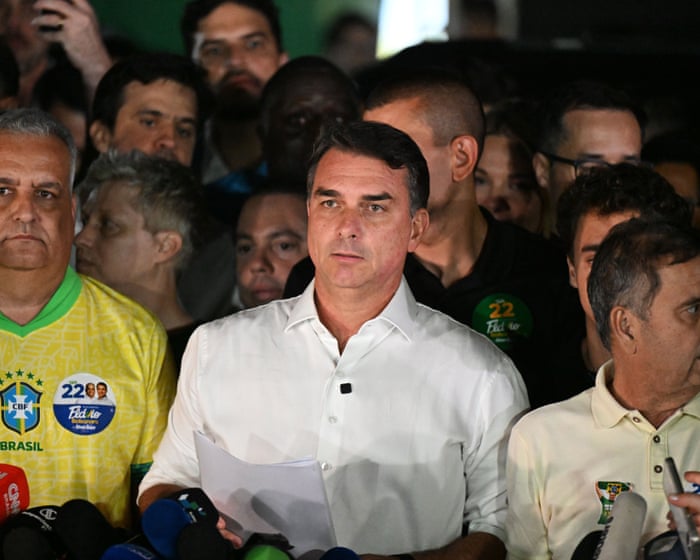
In the immediate aftermath of the vote tabulation, Flávio Bolsonaro addressed his supporters and members of the press regarding the election results.
Bolsonaro and his campaign team requested that the TSE review procedures for voting hours at polling stations and the transmission of digital vote tallies in certain municipalities.
Candidate Flávio refused to acknowledge the election results that declared Lula the winner, stating: “It is impossible to recognize the outcome of these elections given the circumstances under which these events took place. We are going to request their annulment.”
Political analysts note that this post-election reaction aligns with common strategies used by conservative political groups in the region. Rather than immediately accepting the preliminary results, opposition leaders signaled their intention to maintain rigorous scrutiny over electoral authorities and administrative procedures.
Furthermore, Liberal Party representatives said that they will form an organized opposition bloc in the National Congress to oversee government actions, exercise legislative oversight, and challenge proposed changes to public policy throughout the legislative term.
🇧🇷 Lula's victory. A good day for socialists and not so good for capitalists.
80 years old and will be serving his last term as President. In 2022, after months in prison, he returned and won. He wins again after losing the 1st round in early October.
The Executive Victory Address and Focus on Institutional Integrity
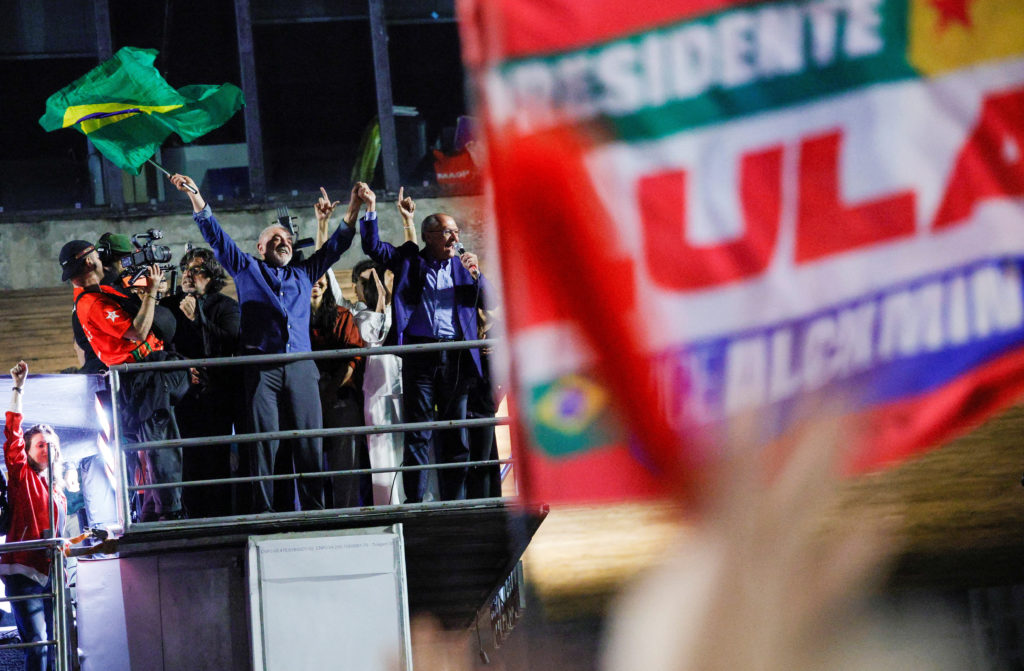
President Luiz Inácio Lula da Silva delivered his victory address in São Paulo before supporters, party leaders, and domestic and international news agencies.
Lula’s speech outlined the strategic direction for his upcoming presidential term, focusing on national unity, poverty alleviation, re-industrialization, and democratic institutions’ preservation.
A central focus of the president’s address was digital communication, social media platform operations, and election administration. President Lula highlighted the impact of algorithmic distribution networks and automated messaging systems during political campaigns, asserting that digital platforms must adhere to national legal frameworks to prevent the spread of disinformation.
Lula said: “Brazil is no one’s backyard. We will change the way we run this country; we will make people participate more in the decision-making process.”
In his speech, President Lula emphasized the urgency of implementing updated regulatory guidelines for foreign technology companies operating within Brazil.
Lula stated that national sovereignty encompasses digital infrastructure, data protection, and the integrity of public communication channels.
The administration announced plans to work within the National Congress and regulatory bodies to draft legal frameworks addressing content moderation standards, corporate transparency, and digital network accountability during future democratic processes.
China takes note of the announcement by Brazil’s Superior Electoral Court of President Lula’s runoff victory @LulaOficial and extends congratulations. China stands ready to work with Brazil to advance the building of the China-Brazil community with a shared future. pic.twitter.com/1ClWUSx61b
International leaders and foreign governments issued statements following the announcement of the TSE election results. Despite the rejection of the results by Flávio Bolsonaro, leaders from Latin America, North America, and Europe weighed in on the outcome.
Mexican President Claudia Sheinbaum congratulated President Lula and the people of Brazil. Meanwhile, Uruguayan President Yamandú Orsi spoke with Lula by phone to congratulate him on the democratic process.
Even presidents with openly right-wing leanings, such as Noboa in Ecuador, Fujimori in Peru, and Kast in Chile, commented on the results and congratulated Brazil on Lula’s victory.
A common theme among these different heads of state was their emphasis on the importance of regional cooperation, economic integration through platforms like CELAC, and a shared vision regarding environmental sustainability.
In the United States, lawmakers such as Senator Bernie Sanders celebrated the election result, describing it as a reaffirmation of democratic governance and citizen participation in the hemisphere.
Meanwhile, Europe and Asia also reacted to the election result. French President Macron congratulated Lula on his fourth electoral victory and urged the deepening of the bilateral partnership between the two nations.
Spanish Prime Minister Sánchez described the win as a great victory via his social media channels, while Costa, the president of the European Council, spoke with Lula by phone to reaffirm the bloc’s ties with Brazil.
Additionally, a spokesperson for China’s Ministry of Foreign Affairs expressed Beijing’s full readiness to foster mutual development. Russian President Putin also sent his warmest congratulations via an official statement.
The Celebrations in Brazil for Lula's Victory are MASSIVE
There are THOUSANDS on the streets celebrating these Presidential Elections Results
Legislative Challenges and Regional Implications for Latin America
President Lula’s fourth term will be shaped by institutional dynamics and broader regional shifts. Domestically, the executive branch faces a conservative-majority National Congress, where conservative and center-right coalitions hold substantial parliamentary seats.
Pushing forward key agenda items, such as tax reform, social welfare expansion, fiscal adjustments, and climate conservation policies, will require building broad legislative alliances across party lines.
For their part, followers and supporters of Lula da Silva have announced that they will be monitoring the promises Lula made during his campaign, such as safeguarding the Family Allowance (Bolsa Família) program, strengthening food security, and increasing the real minimum wage.
Regionally, Lula’s victory consolidates left-of-center leadership in two of Latin America’s largest economies, Brazil and Mexico. This alignment provides institutional support for regional integration efforts, sustainable development initiatives in the Amazon basin, and coordinated strategies on international trade and environmental governance.
The election outcome signals sustained continuity for progressive policy frameworks while requiring pragmatic negotiation to navigate economic constraints and political polarization both domestically and internationally.
Sources: Brasil de Fato – Agência Brasil – Gov.br – O Globo – Folha de S.Paulo – O Estado de S.Paulo – El País – CNN Brasil – EFE – Instituto Tricontinental – La Base América Latina – Diario Red – TeleSUR – Al Jazeera
This story originally appeared in Common Dreams on Oct. 26, 2026.It is shared here under a Creative Commons (CC BY-NC-ND 3.0) license.
“There is nothing inevitable about the far right,” said one former Obama administration official Sunday night as supporters of the left-wing Student List in Serbia poured into the streets of Belgrade and other cities across the Balkan country, celebrating their defeat of right-wing President Aleksandar Vučić, who has led the nation for nearly a decade and has been accused of corruption and autocratic rule.
The Student List’s victory coincided with that of Brazilian President Luiz Inácio Lula da Silva, who was also backed by a student-led movement that marched through Rio de Janeiro and other cities in recent weeks, as US President Donald Trump was accused of election interference on behalf of right-wing Sen. Flávio Bolsonaro, Lula’s opponent.
Both countries reported high voter turnout in the pivotal elections, proving, as journalist Anne Applebaum said, “that voters can alter what feels like a historical shift.”
In years of genocide hope came from the young
In Serbia 2 yrs of youth-led protest -integrity, unity, perseverance- brought change
Today that hope is a rainbow its far end in Brazil
May it shine wherever wounds run deep and the young are fighting the old
— Francesca Albanese, UN Special Rapporteur oPt (@FranceskAlbs) October 26, 2026
In Serbia, Vučić said it was “clear that we have lost the election,” as results showed his Serbian Progressive Party (SNS) had won about 105 seats while the Student List had won at least 135.
The Student List movement, officially registered by the Republic Electoral Commission as “Studentska lista—Studenti pobeđuju” (Student List—Students Win) began in November 2024 after the concrete roof of a newly renovated train station in Novi Sad collapsed, killing 16 people. Students and other Serbians blamed corruption and negligence by Vučić’s government, and soon began blockades at a majority of the country’s higher education institutions.
Rallies in the coming year drew hundreds of thousands of people. The political movement that grew out of the sustained protests called for an independent judiciary, a special prosecutor to hold public officials accountable, independent reviews of major infrastructure projects, a higher minimum wage, and better funding for education, healthcare, and agriculture.
A cardiologist and professor from Novi Sad, Ilija Srdanović, topped the list of 250 candidates that the Student List put forward ahead of the snap elections on Sunday, but the movement has said Srdanović will not automatically be its choice for prime minister. The list of candidates for Serbia’s 250-seat Parliament includes doctors, farmers, activists, athletes, and actors.
“Never again tyrants in our country,” Srdanović said after the defeat of Vučić, who was prime minister before becoming president in 2017 and has been Serbia’s central political figure since 2012, developing a reputation for threatening his critics and cracking down on press freedom.
One Student List supporter, Sara, told The Guardian in Belgrade, “It’s very strange that on the very streets where the police beat us, on the streets where we retreated countless times in the face of the gendarmerie, we are now standing here as the victors.”
Nebojsa Cosic said to Reuters: “The people have won! The people defeated a dictator! The people will lead Serbia!”
In Brazil, thousands rallied ahead of the runoff election between Lula and Bolsonaro, the son of convicted former President Jair Bolsonaro, a close Trump ally who is serving a 27-year sentence under house arrest for orchestrating a coup attempt after his election loss in 2022.
Right-wing candidates won a significant number of seats in the earlier elections, which followed Trump’s push to secure partnerships across Latin America—stoking fears that Bolsonaro could win Sunday’s runoff and pushing students to lead pro-Lula rallies and marches across the country.
At a Copacabana Beach rally in Rio on Saturday, supporters carried a yellow and green banner that read, “We are going to turn this around!”
Isabella Graze, a retired teacher who joined a 10-million member WhatsApp group aimed at mobilizing pro-Lula voters, told The Guardian that “being a soldier in Lula’s army… means fighting for Brazilian democracy. This isn’t a normal election.”
Huge respect to the organizers, activists and voters of Brazil and Serbia. These results are due to so much work and they give us so much hope. There is nothing inevitable about the far right.
The Serbian and Brazilian elections came two days before Israelis are set to vote, potentially ending the long-running term of Prime Minister Benjamin Netanyahu, an accused war criminal whose US-backed government has waged war on Gaza, killing more than 74,000 Palestinians, and pushed to violently take control of more of the occupied West Bank.
They also came just over a week before the midterm elections in the US, with Democrats pushing for congressional control to rein in Trump for the final two years of his term. The campaign has been marked by openly racist, anti-Muslim attacks by Trump and his allies on Michigan US Senate candidate Abdul El-Sayed, a Republican ad claiming that Ohio Democratic gubernatorial candidate Amy Acton lied about her abusive childhood, and persistent claims by the president that the cost of living is down, contrary to all evidence.
“Feeling so much hope from the results out of Serbia and Brazil,” said Rep. Yassamin Ansari (D-Ariz.). “This took tremendous people power, organizing, and grit. Now it’s time to turn our country around, too.”
Kenneth Roth, former executive director of Human Rights Watch, said Sunday was “a good day for democracy.”
“Israel could be next on Tuesday, then the US midterms the following week,” said Roth. “The best case against the autocrats is the autocrat.”
In a historic turn of electoral tides, Brazil’s incumbent president Luiz Inácio Lula da Silva defeated far-right opponent Flávio Bolsonaro on Sunday (25 October,) alleviating fears that a Bolsonaro-dynasty comeback would topple the world’s fourth-largest democracy.
Following a disastrous first-round election for Lula on 4 October, in which he narrowly lost a majority in Brazil’s national congress, the Workers’ party leader overturned predictions to become the first president to win the second round of voting after losing the first one.
First-round voting gave 47 percent for former president Jair Bolsonaro’s son, Flávio, and his rightwing Liberal Party, whose voters mainly represent wealthy and emerging middle classes in the south of Brazil, as well as evangelical Christians, one of the largest religious groups in the country.
Lula’s northeastern, working class, multi-racial support base only made up 45 percent of all primary votes, but climted to 51.8 percent in Sunday’s second-round of the presidential election.
Despite setting a record in being the first Brazilian president to win four non-consecutive terms, Lula’s triumph still leaves room for possible conflict.
Bolsonaro, whose campaign capitalised on continuing the work of his divisive father, who is currently serving a 27-year prison sentence for plotting a coup after losing the 2022 election, refused to concede defeat – leaving an open window for history to repeat itself.
“We’ll request the annulment of these elections,” Bolsonaro told the press after votes had been counted, accusing Brazil’s Supreme Court of having “changed the rules of the game in the middle of the game,” by ordering polls to stay open for two more hours on Sunday.
What Brazil’s nationalist candidate declared as “unacceptable” was an idea initially intended to facilitate all Brazilians’ attendance at the polls, since multiple areas were reported to have been affected by public transport problems.
Bolsonaro’s issue with the courts is another link in the chain of power-hungry promises he had made during his campaign to “re-democratise this country”.
Without guidance on what that could mean beyond his publicised desire to extend the duration of presidential terms, many voters fearfully associated his remarks with a potential coup, or with Jair Bolsonaro’s infamous liking for authoritarian rulers – including Brazil’s own 1964-1985 dictatorship.
‘Lula’s army’
This article continues, but the full version is available only to EUobserver.com subscribers. Visit account.euobserver.com/membership
In spite of the fact that the presidential victory of Brazil’s president Lula in yesterday’s elections came with the seal of the country’s Superior Electoral Court, CHEGA leader André Ventura
Pro-democracy campaigners urged governments around the world, including in the US, to formally recognize Brazilian President Luiz Inácio Lula da Silva victory in Sunday’s runoff election as his far-right challenger, Senator Flávio Bolsonaro, refused to accept the results, sparking fears of political violence and another coup attempt. “It is impossible to recognize the results. I […]
This story originally appeared in Common Dreams on Oct. 26, 2026.It is shared here under a Creative Commons (CC BY-NC-ND 3.0) license.
In a historic comeback, Brazilian President Luiz Inácio Lula da Silva triumphed in Sunday’s run-off election over right-wing challenger Flávio Bolsonaro, the son of former Brazilian President and convicted coup-plotter Jair Bolsonaro.
Lula’s victory comes despite the best efforts of US President Donald Trump and his Big Tech backers, as Trump’s administration openly intervened on behalf of Bolsonaro and Meta boosted pro-Bolsonaro over pro-Lula content on its social media platforms.
“Lula won, Brazil won, democracy won, the Americas won,” saidPennsylvania Democratic House nominee Chris Rabb from Lula’s campaign headquarters in Sao Paulo, Brazil, after the results were announced around 9:15 pm Brasilia time. “They declared victory for Lula da Silva for his fourth term against a raging fascist, rubber-stamped for Donald Trump.”
“These elections have represented a historic victory for the majority of the Brazilian people, who mobilized to defend democracy against the threat of fascism.”
Rabb noted that Lula’s victory marked an important turning point for the left in Latin America, as far-right parties hadwon every other national election in the region since the start of Trump’s second term. “This is the first victory for democracy in this hemisphere since Trump took office,” Rabb said.
ith 99.99% of the votes counted, Lula won by 51.79% to Bolsonario’s 48.21%, making him the first Brazilian candidate since the restoration of democracy in 1985 to win a second-round election after coming in second in the initial round.
“I would like to thank the Brazilian people for the generosity they have shown me for a long time,” Lula said in his victory speech in São Paulo late Sunday. “And, in this second round, I want to thank the generosity of the Brazilian youth, who took to the streets to defend democracy.”
After finishing two percentage points behind Bolsonaro in the October 4 poll, Lula re-energized his campaign by finally shortening the Brazilian workweek from six to five days, as his supporters launched demonstrations against the far-right.
“These elections have represented a historic victory for the majority of the Brazilian people, who mobilized to defend democracy against the threat of fascism,” Francesca Emanuele, senior international policy associate with the Center for Economic and Policy Research (CEPR), told Common Dreams from Sao Paulo, Brazil, where she was monitoring the elections. “It was the Brazilian people themselves (students, working-class, and middle-class Brazilians) who took to the streets and mobilized tirelessly from the very first day after the first round of voting to overturn the first-round results and secure Lula’s victory.”
Reginaldo Lopes, a federal deputy for Lula’s Workers’ Party, told The Guardian: “I feel incredible… This is Brazil telling the world that the extreme right is fascist, that the extreme right is against Black people, is against the poor, against the state, against gay people… We are going to reorganize the democratic forces [in this country.]”
Sunday’s victory did not come easily, as the Lula campaign complained of bus shortages in the key cities of Salvador and Sao Paulo, requesting that the Brazilian Supreme Court extend the voting by two hours. The court granted the request, so polls closed at 7 pm Brasilia time instead of 5 pm.
“Lula’s win is the first good news for the planet in a while!”
“Lula has won despite the unfair practices his campaign has faced from Meta, interference from the Trump administration, and severe disruptions to public transportation on election day in major cities (where up to 50% of bus fleets were reportedly out of service),” Emanuele told Common Dreams. “These disruptions disproportionately affected working-class voters, who rely heavily on public transportation and have historically been a key part of Lula’s electoral base.”
She continued: “Despite all these obstacles, Lula’s campaign managed to turn around a first-round result that, just a few weeks ago, had seemed extremely difficult to reverse. This is a major victory for the majority of the Brazilian people.”
Several advocates and lawmakers hailed the election results as a rebuke to the far-right and the Trump administration in particular.
“During his campaign, President Lula characterized 2026’s elections as a choice between ‘sovereignty or submission.’ Brazil has clearly chosen sovereignty,” the Democratic Socialists of America (DSA), who sent a delegation to observe both rounds of Brazil’s elections, wrote in a statement.
Progressive Rep. Ro Khanna (D-Calif.) posted on social media: “People all across the world are fighting back against extremism. With Lula in Brazil, they just won. Authoritarian leaders always attack democracy because they stand no chance against the will of their people. Trump must respect the results and not undermine Brazil’s elections.”
Sen. Bernie Sanders (I-Vt.) said: “Congratulations to Lula on his extraordinary reelection victory in the Brazilian presidential election. Lula has stood up for Brazilian workers & democracy—and will continue to do so in the next four years.”
“Lula’s hard-fought victory is an indictment on the right-wing wave sweeping through Latin America,” Joseph Bouchard, a journalist and researcher who focuses on Latin America, told Common Dreams. “Except for [ Salvadorian President Nayib] Bukele, the right across the region is still incredibly unpopular, and rightly seen as corrupt, autocratic, and uncommitted to fixing systemic issues. Lula shows there is still a fight for democracy worth having, while the region is plunged into its darkest, most regressive period since the Cold War. The entire region is populated by vassal states for US interests, who have declared states of exception to curtail rights, freedoms, and basic principles of social democracy, in the name of a failed and anti-human war on drugs.”
Lula’s victory also has planetary consequences, as he broughtdeforestation in the Amazon rainforest back down to record lows after it accelerated during the tenure of Jair Bolsonaro, who attacked environmental protections and Indigenous rights.
“Lula’s win is the first good news for the planet in a while!” wrote350.org and Third Act co-founder Bill McKibben. “I bet it shaves a tenth of a degree off how hot our Earth eventually gets, which will save millions of lives. Thank you Brazil!”
Lula still faces a fight ahead, as Bolsonaro announced it was “impossible to concede the election result” due to the extension of polling hours, even though his team had also sought an extension in parts of southeastern Brazil because of unfavorable weather.
Bouchard pointed out that “Lula will fight an uphill battle with a far-right Congress, inept Supreme Court, and constant outside pressure..”
“Trump’s silence on the result is worrisome, with Flavio not conceding and demanding an annulment,” he told Common Dreams. “Sadly, much of the corporate press has legitimated these claims, despite the right’s concerted efforts at destroying democracy. No matter how much the authoritarians try to tip the scales, the people can still prevail, if the left is willing to fight. This might prove to be a confidence boost to the demoralized and overpowered left all over the region, and may hopefully set the region back toward progress, hard fought after decades of dictatorship and neoliberal transitions.”
US-based Lula allies urged others in the US to defend Brazil’s democracy from Trump administration interference and to take their own stand against the far-right in the upcoming midterm elections.
The DSA wrote:
However, the fight continues—the thin margin of this victory indicates that continued struggle and mobilization will be crucial. As global capitalism fails to solve worsening problems of its own making, the capitalists turn to right-wing authoritarianism. Brazil’s left-wing coalition will face a right-wing Congress at home, a hostile Trump administration in the US, and hostile capitalists both [at] home and abroad in the years ahead. We of the DSA stand in solidarity with our comrades in the PT [Lula’s Partido dos Trabalhadores], PSOL [Brazil’s left-wing Socialism and Liberty Party], and Brazilian social movements in this fight for democratic self-determination.
This solidarity means recognizing our country’s role in the threat to Brazilian democracy. These elections were marred by interference from the US, whether by Trump’s politically motivated tariffs, or by manipulation of social media by US-based tech companies like Meta. They aimed to subvert Brazil’s democracy to favor its far-right allies grouped in the “Shield of the Americas,” and to get their hands on crucial natural resources, such as lithium, cobalt, and rare earth minerals as well as petroleum and iron ore, which Brazil possesses in abundance and which Lula has sworn to protect as national patrimony. The DSA categorically denounces these meddlesome, imperialist efforts. We fight for a working-class foreign policy—one which centers peace, multilateralism, and respects national self-determination, free from US interference.
Rabb concluded his message with a call to action, and a celebration: “This is a big deal for us in the United States. This shows that Trumpismo is waning, and it is our responsibility now to make sure that we kill the beast. That beast is injustice, it’s oligarchy, it’s neoliberalism. All of these things. Now it’s our turn, folks. November 3 is right around the corner, but right now I’m going to party with these Brazilians.”
Update: This piece has been updated with commentary from Joseph Bouchard.
Bolsonaro quickly refused to concede defeat and asked for the election results to be annulled after an evening of chaos at some polling places that followed a last-minute decision to extend voting by two hours.
Since the first round of the presidential elections, segments of the Brazilian left have intensified their criticism of evangelicals, frequently portraying them as a reactionary force responsible for the rise of the right in the country. This interpretation offers a convenient explanation for progressive electoral failures, but it demonstrates a rather limited understanding of Brazilian social reality. The evangelical phenomenon has historical, cultural, and economic roots that cannot be reduced to Bolsonarism.
The first mistake is treating evangelicals as an organized political bloc. Brazil’s Protestant landscape encompasses historical denominations, Pentecostal churches, independent Neo-Pentecostal organizations, and countless local congregations, often characterized by profound doctrinal differences. There is no central ecclesiastical authority capable of coordinating this entire landscape, nor is there a uniform political orientation shared by its members. Although religious leaders have played an important role in mobilizing voters in favor of Jair Bolsonaro, their positions do not necessarily reflect the convictions of all believers.
Furthermore, the expansion of Brazilian evangelicalism has already shown signs of slowing, according to recent demographic analyses. This demonstrates that the phenomenon has its own dynamics and does not depend exclusively on the political climate. Many Brazilians find networks of solidarity, moral guidance, everyday assistance, and forms of community organization in evangelical churches. Some believers maintain conservative positions on social issues, but support social policies, workers’ rights, and causes that do not correspond to the Bolsonarist agenda. Similarly, some evangelical groups adopt more liberal approaches to cultural issues, as illustrated by the Universal Church, where support for abortion is permitted. Ultimately, this is an extraordinarily complex and broad phenomenon that cannot be reduced to simplistic political labels.
Another mistake is interpreting Brazilian evangelicalism as merely a product of American influence. The activities of foreign missionaries and international funding contributed to the expansion of certain denominations, particularly throughout the twentieth century. However, the Brazilian experience developed distinctive characteristics of its own. Churches adapted their language, practices, and organizational structures to the country’s cultural conditions, developing a form of popular religiosity deeply connected to Brazil’s national religious imagination.
In many contexts, beliefs in direct spiritual intervention, the search for healing, liberation from evil influences, and collective participation in rituals of personal transformation have parallels with practices found in Afro-Brazilian religious traditions and popular Catholicism. This does not mean that these religions are equivalent. Rather, it demonstrates that evangelical growth took place within a society profoundly shaped by syncretism and the continuous reinterpretation of its religious traditions. In practice, Brazilian evangelicalism is a genuine expression of the country’s popular spirituality, not merely an American import.
The urban dimension of this process must also be considered. For decades, the growth of Brazil’s urban peripheries and major cities created social needs that traditional institutions struggled to meet. Despite its historical importance, the Catholic Church failed to maintain a pastoral presence in every territory commensurate with the pace of urbanization. Evangelical churches occupied part of this space, establishing communities close to residents, providing everyday support, and building lasting social ties.
This presence is particularly important in favelas, peripheral neighborhoods, and prisons. These are environments where churches can offer a sense of belonging, community discipline, material assistance, and opportunities to rebuild one’s life. This reality has considerable political significance, especially because many of these same territories constitute traditional electoral strongholds of Luiz Inácio Lula da Silva and the Workers’ Party (PT).
This apparent contradiction exposes the limitations of the categories employed by segments of the left. A worker may vote for Lula because of his economic policies while attending a conservative church. Another may support progressive social programs while rejecting certain cultural positions held by the left. Political and religious identities do not have to coincide entirely.
Bolsonarism has managed to establish important alliances with evangelical leaders, mobilizing religious symbols and moral discourse as part of its electoral strategy. This does not give it ownership of the evangelical phenomenon. Confusing these two realities prevents the left from understanding the needs, aspirations, and contradictions of millions of Brazilians.
To build a lasting political alternative, progressives must abandon the tendency to classify entire communities as ideological enemies. Brazilian evangelicalism is plural, socially rooted, and culturally autonomous. Ignoring this complexity means giving up on understanding a decisive segment of Brazilian society.
In a careful exercise in political correctness, President António José Seguro has congratulated Brazilian counterpart, Lula da Silva, on his re-election for an unprecedented fourth term, expressing optimism over the
Lula plans to expand technical education and use renewable energy to attract data centers and keep information stored in Brazil.
Brazilian President-elect Luiz Inácio Lula da Silva has pledged to develop a domestic artificial intelligence system, expand technical education and attract data centers powered by renewable energy, aiming to strengthen Brazil’s technological independence and accelerate its transition to a developed economy.
Speaking after his victory in the presidential runoff, Lula said Brazil must invest in mathematics and engineering to build its own artificial intelligence capabilities rather than depend on technology developed in China or the United States.
“We will teach more mathematics, more engineering, because I don’t want to depend on Chinese or American artificial intelligence; I want to create a Brazilian one,” he said.
Lula also pledged to use Brazil’s renewable energy resources to attract data centers and keep information stored within the country. The proposal forms part of a broader push to expand the digital economy and strengthen domestic technological capacity.
Text Reads: The Brazil we wish to build is a country where our elderly are cared for with dignity, women are respected, and everyone has the right to live out their faith in freedom. It is a country that respects differences, with a State that guarantees rights for all—because to govern means to look after 215 million Brazilians, without distinction. Respect must be the starting point for us to build, together, a Brazil that is increasingly fair and humane.
“We want to transform this country from a developing country into a developed one,” he said, identifying the digital, green and creative economies as key areas for investment.
He also outlined an ambition for Brazil to play a central role in political and economic decision-making and in efforts to promote peace.
Lula promised that his next term would deliver unprecedented results, telling supporters: “I want to make a commitment: I will deliver the best term of office any president has ever had in Brazil’s history. You can be sure of that.”
The president-elect, who turns 81 on Oct. 27, dismissed concerns about his age as he prepares to take office for another term. He pledged to devote himself fully to the country’s development and to improving the daily lives of Brazilians.
“I will dedicate 20 or 24 hours a day to making this the country everyone dreams of, where people can go to sleep and wake up in complete peace of mind,” he said.
Lula also thanked voters for their support in the runoff and praised young people who took to the streets to defend democracy, crediting their participation as a key factor in his victory.
His pledges place artificial intelligence, renewable energy and digital infrastructure among the priorities he has outlined for Brazil’s next phase of development, alongside his ambition to transform the country into a developed nation.
President Luiz Inácio Lula da Silva’s re-election ended a string of victories by right-wing candidates in Latin America. His opponent, Flávio Bolsonaro, fled Brazil for the United States.

 Login