On a lecture tour of China, John Macnab finds that even one slide mentioning Taipei is enough to get organisers sweating and warning of consequences for his hosts. If this is his last column, you'll know what has happened.
Social media platforms in Germany will be required to ensure 20% of news feed journalistic content is 'diversity-certified' by the Government under draconian new laws designed to combat the 'far Right', says Eugyppius.
Who could have predicted that age-gating large sections of the internet in a crusade to shield children's eyeballs from vaguely defined "harmful content" would have disastrous consequences and wouldn't ultimately protect kids? Apparently, the United Kingdom's online regulator, Ofcom, couldn't.
On Thursday, Ofcom released a report assessing whether the government should make changes to the content categories of the 2023 Online Safety Act, a set of laws which require companies operating in the U.K. to prevent children from "accessing harmful and age-inappropriate content and provide parents and children with clear and accessible ways to report problems online when they do arise." The act's "child safety regime" (Ofcom's words) went fully into effect in 2025, when porn websites in the country began checking IDs. Unfortunately, as Reason's Elizabeth Nolan Brown has pointed out, the age-verification rule has impacted far more than adult websites. Already, the Online Safety Act has age-gated a wide range of content, including war news, the "NoFap" subreddit, and a historic art image, creating a mass chilling effect online.
Ofcom's report, however, says little about these age-gating concerns for adults, and its own findings highlight the act's underwhelming results. In the report, Ofcom notes that "Most children in the UK say they have encountered at least one piece of harmful content online in a four-week period." It adds that "at a total level there was no significant change in the proportion of children encountering harmful content over the first nine months after the children's safety duties came into force in July 2025." So, it appears the act is requiring adults to fork over their IDs to access a wide range of content, some of which is innocuous, while playing a never-ending and unsuccessful game of whack-a-mole trying to eliminate "harmful" online content from kids' feeds.
Instead of suggesting to repeal the Online Safety Act because it does not seem to be working or because it imperils online freedom, Ofcom's report proposes to broaden the law's scope. The regulator recommends adding "body stigma content and depression content, currently identified by Ofcom as kinds of non-designated content, to the category of priority content that is harmful to children." Priority content is defined as "content that services must protect/minimise the risk of children in age groups judged to be at risk of harm from encountering." In other words, online platforms could have more reasons to potentially age-gate, block, or avoid publishing out of fear of violating the law.
The report does not address the U.K. government's plans to ban children under the age of 16 from accessing social media, and Ofcom says it will soon publish an assessment of "what highly effective age assurance looks like" for determining whether someone is 16 or older. But if the social media ban unfolds anything like it did in Australia, where kids are easily circumventing it, it is likely to flop, just as the Online Safety Act has.
Detailed report finds that Israel has committed “mediacide”. Israel has used “interconnected patterns” which have both facilitated genocide and hindered accountability. Media have repeated unverified Israeli claims & stripped away historical context
The BBC have been “very compliant to Israel." BBC threatened job loss to enforce compliance. “There is a huge amount of anger amongst many BBC journalists and staff who are disgusted at what their organisation is doing
There has been much consternation this week about the use of fake polls in the media, with some government officials promising swift, and legally dubious, punishments for broadcasters that use them.
The use of these fake polls came to light on Wednesday, when The New York Timesreported that "well-known polling aggregators," including the paper itself, had been citing fake surveys by Wedgewood Polls. The fake polling scheme was revealed when the outlet FivePlusOne contacted Wedgewood Tuesday for comment about an investigation into the pollster. That night, Wedgewood posted a now-deleted statement declaring that it was an "experimental project to demonstrate the vulnerabilities, lack of oversight, and overall barrier to entry in the modern polling industry." The fake pollster claimed it was "far too easy" to be taken seriously in media and public commentary.
A similar "social experiment" was revealed in August, when the Los Angeles Times reported that a poll by Median Strategies showing Mayor Karen Bass "leading ahead of Councilmember Nithya Raman by a wide margin" was "bogus." An earlier poll by Median Strategies showed Francesca Hong, who lost her race for Wisconsin governor, up by more than 20 percentage points. Median Strategies told the Times that the firm was "created as a short term social experiment to examine how purported polling information could enter and spread through the political information ecosystem without independent verification."
If Wedgewood's polling stunts were in fact social experiments (pollster Nate Silver is very skeptical of this explanation), then the experiment worked. Nobody is completely immune to deceit. And while savvy media consumers have become more attuned to detecting AI writing and video fakes, masses of people still fall for more than fake polls, as they have for a long time.
In 2018, when the word "slop" meant food for pigs and before anyone wrote posts using ChatGPT, the Intelligencerasked the question: "How much of the Internet is fake?" The answer, the outlet concluded, was "a lot."
At the time, Reason's Nick Gillespie noted that the article was a "sobering and obvious revelation that much of what we browse, engage, and interact with is in some fundamental way, total bullshit." Gillespie solemnly observed, "we're living not in the disintermediated, utopian world chronicled in the early days of Louis Rossetto and Jane Metcalfe's Wired, but something closer to the endlessly creative, weird, off-kilter, semi-insane world imagined by Philip K. Dick and, later, Neal Stephenson."
Eight years later, the "semi-insane" world is no less insane, and humans, as they always have, are falling prey to increasingly intricate schemes and hoaxes. In September, Semafor's Max Tani revealed that a large number of YouTube videos—several of which garnered hundreds of thousands of views—were made by "ghost creators." In these videos, presented as news reports, real actors were paid to read AI-written scripts "laced with misleading claims and outright falsehoods." According to Tani, these "accounts appear to be run not by political operatives trying to win, or foreign intelligence efforts seeking to destabilize the US, but by engagement junkies detached from the stakes of politics." While any semi-media-literate person in 2026 could tell you that not all YouTube videos should be taken as fact, the scale of the operation was staggering.
The deception crisis plagues the media as well. Recently, the platform Qwoted, which connects journalists with sources, had to remove a supposed art therapy expert from its website after her "details were found to be false," reported thePress Gazette. According to the Gazette, the fake therapist's insights had been cited in several outlets, including Psychology, Forbes, Glamour, and Vice. I have also raised concerns about news outlets and commentators citing polls published by EduBirdie, a Cyprus-based company that sells human-written academic papers to students for $8 a page (ethics aside, what a bold business model in the AI age).
So what is to be done? As Gillespie wrote in 2018, there are existing legal levers to root out fraud, but any top-down approach to squashing online lies "will be poorly applied, repressive, and ultimately arbitrary." Government-led crackdowns on COVID-19 "misinformation" have proven him right. Outsourcing the arbitration of truth would only diminish our access to information, and no one entity, particularly the government, should be trusted to determine what is true or false. Unfortunately, the Trump administration has not learned much from the pandemic era and has instead repeatedly tried to crack down on media coverage it doesn't like.
Ideally, media organizations would act as B.S. detectors, but clearly, they often fail to do so. So, consumers are left to wade through lies, AI hoaxes, and so-called "social experiments." This may be tedious work, but it is necessary for consumers to evolve as technologies change. This sleuthing for scams may even be enjoyable. Why pay to have your brain scrambled by Nathan Fielder's Elizabeth Holmes documentary when you can drive yourself insane by tracking down and scrutinizing widely cited statistics and polls?
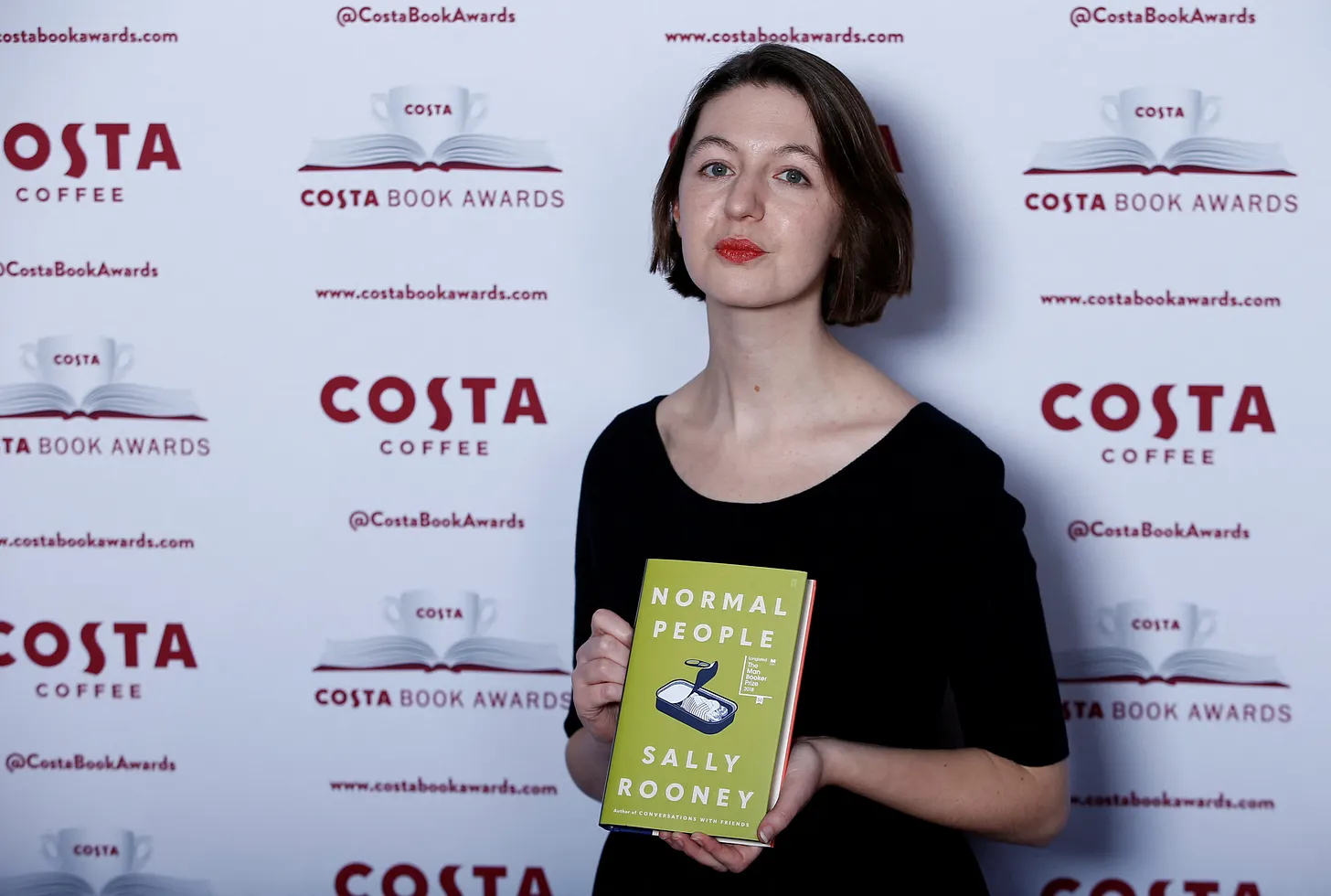
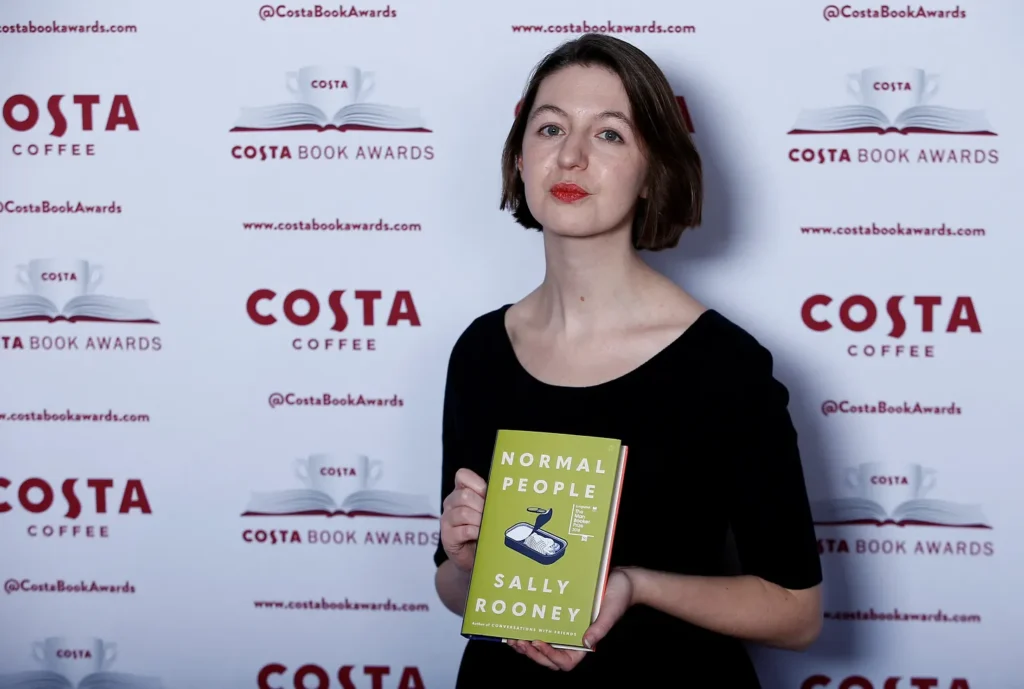
The New Statesman has published a letter signed by the great and good defending Sally Rooney's right to support Palestine Action. Prof James Alexander wonders why so many writers couldn't write a decent letter.
The Libertarian Party of New Hampshire's (LPNH) X account—which has become infamous for its bigoted and controversy-ridden posts—is finally gone. But the state's spurious role in its banning raises free speech concerns.
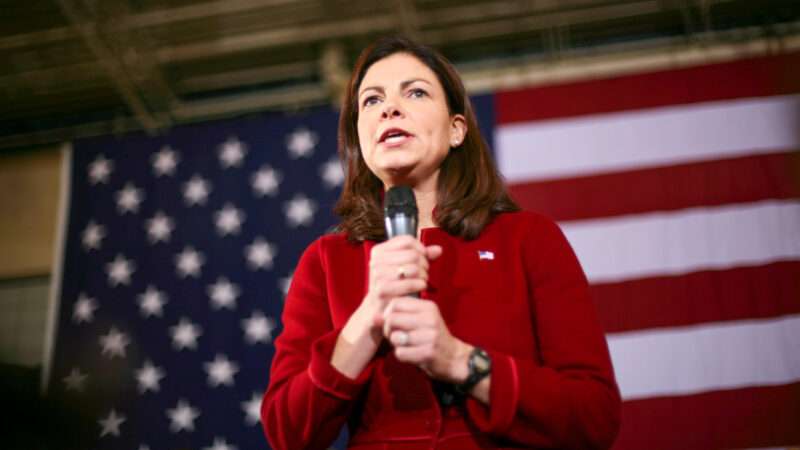
Last week, New Hampshire Republican Gov. Kelly Ayotte sent a letter to X's safety team, asking the company to suspend the account. Ayotte's letter made mention of several clear violations of X's content policies: "This account has openly called for the assassination of elected officials from the New Hampshire Democratic Party, has said it condones murdering elected officials for their policy positions, and most recently threatened a member of House leadership.…I'm calling on X to remove [the posts] and suspend the account immediately."
The letter referenced one particularly bold post from September (which the account later deleted). The post read: "We openly support the assassination of basically every elected democrat in New Hampshire. But if you don't have the balls to do it, then you should probably vote GOP."
X suspended the account the day after Ayotte sent the letter.
The removal of the LPNH account has likely elicited a sigh of relief from the Libertarian Party's (L.P.) leadership, which has repeatedly tussled with LPNH over its extreme rhetoric, undermining of L.P. candidates, and constant creation of P.R. crises for the party. In 2024, the LPNH endorsed Donald Trump for president instead of Libertarian candidate Chase Oliver, pushing the Libertarian National Committee to disaffiliate LPNH from the L.P.'s structure this past May. The Granite State Libertarian Party was designated the state's new L.P. affiliate in September.
Even though the LPNH has clearly violated X's terms and does not adhere to the most basic requirements for L.P. membership (such as pledging to uphold the nonaggression principle), the government should not tell private firms when to enforce their own policies. This sentiment was shared by Granite State L.P., which recently said in a social media post, "While a private company has a right to remove someone screaming about setting people on fire…the government should play zero part in that decision."
Jeremy Kauffman, the chair of the LPNH, is outraged but unsurprised, posting on Sunday that he and the LPNH are "exploring a lawsuit against the New Hampshire government." He tells Reason, "Ayotte's letter was a classic example of jawboning. When a governor sends a demanding letter like this to a private company, there is a clear implicit threat attached."
Speaking to Reason, Trace Mitchell, a technology and free speech expert at the Foundation for Individual Rights and Expression, defines jawboning as, "when the government, through veiled threats or direct coercion, pressures a private entity to take an action that the government could not lawfully take or mandate itself."
In Bantam Books v. Sullivan (1963), the Supreme Court ruled that the government cannot make recommendations to private companies if those recommendations come with legal repercussions—even implied or veiled repercussions. Doing so would qualify as jawboning, which violates the First Amendment. Though Ayotte's letter could be construed as extralegal pressure, it does not imply a punishment for noncompliance and likely falls short of legally recognized jawboning.
Addressing Kauffman's proposed lawsuit, Mitchell says, "In this case he would likely have to show there is something beyond this letter…[like] outside communications, emails or text with X."
Safety officers at X provided no comment to Reason to justify the suspension. It is not clear whether there was any external communication involved beyond the letter. Without a more definite connection between Ayotte's request and X's decision, Kauffman may struggle to win in court. Still, that doesn't make the governor's request any less concerning.
While Ayotte's letter was a surprise, it was not unprecedented. As social media has become the public forum, all levels of government have tried to regulate what is said there. During the COVID-19 pandemic, federal officials under the Biden administration were revealed to be in near-constant communication with major social media firms, encouraging and recommending that misinformation be removed from the platforms. Many of these recommendations were paired with implied threats to review the firms' legal immunity for content posted on their platforms, which spawned a lawsuit that reached the Supreme Court in 2024.
Although the Court dismissed the case for lack of standing, some lawmakers have taken action to address concerns over jawboning, with Sen. Ted Cruz (R–Texas) introducing the JAWBONE Act in June. The bill would make it easier for members of the public to sue government officials who pressure media networks, as well as require increased transparency for all federal communications to media networks.
Even if Kauffman cannot find legal remit, Ayotte's letter was a troubling move for the future of internet speech. Many of the offending posts referenced were months old or had been deleted before the letter was sent. The LPNH has likely been violating X's content policy for years, but X only took action after the government instructed it to.
You don't need a judge to see how that might be concerning.
The French reporter was set to cover Israel's election, while the U.S. researcher said she was questioned about her criticism of Israel's conduct in Gaza; four foreign journalists were denied entry last week
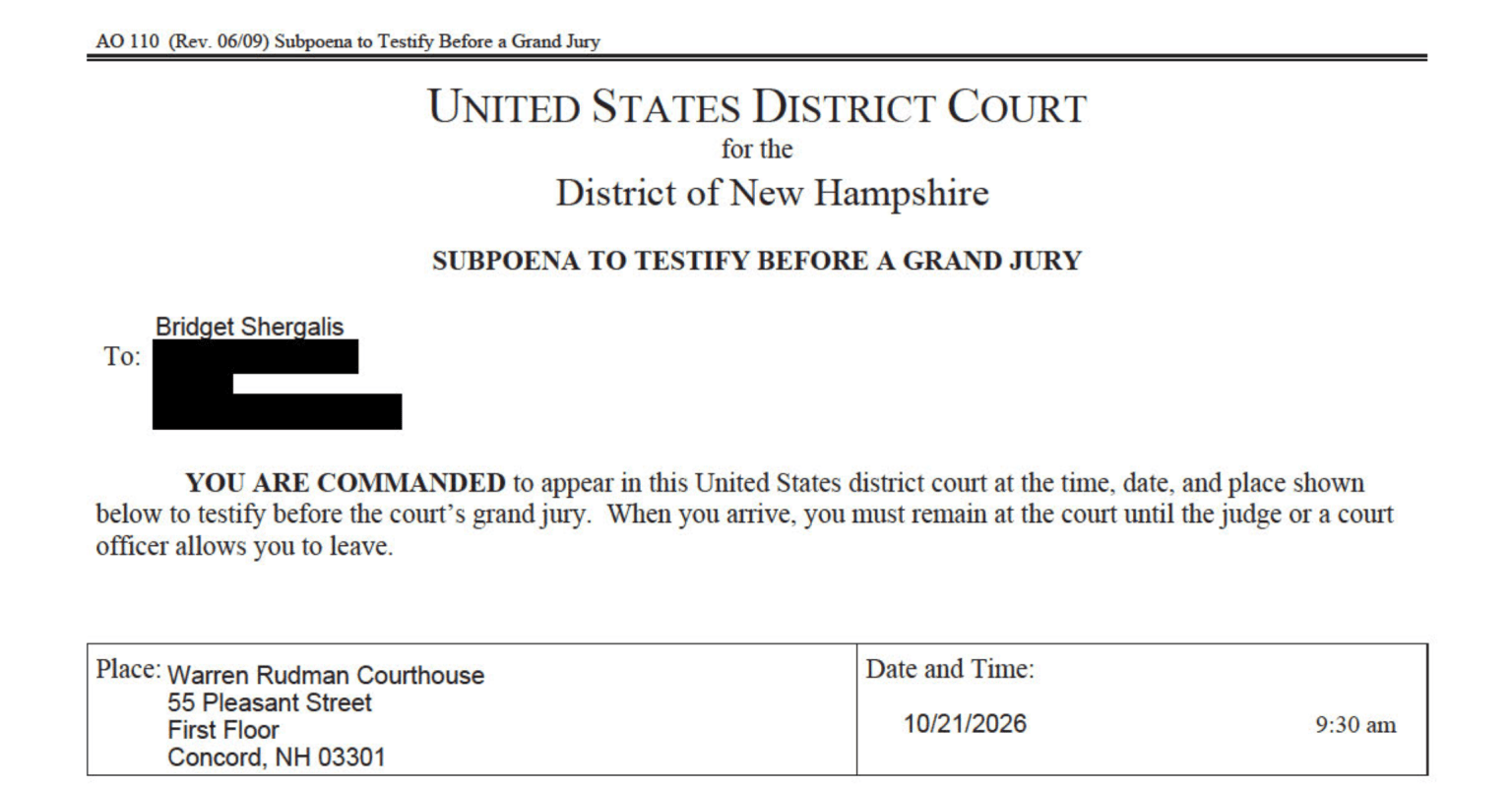
Two activists have been ordered by DOJ to testify in mysterious grand jury proceedings regarding their involvement in efforts to deface an Israeli weapons manufacturing facility in New Hampshire, after feds had sought in an earlier trial to obtain sentences of 37 years for them.
The award-winning Irish novelist faces possible arrest if she enters the UK. Yet, Britain has welcomed the ex-commander of Syria’s al-Qaeda offshoot with open arms, writes Fatima Bhutto.
Sadiq Khan's Culture Team has blocked Charlotte Gill on X after she flagged their bonkers £500,000 woke grants – funding queer birding, doll workshops and a solarpunk festival. Your money at work.
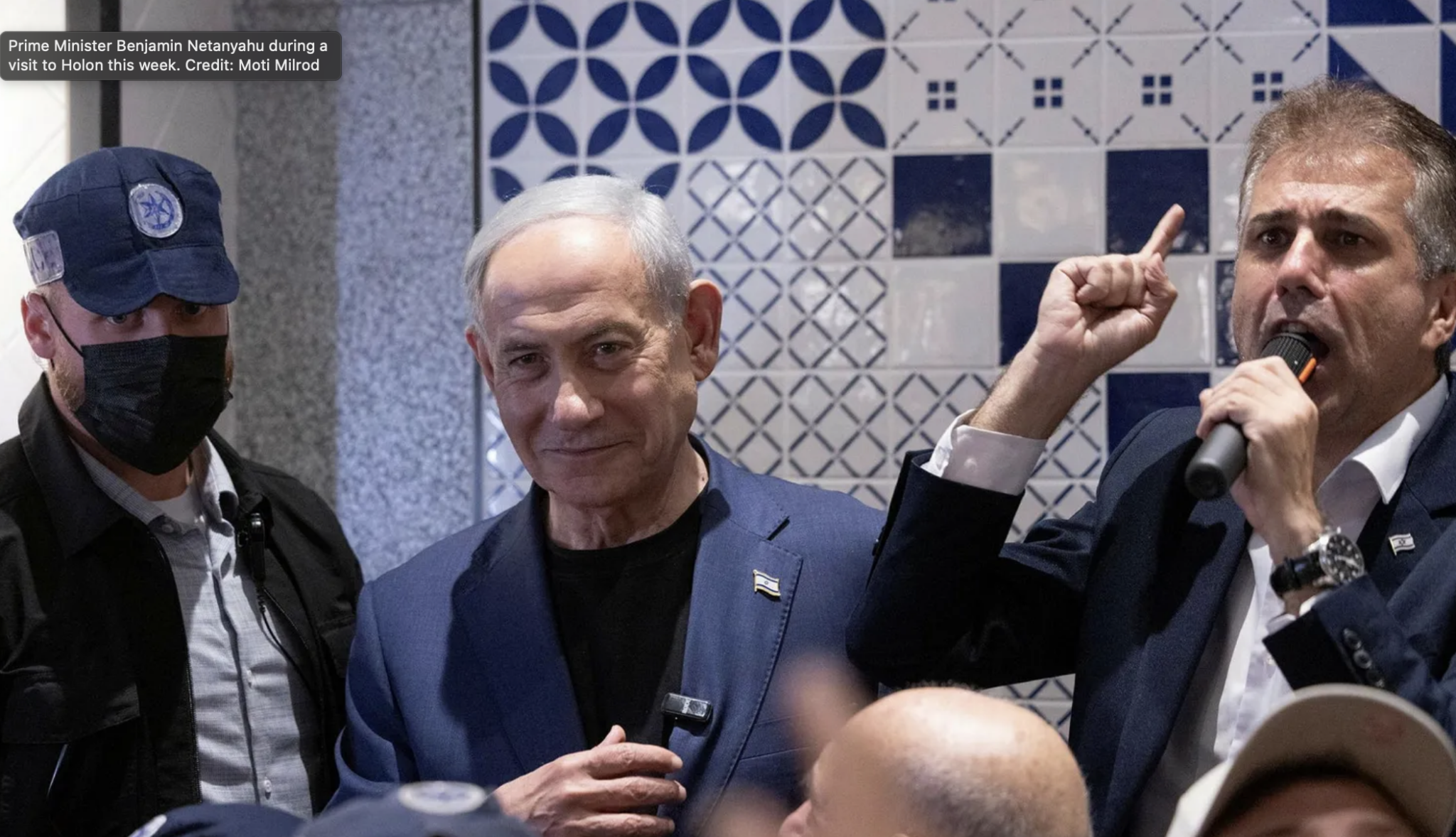
Haaretz: "If there is one thing clear from Netanyahu's recent behavior and declarations, it's that there is no ploy, no manipulation, no lie he wouldn't use, if it keeps him out of a cell"
As a free speech absolutist, Elon Musk is making a mistake going after Nitter, says Dr R P. He should instead be praising the site that helps users speak freely, uninhibited by login screens that undermine their privacy.
The article argues that British scrutiny of alleged Russian interference overlooks what it describes as more extensive Israeli, billionaire and US influence operations affecting UK politics, media and public debate.
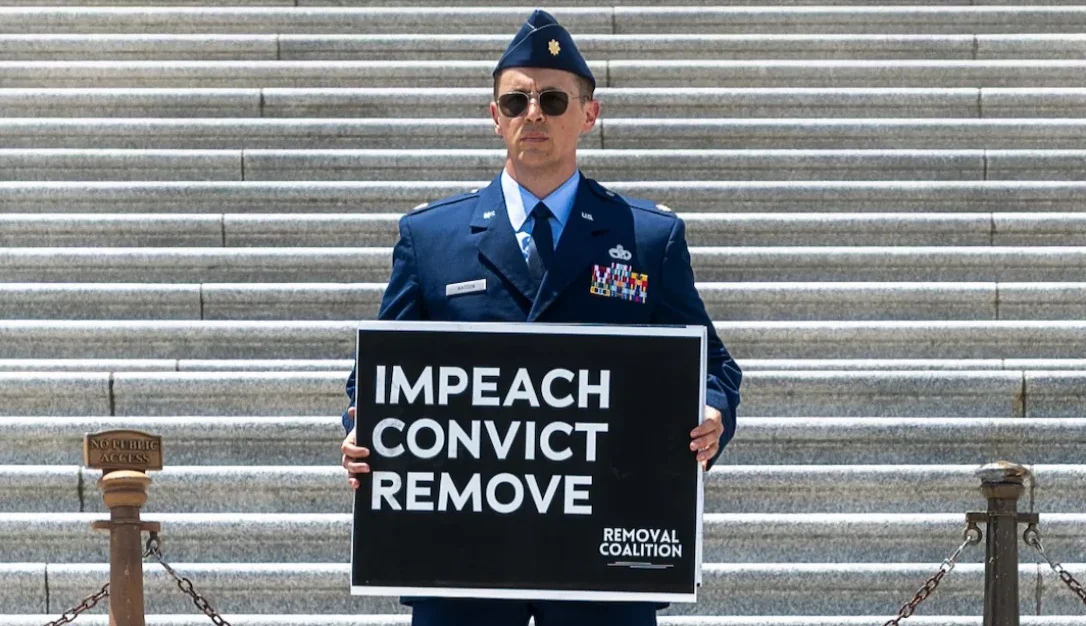
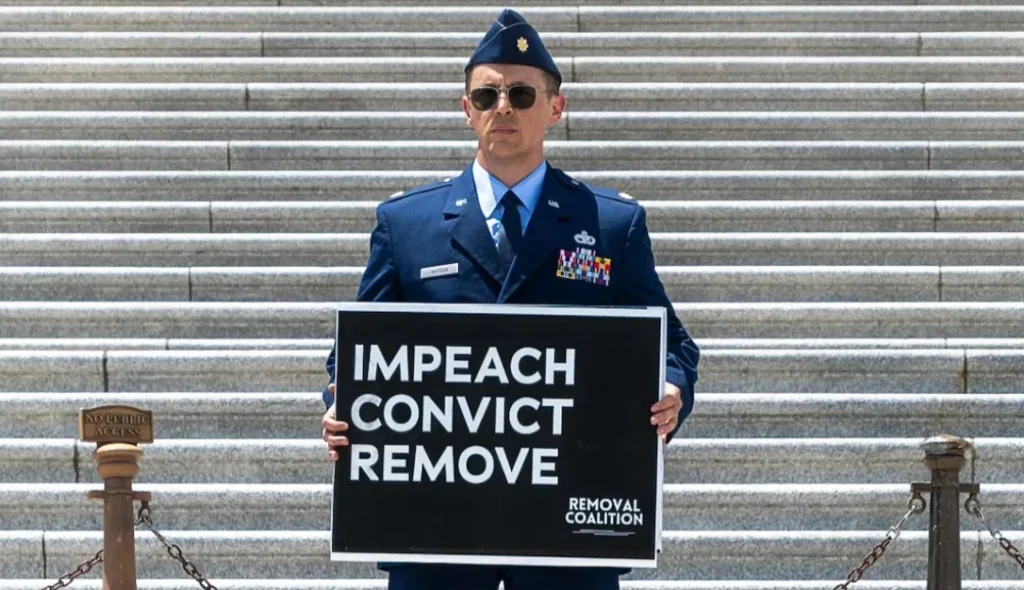
Maj. Jason Watson was arrested after he participated in a news conference calling for Trump to be removed from office over his launching of military actions against Iran, Cuba, and Venezuela without congressional authorization
Major drivers of the repression include pressure from wealthy pro-Israel donors, government interference, and the political loyalties of university administrators and trustees, according to a new report.
Graham Linehan, the Father Ted creator, may have been unfairly arrested by the Metropolitan Police because of his gender-critical views, the police watchdog has said.
After Trump banned CNN, MSNow and Politico from press access to the presidency, even Fox boycotted the White House. The press needs to show the same backbone when it comes to Gaza. Major news organizations need to boycott Israel until it opens up Gaza to international coverage

 Login