Ukraine has held its first international course in military surgery and resuscitation, under instructors from the American College of Surgeons and other Western trauma bodies, the Defense Ministry says. “Tryzub”, or Trident, has been conducted for front-line surgeons and anesthesiologists.
The week-long drills put 16 doctors, eight surgeons, and eight anesthesiologists through three standard Western trauma programs: Advanced Trauma Life Support, Definitive Surgical Trauma Care, and Advanced Surgical Skills for Exposure in Trauma. All of them work at stabilization points close to the fighting.
The course has been run with the International Association for Trauma Surgery and Intensive Care and the Global Medical Knowledge Alliance, a non-profit that helps rebuild Ukraine’s healthcare, with support from Razom4Ukraine and Expertise France.
The wounds have changed
The course answers a battlefield that has grown deadlier. Ukrainian combat medics say modern combat trauma has fundamentally changed: drones and shrapnel now cause most of the complex wounds, often tearing through several parts of the body at once.
Bleeding has become the main cause of death on the battlefield, and the window to stop it is measured in minutes. That is the gap a well-drilled surgical team near the line is meant to close.
“People who will do everything to save his life”
Defense Minister Yevhenii Khmara has framed the course as a promise to troops at the front.
“When a soldier goes into battle, he must know that if he is wounded, there will be people beside him who will do everything they can to save his life,” Khmara says.
Experience, he added, is a kind of trust that matters enormously at the front.
“That is why we want our medics to have the best knowledge and skills, and to be able to act as one team," he states.
Ukrainian front-line medicine already draws international notice: one Azov brigade medic was named Europe’s best military medic of the year, and off-duty Ukrainian medics recently saved a man’s life at a London crash scene.
DC ha decidido que Halloween de 2026 no se celebre con capas, escudos ni discursos heroicos, sino con una película que convierte a uno de los villanos de Batman en el centro de una pesadilla corporal. Clayface, dirigida por James Watkins y protagonizada por Tom Rhys Harries, llegó a los cines españoles el 22 de octubre y en Estados Unidos el 23, en plena campaña de la fiesta más terrorífica del año.
La cinta forma parte del nuevo universo cinematográfico de DC, pero se aleja deliberadamente del molde habitual de las películas de superhéroes. No hay un Batman que aparezca a tiempo para salvar la situación ni un conflicto global entre héroes, hay un actor arruinado, una venganza obsesiva y un cuerpo que deja de obedecer a quien lo habita.
Ese cambio de registro explica tanto su atractivo como su advertencia. Clayfaceno es una película familiar ni una opción para ver con niños pequeños. Es un thriller de terror con body horror, violencia gráfica y una atmósfera opresiva pensada para un público adulto.
Una calificación que lo deja claro
En Estados Unidos, la Motion Picture Association ha clasificado Clayface con una R, lo que implica que los menores de 17 años necesitan acompañamiento de un adulto. El motivo oficial es contundente; "violencia sangrienta intensa, gore, lenguaje, algo de desnudez y consumo breve de drogas".
En España, la película está calificada como no recomendada para menores de 16 años, según figuran en varias carteleras y fichas de exhibición. Su duración oficial es de 108 minutos, un metraje contenido que no diluye la intensidad de su propuesta.
La diferencia entre ambas clasificaciones no cambia el mensaje esencial; no se trata de una película de superhéroes para toda la familia. El material visual y temático la sitúa más cerca del cine de terror adulto que del entretenimiento infantil.
El origen más oscuro de un villano de Gotham
La película, ya en cines, sigue a Matt Hagen, un actor en ascenso cuya carrera se desmorona después de que un mafioso de Gotham le desfigure la cara. Desesperado por recuperar su aspecto y su vida, acepta un tratamiento experimental que inicialmente repara su rostro, pero desencadena una transformación física y mental devastadora.
Tom Rhys Harries interpreta a Hagen, mientras que Naomi Ackie da vida a la doctora Caitlyn Corr, la científica responsable del tratamiento. El reparto se completa con Max Minghella, David Dencik, Eddie Marsan, Nancy Carroll y Joshua James.
El conflicto no reside solo en que Hagen adquiera poderes de metamorfosis, sino en que pierde el control sobre su identidad. La película convierte la ambición, la humillación y la venganza en combustible de un monstruo que ya no puede volver a ser la persona que era.
Body horror, no espectáculo de superhéroes
El término clave es body horror, un subgénero que encuentra el miedo en la deformación, la mutación y la pérdida de control del propio cuerpo. En Clayface, la cara de Hagen se derrite, se transforma y se convierte en arcilla viva, con imágenes diseñadas para provocar rechazo y angustia.
James Watkins, responsable de títulos como La mujer de negro y Speak No Evil, dirige con una intención evidente, incomodar. No busca que el espectador celebre el poder del villano, sino que atraviese con él una espiral de dolor, paranoia y violencia.
El guion procede de una historia de Mike Flanagan, uno de los nombres más reconocidos del terror contemporáneo, junto a Hossein Amini. Esa procedencia ayuda a entender por qué la película privilegia la angustia psicológica y la degradación física antes que la acción espectacular.
Un Halloween ideal para adultos
Para el público adulto, Clayfacellega en el momento perfecto. Su estreno coincide con Halloween y responde a una estrategia clara de DC Studios, la de ofrecer una película de género terrorífico dentro de su universo, sin depender del carisma de Batman ni de los grandes equipos de héroes.
La apuesta ha tenido una recepción favorable entre parte de la crítica. En Rotten Tomatoes, la cinta acumula un 75% de aprobación, con una valoración del público del 94%, mientras que Metacritic la sitúa con una nota media de 59 sobre 100 a partir de 44 reseñas.
Emma Suárez y Elena Anaya, historias vivas del cine español, se dejaron ver por Valladolid este domingo 25 de octubre. Anaya, natural de Palencia (o sea, de 'aquí' al lado), llevaba varios días por Pucela. El jueves había estado cenando en un hotel a las afueras de la 'capital' de Castilla y León. Ella y Emma Suárez son, en principio, las titulares de Hermanas, película dirigida y escrita por Ione Hernández Sáenz. Un vínculo amoroso, el de dos hermanas, que se pone a prueba después de que la hija de una –Suárez– acuse al hijo de la otra –Anaya– de agresión sexual. La acción transcurre en el verano de 2021. La fecha no es baladí.
Tras pasar por los festivales de cine de Toronto, Colombia y Valladolid, Hermanas se estrenará en toda España, en salas de cine, el 27 de noviembre de 2026. Quizás lo haga con la Espiga de Oro bajo el brazo, la mayor distinción de la Semana Internacional de Cine de Valladolid (SEMINCI).
Emma Suárez se 'rebelaba' contra su personaje de 'Hermanas'
Todas las implicadas –con permiso del actor Josean Bengoetxea en calidad de marido/cuñado/padre/tío– mencionaron en la rueda de prensa posterior a la proyección que Hermanas es una película coral. No mentían. Su directora y guionista, Ione Hernández, no quería quedarse en una sola cosa –la agresión sexual– sino explorar las dificultades, partiendo de un vínculo muy poderoso: el de dos hermanas y, por extensión, el de una familia.
La cineasta, también periodista, pareció aplicar las 5W del periodismo: quién, qué, cuándo, dónde, por qué... Partió desde "lugares comunes" para dibujar este "paisaje familiar". Lo dicho: ella no quería quedarse en una trama de acción-reacción. Completan el elenco los jóvenes intérpretes Leon Martínez (Merlí), Carlota Keiko (Com si fos ahir), Aritz Kortabarria (Servir y proteger), y Nora Otxoteko (Pioneras).
Créditos: Goyo Conde
Para Elena Anaya, el trabajo de Hermanas fue "muy bonito y muy intenso". Emma Suárez ejerció de entrevistadora ocasional y preguntó a su directora por qué pensó en ella y en su compañera de reparto como protagonistas. Ione Hernández respondió: "Yo necesitaba legitimidad y me la daba Emma Suárez, historia del cine español. En una ópera prima te la juegas, sobre todo con mi edad [55 ó 56 años]. Elena me transmitía una vulnerabilidad extrema y una fragilidad. Su personaje está roto. Yo nunca me las imaginé, escribiendo el guion".
Emma SuárezElena Anaya | Créditos: Goyo Conde
Emma Suárez, dada su franqueza en público, reconoció que muchas veces no entendían a los personajes: "¿Por qué tanto silencio? ¿Por qué no hablan? ¿Por qué no la llama? Me rebelaba contra mi personaje. Finalmente entendí la reacción de los personajes; el miedo, el silencio...". La actriz rememoró un viaje en coche hacia los ensayos junto a Elena Anaya y Josean Bengoetxea, su hermana y su marido en la ficción respectivamente: "Menos mal que no estaba Ione".
"¿Por qué cuando pasa algo así en el seno de una familia nos quedamos paralizados?"
Bromas aparte, una de las productoras de Hermanas, María Zamora, afirmó: "Una de cada tres mujeres hemos sufrido o vamos a sufrir a lo largo de nuestra vida un abuso sexual. Lamentablemente suele suceder en un porcentaje muy alto dentro del seno de la familia". Porque Hermanas cuenta cómo impacta el abuso sexual en una familia. A Zamora le interesaba la lectura psicológica y la lectura sociológica: "Hay una parálisis. ¿Por qué cuando pasa algo así en el seno de una familia nos quedamos paralizados y no somos capaces de usar las herramientas que hay ahora mismo?".
"La película refleja un poco la realidad. Transcurre en 2021, antes de la ley del consentimiento. Y en el fondo obedece a un protocolo que existe gracias a una institución que protege este tipo de situaciones. Si no existiera eso, no tendríamos esta historia, porque el abuso es un problema cuando se denuncia. Si no se denuncia, no es un problema, porque nadie se entera. Todos creemos que sabemos lo que hay que hacer, pero cuando ocurre en un entorno así, no es tan fácil, y por eso se crea esta dificultad", añadió la directora y guionista de Hermanas.
Emma Suárez y Elena Anaya son 'Hermanas' | Créditos: David Herranz
"En todas las relaciones parece que todo está bien, pero está todo descolocado. Generalmente no nos permitimos hablar de eso. Intentamos celebrar y fingir que todo está bien. Entiendo que, al principio de la película, el público piense: ¿de qué va esto?", amplió Hernández. "Ione ha contado muy bien lo que quería contar. No emite juicios. No toma partido por ningún personaje. Expone una situación. Expone unos personajes. Pero no culpabiliza ni defiende a ninguno. Deja libre al espectador para que reflexione sobre la manera de actuar de cada uno de los personajes", remató Emma Suárez, ciertamente Historia del Cine Español.
A lot is riding on the shoulders of Kabir Nath, the CEO of Compass Pathways.
Scott Semler for BI
Compass Pathways wants to use psilocybin to help people with treatment-resistant depression.
Its psilocybin pill, COMP360, could finally be coming to market as soon as next year.
For its CEO, Kabir Nath, it's been a long, strange trip to get to this point.
In 2022, Kabir Nath had a cushy executive job at a pharmaceutical firm that developed anti-psychotic medication.
Then he got a call from a scrappy upstart with a patent on a synthetic version of psilocybin — the active ingredient in magic mushrooms. It hoped to use the compound to help those with treatment-resistant depression.
They wanted him to join as CEO. Nath, whose father died by suicide, bit on their second pitch.
"A number of people have said to me in the last couple of years: 'You do realize what a risk that was,'" Nath told Business Insider about eventually jumping ship for what was, and still is, a drug company without FDA approval for its product.
"I was probably the first really senior executive from traditional pharma to make the move to psychedelics," he added. "But, you know, it was the right thing to do."
Nath's personal risk is now magnified as Compass Pathways finishes filing its final forms ahead of what could be FDA approval as soon as next year, and then a public rollout of its psilocybin pill, called COMP360.
Compass has recently added 150 new hires to its payroll, expanded its marketing division, and moved into new office space in Jersey City in the hope it all works out. "The company is growing rapidly," Nath said.
Though a subsidiary of Johnson and Johnson attained FDA approval with a version of ketamine for depression patients in 2019, it is by no means guaranteed that Compass, leveraging a more traditional psychedelic, will get the same approval.
Should the FDA deny Compass' bid, investors would rush to dump their shares, likely sending the company into bankruptcy. The Jersey City office, which just received a new lime green paint job, would be untenable.
If you ask Nath, it would also be bad news for 4 million patients with depression in the US, for whom more traditional antidepressants like SSRIs don't work.
"These are people who have been suffering from depression, and nothing's really working," he said.
Like other drug companies — especially those with a single product — Compass' stock has "been on quite the adventure," Nath said, as the company progressed through various human trials.
When markets closed on Friday, the share price hovered around $11, up $5 from last year. In 2020, when the company went public, shares went for $17.
From Haight Ashbury to Wall Street
Psilocybin's journey to the FDA has been a long and winding one.
Scott Semler for BI
Psilocybin's journey to the forefront of medical research didn't begin with Compass, and it hasn't exactly gone in a straight line.
Few did more to publicize the drug than Timothy Leary, the Harvard professor turned acid dropout. In a speech at Harvard's Cambridge campus in 1962, he told students that taking psilocybin allows people to experience an "internal rebirth," according to the Harvard Crimson.
In time, Leary would be fired from Harvard as he, along with a measurable portion of the US population, began to experiment more heavily with psychedelic drugs. Come 1966, the Grateful Dead were spiking their Kool-Aid with acid, and a definitive subculture of long-haired, psychedelic-taking hippies had emerged.
Meanwhile, researchers were experimenting too. Studies involving LSD and psilocybin flourished during the 1960s before hitting a brick wall in 1970, when psilocybin was classified as a Schedule I substance, rendering possession illegal, even for research purposes.
Work on the drug languished for years, until 2000, when the FDA gave scientists at Johns Hopkins University permission to conduct research on psilocybin.
And more recently, psychedelics have become trendy with the tech crowd.
From Burning Man to luxury retreats, experimenting with psychedelics is now common among tech founders and executives like Elon Musk and Sam Altman, who credit the drugs with quieting their nerves, boosting productivity, and allowing them to better harness their creativity.
Research, too, has flourished.
"There was actually a biotech boom from 2018 through to about 2022," Nath said. "In that boom, literally hundreds of psychedelic companies went public."
In 2018, Compass' proprietary psilocybin formulation received breakthrough therapy designation from the FDA. A few years later, it started testing the drug on people.
Nath was an executive in 2018 at Japanese pharmaceutical giant Otsuka, where he said he assembled a team to investigate whether psychedelics could become viable medicines after reading Michael Pollan's book "How to Change Your Mind," which explores the history and therapeutic potential of psychedelics.
COMP360
Compass isn't selling an experience analogous to a spiritual awakening at Burning Man, though.
The drug-taking process for a patient enrolled in one of Compass' trials is a bit different. First, a patient has to have treatment-resistant depression, which is clinically defined as depression that two or more standard drugs have failed to treat.
Then, a clinician explains the details of the process that is about to unfold. After that, they're given the psilocybin in pill form.
Kabir Nath at the company's new office in Jersey City.
Scott Semler for BI
"It's a quiet room with a couch," Nath said. "They're offered a blindfold, which most patients do actually wear."
As the patient begins to trip, a playlist of music, including classical and new age, plays softly in the background. The clinician, who Nath said could be a nurse, doctor, or therapist, sits silently in the room if the patient wants to talk, and for safety reasons.
Most of the time, though, there isn't any talking.
"This is not psychotherapy," Nath said. "We are not directing the patient's experience."
Six hours later, after some crying, laughing, and everything in between, the patient goes home.
In Compass's most recent trial, results for which were published in September, just under half of participants who took the drug experienced at least a 50% reduction in depressive symptoms within six weeks of treatment.
Next steps
After a decade of slogging through tests, first on animals and then on humans, Compass has completed all the necessary prerequisites and is busily working to get its last papers in order.
In a statement provided to Business Insider, an FDA spokesperson was noncommittal, though.
"The FDA evaluates experimental medications, including psychedelic drugs like psilocybin, through a rigorous, evidence-based process designed to ensure that any approved treatment is safe and effective for the indicated use," the spokesperson said.
Compass isn't the only psychedelic drug company wading through the lengthy process of trialing a drug.
AtaiBeckley, another psychedelic drug company trading on the Nasdaq whose product is not yet approved by the FDA, is developing a version of DMT administered via nasal spray. It received breakthrough status in 2025, years behind Compass.
For Compass, though, it could face the music as soon as the first half of next year, when it expects the FDA to render its decision. The company is already getting ready.
In addition to adding 150 new hires, Nath said the company is preparing its sales force to go online and is in frequent communication with doctors and healthcare providers about operating in clinics where therapists can administer the drug to patients.
"This has the potential to be radically different, and again, the rapidity is something that they're very excited about, and the durability," Nath said, referring to psychiatrists.
orchestrating the pandemic to help usher in the “Great Reset,” a global economic, political and social system promoted by the World Economic Forum.
During oral arguments Thursday, attorney Peter Stassen told a packed courtroom that the COVID-19 vaccines were akin to a bioweapon, developed as part of a broader global effort to strip democratic and individual rights.
Speaking outside the courthouse in Leeuwarden, Netherlands, Stassen said Thursday’s hearing “was about publicly telling what is happening in this courtroom and what is the real case. The real case is that COVID-19 was not a disease but was a project.”
He accused Gates and Bourla of participating in that project, which he said was coordinated and undemocratic. He also accused the defendants of using censorship and propaganda to hide their intentions while promoting the COVID-19 vaccines as “safe and effective.”
COVID-19vaccines were developed and procured as military countermeasures, bypassing the standard development and approval pipeline for such products. By developing the shots as military countermeasures, they bypassed traditional safety regulations, leading to widespread injury, Stassen said.
Stassen said that while this is a civil case, he believes the defendants’ actions constitute serious criminal offenses that violate global treaties and the Nuremberg Code.
“They basically said, like a parrot, that all of Stassen’s accusations were either conspiracy theory or based on medical reports that are from people who are not neutral in this case,” said Ido Dijkstra, a Dutch journalist and the editor-in-chief of De Andere Krant, who attended the hearing.
Dutch attorney Meike Terhorst said the defense did not respond to Stassen’s assertions that COVID-19 was a project. “There was no response to that at all, nothing.”
Journalist Penny Marie, who has reported on the case, told The Defender that Stassen’s arguments “mirror what so many people worldwide say and have experienced and investigated.”
The defendants’ legal team did acknowledge that they were “touched” by the suffering of the vaccine-injured plaintiffs. Terhorst said the five living plaintiffs face “immense problems” with their health.
Dijkstra said the presiding judge on the three-judge panel appeared to “support the mainstream narrative,” but “gave the impression that she wanted to understand Stassen’s reasoning.”
Thursday’s hearing stemmed from a lawsuit filed in 2023 by seven people injured by COVID-19 vaccines — including two who have since died — against Gates, Bourla and 15 other defendants, including former Dutch prime minister and NATO Secretary General Mark Rutte, the Dutch state, and several Dutch public health officials and journalists.
According to Dutch attorney Meike Terhorst, who is not connected to the case but attended the hearing, none of the defendants appeared in court.
A ruling is expected as early as December but may be delayed until February 2027.
Expert witnesses barred from testifying in person
During oral arguments, Stassen addressed the court’s refusal to allow his team’s expert witnesses to testify in person. Earlier this week, the court limited the witnesses to video statements presenting their arguments.
Defense attorneys attacked the credentials of some of the witnesses. For instance, they claimed that Sasha Latypova — a former pharmaceutical research and development executive — has only a bachelor’s degree and is unqualified to provide testimony on scientific and medical matters.
Latypova disputed the claims, telling those gathered outside the courthouse that she has a “graduate degree from Dartmouth College and 25 years of pharmaceutical R&D and regulatory experience” — including interacting with the U.S. Food and Drug Administration, European Medicines Agency and Japanese regulators “on behalf of my clients.”
Catherine Austin Fitts, founder and publisher of the Solari Report and another of the expert witnesses for the plaintiffs, told The Defender that Bourla’s attorneys questioned the credentials of another witness — Mike Yeadon, Ph.D. Fitts said she was “surprised” by their claims.
“Yeadon served as vice-president of Pfizer’s allergy and respiratory research unit and worked for many years at Pfizer. Does Pfizer make it a practice to staff the company with unqualified people in senior positions? Does this explain why Pfizer appointed a veterinarian to be the CEO?” Fitts asked, referring to Bourla.
Terhorst said it is “very strange” for Dutch courts to not allow oral testimony by plaintiffs’ witnesses, as otherwise, “it is not easy to substantiate your claims.”
Despite the limitation, Terhorst said the witnesses bolstered the plaintiffs’ case. “The case is important based on the evidence provided by key witnesses,” she said.
“I think we [gave] a very clear sign to the court that there can be not justice if the court is not willing to look further at this expert evidence, because you can come to a judgment based on truth and a real discussion between the parties,” Stassen said during the press conference.
Vaccine-injured were ‘misled’ about safety of COVID shots
In an interview with journalist Fiona Rose Diamond earlier this week, Stassen said the plaintiffs “felt misled” by the Dutch government and by those who promoted the COVID-19 shots in the media.
“They felt misled by the whole system … And they were misled because they were told that this was a safe and effective vaccine, and in fact, the only way out of [the] crisis,” Stassen said.
At Thursday’s press conference, Stassen added that the plaintiffs sued not just because of their injuries, but because “they want the truth.”
Fitts highlighted the significance of the case, noting that under the Dutch legal system, the vaccine-injured can file lawsuits in response to their injuries — contrasting this with legal restrictions the injured face in the U.S.
Terhorst noted that the vaccine-injured in the Netherlands face other obstacles.
“Vaccine injury is not even recognized in the Netherlands,” she said. She noted that some vaccine-injured people briefly received treatment under public health programs that the Dutch state earmarked for long COVID patients. However, this treatment was later “terminated.”
Terhorst said lawyers for the Dutch state “said nothing” during the hearing about offering compensation to these victims, including the plaintiffs and their families.
This is one of several obstacles the plaintiffs have faced as this case has progressed. Last year, another attorney for the plaintiffs, Arno van Kessel, was arrested “with considerable force,” as part of a nationwide sweep by Dutch police against alleged members of a “sovereign citizen” movement with a “potential intent to use violence” against the Dutch state.
Terhorst said van Kessel spent seven months imprisoned in a high-security prison, lost his license to practice law, is not allowed to leave the country and was fitted with an ankle monitor — which was removed Thursday, in parallel with the hearing.
The neuroscientist is investigating whether the brain has an internal map before an animal begins exploring its surroundings.
Even before we begin exploring the world, the brain may have a kind of internal map, “like a GPS,” ready to guide us. This hypothesis, which is still under investigation, fascinates Norwegian neuroscientist May-Britt Moser, the 2014 Nobel Prize in Physiology or Medicine laureate, who has spent decades trying to unravel how we know our way around.
“It seems that we could have an internal map that is ready for us when we start moving and exploring,” Moser said in an interview with EFE, although she cautioned that the findings she is currently working on have not yet been published.
Moser refers to philosopher Immanuel Kant and the possibility that, to experience the world, the brain needs certain pre-existing structures that allow it to organize what it perceives.
"I was not always the best student… but my teachers saw something in me."
May-Britt Moser, inspired by her teachers, went on to uncover the brain’s "inner GPS," for which she was awarded the 2014 medicine prize.#WorldTeachersDaypic.twitter.com/9AeljdCWRk
The neuroscientist is now trying to determine whether one of these structures exists before an animal — rats, in her case — begins moving around and learning about its surroundings.
The clue comes from so-called “grid cells,” which Moser discovered with her husband, Edvard Moser. Their discovery helped the couple share the Nobel Prize with British neuroscientist John O’Keefe.
These neurons fire in a highly regular “spatial pattern.” When the locations where a single cell fires as a rat moves around are plotted, equilateral triangles can be drawn between its different activity fields.
Moser said she remains surprised by this level of precision, precisely because the brain is a biological system and, therefore, one might expect much more noise and many more errors.
“Because the brain is a biological system, you would expect many errors. And if there were many errors, we would never see a pattern like the one we observe in grid cells, where equilateral triangles can fit between each activity field as the animal moves through its surroundings. It is incredible,” she stressed.
The geometry becomes even stranger when scientists simultaneously record the activity of numerous grid cells and use mathematical tools to represent it in three dimensions.
What emerges is a “torus,” a doughnut-shaped surface across which neuronal activity appears to move, a kind of map that would not switch off even when the outside world disappears.
“This internal map is active even when the animal sleeps, so it does not need any information from the outside to keep functioning. It is simply the way the cells are connected that makes this pattern possible,” she said, adding that the question remains whether this architecture, or scaffolding, exists before exploration begins.
Moser is confident that the combination of new technologies capable of recording thousands of neurons, better mathematical theories and computational models will make it possible to achieve major advances in understanding the brain over the coming years.
"This is not biology! You can't get this in biology!"
Medicine laureate May-Britt Moser and artist Olafur Eliasson discuss the intersection of art and science at an event in 2015 at the Nobel Week Dialogue: The Future of Intelligence.
“But, as Professor Geoffrey Hinton, considered the ‘godfather’ of AI, said, understanding how we can come to have that feeling of being alive, of being conscious, can be quite difficult,” Moser reflected.
Artificial intelligence could become a tool for investigating this question, in part because it makes it possible to compare how a machine and a brain perform similar functions.
Asked whether she is optimistic about AI or a “doomer” — a term for someone who takes a catastrophic view of its future — Moser said that losing hope means surrendering. “But I think we need hope,” the neuroscientist replied.
In her view, tools can be used both to do good and to cause harm, and artificial intelligence does not eliminate this long-standing human trait, although it can greatly amplify its consequences, she added.
“It becomes dangerous if evil people use the tool to become even more evil. But they can also use their brains to be evil,” she said.
Against an international backdrop that she describes as “depressing” when she watches the news, Moser champions cooperation, science and education. She also points to individuals capable of mobilizing many others, from Malala Yousafzai to Greta Thunberg and Jane Goodall.
Thus, despite this depressing situation, Moser does not see machines as having intellectual supremacy, either. “For now, I think the brain is the best tool we have,” she concluded.
Top Democrats on the House Energy and Commerce Committee demanded answers Thursday from the Centers for Disease Control and Prevention (CDC) about the agency’s funding of a controversial hepatitis B clinical trial in Guinea-Bissau. The CDC awarded $1.6 million last year to Danish researchers to conduct the study in Guinea-Bissau, a small country in West…
U.S. Customs and Border Protection (CBP) seized a psychiatric nurse practitioner's phone filled with confidential patient information at Washington Dulles International Airport last week, according to a new lawsuit. Muhammad Numaan Imam alleges that CBP agents told him that they could take his electronics the "easy way or the hard way" and refused to let him talk to his lawyer because "we are the authorities at the border."
The lawsuit by the American-Arab Anti-Discrimination Committee (ADC) may be the first time CBP is taken to court over seizing people's medical records. ADC is also helping Palestinian-American lawyer Jay Shehadeh and Jewish-American journalist Max Blumenthal sue over their devices being seized.
"We're seeing a pattern where officers use their border-search authority not to advance any legitimate border-related purpose, but to punish individuals for refusing to provide access to their personal electronic devices and for having expressed views the government didn't approve of," ADC president and legal director Jenin Younes wrote in a statement emailed to journalists.
While Shehadeh and Blumenthal claim that CBP is retaliating for their political views, Imam argues that he faced threats and retaliation with the simple act of asserting privacy rights. Both Imam and Shehadeh were considered "trusted travelers" under the Global Entry program, which allows American citizens who undergo a background check to pass through an automated fast track at airports and borders.
Asked by Reason, a CBP spokesperson did not address any specifics of the case, giving only a generic statement about how "CBP's ability to lawfully inspect electronic devices crossing the border is integral to keeping America safe in an increasingly digital world."
The border exemption to the Fourth Amendment gives U.S. authorities the power to look for "contraband" crossing into the country without a warrant. There is a mess of contradictory court rulings on whether that power includes searching travelers' electronic data, but in practice, CBP can simply seize the physical devices that the data live on.
And the agency often lies outright to travelers whose data that it wants to search, as documents recently released in the case of Atlanta protester Samuel Tunick show. CBP agents gave Tunick a false reason for detaining him and falsely promised that he would be allowed to leave with his phone if he cooperated, even though they were under orders to seize his devices no matter what. Tunick is now on trial for allegedly tricking the CBP agents into deleting his data to avoid a search.
"It's happening to a lot of people, and it's being used in this coercive, inappropriate way," Younes tells Reason.
The problems for Imam, who lives in Virginia, actually began at another border. He was heading to Istanbul on Saturday for a family vacation with his Pakistani wife, Khadijah Mansoor, and their 1-year-old child. Turkish authorities demanded to see Mansoor's U.S. green card, which she had forgotten at home, and wouldn't let her enter on her Pakistani passport alone. The family had to board the next flight back to Washington. On their arrival, CBP naturally wanted to know why they had been turned away and why Mansoor didn't have her green card.
But things took a weirder turn after agents told Imam he had been "flagged" for undisclosed reasons, pulled him into a separate room, and began questioning him about his social media use and group chats, according to the lawsuit. (Imam tells Reason that they asked about group chats in general, not any specific group chat.) When agents asked for the password to Imam's phone, he told them that he uses the phone to communicate with and manage cases for patients at the rehab facility where he works. The Health Insurance Portability and Accountability Act (HIPAA) strictly prevents doctors and other medical staff from sharing patient data without consent, so Imam asked to speak to a lawyer.
"Your lawyer cannot do anything. We are the authorities at the border," Imam recalls one agent saying. A supervisor then told the couple that CBP could take all of their electronics the "easy way or the hard way," and that the devices could take months to get back, Imam and Mansoor claim.
CBP's own internal policy says that devices should "ordinarily" be held for less than five days. The same policy includes vague guidelines for dealing with medical information: "Possibly sensitive information, such as medical records and work-related information carried by journalists, shall be handled in accordance with any applicable federal law and CBP policy." Imam says that the CBP agents claimed to have software for filtering out HIPAA-protected data.
After four hours in detention, CBP took the family's phones and laptops and let them go. The next day, Imam got an email stating, "We regret to inform you that your membership in Global Entry has been revoked for the following reason(s): You do not meet the Trusted Traveler standard." In addition to both Imam and Mansoor losing valuable work data, the lawsuit argues, Imam is now unable to prescribe certain psychiatric medications to his patients, because of federal regulations that require phone verification.
The lawsuit demands the return of the devices and data under Rule 41(g) of federal criminal procedures, which requires the government to hand back property that is no longer necessary for a criminal investigation. ADC has also filed these motions in Shehadeh and Blumenthal's cases. (CBP gave back Blumenthal and Shehadeh's phones almost immediately afterward, but ADC is continuing to press for records of what they did to those phones in custody.) Younes filed a brief on Blumenthal's behalf in support of an upcoming Supreme Court case over whether CBP can continue these electronic searches.
"The devices are neither contraband nor subject to forfeiture, and, to Plaintiffs' knowledge, there is no pending criminal investigation, criminal prosecution, or warrant authorizing their continued seizure or search," Imam's lawsuit states. "The Fourth Amendment does not permit the border-search exception to become a means of coercing compliance through the threatened or actual confiscation of travelers' personal property."
Like most of American healthcare, kidney care has for decades been plagued by red tape. The Trump administration says it wants to change that. On Tuesday, Department of Health and Human Services (HHS) Secretary Robert F. Kennedy Jr. announced his department's Kidney Care National Plan, which promises to introduce more competition, reduce regulatory barriers, expand patient choice, and overhaul America's kidney transplant system.
Much of the plan focuses on barriers to entry in dialysis care, which treats nearly 558,000 Americans. While dialysis can be performed at home, most patients receive treatment at specialized facilities, which must comply with federal certification requirements governing equipment, staffing, water quality, and patient safety in order to participate in Medicare.
Kennedy argues that regulatory barriers have discouraged competition and innovation, leaving patients with fewer dialysis treatment options. "Dialysis technology is an extraordinary technology," said Kennedy at the press conference, but "because of monopolies in the system and the barriers to new entrants, we have not seen any real improvements in that technology."
Of course, the existence of large or even monopolistic companies is not in itself evidence of a problem, but government regulation can often entrench those companies' positions in the market. "I like the fact that they're recognizing that a lot of regulatory…barriers are contributing to the problem, and that's refreshing to hear," says Jeffrey Singer, a practicing general surgeon and senior fellow at Reason Foundation, the nonprofit that publishes Reason. Singer says that removing barriers that prevent new companies from competing with established providers could not only increase choice but also drive down prices.
HHS says that two companies, DaVita and Fresenius Medical Care, control approximately 74 percent of the American dialysis market. As of 2019, roughly a third of Americans lived in areas where the only available dialysis provider was one of those two companies, according to the agency. The administration argues that government regulation has helped entrench this dominance by making it difficult for new providers to enter the market.
To address this, the Kidney Care National Plan suggests a number of reforms, including simplifying certification requirements. HHS also plans to investigate whether dominant dialysis providers have used payment arrangements and legal strategies to secure higher reimbursements without delivering better care.
The 17-page report calls for a review of existing requirements, but it does not specify which regulations will be repealed, nor does it establish a timeline for doing so. It also does not propose any significant reduction in the government's role in financing the distorted market. Instead, the plan largely seeks to make existing government-financed systems such as Medicare more competitive and efficient.
Kennedy has also correctly identified the need for reform regarding kidney donations. Nearly 90,000 people are waiting for a kidney transplant at any given time in America, and 11 people die every day waiting for a kidney. The transplant process is currently managed by Organ Procurement Organizations (OPOs), which are federally certified nonprofits responsible for recovering organs from donors and coordinating their transfer. There are currently just 55 federally designated OPOs operating in the United States, and HHS argues that they behave as "regional monopolies." Since no new OPOs have been approved in the last year, the Kidney Care National Plan suggests fast-tracking certification.
The plan also seeks to make living kidney donation easier by reducing financial barriers. Following the passage of the Honor Our Living Donors Act in February, HHS revised federal reimbursement rules so that a donor's eligibility for financial assistance is no longer determined by the transplant recipient's income. Eligible donors can receive up to $6,000 to cover expenses, including travel, lost wages, and childcare.
However, the reforms proposed stop short of allowing kidney donors to receive direct compensation for the organs themselves, which remains prohibited under federal law. "I can sell my blood. Why can't I sell my kidney?" Singer asks.
Peter Jaworski, director of the Georgetown Blood and Plasma Research Group, feels similarly, arguing that financial incentives are available to nearly everyone involved in kidney transplantation except the donors themselves. "According to this plan, it's OK to use incentives to encourage them to be more productive, to actually do a better job," Jaworski tells Reason, referring to transplant surgeons, hospitals, and organ procurement organizations. "The only exception, once again, is the donor who is offering a kidney."
Better solutions exist, according to Jaworski, who points to the proposed End Kidney Deaths Act. The bill, which was introduced by Rep. Nicole Malliotakis (R–N.Y.) last year, would offer living kidney donors a $50,000 refundable tax credit, distributed over five years. "We have those systems in order to make sure that we can treat patients. That's the point of blood donation. That's the point of plasma donation. That's the point of kidney donation too."
America's plasma market is an excellent example of financial incentives encouraging donation. Unlike many other countries, the U.S. allows plasma donors to be compensated, and despite accounting for just over 4 percent of the world's population, it supplies approximately 68 percent of the plasma collected globally for manufacturing medicines.
"Why do you think America does it? Is it because in America there's way more altruism than in France or Italy or Belgium? No, it's because in the United States you can be paid to donate plasma," argues Jaworski.
The Trump administration appears to recognize that government overreach has stifled competition and restricted patient choice. It also recognizes that living adults donating kidneys will be part of the solution to the long, deadly waiting lists. But its plan leaves the government's outsize role in kidney care largely untouched. For patients facing years on dialysis or waiting for a lifesaving transplant, recognizing the problem is not enough.
Beijing has proposed banning exports of the technology used to make next-generation solar cells, a move that could complicate United States technology guru Elon Musk’s plan to expand into space solar power. The ban, which covers production technology for perovskite and tandem solar cell modules, is part of a proposal by China’s Ministry of Commerce […]
Today is World Menopause Day – a day to convince women over 40 that yet another aspect of ordinary life needs to medicalised. It's time to stop the grift, says Joanna Gray.
A nurse who was struck down with a rare neurological condition that left her unable to use her limbs while taking part in the AstraZeneca COVID-19 vaccine trial was denied compensation because she was not disabled enough.
Death rates for Americans between 25 and 44 years old jumped 71.2% in just eleven years, rising from about 140 deaths per 100,000 people in 2010 to 239 per 100,000 by 2021. No other age group came anywhere close to that surge. Overdoses, suicides, car crashes, and chronic diseases appearing at increasingly younger ages are now cutting down people in the prime of their lives.
Steven H. Woolf, a physician and researcher at Virginia Commonwealth University School of Medicine, published the analysis in The Milbank Quarterly. He combined data from the United Nations, the CDC, the Organisation for Economic Cooperation and Development, and a U.S. mortality database to show how far American life expectancy has fallen behind the rest of the developed world, and increasingly, much of the developing world too.
By 2023, U.S. life expectancy ranked 38th among countries with populations over 1 million, trailing not just Western Europe, Canada, Japan, and Australia but also Chile, Costa Rica, Slovenia, Israel, South Korea, and several Persian Gulf nations. Sixty countries had a lower risk of a person dying before age 40 than the United States did. That gap didn’t open overnight. It has been widening since the 1990s, and it sped up sharply after 2010.
How Researchers Tracked the Rising Death Rates
Woolf built this analysis by comparing decades of death records rather than running a new clinical trial or survey. He pulled data from the United Nations’ Department of Economic and Social Affairs, the U.S. Mortality Database, the CDC’s death-records database known as WONDER, and OECD data covering 16 other wealthy countries, including Canada, Japan, France, Germany, and the United Kingdom. He tracked age-specific death rates from 1999 through 2023, sorted into five groups: infants, youth ages 1 to 24, young adults 25 to 44, middle-aged adults 45 to 64, and adults 65 and older.
A separate part of the study looked at all 50 states from 1941 onward, matching each year of life expectancy data to the sitting governor’s political party to see whether state policy choices lined up with health outcomes over time.
What’s Driving the Rise in Death Rates Among Young Americans
Drug overdoses top the list. Among adults 25 to 44, the overdose death rate rose sevenfold after 1999, from about 7.7 per 100,000 to more than 54 per 100,000, and surpassed circulatory diseases (such as heart disease and stroke) in 2015 to become the leading cause of death in that age group. Suicide rates for this same group are higher than in any other age bracket and climbed more than 40% between 2000 and 2023. Homicides rose 75.5% between 2014 and 2021, and deaths from car crashes and other transportation accidents rose 43.5% over that same stretch.
What surprised even close followers of these trends is how much of the damage now comes from disease rather than injury. Deaths from diabetes and other metabolic and hormone-related illness rose nearly a quarter between 2010 and 2019 among young adults. Deaths tied to liver damage from drinking more than doubled between 2010 and 2023. Deaths from alcohol-related mental health disorders more than tripled in that same window. Even high blood pressure, historically a problem of later adulthood, saw its death rate more than double among 25- to 44-year-olds between 2000 and 2023.
Middle-aged adults, 45 to 64, saw many of the same patterns: rising deaths from drug overdoses, liver damage from drinking, and diseases of the brain and nervous system, along with a COVID-19 death rate that nearly doubled between 2020 and 2021 even after vaccines became available. Older adults largely avoided these steep increases, though deaths from brain and nerve diseases doubled between 2000 and 2023, and deaths from endocrine disorders and suicide also climbed.
Infographic by StudyFinds
Where U.S. Life Expectancy Has Fallen the Furthest
National averages hide some brutal local realities. Comparing individual states to countries with similar life expectancy, Woolf found that Hawaii, the top-performing state, matched life expectancy in Western European countries like Sweden and Ireland. Mississippi, by contrast, resembled Libya, Venezuela, Belarus, and Syria in 2019. Conditions worsened after the COVID-19 pandemic hit. By 2021, life expectancy in West Virginia and Mississippi matched Bulgaria, Bangladesh, and Iraq, and fell below North Korea and Syria. Life expectancy was higher in Palestine and Iran than in nine U.S. states, including Oklahoma, Tennessee, Kentucky, Alabama, and Mississippi.
Woolf’s review of state data going back to 1941 found that states led by Republican governors tended to see life expectancy stagnate or decline, a pattern that became especially visible after 2010 and turned into what Woolf calls a “natural experiment” during the COVID-19 pandemic. States’ sharply different decisions on masking, business closures, and vaccination, he writes, could be measured in death counts within weeks. Red states, the analysis notes, suffered the largest COVID-era drops in life expectancy, a pattern that held up even after researchers accounted for other factors like poverty rates and existing health conditions.
Other researchers cited in the review, who looked at generational patterns rather than state policy, found that Americans born after 1970 had higher death rates from heart disease, cancer, and injury-related causes than earlier generations. They concluded that the current stall in U.S. life expectancy stems from “multilayered social, biological, and generational forces.”
Why America’s Death Rates Keep Climbing
Woolf’s analysis lays out five broad categories behind America’s health disadvantage: a health care system without universal coverage, riskier individual behaviors like higher calorie consumption and firearm ownership, greater income inequality and poverty, a built environment that favors cars over walking and green space, and public policies that put less emphasis on collective welfare than peer nations do. None of these explanations are new, but the paper argues that treating overdoses, suicides, and chronic disease as separate problems misses the bigger picture: they are symptoms of the same underlying neglect.
That’s the sharpest point in the paper, and probably the one worth sitting with. Other wealthy countries didn’t stumble into longer lives by accident. They built universal health coverage, stronger safety nets, and tighter consumer and environmental protections decades ago, and it shows up in their citizens’ death certificates today. America’s problem was never a shortage of ideas for fixing this. It’s a shortage of political will to act on them, and until that changes, the gap between how long Americans live and how long people in dozens of other countries live looks likely to keep growing.
Any pediatrician has seen it: a baby who spends so many hours lying on their back that one side of the head ends up flat. The condition is called deformational plagiocephaly, from the Greek plagios (“slanted”) and kephalé (“head”). It comes from steady outside pressure on a skull that is still soft, not from a […]
At first she told no one. Not her twin sister. Not her mother. Not even her father the scientist.
Six-year-old Jenna Smith knew better than to pee when she was in the bath. But on that night in 1992, in her family’s home in Iowa City, the water felt so comfortable against her skin that she didn’t want to get out of the tub. It seemed like such a small thing. Who would know?
Seconds later the water around her waist turned reddish pink. Blood? It had to be. Jenna wondered if she’d hurt herself. “I was six years old sitting in a bathtub, watching a few seconds of my world stop making sense,” she would recall years later.
The Atavist, our sister publication, publishes one deeply reported, elegantly designed story each month. Support The Atavist by becoming a member.
She kept the blood a secret because she didn’t want to admit that she’d peed in the bath. But when it was still in her urine the next time she used the toilet, she went to her mother. Concerned, her mom called her dad, Richard Smith, and he took Jenna to the emergency room.
Richard was an ear, nose, and throat doctor in the University of Iowa’s school of medicine, a researcher who would become one of the world’s authorities on the genetics of hearing loss. His wife, Lynne Lanning, had worked as both a lawyer and a nurse. They had four young children: twins Jenna and Jessica, who were identical, and two boys, Luke and Rion.
At the ER, doctors ran tests on Jenna, but they couldn’t identify the cause of the blood. In the days that followed the bleeding intensified. At her parents’ urging, Jenna collected samples of her urine in Dixie cups for further testing. The doctors remained stumped, however, and after a while Jenna found the whole thing more annoying than worrisome.
The uncertainty was much harder on her parents. It wasn’t that doctors were misdiagnosing their daughter; they were unable to diagnose her at all. “It was horrible,” Richard said. “Imagine seeing your child and you know something is wrong, and you know the doctors treating her have no clue what to do.” Richard called a pediatric nephrologist he knew in Houston, where the family had lived previously. The nephrologist listed several conditions that could be causing the bleeding and said that, to determine which was to blame, Jenna’s parents should take her to Cincinnati Children’s Hospital Medical Center.
In July 1992, Richard, Lynne, and Jenna drove nearly 500 miles to get answers. Doctors in Cincinnati diagnosed Jenna with dense deposit disease, a condition in which proteins clog and damage the kidneys, leading to renal failure in many patients. There was no cure.
The hospital couldn’t tell the family much else—no one could. The disease was exceedingly rare, afflicting between one and three people in a million. Back home, Richard and Lynne spent hours inside the University of Iowa’s quiet medical library, poring over papers in search of information about their daughter’s illness. They could find no evidence that anyone was actively studying the condition.
Although many Americans—roughly one in ten—suffer from a rare disease, the experience can be lonely. Friends and relatives don’t understand the unique miseries such illnesses impose on daily life. Few doctors are likely to have encountered them before. And because there aren’t many patients, drug companies usually don’t invest in research for treatments.
Richard and Lynne feared that their daughter’s life might be tragically brief. Sometimes the mention of weddings would sink Lynne into melancholy; she couldn’t bring herself to watch the movie Father of the Bride. Richard agonized over what to do. His training compelled him to seek answers, but he wanted to be Jenna’s father, not the scientist charged with curing her. He kept his research focused on hearing loss. At first, anyway.
Stories of scientific discovery almost always celebrate individual researchers, consigning the contributions of loved ones, communities, and colleagues to footnotes. There are exceptions―the teams that built the first atomic bomb and deciphered the human genome, for instance. Science also has its share of famous families. Marie and Pierre Curie, along with their daughter Irène and her husband, Frédéric, won five Nobel Prizes between them for discoveries related to radioactivity. For the most part, however, the history of scientific progress has been mythologized as a succession of brilliant, driven individuals—often men—who chose the lab over the dinner table and competition over collaboration.
Some scientists have embraced the role of maverick. “You have to worry about your own work and ignore what everyone else is doing,” the physicist and Nobel laureate Richard Feynman is said to have told a colleague. The decades-long pursuit of a treatment for Jenna’s disease followed a very different path. There was no single hero, no lone scientist seeking glory. The biomedical quest required the efforts of a family and their neighbors in Iowa City, and the work of scientists around the globe. Together they changed an obscure area of medicine.
Richard and Lynne met in 1977, when both were working at Memorial Hermann-Texas Medical Center in Houston—she as a nurse, he as a medical intern. He noticed a run in her nylons and was smitten by her smile. She liked his down-to-earth manner and intelligence, his humor and kindness. They were working in the hospital’s burn unit when he asked her out.
The couple married in 1981, and except for two years in England, they remained in Houston until 1990. That December they moved to Iowa City, where Richard had a job waiting for him leading the pediatric otolaryngology division and running a research lab at the University of Iowa’s medical school. They had been there only a year when Jenna got sick.
Richard and Lynne learned that their daughter’s disease was caused by a malfunction in her complement system. Believed to have evolved long before other parts of our immune infrastructure, the complement system sends proteins to battle foreign invaders. Unlike antibodies, these proteins are not tailored to fight a specific virus or bacteria, but they kick into gear faster when a threat is detected. In people with Jenna’s condition, the complement system is like a runaway train: Proteins become overstimulated and then accumulate in the glomeruli, tiny filters the kidneys use to clear waste from blood.
Blood in the urine is one symptom of the disease. Others include swelling, high blood pressure, inflammation, and fatigue. When Jenna was in the first grade, her body struggled to make growth hormones. Her production of red blood cells slowed, and she grew increasingly tired. During rehearsals for The Nutcracker ballet around Christmas 1993, she’d finish her part and then lie down backstage, completely spent.
Doctors put her on a heavy dose of the steroid prednisone and on blood-pressure medication. The prednisone caused her body to retain water. She woke up each morning with her eyes swollen shut, then waited in bed until the swelling receded. She couldn’t fit into her clothes or shoes. She wore flip-flops and roomy jumpers Lynne sewed for her.
As twins, Jenna and Jessica had always been close. They played together, made up songs and dance moves, explored the woods near their home, and enjoyed pranking friends and family members. “She made a lot of things feel not so heavy,” Jenna said of her sister. Still, she sometimes thought that Jessica “got off scot-free” by not having dense deposit disease. Neither girl liked feeling different from the other. (Years later, Jessica would be diagnosed with type-1 diabetes; Jenna would not.)
The changes to Jenna’s appearance meant the girls were no longer identical. Once, according to Lynne, when a boy at school said that Jenna couldn’t be a twin anymore because of how she looked, Jessica slugged him. Lynne recalled sitting in the principal’s office, politely listening to a lecture—this is not the way we resolve things!—but understanding why Jessica had lashed out. Nothing was so frightening to her daughters as the idea that they’d stop being twins.
About half of those afflicted with Jenna’s disease progressed to kidney failure within a decade of diagnosis; it took her less than a year. She made it through the last day of first grade. Then, as other children departed for summer camp, she went to a clinic. While her classmates practiced archery and did arts and crafts, she learned about the catheter doctors would surgically insert in her body. Through that tube, a machine would pump fluid into her abdomen, where her peritoneum—her abdominal lining—would take over the filtering function kidneys usually perform.
She would take the peritoneal dialysis machine home with her and use it every day for the foreseeable future, possibly for the rest of her life. When a nurse tried to take Lynne aside to show her how to operate it, Jenna stopped her. “I’m the patient,” the seven-year-old insisted. “I’m learning how to run the machine.”
In such moments, Lynne was surprised at the strength she drew from her daughter. She needed it. Her grief could leave her feeling drained. One day she found herself crying into the soil as she gardened.
But Lynne and Richard were determined that sadness would not define their lives. For a long time, they didn’t have a TV in their house—they wanted the family to talk when they were together, and for the children to build forts, learn to sew, be creative. They had painting nights, creating portraits of one another. There were cooking contests, too. Richard and Lynne made sure to spend one-on-one time with each kid. Richard traveled with Luke to Japan, with Rion to the Grand Canyon, with Jessica to Italy, and with Jenna to England. Lynne took trips with the children to Brazil, England, and Guatemala. There were themed birthday celebrations: a James Bond party for Richard, where everyone was armed with Nerf guns, and one for Lynne where Richard dressed as the artist Bob Ross and the guests painted “happy little clouds.” Richard coached the kids’ hockey and soccer teams. He built harps and lyres from scratch, and Lynne played them.
Every day, Richard left for work at 5 a.m., while the children were still in bed. He returned around six at night. The family joked that they could hear him coming from half a mile away in his rust-bucket Isuzu Trooper with the bad muffler and a hole in the passenger footwell. When he wasn’t seeing patients or in surgery, Richard was in the lab. On Saturdays, Luke would go there with him. Sometimes the other kids joined. They liked to refill the communal candy jars and visit the mice used in experiments.
It seemed a wonder to the lab’s staff that Richard squeezed so much into a day. When they began using email to communicate, they received messages from him time-stamped three or four in the morning. “Why don’t you sleep sometime?” a colleague replied once. Indeed, Richard slept little. At night his mind kept running through the mysteries of his daughter’s disease.
Richard had read that it took 10,000 hours—the equivalent of working full-time for about five years—to achieve expertise in a subject. He believed it. In 1995, he began flying to conferences about kidney disease, where he talked to the few doctors who cared for patients like Jenna. Medicine was getting no closer to finding a treatment.
That year the owner of a ranch where Richard and Lynne’s children took riding lessons offered to host a fundraiser for kidney disease research. The family organized Dressage in the Heartland, which featured riding events, fiddle music, and bowls of chili. After raising upwards of $10,000 for the National Kidney Foundation, they held the event again the following year. There are hundreds of kidney ailments, however, and the foundation didn’t allow the money the family raised to be earmarked for the research of dense deposit disease. (The foundation said it now allows monetary gifts to be dedicated to specific conditions.)
Richard and Lynne ran into more disappointment during a visit to the University of Minnesota in early 1997. A specialist they consulted was blunt. “Nobody is looking at this disease,” he told them. “And barring something unforeseen, nothing will be done in the next twenty years.”
It was a four-and-a-half-hour drive back to Iowa City. In the car, Lynne brought up what the doctor had said. Maybe they would have to be that unforeseen something.
The Nobel Assembly of Sweden's Karolinska Institute said the trio of scientists had been selected for their "discoveries concerning light-gated ion channels and optogenetics."
The Nobel Assembly of Sweden's Karolinska Institute said the trio of scientists had been selected for their "discoveries concerning light-gated ion channels and optogenetics."
Tracy Beth Høeg, M.D., Ph.D., an epidemiologist and sports physician, said her decision to follow the data during the COVID-19 pandemic came at a steep professional price.
Høeg said her experience exposed the unwillingness of universities, media and public health institutions to adapt when research conflicted with their accepted narratives.
In an interview this week with investigative journalist Paul D. Thacker on The DisInformation Chronicle, Høeg said institutions too often treated the accepted narrative as settled and then dismissed or attacked people who questioned it.
That approach did more than distort the public discussion about COVID-19, Høeg said. It also created a scientific and institutional culture that could affect how other medical questions are handled long after the pandemic.
For Høeg, the solution is simple: Scientists should follow the evidence wherever it leads.
“It’s a core belief of mine that you have to be objective when you’re doing scientific studies,” she said. “Otherwise, you just shouldn’t do them. It’s pointless if you’re not willing to be objective.”
‘I … didn’t realize the jeopardy that I was putting myself in’
During the pandemic, Høeg published 30 to 40 papers on COVID-19 transmission, masking, youth sports, vaccine risk-benefit, pregnancy, long COVID, visitor restrictions and testing.
Some of her research challenged widely accepted claims.
One study found little evidence of COVID-19 transmission among children in Wisconsin schools, which was consistent with data from Europe. Another examined myocarditis risk in boys after their second Pfizer COVID-19 vaccine dose and found the risks outweighed the benefits in boys who didn’t have underlying health conditions.
Høeg said she didn’t initially understand the professional risks she was taking by challenging the prevailing narrative.
“There was sort of a hesitancy to do this sort of research because I think people were afraid for their careers,” she said. “I actually was blessed with having recently moved from Denmark and didn’t realize the jeopardy that I was putting myself in by doing these sorts of studies.”
At the time, Høeg was conducting research at the University of California, Davis.
She said the university received calls, including from Naturemagazine, complaining about her studies on pandemic policies. Eventually, the university asked her not to use her affiliation with the school.
Høeg said the university refused to renew her voluntary position in 2022, after the European Journal of Clinical Investigation published her study on myocarditis risks in boys who received the COVID-19 vaccine.
NPR also dropped an interview with Høeg for “All Things Considered” after she raised concerns about masking children during outdoor sports.
In a pre-interview discussion with NPR, she told the outlet, “We don’t have evidence that these masks work to prevent transmission. … Bottom line is, we shouldn’t be doing these unproven things to children that are harmful.”
Soon after, NPR told Høeg she was no longer needed for the interview.
“It does say a lot about our universities and institutions because it’s like they had been brainwashed to an extent to believe what the media was saying rather than actually look at the data,” Høeg said.
‘They repeated the same wording … even when the data didn’t back it up’
In 2022, Høeg and her colleagues conducted a follow-up analysis of a Centers for Disease Control and Prevention (CDC) study on school mask mandates.
Høeg said their analysis used a larger dataset and a longer time period and reached the opposite conclusion about the relationship between mask mandates and COVID-19 transmission among children.
The team’s submission to the CDC’s Morbidity and Mortality Weekly Report (MMWR) was rejected. Høeg said reviewers described the submission as “rife with polemics.”
“Well, maybe it’s polarizing if you disagree with it,” Høeg said.
The rejection unearthed an underlying problem at the CDC, according to Høeg.
“They have a scientific agenda,” she said. “And so as soon as you have a scientific agenda, science has been thrown out the window. Science doesn’t have an agenda other than to find the truth.”
A 2024 analysis by Høeg and colleagues examined 77 mask studies published in the MMWR beginning in 2020. According to Høeg, 75% of the studies said masks were effective, while only 14% reported statistically significant results and none were randomized studies.
One finding especially stood out to her: She said 5% of the studies found masks were connected to higher infection rates, yet “they still concluded that masks worked.”
“They repeated the same wording over and over again in each of the studies, that ‘masks are necessary to decrease the spread’ and ‘masks are critical in controlling the case rates of COVID-19,’” she said. “They use the same sort of wording even when the data didn’t back it up at all.”
‘Why are we demonizing people for looking into this?’
A leaked memo from then-FDA official Dr. Vinay Prasad said career staff had linked at least 10 child deaths to the COVID-19 vaccine between 2021 and 2024.
Høeg said she reviewed the Vaccine Adverse Event Reporting System (VAERS) reports and found that investigations involving medical records and autopsies had already been conducted.
“My question at the time was … why are these not being made public?” Høeg told Thacker.
Høeg said news leaked that she would present information about the deaths and their possible association with COVID-19 vaccines. She said the media response focused on portraying her as an “anti-vaxxer” rather than asking why the deaths had been investigated but not publicly disclosed.
“If we have these sorts of deaths happening in children due to medical products of any kind, why are we sitting on them for years?” she asked. “That’s the take-home I want people to have from this.”
She also questioned why people who investigate potential safety problems are attacked for trying to expose the dangers.
“Why are we demonizing people for looking into this? … Isn’t that what the public wants?” she asked.
‘The deep state really is a thing’
In May, just days after FDA Commissioner Marty Makary resigned, Høeg said she arrived at work to find media reports claiming she had resigned — something she said she knew nothing about.
FDA lawyers later asked her to resign, but she refused to sign the letter. She was subsequently locked out of the agency’s systems and escorted from the building.
Høeg said she never received a performance-based explanation for her termination. She also said the person identified as the author of her termination memo later denied writing or seeing it.
According to Høeg, agency lawyers told her the order came from “way above their pay grade.”
The experience changed how she viewed other departures from the agency. “It opened my eyes to the fact that maybe a number of the people who I thought had resigned really had not resigned,” she said.
“The deep state really is a thing,” she added.
‘Women who want to get pregnant … should be told about these risks’
For Høeg, the concerns she encountered during the COVID-19 era are not limited to COVID-19.
In 2025, she helped organize an FDA panel examining potential risks associated with selective serotonin reuptake inhibitors, or SSRIs, during pregnancy.
The American Psychiatric Association criticized the panel for what it called “misinterpretation and unbalanced viewpoints.” Høeg said the media also portrayed any discussion of potential risks as “misinformation about SSRI use” and a signal that depression wasn’t being taken seriously.
According to Høeg, the panel discussed risks already addressed in FDA labeling and scientific research, including miscarriage, premature birth, postpartum hemorrhage, congenital heart defects and neonatal adaptation syndrome.
“This should not be controversial that women who want to get pregnant and who are pregnant should be told about these risks,” she said.
She also warned about the lack of ongoing monitoring of drug safety.
“The FDA is not actively investigating the safety of these products in pregnancy or at all after the initial trials are done,” she said.
Høeg said the discussion should not be interpreted as an argument against treating depression. “I don’t think that any of this should be synonymous with not taking depression seriously,” she said. “That’s just nonsense.”
‘There’s just no reporting on this. … People have died taking this drug’
Høeg also discussed Tavneos, the Amgen-manufactured brand name for avacopan, a drug approved to treat a type of blood-vessel inflammation.
While at CDER, Høeg said she raised concerns that the pivotal clinical trial used to approve the drug had included manipulated data.
According to Høeg, at least eight deaths had been attributed to the drug because of liver injury.
“There’s just no reporting on this,” Høeg said. “People have died taking this drug. … We asked for them to withdraw it from the market, and the media is just totally silent.”
Thacker: ‘There was no real learning in the end. … If anything, we became dumber’
Høeg said it is troubling that some of the most disputed COVID-19 policies are still treated as settled questions.
“How is this still part of our collective conversation that people … are still saying school closures were necessary and mask mandates were necessary?” she asked.
Thacker said the failure to learn from those policies could have consequences during the next pandemic. People who developed a “false sense of safety from masks” during COVID-19 could mistakenly assume masks will protect them from a more dangerous virus in the future, he said.
Thacker also questioned whether the country understands anything about the COVID-19 vaccines. “There was no real learning in the end. … If anything, we became dumber,” he said.
Høeg said the problem stems from the widespread failure to reconsider policies when the evidence changed.
“Once the government decided this is what we have to do, they just kept digging in, even though the data didn’t support it,” she said.
“This is why I keep doing these interviews, because it’s important for people to know the truth.”
Watch Høeg on ‘The DisInformation Chronicle’ podcast here:
Florida Attorney General James Uthmeier on Thursday sued Pfizer and its CEO, Albert Bourla, alleging that the drugmaker misled the public by marketing its COVID-19 vaccine as safe and effective while not disclosing the vaccine’s potential risks to pregnant women, children and teenagers.
The 49-page lawsuit alleges Pfizer violated Florida’s Deceptive and Unfair Trade Practices Act by deceptively marketing its vaccine to the public in turn for making billions of dollars in profit.
According to the complaint, Pfizer’s COVID-19vaccine marketing campaign focused on two principal themes: that the shot “posed no material safety risks” and that “mass vaccination was necessary to stop the transmission of COVID-19” — even though Pfizer never tested the vaccine’s ability to stop the virus from spreading.
Pfizer possessed extensive evidence that its vaccine caused serious adverse events — including 1,223 reported deaths following vaccination as of February 2021 and 52 miscarriages among vaccinated pregnant women. However, the company assured the public the vaccine was safe.
“Today we sued Pfizer for deceptively marketing the products as safe — making billions — while pregnant women were miscarrying their babies and teenagers were having heart attacks,” Uthmeier said in a statement.
Florida AG says state has track record of success with similar lawsuits
In a statement, Pfizer said the allegations are baseless, and that the “representations made by Pfizer about its COVID-19 vaccine have been accurate and science-based” and that it “stands behind the safety and efficacy” of the product.
But Forrest B. Saunders, communications director for Uthmeier’s office, told The Defender “the complaint and comments by Florida Attorney General James Uthmeier speak for themselves.”
Saunders said Florida has a track record of success with such lawsuits, having “recovered millions for Floridians through consumer protection efforts.”
Florida resident Haley Schwartz, who was seriously injured following her COVID-19 vaccination in 2021, also welcomed the suit. She said injuries caused by the vaccine “have received inadequate attention” for years.
“Finally seeing these issues examined through a formal legal process feels significant and creates an important opportunity for greater scrutiny, transparency, and accountability regarding what was communicated to the public,” Schwartz said.
The lawsuit seeks civil penalties of $10,000 for each violation of the state’s consumer protection law — and $15,000 for each violation involving an elderly or disabled person.
Florida seeks to force Pfizer to return some of its profits and is asking for a permanent injunction against further deceptive practices.
Pfizer’s deceptive marketing sought to ‘ensure windfall profits’
According to the complaint, Pfizer engaged in a deceptive and “wide-ranging marketing campaign” to “drive consumer demand” for its COVID-19 vaccine, overcome widespread public skepticism and “ensure windfall profits.”
“This emphasis on the purported safety of the vaccine directly responded to widespread public concerns about a pharmaceutical product that had been developed on an unusually accelerated timeline, with uniquely limited testing and oversight, and employing novel mRNA technology,” the complaint states.
Pfizer’s campaign included public statements by Bourla claiming the COVID-19 vaccine was safe. The complaint cites a January 2023 interview in which Bourla claimed that Pfizer had not detected “a single [safety] signal” linked to the vaccine.
The complaint suggests public skepticism was warranted:
“Pfizer knew that data showed its COVID-19 vaccine was connected to myocarditis and pericarditis among minors; had reason to believe its COVID-19 vaccine would cause adverse events for pregnant women and their unborn babies in the first trimester, including miscarriage [and] thousands of reports of other adverse events including stroke and even death, especially among the elderly.”
By Feb. 28, 2021, Pfizer’s internal adverse event database already contained 158,893 adverse event reports and reports of 1,223 deaths linked to its COVID-19 shot, according to the complaint.
Pfizer by then also “possessed reports for 458 pregnant women exposed to its COVID-19 vaccine during pregnancy” — over half of whom sustained at least one adverse event. Of 52 miscarriages, most occurred during the first trimester, “many within days of vaccination.”
Pfizer ended its COVID-19 vaccine trial involving pregnant women early, due to low participation, particularly among women in the early stages of pregnancy. But the drugmaker didn’t disclose “material facts already in its possession showing the risks associated with its COVID-19 vaccine during pregnancy.”
Pfizer official admitted vaccine not tested for stopping transmission
Pfizer promoted its COVID-19 vaccine as a means of “protecting … loved ones” through a “wide-ranging marketing campaign” which suggested that the vaccine would stop the spread of COVID-19, the suit alleges.
But Janine Small, Pfizer’s president of international developed markets, said the vaccine was not tested on stopping the virus, according to a 2021 statement cited in the lawsuit.
Karl Jablonowski, Ph.D., senior research scientist for Children’s Health Defense (CHD), said the “assurances of safety the company gave required knowledge Pfizer simply did not have.”
He cited a February 2021 Pfizer “nonclinical overview” document listing an extensive range of safety studies Pfizer did not conduct.
“Pfizer’s COVID-19 vaccine may actually have been the least-studied approved product it has made this century,” Jablonowski said.
The lawsuit alleges that Pfizer’s misleading marketing claims translated into a financial windfall for Pfizer and Bourla. Between 2020 and 2023, Pfizer’s COVID-19 vaccine revenue exceeded $80 billion, and Bourla received nearly $102 million in compensation.
Legal liability shield may not protect Pfizer in Florida lawsuit
Attorney Ray Flores, CHD’s senior outside counsel, said these protections may not extend to state-level consumer protection cases.
“All states have consumer protection statutes that normally would allow individual consumers to bring suit for fraudulent practices. Under the PREP Act, however, only states have the potential for successful suits,” Flores said.
Kansas and Texas have active lawsuits against Pfizer in the 10th and 5th U.S. Circuit Courts of Appeals, respectively. The suits make similar claims to Florida’s — namely, that Pfizer violated state consumer protection laws by marketing its COVID-19 vaccine as safe and effective.
“All three cases are remarkably similar, as they are brought under parens patriae,” a legal principle that allows states to file lawsuits to protect state residents, Flores said.
However, he said Florida’s lawsuit may face obstacles, as Pfizer may seek to move the case from state to federal court “to invoke PREP Act protection” — similar to what the company did in the Kansas and Texas lawsuits.
Flores said other states may be waiting on the sidelines for the outcomes of the Texas and Kansas cases.
“I wish more attorneys general would take such legal action,” Flores said. “There was a rumor back in 2024 that Utah, Mississippi and Louisiana were also suing Pfizer. It sounded good, and got lots of press, but it was never true.”

 Login

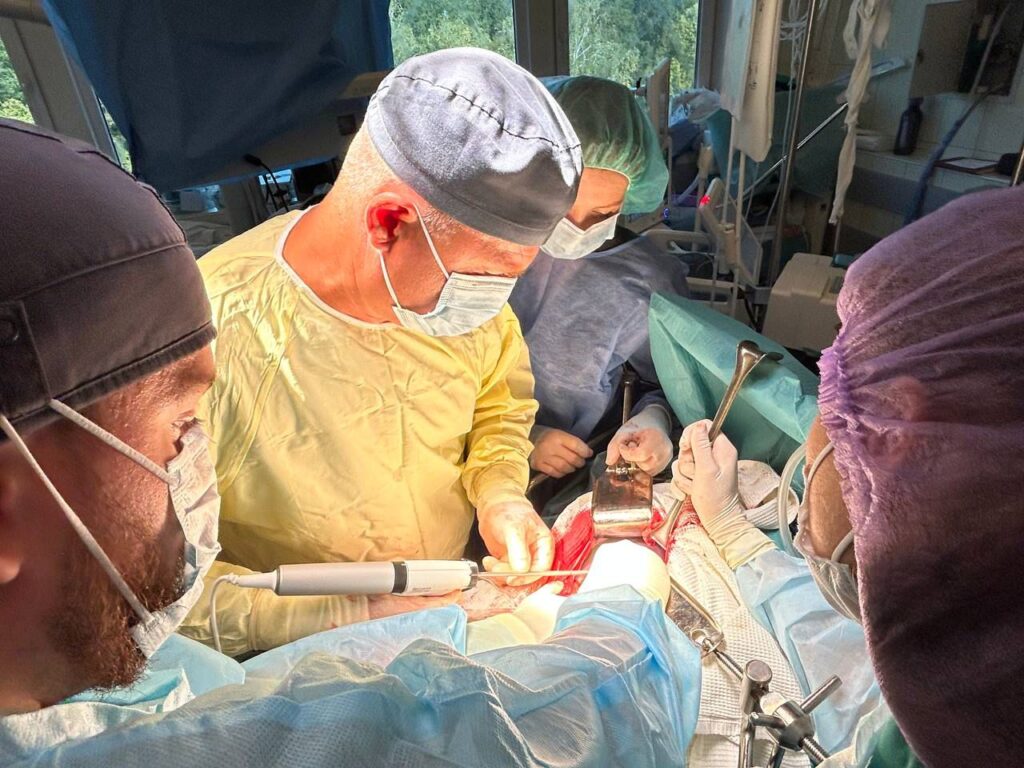
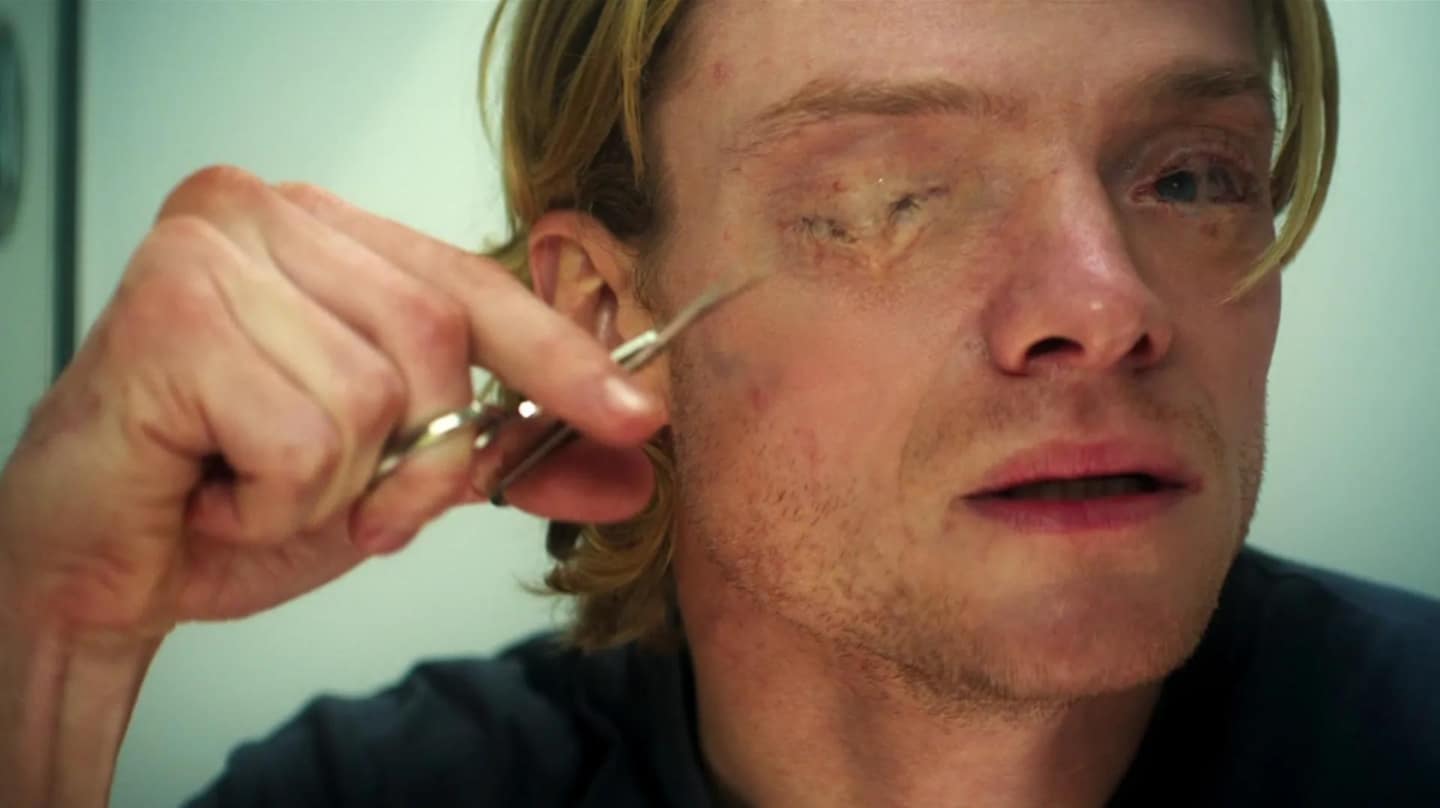


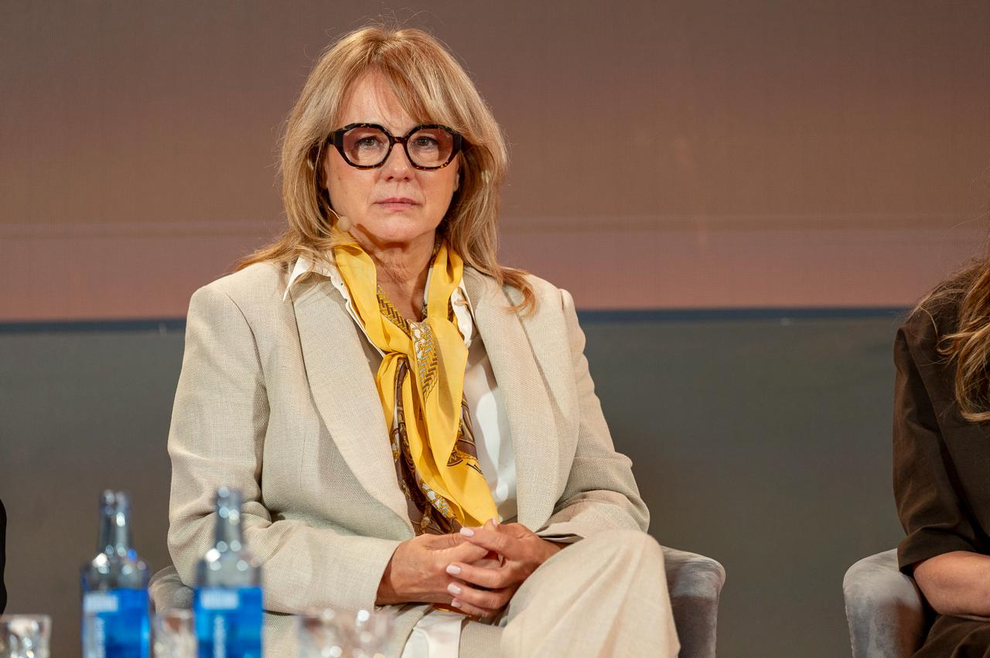

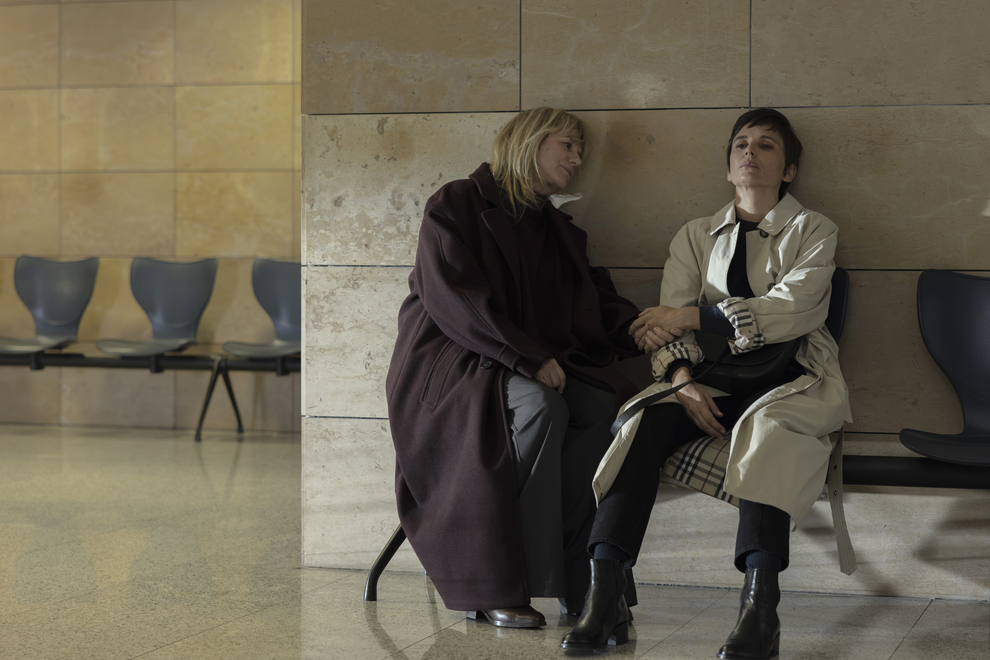

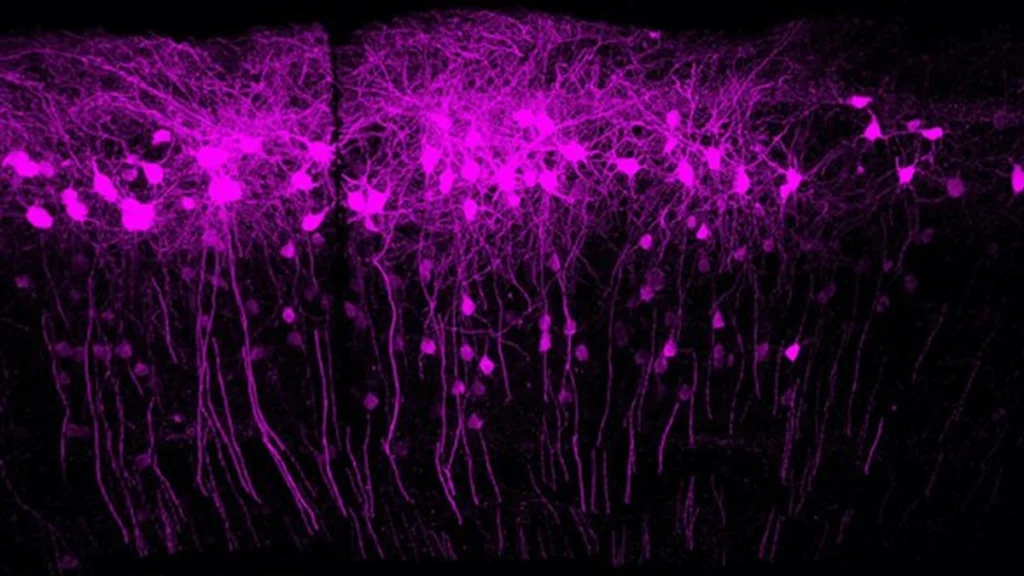


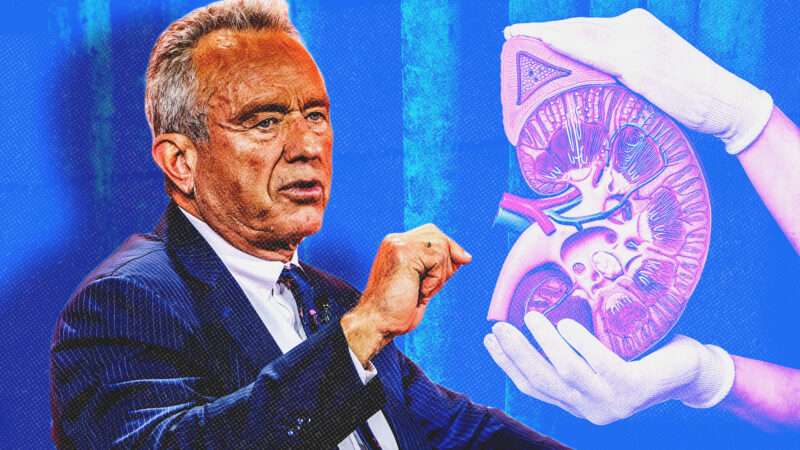


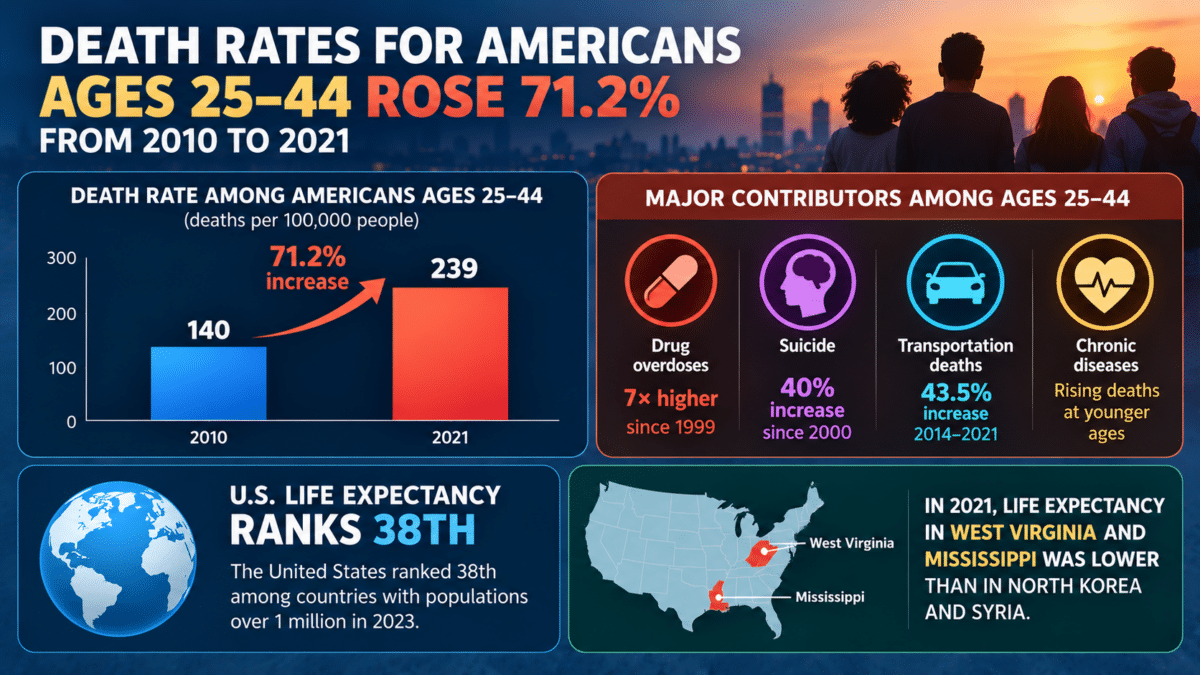 Infographic by StudyFinds