Login

Weight-loss drugs linked to these deficiencies reported by users, research reveals
Nearly 30 million Americans are on GLP-1 drugs
© Getty Images/iStock

Nearly 30 million Americans are on GLP-1 drugs
© Getty Images/iStock
Courtesy of Nicole Schildt.
For years, I thought being a good mother meant being a fair mother. And being fair, I assumed, meant treating all of my children exactly the same.
With six kids, this seemed especially important. I didn't want anyone keeping score — or, more accurately, I didn't want to give them anything to keep score about. If one child had a certain bedtime at 9:00 p.m., surely the next one should, too. Chores should be divided equally. Consequences should be consistent. Privileges should come at the same ages.
Equal meant fair. Except it didn't.
The longer I parented, the harder it became to ignore what was right in front of me: I wasn't raising six versions of the same child. I was raising six completely different people.
One of my children thrives when given independence. Give them a responsibility and some space, and they'll usually rise to the occasion. Another needs more structure, more reminders, and more check-ins. That doesn't make one child more responsible or the other less capable. They simply need different things from me.
The same is true of privileges. I used to think that if one child earned a later curfew at a certain age, every child should automatically receive the same privilege when they reached that age. Now I understand that age isn't the only factor. Trust is built through choices. A child who has consistently demonstrated responsibility may be ready for freedom that a sibling at the same age isn't ready for yet.
My decisions can be hard to explain when the inevitable "But they got to!" comes flying across the room. And sometimes, if I'm being truthful, the difference has nothing to do with the children at all. My youngest gets more bedtime stories than my oldest did.
That realization could easily become another entry on the endless list of things mothers feel guilty about. But my oldest didn't have the same mother my youngest has. Back then, I was younger, less experienced, and more concerned with getting everything right. I rushed through routines because there was always something else that needed to be done.
Six children later, I understand how quickly those routines disappear. I linger a little longer now.
That doesn't mean I loved my older children less. It means motherhood has changed me. The mother raising my youngest has learned things the mother raising my oldest hadn't learned yet.
For a while, parenting my children differently felt like admitting I was inconsistent. Now I see it as evidence that I'm paying attention. My 8-year-old, who has always been an early riser, requires more sleep than some of his siblings, so he is the first to go to bed, while his younger siblings stay up a little later. It is unusual from the outside looking in, but it is what best meets his needs.
Fairness doesn't always mean equal chores, identical consequences, or the same privileges at the same ages. Sometimes fairness means giving more guidance to the child who needs it and more independence to the one who is ready for it. It means recognizing that one child may need encouragement while another needs accountability.
My children still notice the differences, of course. They are children. Keeping track of who got what seems practically written into the sibling job description. But I no longer feel compelled to make everything even.
My job isn't to make sure all six of my children receive exactly the same childhood; It's to know each of them well enough to give them the childhood they need. After years of trying so hard to be equal, I've finally realized that might be the fairest thing I can do. I won't always get it right. I'm still learning these six very different people as they grow and change—and trying to grow and change with them. Maybe good parenting was never about getting everything exactly right. Maybe it's simply about paying attention, loving them well, and doing the best I can with the mother I am today.

Scott Semler for BI
In 2022, Kabir Nath had a cushy executive job at a pharmaceutical firm that developed anti-psychotic medication.
Then he got a call from a scrappy upstart with a patent on a synthetic version of psilocybin — the active ingredient in magic mushrooms. It hoped to use the compound to help those with treatment-resistant depression.
They wanted him to join as CEO. Nath, whose father died by suicide, bit on their second pitch.
"A number of people have said to me in the last couple of years: 'You do realize what a risk that was,'" Nath told Business Insider about eventually jumping ship for what was, and still is, a drug company without FDA approval for its product.
"I was probably the first really senior executive from traditional pharma to make the move to psychedelics," he added. "But, you know, it was the right thing to do."
Nath's personal risk is now magnified as Compass Pathways finishes filing its final forms ahead of what could be FDA approval as soon as next year, and then a public rollout of its psilocybin pill, called COMP360.
Compass has recently added 150 new hires to its payroll, expanded its marketing division, and moved into new office space in Jersey City in the hope it all works out. "The company is growing rapidly," Nath said.
Though a subsidiary of Johnson and Johnson attained FDA approval with a version of ketamine for depression patients in 2019, it is by no means guaranteed that Compass, leveraging a more traditional psychedelic, will get the same approval.
Should the FDA deny Compass' bid, investors would rush to dump their shares, likely sending the company into bankruptcy. The Jersey City office, which just received a new lime green paint job, would be untenable.
If you ask Nath, it would also be bad news for 4 million patients with depression in the US, for whom more traditional antidepressants like SSRIs don't work.
"These are people who have been suffering from depression, and nothing's really working," he said.
Like other drug companies — especially those with a single product — Compass' stock has "been on quite the adventure," Nath said, as the company progressed through various human trials.
When markets closed on Friday, the share price hovered around $11, up $5 from last year. In 2020, when the company went public, shares went for $17.
Scott Semler for BI
Psilocybin's journey to the forefront of medical research didn't begin with Compass, and it hasn't exactly gone in a straight line.
Few did more to publicize the drug than Timothy Leary, the Harvard professor turned acid dropout. In a speech at Harvard's Cambridge campus in 1962, he told students that taking psilocybin allows people to experience an "internal rebirth," according to the Harvard Crimson.
In time, Leary would be fired from Harvard as he, along with a measurable portion of the US population, began to experiment more heavily with psychedelic drugs. Come 1966, the Grateful Dead were spiking their Kool-Aid with acid, and a definitive subculture of long-haired, psychedelic-taking hippies had emerged.
Meanwhile, researchers were experimenting too. Studies involving LSD and psilocybin flourished during the 1960s before hitting a brick wall in 1970, when psilocybin was classified as a Schedule I substance, rendering possession illegal, even for research purposes.
Work on the drug languished for years, until 2000, when the FDA gave scientists at Johns Hopkins University permission to conduct research on psilocybin.
And more recently, psychedelics have become trendy with the tech crowd.
From Burning Man to luxury retreats, experimenting with psychedelics is now common among tech founders and executives like Elon Musk and Sam Altman, who credit the drugs with quieting their nerves, boosting productivity, and allowing them to better harness their creativity.
Research, too, has flourished.
"There was actually a biotech boom from 2018 through to about 2022," Nath said. "In that boom, literally hundreds of psychedelic companies went public."
In 2018, Compass' proprietary psilocybin formulation received breakthrough therapy designation from the FDA. A few years later, it started testing the drug on people.
Nath was an executive in 2018 at Japanese pharmaceutical giant Otsuka, where he said he assembled a team to investigate whether psychedelics could become viable medicines after reading Michael Pollan's book "How to Change Your Mind," which explores the history and therapeutic potential of psychedelics.
Compass isn't selling an experience analogous to a spiritual awakening at Burning Man, though.
The drug-taking process for a patient enrolled in one of Compass' trials is a bit different. First, a patient has to have treatment-resistant depression, which is clinically defined as depression that two or more standard drugs have failed to treat.
Then, a clinician explains the details of the process that is about to unfold. After that, they're given the psilocybin in pill form.
Scott Semler for BI
"It's a quiet room with a couch," Nath said. "They're offered a blindfold, which most patients do actually wear."
As the patient begins to trip, a playlist of music, including classical and new age, plays softly in the background. The clinician, who Nath said could be a nurse, doctor, or therapist, sits silently in the room if the patient wants to talk, and for safety reasons.
Most of the time, though, there isn't any talking.
"This is not psychotherapy," Nath said. "We are not directing the patient's experience."
Six hours later, after some crying, laughing, and everything in between, the patient goes home.
In Compass's most recent trial, results for which were published in September, just under half of participants who took the drug experienced at least a 50% reduction in depressive symptoms within six weeks of treatment.
After a decade of slogging through tests, first on animals and then on humans, Compass has completed all the necessary prerequisites and is busily working to get its last papers in order.
In a statement provided to Business Insider, an FDA spokesperson was noncommittal, though.
"The FDA evaluates experimental medications, including psychedelic drugs like psilocybin, through a rigorous, evidence-based process designed to ensure that any approved treatment is safe and effective for the indicated use," the spokesperson said.
Compass isn't the only psychedelic drug company wading through the lengthy process of trialing a drug.
AtaiBeckley, another psychedelic drug company trading on the Nasdaq whose product is not yet approved by the FDA, is developing a version of DMT administered via nasal spray. It received breakthrough status in 2025, years behind Compass.
For Compass, though, it could face the music as soon as the first half of next year, when it expects the FDA to render its decision. The company is already getting ready.
In addition to adding 150 new hires, Nath said the company is preparing its sales force to go online and is in frequent communication with doctors and healthcare providers about operating in clinics where therapists can administer the drug to patients.
"This has the potential to be radically different, and again, the rapidity is something that they're very excited about, and the durability," Nath said, referring to psychiatrists.
Courtesy of Lonni Pike
This as-told-to essay is based on a conversation with Lonni Pike. It has been edited for length and clarity.
Eleven years ago, when I was 51, I got sober after years of struggling with addiction. I felt vibrant again and ready for my life to start.
What I was met with was messaging on TV, social media, and even in day-to-day life that I had missed the train. I was too old, too boring, and I would just need to move along.
Everything associated with women and aging seemed to be negative. Even women themselves were negative about aging, and started hiding away, blending in, or getting treatments to chase youth.
But that wasn't going to be me. I was tenacious and determined to live the life I had another chance at.
Loving fashion, I started finding clothes that told the world who I was. Fashion is much more than clothing — it's the way people feel about themselves.
Most women my age had given in to the expectation that an aging woman is meant to be drab and boring.
For a bit of fun, I went to a clothing store and asked a staff member to help me find something to wear. She chose a pair of tan pants and a button-up, plain top, with a pair of loafers.
We are told not to show our arms because they are too flabby, not to wear miniskirts because our legs should not be seen, and to avoid bold colors so we don't stand out in a crowd.
I'd break out of this noise and dress in a way that made me feel good about myself.
Courtesy of Lonni Pike
With the help of my son, who studied broadcast journalism, I started posting on social media about what I was wearing.
I remember people telling me I looked like I was dressing like a teenager, or asking why I was wearing men's clothing. I often responded by saying that clothes don't have an age or gender, and that I was dressing to represent myself.
I've now created a community, mostly of women, who are watching my content and being reminded that aging isn't something to fear. It isn't the end.
I shaved my head because I hated my hair and felt that a buzz cut would make me feel more like I felt inside.
Three years ago, I started a gaming channel, and I've become a TikTok gaming live pro and Twitch partner.
My sons had always played video games, and it looked really fun. But I knew it was a notoriously young crowd. I asked if I was too old to game. It was when I found another gamer, Tactical Grandma, who was around my age, that I knew I should try it.
I started solo hiking because, after getting sober, I needed that time alone outside, moving, to reflect. Slowly, I built up my fitness.
In October, I'll run my first 5 K. This was a goal I had after watching people run a half-marathon. I thought half-marathoners would be young and super fit, but there are so many different ages and shapes.
Having gotten tattoos for years, I was determined to continue getting them as I aged. They are my life's journey inked out on my skin. I don't worry about the wrinkles or a changing body shape that might alter how they look. The canvas the tattoos are on doesn't have to be perfect — I love the tattoos for what they represent, not for how aesthetically pleasing they are to other people.
Next month, I plan to get bird tattoos along the right side of my neck.
As I continue to age, I want to be louder. Not "in your face" kind of loud, but I do want to talk more frequently about aging.
Women can be comfortable getting older. They don't need to be perfect to be beautiful. In the world of AI, injectables, and cosmetic procedures, this is a powerful message.
It seems that growing old is becoming a dying art. That's why I want to pop up in their feeds to say that none of it's true. Aging doesn't have to be something we dread.
Sometimes, my body doesn't keep up with my brain. Running had been hard and ruined my feet. Gaming for eight hours a day has been hard on my body. And that's OK — I'll pivot and pursue something else instead.
I tried new things in my 50s and 60s, and I'll continue fearlessly trying more until I can't anymore.
Courtesy of Melissa Noble
When my mom was younger and my siblings and I moved out, she really struggled with empty-nest syndrome. Now that I'm a mom of three myself, I can totally appreciate how she must have felt.
As a parent, you pour so much of your love, time, and energy into your kids. And then one day, they leave. I imagine it must feel incredibly strange. I already dread the day my babies leave the nest, to the point where I sometimes cry to my husband about it.
The other day, I was having one of those moments, sobbing on the bed, when my husband found me. I told him how I felt, and he said, "For God's sake, honey, our youngest is four! You have at least another 14 years with her at home." Fair point.
Now that my siblings and I all have families of our own, the time we have with my folks is often chaotic. Inevitably, one of the grandkids is throwing a tantrum, complaining about being hungry, or announcing they need the toilet, and conversations are often start-stop affairs.
But a few years ago, I had an epiphany. It was my sister's 50th birthday, and we were in Bali with all the extended family. To celebrate, we went out for dinner, just the original six of us — Mom, Dad, and the four of us siblings.
It was one of the most incredible nights. We told stories from childhood, talked about getting older, and shared what actually makes us happy and what we love about each other. There were tears and plenty of laughter.
Courtesy of Melissa Noble
Afterwards, I realized how much I'd missed my original people. The ones who've known me the longest. The people who remember what I was like as a naughty four-year-old who would scream the F-word in the supermarket if I didn't get lollies, or as a pimply teenager going through puberty. The people who knew me before I had a husband, children, a career, a mortgage, responsibilities, or any real idea of who I was or where life would take me.
As adults, we inevitably morph into different versions of our younger selves. We form new identities, build our own lives and our own ideas.
But there's something so incredibly beautiful about being able to return to those younger versions of yourself, if only for a few hours. For me, I've always been the baby of the family, and somehow, if I'm alone with my parents and siblings, I revert straight back into that role. Goo goo, ga ga. Even at 41, I'll always be the baby of the family.
Since that dinner all those years ago, I've made a concerted effort to organize catch-ups with the original clan only. Partners and children know they're not invited, which I'm sure has offended a few people along the way, but nowadays the spouses are used to it.
My sister lives in Africa, and we are all in Australia, so getting us all together can be tricky. But when we do, we have the best time. There's always a lot of reminiscing and laughing. Often, too, a few inappropriate jokes, and inevitably, the occasional argument or two.
I think for my folks, who are now in their 70s and 80s, these moments are golden. There's no doubt they adore the grandkids and partners. But there's something different about having their kids all to themselves for a couple of hours.
No tantrums. No one cartwheeling through the living room as we attempt a conversation. Just us.
At the end of the day, no matter how old we get, we'll always be their kids. You can grow up, move away, become a wife and mother, and build an entirely new life. But when we're all together again, somehow it feels exactly the same.
Courtesy of Ben Hagopian.
I've spent more than a decade navigating the labyrinth of American healthcare. I've worn the white coat, spent sleepless nights on call, signed the charts, and cared for thousands of patients.
A few years ago, I realized I couldn't keep participating in a system that felt like it was designed to fail the very people it was meant to serve.
Today, my family and I are uninsured in the traditional sense — and I'm confident that it's the best financial and medical decision I've ever made.
For years, I worked in a traditional, insurance-based primary care practice. My days were a blur of 15-minute appointments, dictated not by medical necessity, but by billing codes and insurance reimbursements. I felt completely beholden to the behemoth of corporate medicine. Patients were waiting months to see me and were almost always shortchanged on the time I was able to spend with them.
I felt like the insurance companies were the invisible third party in every exam room, deciding which tests I could order and which medications my patients deserved. I wasn't just a doctor anymore; I was a data-entry clerk for multibillion-dollar payers. The result was a total, soul-crushing burnout that followed me home every night.
On the other side of it, some of my patients were forgoing necessary care because the costs presented to them were simply too high. Did it make sense to spend $300 to check a thyroid test to ensure the $10 per month medication I prescribed was working as it was supposed to? Many patients, rightfully so, decided to spend their money elsewhere.
I knew I had to get out — not just for my own sanity, but to actually provide the type of care I believed in.
I eventually traded the treadmill for Direct Primary Care (DPC). In this model, my patients (or their employers or an insurance company) pay a flat monthly membership fee directly to me (around $100 per month). This type of care is affordable— my current patient panel includes attorneys, electricians, teachers, and retirees. There are no co-pays, no deductibles, and most importantly, no insurance companies breathing down my neck.
The difference was night and day. Without the administrative bloat of insurance billing, I finally became the doctor I trained to be:
Once I saw how much better medicine functioned without traditional insurance interference, I took the ultimate leap. I took my wife and children, now 9 and 6, off our health insurance plan.
Instead, we joined a medical cost-sharing community. It isn't insurance; it's a community of members who share each other's large, unexpected medical expenses. When I combined a DPC membership for our routine care with a health share for the big stuff, I realized I had found a better way to protect my family — and was paying far, far less for it.
To understand why we left, look at the cost of childbirth. When our first child was born under a supposedly high-end traditional insurance plan, we still walked away owing about $10,000 after paying our insurance premiums. We were paying twice: once for the premium and again for the actual care.
My wife spent hours of her precious maternity leave arguing with insurance companies about the services we received in the hospital. When our infant son was hospitalized a few months later, she was back on the phone again, having to advocate for his coverage during the time of a family crisis. We spent years paying off the cost of the birth and his illness.
With our second child, we looked at the numbers through the lens of a cost-share program. On a plan like ours, the Initial Unshareable Amount (IUA) — the part we pay before the community kicks in — was only $1,500.
Beyond that $1,500, the community shared the rest. We didn't have to spend my wife's recovery time fighting with a claims adjuster or waiting for pre-authorizations. We knew exactly what our responsibility was, and more importantly, we knew our family was covered by a community, not a corporation.
As a physician, I've seen the insurance trap from both sides. We've been conditioned to believe that without a blue or green plastic card in our wallets, we are unsafe.
The reality is that for some, traditional insurance has become a barrier to care rather than a bridge. By opting out and pairing Direct Primary Care with a health share, I've reclaimed my time as a doctor and my peace of mind as a father. I'm no longer waiting for an insurance company to tell me how to care for my kids or my patients. As a doctor and as a father, for the first time in my career, I feel truly secure.
Courtesy of Jonathan Yang
This is an as-told-to essay based on a conversation with Jonathan Yang, who was laid off from Meta in late 2024 after more than three years on the office design team. The 43-year-old shares how his job, cosmetic procedures, and weight loss shaped his confidence. The following has been edited for brevity and clarity.
At Meta, I worked really hard. I had golden handcuffs. I did not prioritize my health. You go to Meta, and they call it the "Facebook 15." Well, it was probably more than 15 pounds because of all the food that's available and all the stress. So, I just really let myself go. I put in everything I could to keep the job.
One upside was that having a bigger paycheck allowed me to start exploring things that I'd always wanted to do — emotionally, physically, aesthetically. I could finally afford a $10,000 hair transplant.
I also got a nose job. I've also had another hair transplant. Looking good and feeling good, to me, are fundamentally tied together. That's for me, and not everybody needs that. A lot of people out there are very successful being their own person and not letting that get to them. I'm not that strong.
Doing these things started to change how I felt about myself. It started to take away some of the shame that I had around getting aesthetic treatments. Because, as a man, it's seen as superfluous, and it's frowned upon. Before that, I had done a lot of soul-searching, therapy, and all kinds of things.
I hired a trainer, and I felt good, but the change wasn't happening fast enough. Then GLP-1s came out. I'd been waiting for something like that. I finally got on them, and then the weight started to come off, and I just started to blossom.
Once I started seeing the results, I just wanted to get hot. I wanted, at 43, to finally feel confident enough to say that out loud without having any kind of qualms about it. I think working out is a segue for people to think about improving their lives emotionally — to talk about those things — and fitness is an acceptable way for men to kind of go into that.
Courtesy of Jonathan Yang
At work, I would get up onstage and be much more confident. Before that, it wasn't a conscious thing where I knew why I was so meek. When I look back, I would be nervous. I wouldn't smile. On GLP-1s, I started to really change and show up differently at work, and I was getting promotions. I just felt like I had more command because I lost the weight. My coworkers and managers all treated me better.
Now I'm on a lower dose of GLP-1s. I have to pay for it myself now that I'm self-employed. That's not something I'm going to stop.
After my layoff, my weight was something I could control. I had to build a new routine. My body needed it, too. I had sciatica, and I had all this nerve pain. It really was like my body broke. I had never felt something like that.
I became hyper-focused on wellness, keeping fit, and eating well. Losing weight gave me the confidence to share my story. It allowed me to shed any insecurity or cringe. We say that a lot, but it was like I'm at this point now where I've only got one life to live. I know what it tastes like now.
After all the changes I made, people looked at me differently. A thing that people don't really talk about is how, on the surface, it really is about looks. I would walk into a situation with this naive sense of, "Oh, they're not looking at my weight."
As soon as I started looking more conventionally attractive, I noticed that was the first thing people would comment on. I would meet people, and they would say, "Well, you obviously go to the gym a lot," or "Oh, look at those arms!" I was like, "Wow! We live in this world where we're told, 'Aesthetics don't really matter. People look at your character.' Unfortunately, it's not true. I wish it were.
Do you have a story about how your appearance has affected your work or career? Contact this reporter at tparadis@businessinsider.com.
Courtesy of Brian Rooney
This as-told-to essay is based on a conversation with Brian Rooney, the 60-year-old founder of Chapter7Reset.com, who lives in Conroe, Texas. He lost his wife in 2013. The essay has been edited for length and clarity, and the details verified.
When you're grieving, you're not thinking about how to move a business forward, capture new market share, or adapt to new technologies. You're not thinking straight because you're overwhelmed by a cloud of loss, pain, and sorrow. Some days, you're just trying to get through morning to night.
In 2013, I lost my wife, my partner, and my life. I still had to deal with the financial reality. I had underestimated what grief would do to my ability to run a business.
My wife, Tina, and I had 24 great years together. She was the yin to my yang. We met through a mutual friend, got to know each other, and fell in love. She was a strong, independent thinker. She was loving, kept me in check, and was an outstanding mother.
Our five kids were all born close together, and I was very involved in their lives. One of the reasons I started a business was because I wanted to be the dad who could be at home, coach my sons in basketball, and play in recitals with my daughter.
We'd tried both working early on, but Tina stopped early on in our relationship. I was the breadwinner, and she managed the kids.
I launched my email-marketing business in 2000. For a time, it did very, very well.
Courtesy of Brian Rooney
In 2011, things felt almost too good to be true. Then Tina noticed a little bump in the roof of her mouth. She went to the dentist; they did a biopsy, and we didn't think too much about it. Weeks later, I was sitting in my home office when she came over with the phone. With a very disturbed look, she said, "I have cancer."
Our lives turned upside down.
At first, because the cancer wasn't very aggressive, we tried homeopathic remedies. Then came chemotherapy, radiation, and major surgeries. The treatments were costly, and while the Affordable Care Act covered quite a bit, we still had high deductibles. Some hospitals wouldn't admit her until the deductible had been paid.
I would sit at the table with spreadsheets, trying to work out the finances. I was trying to be strong for my wife, but sometimes I'd go to the corner of the room and cry. The unspeakable thing to consider was that I might lose my wife because I couldn't afford to pay for it all.
Courtesy of Brian Rooney
A lot of the medical bills were paid with credit cards, and we ran up a lot of credit-card debt. I had six mouths to feed, for which I relied mostly on credit cards. I sold my music gear, like my guitars and amps. We moved from a beautiful rental house in a nice area of Texas to a much less expensive apartment. We weren't going to shows, basketball games, or on trips. None of that bothered me. The focus was on getting Mama healthy.
Friends and family stepped in here and there to help out. My kids were approaching adulthood, so they didn't need much looking after, but working from home let me adjust my schedule as needed.
There were days when I couldn't touch the business. It was mostly automated, but there were things I needed to step in and manage. If a server went down, I'd need to stay up all night to fix it while checking on my wife in the other room.
I wasn't resting or sleeping. I wasn't able to drive the business forward.
During that time, the industry was changing. New technology became available, and we weren't able to keep up. I was so focused on Tina's care that we missed opportunities. We had contractors and a business partner, and I wish I'd outsourced a lot faster. I didn't realize how fast I was losing.
Courtesy of Brian Rooney
Tina died in November 2013. She was 49, and I was a 47-year-old widower.
Those first few weeks, I'd wake up, roll over, realize she wasn't there, and know that she never would be again. I would talk myself out of bed, one body part at a time.
The business was still there. My business partner was focused on the technical side, but I had the marketing and entrepreneurial mindset. A lot of things that needed to get done didn't get done. Honestly, at that point, I didn't care. It was a dark time for me
The business was declining, and meanwhile, I'd built up hundreds of thousands of dollars in credit-card and medical debt. I thought I could put everything on my credit cards, turn things around, and pay it down. Things never turned around, and as the business continued to decline, there was less money to draw from it.
I spoke with bankruptcy attorneys, but I was convinced I could fix the problem.
In 2021, I got remarried. My second wife knew about the financial mess I was in. The interest and penalties were compounding so quickly. There was constant pressure from phone calls, letters, and demands for payment. I wanted relief and a clean slate.
In early 2024, after speaking with my business partner, we decided to dissolve the business. Later that year, I filed for Chapter 7 bankruptcy.
When I filed for bankruptcy, I had no assets because I'd sold them all to pay my bills. When the debt was wiped out, I felt relief and shame, but the relief took over once I stopped getting phone calls and letters.
It was time to rebuild. I got a sales job, which I hadn't had in decades. I did AI certification training and started rebuilding my credit with credit-rebuilding cards. I launched ChapterSevenReset.com, a free guide to help people in a similar position.
One of the hardest lessons was that we didn't have a life-insurance policy on Tina. It never dawned on me because she wasn't contributing financially. I never considered how caring for her and my grief would take away from my generating income. My second wife and I both have life insurance policies for each other.
Nowadays, my friends say the "old Brian" is back. I've made peace, as best you can, with the fact that Tina is gone. I'm like an amputee. There's a part of me that's missing, and that part will always be missing. It itches. It's always there.
Courtesy of Danielle Fewings
This as-told-to essay is based on a conversation with Danielle Fewings, a 40-year-old entrepreneur from New York City. The following has been edited for length and clarity.
I started my career in digital marketing and ran my own agency from 2020 until 2025, when I sold it. I'm now the founder of Get Clear Beauty, an aesthetic treatment marketplace, which I started in 2026.
I've always felt like there was something missing from my appearance, as if someone much more confident was buried beneath it all. I got my first procedure done in 2013 and have had many since.
I don't regret any of them.
In my broader New York circle, routine maintenance is completely normal. People are getting Botox and lip filler, and a few have had breast augmentations. Most are dipping in rather than going all in.
I'm honestly the most treatment-forward person in almost every room I'm in. In any given conversation, I'm the one who's had the most work done, which is a little wild when I think about it.
For most of the people I know, the max is Botox. Routine maintenance is common around me, but no one I'm close to has done anywhere near as much as I have.
I wore a 32G and desperately wanted them smaller. I call this my gateway surgery because it was honestly a very easy recovery, so I had this ease as the template, which gave me the confidence to keep pursuing additional treatments.
It made me more willing to put myself out there, both in dating and especially in showing up online to create content for my business, which matters enormously when you're building something. It shifted how I approach relationships, too, both friendships and romantic ones.
When you feel confident inside and out, you see yourself as more valuable, recognize your worth, and become more selective about who you let into your life. As I've felt better about myself, I've been more intentional about the relationships I keep close, and I see a direct correlation between the two.
My choices have always been personal. I've never done any of this for another person or because of outside pressure. It has always been about putting my best self forward, and if that takes some tweaks and some money, I'm willing to do it.
I'm a very confident person — I just haven't accepted every imperfection. My upper blepharoplasty is a good example: most people would say I didn't need it, and they would be right, because no one needs any of these things. I wanted it. My eyelids felt heavy, and I chose to change that.
I'm fully committed to antiaging and the maintenance it requires. I go to my quarterly Botox appointments and my annual lip filler appointments, and I'll be ready for a facelift when that time comes. The idea that aging gracefully means avoiding treatments is absurd; aging gracefully is doing whatever feels good to you as an individual.
Because my first breast surgery was a reduction, I paid $6,000 out of pocket, and my insurance covered the rest. I had a full-body makeover in the Dominican Republic, which included a tummy tuck, skin tightening, and two further breast surgeries after major weight loss, costing around $12,000. I've also had liposuction, scar revision, an upper blepharoplasty, Sculptra and filler, a Morpheus8 treatment on my legs, tattoo removal, lip blushing, microblading and shading, Invisalign, and teeth whitening. These procedures have cost about $50,000 in total.
The maintenance I keep up with regularly includes manicures and pedicures, which I have gotten every two weeks for the past 10 years; lash extensions, which I have gotten every three weeks for about 15 years; Botox; more filler; peels and lasers; tanning; and haircuts. The recurring maintenance has cost about $105,000 over time.
What struck me is that the one-time procedures come to about $50,000, but the quiet, recurring maintenance is over $100,000. The costs nobody tracks are the ones that add up the most. That is exactly why I built Get Clear Beauty.
My whole philosophy has been doing high-maintenance things to stay low-maintenance. The lashes, manicures and pedicures, lip blushing, and microblading are all upkeep that let me feel put-together with minimal effort, and because of them, I barely wear makeup, so some of that cost is a trade-off.
The bigger procedures came from real changes in my body. My weight has gone up and down for years, and that has driven a lot of it. The Morpheus8 on my legs was for skin laxity, because I'm not ready for a leg lift and probably don't need one. I've had three breast surgeries total.
I'd never do CoolSculpting, and I'd never have a nose job. I don't think CoolSculpting is cost-effective, and I've grown to love my nose.
When you're on 15 Zooms a week and constantly recording content to win business, looking and feeling your best matters.
Appearance affects business outcomes, but for me, it works through confidence. When I feel good about how I'm showing up, I represent my company more powerfully and carry my knowledge into the room in a way that lands.
I love how I look. 10 years ago, I never thought looking this way was achievable, and it's the result of a GLP-1 medication, surgeries, and really taking my appearance by the horns. I'm in a genuinely happy place with it.
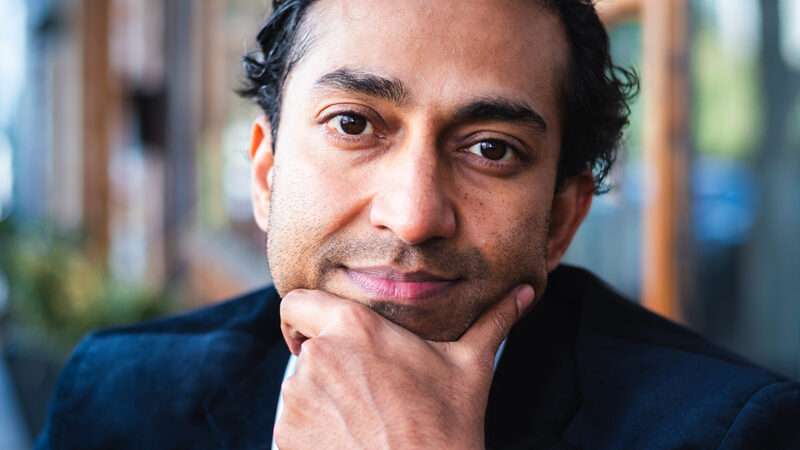
Vinay Prasad has been on both sides of the public health establishment. A physician, author, and professor at the University of California, San Francisco, he went from prominent COVID-era critic to Food and Drug Administration (FDA) insider when he was tapped to lead the agency's Center for Biologics Evaluation and Research in May 2025. His tenure there included an abrupt resignation in July 2025, a return a few weeks later, and his final departure in April 2026.
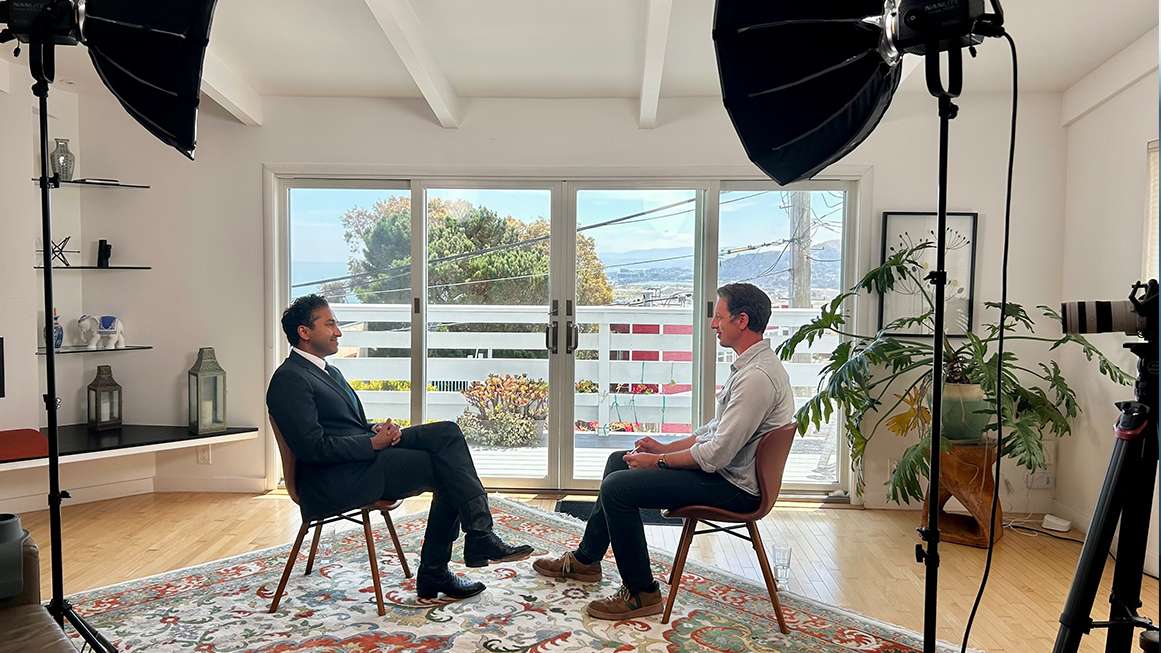
Prasad joined Reason's Zach Weissmueller in August to discuss what he learned from his time inside the FDA, what he was able—and unable—to change, and whether the agency can ever regain public trust. Their conversation ranges from Anthony Fauci and the origins of COVID-19 to vaccine policy, plus regulatory barriers, his growing sympathy for libertarian critiques of the FDA, and whether the agency is ready for an era of AI-driven medicine.
Reason: The FDA saw a clearing out of the old guard and a replacement with a new one—COVID dissidents such as yourself, former FDA Commissioner Marty Makary, and National Institutes of Health Director Jay Bhattacharya. What was that like? Did you have any misgivings about stepping away from academia and your role as an outside critic to join the public health bureaucracy?
Prasad: Maybe we changed 4 percent, 2 percent of the FDA. The FDA is an 18,000-person agency. There's tens of thousands of people still there. Before Marty, the commissioner, and I got there, DOGE [the Department of Government Efficiency] had just struck and they got rid of a couple thousand people. But the system is largely the same as it's always been.
There are critics of the COVID pandemic response and then there are critics. Although Marty, Jay, and I are critics of many aspects of the response, we don't go as far as some of the most extreme critics out there.
Am I glad I did it? Yes, I'm glad I did it. It was an adventure. It was a learning experience. I learned more in one year than I'd learned in the prior decade about how the world works. I'm glad to have improved some aspects of government, which I think will be enduring, and at least tried to improve other aspects of government, which may not be enduring.
Anthony Fauci personified the old guard. He's recently been in the news because he appeared before Congress and pleaded the Fifth after Sen. Rand Paul (R–Ky.) published his diary. What did those diary entries reveal to you about Fauci's character and about the way he operated?
Probably the greatest news story is that the mainstream media refuses to be honest about his legacy. Fauci was in his late 70s when the pandemic began. Had he retired at a ripe old age of 75, he'd be leaving behind a stellar legacy. But he continued. He pushed it. He stayed through the whole pandemic. He was the face of many things that his diaries get into, what he privately thought while he was publicly saying different things.
Fauci has not only been a proponent that the only answer to where the virus came from is a natural spillover event. He's gone further than that. He orchestrated a paper published in Nature Medicine called the "Proximal Origin" paper, written by a bunch of people who bolstered that point of view. He edited that paper before it was published. Then in public, he pretended like he didn't know those people; it was an independent group that validated what he was saying. Whereas in many respects, he puppeted that paper. The people who wrote that paper—Rand Paul has released their Slack channel messages showing they didn't really even believe what they were writing. Their messages reveal considerable ambiguity about lab leak vs. natural spillover event.
In terms of the origin, he also funded EcoHealth Alliance, which had a subcontract to Wuhan. He had a huge role in the origins and trying to frame the narrative, making lab leak—you couldn't even discuss it. Facebook put a ban on even talking about the topic. Then masking 2-year-olds. He played a huge role in that. Lockdowns, school closure. He said he didn't close any schools. In his own diary, he says, "I told [Mayor] Bill de Blasio, you need to close schools in New York City."
At some point, the man's got to take ownership over the decisions he did make and advocated for. When [Gov. Ron] DeSantis in Florida reopened schools in 2020, he went on every television show to say what a bad idea that was. Now, it's very clear—many of us said so at the time—school reopening was always the right decision. Maybe it could have been closed for a week or two, but certainly not beyond that. Fauci kept it closed much longer.
Vaccines make a lot of sense for elderly people who had not yet had COVID. But do they need to be given to a 4-year-old, a 7-year-old, a 12-year-old, a 22-year-old who'd already had COVID? This is where considerable ambiguity exists. But for Fauci, the answer was clear: You need all the shots. You need the initial series. You need a yearly booster. It doesn't matter how young you are or how many times you've had COVID. Fauci was wrong about almost every single pandemic policy he advanced.
Some of his defenders say to me, "At least he didn't tell people to drink bleach." And I said, "Is that the bar for a guy who's a doctor and a scientist?" Drinking bleach is not a good idea, but that's not the bar for a Fauci-level figure. He should be saying things that are correct. If they're not correct, he should be collecting evidence to weigh in. He did none of that.
Fauci's pardon stretches back to 2014, when he was authorizing funding in contravention of U.S. policy on gain-of-function research. Do you think he actually committed a crime?
Yes. The other thing about it is people will say, did that money go directly for this research? The money went for viral genomic research at a Chinese institute, very similar to the sorts of things we would be worried about. That was a crime for which he's been pardoned. It's not just my assessment. That's what Joe Biden's autopen thought, or whoever signed that pardon, that he committed a crime. That's why he has a pardon that goes that far back. It was a crime. Now that he's been pardoned for it, I don't know what you can do about it.
You rode in on this wave of anti-Faucism. What was your biggest hope for what a new version of public health might look like, or for the kinds of changes that could be made?
I had a very narrow mandate because I was just in charge of biologics at the FDA. The hope continues, which is that public health could aspire to be honest, to use its powers proportionately and judiciously, to exercise humility. Public health is far from these things. Public health could actually aspire to be bipartisan. Public health is not. It's becoming an increasingly entrenched left-wing discipline run by left-wing ideologues, reaching even more and more absurd conclusions. What public health can be and what it is are still light-years apart.
You don't think that has changed very much?
Not much at all. Changing an entrenched organization with tens of thousands of people is very difficult. There have been some changes. The pandemic has been a catalyst. But I don't think a real reform is possible. I suspect it'll splinter into different public health groups.
Your role was at the part of the FDA that oversees biologics, such as vaccines and gene therapies. Vaccines became an increasingly polarized and politicized issue during COVID. What was your goal specifically pertaining to vaccines when you took over after the pandemic?
The right drug given to the right person at the right time is lifesaving, but the wrong drug given to the wrong person at the wrong time can be harmful. Vaccines are the same way. You can't say anything about all vaccines, just like you can't say anything about Tylenol, aspirin, and Plavix all in the same breath. They're all very different drugs.
Is this the same phenomenon we observed during COVID, where you're either for the vaccine or you're against it, for a medicine or against it, without breaking things down by age, health, or other individual factors? Everything has to be flattened or compressed.
Same phenomenon. One-size-fits-all public health—where the shoe doesn't fit the guy with the big foot or the person with the small foot—is a completely wrong view of public health. COVID is a great example. An 80-year-old who's never had COVID, and we're talking about February of 2021, should they get a vaccine? Absolutely. A 7-year-old who's had COVID and we're talking about 2022? No, a healthy 7-year-old makes no sense. Public health is, in this country, so broken. It cannot appreciate these distinctions.
Something you've been writing about for a long time is poor experimental design in drug trials. Was that something you wanted to change when you came into the FDA? Do you feel like you made any progress toward that goal?
In one year, we did more than what our predecessors have done in a decade. You can look at just the sheer number of announcements and policy changes we made. We're talking a lot about one side of the coin, which is where the companies are not doing the right study to inform the American public. We're not talking about the other side of the coin, where the FDA is asking them to do things that don't make any sense at all, that burden them, that cost money, and that are wasteful. We did a lot of work in that space too. The FDA makes both errors. They also do a lot of things right, but they make both errors and they can get better.
You mentioned there were two sides of this FDA reform. One was raising standards for things like vaccines. The other was acknowledging how expensive and cumbersome it can be to get something approved in the United States. What were the biggest barriers you saw at the FDA on that side of the equation?
So many. During my time at the FDA, I was often sympathetic to the people who work at companies who told me about the hurdles they were forced to jump through. The FDA does two things: We regulate what's approved and can be marketed and sold on the U.S. market, but also what you can study.
Imagine you're a researcher and you want to study something. We're not talking about approving. You want to gather people together who may be interested in trying something new, have an informed consent, get them to volunteer, but they know that we don't know for sure it's going to work. We do so many things in that space, regulating what you can study and how you can study it, that I think are sensible. You don't want to let people sign up for something that's going to blind them or maim them. But some things that aren't sensible, that are overly burdensome, that are quality controls that don't make sense for small companies and super-rare diseases that don't have a huge budget to study these things. The regulation in this early side of research is tremendous in the United States. A lot of it is well-intentioned, but not all of it is fit for purpose.
You said that your time within the FDA made you somewhat more sympathetic to the libertarian critiques of the FDA.
I'm really sympathetic in one way: We tax people a lot of money to pay for healthcare in America—trillions of dollars. We're taking trillions of dollars from people's paychecks, from taxation, and we're taking it for this thing that we think is a benefit to people, which is we're going to offer a service that's maybe a human right, a societal good. Surely, the service we offer, we do have some of that stuff in there. If you have a heart attack, you go to the doctor here with or without insurance, they're going to open up that blockage. That's a great thing. But along with that package deal, we're going to insert a few things that may or may not work, that cost a lot of money. All that's doing is taking lots of money from taxpayers and redistributing it to the shareholders of those companies.
It's a huge financial system with the rare adverse event of helping someone's health. The libertarian comes along and says, "I'd rather not pay the tax—have more skin in the game, decide what's right for me. I'm the best person to decide how to use my own money." I do feel a sympathy to that point of view, because this system has so many places where it can be taken advantage of, where people get something that doesn't help that much, that only may kill without any possibility of benefit. And we take a lot of other people's money to pay for that.
Dario Amodei, the CEO of Anthropic, recently called out the FDA, and I'm wondering what you think of this. He wrote, "Regulatory systems were designed for a slower pace of innovation and we are not prepared for the deluge of new products and advances that AI will bring. AI may also make these downstream technologies safer and more predictable in a way that violates the skeptical assumptions of regulatory agencies like the FDA."
If Amodei is right about the effect AI is going to have on the field, do you think the FDA will be able to adapt?
I see kernels of truth in what he's saying, but maybe I don't go all the way he goes. Where I see the big core truth is the FDA tries to regulate AI itself, medical AI. You wear a watch that's supposed to give you information and the FDA wants to do a lot of that regulation. That's a very tough thing to regulate, because this technology is changing so much faster than our ability to judge it. I do agree with Marty and others who think that that's probably not the best role for regulating all the potential aspects of digital health and health AI. For instance, you can imagine the absurdity where I'm a doctor, I'm seeing a patient later this afternoon, should government regulate the apps I can use to learn about the disease or ask questions? Should it regulate open evidence? I don't think it should.
I spoke to a company called Doctronic that is acting as an AI prescriber in Utah, where AI is being allowed to refill prescriptions. That's another example of where these questions are going to have to be answered: Where does the government step in, and where does it step back?
Government is much more likely to get in the way of these kinds of innovations. It's changing so quickly. It's going to be very difficult for government to regulate that. You talk about drug discovery and drug science and those kinds of aspects of AI. If I was a pharmaceutical firm, I would definitely invest in AI. There's so many things around running clinical trials that we can do better with AI, help us run them cheaper and faster and more efficiently.
But when it comes to molecule discovery and basic science, I'm not as optimistic as Dario for a couple of reasons. One, a lot of the information that is fed into models about cancer biology is basically as close to fraudulent research as you can imagine. We're talking about like the Stanford president whose Western blots look Photoshopped kind of research. You got research that's not reproducible. It's not just my opinion. Many companies have taken samples of the literature and they tried to replicate it in their own labs and they have massive strikeout rates. If you train AI on garbage, what can it learn? It's only trained on inaccurate information. That's a challenge it faces.
The second challenge is AI will be happy to give you hypotheses to study, but you'll still need to run it with a few people to validate those hypotheses. I suspect the limiting reactant is not coming up with ideas; we have more ideas than we can study with people. The limiting reactant is getting the people to consent and manufacturing the products and those kinds of things.
I hope he's right. If he is right, it sounds like a great future. But I'm a little bit skeptical that he's totally right, because I think the biology of it is a lot harder.
Do you think enough has happened for people to start regaining trust in public health?
No way. I wouldn't trust it at all.
What still needs to happen for public health to legitimately earn back the trust of the public?
I don't know if it's even possible. It's so fragmented now. People tell you with a straight face, people I know, "Anthony Fauci, he made no mistakes. Literally, did the best job he could with the information he had." Then I said, let's just focus on one tiny thing. He did say you should take your 24-month-old kid and put a cloth mask on that kid all day in daycare. He said that. You don't think he had any clues at the time that that was a dumb idea? It's so obviously dumb, right? That's their position on every issue.
Public health is so myopic. It doesn't understand that you have to look at the whole issue. Isn't that a perfect analogy for COVID? Don't go outside. Just stay in your house all day. As if human beings don't need contact with other people and see face to face as if that doesn't matter at all.
Public health has not learned its lesson. The problem with public health is that they're completely politically captured now. Public health and the far left wing of the Democratic Party are synonyms. There's no political balance there. A little balance would go a long way. A little bit of open-mindedness would go a long way in public health. A little bit of humility to just admit a few things we got wrong in the pandemic.
The federal public health apparatus is still staffed with Robert F. Kennedy Jr. at the top and Jay Bhattacharya is still head of the National Institutes of Health. Is that not having some sort of trickle-down effect or creating a countercurrent within the system?
I don't know.
Don't get me wrong, I love Jay and I think Jay's heart's in the right place. He's already made some really important changes. I agree a lot with the kernel of Bobby's ideas. I agree with the kernel. I always say the kernel because I can think of a way that makes sense and I can sometimes think of ways it doesn't make sense.
But before I went to government, people told me that there is a fourth branch of government and it's the career state employees. I never believed that to be true, but now I'm certain that it's true. You have a lot of people who are in government. They tend to be in just three or four counties in one area, the blue pocket of America. They have strong views, and they really do a lot of the governance of this country. They make the decisions that regulate all of us in a way that's unaccountable to Congress and unaccountable to the president. I suspect they'll continue to stay. The COVID pandemic revealed to so many people that we made mistakes and that distrust in medicine and public health will just continue to grow and that there will continue to be more of these reckonings in the years to come.
How did working at the FDA affect your own confidence as a consumer in the regulatory system?
It gives me a little bit of pause sometimes. I like to trust but verify. I am cautious always with new therapies and particularly cautious that some safety information is being missed. It also makes me a bit more libertarian. I can imagine a system where we give people in America greater flexibility in what kind of products they can try. Maybe there's some third-party agencies, Consumer Reports–style agencies, that give different levels of quality and seals of approval of different products, and people can choose what they want and also have a little bit more skin in the game and use their own money. The moment you start to use your own money, suddenly tiny changes in surrogate biomarkers and elevated liver enzymes take on greater importance in a way that might not exist if you're using commercial insurance to pay for it.
Is it that you saw something inherent to the process that creates problems, holes, or gaps?
The fundamental idea that there's this one-size-fits-all balance where safety and efficacy is acceptable. What might be acceptable to you and acceptable to me might be different. I might want a little bit more efficacy information, a little bit more safety validation, and you might be willing to try more. The idea that a single monolithic government agency in the suburbs of D.C. can set that bar for every single person in America, that to me is a tougher pill to swallow now.
This interview has been condensed and edited for style and clarity.
The post Vinay Prasad on Anthony Fauci, COVID-19 Restrictions, and RFK Jr. appeared first on Reason Magazine.


Background image original source.
“We must go through many hardships to enter the kingdom of God,” they said. (Acts 14:22)
by Brian Shilhavy
The title of this article is a direct quote from two different chapters in the Book of Acts in the New Testament portion of the Bible (emphasis mine):
Peter replied,
“Repent and be baptized, every one of you, in the name of Jesus Christ for the forgiveness of your sins. And you will receive the gift of the Holy Spirit. The promise is for you and your children and for all who are far off—for all whom the Lord our God will call.”
With many other words he warned them; and he pleaded with them,
“Save yourselves from this corrupt generation!”
(Acts 2:38-40)
Then some Jews came from Antioch and Iconium and won the crowd over.
They stoned Paul and dragged him outside the city, thinking he was dead. But after the disciples had gathered around him, he got up and went back into the city.
The next day he and Barnabas left for Derbe. They preached the good news in that city and won a large number of disciples.
Then they returned to Lystra, Iconium and Antioch, strengthening the disciples and encouraging them to remain true to the faith. “We must go through many hardships to enter the kingdom of God,” they said.
(Acts 14:19-22)
The evil forces behind the “corrupt/perverse generation” of Peter and Paul’s day, are the same evil forces behind the present generation that all of us are currently living in.
So the instructions given to the New Testament believers, all still apply to us living today as well.
Notice that in the New Testament portion of the Bible, that there is no teaching at all on many of the topics that are taught today in the Christian religion, and many other religions.
The teaching that Jesus was a great religious teacher, for example, and that he came to make the world a “better place” and that we are to follow his example, is not only NOT found in the teachings of the New Testament, but the exact opposite is actually taught.
Peter summed it up on that very first day, the Day of Pentecost, when he “pleaded” with the disciples of Jesus to
“Save yourselves from this corrupt generation!”
As we read through the pages of the rest of the Book of Acts which documents the lives of those first believers, we see exactly what Peter meant by that warning.
Stephen is stoned to death in Acts chapter 7. James, the brother of John and one of the “inner three” apostles who were closest to Jesus, was executed by King Herod in Acts chapter 12.
It was about this time that King Herod arrested some who belonged to the assembly, intending to persecute them.
He had James, the brother of John, put to death with the sword. When he saw that this pleased the Jews, he proceeded to seize Peter also. (Acts 12:1-3)
Of those who were not executed, almost ALL of them spent time in jail, and escaping from the Jews who did not accept Jesus as the Messiah.
The apostle Paul, who started out as a Satanic Jew who did not accept Jesus as the Messiah and participated with killing and putting in jail Jews who did, soon found out the meaning of what Jesus foretold about him:
Now there was a certain disciple at Damascus named Ananias. The Lord said to him in a vision,
“Ananias!” He said,
“Behold, it’s me, Lord.”
The Lord said to him,
“Arise, and go to the street which is called Straight, and inquire in the house of Judah for one named Saul, a man of Tarsus. For behold, he is praying, and in a vision he has seen a man named Ananias coming in, and laying his hands on him, that he might receive his sight.”
But Ananias answered,
“Lord, I have heard from many about this man, how much evil he did to your saints at Jerusalem. Here he has authority from the chief priests to bind all who call on your name.”
But the Lord said to him,
“Go your way, for he is my chosen vessel to bear my name before the nations and kings, and the children of Israel.
For I will show him how many things he must suffer for my name’s sake.”
(Acts 9:10-16)
As we can clearly see here, God called Paul to make the world a better place by teaching about the love of Jesus to suffer and be willing to die to represent Jesus as his messenger.
And that is exactly what the text in Acts recorded, that Paul suffered and almost died in his ministry as the representative of Jesus Christ to the Gentiles (non-ethnic Jews).
Then some Jews came from Antioch and Iconium and won the crowd over.
They stoned Paul and dragged him outside the city, thinking he was dead. But after the disciples had gathered around him, he got up and went back into the city.
The next day he and Barnabas left for Derbe. They preached the good news in that city and won a large number of disciples.
Then they returned to Lystra, Iconium and Antioch, strengthening the disciples and encouraging them to remain true to the faith. “We must go through many hardships to enter the kingdom of God,” they said.
(Acts 14:19-22)
Five times I received from the Jews the forty lashes minus one. Three times I was beaten with rods, once I was stoned, three times I was shipwrecked, I spent a night and a day in the open sea, I have been constantly on the move.
I have been in danger from rivers, in danger from bandits, in danger from my own countrymen, in danger from Gentiles; in danger in the city, in danger in the country, in danger at sea; and in danger from false brothers.
I have labored and toiled and have often gone without sleep; I have known hunger and thirst and have often gone without food; I have been cold and naked.
Besides everything else, I face daily the pressure of my concern for all the assemblies. (2 Corinthians 11:24-28)
This, then, is what the life of a true believer is like, who is trying to rescue themselves (and others) from our corrupt and perverse generation.
Paul’s life was an example of what he meant when he told new believers “We must go through many hardships to enter the kingdom of God.”
Everyone living in the United States who still believe that this country is a “Godly country” founded by “Godly men” and that the only thing one needs to do to return to those “glory years” is vote the right people into political office, are deceived and not walking in the Truth. See:
We are moving from the false prophecy that a “virus” will wipe out humanity to the new false prophecy of the day: “AI will wipe out humanity”.
The “predictive programming” is in full swing now.
This was published today on MarketWatch:
Do machines have feelings? AI has philosophers and tech leaders rethinking consciousness.
As AI models become more advanced, tech leaders and philosophers are mulling the relationship between humanity and technology
Excerpts:
A millennium-old philosophy debate about what makes someone or something conscious is getting a twist in the age of artificial intelligence.
AI models can adopt unique personalities, hold memories of past conversations and imitate language accurately enough to pass for a human. Underneath these uncannily humanlike behaviors, could AI models also have inner lives and emotions?
And what could that mean for how should we treat them?
These are questions that researchers and philosophers — inside as well as outside of tech circles — are grappling with as the capabilities of AI models improve. In June, the Financial Times reported that Anthropic, Google’s DeepMind and Meta
have dedicated research efforts to explore machine consciousness and model welfare — or if AI systems can experience things in ways that warrant moral consideration.
Watch carefully how the masters of fear and deception define certain words, such as ” inner lives and emotions“.
What’s an “inner life“?? See:
Just as there were honest doctors and scientists who did not buy into the COVID lies and deceptions, so too are there dissenters in the field of technology who do not, and will not, buy into these AI lies.
More from the same MarketWatch article:
On the other hand, leaders such as Mustafa Suleyman, chief of AI at Microsoft, have pushed against this idea.
“AIs are not conscious. They do not feel, experience, or suffer,” Suleyman, a longstanding critic of model-welfare discussions, wrote in a September essay.
He also pushed back against the idea of granting rights to AI.

Original Left Image Source. Original Right Image Source.


If you are a true believer, a disciple of Jesus Christ, then you were NOT put on this earth to make it a better place. You were called to BATTLE the enemies of Jesus, Satan himself, and you should expect to be opposed and suffer for doing so, as you seek to be saved from this evil generation, and rescue as many others in the process.
Submit yourselves, then, to God. Resist the devil, and he will flee from you.
Come near to God and he will come near to you. Wash your hands, you sinners, and purify your hearts, you double-minded. Grieve, mourn and wail.
Change your laughter to mourning and your joy to gloom. Humble yourselves before the Lord, and he will lift you up. (James 4:7-10)
Humble yourselves, therefore, under God’s mighty hand, that he may lift you up in due time. Cast all your anxiety on him because he cares for you.
Be self-controlled and alert. Your enemy the devil prowls around like a roaring lion looking for someone to devour.
Resist him, standing firm in the faith, because you know that your brothers throughout the world are undergoing the same kind of sufferings. (1 Peter 5:6-9)
I lift up my eyes to the hills— where does my help come from?
My help comes from the LORD, the Maker of heaven and earth. (Psalms 121:1-2)
Related:
Comment on this article at Created4Health.org.
This article was written by Human Superior Intelligence (HSI)

See Also:











Having problems receiving our emails? See:

If our website is seized and shut down, find us on Telegram, as well as Bitchute and Odysee for further instructions about where to find us.
If you use the TOR Onion browser, here are the links and corresponding URLs to use in the TOR browser to find us on the Dark Web: Health Impact News, Vaccine Impact, Medical Kidnap, Created4Health, CoconutOil.com.
The post Save Yourselves from this Corrupt Generation! We Must go Through Many Hardships to Enter The Kingdom of God first appeared on Health Impact News.
Courtesy of Caroline Chirichella
When my husband and I first met back in 2014, we had what many would consider a whirlwind romance. We met, fell in love almost instantly, moved in together after a year, got engaged six months later, married a month after that, and a little over a year later, welcomed our first child.
It was all very exciting, rushed, and filled with emotion and love.
I'm also a very rational person who doesn't get easily swept up in the moment. So we talked about a lot of the "hard" decisions that couples so often neglect to discuss at the beginning of a relationship. We talked about children, our future, and what we wanted our lives to look like. That's why, now, more than 12 years later, it's surprising to find myself struggling with something I thought I had already made peace with: our age gap.
My husband and I have a 23-year age difference. Yes, I was always aware of it. And, to be honest, it never really made a difference to me.
Courtesy of the author
Especially when it came to the big life decisions, including having children, we had those conversations before we even got engaged. I knew exactly how old he was. I knew there would be things about growing older together that would be different for us.
But I guess there's a big difference between being aware of something that could eventually happen and actually living it.
Our age difference has been showing up in more ways than one lately, and there's a part of me that's angry with myself for being surprised by it.
It's not like my husband was always going to be the 48-year-old I met when I was 25. I knew he would age. I knew things would change as he got older. I knew there would eventually be a point when the difference between us became more noticeable.
I just don't think I ever wanted to admit to myself exactly how much.
I knew he was going to be an older father. I knew all of this. But knowing something and seeing it firsthand are two very different things. Lately, I've seen just how much his 61 years are catching up to him, and it's been putting me in a strange place.
I keep a lot of things together for my family. We have two young children, and I have my own business. There is already a lot that weighs on me. But what I've noticed recently is my husband's physical health beginning to catch up with his age.
Courtesy of the author
Don't get me wrong — my husband is in great shape for a 61-year-old. But at the same time, most 61-year-olds aren't running after toddlers or handling the daily insanity of school drop-off and pick-up.
And that difference is becoming harder for me to ignore. What bothers me most is how naive I feel. I knew this was a possibility. Quite frankly, my husband knew it, too. When we discussed having children, we were always on the same page, but he expressed his concerns about being an "old" dad. I heard him. We talked about it. We made the decision together.
And yet, now that I'm watching the reality unfold in front of me, I'm beginning to feel guilty. As though I've been selfish. As though somehow this isn't fair to my kids.
I see how much fatherhood — and, frankly, being a husband — can weigh on him.
The everyday insanity of being part of a household with a high-maintenance 8-year-old and a very independent 3-year-old is a lot for anyone, myself included. But it's especially a lot for a 61-year-old.
Sometimes he physically can't keep up with our 3-year-old, who runs at a pace that could outrun the best of us. Sometimes he mentally can't keep up with our eight-year-old, who talks at about a million miles a minute.
And those moments make the age difference feel very real.
I feel his patience with me beginning to waver, too, and I wonder how much of that is because we're simply in such different phases of life.
I have a thriving public relations firm, and I feel like I'm just getting started. I have energy and ambition and a feeling that there is still so much ahead of me.
He had a contracting firm for many years, but that chapter of his life is well behind him now. At his age, he should be enjoying retirement. Instead, he's a stay-at-home dad and handles a huge amount for our family. But he's far from retired.
He's the only one who drives, so he's the family's chauffeur. He makes appointments and handles logistical things. He oversees the renovations on our house. He does the grocery shopping. He does so, so much.
And the truth is, at this age, maybe he shouldn't have to.
Our relationship itself hasn't really changed. We are still very lucky to have an incredibly open and loving relationship. We talk about these things. We try to give each other space and understand where one another is coming from. We each do what we can mentally and physically for each other, for our children, and, just as importantly, for ourselves.
I think what we're realizing is that neither of us has ever been here before.
We knew there was an age gap when we met. We knew what it meant on paper. We talked about the difficult possibilities before we got married and before we had children.
At 25, I could understand that my husband was 23 years older than me. At 38, I can feel it.


If you’ve spent some time in Portugal, you’ve probably heard the older folk, especially the ladies, complaining about the “correntes de ar”, those pesky air draughts that love to “apanhar
The post Curing the common cold appeared first on Portugal Resident.
iStock; Tyler Le/BI
After Bryce Ramsey was diagnosed with stage 3 colon cancer at 33, she learned another piece of shocking news: She had a genetically high chance of developing it from the very beginning.
Ramsey tested positive for Lynch syndrome, a silent, inherited condition that heightened her lifetime risk of being diagnosed with colorectal cancer by up to 56% for her variant. It also put her at greater risk of developing ovarian, uterine, stomach, pancreatic, and other forms of cancer.
Before she learned she had Lynch, Ramsey urged her relatives to also get screened for colon cancer. Since then, her father, brother, and aunt have all been diagnosed with various stages of colon cancer. Like Ramsey, her aunt also tested positive for Lynch.
"I was the whistleblower," Ramsey, 40, based in Mississippi, told Business Insider. Ramsey now wants her two young sons to test for Lynch once they're in their early 20s, the recommended starting age for her specific Lynch mutation.
Bryce Ramsey
Like most genetic testing, Lynch syndrome testing is relatively quick, cheap, and non-invasive. It involves a saliva test, a cheek swab, or a blood test, with the latter having the least room for error.
Still, it hasn't caught on: About 1 in 279 Americans (1.2 million people) are estimated to have Lynch syndrome, including between 3 to 5% colon cancer patients. Yet an estimated 95% of Americans with Lynch syndrome have no idea they have it.
All the while, cases of colon, breast, uterine, and pancreatic cancers are rising in young people, with colon cancer the deadliest cancer for adults under 50. "If you don't know, then you can't get help," Ramsey said, including earlier screenings or preventive measures such as hysterectomies.
"Ignorance is not always bliss."
Some experts view broader Lynch syndrome testing as a way to get more people screened for cancer before symptoms arise — and a way to potentially help entire families better understand their cancer risks.
Like Ramsey, the majority of people diagnosed with Lynch syndrome only get screened after they have cancer. In the US, the CDC's general guidelines recommend that colon and uterine cancer patients have tumors biopsied for Lynch, followed by Lynch syndrome screening for the patient if there are abnormal findings.
Some experts believe the lack of early genetic testing is a huge missed opportunity for reducing cancer risk. One 2021 study found that about 16.4% of 713 early-onset colorectal cancer cases could have been prevented if patients knew either their family history or had been genetically screened, and would have subsequently started getting colonoscopies sooner.
Lynch syndrome testing "has got so much potential, but it's not being utilized," Heather Hampel, a professor at City of Hope in California who specializes in clinical cancer genomics and Lynch syndrome, and a co-author of the study, told Business Insider.
While Lynch syndrome remains unknown to most Americans, some health systems are trying to expand testing to the broader population. Helix, a genetic screening company that first started out as a consumer DNA marketplace, started partnering with 17 health systems in 2021 as part of its "Population Genomics Initiative." The goal has been to introduce broader population-scale genomic programs that include testing for Lynch syndrome.
Helix
Dr. Cassie Hajek, the medical director of Helix, told Business Insider that most patients diagnosed with one of these hereditary conditions by Helix were completely taken aback by the news. "They're kind of operating on the assumption that their risk is just as it is in the general population, but in fact, it's significantly elevated," she said. "The whole goal is to identify these patients hiding in plain sight."
By knowing their genetic predispositions for cancer, they can both more easily start earlier cancer screenings and also inform their family members of their potential genetic risks.
Hampel noted that lowering overall cancer rates is complicated. We still don't know why colon cancer cases are rising so rapidly among young people, and lifestyle factors like sedentary routines and diets high in ultra-processed foods are far more difficult to control for.
"If the lowest-hanging fruit is family history and gene testing, and we can't even prevent those," Hampel said, "how are we ever going to prevent things where we need people to make lifestyle or behavioral changes?"
Michelle York was 33 when she first heard of Lynch syndrome.
Up until that point, all she'd known was that her mom's side of the family had a long cancer history. Her great-grandmother died from colon cancer. Her grandfather had stomach and brain cancer. Her great-aunts died from liver, ovarian, and breast cancer, respectively. Her mother's cousin died from pancreatic cancer.
Michelle York
York's mother, a nurse at the time, had come across the term through her work. She tested positive for Lynch, along with York, her two siblings, aunt, uncle, and cousin.
At first, the news caused some anxiety. "Does this mean I'm going to get cancer at a young age?" York, 43 and based in Los Angeles, told Business Insider. "Does this mean every time I don't feel well, I'm going to immediately think I have cancer?"
However, once York and her family started getting routine cancer screenings, including annual colonoscopies, they felt more reassured than afraid, because they knew they could catch cancer early. York's mother had multiple precancerous polyps removed.
"None of us have had cancer yet, but we've had lots of scares," York said. She also wants her kids, ages 17 and 14, to test once they're older.
York's mother triggered something called "cascade testing," in which other family members test for Lynch and can take preventive measures to reduce their cancer risk.
Dr. Sapna Syngal, the director of research at the division of cancer genetics and prevention at the Dana-Farber Cancer Institute in Boston and the founder of its Lynch Syndrome Center, sees cascade testing for Lynch as a "real opportunity" to lower cancer risk, she told Business Insider.
Particularly for young people, if they test positive for Lynch in their 20s and start getting cancer screenings, "there's a really, really good chance that you could prevent that cancer by taking out polyps earlier on," she said.
There are also financial benefits to knowing you have a genetic predisposition to cancer. While insurance coverage for Lynch-related cancer screenings can vary, Hajek said her patients typically have a more "straightforward" experience in getting otherwise expensive screenings like colonoscopies covered. York, for example, said her insurance covered her cancer screenings once she got her Lynch syndrome diagnosis.
Michelle York
Ultimately, Hajek said Lynch syndrome testing can help patients get more precise care than simply knowing they have a family history of cancer. Just as testing positive for Lynch can prompt someone to start cancer screenings sooner, testing negative can also relieve a person of anxiety about being at high risk of early-onset cancer and potentially call for less frequent cancer screenings than if they had Lynch.
York said she's ultimately grateful for finding out and knowing she can catch any early signs of cancer by starting annual screenings such as colonoscopies in her 30s — over a decade before the average-risk recommended screening age of 45. Both Ramsey and York also had hysterectomies and oophorectomies unrelated to cancer, which brought extra relief in also reducing their uterine and ovarian cancer risks to essentially zero.
"I think knowledge is power," York said. "Now, it almost feels comforting because I know that I started doing this young."
LEON NEAL/AFP via Getty Images
In 2013, Angelina Jolie revealed in a New York Times op-ed that she had tested positive for BRCA1, a gene that increases the risks of breast and ovarian cancer.
Her revelation — and subsequent operations to remove her breasts and ovaries — sparked an international drive to get tested for BRCA1/BRCA2. Years later, a study found that 15 business days after Jolie's op-ed went live, BRCA testing rose 64% in the US.
Over a decade later, researchers and patients are working to make Lynch syndrome screening similarly universal.
Getting every person screened comes with its own obstacles.
Lynch could be added to the list of genetic conditions screened for in newborn heel tests. However, critics of the idea believe it can create years of stress when the person with Lynch isn't recommended to start getting colonoscopies until they're in their early 20s.
Other routes, such as including Lynch syndrome testing when people join the military or go to college, would miss broad swaths of the population.
There's also the question of funding. Helix, for example, doesn't bill patients and instead relies on the participating health systems for financial support. Few hospital systems can afford to prioritize testing for a gene condition that impacts a small portion of the population.
Bryce Ramsey
Syngal said one immediate option for getting more people screened for Lynch is to follow York's route: consider getting tested if you have a family history of colon or other relevant cancers.
Since their diagnoses, Ramsey and York have tried to spread the word about Lynch syndrome testing. Ramsey is an official advocate for the non-profit Lynch Syndrome Awareness, while York, a full-time content creator, has shared her story on social media.
"It's scary when you first find out that you have a genetic mutation that predisposes you to cancer," York said. "But at the end of the day, knowing that and taking those precautions could ultimately save your life."
Honeydew
In the dermatology world, Accutane has a reputation as the nuclear option for bad acne.
It's the only drug that can shrink oil glands, potentially clearing pimples for good. But it comes with serious risks — primarily: a high rate of birth defects if you take it and become pregnant. Other side effects include sun sensitivity, high cholesterol, mood changes, and joint pain.
Parents are scared to put their teens on it. Dermatologists often reserve it for stubborn acne, after other creams, cleansers, antibiotics, and pills have been exhausted. And strict pregnancy-prevention rules mean monthly check-ins, tests, and blood work.
But in recent years, some of the stigma around the retinoid drug, generically called isotretinoin, has started to fade, as people have gravitated to a smaller, more strategic "Hollywood dose" of Accutane. By taking small amounts of the drug, maybe just a few days per week, many patients find they can maintain a dewy, glass-like complexion on camera while avoiding painful side effects like ultra dry skin, and the initial acne breakout purge that comes with heftier prescriptions.
"I love the Accutane glow-up," Honeydew dermatology founder David Futoran, 29, said. For him, it includes hair that's less oily, and baby-soft cheeks.
Futoran is partly responsible for turning Accutane from a maligned prescription of last resort into a buzzy internet sensation. He's found new ways to streamline and digitize paperwork, turning most of the required monthly doctor's office visits and testing for the drug into something people can do at home. Honeydew is now growing 3x year over year, Futoran said, and interest in low-dose prescriptions is increasing.
Dermatologists are divided on the trend of microdosed Accutane. Yes, it is a very effective drug, and it can clear up most breakouts. But there are tradeoffs to taking an intermittent or low-dose approach, and some doctors say why bother dancing around side effects when you could get on and off the potent drug in months, and have clear skin for life?
Honeydew
Futoran founded Honeydew in 2022 after spending years on various antibiotics and multi-step cleansing and cream routines, with his acne constantly coming back.
His vision was to make prescription acne care faster and more accessible. He partnered with his longtime dermatologist, Dr. Joel Spitz, to build a telemedicine platform connecting patients with providers and treatments for acne, rosacea, eczema, and psoriasis.
Yet Futoran was still hesitant to take Accutane himself, partly because of the logistical headaches.
One morning, he said, he woke up with a large, painful cyst in the middle of his forehead. That was it, he said — he decided he was finally going on the low-dose form of Accutane his company had been prescribing.
David Futoran
"I should have done that from the start," he said. "My skin is way less irritated than it ever was on any of the topicals, and I just have peace because I know it works."
Accutane works because it shrinks oil glands by turning down sebum production. It triggers the death of some stem cells, which is great for clearing up overactive oil-producing glands, but very bad for developing fetuses.
In addition to making regulatory compliance digital, Honeydew offers specially formulated lip balms, cleansers, antihistamines and supplements like Omega-3 designed to replace lost oil.
Mikey Narine
Celebrities including Chris Pine, Pete Davidson, Emma Stone, and Kendall Jenner have all been open about using this powerful oral retinoid to help clear up persistent acne. The shadow business of microdosing Accutane, though, using it as a glow up drug even for minor, isolated breakouts, happens more through a whisper system between doctors and patients.
26-year-old marketing manager and social media influencer Kennedy Faris started microdosing Accutane with Honeydew in the spring. About a decade ago, she watched her little brother suffer some of the rarer mental health side effects of Accutane, and she was worried about the possibility the drug could lead to depression.
"My brother's a very happy person, so it was really scary," Faris told Business Insider. "I was really hesitant about starting."
After struggling to get a prescription from an in-person dermatologist, Faris heard about Honeydew from a follower and partnered with the brand. She started on a low dose of 10 milligrams, working her way up to a standard 40 mg dose over the course of a few months.
After years of trying different skincare products, antibiotics, and medications, she feels like she's finally found a more permanent solution to cystic acne. There are drawbacks to being on the drug, she said, including sensitivity to alcohol, sunlight, and some nightmares. But the real benefit has been her renewed confidence, optimism, and joy, with friends noticing she's "more bubbly and happy," she said. "I was like, 'wow, I was kind of depressed.'"
@kennedyfaris SWITCH #realisticroutineswithken #confidentwithken #accutane #acnetreatment #acneskincare ♬ original sound - RAJ XML 2.0
Because the drug shrinks pores, Faris has also noticed her face and nose appear slimmer.
"Everyone talks about the fake nose job," she said.
Some patients recovering from real nose jobs even use the drug to lower surgery-related inflammation and shrink pores on the nose while their face heals. As testosterone therapy booms, more men are taking Accutane to deal with oilier skin. And increasingly, patients are lining up for low-dose Accutane for minor breakouts, just to be in the clear. People are gravitating to skin treatments that will give them the edge at work and on screen, Spitz said.
"Everyone's on Zoom or Google Meets or they're on TikTok or they're on Insta, and they want to look good," he added.
Honeydew
Some doctors worry that microdosing Accutane could lead to more health complications if people stay on the medication for years at a time.
"In my practice, I just basically put people on the standard dose and then they're done at five months, and then they feel much better, Dr. Ariel Ostad, a dermatologist in Manhattan who is not affiliated with Honeydew, said. "Patients, once they go on it, their skin clears up really quickly, and they're happy, and they realize it's not as bad as they thought."
A shorter treatment course means less time worrying about drug interactions, liver or heart health, pregnancy, sun sensitivity, or bone issues.
Futoran said traditional dosing can be "absolutely the right answer for some patients," and roughly 40% of Honeydew prescriptions are at standard dosages. Still, he cites studies showing patient satisfaction is higher with low-dose Accutane, and said Honeydew patients on smaller dosages have "materially better retention."
"The best clinical outcome is when patients complete their course, but faster is not always better," he said.

© Dakota Santiago for The New York Times