"Just cancel the whole f***ing tour, then play for free outside each venue, raise a bunch of money, rather than let a f***ing billionaire tell you what to do," the singer-songwriter-producer, who has given pro-Palestinian statements during his performances, said in a recent interview.
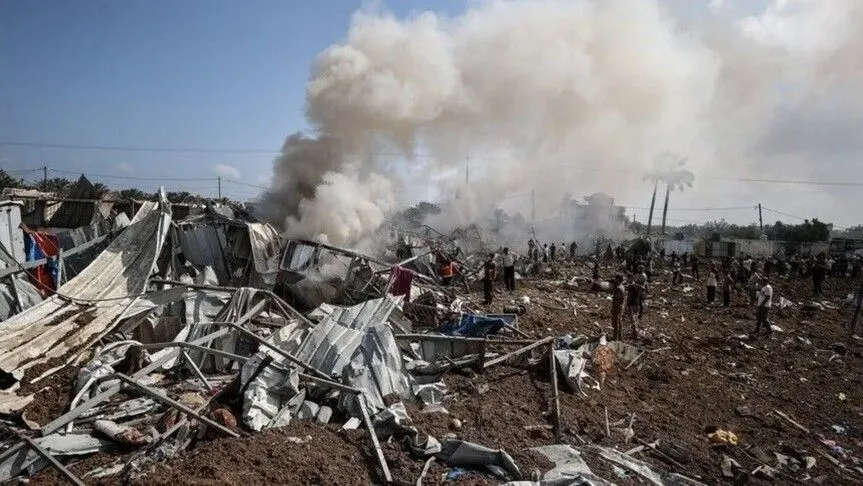
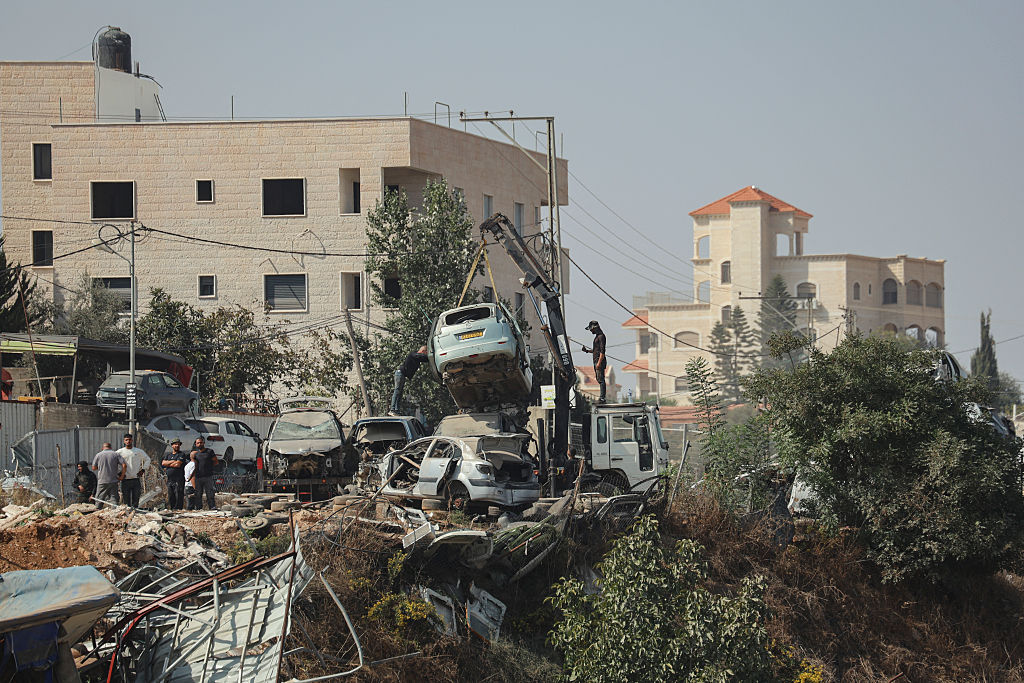
More than 800 Palestinians lost their homes after a fire gutted a displacement camp in the Shujaiya neighborhood of eastern Gaza City, in an attack the Gaza Ministry of Public Works and Housing blamed on Israeli military drones.
The blaze consumed the camp’s tents and nearly everything inside them, according to the Gazan Ministry, which said quadcopter drones operated by Israeli forces ignited the fire on October 26.
The fire affected more than 200 families, made up mostly of women, children, the elderly and people with vulnerable health conditions, the Gaza Ministry of Public Works and Housing detailed. The flames caused panic among residents, who have no housing alternatives.
The Shujaiya camp sheltered families who had already fled their homes in other parts of the territory. Many had moved more than once since the war began, carrying whatever they could salvage each time.
💢🇵🇸 Over 800 Palestinians have been forced to displace yet again from Shujaiya, an eastern neighborhood in Gaza City, after Israeli forces set fire to a displacement camp, according to Al Jazeera.
Israeli quadcopter drones set the camp ablaze at around 8 p.m. local time on… https://t.co/9nyw5g9DGe
Palestinian authorities called the fire a flagrant violation of international humanitarian law and the Geneva Conventions. They framed it as part of a deliberate policy of forced displacement designed to push people out of the territory.
The Ministry of Public Works and Housing demanded urgent action from the international community, the UN Security Council, and the United Nations, and it asked those bodies to halt the attacks on civilians without further delay. It also pressed humanitarian agencies to deliver tents, temporary shelters, and essential supplies immediately to families left without roofs or belongings.
Local spokespeople linked the persistence of military operations to the tense electoral climate inside Israel, where security politics have hardened. Security operations have long featured in Israeli campaigns, and commanders face domestic pressure to show results even as international criticism mounts.
A ceasefire agreement announced on October 10, 2025, never produced calm on the ground. Israeli forces have maintained recurrent bombings, shootings, and demolition work across different parts of the Gaza Strip. Official records show the zionist offensive launched in October 2023 has now surpassed 74,000 deaths and left 175,000 people wounded.
Human rights organizations renewed their demands for a halt to hostilities and for safe, unobstructed access for humanitarian assistance. The widespread destruction of civilian infrastructure has made recovery more difficult for communities worn down by repeated strikes. Hospitals, schools, and homes lie in ruins across the territory.
Aid agencies describe the situation as catastrophic. Clean water, medicine, and fuel remain scarce, and the latest fire has multiplied the need for emergency shelter in a place where almost every building is damaged.
Palestinian officials say the fire is not an isolated event but a symptom of a broader campaign against civilian life, insisting the international response so far has fallen short of the scale of the crisis.
Israeli regime’s airspace – the airspace over the occupied territories – is widely regarded as among the most heavily defended in the world.
Yet the scale of its protection cannot be explained by Israeli military technology alone. Russia, China and even the United States do not benefit from an equivalent network of allied support dedicated to intercepting threats before they reach their territory.
Israel’s own defenses are indeed formidable. Arrow 3 is designed to intercept ballistic missiles outside the atmosphere, while Arrow 2 targets ballistic missile threats within it. David’s Sling is built to counter medium-range threats, and Iron Dome intercepts rockets and other short-range projectiles.
These systems are backed by fighter jets and an extensive radar network, creating multiple layers of protection against incoming attacks.
But Israel’s air defense shield extends well beyond its own arsenal. From October 2023 through Iran’s retaliatory missile and drone operations in 2024, 2025 and 2026, a group of allied states has played an active role in protecting the regime.
They have provided interceptors, radar capabilities, fighter aircraft, military bases and personnel, helping the Tel Aviv regime detect, track and counter incoming threats.
What emerges is not simply a domestic air-defense network, but a wider umbrella sustained by the resources and involvement of powerful allies – from the US to Europe to Arab countries.
This ironclad commitment of regional and extra-regional countries to Israel’s protection has come at a considerable cost.
The price goes well beyond dollars and shekels. It includes depleted weapons stockpiles that could take years to replenish, damaged radars and military bases, soldiers killed or wounded, and governments facing domestic political backlash for a costly partnership that much of their own public fiercely opposes and protests against.
The burden, however, is not shared equally. The United States has shouldered the largest financial and military inventory costs. The Persian Gulf monarchies and Jordan have faced intense operational demands and direct security risks. European states have incurred more limited but still significant costs, particularly in munitions and the political fallout from a war that has driven up energy prices and compounded the cost-of-living pressures facing their populations.
The Israeli bill
The Israeli regime’s direct costs are the easiest to track because they fall on its own treasury. In April 2024, after Iran launched a large number of drones and missiles at the occupied territories, Brig. Gen. Reem Aminoach, an economic adviser to a former Israeli military chief of staff, estimated in an interview with Ynet that defending against the attack that night had cost 4-5 billion shekels, or roughly $1.1–$1.35 billion at the exchange rate at the time.
Haaretz later put the total cost of defending against the same retaliatory attack at around $1.5 billion. That was just one night. Many more retaliatory strikes have hit the occupied territories since then.
The cost structure follows a clear logic. Iran uses inexpensive drones and mass-produced missiles, while Israel relies on some of the world’s most expensive interceptors to defend against them.
This disparity lies at the heart of the war’s financial burden. Israel’s broader budget picture adds another dimension. Sustained, high-intensity defensive operations have forced the regime to spend far more than it did previously.
With a net budget of about 60 billion shekels in 2023, the Israeli military could not sustain repeated nights of interceptions without substantial increases in funding and continued US support.
Israel has been able to sustain this costly imbalance largely because of extensive financial backing from American taxpayers. Much of its interceptor production is funded or co-developed through US programs, and the Arrow missile defense system is produced with American participation.
US Congress has also repeatedly approved emergency supplemental funding for Israeli missile defense. These ties mean that Israel’s financial burden and America’s are deeply interconnected and difficult to separate, which explains the public anger in the US.
The American inventory crisis
No country has spent more on Israel’s defense than the United States, and no factor is more consequential than the state of its interceptor stockpiles. Washington may be willing to spend the tens of billions of dollars required to protect their genocidal ally, but willingness alone cannot resolve the US military’s primary challenge: replenishing its dwindling missile interceptors.
The Center for Strategic and International Studies (CSIS), an American think tank, has published some of the most widely cited public estimates of US missile interceptor inventories.
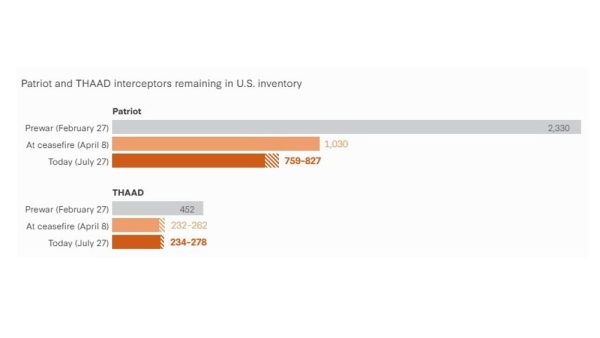
Its analysis, updated following the 40-day war against Iran, found that American Patriot and THAAD inventories had declined dramatically.
According to CSIS estimates, the US inventory of Patriot interceptors fell from approximately 2,330 before the war began on February 27, 2026, to between 759 and 827 by July 27, 2026, marking a decline of roughly two-thirds.
The THAAD inventory also dropped sharply, falling from an estimated 452 interceptors before the war to between 239 and 257 by July 27, representing a decline of approximately 43 to 47 percent.
Estimates of remaining American Interceptor inventory (Source: CSIS)
Many military experts believe CSIS’s estimates are overly optimistic. Some, for instance, argue that the United States may have fired as many as 290 of its roughly 360 THAAD interceptors during the early phase of the war. That would amount to more than 80 percent of its pre-war stockpile.
Whatever the exact figures, Washington’s decision to prioritize Israel’s defense has left the US military dangerously underprepared and more vulnerable to another round of war if it breaks out.
The cost of replenishing stockpiles
The US Army’s FY2027 figures put the unit cost of a PAC-3 MSE interceptor at roughly $5 million and that of a THAAD interceptor at nearly $12 million.
Based on these figures, replacing the Patriot and THAAD interceptors expended would cost an estimated $10 billion. The Congressional Budget Office has offered a higher estimate, putting the cost of replacing the depleted interceptors at approximately $13.1 billion.
Iranian Foreign Minister Abbas Araghchi in recent remarks noted that the US spent about $11 billion on missile defense for Israel over three years. In a post on X, quoting a tweet of a former Obama administration official, he said US forces had fired 609 interceptors in defense of the Israeli regime between October 2023 and June 2026, including SM-2, SM-3, SM-6, Patriot, and THAAD missiles.
The naval picture
The US Navy’s missile interceptor inventories are also under severe strain. The SM-3 and SM-6 are among the principal naval weapons used to counter ballistic missiles and other high-speed threats.
Public estimates vary widely, with some reports placing combined naval inventories in the low hundreds. A figure of 150–200 for the two interceptor types combined is plausible as a rough order of magnitude, but no precise public count is available.
The broader concern is that naval interceptors are expensive and slow to manufacture, while the Navy must preserve sufficient stocks to address other potential threats, including those posed by China and Russia. Every interceptor expended in the defense of Israel is therefore one fewer available for other contingencies until it can be replaced.
Not all US and allied defenses against Iran relied on ground-based or naval interceptors. Fighter jets also engaged Iranian drones using air-to-air missiles, including the AIM-9X and AIM-120. The AIM-9X reportedly costs several hundred thousand dollars per missile, while the AIM-120 AMRAAM costs more than $1 million.
Using such expensive weapons to destroy drones that cost only thousands of dollars compounds the economic imbalance, even when the immediate tactical objective is achieved.
The trade-off
By the final phase of the 40-day imposed war, following the initial ceasefire, it had become clear that US commanders were holding back dedicated SM-3 and THAAD interceptors rather than expending them to protect American bases in Jordan and elsewhere.
Footage of nighttime defensive missile launches appeared to show almost exclusively Patriot interceptors, with only one exception. The implication was stark: stocks had dwindled to the point where US commanders could no longer afford to use these missiles freely.
The apparent logic was to preserve the remaining interceptors for a larger war, prioritizing the future defense of Israel over the immediate protection of American service members.
That decision carried its own cost. Aircraft on the ground were hit, and US personnel were killed in some of the retaliatory attacks. This matters because it illustrates the full price of managing depleted stockpiles. A shortage of interceptors weakened the US military’s defensive capacity across multiple theaters, leaving American personnel exposed to attacks that more robust defenses might have helped repel – all in the effort to protect the Israeli regime.
Cost, however, is only part of the problem. Production capacity is the more consequential constraint in a prolonged campaign.
Patriot and THAAD interceptors are manufactured in limited quantities, and expanding output takes time.
CSIS estimates that restoring Patriot and THAAD inventories to their pre-war levels will take at least three years. Interceptors ordered in fiscal year 2027 are not expected to arrive until 2029, leaving a prolonged gap between expenditure and replenishment.
The China and Asia-Pacific dimension
The most serious long-term cost to the United States may emerge far from the West Asia region. As US interceptor stocks are depleted in the region, the Pacific is left more exposed.
The Indo-Pacific is where Washington faces its most formidable strategic competitor. Taiwan’s defense depends in part on US air and missile defenses, while Pentagon war plans for a potential war with China assume that American forces can withstand and respond to large-scale missile attacks.
If SM-3, SM-6, and Patriot inventories fall to a fraction of their previous levels, the margin for absorbing such an attack narrows considerably. A few hundred interceptors would be insufficient to sustain even several days of high-intensity combat in East Asia.
The extent to which US military capabilities in the South China Sea and across East Asia have been weakened cannot yet be quantified.
Nevertheless, the underlying concern is widely recognized among defense analysts: a shortage of interceptors in one theater affects the military’s ability to respond in every theater, and the Pacific is particularly difficult to reinforce quickly.
Persian Gulf states and early-warning network
The Persian Gulf monarchies and Jordan contributed to Israel’s defense in a different but equally consequential way.
Their role was not primarily to supply interceptors, but to provide sensors, airspace access, military bases, and the political authorization needed to put these assets to use.
Missile defense depends on early warning. A THAAD battery cannot intercept a missile it has not detected, and detection depends on radars capable of identifying and tracking threats at sufficient range and speed. The AN/TPY-2 radar used by THAAD is a large, transportable system. The US Missile Defense Agency’s 2025 budget puts the cost of each unit at approximately half a billion dollars.
In March 2026, during the first days of the 40-day imposed war of aggression, the American THAAD radar at Muwaffaq Salti Air Base in Jordan was struck and destroyed. Imagery showed craters around the site, suggesting that multiple strikes may have been involved.
Buildings housing similar radar systems were also hit at two locations in the United Arab Emirates. Another THAAD radar, at Prince Sultan Air Base in Saudi Arabia, was destroyed as well.
Iran also targeted and struck the AN/FPS-132 early-warning radar in Qatar, which was used to track Iranian missile launches.
Taken together, these incidents point to a broader pattern of Iranian retaliatory attacks on US-aligned early-warning radars and THAAD sites across the region.
This interpretation is consistent with the available satellite imagery, which indicates that the campaign extended beyond individual military installations to the sensor network underpinning regional missile defense that has been at the service of the US and the Israeli regime.
Such radars are expensive and exceptionally difficult to replace. Their value lies not only in the hardware itself, but also in their integration with interceptor batteries and the data links connecting them to other sensors.
Destroying a single radar can compromise an entire interceptor network’s ability to detect and track threats approaching from a particular direction. Replacing these systems can take months or even years, and rebuilding them does not necessarily restore the coverage they previously provided.
Radar losses therefore carry a strategic cost as well as a financial one. Once a radar is destroyed, the states that depend on it must decide whether to rebuild it at an exposed location, relocate it, or accept a gap in their defensive coverage.
By providing Israel and the United States with tracking data on Iranian projectiles, Arab monarchies exposed themselves to Iranian retaliation and risked becoming direct targets in a war they had helped shape.
These losses also raised questions about Saudi Arabia’s vulnerability as the wider regional confrontation extended to other fronts.
Yemen is a prominent example. Damage to radar and air defense assets across the Persian Gulf may have further complicated Saudi Arabia’s position in its prolonged war against Yemen.
Although the Ansarullah-led Yemeni military possesses independent capabilities, and Saudi Arabia’s difficulties in Yemen stem from numerous military, political, and strategic factors, the decision to contribute to Israel’s defense added another layer of risk for the Persian Gulf monarchies.
Their involvement exposed critical military infrastructure to retaliation and potentially weakened their ability to respond to threats beyond the immediate confrontation with Iran.
Jordan’s exposed position
Jordan’s case is perhaps the most striking because of its small military and fragile economy. The country hosts US occupation forces, including a THAAD battery at Muwaffaq Salti Air Base, and lies along the flight paths of missiles and drones traveling between Iran and the Israeli-occupied territories.
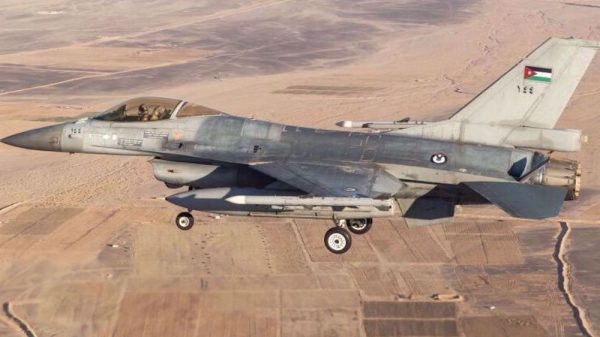
During Iran’s 2024 retaliatory strikes, Jordan’s air force was reported to have intercepted many of Iranian drones and missiles crossing its airspace. The Jordanian government defended these actions as necessary to protect its territory and citizens – a lame justification.
For a country with limited military resources, however, the cost was significant: every interceptor fired and every fighter jet scrambled placed additional demands on an already constrained defense budget.
The political cost was even greater. Jordan has a large population of Palestinian origin, and public opinion is strongly sympathetic to Palestinians in Gaza and the occupied West Bank as well as the Axis of Resistance.
Jordan’s decision to intercept Iranian projectiles launched in retaliation for Israeli strikes proved controversial domestically, with Jordanians slamming their government for helping protect the Israeli regime.
Jordan made this choice despite facing its own concerns about Israel’s regional ambitions. Members of Israel’s ruling regime have openly advocated annexing the occupied West Bank, while some have promoted proposals that would displace Palestinians into Jordan.
This context makes Amman’s involvement in regional missile defense particularly sensitive. The country faces the dual risk of Iranian retaliation against US military assets on its soil and growing domestic anger over its role in protecting Israel.
Jordan’s economic vulnerabilities compound these pressures. Public debt, energy costs, and the burden of hosting refugees already strain its finances. Against this backdrop, even a relatively modest additional military expenditure can have significant consequences.
Jordan’s experience illustrates how participation in regional missile defense can impose not only military and financial costs, but also serious domestic political risks.
Royal Jordanian Air Force F-16s were used numerous times to intercept drones launched at Israel
Europe’s price
European states paid in a different currency. Most did not expend large numbers of interceptors against Iranian drones, but their involvement carried costs across three main areas: munitions, military operations, and the economic shock of the war imposed on Iran.
France deployed air assets to the region to intercept drones and missiles over the Eastern Mediterranean and the Levant. Some reports suggested that French stocks of air-to-air missiles, including the MICA, came under strain.
Such shortages would be significant, given France’s other military commitments. Its air force and weapons inventories are already stretched across support for Ukraine, operations in the Sahel, and the maintenance of its own strategic deterrent. Each additional deployment reduces the resources available for other missions.
Britain used its bases in Cyprus, including RAF Akrotiri, as well as its military presence in the Persian Gulf, to support operations against Iran. Reports indicated that RAF aircraft intercepted drones and missiles. The British armed forces are considerably smaller than they were at the height of the country’s military power, and sustained operations of this kind consume substantial flying hours, spare parts, and personnel capacity.
Europe’s greatest burden, however, has been economic and political. Closure of the Strait of Hormuz and the collapse of Persian Gulf energy exports drove up oil, gas, and diesel prices.
Europe’s dependence on imported energy meant that the shock quickly fed into household bills, transport costs, and food prices. Many European governments were already grappling with public dissatisfaction over the cost of living before the 40-day war. The war intensified those pressures as is evident now with protests raging across European countries.
European governments that committed military resources to Israel’s defense and offensive operations now face a difficult question: will their own citizens view that commitment as a principled security measure or as complicity in policies that have contributed to worsening economic conditions?
There is no straightforward answer, but the issue has become part of Europe’s domestic political debate. The costs of defending Israel have reached far beyond the battlefield, affecting budgets, energy security, and public confidence in government policy.
Defending the indefensible
The costs of protecting Israel have been substantial, although they have fallen unevenly across the countries involved.
The United States has spent billions of dollars and depleted significant portions of its advanced interceptor stockpiles, with replenishment expected to take years. The Persian Gulf states and Jordan have suffered damage to radar and air defense assets while assuming additional security risks.
European countries have borne the costs of munitions and military operations, alongside an energy shock that has intensified public anger over the cost of living.
Yet the financial figures tell only part of the story. The more fundamental question is whether the policies driving these expenditures serve the interests of the governments and populations bearing the costs.
The costs are real and continue to mount: public expenditure, depleted interceptor stockpiles, damaged radars and military bases, and the heightened risk of retaliation against countries drawn into a war beyond their borders. Meanwhile, rising fuel, food, and housing costs have placed additional pressure on ordinary households, deepening public frustration with government decisions.
Israel’s regional military campaign has drawn its partners further into a confrontation whose consequences extend well beyond the immediate battlefield. For these governments, the challenge is no longer simply how to sustain their support for Israel, but how to justify its mounting costs to their own populations.
The question is how much more they are willing to spend, how much additional risk they are prepared to accept, and how long their citizens will continue to support a policy whose burdens are becoming increasingly difficult to ignore.
As the Left unites with Islamists to march against Israel, what it forgets is that Zionism was always a progressive movement – and the Irish forget that they originally identified with the Jews, says Andres Roth.
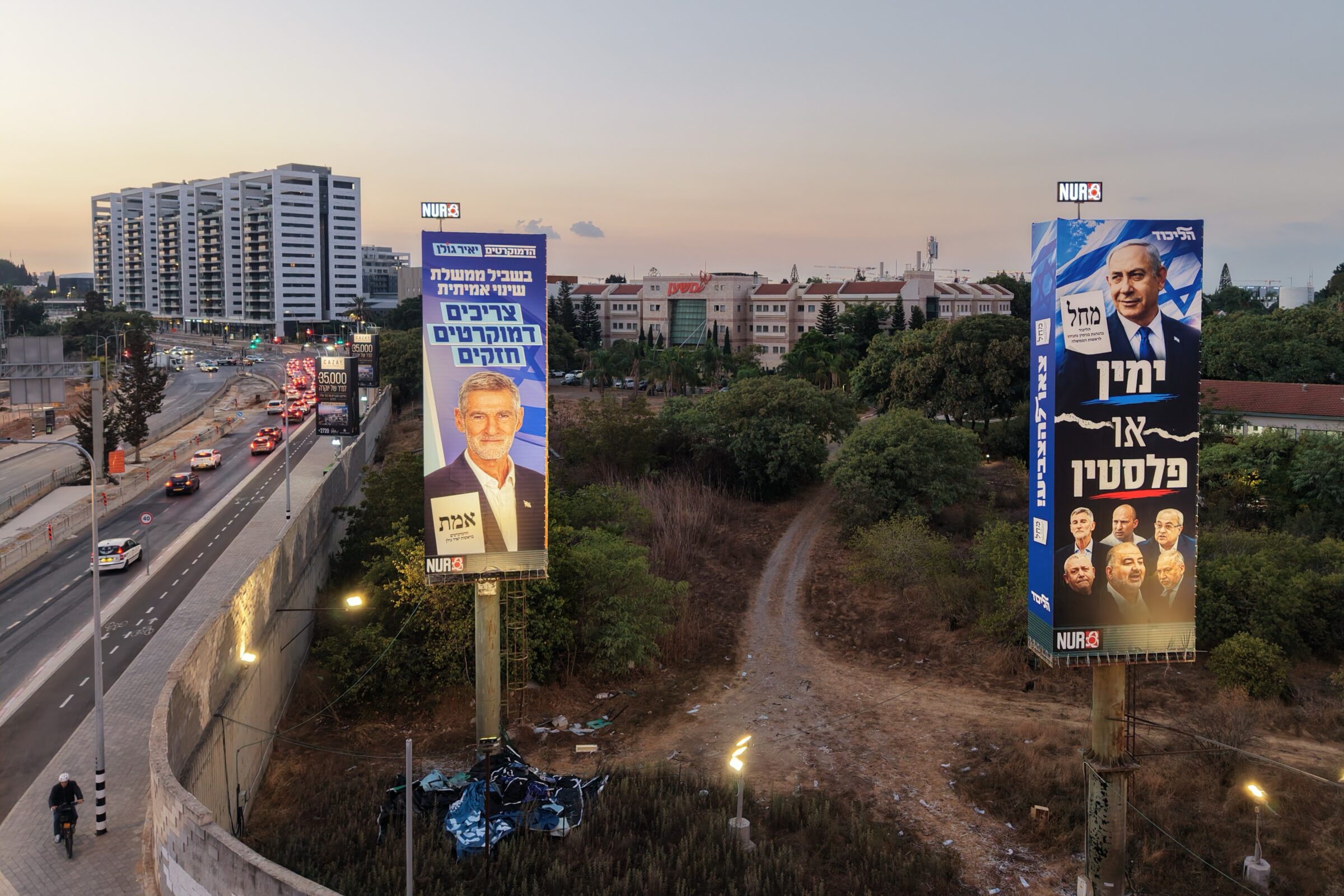
Israel’s election on Tuesday (27 October) could bring a new government without changing the country’s course. Having worked as a parliamentary adviser in the Knesset and later as executive director of Peace Now, I know how that can happen.
Many of the parties seeking to replace Benjamin Netanyahu are avoiding clear positions on the Israeli-Palestinian question, but some of their candidates may end up overseeing annexation they never campaigned for.
Israel’s previous coalition, led by Naftali Bennett in 2021, offers a warning.
Called the “government of change” because it ended Netanyahu’s 12-year run in office, it brought together a variety of parties, from Bennett’s rightwing party to Labor and Meretz, leftwing parties.
Its answer to profound ideological disagreements, particularly over the Israeli-Palestinian conflict, was to preserve the status quo. The coalition lasted roughly 18 months, and although it changed the tone of government, it left much of the policy towards the West Bank intact.
For example, Merav Michaeli, then Labor leader and transport minister, opposed settlement expansion.
Yet her ministry continued to implement previously approved infrastructure commitments, including substantial budgets for roads facilitating that expansion.
Through my work at Peace Now, I saw how the coalition’s status-quo agreement constrained her ability to challenge projects inherited from the previous government. A minister could thus find herself implementing a vision she opposed.
Today, the stakes are higher.
Another slice of the West Bank
Consider E1, between Jerusalem and the settlement of Ma’ale Adumim, where construction would threaten Palestinian territorial contiguity and the viability of a future Palestinian state.
The government has advanced tenders for all 3,401 planned housing units, with crucial stages of the tender process set to be completed before a new government takes office.
E1 exemplifies wider efforts to establish difficult-to-reverse facts: new settlement outposts, including in areas under Palestinian civil administration, expanding settlements and administrative changes that entrench Israeli control.
A successor government would have to intervene actively to reverse them.
These developments are backed by an explicit political vision. The current government’s guidelines and coalition agreements assert exclusive Jewish rights throughout the land of Israel and commit to advancing Israeli sovereignty in the West Bank.
Under Bezalel Smotrich, serving as a minister within the defence ministry, a new settlement administration and civilian positions have been established, shifting significant aspects of West Bank governance from military administration to civilian political control.
These structures will not disappear when their architects leave office. The far-right has equipped the state with both a vision and the machinery to advance it.
Inertia is not neutral when the machinery is already moving in one direction.
Parties seeking to replace Netanyahu need not necessarily agree on a final-status agreement with the Palestinians, but they must find enough common ground to commit to halting annexation and reversing the structures that enable it.
Those understandings belong in coalition negotiations, when parties still have leverage, rather than in battles left for individual ministers once they are in office.
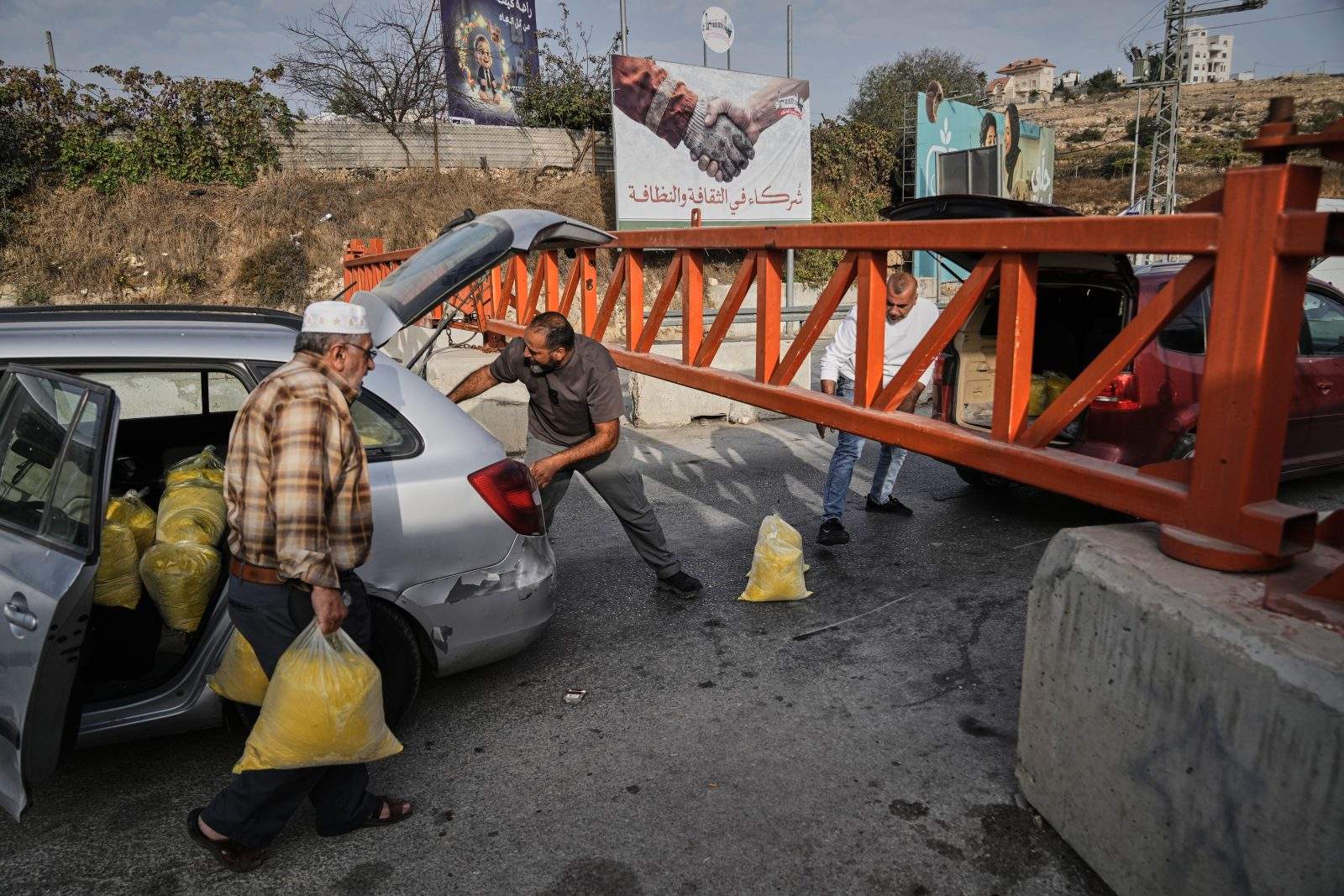
Nor is this a distant constitutional question. Palestinians in the West Bank already face systematic violations of their basic rights and freedoms, from restrictions on movement and access to land to violence and forced displacement. Each new settlement and outpost deepens this injustice and makes the prospect of a political settlement more remote.
Facts on ground
The entrenchment of permanent Israeli control is creating a reality that is increasingly difficult to reverse, making political intervention more urgent with every passing year.
The current government’s response to growing international pressure illustrates the danger.
After the UK announced measures targeting settlements, foreign minister Gideon Sa’ar ordered the closure of its consulate in East Jerusalem. Britain considered expelling Israeli diplomats in response, and a compromise left a much smaller British mission operating.
The episode illustrates Netanyahu’s vision of a ‘Super Sparta’: an Israel preparing itself for international isolation rather than addressing the policies contributing to it.
A future government seeking to change that trajectory should start with two tasks.
‘Messianic minority’
First, it must take seriously the reasons behind international sanctions and address the policies driving them, including settlement expansion and settler violence. A messianic minority must not be allowed to drag Israel into international isolation and economic decline.
Second, the government should help European partners distinguish between Israel and the settlements, including through transparent supply chains and clear proof of origin, so that restrictions aimed at settlements do not spill over into the broader Israeli economy.
Both tasks require urgent and concrete policy changes, beyond a more moderate diplomatic tone.
European governments should not expect a new coalition, or even international sanctions themselves, to bring about these changes automatically. They need to make their expectations explicit, press prospective coalition partners to incorporate concrete commitments into their agreements, and judge the resulting government by its actions.
Without that pressure, politicians who never endorsed annexation may become useful idiots for a project they do not support, helping to consolidate a single undemocratic state in which millions of Palestinians are permanently denied equal rights and freedoms.
Preventing that outcome requires urgent political action, while a different future is still possible. Neither Israelis seeking change nor their European partners can afford to assume it will happen on its own.
À quelques heures des élections législatives de ce mardi 27 octobre, Benjamin Netanyahou joue sa survie politique face au centriste Gadi Eisenkot. Trois ans après les attaques du Hamas, les Israéliens restent...
Le 27 octobre 2026, les Israéliens sont appelés aux urnes pour renouveler les 120 sièges de la Knesset. Dans ce pays où l'ensemble du territoire constitue une seule circonscription électorale, les électeurs votent...
Dix-neuf ans de pouvoir, dont douze consécutifs, un record absolu pour un chef de gouvernement israélien. À 77 ans, malgré un procès pour corruption et un mandat d'arrêt de la CPI, Benyamin Netanyahou brigue un...
Gadi Eisenkot, ancien chef d'état-major de l'armée israélienne, espère succéder à Benjamin Netanyahou à l'issue des prochaines élections législatives ce mardi 27 octobre. Relativement novice en politique, il promet de...
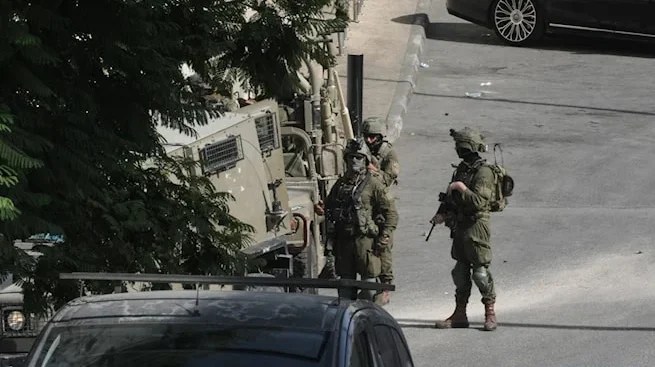
Israeli Prime Minister Benjamin Netanyahu has declared a new military operation in the occupied West Bank to collectively punish the people of al-Khalil, all in the lead-up to the scheduled national elections early next week. Is the Premier playing with fire?
Following years of ever-escalating settler violence and the intensification of Israel’s military occupation across the occupied West Bank, two Palestinian men in their twenties – Hamouda and Firas al-Ja’ba – decided to carry out a resistance operation against an Israeli army guard post.
The two resistance fighters carried out their attack, injuring four Israeli soldiers and killing two, using pistols and a rifle near the Farsh al-Hawa checkpoint in al-Khalil. The Israeli army called in backup, leading to an armed clash in which both of the Palestinians were killed during a 20-minute clash.
From the CCTV footage of the clash, it appears as if the two Palestinians were not professionally trained and acted alone. No Palestinian movement claimed the attack, although it was widely praised. Israel was quick to blame Hamas and then launch a new military campaign targeting the entire city of al-Khalil.
There are a number of reasons that the attack, which, although the most significant carried out in the West Bank in over a year, is not exactly unusual, has been reacted to in the way we see today.
One reason for this enormous overreaction is that Netanyahu is looking for a boost in the polls. He evidently believes that by launching a brutal crackdown in the West Bank, his population will respond positively and he may win some more votes come Tuesday.
This is why the Israeli Prime Minister claimed that the planned campaign against al-Khalil will be an operation “unlike any seen since the Six-Day War”. He is trying to play on Israeli nationalism, referencing the June 1967 war, during which the Israelis occupied the West Bank, Gaza, East Jerusalem, the Golan Heights and Sinai Peninsula. Evidently, this is hyperbole, but it doesn’t mean that the campaign will not be brutal.
Another reason why the attack has been transformed into such a major issue is that it is massively embarrassing to both the Israeli army and Netanyahu personally. Although the two Palestinian fighters do not appear to have had any professional training and did not act on behalf of any resistance group, the Israeli media, military, and government are saying the opposite.
The Israelis are claiming that Hamas was involved; they are also spinning a hero story that by calling in backup they managed to thwart a much larger attack that was planned on Israeli settlers and that what happened was actually a success story of sorts.
This is because the truth exposes the unprofessionalism and cowardice of the Israeli occupation soldiers. Two untrained individuals managed to kill a Staff Sergeant and a Sergeant, injured four others, while all the female soldiers on scene hid from the attackers. In addition to this, it took 20 minutes for them to take care of the threat posed to their forces; they also needed to call in backup despite clearly outnumbering the two gunmen already. Accepting the reality would mean accepting that the army is pretty incompetent, and the Israeli public will believe any narrative that allows them to ignore this truth.
Another element of this is that if you tell the public that the Israeli army managed to thwart a major attack, it shows that under Netanyahu’s leadership, he has learned the lesson from October 7, 2023. The narrative being sold to Israelis is that now the army is acting pre-emptively; it is launching a major campaign to prevent another major attack like the one that happened on October 7. Israelis also simply enjoy watching Palestinians suffer.
However, by launching such a collective punishment campaign, there is a chance that the Israelis could end up getting burned, even if not immediately. West Bank Palestinians have been placed under tremendous pressure; by launching an intensive campaign of this nature, it could end up pushing some people over the edge.
Although the rhetoric surrounding the campaign suggests that the Israeli military is seeking to turn the largest populated city in the occupied West Bank into Gaza, this is unlikely to be what they will do. Instead, they will carry out raids, make life an inconvenience, even more than before, likely killing some innocent people while kidnapping random Palestinians while going through their neighborhoods.
The most intensity will be focused on a few specific neighborhoods that will get the worst treatment. But escalating too hard, too fast, could end up triggering a unifying event, especially due to the Israeli soldiers being psychotic and not even following their own rules. Ultimately, it is because of the checkpoints, killings, torture, and daily harassment that Palestinians carry out resistance attacks like the one we saw this Friday morning.
It is only a matter of time until the pressure being placed upon the people of the West Bank will explode. What makes this predicament starkly different from that of Gaza is that when the situation deteriorates, the Israelis have already entrenched themselves so deeply within that territory that they are extremely exposed.
Netanyahu loves to pledge his intentions to collapse the Palestinian Authority (PA) and annex the West Bank, but this is just posturing for gullible Israeli fanatics who don’t understand how everything works. If the PA does collapse and there is a push to annex the territory officially, then the settlements will be indefensible.
Just as the Israeli public truly believes that they have “the most moral army on earth”, they also believe that they are physically superior too. The former is about as accurate as the latter.
During the Gaza Genocide, the West Bank strategy has been to subdue the Palestinians through brute force and to collaborate with the PA in order to ensure there is no major uprising. It has, until now, worked. However, that strategy of constant torment and increasing pressure also “worked” until October 7, 2023.
People will not live under such horrendous conditions forever; it is only a matter of time before the situation there dramatically changes. Such a shift could occur over something relatively small. When you constantly play with fire, you get burnt.
If the West Bank’s population were to enter a sustained popular uprising, the Israeli military would struggle to subdue it. In the event that other fronts of its regional war were to open, this could be a major strategic catastrophe.
– Robert Inlakesh is a journalist, writer, and documentary filmmaker. He focuses on the Middle East, specializing in Palestine.
British attitudes relating to Jewish people and Israel show two broad trends. Anti-Jewish attitudes are typically less prevalent and have remained more stable, whereas anti-Israel sentiments are more prevalent and have been increasing.
Israeli attacks killed at least eight Palestinians across Gaza on Sunday as the Israeli military appears to be escalating its strikes ahead of Tuesday’s Knesset elections. Israeli strikes on Sunday included the bombing of the Islamic University in Gaza City, which killed at least three people and injured eight. University sources told AFP that the […]
Israel’s 27 October election might disappoint everyone. To start, there may be no next-day resolution. Polls show the Netanyahu-allied and opposition blocs nearly tied, both short of a majority.
If that holds, expect weeks of furtive factional negotiations that diminish the reputations of all involved. If those fail, back to the ballot box.
If a new government forms quickly, it will likely be led by Benjamin Netanyahu or the opposition’s Gadi Eisenkot. Most observers outside Israel are hoping for Gadi. In truth, either result will confront Brussels and Washington with tough choices that both have put off too long.
Last week’s grudging and partial White House endorsement notwithstanding, Netanyahu is near-friendless on the international scene.
If he grinds out another win, many European leaders and US presidential contenders will find themselves managing bilateral relationships of mutual contempt.
Unwilling to face hard facts at home, Bibi seemed to think he could gamble them away with Gulf money and American missile interceptors. He marketed himself as the founding entrepreneur of a new-model Middle East powered by Saudi normalisation and Iranian regime change.
Instead, Houthi drones and Saudi budget deficits are vaporising the mirage of glass cities and data centres in the desert.
Trump’s war now
Iran is Trump’s war now, not Israel’s: He will fight or end it as he pleases. What’s left on the IDF’s regional briefing map are small places with complicated pasts and unclear futures, lands that Israel wishes the rest of the world would forget but is itself unwilling to leave.
The old Middle East is back. In truth, it never left.
It has been the beggar at the door of every air-conditioned Gulf investment conference. But the poor relations — Gaza, the West Bank, Lebanon, Syria, Yemen — have refused to go quietly.
Israel’s old politics are back, too.
The median Israeli is 29-years old. Netanyahu, whose hair and makeup bills are the subject of a considerable body of investigative journalism, just turned 77. His leading rival Eisenkot, who lost a son and two nephews in Gaza, launched his career as a platoon commander in Israel’s 1982 invasion of Lebanon.
Israel, like America, is due generational change.
Instead, Israelis (or at least undecided centre-right voters) got a choice of character: the embarrassing, but reassuringly indestructible Bibi, or the earnest but untested Eisenkot.
It’s not just the faces that are familiar. The candidates are still fighting Israel’s culture wars. The debates that dominated the election — ultra-orthodox military enlistment, judicial reform, and the role of religion in the state — are serious. But they’re also stalemated.
Despite deafening recriminations about who is to blame for exposing Israel to Hamas’s 7 October attacks, the debate about security in Gaza and Israel’s north is equally stuck.
Indiscriminate destruction and deliberate destabilisation
Netanyahu promised “total victory”; that turned out to mean indiscriminate destruction and deliberate destabilisation. His opponents claim Netanyahu has squandered the IDF’s achievements. They promise to do what Netanyahu could not, by using the same crude tools to achieve the same poorly defined objectives — but this time, with greater skill.
The question of what that means for ordinary Palestinian civilians, and what future they can expect for their children, has barely been discussed.
Many Israeli voters, desensitised to the situation of Palestinians who are routinely dehumanised by Israel’s domestic press, don’t ask. Most Israeli candidates carefully avoid answering.
Both blocs pledge they’ll refuse to partner with the Arab-Israeli parties that could hold the key to a Knesset majority — even as prominent Arab candidates downplay their support for Palestinian statehood and campaign on more palatable topics like under-policing in Arab communities.
It’s comforting to imagine an Israeli government formed by anyone left of Netanyahu will steer instinctively towards international expectations. But a more centrist Israeli government, like any elected government anywhere, will operate within the political space created by the policy priorities and the empathetic capacity of its voters.
There isn’t much room for Palestinians.
If an opposition-bloc government forms, it will surely ask for time, assuring foreign capitals that the appearance of pressure makes meaningful change harder back home.
European leaders and US Democrats poised to win at least one house of Congress in November may be tempted to pause efforts to compel Israel towards rapid implementation of the international road map in Gaza, an end to ethnic cleansing in the West Bank, and full IDF withdrawal from Lebanon and Syria.
That would be a mistake.
There will be no place in Israeli politics for a realistic discussion of Gaza, the West Bank, Lebanon, and Syria until the foreign partners necessary to Israel’s security and economy insist, soberly and relentlessly, on creating one.
That will require tough new sanctions, not just wordplay. The things that have to be admitted are too hard, and the promises that must be broken are too many, for any Israeli leader to act alone.
Amanda Pilz served for 22 years as a U.S. Foreign Service Officer. She is a former U.S. Deputy Assistant Secretary of State for Israeli-Palestinian affairs.
The UN food agency helping Palestinians and others in need across the world has come under scrutiny for its contract with Palantir – the controversial US tech and AI company used by various international border police and militaries to sort data and better identify targets.
The UN’s food agency, the World Food Programme (WFP), prolonged its contract with Palantir in July, prompting civil organisations to urge the end of these agreements in a letter published on Friday (23 October).
Some 3,000 European citizens have written to the WFP’s leadership, calling for the agency to end its Palantir partnership.
The WFP holds one of the biggest biometric databases in the world, with millions of its records containing information about vulnerable populations.
WFP is effectively supporting a company that undermines its own operations in Palestine by helping kill civilians for another client, which is “a very strong contradiction,” Giulio Carini, head of campaigns at an NGO WeMove Europe told EUobserver.
“On one hand, you’re feeding people of Gaza, but then, but on the other, you’re using software from a company whose technology is allegedly also being used to kill them” he added.
As many as 1.1 million people are reached by the WFP in Gaza each month, out of the 1.4 million facing acute food insecurity. The organisation is complaining that it had to scale down its food assistance in Gaza and the West Bank due to a lack of funding.
The WFP has argued that its use of Palantir’s software to compile its datasets and make better decisions has saved them $50m [€45m] that would otherwise be spent on inefficient management of its resources.
This article continues, but the full version is available only to EUobserver.com subscribers. Visit account.euobserver.com/membership

 Login