❌

Reading view

Kyiv's Brussels blunder leaves EU scrambling over phantom Zelensky visit

President Volodymyr Zelensky's planned Oct. 26 trip to Brussels descended into a diplomatic guessing game, with conflicting signals from his own team leaving EU and NATO officials scrambling to establish whether he was coming — and who was supposed to meet him.

At the center of the confusion

  •  

Ucraina, Zelensky: “A novembre negoziati con Usa e Russia”. Ma poi lancia un avvertimento sulle sanzioni a Mosca

Il presidente ucraino, Volodymyr Zelensky, ha confermato che a novembre si terrà un incontro tra russi e ucraini, con la mediazione degli Stati Uniti, per rilanciare i negoziati di pace, in stallo dall’inizio dell’anno. “Siamo pronti a discutere. Per quanto riguarda la questione territoriale, questa deve essere affrontata a livello di leader – ha detto Zelensky sui social -. Le altre questioni sono di competenza dei gruppi tecnici. Di tutto ciò si potrà dunque discutere a novembre”, ha dichiarato il presidente ucraino in un’intervista alla televisione nazionale rilanciata su Telegram”.

Il presidente ucraino, Volodymyr Zelensky si dice “pronto” per i colloqui trilaterali tra gruppi tecnici che devono però portare a “risultati concreti”. Ma avverte anche: “Non vorrei che arrivassimo a un incontro tra i tre leader – Ucraina, Stati Uniti e Russia – avendo già revocato tutte le sanzioni contro la Federazione Russa“. In alcuni post su X e Telegram Zelensky ribadisce che le sanzioni sono “un punto importante”. “Sono state imposte a causa di un’aggressione, non come pretesto per una chiacchierata. Pertanto, se parliamo della fine della guerra, deve esserci un preciso iter per la revoca delle sanzioni”. “Senza sanzioni – aggiunge Zelensky – potremmo ritrovarci coinvolti in un dialogo trilaterale in cui l’esito resta incerto, mentre le misure restrittive sono già state eliminate”.

Un drone avrebbe colpito un grattacielo di uffici a Voronezh, nella Russia sud-occidentale, durante un attacco ucraino ancora in corso questa mattina. In città si registrano esplosioni e incendi. Lo riferisce l’agenzia di stampa indipendente russa Astra, citata dal Kyiv Independent. Un video diffuso da Astra sembra mostrare un drone che esplode contro il Chizhov Gallery, un edificio di 25 piani nel centro della città. Immagini dell’attacco sono state pubblicate anche dal canale di monitoraggio ucraino Exilenova+. Secondo Astra, che ha ricevuto foto e video da testimoni, ci sono incendi anche in zone residenziali, vicino a condomini colpiti dalle esplosioni. Il governatore della regione, Aleksandr Gusev, ha confermato che la contraerea russa è entrata in azione contro un attacco di droni su Voronezh e dintorni.

L'articolo Ucraina, Zelensky: “A novembre negoziati con Usa e Russia”. Ma poi lancia un avvertimento sulle sanzioni a Mosca proviene da Affaritaliani.it.

  •  

Enrico Mentana verso Sky al posto di De Bellis? Il futuro del giornalista e chi potrebbe prendere il suo posto al Tg La7

Enrico Mentana lascia La7, l’annuncio da Alessandria

E cosi l’annuncio è arrivato. I giorni scorsi in quel di Alessandria, patria del suo editore Urbano Cairo, è arrivato l’annuncio “Lascio il Tg di La7, voglio passare il Natale in famiglia“. Queste le parole di Enrico Mentana ricevendo il premio “Franco Marchiaro testimone dell’informazione” presso l’Aula Magna dell’università piemontese. La data del suo addio al Tg La7 è quella del 23 dicembre prossimo venturo. Ma cosa succederà dopo? Chi verrà dopo di lui alla direzione del TgLa7 e lui cosa farà dopo?

Enrico Mentana lascia La7, per lui un possibile incarico in Sky al posto di De Bellis

Qui su Affaritaliani abbiamo già fatto delle ipotesi sulle risposte alle due domande ormai tempo fa. Ora siamo in grado di darvi ipotesi aggiornate e più concrete e partiamo dal futuro di Mentana. Ad oggi appare davvero difficile un suo ritorno sotto le insegne di Rai e Mediaset, due aziende con cui Mentana ha già collaborato.

Appare invece, ad oggi, più realistica una sua destinazione a Sky. Il motivo è molto semplice, Giuseppe De Bellis, vice presidente esecutivo per i contenuti sport, news ed intrattenimento è stato chiamato a dirigere il Sole 24 ore. Fabio Tamburini resterà direttore editoriale del quotidiano di Confindustria. Giuseppe De Bellis lascerà il suo incarico a Sky il prossimo 5 dicembre, un paio di settimane prima dell’addio al Tg La7 di Enrico Mentana. Ecco quindi che le date si incastrano alla perfezione. Mentana dunque potrebbe prendere il posto di De Bellis a Sky.

La7, chi potrebbe condurre il Tg dopo Enrico Mentana

Per quel che riguarda la sua successione al Tg La7 il sogno di Cairo potrebbe essere Aldo Cazzullo, ma probabilmente i mille impegni del giornalista del Corriere della sera impedirebbero un incarico quotidiano come quello di direttore del Tg La7. Questo però non gli impedirebbe di fare il direttore editoriale e magari di condurre le mitiche Maratone di La7. Altro nome potrebbe essere quello di Massimo Giannini, mentre resterebbe in campo un ipotesi interna, magari Luca Telese, oppure un nome ecumenico come quello di Antonio Di Bella. Staremo a vedere nelle prossime settimane, magari potrebbe arrivare anche un “rilancio” di Cairo per convincerlo a restare.

LEGGI LE NOTIZIE DEL CANALE MEDIATECH

L'articolo Enrico Mentana verso Sky al posto di De Bellis? Il futuro del giornalista e chi potrebbe prendere il suo posto al Tg La7 proviene da Affaritaliani.it.

  •  

Zelensky says Serbia faces 'new chapter' after Vucic concedes defeat

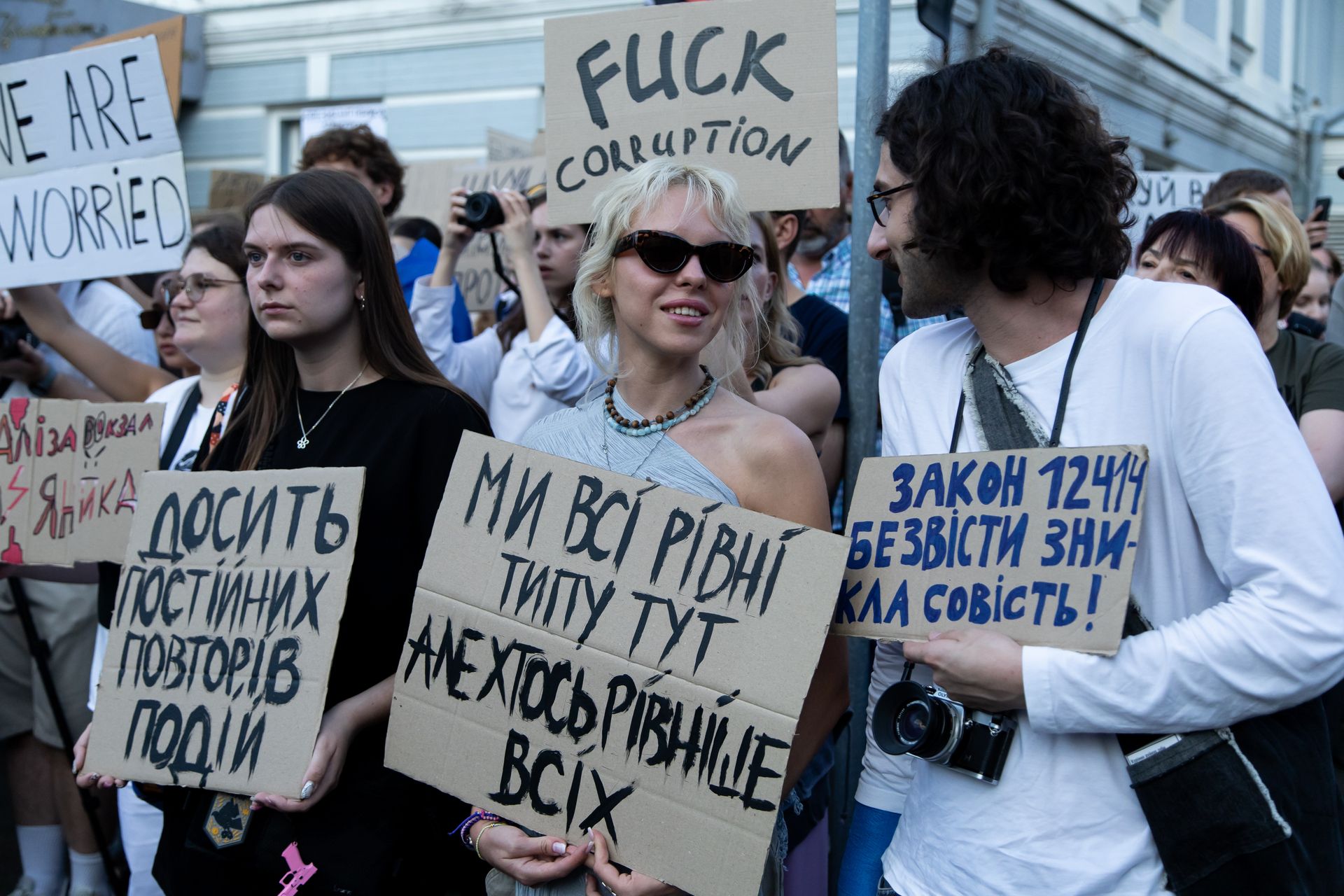
For almost two years, student-led demonstrations in Serbia rallied against Vucic's right-wing incumbent Serbian Progressive Party. Protesting against alleged corruption in the government, the movement was triggered when a train station canopy in the city of Novi Sad collapsed in 2024, killing 16 people.

  •  

Zelensky details expectations for upcoming trilateral peace talks with Russia, US

Before a meeting between Zelensky, Russian President Vladimir Putin, and U.S. President Donald Trump can take place, technical talks among the three countries' negotiating teams must be held first, said Zelensky.

  •  

Ukraine’s Feeling of Moral Whiplash at the Hands of Trump

The United States once declared that Ukraine’s fight was the front line in a global battle for freedom. Now the Trump administration is sending money to Moscow.

© David Guttenfelder/The New York Times

Cars burning in the parking lot after a Russian drone strike on Friday in Dnipro, Ukraine.
  •  

Ukraine reports Starlink operating again after slowdown

Ukraine’s Starlink satellite links have been restored after the country experienced limitations with accessing this critical technology, Ukrainian President Volodymyr Zelensky announced Saturday.  SpaceX’s military-grade version of Starlink, called Starshield, supports Ukraine’s drone operations and communication.  Zelensky confirmed the restoration in a statement shared on social media Saturday afternoon local time.  “The speeds are now…

  •  

European Values, Poland and Ukraine, by Bohdan Vitvitsky

Bohdan Vitvitsky examines the renewed dispute between Poland and Ukraine over the legacy of the Ukrainian Insurgent Army, questioning Warsaw’s claims to moral authority over Ukraine’s historical memory and whether such interventions are consistent with European principles of sovereign equality.

The strange historical dispute between Poland and Ukraine, in which Polish officials keep making demands upon Ukraine, seems unwilling to die down.  Most recently, on October 20 the L’viv oblast (regional) council announced plans to honor the World War II-era Ukrainian Insurgent Army (UPA) and its military leader, Roman Shukhevych.  The council declared 2027 as the Year of the UPA, the Year of Shukhevych and the Year of Oleh Olzhych, a Ukrainian poet and political activist.  In response, the Polish charge d’affaires in Kyiv, Piotr Lukasiewicz, responded by stating that “glorifying the UPA and criminal figures runs counter to European values and the strategic and neighborly relations between Ukraine and Poland.”  Similar statements were then echoed by other Polish officials, including ministers.  Are the Poles right about it being the Ukrainians who are running afoul of European values?  And are Poles right to think that they have the right and the authority to police whom in history Ukraine chooses to memorialize?  I would suggest that the answer to both questions is no.

Sovereign equality is a fundamental principle in international law that asserts that all states are equal, regardless of their size or power.  The equality of states is a fundamental constitutional principle that governs how the European Union functions.  As a general proposition, it is, thus, contrary to European values for Poland or Polish officials to assume that Poland has some sort a special right to dictate to Ukraine whom it may or may not memorialize, as one can presume that Poland would vigorously reject Ukraine’s or anyone else’s attempt to tell Poland which historical figures it may or may not memorialize based on that outside country’s views of the demerits of Poland’s various heroes.

But given the spirit behind the set of values that developed after the horrors of World War II and after the Western European countries finally lost all of their colonies by the 1960s, there are certain actions by Ukraine or any European country that could merit criticism or even condemnation.  For example, it is incontestable that in the summer of 1943 the UPA, which was newly formed in Volyn, attacked Polish villages and there killed civilian men, women and children in the tens of thousands.  It is also incontestable that according to most definitions, that massacre was a war crime.  With respect to these events, what actions by contemporary Ukrainians could merit condemnation?  There are two.  First, if any Ukrainian official or political figure or public intellectual or organization were to deny that this massacre took place, he/she/they/it would clearly merit condemnation.  Have any current or recent Ukrainian officials or other spokespersons denied the occurrence of the Volyn massacre?  The answer is no.

Second, if any Ukrainian official or political figure or public intellectual or organization were to admit that the Volyn massacre took place but nevertheless deny that it was a war crime or actually condone it on the basis of some one or another historical Ukrainian grievance against the Poles, that would, in accord with contemporary European values, merit condemnation.  Have any current or recent Ukrainian officials or other spokespersons denied that the massacres of Poles were a war crime or maintain that for some reason these massacres were to be viewed approvingly?  The answer, once again, is no.

So why do Polish officials still complain?  They complain because in effect they want to assert that they have the right more generally to be the ones to define Ukraine’s historical past.  As the great British historian of Poland Norman Davies has pointed out, this is absurd.  About 4% or 5% of the soldiers in UPA participated in the Volyn killings, and in fact most of the members of UPA joined after 1943.  UPA is memorialized in Ukraine because of the extraordinary heroism of many, but certainly not all, of its members in the Ukrainian anti-colonial struggle against the Poles, the Germans and the Soviets that extended into the 1950s against the Soviets.  The Poles seem to think that, ignoring what UPA did against the Germans and for much longer against the Soviets, and regardless how large or how small was the percentage of the UPA that was involved in the 1943 massacre, it is what happened to the Poles who were massacred that is more important than all else and it must be that which defines who and what UPA was.  The Poles are of course entitled to view the UPA however they choose, but they insist on more.  They insist on having the right to dictate to Ukrainians how to view the UPA.

There is another major problem with Polish complaints about Ukrainian memorialization.  It is the problem of moral standing.  The Polish minority in Volyn, about at most 16% in the interwar period, represented the nation that had militarily conquered and then occupied Volyn and other parts of western Ukraine.  Ukrainians constituted between 65% and 70% of Volyn’s population.  Some among the Polish minority were the descendants of the Polish lords and their administrators who had colonized Ukraine in the 15th – 17th centuries when Ukrainians were enserfed, a form of slavery that continued into the 19th century.  In the interwar period between World War I and II, the Polish minority maintained its political, economic, educational and cultural domination of the Ukrainian majority.  And, during World War II, the Polish government in exile in London continued to insist that Poland had the right to include Volyn in Poland and thus to continue to maintain dominion over the Ukrainian majority living there.  None of this obscures what was a war crime, but given the Polish history of domination and exploitation of Ukrainians, it does call into serious question whether today’s Poles as putative representatives of the historical Polish nation should today have moral standing to make complaints against Ukrainians.

Lastly, killing civilians is killing civilians.  It is a war crime.  As has been well documented, during World War II various Polish units, including units of the Polish Home Army, which army is widely venerated and memorialized in Poland, attacked Ukrainian villages and killed civilian men, women and children.  Those killings are often waived off as supposedly “retaliatory” attacks, but that is nonsense. The villages that were attacked were not even in Volyn but were simply Ukrainian.  So if today’s Poles think that they have a right to make grievance claims on historical memory relating to events multiple generations ago, then they must also accept the burdens of accepting grievance claims against them.  To put it in legal terminology, as regards history, it’s not as if Poles had clean hands.

In light of all of the above considerations, and with the exceptions discussed above, contemporary Polish officials do not have the right to routinely keep injecting themselves into Ukrainian decisions to memorialize historical figures that, for Ukrainians, were predecessors of Ukraine’s current efforts to fight off yet another attempt to subjugate it.

Dr. Bohdan Vitvitsky is a retired federal prosecutor and a former U.S. diplomat who holds a Ph.D. in philosophy.

  •  

Zelensky 'maybe not such a big humanitarian as Putin,' he quips as Ukraine's relations with Trump unravel

The president made the comment in an interview with ABC News two days after U.S. Envoy Steve Witkoff praised Vladimir Putin as "a humanitarian." Hours later, Russia struck Kyiv with ballistic missiles and cluster munitions.

  •  

Trilateral peace talks with Russia, US negotiators to begin in November, Zelensky says

The peace discussions will begin at the technical level with negotiation teams, Zelensky said. If those efforts prove productive, then meetings between Zelensky, Russian President Vladimir Putin, and U.S. President Donald Trump will be held.

  •  

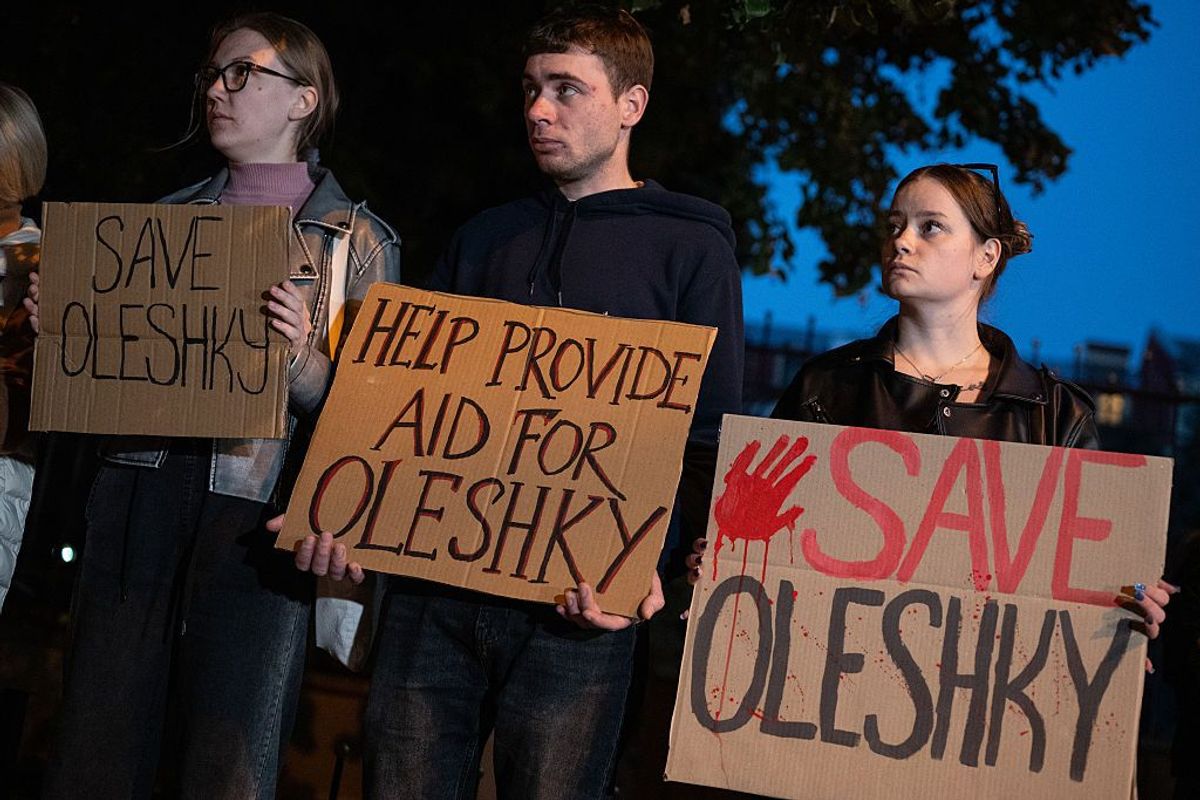
Ukraine war latest: Ukraine, Russia agree to local ceasefire for Russian-occupied Oleshky, mediated by Melania Trump

Key developments on Oct. 23:

  • Ukraine, Russia agree on local ceasefire for Russian-occupied Oleshky, mediated by Melania Trump
  • Civilian cargo ship sinks off coast of Romania after Russian drone strike, authorities say
  • Ukraine to end automatic 100% mobilization exemptions for critical industries, Prime Minister says
  • Ukrainian drone attack triggers shut

  •  

Lawmakers Plan to Block Trump Nominees Over Ukraine Satellite Network Restrictions

Senators have warned the White House they will withhold confirmation votes until the administration ensures the restoration of communications capabilities used by Ukraine’s military.

© Haiyun Jiang/The New York Times

Representative Brian Fitzpatrick, Republican of Pennsylvania and a former F.B.I. agent who worked on Russian counterintelligence in Kyiv, said he doubted the communication problems were accidental.
  •  

Melania Trump Says She Brokered a Cease-Fire in a Starving Ukrainian City

The first lady, who is positioning herself as an intermediary between two warring nations as her husband sides with Russia, said the agreement would allow residents to evacuate.

© Eric Lee for The New York Times

“It was abundantly clear that without my intervention, the possibility to bring humanitarian aid into the city and to evacuate the elderly would be impossible,” Melania Trump, the first lady, said in a statement.
  •  
❌