President Trump will travel to deep red Mississippi on Monday, seeking to turn out GOP voters for incumbent Sen. Cindy Hyde-Smith (R-Miss.). Hyde-Smith is facing a surprisingly competitive race against Democrat Scott Colom, a district attorney. Former Vice President Kamala Harris and Democratic Sens. Raphael Warnock (Ga.) and Cory Booker (N.J.) have all made stops…
Film producer Tommy Harper has sought to bring a Hollywood sensibility to verticals.
Kayla Oaddams/Getty Images for Warner Brothers Pictures
Film producer Tommy Harper is shutting down his micro drama app VeYou after about six months.
Harper, who sought to build the "HBO" of the genre, said he would still produce for other platforms.
The micro drama space has shifted as tech giants push in.
The app that wanted to be the "HBO" of micro dramas is shutting down.
Prolific film producer Tommy Harper is shutting down his app, VeYou, after about six months. A message on VeYou said the service would end November 6.
Harper told Business Insider he would continue producing series, distributing them via TikTok's micro-drama app PineDrama, YouTube, and other partners.
Harper, whose credits include "Star Wars" and "Top Gun: Maverick," is one of several Hollywood vets trying to bring their prestige sensibility to micro dramas, the soapy, low-budget series that got their start in China and have exploded in the US.
The move shows how fast the space is changing as Big Tech companies lean in. Micro dramas — also called "verticals" — cost a fraction of a traditional feature-length movie, but apps often lose money because of the high cost of marketing, and VeYou didn't have massive financial backing.
"In the past year, TikTok, Meta, and YouTube all moved hard into short drama," Harper emailed. "When the three biggest attention platforms commit to a format, distribution is decided. The opportunity for an independent company is to be the best supplier to those platforms, not to compete with them for installs. So we're focused where we have the edge: making the shows."
Harper raised an undisclosed amount of seed funding for VeYou from investor S32, a venture firm started by Google Ventures founder Bill Maris, who's also backed 23andMe, Impossible Foods, and Nest. VeYou has made a handful of originals, starting with "Love Under Fire," a romance drama starring Kasey Esser, who wrote the series alongside Harper.
The micro drama market is changing fast
The micro drama space has changed dramatically in recent months.
In the past year, AI-generated characters have increasingly taken their place alongside human actors, and free, ad-supported offerings are competing with the "freemium" apps that had dominated the landscape.
A report by media consultancy Owl & Co. found two-thirds of films released by leading apps in the third quarter of this year outside China were AI-generated, up from 3% in the first quarter.
TikTok's free app PineDrama rolled out in January, and by the third quarter, it accounted for more than half of all micro drama views across 16 leading apps, according to the Owl & Co. report.
Other tech giants have also moved quickly into the space and made themselves bigger viewing destinations for micro dramas.
YouTube released a new feature that allows creators to bundle their short videos in a series of episodes or seasons, designed to be viewed sequentially.
On Meta, the dominant platform used by micro drama apps to acquire customers, some apps are running portions of their films lasting 20 minutes or more as ads to get people to subscribe.
Lori Golden-Stryer, the CEO of RIVR Media, a producing partner for VeYou, said VeYou's films set themselves apart through their scripts, acting, and direction. She said she was encouraged to see its series perform well on TikTok, based on platform data and her company's monitoring.
"People want live characters," she said. "I don't think they want AI. I've seen a lot of different verticals, and I'd like to think ours were a little cut above."
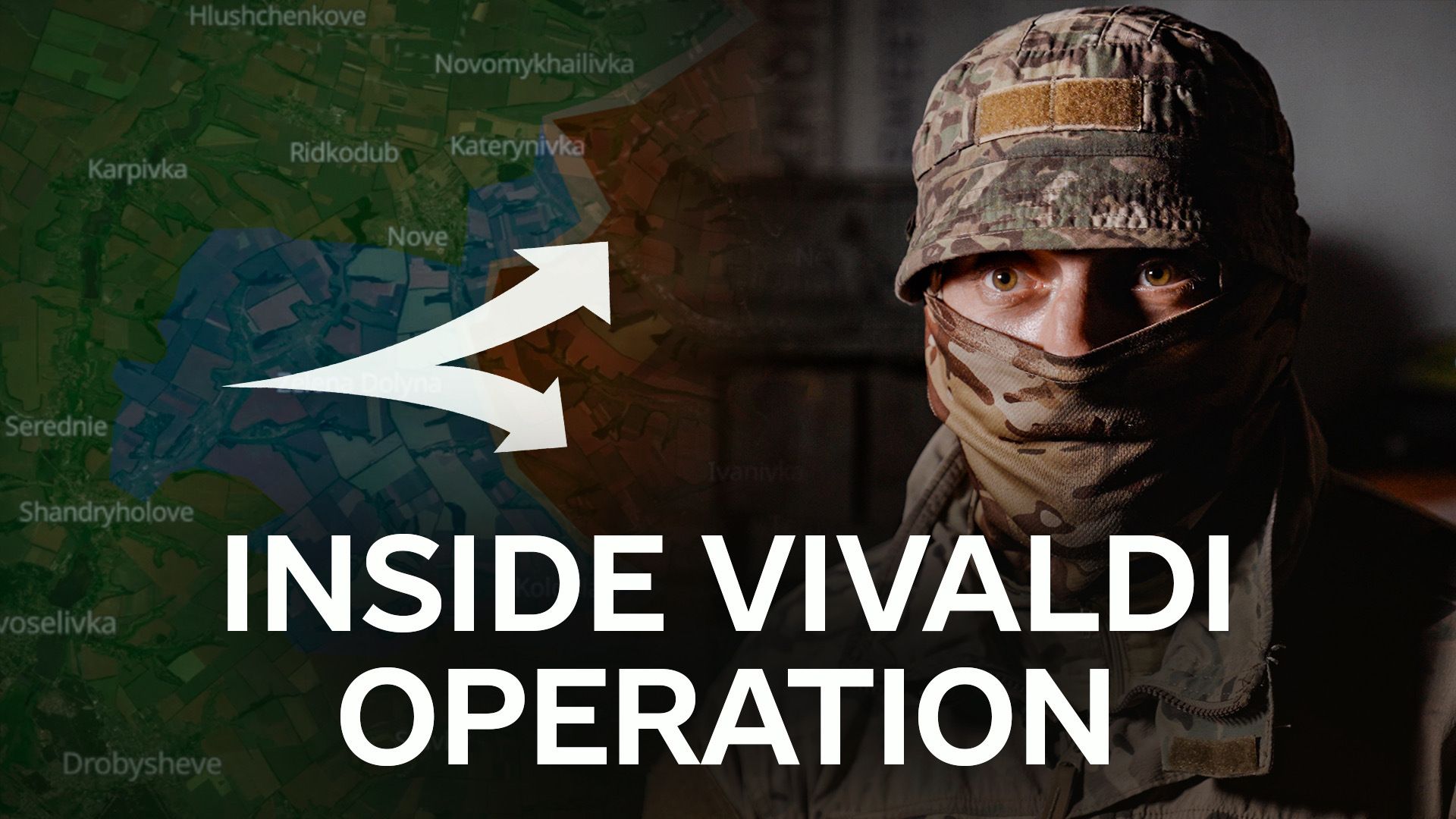
In May 2026, Ukraine’s 3rd Army Corps launched a secret counteroffensive now known as Operation Vivaldi, aiming to strengthen Ukraine’s defensive positions in the Lyman and Sviatohirsk sectors and disrupt Russia’s plans to encircle Ukraine’s key strongholds – the cities of Sloviansk and Kramatorsk.
Vice President Vance will speak at an airplane hangar in Belgrade, Mont., touching down Monday in an unexpectedly competitive House district. Republican Aaron Flint is favored against Democrat Sam Forstag, but polls show a tight race in the typically safe red district. Vance’s visit comes about two weeks after President Trump rallied in Montana’s western…
South Korea is rebelling against U.S. dominance. It is witnessing a formidable opposition movement against the United States’ historic control over the Asian country’s military forces.
There is also growing pressure on the South Korean government to refuse demands by U.S. President Donald Trump for Korean troops to deploy in the Persian Gulf.
A major driver of this surging opposition movement is the widely held concern that Washington is maneuvering South Korea to fight a war with China.
Political analyst KJ Noh explains that the Korean people perceive the United States as positioning their country as a proxy to fight an eventual war with China, in a similar way to how Ukraine is being used as a front line to provoke Russia.
“The U.S. empire is making South Korea into the next Ukraine,” says KJ Noh. “It is weaponizing South Korea.”
This is analogous to how Ukraine was groomed and weaponized since 2014 to serve as a proxy for the U.S. and NATO to confront Russia.
He points out that China has always been the main target for American imperial planners seeking to extend U.S. hegemony. Pentagon Generals have openly spoken about going to war with China since 2025. Several strategic documents cite the imperative of confronting China for the U.S. to pursue its ambitions of global dominance.
Recently, the American commander in South Korea, General Xavier Brunson, referred to the country as “a dagger pointed at China” and “an unsinkable U.S. aircraft carrier.” Such brazen comments have sparked even broader opposition.
KJ Noh contends that U.S. strategists assumed defeating Russia and Iran would be relatively easy, paving the way for the main target: China. However, the protracted war in Ukraine and Trump’s debacle in the Persian Gulf have delayed the war plan against China.
Nevertheless, Korean people understand that when the U.S. empire gets around to attacking China, their country will be deployed as Uncle Sam’s proxy.
Historically, for the past 76 years, Washington has exerted full control over the South Korean military. This was enabled by the U.S. using fascist collaborators from the Second World War to control South Korea – a legacy that persists among the deep state in South Korea.
KJ Noh surveys a history of genocidal violence perpetrated by the U.S. empire in South Korea to wipe out political opposition movements. The scale of mass murder and mass graves is shocking and hardly known in the West.
Despite the brutal oppression over many decades, there is still a defiant consciousness among Koreans who refuse to be vassals of the U.S.
Koreans do not want to do Uncle Sam’s dirty work any longer, and they do not want their country to be dragooned into a proxy war against their Asian neighbor, China, with which much of the Korean economy has beneficial relations.
This is why Koreans are demanding that the United States finally hand over Operational Control of the country’s military. President Lee Jae-myung reflects the popular will by calling on Washington to comply. It is also why the Korean people and government are refusing Trump’s peevish calls for deployment in the Persian Gulf. Given the history of loyal Korean service in U.S. wars, this latest defiance is a watershed in relations.
Con un abito animalier e mamma Chris al seguito Kim Kardashian, ha fatto il pieno di fan e di flash nella serata finale della Festa del Cinema di Roma. Insieme a Naomi Watts, Niecy Nash-Betts e Sarah Paulson ha presentato, in in anteprima mondiale, la seconda stagione di “All’s Fair”. Il legal comedy di Ryan […]
In the 1940s and '50s, Route 66 was one of America's most popular highways, driving business to small towns from Chicago to Santa Monica. But today, the road and its people have been largely forgotten. Ghost towns, empty motels, and abandoned gas stations line its path. Chief correspondent Abby Narishkin grew up along the road. In celebration of its 100th anniversary, she drove down the old route herself to visit the people and businesses still keeping this Americana legacy alive.
From military speeches to civil-defense drills, Europe’s leaders are openly preparing their countries for conflict. Jefferey looks at the warnings coming out of Britain and the polling that suggests the public may not be ready to answer the call.
Una trasmissione d’inchiesta invisa al potere. Una bomba cosiddetta “amica”. Un faccendiere specializzato in torbidi servizi alla politica. Partiti che invadono la tv pubblica. Sono gli ingredienti di quella che abbiamo chiamato “Operazione Report”, di cui conosciamo in parte lo svolgimento e in tutto l’esito: quello di allontanare il giornalista Sigfrido Ranucci dalla conduzione della più importante trasmissione di giornalismo investigativo della Rai, dopo nove anni di conduzione (salvo il successo dei ricorsi dell’interessato al Tribunale del lavoro di Roma). Nove anni in cui molte puntate di Report hanno scatenato gli attacchi della politica, in particolare dal centrodestra e dalla frangia renziana. Che si sono via via trasformati in una vera e propria campagna, amplificata dalla stampa di destra. Parte da qui “Operazione Report”, titolo di copertina del numero di ottobre di MillenniuM, il mensile diretto da Peter Gomez. Il racconto prende il via dall’altro protagonista, il faccendiere Valter Lavitola, con il ritratto approfondito e documentato a firma di Marco Lillo. Sul personaggio i media tendono a far prevalere aspetti quasi folcloristici, ma la sua biografia racconta ben altro: relazioni coi potenti, processi e condanne, intrighi politici ai massimi livelli, che hanno cambiato la storia di questo Paese, dalla caduta del governo Prodi nel 2008 alle manovre contro politici sgraditi. Una parabola in cui affiorano contatti stretti con i servizi segreti, un leitmotiv della sua fulminante ascesa, come scrive il direttore Peter Gomez. Sulla “Operazione Report” Millennium parte dai fatti, vale a dire l’inchiesta giudiziaria sulla bomba esplosa davanti a casa di Ranucci, a Torvaianica, il 16 ottobre 2025: l’individuazione dell’arruffata manovalanza campana, l’improvvisa entrata in scena di Lavitola, la “amicizia fraterna” rivendicata a sorpresa dal conduttore, la sequenza di “affettuosi” moventi snocciolati dal faccendiere. Ma oltre le carte c’è di più: gli affari, africani e non solo, che portano a Marco Dell’Utri, figlio del senatore che è stato la mente organizzativa di Forza Italia e ha scontato una condanna a 7 anni per concorso esterno in associazione mafiosa. L’Operazione Report ci fa riflettere sul rapporto tra informazione e potere, ma anche sui fili trasversali del potere. Che possono passare anche per un piatto di vongole. Sgusciate o meno.
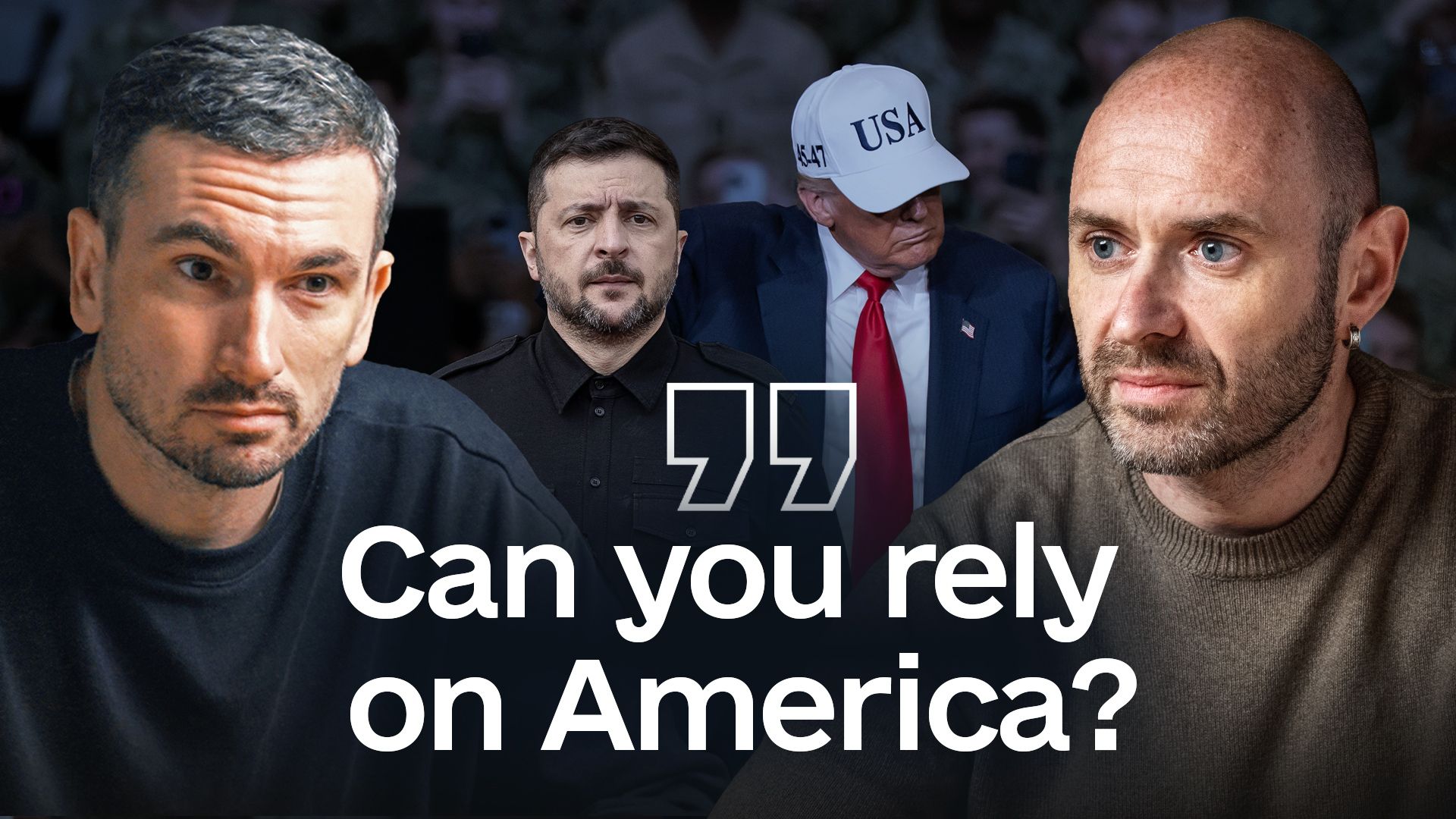
Kyiv Independent journalists Jimmy Rushton and Danylo Mokryk argue that Donald Trump’s pressure on Kyiv is backfiring — strengthening support for Volodymyr Zelensky while undermining trust in the United States.
Il presidente ucraino Volodymyr Zelensky ha detto che secondo il governo statunitense, la Russia è disponibile a un incontro trilaterale tra Mosca, Ucraina e Stati Uniti. Zelensky ha precisato di aver avuto al conferma da Jared Kushner, inviato speciale americano per la Pace, e che riceverà presto “un resoconto più dettagliato” dall’inviato speciale statunitense Steve […]
A Parigi migliaia di manifestanti sfilano su appello dell’Interfac Ile-de-France, dopo che il tribunale amministrativo ha sospeso l’ordinanza della prefettura di polizia che vietava la mobilitazione. La manifestazione, organizzata dagli studenti delle assemblee generali universitarie, si svolge tra la Pitié-Salp trière e la Bastiglia, riferisce Afp.
Trita Parsi is the co-founder and Executive Vice President of the Quincy Institute for Responsible Statecraft. Follow his excellent Substack: https://tritaparsi.substack.com/

 Login