Reading view
Algeria to Deploy Troops to Niger for First Time Since 1973

Lula Pledges to Develop Brazil’s Own Artificial Intelligence
Lula plans to expand technical education and use renewable energy to attract data centers and keep information stored in Brazil.
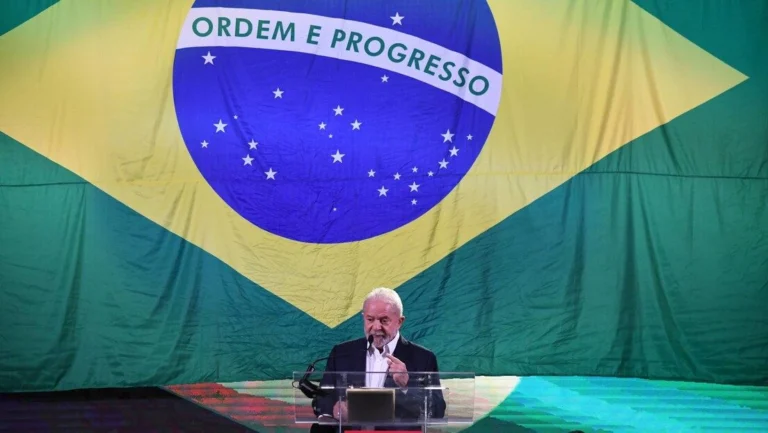
Brazilian President-elect Luiz Inácio Lula da Silva has pledged to develop a domestic artificial intelligence system, expand technical education and attract data centers powered by renewable energy, aiming to strengthen Brazil’s technological independence and accelerate its transition to a developed economy.
RELATED: Lula Celebrates Reelection, Promises Education Reform and Sovereign AI
Speaking after his victory in the presidential runoff, Lula said Brazil must invest in mathematics and engineering to build its own artificial intelligence capabilities rather than depend on technology developed in China or the United States.
“We will teach more mathematics, more engineering, because I don’t want to depend on Chinese or American artificial intelligence; I want to create a Brazilian one,” he said.
Lula also pledged to use Brazil’s renewable energy resources to attract data centers and keep information stored within the country. The proposal forms part of a broader push to expand the digital economy and strengthen domestic technological capacity.
Text Reads: The Brazil we wish to build is a country where our elderly are cared for with dignity, women are respected, and everyone has the right to live out their faith in freedom.
It is a country that respects differences, with a State that guarantees rights for all—because to govern means to look after 215 million Brazilians, without distinction. Respect must be the starting point for us to build, together, a Brazil that is increasingly fair and humane.
“We want to transform this country from a developing country into a developed one,” he said, identifying the digital, green and creative economies as key areas for investment.
He also outlined an ambition for Brazil to play a central role in political and economic decision-making and in efforts to promote peace.
Lula promised that his next term would deliver unprecedented results, telling supporters: “I want to make a commitment: I will deliver the best term of office any president has ever had in Brazil’s history. You can be sure of that.”
The president-elect, who turns 81 on Oct. 27, dismissed concerns about his age as he prepares to take office for another term. He pledged to devote himself fully to the country’s development and to improving the daily lives of Brazilians.
“I will dedicate 20 or 24 hours a day to making this the country everyone dreams of, where people can go to sleep and wake up in complete peace of mind,” he said.
Lula also thanked voters for their support in the runoff and praised young people who took to the streets to defend democracy, crediting their participation as a key factor in his victory.
His pledges place artificial intelligence, renewable energy and digital infrastructure among the priorities he has outlined for Brazil’s next phase of development, alongside his ambition to transform the country into a developed nation.
Eni, ceduta la controllata nigeriana AENR ad Apex Global Energy
Eni, completata la cessione delle attività onshore e in acque poco profonde: il Gruppo resterà presente in Nigeria nel deep offshore e in Nigeria LNG
Eni ha finalizzato la cessione della propria controllata Agip Energy and Natural Resources (Nigeria) Limited (AENR) ad Apex Global Energy Limited (APEX), società interamente posseduta da Sterling Oil Exploration and Energy Production Company Ltd. (Sterling), tra i principali operatori attivi nell’onshore nigeriano. AENR, interamente controllata da Eni, opera in Nigeria nell’esplorazione e produzione di idrocarburi onshore e in acque poco profonde, attraverso una partecipazione del 5% nella Renaissance JV.
La joint venture vede Renaissance con una quota del 30% e il ruolo di operatore, TotalEnergies con il 10% e Nigerian National Petroleum Company Limited (NNPC) con il 55%. La transazione ha ottenuto l’approvazione di tutte le autorità competenti e si inserisce nella strategia di Eni di ottimizzazione delle attività upstream, attraverso il ribilanciamento del portafoglio e la dismissione degli asset considerati non strategici.
La cessione di AENR non comporta però l’uscita di Eni dalla Nigeria. Il Gruppo continuerà infatti a essere presente nel Paese con attività di esplorazione e sviluppo di asset deep offshore. Eni manterrà inoltre la propria partecipazione in Nigeria LNG, proseguendo così le attività nel Paese nei segmenti ritenuti strategici.
L'articolo Eni, ceduta la controllata nigeriana AENR ad Apex Global Energy proviene da Affaritaliani.it.

Gulf bloc officials to hold first high-level talks with Iran since Houthi escalation

Oil prices drop 2% as traders weigh Saudi attack risk, demand fears

Brussels Targets Electricity Network Charges as EU Seeks to Bring Down Energy Bills
European Union energy ministers will meet in Luxembourg on Thursday, 29th October, to discuss proposed changes to electricity network charges that could alter how households and businesses pay for the operation and expansion of Europe’s power grids.
The European Commission wants to revise the rules governing network tariffs, encourage more efficient electricity consumption and accelerate the introduction of smart meters and digital grid technologies. The measures form part of a wider effort to reduce electricity costs, which remain a significant concern for European households and industrial competitiveness.
According to the Council’s published agenda, ministers will examine legislation presented on 17th July alongside the European Commission’s Electrification Action Plan.
The proposals come as Europe faces continued energy-market volatility, with the war in Ukraine and instability in the Middle East affecting supply expectations and prices. Ministers will also assess energy security ahead of the 2026–27 winter.
Why electricity network charges matter
Electricity bills contain several distinct components. Consumers pay for the electricity itself, the operation and maintenance of transmission and distribution networks, and applicable taxes and levies.
Network charges finance the infrastructure needed to deliver electricity from generating facilities to homes and businesses. They also contribute towards grid maintenance, balancing and new investment.
Unlike wholesale electricity prices, which fluctuate according to supply and demand, these charges are generally determined through regulated national tariff systems.
The Commission argues that existing arrangements do not always encourage efficient use of infrastructure or reflect the costs created by electricity consumption at different times and locations.
Its proposed regulation would amend Regulation 2019/943 to strengthen incentives for network operators to control costs and use existing capacity more effectively.
The legislation would also encourage tariffs that reflect when electricity is consumed and the demands placed on local networks.
For example, consumers who can move electricity-intensive activities away from periods of peak demand could face lower charges under certain tariff arrangements.
However, the financial benefits would depend on national implementation, available technology and individual consumption patterns.
Industry presses for lower energy costs
The Commission’s proposal recognises that electricity prices have become a major issue for European industrial competitiveness.
Energy-intensive manufacturers, including steel, chemicals and other industrial producers, face particular difficulties when electricity costs are substantially higher than those of international competitors.
The proposed legislation would allow specific categories of users, including energy-intensive businesses and data centres, to benefit from differentiated network charges where justified by their consumption patterns.
Such arrangements would be subject to safeguards intended to prevent disproportionate costs being transferred to households and smaller businesses.
The proposal also addresses energy taxation. Brussels wants the minimum taxation level for electricity to remain below that of natural gas, reducing a financial disincentive to replacing fossil-fuel equipment with electric alternatives.
As EU Today previously reported, the Commission has been examining changes to electricity taxation as part of its response to Europe’s exposure to imported energy and volatile international markets.
However, reducing charges for one category of consumer does not automatically reduce the overall cost of maintaining a national grid. Regulators must still determine how those costs are recovered.
A growing problem of grid congestion
Europe’s electricity networks require considerable investment to accommodate renewable generation, electric vehicles, heat pumps and expanding industrial demand.
The Commission estimates that approximately €600 billion in electricity-grid investment will be needed by 2030, rising to around €1.2 trillion by 2040.
These figures, outlined in its accompanying assessment, illustrate the difficulty of pursuing lower consumer charges while simultaneously financing substantial infrastructure expansion.
Grid congestion is already delaying connections for renewable-energy projects, industrial facilities and other electricity users.
As EU Today examined in its coverage of Europe’s grid bottlenecks, limited transmission capacity can prevent relatively inexpensive electricity from reaching regions where demand is greatest.
The latest proposal therefore places greater emphasis on making better use of existing infrastructure before committing to conventional network expansion.
It would encourage regulators and operators to consider digital technologies, flexible connection arrangements and improved network planning.
Smart meters and the distribution of costs
The Commission is also seeking faster deployment of smart meters, which can provide consumers and network operators with more detailed information about electricity consumption.
In principle, such systems allow households and businesses to adjust demand in response to changing prices and network conditions.
Industrial consumers may have greater flexibility to shift production schedules or invest in electricity storage. Households, however, may have fewer opportunities to change when they use energy, particularly where consumption is linked to heating or essential daily activities.
This raises questions about how tariff reforms would affect different consumers.
A system that rewards flexible consumption could reduce costs for households with smart appliances, batteries or electric vehicles, while offering fewer benefits to people unable to alter their electricity usage.
National regulators would therefore have to balance economic efficiency against the risk of unevenly distributing network costs.
Ministers face difficult choices
The 29th October meeting will not itself introduce new electricity charges or establish binding national tariff rates.
The Commission’s proposal remains subject to negotiations through the EU legislative process, involving the Council and European Parliament.
Governments will need to consider how much discretion national regulators should retain, whether tariff structures can be made more consistent across the single market and how vulnerable consumers should be protected.
The meeting will also examine longer-term energy security and possible targets for the period after 2030.
For Brussels, the difficulty is that electricity must become sufficiently competitive to encourage industrial investment and electrification, while the infrastructure required to support increased consumption must still be financed.
Whether the proposed reforms eventually reduce electricity bills will depend on their final legislative form, national implementation and the extent to which more efficient grid management produces measurable savings.

Rubio makes second India trip this year as oil prices stay high

Argentina's Vaca Muerta shale boom leaves a trail of pollution

Trump on high gas prices: 'We're making a freaking fortune'
Andrew Harnik/Getty Images
- Trump said on Saturday that American oil companies are making a "fortune" on the Iran war.
- Americans, however, are paying record prices at the pump, according to AAA.
- Trump made the comments less than two weeks from the midterm elections.
Though regular Americans are paying more at the pump, US oil companies are striking it rich, President Donald Trump said on Saturday.
Speaking at a rally in Georgia, Trump said that oil prices are "temporarily high," but added that the throttling of the Strait of Hormuz has pushed oil buyers to American companies with operations in Texas, Oklahoma, and Louisiana.
"The United States oil and gas business is making hundreds of billions of dollars," Trump said. "I don't give a damn, I'm going to say it — we're making a freaking fortune."
Indeed, a Q2 report this year from the Oil & Gas Journal, a trade publication, noted that "surging crude prices tied to ongoing Strait of Hormuz disruptions" fueled massive windfalls for North American oil companies.
Year over year, a sample of 38 US producers and refiners collectively grew revenues by about $140 billion, the Oil & Gas Journal reported.
Those profits, however, are not exactly shared by the American public.
AAA reported that the average price of regular gas in the United States is now at $4.29 a gallon. In February, one day before the US and Israel launched surprise attacks on Iran, gas prices were at $2.98.
Diesel prices have also increased precipitously since the American war on Iran began. On Sunday, AAA reported that they sat at $6.35, up from $3.75 a day before the conflict began. Shipping companies rely on diesel to power their boats and trucks. Higher diesel costs are often passed onto consumers in the form of higher prices.
Trump's comments are unlikely to curry goodwill among an American electorate reckoning with an affordability crisis less than two weeks out from midterm elections. The White House did not immediately respond to a request for comment sent on Sunday.
As the midterms approach, Trump has taken steps to lower gas prices.
On October 9, Trump said he reached a deal with Russian President Vladimir Putin to import Russian diesel, which had been heavily sanctioned since the start of Russia's invasion of Ukraine. Analysts warned the move could provide a lifeline to the Russian economy as the country seeks to bombard Ukraine into submission this winter.
"I can see just the fake headlines — 'President Trump is talking about all the money they're making while people are suffering at the pump,'" Trump said at the Georgia rally. "That'll be the headline."
Iran says renewed war with US would not change its policies

Gabon Oil Rig Sinks Off Mayumba, Five Workers Missing

Russian strikes on Ukraine kill four, injure 28

Wind Turbines vs Nature: How Reckless Renewables Are Destroying the Environment
From beaches to old-growth forests, wind farms are destroying the environment in the name of saving it, says Sandra Bourke. Greens are turning their backs as reckless renewables industrialise the natural world.
The post Wind Turbines vs Nature: How Reckless Renewables Are Destroying the Environment appeared first on The Daily Sceptic.
Couche-Tard offers up to $8 billion for Cumberland Farms

Iran blames US for collapse of nuclear talks amid fear of new attacks

UK warns Trump of economic fallout from Argentina's Falklands curbs

Saudi strikes kill 11 in Yemen as Houthi missiles target Saudi cities

Trump says US may launch 'another little Epic Fury' attack on Iran

Qatar's deal to buy US natural gas shows how the Iran war is reshaping energy markets