Lima, 26 oct (Prensa Latina) En un clima de tensión mundial signado entre otros factores por las elecciones que tendrán lugar en la tierra de Abraham Lincoln el próximo martes 3 de noviembre; el miércoles 28 de octubre la Asamblea General de Naciones Unidas hablará al mundo.
Liliana’s blood pressure is dangerously high, a complication of her poorly managed diabetes. Her doctors are urgently concerned for her health, pointing to signs of liver failure and potential symptoms of recurring cancer.
Yet she is unable to get the care she needs. That is because Liliana, who I am referring to by her middle name to protect her confidentiality, has spent more than a year in an immigration detention center in Louisiana, more than 1,000 miles from her children in Maryland and from a community where she has built her life for almost a decade.
Liliana has missed the birth of her first grandchild. Now her daughter is pregnant again.
During that time, Liliana has missed the birth of her first grandchild. Now her daughter is pregnant again. And as yet another family milestone approaches without her, two independent physicians have warned immigration authorities that Liliana’s health is rapidly deteriorating.
I have been representing Liliana for the past year as she remains in detention. She has no criminal record. She has strong ties to her community, finds joy doing painting and remodeling work and spends her free time making arts and crafts.
In her free time, Liliana builds model homes, including the one seen here.Courtesy Liliana’s family
As an immigration attorney, I have represented dozens of immigrants seeking humanitarian relief. After a while in this line of work, you believe you have mapped the full geography of our broken system. But working on Liliana’s case dismantled that certainty, showing me the depths of injustice our immigrant neighbors face.
Under the Trump administration, I have witnessed firsthand the devastating outcomes of shortsighted executive memos and the steady militarization of our immigration system. With recent reports that Immigration and Customs Enforcement has ordered its agents to increase the number of daily nationwide arrests by 1,000, we are likely to only see more detentions like this — detentions that protect no one, but inflict incredible harm on people and communities across the country.
Liliana should never have been detained in the first place. When her daughter survived human trafficking as a minor, Liliana supported her cooperation with U.S. federal law enforcement, leading to her daughter becoming a T-visa applicant. Through this specialized status established by Congress to protect trafficking survivors, Liliana is eligible for protection through a pending derivative T-visa application. In coming forward to help the U.S. federal government, their family entered into the government’s intended framework: assist law enforcement and receive protection from detention and removal while their case is pending.
Instead, a year ago Liliana was detained during a routine ICE check-in, after explaining she could not wear an ankle monitor for medical reasons related to her diabetes. Rather than accommodating her, the ICE officers laughed, she told us. Then they sent her across the country to Richwood Correctional Center, a detention facility in Monroe, Louisiana. Longtime immigration attorneys understand that transfers to the Fifth Circuit in Louisiana are not due to a lack of capacity in local facilities. More often than not, it is an intentional tactic to move a client across state lines, limit their access to counsel and keep them in due-process limbo.
According to the ACLU of Louisiana, the state’s detention centers have become a “black hole” for systematic human rights abuses, medical neglect and inhumane living conditions. Under the second Trump administration, detentions have skyrocketed, with nearly 13 % of all detained immigrants nationwide held in Louisiana-based facilities. And now the administration is seeking to potentially increase that number.
Richwood Correctional Center officials have largely ignored the urgent warnings from the two doctors who have evaluated Liliana’s condition and warned of her dangerously high blood pressure and early liver failure.At the same time, my organization, Ayuda, has partnered with Louisiana pro bono counsel Flavia Moody, who is admitted to the Fifth Circuit and is preparing an amended petition and a temporary restraining order in an existing habeas corpus case to challenge the lawfulness of her detention. The habeas process is actively moving forward, but the process is moving at a painfully slow pace, notoriously common within the state’s Fifth Circuit.
Under ICE’s own Performance-Based National Detention Standards, individuals with severe, deteriorating medical conditions, pending humanitarian relief claims and clean records are prime candidates for release on humanitarian parole or supervision. Any single one of these reasons are grounds for her release. Liliana has all three. And yet she remains miles away from her family, in limbo and under unimaginable conditions.
Through my weekly conversations with Liliana, I have witnessed her rapid deterioration. We have limited time together, which makes it even harder to get information, assess how she’s doing and see what can be done to help. Her health is spiraling on multiple fronts, aggravated by the systematic neglect at the Richwood Correctional Center. Her unmanaged diabetes is causing hypertension so severe, Dr. Sugarman warns it could trigger a stroke. Most recently, I learned her hand is discolored due to an untreated surgical wound from a recent procedure performed in detention.
I am also concerned since she has a history of cancer and has been showing symptoms pointing to a possible recurrence. At every turn, it seems like there is no reprieve for her health. Liliana tells me no one at the facility takes her or her needs seriously, and that she’s facing harassment from staff and another detainee. Along with Liliana’s family, I’m alarmed by her condition and deeply worried for her.
Liliana’s ordeal is not an accident of bad luck or an isolated bureaucratic failure. It’s the deliberate architecture of our deportation policy, working as it is currently designed to.
As a lawyer, a daughter dedicated to keeping families whole and an American citizen, I am appalled to witness our government inflict such suffering — not in the service of the law, and certainly not in defense of public safety, but out of a hollow impulse to wound the already wounded. Liliana’s ordeal is not an accident of bad luck or an isolated bureaucratic failure. It’s the deliberate architecture of our deportation policy, working as it is currently designed to, treating congressionally enacted protections as inconveniences to sidestep rather than binding law.
Since July 23, 2025, Liliana has been unlawfully detained, separated from her family and fighting for her life. We have exhausted every legal and humanitarian path. Her prolonged detention violates binding precedent (ICWC v. Noem), squanders taxpayer funds and actively jeopardizes her health and safety.
It is Liliana herself who best captures the sheer cruelty of the system holding her hostage. From inside the Louisiana facility, she told me, “There is a lot of injustice here, how they treat us, the food they give us is for animals and they don’t give us the medication we need to live. I hope there is justice for all the mothers who are here, who have kids back at home, who are sick, who have autism, who cry for their kids. The only thing I can say is that I hope there is justice for everything that is happening to us.”
It has been a wild few weeks for the US-Ukraine relationship as Trump, more and more, has been able to be what he always wanted to be: a friend and supporter of Vladimir Putin. It started openly with the diesel deal, which drove a coach and horses through the sanctions regime leveled on Russia, a […]
In 2003, Chinese president Hu Jintao worried about what became known among the country’s leadership as the ‘Malacca dilemma.’
Some 80 percent of China’s imported crude passed through the Malacca strait which Beijing’s naval forces could not control.
This gave rise to a wider security doctrine of supply-chain resilience which became the basis for China’s transformation into the clean tech powerhouse it is today.
When the US–Iran war disrupted Middle Eastern oil flows this year, Xi Jinping called China’s early bet on wind and solar “forward-looking” – as recounted in a new paper from the London School of Economics’ Grantham Research Institute published on Monday (26 October).
The paper identifies green growth as “the answer” to geopolitical uncertainty. Clean tech isn’t just clean, it’s also secure and not dependent on imports. Plus, it delivers a “more durable pathway” to “economic resilience.”
Some governments want to expand fossil-fuel imports, or drill more oil or gas wells, arguing that a more diversified supply chain improves resilience. But the paper dismissed that.
Oil and gas are priced on global markets, so even producers are exposed to price shocks. More North Sea drilling would save UK households between £16 and £82 (€19 to €98) a year, the paper finds, citing Oxford University research, compared with £105 to £441 on a renewables and electrification pathway.
It’s interesting comparing how the two political systems respond to (hypothetical) supply shocks. In China, the mere threat of losing control of one strait was enough to transform energy politics gradually over many years.
This article continues, but the full version is available only to EUobserver.com subscribers. Visit account.euobserver.com/membership
Rogers wants Trump’s endorsement without necessarily owning Trump’s agenda, and so from now until Election Day, it seems the strategy is deflect, deflect, deflect.
Sen. Kevin Cramer is calling on Congress to reauthorize and modernize the Export-Import Bank by Dec. 31 to prevent China from dominating global energy markets and to protect over 45,000 U.S. jobs.
In the midst of Donald Trump's attempt to turn Russian diesel into a political asset to help him avoid disaster in November's midterm elections, the internet went out on the front lines.
Since the beginning of the full-scale invasion, Ukrainian forces have relied on Starlink to
Republican candidate Vivek Ramaswamy's attempt to discredit Ohio gubernatorial opponent Dr. Amy Acton via an advertisement featuring her mother's testimony backfired, instead highlighting Acton's resilience in overcoming childhood trauma.
Senior political analyst Juan Williams criticizes several candidates in the 2026 midterm elections for employing increasingly unethical and deceptive political advertising tactics.
Democrats should remember that throughout American history, it has seldom been easy to turn the perceived corruption of one party into an electoral advantage for the other. That is because voters tend to see both parties — and politics itself — as corrupt.
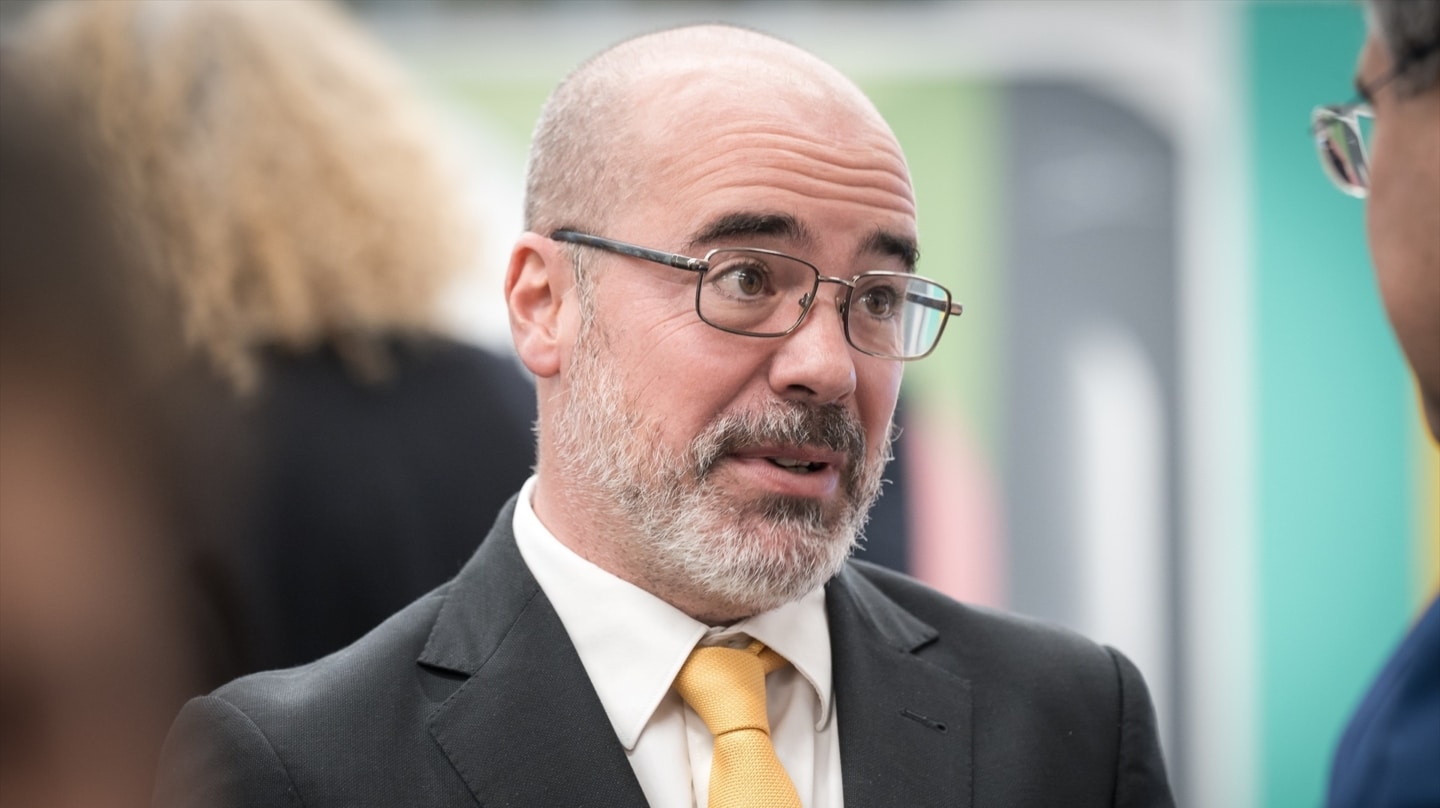
Existe en la vida pública española una variedad fascinante de misticismo administrativo: la conciencia que solo despierta cuando se cierra la ventanilla de las prebendas. Hasta la tarde de este domingo, don Francisco Martín Aguirre, delegado del Gobierno en la Comunidad de Madrid, era un hombre de una flexibilidad espiritual admirable, capaz de digerir sapos institucionales con la serenidad de un faquir en hora punta. Sin embargo, bastó un ligero descuido tipográfico —la ausencia de su nombre en las listas del PSOE al Congreso y al Senado para el próximo 29 de noviembre— para que al caballero le sobreviniera, de golpe, un ataque agudo de dignidad.
Si Evelyn Waugh hubiera tenido la fortuna de pasear por la calle Miguel Ángel en lugar de por Mayfair, habría encontrado en don Francisco al protagonista ideal para una secuela castiza de Merienda de negros. Nuestro hombre concibió la Delegación del Gobierno no como esa aburrida oficina encargada de velar por el orden público y la neutralidad institucional, sino como un pintoresco laboratorio de agitación lírica y despropósitos logísticos.
Su debut en el gran teatro del absurdo patrio quedará para siempre ligado a aquella mañana en la que, con la solemnidad de quien descubre la pólvora mojada, tuvo a bien instruirnos sobre el verdadero patriotismo. Según su exégesis, los herederos políticos de Bildu habían hecho infinitamente más por los españoles y por España que todos los ciudadanos de los «patriotismos de pulsera». Uno podía imaginar a don Francisco frente al espejo, ensayando el gesto de estadista audaz, sin sospechar que ni siquiera tamaño tributo verbal le garantizaría un modesto taburete en la Carrera de San Jerónimo. El hombre hipotecó el diccionario y ni siquiera le dieron el recibo.
Pero su talento no se limitaba a la oratoria creativa; también brillaba con luz propia en el arte del caos urbano. Bajo su celosa tutela, la Puerta del Sol dejó de ser el kilómetro cero de las carreteras radiales para convertirse en un campamento estacional donde las tiendas de campaña florecían con la complacencia de su despacho, siempre tan comprensivo con el desorden ajeno cuando rimaba con la consigna propia. Y qué decir de la gloriosa estocada a la etapa final de la Vuelta Ciclista a España en el corazón de Madrid: porque nada proyecta mejor la imagen de una capital moderna y segura que la incapacidad —o el desgano— para garantizar que unos señores en bicicleta puedan dar pedales por la Castellana sin que el dispositivo gubernamental colapse entre excusas y sectarismos.
Tragó quina, defendió lo indefendible y convirtió su cargo en una trinchera de partido sin que un solo músculo de su ética protestara
Todo ello —los incendios dialécticos, el boicot tácito a la convivencia madrileña, el entusiasmo de comisario aplicado— lo ejecutó don Francisco con una sonrisa imperturbable. Tragó quina, defendió lo indefendible y convirtió su cargo en una trinchera de partido sin que un solo músculo de su ética protestara.
Y, de pronto, el milagro. Al comprobar que los arquitectos de Ferraz habían olvidado incluir su sacrificado apellido en el boletín de los elegidos, don Francisco descubrió que tenía principios. Se marcha hoy dando un portazo que pretende sonar a tragedia griega, aunque en realidad suene al tintineo melancólico de una aspiración frustrada. Es la «dignidad sobrevenida», esa virtud tardía que nunca asoma cuando se maltrata a los ciudadanos o se degrada una institución, pero que estalla con furia indomable en el preciso instante en que a uno le dejan sin escaño. Madrid pierde a un delegado, sí, pero la picaresca contemporánea gana a su mártir más involuntariamente cómico.
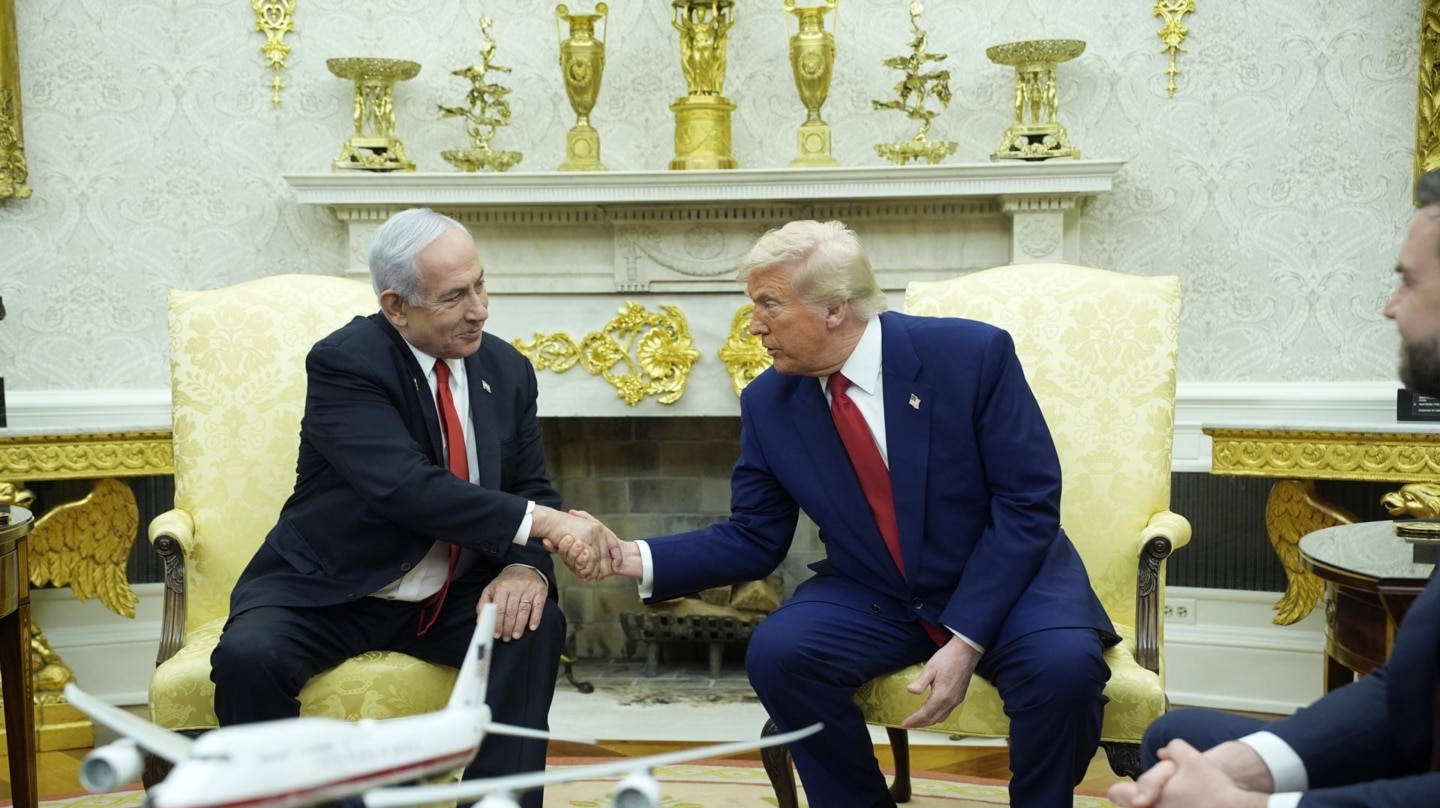
Donald Trump ha anunciado su apoyo a Benjamín Netanyahu en las elecciones en Israel del próximo día 27. Como tantas otras decisiones del presidente de Estados Unidos el anuncio podría dar lugar a pensar que detrás hay una operación calculada y, aunque tal operación existe, nada indica que esté dando frutos.
Los enviados habituales de Trump a todos los conflictos: Steve Witkoff y su yerno Jared Kushner, a los que ha sumado el secretario de Defensa de Estados Unidos, Pete Hegseth, han mantenido en las últimas semanas discretas y tensas conversaciones con los dos principales candidatos a primer ministro de Israel, Netanyahu y Gadi Eisenkot, tras las elecciones. La propuesta de Trump es conseguir el compromiso de ambos dirigentes de que, gane quien gane (los sondeos predicen un empate), se constituya un gobierno de unidad nacional sin representantes del ala más dura de la derecha y donde el cargo de primer ministro sea rotatorio entre los dos principales candidatos, sea quien sea el vencedor.
Detrás de estas conversaciones impulsadas por Trump hay una ambiciosa obsesión y un objetivo estratégico. Su obsesión es atenuar el fracaso que le pronostican los sondeos en las elecciones de medio término a las que el presidente de EEUU tiene que enfrentarse el próximo 3 de noviembre. En nombre de aminorar ese fracaso, Trump está obligando al presidente ucraniano a aceptar un acuerdo de supuesta paz favorable a Moscú y trata de imponer al próximo primer ministro israelí un plan pensado desde los intereses más inmediatos de EEUU.
Así, Trump plantea como objetivo estratégico limitar más las acciones ofensivas de las Fuerzas de Defensa de Israel en Líbano, moderar las acciones militares en Gaza para facilitar la transición y comenzar la reconstrucción de infraestructuras en el territorio, frenar el extremismo de algunos colonos en Cisjordania y, lo más importante desde la concepción de la Administración Trump sobre la situación regional, conseguir un acuerdo público de reconocimiento entre Israel y Arabia Saudí, ahora más abonado por la ofensiva de los hutíes de Yemen aliados de Irán. Para los saudíes, oficializar un acercamiento que en parte ya existe sería más fácil de cara a las sociedades árabes si Netanyahu aparece como menos protagonista en la escena israelí.
Pero Trump ignora aparentemente que la ley electoral israelí favorece una fragmentación parlamentaria que podría dar lugar a alianzas de gobierno que hagan imposible un acuerdo de ese tipo y que limitar las acciones militares, por ejemplo en Líbano, darían un espacio de recuperación a Hizbullah así como pretender que avance el proceso en Gaza sin desarmar a Hamás es una ingenuidad peligrosa.
La propuesta de Trump es conseguir el compromiso de ambos dirigentes de que, gane quien gane se constituya un gobierno de unidad nacional sin representantes del ala más dura de la derecha"
Y así parecen haberlo entendido los dos candidatos. Gadi Eisenkot, líder de Yashar y principal candidato de la oposición en las elecciones, ha declarado que no formará parte de un gobierno liderado por el primer ministro Benjamín Netanyahu, ni siquiera bajo un acuerdo de rotación. “Prometo categóricamente que no trabajaré bajo las órdenes de Netanyahu en un acuerdo de rotación” ha precisado a medios israelíes. Añadió Eisenkot que, si bien no descarta formar gobierno con el Likud (el partido de Netanyahu), se niega a trabajar junto a este debido a la responsabilidad que tiene como primer ministro por lo sucedido el 7 de octubre de 2023.
Las presiones de Pete Hegseth, el secretario de Defensa, sobre Netanyahu han insistido en otro punto: el de no atacar, ni provocar nuevos incidentes con Irán, antes de las elecciones de noviembre en Estados Unidos. Netanyahu y sus asesores creen que los titubeos de Trump y los recovecos de las conversaciones sobre el estrecho de Ormuz ha dado un tiempo precioso a Teherán para recomponer en parte sus sistemas de defensa, comenzar a reconstruir su programa nuclear y reafirmar su discurso, falso pero efectivo, de que están ganando su pulso a EEUU e Israel. Por eso las fuerzas armadas israelíes realizaron un simulacro de ataque a Irán hace unos días para detectar el estado actual de sus capacidades de alerta y respuesta de cara a un ataque por sorpresa, esta vez real.
Según ha filtrado la oficina del primer ministro a los medios de comunicación, tras la entrevista con Hegseth, Netanyahu sostuvo una conversación telefónica de Trump en la que planteó un posible regreso a la guerra con Irán, diciéndole a Trump que tenían "un trabajo que terminar" y que lo "terminarían juntos".

 Login