❌

Reading view

For the third time this year, Ukrainian drones hit Russia’s rocket-fuel rubber plant in Samara Oblast. This time they reach the raw-material shop feeding it

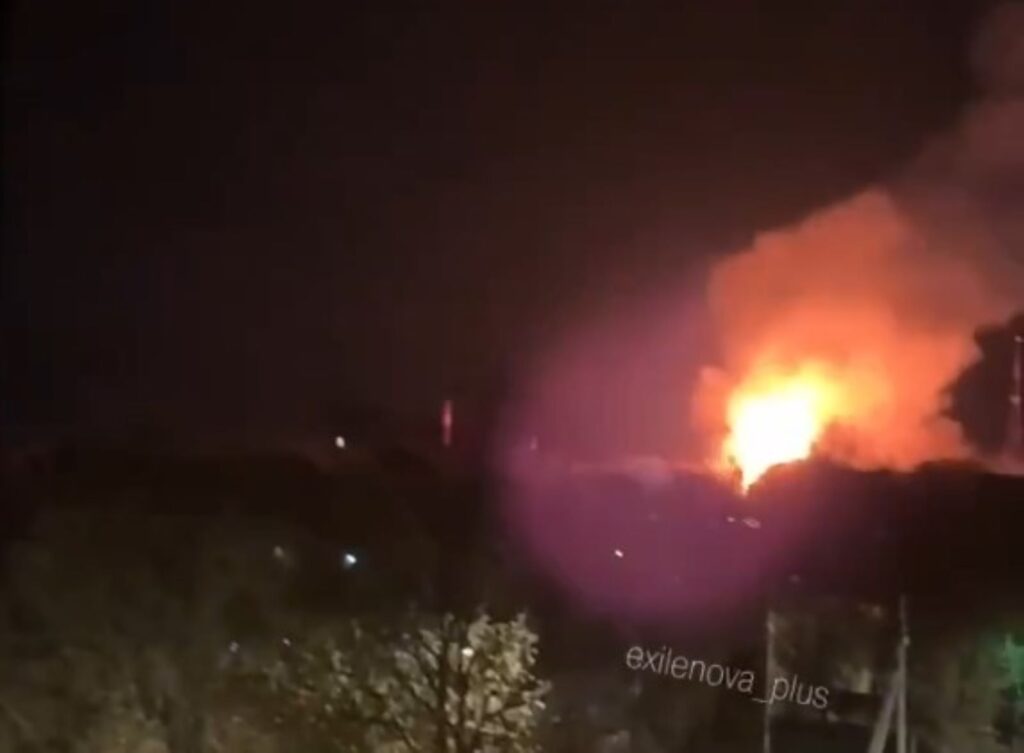
Smoke over the industrial zone of Tolyatti following a drone attack.

Ukrainian drones damaged a process pipeline, two butyl-rubber units, and a rectification (distillation) unit at Russia’s Tolyattikauchuk petrochemical plant on 24 October, Ukraine’s General Staff said on 26 October. The damage hits the production chain of solid rocket fuel for tactical and ballistic missiles, it added.

The strike was part of a string of Ukrainian hits on Russian plants over four days, most of which the General Staff links to missile production. Ukraine hit an electronics plant in Oryol on 23 October and struck a battery plant in Yelets on 25 October or the following night. The General Staff ties both to missiles: Oryol makes components for missiles Russia fires at Ukrainian cities, and Yelets makes batteries for Iskander-M systems. Then, overnight on 26 October, drones also went after Voronezhsintezkauchuk, another Russian synthetic-rubber plant. For Tolyattikauchuk, this is the third time this year that strikes have reached its butyl-rubber shops.

What Kyiv and Russian officials say

The General Staff first confirmed the strike on 24 October with a report of an explosion and fire near the plant. It said the plant makes synthetic rubbers, monomers, fractions, and high-octane gasoline additives, and that its synthetic rubbers are used in solid rocket fuel.

Meanwhile, Russian officials have not named the plant in their statements. However, Tolyatti Mayor Ilya Sukhikh claimed that industrial facilities were damaged and, citing preliminary data, that no one was killed or injured, Russian outlet Expert reported.

What OSINT channels report

Drones hit at least two production facilities, Ukrainian monitoring channel Exilenova+ said. One is the shop where isobutane is turned into isobutylene, a raw material for synthetic rubbers. The other is outdoor unit No. 2 in shop BK-4, which produces and purifies high-purity isobutylene for butyl rubber.

Aftermath of the attack on the Tolyattikauchuk petrochemical plant.
Aftermath of the attack on the Tolyattikauchuk petrochemical plant. Analysis by Exilenova+, satellite image by Vantor.

The damage could delay rubber output and the supply of feedstock for other processes, including solid rocket fuel. Tolyattikauchuk can make about 260,000 metric tons of synthetic rubber a year, OSINT-Varta data show.

Hit again and again

Tolyattikauchuk had come under fire before. Overnight on 4 April, about 10 drones reached the plant by various accounts. Footage showed fires at storage shops D-12 and D-1 and at the BK-2, BK-3, and BK-4 units, though more sites may have been hit, the analysts added. Ukrainian forces struck the plant again on 12 June, the General Staff confirmed.

Then, on 12 September, a strike set fires at the BK-2, BK-3, and BK-4 shops, an OSINT community Absolutely Reliable Source reported. Without those shops running steadily, the line that makes MTBE, a key high-octane gasoline additive, is cut, the channel noted.

  •  

Ukrainian intelligence: Russia can probably add 10–15 Su-34 bombers a year, but no new Tu-95s or Tu-22M3s

russia kept its fifth-generation su-57 stealth fighter near urals — ukrainian drones found anyway · post two fighters one su-34 apron shagol airbase russia's chelyabinsk oblast satellite exilenova+ два су-57

Russia’s aircraft plants still turn out modern fighter-bombers and fighters, enough to partly cover its losses, Ukraine’s military intelligence agency HUR told Ukrainian news agency UNIAN, which published the reply on 23 October. Its older bombers are a different story. Russia has no serial production of new Tu-95s, Tu-22M3s, or Su-24s and keeps them flying through repairs and upgrades, so each one lost for good leaves a lasting gap, HUR said.

Ukraine’s Navy said its Neptune missiles hit six Su-34M bombers at Borisoglebsk airbase in Russia’s Voronezh Oblast overnight into 15 October. Zelenskyy later said four were destroyed and two damaged. The Su-34 is one of the jets that drop Russia’s glide bombs, heavy bombs fitted with wing-and-guidance kits, on Ukrainian positions and towns.

How fast Russia replaces its jets

Russia can probably deliver 10–15 Su-34s a year now, HUR estimated. Deliveries grew from eight in 2022 to 11 in 2023 and 12–14 in 2024. But the agency said that trend does not confirm the same pace today.

For the Su-35S fighter, HUR pointed to an average of about 11–12 a year in 2021–2025. It called that a rough benchmark, not an established 2026 output. Su-30SM2 and Su-57 production continues, but reliable rates cannot be determined. Su-30 figures also mix new builds with upgrades of older Su-30SMs, HUR noted.

What Russia had, and what it lost or saw badly damaged in 2026

By the end of 2025, Russia had about 125 Su-34 and Su-34M bombers, which HUR counts together. It also had 140–145 Su-30 jets of various versions, 135–140 Su-35S, and about 20 Su-57s, HUR estimated. These are only fleet estimates, not a guaranteed number of jets Russia can send on combat missions at the same time, the agency cautioned. Some are under repair or upgrade, and HUR is not disclosing the current fleet size.

Satellite image from 13 October shows six Russian Su-34 fighter-bombers parked in the area later struck at Borisoglebsk airbase
Satellite image from 13 October shows six Russian Su-34 fighter-bombers parked in the area later struck at Borisoglebsk airbase. Image: Exilenova+

HUR also named specific 2026 cases of Russian aircraft destroyed or critically damaged. A Tu-22M3 crashed in Irkutsk Oblast on 15 June. Strikes on Engels airbase on 17 July and 28 August hit two Tu-95MS. The first suffered critical damage to its tail section, and HUR treats the second as a probable irrecoverable loss.

The list also includes a Su-35 that Ukraine’s military says it shot down on 8 July, a claim backed by published materials showing debris. It adds a Su-57 crash in Moscow Oblast on 23 July and a collision of two Su-35S over Kursk Oblast on 7 September. Full official details on those two incidents are still missing, HUR noted. Strikes on several Su-57s and a Su-34 at Shagol airbase on 25 April, and on a Su-24 in Crimea on 7 September, were also reported, but the state of those jets is unknown, so counting them as destroyed would be premature, HUR said. The list, as published, leaves out the Su-34s at Borisoglebsk and the Tu-95MS that Russia’s defense ministry said crashed on takeoff in Amur Oblast in late September.

  •  

Drones keep sinking ships off Romania and Bulgaria—French and US patrol planes are watching

The Togo-flagged cargo ship Alfa Watan

French and US maritime patrol planes are watching the western Black Sea, where drones keep hitting merchant ships, Romanian outlet Curs de Guvernare reported on 19 October, citing flight-tracking data. Romania blames Russia for the attacks, while Bulgaria says it cannot prove who launched them.

Ukraine’s three small Danube ports have kept its grain exports from collapsing further, and Russia has pounded those ports since the summer. The ships serving them are now being hit in the economic zones of two NATO members. Many were anchored near or heading to the Sulina Canal, which links the Danube to the sea. That puts the allied patrols over these waters in the middle of the fight over Ukraine’s grain trade.

Black Sea grain war between Ukraine and Russia escalates
Map: Euromaidan Press

Two patrol planes over the western Black Sea

A French Navy Atlantique 2 maritime patrol plane arrived in Constanța, Romania’s main Black Sea port, on the evening of 18 October, Curs de Guvernare said. On 24 October, French Foreign Minister Jean-Noël Barrot said in the Bulgarian port of Varna that a French patrol plane had been operating in the area under NATO for two weeks and had contributed to rescue operations.

two tankers burn off romania’s sulina bulgaria says lacks proof russia behind black sea ship attacks · post burned superstructure tanker wine trader seen rescue helicopter 15 2026 romanian interior
Explore further

Two tankers burn off Romania’s Sulina as Bulgaria says it lacks proof Russia is behind the Black Sea ship attacks

Meanwhile, a US Navy P-8A Poseidon flew into Varna from Sicily on 18 October, AFP reported, citing flight-tracking data. Two days later, Bulgarian Prime Minister Rumen Radev said it had begun reconnaissance patrols after Sofia asked allies for help, and that some allies had responded quickly. Bulgarian Defense Minister Dimitar Stoyanov called the deployment a joint decision of Bulgaria and NATO. He said the plane cannot strike targets and passes its data to NATO, Anadolu Agency reported.

NATO promises more

On 20 October, NATO’s North Atlantic Council met at Romania’s request. Afterward, the alliance said it would send more maritime patrol aircraft, radar systems, and drones to the Black Sea. NATO military spokesman Col. Martin O’Donnell added that allies have sent or will send intelligence personnel and explosives-forensics teams. NATO itself has not attributed the attacks to any country.

Romania names Russia, Bulgaria hedges

Romania has been blunter. On 15 October, after four merchant ships were hit within a day, acting Foreign Minister Oana Țoiu wrote on X that “Russia bears full responsibility for these developments.” On 17 October, Romanian F-16s shot down two jet-powered Russian Geran drones near Sulina, Romania’s Defense Ministry said.

Unitățile aeriene și navale ale Gărzii de Coastă (GdC/MAI) și ale Inspectoratului General pentru Situații de Urgență (IGSU/MAI) sunt implicate activ în operațiunile de căutare și salvare, în vederea găsirii membrilor dați dispăruți ai echipajului navei care a fost atacată în…

— Toiu Oana (@oana_toiu) October 15, 2026

On 23 October, a drone sank the cargo ship Khoryv off Constanța, killing a Ukrainian sailor, and President Nicușor Dan blamed Russia too. “It is part of Russia’s escalation process in its war in Ukraine,” Dan said.

Bulgaria is more cautious. Radev told parliament on 14 October that the attacks worked in Russia’s favor but that Sofia could not prove it. Since taking office in May, he has sought a thaw in ties with Moscow.

  •  

Kazakhstan prepares a list for Moscow, Kenya appeals to Kyiv: three governments try to get citizens out of Russia’s war

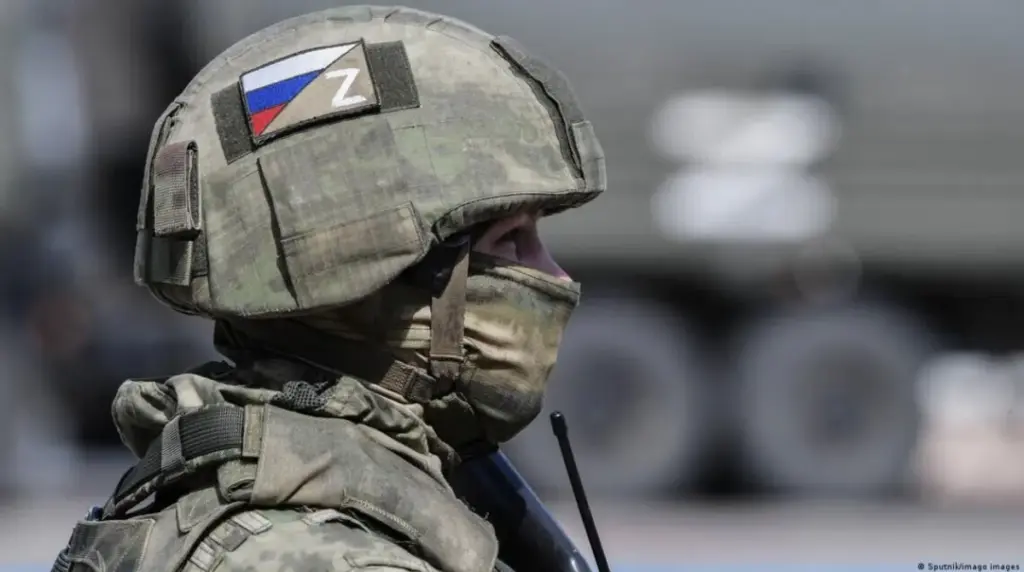
Russian soldier in camouflage wearing a helmet marked with the Russian flag and “Z” symbol.

Kazakhstan, Kyrgyzstan, and Kenya are seeking the return of citizens drawn into Russia’s war, Ukraine’s Foreign Intelligence Service (SZRU) said on 25 October. According to relatives and officials the agency cites, many of the men had gone to Russia for work, only to be tricked or forced into its army.

Russia fills its ranks partly with foreigners. In April, Ukraine’s military intelligence (HUR) said the Russian Defense Ministry plans to enlist at least 18,500 of them in 2026. Foreign recruits let the Kremlin put off hard choices about another mobilization at home, the Atlantic Council argued in May. Home governments have pushed back before, among them Ghana in August. The new statements show the limit of that pushback. Once a man is serving in Russia’s army, his government has to ask Russia to let him go.

Kyrgyz minister: contracts are forced in enlistment offices and jails

Kyrgyz Foreign Minister Jeenbek Kulubaev addressed the problem at a parliamentary committee on 13 October, answering lawmakers’ questions. He said Kyrgyz citizens in Russia are forced to sign contracts at military enlistment offices or in pretrial detention centers. If warned in time, diplomats try to stop the men from reaching the front.

Kazakhstan is compiling a list for Moscow

Kazakhstan is negotiating with Russia over citizens in the combat zone. Its Foreign Ministry said on 7 October that it was checking each hotline request. Once the checks are complete, the ministry said, it will send the compiled list to the Russian side.

SZRU separately cited unnamed relatives of one Kazakh worker. After he complained about working conditions, they said, he and other men were taken to an enlistment office and forced to sign contracts.

Kenya wants five men held by Ukraine treated as possible trafficking victims

Prime Cabinet Secretary Musalia Mudavadi, who also handles foreign affairs, gave lawmakers a count on 8 October. “The Ministry has records of 354 Kenyan nationals involved in the Russian-Ukraine crisis,” he told them. Families who petitioned Parliament dispute that number and put their own count at 841, Kenya’s The Star reported.

extends russian-oil waiver second time — one bessent had told allies wouldn't make · post kenyan mercenary clinton mogesa 29 eliminated ukraine while fighting russia 3b0f96ae -7509-4691-ac12-dbd809d8c68d has extended its
Explore further

Kenya says Russia agreed to stop recruiting its citizens – families of the missing are still waiting

Ukraine holds five Kenyans captured while fighting for Russia, and Nairobi has already appealed to Kyiv over them. The government told Parliament it wants them treated as people who may have been trafficked abroad.

For Kenyans still serving in Russia’s army, the way out runs through Russian officers. Moscow informed Nairobi that unit commanders will consider requests to end military contracts case by case, the same government response said.

  •  

More than a US briefing: Brussels security talks on Ukraine planned for 27 or 28 October, Kyiv says

Ukrainian President Volodymyr Zelenskyy, 20 October 2026. Photo: Zelenskyy / Telegram

Ukraine, the US, the EU, and NATO plan to meet in Brussels this week to discuss security for Ukraine, President Volodymyr Zelenskyy told Ukrainian TV. The meeting would follow last week’s talks in Oslo and a US envoy’s visit to Russian President Vladimir Putin.

Guarantees are what would oblige Ukraine’s allies to act if Russia attacks again. The Paris Declaration laid plans for that commitment in January. Kyiv had a briefing from the Americans, and now the partners want a broad discussion of security and guarantees, Zelenskyy said. Brussels comes ahead of three-way talks with Russia, which the Kremlin says Putin is ready in principle to resume in mid-November.

Zelenskyy: meeting planned for Tuesday or Wednesday

The meeting is planned for Tuesday or Wednesday, 27 or 28 October, Zelenskyy said in the interview, aired on 25 October. The EU would take part at the presidential level and NATO at the level of its secretary general. He did not know whether anyone else would join. He also said Ukraine’s neutrality and limits on its army are not up for discussion.

After Oslo, Witkoff briefed Putin in St. Petersburg

Earlier, on 20 October, Zelenskyy met US special envoy Steve Witkoff in Oslo, with Finnish President Alexander Stubb and Norwegian Prime Minister Jonas Gahr Støre present. According to Zelenskyy, a wider round there included national security advisers from Germany, the UK, France, and Italy, the chief of staff of the European Commission president, and NATO representatives.

A day later, Witkoff met Putin in St. Petersburg and said he had brought papers setting out possible paths to a settlement. He told Putin the Oslo talks had been productive. However, Kremlin aide Yuri Ushakov claimed the new ideas from the Europeans and Kyiv that Witkoff relayed held little of use for a settlement.

  •  

Putin claims Russia is ready for new talks with Ukraine, calls occupied land historical Russia

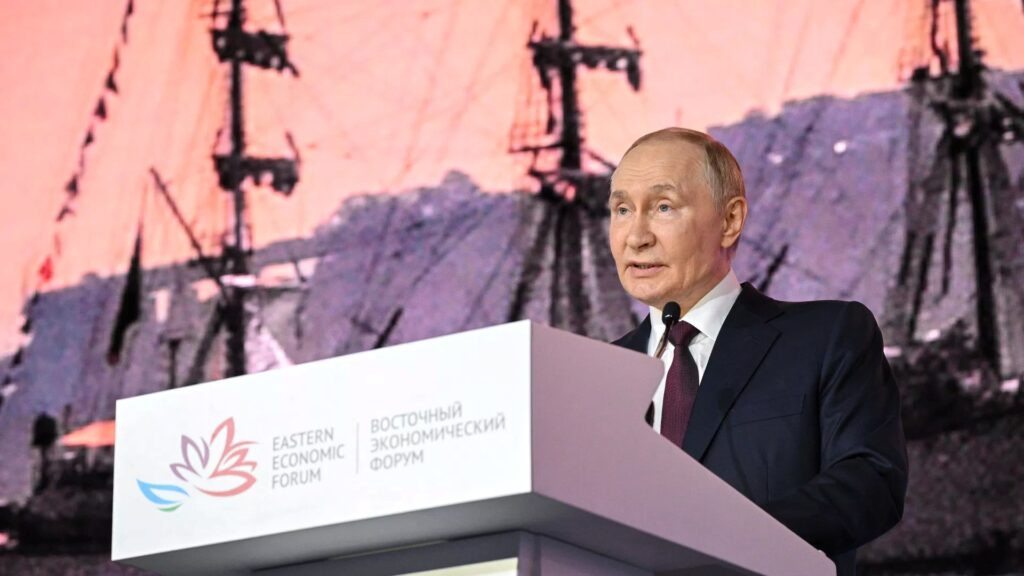
putin at the eastern economic forum in vladivostok on 5 september 2025

Russia is ready to resume three-way talks with Ukraine and the US, Russian President Vladimir Putin claimed in an interview with Pavel Zarubin of state broadcaster VGTRK, published on 22 October. He said they should settle security for both countries after a final peace deal, not a brief pause.

Putin spoke a day after he hosted US envoy Steve Witkoff in St. Petersburg and Ukrainian President Volodymyr Zelenskyy said he would accept freezing the war along the front line. In May, Kremlin spokesman Dmitry Peskov named Ukraine’s withdrawal from Donbas and Zaporizhzhia and Kherson oblasts as the only condition for peace. Any new round would start from that gap: Kyiv offers to stop where the armies stand, while Moscow’s last stated terms demanded more land.

Talks in November

Putin stated that Moscow and Washington had agreed Russia was ready to resume trilateral contacts. He added that he generally agreed with a US point that European security architecture should also be discussed.

On 21 October, Kremlin aide Yuri Ushakov stated that the sides had settled on mid-November, with Abu Dhabi as the likely venue.

"Historical Russia"

In a 21 October Fox News interview, asked about a freeze leaving Ukraine 75% or more of its land, Zelenskyy answered: “Yes, right now, we have to freeze.”

musk tells ukraine’s president go zelenskyy says won’t resign never accept ukrainian land russian · post volodymyr during interview piers morgan recorded visit britain 14 2026 video uncensored / ukraine
Explore further

Trump cannot get Putin to halt strikes on Ukraine’s power grid, so he blames Ukraine instead, Zelenskyy says

Asked about the land Ukraine would give up, Putin replied that the occupied regions were not Ukraine’s but "historical Russia." He claimed their residents had voted for independence and then to join Russia, and called any talk of territorial losses inappropriate.

Putin linked Russia’s readiness to negotiate to Ukrainians being a people very close to Russians. He claimed the latest genetic studies show they are one people. Independent outlet Meduza noted it is unclear which studies he meant. Putin’s 12 July 2021 essay on the historical unity of Russians and Ukrainians made the same case, which Ukraine’s national memory institute rebutted.

He closed that answer by asserting Russia would achieve all the goals of what the Kremlin calls its special military operation. He made a similar vow on 17 December 2025.

  •  

40,000 tons of Russian diesel are bound for New York—due four days after Americans vote

The DF Peak crude oil tanker, part of Russia's shadow fleet. Photo: VesselFinder

A Malta-flagged tanker carrying Russian diesel is heading for New York after the fuel deal between US President Donald Trump and Russian President Vladimir Putin, Reuters reported in an exclusive on 23 October, citing LSEG shipping data. Two weeks earlier, the US Treasury temporarily waived sanctions on Russian diesel.

The tanker is due in the US on 7 November, four days after Americans vote in the midterms. So the first US-bound cargo cannot reach American pumps before the election. Energy analysts also doubt the deal will lower diesel prices meaningfully. US fuel prices rose mainly because the war with Iran disrupted shipping through the Strait of Hormuz. Trump, however, has blamed Ukraine’s strikes on Russian refineries.

Loaded on the day Moscow promised

The medium-sized tanker Agioi Fanendes took on 40,000 metric tons of ultra-low sulfur diesel at the Baltic port of Primorsk on 22 October, shipping data showed. In March, Ukraine’s General Staff said its drones hit the Transneft oil terminal at that same port.

A day before the loading, Russian Deputy Prime Minister Alexander Novak announced that the first tanker would sail for the US on 22 October. He pledged more shipments and said Russia would meet US needs within its capabilities.

A Russian oil tanker, illustrative image. Photo via Wikimedia.
Explore further

Russia resumes diesel exports to Türkiye, Brazil, after Trump lifts sanctions on fuel supplies, boosting Moscow’s war revenue – Reuters

From a pledge to a partial lift

On 9 October, Trump wrote that Russia would immediately supply over 300,000 tons of diesel “to the American and Global Marketplace.” Another 500,000 tons would follow in November, then 1 million tons “immediately thereafter.”

Moscow had banned diesel exports on 8 July, after Ukrainian drone strikes shut down refineries and caused fuel shortages inside Russia. The Russian government stated on 10 October that it had partially lifted the ban, clearing 500,000 tons for the world market at this stage. Russian diesel shipments to Türkiye and Brazil have since resumed, boosting Moscow’s war revenue.

Trump has made other moves to cut diesel prices before the vote, Reuters reported. He waived parts of a new sanctions law against Russia. He also threatened Europe with a US diesel export ban unless countries released more fuel from their emergency reserves.

  •  

A modem from a Russian drone led reporters to its Chinese maker—which invoiced 500 for Russia’s drone plant

Mesh Network XK-F358 modem from the Geran-5 drone

Undercover reporters ordered 500 drone mesh modems from a Chinese firm, which billed them to Russia’s Alabuga drone plant, investigation by The Insider found. The outlet estimates the firm makes about half the high-power mesh modems that let Russia steer its drones deep into Ukraine. The firm’s director also named US company AMD as the source of a key chip, and AMD says it has not sold to the firm.

Geran drones and Banderol drone-missiles have become Russia’s main weapons against Ukraine’s energy grid. Russia began this winter’s strike campaign against that grid in late September, ISW assessed. Ukrainians’ survival this winter depends largely on how fast the West halts mesh modem sales to Russia, the outlet argued.

What a mesh modem does

A mesh modem links drones into one radio network. Each unit relays data for the others, so if one drone is shot down, traffic reroutes through the rest. Information keeps flowing even if nearly 80% of the drones are downed, Ukrainian defense adviser Serhii “Flash” Beskrestnov said in November 2025.

Range is the other half of the threat. One XK F-359 holds a line-of-sight link over 100–300 km, The Insider says. In theory, a couple of relay drones could keep a whole attack on Kyiv connected. Operators can then send new commands in flight and steer around air defenses. Russia’s Gerbera drones, first built as cheap decoys, increasingly carry these modems.

Explore further

Russia’s jam-resistant drones run on a Chinese modem no one has sanctioned

A modem from an upgraded Gerbera

To trace the part, The Insider’s correspondent in Ukraine examined an unmarked mesh modem from an upgraded Gerbera with a vertical tail fin, a version that appeared this summer. The outlet identified it as Xingkai’s XK F-359, the part Ukrainian intelligence and earlier reporting, Euromaidan Press included, had logged as the XK-F358. The Insider calls that label a misidentification.

Next, The Insider and the Nordsint investigative project contacted Xingkai on WeChat, posing as a Russian military supplier based in Alabuga. A company employee who introduced himself as “Jack Jiang” confirmed the firm is the model’s sole maker. The Insider identified him as Jiang Qin, Xingkai’s director and owner.

500 modems, three banks

The reporters then ordered 500 units for delivery to Alabuga, home to the plant that makes most of Russia’s long-range drones. Jiang invoiced 19.5 million yuan, which The Insider put at about $2.87 million. He offered two ways to pay: dollars to Xingkai’s DBS Bank account in Hong Kong, or yuan to his personal Ping An Bank account.

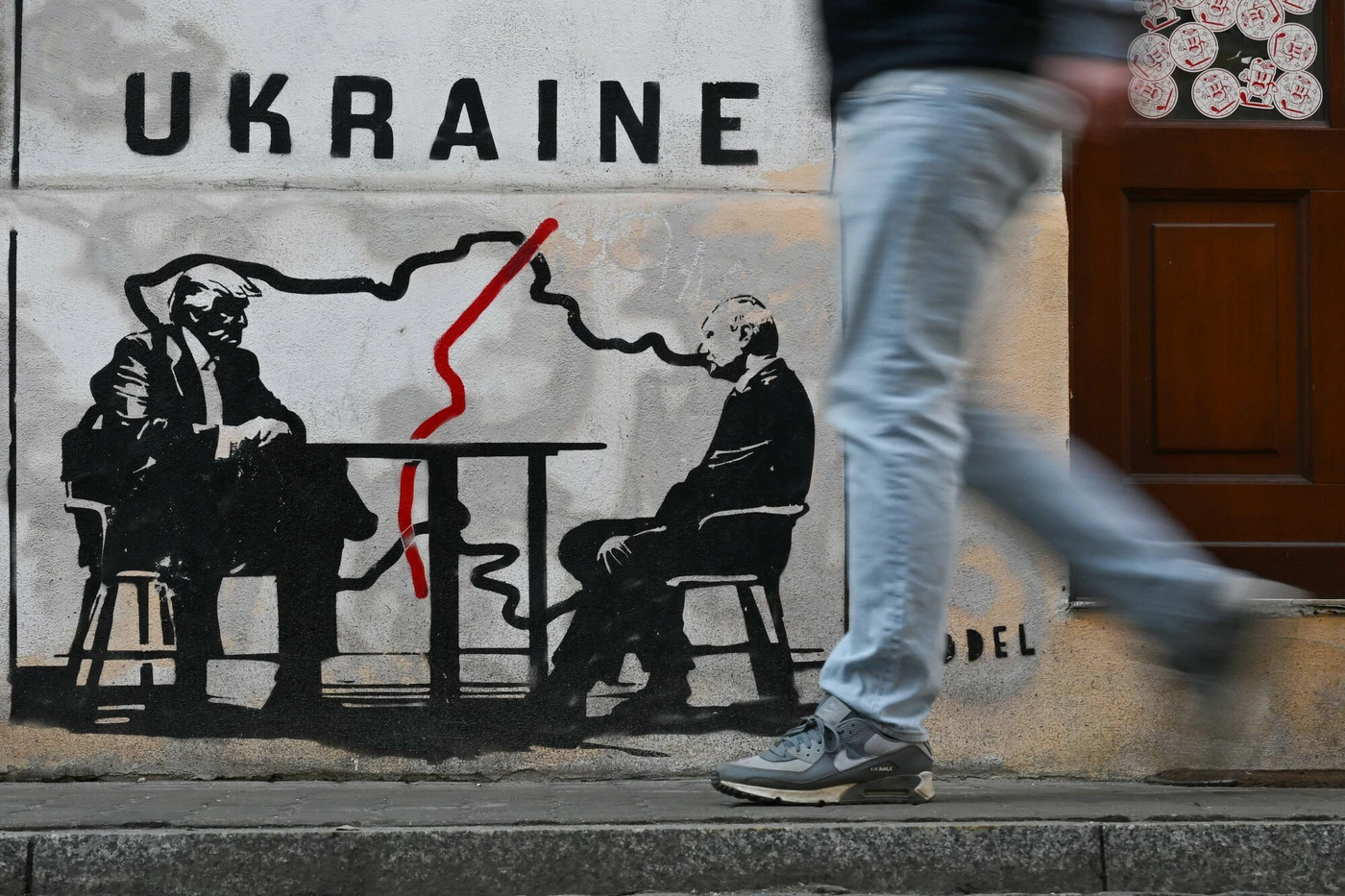
A man walks past a mural by Norwegian street artist Toddel depicting a map of Ukraine and US President Donald Trump (L) with Russia's President Vladimir Putin in Krakow on March 6, 2026, amid the Russian invasion of Ukraine. (Photo by Sergei GAPON / AFP) / Eastnews)
Explore further

America has sided with Russia against Ukraine. Europe should stop pretending and build a coalition against Russia, China, and even the US

In the chat, the reporters said outright that the end user was a military production facility. Jiang raised no objection, The Insider reported.

Later, after the reporters asked to update the address, Xingkai sent a revised invoice with “Alabuga” spelled in Latin letters. This time, it routed payment to a China Merchants Bank account in the name of a former Xingkai manager. She left a management post at the company in 2025, according to Tesari corporate records cited by The Insider. None of the three banks answered The Insider’s requests for comment.

Jiang also claimed the modem’s programmable chip is made by AMD. Asked for an AMD license, he refused, saying Xingkai buys the chips through a middleman. AMD told The Insider that Xingkai “is not an AMD customer or authorized partner,” and said it had sold the company nothing. AMD added that it bars exports of its products to Russia that violate US export controls and sanctions.

  •  

Ukraine wants partners’ Patriot interceptors now. Europe can hand them over only with US approval, Ukraine’s president says

germany urges nato neutralize russian uavs factories patriot air defense system's launchers dutch ministry ukraine news ukrainian reports

Ukraine's defense minister raised the urgent need for Patriot interceptors with Sweden on 22 October, the Defense Ministry reported. The same day, President Volodymyr Zelenskyy warned of more Russian ballistic strikes and blamed US supply cuts.

Patriots are Ukraine's main defense against Russian ballistic missiles, and their deliveries keep shrinking. Figures Zelenskyy released in August showed Patriot interceptor deliveries falling from 675 in 2023 to 364 in 2025, with 264 projected for 2026. Europe holds enough PAC-2 and PAC-3 interceptors for Ukraine's minimum winter needs, Zelenskyy told journalists on 16 October, but he did not yet know how many Europe would hand over, Ukrainska Pravda reported.

Partners' stocks now, Ukraine's missiles later

Russia fired 21 ballistic missiles at Kyiv overnight on 22 October, Zelenskyy said. Defense Minister Yevhenii Khmara told his Swedish counterpart, Pål Jonson, that Ukraine must counter ballistic threats as fast as possible, in particular with Patriot interceptors.

1000 patriot missiles arrive too late winter so ukraine asked ramstein arms coalition open its warehouses · post ukraine's defense minister yevhenii khmara right commander-in-chief major general mykhailo drapatyi meeting
Explore further

1,000 Patriot missiles arrive too late for this winter, so Ukraine asked the Ramstein arms coalition to open its warehouses

The ministry's readout says Ukraine has Patriot missiles under contract. It also says Kyiv asks partners to transfer interceptors from their stocks in exchange for future deliveries allocated to Ukraine.

Khmara made the same request at the Ukraine Defense Contact Group meeting on 8 September. He said then that Ukraine was contracting about 1,000 Patriot missiles with partners' help and an EU loan, but they would arrive only in the coming years, LB reported. He asked allies for missiles from their stocks now, in exchange for future upgraded missiles under Ukraine's contracts.

"Only when the American side approves it"

Zelenskyy spoke to journalists before meeting Finnish Prime Minister Petteri Orpo, Ukrinform reported. He said the Americans had reduced supplies and Russia would step up ballistic attacks.

"Europeans can provide the missiles only when the American side approves it," Zelenskyy said.

He said the US had sent most of its interceptors to the Middle East.

On 19 October, Zelenskyy told US senators that US Defense Secretary Pete Hegseth was not signing off on Patriot deliveries allies had already paid for. Axios obtained the call transcript from Ukrainian officials. A US government official told the Kyiv Independent that Ukrainian officials' claims that Hegseth was holding up the missiles were "not true."

Washington says nothing has changed. "We have our own needs, too," Secretary of State Marco Rubio said on 20 October, but there is "nothing being deliberately denied to Ukraine." Hegseth told reporters in Eau Claire, Wisconsin, that the US had not changed its posture toward Ukraine, "but certainly with things like interceptors, we want to make sure our guys have the most possible as well."

  •  

Russia keeps hitting Ukraine’s arms plants. Now private developers can dig them space underground—and sell or rent it to them

The FP-1 "Deep Strike" kamikaze drone at the factory.

Ukraine's Cabinet has opened the construction of underground arms production space to private investors, Prime Minister Serhii Koretskyi announced on 22 October, saying the rule applies from that day. A second decision eases imports for partner-funded weapons production.

Koretskyi said the change would add more of the space arms makers need, especially as Russian strikes intensify. On 9 December 2025, the Defense Ministry reported that more than UAH 1.5 billion (about $36 million) in budget support had let war-damaged defense firms restore operations. At the time, the ministry planned to relocate or duplicate the most critical plants, and underground complexes were under construction. The new model puts no additional burden on the state budget, Deputy Defense Minister Hanna Hvozdiar said. The bill still lands somewhere, though. Defense firms will buy, lease, or take the space for use, and companies working on state contracts are among those eligible. If they pay developers out of state-contract revenue, part of the cost could come back to the budget.

Developers build, arms makers move in

The changes to Cabinet resolution No. 1494 give private investors a simplified route to construction and permits, the ministry said. Developers can build protected facilities with their own or raised funds. Deadlines, terms of use, and the handover are set in a contract between investor and defense firm. The mechanism covers new sites as well as moving or expanding existing production. If a firm gets only part of a facility, that part must be at least 25% of the facility's total area and fit for production.

Estonian and Ukrainian soldiers fly drones together during Exercise Hedgehog 2025 in Estonia, where Ukrainian operators were credited with knocking out two battalions in a simulated engagement. Photo: vbl/OR-7 Ardi Hallismaa/ERR
Explore further

One year of Ukrainian arms exports, and industry has questions: how much army gained, where Berlin office is, who joins joint ventures

Developers must sign deals with, among others, residents of Defence City, Ukraine's special legal regime for arms makers, holders of state defense contracts, and firms the ministry designates as critical.

Tax break for partner-funded arms production

Components for weapons production that international partners pay for will enter Ukraine free of import duty and VAT, Koretskyi said. He added that customs inspection and clearance would be simplified and sharply shortened through a "single window."

  •  

Ukrainian OSINT analyst: Russia’s Yandex data center in Sasovo burned out inside, though its roof shows almost no significant holes

Cloud-free satellite image of the damaged Yandex data center in Sasovo, Ryazan Oblast, posted 22 October 2026

Russian tech giant Yandex's data center in Sasovo burned out from the inside, a Ukrainian OSINT analyst wrote on 22 October. On cloud-free satellite images, he saw almost no significant holes in its roof. Ukrainian drones hit the site overnight on 8 October.

Sasovo was the first strike on a data center in Russia. It came two weeks after Russia destroyed data centers in Kyiv. Drones then hit Yandex sites in Vladimir and Kaluga, a Sber data center, and a VK data center near St. Petersburg, which VK acknowledged. In occupied Donbas, monitoring channels reported hits on buildings housing telecom operators.

What the analyst sees

The analyst, who goes by Harbuz, runs the Ukrainian OSINT channel Dnipro Osint. His roof reading comes from the images. His interior claim comes from what he called available information: he wrote that a fire broke out inside and put part of the equipment out of action.

Cloud-free satellite image of the damaged Yandex data center in Sasovo, Ryazan Oblast, posted 22 October 2026
Cloud-free satellite image of the damaged Yandex data center in Sasovo, Ryazan Oblast, posted 22 October 2026. Image: Dnipro Osint

In an earlier post, Harbuz wrote that a third of the data center had burned out. In the new one, he writes that the building burned out from the inside. He does not say whether he revised the earlier figure.

Russian outlet Agentstvo studied Airbus images from 12 October. It found damage on about a third of the building. Unlike Harbuz, though, Agentstvo described a blackened western roof with damage resembling holes.

What Yandex says

On 8 October, Yandex stated that the attack caused a fire and forced it to suspend operations at the site, which hosts tens of thousands of servers, Reuters reported. Yandex Cloud and the Disk and Documents services that run on it ran with major disruptions that morning, Russian outlet The Bell reported.

Later that day, the company stated: "The scale of the damage to the infrastructure is still being assessed. For the moment, we cannot confirm whether it is possible to restore the data centre equipment in Sasovo." Two of Yandex's three supercomputers, used to develop its AI model, are housed there.

The same day, journalists asked Ukrainian President Volodymyr Zelenskyy whether Ukraine was targeting Russian data centers. He did not refer specifically to the Yandex strike, Reuters noted, but said: "We always respond in mirror-like fashion."

  •  

Drones reportedly hit a Russian weapons plant near Moscow that Washington and Kyiv sanctioned

drones reportedly hit russian weapons plant near moscow washington kyiv sanctioned · post fire jsc 75 arsenal serpukhov oblast 22 2026 exilenova+ ukraine news ukrainian reports

An explosion hit the 75th Arsenal, a Russian army plant in Serpukhov south of Moscow, overnight on 22 October, Russian Telegram channel Astra reported. Russian officials also claimed drone attacks on the Moscow region, Tula, and Lipetsk that night.

As Russia presses its full-scale invasion, Ukraine’s long-range drones and missiles keep hitting military plants and refineries deep inside Russia. Ukrainian outlet Militarnyi says this plant specializes in repairing Buk and S-300 air defense systems. Astra describes it more broadly, as making weapons and ammunition and repairing military equipment. If Militarnyi is right, the blast hit a site that fixes Russian air defenses. It came the night Moscow’s mayor credited air defenses with stopping hundreds of drones.

Blast at the arsenal

An Astra OSINT analyst placed the explosion inside the site from a video, the channel said. Residents claimed in local chats that blasts followed passing drones, then at least three missiles. Astra did not confirm the missile count. Serpukhov lies about 99 km south of Moscow. Ukraine has sanctioned the plant, and the US Treasury has listed it too. As of the morning of 22 October, no Russian official had confirmed the blast.

More footage of the attack on the arsenal in Serpukhov. We are awaiting satellite images. pic.twitter.com/tTsgc18W3L

— Exilenova+ (@Exilenova_plus) October 22, 2026

630 drones, by Moscow’s count

Moscow Mayor Sergei Sobyanin claimed that 630 drones flew toward the Moscow region from 20:30 on 21 October to 04:00 on 22 October. He claimed most were destroyed far out and 163 were neutralized on approach to Moscow. Two people were injured in Voronovo, in New Moscow, he stated.

Tula Oblast Governor Dmitry Milyaev claimed air defenses downed 70 Ukrainian drones over his region. Private homes were damaged in Tula and the Zaoksky district, he stated.

Lipetsk governor claims homes and a clinic damaged

Earlier in the night, Ukrainian monitoring channel Exilenova+ posted footage of commotion in Lipetsk after explosions. Lipetsk Oblast Governor Igor Artamonov claimed a drone strike damaged homes, apartment blocks, and a closed polyclinic. A man born in 2001 was injured and hospitalized, Artamonov claimed.

Lipetsk, moment of the explosion. https://t.co/wCX6GVThQr pic.twitter.com/bGwGLbUm2d

— Exilenova+ (@Exilenova_plus) October 21, 2026

In May, Ukrainian intelligence said Russia was deploying more regiments against strike drones. In September, Ukrainian units hit more Russian air defense systems and radars than in any month since 2024, Ukraine’s Defense Ministry said. Analyst Oleksandr Kovalenko counted 76 destroyed in September with days of the month still to go and argued Russia cannot replace such losses. If Militarnyi’s description holds, losing repair capacity would deepen that gap.

  •  

35 US parts, a Chinese navigation unit, a Russian engine: what’s inside Russia’s Filin missile

Filin cruise missile

Ukraine’s military intelligence (HUR) published a 3D model and parts list of Russia’s new Filin cruise missile on 22 October. The breakdown names the Russian companies behind the missile and the foreign makers of its electronics.

HUR runs its War&Sanctions portal to trace such parts back to their makers. Its stated aim is to “deprive the aggressors of the ability to produce weapons for terror,” the portal says. Meanwhile, Russia is betting on cheap, fast cruise missiles, Serhii Beskrestnov, a freelance adviser to the president on technology, told Radio NV in mid-September. Naming the Banderol, Dan-T, Dan-M, and Gerbera-5, he warned they would soon outrun Ukraine’s jet-powered interceptors, so Ukraine needed its own cheap missiles to shoot them down.

Composite body, ground launch

JSC NPO Molniya, part of Russia’s Tactical Missiles Corporation, builds the Filin, HUR said. The agency called it part of a Russian defense-industry trend toward cheap jet-powered, ground-launched air-attack weapons. Russia began firing it at Ukraine in late summer 2026.

Filin cruise missile components.
Filin cruise missile components. Image: War&Sanctions

HUR’s data puts the carbon and fiberglass fuselage at 3.5 m, with a 3 m wingspan. Some parts are 3D-printed. Russia claims a top speed of 800 km/h. The range is 600–1,200 km, and the missile flies at ultra-low altitude or up to 6 km. Versions carry 50-kg or 100-kg warheads. A solid-fuel booster fires it from a ground launcher.

A firm tied to a Shahed-type drone

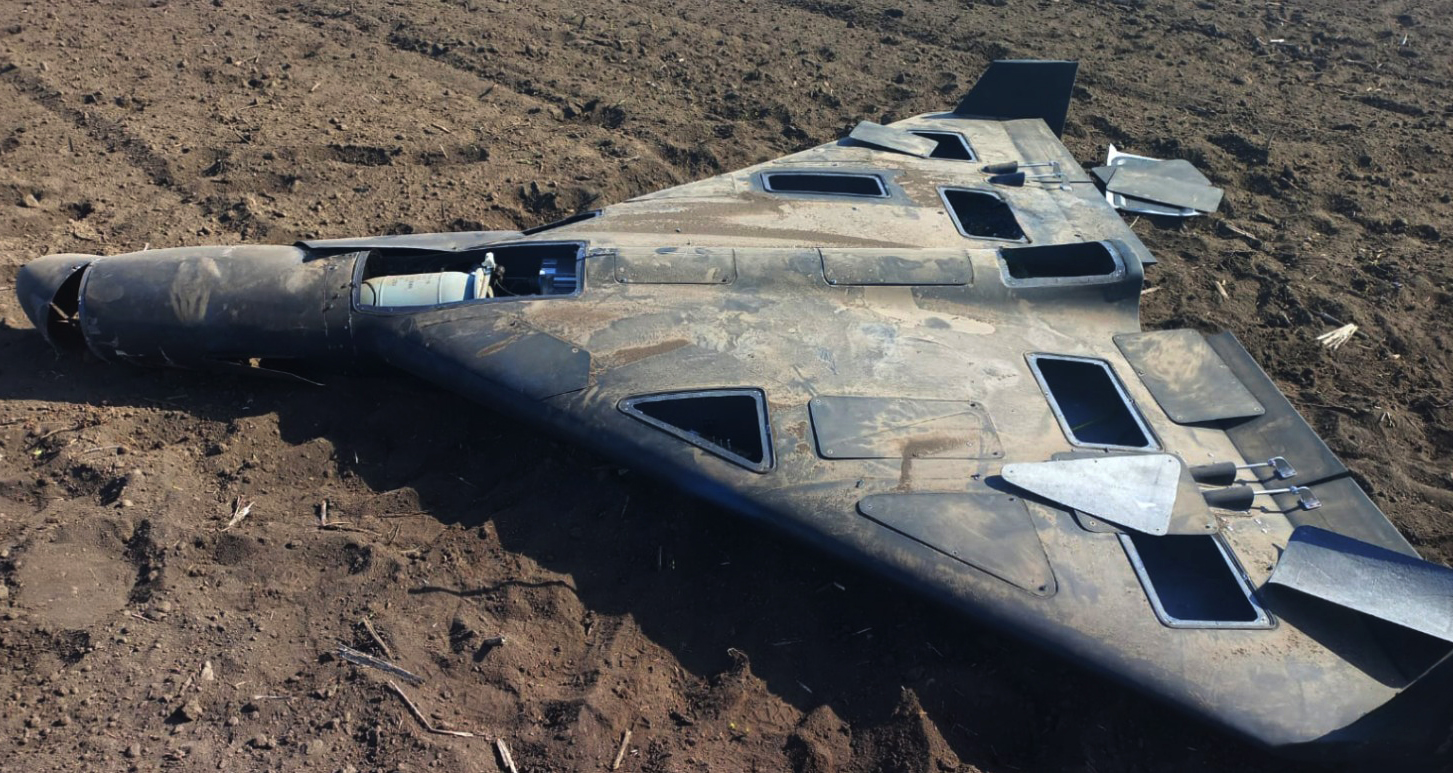
PLAZ LLC makes the onboard equipment, HUR said. The firm also helps produce the Garpiya, a version of Russia’s Shahed-type Geran-2 drone. Filin and Garpiya units share a similar layout and markings. Guidance combines a Chinese-made inertial navigation system with a 16-channel Kometa anti-jamming module from Russia’s VNIIR-Progress.

The electronics resemble those in other Russian missiles and drones but carry a larger share of Chinese parts. Of 81 components, 35 are American and 22 Chinese. The engine, however, is Russian: an R500 turbojet from Reynolds LLC. A similar engine earlier turned up in the S-71K Kover aviation cruise missile and S-71M Monokhrom, HUR said.

For comparison, Ukraine found more than 20 foreign components in a different cheap missile, the Banderol, in May 2025. They included 10 US microchips, and the Banderol flies on a Chinese jet engine.

  •  

Russian missiles and drones kill one and injure 24 in Kyiv, splitting its metro line in two

Aftermath of Russia’s overnight attack on Kyiv.

Russian missiles and drones killed one person and injured 24 in Kyiv overnight on 22 October, the Kyiv City Prosecutor’s Office said. Damage spread across six of the city’s districts, the city military administration reported.

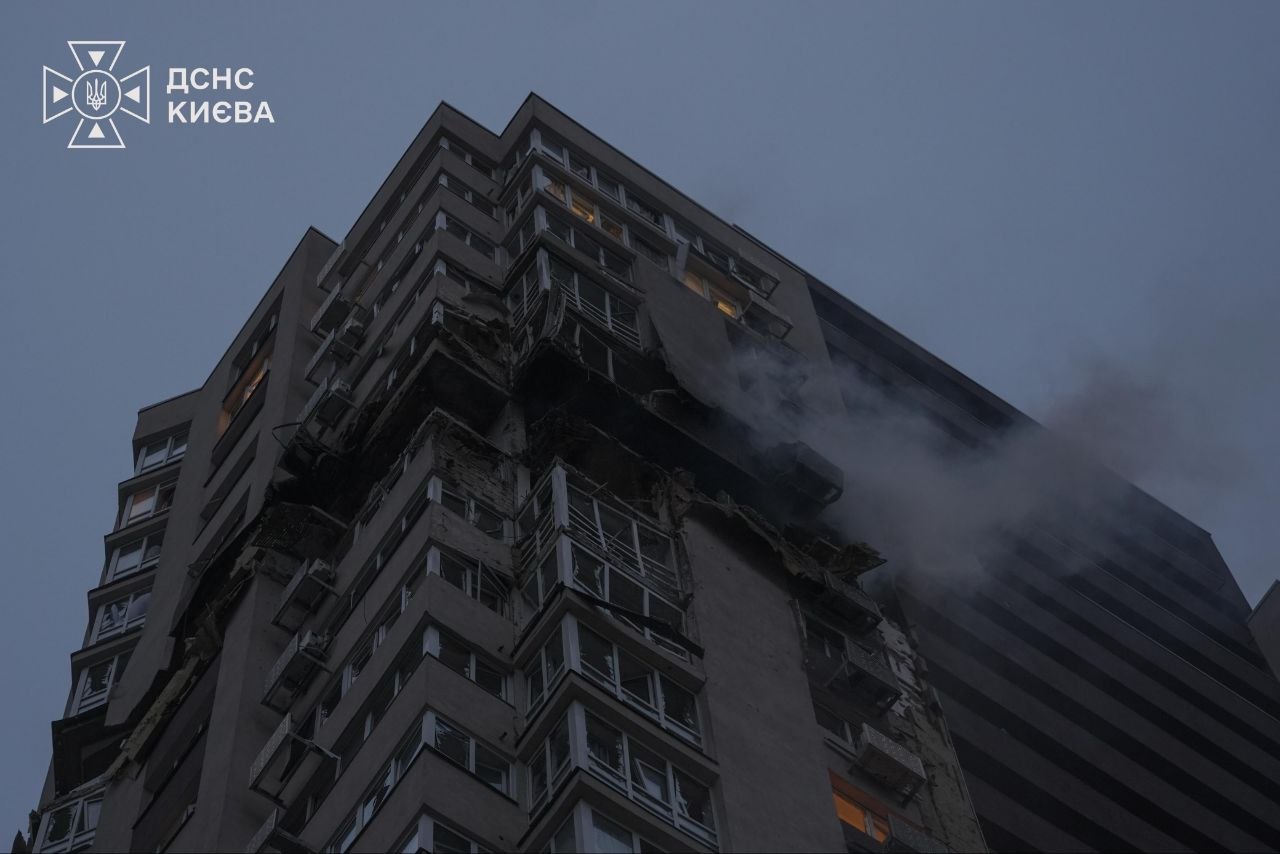
The strike came hours after Kremlin aide Yuri Ushakov said Putin had told Witkoff that Russia was “in principle” ready to resume three-way talks with the US and Ukraine in mid-November. President Volodymyr Zelenskyy read the overnight attack as a sign that Russia’s attitude has not changed. A day earlier, Russian drones killed two people in a 24-story Kyiv apartment block.

21 ballistic missiles in three waves

Russia fired 21 ballistic missiles at Kyiv overnight, Zelenskyy said. The barrage came in three waves, around 22:00, at about 02:00, and around 03:30.

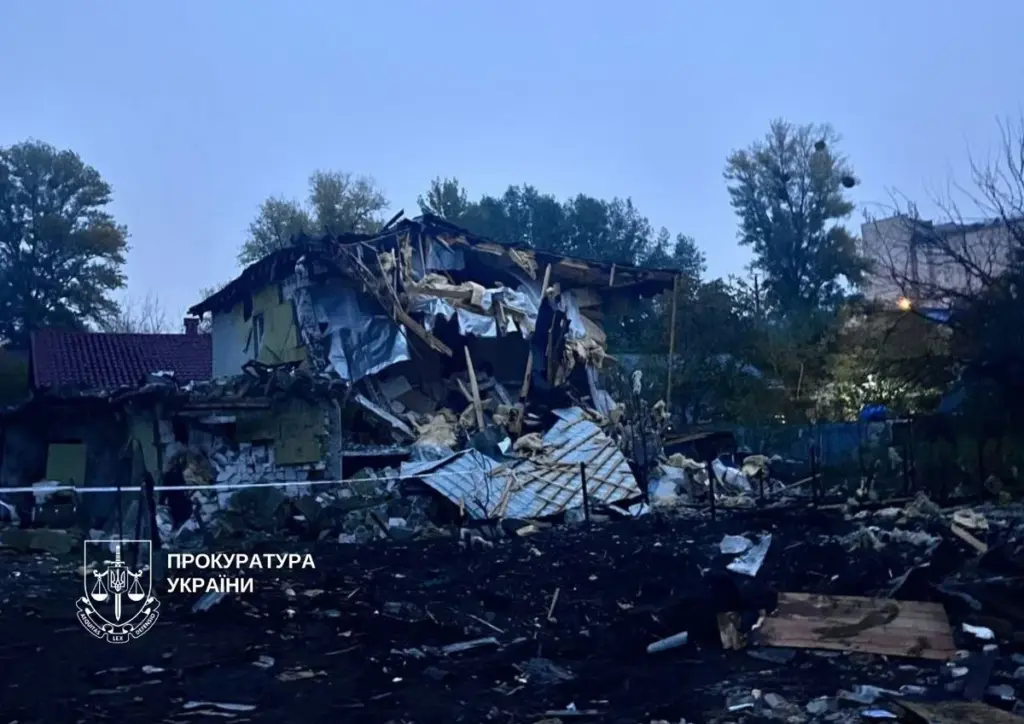
Aftermath of Russia’s overnight attack on Kyiv.
Aftermath of Russia’s overnight attack on Kyiv. Photo: Office of the Prosecutor General of Ukraine

Across Ukraine, air defenses downed or suppressed 181 of 210 Russian drones, the Air Force said. Its report did not mention any ballistic missiles shot down.

One killed in the Dniprovskyi district

The only death in Kyiv came in the Dniprovskyi district, on the city’s left bank. There, Russian strikes destroyed 13 detached houses on several streets, prosecutors said. Police said the man killed was 48 and that six people were injured in the district, four of them children, the youngest aged five.

Of the injured, five are minors and two are young children, and prosecutors reported acute stress reactions among them. A 16-year-old boy is in hospital with a closed head injury, prosecutors said. Sixteen of the injured were hospitalized, the city military administration said. The final number of injured is still being established.

just grid 24-storey block university warehouses were russia’s target list overnight four people dead · post smoke rises apartment building kyiv’s sviatoshynskyi district after russian drone strike 21 2026 kyivjfif
Explore further

Not just the grid: Russia struck a 24-story block, a university, and warehouses overnight, and four people are dead

Ambulance station and monastery damaged

In the Holosiivskyi, Obolonskyi, Pecherskyi, and Sviatoshynskyi districts, the attack damaged eight apartment buildings, prosecutors said. It also damaged a building-supply hypermarket, a restaurant, a monastery building, a post office, and office premises.

In Pecherskyi, Russia damaged an ambulance station and six ambulances, Kyiv Mayor Vitali Klitschko wrote. The State Emergency Service said eight people were injured in that district, three of them children, and reported damaged transport infrastructure in the Darnytskyi district.

Aftermath of Russia’s overnight attack on Kyiv.
Aftermath of Russia’s overnight attack on Kyiv. Photo: National Police of Ukraine

Bridge closed, metro line split

The strikes damaged metro infrastructure on the Pivdennyi (Southern) Bridge, Kyiv Metro said. As of the morning, green-line trains ran in two sections, Syrets–Vydubychi and Osokorky–Chervonyi Khutir. Inspections and repairs would continue after the all-clear, the metro said.

Oleksii Biloshytskyi, head of Ukraine’s Patrol Police Department, announced that traffic across the bridge toward the left bank was temporarily closed. The city is adding buses on routes 22 and 91, the city administration said. Russian drones had already hit the bridge repeatedly in early October.

  •  

Denmark puts a $112.6 million state guarantee behind the maker of Ukraine’s Flamingo missiles

flamingo vs oreshnik ukraine's genstaff now details damage russia's launch site · post fp-5 cruise missile targeting kapustin yar test range ukraine confirmed ballistic infrastructure previous strikes astrakhan oblast intermediate-range

Denmark will guarantee a loan to the Danish subsidiary of Fire Point, the Ukrainian maker of Flamingo cruise missiles, the Danish Business Ministry announced on 21 October. The financing will run through EIFO, Denmark’s state export and investment fund.

Ukraine uses its Flamingo missiles to strike defense plants deep inside Russia as Moscow continues its full-scale invasion. Fire Point broke ground in December 2025 on a plant in Vojens, southern Denmark, to make solid fuel for the missiles. The project has since grown far more expensive. In August, CEO Iryna Terekh said its estimated cost had risen from €50 million to above €150 million, calling the figure “very rough.” The war, meanwhile, stands in the way of Fire Point borrowing on ordinary terms in Denmark, the ministry said. That is why the Danish state is guaranteeing the loan.

What Denmark is putting up

The guarantee covers 750 million Danish kroner, or about $112.6 million, Reuters reported. Terekh said in August that the plant’s launch had slipped to late 2027. The ministry called the deal another big step toward starting production. However, Ukrainian outlet Defender Media noted that the statement does not say directly that the loan will fund the plant.

ukraine start mass production 3000 km flamingo missile zelenskyy says workers inspect cruise fire point's secret factory 18 2025 ap photo/efrem lukatsky fb/efrem 535397328 _24984278831178579_1839062619339783429_n long-range weapon has already completed
Explore further

Ukraine’s Fire Point company is working on revolutionary system which can also transform European air defense

EIFO chief Peder Lundquist said the fund is involved in nearly 40 projects linked to Ukraine. Business Minister Martin Lidegaard said hosting a Ukrainian defense company brings Denmark knowledge, production, and partnerships. Europe’s security and freedom, he added, start in Ukraine.

Better shielded from Russian strikes

Defense Minister Jeppe Bruus said Denmark was the first country to decide to let a Ukrainian defense company set up on its soil. Production outside Ukraine, he argued, is better protected from Russian attacks. He added that Fire Point’s presence opens cooperation that could give Denmark access to technologies developed in wartime.

Denmark first said in September 2025 that Fire Point would make long-range missile fuel on Danish soil. Since then, the company has signed deals with more than a dozen European firms for FREYJA, an anti-ballistic project. It could reduce Europe’s long-term reliance on scarce US-made Patriot interceptors. Fire Point aims for a first ballistic missile intercept with it by mid-2027.

  •  

Poland paused a military aid package over Lviv’s vote honoring WWII nationalists, Ukrainian source says. Polish ministry denies it

polish defense

Poland has paused the delivery of a large military aid package to Ukraine after a Lviv regional council honored the Ukrainian Insurgent Army (UPA), a WWII nationalist force, a source in the Ukrainian government told European Pravda on 21 October. A Polish Defense Ministry spokesperson told Fakt the report was untrue, though he told WP he knew nothing about a possible delay in shipment.

If confirmed, the freeze would carry a history dispute into Poland’s military aid. The row flared in May, when Kyiv named a special forces unit after the UPA, and in June Poland’s president stripped Zelenskyy of Poland’s highest honor. Even so, Ukraine’s ambassador said in August that Polish military aid was still flowing.

A vote and a disputed freeze

The Lviv Oblast Council voted on 20 October to name 2027 the year of the UPA, its commander Roman Shukhevych, and nationalist activist Oleh Olzhych. The UPA fought Nazi Germany and the Soviet Union, but Poland holds it responsible for mass killings of Poles in Volhynia and Eastern Galicia in 1943–1944. The resolution disappeared from the council’s website late that evening, RMF24 reported.

The source blamed what it called the councilors’ irresponsible actions, saying the vote came as Poland prepared the shipment and that work through closed channels is underway. The ministry spokesperson, Janusz Sejmej, called the report untrue. Asked whether it could reflect a delay in shipment, he said he knew nothing about that.

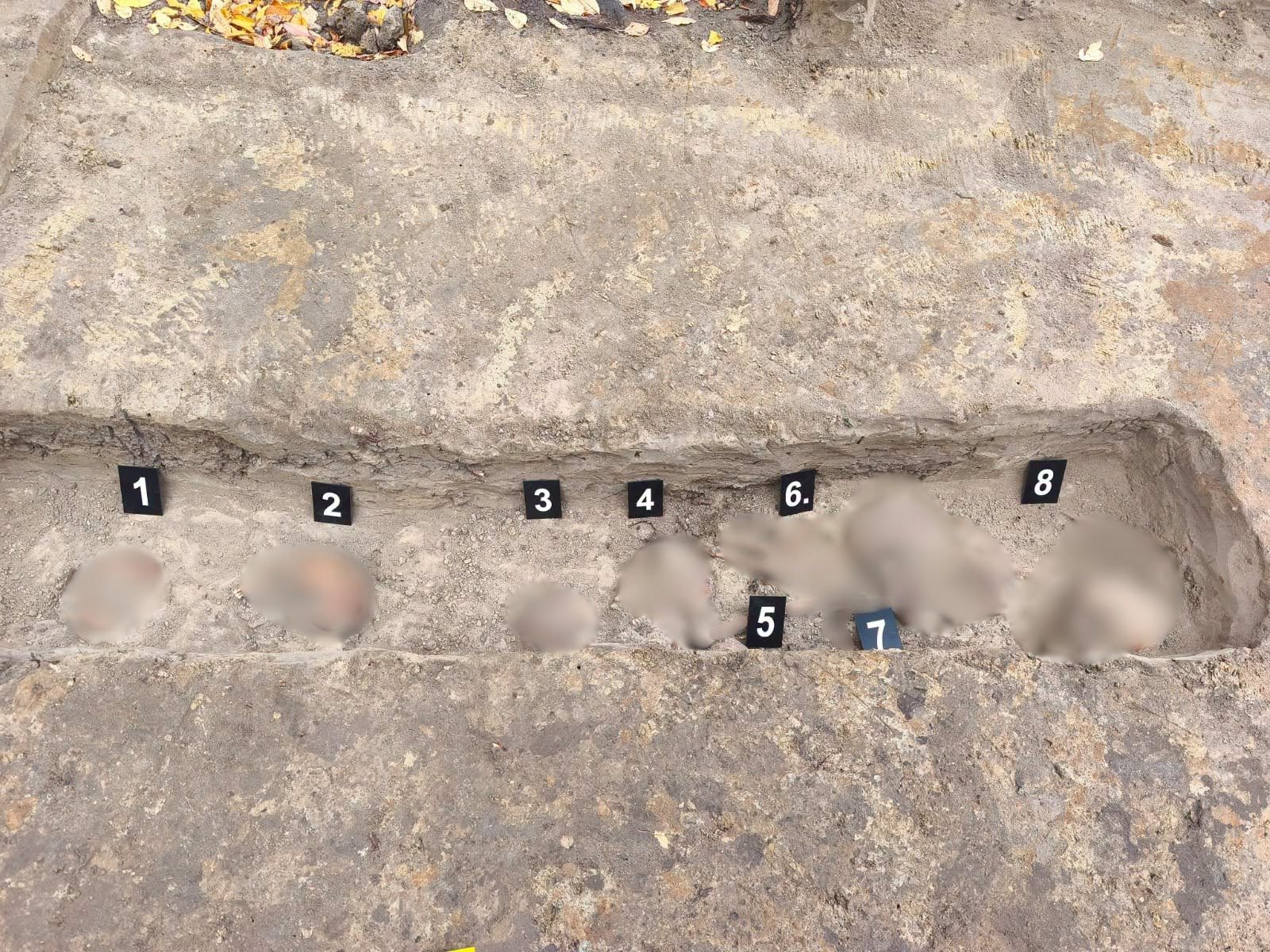
Human remains, likely belonging to a Ukrainian killed in 1944 in the village of Łasków, Lublin Voivodeship, Poland, October 2026
Explore further

Progress on a sore point for Ukraine and Poland: remains of over 40 Ukrainians killed by Polish WWII units found in Łasków

Polish officials push back

On 20 October, Defense Minister Władysław Kosiniak-Kamysz wrote that Ukraine’s authorities must distance themselves from the council’s position.

The next morning, Prime Minister Donald Tusk called the vote unwise and harmful above all to Ukraine. He said he had warned Zelenskyy earlier that such gestures hinder Ukraine’s friends, though the president was not responsible for this vote. At such moments, Tusk said, Russians always rub their hands.

Foreign Minister Radosław Sikorski then requested that councilor Sviatoslav Sheremeta, who proposed the resolution, be added to Poland’s list of unwanted persons. That afternoon, Interior Minister Marcin Kierwiński said the decision had been made. Sheremeta is barred from the Schengen zone until 2031, RMF24 reported. Poland had already barred him once, in 2017, the outlet said.

Kyiv asks for restraint

Earlier on 21 October, before the ban, Ukraine’s Foreign Ministry called the vote counterproductive in a reply to journalists and urged Warsaw to avoid abrupt steps. Zelenskyy’s closest aides had also promised the resolution would not take effect, Deputy Foreign Minister Marcin Bosacki told TVN24.

  •  

From “bad-guy fleet” to “good-guy fleet”: US will let investors buy sanctioned tankers and return them to legal trade

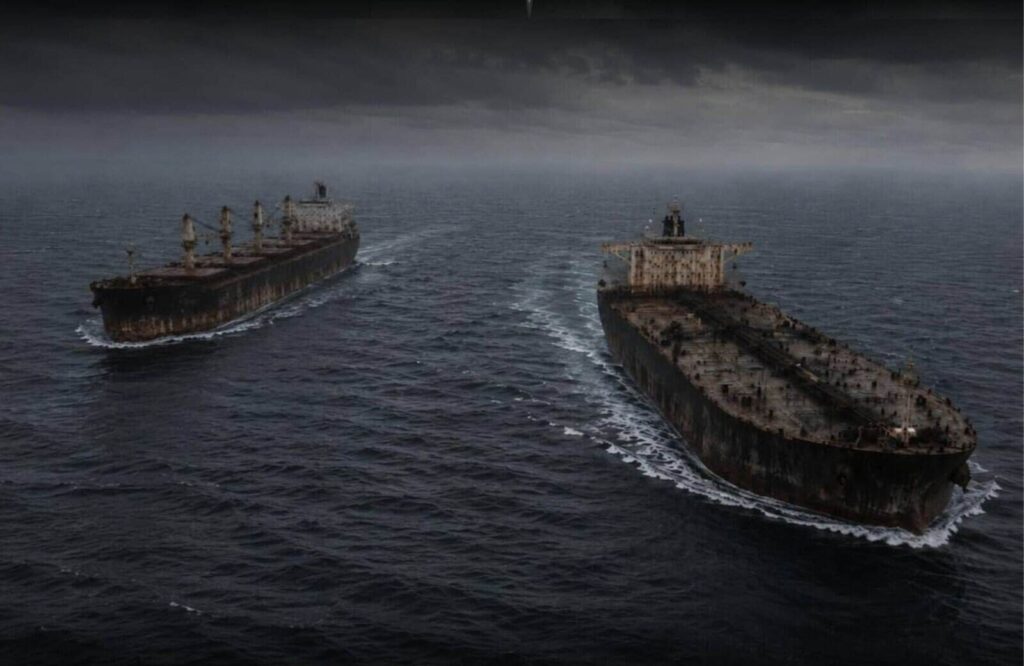
Two weathered cargo ships sail across a dark sea beneath heavy storm clouds.

Investors who buy idle sanctioned tankers and refit them could put the ships back into legal oil trade, US Energy Secretary Chris Wright said on 19 October, Bloomberg reported. He laid out the plan five days after a US official described it to Reuters.

That official said the aim was to cut record tanker freight rates. The Energy Department added that any relief would not help Russia move its oil. The plan comes weeks before the 3 November midterms, with voters worried about fuel costs after gasoline and diesel prices surged in the Mideast conflict. Yet the shadow fleet is also how Russia sells oil past sanctions, and those sales fund its war against Ukraine. In December 2025, Ukraine’s foreign intelligence counted more than 1,100 tankers serving Russia alone, 226 of them under US sanctions.

An approval process Wright didn’t detail

Many sanctioned tankers sit idle, Wright told Bloomberg’s Annmarie Hordern, and buyers keep approaching the administration offering to fix them up and carry only legal oil.

“We’re going to move some of the ships from what I call the ‘bad-guy fleet’ to the ‘good-guy fleet,’” he said. “They will not carry sanctioned oil anymore.”

The ships must go through an approval process, Wright said, but he gave no criteria. He insisted “there is no removing of sanctions.”

He put the global dark fleet at about 1,600 ships, a count covering vessels that hauled Venezuelan, Iranian, and Russian oil. Dozens or even hundreds could turn legitimate, he said. The ships are no longer needed for Venezuelan oil, Wright said, and no Iranian oil is moving. Russian oil exports, he added, “are certainly not growing.”

Diesel, a waiver, and the tankers

Earlier, on 9 October, the Treasury issued General License 135, allowing some deals in Russian diesel until 7 April 2027. On 16 October, US President Donald Trump waived sanctions and tariffs under the Graham Act, leaving earlier sanctions intact. That law had directed him to review and sanction shadow-fleet vessels. Trump defended the waiver as a way to keep Moscow at the negotiating table.

House Speaker Mike Johnson told Fox News host Larry Kudlow on 18 October that he had asked the White House team to “carefully consider the unintended consequences,” The Hill reported. He added that he thought “the right decision will be made” in the end.

  •  

Romania shot down two drones it believes were Russia’s new Geran-4s. Europe isn’t ready for swarms of them, analyst warns

ukraine spent three years learning catch russian drones—so russia made fly faster · post geran-3 jet-powered attack drone wild hornets c1c840787fca380485636007cf683d71 news ukrainian reports

In a direct confrontation with Russia, European NATO states would likely be even more vulnerable than Ukraine to swarms of Russia’s new jet-powered strike weapons, Fabian Hoffmann of the Norwegian Institute for Defence Studies (NIDS) argued in a 20 October op-ed for the Center for European Policy Analysis (CEPA). He calls them low-cost cruise missiles. Just three days earlier, Romania met what it believes were two of them over the Black Sea.

Romanian F-16 fighter jets shot down two jet-powered Geran-family drones over Romania’s territorial waters on 17 October, the Defense Ministry said. Interim Defense Minister Radu Miruță said they flew at about 450 km/h and were likely Geran-4s, the first of that type Romania had downed.

Faster drones for a faster war

Russia began using the Geran-4 in May in response to effective Ukrainian interceptor drones, Ukraine’s military intelligence (HUR) said, adding that it reaches up to 500 km/h. By June, those interceptors were downing about half of slower Shahed-type drones, defense adviser Serhii Beskrestnov estimated.

Hoffmann traces the shift to the Geran-3, a model Ukraine recovered intact in 2025. In his account, a Chinese JT80 turbojet roughly doubled its speed, from 185 to 350 km/h. However, he puts newer models, including the Geran-4, at 600 km/h or more, above HUR’s figure for that model.

By his estimate, each costs $150,000–$250,000, against about $50,000 for a long-range drone. Still, from Russia’s perspective, he wrote, that buys a significantly higher chance of getting through.

money engineering what stands between ukraine russia's fastest drones zelenskyy says · post russia’s new “geran-4 seeker” shahed variant geran-4 news ukrainian reports
Explore further

Ukraine is testing four new drone interceptors as Russia floods its skies with faster Gerans 

Engines are the bottleneck

Hoffmann argues defenses must match the threat’s speed, for example with jet-powered interceptor drones. Ukraine already fields some. On 4 October, President Zelenskyy said its Bars interceptors had shown the highest percentage among Ukrainian interceptors, about 30% of targets, according to Militarnyi. One unit destroyed five aerial targets with five Bars interceptors, Defense Minister Yevhenii Khmara later told journalists. He also called aviation one of the most effective tools against jet drones.

Hoffmann’s concern is scale. Jet engines are in short supply, he wrote, because too few European and US suppliers can meet demand. Ukraine’s Defense Industry Council flagged a shortage of such engines for its drones in April. In his view, gun systems and higher-end missile defenses are too scarce or too costly to fill the gap.

  •  

Norway bars deals with 33 more Russian financial institutions—and 22 more from India to Nigeria

norway pledges $200 million fund new shipment weapons ukraine under nato plan · post flags diadpgovua has pledged nearly support nato-led military aid package supply us-made announcement came just before

Norway has put into force a new round of sanctions against Russia that hits banks, listed oil refineries, ports, airports, and suppliers of Russia’s military industry, the Norwegian Foreign Ministry announced. The rules mirror the EU’s 21st sanctions package, which Brussels adopted in July.

The EU’s 22nd package, adopted on 12 October, is principally a list of names, while the 21st brought significant new measures, lawyers noted. Among them are new tools against the shadow fleet, the tankers with murky ownership that Russia uses to move oil around sanctions. That fleet also sails along Norway’s coast, and a new Norwegian Coastal Administration report found that it poses a growing threat to security and the environment there.

Banks, refineries, and Sheremetyevo

Norway is not an EU member, but it has joined every EU sanctions package against Russia, with a few exceptions and national adjustments. Oslo backed this one politically on 11 August, and the rules took effect on 21 October. Part of the package was already in force. It placed travel restrictions and asset freezes on 48 people and asset freezes on 168 entities, and it listed 41 shadow fleet vessels on 14 August.

Norway’s transaction ban now covers 33 more Russian credit and financial institutions. A separate ban covers 22 more abroad, including in India, Mongolia, Nigeria, and the UAE.

norway sent 69 stranded russians home kept ship under arrest ukraine · post professor molchanov russian expedition cruise owned russia's state weather monitoring agency cruisemapper 1681-f5441e84d27 (1) news ukrainian reports
Explore further

Norway sends 69 Russians home without their ship, held for Ukraine

Another transaction ban reaches listed refineries in Russia and third countries that process Russian oil or help dodge sanctions. A Georgian refinery joins that list on 25 January 2027. The same ban adds two Russian ports and four Russian airports, including Moscow’s Sheremetyevo.

Drone gear and the shadow fleet

Export curbs on dual-use goods now cover 51 new entities that back Russia’s military industry. Some are in China, including Hong Kong, and others are in India, Kazakhstan, Kyrgyzstan, Türkiye, and the UAE. The banned-exports list adds nickel and beryllium powder, along with drone gear such as jamming and interception systems, launchers, and servo motors.

Oslo can now also list ships that service sanctioned shadow fleet tankers or swap cargo with them at sea. Elsewhere in Europe, France’s navy and UK forces have boarded sanctioned shadow fleet tankers this year.

  •  

Starlink slowdown makes Ukraine’s Shahed-hunting drone maker rethink air-launched interceptors

STING S interceptor

Ukrainian drone maker Wild Hornets is rethinking projects it is currently working on, including launching interceptors from aerial platforms, because of limits on SpaceX’s Starlink satellite internet. Spokesman Mike Orliuk told The War Zone (TWZ) this on 20 October. The company builds Sting interceptors, which it says destroyed over 15,000 Shaheds and Gerberas, a cheaper Shahed lookalike, in a year. Orliuk said Sting’s current operations are unaffected.

The stakes rise as Russia shifts to faster drones. Ukrainian defense technology adviser Serhii Beskrestnov counted more than 2,500 jet-powered Gerans, Russia’s version of the Shahed, in August. President of Ukraine Volodymyr Zelenskyy said on 16 October that these drones fly faster than 400 km/h. He added that some Ukrainian interceptors chasing them work through Starlink. When the link was slowed, Ukraine could not intercept some of them, he said.

How Sting stays connected

“Our own communications system provides the basic connection to our interceptors,” Orliuk said. The company’s remote-control technology can draw on various internet sources, he added, though the military often uses Starlink. Even then, the terminal does not need to move at high speed. It only links the command center to a ground station, which Orliuk compared to a cell tower.

“For these needs, everything is operating normally with Starlink at the moment,” he said.

An air-launch project under review

“Some drones carry a terminal on board and need to fly at high speed with it,” Orliuk said. “In such cases, Starlink’s limitations make their operation impossible.”

That is why the company is rethinking the air-launch project. Wild Hornets has made no clear decision yet but will test alternatives, Orliuk said. He declined to describe them.

“I believe, in any case, depending on a single solution is very risky,” he said.

The Starlink logo on a smartphone screen.
Explore further

Musk pointed at the US military over Ukraine’s satellite limits. Now a US official says the administration had nothing to do with them

Other firms share the concern

Orliuk said he has spoken with other companies that rely far more on Starlink and have expressed concerns. He pointed to growing interest in Europe’s Eutelsat network, though “creating something like Starlink won’t be easy.”

Who ordered the slowdown remains unclear. The order to slow Ukraine’s Starshield service came from inside the White House, two US officials and a Western official said. A US official told TWZ the president never made such a request. US Secretary of State Marco Rubio said on 17 October that the slowdown had “nothing to do with the White House” and called “a report on that” “categorically false,” without saying which report he meant.

  •  
❌