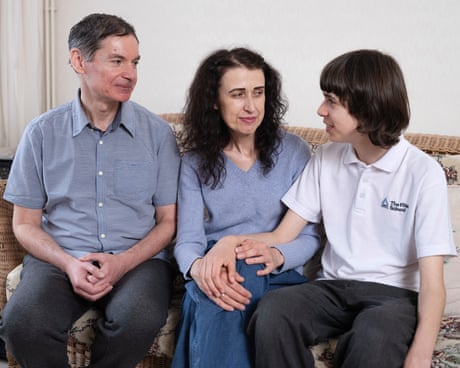
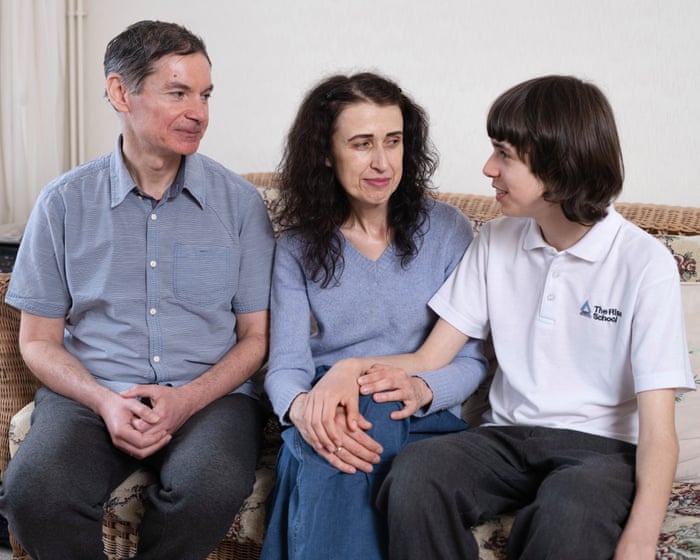
But Shahar is angry that most carers hit with unjust overpayments in the past will still have to repay them, for all the promise of a different future. And he notes that the cliff edge remains in place for four more years, potentially catching out more carers.
The prime minister previously said that he wanted a debate on how Britain can establish a closer relationship
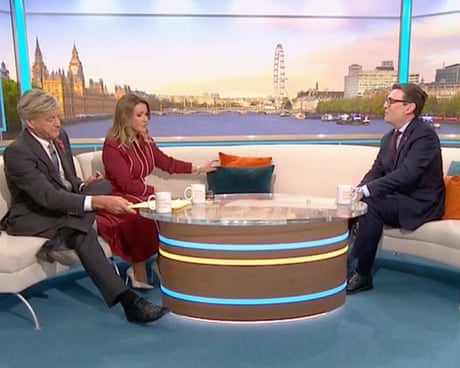
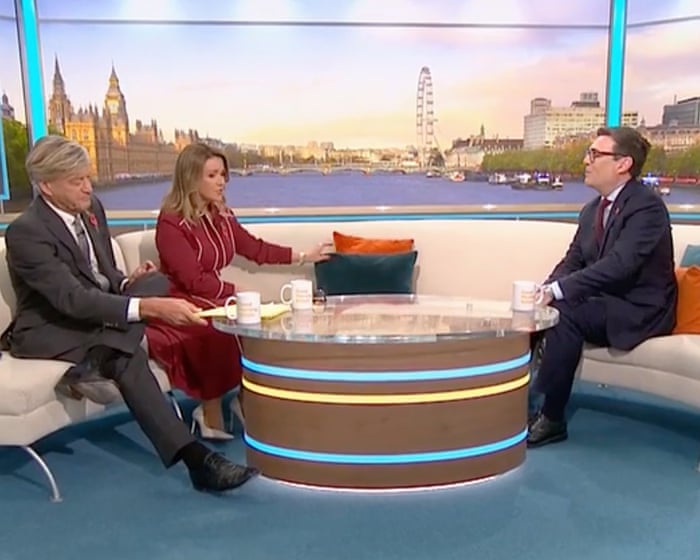
Speaking at his rough sleeping summit in Downing Street this morning, Andy Burnham expanded on the claim he made on Good Morning Britain about tackling rough sleeping being cheaper than ignoring the problem. (See 11.13am.)
He said:
We’ve also got to be conscious when we speak to the rest of the country, the taxpayers of this country, that actually to leave people sleeping rough has financial consequences. It doesn’t work for anybody and it doesn’t work for the public purse, because if you leave people in a position where they are in and out of A&E, and in and out of a hospital bed, that doesn’t make sense for anybody.
There is a rock-solid business case to do something to end homelessness, to put people on a path to recovery, so that they can contribute once again. And that should be the thinking that we take to this conversation.
Burnham is throwing another £432m at a problem he failed to solve in Greater Manchester. Under Labour, rough sleeping has hit record highs – yet their answer is always more taxpayers’ money and more empty promises.
[John] Healey must use his budget this week to cut taxes for working people, get the ballooning benefits bill under control, and stop pushing up energy prices.
John Healey is expected to confirm on Wednesday that the full state pension will rise by £489 to £13,036 – equivalent to 3.9%.
However, the rise will push about one million people on low incomes who rely on the state pension above the £12,570 personal allowance threshold, meaning they would be dragged into paying income tax.
Social Security is racing towards insolvency because the program pays out more in benefits to retirees than it collects in taxes from working Americans.
Handing out even more generous benefits will make that situation worse. Yet that is exactly what the trustees who run Social Security are planning to do: Retirees will get a 3.6 percent cost-of-living adjustment (COLA) next year. That increase is 0.8 percentage points higher than last year's, and it is 0.9 percentage points higher than what Social Security was expecting to pay.
The Social Security trustees are doing what the law requires during a time of high inflation. That's why Congress ought to intervene here.
It should cancel the COLA.
No, this isn't a demand that lawmakers stick it to America's retirees. It's an appeal for some fiscal common sense. There are three good reasons to cancel this year's COLA.
First: Handing out higher benefits to wealthy retirees simply doesn't make sense when Social Security is trending towards insolvency.
As the Committee for a Responsible Federal Budget notes, the announced COLA would be a $900 increase in benefits for the average retired household—but some retirees could receive as much as $3,600 more.
Paying generous benefits to wealthy households is the main reason Social Security is facing insolvency in the first place. A program originally intended to keep seniors from falling into poverty has become a huge wealth-transfer scheme that overwhelmingly benefits those who don't need the handouts. The COLA doubles down on this flaw.
Second: What about the workers who are paying for those lavish benefits? Wages have risen by 3 percent, on average, over the past year. Those pay increases have already been outpaced by inflation, which is up 3.7 percent in the past 12 months.
You'll often hear retirees talk about how they are living on a "fixed income," but the math simply doesn't bear this out. Social Security beneficiaries will get a COLA that is larger than the average pay increase for the workers who are funding the COLA. Retirees are protected from the impact of inflation while younger Americans must deal with inflation and finance that protection for the elderly. That's crazy.
Third: Cutting the COLA could kick-start a conversation about how to solve Social Security's looming insolvency. The Social Security trustees estimate that an across-the-board cut of about 22 percent will be necessary in 2032. Eliminating COLAs won't meaningfully change that arithmetic, but it would change the conversation—which has for too long been dominated by politicians promising seniors that nothing needs to change. That's wrong—and the sooner that becomes apparent, the better off the political system will be.
If eliminating the COLA is too radical a change, Congress should instead change how the trustees calculate the annual increase.
Currently, the COLA is based on one particular measure of inflation: the Consumer Price Index for Urban Wage Earners and Clerical Workers, otherwise known as CPI-W. This is a relatively narrow index that reflects the spending habits of only about one-third of all Americans, as Romina Boccia points out in her newletter, The Debt Dispatch.
Instead, Boccia suggests using the Chained Consumer Price Index for All Urban Consumers, or C-CPI-U, which covers about 93 percent of all Americans and is generally regarded as a better measure of the rising cost of living. Other parts of the federal government already use C-CPI-U to update such things as tax brackets.
If Congress simply changed how Social Security's COLA was calculated, it could close 12 percent of the program's long-term shortfall. And while some retirees would see smaller COLAs as a result, the result would more closely match those increases to inflation.
Social Security's COLA reflects many of the fundamental flaws with America's old-age entitlement program. Like Social Security as a whole, it is too generous to the rich, too costly to the taxpayers, and too unfair to younger, poorer workers.
More seven year-olds are on disability benefits than 50 year-olds amid a surge in payouts for childhood ADHD and other mental health conditions, official figures show.
A new study shows that in‑cash child benefits play a vital role in reducing child poverty in the EU. On average, these benefits lower the risk of poverty among children by 10.6 percentage points.
The impact of in‑cash child benefits varies across EU countries. Austria sees the strongest effect, with child poverty reduced by 16.6 percentage points. Spain shows the smallest reduction, at 4.6 percentage points. These differences suggest there is room for EU countries to learn from each other and achieve higher social standards.
Key findings
Child benefits can do more to reduce poverty: large differences between EU countries show room to make cash benefits more effective and help reach the 2030 poverty reduction target.
Better targeting and wider access could make a difference: in around one third of EU countries, disadvantaged families receive less financial support than better-off families.
Benefits in kind also support families: by making essential goods and services more affordable, they can reduce the financial pressure on families.
More children in early childhood education and care (ECEC) could support parents in work: increasing participation could raise maternal employment by up to 5 percentage points, making it easier to combine work and care.
Investing in children pays off in the long term: analysis shows benefits for education, employment and health. Overall, for every €1 invested in quality benefits in kind for children, the estimated return is €5.26.
Progress towards the 2030 child poverty target
The EU has committed to reducing the number of children in poverty by at least 5 million by 2030. Progress towards this target has stalled, so efforts need to be stepped up and policies improved.
Government spokesman Pavlos Marinakis triggered an outrage when he proposed that the “unemployment benefits” should last just two months in order to force jobless to take up a work. According to Greek legislation, the unemployment benefit of 526 euros per month increased by 10% for each child runs for maximum 12 months provided that the […]

 Login