Online hate is spilling into the real world, AFP warns
AFP Commissioner KrissyBarrett began her late-night appearance at the Senate estimates hearing noting “a heaviness that hangs across Australia” after the alleged attack on independent MP HelenHaines.
Lone actors are being motivated by a convergence of personal grievances, mental health vulnerabilities and ideological concerns …
What helped keep us safe in recent times, such as our geography, analogue systems and far away criminals, has been impacted by fully integrated technology, social media and artificial intelligence.
We hear about the devastating impacts of racism from communities every day. But many experiences go unreported or uncounted, and our systems often do not capture the full picture.
This is not about collecting more data to prove racism exists. We already know it does. It is about making inequality visible, holding institutions to account and giving communities greater agency over their data to drive real change.
An Alabama special needs teacher who was once "teacher of the month" is facing child abuse charges after allegedly pouring hot sauce on a student's tongue as a form of punishment.
Hungary on 27 October again refused to approve the screening results for clusters 4 and 5, the last two blocks of Ukraine’s EU accession talks that remain unopened, at a meeting of the EU Council’s enlargement working party in Brussels, European Pravda reported, citing several EU diplomats. It was Budapest’s second refusal in a week.
Ukraine is pursuing EU membership while fighting Russia’s full-scale invasion, and for years its path ran into vetoes from Viktor Orbán’s Hungary. Orbán lost power in April to Péter Magyar, who promised to bring Hungary back to Europe. His government is now the one blocking the last two clusters.
Brussels knew Budapest would say no
One of the diplomats said that “Hungary’s position has not changed.” Ireland, which holds the rotating presidency of the EU Council, knew in advance that Budapest would not move but put the item on the agenda anyway. Another diplomat described the repeat vote as a political move to raise pressure on Hungary rather than a real attempt to get a yes.
Hungary’s arguments were not disclosed on 20 October, when it first blocked the step. Cluster 4 covers transport, energy, trans-European networks, the environment, and climate. Cluster 5 covers agriculture, fisheries, regional policy, and budget rules.
Kyiv paid for two clusters, and the last two stay shut
Earlier this month, Ukraine’s parliament passed the minority-language schooling law Budapest had demanded, and the EU opened clusters 2 and 3 on 13 October. Magyar’s government has tied its support to Kyiv meeting 11 demands on the rights of the Hungarian minority.
On 16 October, President Volodymyr Zelenskyy held his first one-on-one meeting with Magyar in Brussels and thanked him for opening the two clusters, adding that work was underway to open the remaining two by the end of the year, his office said. Ten days later, Zelenskyy set out why the timing matters.
“It is very important that the remaining two negotiating clusters for Ukraine are opened by the end of this year, and that during the Lithuanian presidency we could already close negotiating chapters,” he wrote.
Lithuania takes over the EU Council presidency in January.
Budapest’s next moves may also decide whether Ukraine and Moldova still advance together.
Moldova's President Maia Sandu and Hungary's President András Baka, Budapest, October 2026. Photo: Moldpres
Moldova’s President Maia Sandu discussed the opening of her country’s last two clusters with Magyar during a visit to Budapest last week, and in July Hungary already offered to move Moldova ahead on its own.
Last month, the Left Party took first place in Berlin’s state elections, and the party is seeking a coalition with the SPD and the Greens, both of which are already on board. The Left Party will announce its final decision on Oct. 31.
Now, Michael Hammerbacher, head of the Association for Democracy and Diversity in Schools and Vocational Training, is concerned that the new leadership will cooperate with organizations tied to political Islam and that funding for vital advisory projects, including his own, could be at risk, writes Junge Freiheit.
He is urging the three parties to establish a strict “firewall” against political Islam in schools, as religious extremism is increasingly threatening education policy and school safety.
According to Hammerbacher, schools—particularly those where 90 percent or more of the student body has a Muslim background—are experiencing severe pressure to conform to strict religious guidelines.
Issues include targeted bullying of liberal Muslims, homosexual students, and Alevi students; pressuring students to fast during Ramadan; and the refusal to attend co-ed physical education or swimming classes,
More and more Islamist material is also regularly popping up in class group chats.
And students are increasingly feeling pressure to join in on activities they would normally not consider, such as at Berlin’s Diesterweg Gymnasium, where students even held a large demonstration in the schoolyard, dressed all in black. Hammerbacher also points out that establishing school prayer rooms leads to gender segregation.
Perhaps most worrying is data from the June Berlin Conflict and Violence Barometer study. Out of 14,000 students and 2,500 staff surveyed, 29 percent of ninth-graders believe religious rules trump school rules. Among Muslim ninth-graders, that figure rises to 41 percent.
Some positive news came out of the Berlin Administrative Court earlier this month, when it ruled that Diesterweg Gymnasium in Wedding can legally ban demonstrative religious rituals to maintain school peace. This decision dismissed a lawsuit from the Society for Civil Rights (GFF), which had argued the ban discriminated against Muslim students.
Hammerbacher noted that the Diesterweg Gymnasium had previously faced severe conflicts, including students being pressured to convert to Islam and girls facing verbal abuse if they failed to wear a headscarf. He sharply criticized the GFF for targeting 20 schools with legal warnings over similar rules; 19 of these schools backed down, making Diesterweg Gymnasium the only one to stand its ground.
The expert warned that legal challenges such as by the GFF give political Islamist groups far too much leeway, further calling for the new Berlin government to be on guard against further opening the door to political Islam.
In August, Remix News wrote about one school teacher who bemoaned the impact of mass immigration, with 75 percent of students at her school having a migrant background, including many from Syria, Iraq, Afghanistan or Ukraine. “It’s all blowing up in our faces,” she said. “We are happy if we can teach for a few minutes at a time. Sometimes the police have to come several times a week,” she added, due to incidents involving shouting, fights, and even drugs and prostitution.
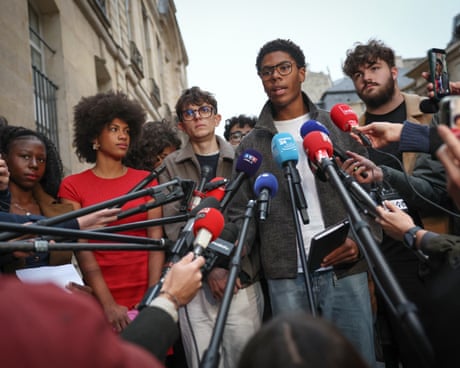
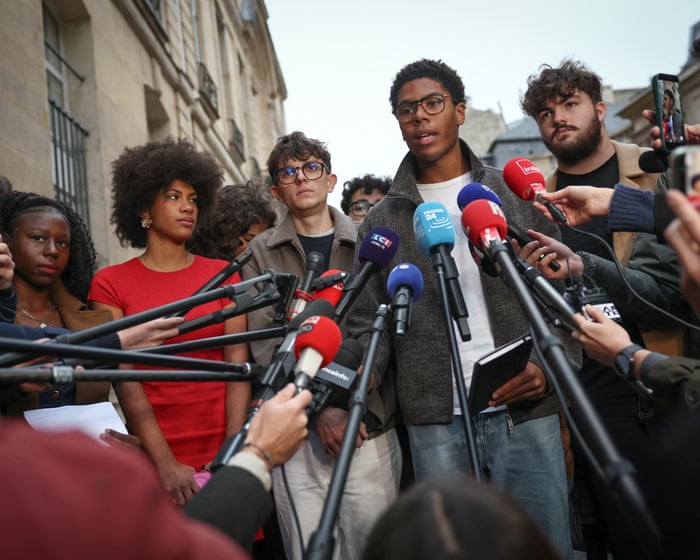
France’s main student organizations have ratified their decision to continue protests and take part in the demonstration called for November 5, as the Government’s responses remain insufficient in the face of the demands raised by the sector.
The statement was backed by groups such as Fage, Union étudiante, l’Unef, Union syndicale lycéenne, Les Lycéens! and Renouveau lycéen, organizations that have played a central role in recent student protests in the country. Several measures aimed at responding to student demands were presented at the meeting.
During a public appearance, union spokesperson Sabrine Karbach valued some of the advances obtained through mobilization but said they remain limited. “We are achieving some advances through mobilization, but they are still crumbs,” she said.
🇫🇷 French Prime Minister Sebastian #Lecornu will meet with high school students Monday afternoon in a bid to ease tensions after nearly a month of protests across #France.
Among the measures announced by the Government is a partial reform of the university access system, which various student groups consider insufficient.
Disagreements also extend to educational infrastructure. The unions maintain that resources allocated to renovating teaching centers are far from covering existing needs and recall that numerous secondary schools have inadequate conditions amid high temperatures associated with climate change.
The Executive also reported reducing the maximum number of students per class to 28, creating 500 new teaching positions, eliminating 836 teacher posts and increasing scholarships annually in line with inflation. It also announced a multi-year program to modernize educational buildings and new financing lines for schools and secondary schools.
Despite these announcements, student organizations insist that mobilizations will continue until broader results are obtained.
Le gouvernement a annoncé ce 26 octobre une réforme de Parcoursup pour la prochaine campagne d'admission, avec un remplacement prévu en 2028. Les établissements devront justifier les refus et clarifier leurs critères...
Activists say struggle must go on until their ‘maximum’ demands are met over teacher shortages and building repairs
French children should continue to barricade their schools and take part in street protests, a student union said on Monday after the government announced a package of education measures to try to stem the crisis.
“Today we’re at the negotiating table, we’re able to negotiate with the government,” Pierre Sourzat of Les Lycéens told France Info television. “We’re in a power struggle and we still need to call for continued mobilisation to meet a maximum of our demands.”
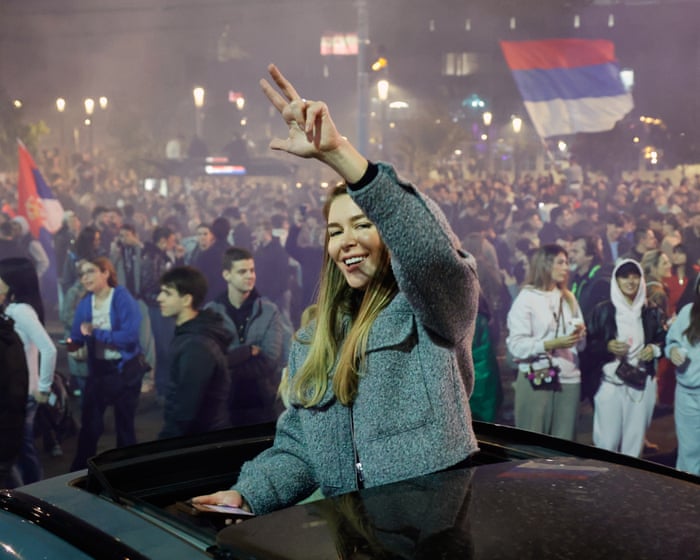
After freedom, we want to give our people something radical: a normal, functioning state
Two years ago, I harboured no political ambition whatsoever. I was a student at the faculty of technical sciences in Novi Sad, my home town, pursuing a PhD in human resources and simply living my life. That was until the canopy collapse at the newly renovated train station in Novi Sad in November 2024, which killed 16 people. I took part in street protests and rallies in response to this shocking event, and like many others, realised that it needed to be a turning point.
This was not an unavoidable tragedy. Systemic corruption and a culture of entrenched impunity were obvious factors in the collapse. But instead of ordering a full and impartial investigation and coming clean on official failings, the authorities began pushing back against us for demanding justice. We were vilified and attacked in the streets but law enforcement did nothing. So we took refuge in our lecture halls and schools, barricading ourselves inside faculty buildings, ready for a long haul.
Novak Simin is a member of Serbia’s Student List movement
Do you have an opinion on the issues raised in this article? If you would like to submit a response of up to 300 words by email to be considered for publication in our letters section, please click here.
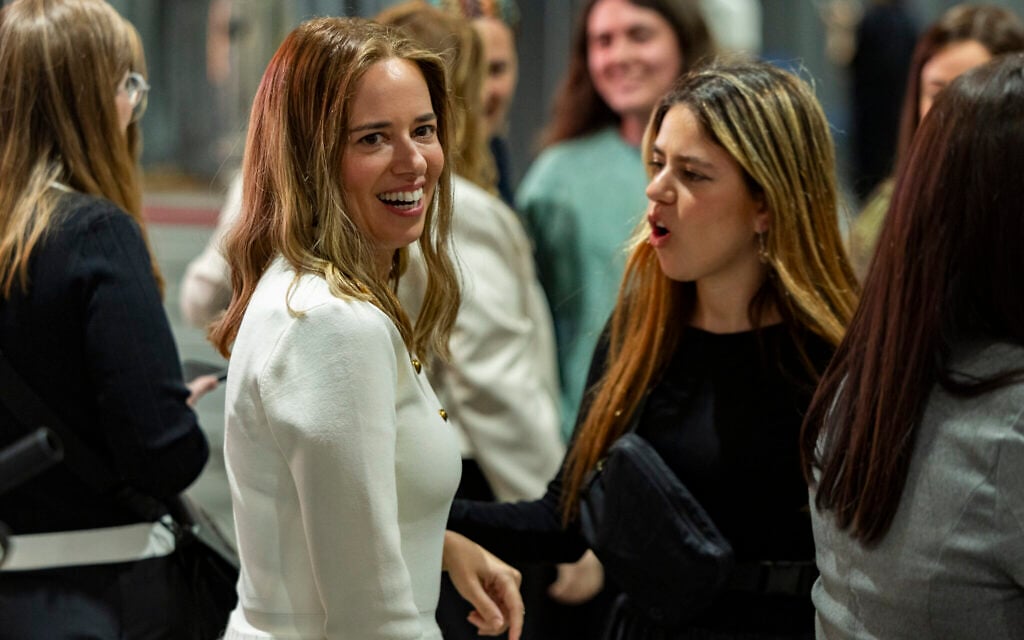
Earning two spots on maverick Charedi Public party's slate wasn't easy, but for these crusaders pushing for a brighter future, political representation is just a means to an end
Maka Gogaladze’s debut feature looks at generational differences in the context of Georgia’s education system and emphasis on collectivism
The scars imprinted on impressionable young minds can never fully fade away. Aiming her lens at a rocky beach thrashed by crashing waves, Maka Gogaladze opens her intimate film with a painful anecdote from her adolescent years. Through on-screen texts against a stormy sky, the Georgian film-maker recalls the time she dumped all of her poems into the garbage. The impulsive decision was a gesture of rebellion against her domineering mother; Gogaladze had wanted her to feel guilty.
This debut feature would appear, at first glance, to be another act of revolt. Putting her mother in front of the camera, Gogaladze asks probing, at times blunt, questions about the strict education thrust on her in childhood. Together, they talk about piano lessons that ended in tears, and tough academic exams that continued to haunt the director well into her adulthood. Their contrasting personalities are fascinatingly revealed across these conversations in all their tension, yet these sequences also represent a moving effort to reach across generational differences.
The author holds hands with his mother, Tiffany Calloway, during their graduation celebration.
Courtesy of Omarion Calloway
The author and his mother graduated from college in May 2026.
Despite earning their degrees, both struggled to find jobs in their fields.
Their experiences challenged the promise that a college degree guarantees a better life.
I grew up believing that I had to work hard, go to college, get a piece of paper, and unlock a decent life. My mom believed in it even more than I did.
In May 2026, we crossed the finish line together. I was 23, graduating from New York University with a degree in Film and Television, ready to launch a career in journalism and filmmaking. My mom was in her late 40s when she earned her bachelor's degree in psychology after decades of putting her life on hold.
My mom raised me while taking care of family members
For as long as I can remember, my mom has been running on empty. Back in Alabama, she worked hospital shifts by day and cleaned corporate offices at night, riding public buses through the heat. She was also raising my brother and me, caring for my grandmother through cancer, and looking after my paralyzed uncle. Going to college felt impossible.
The author with his brother.
Courtesy of Omarion Calloway
When my grandmother and uncle died shortly before I finished high school in 2022, our family was grieving. But my mom also had a moment to think about what she wanted for herself. She decided to start college and pursue her psychology degree. In 2024, after my brother graduated from high school and headed to college in upstate New York, my mom packed up and moved out of Alabama. She settled in Albany to be closer to both of us. I was living in New York City, attending NYU.
From 2022 to 2026, we both worked toward our degrees. While I stayed up finishing college assignments, my mom balanced her nursing shifts with classes and the costs of building a new life in Albany.
The author's mother with her husband in Albany, New York.
Courtesy of Omarion Calloway
But graduating didn't make the next steps any easier.
Getting a job as a recent graduate wasn't easy
I thought an NYU degree would give me a real foot in the door. Instead, I entered a job market where entry-level roles demanded years of experience, while rent and groceries kept getting more expensive. I've had employers tell me during interviews that they loved my work and thought I'd be a great fit, only to never hear from them again. It happened more than once, and each time, it became harder not to wonder what I was doing wrong.
The numbers suggest I wasn't alone. In the second quarter of 2026, 42% of recent college graduates were underemployed, according to the Federal Reserve Bank of New York. Finishing school didn't guarantee a career. For many graduates, it meant entering a crowded job market and hoping someone would give them a chance.
My mom faced her own version of that wall. She's currently working toward her master's degree, hoping to eventually become a licensed therapist. In the meantime, she's been trying to get her foot in the door through entry-level jobs such as behavioral health or psychiatric technician roles. Despite decades of frontline healthcare experience and a bachelor's degree in psychology, applications went unanswered, and automated rejection emails kept arriving. After years of working and caring for others, she was still struggling to get someone to give her a chance.
The author's mother sitting in a car.
Courtesy of Omarion Calloway
A few weeks after graduation, I sat with her in her living room as she refreshed her inbox. Another rejection came in. She closed her laptop and looked down at her framed diploma, exhausted.
If my mom was struggling to find work after everything she'd done, I couldn't help wondering what my own degree would do for me. A degree can still make a financial difference.
In 2025, full-time workers aged 25 and older with a bachelor's degree earned a median weekly wage of $1,578, compared with $966 for those with a high school diploma, according to the US Bureau of Labor Statistics. But those figures describe people who are already working full time. They don't guarantee a recent graduate will land a job, earn those wages, or afford to live in the city where they're trying to build a career.
For my mom, college was supposed to rewrite her story. For me, it was supposed to be the launchpad. When we look at our graduation pictures, the pride is real; neither of us will ever downplay what it took to survive those years. But a diploma can't pay rent. A piece of paper can't buy health insurance, a stable job, or peace of mind.
The author with his mother.
Courtesy of Omarion Calloway
My mom and I did what we were told would lead to a better life. We're still trying to figure out when that life is supposed to begin.
We did everything right. Somehow, it doesn't feel like enough anymore.
Children as young as five are being suspended for sexual misconduct, with schools in England recording 7,278 suspensions last year – nearly 40 every school day and a 12% jump on the previous year.
Students have the right to attend their neighborhood school, and many do. However, every year thousands of parents choose to apply to public schools in different neighborhoods or publicly funded charter or magnet schools throughout the city.
There are rarely enough spots to meet demand at the more desirable schools or specialty schools, ranging from arts and hospitality to college-prep programs and the sciences. To decide who gets to go where, DC instituted a lottery system.
Parents across the city often create spreadsheets to track programs and their child's odds of getting into a particular program, before entering a lottery, ranking schools in order of preference, and hoping for the best. Such an uncertain system makes planning difficult and sometimes leads to unpleasant surprises. That was the case with my son's foray into middle school.
I thought I had found the perfect middle school for my son
When my son entered his last year of elementary school, I thought I knew what his next steps would be. For years, I assumed that he would follow in his big sister's footsteps and attend an International Baccalaureate charter school starting in 6th grade.
The author said she expected that her son would go to the same school his older sister was at, but was upset when he was put on a waitlist.
Courtesy of Jamie Davis Smith
The charter school isn't perfect; no school is. However, my daughter, now a junior, often says she enjoys school, which is a shocking statement for a kid of any age, let alone a teenager. An environment where at least some kids are happy to go every day would be reason enough for me to send my son there. However, I was also convinced the school's rigorous program and strong emphasis on world cultures would be a perfect fit for him. After all, he is a triple citizen and a world traveler at heart. I also appreciate the school's diversity and range of classes, from sneaker culture to advanced sciences.
Although a spot for my son was never guaranteed, I assumed his sibling preference would help secure one. I was in for a rude awakening.
I had to face reality
When my son was put on the waitlist after the first round of admissions, I didn't panic. Instead, I spent most of the summer in denial, convinced that if I just waited long enough, he would get in eventually.
The week before school started, I had to face reality. No spots were available for my son at the school I had grown to love and was convinced would be perfect for him.
Without a viable alternative, I enrolled him in our local middle school, which I thought was very large and very chaotic. I kept telling my son how excited I was for him to start middle school, but I couldn't hide my worry.
I was nervous about sending him to a large school
My son's elementary school had about 400 kids total, from pre-K4 to 5th grade. For a big city, it's a small school where most teachers know all the kids, and the community is tight-knit. I worried about how my son would transition to a large school with nearly 1400 students across just three grades, in a building that occupies nearly an entire city block. Despite my worry, he walked in with confidence on his first day.
Not everything about such a big change was easy. My son got lost a few times trying to find his classes. While many of the other incoming sixth graders knew each other from elementary school, my son didn't know a soul. He was upset when recess, his favorite part of the day, was cut short because other kids wouldn't stop talking. It's almost impossible to get a timely email response from the school administration, who seem swamped by the sheer number of students. Still, my son rolled with the punches and started to adjust.
I now see the benefits of a neighborhood school
Even though my son had to start his middle school social life from scratch, he quickly found his crew: other kids who love soccer. He first spotted potential friends by looking for kids wearing Real Madrid jerseys and kicking a soccer ball around at recess. Once he found his tribe, he could easily meet friends after school for walks to our local playground and pizza shop. Those are things he wouldn't have been able to do if he had gotten into the school I had been hoping for, which draws students from across the city. Within a few weeks, he rattled off at least a dozen new friends' names. I wondered whether he could have made friends as easily at the smaller charter school I wanted him to go to, with a smaller pool of potential friends.
I also appreciate the resources such a big school has, including a range of after-school activities. Although my son hasn't wanted to try most of them, I appreciate that options like an archery team and a Rubik's Cube club are available to him.
There are other benefits as well. Because our neighborhood is just over a mile from our home, my son can easily walk or take a short bus ride there and back, giving him even more independence. Not having to drive him saves me at least seven hours a week, and the school's proximity to our house gives my son more free time.
Now that we are well into the school year, I realize I should have given my son more credit for adaptability. I also should have been more open-minded about what kind of school would be "right" for my son. Although I am still sad that he doesn't get to attend the same school as his sister, I now know there is more than one answer to what makes a good school.
Cinq lycéens de Pamiers ont réalisé un projet ambitieux en se rendant à Paris pour découvrir les institutions françaises et le monde du journalisme. Accueillis par le ministre Laurent Panifous et la journaliste Élise...
The very public execution of my professorship and reputation continues in Norway. Today’s media article about me makes three claims that are misleading and/or false.
1) The article dismisses my claim that my research is being criminalized as the journalists merely cite the dismissive comments from the university – no arguments are apparently required.
It is not possible for an academic anymore to analyse the policies of rival powers by assessing their security concerns, as it will be smeared by the government, the government’s NGOs and the media as “legitimizing” the enemy and supporting their narratives. The current Defence Minister singled me out with the accusation of spreading propaganda and criticised two podcasters for even speaking with me (as I have already been cancelled by the media in Norway). How was this accusation by the Defence Minister substantiated? I had argued that NATO expansion triggered the war in Ukraine, which the Defence Minister denounce as dangerous “Russian propaganda”, with no need to substantiate his vile accusation. I can cite a sea of evidence and also refer to statements by American and European political leaders, ambassadors, intelligence chiefs, and others to make my case. However, the purpose is not to engage in debate, but to smear, censor, and cancel. By going after an individual academic for challenging official truths, the government has already claimed a monopoly on the truth. Academics should have their arguments scrutinised and criticised, but these are severe personal attacks from the government without the possibility of even defending myself. How is this not criminalising the research of an academic?
I cannot even speak at any events in Norway without the event being cancelled. The last event I agreed to speak at was because I shared the stage with the former CIA officer John Kiriakou. A newspaper had the event at a church cancelled, and when the backup location did not also cancel, the journalist simply printed in the paper that it had been cancelled so people would not show up. Is this normal? I must use my allotted holiday days to attend conferences because any event I attend can be presented as “controversial,” and then the NGOs and journalists will go after the reputation of the university. Is this normal? Every newspaper article about me merely refers to me as “controversial” or “pro-Russian” without ever assigning meaning to these labels or presenting my argument.
I have argued, much like former CIA director Burns, that if the West attempts to pull Ukraine into the NATO orbit, then there would be war and Ukraine would be destroyed. This is considered a “pro-Russian” argument. Arguing that we should respect the will of most Ukrainians who want negotiations to end the war is also considered a “pro-Russian” argument, while in contrast, boycotting diplomacy, deporting Ukrainian refugees, and calling for the conscription of Ukrainian women is “pro-Ukrainian”.
2) To avoid addressing any of my arguments, the journalists go on to uncritically cite personal attacks against me, pointing out that I have been called a propagandist by the Norwegian Helsinki Committee. This is a “non-governmental organisation” financed by the government and the National Endowment for Democracy (NED), which was set up by Reagan and the CIA director in 1983 to manipulate the civil society of other states. The Norwegian Helsinki Committee has been relentless in its smears on social media to have me fired, writing hit pieces in the media, pushing to cancel my speaking events, writing a letter to my university, and even posting a picture of my house on social media. This is a governmental “human rights organisation” that cites human rights concerns to build the case for war.
3) Lastly, to further avoid addressing my actual arguments, they simply cite the fact that arguments I made at a debate last year have been “wholly or partially debunked” by a fact-check. The state-run media (NRK) invited the state-run military defence institute (FFI) to fact-check three of my claims. What claims did they “debunk”?
My first claim was that only 20% of Ukrainians wanted NATO membership between 1991 and the regime change in February 2014. The fact-checker argued that the number went up by the middle of 2014 (after Russia responded by seizing Crimea), which is a completely meaningless comment intended to muddy the waters, as my argument was about the previous era.
My second claim was that Zelensky had argued in an interview with The Economist in March 2022 that there were some Western countries that would like a long war with Russia to weaken a strategic rival, even if it would result in the destruction of Ukraine. The fact-checker argued that not all Western countries wanted a long war and that it was not an official policy. I never claimed it was an official policy, as it was primarily the US and UK pushing for a long war.
My third claim was that the US and UK sabotaged the Istanbul peace agreement in April 2022. The fact-checker claimed this was incorrect and suggested that it could only be based on one statement by David Arakhamia. The fact-checker did not want to mention that both mediators also confirmed it: Turkey’s foreign minister and the former Israeli prime minister both said that Russia and Ukraine were close to a deal, but the US and UK saw an opportunity to weaken Russia by fighting with Ukrainians. Zelensky’s former adviser Arestovych confirmed it, and the Ukrainian ambassador Chaly, who participated in the negotiations, confirmed that Putin was willing to do almost anything to end the war. The former head of the German armed forces confirmed that Boris Johnson sabotaged it, and Boris Johnson himself wrote articles warning about a “bad peace” and arguing for “strategic patience.” I am being fact-checked by war propagandists.
Unfortunately, none of my arguments matter because in Norway there is no debate and no interest in any arguments. Reality means nothing anymore as war narratives must be defended against inconvenient truths. I used to be naïve and think that the endless smears were caused by misunderstanding, as I had simply not been able to convey my arguments properly. However, the endless articles with smears and labels are deliberate lies and deceptions.
Upadhyaya is a supply chain program manager at Intel.
Courtesy of Mihirkant Upadhyaya
Mihirkant Upadhyaya has a Ph.D. and more than 10 years of experience at Intel.
But at age 41, he embarked on gaining another degree to level up in his career.
Upadhyaya says that doing an MBA equips him with skills that AI lacks.
This as-told-to essay is based on a conversation with Mihirkant Upadhyaya, 42, who works at Intel and lives in Oregon. The following has been edited for length and clarity. Business Insider has verified his employment and education.
After studying computer engineering for my bachelor's, I pivoted into physics.
Two master's degrees and a Ph.D. in nanoscale science and engineering later, I got my dream job in the semiconductor industry at Intel in 2015.
As my career evolved, I realized I also wanted to do an MBA to step up my game.
My Ph.D. gave me relevant skills to take on the workforce
During my Ph.D., I focused on a semiconductor manufacturing technology called EUV lithography. I was excited to work at Intel because it does both chip design and manufacturing, so I knew I'd get a good overview of the chip-making process.
You don't need a Ph.D. to work in semiconductors, as there are so many areas outside the lab you can work in, like finance and legal.
On a personal level, though, having a Ph.D. helped me feel prepared to step into the workforce. It gave me discipline and the ability to be comfortable with ambiguity. My research mindset and technical background gave me the confidence to take ownership of outcomes and tasks.
There were definitely moments where I had self-doubt doing a Ph.D. You watch your peers go on to earn big bucks after their bachelor's and master's while you live on a modest stipend. However, the experience shaped me into who I am. I'd say I'm more patient, sharper, and more resilient.
I reached a stage where I felt I needed more education to thrive in my job
After about five years in research and development at Intel, I moved into supply chain roles, which have involved managing relationships and negotiating contracts. At this point, I realized I was missing certain skills.
My current role has a greater emphasis on executive communication and financial analysis. When I presented to an executive team, my manager had to step in on a number of occasions to get the room to respond, making what I was saying more high-level using business-driven terms. I also didn't quite understand certain things when I worked with the finance teams on contract negotiations.
To step up my game, I started a two-year hybrid MBA course in September 2025, alongside my full-time job. It was energizing to get back to the classroom at age 41.
I take one week off a quarter to do in-person sessions, and the rest of the time I'm doing online learning three days a week. My company is partly funding this, which is useful since MBAs can carry a $100,000 price tag.
Upadhyaya estimates that he's invested $100,000 into his post-graduate education.
Courtesy of Mihirkant Upadhyaya
By the time I've finished my MBA, I'll have done nine years of postgraduate study, investing an estimated $100,000 into that education, aside from scholarships and tuition waivers. Without question, it's been worth it. I haven't pursued the degrees to accumulate credentials, but to serve my career at various stages of my life. The MBA is addressing a concrete skills gap I identified after years in my industry.
I believe higher education is helping me become more irreplaceable in the age of AI
The AI boom made me take a hard look at what I bring to the table. I saw that some of what I did could eventually be automated. That realization was humbling.
Instead of trying to compete with what AI is already good at, I wanted to strengthen the areas where I knew it fell short. AI is great at processing and analyzing information. It has scale and speed, but it lacks the truly insightful judgment that a person can gain from years of learning a skill.
Upadhyaya said he's encountered limits to AI's capabilities.
Courtesy of Mihirkant Upadhyaya
In my previous role at Intel, I found that AI couldn't tell me how to troubleshoot issues involving new or custom-made equipment because the context was so unique to my situation.
Meanwhile, in my current role, while AI could probably help me generate financial models, it can't read the room, build relationships, or have synergy with another person. My MBA course benefits me in this regard because we do lots of group activities, even online through Zoom, where we can interact with each other.
I think that in the age of AI, finding a field you really care about, becoming an expert in it, and staying curious to keep learning can help you become irreplaceable.
Intel declined to comment in response to a request from Business Insider.
Voters across the country are making big decisions about the education of their children at a local, state and federal level in this year’s midterms. Ballot initiatives, school board elections, governor’s races and Senate spots are all on the line as parents head to the polls thinking about AI, school choice and what topics should…

 Login