❌

Reading view

In a reverse of the Cold War domino theory, right-wing dominos are falling fast in Latin America

By Riva ENTEEN

Join us on Telegram, X, and VK.

Contact us: info@strategic-culture.su

Some of the remnant socialist governments appear to be sliding toward subservience

“Respect for sovereignty is the most significant norm in international politics, and its purpose is to minimize war and facilitate peaceful relations among states.”

—John Mearsheimer

American political scientist and international relations scholar and professor

The U.S. war against Vietnam was driven by the imperialist assumption that Vietnam was one of many inevitable dominoes that would fall to communism. But the communist dominos did not fall. Instead, today, we face a dramatic, devastating loss of progressive governments throughout Latin America, with the domino game won by the reactionary forces.

We must learn from history, or we are doomed to repeat it. But today, there is little public discussion and analysis of what led to these Latin American losses, if not outright condemnation of such questions.

Though all the winds of doctrine were let loose to play upon the earth, so Truth be in the field, we do injuriously, by licensing and prohibiting, to misdoubt her strength. Let her and Falsehood grapple; who ever knew Truth put to the worse, in a free and open encounter?

— John Milton
English poet, polemicist, and civil servant

During the Cold War, the U.S. had a long pattern of supporting right-wing coups, dictatorships and death-squad operations, driven by the imperatives of big business which wanted to exploit Latin American resources.

One of the most notorious cases was Chile, where the CIA backed a coup against democratically elected leader Salvador Allende that brought in fascist Augusto Pinochet.

Today, as Peoples Dispatch reported: “The far right in Latin America is shaped by an anti-left agenda that it inherits from the Cold War, which means that its political formations typically endorse the era of U.S.-backed military dictatorships. The ideas of the left, whether from the Cuban Revolution (1959) or from the era of the Pink Tide (after 1998), are anathema to these political forces; these ideas include agrarian reform, state-led finance for industrialization, state sovereignty, and the importance of trade unions for all workers and peasants.”

Glenn Greenwald agrees: “Other than Uruguay, Brazil is the last country in South America still governed by a left-wing or center-left government, with one country after another electing leaders on the right: Argentina, Colombia, Peru, Ecuador, Chile, etc.”

Medea Benjamin also agrees: “Across the continent—from Colombia and Peru to Argentina, Chile, Ecuador, Honduras, Bolivia and Panama—there has been a stark reversal of the region’s progressives that brought hope for a more independent and socially just Latin America. The only two major powers in Latin America still governed by the left are Mexico and Brazil—and Brazil faces a fiercely contested presidential election in October.” Unfortunately, the recent election requires a runoff, as neither Bolsonaro nor Lula received over 50% of the vote. What is particularly concerning, is that Lula did not come in as strong as most predicted.

Alan MacLeod reports in Mint Press that “The United States is interfering in the Brazilian presidential elections, pressuring the Brazilian electorate into voting for right-wing candidate Flavio Bolsonaro, the son of disgraced former president, Jair Bolsonaro. If that does not work and President Lula da Silva secures a fourth term in office, the groundwork is already being laid for a potential military intervention.”
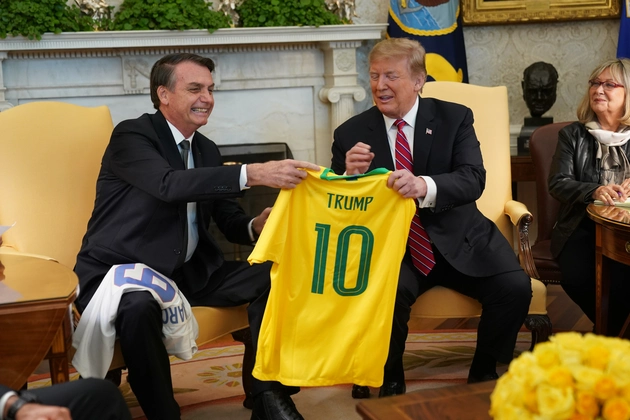
Brazilian President Jair Bolsonaro presents President Donald Trump with a Brazil national soccer team jersey
Former Brazilian President Jair Bolsonaro after he is presented with a soccer jersey by President Donald Trump. [Source: politico.com]

Colombia’s domino fell when its left-wing presidential candidate Ivan Cepeda conceded defeat on June 24 to hard-right populist Abelardo de la Espriella following a tight run-off race.

“There had been doubts among the Cepeda camp about the legitimacy of the vote process, with President Gustavo Petro—who was closely involved in the leftist candidate’s campaign—openly alleging fraud and foreign interference before and after the election.”

As CovertAction Magazine has warned, “Colombia is Fast Becoming a Neo-Colonial Outpost Under Its New Right-Wing President.
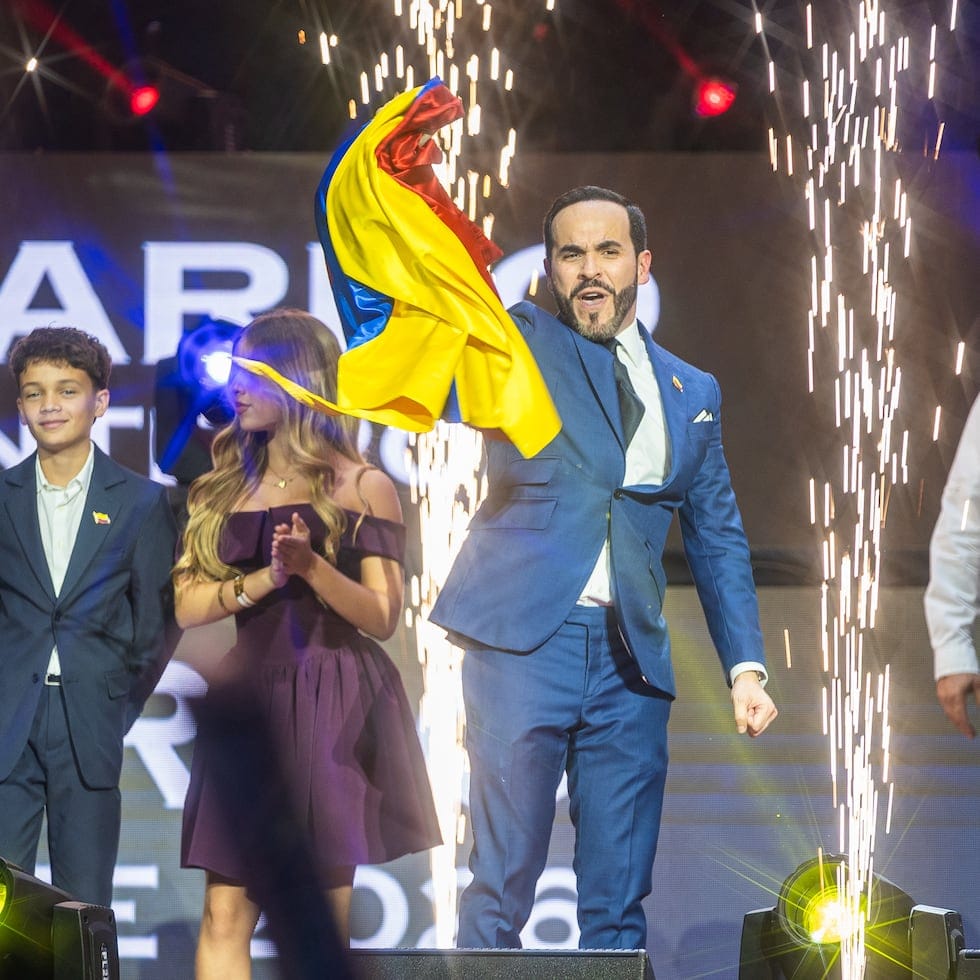
Colombia's Bukele? Abelardo De La Espriella Surges Ahead
Colombia’s far right new President Abelardo de la Espriella celebrates his recent election victory. [Source: americasquarterly.org]

Nicaragua faces electoral interference as well. As reported in The Grayzone, “In his national address on July 19, Nicaraguan President Daniel Ortega stated that, when the country’s next elections take place in 2027, none who promoted a violent anti-government insurrection in 2018 will be allowed to stand for office.” He declared that Nicaragua has the “sovereign right to fight foreign interference in its electoral process…Washington’s plans for regime change in Nicaragua are hardly a secret…The National Endowment for Democracy’s president, Damon Wilson, bragged to a House committee in February that his organization is funding media in Nicaragua with an eye to undermining its Sandinista government.”
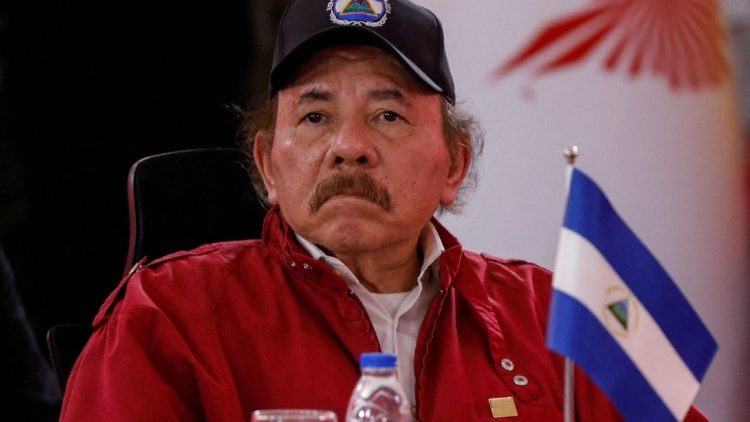
President Ortega of Nicaragua announces there will be 'no more elections' - Vatican News
Daniel Ortega [Source: vaticannews.va]

Lest we forget, government control of media is essential for fascism to take hold. Benjamin outlines how “The market concentration of Latin American media conglomerates is among the highest in the world, with four transnational companies controlling 89 percent of the broadcast media across six major countries…The market power of these huge media conglomerates is a real obstacle to any movement for democracy or socialism.” Even darker, she reports that Allen Weinstein, a founder of the National Endowment for Democracy, told The Washington Post in 1991, “A lot of what we do today was done covertly 25 years ago by the CIA.”
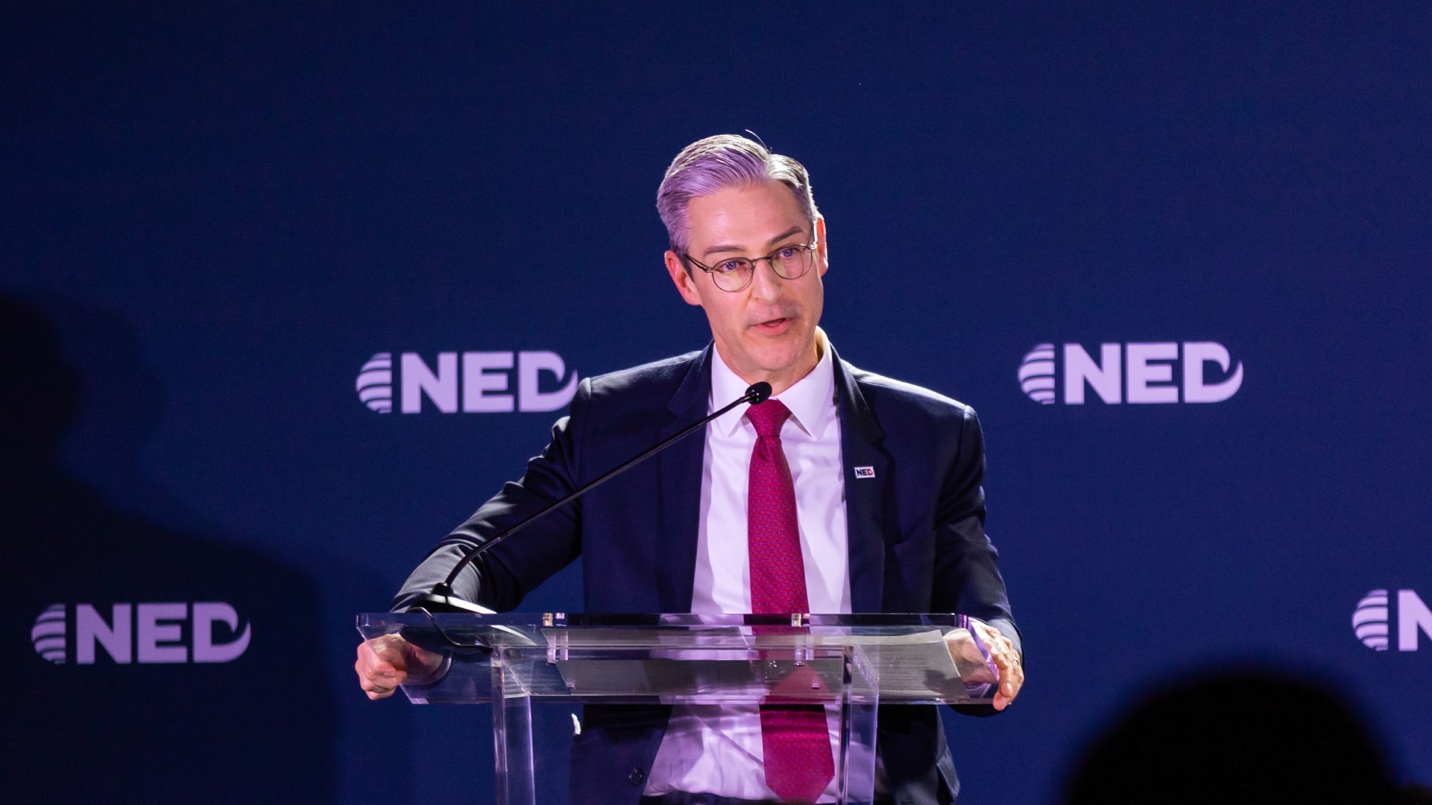
Standing With Those Who Choose Freedom - NATIONAL ENDOWMENT FOR DEMOCRACY
Damon Wilson, the director of the National Endowment for Democracy. [Source: ned.org]

After Venezuela was subject to a U.S. military invasion on January 3, which resulted in the kidnapping of sitting president Nicolás Maduro and his wife Celia Flores, then-Venezuelan Foreign Minister Yván Gil said “We found ourselves alone.”

In the article titled “The U.S. Tried to Decapitate Venezuela: The Revolution Survived,” those who question whether U.S.-installed interim President Delcy Rodríguez had a choice are told that is the context which needs to be understood.

It was certainly a devastating disappointment that Russia and China, or neighboring countries such as Colombia and Brazil, did not (though under the boot of the U.S.) more militantly advocate for Maduro and Flores’s return. The illegal murders on the open seas of the Caribbean—with impunity—was writing on the wall that Venezuela was the next domino to fall. Why did the efforts to prevent the fall fail?

Months before the kidnapping, Rodríguez told The New York Times: “The Pentagon always had a strategic objective of obtaining Venezuelan reserves.” Today she asserts: “There is something that must be made absolutely clear: Venezuela retains the ownership and sovereignty over its resources.” However, former Vice President and veteran Chavista figure Elías Jaua accused Washington of stripping the nation of its sovereignty and taking control of its natural resources. When is sovereignty lost?
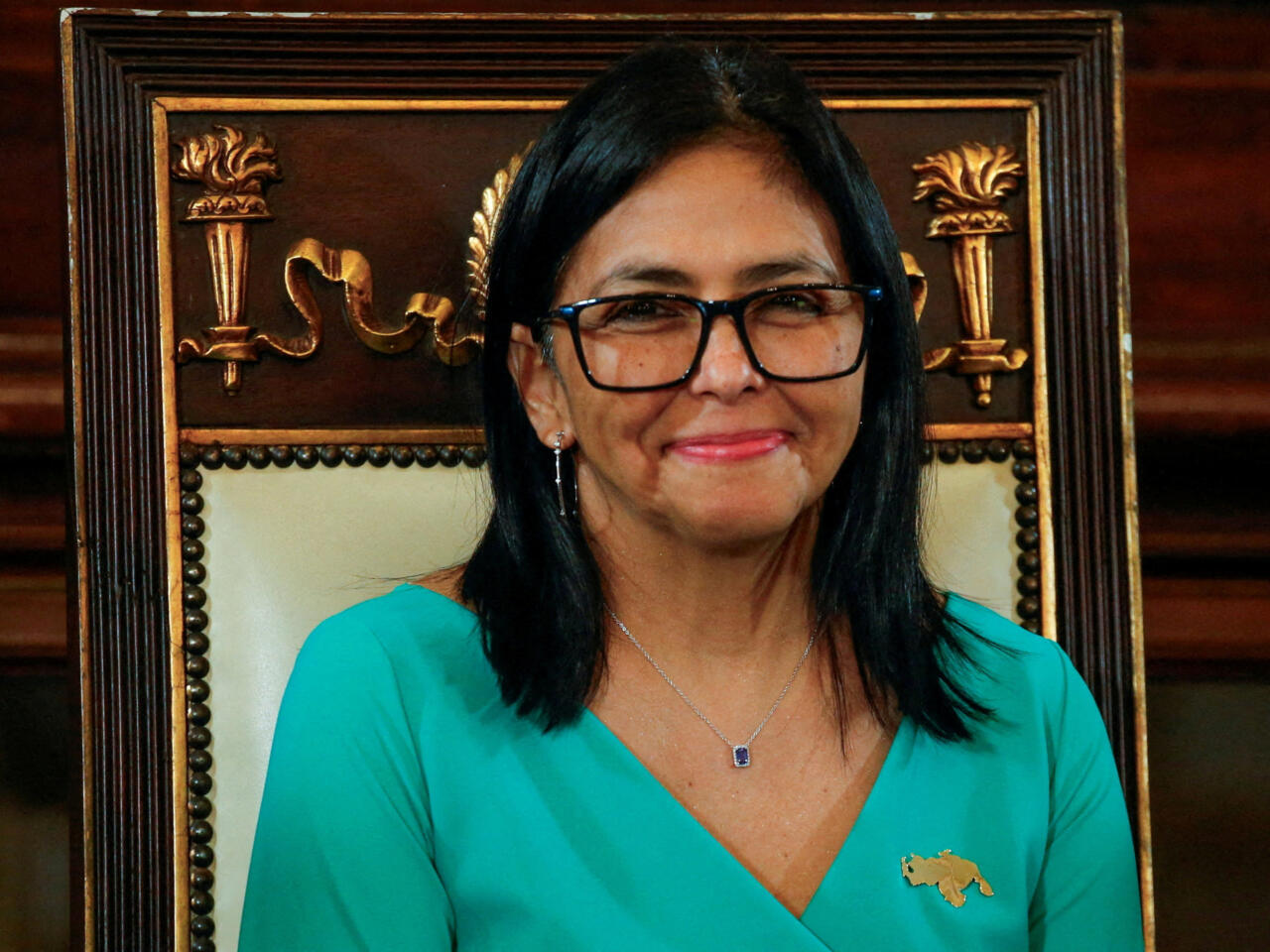
Who is Delcy Rodriguez, Maduro's VP and now the acting president of Venezuela? - France 24
Delcy Rodríguez [Source: france24.com]

Maduro and Flores still sit behind bars in New York. On September 3, Maduro urged the judge to dismiss the criminal drug-trafficking charges against him, arguing he should be immune from prosecution as the head of a sovereign country.

Is Venezuela still a sovereign country? Former Venezuelan Foreign Minister Jorge Arreaza said, “Everything is now negotiated” with Washington, requiring a daily give-and-take with Caracas. When does it become regime change if everything must be negotiated with Washington?

Peoples Dispatch reports that, “Despite every attempt to overthrow the government of Venezuela, President Nicolás Maduro remains in charge and has mobilized large sections of the population to defend the Bolivarian Revolution against any threats.” But as is acknowledged, “…U.S. imperialism, by having a gun pointed to the government’s head, is in a position to exert substantial coercion leading to unpalatable decisions, such as Alex Saab’s deportation.”

Doesn’t “substantial coercion” trespass upon sovereignty? When domestic peace occurs due to a gun to your head, is it the measure of success? Saab’s deportation is more grievous than unpalatable.

Although María Corina Machado is now hiring D.C. lobbyists for access to Venezuela’s future, those who question Rodriguez’s decisions are compared to Machado. “It was not so long ago that it was the likes of far-right María Corina Machado who highlighted ‘cracks and fissures within the Chavista ranks’ and anticipated ‘the beginning of a social explosion’ against the elected Venezuelan government. Now some solidarity activists are saying the same.”

Criticizing a government does not make one equivalent to a particular opposition figure. Asking questions is not counterrevolutionary, but essential. What insights have we gained during this period of U.S. imperialism?

CovertAction Magazine’s “Cuba Is Not Venezuela or Jamaica as It Refuses to Become a U.S. Neo-Colony” recounts how, when Jamaican Prime Minister Michael Manley refused Henry Kissinger’s demand to end support for the Angola liberation struggle, the U.S. made sure Manley would lose the next election. Jamaica has been a willing servant of the Empire ever since, recently ending an essential Cuban health care program that brought doctors to the country. A neo-colony is certainly not sovereign.

It is tragic that Venezuela is used as the current example of what other countries want to avoid. Maduro recently posted that “Venezuela will be reborn.” Venezuelan popular movements now call for ‘anti-imperialist resistance’ to the recent oil deal for its lack of transparency and implications for Venezuelan sovereignty. Organizer Orlando Vega argued that the Venezuelan government “stumbled” in its response to the January 3 U.S. attacks. He urged a demand for the release of Maduro and Flores and a review of legislation approved “under U.S. coercion.”

But a key political question is: “What remains of Bolivarian sovereignty if control over the country’s primary energy resources is gradually transferred to private actors linked to U.S. interests?…A process born in the name of sovereignty and independence risks resulting in the subordination of key strategic resources to the interests of a foreign power…Venezuela faces what appears to be the liquidation of sovereignty, self-determination, and the legacy of the Bolivarian Revolution.”

“History shows that, more often than not, loss of sovereignty leads to liberalization imposed in the interests of the powerful.”—Noam Chomsky

Veteran Intelligence Professionals for Sanity (VIPS) recently issued a memo which states that Cuba is not Venezuela. They predict that “The same people who keep ’57 Chevrolets on the road with a coat hanger will wreak havoc against a foreign-imposed regime.”

Cuba refuses to accept a dialogue based on subordination. It declares it will engage in dialogue with Washington, but will not negotiate under pressure or cede its sovereignty. “We have no alternative but to resist. We must resist,” said Cuban President Miguel Díaz-Canel, who explicitly linked the defense of socialism to the defense of national independence and sovereignty. Is Cuba’s refusal to kneel to Uncle Sam the reason the U.S. strategy for Cuba recently shifted from the military option to sanctions?
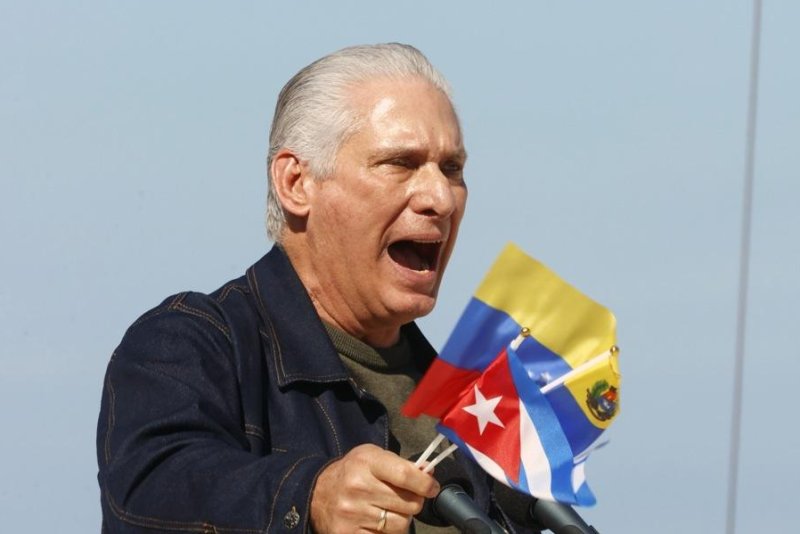
Cuban president acknowledges talks have begun with United States - UPI.com
Miguel Díaz-Canel [Source: upi.com]

“Our position is that we do not accept conditions of any kind which may affect the independence and sovereignty of our country just with the view to solve economic problems existing between the United States and Cuba.”—Fidel Castro

The Soviet Union helped Cuba survive its illegal sanctions, begun in 1960, but since the fall of the Soviet Union in 1991, Cuba suffered and struggled under increasing sanctions—mostly alone. In a promising new development, Russian Deputy Foreign Minister Sergei Ryabkov recently announced that Russia and Cuba will continue strengthening their strategic partnership despite attempts to undermine bilateral cooperation through intimidation and political pressure.
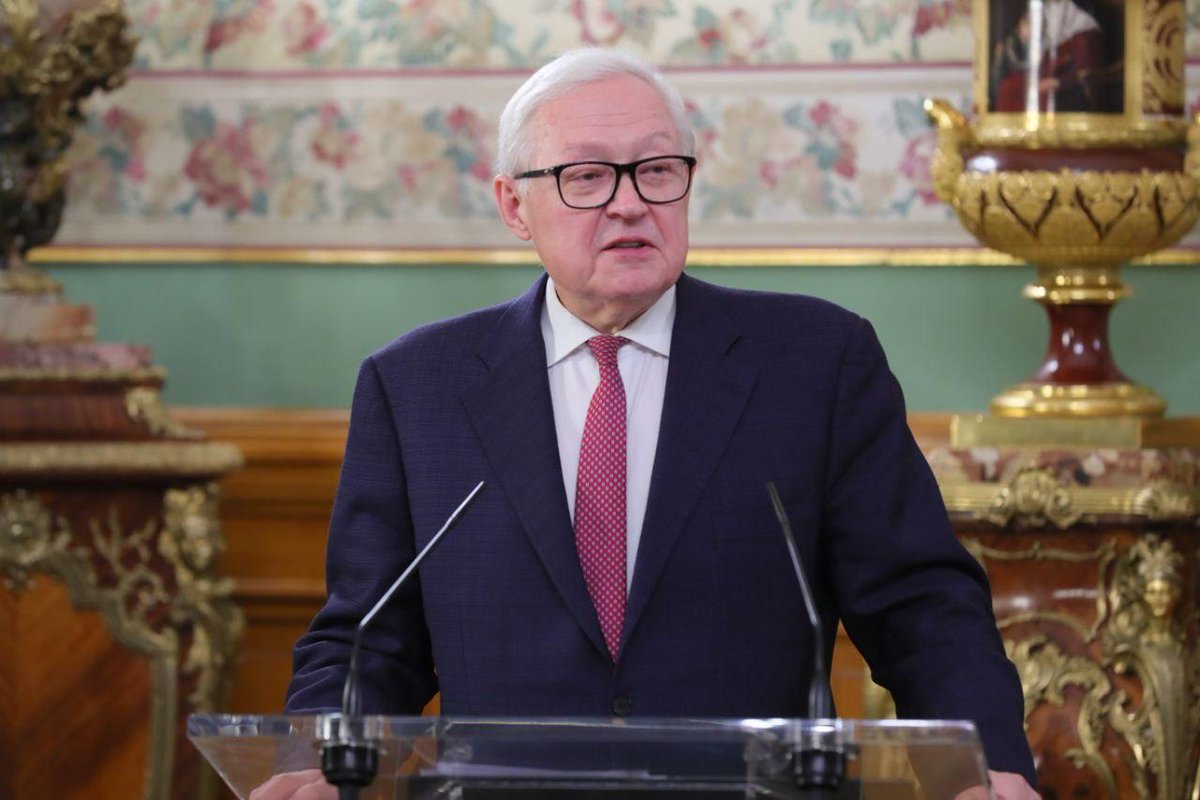
MFA Russia 🇷🇺 on X: "🗓 Deputy Foreign Minister Sergey Ryabkov met with participants of the strategic session of the #BRICS Civil Council (November 17-18). A comprehensive discussion took place regarding the
Sergei Ryabkov [Source: x.com]

The Pillar of Sovereignty

The Peace of Westphalia, which established the nation-states in 1648, enshrined the concept of state sovereignty into international law, which was formalized centuries later by the United Nations Charter. The founding principle was that every State, regardless of size and economic importance, has an equal right to sovereignty. This cornerstone of modern international law establishes the concept that a nation-state has supreme, independent authority over its own territory and domestic affairs.

In tragic irony, sovereignty is used to justify the right to kill in defiance of international law. Carl Schmitt, a German philosopher and jurist who joined the Nazi Party in 1933, defined sovereignty as the “power to decide the state of exception.” William Blum’s Rogue State outlines in brutal detail how the U.S. has long been a lawless state, blind to others’ sovereignty, and the devastating danger that state of exception reflects.

Recently, Marco Rubio had the audacity to claim that “The ICC [International Criminal Court] poses an intolerable threat to U.S. sovereignty.” Then on October 9, the U.S. imposed new sanctions on the ICC, apparently because the Nobel Peace Prize was awarded to Navi Pillay, a former ICC judge who once criticized Israel.

However, “The ICC is not claiming jurisdiction over conduct in the United States,” said Kenneth Roth, of Human Rights Watch. “Rubio is dressing up his quest for impunity for American war crimes under the label of national sovereignty, which ignores the sovereign right of other nations to invoke the ICC for crimes committed on their territory.” Sovereignty does not imply immunity, but accountability to the rule of law.
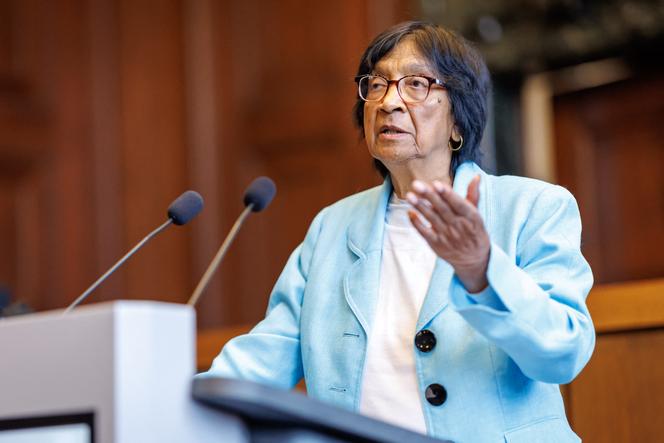
South African-born jurist and former UN human rights chief Navanethem "Navi" Pillay, speaks at the Nuremberg Forum in Nuremberg, Germany, October 9, 2026.
Navi Pillay [Source: lemonde.fr]

Vijay Prashad outlines the struggle for sovereignty in the Global South: “Can the nations of the Global South act together with sovereignty and dignity? Can they build institutions that serve their peoples rather than global capital?…A political consciousness that favours sovereignty and strategic autonomy is rising in the Global South.”

When a country gives up strategic autonomy, has it compromised its sovereignty? Prashad concludes: “The peoples of the Global South demand sovereignty, equality, and peace.” Sovereignty is becoming a mantra, though its clear meaning remains elusive.

“How does any country give up any sovereignty and expect to survive as a government?…That would be political suicide.”—Benigno Aquino III

Geopolitical analyst Pepe Escobar explored modern global sovereignty in “Eurasia, the Hegemon, and the Three Sovereigns,” asserting that true, uncompromised national sovereignty in contemporary geopolitics requires reconceptualizing the understanding of sovereignty. He addressed the need to “pierce far beyond sovereignty as interpreted in conventional political science and predominant international relations narratives.”

When does genocide of resident civilians cancel the right to sovereignty over them? Banning a native language is legally genocide. Ukraine banned the Russian language on the first day of the 2014 coup.

So did Russia violate Ukraine’s sovereignty when it began the SMO? The Donbas, after 12,000 civilian deaths in eight years, voted—overwhelmingly—to rejoin the Russian Federation. The Duma voted to accept their request for reunification.

When international law fails, with total UN abdication, and agreements like Minsk I and Minsk II are used as a ruse, how is Ukraine’s alleged sovereignty legitimate while it commits genocide against its own people?

Cuba remains a sovereign socialist country which says it will not surrender. Venezuela reminds us how quickly a revolution can be compromised when sovereignty becomes a negotiable variable. What is the “difference between sovereignty and subordination, between resistance and surrender?”

When Castro won the Cuban Revolution, he immediately distributed guns to the peasants, because he knew that he needed the people to maintain the victory. And he certainly agreed with Frederick Douglass that “It’s better to die free, than live as a slave.”

Sovereignty requires that the people of each country are free to make their own choices, without coercion or a gun to their head.

Original article:  covertactionmagazine.com

  •  

Malta Faces Renewed EU Scrutiny Nine Years After Daphne Caruana Galizia’s Murder

The European Commission has urged Malta to strengthen judicial independence, tackle corruption and improve protection for journalists, as a European Parliament debate exposes continuing disagreements over the country’s rule-of-law record.

The European Commission has called on Malta to accelerate judicial reforms and strengthen safeguards for journalists, nine years after the assassination of investigative reporter Daphne Caruana Galizia, as the European Parliament revisited concerns over corruption and institutional accountability on Wednesday, 21 October.

European Commissioner for Democracy, Justice, the Rule of Law and Consumer Protection Michael McGrath told MEPs in Strasbourg that Malta had made progress in certain areas but had yet to implement several outstanding recommendations concerning judicial independence, high-level corruption and media freedom.

The debate followed the controversial acquittal of businessman Yorgen Fenech, who had been accused of involvement in Caruana Galizia’s murder. Maltese prosecutors appealed the verdict in September, leaving the criminal proceedings subject to further judicial consideration.

Commission identifies continuing weaknesses

The European Commission’s 2026 Rule of Law Report, published in July, assessed Malta’s progress in reforming its justice system, anti-corruption institutions and protections for the media.

The report acknowledged certain improvements, including additional resources allocated to judicial and prosecutorial authorities.

However, it found that progress remained limited on several recommendations.

These include reducing delays in judicial proceedings, improving the investigation and prosecution of high-level corruption and ensuring greater judicial involvement in the appointment of the Chief Justice.

The Commission has also expressed concern about the effectiveness of existing anti-corruption arrangements.

Although investigations and prosecutions have increased in some areas, Brussels continues to seek a stronger record of final judgments in major corruption cases.

Court delays and pressure on judicial resources remain significant difficulties.

McGrath told Parliament that the Maltese authorities must continue implementing reforms to address these shortcomings.

Fenech acquittal intensifies accountability debate

Caruana Galizia was killed by a car bomb near her home in Bidnija on 16 October 2017.

The 53-year-old journalist had investigated corruption, money laundering and political connections involving prominent figures in Malta’s business and political establishment.

Her assassination prompted international condemnation, widespread demonstrations and investigations into the circumstances surrounding the killing.

Several men have subsequently been convicted for participating in the murder or supplying the explosives.

However, the criminal proceedings concerning the alleged commissioning of the assassination have remained contentious.

On 2 September 2026, a nine-member jury acquitted businessman Yorgen Fenech of complicity in the murder and criminal association. The verdict was reached by eight votes to one.

Fenech had denied ordering or financing the killing.

The acquittal prompted criticism from Caruana Galizia’s family and organisations campaigning for press freedom.

On 22 September, Malta’s Attorney General formally appealed the verdict, challenging legal decisions made during the trial.

The appeal does not overturn Fenech’s acquittal or establish criminal responsibility.

The Court of Criminal Appeal must determine whether the legal grounds presented justify further proceedings, potentially including a retrial.

The criminal case remains separate from the broader political debate over Malta’s institutional reforms.

Maltese MEPs clash in Strasbourg

Wednesday’s parliamentary debate exposed sharp disagreements between representatives of Malta’s opposition Nationalist Party and governing Labour Party.

Nationalist MEPs Peter Agius and David Casa criticised the authorities’ record on corruption and institutional accountability.

Agius argued that repeated European Commission assessments had failed to produce sufficient improvements and questioned whether Malta’s institutions were effectively addressing allegations of wrongdoing.

Casa referred to the findings of the independent public inquiry into Caruana Galizia’s assassination, which concluded in 2021 that the state had contributed to circumstances in which a climate of impunity enabled the killing.

He argued that significant recommendations arising from that inquiry remained outstanding.

Labour MEP Alex Agius Saliba rejected the criticism, maintaining that Malta had implemented reforms and that its judicial institutions should be allowed to perform their functions independently.

He pointed to the prosecution’s appeal against Fenech’s acquittal as evidence that the judicial process was continuing.

Labour MEP Thomas Bajada concentrated on the protection of journalists and the need to counter misinformation while preserving independent reporting.

The disagreements subsequently prompted a response from Maltese Prime Minister Robert Abela, who accused opposition MEPs of damaging Malta’s reputation through their interventions.

Protection of journalists remains unfinished

Media freedom featured prominently in the Commission’s concerns.

Malta has introduced legislation addressing certain abusive legal proceedings against journalists, including transposing EU protections against strategic lawsuits intended to discourage public participation.

However, the existing measures principally concern civil proceedings with cross-border implications.

The Commission has urged Malta to extend comparable protections to domestic cases.

Other concerns include journalists’ access to official information, protection from intimidation and the need for more comprehensive legislative safeguards.

McGrath indicated that the Maltese government intended to present additional media legislation in the coming weeks.

The Commission has called for consultations with journalists, media organisations and civil society before the measures are adopted.

European institutions are also examining Malta’s implementation of wider EU requirements under the European Media Freedom Act.

Further pressure for reform

The European Parliament’s proceedings form part of the continued scrutiny of Malta’s institutional record following Caruana Galizia’s assassination.

The Commission’s annual rule-of-law assessments provide a mechanism for identifying outstanding problems and monitoring governments’ responses.

However, the implementation of many recommendations remains the responsibility of national authorities.

For Malta, the immediate issues concern the government’s promised media legislation, outstanding judicial reforms and the progression of the appeal in the Fenech case.

The Commission has made clear that further improvements are required, while the Maltese government maintains that substantial institutional changes have already been introduced.

The next assessment will depend on legislative measures actually adopted, their implementation and progress through the relevant judicial proceedings.

  •  

Separatists Won Elections in Quebec

The Parti Québécois, which advocates for the independence of the French-speaking province, has won the elections in Quebec but failed to secure a clear majority to govern alone. The party returns to power for the first time since 2014, and the outcome poses a significant political challenge for Canadian Prime Minister Mark Carney. With over […]

  •  

Hungary Remains Under EU Article 7 Scrutiny Despite Progress Under Magyar Government

EU ministers have reviewed reforms introduced by Prime Minister Péter Magyar’s administration but left the Article 7 proceedings against Hungary unresolved. The European Commission has acknowledged significant progress while warning that further changes are required to restore the rule of law.

The European Union has maintained its Article 7 proceedings against Hungary despite acknowledging significant improvements in the country’s rule-of-law situation since Prime Minister Péter Magyar’s government took office earlier this year.

Ministers meeting at the General Affairs Council in Luxembourg on Tuesday, 13 October, reviewed reforms introduced by the Hungarian administration and received an updated assessment from the European Commission.

The proceedings, initiated by the European Parliament in September 2018, remain open eight years after concerns over judicial independence, corruption, media freedom and democratic accountability first prompted action under the EU treaties.

No decision was announced to terminate the procedure following the latest meeting.

Brussels acknowledges progress

European Commissioner Michael McGrath said ahead of the discussions that Hungary had made substantial progress towards addressing the institutional problems inherited from the administration of former prime minister Viktor Orbán.

Speaking in Luxembourg, McGrath acknowledged improved cooperation between the Hungarian government and European institutions.

However, he also indicated that the reform process remained incomplete, noting that the new administration had been in office for only several months.

The Commission’s assessment reflects the changing relationship between Budapest and Brussels following Magyar’s election victory and the subsequent introduction of reforms intended to restore judicial and institutional independence.

As EU Today reported in June, the change of government created an opportunity to resolve long-standing disputes over the condition of Hungary’s democratic institutions and the suspension of European funding.

The latest Council discussions indicate that the EU is prepared to recognise reforms already undertaken without automatically treating them as sufficient to close the Article 7 procedure.

An eight-year institutional dispute

The European Parliament initiated the proceedings in 2018 after raising concerns over developments affecting Hungary’s constitutional system, judicial independence, corruption safeguards and civil society.

Article 7 of the Treaty on European Union provides mechanisms for responding when a member state is considered at risk of seriously breaching the Union’s fundamental values.

Under its preventive provisions, the Council can determine whether there is a clear risk of such a breach.

More severe measures, including the possible suspension of certain membership rights, require additional procedures and higher institutional thresholds.

Hungary’s case has remained within the preventive stage, with successive Council meetings examining the country’s legal and political developments.

The Council’s account of the 13 October meeting confirms that Hungarian representatives presented measures intended to address concerns raised by the European Parliament and member states during earlier proceedings.

The Commission also briefed ministers on its latest assessment.

The meeting did not produce a formal finding that the outstanding concerns had been fully resolved.

Magyar faces the consequences of Orbán’s legacy

Since assuming office, Magyar has sought to reverse elements of the institutional structure established during Orbán’s lengthy premiership.

The reforms have included measures concerning public administration, judicial accountability and the relationship between national institutions and European law.

The new government has also attempted to improve relations with Brussels after years of disputes that affected EU budget decisions, sanctions policy and cooperation over Ukraine.

EU Today has previously examined Magyar’s programme of institutional renewal and the political difficulties involved in changing institutions shaped by the previous administration.

Reforming legislation does not necessarily transform the institutions responsible for applying it.

Judicial appointments, regulatory structures, public procurement procedures and anti-corruption enforcement may all require additional measures before the effects of reform can be fully assessed.

The European Commission must therefore consider not only the laws adopted by the new government but also whether the institutions concerned operate independently and effectively.

EU funding remains a separate question

The Article 7 proceedings are closely associated with wider disputes over Hungary’s access to European funding, although the relevant legal mechanisms are different.

During Orbán’s administration, the Commission and Council used financial conditionality procedures to restrict access to certain EU resources because of concerns affecting the protection of the Union’s budget.

Magyar’s reforms have opened the possibility of reversing some of those restrictions.

As EU Today reported in September, the Commission moved towards releasing €4.2 billion following changes intended to address rule-of-law concerns.

The financial decisions involve compliance with conditions attached to EU funding and can proceed independently of the Article 7 mechanism.

Consequently, the release of money does not automatically establish that all the institutional problems identified in the original parliamentary proceedings have been resolved.

Likewise, the continuation of Article 7 does not necessarily prevent the Commission from recognising progress under separate funding arrangements.

Who can end the proceedings?

McGrath addressed the possibility of terminating the procedure during remarks before Tuesday’s meeting.

He explained that the Commission could provide its assessment but did not have unilateral authority to bring the Article 7 process to an end.

In his recorded statement in Luxembourg, the Commissioner pointed to the responsibilities of the European Parliament, which initiated the case, and the Council, which has conducted the subsequent examination.

The institutional arrangements mean that improved relations between the Commission and the Hungarian government cannot by themselves dispose of the proceedings.

The Council must consider the reforms and the remaining concerns within the framework established by the treaties.

Political agreement among member states will consequently be required to determine how the process develops.

A changed relationship with Brussels

The latest discussions take place against a substantially different political background from previous years.

Budapest has recently withdrawn objections to further steps in Ukraine’s EU accession negotiations following Ukrainian legislation addressing educational rights for Hungarian speakers and other national minorities.

The change has removed one obstacle to enlargement negotiations and reflects the government’s more cooperative approach towards other EU institutions.

Nevertheless, Hungary’s position on foreign policy and enlargement is distinct from the assessment of its domestic rule-of-law arrangements.

The Council’s examination remains focused on the institutional concerns that led to the procedure being initiated.

The Irish presidency’s summary of the October Council meeting confirms that ministers received an update rather than reaching a new formal determination.

The proceedings therefore remain open while the Commission and member states continue examining the measures introduced by Magyar’s administration.

The coming decisions will establish how European institutions respond when a new government undertakes reforms intended to reverse the conduct that originally led to action under Article 7.

For Hungary, the outcome will influence its relationship with Brussels well beyond the immediate debate over EU funding. For the Union, it will demonstrate how its rule-of-law procedures operate when political circumstances change and the member state concerned begins addressing previously identified institutional problems.

  •  

Ireland, Scotland, and Wales independence parties pledge cooperation toward self-determination

Leaders of pro-independence parties in Ireland, Scotland, and Wales met in Cardiff on Monday to sign a memorandum of understanding laying out a plan for strengthened cooperation. The document commits Sinn Féin, the Scottish National Party (SNP), and Plaid Cymru to deepen exchanges on renewable energy, economic policy, and, notably, “supporting the right of each nation to determine its own future.”

“For the first time ever, people across these islands have First Ministers in Scotland, in Wales, and in the North of Ireland who are all committed to independence from the United Kingdom,” the memorandum states. “For people watching across these islands – for people watching around the world – there could be no clearer sign that Westminster’s time is coming to an end.”

Read more: Welsh by-election shows far right isn’t the only alternative to establishment parties

The agreement includes commitments to break with the economic policy shaped in London and to build a different approach that would “create good jobs, tackle inequality and ensure that wealth and opportunity are spread more fairly.” It also outlines an energy strategy promising to leverage the three regions’ renewable resources to bring more affordable energy to communities.

However, the provision that has attracted most attention is the commitment to realize the three nations’ right to self-determination. “We call for the British Government to prepare for, plan and facilitate constitutional change in each jurisdiction,” the party leaders wrote. “No Westminster government has the right to block democracy or undermine the principle that our people will decide their own future,” they added.

The meeting followed comments by British Prime Minister Andy Burnham on the possibility of independence referendums in Scotland and Ireland. Burnham ruled out – in different terms – such public votes, drawing criticism from independence-oriented parties. 

In Ireland, his remarks were called out for contradicting Good Friday Agreement provisions that foresee a path to the island’s unity. “It is not an option that the British government can choose whether or not to exercise based on what is politically convenient, but a legal obligation that plays a critical role in underpinning the relative peace achieved since 1998,” the Workers’ Party of Ireland wrote.

Read more: On anniversary of Easter Rising, calls for Irish unity are strengthened

The SNP insisted their ongoing efforts for achieving independence must be contextualized as a response to the aftermath of the 2014 referendum, where unionist parties argued that staying in the UK provided more stability and predictability. Following that vote – where a majority of Scots opted for remaining in the UK – British authorities failed to live up to such arguments, the party said, including when it comes to the protection of public services. “Westminster blocked legislation designed to protect the NHS from being opened up to US healthcare corporations in post-Brexit trade deals, treating our public health service like a garage sale item,” the SNP wrote.

Pro-union critics suggested the memorandum’s commitments risk diverting public attention from everyday issues toward lengthy constitutional discussions. However, Sinn Féin, the SNP and Plaid Cymru contrasted this with a different approach, insisting that independence would allow more space for challenging harmful policies imposed by the British government and for realizing a different vision of society.

  •  
❌