Indian engineering services company L&T Technology Services (LTTS) agreed a five-year contract to back Nokia’s local engineering and R&D work into areas including 5G, AI-based operations and next-generation computing infrastructure.
LTTS plans to establish a dedicated offshore development centre to support the Finnish vendor’s R&D programmes spanning product engineering and development, embedded systems, and software and system integration.
Financial terms were not disclosed.
LTTS added it would also assemble a dedicated engineering team to work with Nokia R&D teams globally.
It stated the development centre would focus on engineering for telecoms and data centre infrastructure, along with employing AI in network automations and developing intelligent automation.
Vivek Jaiswal, SVP of engineering at Nokia, said India is an “important innovation hub” for the vendor and backed LTTS to help “expand our R&D footprint and accelerate innovation”.
He argued is it essential Nokia continues investing in R&D to deliver the “advanced connectivity technologies” AI requires.
For LTTS, the contract aligns with a focus on next-generation computing and AI infrastructure.
LTTS provides AI, digital and engineering R&D services across more than 25 countries.
The agreement comes as Nokia positions AI infrastructure and advanced connectivity as key growth areas during a period CEO Justin Hotard previously called a “super cycle” involving the technology.
UK operator Virgin Media O2 (VMO2) flagged an around 20% improvement in spectral efficiency by using AI technology in the RAN during a test with Nokia at a busy transport hub, in what it described as first of its kind in the nation.
The test used AI to predict and optimise 5G radio resources during changing network conditions and levels of demand on a site serving customers around London Paddington rail station.
VMO2 noted use of the technology meant it could carry a greater amount of data using existing spectrum resources and deliver “significant throughput gains” during periods of high demand.
It asserted the results showcase how it can use AI to support growing traffic volumes, faster downloads and higher quality streaming, while reducing buffering in busy locations.
VMO2 CTO Jeanie York said as demand for data keeps growing “we need smarter ways to make the most of the spectrum and infrastructure we already have”.
“This live trial with Nokia showed how AI can improve network efficiency and help us respond more effectively to changing customer demand. By making better use of existing network resources, we can deliver a better experience for customers while supporting future traffic growth.”
Nokia president of mobile networks Emma Falck added the test “demonstrates how AI is moving from experimentation to delivering measurable benefits in live mobile networks”.
She added the collaboration “shows the significant potential of AI-native networks to enhance customer experiences while improving operational efficiency”.
The news is the latest in what is a hot mobile industry topic of use of AI in the RAN and comes a week after a spate of partner releases involving Nokia’s work in the segment alongside Nvidia.
Já estávamos com saudade de ouvir isto … O toque mais famoso da história dos telemóveis não nasceu num estúdio: são uns segundos de “Gran Vals”, peça para guitarra que o espanhol Francisco Tárrega escreveu em 1902. No fim dos anos 1990 e início dos 2000, havia um som que se ouvia em todo o lado. Nas ruas, nos cafés, aeroportos, centros comerciais, salas de reuniões. Nos cinemas, a meio dos filmes, como não podia deixar de ser. E em casa, até em casa. Se um telemóvel tocava, era quase certo que dava aquela melodia. Nessa altura ainda não se
Já estávamos com saudade de ouvir isto ... O toque mais famoso da história dos telemóveis não nasceu num estúdio: são uns segundos de "Gran Vals", peça para guitarra que o espanhol Francisco Tárrega escreveu em 1902. No fim dos anos 1990 e início dos 2000, havia um som que se ouvia em todo o lado. N
Finland will donate diesel locomotives to Ukraine’s state railway, the Office of Ukraine’s President reported. Helsinki also pledged new winter aid, and the two countries signed deals on drones, housing, and satellite communications during Finnish Prime Minister Petteri Orpo’s visit to Kyiv. One of them is a first step toward a satellite link Ukraine would control itself.
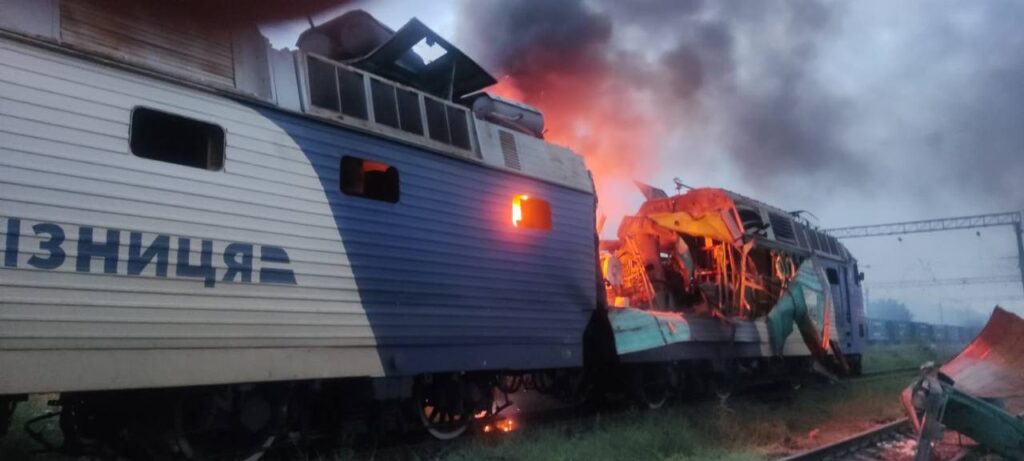
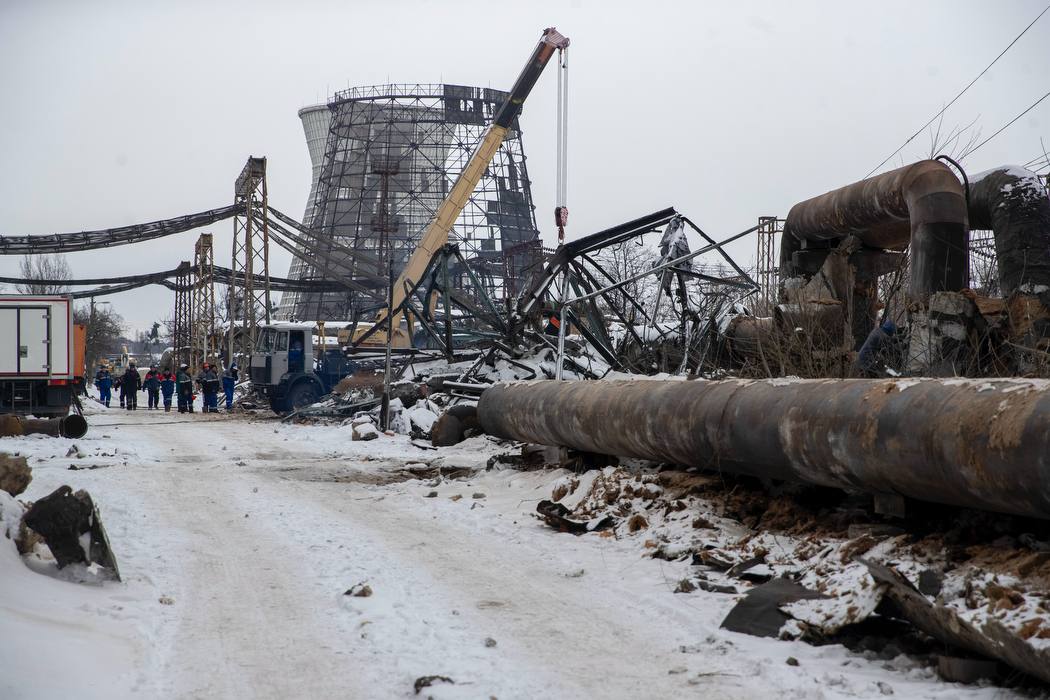
With Russia replacing its missiles as fast as it fires them, Ukraine heads into winter needing equipment that works without the grid. Russian strikes have damaged or destroyed almost 600 locomotives of Ukraine’s state railway since the full-scale invasion began, more than 300 of them diesels, the infrastructure minister said. The attacks have reached engines even near the Polish border, on the railway that carries Ukraine’s evacuations, grain, and cargo.
Diesels that keep moving when the grid goes down
Finland will hand 10 locomotives and their spare parts to Ukrzaliznytsia, Ukraine’s state railway, free of charge. Infrastructure Minister Mykola Kalashnyk announced the deal, signed on 22 October at a Ukrainian-Finnish business forum. The engines need no power from overhead lines, so trains can keep running during blackouts.
The engines are Dv12 diesels that VR, Finland’s state rail company, is taking out of service. A VR shareholders’ meeting moved them into state ownership, and the Finnish state is donating them, Yle reported. VR puts their value, spare parts included, at about €2.1 million. Finland’s government said the gift will not affect VR’s ability to run trains at home.
A VR Class Dv12 diesel locomotive in Finland, 16 April 2007. Photo: Matthew Ross/Wikimedia Commons
Ukrainian Prime Minister Serhii Koretskyi and Orpo signed the donation certificate, one of seven documents signed that day. Two others plan Ukrainian-Finnish drone production in Finland, one for military and dual-use systems and one for heavy drones. Another covers a precast concrete plant for industrial housing construction.
The day’s agreements are worth around €300 million in total, Zelenskyy said. Projects worth €200 million are already under way within the two countries’ Drone Deal, he added. Under an earlier plan, most drones made in Finland would go to Ukraine.
Explore further
Finland backs €28.5 million power plant project as Ukraine braces for Russia’s next winter energy assault
Winter money now, a 36th military package by year’s end
Orpo announced a new €10 million package. Of it, €5 million goes to the Ukraine Energy Support Fund and €2 million to humanitarian aid for winter. The last €3 million goes to the Ukraine Recovery Program, for energy and water supply. Finland will also deliver mobile heating containers by December.
Finland has given Ukraine five defense packages this year, worth more than €500 million combined, Militarnyi reported. A 36th package is being prepared together with Ukraine’s military. “We plan to make a decision by the end of this year,” Orpo said. In September, Finland approved a package worth about €290 million.
A satellite link Ukraine would own
Ukraine’s Defense Ministry signed a letter of intent with Finnish satellite firm ICEYE and telecom company Nokia, Militarnyi reported, citing ICEYE. The parties will explore building a secure satellite communications system under Ukraine’s control. The aim is to reduce Ukraine’s dependence on foreign commercial operators.
In this model, the state customer owns the satellites, ground stations, and user terminals, RBC-Ukraine reported. The network could serve defense, border protection, emergency services, and disaster recovery. The letter sets out no timeline or funding.
“Modern warfare has proven that reliable communications are a matter of national security,” Zelenskyy said in the companies’ statement. ICEYE CEO Rafal Modrzewski said Ukraine needs “secure, sovereign and high-performance satellite communications systems that it controls.”
The deal comes after a speed cap on Starlink disrupted Ukrainian drone missions this month. The EU, meanwhile, is pushing three European firms to merge into one SpaceX rival. ICEYE has supplied Ukraine with radar satellite imagery for years.
Days before the signing, tracking firm LeoLabs said a Russian government-owned satellite, Cosmos 2612, had spent weeks shadowing an ICEYE radar satellite, coming within 500 meters. The ICEYE satellite is widely believed to provide imagery to Ukraine.
Neither fix is quick. Ukraine’s big locomotive order arrives from 2027, and the first satellites of the ICEYE-Nokia system are expected to launch only in 2028.
O lucro bruto da Nokia entre janeiro e setembro ascendeu a 6.298 milhões de euros, um aumento de 7,7% em termos homólogos, embora o resultado operacional tenha diminuído 43% para 229 milhões.
Nokia CEO Justin Hotard (pictured) pointed to a boom in sales for its AI and cloud products during Q3, as he asserted the vendor is in a strong position to take advantage of growing demand for related infrastructure.
AI and cloud sales were up 123% year-on-year, with €1.5 billion of new orders placed in the quarter.
Hotard reported there is also an order backlog, positioning it for further growth in the area.
“Nokia’s strengths are uniquely suited to meet growing demands for AI infrastructure that is larger, more distributed and hyperconnected,” he added. “We are investing where we can differentiate and co-innovate with hyperscalers”.
Hotard highlighted progress on AI-RAN, which was the subject of an update yesterday (21 October) made at an event held by the Finnish vendor’s partner and investor Nvidia.
“AI-native networks are moving into the physical world and our AI-RAN platform is being developed to deliver the performance needed for this market,” Hotard said.
Gains Nokia booked net profit of €156 million in Q3, up 95%.
Net sales were almost €5.2 billion, a 10% increase. The latter figure would have been a 9% rise with exchange rate fluctuations stripped out.
In its Mobile Infrastructure division, revenue was up 5% to €2.9 billion, partly attributed to shifting income from Q4 into Q3. The company noted this part of the business benefitted from “commercial discipline” and continued execution of cost reduction measures.
Hotard highlighted Nokia had continued to “simplify our portfolio” and was on track to complete the integration of optical networks company Infinera by the end of 2026, having acquired it in 2025.
The process is set to be completed a year ahead of its original plan, with the executive noting this created €200 million in net synergies.
With Nvidia’s GTC Berlin event in full swing, the company’s telecoms boss Ronnie Vasishta and Nokia chief technology and AI officer Pallavi Mahajan sit down with the Mobile World Live Podcast in an exclusive interview to reveal the next stage of the pair’s AI-RAN journey, as they team up with European heavyweights to turn networks into distributed intelligence platforms.
Nokia signed an agreement to sell its Enterprise Campus Edge (ECE) business to investment company Aurelius Group, a move the Finnish vendor stated sharpens its portfolio and directs capital to areas earmarked for long-term value.
Value of the planned transaction was undisclosed and Nokia expects the deal to close in the first half of 2027, subject to customary closing conditions.
Nokia this month also completed a deal to sell its fixed wireless access (FWA) CPE business to US broadband vendor Inseego.
Under Aurelius’ ownership, Nokia said ECE will continue to operate as a standalone business but benefit from greater independence and a dedicated strategic focus. Employees are expected to transfer with the business, in accordance with applicable local laws and processes.
ECE has a big presence in the private wireless market, serving almost 900 customers across industries including manufacturing, mining, logistics, airports, ports and power generation worldwide.
Its portfolio also includes industrial devices, on-premises operational technology, edge and micro-edge solutions and software applications to power industrial AI use cases.
Konstanty Owczarek, chief corporate development officer at Nokia, said the deal provides ECE a strong foundation for growth. “Our priority throughout the transition will be continued growth of the business and continuity for existing customers and employees,” he added.

 Login