
 Login

Israel Navigates Political Pivot at the Polls
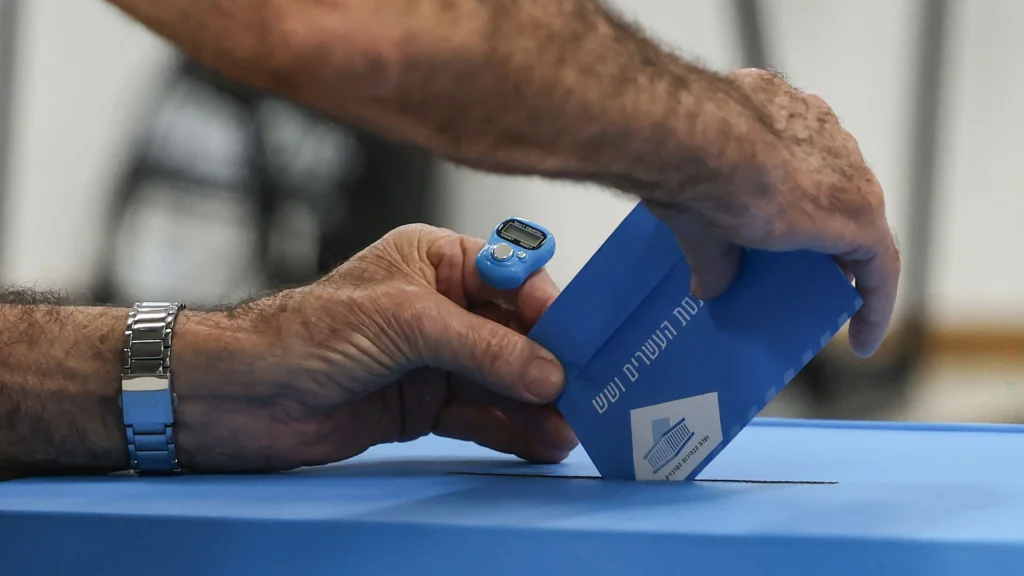
The vote for the 26th Knesset serves as a crucial referendum on the state’s institutions, economy, and military strategy.
The legislative elections for the 26th Knesset, the legislative power, take place at a critical political crossroads for Israel. Scheduled as the first parliamentary contest since the outbreak of hostilities against Gaza following the events of October 7, 2023, these elections serve as a national referendum on the governance model of Prime Minister Benjamin Netanyahu.
RELATED:
Israel Opens Polls for First General Election Since the Gaza Genocide
The outgoing 25th Knesset became the first Israeli legislature since 1988 to complete its full four-year term without early dissolution, surviving despite severe domestic turmoil, mass protests over judicial reforms, and persistent coalition instability.
However, the upcoming vote occurs under international scrutiny and severe domestic polarization. Official data from the Israeli Central Elections Committee shows the number of ballots needed across the country to fill all 120 seats in parliament.
Political analysts note that the campaign reflects deep fractures within Israeli society regarding military strategy, economic priorities, and the future shape of the state’s institutional structure.
Social and Geopolitical Context of the 2026 Elections
The socio-political environment surrounding the current electoral moment is marked by the prolonged attacks on Gaza and wider regional escalations involving Lebanon and Iran.
These conflicts have heavily strained the Israeli economy, accelerated militarization across public life, and deepened existing social divides.
Economic pressures, driven by soaring military expenditures and disruptions across key industrial sectors due to a labor crisis resulting from the movement of Palestinians, the trade blockade, and the brain drain, have intensified Israeli public debate concerning state budgets and resource allocation.
Simultaneously, domestic divisions have intensified around long-standing structural issues, most notably the military conscription exemptions granted to the ultra-Orthodox Haredi population, generating coalition crises and widespread friction between secular citizens and religious factions.
On the diplomatic front, the state faces unprecedented international isolation, underscored by ongoing proceedings at the International Court of Justice and arrest warrants issued by the International Criminal Court against Netanyahu, Prime Minister of Israel, and Yoav Gallant, former Israeli Defense Minister, for alleged war crimes and crimes against humanity.
Despite mounting global pressure and civil society accountability campaigns, the political establishment continues to rely heavily on strategic diplomatic and military backing from Western allies, maintaining an insular focus on security doctrines as voters head to the polls.
Netanyahu escalates racist incitement with false claims of ballot raids by Muslim Brotherhood
— The Cradle (@TheCradleMedia) October 27, 2026
——
Israeli Prime Minister Benjamin Netanyahu intensified his election-day rhetoric, publishing inflammatory claims on social media that supporters of the Muslim Brotherhood were… pic.twitter.com/Oq6hWpSDku
The Electoral System: Proportional Representation and Coalition Dynamics
Israel uses a closed-list nationwide proportional representation system to elect the 120 members of the Knesset. The entire country forms a single electoral district.
Voters select a political party slate rather than individual constituency representatives. To gain representation in parliament, a party list must clear an electoral threshold of 3.25 percent of the total valid votes.
Because no political party in Israeli history has ever won an absolute majority of 61 seats on its own, every administration requires a multi-party governing coalition.
Following the Central Elections Committee, official vote tallies determine seat allocations using the d’Hondt method, which allocates parliamentary seats among the various candidate lists based on the votes received.
Parties frequently enter formal surplus vote-sharing agreements before election day to capture remaining unallocated seats.
Once results are certified, the President of Israel holds consultations with elected party leaders before tasking a chosen candidate, typically the head of the largest faction or coalition bloc, with forming a government within a 28-day timeframe.
This framework gives smaller sectoral and single-issue parties significant leverage during post-election negotiations. Far-right, religious, and nationalist slates often demand key ministerial posts, policy concessions, or budget allocations in exchange for their critical coalition votes.
Political analysts note that institutional features of the system, combined with state policies, impact electoral participation among Palestinian citizens of Israel. Electoral threshold adjustments and legal challenges against Arab-led party slates continuously shape voter turnout in Palestinian municipalities.
While Palestinian citizens account for roughly 20 percent of the population, their representative parties face ongoing systemic exclusion from executive coalition agreements, restricting their influence within the parliamentary framework.
As Arab voter turnout rises, Israel’s far-right leaders are sounding the alarm. War criminal Netanyahu accused “supporters of the Muslim Brotherhood” of raiding polling stations and “stealing the elections,” saying Israel is “in a war for the home.”
— Quds News Network (@QudsNen) October 27, 2026
Finance Minister Bezalel… pic.twitter.com/vrXawm1VF2
Key Candidates and Political Factions
The candidate field for the 26th Knesset reflects a fragmented political landscape divided into distinct ideological camps, which we will detail:
The Right-Wing and Religious Coalition
• Likud: Led by Prime Minister Benjamin Netanyahu, the ruling party centers its platform on national defense, state security, and maintaining its long-standing parliamentary dominance.
• Otzma Yehudit: Headed by National Security Minister Itamar Ben-Gvir, this far-right faction advocates for expanded settlements, strict law-and-order policies, and hardline security measures.
• Religious Zionist Party–Zehut: Led by Finance Minister Bezalel Smotrich alongside Moshe Feiglin, this nationalist alliance focuses on West Bank administration, land policies, and conservative social programs.
• Ultra-Orthodox Parties: Shas, led by Aryeh Deri, and United Torah Judaism (UTJ), led by Yitzhak Goldknopf, prioritize state funding for religious institutions and maintaining draft exemptions for Haredi seminary students.
The Opposition Alliances
• Together (Beyachad): A political alliance formed by former Prime Minister Naftali Bennett and Yesh Atid leader Yair Lapid. The joint platform focuses on institutional stability, economic reform, and governance changes.
• Yashar: A new political movement launched by former IDF Chief of Staff Gadi Eisenkot. The party presents a technocratic platform focused on national security, military management, and state administration.
• Yisrael Beiteinu: Headed by Avigdor Lieberman, this right-wing secular nationalist party focuses on mandatory military conscription for all demographic groups and civic policy reforms.
• The Democrats: Formed through the merger of the Labor and Meretz parties under the leadership of former IDF Deputy Chief of Staff Yair Golan, this unified center-left party emphasizes judicial independence and social-democratic domestic policies.
Arab-Majority Parties
• Joint List: Re-established by Hadash, Ta’al, and Balad under the leadership of Yousef Jabareen, the alliance campaigns on civil rights equality, an end to house demolitions, legal recognition for unrecognized Bedouin villages, and opposition to military occupations.
• United Arab List (Ra’am): Led by Mansour Abbas, this pragmatic Islamist faction focuses on securing municipal development funds, infrastructure investments, and crime-reduction programs for Arab communities.
Netanyahu: Governance Record, Systemic Corruption, and Legal Jeopardy
Benjamin Netanyahu, with more than 15 years, is the longest-serving Prime Minister in Israel. Netanyahu governance has consistently centered on maintaining military administration over occupied Palestinian territories, expanding West Bank settlements, and privatizing state assets.
Netanyahu administrations restructured national tax policies, deregulated key economic sectors, and prioritized defense spending over social welfare initiatives. Netanyahu’s political trajectory remains deeply entwined with ongoing legal proceedings across both domestic and international courts. In domestic tribunals, he faces active criminal charges across three separate indictments known as Cases 1000, 2000, and 4000.
– Case 1000 involves charges of fraud and breach of trust regarding allegations that he received expensive gifts from wealthy business figures in exchange for political favors.
– Case 2000 includes fraud and breach of trust charges related to negotiations with media publishers to secure favorable press coverage in return for legislation restricting competing news outlets.
– Case 4000 contains the most severe charges, bribery, fraud, and breach of trust, alleging that Netanyahu granted regulatory concessions to telecom giant Bezeq in exchange for positive coverage on the Walla news platform.
Netanyahu consistently denies all allegations, maintaining that the investigations represent a politically motivated campaign by law enforcement authorities. In early 2023, his government introduced a major judicial reform initiative designed to restructure judicial appointments and limit Supreme Court oversight over executive decisions.
Opposition figures and legal experts argued that these proposals aimed to undermine judicial independence and stall his ongoing trial, prompting widespread domestic protests and deep institutional instability.
On the international stage, the International Criminal Court issued arrest warrants for Netanyahu, determining that reasonable grounds exist to hold him criminally responsible for war crimes and crimes against humanity in Gaza.
The court cited specific charges, including the deliberate use of starvation as a method of warfare and intentional attacks directed against civilian populations.
Although the Israeli government rejects the jurisdiction of the tribunal, the warrants impose severe diplomatic constraints and travel limitations on Netanyahu across states parties to the Rome Statute.
Voter turnout in Israeli elections as of 16:00 GMT surpassed all votes cast in the 2022, as per data released by the Central Elections Committee.
— Al Jazeera English (@AJEnglish) October 27, 2026
🔴 LIVE updates: https://t.co/M2TC79fNBS pic.twitter.com/LP4ByVJF30
Post-Election Scenarios and Potential Outcomes
The final distribution of seats in the 120-member Knesset will determine whether the incumbent coalition or opposition alliances secure the 61-seat majority required to govern.
If the right-wing and religious coalition retains power under Netanyahu’s leadership, the administration is expected to immediately revive paused judicial reform packages to restructure judicial selection processes and restrict legal oversight of executive actions.
Under this outcome, state policy would focus on expanding West Bank settlement infrastructure, maintaining long-term military control over Gaza, and preserving military conscription exemptions for the ultra-Orthodox population to maintain internal coalition stability.
Alternatively, if an opposition alliance formed by figures such as Gadi Eisenkot, Naftali Bennett, or Yair Lapid captures a parliamentary majority, executive authority would shift toward institutional stabilization. An opposition-led government would likely halt proposed judicial overhauls, reinstate traditional oversight mechanisms, and launch official state inquiries into military and intelligence failures.
Regarding military service, an opposition government would attempt to implement universal conscription policies that include Haredi citizens, a move likely to provoke significant resistance from religious sectors.
Striped of executive protections, Netanyahu’s domestic criminal trials would proceed without executive delays, while international legal pressures stemming from International Criminal Court warrants would remain active.
In the event that neither political bloc achieves a clear 61-seat threshold, the Knesset would enter a state of severe parliamentary deadlock. Under Israeli electoral law, Netanyahu would remain in power as caretaker Prime Minister while political factions negotiate prospective coalition agreements or initiate procedures for new legislative elections, extending the prevailing political uncertainty.
#Israel | Trump endorses Netanyahu ahead of Tuesday's elections, linking his reelection to continued military action against Iran as the Israeli leader fights to retain his parliamentary majority.#DonaldTrump #Netanyahu #IsraeliElections #teleSUREnglish pic.twitter.com/aVhUPyvaKs
— teleSUR English (@telesurenglish) October 27, 2026
Sources: TeleSUR – Al Jazeera – Al Mayadeen – Press Tv – Anadolu Agency – TRT World – RT – The Times of Israel – Reporteros Sin Fronteras – BBC – DW – EFE – AP News – AFP


