 Login

Respaldo mayoritario en la ONU al cese del bloqueo a Cuba
Delegaciones de diversos países denunciaron el impacto humanitario de las hostilidades de Washington contra la mayor de las Antillas e instaron a respetar la soberanía de la isla.



Os comentaristas da CNN José Eduardo Cardozo e Vinicius Poit debateram, na segunda-feira (26), em O Grande Debate (de segunda a sexta-feira, às 23h), se “a mobilização popular ou o antibolsonarismo que definiu a virada de Luiz Inácio Lula da Silva (PT) nas eleições de domingo (25)”.
Lula foi reeleito no segundo turno das eleições, superando Flávio Bolsonaro por mais de 4,5 milhões de votos. Foi a primeira vez na história da República que um candidato que saiu atrás no primeiro turno conseguiu reverter o resultado no segundo.
O comentarista José Eduardo Cardozo defendeu que os dois fatores são inseparáveis. “Não existe essa alternativa”, afirmou. Para ele, a mobilização observada nas ruas de diversas cidades do país, especialmente em São Paulo, na Avenida Paulista, foi de uma intensidade raramente vista.
“Lembrava grandes mobilizações da época do fim da ditadura, e talvez com maior expressão”, destacou Cardozo.
Cardozo apontou que a vitória resultou de uma combinação de elementos. De um lado, havia eleitores que viam na campanha de Lula a continuidade de boas políticas e a defesa da democracia. De outro, setores sem grande identidade com a esquerda, mas que enxergavam no bolsonarismo um risco para a democracia brasileira.
“Uma parte da direita se deslocou porque sabia que não podia ser hegemonizada pelo bolsonarismo”, analisou. O comentarista também citou erros da campanha adversária, como a postura considerada arrogante de Flávio Bolsonaro após o primeiro turno e declarações polêmicas nos debates televisivos.
O comentarista Vinícius Poit concordou que a virada foi resultado de uma combinação de fatores. Ele reconheceu que a campanha de Lula teve uma mobilização expressiva, com a entrada de nomes como Camilo Santana (PT-CE) e Rafael Fonteles (PT), que conferiram um tom diferente ao segundo turno.
“Os caras da esquerda trabalharam e foram atrás do voto”, disse Poit. Ele também admitiu, com ressalvas, que houve “salto alto” por parte de setores da direita após o primeiro turno, embora tenha discordado da avaliação de Cardozo sobre o desempenho de Flávio Bolsonaro nos debates, considerando que o candidato se saiu bem nas duas ocasiões.
Poit mencionou que aliados de Flávio Bolsonaro cogitam questionar a eleição com base em suspeitas de abuso de poder econômico relacionado à mobilização digital da campanha vencedora. No entanto, o próprio comentarista se posicionou contra tentativas de reverter o resultado.
“Quem vai julgar qualquer possível irregularidade é o TSE (Tribunal Superior Eleitoral), o STF (Supremo Tribunal Federal). Vamos em frente”, declarou. Poit também destacou que o próprio partido de Flávio Bolsonaro já reconheceu a vitória de Lula. Para o comentarista, independentemente do resultado, o caminho agora é seguir adiante, de olho nas próximas eleições.
Written by Clare Ferguson with Áine Feeney.
As Members gather for the last plenary session before the summer recess, their agenda covers enlargement, foreign affairs, competitiveness, the EU budget, agriculture, social security and the environment. On Tuesday morning, a debate will follow a presentation of the programme of activities of the Irish Presidency of the Council of the European Union, which began on 1 July. On Wednesday morning, Members will hear Council and European Commission statements on the conclusions of the European Council meeting of 18‑19 June 2026.
Bilateral relations between the EU and Mexico have been bolstered by the current framework since 2000. On Tuesday, Parliament is due to decide whether to give its consent to the conclusion of two instruments to update this framework, the EU-Mexico Political, Economic and Cooperation Strategic Partnership Agreement (Modernised Global Agreement, MGA) and an interim Trade Agreement (iTA), both of which were signed by the EU and Mexico in May 2026. Parliament remains in favour of modernising the MGA, with a joint report by the International Trade (INTA) and AFET committees welcoming it as a step towards further economic expansion that could benefit EU companies and farmers. The INTA committee is due to vote on a draft recommendation on the conclusion of the iTA before the plenary vote.
Lower ticket prices and a wider choice of routes are not the only results of air transport liberalisation. On Monday, Members are expected to discuss an agreement to revise the air passenger rights framework to better protect passengers during increasingly common travel disruption. Delayed in the Council for over a decade, Parliament has shown consistent support for measures to protect air passengers and their rights. Parliament negotiators reached a political agreement in conciliation with the Council in June 2026. The agreement maintains the three-hour threshold for compensation for flight delays and strengthens passenger rights including on rerouting options, protection for missed connections and reimbursement for unused vouchers.
A reform of EU social security rules aims to help citizens living or working in another EU country and better distribute responsibilities between EU countries. Members are set to vote on a provisional agreement on the move to modernise the rules on Monday. Parliament’s negotiators maintained mandatory prior notifications for the construction sector in the agreed text, meaning that authorities of the home Member State would be notified if someone works in another Member State. Parliament’s Committee on Employment and Social Affairs (EMPL) confirmed the agreement in April 2026 and Parliament and the Council now need to formally adopt the new social security rules.
The geopolitical situation in East Asia has grown more volatile as the region experiences increased security challenges triggered by authoritarian regimes. On Monday evening, Members are expected to vote on an AFET committee recommendation, which affirms the need to deepen cooperation with partners in the region, including Japan, Korea, ASEAN and Taiwan. Parliament also recommends establishing a comprehensive EU-Taiwan cooperation framework, in addition to strengthening EU engagement with regional security initiatives and diplomatic efforts to prevent further escalation in East Asia.
The crisis in the Middle East and the closure of the Strait of Hormuz has caused an increase in fertiliser prices, placing a significant financial burden on farmers. On Tuesday, Members are set to vote on a proposal for a regulation to provide temporary common agricultural policy (CAP) support, which would offer exceptional support to farmers most affected by the soaring prices, including the possibility of increased advances on direct payments through existing CAP envelopes. Given the urgency, Parliament decided to consider the proposal without preparing a report, to enable farmers to make prompt decisions on buying fertilisers for the year ahead.
The EU’s plans to allow companies to register as an ‘EU Inc.’, recognised across all Member States, under a ’28th regime’, are central to its competitiveness agenda, aimed at simplifying rules for companies to scale up in the single market. Complementing the legislative proposal already on the table, Members are expected to vote on an own-initiative report from the Committee on Economic and Monetary Affairs (ECON), on Thursday, on the feasibility of a 28th tax regime and its potential to support competitiveness by simplifying and harmonising corporate taxation.
Environmental crimes can have a devastating impact, yet they are difficult to detect and prosecute. Parliament has repeatedly called for measures to combat such crimes. On Wednesday, Parliament is scheduled to vote on endorsement of the EU’s ratification of the Council of Europe’s new Convention on the Protection of the Environment through Criminal Law. A report from the Legal Affairs (JURI) Committee recommends ratification, concluding that the convention is consistent with the EU directive. The new convention establishes minimum requirements for the criminalisation of environmental offences related to activities such as pollution, destruction of biodiversity and improper handling of hazardous waste.
To enter a 2025 budget surplus of €2.1 billion as revenue in the 2026 budget, on Tuesday Parliament is set to consider the Council’s position on draft amending budget No 1/2026 (DAB 1/2026). While endorsing the proposal, a report adopted by the Committee on Budgets (BUDG) welcomes that higher own resources are driving the surplus rather than underspending, but reiterates its long-standing view that revenue from fines and fees should strengthen the EU budget instead of lowering national contributions, and calls for more sustainable EU own resources in the next multiannual financial framework.
Enlargement remains a prominent topic at this plenary session. On Tuesday, Members are expected to debate separately three reports prepared by the Committee on Foreign Affairs (AFET), on Ukraine, Moldova and Serbia. The report on Ukraine stresses the need for a ‘sustainable’ ceasefire and a peace agreement reached with the participation of the EU, while also recognising Ukraine’s European integration as a strategic priority for the Union.
AFET’s report on Moldova commends the country’s commitment to EU accession, condemning attempts by Russian efforts to destabilise Moldova’s path to accession through interference campaigns.
As a result of political instability in the country, Serbia’s EU accession process remains at an impasse. The AFET report recalls that accession is conditional on respect for EU values and democracy, reiterating the need for Serbia to affirm its geopolitical orientation towards the EU, particularly in the context of Russia’s war of aggression against Ukraine.
Written by Clare Fergurson and Katarzyna Sochacka.
The session further focused on Europe’s economic independence, digital sovereignty and resilience on artificial intelligence, as well as the EU’s role in promoting peace and stability in the Middle East. Members debated the electrification action plan, the resilience of the European transport sector amid ongoing geopolitical challenges ,and posed questions to the European Commission on its pledge to reduce the reporting burden, especially for small companies. Debates also addressed protecting child safety and mental health online and the importance of children’s right to play, and promoting culture through the Joint Declaration on ‘Culture for Europe, Europe for Culture’ .
Finally, Members attended two formal sittings, during which Jakov Milatović, President of Montenegro, and Andrzej Poczobut, 2025 Sakharov Prize laureate, recently released from prison in Belarus, addressed Parliament.
The annex shows the breakdown by political group on the final roll-call votes on the files decided by ordinary legislative procedure during the session.
Members posed questions to European Commissioner Valdis Dombrovskis regarding the state of play on the Commission’s pledge to reduce red tape for companies, in particular smaller businesses. To date, ten omnibus packages to simplify EU law have been published, with more scheduled, all currently at different stages of the legislative procedure.
Parliament is committed to ensuring that there are robust legal frameworks to regulate artificial intelligence (AI) in the EU. Members debated and adopted a provisional text on the ‘Digital Omnibus on AI‘, a set of amendments to the AI Act. Parliament favoured fixed deadlines for applying high-risk AI rules, and proposes a ban on AI systems that generate non-consensual sexual content. The agreed text upholds Parliament’s position on the generation of non-consensual sexual content and prohibits AI practices generating child sexual abuse material. The vote postpones application of certain parts of the AI Act, without impacting its core provisions and risk-based approach.
Improper management of end-of-life vehicles can damage the environment and lose millions of tonnes of material that could be recycled to the benefit of the EU economy instead. Parliament debated and adopted a provisional agreement on circularity requirements for vehicle design and end-of-life vehicles. The agreement sets out requirements for passenger and light commercial vehicles. Vehicles must include recycled plastic, in line with progressively rising targets and minimum recycled content requirements. Manufacturers and producers will be obliged to clearly label refurbished parts and provide information regarding safe access to, removal, and replacement of parts.
Members adopted at second reading a provisional agreement reached with the Council on the Commission’s proposal on plants obtained by new genomic techniques. This aims at aligning existing EU legislation on genetically modified organisms (GMOs) with new scientific developments. Parliament’s negotiators supported the simplification of rules for low-risk genetically modified plants (NGT1), provided they are similar to conventionally bred plants and do not have certain excluded traits. The agreement also includes provisions intended to address concerns related to market concentration and access to seeds for breeders and farmers.
Despite playing an important role in the food-supply chain, farmers have faced mounting difficulties in recent years. Parliament adopted a provisional agreement on a regulation strengthening farmers’ position in the food-supply chain. Based on a Committee on Agriculture and Rural Development (AGRI) report, Parliament reached agreement with the Council in March 2026. The agreed text aims to ensure that food prices better reflect the production costs borne by farmers, and includes support for the dairy sector, such as the introduction of mandatory written contracts. It also reinforced producer organisations’ bargaining power and includes clarification on labelling to ensure consumer protection and fair competition.
Parliament debated and adopted the trilogue agreement reached on the proposal for two regulations to implement the EU’s tariff commitments under the EU-US Joint Statement. The Committee on International Trade (INTA) adopted its reports in March 2026. The agreement empowers the Commission to suspend the application of the regulation if the US fails to meet its commitments and introduces additional safeguards, including stronger suspension mechanisms and protections against import surges that could harm domestic producers. A comprehensive review of the measures will be conducted in 2029, with the possibility of extension.
Despite applying for accession as far back as 1999, progress towards Türkiye’s EU membership bid has faced numerous delays since accession talks began in 2005. Parliament held a debate and adopted a Foreign Affairs Committee report on Türkiye, which reaffirms Parliament’s appreciation for the majority of Turkish people’s aspiration to EU accession and maintaining Türkiye’s candidate status. It also reiterates Türkiye’s relevance as a NATO ally and a country with which the EU has multi-layered relations. However, the AFET committee regrets that, despite the Turkish government’s repeated statements recommitting to the EU membership goal, serious concerns raised in previous AFET reports regarding shortcomings affecting the accession process remain unaddressed.
The path to accession for new Member States was a key topic at this plenary session, with Members debating and adopting a set of own-initiative reports from the AFET committee on enlargement candidates in the Western Balkans on Tuesday. The AFET report on Montenegro welcomes the country’s progress and encourages sustained momentum on accession negotiations. The committee also commends Albania‘s dedication to EU integration, but expresses concern about the impact of corruption and calls for full implementation of anti-corruption reforms. The AFET report on Kosovo* reaffirms that the country’s future lies with the EU, and stresses inclusion in EU programmes and policies is vital for gradual integration. AFET’s report on Bosnia and Herzegovina expresses support for EU accession and urges political leaders to renew their commitment to EU membership. Similarly, the AFET report on North Macedonia reaffirms its support for the country’s EU membership aspirations, although it regrets the lack of progress since its 2025 report.
* This designation is without prejudice to positions on status, and is in line with UNSCR 1244/1999 and the ICJ Opinion on the Kosovo Declaration of Independence.
Members also adopted an AFET committee report on Georgia’s EU accession status. The report deplores the continued democratic backsliding in the country and echoes Parliament’s non-recognition of the legitimacy of the Georgian parliament. It also reiterates calls for the EU to impose sanctions against key officials and regime enablers.
Water scarcity and water bankruptcy are serious global issues, and mitigating violations of the human right to water remains crucial for regional stability and sustainable development. Members adopted a recommendation to the Council, Commission and High Representative regarding transnational water governance. An AFET committee report notes the importance of transnational water governance for conflict prevention and peace, underscoring the growing political and security dimensions of water issues. The report calls on the EU to condemn the weaponisation of water in conflicts and urges an increase in funding for transboundary water management and for the EU to take the lead in advancing the UN Sustainable Development Goal on clean water.
Read this ‘at a glance note’ on ‘Plenary round-up – June 2026‘ in the Think Tank pages of the European Parliament.
Written by Clare Ferguson with Áine Feeney.
European Union enlargement and competitiveness are prominent issues on the agenda for the European Parliament’s June plenary session. Jakov Milatović, President of Montenegro is expected to address Parliament in a formal sitting on Tuesday. During the question time session, a European Commissioner will respond to Members’ questions on the state of play on its pledge to reduce the reporting burden, particularly for small and medium-sized enterprises. The Council and Commission will also make statements ahead of the European Council meeting taking place from 18‑19 June 2026. Andrzej Poczobut, laureate of the 2025 Sakharov Prize for his defence of freedom and democracy in Belarus, is expected to address a formal sitting on Wednesday following his recent release from imprisonment in that country.
The path to accession for[CF1] new Member States is a key topic at this plenary session, with Members set to debate several own-initiative reports from the Committee on Foreign Affairs (AFET) on enlargement candidates in the Western Balkans on Tuesday. The AFET report on Montenegro welcomes the country’s progress and encourages sustained momentum on accession negotiations. The committee also commends Albania‘s dedication to EU integration, but expresses concern about the impact of corruption and calls for full implementation of anti-corruption reforms. The [AC2] AFET report on Kosovo* reaffirms that the country’s future lies with the EU, and stresses inclusion in EU programmes and policies is vital for gradual integration. AFET’s report on Bosnia and Herzegovina expresses support for EU accession and urges political leaders to renew their commitment to EU membership. Similarly, the AFET report on North Macedonia reaffirms its support for the country’s EU membership aspirations, although it regrets the lack of progress since its 2025 report.
Despite applying for accession as far back as 1999, progress towards Türkiye’s EU membership bid has faced numerous delays since accession talks began in 2005. On Tuesday, Parliament is set to consider an AFET report on Türkiye, which reaffirms Parliament’s appreciation for the majority of Turkish people’s aspiration to EU accession and maintaining Türkiye’s candidate status. It also reiterates Türkiye’s relevance as a NATO ally and a country with which the EU has multi-layered relations. However, AFET regrets that, despite the Turkish government’s repeated statements recommitting to the EU membership goal, serious concerns raised in previous AFET reports regarding shortcomings affecting the accession process remain unaddressed.
On Wednesday, Members are also due to consider an AFET report on the status of Georgia’s EU accession status. The report deplores the continued democratic backsliding in the country and echoes Parliament’s position of non-recognition of the legitimacy of the Georgian parliament. It also reiterates calls for the EU to impose sanctions against key officials and regime enablers.
On Monday evening, Parliament is due to consider the trilogue agreement reached on the proposal for two regulations to implement the EU’s tariff commitments under the EU-US Joint Statement. The Committee on International Trade (INTA) adopted its reports in March 2026. The agreement empowers the Commission to suspend the application of the regulation if the US fails to meet its commitments and introduces additional safeguards, including stronger suspension mechanisms and protections against import surges that could harm domestic producers. If adopted, a comprehensive review of the measures will be conducted in 2029, with the possibility of extension.
Parliament is committed to ensuring that there are robust legal frameworks to regulate artificial intelligence (AI) in the EU. On Monday evening, Members are expected to consider adoption of a provisional text on the ‘Digital Omnibus on AI‘, a set of amendments to the AI Act. Parliament favours fixed deadlines for applying high-risk AI rules, and proposes a ban on AI systems that generate non-consensual sexual content. The co-legislators reached a provisional agreement in May 2026, since approved by the Committees on the Internal Market and Consumer Protection (IMCO) and Civil Liberties, Justice and Home Affairs (LIBE) jointly. The agreed text upholds Parliament’s position on the generation of non-consensual sexual content and prohibits AI practices generating child sexual abuse material. If adopted, application of certain parts of the AI Act will be postponed, without impacting the act’s core provisions and risk-based approach.
Despite playing an important role in the food-supply chain, farmers have faced mounting difficulties in recent years. On Tuesday, Parliament is expected to consider a provisional text on a regulation strengthening farmers’ position in the food-supply chain. Based on a report by the Committee on Agriculture and Rural Development (AGRI), Parliament reached agreement with the Council in March 2026. The agreed text aims to ensure that food prices better reflect the production costs borne by farmers and includes support for the dairy sector, such as the introduction of mandatory written contracts. It also reinforced the bargaining power of producer organisations and includes clarification on labelling to ensure consumer protection and fair competition.
Similarly, on Wednesday, Members are due to consider regulations on horticulture. A provisional agreement reached with the Council on the Commission’s proposal on plants obtained by new genomic techniques, aims at aligning existing EU legislation on genetically modified organisms (GMOs) with new scientific developments. Parliament’s negotiators supported the simplification of rules for low-risk genetically modified plants (NGT1), provided they are similar to conventionally bred plants and do not have certain excluded traits. The agreement also includes provisions intended to address concerns related to market concentration and access to seeds for breeders and farmers. The Committee on Environment (ENVI) is expected to vote on the provisional agreement on 15 June 2026, which could be put to a plenary vote during the same week if it is approved without amendment.
Water scarcity and water bankruptcy are serious global issues, and mitigating violations of the human right to water remains crucial for regional stability and sustainable development. On Wednesday, Members are set to consider a recommendation to the Council, Commission and High Representative regarding transnational water governance. An AFET committee report notes the importance of transnational water governance for conflict prevention and peace, underscoring the growing political and security dimensions of water issues. The report calls on Parliament to condemn the weaponisation of water in conflicts and urges the EU to increase funding for transboundary water management and to take the lead in advancing the UN Sustainable Development Goal on clean water.
The improper management of end-of-life vehicles can damage the environment and lose millions of tonnes of material that could be recycled to the benefit of the EU economy instead. On Thursday morning, Parliament is due to consider a provisional agreement on circularity requirements for vehicle design and end-of-life vehicles. The agreement sets out requirements for passenger, commercial, and heavy-duty vehicles. Each vehicle type must include recycled plastic, in line with progressively rising targets and minimum recycled content requirements. Manufacturers and producers will also be obliged to clearly label refurbished parts and provide information regarding safe access to, removal, and replacement of parts.
* This designation is without prejudice to positions on status, and is in line with UNSCR 1244/1999 and the ICJ Opinion on the Kosovo Declaration of Independence.
European Parliament Plenary Session June 2026 – agenda
Moscú, 27 oct (Prensa Latina) El presidente de Finlandia, Alexander Stubb, y el primer ministro de Noruega, Jonas Gahr Store, sostuvieron hoy una conversación con el líder ruso, Vladimir Putin, sobre el conflicto ucraniano, informó el Kremlin.
The post Putin debate con líderes de Noruega y Finlandia conflicto ucraniano first appeared on Noticias Prensa Latina.

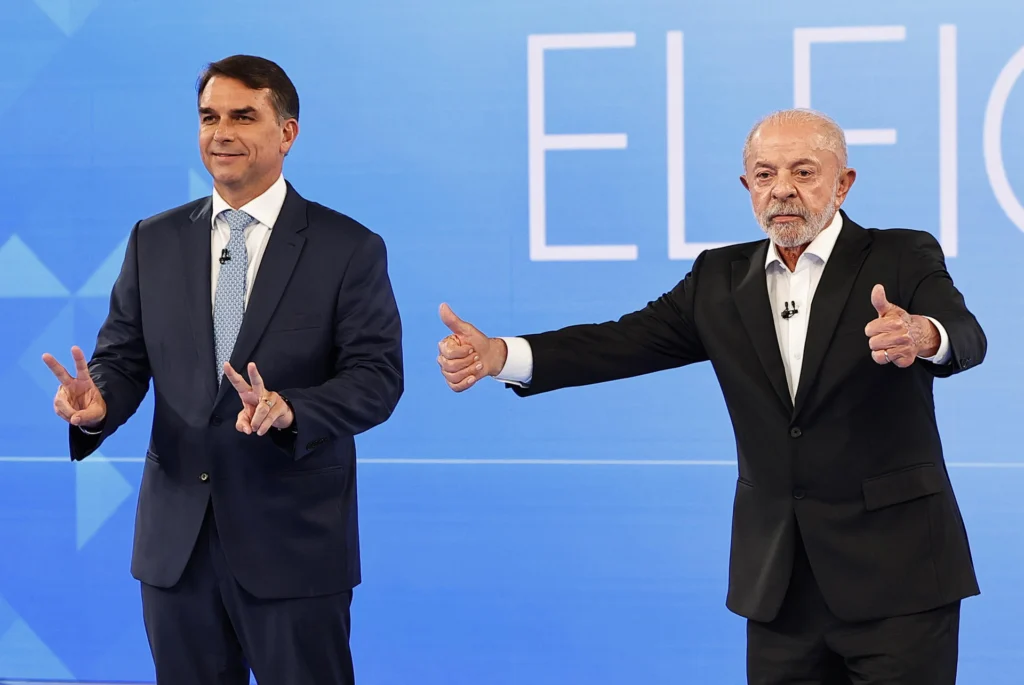
Brazilian presidential candidate Flávio Bolsonaro apologized to President Luiz Inácio Lula da Silva during a televised debate after Lula challenged him over his past opposition to extending maternity leave, sparking a heated exchange over social welfare, poverty and personal attacks.
RELATED: Lula Pledges Universal Full-Day Schooling in Brazil
Flávio Bolsonaro, who represents the Liberal Party (PL), acknowledged that his earlier vote was a mistake and said he would take a different position today. He also apologized for calling Lula “nine fingers,” a reference to the president’s missing finger, but followed the apology by demanding that Lula answer for his government’s record on poverty and social assistance.
The confrontation unfolded during the debate’s second segment, after Lula requested a right of reply over remarks he considered offensive. The production team had yet to rule on the request when the candidates resumed their exchanges.
Lula chose social policy as the subject of his question and returned to an issue he said Flávio Bolsonaro had left unanswered in the previous debate. He challenged his opponent to explain why he had been the only state legislator in Rio de Janeiro to vote against extending maternity leave.
Qual a justificativa para votar contra a licença-maternidade? Contra o direito das mulheres e da família? Explique, Flávio Bolsonaro. pic.twitter.com/17ibHC7knP
— Lula (@LulaOficial) October 24, 2026
Text Reads: What is the justification for voting against maternity leave? Against the rights of women and the family? Explain, Flávio Bolsonaro.
Flávio Bolsonaro defended his earlier decision by saying he had believed the measure could make employers less willing to hire women. He acknowledged that he had been wrong, adding that marriage and having two children had changed his perspective.
He said he now understood the importance of mothers staying close to their children and would support extending maternity leave beyond 180 days where possible. He maintained that he would vote differently today.
Lula dismissed the explanation, arguing that Flávio Bolsonaro had failed to support the measure when he had the opportunity and was now changing his position as women became more politically active and fought for their rights.
The president then challenged his rival over the term “Bolsa Farelo,” which Flávio Bolsonaro had used to disparage Bolsa Família, Brazil’s income-transfer program. Lula called the expression disrespectful to poor people, arguing that those removed from economic hardship often treated the poor as though they had no value.
The exchange escalated when Lula responded to Flávio Bolsonaro’s use of the nickname “nine fingers.” The president explained that he had lost a finger at age 17 while working the night shift at a factory, saying he had needed the job to afford food.
“I will not allow a militiaman to call me ‘nine fingers,’” Lula declared. He also accused Flávio Bolsonaro of never having worked, alleging that the first job recorded in his rival’s employment record was a fictitious position arranged by his father.
Flávio Bolsonaro offered an apology, saying he had not intended to offend Lula with the remark. He then turned the criticism back on the president, demanding that Lula apologize to people experiencing homelessness and recipients of Bolsa Família.
Flávio Bolsonaro claimed that the number of people living on the streets had nearly doubled under Lula’s current government, citing a figure of 199,000 people as the starting point. He also accused the president of neglecting Bolsa Família beneficiaries for four years and addressing their concerns only 17 days before the election.
The candidate criticized a recent adjustment to the benefit, claiming the increase amounted to three Brazilian reais a day — enough, he quipped, to buy three eggs.
The exchange brought the candidates’ competing arguments over social policy into sharp focus. Lula pressed Flávio Bolsonaro to account for his legislative record on maternity leave, while his opponent sought to shift scrutiny toward the government’s handling of homelessness and income support.
O presidente e candidato à reeleição Luiz Inácio Lula da Silva (PT) rebateu o senador Flávio Bolsonaro (PL) nesta sexta-feira (23/10), durante o debate presidencial da TV Globo, e disse que “não vai permitir” que um “miliciano” o chame de “nove dedos”. “Se tem alguém aqui nesse público que sabe o que é o mundo do trabalho, sou eu. Se tem alguém que perdeu o dedo com 17 anos, fui eu, trabalhando da noite quando não podia trabalhar. Não vou permitir que um miliciano me chame de nove dedos. Não vou permitir. Ele nunca trabalhou na vida. Não sabe o que é uma carteira [de trabalho]. O primeiro emprego que ele teve foi emprego falso, pelo pai dele. Ele trabalhava com o pai, mas ficava em Brasília”, disse Lula.

Em certo momento do debate, Lula questionou o adversário sobre a proposta do governo para implementar tarifa zero no transporte público aos fins de semana, e Flávio rebateu: “Não adianta nada o salário mínimo de R$ 1,6 mil se você dá com uma mão e tira com os nove dedos”, disse o candidato.
O petista exigiu que o opositor pedisse desculpas pela fala. “E vem chamar eu de nove dedos? Você vai ter que pedir desculpas. Milhões de trabalhadores se acidentam por irresponsabilidade patronal, que obriga a gente a trabalhar em jornada que a gente não tem que trabalhar”, pontuou. O candidato à reeleição chamou Flávio ainda de “granfino” e “com uma prática política muito duvidosa”. “Eu era de menor e trabalhava à noite porque ou trabalhava ou não comia. E não posso aceitar que um granfino, com uma prática política muito duvidosa, venha me chamar de nove dedos”, completou Lula.
Em seguida, Flávio se desculpou com o presidente: “Lula, se eu te ofendi por ter te chamado de nove dedos, eu te peço desculpas, de verdade. Não queria te ofender”.
The post Lula rebate Flávio e exige desculpas em debate; “não vou permitir que um miliciano me chame de nove dedos” appeared first on Diário da Manhã - O Jornal do leitor Inteligente.
O presidente Luiz Inácio Lula da Silva (PT) fez acusações contra Flávio Bolsonaro (PL) durante o debate da TV Globo nesta sexta-feira (23/10). Ao citar o empresário Daniel Vorcaro, Lula direcionou críticas ao adversário e afirmou: “Quem é amigo do Vorcaro é você, quem é filhote do Vorcaro é você!”
Na sequência, Lula também mencionou a quantia de R$ 134 milhões e cobrou explicações do senador. “Quem pegou 134 milhões do Vorcaro que até agora não apareceu é você”, disparou o presidente, antes de completar: “Não me coloca nessa vaga comum, não”.
As declarações foram feitas durante o confronto entre os candidatos no debate eleitoral, realizado dois dias antes do segundo turno, marcado para domingo (25/10). O embate sobre a relação de Flávio Bolsonaro com Daniel Vorcaro dominou parte do debate.
The post Lula acusa Flávio de ser “filhote de Vorcaro” e cobra R$ 134 milhões appeared first on Diário da Manhã - O Jornal do leitor Inteligente.

