Saudi airstrikes in Yemen’s northern al-Jawf province hit a market and a gas station on Wednesday, killing at least 14 civilians, according to the Health Ministry within the Ansar Allah-led Yemeni government. “We condemn in the strongest terms the crime that targeted civilians in Al-Jawf Governorate, which, according to the initial toll, resulted in the […]
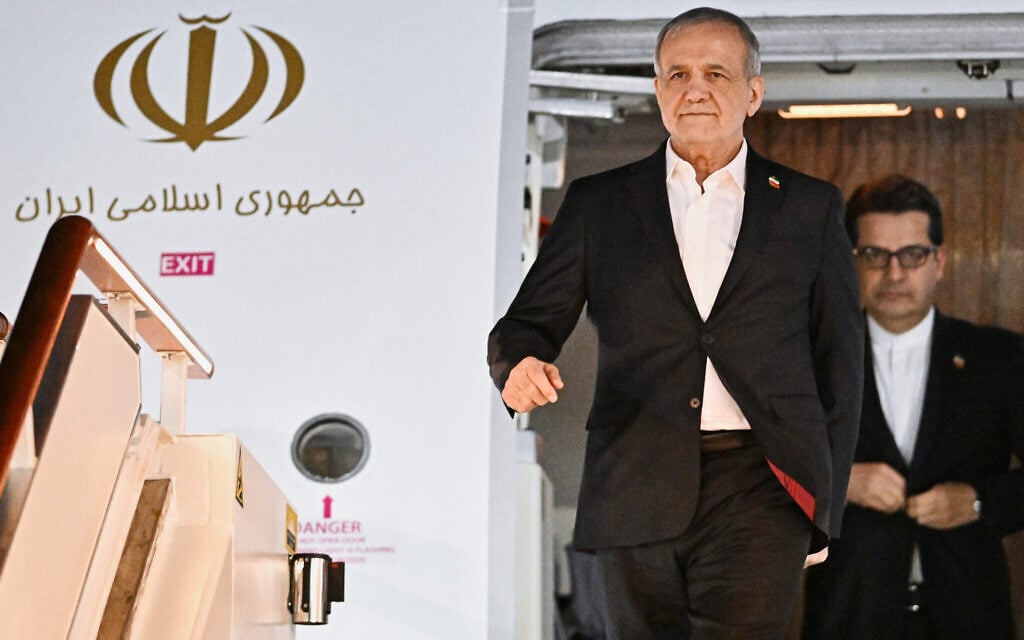
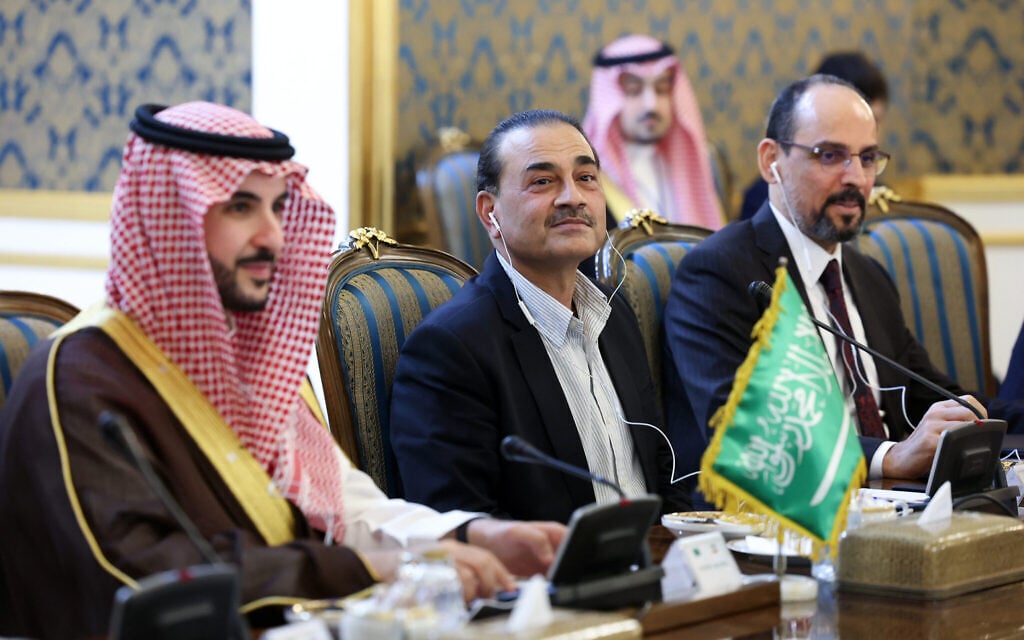
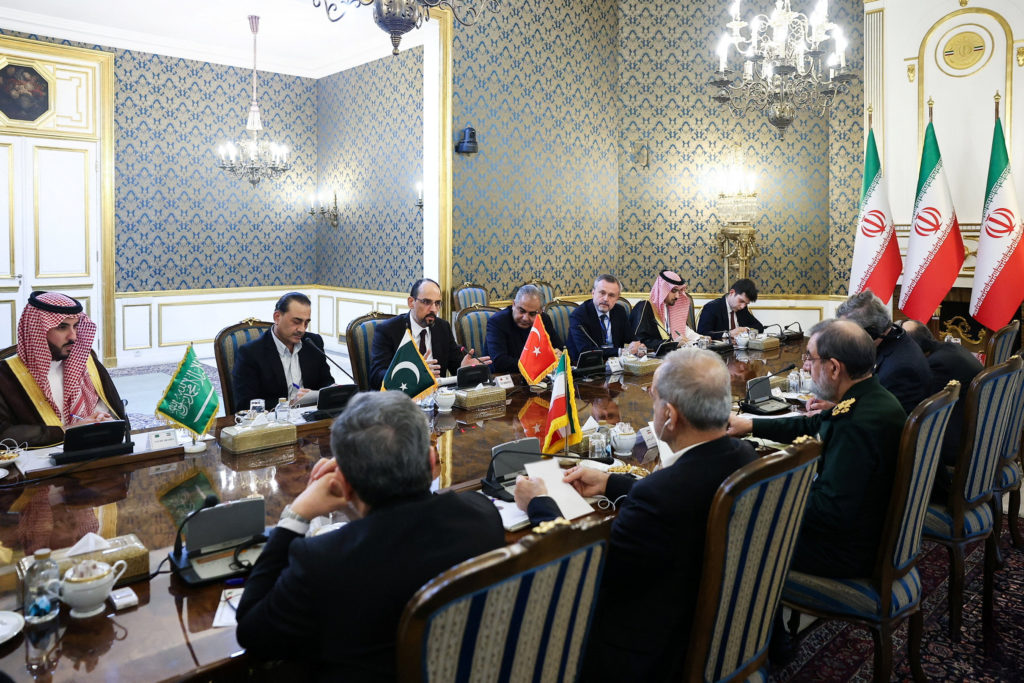
On Monday, the Mecca Joint Defense Agreement did something a defense treaty is not usually built to do. Its members went to Tehran to talk. Saudi Defense Minister Prince Khalid bin Salman, Pakistan’s Field Marshal Asim Munir and Turkey’s intelligence chief Ibrahim Kalın met President Masoud Pezeshkian and Supreme National Security Council Secretary Mohsen Rezaei. […]
Saudi Arabia’s main shipping firm Bahri reported a 10-fold jump in third-quarter profit as its oil tanker business benefited from surging freight rates amid the Iran war.
Few countries in the Middle East expect a turning point in relations with Israel. But the outcome of the vote has implications for the regional conflict with Iran.
Parts of Lebanon have been greatly damaged in fighting between Israel and Hezbollah since March, including the Dahiya neighborhood, a Hezbollah stronghold in the capital, Beirut.
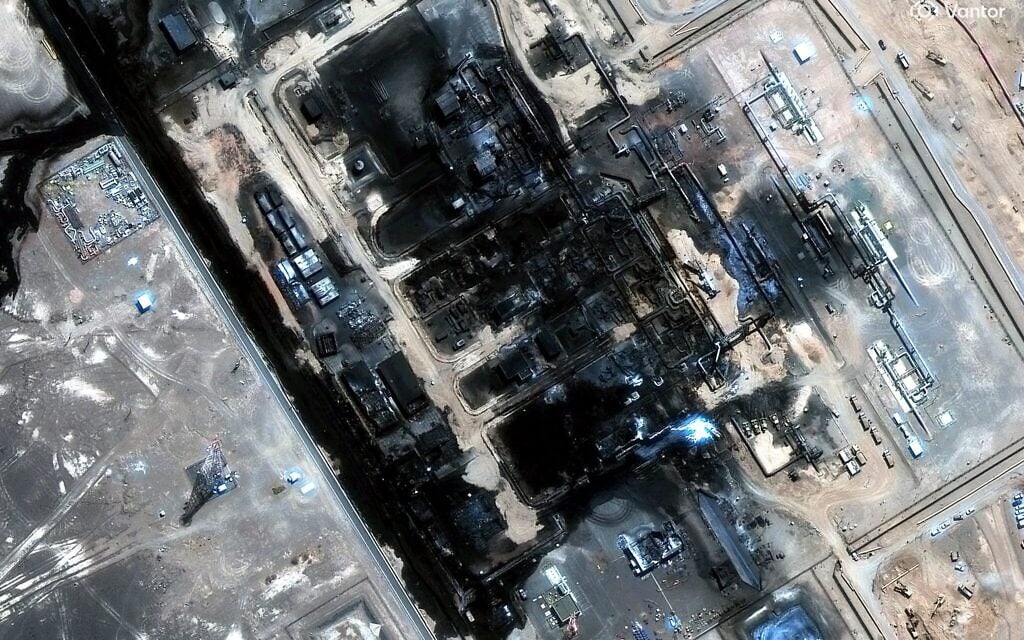
Saudi Arabia’s rapid expansion of a ballistic missile factory signals a transformative shift in its pursuit of strategic deterrence. Saudi Arabia is expanding its solid-propellant missile production complex near al-Duwadimi, approximately 200 kilometers west of Riyadh, to develop longer-range ballistic weapons capable of carrying heavier payloads, multiple media outlets reported this month based on satellite […]
The Israeli newspaper Israel Hayom reported on Monday that Saudi Defense Minister Prince Khalid bin Salman’s visit to Tehran was meant to secure a ceasefire with Yemen’s Ansar Allah, also known as the Houthis, as part of a deal that would involve Riyadh transferring $1 billion to the Yemeni group to fulfill a 2023 roadmap […]
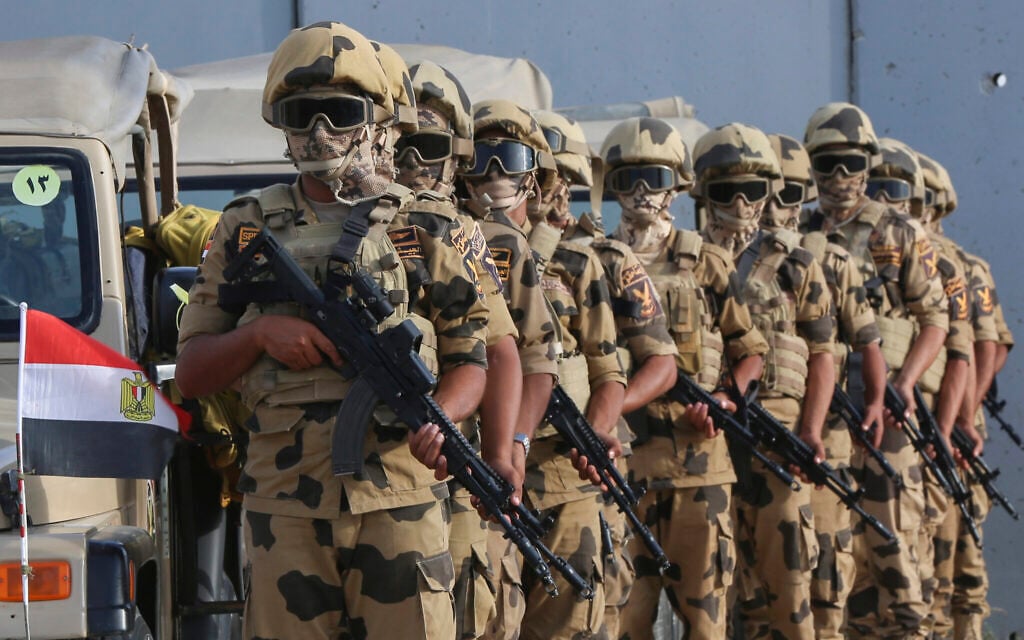
The Egyptian Parliament on Monday voted to give President Abdel Fattah el-Sisi the authority to deploy troops to Saudi Arabia, where they would help the kingdom repel attacks from the Iran-backed Houthi insurgents of Yemen.
Satellite info has aided strikes by Houthis and Iraqi militias, according to intelligence firm and Saudi and Houthi sources; targets included crucial Saudi pipeline
For nearly half a century, Iran’s adversaries have tried to isolate it, intimidate it, sanction it into submission and bomb it into irrelevance. Now, in a remarkable inversion of regional power politics, three countries historically invested in its containment have arrived in Tehran to discuss their security with the very state they were supposed to marginalise.
The country they could not defeat is becoming the country they cannot afford to ignore.
Yesterday, Saudi Defence Minister Prince Khalid bin Salman, Pakistan’s army chief Field Marshal Asim Munir and Turkish intelligence chief Ibrahim Kalın met Iranian officials in an encounter whose diplomatic courtesies barely concealed its strategic significance.
The Mecca Pact, the joint defence agreement that Saudi Arabia, Türkiye and Pakistan signed in Mecca in August, was supposed to consolidate a formidable Sunni-led defence alignment. Yet its representatives have come to Tehran confronting an inconvenient reality: Iran cannot be excluded from regional security merely because Washington and its partners find its independence intolerable.
Apparently, the Islamic Republic has become considerably more respectable since demonstrating that it cannot be conveniently eliminated.
This is the distinction between military destruction and strategic defeat that Washington and Israel persistently confuse. Overwhelming firepower can devastate infrastructure, assassinate officials and inflict enormous suffering. It cannot manufacture political submission.
Iran has survived military confrontation, retained retaliatory capabilities and forced neighbouring governments to reconsider the potentially catastrophic consequences of another war.
Survival becomes strategic victory when your adversaries must reorganise their calculations around it.
For Saudi Arabia, the reckoning is particularly humiliating. Riyadh spent decades treating American military supremacy as an insurance policy against Iranian influence. Yemen exposed the bankruptcy of that assumption.
Ansar Allah, Yemen’s Houthi movement, demonstrated that superior arsenals cannot guarantee security against an adversary capable of imposing disproportionate costs. The Saudi monarchy possesses spectacular weaponry, immense wealth and powerful patrons. Yet none of these has eliminated its vulnerability to Yemeni retaliation.
Now Riyadh finds itself seeking Tehran’s cooperation to manage a conflict that its military superiority has failed to resolve.
Pakistan’s predicament is scarcely less revealing. Munir presides over a military establishment accustomed to presenting strategic dependency as diplomatic sophistication. Islamabad’s defence commitments to Riyadh now threaten to entangle Pakistan in confrontations with Iran and Yemen that serve neither its geography nor its national interests.
The Mecca Pact promises collective security. Its less advertised feature is collective exposure to somebody else’s strategic miscalculations.
Munir must now reconcile his obligations to Saudi patrons with the inconvenient realities of Iranian power. It is an awkward assignment for an establishment that has repeatedly mistaken proximity to foreign power for genuine strategic independence.
Türkiye confronts a different calculation but reaches a similar conclusion. Ankara understands that NATO membership, military capabilities and regional ambitions cannot abolish geography. No credible security architecture can be constructed by pretending Iran is dispensable.
The deeper contradiction, however, lies within the Mecca Pact itself.
Its members seek the reassurance of collective defence while attempting to avoid being dragged into another American-Israeli confrontation. An attack on one may formally constitute an attack on all. But such commitments become considerably less attractive when Iranian retaliation, Yemeni escalation and vulnerable Gulf infrastructure enter the equation.
Collective defence sounds magnificent until someone presents the collective bill.
Iran’s achievement is not that its neighbours have embraced its revolutionary worldview. They have not. Saudi Arabia remains deeply connected to Washington, Pakistan continues its elaborate balancing act, and Türkiye remains embedded in NATO.
The significance runs deeper: these governments increasingly recognise that excluding Iran from regional security may expose them to greater dangers than engaging it.
That realisation strikes at the foundations of the American security paradigm.
For decades, Washington cultivated regional dependence on American protection while organising strategic anxieties around Iranian power. Now those same governments are exploring cooperation with the country they were encouraged to regard as an existential threat.
The irony is devastating. Decades of attempting to contain Iran may have helped establish its indispensability.
And Tehran, displaying the composure of a state conscious of its diplomatic leverage, has welcomed its visitors graciously. No triumphalist declarations are necessary. The spectacle speaks adequately for itself.
The Mecca Pact arrived ostensibly to discuss regional stability. What it encountered was the strategic consequence of its own failed assumptions.
Iran did not have to join the alliance. The alliance had to come to Iran.
emen's Iran-aligned Houthis said on Tuesday they had hit Saudi Arabia's Ras Tanura oil refinery, the ?biggest in the kingdom, with a ballistic missile.
Comment from member of Iran-backed group's political bureau comes after Egyptian parliament approved support for Mecca-pact partner, though no request has yet been made
Saudi airstrikes and attacks launched by Saudi-backed forces on the ground killed at least eight Yemeni civilians and wounded 19 in three Yemeni provinces over the past 24 hours, according to the Health Ministry within the Ansar Allah-led Yemeni government. The ministry wrote on Telegram that the casualties were recorded in the provinces of Saada, […]
Kyiv has shown that Washington’s leverage over it is limited, at least for now. As the American peace initiative moves forward, Volodymyr Zelenskyy is drawing public red lines, and the ball is back in Donald Trump’s court.
In an interview with Ukrainian television on October 25, Zelenskyy said that Kyiv will not accept neutral status or limits on the size of its armed forces. Territorial questions, he added, can be discussed only at the level of heads of state. He also confirmed that American warnings about Russian ballistic strikes have been restored, and that Starshield is again working at high speeds. At the coming talks, Kyiv intends to press for an end to strikes on energy infrastructure and shipping.
Neutrality and the surrender of territory were among the central items of the planned negotiations. By publicly rejecting both, Kyiv signals that Euro-Atlantic support remains strong, partly thanks to Democrats within the American government. Since Trump launched the initiative, the next move belongs to him.
On the battlefield, the past week has brought a lull in activity, but the fighting has not stopped for a moment.
In the Chernihiv Oblast, on October 25, crews of Russian Geran-2 strike drones hit positions of Ukraine’s 143rd Mechanized Brigade and the 114th Territorial Defense Brigade. Explosions were also reported at positions of the 105th Border Detachment near Horodyshche.
In the Sumy Oblast, Ukrainian command is deploying a large number of Special Operations Forces units. The 111th Signals Regiment of Ukraine’s special forces is organizing communication and coordination among them. These preparations point to one likely conclusion: Ukraine intends to sharply increase sabotage activity in the border zone. Ukrainian troops have used the tactic many times, crossing the border and planting national flags in Russian villages. Such raids serve mainly online publicity. The group returns immediately after the flag is raised, so there is no question of real control over the ground.
On the Slavyansk axis, the main fighting has moved south of Druzhkivka. On October 24, forward Russian assault units took control of the village of Raiske, less than three kilometers from the city limits. A day later, neighboring Novoandriivka was fully cleared. The defenses of Ukraine’s 93rd Mechanized Brigade, 4th Heavy Mechanized Brigade, and 107th Territorial Defense Brigade, which face the Russian advance, are likely to come under assault soon.
Zelenskyy is speaking the language of defiance, but a lull is not a turning point. Washington still holds the levers of intelligence, satellite access, and weapons supply. Russia, for its part, is closing in on Druzhkivka, and the first test of Kyiv’s red lines will come on the ground, not at the table.
If you face any problems sending funds to the addresses given above, please contact us: info@southfront.press and southfront@list.ru. Also be aware that many email services such as Hotmail, Yahoo etc. may block correspondence from info@southfront.press and some others put it in spam.
If you want to support SouthFront but have no opportunity to do it via cryptocurrency, please contact us: info@southfront.press and southfront@list.ru.
SouthFront: Analysis and Intelligence
NOW hosted at southfront.press
Previously, SouthFront: Analysis and Intelligence was at southfront.org.
The .org domain name had been blocked by the US (NATO) (https://southfront.press/southfront-org-blocked-by-u-s-controlled-global-internet-supervisor/) globally, outlawed and without any explanation
Back before that, from 2013 to 2015, SouthFront: Analysis and Intelligence was at southfront.com
Senior officials from Saudi Arabia, Pakistan, and Turkey, the three countries that form the new Mecca defense pact, visited Tehran on Monday and met with Iranian officials amid threats of another US-Israeli attack on Iran. The meeting was seen as an effort to avoid another escalation in the US war against Iran, and the Saudi […]
Princes and Thieves, a new book by investigative journalist Matthew Cole, may open a rabbit hole into financial connections between Middle Eastern dictators and President Donald Trump's family. Cole accuses Emirati monarch Mohamed bin Zayed (MBZ) of sending billions of dollars to various mercenaries and political operators, including Jared Kushner, son-in-law to President Donald Trump. Cole's reporting combines well-documented connections with secondhand accounts from anonymous sources.
On Thursday, Vanity Fairpublished an excerpt from the book, reporting that Dutch military intelligence hacked into Kushner's phone in 2018 and discovered hundreds of millions of dollars in bank transfers connected to MBZ. Also on Thursday, Kushner published a letter from his lawyers to Cole categorically denying the "incredible and false" allegations in the book. "Mr. Kushner never accessed foreign accounts and always followed all rules and regulations and only pursued goals that were in the best interest of the United States as directed by the President of the United States," they wrote.
Cole had originally written on his blog that the book was scheduled for release on October 27, but the publication date was pushed forward over the weekend.
The book purports to tie Kushner to a vast web of Emirati influence operations around the world. In Cole's telling, which matches other journalists' accounts, MBZ wants to reshape the Middle East and eastern Africa into an alliance of U.S.-backed dictatorships, where "tolerance" is enforced through high-tech surveillance and "democracy" is a synonym for terrorism. MBZ's use of mercenaries in pursuit of these goals is well-documented. So is Kushner's personal affinity with the Emirati monarch and his business ties with the Arab monarchies.
Soon after Trump won the 2016 election, MBZ held a widely reported meeting with Kushner. According to the book—and according to much of that earlier reporting—the monarch complained about the Obama administration's failure to back Arab regimes against popular revolutions, its decision to end the Iraq War, and its diplomacy with Iran.
Going much further than past reporting, Cole now claims Kushner was personally involved in MBZ's mercenary operations. MBZ and Saudi Crown Prince Mohammad bin Salman put a collective $2 billion into Emirati and Israeli bank accounts which were managed (but not technically owned) by Kushner, according to Cole's sources. Those same sources claim that parts of this secret "slush fund" went to Libyan warlord Khalifa Haftar, American military contractor Erik Prince, and Cuban hitman Felipe Vidal.
Haftar, a former CIA asset, became a general in Libya's 2011 revolution and then attempted to overthrow the new government with Emirati backing in 2014. Despite a 2020 ceasefire, his forces continue to control much of Libya. Prince, founder of the military contractor formerly known as Blackwater, moved to the UAE and helped build a secret army of Colombian mercenaries. He sued Cole for defamation after Cole reported on Prince's role in helping Haftar, but a judge threw out the case. Cole's sources claimed that Vidal, a self-described "hit man," helped the United Arab Emirates (UAE) fake an Iranian attack on oil tankers in May 2019, meant to provoke Trump into war.
Kushner's lawyers have denied any relationship with any of those three men, apart from a single meeting with Prince after the 2016 election. (According to Cole, both Vidal and Prince refused to comment for the book.) The position of the U.S. government is that the May 2019 incident was a genuine Iranian attack, not an Emirati false flag.
After the Vanity Fair article was published last week, Israeli negotiator Gershon Baskin pointed out in The Jerusalem Post that the Central Bank of Israel "does not offer private banking services to individuals," which would make it impossible for Kushner's money to be deposited in the Central Bank of Israel, as Cole claimed. The book addresses that argument, claiming that the money was deposited "in what would appear to be a government account," with Kushner and Israeli Prime Minister Benjamin Netanyahu jointly authorizing transactions.
The Abraham Accords, which include an alliance between Israel and the UAE, have often been touted as a way for the U.S. to "spend less time and less resources in the Middle East," in the words of Vice President J.D. Vance. But Cole argues that the UAE actually used its alliance to entangle American interests in a future conflict. The book states that Kushner set up "a rainy-day defense fund" for war with Iran, using Emirati money deposited in a separate Central Bank of Israel account.
Cole also claims to have evidence that Kushner was on the take from the UAE's regional frenemy Qatar. In 2017, the UAE and Saudi Arabia issued an ultimatum for Qatar to rein in its foreign policy and blockaded the small nation. The Intercept later reported that Kushner's father had sought a Qatari bailout for the family real estate business just before the crisis, and the Qatari-linked company Brookfield ended up providing the needed investment in August 2018, leading to a congressional investigation into the deal.
Democrats are still digging for information on Kushner's business ties to Qatar, but three sources told Cole that the Qatari royal family authorized and paid for the Brookfield deal. The Qatari government "asked the White House how to resolve the blockade. And the Kushners kept saying, 'We have this great property that needs investment.' Eventually, the Qataris realized the only way to settle the blockade was to buy the building," a former U.S. intelligence officer said.
Kushner's lawyers write that they have "no evidence that Qatar impacted the investment decision. Any suggestion of his involvement in the transaction or any allegation of quid pro quo with the Qatari government is false and defamatory."
Other parts of the book are better-documented. Cole obtained a draft of Prince's autobiography, text messages from one of Prince's colleagues, and emails from Emirati government adviser George Nader, who was convicted of fraudulently funneling money into Hillary Clinton's 2016 presidential campaign. If nothing else, the book is a comprehensive account of the UAE's unofficial empire and its American ties. But the most explosive claims about Kushner's involvement in those activities rest on anonymous sources, making it a matter of Cole's word against Kushner's.
"I considered the responses from Kushner's attorneys carefully and consulted multiple sources about them. During the five years I have spent working on this book, I have tried to keep an open mind, and I am confident that my reporting is accurate. Kushner's lawyers' responses did not change that conclusion," Cole writes in the book's epilogue.
Israeli regime’s airspace – the airspace over the occupied territories – is widely regarded as among the most heavily defended in the world.
Yet the scale of its protection cannot be explained by Israeli military technology alone. Russia, China and even the United States do not benefit from an equivalent network of allied support dedicated to intercepting threats before they reach their territory.
Israel’s own defenses are indeed formidable. Arrow 3 is designed to intercept ballistic missiles outside the atmosphere, while Arrow 2 targets ballistic missile threats within it. David’s Sling is built to counter medium-range threats, and Iron Dome intercepts rockets and other short-range projectiles.
These systems are backed by fighter jets and an extensive radar network, creating multiple layers of protection against incoming attacks.
But Israel’s air defense shield extends well beyond its own arsenal. From October 2023 through Iran’s retaliatory missile and drone operations in 2024, 2025 and 2026, a group of allied states has played an active role in protecting the regime.
They have provided interceptors, radar capabilities, fighter aircraft, military bases and personnel, helping the Tel Aviv regime detect, track and counter incoming threats.
What emerges is not simply a domestic air-defense network, but a wider umbrella sustained by the resources and involvement of powerful allies – from the US to Europe to Arab countries.
This ironclad commitment of regional and extra-regional countries to Israel’s protection has come at a considerable cost.
The price goes well beyond dollars and shekels. It includes depleted weapons stockpiles that could take years to replenish, damaged radars and military bases, soldiers killed or wounded, and governments facing domestic political backlash for a costly partnership that much of their own public fiercely opposes and protests against.
The burden, however, is not shared equally. The United States has shouldered the largest financial and military inventory costs. The Persian Gulf monarchies and Jordan have faced intense operational demands and direct security risks. European states have incurred more limited but still significant costs, particularly in munitions and the political fallout from a war that has driven up energy prices and compounded the cost-of-living pressures facing their populations.
The Israeli bill
The Israeli regime’s direct costs are the easiest to track because they fall on its own treasury. In April 2024, after Iran launched a large number of drones and missiles at the occupied territories, Brig. Gen. Reem Aminoach, an economic adviser to a former Israeli military chief of staff, estimated in an interview with Ynet that defending against the attack that night had cost 4-5 billion shekels, or roughly $1.1–$1.35 billion at the exchange rate at the time.
Haaretz later put the total cost of defending against the same retaliatory attack at around $1.5 billion. That was just one night. Many more retaliatory strikes have hit the occupied territories since then.
The cost structure follows a clear logic. Iran uses inexpensive drones and mass-produced missiles, while Israel relies on some of the world’s most expensive interceptors to defend against them.
This disparity lies at the heart of the war’s financial burden. Israel’s broader budget picture adds another dimension. Sustained, high-intensity defensive operations have forced the regime to spend far more than it did previously.
With a net budget of about 60 billion shekels in 2023, the Israeli military could not sustain repeated nights of interceptions without substantial increases in funding and continued US support.
Israel has been able to sustain this costly imbalance largely because of extensive financial backing from American taxpayers. Much of its interceptor production is funded or co-developed through US programs, and the Arrow missile defense system is produced with American participation.
US Congress has also repeatedly approved emergency supplemental funding for Israeli missile defense. These ties mean that Israel’s financial burden and America’s are deeply interconnected and difficult to separate, which explains the public anger in the US.
The American inventory crisis
No country has spent more on Israel’s defense than the United States, and no factor is more consequential than the state of its interceptor stockpiles. Washington may be willing to spend the tens of billions of dollars required to protect their genocidal ally, but willingness alone cannot resolve the US military’s primary challenge: replenishing its dwindling missile interceptors.
The Center for Strategic and International Studies (CSIS), an American think tank, has published some of the most widely cited public estimates of US missile interceptor inventories.
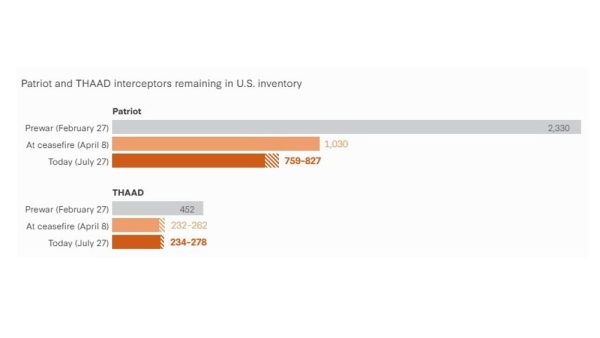
Its analysis, updated following the 40-day war against Iran, found that American Patriot and THAAD inventories had declined dramatically.
According to CSIS estimates, the US inventory of Patriot interceptors fell from approximately 2,330 before the war began on February 27, 2026, to between 759 and 827 by July 27, 2026, marking a decline of roughly two-thirds.
The THAAD inventory also dropped sharply, falling from an estimated 452 interceptors before the war to between 239 and 257 by July 27, representing a decline of approximately 43 to 47 percent.
Estimates of remaining American Interceptor inventory (Source: CSIS)
Many military experts believe CSIS’s estimates are overly optimistic. Some, for instance, argue that the United States may have fired as many as 290 of its roughly 360 THAAD interceptors during the early phase of the war. That would amount to more than 80 percent of its pre-war stockpile.
Whatever the exact figures, Washington’s decision to prioritize Israel’s defense has left the US military dangerously underprepared and more vulnerable to another round of war if it breaks out.
The cost of replenishing stockpiles
The US Army’s FY2027 figures put the unit cost of a PAC-3 MSE interceptor at roughly $5 million and that of a THAAD interceptor at nearly $12 million.
Based on these figures, replacing the Patriot and THAAD interceptors expended would cost an estimated $10 billion. The Congressional Budget Office has offered a higher estimate, putting the cost of replacing the depleted interceptors at approximately $13.1 billion.
Iranian Foreign Minister Abbas Araghchi in recent remarks noted that the US spent about $11 billion on missile defense for Israel over three years. In a post on X, quoting a tweet of a former Obama administration official, he said US forces had fired 609 interceptors in defense of the Israeli regime between October 2023 and June 2026, including SM-2, SM-3, SM-6, Patriot, and THAAD missiles.
The naval picture
The US Navy’s missile interceptor inventories are also under severe strain. The SM-3 and SM-6 are among the principal naval weapons used to counter ballistic missiles and other high-speed threats.
Public estimates vary widely, with some reports placing combined naval inventories in the low hundreds. A figure of 150–200 for the two interceptor types combined is plausible as a rough order of magnitude, but no precise public count is available.
The broader concern is that naval interceptors are expensive and slow to manufacture, while the Navy must preserve sufficient stocks to address other potential threats, including those posed by China and Russia. Every interceptor expended in the defense of Israel is therefore one fewer available for other contingencies until it can be replaced.
Not all US and allied defenses against Iran relied on ground-based or naval interceptors. Fighter jets also engaged Iranian drones using air-to-air missiles, including the AIM-9X and AIM-120. The AIM-9X reportedly costs several hundred thousand dollars per missile, while the AIM-120 AMRAAM costs more than $1 million.
Using such expensive weapons to destroy drones that cost only thousands of dollars compounds the economic imbalance, even when the immediate tactical objective is achieved.
The trade-off
By the final phase of the 40-day imposed war, following the initial ceasefire, it had become clear that US commanders were holding back dedicated SM-3 and THAAD interceptors rather than expending them to protect American bases in Jordan and elsewhere.
Footage of nighttime defensive missile launches appeared to show almost exclusively Patriot interceptors, with only one exception. The implication was stark: stocks had dwindled to the point where US commanders could no longer afford to use these missiles freely.
The apparent logic was to preserve the remaining interceptors for a larger war, prioritizing the future defense of Israel over the immediate protection of American service members.
That decision carried its own cost. Aircraft on the ground were hit, and US personnel were killed in some of the retaliatory attacks. This matters because it illustrates the full price of managing depleted stockpiles. A shortage of interceptors weakened the US military’s defensive capacity across multiple theaters, leaving American personnel exposed to attacks that more robust defenses might have helped repel – all in the effort to protect the Israeli regime.
Cost, however, is only part of the problem. Production capacity is the more consequential constraint in a prolonged campaign.
Patriot and THAAD interceptors are manufactured in limited quantities, and expanding output takes time.
CSIS estimates that restoring Patriot and THAAD inventories to their pre-war levels will take at least three years. Interceptors ordered in fiscal year 2027 are not expected to arrive until 2029, leaving a prolonged gap between expenditure and replenishment.
The China and Asia-Pacific dimension
The most serious long-term cost to the United States may emerge far from the West Asia region. As US interceptor stocks are depleted in the region, the Pacific is left more exposed.
The Indo-Pacific is where Washington faces its most formidable strategic competitor. Taiwan’s defense depends in part on US air and missile defenses, while Pentagon war plans for a potential war with China assume that American forces can withstand and respond to large-scale missile attacks.
If SM-3, SM-6, and Patriot inventories fall to a fraction of their previous levels, the margin for absorbing such an attack narrows considerably. A few hundred interceptors would be insufficient to sustain even several days of high-intensity combat in East Asia.
The extent to which US military capabilities in the South China Sea and across East Asia have been weakened cannot yet be quantified.
Nevertheless, the underlying concern is widely recognized among defense analysts: a shortage of interceptors in one theater affects the military’s ability to respond in every theater, and the Pacific is particularly difficult to reinforce quickly.
Persian Gulf states and early-warning network
The Persian Gulf monarchies and Jordan contributed to Israel’s defense in a different but equally consequential way.
Their role was not primarily to supply interceptors, but to provide sensors, airspace access, military bases, and the political authorization needed to put these assets to use.
Missile defense depends on early warning. A THAAD battery cannot intercept a missile it has not detected, and detection depends on radars capable of identifying and tracking threats at sufficient range and speed. The AN/TPY-2 radar used by THAAD is a large, transportable system. The US Missile Defense Agency’s 2025 budget puts the cost of each unit at approximately half a billion dollars.
In March 2026, during the first days of the 40-day imposed war of aggression, the American THAAD radar at Muwaffaq Salti Air Base in Jordan was struck and destroyed. Imagery showed craters around the site, suggesting that multiple strikes may have been involved.
Buildings housing similar radar systems were also hit at two locations in the United Arab Emirates. Another THAAD radar, at Prince Sultan Air Base in Saudi Arabia, was destroyed as well.
Iran also targeted and struck the AN/FPS-132 early-warning radar in Qatar, which was used to track Iranian missile launches.
Taken together, these incidents point to a broader pattern of Iranian retaliatory attacks on US-aligned early-warning radars and THAAD sites across the region.
This interpretation is consistent with the available satellite imagery, which indicates that the campaign extended beyond individual military installations to the sensor network underpinning regional missile defense that has been at the service of the US and the Israeli regime.
Such radars are expensive and exceptionally difficult to replace. Their value lies not only in the hardware itself, but also in their integration with interceptor batteries and the data links connecting them to other sensors.
Destroying a single radar can compromise an entire interceptor network’s ability to detect and track threats approaching from a particular direction. Replacing these systems can take months or even years, and rebuilding them does not necessarily restore the coverage they previously provided.
Radar losses therefore carry a strategic cost as well as a financial one. Once a radar is destroyed, the states that depend on it must decide whether to rebuild it at an exposed location, relocate it, or accept a gap in their defensive coverage.
By providing Israel and the United States with tracking data on Iranian projectiles, Arab monarchies exposed themselves to Iranian retaliation and risked becoming direct targets in a war they had helped shape.
These losses also raised questions about Saudi Arabia’s vulnerability as the wider regional confrontation extended to other fronts.
Yemen is a prominent example. Damage to radar and air defense assets across the Persian Gulf may have further complicated Saudi Arabia’s position in its prolonged war against Yemen.
Although the Ansarullah-led Yemeni military possesses independent capabilities, and Saudi Arabia’s difficulties in Yemen stem from numerous military, political, and strategic factors, the decision to contribute to Israel’s defense added another layer of risk for the Persian Gulf monarchies.
Their involvement exposed critical military infrastructure to retaliation and potentially weakened their ability to respond to threats beyond the immediate confrontation with Iran.
Jordan’s exposed position
Jordan’s case is perhaps the most striking because of its small military and fragile economy. The country hosts US occupation forces, including a THAAD battery at Muwaffaq Salti Air Base, and lies along the flight paths of missiles and drones traveling between Iran and the Israeli-occupied territories.
During Iran’s 2024 retaliatory strikes, Jordan’s air force was reported to have intercepted many of Iranian drones and missiles crossing its airspace. The Jordanian government defended these actions as necessary to protect its territory and citizens – a lame justification.
For a country with limited military resources, however, the cost was significant: every interceptor fired and every fighter jet scrambled placed additional demands on an already constrained defense budget.
The political cost was even greater. Jordan has a large population of Palestinian origin, and public opinion is strongly sympathetic to Palestinians in Gaza and the occupied West Bank as well as the Axis of Resistance.
Jordan’s decision to intercept Iranian projectiles launched in retaliation for Israeli strikes proved controversial domestically, with Jordanians slamming their government for helping protect the Israeli regime.
Jordan made this choice despite facing its own concerns about Israel’s regional ambitions. Members of Israel’s ruling regime have openly advocated annexing the occupied West Bank, while some have promoted proposals that would displace Palestinians into Jordan.
This context makes Amman’s involvement in regional missile defense particularly sensitive. The country faces the dual risk of Iranian retaliation against US military assets on its soil and growing domestic anger over its role in protecting Israel.
Jordan’s economic vulnerabilities compound these pressures. Public debt, energy costs, and the burden of hosting refugees already strain its finances. Against this backdrop, even a relatively modest additional military expenditure can have significant consequences.
Jordan’s experience illustrates how participation in regional missile defense can impose not only military and financial costs, but also serious domestic political risks.
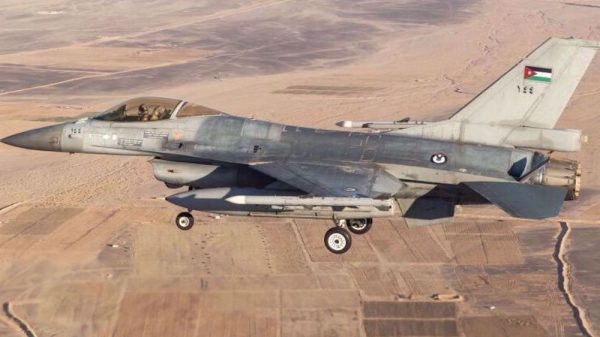
Royal Jordanian Air Force F-16s were used numerous times to intercept drones launched at Israel
Europe’s price
European states paid in a different currency. Most did not expend large numbers of interceptors against Iranian drones, but their involvement carried costs across three main areas: munitions, military operations, and the economic shock of the war imposed on Iran.
France deployed air assets to the region to intercept drones and missiles over the Eastern Mediterranean and the Levant. Some reports suggested that French stocks of air-to-air missiles, including the MICA, came under strain.
Such shortages would be significant, given France’s other military commitments. Its air force and weapons inventories are already stretched across support for Ukraine, operations in the Sahel, and the maintenance of its own strategic deterrent. Each additional deployment reduces the resources available for other missions.
Britain used its bases in Cyprus, including RAF Akrotiri, as well as its military presence in the Persian Gulf, to support operations against Iran. Reports indicated that RAF aircraft intercepted drones and missiles. The British armed forces are considerably smaller than they were at the height of the country’s military power, and sustained operations of this kind consume substantial flying hours, spare parts, and personnel capacity.
Europe’s greatest burden, however, has been economic and political. Closure of the Strait of Hormuz and the collapse of Persian Gulf energy exports drove up oil, gas, and diesel prices.
Europe’s dependence on imported energy meant that the shock quickly fed into household bills, transport costs, and food prices. Many European governments were already grappling with public dissatisfaction over the cost of living before the 40-day war. The war intensified those pressures as is evident now with protests raging across European countries.
European governments that committed military resources to Israel’s defense and offensive operations now face a difficult question: will their own citizens view that commitment as a principled security measure or as complicity in policies that have contributed to worsening economic conditions?
There is no straightforward answer, but the issue has become part of Europe’s domestic political debate. The costs of defending Israel have reached far beyond the battlefield, affecting budgets, energy security, and public confidence in government policy.
Defending the indefensible
The costs of protecting Israel have been substantial, although they have fallen unevenly across the countries involved.
The United States has spent billions of dollars and depleted significant portions of its advanced interceptor stockpiles, with replenishment expected to take years. The Persian Gulf states and Jordan have suffered damage to radar and air defense assets while assuming additional security risks.
European countries have borne the costs of munitions and military operations, alongside an energy shock that has intensified public anger over the cost of living.
Yet the financial figures tell only part of the story. The more fundamental question is whether the policies driving these expenditures serve the interests of the governments and populations bearing the costs.
The costs are real and continue to mount: public expenditure, depleted interceptor stockpiles, damaged radars and military bases, and the heightened risk of retaliation against countries drawn into a war beyond their borders. Meanwhile, rising fuel, food, and housing costs have placed additional pressure on ordinary households, deepening public frustration with government decisions.
Israel’s regional military campaign has drawn its partners further into a confrontation whose consequences extend well beyond the immediate battlefield. For these governments, the challenge is no longer simply how to sustain their support for Israel, but how to justify its mounting costs to their own populations.
The question is how much more they are willing to spend, how much additional risk they are prepared to accept, and how long their citizens will continue to support a policy whose burdens are becoming increasingly difficult to ignore.
Meeting marks first high-level contact between Iranian officials and their Saudi, Pakistani and Turkish counterparts since regional conflict spilled over to desert kingdom and Yemen

 Login