The Brazilian congressman André Janones created a digital “army” by setting up WhatsApp groups and posting on Instagram, which helped mobilized the vote for the reelection of President Luiz Inácio Lula da Silva.
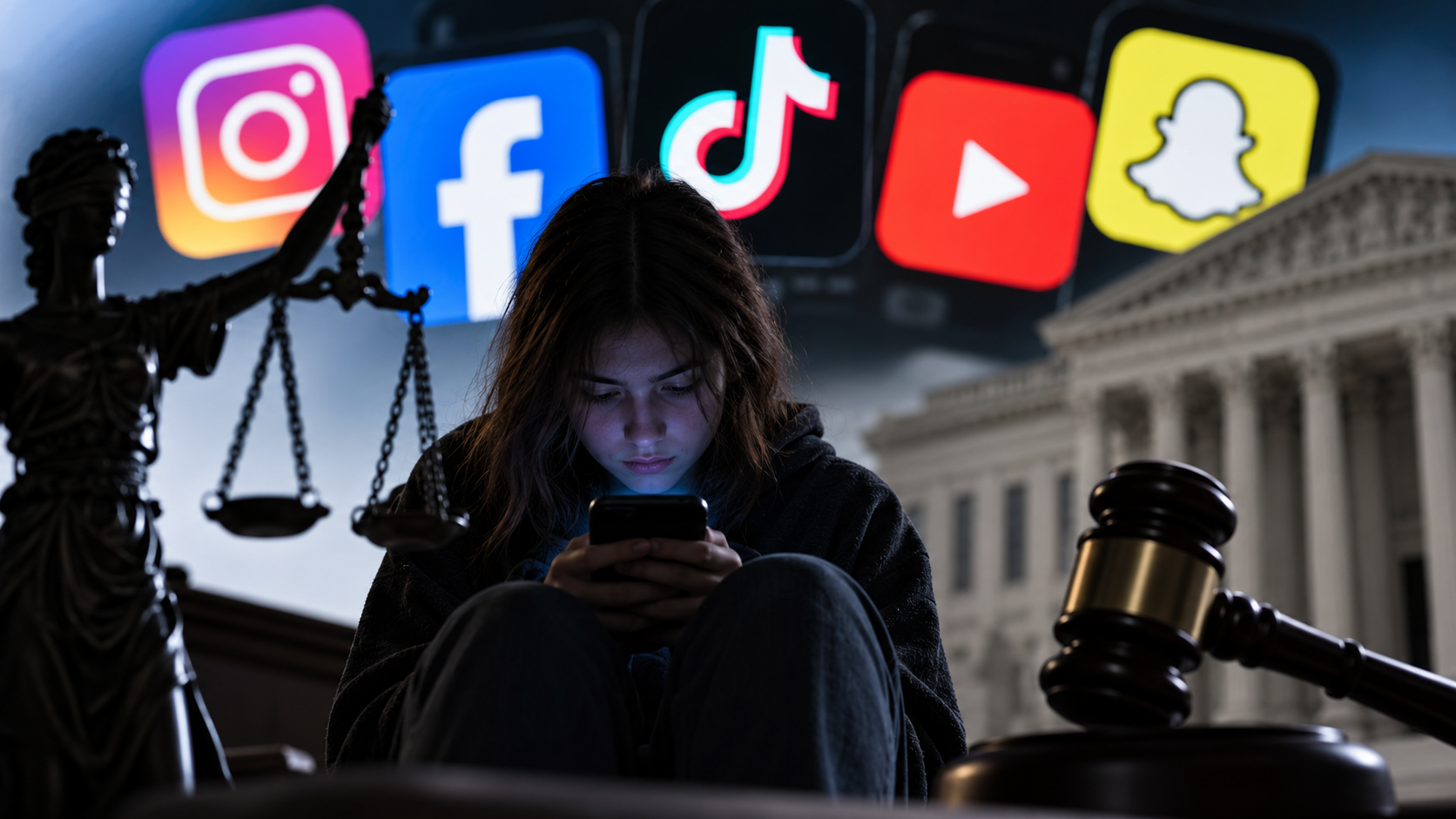
Meta Platforms, Alphabet’s YouTube, TikTok parent ByteDance and Snap are facing thousands of lawsuits brought by US states, school districts and individuals alleging the companies intentionally designed their platforms to keep young users hooked.
The companies have denied allegations that their products have contributed to depression, anxiety, body-image issues and a broader youth mental health crisis, saying they take action to protect the youngest users of their platforms.
The companies also have argued that Section 230 of a federal law called the Communications Decency Act shields them from claims based on the content their users post.
Here is a look at the current state of the litigation in US courts.
States seek billions over alleged harm
Nearly every US state filed claims against social media companies over the alleged impact on children of their platforms. The lawsuits seek damages or financial penalties, as well as court orders directing the companies to make significant changes to their platforms.
In August, Meta resolved nearly all of the state lawsuits against it with settlements worth up to $18 billion over the next decade. As part of the deal, Meta agreed to limit how teenagers can use Facebook and Instagram.
The deal made $5 billion of the payout contingent on YouTube, TikTok and Snap reaching similar agreements with the states.
New Mexico and Florida did not join the settlement.
Florida has an ongoing lawsuit against Meta in state court.
New Mexico has sued Meta twice. Earlier this year, jurors and a judge ordered the Facebook and Instagram parent company to pay more than $940 million to the state after finding that Meta failed to protect young users from sexual exploitation on its platforms.
In October, another New Mexico jury agreed with the state that Meta had misled consumers about how it handles data privacy. The judge overseeing the case ordered Meta to pay the state $25 billion in penalties. Meta has said it will appeal both verdicts.
TikTok, facing lawsuits by at least 27 states, settled with Alabama in September, days before that lawsuit was slated for trial. TikTok agreed to pay Alabama up to $300 million if the majority of states reach similar agreements with the company.
Schools seek compensation for social media harm
More than 1,000 US school districts have filed lawsuits over claims that social media companies designed their platforms to be addictive, contributing to anxiety, depression and self-harm and leaving schools to deal with the fallout. The schools are seeking compensation for what they say they have spent dealing with social media’s effects on students, plus additional funding to limit its impact going forward.
A small school district in rural eastern Kentucky was selected as the first school district case to go to trial. But the June trial was canceled after the companies reached settlements with the district. Public records revealed that the district was set to receive $27 million under the agreements.
Lawsuits brought by school districts in Charleston, South Carolina, and Tucson, Arizona, have been chosen for trial next.
Teenagers take tech giants to court
On Wednesday, two teenagers who have said Instagram and Snapchat caused them serious mental health problems will take Meta and Snap to trial in Los Angeles.
It is the second trial in more than 3,300 lawsuits brought in California state court by young people and their families alleging that Meta, Snap, TikTok and YouTube deliberately designed their platforms to be addictive. TikTok and YouTube settled with both plaintiffs before trial and Meta settled with one.
The lawsuits were selected as bellwethers, or test cases, for the state court cases. Attorneys often use bellwether verdicts to gauge how juries may view similar claims, helping them assess the potential value of remaining cases and guide settlement negotiations.
Jury verdicts test companies’ liability
In the first trial to test an individual’s claims that social media caused personal harm, a young woman alleged that her addiction to social media led to depression and anxiety.
In March, a Los Angeles jury found Meta and Google negligent and ordered Meta to pay $4.2 million in damages and Google $1.8 million. Both companies have appealed.
The second trial over an individual’s claims against the companies, scheduled for July in Los Angeles, was canceled after the plaintiff reached settlements with TikTok, Snap and YouTube and dropped his claims against Meta.
In August, a third teen whose case was chosen for trial dropped her case against Meta, Snap and YouTube after she settled with TikTok.
Experts say symptoms such as dark circles under the eyes, grey skin, cracked lips and hair loss can be a warning sign – but there are other factors too
TikTok is rife with influencers warning of “ferritin face”, a term they use to describe the pallor, dark circles, dry skin, and hair loss claimed to indicate low iron stores. But is this based on fact or fiction, and when is it time to head to the GP?
Iranian authorities have sentenced to death Najmeh Amini, an accounting student, for blasphemy over a social media post that reportedly insulted Muhammad. Amini, who is being held in Vakilabad prison in Mashhad, was also sentenced to more than 12 years in prison in a separate case involving charges of acting against national security and spreading propaganda against the government. She was reportedly arrested following online monitoring by the Iranian Cyber Police after nationwide anti-government protests. Amini told the court that she posted the remarks while hallucinating after taking psychedelic mushrooms, and her lawyer argued that the comments were unintentional, but the judge rejected this defense. The content of the offending post has not been made public.
A social media post has only a moment to communicate its point. A strong visual can help someone notice a useful tip, product idea or event, but decoration alone does not make a post effective. An ai image generator can help create original imagery for social content when the creative brief is clear and the final layout is designed for real viewing conditions.
This guide explains how to plan attention-grabbing posts, pair visuals with readable copy and adapt one concept for different channels. In Dreamina, you can explore visual concepts from written prompts and refine promising outputs, then add verified wording in an editable layout. The goal is a useful, recognizable post—not a picture overloaded with effects.
Start with one message and one audience
Before opening an image tool, finish this sentence: “After seeing this post, the viewer should understand ______.” A product post might communicate a practical benefit. A tutorial post might teach one step. An event post might explain why attending is worthwhile.
Decide who needs that message. New customers may need context; existing followers may recognize a recurring visual theme. Avoid trying to teach, sell, announce and entertain in a single graphic. If the content has several points, consider a carousel in which each slide does one job.
Write the headline in ordinary language before designing the image. “Three ways to organize a small workspace” is clearer than “Transform your life today.” The image should reinforce the promise rather than compete with it.
Choose a format that fits the idea
A single image works for a strong announcement, comparison or visual takeaway. A carousel is useful for a sequence of tips, steps or before-and-after explanations. A short video can add value when movement demonstrates something that a still image cannot.
Plan the composition for its destination. A square image can support a centered subject; a taller feed post may allow a larger headline and more breathing room. Stories and vertical videos need important content away from interface overlays and likely cropping zones. Platform specifications change, so check current publishing requirements before export.
Do not design one tiny text-heavy graphic and expect it to work everywhere. A mobile viewer should be able to identify the subject and read the main message without zooming.
Build a visual brief, not a pile of adjectives
Describe the subject, its purpose, the framing and the space reserved for text. For a productivity tip, try: “Editorial illustration of a tidy desk with notebook, lamp and small plant, calm warm palette, main objects on the right, uncluttered light background on the left for a headline, soft natural shadows, no lettering.”
This prompt makes the image useful for a layout. “Beautiful professional viral social post” offers much less control. Avoid asking the generator to produce important copy inside the artwork; keep headlines, prices, dates and calls to action editable.
For a product promotion, do not substitute an invented AI product for a real item whose appearance matters. Use an approved product photograph and build the surrounding visual treatment separately.
Create a clear visual hierarchy
People should notice the subject or headline first, then the supporting detail, then the next action. Give the most important element enough contrast and space. If everything is equally bold, nothing stands out.
Use one short headline and, when necessary, a concise supporting line. Limit decorative fonts, busy textures and competing colors. Text should remain legible against the background, especially on a phone screen in bright light.
A practical test is to shrink the draft to a small preview. Can you tell what the post is about in two seconds? If not, enlarge the focal point, shorten the copy or simplify the background. A visually impressive illustration that hides the message is not an effective social graphic.
Three practical post concepts
For an educational post, start with a question such as “Why does your desk always feel cluttered?” Use a clean illustrated workspace, then place the answer in a short caption or carousel. The visual should invite curiosity without pretending that one image can explain every detail.
For an event announcement, use an original atmospheric scene with quiet space for the event name, date and location. Verify those details independently. The artwork should establish the mood, while editable text carries the facts.
For a brand or product post, focus on one relevant benefit rather than a list of claims. A reusable water bottle, for instance, might be shown in a simple everyday setting. If exact product details matter, use authentic approved imagery. Do not let generated visuals imply features the product does not have.
These formats serve different purposes, but all benefit from a clear message, intentional composition and readable information.
Make a recognizable series
Consistency helps followers identify related content. Choose a limited palette, repeat a small set of type styles and establish how headlines, illustrations and logos are positioned. This does not mean every post needs the same image.
A weekly tip series could use a consistent light background, dark headline and small illustrated object, while changing the subject each week. A campaign might use a shared accent color and visual texture across announcements, testimonials and explainers.
Keep a simple style guide and a few approved examples. When creating new images, describe the same palette, lighting and illustration treatment. Review the results side by side; AI-generated artwork may drift in style even when prompts are similar.
The accompanying conceptual landscape illustration can be used as a background or mood reference, but it should not be presented as a real event location. For a social post, crop or adapt it only if the main subject and text space remain clear.
Design for accessibility and trust
Readable contrast, plain language and a logical text order make content easier to understand. Avoid placing crucial information in tiny lettering. Where the platform allows, write descriptive alternative text for informative images; do not rely on a visual alone to convey essential instructions.
Review AI imagery for distorted objects, accidental text-like marks and misleading representations. If a scene is fictional or conceptual, do not imply that it documents a real person, place or event.
If you are comparing an ai image generator free online with other creation workflows, evaluate practical needs: suitable image dimensions, editing options, current usage rights and how easily you can add accurate text. A free starting point is useful only if the output can meet the publishing task.
Export, test and learn
Before publishing, check the final crop, spelling, contrast and whether the call to action matches the caption or linked destination. View the post on a phone, not only in a large desktop editor. Export a format and resolution appropriate for the channel, and keep an editable master file for later corrections.
After publishing, assess results against the post’s purpose. Reach can show distribution, while saves, shares, comments or relevant clicks may tell you more about whether the content helped its audience. Interpret performance in context; no single visual style guarantees engagement.
The strongest AI-assisted social posts combine a clear idea, useful visual support and careful final editing. Start with the message, design for the viewing environment and let AI help explore images rather than make every creative decision for you.
DISCLAIMER – “Views Expressed Disclaimer– The information provided in this content is intended for general informational purposes only and should not be considered financial, investment, legal, tax, or health advice, nor relied upon as a substitute for professional guidance tailored to your personal circumstances. The opinions expressed are solely those of the author and do not necessarily represent the views of any other individual, organization, agency, employer, or company, including NEO CYMED PUBLISHING LIMITED (operating under the name Cyprus-Mail).
A leader who stood up to US President Donald Trump just won an election in Latin America’s biggest country, reversing a trend of new right-wing governments in the region over the past two years. Incumbent Luiz Inácio Lula da Silva, having narrowly lost to Flavio Bolsonaro in the first round of voting on October 5, […]
President Luiz Inácio Lula da Silva won another term on Sunday, with the help of a seismic social media campaign that convinced Brazilians to reject his rival.
President Luiz Inácio Lula da Silva’s army of supporters, mobilized over a WhatsApp chat group, delivered an unexpected victory over Flávio Bolsonaro, the right-wing challenger.
Copper prices are at record highs, but for TikTok creators, the real money may be in teaching others how to strip wire—and selling them the tools to do it.
Luiz Inácio Lula da Silva, the leftist incumbent, and Flávio Bolsonaro, the right-wing challenger, face off in a narrow race that could redefine the future of Latin America.
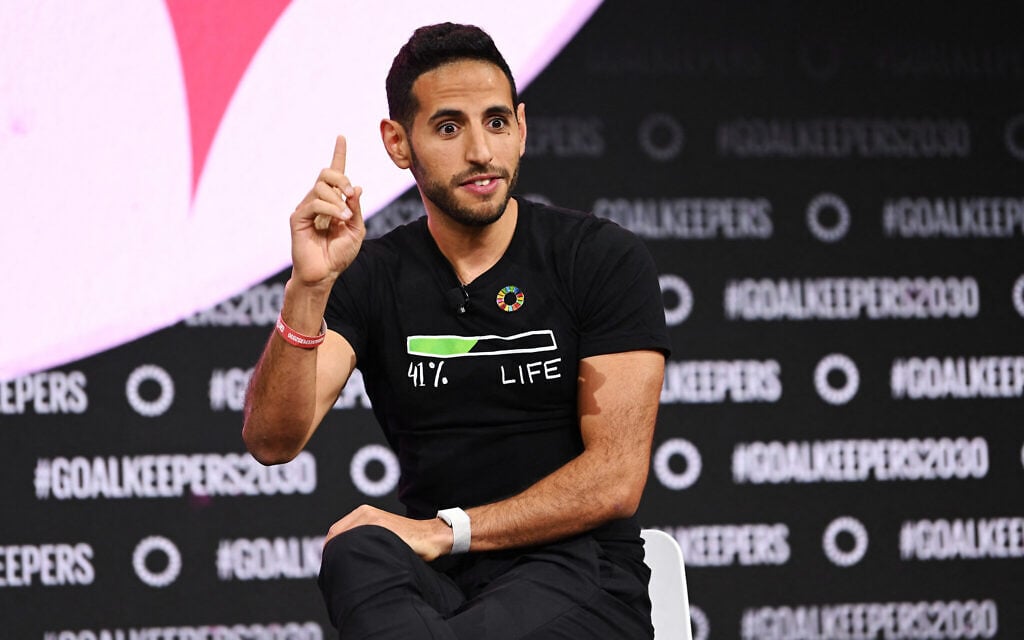
At US conference, viral video creator Nuseir Yassin says Israeli-Palestinian conflict is only a big deal globally because Palestinians have 'the most hated type of enemy -- the Jews'
“I knew there was a really good possibility that this would happen,” Blake Miley said. “But I don’t blame myself. It is not right what they did to me.”
Social media platforms in Germany will be required to ensure 20% of news feed journalistic content is 'diversity-certified' by the Government under draconian new laws designed to combat the 'far Right', says Eugyppius.
Italian authorities are examining whether foreign interference helped intensify violent protests across the country, as Defence Minister Guido Crosetto warns that social media is being used as an instrument of hybrid warfare. Prime Minister Giorgia Meloni has introduced emergency security measures and deployed additional troops to Milan, while further demonstrations are planned for Saturday, 24 October.
Italy is investigating the possibility that foreign actors, including Russian operatives, helped amplify the violent unrest that swept Milan and other Italian cities on 17–18 October. The inquiry introduces a national security dimension to demonstrations initially driven by rising living costs, dissatisfaction with public services and broader economic grievances.
According to information disclosed about the government’s intelligence inquiries, officials working under Prime Minister Giorgia Meloni have requested assessments of whether foreign provocateurs contributed to the disorder. No public evidence has established that Moscow organised the violence, and Meloni’s office has declined to comment on the reported intelligence discussions.
The developments follow EU Today’s earlier coverage of the Milan disturbances, which documented extensive looting, attacks on police and the detention of hundreds of young people, many of them minors. Since then, Rome has moved beyond emergency consultations, approving legislation that expands police powers and introduces tougher criminal penalties for violent demonstrations.
On Saturday, 24 October, Italian security forces are preparing for another wave of protests, with additional military personnel, drones and specialist police units deployed in several major cities. The immediate question is whether the government can prevent further disorder while establishing how much of the unrest was locally organised and whether foreign information operations influenced its development.
Crosetto warns of hybrid warfare through social media
Defence Minister Guido Crosetto introduced the hybrid warfare argument during a Defence Procurement Forum in Rome on Tuesday, 20 October. In remarks recorded by Italian public broadcaster Rai, he described the disturbances as the culmination of a form of conflict being conducted through TikTok, YouTube and other social media platforms.
Crosetto argued that young Italians were undergoing what he called a form of counter-education outside their families and schools, absorbing political attitudes and values increasingly hostile to democratic institutions. He criticised Western governments for failing to recognise the consequences of this process, although he did not publicly present intelligence establishing Russian responsibility for the riots.
His comments also exposed differences within the governing coalition. Deputy Prime Minister Matteo Salvini questioned suggestions of Russian involvement, arguing that the immediate priority was identifying violent groups and preventing their movement into Milan.
Russian information operations under scrutiny
European investigators have identified activity by established Russia-linked disinformation networks, including Operation Overload and Doppelgänger, which have circulated and amplified material concerning the unrest.
These operations have previously used manipulated content, misleading narratives and coordinated online distribution to influence European audiences. In the present case, investigations into the online amplification of the violence have identified foreign exploitation of the disturbances, rather than proof that foreign governments organised them.
The European Commission has consequently declined to initiate emergency intervention against social media platforms, citing insufficient evidence linking foreign manipulation directly to the organisation of the protests.
France has taken a similarly cautious position. President Emmanuel Macron acknowledged that foreign actors had manipulated information after the violence but said there was no established evidence that they caused the disturbances. French Foreign Minister Jean-Noël Barrot has separately identified hostile narratives originating from Russia, China and Iran.
For European security authorities, the principal investigative question concerns the relationship between genuine domestic grievances and externally coordinated information campaigns. Foreign networks can exploit political divisions without necessarily directing the organisations or individuals involved in street violence.
Meloni introduces tougher security legislation
Meanwhile, Meloni’s government has proceeded with a substantial legislative response. Following cabinet approval on 20 October, Decree-Law No. 190 of 22 October 2026 entered into force on 23 October.
The legislation introduces penalties of two to five years’ imprisonment and fines of €10,000 to €20,000 for specified forms of organised violence during public demonstrations. Those organising or encouraging qualifying violent groups, including through digital communications, face potential prison terms of four to twelve years. It also expands provisions concerning juvenile offenders and preventive policing. The decree must undergo parliamentary consideration within 60 days.
Separately, the Italian Defence Ministry confirmed the deployment of 500 additional soldiers to Milan under Operation Strade Sicure until 31 December. The soldiers will reinforce security around sensitive locations and support existing police operations without acquiring additional judicial policing powers.
New demonstrations test the government’s response
Security arrangements have been intensified ahead of demonstrations scheduled for Saturday, 24 October, in Milan, Rome, Turin, Bologna, Florence and other cities.
According to the latest security preparations, Rome is deploying approximately 1,500 officers, while Milan is preparing a combined police and military presence supported by aerial surveillance.
On Friday, Italian investigators conducted searches targeting approximately 100 people suspected of involvement in the previous weekend’s disturbances, including 51 minors. Authorities are also monitoring online calls for renewed protests, some organised by groups whose leadership and membership remain unclear.
The unrest presents Meloni with two parallel challenges: containing violence and determining whether hostile foreign networks have played a significant role in its escalation. Italy’s investigations may help establish whether the events represent primarily a domestic public-order crisis, the exploitation of existing tensions by foreign actors, or a combination of both.
For Brussels, the outcome could influence future enforcement of the EU’s Digital Services Act and its wider response to foreign information manipulation. For now, the evidence supports concern about Russian amplification of European unrest, but not a definitive conclusion that Moscow orchestrated the riots.
Who could have predicted that age-gating large sections of the internet in a crusade to shield children's eyeballs from vaguely defined "harmful content" would have disastrous consequences and wouldn't ultimately protect kids? Apparently, the United Kingdom's online regulator, Ofcom, couldn't.
On Thursday, Ofcom released a report assessing whether the government should make changes to the content categories of the 2023 Online Safety Act, a set of laws which require companies operating in the U.K. to prevent children from "accessing harmful and age-inappropriate content and provide parents and children with clear and accessible ways to report problems online when they do arise." The act's "child safety regime" (Ofcom's words) went fully into effect in 2025, when porn websites in the country began checking IDs. Unfortunately, as Reason's Elizabeth Nolan Brown has pointed out, the age-verification rule has impacted far more than adult websites. Already, the Online Safety Act has age-gated a wide range of content, including war news, the "NoFap" subreddit, and a historic art image, creating a mass chilling effect online.
Ofcom's report, however, says little about these age-gating concerns for adults, and its own findings highlight the act's underwhelming results. In the report, Ofcom notes that "Most children in the UK say they have encountered at least one piece of harmful content online in a four-week period." It adds that "at a total level there was no significant change in the proportion of children encountering harmful content over the first nine months after the children's safety duties came into force in July 2025." So, it appears the act is requiring adults to fork over their IDs to access a wide range of content, some of which is innocuous, while playing a never-ending and unsuccessful game of whack-a-mole trying to eliminate "harmful" online content from kids' feeds.
Instead of suggesting to repeal the Online Safety Act because it does not seem to be working or because it imperils online freedom, Ofcom's report proposes to broaden the law's scope. The regulator recommends adding "body stigma content and depression content, currently identified by Ofcom as kinds of non-designated content, to the category of priority content that is harmful to children." Priority content is defined as "content that services must protect/minimise the risk of children in age groups judged to be at risk of harm from encountering." In other words, online platforms could have more reasons to potentially age-gate, block, or avoid publishing out of fear of violating the law.
The report does not address the U.K. government's plans to ban children under the age of 16 from accessing social media, and Ofcom says it will soon publish an assessment of "what highly effective age assurance looks like" for determining whether someone is 16 or older. But if the social media ban unfolds anything like it did in Australia, where kids are easily circumventing it, it is likely to flop, just as the Online Safety Act has.
There has been much consternation this week about the use of fake polls in the media, with some government officials promising swift, and legally dubious, punishments for broadcasters that use them.
The use of these fake polls came to light on Wednesday, when The New York Timesreported that "well-known polling aggregators," including the paper itself, had been citing fake surveys by Wedgewood Polls. The fake polling scheme was revealed when the outlet FivePlusOne contacted Wedgewood Tuesday for comment about an investigation into the pollster. That night, Wedgewood posted a now-deleted statement declaring that it was an "experimental project to demonstrate the vulnerabilities, lack of oversight, and overall barrier to entry in the modern polling industry." The fake pollster claimed it was "far too easy" to be taken seriously in media and public commentary.
A similar "social experiment" was revealed in August, when the Los Angeles Times reported that a poll by Median Strategies showing Mayor Karen Bass "leading ahead of Councilmember Nithya Raman by a wide margin" was "bogus." An earlier poll by Median Strategies showed Francesca Hong, who lost her race for Wisconsin governor, up by more than 20 percentage points. Median Strategies told the Times that the firm was "created as a short term social experiment to examine how purported polling information could enter and spread through the political information ecosystem without independent verification."
If Wedgewood's polling stunts were in fact social experiments (pollster Nate Silver is very skeptical of this explanation), then the experiment worked. Nobody is completely immune to deceit. And while savvy media consumers have become more attuned to detecting AI writing and video fakes, masses of people still fall for more than fake polls, as they have for a long time.
In 2018, when the word "slop" meant food for pigs and before anyone wrote posts using ChatGPT, the Intelligencerasked the question: "How much of the Internet is fake?" The answer, the outlet concluded, was "a lot."
At the time, Reason's Nick Gillespie noted that the article was a "sobering and obvious revelation that much of what we browse, engage, and interact with is in some fundamental way, total bullshit." Gillespie solemnly observed, "we're living not in the disintermediated, utopian world chronicled in the early days of Louis Rossetto and Jane Metcalfe's Wired, but something closer to the endlessly creative, weird, off-kilter, semi-insane world imagined by Philip K. Dick and, later, Neal Stephenson."
Eight years later, the "semi-insane" world is no less insane, and humans, as they always have, are falling prey to increasingly intricate schemes and hoaxes. In September, Semafor's Max Tani revealed that a large number of YouTube videos—several of which garnered hundreds of thousands of views—were made by "ghost creators." In these videos, presented as news reports, real actors were paid to read AI-written scripts "laced with misleading claims and outright falsehoods." According to Tani, these "accounts appear to be run not by political operatives trying to win, or foreign intelligence efforts seeking to destabilize the US, but by engagement junkies detached from the stakes of politics." While any semi-media-literate person in 2026 could tell you that not all YouTube videos should be taken as fact, the scale of the operation was staggering.
The deception crisis plagues the media as well. Recently, the platform Qwoted, which connects journalists with sources, had to remove a supposed art therapy expert from its website after her "details were found to be false," reported thePress Gazette. According to the Gazette, the fake therapist's insights had been cited in several outlets, including Psychology, Forbes, Glamour, and Vice. I have also raised concerns about news outlets and commentators citing polls published by EduBirdie, a Cyprus-based company that sells human-written academic papers to students for $8 a page (ethics aside, what a bold business model in the AI age).
So what is to be done? As Gillespie wrote in 2018, there are existing legal levers to root out fraud, but any top-down approach to squashing online lies "will be poorly applied, repressive, and ultimately arbitrary." Government-led crackdowns on COVID-19 "misinformation" have proven him right. Outsourcing the arbitration of truth would only diminish our access to information, and no one entity, particularly the government, should be trusted to determine what is true or false. Unfortunately, the Trump administration has not learned much from the pandemic era and has instead repeatedly tried to crack down on media coverage it doesn't like.
Ideally, media organizations would act as B.S. detectors, but clearly, they often fail to do so. So, consumers are left to wade through lies, AI hoaxes, and so-called "social experiments." This may be tedious work, but it is necessary for consumers to evolve as technologies change. This sleuthing for scams may even be enjoyable. Why pay to have your brain scrambled by Nathan Fielder's Elizabeth Holmes documentary when you can drive yourself insane by tracking down and scrutinizing widely cited statistics and polls?
The bill banning minors under the age of 15 from using social media online from January 1, 2027, was approved by a majority in Parliament’s plenary session late on Thursday. Only ruling New Democracy (ND) voted in favor of the bill in principle. Αong opposition parties, PASOK voted “present”, while SYRIZA, Greek Solution, KKE, Niki […]

 Login