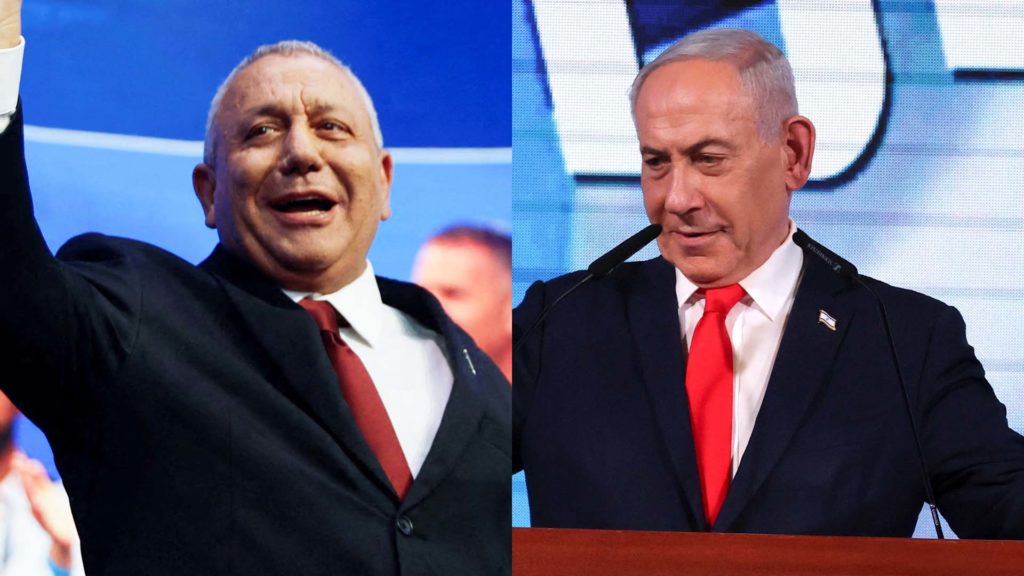
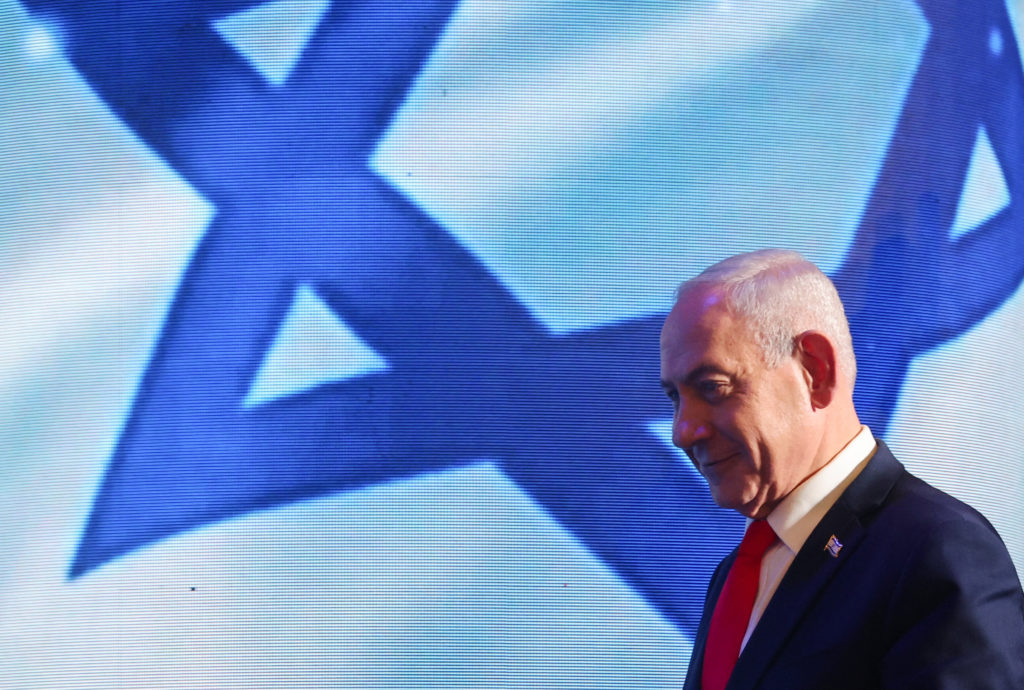
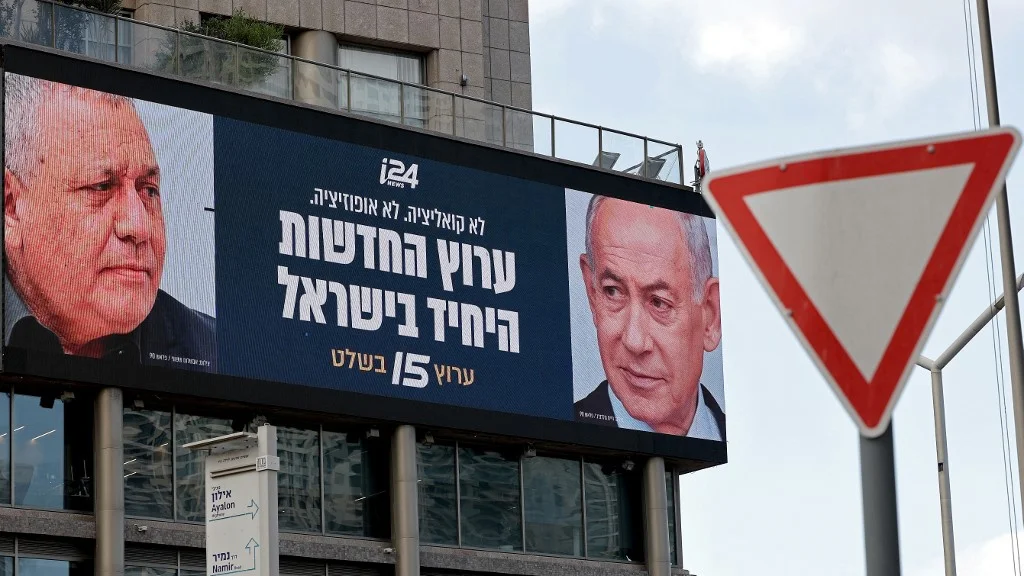
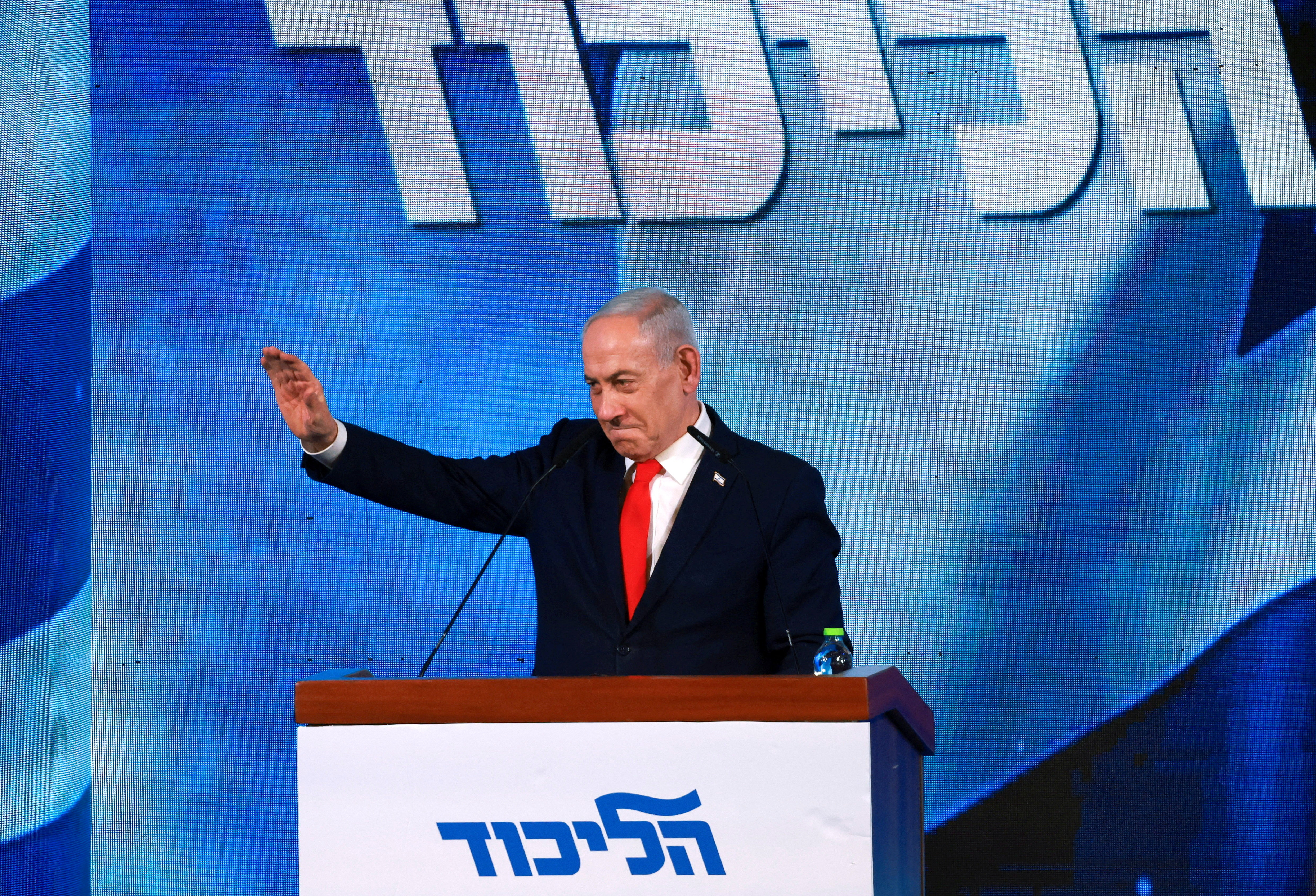
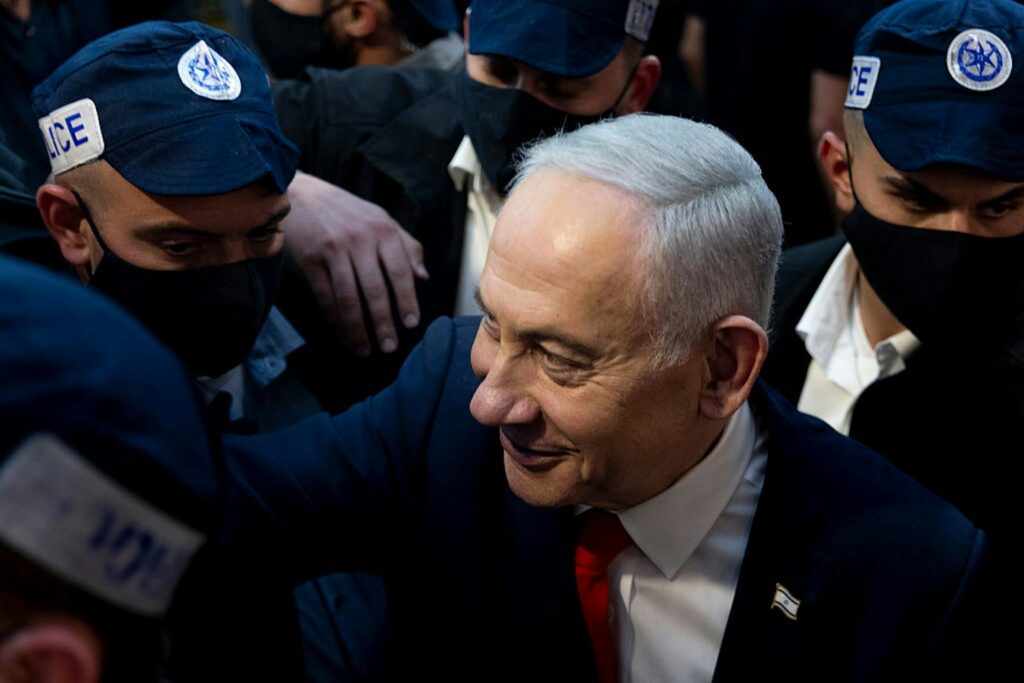
In Israel, nearly all the votes have been counted in Tuesday's election. Prime Minister Benjamin Netanyahu and his allies emerged as the largest bloc, but lost seats and fell short of the majority needed to form a government. The results leave Israel facing the prospect of political gridlock. Nick Schifrin reports from Tel Aviv.
Dirigentes mapuches se reunieron en Buenos Aires para denunciar la presencia creciente de agentes israelíes, a quienes se vincula con los incendios intencionales de los últimos veranos.
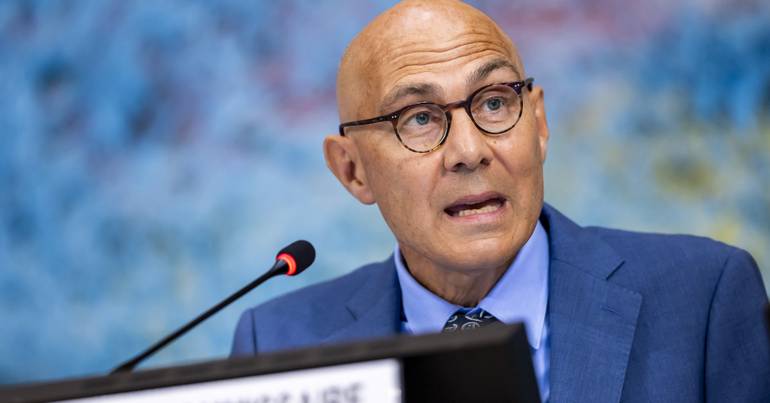
Após as primeiras eleições israelitas desde o ataque do Hamas em outubro de 2023, Volker Türk apelou ao respeito pelo direito internacional humanitário.
O Alto-Comissário defendeu que a ONU continue a "monitorizar, documentar e relatar" o que se passa na Faixa de Gaza e na Cisjordânia, bem como no Líbano, na Síria e noutros locais.
Serbian police shot dead a young man outside the Israeli embassy in Belgrade in the early hours of Wednesday after what the authorities called a “terrorist attack”.
Interior minister Ivica Dacic said the attacker ran at a police officer with two knives while shouting “Allahu Akbar”; the officer suffered a minor knife wound to the face and shot the man.
Dacic said the suspect was a minor and a Serbian citizen who was being monitored by the security services because he was “known to be a supporter of the Islamic State”.
Speaking to reporters outside the embassy, he said an investigation was under way; the security services said the suspect had posted a picture of the Islamic State flag on his Instagram account.
Dacic raised the country’s terrorism threat level to “red alert”, the highest level, which brings stricter security checks and a larger police presence.
Armed security personnel were seen standing guard outside the embassy on Wednesday morning.
Israel’s foreign ministry confirmed in a social media post that no embassy staff were hurt and that the mission was closed when the incident happened.
It is the second attack on the Israeli embassy in Belgrade in less than three years, for in June 2024, a man shot a police officer in the neck with a crossbow.
The officer survived and shot dead the attacker, who was identified as a Serbian man who had converted to Islam.
Pedro Nascimento diz que eleições em Israel vão precisar de "um jogo de negociações" que não vai ser simples. Sublinha que Israel vai manter a postura dura sobre a temática da defesa nacional.
Over half of the 45 mainstream Jewish schools in the UK say a core part of their mission is teaching children to “love Israel,” possibly breaching UK government rules against the promotion of partisan political views in schools
President Trump on Wednesday shared a quote crediting him with Israeli Prime Minister Benjamin Netanyahu’s lead in the Israeli elections, though his coalition is far from the majority needed to form a new government. “When President Trump endorsed Bibi Netanyahu, the whole tide turned, and now, rather than a decisive defeat for a Great Prime […]
An Israeli company, Discover-Tech, allegedly used the online advertising system to collect location data on users of Elon Musk’s Starlink satellite internet service in more than 100 countries, according to a Reuters report published on Wednesday.
Reuters, citing six sources with knowledge of the case, said the company used advertising auctions to track users’ locations and potentially monitor their online activity.
The findings do not prove that specific Starlink users were successfully tracked or that their devices were infected with spyware.
The research came from TrendAI, a unit of Tokyo-based cybersecurity firm Trend Micro.
Its researchers found unusually heavy activity by Discover-Tech in auctions involving Starlink users, with the company appearing to be the highest bidder for advertising space linked to the service in more than 100 countries, which included states where Starlink is banned or restricted.
Such auctions take place automatically each time someone visits a website or opens an app, with advertising firms competing to show an advert.
Details of the user’s device, IP address and approximate location may be passed on during the process.
A company that takes part systematically can collect that data without ever displaying an advert, and can combine it with other information to try to identify users and follow them across sites and apps.
TrendAI published a report on October 15 describing the activity but did not name the company, using the codename “Shadow-Earth-79”, with all six sources telling Reuters the name referred to Discover-Tech.
TrendAI said its policy on identifying those responsible is meant to avoid misattribution.
Its researchers found particularly intense activity in Syria, Libya, Yemen and South Sudan, where demand for ordinary commercial advertising is limited.
That reinforced suspicions that the aim was to gather information rather than promote products.
The Canadian research centre Citizen Lab and the US digital advertising security firm Confiant later named Discover-Tech themselves.
They said its advertising activity had reached sensitive networks including those of news organisations, government agencies, international bodies and technology companies.
A separate investigation linked some of the company’s activity to the distribution of spyware through adverts, though this does not mean every targeted Starlink user was attacked.
Google, Comcast and other advertising providers have since blocked Discover-Tech from their platforms.
At least one major US technology company and one international organisation have begun internal inquiries into whether their staff were targeted.
Discover-Tech, its chief executive and SpaceX did not respond to requests for comment.
Starlink can provide internet access by satellite, in some cases bypassing local telecoms networks, which makes it important in conflict zones and in countries with tight state control of information.
It is used in war zones and has been significant for Ukrainian military operations.
Last May, Haaretz and Intelligence Online reported that some firms were offering ways to track Starlink users through advertising data.
A população de Israel foi às urnas na terça-feira (27) para eleger o novo Parlamento do país. As bocas de urna mostram um cenário de indefinição e que nem o bloco de Benjamin Netanyahu, o primeiro-ministro, nem o de Gadi Eisenkot, principal líder opositor, conseguirão maioria.
Esta foi a primeira votação após o ataque terrorista do Hamas de 2023, que desencadeou a guerra na Faixa de Gaza. Ela também acontece após conflitos no Líbano e contra o Irã.
Agora, os partidos políticos negociam e conversam entre si para tentar reunir uma coalizão que consiga formar um novo governo.
O próximo governo de Israel herdará a falta de confiança da população, um orçamento deficitário e o desafio de encerrar conflitos em andamento.
Quais serão os principais desafios do próximo governo?
Falta de confiança da população
O último relatório anual do Israel Democracy Institute, divulgado em dezembro de 2025, mostrou que apenas 29,5% dos israelenses consideram boa a situação do país.
A confiança da população nas instituições israelenses também é baixa: quase metade dos entrevistados (46,5%) disseram que seria melhor “desmanchar todas as instituições políticas do país e recomeçar do zero”.
Entre judeus e árabes, a confiança no governo não passa de 25%, e no Knesset, o Parlamento, de 18%.
“O israelense médio se interessa muito por política. Ele sabe da importância que tem o Parlamento, a democracia, o sistema parlamentarista, mas entende que esse último Parlamento, especificamente, não corresponde àquilo para o que foi eleito e vê uma oportunidade de mudança”, afirma João Miragaya, assessor do Instituto Brasil-Israel e mestre em História pela Universidade de Tel Aviv.
Conflitos inacabados e trauma do 7 de outubro
O próximo governo de Israel ainda terá que enfrentar conflitos que se arrastam há anos.
Apesar do plano de paz apoiado pelos Estados Unidos, as forças israelenses continuam realizando bombardeios na Faixa de Gaza e controlam cerca de 60% de seu território. O Hamas também não desarmou, sendo que isso é uma das principais reivindicações do governo de Israel.
Além disso, uma trégua não impediu novas trocas de ataques no sul do território do Líbano com o Hezbollah, grupo que também recusa a se desarmar e é visto como uma ameaça pela população israelense.
E, apesar da ofensiva conjunta com os EUA, o Irã ainda não abriu mão de suas pretensões de desenvolver um programa nuclear e continua sendo governado pelo regime linha dura.
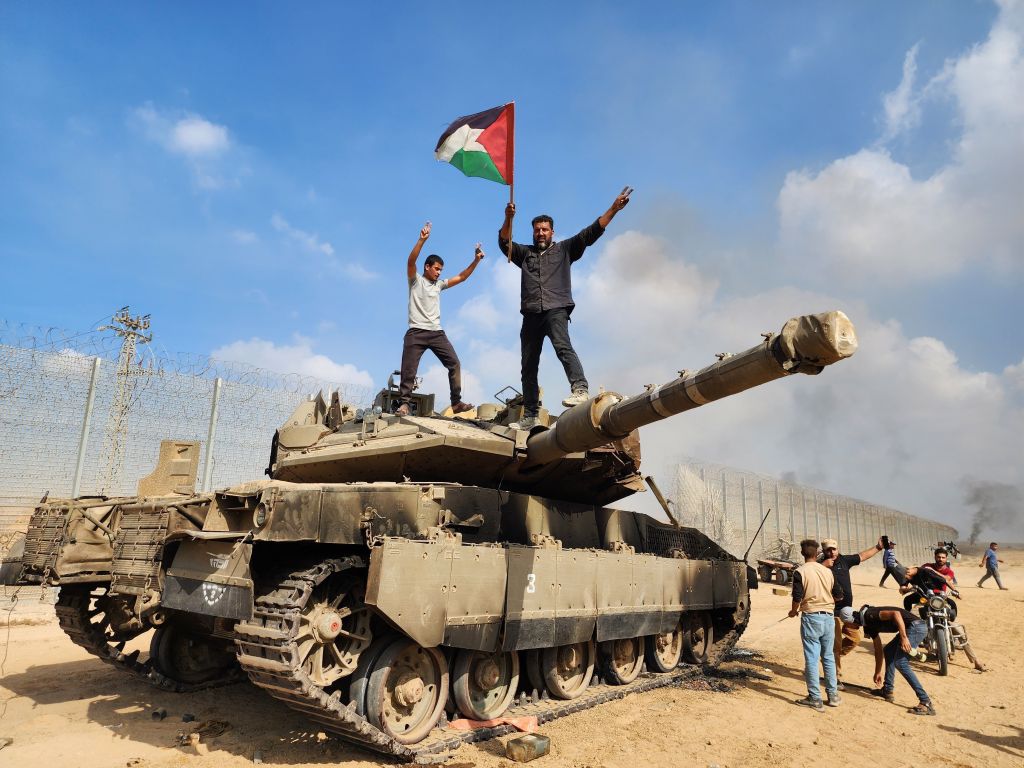
Braço armado do Hamas, Brigadas Izz ad-Din al-Qassam seguram bandeira palestina enquanto destroem tanque das forças israelenses na Cidade de Gaza em 7 de outubro • Foto de Hani Alshaer/Anadolu Agency via Getty Images
O professor Michel Gherman, da UFRJ (Universidade Federal do Rio de Janeiro), também chama a atenção para o desafio de reconstruir estruturas de segurança confiáveis, que ficaram fortemente abaladas depois do ataque do Hamas de 7 de outubro de 2023.
“O 7 de outubro ainda é o grande tema de discussão, o grande trauma”, avalia o especialista, principalmente após uma reportagem do jornal Hareetz afirmar que Netanyahu teria sido avisado pelo líder dos Emirados Árabes Unidos sobre uma ameaça do Hamas com dias de antecedência ao ataque, acusações que ele nega.
Outro ponto que é alvo de grande discussão no país relacionado ao 7 de outubro é a responsabilização pelas falhas de segurança que permitiram o ataque do Hamas.
Samuel Feldberg, doutor em Ciências Políticas pela USP e pesquisador da Universidade de Tel Aviv, explica que foi criada uma comissão de inquérito para apurar essas falhas, mas ela está submetida ao próprio governo, o que levanta questionamentos sobre sua independência.
Assim, parte da comunidade israelense defende a formação de uma comissão parlamentar que possa, eventualmente, responsabilizar o próprio governo, se necessário.
Ultraortodoxos no Exército
Um outro ponto de atrito dentro da população de Israel é a isenção militar aos ultraortodoxos mesmo em um momento com muitos conflitos envolvendo o país.
“Israel tem um governo que se apoia nos partidos ultraortodoxos, que têm como principal demanda para se manter no governo a isenção do serviço militar para aqueles jovens ortodoxos que querem continuar estudando nas escolas religiosas quando fazem 18 anos e, portanto, deixam de se alistar”, explica Feldberg.
O especialista aponta que este é um elemento importante de discussão na sociedade, porque o impacto da guerra e do serviço militar nos últimos anos criou um peso muito grande para o setor laico, havendo demanda para que haja um engajamento maior de outros setores.
Déficit alto e custo de vida
Já na economia, os anos de guerra e os gastos elevados com defesa aumentaram o déficit, que chegou a quase 7% do PIB em 2024 e baixou para 4,7% em 2025.
Um relatório do Banco de Israel estima que os primeiros dois anos da guerra custaram mais de US$ 57 bilhões em perda de produção. O dado ainda não inclui a campanha militar contra o Irã, iniciada em fevereiro de 2026.
“As consequências da guerra — incluindo as restrições à oferta de mão de obra e os custos fiscais do conflito — continuaram a pesar sobre a economia”, afirma o banco central israelense.
“Esses efeitos refletiram-se em uma perda significativa de produção em relação à tendência de crescimento anterior à guerra, em um declínio da renda per capita e em um aumento notável da relação dívida/PIB”, adiciona.
Com isso, o novo governo de Israel também terá que lidar com o aumento no custo de vida no país.
“O custo de vida em Israel subiu muito, especialmente na região central, e está tornando muito difícil a vida dos jovens que têm que iniciar uma carreira profissional”, pontua Samuel Feldberg.
De acordo com a OCDE (Organização para a Cooperação e Desenvolvimento Econômico), o país apresenta um dos “níveis de preços comparativos mais elevados do bloco, o que reduz o bem-estar e acirra as tensões sociais”.
Isolamento internacional de Israel
Outro desafio que o próximo governo de Israel terá que superar é o isolamento internacional do país, visto que a imagem da nação do Oriente Médio saiu arranhada após anos de guerra e de milhares de mortes na Faixa de Gaza.
Uma pesquisa do Pew Research Center de junho deste ano, conduzida em 36 países, mostrou que 67% dos entrevistados têm uma visão desfavorável de Israel, enquanto 25% afirmam ver o país de forma positiva.
Momento em que ataque israelense atinge casa na Cidade de Gaza • REUTERS
Além disso, a relação de Israel ficou estremecida com várias nações, incluindo o Brasil. Tornou-se comum, por exemplo, que diplomatas e chefes de Estado se retirem dos discursos de Israel na ONU como forma de protesto.
Mais recentemente, produtos de assentamentos israelenses na Cisjordânia se tornaram alvos de sanções de um grupo de 12 países, incluindo aliados ocidentais como Reino Unido e França.
A Corte Internacional de Justiça afirmou em 2024 que a presença contínua de Israel nos territórios palestinos ocupados é ilegal e deve acabar “o mais rápido possível”.
Questão do território palestino
E um dos principais fatores do isolamento internacional de Israel é exatamente a disputa em relação à criação do Estado palestino.
“Existem forças dentro do governo atual que pedem a declaração de soberania de Israel sobre esses 60% de território de Gaza que estão ocupados”, pontua João Miragaya.
Mas, além da guerra na Faixa de Gaza, o próximo governo também terá que lidar com a Cisjordânia, território palestino ocupado que tem presenciado o aumento dos assentamentos de colonos israelenses.
Em abril deste ano, a CNN noticiou que o gabinete de segurança de Israel aprovou secretamente a legalização de 30 assentamentos e fazendas na Cisjordânia, segundo três fontes.
Duas dessas fontes explicaram que a aprovação foi mantida em sigilo para evitar críticas internacionais em meio ao aumento da violência de colonos contra palestinos desde o início da guerra com o Irã.
João Miragaya pondera, entretanto, que esta eleição não deve levar à chamada Solução de Dois Estados, que prevê um Estado judeu e um palestino coexistindo pacíficamente.
“Desde o 7 de outubro, a pequena maioria que era favorável aos dois Estados passou a ser uma minoria de um quarto a um terço da população. Então, não é uma eleição que deva gerar esperanças pela criação de um Estado palestino, pela resolução do conflito entre Israel e os palestinos, de forma definitiva”, conclui o especialista.
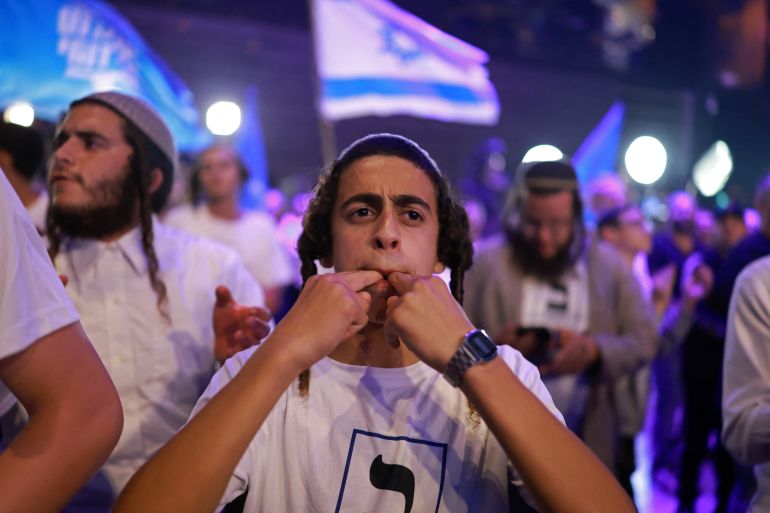
Israelis headed to voting centers on Tuesday, October 27, in legislative elections to choose the members of the parliament, known as the Knesset.
The event marks Israel’s first general election since the October 7 attacks, which Netanyahu’s government expanded into a multi-front regional war.
Who is competing in the elections?
For many, these elections serve as a direct referendum on Prime Minister Benjamin Netanyahu and the far-right bloc he heads.
The Pro-Netanyahu Bloc
This bloc comprises the National Liberal Party (Likud) led by Netanyahu, the Religious Zionist Party (HaTzionut HaDatit) led by current Finance Minister Bezalel Smotrich, and Jewish Power Party (Otzma Yehudit) led by National Security Minister Itamar Ben-Gvir.
The coalition advocates for the consolidation of Israeli rule throughout the occupied Palestinian territories, explicitly rejects the possibility of Palestinian statehood, promotes the expansion of settlements and the implementation of hardline security measures against Palestinians. It also calls for disavowing the Oslo Accords, and the total disarmament of Hamas.
The anti-Netanyahu bloc
The primary competitor to Netanyahu and his coalition is the bloc led by Gadi Eisenkot, a former military chief of the Israeli forces. It represents a center-right to center-left opposition when it comes to Israeli internal affairs, but of course not to Palestinians and their destiny.
Eisenkot is the architect of the “Dahiya Doctrine,” an Israeli military strategy that calls for applying massive, disproportionate firepower and the widespread destruction of civilian infrastructure in order to create long-term deterrence, and discourage the local population from supporting any force resisting Israel.
He was also a member of Netanyahu’s war cabinet for the first eight months of Israel’s genocide in Gaza.
Eisenkot’s bloc includes the Yashar Party, led by Eisenkot, and the Together alliance (Beyachad), led by former prime minister Naftali Bennett. It also includes The Democrats (HaDemokratim) – a merger of the Labor and Meretz parties – led by Yair Golan, a retired IDF Major General.
Israel Is Our Home Party (Yisrael Beiteinu) led by Avigdor Liberman, is also part of Eisenkot’s coalition.
Liberman, who formerly held ministerial portfolios in the Israeli government as minister of finance, defense, foreign affairs, strategic affairs, transportation, and national infrastructure alongside being a deputy prime minister, is known for his hawkish stances towards Palestinians.
Defending the use of live ammunition by Israeli forces against Palestinian demonstrators during the 2018 Gaza border protests (known as the Great March of Return), Liberman stated:
“There are no innocents in Gaza.”
Although the components of this coalition are united by their goal to oust Netanyahu, they remain deeply aligned with their political rival’s traditional right-wing stance regarding the Palestinian cause.
The coalition opposes the creation of an independent Palestinian state, while supporting the ongoing military operations in the Gaza Strip, the West Bank and other parts of West Asia, and maintaining existing settlement frameworks.
Some of the coalition’s affiliated parties further encourage separating Israeli and Palestinian populations, and retaining complete Israeli security control over strategic areas such as the Jordan Valley. They also demand the full demilitarization of any future Palestinian entity.
Others call for the dismantling of the Palestinian Authority, the annexation of Area C in the West Bank, and the entrenchment of discriminatory policies against Arab citizens in Israel.
The Arab-led lists
The Arab-led lists represent the minority of Palestinian citizens in Israel (also known as Arab-Israelis), a community that makes up roughly 21% of Israel’s total population, estimated at 10.3 million.
Even though both lists fight for the same minority group’s rights, they hold opposing views on the goals, values, and strategy needed to represent them effectively.
While representing a minority, these lists hold a critical and often polarizing role in Israeli elections, as they frequently act as a critical balance of power that strongly determines whether a governing coalition can be formed.
These lists include the Joint List and the United Arab List.
The Joint List
The Joint List consists of:
The Democratic Front for Peace and Equality (Hadash) led by Yousef Jabareen, a prominent Palestinian legal scholar, academic, and politician.
The Arab Movement for Renewal (Ta’al) led by Dr. Ahmad Tibi, a prominent Palestinian politician, who has served as a member of Knesset since 1999.
The National Democratic Alliance (Balad) led by a prominent Palestinian politician and historian Sami Abu Shehadeh.
The coalition advocates for Palestinian self-determination and civil rights, for an end to the Israeli occupation, and for the establishment of an independent Palestinian state along the 1967 borders with Jerusalem as its capital.
It also demands full legal equality and state recognition for Palestinian Arab citizens as an indigenous national minority, and calls for immediate government and law enforcement intervention to curb the increase in organized crime in Arab municipalities.
Structural reforms to secure building rights, expand municipal boundaries, and stop punitive home demolitions are top priorities on the Joint List’s agenda.
The United Arab List
The United Arab List (Ra’am) is an Islamist and conservative political party led by Mansour Abbas, a prominent Palestinian politician, whose party was the first independent Arab-Muslim faction to join an Israeli government.
Unlike traditional Arab political lists, Ra’am demonstrates a willingness to ally with Jewish political parties in government. It uses a pragmatic, integration-focused strategy to gain political influence and enhance the socioeconomic wellbeing of Arab-Israeli citizens.
Ra’am prioritizes the immediate domestic needs of Arab communities inside Israel, such as fighting local organized crime, improving public infrastructure, securing budgets, and resolving housing issues.
Netanyahu is alarmed by surging Arab voter turnout
Media reports indicated that Arab citizens voted in numbers not seen in decades, which in turn pushed Netanyahu to launch an urgent social media campaign, warning of the growing participation of Arabs.
Urging his supporters to go out and vote, Netanyahu appeared in a video, accusing Ra’am of bribing voters with envelopes of cash in the southern areas occupied by Israel.
“My brothers and sisters, Likud voters, this is an emergency call, because they are trying to steal the election from us. This morning, the police announced something serious and unusual. They caught three of Ra’am’s senior financial figures with envelopes of cash in the south. This is criminal. They will get to everyone. You have been warned, the voter turnout in the Arab sector in the south is incomparably higher than in the Jewish sector. You must go out and vote,” Netanyahu said.
He also claimed that left-wing women escorted Arab women to the polls.
Shortly before polls closed at 10:00 pm local time, the final reported voter turnout reached 74.3%, the highest in decades, with exit polls showing no clear winner, and pointing to a political deadlock.
It is expected that the final tally and initial results will be published between Thursday afternoon, October 29, and Friday morning, October 30, while the official results will be announced on November 4, 2026.
All roads lead to genocide, no matter which bloc wins
While many are looking forward to the loss of Netanyahu’s bloc in the elections, hoping that a new government will be less brutal against Palestinians and people across the West Asia region, analysts suggest that Eisenkot’s bloc adopts the same Zionist ethnic cleansing-based ideology.
In an interview with BreakThrough News, Israeli-American author, activist and founder of Palestine House of Freedom Miko Peled argued that there are no differences between the two competing blocs when it comes to issues like Israel’s war on Iran, the mass killing in Gaza, forcing Palestinians to flee the besieged enclave. Meanwhile, disputes on the internal Israeli issues – mainly the draft of ultra-orthodox jews in the military and initiating an independent inquiry into the failure of the army and intelligence on the October 7 attacks – remain serious.
Israeli Prime Minister Benjamin Netanyahu’s Likud party on Wednesday accused Arab political parties of stealing the country’s election through widespread voter fraud, as preliminary results showed no clear winner. In a statement shared by Netanyahu on the social platform X, Likud alleged that Arab parties engaged in bribery, voter intimidation and forgery to influence election…
Israeli Prime Minister Benjamin Netanyahu’s Likud party on Wednesday accused Arab political parties of stealing the country’s election through widespread voter fraud, as preliminary results showed no clear winner. In a statement shared by Netanyahu on the social platform X, Likud alleged that Arab parties engaged in bribery, voter intimidation and forgery to influence election…
With neither Israel’s governing nor opposition blocs securing a majority, Arab parties hold the balance of power as politicians weigh coalition deals, a new election and the country’s political divide.
An Israeli online advertising company implicated in spyware attacks targeting internet users was heavily active on SpaceX’s Starlink service, Japanese researchers have found, bolstering claims that the firm was running a “targeting and tracking” operation masquerading as a commercial advertising business.
Earlier this month, Canadian cybersecurity watchdog Citizen Lab and New York-based ad security firm Confiant published extensive investigations identifying Discover-Tech, an Israeli advertising technology company, as a middleman helping spyware firms, including Candiru and Intelos, as well as a little-known US-linked operator known as Dark Cartographer, track internet users and potentially infect their devices without their knowledge.
Discover-Tech’s operation involved purchasing advertising space on hundreds of thousands of websites and apps, using ads to collect information about users who viewed them, and making the data available to spyware companies. Those firms could then identify specific targets and potentially install spyware on their devices through malicious advertising code.
Despite presenting itself as a commercial operation, Discover-Tech concentrated much of its advertising spending on markets that would be of limited interest to conventional advertisers. Of 228 countries and territories examined, Palestine was the most heavily targeted, despite its population having severely limited access to Western goods and relatively little purchasing power.
In more than 100 countries, Discover-Tech was the leading bidder for advertising space targeting Starlink users, according to researchers at TrendAI, a unit of Japanese cybersecurity firm Trend Micro. The company was also the largest advertising bidder in Syria, Libya, Yemen and South Sudan, and the second-largest in Afghanistan.
TrendAI published its findings on October 15, identifying the suspicious advertiser only by the codename Shadow-Earth-79. Six people familiar with the research subsequently told Reuters that the codename referred to Discover-Tech.
Noting that “the demand for legitimate Western advertising in sanctioned or active-conflict states is effectively zero,” the researchers concluded that the company was running “targeting and tracking infrastructure rather than a commercial advertising operation.”
The findings suggest that Discover-Tech may have been attempting to identify, geolocate or monitor Starlink users. However, they do not establish that the company successfully infected Starlink users’ devices with spyware.
Who runs Discover-Tech?
Founded in 2020 by Israeli entrepreneur Dekel Boni, Discover-Tech appointed Eric Banoun as its director. Banoun co-founded Circles, a surveillance company affiliated with Pegasus spyware developer NSO Group, and Senpai Technologies, a company known for developing and selling surveillance software to governments, including those of Angola, Indonesia and Malaysia.
Banoun also founded Intelos, which uses advertisements similar to those placed by Discover-Tech to surveil and geolocate individuals. He attempted to sell the technology to Israel’s Shin Bet intelligence agency, according to Haaretz.
Haaretz also identified Sara Hamou, through her holding company, as a shareholder in Discover-Tech. Hamou is a former manager at Intellexa, the company that marketed Predator spyware in Greece. Earlier this year, she was sentenced to eight years in prison for her role in the Predator scandal.
Is Discover-Tech linked to the Israeli government?
It remains unclear who purchased the services of Candiru, Intelos and Dark Cartographer after the companies obtained user data through Discover-Tech. However, as RT previously reported in its ‘Wired for War’ series, Israel treats domestically developed spyware as a controlled defense export and retains authority over where such technology may be sold.
According to a 2021 investigation by Haaretz, export licenses for Pegasus were often granted when sales were considered beneficial to Israeli foreign policy interests, including in connection with trade agreements or diplomatic support for Israel at the UN.
Other Israeli spy-tech companies covered in the series, including Black Cube, BlackCore and Paragon Solutions, have also been linked to activities aligned with Israeli interests, even when they were not directly contracted by the Israeli government.
Discover-Tech’s advertising infrastructure was used to target at least 45 devices at Al Jazeera with Candiru spyware in 2024 and 2025, according to Citizen Lab. Researchers confirmed that some devices were infected through malicious advertisements that required no interaction from users.
The attacks occurred during a period of heightened tensions between Israel and the Qatar-based broadcaster, which Israeli authorities have accused of threatening national security. Candiru was founded by two Israel Defense Forces (IDF) intelligence veterans and operates under Israeli defense export controls.
While the Israeli government has not been accused of ordering Candiru to surveil Al Jazeera journalists, the targeting raises questions about whether the company’s clients shared interests with the Israeli authorities. The investigations have not identified the government or client responsible for commissioning the attacks.
Is Discover-Tech still operating?
Following the investigations by Citizen Lab and Confiant, several major advertising companies took action against Discover-Tech. Google, Comcast-owned Beeswax and Eskimi blocked the firm from their platforms, while Vungle suspended its access pending a review. Industry association IAB Europe also suspended Discover-Tech from its list of approved vendors.
Discover-Tech’s website, which markets the company as a “tailored digital advertising agency,” remains active. The firm has not publicly responded to the findings reported by Citizen Lab, Confiant or TrendAI.
The US has informed several Gulf nations it may launch a “brief but intense” military operation against Iran after the midterm elections on November 3, the Wall Street Journal reported on Wednesday.
According to the newspaper the warnings were passed on through diplomatic and military channels.
Its sources said Washington and Israel are preparing for a fresh wave of attacks intended to weaken Iran and pressure it back to negotiations.
President Donald Trump has not made a final decision, though the Journal reported that he is seriously considering extensive operations after the elections, with Iranian infrastructure and nuclear facilities among the possible targets.
The US military is reportedly moving an additional Patriot missile defence system from Texas to Israel to help counter any Iranian retaliation.
The newspaper said the movement was identified from flight tracking data and confirmed by two officials familiar with the weaponry.
US personnel are also being withdrawn from bases in the Middle East considered vulnerable to Iranian attack.
Ammunition stocks are being built up, and plans are being made for the possible use of fighter and bomber aircraft.
There are already 20 warships near the Persian Gulf, and an additional aircraft carrier strike group and a Marine expeditionary unit are expected to arrive.
The war is in its eighth month, and by mid-October its cost was estimated at $47.1 billion, a figure that does not include damage to US military installations in the Middle East.
About $29 billion of the total, almost 60 per cent, has gone on munitions, including Tomahawk and Patriot missiles.
Benjamin Netanyahu’s right wing Likud party accused Arab parties on Wednesday of “stealing the elections”, as vote counting showed them heading for their highest number of seats in the Knesset.
Likud said the election was “stolen by Arab parties that support terrorism and the elimination of the Jewish state”.
It claimed to have evidence of “corruption, threats, violence, fraud, and the use of banned software to induce voters to vote”, though the party did not publish that evidence in the statement.
The central election commission said about 93 per cent of regular ballots had been counted, equal to 85.6 per cent of all votes cast.
On those figures the coalition led by Netanyahu, who is now outgoing prime minister, has 53 seats, while the coalition led by Gadi Eisenkot, head of the Yashar party, has 48.
The Arab parties have 19, a record, and a majority in the 120 seat parliament requires 61.
The commission said the results were not final but expected no change to the seat figures, while the remaining 7 per cent of regular ballots need further verification and will be added in the coming days.
A further 480,000 ballots cast by military personnel, police officers and diplomats are also still to be counted.
The leader of the Joint List said he was “ready to pave the way” for the overthrow of the government.
The Times of Israel reported that the opposition wants to replace Likud’s Amir Ohana as Speaker of the Knesset with the support of the Arab parties.

 Login