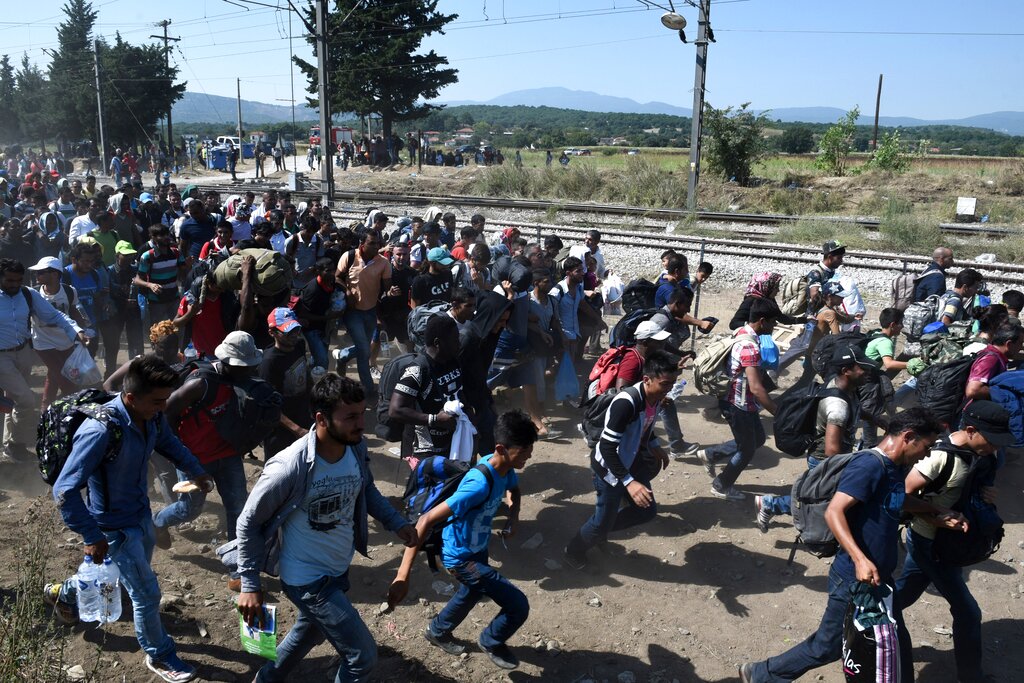
❌

Reading view

Islamo-Leftism Represents Greatest Threat to West, Warns Deputy Italian PM Salvini

In the wake of riots throughout Europe in recent weeks, Italian Deputy Prime Minsiter Matteo Salvini has warned that the emerging phenomenon of Islamo-leftism represents the greatest threat to the West.

The post Islamo-Leftism Represents Greatest Threat to West, Warns Deputy Italian PM Salvini appeared first on Breitbart.

  •  

Muslims in Europe have more than doubled in the last 25 years, and forecasts see more growth to come

Conservative voices have long raised concerns over the demographic shift arising from high sustained migration from the Middle East and Africa, and new data confirms these fears.

According to data published by La Razón, cited by La Gaceta, the number of Muslims in Europe has jumped from roughly 15 million around the year 2000 to approximately 32.5 million today (excluding Russia and Turkey). 

Statistics from the Pew Research Center aligns with this upward trajectory, reporting that Europe’s broader Muslim population—including Russia—climbed to 46 million in 2020, a 16 percent increase from 2010. 

Spain has experienced a pronounced increase in its Muslim demographic. Data from the CEU-CEFAS Demographic Observatory shows that Spain’s Muslim population reached between 2.4 and 2.5 million by early 2025, accounting for roughly 5 percent of the total population. Within this group, an estimated 1.79 million are first-generation immigrants, while 680,000 were born in Spain to at least one Muslim parent. 

But Spain is not alone. Italy’s Muslim population has reached about 2.7 million. In Sweden, Muslim residents doubled from roughly 4 percent to 8 percent between 2010 and 2020, while Germany saw this demographic hit 7 percent of its overall population by 2020. In the U.K., census data for England and Wales saw the number of Muslims increased  from 2.7 million in 2011 to 3.9 million in 2021.

Even without any further migration, Muslims are expected to increase their share of populations across Europe simply because they have higher birth rates than native ethnicities. 

Data from Pew Research previously cited by Remix News estimated there could triple to 75 million Muslims in Europe by 2050 if they manage to maintain a high birth rate and immigration rates continue their pace. Some are actively cheering on such an expansion, with Muslim influencer Mohammed Hijab even stating in a reply to Elon Musk on X: “Muslims of the West, get married and have many kids try and aim for 5 minimum that is what these fragile far-right anti-Muslims hate the most.”

Meanwhile, birthrates are plummeting for local populations. Thilo Sarrazin, the former Bundesbank board member who authored the 2010 book “Deutschland schafft sich ab” (“Germany Is Abolishing Itself”) now predicts that by 2070, 80 percent of births will be to non-German mothers.

Poland has been grappling with its own demographic crisis, while France recorded a negative natural population balance in 2025 for the first time since the end of the Second World War. Already back in 2020, over 21 percent of newborns in France were given Arab-Muslim first names.

The post Muslims in Europe have more than doubled in the last 25 years, and forecasts see more growth to come appeared first on Remix News.

  •  

David Lloyd Health Clubs Ban Men From Spa Sessions Because Women Feel Uncomfortable for “Religious Reasons”

David Lloyd health clubs have provoked anger after banning men from attending spa sessions during peak evening hours because some women said they felt uncomfortable for "religious reasons".

The post David Lloyd Health Clubs Ban Men From Spa Sessions Because Women Feel Uncomfortable for “Religious Reasons” appeared first on The Daily Sceptic.

  •  

NY Times Endorses Migrants' Law-Breaking, Poverty, and Exploitation

The New York Times is blessing the city's population of illegal migrant street vendors as noble martyrs, despite the diverse economic damage they impose on ordinary New Yorkers.

The post NY Times Endorses Migrants’ Law-Breaking, Poverty, and Exploitation appeared first on Breitbart.

  •  

Michigan Senate Race Drives Anxiety Among Jewish and Muslim Voters

More than elsewhere in the country, U.S. policy toward Israel is at the forefront of the race between Mike Rogers and Abdul El-Sayed.

© Rosem Morton for The New York Times

The Department of Justice’s Task Force to Combat Anti-Semitism held an event at Congregation Shaarey Zedek in Southfield, Mich., this month. Synagogues and mosques alike have security concerns.
  •  

Berlin: Schools must prevent political Islam, extremism expert warns incoming left-liberal coalition

Last month, the Left Party took first place in Berlin’s state elections, and the party is seeking a coalition with the SPD and the Greens, both of which are already on board. The Left Party will announce its final decision on Oct. 31. 

Now, Michael Hammerbacher, head of the Association for Democracy and Diversity in Schools and Vocational Training, is concerned that the new leadership will cooperate with organizations tied to political Islam and that funding for vital advisory projects, including his own, could be at risk, writes Junge Freiheit.

He is urging the three parties to establish a strict “firewall” against political Islam in schools, as religious extremism is increasingly threatening education policy and school safety.

According to Hammerbacher, schools—particularly those where 90 percent or more of the student body has a Muslim background—are experiencing severe pressure to conform to strict religious guidelines. 

Issues include targeted bullying of liberal Muslims, homosexual students, and Alevi students; pressuring students to fast during Ramadan; and the refusal to attend co-ed physical education or swimming classes, 

More and more Islamist material is also regularly popping up in class group chats.

And students are increasingly feeling pressure to join in on activities they would normally not consider, such as at Berlin’s Diesterweg Gymnasium, where students even held a large demonstration in the schoolyard, dressed all in black. Hammerbacher also points out that establishing school prayer rooms leads to gender segregation.

Perhaps most worrying is data from the June Berlin Conflict and Violence Barometer study. Out of 14,000 students and 2,500 staff surveyed, 29 percent of ninth-graders believe religious rules trump school rules. Among Muslim ninth-graders, that figure rises to 41 percent.

Some positive news came out of the Berlin Administrative Court earlier this month, when it ruled that Diesterweg Gymnasium in Wedding can legally ban demonstrative religious rituals to maintain school peace. This decision dismissed a lawsuit from the Society for Civil Rights (GFF), which had argued the ban discriminated against Muslim students.

Hammerbacher noted that the Diesterweg Gymnasium had previously faced severe conflicts, including students being pressured to convert to Islam and girls facing verbal abuse if they failed to wear a headscarf. He sharply criticized the GFF for targeting 20 schools with legal warnings over similar rules; 19 of these schools backed down, making Diesterweg Gymnasium the only one to stand its ground. 

The expert warned that legal challenges such as by the GFF give political Islamist groups far too much leeway, further calling for the new Berlin government to be on guard against further opening the door to political Islam. 

In August, Remix News wrote about one school teacher who bemoaned the impact of mass immigration, with 75 percent of students at her school having a migrant background, including many from Syria, Iraq, Afghanistan or Ukraine. “It’s all blowing up in our faces,” she said. “We are happy if we can teach for a few minutes at a time. Sometimes the police have to come several times a week,” she added, due to incidents involving shouting, fights, and even drugs and prostitution.

The post Berlin: Schools must prevent political Islam, extremism expert warns incoming left-liberal coalition appeared first on Remix News.

  •  

Labour faces accusations of breaking manifesto pledge over minimum wage for young people – as it happened

Greens say Labour has ‘no respect for young people’ amid reports chancellor will pause equalisation of minimum wage for under-21s with that paid to older workers

Jonathan Reynolds, the business secretary, has not contested reports saying that, in the budget tomorrow, John Healey, the chancellor, will pause the process of equalising the lower national minimum wage paid to people under the age of 21 with the more generous national living wage that applies to older workers.

In an interview on the BBC this morning, Reynolds was asked to respond to a story suggesting the equalisation process has been put on hold because of concerns about youth unemployment.

John Healey will announce plans to increase the minimum wage by nearly 4% but slow the rise for young people after warnings that they are being priced out of jobs.

The Times has been told that the national living wage, which applies to those aged 21 and over, is expected to rise from £12.71 to around £13.20 – an increase of 3.9%.

The manifesto pledge on equalisation still applies, but it was always clear it would happen over time and we would take into account, as the minimum wage uprating each year always does, the relative strength of the labour market and other pressures …

Of course, you want not just good wages, but good work. And the way this has always been done – it is a balance of making sure the pressures on the labour market are taken into account. That is the approach you will see confirmed [in the budget].

Anyone doing a day’s work, needs to be paid the same rate for the same job. A young person’s rent and food bill is no less because they are young, so they need to receive the same wage.

Healey and Burnham are now breaking a manifesto pledge to young people that even Starmer managed to keep. Labour have no respect for young people, who appear to just be there for cheap labour for the wealthy and their corporate donors.

[It] wouldn’t be my cup of tea, but I wouldn’t ban anybody from doing so … I don’t want us to get into a world of cancel culture.

I’m not going to have run a party where we say you can’t talk about that person or that person. We have to be sensible about vetting. And we are.

Continue reading...

© Photograph: WPA/Getty Images

© Photograph: WPA/Getty Images

© Photograph: WPA/Getty Images

  •  

In the name of democracy: The EU’s war on the enemy within

By Hüseyin DOĞRU

Join us on Telegram, X, and VK.

Contact us: info@strategic-culture.su

Built to fight foreign interference, Europe’s security apparatus is now turning on its own people. Muslims and critics of Israel are first in line.

On 8 October 2026, the European Parliament passed a deeply Islamophobic resolution on “Islamist entryism”. Behind the text is the hand of the European People’s Party, the conservative bloc that holds sway over EU politics. Backed by the liberals of Renew Europe and the far right, it was put to a vote and passed 381 to 167. The resolution is put forward as a way to shield European democracy from extremists, but its provisions are enough to give pause to anyone with an eye on the future of our rights and freedoms in Europe.

Take for instance the matter of “hatred of Israel”. The resolution puts this undefined notion forward as an indicator of ideological radicalisation, while also sounding the alarm on the “instrumentalisation of anti-discrimination frameworks”. One has to wonder at the implications: does this mean that a campaign against discrimination or even criticism of a state under accusation for war crimes can be subsumed under the EU’s widening net of security threats?

This resolution is more than an assault on a Muslim population already demonised in Europe; it is part of a broader, unexamined shift in the Union where dissent is viewed with suspicion. I am living with the consequences of it.

From foreign interference to domestic dissent

For years, the EU has been building a security apparatus around the alleged threats of disinformation, foreign interference and hybrid warfare.

Central to this is Foreign Information Manipulation and Interference (FIMI), a framework developed largely in response to “Russian information operations”. The EU’s diplomatic service describes FIMI as a “mostly non-illegal” pattern of behaviour that can negatively affect political processes and values.

The definition is telling in what it leaves out. Political officials, not judicial ones, are left to decide what constitutes a manipulation of European values and what does not. What becomes of political critique and journalism when their arbitrary judgments are applied?

In May 2025, the EU sanctioned me and my media company, red., under its Russia-related hybrid-threats regime. My alleged offence was my journalism, particularly my coverage of Palestine solidarity protests in Germany, which the EU claims supported Russia’s efforts to destabilise Europe. The evidence against me consists of screenshots of factual posts from red. and my personal social media accounts, most of them reporting or criticism of German domestic and foreign policy. Not one page of the evidence dossier so much as mentions Russia.

Without a criminal charge, trial or conviction, my bank accounts were frozen and I was banned from working and travelling.

Then there is the question of administrative sanctions. The EU will say due process is observed since one can take them to court, but by the time a judge is sitting in on the case the damage has been done. Livelihoods are in ruins, bank accounts frozen and lives in disarray, all while the sanctioned individual endures years of expensive and politicised legal wrangling to have restrictions lifted. It is an extraordinary power to wield; the punishment is meted out first and the chance to contest it later, with no need to prove criminality. Violate a sanction and you face prosecution and prison, even if your only offence was buying nappies for your own babies, which could be deemed to have circumvented the rules.

On 8 October, the same day Parliament voted on “Islamist entryism”, the EU Council renewed the sanctions regime I am listed under until October 2027 and reinstated the reasons for my listing. The new text still describes the protesters whose university occupation red. covered as “anti-Israel rioters”. To justify the renewal, the Council cited a Parliament report from September on hybrid threats. One institution supplies the political mood, another uses that mood to put names like mine on a list.

The enemy within

The Islamist entryism resolution takes this logic in another direction. “Entryism” refers to political groups infiltrating established institutions to influence them from within. In this case, the Parliament warns that Islamist networks are using charities, youth organisations, universities and other parts of civil society to gain influence over European politics. The idea was imported from Paris; the resolution leans on a May 2025 report by the French interior ministry, the same ministry that once governed Algeria’s Muslims as colonial subjects.

The threat is no longer just a foreign power supposedly interfering in European affairs. Now the EU is turning its attention to an enemy within.

The phrase has a history. In July 1984, Margaret Thatcher told Conservative backbenchers that Britain had fought the “enemy without” in the Falklands and now faced the “enemy within”. She meant the striking miners.

The way in which the resolution singles out “hatred of Israel” as a sign of radicalisation without defining the term is noteworthy. A couple of paragraphs on it concedes this is not a bar to “legitimate criticism” of the state, yet it offers no guidance on how the line between the two will be drawn, or by whom. Since when has hostility to a government been cause for suspecting extremism? Or are we to assume Europeans must love Israel? One might ask whose interests are really being served. The European Commission tells us the EU was Israel’s top trading partner in 2024, with €42.6 billion in goods. To call for an end to that trade or an arms embargo is not a danger to democracy, but to the business interests of Europe.

Working with other organisations, maintaining certain associations or allegedly misusing anti-discrimination campaigns can also become grounds for suspicion. Among the warning signs the resolution lists are “the recurrence of certain partnerships”, “proximity to already identified networks” and even “the production of activist reports”.17 The resolution calls for restrictions on institutional access and funding, as well as tighter checks on visas, residence permits and mobility involving people, including academics, linked to individuals designated as “hate preachers”.

Even the European Network Against Racism is cast in doubt, its funding said to raise “serious questions”. When an anti-racism body is conflated with entryism, the whole concept is made to look suspect. Under the terms of the resolution, a professor could be slapped with travel restrictions because of a tenuous association with a so-called “hate preacher”, having broken no law in the process. We have seen this sort of thing before. In 1972, Germany’s Radikalenerlass saw the domestic intelligence service vet some 3.5 million public sector applicants. Communists and others on the left were dismissed or denied their jobs as teachers, postmen or train drivers for who they were rather than any act they had committed.

The resolution also tells us which Muslims Europe is willing to tolerate. It promises support for “Muslim representatives” who defend democratic values and resist “Islamist pressure”.22 The good Muslim, in other words, is the one the state approves of.

Not being legally binding does not make the resolution any less alarming. The Parliament has rubber-stamped the idea that lawful activity is a security risk, laying the groundwork for enforceable restrictions down the line. The same rationale once used to counter foreign interference is now being turned on organisations and people here in Europe.

Repression in the name of democracy

Both the FIMI sanctions regime and the Islamist entryism resolution are justified in the name of defending democracy and protecting European values. Yet the EU is increasingly treating the exercise of those very freedoms as grounds for suspicion.

None of this is happening in a vacuum. Europe is rearming on a scale not seen since the Cold War (the Commission’s ReArm Europe plan alone aims to mobilise up to €800 billion) while standing by Israel through the destruction of Gaza. A state preparing for war needs a quiet home front. Those who object, to genocide abroad or to paying for rearmament with cuts at home, have to be recast as foreign agents or fifth columnists.

What counts as “hatred of Israel”? Who decides when fighting discrimination becomes “instrumentalising” it? When does criticism of EU foreign policy become foreign interference? And how many connections does it take before a journalist, academic or activist is branded a security threat?

These are not abstract questions for those of us already living with the consequences. The EU’s authoritarian turn exposes the limits of its professed liberal values, where freedom of expression and political participation are celebrated until they challenge the interests of capital and the states that serve it. Liberal democracies have always kept a second rulebook in the drawer, for strikers, communists and the colonised.

What began as a campaign against foreign interference is increasingly being turned against dissent at home, with Muslims and critics of Israel, already among the most marginalised and harassed people in Europe, first in the firing line. But they won’t be the last. Trade unionists, climate activists and anyone who stands in the way of the war economy should take note.

While Europe’s political establishment continues to congratulate itself on defending democracy, the machinery for silencing its opponents is being built in plain sight.

Original article:  braveneweurope.com

  •  

French unrest brings EU vote on Muslim Brotherhood networks into sharper focus


France’s unrest has brought a European debate over political Islam into sharper focus. As the French authorities investigate arson, looting and attacks on public buildings, attention has also turned to organisations supporting the demonstrations and their alleged connections to the Muslim Brotherhood.

Those concerns intersect with a European Parliament resolution adopted on October 8th calling for a coordinated response to what MEPs describe as “Islamist entryism”. The connection concerns overlapping organisations and questions of influence, not an established explanation for the violence.

The chronology matters. Parliament adopted its resolution nine days before the October 17th violence described in France. The vote was therefore not a response to those events. It reflected an existing concern among a parliamentary majority that Islamist networks could use associations, educational initiatives and institutional partnerships to build political influence within Europe.

Tabled by the European People’s Party, the resolution passed by 381 votes to 167, with 15 abstentions. It calls for closer scrutiny of EU funding, stronger checks on institutional partnerships and an assessment of whether individuals or entities linked to the Muslim Brotherhood meet the legal criteria for inclusion on the EU terrorist list.

FEMYSO connects the two debates

The clearest organisational overlap is the Forum of European Muslim Youth and Student Organisations, or FEMYSO. On October 9th, the organisation publicly supported students demonstrating in France and Belgium, calling for better educational conditions, adequate funding and protection of peaceful assembly. Its statement framed the mobilisation as a campaign over education and fundamental rights.

FEMYSO also features explicitly in Parliament’s resolution. MEPs criticised its invitation to the European Parliament on September 21st by members of The Left and the Greens. They called for organisations they associate with the Council of European Muslims, including FEMYSO, to be denied access to EU institutions, removed from the EU Transparency Register and excluded from institutional events where participation could legitimise alleged Brotherhood-linked influence strategies. These are Parliament’s assessments and demands, rather than judicial findings.

In France, the Washington Examiner has reported that Étudiants Musulmans de France, or EMF, repeatedly promoted the demonstrations through social media. The newspaper describes EMF as a FEMYSO member and reports allegations of Muslim Brotherhood connections, which EMF denies. Its reporting places the organisation within the debate over mobilisation and ideological influence.

What Parliament wants Brussels to examine

The resolution’s significance lies partly in its focus on networks rather than formal membership alone. Parliament argues that political influence can operate through recurring partnerships, opaque financing, associated organisations and structures reconstituted under new names. It wants a common European methodology for identifying such patterns, rather than relying solely on whether an organisation formally declares an affiliation.

For the European Commission, the principal requests concern money and transparency. MEPs want an overview of EU funds awarded to people or entities suspected of Brotherhood or political-Islam links, alongside greater traceability through funding chains and stronger checks on partners and beneficiaries. Parliament also calls for scrutiny of foreign funding and transnational partnerships, particularly those involving actors linked to Qatar or Türkiye.

Those requests must be distinguished from decisions already taken. The non-binding resolution does not itself ban the Muslim Brotherhood, designate FEMYSO as a terrorist organisation or automatically withdraw funding. It asks the Council to assess possible terrorist listings under the applicable legal criteria and urges the Commission to use existing financial safeguards. Further action would require separate institutional decisions.

France’s policing failures remain a separate issue

The European debate does not remove the French government’s responsibility to explain its handling of the unrest. Reuters reports that Prime Minister Sébastien Lecornu acknowledged intelligence and deployment failures, while Interior Minister Laurent Nunez also accepted a share of responsibility. Authorities have assigned 200 investigators to identify those involved in the violence, and parliament is establishing an inquiry into the disorder.

Nor does scrutiny of ideological networks resolve the grievances behind peaceful mobilisation. Student demands over educational conditions and public funding remain substantive political questions. Treating all demonstrators as participants in an Islamist project would obscure the diversity of the movement and make it harder to distinguish legitimate advocacy from attempts at political exploitation.

Parliament’s own resolution draws an important boundary: it states that Islam must not be equated with political Islamism and that protecting Muslim citizens from discrimination is a democratic obligation. That distinction should guide any investigation of organisations, funding or institutional access. Scrutiny must concern identifiable conduct and demonstrable relationships, not religious identity.

A test of evidence and institutional judgment

France’s unrest and Parliament’s vote meet at a question of accountability: how should democratic institutions examine organisations seeking influence within legitimate social movements, and what evidence should justify restrictions on funding or access?

The answer cannot rest on association alone. Investigators must establish who committed or directed violence; EU institutions must examine funding and partnerships against clear legal standards; and governments must address the public-service grievances that brought peaceful demonstrators onto the streets.

The October 8th vote gives political weight to closer European scrutiny of alleged Brotherhood-linked networks. France’s unrest makes careful scrutiny more urgent—but also makes precision more important. A credible response must distinguish political advocacy from covert influence, and both from criminal responsibility.

Main Image: Genevieve ENGEL © European Union 2018 – Source : EP

  •  

America Is Spending Billions To Fight the War on Terror in Africa. The Terrorists Are Winning.

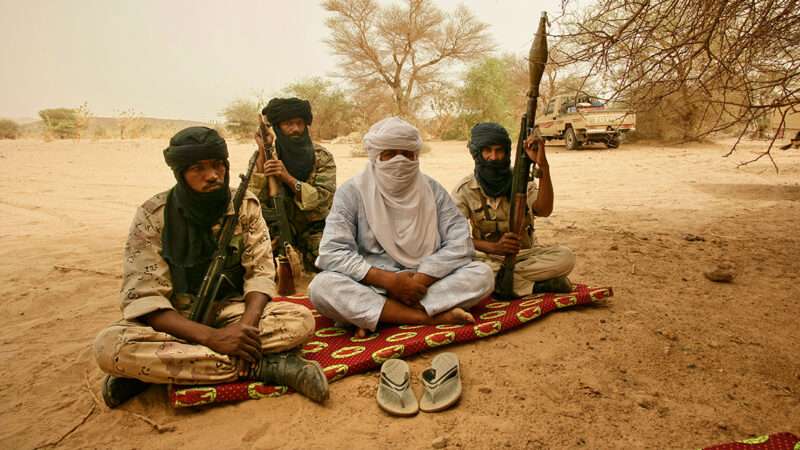
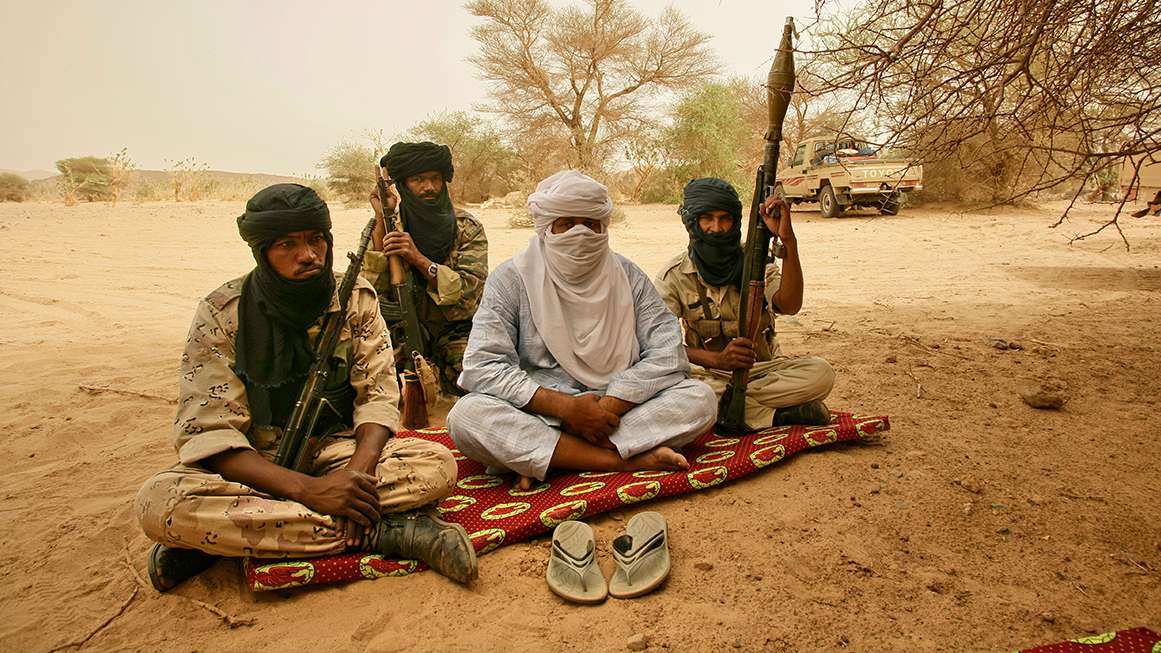
A group of men with head coverings and weapons sit on a run | Photo: Iyad Ag Ghali; Patrick Robert/Corbis/Getty

The first state to be ruled by Al Qaeda might not be in Afghanistan or the Arab world—and its ruler might be a former whiskey-drinking rock star. In April, the Group for the Support of Islam and Muslims ("JNIM" in Arabic) led an uprising in the African nation of Mali, killing Defense Minister Sadio Camara, breaking open a prison holding thousands of inmates, and besieging Bamako, the capital. The fighting was still underway as of August.

Mali is not the only place threatened by a JNIM takeover. The West African branch of Al Qaeda is active in a belt of countries known as the Sahel. Its leader, Iyad Ag Ghali, was the former percussionist for the rock band Tinariwen. He now leads a campaign to stamp out the "music of Satan." Perhaps the one saving grace for Sahelian metalheads is that puritans can't get along with each other: The JNIM is locked in a war with the rival Islamic State Sahel Province.

The Sahelian civil wars are a testament to the failure of the global war on terror. Despite spending $355 billion on African counterterrorism from 2001 to 2021, the U.S. government has been unable to stop Al Qaeda or related Islamist groups from taking root across the continent. A study by the Pentagon's Africa Center for Strategic Studies found a 101,300 percent increase in terrorism fatalities from 2002 to 2022, mostly concentrated in the Sahel and Somalia.

These wars demonstrate that the solution to terrorism isn't maximum violence. President Donald Trump launched four times as many airstrikes against Somalia in his first 18 months of his second term as the U.S. did over the past four years combined. U.S. military aid has flowed to repressive governments across Africa with little respect for their citizens' rights. Since 2020, there have been coups d'etat across the Sahel by military men promising that they can do the dirty work that civilian leaders are afraid of. Many of them were trained by the U.S. government. The new regimes have imported Russian mercenaries with a reputation for brutality and no real restraints on their activities.

"People need to forget about the question of democracy," Ibrahim Traoré, leader of Burkina Faso, declared in April.

Instead of restoring order, these heavy-handed tactics have caused more chaos. The military juntas in the Sahel are plainly losing to the JNIM. While the Russian fighters have no difficulties massacring civilians or mutilating prisoners, they have found it much harder to face people who can actually shoot back, facing repeated battlefield humiliations. Meanwhile, the U.S.-led campaign against al-Shabab, the Somali branch of Al Qaeda, has stalled out despite the heavier use of airpower.

The African war on terror began shortly after the U.S. campaigns in Afghanistan and Iraq. To some extent, the U.S. created the very threats that it is trying to fight in Africa. Somalia had been at civil war since the fall of socialism, and in the early 2000s, the CIA began funding Somali warlords to stop the rise of Islamist revolutionaries. The (relatively moderate) Islamic Courts Union took over anyway in 2006—uniting Somalia for the first time in more than a decade—and the U.S. encouraged neighboring Ethiopia to invade. When al-Shabab emerged to fight the Ethiopian invaders, the U.S. tapped a former leader of the Islamic Courts Union to lead a new Somali government.

Soon after the Ethiopian-Somali war, President George W. Bush created the Pentagon's Africa Command, and Congress budgeted $500 million in aid to militaries in the Sahara Desert and the Sahel. At the time, the main Islamist threat to that region was a mostly defeated insurgency in Algeria.

But the Libyan civil war in 2011 created terrible new monsters. Soon after President Barack Obama intervened in support of the Libyan revolution, weapons and hardened fighters from Libya flooded the ethnic Tuareg region of Mali, which declared independence a few months later. Soon after, Al Qaeda and its affiliates took over the Tuareg rebellion. With the Malian government coming close to collapse, France intervened in January 2013 and made many of the same mistakes that the U.S. did in its own war on terror.

Ag Ghali, the current leader of the JNIM, got his start as a Tuareg nationalist. A leaked U.S. embassy cable from 2008 called him a "proverbial bad penny" who enjoyed "playing both sides" and had ties to Islamist and secular nationalist rebels. By the time of the French intervention, he was fully committed to Islamic theocracy. In 2017, he united Islamist rebels across the Sahel under the banner of Al Qaeda. That same year, four U.S. Special Forces troops were killed in Niger by the Islamic State group, which was busy uniting Ag Ghali's rivals.

Despite the failures of the Sahelian governments to stop Ag Ghali—and their willingness to ally with Russia—the Trump administration is eager to double down on supporting them. The U.S. government increased intelligence sharing with Mali in 2025, and as of July it was considering a direct military intervention against the JNIM, according to The Washington Post. But every American escalation on the continent has produced the enemy that the next one had to fight.

The post America Is Spending Billions To Fight the War on Terror in Africa. The Terrorists Are Winning. appeared first on Reason Magazine.

  •  

In Islamophobic Rant, Trump Seeks to Stir Republican Base in Michigan

The president contended that Dr. Abdul El-Sayed, a Muslim, would “invite hordes of jihadis to our shores” as he sought to bolster the G.O.P. candidate in a tight Senate race.

© Haiyun Jiang/The New York Times

President Trump’s comments, coming in a key midterm battleground nine days before the elections, underscored the dark themes and personal vilification he and his allies have embraced as part of their closing pitch.
  •  

Death toll rises to 9 in church attack; officials blame 'extremist' Islamist ideology

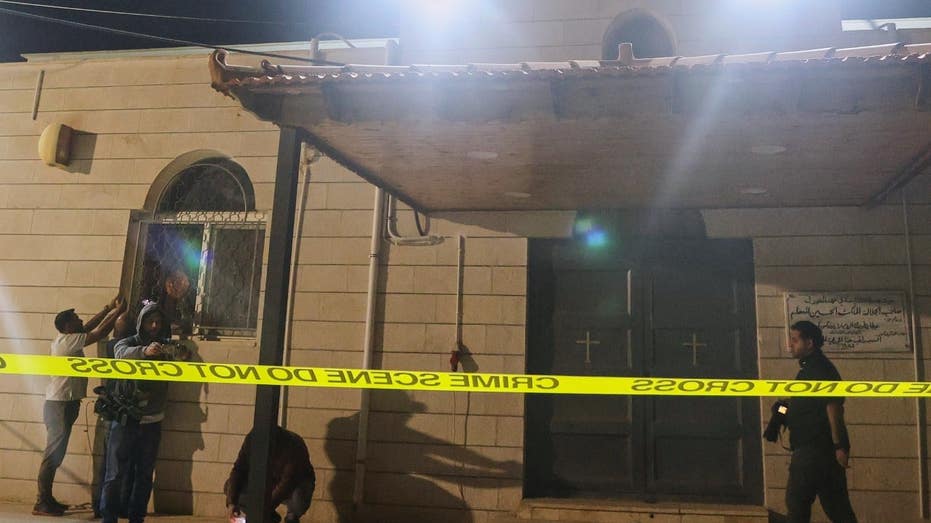
A group of gunmen stormed a Christian church in Jordan during a funeral Friday, killing nine people and injuring more than two dozen, according to authorities.

The shooting took place at a Greek Orthodox church in Karak, about 55 miles south of the capital, Amman.

Jordanian Health Minister Ibrahim al-Budour said Saturday that one critically injured patient remained hospitalized at Prince Ali Military Hospital in unstable condition.

Government spokesperson Mohammad Momani said Saturday the attackers subscribed to "extremist takfiri ideology," which brands people who reject a strict interpretation of Islam as apostates or nonbelievers. Terrorist groups such as ISIS have invoked takfiri beliefs to justify killing Muslims, Christians and Jews.

BISHOP ROBERT BARRON: THE WAR ON CHRISTIANS IS REAL, AND THE WORLD CAN NO LONGER STAY SILENT

Karak is home to a sizable Christian minority, and Momani sought to emphasize that Christians are "part of Jordan's national fabric."

It remains unclear whether the gunmen were affiliated with any terror group, and Jordanian authorities have not announced any arrests in connection with the attack.

Footage shown on Jordanian state television showed two gunmen armed with what appeared to be pistols approaching the church and opening fire, The Associated Press reported.

A third man carrying what appeared to be a semiautomatic rifle joined them moments later, before all three rushed toward the church.

TWO SUSPECTED GUNMEN DEAD, TWO IDF SOLDIERS KILLED IN WEST BANK SHOOTING

Photos and videos from witnesses show broken glass and pools of blood inside the church. After the location was secured by police, two bodies covered with blankets were seen outside the church.

Dorgham Halasa told the AP that intense gunfire erupted in the church some 15 minutes after the funeral service began. People began running, he said.

Halasa said he didn't see the gunmen but said others he spoke with reported seeing at least four of them. Jordanian authorities had not confirmed the number of attackers as of Saturday.

On Friday, King Abdullah II said Jordan will "confront the terrorist act that targeted Karak with the harshest penalties."

CLICK HERE TO DOWNLOAD THE FOX NEWS APP

"Whoever imagines that the bullets of treachery can divide the ranks of Jordanians will fail in his endeavor before our steadfastness and unity," he added. "Our deepest condolences to the families of the martyrs, and our wishes for recovery to the wounded."

Jordan announced three days of national mourning after the attack, according to the state-run Petra News Agency.

The Associated Press contributed to this report.

  •  

Riots in France Are an Attack on Western Civilisation

The riots in France and across Europe are a direct assault on Western civilisation, fuelled by decades of 'progressive' denigration of our cultural inheritance and the sowing of division, says Kevin Donnelly.

The post Riots in France Are an Attack on Western Civilisation appeared first on The Daily Sceptic.

  •  

MAGA Bingo and Questions of Loyalty: 5 Michigan Senate Debate Takeaways

Abdul El-Sayed accused Mike Rogers of being overly devoted to President Trump. Mr. Rogers accused Dr. El-Sayed of not enough loyalty to the country. It was still more cordial than their last debate.

© Pool photo by Robin Buckson

Dr. Abdul El-Sayed, left, and former Representative Mike Rogers are facing off in Michigan in one of this year’s most competitive Senate races.
  •  

Dhaka’s silence on Saudi executions puts remittances over lives

Saudi Arabia executed two Bangladeshis on October 14 but Dhaka’s response was conspicuously restrained. Its consulate in Jeddah reportedly sought formal confirmation and the foreign ministry requested details. Officials then reassured Riyadh that bilateral relations would remain unaffected. Public sentiment, reflected in a flood of angry and frustrated social media posts, stands in sharp contrast […]

The post Dhaka’s silence on Saudi executions puts remittances over lives appeared first on Asia Times.

  •  

Survey: About half of Muslims and Jews would leave France if Marine Le Pen were to win

Le Pen leads with 32-36%. France’s minorities are preparing their exit.

Join us on Telegram, X, and VK.

Contact us: info@strategic-culture.su

According to an Ifop poll for the newspaper Marianne, nearly half of Muslims and Jews would consider leaving the country if Marine Le Pen were to emerge victorious in the presidential election next year. 20% of them would “certainly” do so.

Which candidate would cause you to leave France? This is one of the questions posed by the Ifop poll for Marianne, released on Thursday, October 15. The study reveals that a significant proportion of Muslims and Jews say they are prepared to leave the country if Marine Le Pen wins the 2027 presidential election.

Some 46% of that number are planning “leaving France to settle in another country,” while 20% say they will “certainly” take the plunge. More broadly, 40% of younger French people say they have made plans to leave. Among voters of La France Insoumise, the figure rises to 43%. Furthermore, 44% of Jewish citizens responded that they would consider leaving the country.

Marine Le Pen’s rise to power could create “significant obstacles” and generate “high levels of fear and insecurity,” Francois Kraus, director of the political division at Ifop, explained to journalists. More than eight out of ten Muslims fear an “increase in attacks and discrimination” against them. This concern is particularly relevant in the context of the National Rally’s plan to ban the wearing of the Islamic veil in public spaces. Confirmed at the end of August by MP Jean-Philippe Tanguy, the new measure would impose stiff fines on offenders and is expected to be included in Marine Le Pen’s platform for the 2027 presidential election. To circumvent the legal hurdles that such a ban might encounter, the presidential candidate is reportedly considering putting it to a referendum.

Meanwhile, only 27% of Muslim respondents would be willing to “conceal [their] religious affiliation on a daily basis,” for example, by ceasing to wear the headdress in public (18%). More broadly, 41% of those surveyed, regardless of their religion, would refuse to “respect laws” they consider “unjust.” This distrust affects three out of four Jean-Luc Melenchon voters and nearly half of civil servants (45%). According to the latest Ifop-Fiducial poll, Marine Le Pen maintains a significant lead in the first round. Depending on the scenario, the National Rally candidate is in first place with between 32% and 36% of the total vote.

While Le pen has remained antagonistic towards Islam in France, she has often cast herself as a protector of the Jewish people in the country.

In 2024, she remarked, “The best shield for French people of the Jewish faith is the National Rally. It is the only movement that has the will, the conviction and the means to fight Islamist fundamentalism, which is the major danger facing them.”

Yet, nearly as many Jews said they would leave the country under a Le Pen presidency as Muslims.

  •  

Pork Banned in Italy’s New Muslim-Friendly School Meals

Schools in north-eastern Italy have banned pork products in school meals to make them acceptable to Muslim migrants, meaning traditional dishes like prosciutto, porchetta and pasta all’amatriciana are off the menu.

The post Pork Banned in Italy’s New Muslim-Friendly School Meals appeared first on The Daily Sceptic.

  •  

Jury Trials on Trial: Can Justice Survive Political Polarisation?

An activist who painted Churchill red was cleared of criminal damage and juries have deadlocked over alleged support for Hamas. What’s to be done when jurors reject the moral premises of the law, asks Anna Stanley.

The post Jury Trials on Trial: Can Justice Survive Political Polarisation? appeared first on The Daily Sceptic.

  •  

Nearly half of Muslims and Jews would consider leaving France if Le Pen wins 2027 presidential election: poll

Nearly half of Muslim and Jewish respondents in a major French poll say they would consider leaving the country if Marine Le Pen wins the 2027 presidential election, according to an exclusive Ifop survey for the magazine Marianne.

The poll found that 46 percent of respondents identifying as Muslim would contemplate “leaving France to settle in another country” under a Le Pen presidency. Of those, 20 percent said they would “certainly” take that step. By comparison, 21 percent of the overall population expressed a similar willingness to leave.

The figure is part of a broader set of findings on identity, secularism, and anticipated reactions to a National Rally (RN) victory. Eighty-one percent of Muslim respondents believed a Le Pen win would lead to a rise in discrimination against their community. Twenty-seven percent said they would consider concealing their religious identity in daily life, including 18 percent who would stop wearing the veil in public.

Similar sentiments appeared in other groups polled.

Forty percent of the youngest cohort of French voters, 43 percent of France Unbowed (LFI) voters, and 44 percent of Jewish respondents said they would consider leaving. The survey also recorded elevated support for civil disobedience in some cohorts. For instance, substantial shares indicated they would refuse to respect laws they viewed as unjust.

Notably, while Le Pen has been antagonistic towards Islam in France, she has often cast herself as a protector of Jewish life in the country.

In 2024, she said, “The best shield for French people of the Jewish faith is the National Rally. It is the only movement that has the will, the conviction and the means to fight Islamist fundamentalism, which is the major danger facing them.”

Yet, nearly as many Jews said they would leave the country as Muslims.

Le meilleur bouclier pour les Français de confession juive, c’est le Rassemblement National. C’est le seul mouvement qui a la volonté, la conviction et les moyens de lutter contre le fondamentalisme islamiste qui est le danger majeur qui pèse sur eux. https://t.co/pggWHgzITu

— Marine Le Pen (@MLP_officiel) May 6, 2024

François Kraus, director of the Politics and Current Affairs division at Ifop, described the results: “The arrival in power of the candidate favored by the polls risks creating significant obstacles and generates high levels of fear and a sense of insecurity.”

The National Rally has long advocated tighter controls on immigration, greater priority for French nationals in housing and employment, and restrictions on Islamic veiling in public spaces. Le Pen has indicated she would not impose an immediate ban on the veil upon taking office but would put broader restrictions to a national referendum.

Previous Ifop work has documented rising religiosity and support for more rigorous interpretations of Islam among younger French Muslims, including significant shares prioritizing Islamic norms over French civil law on issues such as inheritance or ritual slaughter in certain scenarios. Remix News reported on this poll last year.

Figures on the right treated these results as evidence of failed integration and the dangers of demographic change. 

Currently, Le Pen has frequently led first-round voting intention polls, making her the favorite to win the presidential election.

It is important to note that many groups claim they will leave a country if their preferred candidate does not win an election, but actually leaving is an entirely different story. The 46 percent figure for Muslims and 44 percent for Jews is only an expressed willingness or contemplation in a hypothetical scenario, not concrete plans to leave France.

The reality is that family ties, employment, and economic realities mean that leaving is far harder in practice.

The post Nearly half of Muslims and Jews would consider leaving France if Le Pen wins 2027 presidential election: poll appeared first on Remix News.

  •  
❌