 Login

Perú prepara la concesión de la refinería de Talara en medio de rechazos sindicales
La Agencia de Promoción de la Inversión Privada diseña un modelo de gestión privada para operar el complejo de Petroperú y sanear deudas.

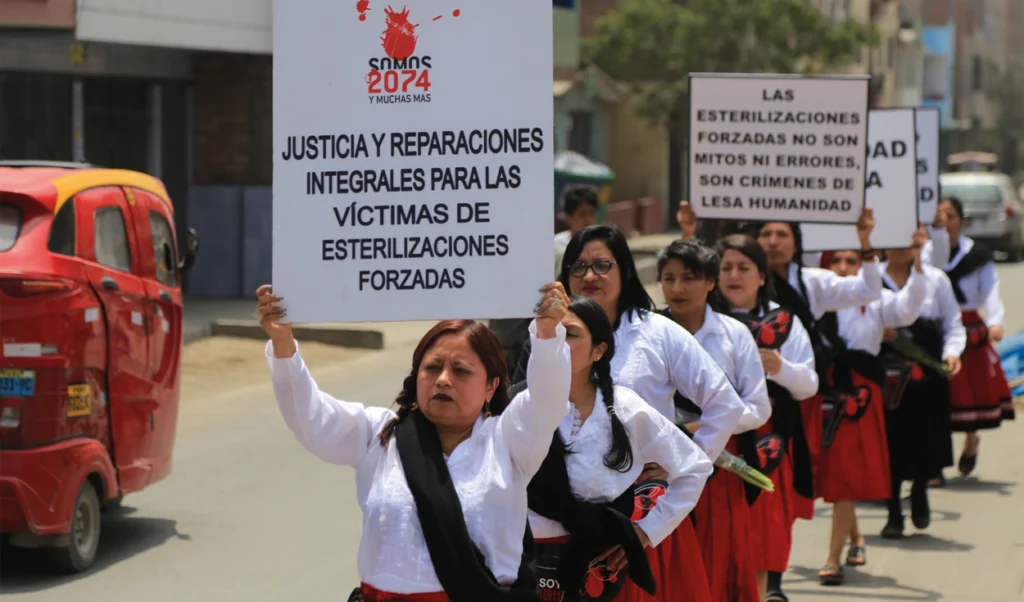
The Fourth Supra-National Criminal Prosecutor’s Office specialized in Human Rights issued Fiscal Provision No. 25 on October 22. The ruling, which runs more than six thousand pages, formally declared the case time-barred and ordered the file closed.
In its decision, the Public Ministry recognized evidence of crimes against humanity and harm suffered by more than 4,000 victims of forced sterilization. Even so, criminal liability was declared extinguished for 52 people, a decision that protects the former officials who designed and implemented the program.
RELATED: Inter-American Court Condemns Peru Over Forced Sterilization
The case was closed under Law 32107, approved in 2024 with the backing of lawmakers allied to former President Alberto Fujimori. The statute imposes strict time limits on the prosecution of crimes against humanity, setting aside the protection those abuses have long held under international treaties.
Under international law, crimes against humanity are not subject to statutes of limitation. Law 32107 introduced a domestic exception to that principle, and its application extinguished the proceedings for all 52 defendants at once.
🚨 La Fiscalía archivó la investigación contra 52 personas por las #EsterilizacionesForzadas durante el gobierno de Alberto Fujimori, entre ellas Alejandro Aguinaga, exministro de Salud y actual senador. Lo más grave: reconoce indicios de crímenes de lesa humanidad, pero declara… pic.twitter.com/dSaeConv1P
— saludconlupa.com (@saludconlupa) October 26, 2026
Text reads: “The Public Prosecutor’s Office closed the investigation against 52 people for the forced esterilizations during the government of Alberto Fujimori, including Alejandro Aguinaga, former Minister of Health and current senator. Most serious: it recognizes indications of crimes against humanity, but prescribes the crimes by applying a law driven by fujimorismo. Thousands of women are still waiting for justice.”
The law’s application halted the criminal proceedings overnight and favored senior officials who held ministerial posts during the 1990s. Among them is Alejandro Aguinaga Recuenco, who served as Health Minister under Alberto Fujimori’s administration and now holds a Senate seat for the Fuerza Popular party.
The resolution shielding Aguinaga does not conceal the gravity of what occurred. Prosecutors acknowledged that the mass surgical interventions were performed without the free, prior and informed consent of the women affected.
Former Ministers Eduardo Yong Motta and Marino Costa Bauer were also released from the process. According to the document, the operations constituted a widespread and organized practice directed by the State against poor women in rural areas.
The investigation officially covered 4,172 people harmed by serious injuries. Five women lost their lives. Celia Edith Ramos Durand, María Mamérita Mestanza Chávez, Alejandra Aguirre Auccapiña, Reynalda Betalleluz Aguilar and María Genoveva Espínola Otiniano are named in the case file.
Between 1996 and 2000, more than 272,000 women and 22,000 men were subjected to family planning programs. Pressure, deception and quotas reported by the State to the presidency marked those campaigns, and forced sterilization became official reproductive health policy.
The case ranks among the most emblematic human rights violations of Peru’s 1990s. Its closure shuts down a judicial avenue that had remained open since the first complaints against the state-run birth control program emerged.
In December 2025, the Transitory Criminal Chamber of the Supreme Court declined to apply Law 32107 in parallel proceedings to guarantee that investigations could continue. That ruling prompted disciplinary inquiries by the National Board of Justice against the magistrates involved.
The legal wrangling is not over. Parallel investigations have stayed alive under the high court’s stance, but the main case over the program’s architects and executors has now been closed for good.
Nearly three decades after the first allegations, the criminal path has been extinguished. The closure leaves no one criminally accountable for the officials who designed and executed the forced sterilizations. The file now ends under a norm that Peru’s own judiciary had questioned, while the fight over its reach continues.
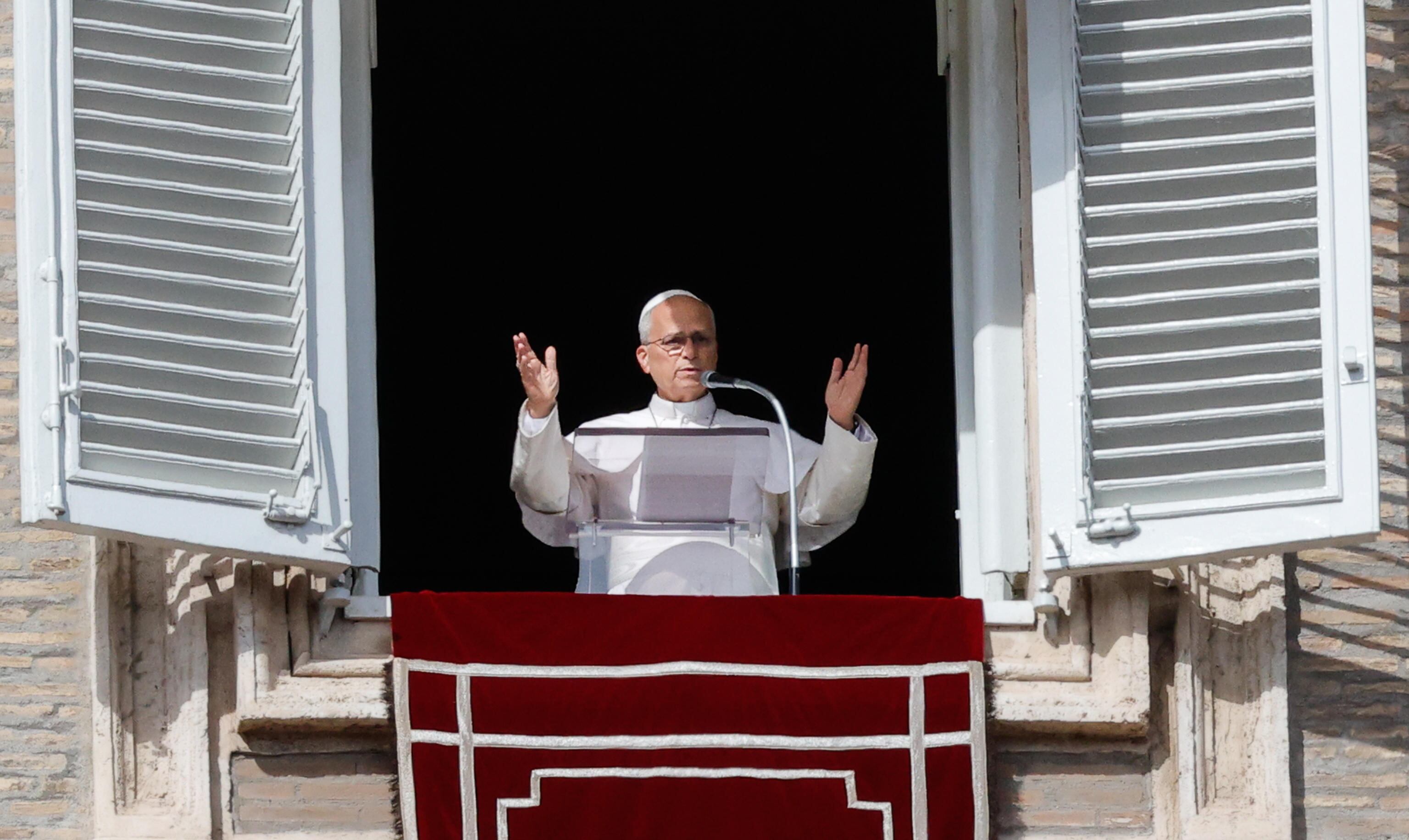
El Papa León XIV se reunirá con víctimas de abusos cometidos por miembros de la Iglesia durante su próxima gira por América Latina, según anunció este martes el Vaticano. La noticia llega un día después de que una treintena de supervivientes del Sodalicio de Vida Cristiana, la organización religiosa peruana disuelta por el Papa Francisco tras décadas de abusos, pidieran un encuentro con el pontífice durante su visita a Perú. La Santa Sede no ha precisado si los afectados por el caso Sodalicio estarán entre las personas que recibirá.
© GIUSEPPE LAMI (EFE)
Uma delegação do Vaticano inspecionou locais importantes em Lima, capital do Peru, nesta terça-feira (27), antes da visita do Papa Leão XIV ao país, reunindo-se com autoridades católicas locais e funcionários do governo para finalizar os preparativos para a viagem do pontífice pela América do Sul.
A presidente Keiko Fujimori comemorou a confirmação da visita papal, chamando-a de “um bálsamo” e “uma grande bênção” para o Peru em meio às adversidades que o país enfrenta atualmente.
A visita ocorre após o papa se recuperar de uma cirurgia pulmonar que havia gerado dúvidas sobre a realização da viagem conforme o planejado.
Católicos peruanos expressaram alívio e alegria com a confirmação, com fiéis reunidos em igrejas, incluindo Las Nazarenas, onde se espera que o pontífice visite a venerada imagem do Senhor dos Milagres.
O papa confirmou a visita à América do Sul pelas redes sociais na segunda-feira (26). No X, ele escreveu que está muito feliz por voltar ao continente em que viveu na década de 1980, quando participou de uma atuação missionária.
O Vaticano também afirmou que o pontífice vai se encontrar com sobreviventes de abuso sexual por integrantes do clero católico durante a viagem.

The Spanish-language literary world is facing a new crisis — one other fields have been dealing with for years: the mass arrival of AI and how to live with it. EL PAÍS revealed on Friday that Pangram, one of the most highly regarded detectors, found that 99% of the novel Donde el agua trabaja (Where Water Works), by Peruvian writer David Silva Rojas, was AI-generated text. The manuscript won the inaugural Almadía Ventosa-Arrufat International Short Novel Prize in July 2026, a €20,000 ($22,000) award paid as an advance against royalties.
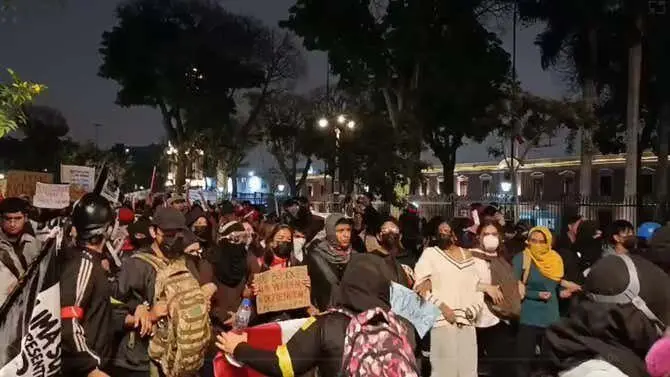
Peru protests bring students, unions and victims’ families to Lima to demand action on extortion, wildfires, living costs and police reform.
Related: Peru’s Youth Protest Government Over Crime And Forest Fires
Peru protests filled the historic center of Lima on Saturday, October 24, as young people, students, unions and victims’ families demanded action from President Keiko Fujimori’s government.
Demonstrators began gathering at 4:00 p.m. at Plaza San Martín, a historic site of popular struggles in the Peruvian capital.
The march was convened by groups identifying with Generation Z, along with human rights organizations, university students and self-organized citizens.
Participants included students from the National University of San Marcos and the Pontifical Catholic University of Peru.
The protesters demanded responses to a wave of extortion, the environmental crisis caused by forest fires, the rising cost of living and impunity for state repression.
They marched through Jirón de la Unión and Avenida Grau before advancing toward Avenida Abancay.
The demonstration was largely peaceful but firm. Participants carried Peruvian flags and banners reading “Put out the fires,” “For a Peru that is never indifferent to its people’s suffering,” and “Urgent police reform.”
Local media estimated that around 1,000 people took part in the Lima march.
Similar mobilizations were reported in Arequipa, Cusco, Ica, Huancayo, Trujillo and Juliaca.
The protests reflect growing discontent with the government’s handling of insecurity, environmental emergencies and economic pressures affecting working-class communities.
Peru’s Ministry of the Interior | Amnesty International—Peru
One of the central demands of the Peru protests was an end to extortion networks that affect transport workers, merchants, shopkeepers and small business owners.
Protesters said criminal groups are imposing payments on workers and entrepreneurs in popular neighborhoods, creating fear and undermining local economies.
Demonstrators called for a deep police reform to dismantle corruption networks within the police force.
They also demanded stronger intelligence work and community-based prevention rather than the repression of social protest.
The marchers criticized the use of security forces against demonstrations and called for greater protection for vulnerable communities.
During the march, police blocked the route to prevent demonstrators from reaching the exterior of the Congress of the Republic.
The image of officers containing the crowd highlighted the distance between a closed political institution and a mobilized population demanding to be heard.
The protest also included relatives of people killed during the social protests between December 2022 and June 2023.
They carried photographs of their loved ones and demanded justice for the deaths that occurred during the political crisis.
Milagros Samillán, whose brother was killed in January 2023 in Juliaca, Puno, said families were still demanding accountability four years after what she described as the massacres of 2022 and 2023.
Human rights organizations have documented serious concerns about the use of force during those protests.
The United Nations Special Rapporteur on the rights to freedom of peaceful assembly reported that 68 people died between December 7, 2022, and April 7, 2023, in the context of protests across nine regions.
The UN official said that 74 percent of those deaths occurred during confrontations with law enforcement.
Civil society organizations have called for independent investigations, prosecutions and reparations for victims and their families.
Peru’s National Institute of Civil Defense | United Nations Environment Programme
The environmental emergency was another major focus of the Peru protests.
Demonstrators denounced the government’s response to forest fires that affected 16 regions across the country.
According to Peru’s National Center of Emergency Operations, known as COEN, and the National Institute of Civil Defense, known as Indeci, the fires caused 479 emergencies.
The disasters left 12 people dead and 708 people affected, according to the official figures cited during the mobilization.
The fires destroyed 1,299 hectares of crops and more than 13,800 hectares of natural cover.
They also caused severe damage to local wildlife and livestock, affecting rural and Indigenous communities.
The affected regions included Cusco, Puno, Junín, Apurímac, Áncash, Huancavelica, Arequipa, Amazonas and Cajamarca.
Protesters said the government failed to provide enough brigades, funding and prevention measures to confront the emergency.
One young demonstrator said the fires were only extinguished after rainfall arrived, not because of an effective state response.
“Tuvo que llover para que recién se apagaran los incendios,” she said, denouncing the lack of brigades, budget and prevention.
Another protester criticized the floods caused by heavy rains in Piura and the absence of a strategic plan to address the El Niño phenomenon.
El Niño periodically devastates northern Peru through intense rainfall, flooding and damage to infrastructure.
Demonstrators said corruption in reconstruction projects and the abandonment of public infrastructure have worsened the impact of these climate events.
The protesters demanded a parliamentary investigation into the origin of the fires and adequate reparations for affected communities.
They also called on national, regional and local authorities to strengthen prevention and prepare for future climate emergencies.
The Peru protests reflect a broader wave of youth-led mobilization across Latin America.
Generation Z movements have emerged as a political force in several countries, demanding action on insecurity, corruption, inequality, climate change and democratic accountability.
In Peru, the protests come amid a prolonged institutional crisis marked by political instability, social conflict and public distrust in state institutions.
The country has experienced a succession of presidents and governments in recent years, deepening polarization and weakening public confidence.
Keiko Fujimori’s government faces pressure to respond to demands for security without resorting to repressive measures.
The demand for police reform is particularly sensitive because of the legacy of state violence during the 2022 and 2023 protests.
The forest fires also expose the unequal impact of climate change in Peru.
Rural and Indigenous communities in the Andes and Amazon face the greatest risks, despite having contributed least to global emissions.
The destruction of crops, forests and livestock threatens food security, local economies and the cultural survival of affected communities.
The protests could increase pressure on Congress and the executive branch to allocate more resources to disaster prevention, environmental protection and social repair.
They may also influence the political debate ahead of future electoral processes, as youth movements seek greater representation in national politics.
For now, the mobilization has made clear that insecurity, climate emergencies and impunity are no longer separate issues.
For many young Peruvians, they form part of the same crisis of governance, and the demand is simple: a state that protects its people instead of abandoning them.
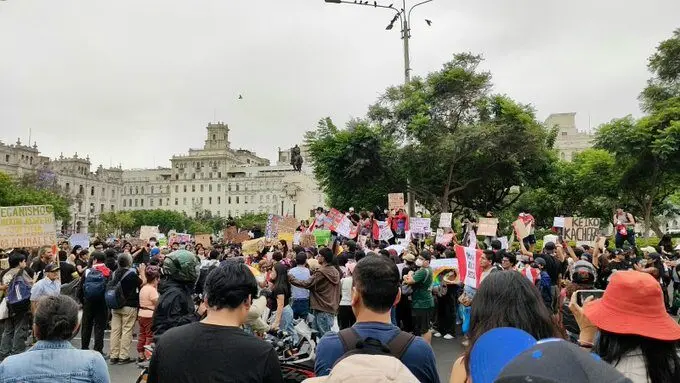
Young people, students, trade unions and human rights groups marched through central Lima on Saturday, demanding that President Keiko Fujimori’s government address rising extortion, deadly forest fires, the cost of living and alleged impunity for state repression.
RELATED: Peru Reached $4.813 Billion in Mining Investment Between January-August
Demonstrators began gathering at 4 p.m. in San Martín Square, a historic rallying point for popular movements in Peru. Participants included students from San Marcos and Catholic universities, human rights organizations, trade unions and members of the self-organized Generation Z movement.
The protests unfolded amid mounting concern over forest fires that have affected 16 regions across the country. Figures from Peru’s National Emergency Operations Center and the National Institute of Civil Defense recorded 479 emergencies, leaving 12 people dead and 708 displaced or otherwise affected.
The fires destroyed 1,299 hectares of crops and more than 13,800 hectares of natural vegetation, while also causing significant damage to local wildlife and livestock.
🚨 #URGENTE | Contra la extorsión y la crisis ambiental: jóvenes y colectivos sociales protestan en el centro de Lima
— RPP Noticias (@RPPNoticias) October 25, 2026
📲 Más información en https://t.co/cslnEWTq0k pic.twitter.com/9bIQWzwTbf
Text Reads: 🚨 #URGENT | Against extortion and the environmental crisis: young people and social groups protest in downtown Lima
Carrying banners calling for an end to the fires, police reform and solidarity with affected communities, demonstrators marched along Jirón de la Unión and Grau and Abancay avenues. Police blocked the procession from approaching the grounds of Congress.
Environmental concerns featured prominently in the march, with protesters criticizing what they described as inadequate government preparation and response to fires in the Andean highlands and Amazonian regions, including Cusco, Puno, Junín, Apurímac, Áncash, Huancavelica, Arequipa, Amazonas and Cajamarca.
One young demonstrator denounced the lack of firefighting teams, funding and preventive measures, arguing that the fires were extinguished only after rain arrived. The crisis, she said, had inflicted heavy losses on rural farmers and Indigenous communities.
Another protester highlighted flooding caused by heavy rains in Piura, in northern Peru, and the absence of a strategic plan to address the El Niño phenomenon. She also pointed to corruption in reconstruction projects and the neglect of infrastructure serving working-class communities.
Extortion was another central grievance. Transport workers, shopkeepers and small-business owners in working-class neighborhoods have been among those affected by the crime, according to the protest account. Demonstrators called for far-reaching police reform to dismantle corruption networks within the security forces and prioritize intelligence gathering and community-based prevention over the repression of social protests.
Families of people killed during social protests between December 2022 and June 2023 also joined the march, carrying photographs of their relatives and demanding justice. Their presence underscored the demonstrators’ broader call for accountability from a government they accuse of perpetuating impunity.
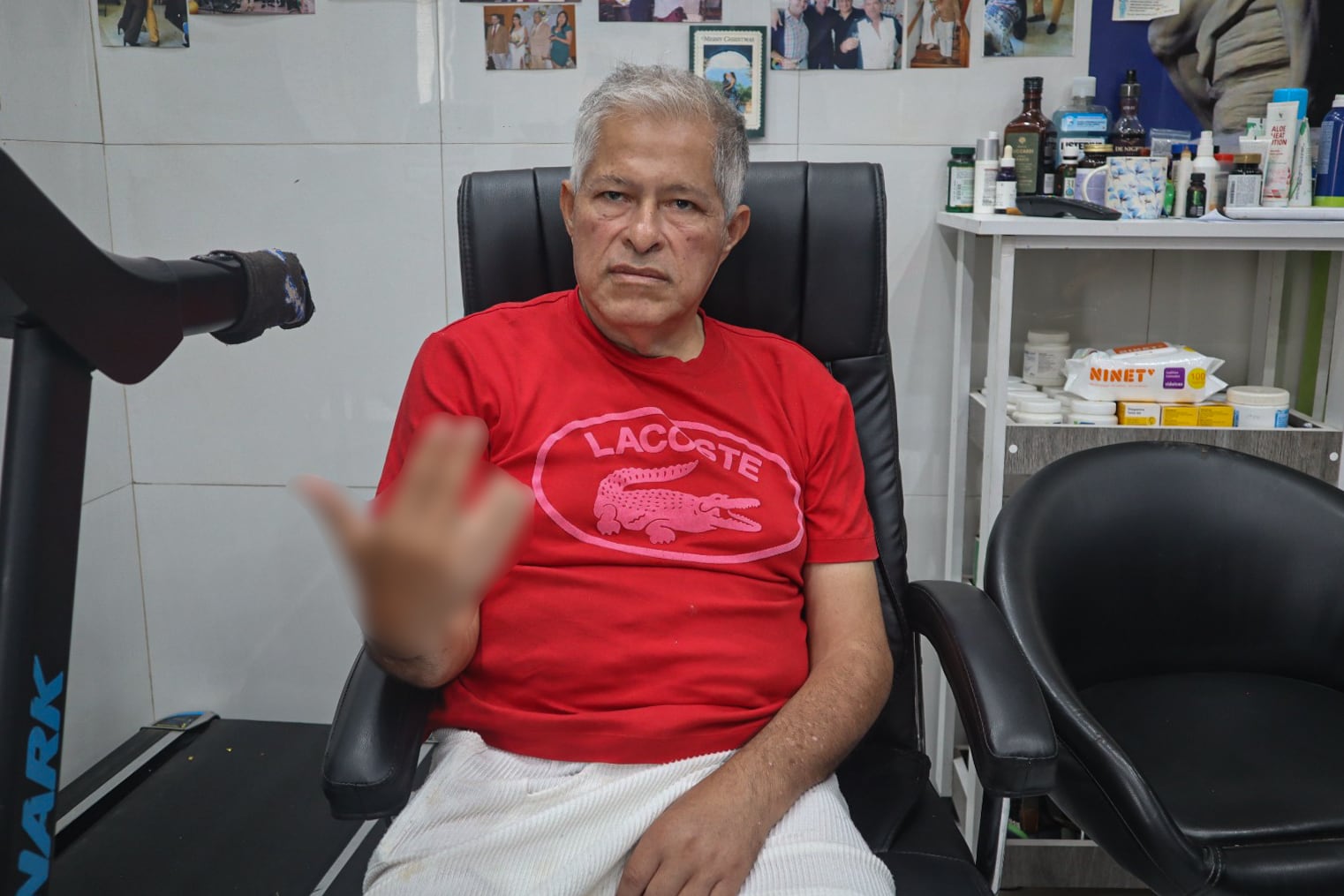
It looked like any other house in a residential neighborhood in the city of Trujillo, in northern Peru: a three-story structure, with iron railings and varnished wooden doors. But inside, it concealed a cell.
© Cedida

Doveva essere il viaggio più bello della vita, si è trasformato in una sequenza di disguidi, disagi e telefonate rimaste senza risposta. Ora, a quattro anni dalle nozze, una coppia di Milano ottiene giustizia: il Tribunale del capoluogo lombardo ha condannato l’agenzia di viaggi che aveva organizzato la luna di miele a restituire i circa 11mila euro del pacchetto e a versare ulteriori 16mila euro, tra danni e spese legali, per la cosiddetta “vacanza rovinata”. Lo riporta Il Corriere della Sera.
Nelle motivazioni, depositate nei giorni scorsi, il giudice insiste su un punto: il viaggio di nozze non è una vacanza come le altre. La gravità del pregiudizio, si legge in sostanza nella sentenza, nasce proprio dalla natura dell’occasione, carica di aspettative altissime e destinata a diventare un ricordo duraturo per gli sposi.
Il pacchetto, concordato nei dettagli con l’agenzia, prevedeva un tour tra Perù e Colombia dal 12 al 28 agosto 2022, con voli intercontinentali, soggiorni in diverse strutture e vari spostamenti interni per le escursioni. Le difficoltà sono cominciate prima ancora del decollo. Arrivati in aeroporto, i due sposi hanno scoperto che la compagnia Klm li aveva assegnati a voli diversi sulla tratta transoceanica: lei con volo diretto da Amsterdam a Lima, lui con scalo a Panama e arrivo nella capitale peruviana alcune ore dopo.
All’andata il problema è stato risolto grazie alla disponibilità del personale della compagnia, che è riuscito a farli sedere sullo stesso aereo, forse anche per la particolarità del viaggio. Al ritorno, invece, nessun miracolo: la partenza “da separati” è stata confermata.
L'articolo Luna di miele in Perù disastrosa: sposi milanesi viaggiano separati in volo e finiscono al gelo in hotel. Il Tirbunale condanna l’agenzia al risarcimento di 16mila euro proviene da Il Fatto Quotidiano.
Ukraine holds personal data on each of the nearly 46,000 foreigners it has identified as signing with Russia’s army since 2022, Dmytro Usov, secretary of its prisoner-of-war coordination headquarters, said on 19 October. If the current pace holds, he expects this year’s contracts to reach Moscow’s plan. Meanwhile, a survey of captured foreigners gave a split answer on how many knew they were heading to war.
Usov said 41% of surveyed foreign POWs signed at enlistment offices and recruitment points, which the headquarters reads as a sign of a systematic campaign. He also said the hiring is meant to ease the social and budget burden of Russia’s own losses. Russia has long turned to foreigners to offset shortages in its regular forces. In April, Ukraine’s military intelligence (HUR) said enlistment offices had reportedly been assigned regional quotas.
Usov, a brigadier general and secretary of Ukraine’s Coordination Headquarters for the Treatment of Prisoners of War, spoke at the international conference Crimea Global. He said Russia’s Defense Ministry has signed 45,959 foreigners from 151 countries. Ukraine’s records include each one’s rank, dog tag, and contract date.
The figure counts everyone who signed, not only those serving now. In April, Usov said his count left out North Korea’s regular troops, that 25–30% more recruits were likely still unidentified, and that at least 5,149 foreign recruits had died, Interfax-Ukraine reported.
Contracts have grown every year: 94 in 2022, 4,067 in 2023, 8,877 in 2024, and 16,085 in 2025. Some names surface late. At the same April event, Interfax-Ukraine reported, Usov had put 2025 at 13,997 and said the headquarters adds newly identified foreigners every month.
For 2026, Russia’s Defense Ministry planned 18,500 foreign contracts. Ukraine knows of 16,168 so far, roughly level with all of 2025. Another 668 contracts still have no year assigned. If the same dynamic holds, Usov said, the ministry will fully meet its plan and may even exceed it.
He named Indonesia, Peru, Chad, and Zimbabwe among the ten countries that drove the growth in recruits, Ukrinform reported. At the same time, he said, Ukraine’s Foreign Ministry and POW agencies have cut recruitment in some countries and stopped it in others.
Ukrainian forces have captured citizens of 59 countries since the full-scale invasion began. Uzbeks, Tajiks, Belarusians, and Colombians are among the largest groups.
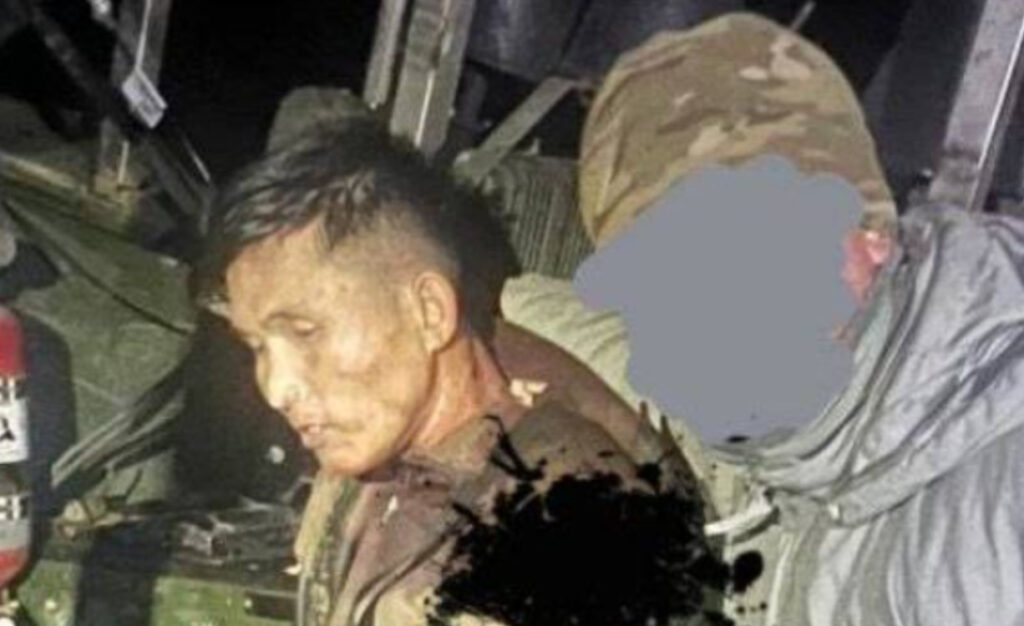
In the headquarters’ survey of foreign POWs, nearly half said they knew they would fight Ukrainian soldiers and civilians. Another 28% said they didn’t know, 14.8% weren’t sure, and 13.8% said they were deceived. The headquarters ran the survey, and neither report gave a sample size or explained how the shares fit together. Usov said the results showed most knew where they were going. Almost 47% said they signed up for Russian citizenship.
The EU welcomes Cambodia’s decision to join the Multi-party Interim Appeal Arbitration Arrangement (MPIA) for WTO members, contributing to efforts to uphold a rules-based multilateral trading system.
With Cambodia’s participation, the MPIA now covers 62 World Trade Organization (WTO) members and 60.4% of world trade.
The MPIA brings together participants from all continents and at different levels of development, united by a shared commitment to upholding the rules-based trading system.
The MPIA preserves the right to appeal in trade disputes among participating WTO members, at a time when the WTO’s Appellate Body remains non-functioning. It helps ensure that disputes can continue to be resolved in an orderly and binding manner, avoiding appeals 'into the void'.
“I welcome Cambodia to the MPIA. The arrangement plays an important role in upholding the rules-based trading system. Each new participant helps reinforce the predictability, stability and credibility of global trade rules. I encourage other WTO members to join the MPIA,” said EU Trade and Economic Security Commissioner Maroš Šefčovič.
The MPIA was established in 2020 and has proven its effectiveness in many WTO disputes.
Under the MPIA, appeals are heard by arbitrators randomly selected from a pool of 10 standing appeal arbitrators set up by the participating WTO members. These arbitrators are persons of recognised authority, with demonstrated expertise in law, international trade and WTO agreements.
The MPIA is open to all WTO members as a practical tool for appeal arbitration, pending the restoration of a reformed and fully functioning WTO dispute settlement system.
As of 1 June 2025, the MPIA has an updated pool of appeal arbitrators to ensure that appeals continue to be heard by independent arbitrators of the highest calibre.
At the WTO Ministerial Conference that took place earlier this year, MPIA ministers stressed the importance of the MPIA for the security and predictability of the multilateral trading system.
The current MPIA participants are Australia, Barbados, Benin, Brazil, Cambodia, Canada, China, Chile, Colombia, Costa Rica, Ecuador, the European Union (and its Member States), Guatemala, Hong Kong (China), Iceland, Japan, Liechtenstein, Macao (China), Malaysia, Mexico, Moldova, Montenegro, New Zealand, Nicaragua, Norway, Pakistan, Paraguay, Peru, the Philippines, Singapore, Switzerland, Ukraine, the United Kingdom, Uruguay and Vietnam.
MC14: Supporting the rules-based multilateral trading system: the role of the MPIA
