A l'approche des élections de mi-mandat, le 3 novembre aux Etats-Unis, les accusations de fraude tournent à plein régime tout comme les accusations mensongères visant certains candidats. Ainsi : des machines à voter de l'Illinois chercheraient à influencer le choix de l'électeur, ou le prétendant démocrate au Sénat dans le Texas James Talarico aurait par le passé abusé sexuellement d'un de ses élèves.
A FedEx FDX.N previu lucro anual acima das estimativas nesta quarta-feira (28), após divulgar um aumento de 28% nos lucros do terceiro trimestre, impulsionado por preços mais baixos, maiores volumes e esforços de redução de custos.
A empresa sediada em Memphis prevê um lucro ajustado para 2026 na faixa de US$ 18 a US$ 18,60 por ação, acima da expectativa dos analistas de US$ 17,73 por ação, de acordo com dados compilados pela LSEG.
A FedEx passou a divulgar seus resultados com base no ano civil, em vez do ano fiscal, a partir do último trimestre.
Segundo a empresa, os resultados melhoraram devido ao maior retorno sobre os pacotes, ao aumento do volume de vendas e à redução contínua de custos. Esses fatores foram parcialmente compensados pelo custo da contratação de transporte adicional, pelo aumento dos salários e da remuneração dos funcionários, bem como pelas mudanças nas políticas tarifárias dos EUA.
“Continuamos comprometidos com a execução operacional disciplinada para reduzir nossos custos de atendimento, mantendo o foco no crescimento lucrativo”, disse o CEO Raj Subramaniam.
A FedEx, referência no comércio global, reportou lucro ajustado de US$ 3,74 por ação no terceiro trimestre, um aumento em relação aos US$ 2,93 por ação do ano anterior.
Content creator Julian Shapiro-Barnum spoke at the Made on YouTube event.
Noam Galai/Getty Images for Made on YouTube 2026
YouTube's ad revenue fell short of analysts' expectations for the third quarter.
Its parent reported $11.2 billion in Q3 ads revenue, under analysts' $11.43 billion estimate.
The company said it now has 150 million YouTube Music and Premium subscribers, up from 125 million in March 2025.
YouTube's ad revenue growth slowed down, missing analysts' estimates in the third quarter.
Its parent company, Alphabet, reported $11.2 billionin third-quarter YouTube ads revenue, a 9% increase from a year ago. That falls below the $11.43 billion analyst consensus estimate. Its ads revenue growth also slowed from the previous quarter, when it pulled in about $11.1 billion, a 13% increase from the previous year.
Beyond YouTube, Alphabet missed expectations in other areas of its business, including on overall revenue. In a bright spot, it beat revenue estimates for its cloud business.
The company's shares were down over 10% in after-hours trading.
While YouTube's ad revenue was weaker than expected, it wasn't all bad news. The company said it now has over 150 million YouTube Music and Premium subscribers, up from 125 million in March 2025. The company said its subscriptions business was growing faster than ads.
YouTube has also been the envy of rivals in key areas like TV viewership. Its share of US television viewership was about twice that of Netflix in August, according to recent Nielsen estimates. Over a third of YouTube's third-quarter ad revenue came from the living room, Google's chief business officer Philipp Schindler said on Wednesday.
Netflix, meanwhile, walked back its full-year ad revenue expectations during last week's earnings. The streamer lowered its ad revenue forecast from $3 billion to $2.7 billion after experiencing delays around the rollout of its ad products. It laid off about 1,000 workers earlier this month.
This week, Instagram unveiled an overhaul of long-form video features seemingly designed to counter YouTube and bolster its presence on TV screens.
"Everyone in streaming is chasing YouTube, and even Instagram is going to pivot their strategy based on the success that YouTube's had," said Ross Benes, a senior analyst at EMARKETER, Business Insider's sister company.
John Healey raised taxes on banks and landlords to fund a £100 winter handout for 20 million families as official forecasts made clear there is no end in sight for the cost of living crisis.
In his first budget, the chancellor blamed “global economic storms” for the grim outlook, as the war in Iran drives up oil and gas prices.
People in Big Pharma keep making progress and accept that their industry is hated, Hastings said.
Erica Denhoff/Icon Sportswire via Getty Images
Netflix cofounder Reed Hastings says Silicon Valley execs are like airlines, banks, and Big Pharma.
They're all powerful and hugely consequential. They're also widely disliked, he said.
Americans have lost love for tech CEOs — and new movies are highlighting the execs' darkest hours.
Reed Hastings thinks the tech industry has some Big Pharma energy.
During an interview with "On with Kara Swisher," released on Monday, the Netflix founder and former co-CEO responded to questions about the unpopularity of Silicon Valley executives.
"Well, think of pharma," he said. "Pharma is hated by the general public, and to my eyes, is continuing to do amazing and positive work. But people hate the high drug prices, and so pharma is deeply hated."
Hastings also said that drug companies have developed "remarkable" products — like the COVID vaccines — but still draw public ire.
"Did people fall in love with those companies? They did not."
He also compared tech execs to banking and airline bosses: powerful, consequential, and largely disliked.
Swisher raised the question as Hollywood is highlighting some of tech's ugliest chapters in movie theaters across America. A24's "You Can See Everything" has blown up the box office — it's a documentary following former Theranos CEO Elizabeth Holmes in the weeks before she reports to prison. Aaron Sorkin's "The Social Reckoning" dramatizes whistleblowing at Meta. Alex Gibney's "Musk" tracks the rise of Elon Musk's political influence. And Luca Guadagnino's "Artificial," a biopic about a biopic that focuses on OpenAI CEO Sam Altman, is out on Christmas.
Hastings said that tech's yearslong tumble out of public favor is not particularly unusual. Large industries always invite skepticism.
"That's the natural state of how much of the public thinks about business," he said.
Still, Hastings, who sits on Anthropic's board, said that Silicon Valley companies still have one potential PR golden goose.
"We've got to actually cure some diseases," he said. "That'll help."
Russia plans to build own version of US billionaire’s satellite communications to help attack Ukraine
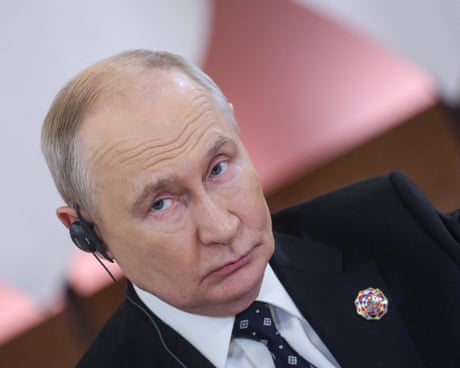
Vladimir Putin praised Elon Musk’s genius and said he was in touch with Starlink’s controlling shareholder as Russia develops its own satellite communications for its military to use against Ukraine.
The Russian president, speaking at a summit with African leaders in Moscow, was comparing the Earth-orbiting network built by Musk’s SpaceX with Russia’s gradual efforts to build its own Rassvet constellation.
Ukraine’s Military Intelligence (HUR) has published the names of 49 Russian and Belarusian companies and institutions building Rassvet, Russia’s low-orbit satellite internet system, on its War&Sanctions portal, the agency said on 28 October. It needs it for its military purposes.
Russian troops ran front-line communications and long-range strike drones on smuggled Starlink terminals until SpaceX blocked them on 1 February 2026. Ukraine still flies on Musk’s network, and on 24 October it got back to full speed after a ten-day cap imposed abroad. Rassvet is meant to give Russia’s army satellite links under its own control.
HUR has said Moscow may struggle to obtain components for more satellites, and its list names the suppliers that sanctions would need to target while the network is still being built.
Terminals for Iskander-M command vehicles
Rassvet is first of all a military communications system. Russia plans to use it for command and control, strike platforms, and drones, and to install terminals in the command-and-staff vehicles of Iskander-M missile systems, HUR says.
The Central Research Institute of Automation and Hydraulics is involved in integrating Rassvet into army communications, including fitting command vehicles, Iskander ones among them, with terminals once 292 satellites are in orbit, according to the portal. The same institute produces guidance components for the Iskander-M and Kinzhal missiles.
Planned coverage takes in Ukraine and the EU first, and once it is wide enough, Russia could use the system in hybrid attacks on other countries. That is why partners should block Rassvet’s access to components, equipment, and software now, the agency said.
Roscosmos launches it, a Belarusian missile maker signs on
The lead company is Bureau 1440, part of the IKS Holding tech group. According to the portal, it is linking its flight control center to systems of the Russian Defense Ministry. Roscosmos launches the satellites into orbit, and its head, Dmitry Bakanov, personally oversees Rassvet.
Meanwhile, Belintersat, Belarus’s national satellite operator, signed a partnership with Bureau 1440 in May 2026 to bring Rassvet into Belarus’s telecom network. It is a branch of the Plant of Precision Electromechanics, Belarus’s lead missile developer and maker of the Polonez rocket launcher.
Another Belarusian firm, Aerospace Instruments, prototypes components for the system.
23 of 49 not sanctioned by Kyiv’s allies
Of the 49, 23, Roscosmos among them, are not under sanctions by any country in the sanctions coalition. The companies involved “must be included in all blacklists” of countries, banks, and businesses, the agency wrote.
32 satellites launched, seven launches to go
Russia launched its first 16 Rassvet satellites earlier this year. Stable communications would need 200–250 in orbit, Serhii “Flash” Beskrestnov, then adviser to Ukraine’s defense minister, said in May.
By August, Russia had launched 32 Rassvet satellites and planned seven more launches by the end of 2026, a HUR official told Janes. Only 12 of them, all from the first batch, had reached a sustainable altitude by the end of August, ISW reported.
De 21 a 25 de outubro, o Festival MED esteve uma vez mais presente na WOMEX – Worldwide Music Expo, um dos mais importantes encontros internacionais dedicados às músicas do mundo, que este ano decorreu em Las Palmas de Gran Canaria, Espanha. Esta participação integrou a estratégia de internacionalização e afirmação do evento organizado pela […]
In a single week, Christopher Lloyd, the mad scientist of the 1980s trilogy Back to the Future, turned 88 and published In My Own Time: A Memoir. The 250-plus-page book traces his lonely childhood in Waveny House, in Connecticut; the start of his acting career in 1960s New York; and his battle with alcohol and cocaine addiction, subjects he has rarely discussed publicly. In the book he says the first time he took drugs was outside a comedy club in Los Angeles in the 1970s. He went up to the car of a woman he had just met and did “a couple of lines.” He writes: “That was all it took,” he writes. He got hooked almost immediately, and that’s where his cocaine abuse began.
El Gobierno ha entregado este miércoles al Tribunal Supremo la lista con las identidades de los nacionalizados por la llamada ley de nietos que le reclamó el pasado viernes. Aunque la Abogacía del Estado cifró en 163.020 personas los inscritos en el Censo Electoral de Residentes Ausentes (CERA) afectados por la suspensión del derecho al voto decretada por la Sala de lo Contencioso-Administrativo, fuentes del Gobierno señalan que la relación final, tras repasar todos los expedientes, contiene un total de 163.355 nombres, de los que hay 901 cuyos expedientes acreditan la condición de exilio, que ha sido certificada por los cónsules. Según la orden dictada por el Supremo, solo estos podrán votar en las elecciones del 29-N.
Dimanche 25 octobre 2026, deux chameaux ont été découverts dans un pré à Saint-Léon, dans le Lot-et-Garonne. Alertés par la gendarmerie, le maire Vincent Triquet et un conseiller ont sécurisé les animaux pour éviter...
Dropbox co-CEO Ashraf Alkarmi announced layoffs of roughly 200 workers.
Alkarmi said the cloud-based storage company is profitable but needs to make "hard choices."
You can read his full email to employees below.
Dropbox is dropping the layoffs hammer.
Dropbox co-CEO Ashraf Alkarmi announced on Wednesday that the cloud-based storage company is laying off roughly 9% of its global workforce.
"Today, we're making difficult choices about where we invest and how we organize Dropbox to achieve the product and growth priorities that will matter most for our long-term strategy," Alkarmi wrote in an email to workers that the company posted publicly.
Alkarmi said Dropbox is eliminating roughly 200 roles across its across Engineering, Product, Design, and G&A team. The company, Alkarmi wrote, is profitable but needs to make "hard choices" about where it spends its money.
"Delivering on that strategy requires concentrating our resources on the priorities that will have the greatest potential for customer impact and growth," he wrote.
As part of the changes, Alkarmi also announced that chief technology officer Ali Dasdan will be stepping down.
Read the full email
Hi everyone,
Today, we're making difficult choices about where we invest and how we organize Dropbox to achieve the product and growth priorities that will matter most for our long-term strategy. As part of these changes, we've made the decision to eliminate about 200 roles across Engineering, Product, Design, and G&A teams (approximately 9% of our global workforce). For most impacted Dropboxers, today will be their last day.
S-team and I take full ownership of this decision and recognize that these colleagues have made meaningful contributions to Dropbox, our products, our customers, and our teams. Our first priority today is to treat every person affected with the care and respect they deserve.
Changes to Senior Leadership
I also want to share that Ali Dasdan has decided to move on from Dropbox. During his time here, Ali led and strengthened many of the technical capabilities we'll rely on as we move into the next phase of our transformation. I'm grateful for his leadership, his partnership, and the foundation he and the team have put in place. Ali's last day is November 18th, and he'll be focused on ensuring a smooth transition through next month. We wish him all the best in what comes next.
Why we're making these changes
Our business is profitable, and we've built real momentum this year. Our two-year strategy sets a clear direction for growth: solving more of our customers' critical workflows; reaching more of our chosen customers, including larger companies; and bringing our technology to new markets.
Delivering on that strategy requires concentrating our resources on the priorities that will have the greatest potential for customer impact and growth.
That means making hard choices about where we invest, how we're organized, and what work we simplify, scale back, or stop. Those choices include the difficult decision to reduce the size of our team.
How we'll prioritize going forward
In order to be successful, we can't take the same work and spread it across fewer people. We'll streamline teams and concentrate support and resources against product areas that have the highest impact on our customers and Dropbox as a business.
Taking care of impacted employees
To those leaving Dropbox, we're committed to supporting you through this transition. Departing Dropboxers are eligible for a severance package in line with the following:
Severance, equity, and transition support:
Sixteen weeks of pay beginning today, plus one additional week for each completed year at Dropbox. International packages will reflect local practices and legal requirements
Q4 equity vesting
For employees on the Corporate Bonus plan, a prorated lump-sum payment based on their 2026 bonus target
Immigration support for impacted visa holders
Healthcare and well-being:
U.S. employees will receive six months of COBRA subsidy, if elected and eligible
Modern Health access will continue through the end of the separation month to support mental well-being, with extension options detailed in severance packages
Payment for eligible current and approved upcoming paid leaves, including medical and family leave
Additional support:
Devices: Impacted employees will be eligible to keep (1) Dropbox laptop, (1) mobile device if assigned, and all existing desktop peripherals
Job placement: Job placement services and career coaching will be available at no cost
What comes next
Right now, our focus is on the colleagues who are leaving Dropbox. Please give them the space and support they need.
And to everyone leaving Dropbox: thank you. Your work to build our capabilities, serve our customers, and contribute to our culture has been deeply meaningful. I'm grateful for everything you've contributed.
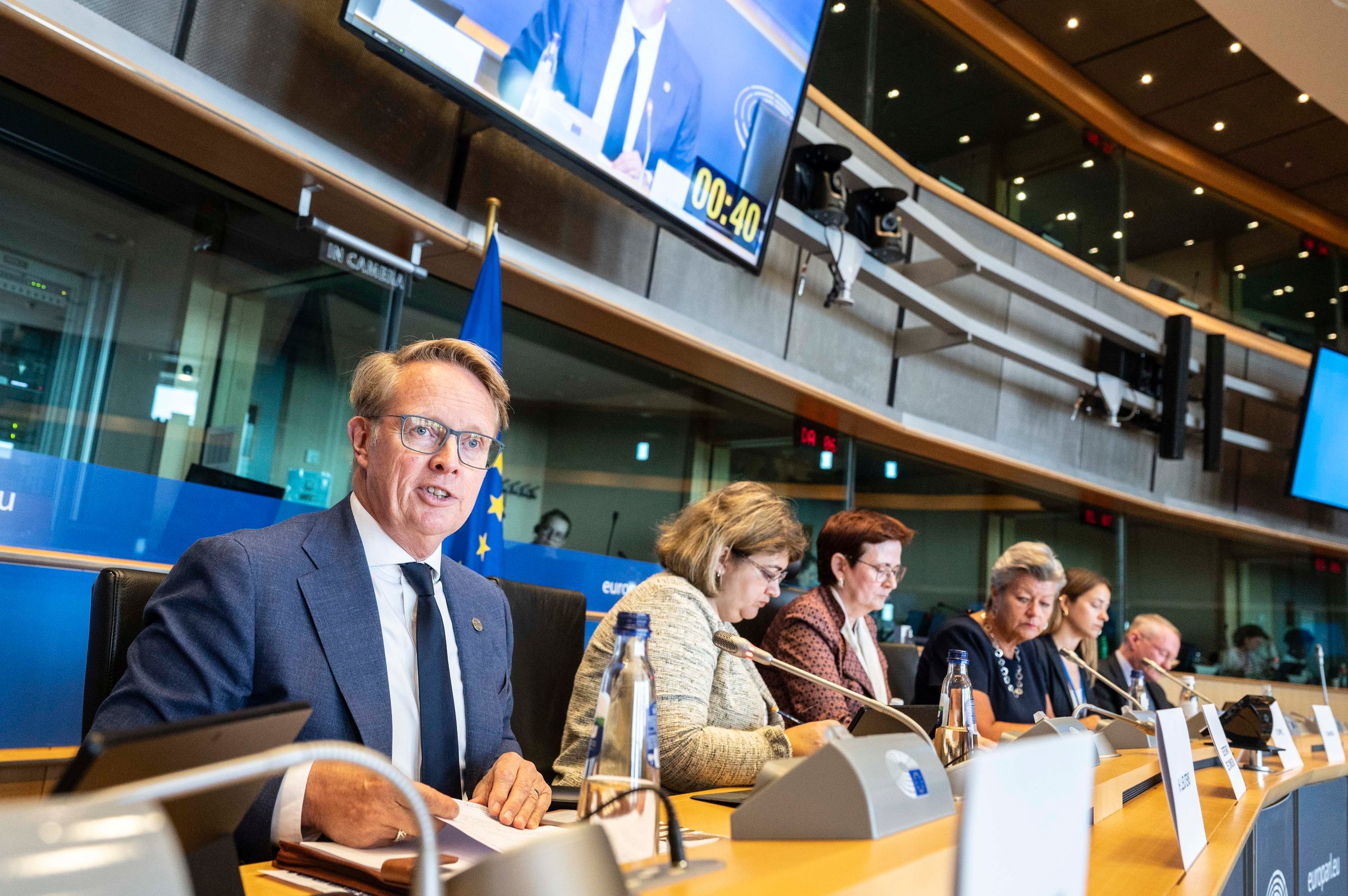
A revamped EU border force Frontex is set to have around 17,000 people involved in deportations at its disposal, while human-rights monitoring is narrowed and the agency’s ability to terminate operations in a member state over rights violations is weakened.
The overhaul, presented on Tuesday (27 October), follows months of speculation by a European Commission determined to give the Warsaw-based agency a more central role in the bloc’s deportations, as reported last week by EUobserver.
“The fundamental rights framework in Frontex is among the strongest in any EU agency, and that will stay also with this review,” Henna Virkkunen, a commission vice-president, told reporters.
“I’m not aware of any other border management authority with stronger protection anywhere in the world. I would actually say, and we’re not changing that. So this is pretty clear,” also said Magnus Brunner, the EU commissioner for migration.
But the claims, made at a press conference in Brussels, do not entirely match its 275-page proposal that it published only later on Tuesday evening.
Unable to scrutinise the text ahead of the press conference, reporters could only guess at what the proposal actually contained without being able to directly challenge the commissioners.
This article continues, but the full version is available only to EUobserver.com subscribers. Visit account.euobserver.com/membership
La sanità spacca il centrodestra: la Camera dice sì al reintegro dei medici no-vax, ma Forza Italia si ribella e promette battaglia al Senato. Accade tutto i una manciata di ore. Nel giorno in cui Sergio Mattarellaha invitato a “contrastare chi avvelena con fake news distruttive l’opinione su vaccini”, l’Aula di Montecitorio ha approvato in prima lettura con 143 sì, 113 no e 3 astenuti la delega al governo in materia di professioni sanitarie. Il testo contiene anche una norma, introdotta durante l’esame in commissione su proposta di Fratelli d’Italia, che prevede la possibilità di reintegro per i medici no vax radiati dall’Albo durante il periodo del Covid, una previsione passata ieri con soli 13 voti di scarto, grazie ai voti di Futuro Nazionale. Che anche oggi nel voto finale ha detto sì alla delega.
Ora però i senatori azzurri a Palazzo Madama promettono battaglia. La disposizione “non ci convince e non può restare così com’è“, ha detto Stefania Craxi, presidente dei senatori di Forza Italia -. Al Senato è nostra intenzione lavorare per modificarla”. “Il diritto di esprimere opinioni, anche critiche, sulle scelte sanitarie è sacrosanto e nessuno intende metterlo in discussione – ha proseguito la senatrice -. Altro discorso sono i doveri professionali e deontologici di chi indossa un camice”. “Quando il testo arriverà a Palazzo Madama – ha annunciato Craxi -, il nostro gruppo farà la sua parte per correggerlo“.
Dello stesso parere Licia Ronzulli: “Per la mia storia personale e per le battaglie che Forza Italia ha condotto fin dall’inizio della pandemia, non posso essere d’accordo”, ha commentato la senatrice di Forza Italia e vicepresidente del Senato, secondo la quale “se siamo usciti dal dramma del Covid è stato grazie alla scienza e ai vaccini“.
“La maggioranza perde i pezzi – attacca dichiara Ilenia Malavasi, deputata e capogruppo Partito Democratico in commissione Affari sociali -. Ieri alla Camera hanno votato per mantenere l’articolo 8 nel ddl professioni sanitarie, quello che chiede di riabilitare i medici no vax, e oggi fanno retromarcia annunciando al Senato che cambieranno il provvedimento”. “La scienza non si giudica a seconda di come tira il vento del giorno – le fa eco Marco Furfaro -. Lo spettacolo indegno che sta dando Forza Italia è intollerabile”. “Ieri – argomenta il deputato e responsabile nazionale Welfare del Pd – il capogruppo di Forza Italia in commissione Affari sociali e autorevoli membri del gruppo alla Camera ci spiegavano di aver votato secondo scienza e coscienza. Oggi la capogruppo al Senato dice esattamente il contrario. Si decidano”.
“Il governo non si limita a lisciare il pelo ai No Vax – ha commentato Davide Faraone, vicepresidente di Iv-Casa Riformista -: sposa in modo strutturale le tesi anti-vaccinali. E allo stesso tempo conferma che il vero ministro della Salute non è Schillaci, ridotto a pura figurina, bensì Gemmato (sottosegretario di FdI, ndr). Niente di sorprendente: quello guidato da Giorgia Meloni è il governo che ha votato contro le regole internazionali sui piani pandemici, ha nominato medici No Vax nel gruppo consultivo nazionale sulle vaccinazioni e, anche per questo, ha visto ricomparire i morti per difterite”.
The writers behind 'East of Eden,' 'Sense and Sensibility' and 'A Tale of Two Cities' on why built-in audiences get these books greenlit, and why they kept the worlds intact while rewriting the people inside them.
The consulting producer on ‘North of North’ season 2 will develop and create TV series for the streaming giant in Canada, including a new family drama in the works.

 Login