❌

Reading view

Albertsons won't insure employees' spouses if they're eligible for their own health coverage

Albertsons storefront with Savon PHARMACY signage and outdoor produce displays as a person walks past.
Albertsons is making several changes to its employee benefits to manage rising costs for 2027.

Jason Armond / Los Angeles Times via Getty Images

  • Albertsons will not provide health coverage for employees' spouses who can get insurance elsewhere.
  • The company says the move is intended to manage rising costs, which it expects to increase 9.5%.
  • In August, Disney also pulled back on benefits it will provide for workers' families.

Albertsons is curbing health care benefits for employees due to rising healthcare costs.

Starting next year, the grocery giant will no longer offer medical insurance plans to employees' spouses and domestic partners who have jobs that provide such coverage. The grocery giant detailed the change in an open enrollment guide posted to its website.

Albertsons said it expects its healthcare costs to increase 9.5% next year due to inflation, higher prescription drug costs, provider consolidation, and shortages in the healthcare workforce.

"Like employers across the country, Albertsons Companies continues to navigate rising health care costs while working to provide associates with access to quality, competitive benefits," a spokesperson said in a statement to Business Insider.

The spokesperson also said spouses and partners who don't have access to employer-based coverage will remain eligible for coverage on applicable health plans.

Other changes this year include higher weekly paycheck contributions from employees, the elimination of two network plans, along with higher deductibles and out-of-pocket maximums for some other plans.

Large companies Disney, Starbucks, and Deloitte have also introduced cost-saving changes to their benefits packages for 2027. Disney is also dropping coverage for partners and spouses who can get insurance from their own jobs.

"We've seen employers reducing their contribution toward the spouse's coverage, but not eliminating the coverage option for those people," Capitol Benefits CEO Joshua Lavine told Business Insider in August, regarding Disney's decision.

Read the original article on Business Insider

  •  

France Moves to Make Protesters Pay for Riot Damage as Senate Tightens Public Order Laws

French senators have approved legislation that could expose participants in violent demonstrations to compensation claims of up to €10,000, including individuals who did not personally damage property. The proposal has reopened a dispute over public order, collective responsibility and the right to protest.

France’s Senate has approved controversial legislation designed to recover the costs of damage caused during violent demonstrations, extending potential financial liability beyond those who personally committed acts of vandalism.

The bill, adopted in the early hours of 28 October by 229 votes to 105, would allow the authorities to pursue compensation from certain participants in gatherings where destruction or violence occurred.

Its provisions include a potential liability of up to €10,000 per person and mechanisms for recovering compensation through deductions from certain social benefits.

The legislation, widely described in France as the casseurs-payeurs bill, reflects growing political pressure to respond to property destruction accompanying demonstrations and public gatherings.

However, it also raises legal questions about the circumstances in which individuals may be held financially responsible for damage they did not personally cause.

The bill must still be considered by the National Assembly before it can become law.

From individual responsibility to collective liability

Under existing arrangements, the French state can be required to compensate victims for certain damage resulting from gatherings or public disorder.

Authorities may subsequently seek reimbursement from individuals legally responsible for that damage.

The proposed legislation would expand the circumstances in which compensation could be recovered.

According to the French Senate’s official explanation, liability could extend to people who participated in a violent group or remained in a gathering despite police orders to disperse, when they could not reasonably have been unaware that violence or destruction was taking place.

An individual would not necessarily have to be identified as the person who broke a window, damaged a vehicle or destroyed public property.

Instead, participation in a gathering meeting the relevant legal conditions could provide a basis for civil liability.

The distinction is central to the controversy.

The proposed €10,000 ceiling concerns financial compensation rather than a new criminal fine imposed automatically on demonstrators.

Nevertheless, opponents argue that expanding civil responsibility beyond direct perpetrators could undermine the principle that liability should reflect an individual’s own conduct.

A response to repeated unrest

The government introduced the legislation in September against a background of public disorder associated with demonstrations and sporting celebrations.

Violence following Paris Saint-Germain’s Champions League victory in May contributed to demands for stronger mechanisms to recover the costs of destruction.

Subsequent disturbances during demonstrations on 17 October added urgency to the debate.

The Senate’s conservative and centrist majority supported the bill, while left-wing lawmakers opposed important elements of the proposed system.

Interior Minister Laurent Nuñez defended the principle that those involved in destruction should contribute to the cost of repairs.

Supporters maintain that criminal penalties alone do not adequately compensate shopkeepers, residents and public authorities faced with substantial financial losses.

They also argue that taxpayers should not automatically bear the costs of damage attributable to individuals involved in violent gatherings.

The disagreement therefore extends beyond criminal punishment to the distribution of financial responsibility after public disorder.

Social benefits become part of the debate

One of the most disputed provisions concerns the recovery of compensation from people with insufficient resources to pay.

As approved by the Senate, the legislation would permit deductions from certain social benefits, including housing assistance and family allowances.

Senators also extended the proposed mechanism to the revenu de solidarité active, or RSA, the minimum-income benefit available to eligible low-income individuals.

Supporters of the measure argue that financial responsibility should not disappear simply because an individual lacks conventional assets or income.

The proposed arrangements would nevertheless have to leave recipients with a minimum amount for living expenses.

Opposition lawmakers have questioned whether deductions from family-related benefits could impose financial consequences on relatives who had no involvement in the original incident.

This is particularly relevant where parents’ social payments could be affected by damage attributed to their children.

The debate therefore concerns both the enforceability of compensation claims and the possibility that recovery measures could affect entire households.

The constitutional question

France’s legal framework recognises freedom of expression and the right to demonstrate, subject to restrictions established by law.

It also permits the authorities to impose obligations and penalties on individuals involved in unlawful conduct.

The issue raised by the proposed legislation is where the boundary between these principles should be drawn.

A system requiring direct evidence of property destruction presents different legal questions from one imposing liability based on participation in a wider gathering.

The latter arrangement would require careful assessment of the individual’s conduct, awareness of violence and opportunity to leave.

Opponents fear that demonstrators could face substantial financial exposure even without personally committing vandalism.

Supporters respond that the legislation is directed at participation in violent disorder, rather than peaceful protest itself.

Any final legislation could face scrutiny over proportionality, equality before the law and the protection of constitutional freedoms.

An uncertain passage through parliament

The Senate vote represents an important stage, but not the completion of the legislative process.

The National Assembly remains politically divided, making the final form of the proposal uncertain.

Deputies could amend the conditions for civil liability, the compensation ceiling or the provisions concerning social benefits.

The government’s ability to secure sufficient parliamentary support will determine whether the measures survive intact.

The legislation illustrates an increasingly difficult issue in French politics: how to ensure compensation for victims of public disorder without extending legal liability so broadly that participation in demonstrations becomes a substantial financial risk.

The answer will depend on the precise safeguards contained in the final text and how courts would be required to apply them.

  •  

Change to carer’s allowance cliff-edge rule is not enough, victims say

Digital taper system for benefit expected in budget, but those already hit with overpayments will still have to pay

“On the surface it sounds really positive – and I really hope that it is,” says unpaid carer Guy Shahar of the government’s decision to abolish the notorious carer’s allowance cliff edge.

But Shahar is angry that most carers hit with unjust overpayments in the past will still have to repay them, for all the promise of a different future. And he notes that the cliff edge remains in place for four more years, potentially catching out more carers.

Continue reading...

© Photograph: Linda Nylind/The Guardian

© Photograph: Linda Nylind/The Guardian

© Photograph: Linda Nylind/The Guardian

  •  

No 10 plays down UK joining EU single market after Burnham suggests referendum would be needed – as it happened

The prime minister previously said that he wanted a debate on how Britain can establish a closer relationship

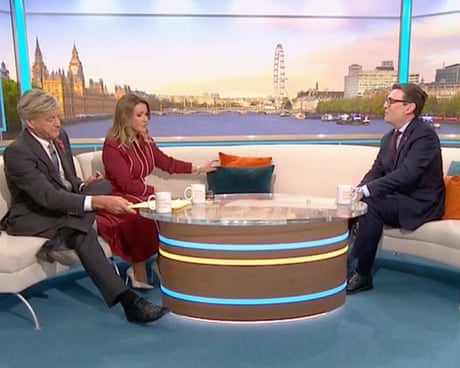
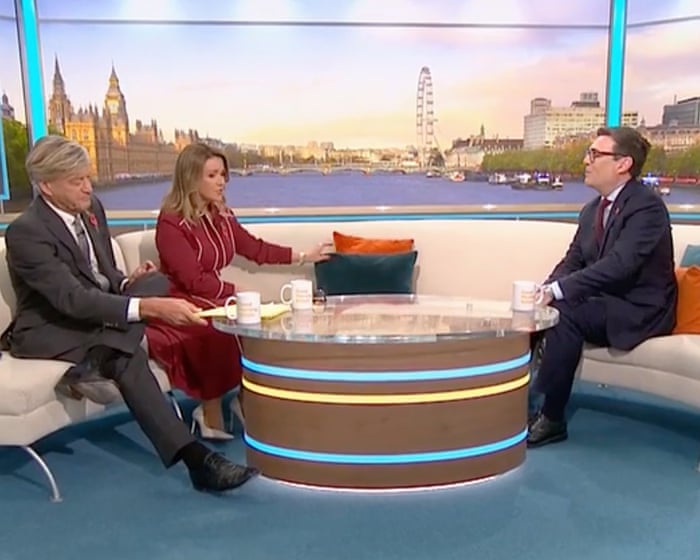
Speaking at his rough sleeping summit in Downing Street this morning, Andy Burnham expanded on the claim he made on Good Morning Britain about tackling rough sleeping being cheaper than ignoring the problem. (See 11.13am.)

He said:

We’ve also got to be conscious when we speak to the rest of the country, the taxpayers of this country, that actually to leave people sleeping rough has financial consequences. It doesn’t work for anybody and it doesn’t work for the public purse, because if you leave people in a position where they are in and out of A&E, and in and out of a hospital bed, that doesn’t make sense for anybody.

There is a rock-solid business case to do something to end homelessness, to put people on a path to recovery, so that they can contribute once again. And that should be the thinking that we take to this conversation.

Burnham is throwing another £432m at a problem he failed to solve in Greater Manchester. Under Labour, rough sleeping has hit record highs – yet their answer is always more taxpayers’ money and more empty promises.

[John] Healey must use his budget this week to cut taxes for working people, get the ballooning benefits bill under control, and stop pushing up energy prices.

John Healey is expected to confirm on Wednesday that the full state pension will rise by £489 to £13,036 – equivalent to 3.9%.

However, the rise will push about one million people on low incomes who rely on the state pension above the £12,570 personal allowance threshold, meaning they would be dragged into paying income tax.

Continue reading...

© Photograph: ITV

© Photograph: ITV

© Photograph: ITV

  •  

3 Reasons To Cancel This Year's 3.6% Social Security Boost

Capitol Building, with a Social Security card in the background | Robwilson39/Lane Erickson/Dreamstime

Social Security is racing towards insolvency because the program pays out more in benefits to retirees than it collects in taxes from working Americans.

Handing out even more generous benefits will make that situation worse. Yet that is exactly what the trustees who run Social Security are planning to do: Retirees will get a 3.6 percent cost-of-living adjustment (COLA) next year. That increase is 0.8 percentage points higher than last year's, and it is 0.9 percentage points higher than what Social Security was expecting to pay.

The Social Security trustees are doing what the law requires during a time of high inflation. That's why Congress ought to intervene here.

It should cancel the COLA.

No, this isn't a demand that lawmakers stick it to America's retirees. It's an appeal for some fiscal common sense. There are three good reasons to cancel this year's COLA.

First: Handing out higher benefits to wealthy retirees simply doesn't make sense when Social Security is trending towards insolvency.

As the Committee for a Responsible Federal Budget notes, the announced COLA would be a $900 increase in benefits for the average retired household—but some retirees could receive as much as $3,600 more.

Paying generous benefits to wealthy households is the main reason Social Security is facing insolvency in the first place. A program originally intended to keep seniors from falling into poverty has become a huge wealth-transfer scheme that overwhelmingly benefits those who don't need the handouts. The COLA doubles down on this flaw.

Second: What about the workers who are paying for those lavish benefits? Wages have risen by 3 percent, on average, over the past year. Those pay increases have already been outpaced by inflation, which is up 3.7 percent in the past 12 months.

You'll often hear retirees talk about how they are living on a "fixed income," but the math simply doesn't bear this out. Social Security beneficiaries will get a COLA that is larger than the average pay increase for the workers who are funding the COLA. Retirees are protected from the impact of inflation while younger Americans must deal with inflation and finance that protection for the elderly. That's crazy.

Third: Cutting the COLA could kick-start a conversation about how to solve Social Security's looming insolvency. The Social Security trustees estimate that an across-the-board cut of about 22 percent will be necessary in 2032. Eliminating COLAs won't meaningfully change that arithmetic, but it would change the conversation—which has for too long been dominated by politicians promising seniors that nothing needs to change. That's wrong—and the sooner that becomes apparent, the better off the political system will be.

If eliminating the COLA is too radical a change, Congress should instead change how the trustees calculate the annual increase.

Currently, the COLA is based on one particular measure of inflation: the Consumer Price Index for Urban Wage Earners and Clerical Workers, otherwise known as CPI-W. This is a relatively narrow index that reflects the spending habits of only about one-third of all Americans, as Romina Boccia points out in her newletter, The Debt Dispatch. 

Instead, Boccia suggests using the Chained Consumer Price Index for All Urban Consumers, or C-CPI-U, which covers about 93 percent of all Americans and is generally regarded as a better measure of the rising cost of living. Other parts of the federal government already use C-CPI-U to update such things as tax brackets.

If Congress simply changed how Social Security's COLA was calculated, it could close 12 percent of the program's long-term shortfall. And while some retirees would see smaller COLAs as a result, the result would more closely match those increases to inflation.

Social Security's COLA reflects many of the fundamental flaws with America's old-age entitlement program. Like Social Security as a whole, it is too generous to the rich, too costly to the taxpayers, and too unfair to younger, poorer workers.

The post 3 Reasons To Cancel This Year's 3.6% Social Security Boost appeared first on Reason Magazine.

  •  

More Seven Year-Olds on Disability Benefits Than 50 Year-Olds Amid ADHD Surge

More seven year-olds are on disability benefits than 50 year-olds amid a surge in payouts for childhood ADHD and other mental health conditions, official figures show.

The post More Seven Year-Olds on Disability Benefits Than 50 Year-Olds Amid ADHD Surge appeared first on The Daily Sceptic.

  •  

In‑cash child benefits cut child poverty across the EU

A new study shows that in‑cash child benefits play a vital role in reducing child poverty in the EU. On average, these benefits lower the risk of poverty among children by 10.6 percentage points.

The impact of in‑cash child benefits varies across EU countries. Austria sees the strongest effect, with child poverty reduced by 16.6 percentage points. Spain shows the smallest reduction, at 4.6 percentage points. These differences suggest there is room for EU countries to learn from each other and achieve higher social standards.

Key findings

  • Child benefits can do more to reduce poverty: large differences between EU countries show room to make cash benefits more effective and help reach the 2030 poverty reduction target.
  • Better targeting and wider access could make a difference: in around one third of EU countries, disadvantaged families receive less financial support than better-off families.
  • Benefits in kind also support families: by making essential goods and services more affordable, they can reduce the financial pressure on families.
  • More children in early childhood education and care (ECEC) could support parents in work: increasing participation could raise maternal employment by up to 5 percentage points, making it easier to combine work and care.
  • Investing in children pays off in the long term: analysis shows benefits for education, employment and health. Overall, for every €1 invested in quality benefits in kind for children, the estimated return is €5.26.

Progress towards the 2030 child poverty target

The EU has committed to reducing the number of children in poverty by at least 5 million by 2030. Progress towards this target has stalled, so efforts need to be stepped up and policies improved.

The new study underlines that in‑cash child benefits are a key tool to support families and lower child poverty. Its findings will contribute to the preparation of the forthcoming Commission Recommendation on child‑related benefits. This Recommendation was announced in the Communication Breaking the cycle of child poverty – strengthening the European Child Guarantee, which is part of the wider Anti‑Poverty Strategy.Title page of the report on the effectiveness of child benefits in the EU

Report on the effectiveness of child benefits in the EU

Download

  •  

Gov’t spokesman proposes sharp cut of “unemployment benefits” down to just two months

Government spokesman Pavlos Marinakis triggered an outrage when he proposed that the “unemployment benefits” should last just two months in order to force jobless to take up a work. According to Greek legislation, the unemployment benefit of 526 euros per month increased by 10% for each child runs for maximum 12 months provided that the […]

The post Gov’t spokesman proposes sharp cut of “unemployment benefits” down to just two months appeared first on Keep Talking Greece.

  •  
❌