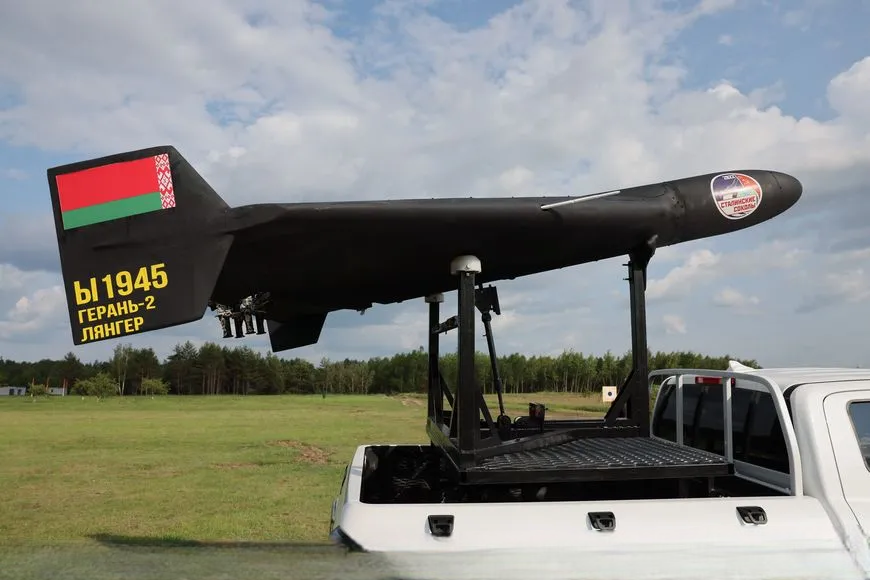
Ukraine may have to revisit its blackout measures if Russia begins mass-using the Susanin optical navigation module on Geran-5 drones and other drones and missiles at night, Serhii “Flash” Beskrestnov, a defense-technology adviser to Ukraine’s president, says. Road and highway lighting will be the first concern.
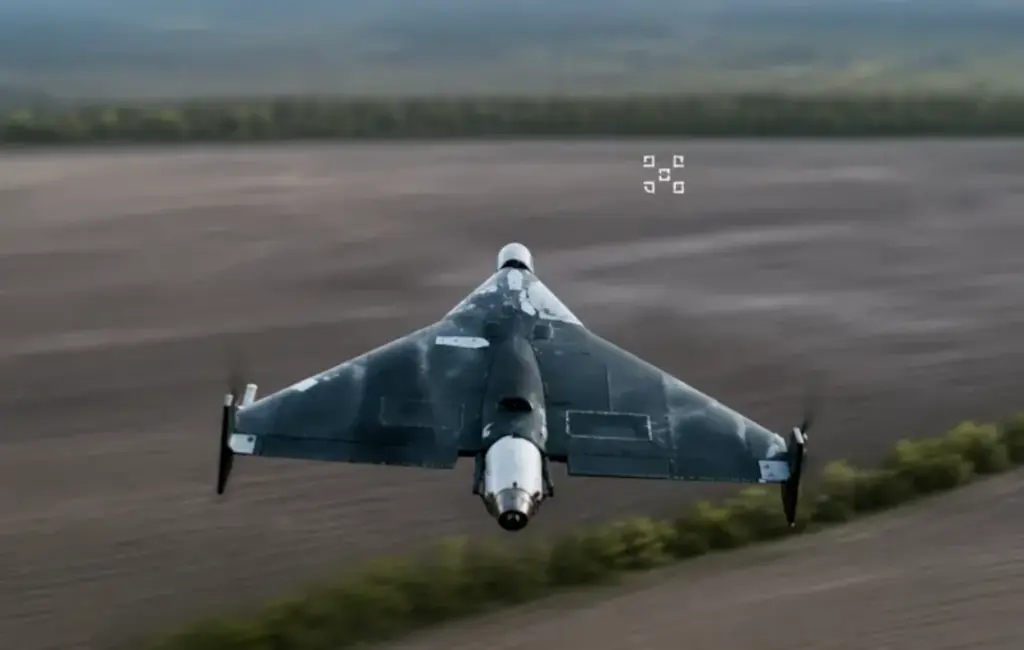
Russia keeps upgrading the weapons it sends against Ukrainian cities. It has already fitted its jet-powered Gerans with machine vision that lets them recognize and track targets on their own in the final seconds of flight, which Ukraine’s electronic warfare cannot easily defeat.
Flash says Ukraine would act deliberately this time
In 2022, Ukrainians switched off lights out of fear. Flash says that if optical navigation spreads, darkness may have to become a deliberate defense.
“If our enemy begins to use the Susanin optical navigation module en masse on the Geran-5 and other drones (missiles) at night, we may have to revisit the question of light masking,” Beskrestnov says.
This especially concerns the lighting of roads and stretches of highways, where cars are especially vulnerable to drone and missile attacks, with Ukrainian rescuers named being in a vehicle during a strike as one of the most dangerous places.
Meanwhile, Beskrestnov does not say how widely Russia already uses the module.
Russia’s air war grows faster and more frequent
Jet-powered Gerans already fly too fast for the mobile gun teams and light interceptors that stop slower drones, and Ukraine is still testing jet interceptors of its own.
“Credit to the Russians. They know how to scale,” Serhii Bratchuk, spokesperson for the Ukrainian Volunteer Army, said in September.
By August, Russian forces were striking Kyiv almost twice a week on average, each attack costing the city about $12 million, Mayor Vitali Klitschko said. Ukraine’s Economy Ministry expects losses from Russian strikes to reach up to $10 billion this year.
Ukraine's 3rd Army Corps declared victory two weeks ago
But the corps' Operation Vivaldi may continue
It's possible 3rd Army Corps troops are already crossing the Zherebets River
Starting in May, Ukraine's 3rd Army Corps began exploiting gaps in Russian lines just north of Sloviansk in eastern Ukraine's Donetsk Oblast. Five months later, the corps and its supporting drone units had cleared Russian troops from 277 sq km of northern Donetsk, inflicting what the corps says were 8,000 Russian casualties and pushing the Russian 20th and 25th Combined Arms Armies back across a key terrain feature: the Zherebets River.
On 14 October, the 3rd Army Corps declared victory in its Operation Vivaldi. "Four seasons of Vivaldi are over. But the music plays on," the corps wrote on Telegram.
It was unclear at the time what the corps meant. Its commander, Brig. Gen. Andrii Biletskyi, has since been seconded to lead Ukraine's new Center Group of Forces. But it's clearer now. According to at least two observers, Ukrainian troops have continued attacking along the Zherebets River—and have even crossed the river at several points.
Map: Euromaidan Press
If true and confirmed, the crossings could ratchet up the pressure on the battered Russian 20th and 25th Combined Arms Armies following their hasty and chaotic retreat from their former salient north of Sloviansk. The Zherebets should have been a natural defensive barrier for the Russians.
Sheltering on the river's eastern bank, the Russians could have rested, reset, and reinforced in preparation for a renewed offensive next year. But if the Ukrainians keep attacking, rest might be impossible. And that could force the Russians to rethink any plans for a fresh push toward Sloviansk and neighboring Kramatorsk, the last two big free cities in Donetsk.
But an extension of Operation Vivaldi isn't without risk for the 3rd Army Corps. If the corps pushes too far, too fast across a difficult obstacle, it could expose itself to counterattack.
Ukraine's "Vilvadi" counteroffensive in the Lyman direction has not stopped, despite claims to the contrary.
Ukrainian forces have made new advances in several different areas over the last couple of weeks, crossing the Zherebets River onto its eastern bank at multiple different…
Ukraine's Vivaldi counteroffensive in the Lyman direction "has not stopped, despite claims to the contrary," the mapping account AMK Mapping explained on Monday after noting possible Ukrainian forces on the eastern side of the Zherebets in recent weeks. "Ukrainian forces have made new advances in several different areas over the last couple of weeks, crossing the Zherebets River onto its eastern bank at multiple different locations." AMK Mapping also noted that many Ukrainian assaults over the past month had been repelled and that casualties were likely rising.
AMK Mapping isn't alone. On Monday, mapper Suriyak also logged Ukrainian troops on the far side of the Zherebets in three key settlements: Makiivka, Novosadove, and Terny. "They are establishing a significant bridgehead," Suriyak wrote.
The possible Ukrainian river crossings could defy recent expectations. "The Ukrainians have continued their push and advancement toward the Zherebets River," mapper Clément Molin wrote on 20 October. "They have reached it at several points, and Russian forces no longer control any territory west of this river—with the exception of the forest east of Lyman."
Ukrainian-Russian war. Day 1700-1704: Situation on Luhansk front: During the last two weeks, Ukrainian army has managed to secure new positions on the western bank of the Zherebets River, including the south of Makiivka and the rest of Novolyubivka. However, military… pic.twitter.com/zfi1Txv3eA
But Molin didn't expect the 3rd Army Corps to force the river, a risky maneuver under the best of circumstances. "Despite various rumors, I have not been able to confirm that the Ukrainians have actually crossed the river," Molin wrote.
Instead, he expected the Ukrainian corps to do what the defeated Russian field armies were trying to do: consolidate in new positions and get ready for the next round of major fighting, potentially next year. "For the time being, I believe the Ukrainians will focus on consolidating their gains and adopting a defensive posture."
If indeed the 3rd Army Corps has crossed the Zherebets, it's a possible indication that the corps still has some combat power in reserve—and is eager to prolong its momentum for as long as possible, even if that means heavier losses in risky river crossings.
A major clash could occur if and when the 3rd Army Corps tries to seize full control of Terny, which anchors the Russian line on the east bank of the Zherebets. Two years ago, Terny was the site of intensive fighting as Russian forces fought their way across the Zherebets on their long march toward Sloviansk. That battle was a costly victory for the Russians as they sent mechanized column after mechanized column across a drone kill zone toward Terny.
Explore further
Starlink helped Ukraine pull off Operation Vivaldi. Now Starlink could help Russia take the ground back
The worst outcome for the outnumbered Ukrainian troops in northern Donetsk may be a mirror image of the Russian march through Terny in 2024. Yes, the Russians eventually captured Terny and secured a bridgehead on the western bank of the Zherebets. But the Russians overextended as they kept pushing toward Sloviansk, roughly 40 km to the southwest of Terny.
It's that overextension that afforded the 3rd Army Corps the opportunity to counterattack and roll back the hard-won Russian gains. To preserve its own recent victory on the western side of the Zherebets, the 3rd Army Corps may want to choose caution. Ukrainian forces "need to organize a coherent and solid defensive line," Molin advised.
That may mean not attacking across the Zherebets—despite the temptation to do so.
Ukraine’s Military Intelligence (HUR) has published the names of 49 Russian and Belarusian companies and institutions building Rassvet, Russia’s low-orbit satellite internet system, on its War&Sanctions portal, the agency said on 28 October. It needs it for its military purposes.
Russian troops ran front-line communications and long-range strike drones on smuggled Starlink terminals until SpaceX blocked them on 1 February 2026. Ukraine still flies on Musk’s network, and on 24 October it got back to full speed after a ten-day cap imposed abroad. Rassvet is meant to give Russia’s army satellite links under its own control.
HUR has said Moscow may struggle to obtain components for more satellites, and its list names the suppliers that sanctions would need to target while the network is still being built.
Terminals for Iskander-M command vehicles
Rassvet is first of all a military communications system. Russia plans to use it for command and control, strike platforms, and drones, and to install terminals in the command-and-staff vehicles of Iskander-M missile systems, HUR says.
The Central Research Institute of Automation and Hydraulics is involved in integrating Rassvet into army communications, including fitting command vehicles, Iskander ones among them, with terminals once 292 satellites are in orbit, according to the portal. The same institute produces guidance components for the Iskander-M and Kinzhal missiles.
Planned coverage takes in Ukraine and the EU first, and once it is wide enough, Russia could use the system in hybrid attacks on other countries. That is why partners should block Rassvet’s access to components, equipment, and software now, the agency said.
Roscosmos launches it, a Belarusian missile maker signs on
The lead company is Bureau 1440, part of the IKS Holding tech group. According to the portal, it is linking its flight control center to systems of the Russian Defense Ministry. Roscosmos launches the satellites into orbit, and its head, Dmitry Bakanov, personally oversees Rassvet.
Meanwhile, Belintersat, Belarus’s national satellite operator, signed a partnership with Bureau 1440 in May 2026 to bring Rassvet into Belarus’s telecom network. It is a branch of the Plant of Precision Electromechanics, Belarus’s lead missile developer and maker of the Polonez rocket launcher.
Another Belarusian firm, Aerospace Instruments, prototypes components for the system.
23 of 49 not sanctioned by Kyiv’s allies
Of the 49, 23, Roscosmos among them, are not under sanctions by any country in the sanctions coalition. The companies involved “must be included in all blacklists” of countries, banks, and businesses, the agency wrote.
32 satellites launched, seven launches to go
Russia launched its first 16 Rassvet satellites earlier this year. Stable communications would need 200–250 in orbit, Serhii “Flash” Beskrestnov, then adviser to Ukraine’s defense minister, said in May.
By August, Russia had launched 32 Rassvet satellites and planned seven more launches by the end of 2026, a HUR official told Janes. Only 12 of them, all from the first batch, had reached a sustainable altitude by the end of August, ISW reported.
A small Russian cruise missile of an unconfirmed type came down almost intact in Odesa Oblast, Militarnyi reported on 27 October. Its box-shaped airframe looks unlike the Geran-5 variant whose name a presidential adviser gave it.
Militarnyi describes Russia’s work on the Geran-5 line as iterative: features tested on one version reappear in the next. A variant reported in late September can correct its route by images of the ground instead of satellite signals, which Ukraine jams, according to the monitoring channel Polkovnyk GSh. Official Ukrainian sources have not confirmed that system. The airframe found in Odesa Oblast looks shaped for a different problem: radar. Russia now builds 4,000 jet-powered Geran-4 and Geran-5 drones a month, Militarnyi says, most of them Geran-4. It is also building new launch sites for the Geran-5.
What the wreck shows
Local Telegram channel Odesa Info Live posted photos of the missile lying in open ground with little visible damage. Militarnyi described a compact cruise missile with a box-shaped fuselage, rounded edges, and a swept wing. The flat-sided body is probably meant to simplify production, the outlet said, and it may also cut radar visibility. A small turbojet engine exhausts through a V-shaped tail and draws air through intakes on both sides. Militarnyi read the dark composite skin as another measure against radar.
Serhii “Flash” Beskrestnov, the president’s adviser on defense technology, published the first photos of the new missile on 22 October. He wrote that it navigates optically and has greater range, speed, and flight altitude, and he labeled it the Geran-5 K5-K. However, Militarnyi noted that it looks substantially different from the K5-K variant already known by that name. In its 23 October overview, the outlet said Russia had started using two new small cruise missiles, probably developments of the Geran-5.
How Russia got here
Russia first used the original Geran-5 against Ukraine in early January 2026, Ukraine’s military intelligence (HUR) said, describing it as a jet-powered strike drone. Militarnyi now classes the whole line as small cruise missiles.
Until specialists open the airframe, its navigation, range, and speed rest on Beskrestnov’s word. What they find inside will show how much of the design is aimed at Ukraine’s radar.
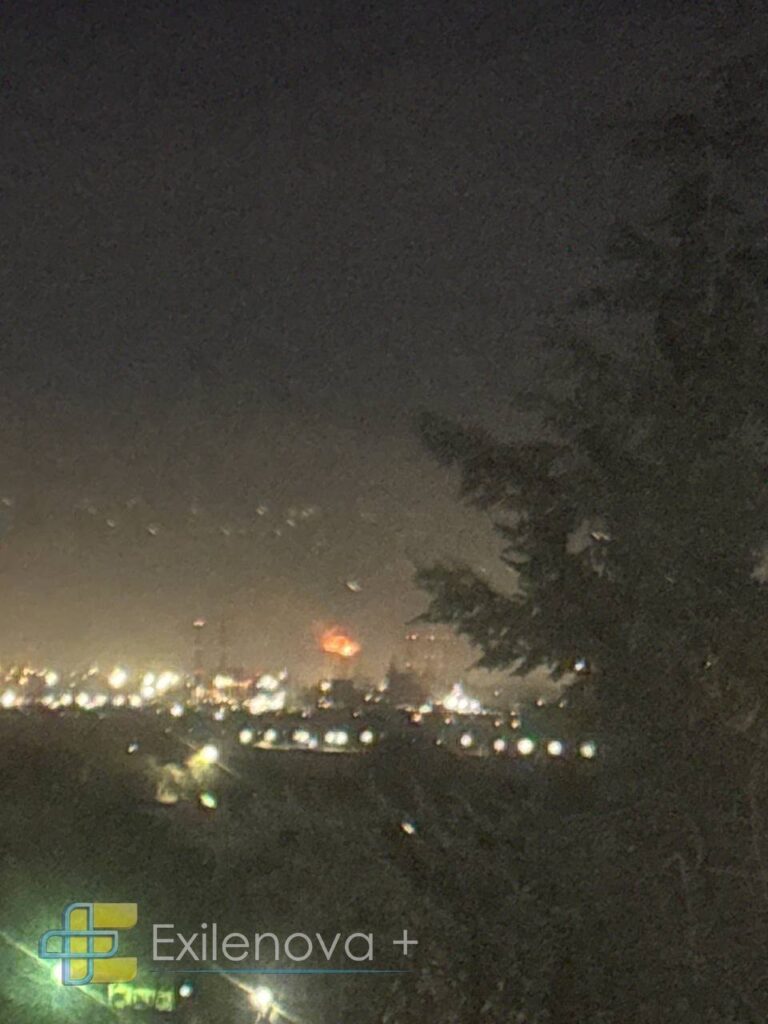
A fire broke out in the area of a major Russian steel plant in Lipetsk late on 27 October, Kyiv time, as air defenses fired at incoming targets, the Ukrainian monitoring Telegram channel Exilenova+ reported. Ukrainian partisans said the strike may have hit the plant. The region’s governor denied any large industrial fire.
Whether or not it was hit, the plant matters to Ukraine. The Novolipetsk Metallurgical Plant (NLMK) is Russia’s only producer of electrical steel, Ukrainska Pravda reported in April 2025. NLMK’s tax records, obtained by the outlet, showed sales of that steel to Moscow’s Avangard plant, which builds missiles for S-400 air defense systems. Russia also fires those missiles at ground targets in Ukraine.
Pantsir fires, no visible hit
The targets over Lipetsk were jet-powered, Exilenova+ wrote, citing preliminary reports of impacts and a fire toward the city’s airfield. Footage it posted showed a Pantsir air defense system firing, and the channel suggested the system may have failed to cope. It then reported the fire near NLMK, blaming air defense fire or a falling object.
We also observe a fire in the vicinity of NLMK (Novolipetsk Metallurgical Combine) resulting from air defense activity or the impact of an object. pic.twitter.com/7bBqyqCP2j
The Crimean Tatar-Ukrainian partisan movement Atesh said its agents in Lipetsk reported an impact, and in a follow-up said they believe it may have hit NLMK.
Contracts and denials
A 2022 investigation by Disclose and its partners tied 18 NLMK contracts, all signed after 2014, to eight Russian defense firms, including an S-300 maker. NLMK confirmed the contracts but said only a “negligible” amount of civilian steel grades went to those firms.
Map of Russia’s Lipetsk Oblast, where a fire was reported near the NLMK steel plant on 27 October 2026. Map: EP/Datawrapper
On 28 October, Lipetsk Oblast Governor Igor Artamonov claimed air defenses downed 45 drones over the oblast overnight. He insisted reports of a large industrial fire were untrue, saying drone debris fell in a tree belt and sparked a fire, since contained. Debris also blew out windows in a Lipetsk apartment block, and one person sought medical help but needed no hospitalization, he added. Whether NLMK took any damage remains unconfirmed.
Earlier strikes on weapons suppliers
Earlier, UK-supplied Storm Shadow missiles reportedly struck a battery plant in Yelets, in the same oblast, on 25 October. Two days before that, they reportedly hit an electronics plant in Oryol. OSINT channels described both as suppliers of parts for Russian missiles.
A test satellite for a future communications network under Ukrainian control is working in orbit, Ukraine’s Himera and Denmark’s GomSpace said on 27 October. The companies say it will work for Ukraine’s strategic security, and that the long-term aim is to rely less on foreign communications providers. Public launch records for the mission do not list a satellite by that name, though some of its objects are still unidentified.
Ukraine fights Russia on satellite links it doesn’t control, and the announcement comes two weeks after it saw what depending on an outside provider can cost. The satellite, the companies say, went up on 1 October, before that trouble began. Overnight on 14 October, Starlink and its military version, Starshield, began dropping links on fast-moving terminals, and Ukrainian officials said the cap disrupted drone missions. On 24 October, 10 days after the cap began, Ukraine’s Defense Ministry reported speeds restored. Who ordered the cap remains contested. That same day, Elon Musk wrote that Ukraine’s military had violated Starlink’s terms of service and that “that loophole was closed last week,” a claim a Ukrainian presidential adviser disputed.
What the companies say, and what launch records show
Obria Nano flew on SpaceX’s Transporter-18 rideshare mission, the release said. Aalborg-based GomSpace built it on Himera’s order, Himera co-founder and CEO Misha Rudominski wrote on Facebook. He added that the team received the first signals the next day and that the satellite is now working. Its tests are meant to inform the design of the full Obria system, the release said.
Explore further
The Starlink hot potato: Musk points to Trump, Trump points to nobody, then credits Musk with the fix. The speed limit stays
No satellite called Obria Nano appears on SpaceX’s published list for the mission, The Insider found. Public tracking catalogsshow one Ukrainian satellite from that launch, named UASAT-Nano. Another 26 objects from the mission are still listed with placeholder names and no confirmed owner. The outlet said it is unclear whether the two names refer to one satellite.
UASAT-Nano is the satellite network Stetman, another Ukrainian company, is building, and its founder said the network’s first test satellite would launch in October. In April, Stetman and GomSpace agreed to set up a joint venture called UASAT and planned a first launch for fall 2026. The Obria release does not mention Stetman or UASAT.
Production in Ukraine is the stated next step
Rudominski wrote that Himera’s next stage is to produce satellites and ground terminals in Ukraine. He called it important not only to use the technology but also to gradually build domestic expertise and manufacturing.
“For us, this project is about more than launching a satellite. It is an opportunity to lay the foundation for an independent communications network for Ukraine,” Rudominski said in the release.
In the long run, the network would cover all of Ukraine and complement European satellite networks, the release said. The network does not exist yet, and Himera has given no timeline.
Explore further
“Trump and Musk must be held accountable”: US senator warns Starlink network failing over Ukraine could cripple its shield against Russian missiles and drones
Replacing Starlink will not be quick. Lance Hunter, a political scientist at Augusta University, told Time that Ukraine cannot quickly swap out such technology, since diversifying it “takes a lot of time. It takes a lot of resources.” Meanwhile, one Ukrainian interceptor-drone maker has begun rethinking its air-launched designs after the slowdown.
Ukraine’s military intelligence estimates that only 10–20% of the prewar population may remain in the Russian-occupied left bank of Kherson Oblast, accusing Moscow of forcing Ukrainians from their homes while relocating Russian citizens to the area.
Russia’s efforts to displace Ukrainians and bring Russian citizens into occupied Kherson Oblast are part of Moscow’s broader campaign to consolidate control over occupied territory, impose Russian institutions, and erode Ukrainian national identity. Similar practices have been documented in other occupied Ukrainian territories, including the resettlement of Russians into homes in Mariupol and efforts to replace Ukrainian education with Russian curricula.
The Main Intelligence Directorate of Ukraine’s Defense Ministry (HUR) said Russia was creating intolerable living conditions for Ukrainian residents and unlawfully seizing private property to displace them. The agency said Moscow was simultaneously using financial incentives to recruit Russian teachers, doctors, and other professionals to work in occupied areas.
Russia brings in Russian workers as Ukrainians are pushed out
Before Russia’s full-scale invasion in February 2022, around 500,000 people lived on the left bank of Kherson Oblast, according to HUR. The agency estimates that only 10–20% of that population may remain.
Moscow is using state-backed recruitment programs, including “Zemsky Teacher,” “Zemsky Doctor,” “Zemsky Feldsher,” “Zemsky Cultural Worker,” and “Zemsky Coach,” to attract Russian citizens to occupied Ukrainian territory, HUR said.
Under these programs, Russian teachers and doctors who agree to work in occupied areas are offered one-time payments of 2 million rubles, while junior medical staff can receive 1 million rubles. The incentives also include higher salaries and other benefits, with contracts lasting at least five years.
HUR said hundreds of Russian teachers and doctors had already been brought to occupied Ukrainian territories from regions across Russia, including Krasnodar, Khabarovsk, Stavropol, and Perm Krais, as well as Rostov, Kursk, and Leningrad oblasts.
According to Ukrainian intelligence, Russian medical personnel are needed primarily to serve occupying forces, while Russian teachers are being brought in to undermine Ukrainian children’s national identity.
Ukraine accuses Russia of war crimes and genocidal practices
HUR said Russia’s efforts to displace Ukrainian residents and bring in Russian citizens bore signs of war crimes and genocidal practices against the Ukrainian population.
The agency’s allegations concern both the coercive removal of Ukrainians from occupied territory and the replacement of local residents with people brought from Russia. Ukrainian authorities say these policies are part of Moscow’s broader effort to consolidate control over occupied Ukrainian land and impose Russian identity and institutions.
Kherson Oblast faces displacement, attacks, and a humanitarian crisis
Russian forces occupied much of Kherson Oblast in the early months of the full-scale invasion in 2022. Ukrainian forces liberated the oblast’s right-bank areas, including the regional capital, in November that year, but Russia continues to occupy the left bank of the Dnipro River.
Russian forces regularly attack Ukrainian-controlled areas of Kherson Oblast with artillery and drones, killing and injuring civilians. Ukrainians have described repeated drone attacks on civilians as a “human safari.” In May 2025, a UN commission of inquiry concluded that Russian forces’ repeated drone attacks on civilians along the Dnipro’s right bank amounted to crimes against humanity of murder.
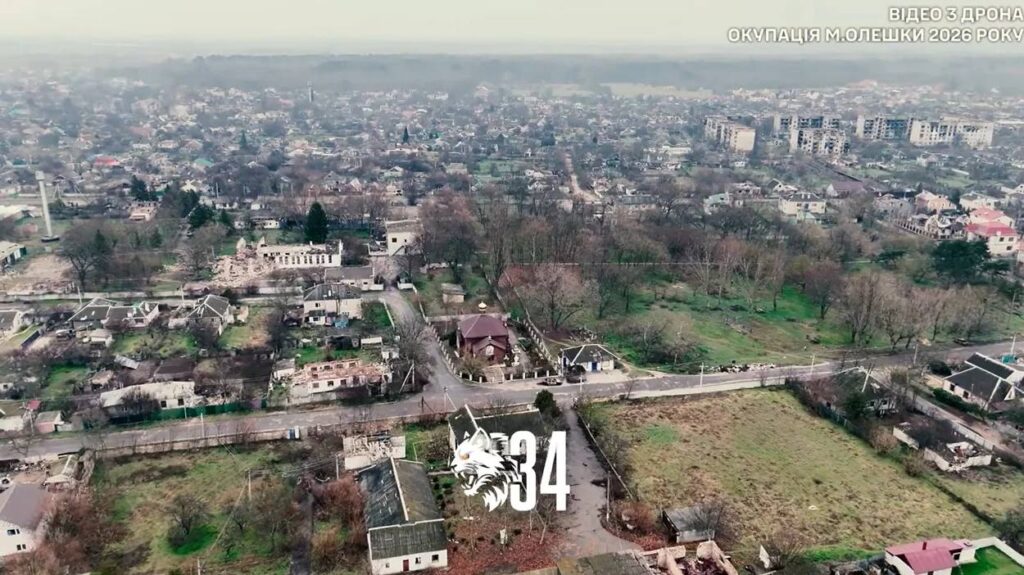
The occupied town of Oleshky, on the left bank, has also faced severe shortages of food, medicine, and medical care amid restrictions on movement and continued fighting.
Explore further
Thousands are starving in occupied Oleshky. People have no food, no way out, and Russian forces bomb incoming aid
Russia’s occupation has also exposed residents of Kherson Oblast to major humanitarian disasters. The destruction of the Kakhovka Dam in June 2023 flooded settlements along the Dnipro, including Russian-occupied communities on the left bank, damaging homes and forcing residents to flee. Russian forces’ restrictions on access and evacuation further endangered civilians in the affected areas.
While Russia occupies the left bank of Kherson Oblast, its forces continue to target civilians on the Ukrainian-controlled right bank. Across the oblast, residents face the consequences of Russia’s invasion, from forced displacement and property seizures under occupation to deadly drone and artillery attacks.
The ceasefire around Russian-occupied Oleshky in Kherson Oblast has expanded beyond the town to provide safe passage for humanitarian convoys, US First Lady Melania Trump said on 27 October. The expansion is intended to facilitate aid deliveries to civilians trapped under Russian occupation.
Ukraine and Russia are observing a localized ceasefire to enable a humanitarian mission to reach Oleshky, where residents have faced months of shortages of food, medicine, and medical care under Russian occupation.
Trump said the ceasefire took effect at 04:00 Moscow time on 27 October, two days ahead of the original schedule, to protect civilians and facilitate the delivery of critical humanitarian aid. Russia’s chief of General Staff, Valery Gerasimov, had confirmed the arrangement, she said.
Ukraine’s human rights ombudsman Dmytro Lubinets said no ceasefire violations had been recorded by 19:49 Kyiv time on 27 October, and Russian forces had made no attempts to advance. He added that he remained in constant contact with his Russian counterpart, Yana Lantratova.
THE CEASEFIRE HAS COMMENCED The ceasefire between Ukraine and Russia took effect at 4:00am Moscow time on October 27, 2026.
Timing was accelerated two days ahead of schedule to protect the safety of civilians and to facilitate the delivery of critical humanitarian aid. The…
Road to Oleshky must be cleared before aid can arrive
Lubinets said the ceasefire began at 03:00 Kyiv time and would remain in effect until 22:59 Kyiv time on 1 November. He reported no violations since it began and said Russian forces had made no attempts to advance.
The next steps are to clear mines from the road to Oleshky and deliver humanitarian supplies. Representatives of Ukraine, Russia, and the United States will be present once the route is cleared and the aid arrives, Lubinets said in an interview with Ukrainian broadcaster 1+1.
He added that everyone who wants to leave for Ukrainian-controlled territory would be able to do so and that assistance would be provided to everyone who needs it.
The Financial Times earlier reported, citing sources familiar with the negotiations, that residents who agree to leave Russian-occupied Oleshky during the ceasefire would first be transported to occupied Crimea or Russia before being allowed to return to Ukrainian-controlled territory.
Humanitarian mission follows months of efforts
Oleshky has been under Russian occupation since 2022. The town has been cut off for months, with shortages of food, medicine, and medical care worsening.
The White House announced on 23 October that Melania Trump had secured a localized ceasefire originally scheduled to begin on 29 October. Russia subsequently announced a ceasefire on the Kherson axis from 27 October, with preparations to secure a route for a humanitarian convoy.
Explore further
Ceasefire planned for occupied Oleshky as residents face starvation and blocked escape routes, White House announces
Lubinets said efforts to address the humanitarian crisis in Oleshky began in late February 2026, but progress accelerated in September following Melania Trump’s involvement.
The expanded ceasefire area is intended to facilitate the humanitarian operation, but the route must still be cleared and supplies delivered before the mission can reach residents. The new boundaries of the ceasefire area have not been specified publicly.
Ukraine’s air defenses have been intercepting nearly 60% of Russian Geran-4 jet-powered attack drones over the past three months, with the interception rate reaching 80% during some attacks, Ukraine’s General Staff said.
Russia has increasingly used jet-powered drones in its attacks on Ukraine, adding a faster-moving threat to the Shahed-type drones Moscow deploys against Ukrainian cities and infrastructure. Ukraine is working to improve interception rates while reducing the cost of countering these aerial threats amid shortages of surface-to-air missiles.
The General Staff’s update did not mention interception rates for Russia’s more advanced Geran-5 jet-powered drone.
F-16s, Mirage jets help intercept Russian drones
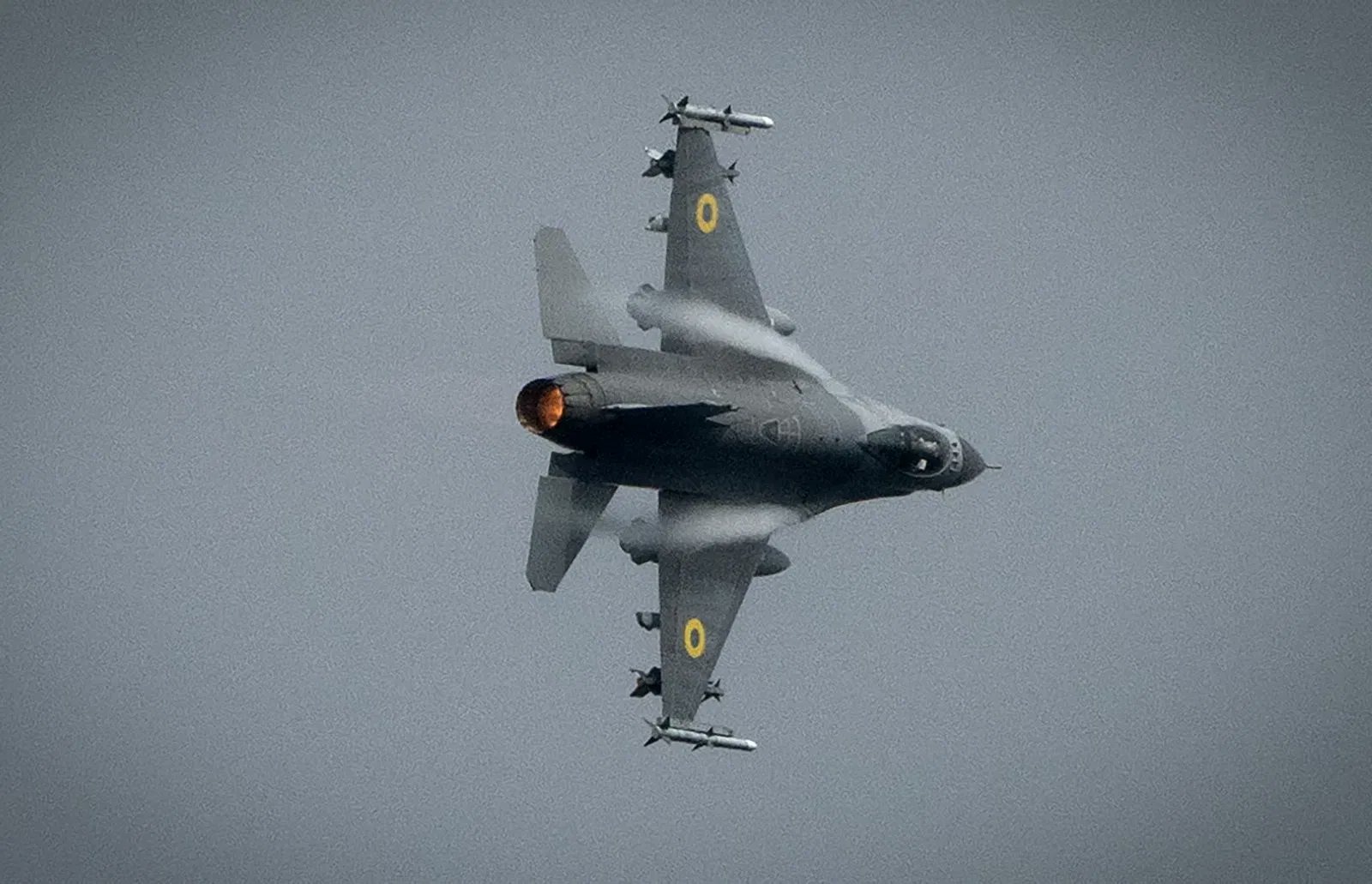
According to the General Staff, tactical aviation plays a significant role in destroying Russian jet-powered drones. Ukraine uses F-16s, French Mirage aircraft, and MiG-29 fighters to intercept them.
The military is also strengthening what it calls “short-range air defense” as Ukraine faces a shortage of guided anti-aircraft missiles. These systems include Gepard and Shilka anti-aircraft guns, newer Skynex, Skyranger, and Terrahawk Paladin systems, interceptor drones, and mobile fire groups deployed by different branches of Ukraine’s Defense Forces.
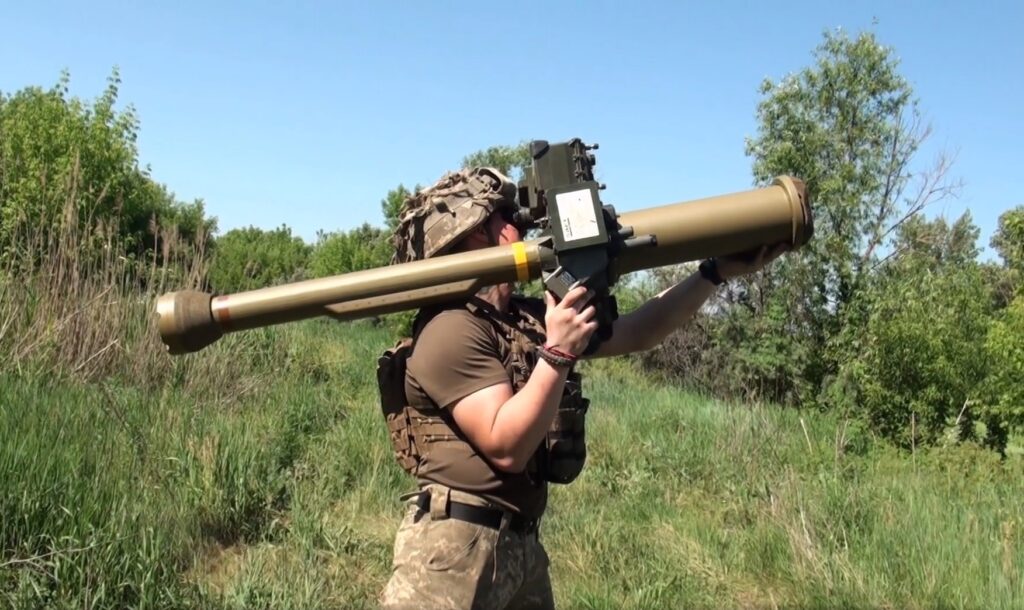
Mobile fire groups are equipped not only with machine guns and supporting equipment but also with man-portable air-defense systems (MANPADS). Ukrainian troops have been successfully using these missiles to shoot down Russian jet-powered drones, the General Staff said.
A Ukrainian soldier with an LMM Martlet MANPADS. Screenshot: Ukrainian Air Assault Forces, via Militarnyi.
Explore further
Denmark rushes 50,000 cannon rounds to Ukraine to help F-16s hunt Russia’s advanced jet drones
Ukraine tests cheaper drone interceptors
Ukraine is also seeking to lower the cost of countering Russian aerial attacks by testing new interceptor drones.
According to the General Staff, some models have already downed dozens of Russian Geran jet-powered drones. The military did not provide further details about the interceptor models or the number of drones destroyed.
The rising interception rate reflects Ukraine’s efforts to adapt its air defenses to Russia’s evolving drone campaign while preserving scarce and expensive air-defense missiles for threats that require them.
Plans for a call for bids in 2027 for both phases of the Paphos – Polis Chrysochous, as well as developments regarding the Paphos Marina were presented by government spokesman Konstantinos Letymbiotis on Tuesday.
Addressing the general assembly of the Paphos chamber of commerce and industry, Letymbiotis said that the implementation of the Paphos – Polis Chrysochous road will demand difficult decision, and that clinging to a problematic contract did not amount to progress.
“Announcing a project takes just a few minutes. Its implementation requires a solid foundation, responsible decisions, and constant oversight,” Letymbiotis said.
Letymbiotis recalled that the design work of the highway began in 1990, with studies carried out in 2007 predicting its completion by 2013. Meanwhile, the contract signed in 2021, valued at €73 million, called for the project to be delivered in 2024.
He said that by January 2023, around 48 per cent of the contractual time had passed, yet only €2.6 million of work, under 4 per cent of the contract value, had been completed.
By October 2024, progress stood at just 21 per cent, while the contractor was seeking an additional €36.2 million in compensation and a 59-month extension.
Letymbiotis said that the new design provides for a modern four-lane highway. In the first phase, from Ayia Marinouda to Stroumbi, expropriations and the environmental assessment have been completed.
Meanwhile the second phase will run from Stroumbi to Polis Chrysochous, with the government aiming to launch tenders for both phases within 2027.
On the Paphos Marina, Letymbiotis said that the project has been in planning since 1994, with the first tender held in 2006.
Letymbiotis spoke of of a high priority project for the city and said that the government was determined to finally see it implemented.
He said that the decision of the marina management committee regarding the evaluation of the call of interest is expected in early November, while concession agreement to be signed with the successful bidder in 2027.
Letymbiotis also referred to the expansion of Paphos airport and the new desalination plant in Kissonerga, which is expected to have a capacity of 12,000 cubic metres per day.
US first lady Melania Trump said on Tuesday that a localized ceasefire between Ukraine and Russia has been expanded beyond Oleshky to allow safe passage for humanitarian supplies.
“Timing was accelerated two days ahead of schedule to protect the safety of civilians and to facilitate the delivery of critical humanitarian aid,” Mrs Trump said in an X post. “The ceasefire’s geographic area has expanded beyond Oleshky, within the Kherson Region, to provide safe passage for the humanitarian convoys.”
Russia is expanding drone storage at the Hvardiiske military airfield in occupied Crimea, Ukrainian OSINT channel Dnipro Osint reported on 26 October, citing new satellite images. The channel did not say who took the images or when. Ukraine’s Security Service (SBU) said it struck drone hangars at the same airfield in July, and the military said strikes on 13 October damaged four drone storage sites nearby.
Hvardiiske has stayed in use since then. Ukraine’s General Staff has listed it among the sites Russia launched attack drones from in every daily report since 7 October. The airfield was on the list again on 24, 25, and 27 October, the night Russia aimed its main strike at Kyiv. The new construction, as the channel describes it, adds protected storage at a base Ukraine has already shown it can reach.
Shelters and “garages”
The images show more than 20 small shelters under construction, each protected by earth berms, the channel said. It also counted about 40 smaller structures it calls “garages.” It said they are meant for storing, servicing, and preparing Geran drones for launch.
Geran is the name Russia gives the Iranian-designed Shahed drones: the Shahed-136 became the Geran-2, which Russia now builds itself. The images show at least one hangar damaged by a Ukrainian drone hit, Dnipro Osint noted.
Launched from vehicles
Hvardiiske, north of Simferopol, uses mobile launch platforms instead of fixed installations, according to Dnipro Osint. Crews load drones onto specially equipped vehicles, which then launch them from the runway.
Struck repeatedly since June
On 24 June, the SBU said it hit infrastructure at Hvardiiske and at the Saky airbase. On 3 July, the SBU reported that its drones struck two hangars at Hvardiiske that stored Shaheds and aviation equipment. Ukraine’s General Staff said its forces struck the airfield again overnight on 5 July, and the SBU said a day later that it hit three hangars with aviation equipment there. A strike on 3 August destroyed nine aviation-fuel tanks and damaged two aircraft hangars, the General Staff said. Strikes on 13 October damaged four drone storage sites near Hvardiiske, with signs of secondary detonation, it reported two days later.
Not the only base Russia is building up
Hvardiiske is not the only Russian drone base Ukrainian OSINT channels have flagged this month. On 13 October, the anonymous channel Absolutely Reliable Source said Russia had nearly finished the first section of a launch site for jet-powered Geran-5 drones near Millerovo in Rostov Oblast, with eight launcher positions and 32 drone-preparation spots. Hvardiiske and Millerovo were both among the launch areas the General Staff listed for the night of 27 October, when Russia launched 280 Shahed-type drones, 69 of them jet-powered, with Kyiv as the main target.
A ceasefire around Russian-occupied Oleshky in Kherson Oblast took effect at 03:00 on 27 October Kyiv time, and both sides were complying with the agreements, Ukraine’s human rights ombudsman Dmytro Lubinets said. Russia’s Defense Ministry reported that its forces had stopped firing on the Kherson axis at 04:00 Moscow time, at the same moment.
Russia has kept Oleshky cut off for months. In June, the UN Human Rights Monitoring Mission in Ukraine documented worsening shortages of food, medicine, and medical care there and in neighboring Hola Prystan. As of 8 October, Lubinets’ office still saw no practical breakthrough toward an organized evacuation, with 358 residents verified as needing help to leave. The ceasefire is the first step that has to hold before aid can go in and residents can leave, an operation Marc Beckman, the first lady’s chief adviser, expects to take five to seven days.
By 09:00 on 27 October, Russian forces were still observing the ceasefire, according to Pavlo Drohal, spokesperson for Ukraine’s 30th Marine Corps. Kyrylo Budanov, head of the Presidential Office, announced that the mission had begun and that Lubinets had gone to the site to coordinate it.
The White House announced on 23 October that First Lady Melania Trump had secured a localized ceasefire, set to begin on 29 October. The same evening, Russia’s chief of General Staff Valery Gerasimov announced a ceasefire on the Kherson axis from 27 October, with engineering reconnaissance and a secured route for a humanitarian convoy. Ukraine’s General Staff followed, introducing a ceasefire in a designated area from the same hour.
Beckman told Ukrinform on 26 October that Russia had moved the ceasefire two days earlier and extended it beyond Oleshky into Kherson Oblast. Lubinets said on 23 October that the mission should effectively begin on 29 October, after demining, adding that the date was not a matter of principle for either side.
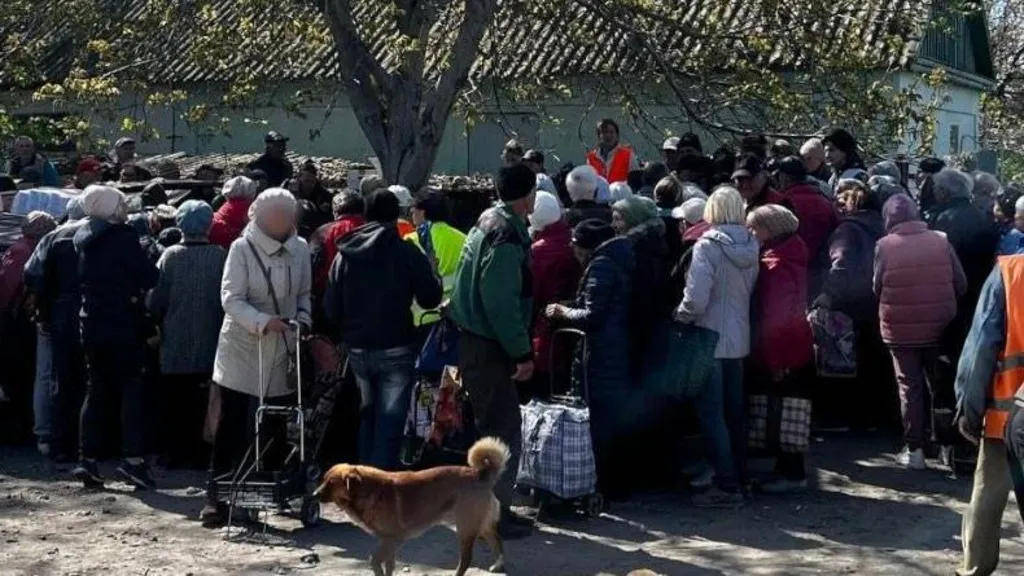
People in Oleshky wait for food supplies. Photo: BBC
A day after the announcement, Lubinets and his Russian counterpart Yana Lantratova, who lead the two negotiating groups, confirmed the timing in an online meeting, he said. According to Lubinets, the agreement covers demining the road to Oleshky, delivering food, water, medicine, and hospital equipment, and safe movement for civilians.
Newsmax to document the operation
Meanwhile, Melania Trump said she had secured an “impartial American media organization” to accompany the Russian and Ukrainian teams. Beckman named it as Newsmax. He said he had worked directly with the channel’s owner, and that its journalists would record testimony as what he called neutral American observers.
Residents could leave for Ukraine or Russia, or stay, Beckman said. He added that Russia had assured Kyiv and Washington it would respect their choice of destination. Both governments asked him not to disclose what guarantees Russia gave or how violations would be handled, he said. He expects the operation to take five to seven days after 29 October, with an extension possible if both sides agree.
Diplomat doubts the truce will move peace talks
At the same time, Kostiantyn Yelisieiev, Ukraine’s ambassador to the EU in 2010–2015, told Radio NV the truce became possible only through the personal involvement of Donald and Melania Trump. The US president, he said, sees it as a way to show Americans he is bringing peace closer. He said he expects Russia to attempt provocations aimed at pushing residents toward the Russian side.
Yelisieiev said he does not share the optimism of those who think Oleshky could push the wider peace process forward. He compared it to the Black Sea grain corridor, a one-off arrangement that no longer works. He warned of a “diplomatic smokescreen”: Russia imitates negotiations while it keeps fighting, hoping Ukraine and its partners weaken over time.
Ukrainian drone delivering aid to occupied Oleshky on the night of 4 October. Screenshot from video: Ivan Vyhivskyi / Facebook
A town under blockade
Oleshky lies on the left bank of the Dnipro, about 4 km from Kherson, and has been occupied since February 2022, Radio Svoboda reported. The White House says it had about 24,000 residents before the war and estimates 1,700 to 2,000 remain, mostly elderly, including about 50 children. Russian troops have also seized food dropped by Ukrainian drones, a local official said.
The Trump administration has encouraged former Hungarian Prime Minister Viktor Orbán to run for UN secretary-general and discussed a joint US-Russia-China candidacy with Moscow and Beijing, the Wall Street Journal’s (WSJ) editorial board wrote on 25 October, citing sources in three countries. Russia’s biggest ally in the EU, Orbán has been out of office since May, when Péter Magyar became Hungary’s prime minister.
The UN secretary-general can influence the war through diplomatic negotiations, mediation, and by drawing the Security Council’s attention to Russia’s aggression. António Guterres’s term ends on 31 December, so the council has to settle on a successor within weeks.
According to the WSJ, US officials discussing the next UN chief kept saying they wanted “someone like Orbán,” and their Russian and Chinese counterparts agreed. The US then brought the idea to Orbán himself. Russia and China are believed to support his bid based on those earlier talks with Washington, and the plan is for him to be the three countries’ joint candidate.
Ukraine warns of Orbán’s veto tactics at the UN
Orbán is receptive but has not decided, and he does not want to enter the race unless he is sure he can win, the editorial board wrote. A State Department official counted eight Security Council votes as safe for him and 10 within reach. A candidate needs nine of the 15 votes and no veto from a permanent member. The editorial board asked whether Britain and France, typically cautious in using their veto, would stand in the way. Any announcement is being held until after the 3 November US midterm elections.
Ukraine’s Foreign Minister Andrii Sybiha wrote on X that Orbán as secretary-general would put to good use “the masterful veto and blackmail skills” he developed over years of derailing major EU decisions. Ukraine, he added, could share its “great experience of taking him out for coffee at the right moment,” a reference to the December 2023 EU summit, where Orbán left the room so the other leaders could open accession talks with Ukraine without his veto.
Orbán ran Hungary for 16 years as Putin’s closest EU partner
Orbán’s 16 years of “illiberal democracy” eroded democratic values in Hungary. Since 2010, Fidesz has built an enormous partisan media ecosystem. Before the vote, it amended the electoral law twice and gerrymandered more than a third of the electoral districts, so the opposition might need around 55% of the popular vote to win a simple majority. Orbán still lost the 12 April election. Magyar’s Tisza won 138 of 199 seats, a two-thirds majority in parliament.
Explore further
Voted out and facing investigators, Orbán could reach for UN cover, sources say
Orbán kept close ties with Moscow throughout the full-scale war. When he met Putin in Beijing in October 2023, he spoke of “the military operations and the sanctions” rather than a war. In summer 2024, while Hungary held the EU Council presidency, he flew to Moscow on what he called a peace mission, and the EU distanced itself from the trip. In November 2025, he went back to Moscow, seeking to keep Hungary’s access to Russian oil and gas. He is widely considered Putin’s closest partner among EU leaders. After that visit, he said the only solution was for Ukraine to become a buffer state again, and that the longer peace was delayed, the more people and territory Ukraine would lose.
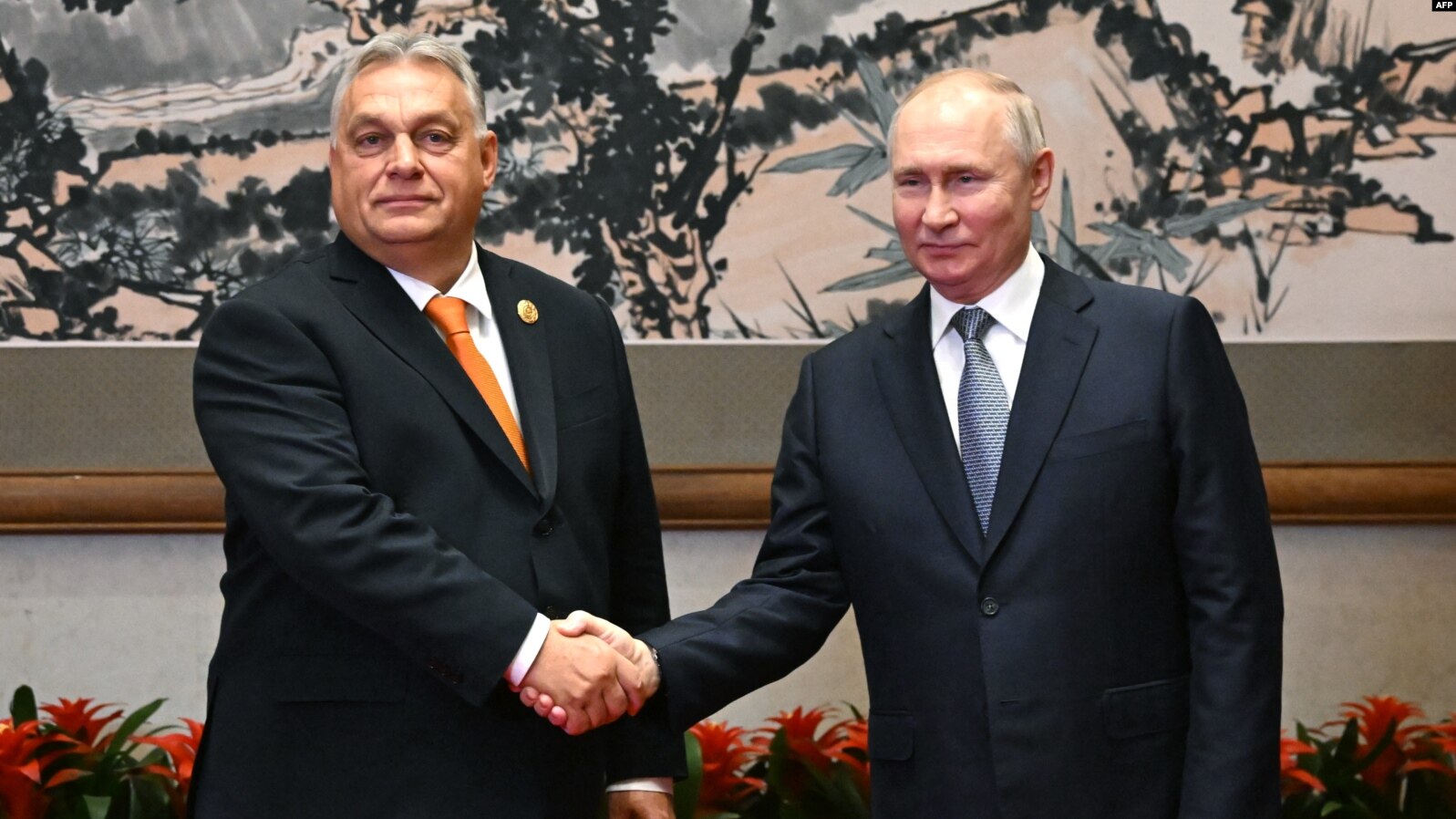
Then-Hungarian Prime Minister Viktor Orbán and Russian President Vladimir Putin in Beijing, 17 October 2023. Photo: Radio Free Europe
He used Hungary’s veto against Ukraine until his last weeks in office. In February, Orbán vetoed a €90 billion EU loan to Ukraine amid the disruption of Russian oil supplies through the Druzhba pipeline to Hungary and Slovakia. Hungary lifted its veto in April after repairs to the pipeline were announced. Foreign Minister Péter Szijjártó phoned Russian Foreign Minister Sergei Lavrov from EU meetings for years with “live reports on what’s been discussed,” a European security official told The Washington Post. Szijjártó did not respond to the Post’s request for comment.
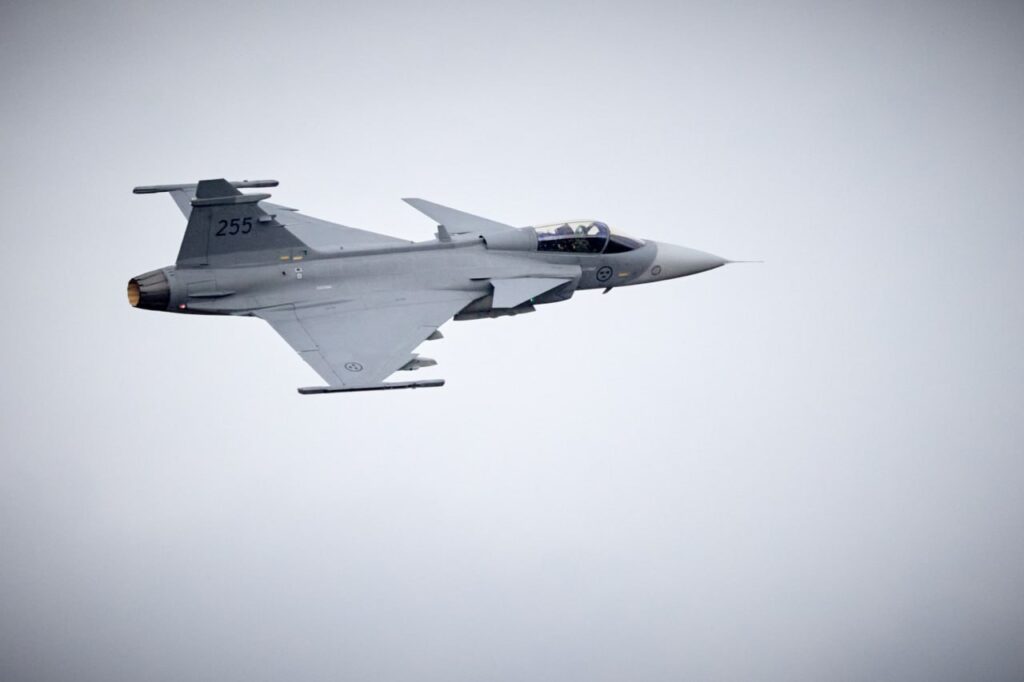
Ukraine is remaking its air force on NATO’s model, down to the way its squadrons are organized and the aircraft they fly. The reforms are planned to be completed by 2035 and include modernizing its F-16s while pursuing the Swedish Gripen jets, Air Force Spokesperson Yurii Ihnat says, per Tse Baza.
Ukraine’s fighters are working hard against Russia’s air war, and in the previous month alone the Air Force faced around 3,500 jet-powered targets, with F-16s heavily used to intercept Russian drones. The new reform is meant to build an air force that can be sustained over the long term and can contest Russian jets and glide bombs, not only survive the next wave.
Wings and universal air bases
The central change, Ihnat said, is a move to the “wing” units that NATO air forces use. The first steps have already been taken: Ukraine has set up the 107th F-16 wing, which now has its own Facebook page and may publish material about its work.
Ukraine also plans to build universal air bases on the operational airfields it has used through the full-scale war. In the future, Ihnat says, those bases should be able to receive and service different models of combat aircraft, as NATO does.
A worn fleet, and the jets Ukraine wants next
Currently, the F-16s Ukraine flies are older Block 15 jets, used by other countries before they arrived, and intensive combat has left them in need of repairs, service life restoration, and upgrades.
Ukrainian officials discussed modernization with the American manufacturer Lockheed Martin, while Kyiv would prefer the newer Block 70/72 version, which Ihnat says would let its pilots stand up more confidently to Russia’s Su-35 fighters.
Keeping the current fleet flying has been hard: fewer than half of Ukraine’s F-16s may be operational, held back by slow maintenance abroad.
At the same time, Lockheed Martin and Kyiv are discussing a special F-16 variant for Ukraine, with a modern AESA radar, longer range, and a wider choice of weapons, though no firm deal exists yet.
Ukraine is also counting on Swedish Gripen fighters. Ihnat says Ukrainian pilots are drawn to them for their lower operating costs and simpler maintenance, with the country likely to receive older C/D models first, before the newer Gripen E that Saab is developing.
Ukrainian pilots have already begun their training on the Gripen, a jet seen as a counter to the Russian aircraft dropping guided glide bombs on the front, though delivery timing depends on further agreements.
For 14 years, Serbia’s government kept the country close to Moscow. Now, the opposition “Student List” has won the country’s snap parliamentary election, and President Volodymyr Zelenskyy says Ukraine is ready to deepen its cooperation with Serbia, welcoming the result as “a new page” in a post on X.
The win could end the 14-year rule of President Aleksandar Vučić’s political force and weaken Moscow’s position in the Balkans. Serbia has remained an important Kremlin partner in Europe since Russia’s full-scale invasion of Ukraine, and Belgrade never joined the EU's sanctions against Moscow.
“A new page”
In his post, written in Ukrainian, Zelenskyy said that "changes have taken place in Serbia, the victory of the Student List, and this is clearly a new page in the history of the country and its people."
“We wish Serbia success, real development, and warm relations with the European community,” he wrote.
He said Ukraine was grateful to Serbia “for the respect shown to our people and our state, our independence,” and added:“We are ready to keep increasing our cooperation, and may all the good hopes of the people of Serbia come true.”
But the winners rule out sanctions on Russia
Vučić had earlier predicted that a new government could impose restrictions on Moscow by March or April, according to Novosti. The Student List says otherwise: it has no plans to align with the EU or to sanction Russia over the war in Ukraine, according to Reuters.
Its candidates frame Serbia’s reliance on Russian gas, with Gazprom as the largest supplier at around 2.2 billion cubic meters a year at below-market prices, as an acute economic dependency rather than a geopolitical alignment.
The movement’s top candidates have also said a future government would end all arms exports to war zones, including sales to Western intermediaries who pass weapons to Ukraine. Around €800 million worth of Serbian ammunition has reached Ukraine through that route since 2022.
Ukrainian drones damaged a process pipeline, two butyl-rubber units, and a rectification (distillation) unit at Russia’s Tolyattikauchuk petrochemical plant on 24 October, Ukraine’s General Staff said on 26 October. The damage hits the production chain of solid rocket fuel for tactical and ballistic missiles, it added.
The strike was part of a string of Ukrainian hits on Russian plants over four days, most of which the General Staff links to missile production. Ukraine hit an electronics plant in Oryol on 23 October and struck a battery plant in Yelets on 25 October or the following night. The General Staff ties both to missiles: Oryol makes components for missiles Russia fires at Ukrainian cities, and Yelets makes batteries for Iskander-M systems. Then, overnight on 26 October, drones also went after Voronezhsintezkauchuk, another Russian synthetic-rubber plant. For Tolyattikauchuk, this is the third time this year that strikes have reached its butyl-rubber shops.
What Kyiv and Russian officials say
The General Staff first confirmed the strike on 24 October with a report of an explosion and fire near the plant. It said the plant makes synthetic rubbers, monomers, fractions, and high-octane gasoline additives, and that its synthetic rubbers are used in solid rocket fuel.
Meanwhile, Russian officials have not named the plant in their statements. However, Tolyatti Mayor Ilya Sukhikh claimed that industrial facilities were damaged and, citing preliminary data, that no one was killed or injured, Russian outlet Expert reported.
What OSINT channels report
Drones hit at least two production facilities, Ukrainian monitoring channel Exilenova+ said. One is the shop where isobutane is turned into isobutylene, a raw material for synthetic rubbers. The other is outdoor unit No. 2 in shop BK-4, which produces and purifies high-purity isobutylene for butyl rubber.
Aftermath of the attack on the Tolyattikauchuk petrochemical plant. Analysis by Exilenova+, satellite image by Vantor.
The damage could delay rubber output and the supply of feedstock for other processes, including solid rocket fuel. Tolyattikauchuk can make about 260,000 metric tons of synthetic rubber a year, OSINT-Varta data show.
Hit again and again
Tolyattikauchuk had come under fire before. Overnight on 4 April, about 10 drones reached the plant by various accounts. Footage showed fires at storage shops D-12 and D-1 and at the BK-2, BK-3, and BK-4 units, though more sites may have been hit, the analysts added. Ukrainian forces struck the plant again on 12 June, the General Staff confirmed.
Then, on 12 September, a strike set fires at the BK-2, BK-3, and BK-4 shops, an OSINT community Absolutely Reliable Source reported. Without those shops running steadily, the line that makes MTBE, a key high-octane gasoline additive, is cut, the channel noted.
Captured Russian soldiers have a rule for one stretch of the Kupiansk front: go anywhere, but not there.
That stretch is the “safety corridor” the “Orion” unit of Ukraine’s Offensive Guard brigade “Pomsta” says it has built for its ground robots. The zone is so lethal that, by the unit’s count, 88% of attacking Russians are killed before they reach their positions, and Russian armor cannot get within 25 kilometers, the military outlet ArmyInform reports.
Behind that shield, the unit says its ground robots have run dozens of fully autonomous missions through the most dangerous ground on the axis, with a success rate of 99.57%. The results made Orion the top-ranked unit for effectiveness on the South-Kupiansk axis in September within Ukraine’s battlefield management system, DELTA.
“You can go anywhere, just not into the Orion zone”
The claim that the Russians now avoid the sector, the unit says, comes from them themselves.
“Prisoners admit in interviews: 'You can go anywhere, just not into the Orion zone.' Eighty-eight percent of the enemy is destroyed before reaching their positions, and Russian equipment cannot approach closer than 25 kilometers,” the unit says.
That is what opens the corridor. Where a human supply run would be a death sentence, a robot can cross, and cross again.
The quiet blood of the front
The point, the unit says, is to take the soldier out of the deadliest job on the front: carrying ammunition and the wounded across open fire.
“We broke the stereotype that supplying the army takes truck convoys and hundreds of soldiers under targeted fire. Our robotic systems are the ‘quiet blood’ of the front,” Vladyslav Zolotarov, an officer in the unit’s staff control group, says.
When Russia thinks our positions are depleted, a tracked platform quietly comes in at night and brings in a ton of ammunition.
In September alone, the unit says, its wheeled and tracked robots ran 85 of the hardest combat missions and hauled more than 30,000 kilograms of cargo. Its evacuation record is the line it is proudest of: four missions pulling wounded soldiers out by robot, all four successful, not one man lost.
Ukraine has bet heavily on this kind of machine, aiming to field 50,000 ground robots to keep its troops out of the drone-ruled kill zone.
Ukraine, the US, the EU, and NATO plan to meet in Brussels this week to discuss security for Ukraine, President Volodymyr Zelenskyy told Ukrainian TV. The meeting would follow last week’s talks in Oslo and a US envoy’s visit to Russian President Vladimir Putin.
Guarantees are what would oblige Ukraine’s allies to act if Russia attacks again. The Paris Declaration laid plans for that commitment in January. Kyiv had a briefing from the Americans, and now the partners want a broad discussion of security and guarantees, Zelenskyy said. Brussels comes ahead of three-way talks with Russia, which the Kremlin says Putin is ready in principle to resume in mid-November.
Zelenskyy: meeting planned for Tuesday or Wednesday
The meeting is planned for Tuesday or Wednesday, 27 or 28 October, Zelenskyy said in the interview, aired on 25 October. The EU would take part at the presidential level and NATO at the level of its secretary general. He did not know whether anyone else would join. He also said Ukraine’s neutrality and limits on its army are not up for discussion.
After Oslo, Witkoff briefed Putin in St. Petersburg
Earlier, on 20 October, Zelenskyy met US special envoy Steve Witkoff in Oslo, with Finnish President Alexander Stubb and Norwegian Prime Minister Jonas Gahr Støre present. According to Zelenskyy, a wider round there included national security advisers from Germany, the UK, France, and Italy, the chief of staff of the European Commission president, and NATO representatives.
A day later, Witkoff met Putin in St. Petersburg and said he had brought papers setting out possible paths to a settlement. He told Putin the Oslo talks had been productive. However, Kremlin aide Yuri Ushakov claimed the new ideas from the Europeans and Kyiv that Witkoff relayed held little of use for a settlement.
Ukrainian forces are making slow but tactically meaningful gains near Velyka Novosilka that could eventually threaten Russian supply lines in the south, the Institute for the Study of War (ISW) assessed on 25 October. The push has already pulled Russian naval infantry and tank units away from offensives elsewhere, according to a Ukrainian military observer ISW cites. The same observer cautions that the advance has slowed.
Russia keeps grinding toward Donbas's last big free cities, yet Ukraine has liberated more land than Russia captured since the start of fall. Each elite unit Moscow sends to plug a gap in the south is one it cannot throw at those cities.
Three villages along the Mokri Yaly River
Ukrainian units apparently pushed Russian troops out of Perebudova, Komar, and Fedorivka, Ukrainian military observer Kostiantyn Mashovets reported. He described weeks of intense fighting in the villages. Russian infantry still holds several houses on Perebudova's northeastern edge, he said.
Explore further
Ukrainian scouts used a captured Russian soldier’s radio to gather intelligence for four days
Southwest of Vesele, Ukrainian troops came within 3.1 km of Skudne. Between 12 and 24 October, they advanced 1.5–2 km on average and up to 3.3 km in places, Mashovets wrote. ISW assessed that Ukraine likely pushed Russian forces from a salient northwest of the Fedorivka–Burlatske line. Komar, north of Velyka Novosilka, has long anchored Russian defenses on the road south.
Russia's marines defend instead of attacking
Persistent Ukrainian counterattacks forced Russia to send elements of its 120th Naval Infantry Division (Baltic Fleet) and 40th Naval Infantry Brigade (Pacific Fleet) to defend near Oleksandrivka instead of attacking at Huliaipole, Mashovets wrote. The move "was clearly unplanned and caused precisely by the Ukrainian offensive," he said.
Russia's naval infantry is relatively elite, and Moscow usually sends it to priority sectors, ISW noted. These units fought near Dobropillia before moving south in March, ISW said at the time, when Ukraine's counterattacks were already burning Russian reserves.
Explore further
Ukraine’s quiet counteroffensive took 745 square km. Russia’s dead Starlink is how
Russia also moved part of its 90th Tank Division into the sector, though it was apparently meant to reinforce the push toward Druzhkivka. "Instead, only some of its units appeared there, and a larger part ended up" defending in the south, Mashovets said. ISW has tracked the division's elements in several directions, including near Sumy as recently as September.
A road junction behind Russia's push on Orikhiv
Velyka Novosilka sits at a road junction that supports Russia's drive west from Huliaipole to envelop Orikhiv from two sides. Further Ukrainian advances would threaten the rear of those Russian forces, ISW assessed. Mashovets called the Huliaipole–Velyka Novosilka road an important supply route for Russia's 36th and 5th armies as early as July, ISW reported. Ukraine has counterattacked in this direction since early February, contesting Russia's initiative across the front, ISW added.
Explore further
Ukraine’s drone pilots hit 76.5% more Russian infantry than two months ago: 2,699 in first five days of October
Russian attacks near Oleksandrivka and Huliaipole on 24 and 25 October made no confirmed advances, ISW said. A Kremlin-affiliated Russian milblogger acknowledged that Russia's advance toward Orikhiv has slowed. Russia is preparing to resume mechanized assaults in the south, Ukrainian military officials warned last week.
Mashovets was cautious about what comes next. Ukraine's advance has slowed to a minimum, and its units will likely have to pause or regroup because their forces are limited, he wrote. He also noted Russian positions southwest of Filiia, near Novopavlivka, which ISW read as a recent Russian advance there.
If Ukrainian troops cross the Huliaipole–Velyka Novosilka road in force, Russia would have to turn part of its 5th Army from facing west to facing north, Mashovets wrote.

 Login



 (@AMK_Mapping_)