With a crucial EU–UK summit approaching, London is seeking assurances that British manufacturers will not be disadvantaged by Europe’s new industrial policies. The dispute exposes a wider problem: how closely Britain must align with Brussels to preserve access to European supply chains.
Britain and the European Union are attempting to resolve an increasingly consequential dispute over European industrial policy, as proposed rules favouring domestically manufactured goods threaten to complicate the economic relationship that London has spent much of the past year trying to rebuild.
Business Secretary Jonathan Reynolds said on 27 October that the two sides were making progress towards addressing concerns surrounding the proposed Made in Europe requirements.
Speaking to Sky News, Reynolds said the governments were “finding a way through” the disagreement, although the precise terms of any compromise remain uncertain.
The negotiations come ahead of the EU–UK summit scheduled for 20 November, when Prime Minister Andy Burnham is due to meet European Commission President Ursula von der Leyen and European Council President António Costa.
For British manufacturers, the immediate issue is whether political promises of closer cooperation can prevent new economic barriers from emerging.
The legislation would introduce European-origin and low-carbon requirements into public procurement and certain government support schemes covering strategic industries.
Among the sectors affected are steel, cement, aluminium, automotive manufacturing and technologies associated with the energy transition.
Brussels argues that such measures are necessary to strengthen European manufacturing and reduce dependence on overseas suppliers, particularly in industries exposed to competition from China.
The economic difficulty is that European industrial production does not stop at the EU’s external borders.
British manufacturers supply components, materials and specialist engineering services to European factories, while many UK production facilities rely on parts and technologies imported from the continent.
Automotive manufacturing illustrates the problem.
Vehicles assembled in Britain frequently contain components produced in several EU countries. Equally, European automotive manufacturers incorporate British-made parts into their own production.
If eligibility for subsidies or public contracts depends increasingly on where products and components originate, companies could face incentives to reorganise supply chains.
The question is therefore not merely whether British products can enter the European market, but whether they will qualify for the same industrial support arrangements as competing European products.
France and Germany disagree
The dispute has exposed differences among EU governments.
As EU Today reported earlier this month, France has argued for a restrictive interpretation of European origin requirements, while Germany has favoured a broader approach allowing certain trusted trading partners to participate.
Berlin’s position reflects the interests of industries whose production networks extend beyond the EU, including manufacturers operating in Britain.
According to reporting on the negotiations, France and Germany have discussed a potential compromise under which Britain might receive preferential treatment if it aligns with European tariffs on Chinese goods.
Such an arrangement would have implications extending beyond manufacturing.
It would involve coordination over trade policy towards China, an area in which Britain currently retains independent decision-making authority.
No agreement has been finalised, and any legislative compromise would require approval through the EU’s institutional procedures.
Burnham’s broader European calculation
For Burnham’s government, the industrial disagreement coincides with a wider attempt to redefine relations with Brussels.
The forthcoming summit is expected to concentrate on practical agreements covering agricultural and food trade, emissions trading and temporary mobility arrangements for young people.
A sanitary and phytosanitary agreement could reduce inspections and documentation requirements for certain food products moving between Britain and the EU.
Closer coordination between emissions trading systems could also reduce complications created by different carbon-pricing regimes.
However, these initiatives do not resolve the wider question of Britain’s relationship with the European single market.
Burnham has indicated that he intends to open a broader discussion about future options, while maintaining Labour’s existing commitments against rejoining the single market, customs union or restoring general free movement during the current parliamentary term.
Reynolds has acknowledged that repeated changes in EU policy create uncertainty for British companies operating across the Channel.
The price of industrial cooperation
The underlying difficulty is structural.
Britain seeks the benefits of close industrial integration while maintaining the independence acquired through Brexit. The EU, meanwhile, is increasingly using common industrial rules, subsidies and procurement preferences to pursue economic-security objectives.
These priorities are not necessarily incompatible, but reconciling them may require new arrangements governing regulatory alignment, product origin and relations with third countries.
As EU Today previously examined, London’s request to be treated as a trusted industrial partner has already become part of the broader political negotiations.
The November summit may establish a framework for resolving some immediate concerns.
It will not, however, eliminate the fundamental problem facing British manufacturers: future decisions taken in Brussels can materially affect their competitiveness, even though Britain no longer participates directly in making those decisions.
Thousands of demonstrators have gathered outside Portugal’s parliament as rising property prices, disputed eviction legislation and police operations bring the country’s housing problems into direct confrontation with the government.
Thousands of protesters gathered outside Portugal’s parliament in Lisbon on 27 October, demanding action over soaring housing costs and criticising police operations against housing activists, as the country’s long-running property crisis developed into a broader political confrontation.
The demonstration coincided with parliamentary debate on the government’s proposed 2027 budget and followed several days of protests in Lisbon and Porto.
At the centre of the dispute is an increasingly familiar European contradiction: property values continue to rise, while wages and household incomes have failed to keep pace with the cost of obtaining accommodation.
For Portugal, the problem has become particularly pronounced.
House prices have more than doubled since 2017, while rents for newly agreed tenancies have almost doubled over the same period.
According to figures reported during the demonstrations, the cost of housing in Portugal increased by 147 per cent between 2015 and 2025, compared with an EU average of 60.5 per cent.
The result is a growing disparity between earnings and the cost of independent living, particularly among younger adults.
A property market detached from wages
In Lisbon, a one-bedroom flat can routinely command monthly rent of approximately €1,500.
Portugal’s minimum wage stands at €920 per month before tax.
Although these figures do not represent every household or property, they illustrate the scale of the affordability problem for lower-paid workers.
Between the first quarters of 2025 and 2026, Portuguese house prices increased by almost 20 per cent, according to national statistical figures cited in recent reporting.
Rental costs have also continued rising, recording an increase of approximately 68 per cent since 2020.
The country’s attractiveness to foreign investors, retirees and remote workers has contributed to demand, particularly in Lisbon, Porto and coastal areas.
Tourism has introduced additional competition for residential property, with some homes converted into short-term accommodation.
However, investment and tourism are only part of the explanation.
Restrictions on construction, administrative delays, limited affordable housing supply and the geographical concentration of employment have also contributed to pressure on the market.
These conditions have produced a widening gap between those who already own property and those seeking to purchase or rent their first home.
Disputed eviction legislation
The immediate political confrontation concerns government proposals that would accelerate certain eviction procedures and remove restrictions on rents for new tenancy agreements.
The legislation passed its first parliamentary reading, with the right-wing Chega party abstaining.
Housing campaigners argue that removing protections without first increasing affordable supply could leave tenants more exposed to rising rents and displacement.
The minority centre-right government, led by Prime Minister Luís Montenegro, has pursued measures intended to encourage construction and increase the availability of housing.
These include tax reductions for new building projects and a commitment to deliver 145,000 homes.
Such measures, however, require time before additional properties become available, while many households face immediate financial pressures.
Police operations become a second controversy
The housing dispute intensified following police operations to remove protest encampments in Lisbon and Porto during the weekend.
Police used batons during the clearances, while campaigners alleged excessive force.
Portugal’s internal affairs watchdog has opened an inquiry, while prosecutors are conducting a separate investigation into officers’ conduct.
Montenegro defended the police response in parliament, arguing that officers had acted according to the principles of necessity, proportionality and adequacy.
President António José Seguro has convened a meeting of the Council of State to consider the growing protests.
The dispute has consequently expanded beyond housing economics to include questions about policing, public demonstrations and political accountability.
A European problem with national consequences
Portugal’s demonstrations follow similar protests in Spain and growing political scrutiny of housing affordability elsewhere in the EU.
The European Commission has begun addressing the issue through initiatives intended to encourage construction, facilitate investment and give authorities greater legal certainty over short-term rental restrictions.
As EU Today recently reported, the proposed European Affordable Housing Act would provide additional regulatory tools for areas facing severe housing pressure.
Yet the principal responsibilities for housing supply, planning and tenancy law remain with national and local governments.
This division creates a political challenge: Brussels can support investment and coordinate legislation, but the most immediate decisions affecting rents, construction and evictions are taken elsewhere.
For Portugal, the next test will be whether the government’s housing measures can deliver sufficient additional supply while responding to demands for immediate tenant protection.
The demonstrations outside parliament show that housing affordability has become more than a question of property prices. It now affects the government’s legislative agenda, the 2027 budget debate and the relationship between the authorities and an increasingly organised protest movement.
Europe’s electricity market recorded substantial regional differences on Tuesday, 27 October, with average wholesale prices ranging from approximately €6 per megawatt-hour in northern Sweden to more than €255 in Romania.
The figures reveal a persistent difficulty for European energy policy: although the continent has an increasingly interconnected electricity market, businesses and consumers remain exposed to very different underlying wholesale costs depending on location.
According to European day-ahead electricity market data, Sweden’s SE2 bidding zone recorded an average of €6.23 per megawatt-hour, while Finland stood at approximately €6.65. Romania reached €255.20, roughly 41 times northern Sweden’s price. Bulgaria registered approximately €254, Hungary €241 and Greece €225. Germany recorded approximately €155, Belgium €160 and France €162.
These are wholesale prices for delivery on 27 October, not final bills for households or businesses. Their differences nevertheless raise questions about how effectively Europe’s electricity networks distribute power from areas of lower-cost generation to those facing greater costs.
Why a common market produces different prices
European electricity trading is organised through interconnected national and regional markets. Cross-border capacity allows relatively inexpensive power to reach regions where demand is greater or local generation is more expensive.
When transmission capacity is adequate, neighbouring prices can converge. Physical networks, however, have limits. Congested interconnectors can prevent additional imports even when large price differences exist.
Other influences include availability of power stations, renewable output, fuel prices, consumption and system stability. Regions with substantial hydropower, nuclear generation or strong renewable production may experience comparatively low prices. Markets relying on gas-fired generation can be more expensive when gas plants are needed to satisfy the final increment of demand.
The result is a market responding to common European conditions but still shaped by local generation and transmission constraints.
Southeastern Europe’s structural constraints
The European Union Agency for the Cooperation of Energy Regulators, ACER, has repeatedly examined the causes of regional price divergence. In its 2026 assessment of cross-zonal electricity trade, the agency considered unusually high prices and limited access to lower-cost power in southeastern Europe.
Constraints include available cross-border capacity and shortages of flexible generation able to respond to changing renewable output, especially in the evening. Countries including Greece, Bulgaria, Romania, Hungary, Croatia and Slovenia have encountered substantial regional differences.
Those findings do not prove the cause of each price movement on 27 October. They do, however, explain why disparities can persist despite common market rules. ACER has advocated improved coordination among transmission operators, more effective use of existing networks and additional flexibility through storage and demand management.
Industrial consequences of expensive electricity
Energy-intensive industries, including steel, chemicals and fertiliser production, are particularly sensitive to electricity costs. Where contracts are exposed to wholesale markets, sustained regional price differences can influence output and investment decisions.
The relationship between wholesale prices and bills is not immediate. Firms may hedge prices, use long-term contracts or produce their own power. Network charges, taxes and government support also affect the amount paid. Still, persistent market differences can shape industrial competitiveness.
As EU Today reported, EU energy ministers are due to examine proposed changes to electricity network charges and market administration on 29 October. Network tariffs are distinct from wholesale prices, but both affect total electricity costs.
Renewables and the need for flexible networks
According to ACER’s energy-market monitoring, renewable sources represented around half of EU electricity generation in 2025. Solar energy can reduce prices during the day, but output falls sharply towards evening, sometimes requiring more expensive power stations to increase generation.
This increases the value of storage, flexible production, responsive demand and international connections that can balance surpluses and shortages between regions. Yet major transmission lines can take years to complete owing to planning, permitting, investment and construction requirements.
The priority is therefore not simply to install more renewable capacity. Europe’s grids and supporting technologies must be capable of moving and using that output efficiently.
What the price divide reveals
A single day’s wholesale prices should not be mistaken for long-term average electricity costs or a permanent competitive advantage. Nevertheless, the persistence of regional disparities documented by regulators shows the problem extends beyond isolated daily volatility.
For EU institutions, the question is whether further market integration can make energy more affordable while preserving incentives to invest in generation and transmission. National governments must balance security of supply, infrastructure financing and industrial competitiveness.
Electricity trading across Europe is increasingly integrated. The physical systems supplying it remain considerably less uniform. Until those constraints are addressed, the price of power will continue to reflect geography as well as the underlying cost of energy.
While platforms like Polymarket and Kalshi are meant 'to aggregate the wisdom of the crowd,' professor warns that a few 'relatively large players' are 'putting up very large sums'
The NBA announced Monday it is partnering with prediction markets Kalshi and Polymarket, as multiple states have sued those companies in an attempt to establish their regulatory authority over them. The league said in a release it entered into a memorandum of understanding with the Commodity Futures Trading Commission (CFTC) to designate Kalshi and Polymarket…
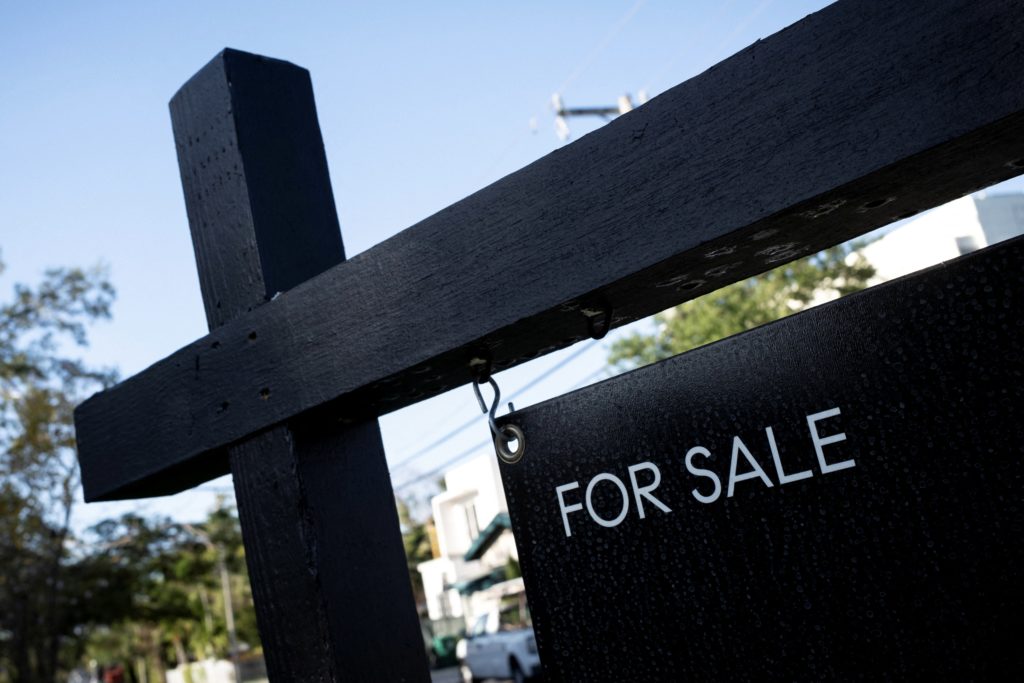
The trend marks a stark turn from earlier this decade, when sellers often received well above their asking price as home shoppers empowered by rock-bottom mortgage rates fueled a buying frenzy that sent home prices soaring.
The job market is rough right now; many would-be entry-level workers are still on the hunt.
A new Twitch show hopes to help answer labor market questions and offer job seekers advice.
So far, they've advised callers on everything from salaries to highlighting unique experience.
When Hans Romine finished his architecture degree in 2025, the24-year-old began looking for work. After about 50 job applications yielded a single interview appointment, he started feeling despondent.
That's when a friend told him about a new show called 877UNMPLYD.
The show is on Twitch, a streaming platform favored by gamers and fans, but has an unlikely host: Jeremy Zimmer, the former CEO of United Talent Agency, along with digital-savvy producer Rachel Braun. The show offers career advice, discusses labor market news, and fields live call-ins from people looking for work.
When Romine called in, he mentioned he'd spent a few months as a recreation supervisor, building morale at an isolated research station in Antarctica. Zimmer and Braun found that the most interesting part of his whole story, and told him to play it up in applications and interviews.
Romine took their advice, and when he went in for that interview, he highlighted his experiences out on the tundra. After he landed the job, he called back in to let the hosts know.
That's the kind of win Zimmer and Braun hope to replicate. Over their first season, the duo hosted 12 episodes, with one episode filmed live on the streets of New York garnering over 54,000 views.
The show is a small experiment in career guidance at a moment when the entry-level job market is getting harder to navigate — especially in New York City. A new report from Partnership for New York City, a nonprofit business advocacy group, found that the number of entry-level jobs has shrunk disproportionately among professions highly exposed to AI; entry-level postings in design, media, and writing fell by 40.6%.
Nationally, employment in white-collar industries has fallen, even as output has gone up — indicating that AI might be effectively replacing entry-level white-collar work.
That dearth of entry-level opportunities is part of what spawned the show, a partnership between TikTok savant Adam Faze and the economic mobility nonprofit Schultz Family Foundation. Judith Dubin, the head of content at the foundation, said that they'd drilled down on investments in career navigation after recognizing how difficult it is to be graduating from high school or college into the current labor market.
"The current job marketplace is so disrupted with the advent of AI," Dubin said. "It's just an additional barrier for young people."
In August, Zimmer and Braun set up a desk on a plaza at Baruch College, with a sign that said "Ask a CEO," and fielded questions from students. One student asked for advice on how to negotiate salary expectations, especially in the interview process. Braun said that not all advice-seekers are new grads: One Gen X marketer called in after being laid off, feeling pushed out of the tech industry.
Going into the show, Zimmer focused on what it must feel like when getting a job is no longer as simple as putting your head down, working hard, and expecting things to work out.
"That age-old mantra doesn't feel as relevant today," Zimmer said. He's been struck by the contrast between callers who are hyper-focused on what they want, eschewing any concern about why that can't happen, and those who are baffled that they've applied for hundreds of jobs and haven't gotten any interviews. He's found both the naivety and the determination of the callers exciting.
Braun, the show's other host and a producer, said that AI emerged as a major theme throughout their first season — both the opportunities it presented and the way that it was shaking up the entry-level job hunt.
Romine, who landed a job, hopes that employers can once again understand the value of having fresh talent on their teams. But as the labor market continues its entry-level contraction, getting a leg up — even if it's through advice on a Twitch show — is ever more important.
"In the meantime, students and graduates need to really figure out how to work the current system and make themselves stand out in such an intense market," Romine said.
Poland is the largest exporter to the Ukrainian market among European Union member states. Its trade surplus in goods with Ukraine has reached a record level of €9.7 billion. This is reported by the Polish online portal RMF24, citing the latest edition of the *Ukraine Affairs Monitor*—published by the Polish state development bank, Bank Gospodarstwa […]
Russia's state-backed payment firm A7 took in at least 283 tons of cash rubles, worth more than $14 billion, between November 2024 and July 2025, and turned much of it into payments to China that hide where the money came from, the International Consortium of Investigative Journalists (ICIJ) and Russian investigative outlet Proekt reported on 21 October, citing leaked internal records.
Cut off from Western banks over its war against Ukraine, Russia now moves money the way drug gangs launder theirs: cash goes in, and clean-looking wire transfers come out abroad. The overlap is literal.
Last year, UK investigators found that a network laundering British drug gangs' cash had bought a Kyrgyz bank that was handling payments for Promsvyazbank, Russia's state defense bank. That same bank co-owns A7, which "is also likely to facilitate cash-based money laundering," anti-money-laundering expert George Voloshin told ICIJ. On 1 October, the US Treasury named A7 a "significant transnational criminal organization." Most of the market cash pays Chinese suppliers, and China supplies about 90% of the high-priority Western-restricted items Russia imports for its weapons. Drone makers working for the Russian army are among A7's clients, Proekt found in April.
From market stalls to a defense bank vault
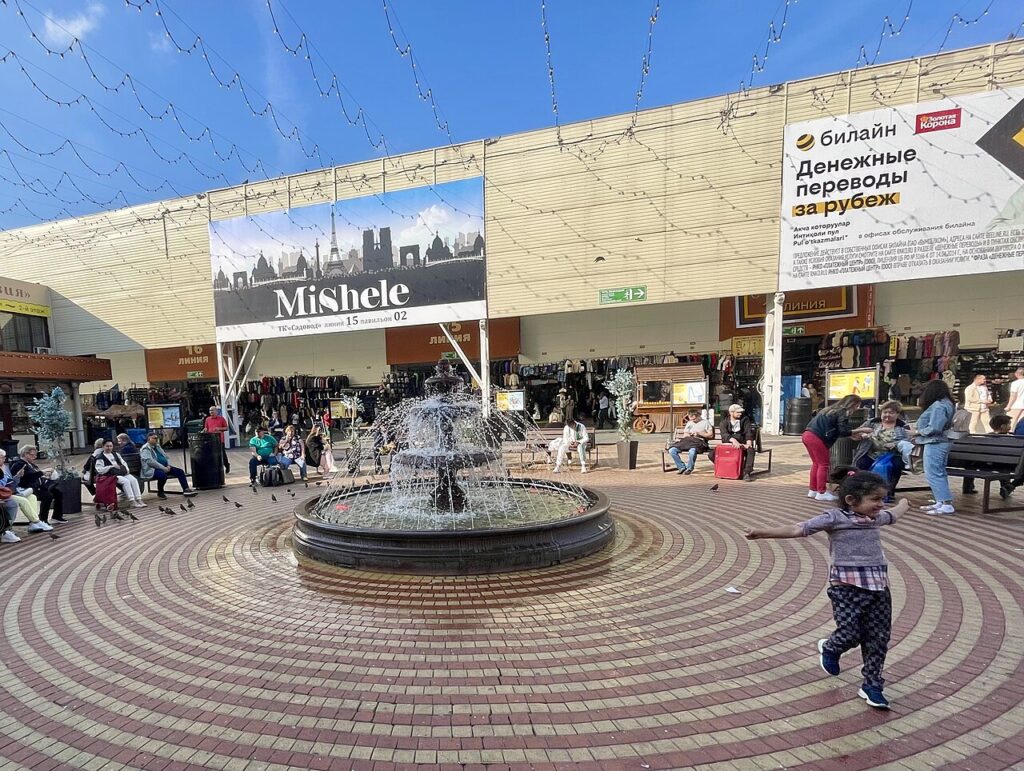
Much of the cash came from Moscow's giant Sadovod market, where broker teams known as "departments" collect bags of rubles from traders, the records show. Vans take the numbered bags to an A7 office, where about 50 cashiers count the money before it is trucked to Promsvyazbank. The bank vaults it and credits A7. At its peak, A7 handled at least 58 tons of cash a month.
Russia's central bank has flagged the problem itself. Money of unknown origin comes "primarily" from Moscow's wholesale and retail markets and from illegal crypto exchanges, a senior Central Bank official said in September, as quoted by ICIJ.
Sadovod market in Moscow, where broker teams later collected cash for the A7 payment firm, Russia, 19 September 2023. Photo: Nikita Andreev/Wikimedia Commons
Clean money for Chinese factories
A7 then orders shell companies outside Russia to pay its clients' suppliers, mostly Chinese exporters. The money moves through Kyrgyzstan, largely via the state-owned Trading Company of the Kyrgyz Republic, and the wire transfers carry no trace of cash or of Russia. The records list accounts at ICBC, Bank of China, Agricultural Bank of China, and China Construction Bank. One $287,000 transfer went through Standard Chartered's Hong Kong branch with "Sadovod" recorded as the client.
Chinese banks began refusing Russia-linked payments in December 2023 under the threat of US secondary sanctions. Stripping the funds of their origin makes them easier for Chinese banks to accept, illicit-finance expert Zachary Tvarozna told ICIJ. "The only company that sees everything is A7 itself," Voloshin said.
A7, Promsvyazbank, the Chinese banks, and Kyrgyzstan's economy ministry did not answer ICIJ's questions. A7 has publicly rejected the US accusations, saying it runs "a modern, multi-tiered compliance system."
Explore further
US Treasury cracks down on Russia-China-Kyrgyzstan payment network, expands sanctions
Sanctioned, but still moving
A7 launched in late 2024, co-owned by Promsvyazbank and led by Moldovan oligarch Ilan Shor, a "sanctioned and convicted criminal fraudster," according to the US Treasury. Ukraine sanctioned its network in February, and the UK followed in May. A7 claimed to have moved more than 7.5 trillion rubles, about 13% of Russia's 2025 foreign trade transactions, and its network also helped Iran sell oil and buy weapons, the Treasury said.
Sanctions did hit A7's crypto side. Daily volume of its ruble token A7A5 fell 96% from its peak by June 2026, blockchain analytics firm Elliptic found. The cash channel is harder to touch: Western banks can see where A7's money lands, but not where it starts.
The European Commission is preparing a new trade-defence instrument that would allow the European Union to restrict access to its single market more rapidly when large volumes of low-priced imports threaten domestic manufacturers.
Commission President Ursula von der Leyen outlined the initiative during a speech to the European Parliament in Strasbourg on Wednesday, 21 October, following discussions among EU leaders over growing global trade imbalances.
The proposal would form part of a wider package addressing economic dependence on foreign suppliers and attempts by third countries to exert commercial pressure on individual EU member states. Although the Commission has not yet published detailed legislation, the announcement signals Brussels’ intention to expand its capacity to intervene in international trade disputes.
European industries seek protection
European manufacturers have faced increasing competition from imported products in sectors including chemicals, machinery, vehicles, steel and industrial components.
Much of the concern centres on China, where extensive manufacturing capacity and government support have enabled companies to expand their presence in international markets.
European producers argue that differences in subsidies, production costs and market access place them at a competitive disadvantage.
According to the European Commission, the EU’s goods trade deficit with China exceeded €1 billion per day in 2025.
Von der Leyen has described the imbalance as unsustainable and argued that European trade policy must respond more effectively to market distortions.
During her 21st October address to Parliament, she confirmed that the Commission was working on additional safeguards intended to address sudden increases in imports affecting European businesses.
The proposed measures follow a Franco-German initiative calling for stronger instruments to counter systemic economic imbalances.
France and Germany have urged Brussels to act more quickly where existing trade investigations and enforcement procedures prove insufficient.
China trade negotiations produce limited progress
The announcement follows recent negotiations between Brussels and Beijing aimed at reducing tensions over industrial competition.
Earlier this month, the two sides reached an arrangement restricting Chinese hybrid vehicle exports to the European market.
As EU Today reported on 13rd October, the agreement established an annual ceiling of 350,000 vehicles, potentially reducing Chinese manufacturers’ expected market access.
However, European officials acknowledge that restrictions covering a single automotive category cannot resolve the wider trade imbalance.
Other industries remain concerned about Chinese production capacity, including chemicals, machinery and manufactured components.
Beijing has warned against further unilateral European restrictions, arguing that protectionist measures could damage commercial relations.
The Chinese authorities have also demonstrated a willingness to pursue trade investigations involving European products.
As previous EU Today coverage established, China opened an anti-dumping investigation into an EU chemical product in early October, adding to existing commercial disputes.
Further European restrictions could therefore prompt additional Chinese countermeasures affecting exporters from member states.
New instrument would strengthen EU response
The proposed market-access mechanism is intended to give Brussels greater scope to act when existing safeguards cannot address economic threats quickly enough.
However, its legal structure, enforcement thresholds and relationship with existing anti-dumping and anti-subsidy legislation have not yet been specified.
The EU already possesses several trade-defence instruments, including duties against unfairly priced or subsidised products and safeguards designed to protect industries from damaging import surges.
Those mechanisms generally require formal investigations and evidence demonstrating the conditions for intervention.
The new proposal could introduce a faster response, but questions remain over how any restrictions would comply with international trade obligations and the EU’s commitments under World Trade Organisation rules.
Member states would also have to consider the consequences for European businesses that depend on imported materials, components and finished goods.
Reducing dependence on foreign suppliers
The Commission’s strategy extends beyond restrictions on imports. Von der Leyen confirmed that a separate initiative, known as DiversifyEU, would be presented in December.
The programme is intended to help European companies reduce excessive dependence on individual suppliers and countries, particularly where critical raw materials and strategic technologies are involved.
The Commission also plans a solidarity mechanism designed to assist member states and industries facing external economic coercion or retaliation. Such arrangements could become relevant when a foreign government targets exports from a particular member state in response to an EU policy decision.
The initiative follows growing concern that Europe’s access to strategically important industrial supplies can be disrupted through export controls or political disputes.
Difficult negotiations ahead
The Commission will still have to translate the proposed measures into legislation and secure sufficient political support among member states and the European Parliament.
National governments have different commercial relationships with China and varying levels of dependence on imported industrial goods. Countries with substantial export markets in China may be particularly concerned about retaliation, while manufacturers facing foreign competition are likely to press for faster intervention.
The Commission must also determine whether new trade powers should be exercised centrally in Brussels or require additional approval from national governments. For European industry, the immediate question is whether the new mechanism can provide effective protection without increasing production costs through restrictions on essential imports.
The Commission’s forthcoming legislative proposals will establish how far the EU intends to move towards a more interventionist trade policy.
Defense Secretary Pete Hegseth barred all Pentagon staff from using undisclosed information to place wagers on forthcoming U.S. military action using betting platforms and prediction markets like Kalshi and Polymarket. “Make no mistake why this matters. Our enemies watch movements in these markets,” Hegseth said in a memo, first obtained by CBS News. “When an American…
European Union negotiators have reached a provisional agreement to revise the rules governing the bloc’s carbon market, increasing the number of emissions allowances that can remain in reserve before being permanently cancelled.
The agreement, reached by the Council and European Parliament on 20th October and announced the following day, raises the invalidation threshold of the EU Emissions Trading System’s market stability reserve from 400 million to 700 million allowances.
The compromise reached by EU negotiators follows months of pressure from energy-intensive industries concerned about carbon prices, electricity costs and competition from manufacturers operating under less restrictive environmental regimes.
The measure requires formal approval before entering into force and forms part of a wider review of the EU’s principal carbon-pricing mechanism.
A larger reserve for future market disruptions
Established in 2019, the market stability reserve was designed to address the accumulation of surplus emissions allowances that had weakened the effectiveness of Europe’s carbon market.
Under the Emissions Trading System, companies in covered sectors must surrender allowances corresponding to their greenhouse gas emissions. The total quantity available is progressively reduced, creating a financial incentive to cut emissions.
The reserve adjusts the supply of allowances entering the market, withdrawing them when there is a substantial surplus and releasing them under specified conditions when supply becomes scarce.
Existing rules also provide for the permanent cancellation of allowances held above a threshold of 400 million.
Under the new agreement, that threshold would increase to 700 million, allowing a larger stock to remain available for potential future release.
The change does not automatically introduce 300 million additional allowances into circulation. Releases would continue to depend on the reserve’s operating rules and market conditions.
According to the Council, more than three billion allowances have been invalidated since the mechanism began operating in 2023.
The Commission initially proposed ending automatic invalidation indefinitely, while the Council’s September negotiating position envisaged a temporary suspension followed by a higher threshold.
The compromise retains invalidation but increases the amount protected from cancellation.
Industry competitiveness enters climate negotiations
The agreement follows growing concern about the cumulative cost of European climate regulation, particularly for steelmaking, chemicals, cement and other energy-intensive sectors. Manufacturers have warned that carbon costs, combined with relatively expensive electricity and industrial gas, complicate investment decisions and weaken their ability to compete internationally.
The latest reserve agreement does not directly change the allocation of free allowances, the emissions cap or the obligations imposed on individual industrial installations. Its principal effect would be to preserve a larger buffer that could become available if future market conditions trigger the release mechanism.
For manufacturers planning investments extending into the 2030s, the availability of allowances and the future trajectory of carbon prices influence production costs and the commercial case for decarbonisation technologies.
Carbon market figures reveal changing conditions
The European Commission reported in May that the total number of allowances in circulation during 2025 stood at approximately 1.023 billion.
These withdrawals reflect the existing mechanism for reducing market surpluses. The proposed higher invalidation threshold concerns how many allowances can subsequently remain in reserve rather than being cancelled.
The overall emissions cap will continue to decline under the legislation already governing the ETS.
Consequently, preserving a larger reserve does not remove the long-term constraint on emissions or guarantee lower carbon prices for European industry.
The agreement also concerns the established ETS covering power generation, industry and certain other sectors, rather than the separate ETS2 regime for emissions associated with road transport and buildings.
The Council and Parliament have agreed that the question of gradually reducing the invalidation threshold should be considered during the broader ETS review.
That exercise will address the carbon market’s operation over a longer period, when the declining supply of allowances could create tighter conditions.
The present agreement therefore provides an adjustment to the reserve mechanism without reopening the entire emissions trading framework. Following legal and technical finalisation, the provisional deal must be endorsed by both institutions and formally adopted.
The new 700 million threshold would apply after the legislation takes effect, while the larger review of the ETS continues through the EU legislative process.
The European Union has moved to reduce the administrative burden imposed on smaller businesses by its packaging legislation, agreeing a negotiating position that would relax requirements for companies selling limited quantities of packaged goods in other member states.
The Council adopted its position on 21st October, proposing an exemption from the obligation to appoint an authorised representative in another EU country when the amount of packaging placed on that country’s market remains below one tonne per calendar year.
The measure addresses complaints from small and medium-sized enterprises that the Packaging and Packaging Waste Regulation, which became applicable on 12th August 2026, creates unnecessary expenses for companies engaged in relatively modest volumes of cross-border commerce.
The proposal forms part of the EU’s eighth legislative simplification package and will now be negotiated with the European Parliament.
Cross-border compliance costs under scrutiny
Under the Packaging and Packaging Waste Regulation, businesses placing packaging or packaged products on the European market are subject to obligations concerning waste management and extended producer responsibility.
The extended producer responsibility system requires producers to contribute to the management of waste generated by products and packaging placed on the market.
For businesses operating across borders, the framework also includes requirements concerning authorised representatives in member states where producers are not established.
These representatives perform specified compliance functions and provide a point of contact for national authorities.
The system can create substantial administrative obligations for businesses trading in several countries, particularly when the quantity of packaging supplied to individual markets is limited.
A small Belgian retailer, for example, may sell products to customers in Germany, France and the Netherlands without maintaining physical operations in those countries.
The requirement to arrange representation separately across different markets can add compliance costs regardless of whether the volume of trade justifies them.
Under the Council’s proposal, eligible EU-based producers placing less than one tonne of packaging annually on another member state’s market could be exempted from appointing a representative there.
The threshold would be assessed by reference to the quantity placed on the market of the member state concerned.
However, the proposed exemption would not abolish the wider principle of extended producer responsibility or automatically release businesses from their other environmental obligations.
Packaging reform follows early implementation problems
The regulatory changes come only two months after the EU’s revised packaging framework began applying across the single market.
The legislation, Regulation (EU) 2025/40, is intended to reduce packaging waste, improve recyclability and establish more consistent requirements for products and packaging materials.
It covers an extensive range of commercial activities, including manufacturing, retail, food distribution, transport packaging and online sales.
The Council’s latest agreement represents a further legislative step, replacing general calls for administrative relief with a specific negotiating position.
The Commission also issued detailed implementation guidance in June 2026 after receiving numerous questions from member states and businesses about how the regulation should be interpreted.
Safeguards and temporary exemption
The proposed exemption would not apply without conditions.
The Council’s negotiating mandate includes a safeguard allowing the relevant authorities to respond when a producer fails to comply with extended producer responsibility obligations.
It also provides for the European Commission to review the duration of the temporary suspension by 31st December 2030, ahead of its scheduled expiry in 2032.
The timetable reflects the possibility that broader reform of producer responsibility arrangements could replace the temporary measure.
The Commission is preparing a Circular Economy Act intended to address additional problems affecting Europe’s recycling and secondary raw materials markets.
That initiative could provide a more comprehensive framework for the administration of producer responsibility systems across member states.
For now, the Council has opted for a narrower intervention designed to reduce the immediate burden on smaller companies without reopening the entire packaging regulation.
Single market objectives and environmental obligations
The proposal also reflects a broader problem with European regulatory integration.
Although companies can sell goods throughout the single market, compliance requirements often remain administered through national systems, requiring businesses to deal with separate authorities and procedures.
For multinational corporations, such costs can be distributed across substantial commercial operations. For smaller exporters and online retailers, similar administrative requirements can consume a much greater proportion of turnover.
The Council argues that removing unnecessary representation requirements would support cross-border trade while preserving the objectives of European environmental legislation.
The Irish presidency will now seek agreement with the European Parliament on the proposed amendment.
Until that legislation is adopted and becomes applicable, businesses must continue to comply with the existing rules, including relevant national producer responsibility requirements.
The European Union has signed a comprehensive association agreement with Andorra and San Marino, establishing a framework that will allow the two small European states to participate more fully in the EU single market while remaining outside the bloc.
The agreement was signed in Brussels on Monday, 19 October, by representatives of the European Commission and the two governments, marking the conclusion of negotiations that began more than a decade ago.
The arrangement covers trade, investment and regulatory cooperation, alongside provisions concerning financial services, education, environmental protection, consumer rights and other areas normally governed by EU legislation.
However, the agreement has not yet entered into force. It requires further approval procedures, including consent from the European Parliament and ratification by the participating countries. Andorra intends to submit the agreement to a binding national referendum.
Access to the European single market
According to the European Commission’s announcement, the agreement will provide Andorra and San Marino with access to the single market under shared regulatory requirements and conditions intended to ensure fair competition.
The principal objective is to remove barriers that continue to restrict economic activity between the two countries and the EU’s 27 member states.
For businesses, the arrangements should provide greater predictability concerning the rules governing cross-border trade, investment and commercial operations.
Participation will nevertheless require both countries to implement relevant EU legislation and maintain systems capable of enforcing the applicable standards.
In practice, access to the European market will carry obligations comparable to those imposed on companies established inside the Union, particularly concerning product standards, competition, environmental rules and consumer protection.
The agreement also establishes institutional arrangements for managing cooperation and dealing with future regulatory developments.
For two countries whose economies are closely connected to neighbouring EU members, greater regulatory consistency could reduce administrative barriers and facilitate commercial expansion.
Financial services to be integrated gradually
Financial services represent one of the more sensitive elements of the agreement.
Andorra has a banking and financial sector with substantial links to Spain and France, while San Marino’s economy is closely integrated with Italy.
Both countries already use the euro under separate monetary arrangements with the European Union, although neither is a member of the eurozone or the EU.
The new association framework would provide a route towards broader participation in the EU financial services market, but integration will be gradual and subject to specific conditions.
The Commission has made clear that the process will involve assessments of the regulatory and supervisory arrangements operating in both countries.
This means the signature does not provide their financial institutions with immediate, unrestricted access to all services available within the EU.
Brussels has also signed updated monetary agreements designed to remove overlapping requirements between existing arrangements and the new association framework.
Financial supervision, the prevention of money laundering and compliance with European regulatory standards will be central to the implementation process.
Integration without EU membership
The agreement illustrates how the Union can extend significant elements of its economic framework to neighbouring countries without admitting them as members.
Andorra and San Marino will not acquire voting rights in EU institutions or the political representation enjoyed by member states.
Their participation will instead depend on accepting relevant common rules and complying with the institutional provisions established under the association agreement.
The EU already operates differentiated arrangements with several non-member European countries, including Norway, Iceland and Liechtenstein through the European Economic Area.
Earlier European Council conclusions on relations with non-EU Western European countries identified Andorra and San Marino among the states with which Brussels sought closer economic and institutional cooperation.
The newly signed agreement does not replicate every aspect of existing arrangements, but it follows the broader principle that access to the single market can be negotiated separately from EU membership.
That principle is also relevant to discussions about how candidate countries might receive selected economic benefits before completing the full accession process.
Brussels has been considering wider market participation for countries such as Ukraine and Moldova ahead of possible membership.
Referendum and ratification ahead
The immediate political challenge now moves from negotiation to approval.
Following the signature, the Council will seek the European Parliament’s consent before the agreement can be formally concluded. Its application will also depend on the completion of the necessary national procedures.
In Andorra, Prime Minister Xavier Espot’s government has committed to a binding referendum, although no voting date has yet been fixed.
The referendum will determine whether Andorran voters accept the economic opportunities and regulatory commitments established by the agreement.
San Marino must also complete the procedures required under its constitutional system.
Until those requirements have been satisfied, the agreement remains a signed framework rather than an operational extension of the EU single market.
For both countries, the eventual implementation will determine how far their economies can integrate with the Union while retaining their existing status as independent non-member states.
2026, it is learning how quickly an index provider can show Southeast Asia’s biggest economy the exit, wreaking havoc on its stock market. The provider is MSCI, which may be about to follow through on its threat to downgrade Indonesian stocks to “frontier” status, or to something worse: a standalone market category. President Prabowo Subianto’s […]
I am writing this from Singapore, where the haze is back. For the uninitiated, smoke from fires several hundred kilometres away drifts over the island, the skyline turns the color of weak tea and the whole city checks its air-quality app with a devotion normally reserved for share prices. Nothing here is on fire. It […]
The International Energy Agency (IEA) has agreed to accelerate the release of approximately 100 million barrels of emergency oil stocks, including more than 20 million barrels of diesel, as the...
 Login