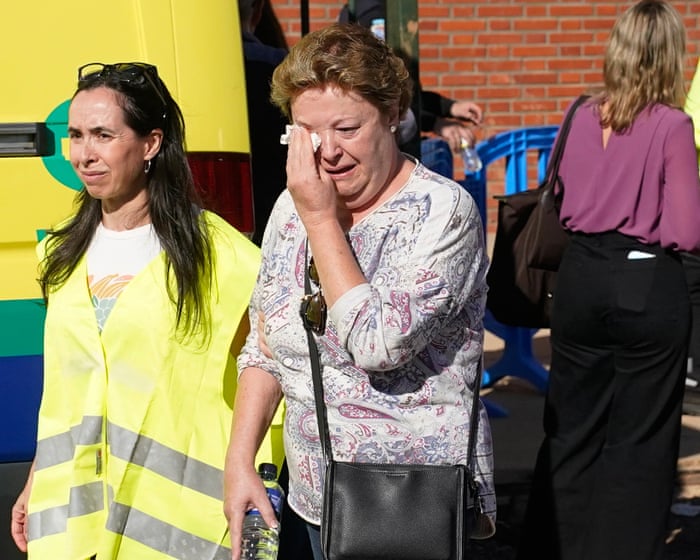
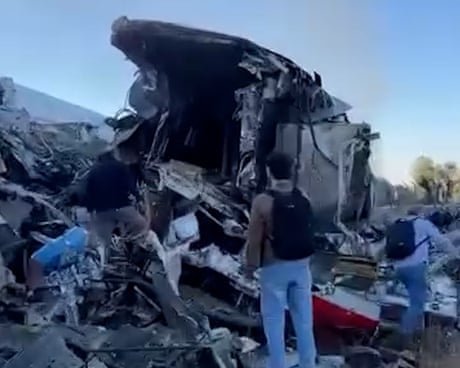
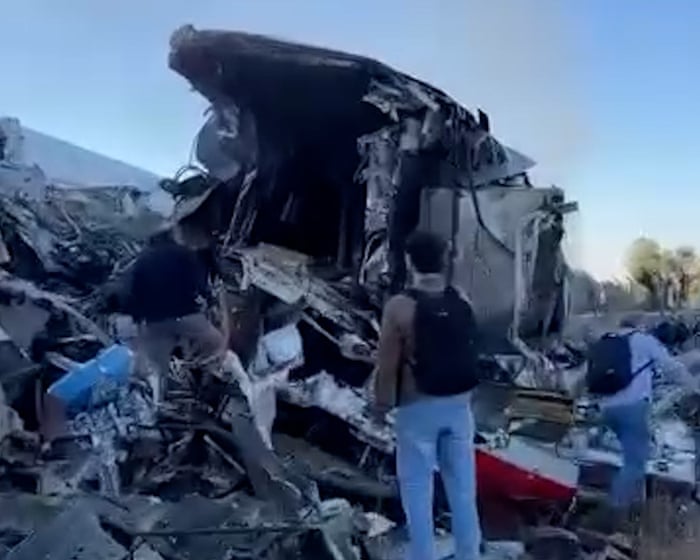
There is shock, anger and mourning in Spain after the second fatal train crash this year. At least 68 people have died in what is now the deadliest collision there in more than a decade. William Brangham reports.
The Spain’s government has declared three days of national mourning, from October 29 to 31, for the 64 people killed in the collision of two passenger trains on October 28 in the province of Toledo.
The Spanish government declared three days of national mourning, to be observed on October 29, 30 and 31, 2026. The order requires flags to fly at half-staff on public buildings and military installations across the country during the three days.
Pedro Sánchez announced the measure in memory of those who died in the rail collision in the province of Toledo, in the autonomous community of Castilla-La Mancha.
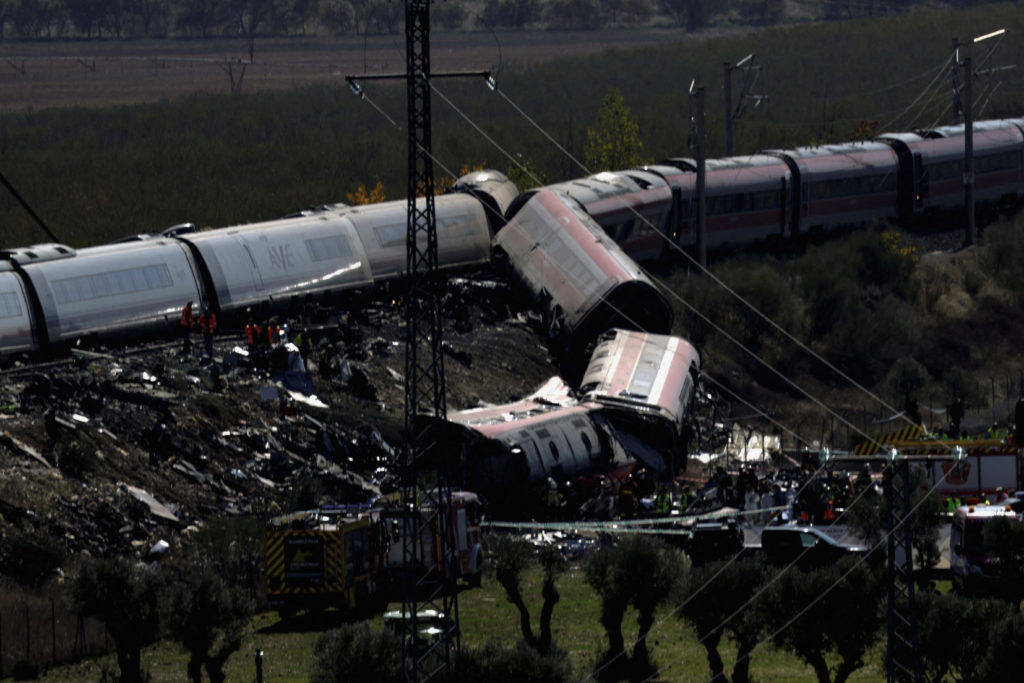
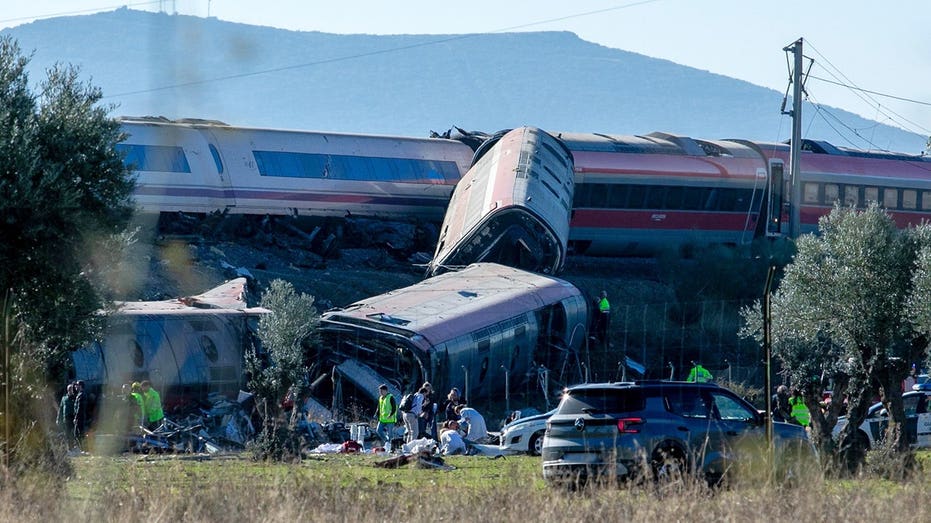
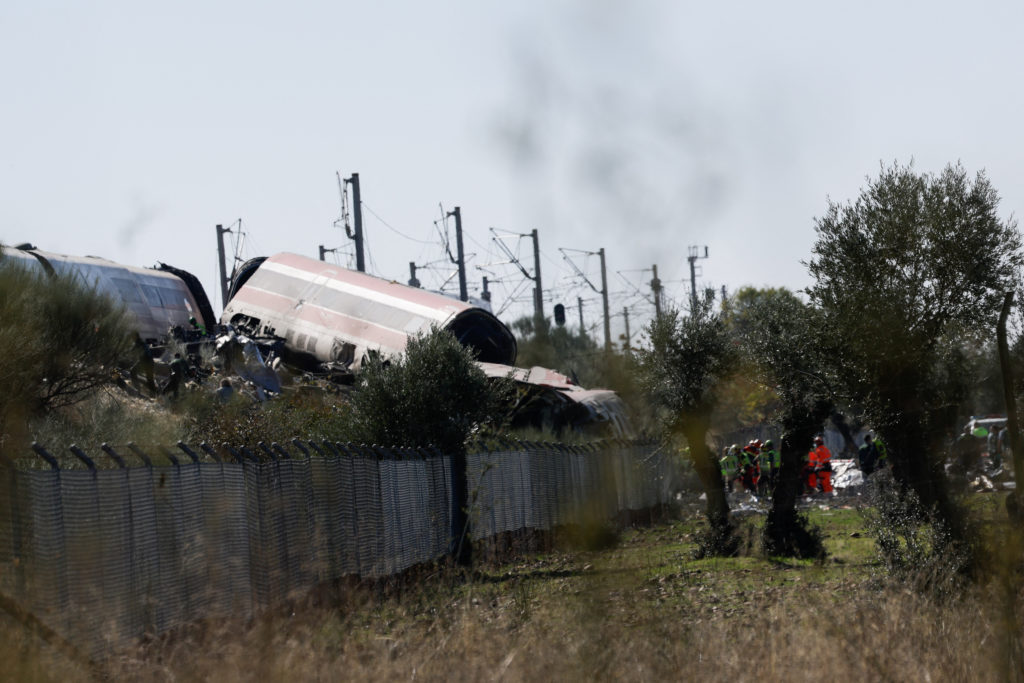
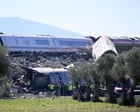
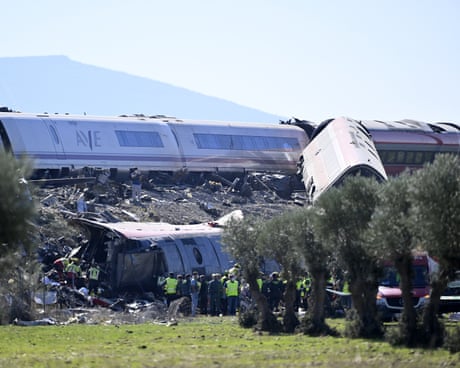
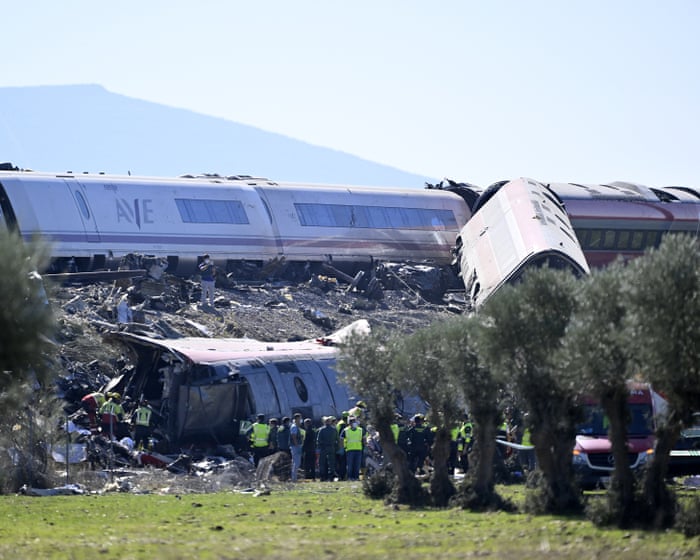
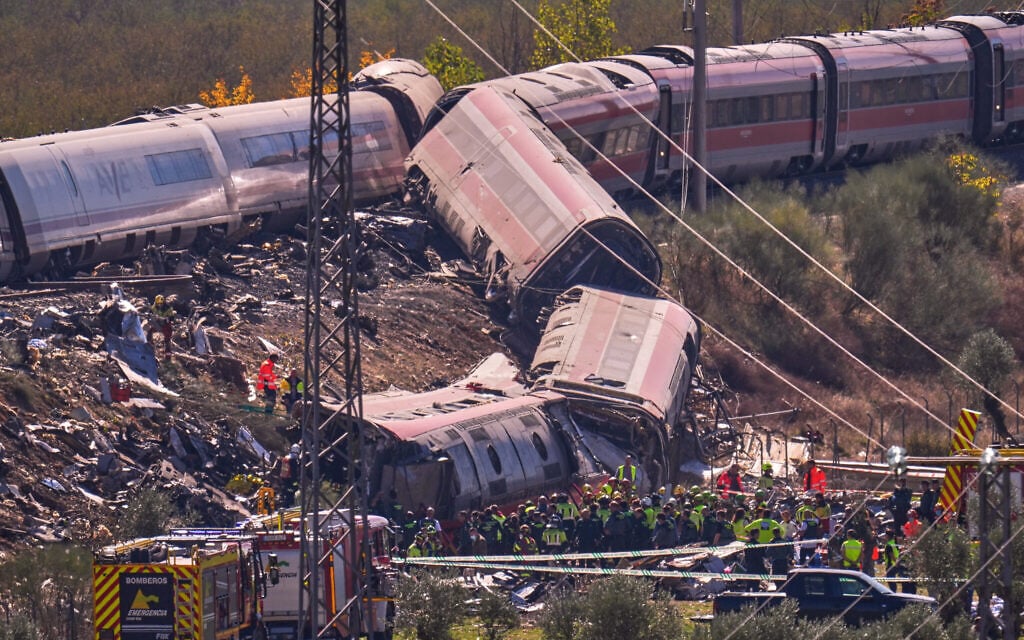
The impact occurred at 8:54 A.M. local time near the municipality of Urda. A high-speed AVE train, operated by state-owned Renfe, hit the rear of a train operated by the private company Iryo, which was stopped on the tracks. The collision derailed the last two cars of the Iryo train and sent several units down a ravine.
Following a deadly train crash near Toledo, Spanish PM Pedro Sánchez declares 3 days of national mourning and demands strict safety measures: "It is unacceptable for Spain to suffer two high-speed rail accidents in the same year." pic.twitter.com/IeiKNHndtf
The crash involved two operators that share Spain’s high-speed network. Renfe, which is state-owned, runs the AVE, while Iryo, which is privately owned, operates the train that was struck from behind. Both companies carry passengers on high-speed corridors.
65 people died in the crash, according to the President of Castilla-La Mancha, Emiliano García-Page. There were 544 passengers aboard the two trains at the time of the impact: 397 on the AVE and 147 on the Iryo, including a baby.
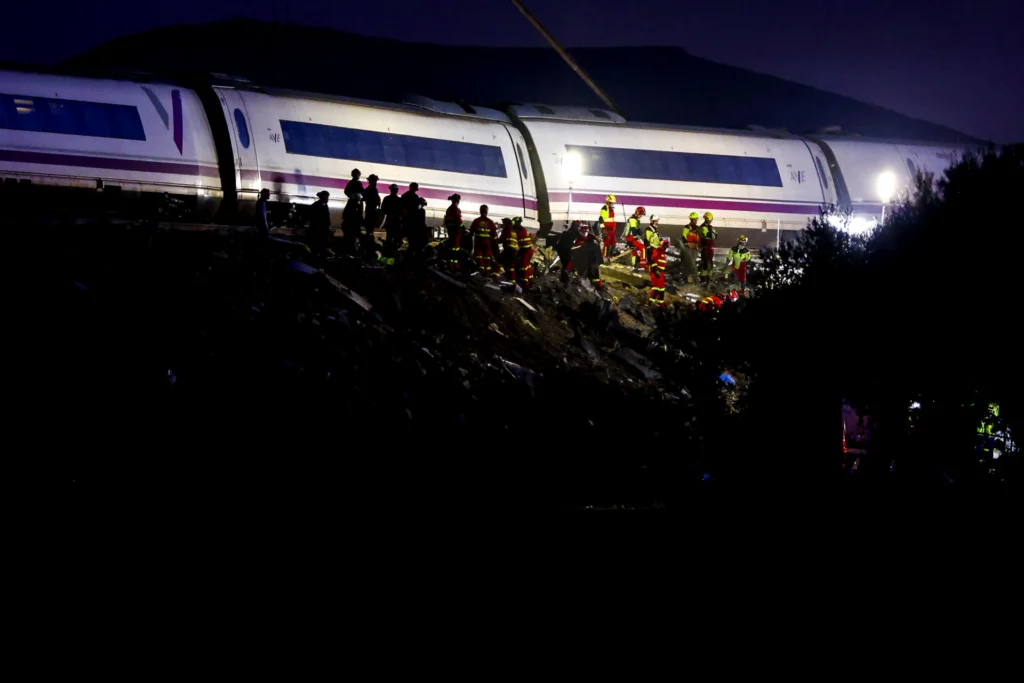
The rescue operation involved 100 members of the Military Emergencies Unit. The Civil Guard’s Major Disasters Team also took part. The search for bodies continues, meanwhile the injured remain in hospitals.
Official activity was suspended in the central government and in regional administrations while emergency teams continue their work at the crash site.
Sánchez traveled to Toledo to assess the response at the scene. King Felipe VI set aside his official engagements after speaking with the prime minister about what had happened. Both cleared their public schedules.
For her part, Health Minister Mónica García suspended her scheduled activities and merged state medical resources with the regional administrations of Madrid and Castilla-La Mancha to assist victims of the disaster in Urda. The order pulled national capacity and local response into a single coordinated operation.
Signaling and safety failures on the high-speed network are the focus of the technical investigation. Transport Minister Óscar Puente went to Atocha station in Madrid to review those systems. He also examined the factors surrounding the collision between the two trains.
‼️Accidente tren
🚨 La Guardia Civil ha desplegado en la zona personal de Seguridad Ciudadana de la provincia de Toledo, OMAC (Oficinas Móviles de Atención a la Ciudadanía) así como agentes del SEPRONA y de la Jefatura de Tráfico.
Text reads: “The Civil Guard has deployed personnel from the Citizen Security area of the province of Toledo, OMAC (Mobile Offices for Citizenship) as well as agents from SEPRONA and the Traffic Headquarters.”
The January Precedent
The Urda disaster follows a wreck that Spanish investigators still struggle to explain. In January 2026, on the Madrid-Andalucía route near Adamuz in Córdoba province, an Iryo train departing the capital derailed and struck another unit serving the Huelva-Madrid corridor.
That collision produced no immediate answers and the track had been renovated shortly before. The first train cleared its technical inspection only four days earlier, moving between 200 and 210 kilometers per hour. Minister Óscar Puente described the crash as a highly unusual event.
The consequences spread fast. Rail service toward the south of the country stopped temporarily while experts examined the wreckage. Atocha station, Madrid’s main rail terminal, absorbed massive cancellations as passengers rebooked or abandoned their journeys.
Months later, the cause remains open. Renovated track, a freshly inspected train, and routine high speed, none of it explained the collision. That unresolved record shaped the public mood when the news from Urda arrived.
Two railway disasters within a single year have now tested Spain’s emergency systems twice. January demanded a forensic response, an effort to understand an accident that defied easy explanation. Urda has demanded a medical one.
Spanish authorities have not yet released a complete account of the Urda disaster. Investigators will face the same task that followed Adamuz, determining what failed and why. The January wreck left a toll of 39 dead and more than 100 wounded, and the questions it raised remain unresolved as the country confronts a second emergency on the same network.
The national mourning decreed by the government will last until October 31. Technical teams will determine the causes of the crash and the condition of the signaling systems on that stretch of the network, as well the recovery of the hospitalized injured completes the authorities’ immediate agenda.
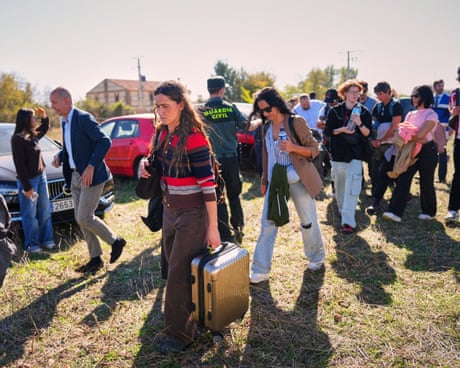
Josimar Medina woke a little before 9am on Wednesday to find himself airborne and hurtling through his carriage on the fast train from Madrid to Seville.
“I remember flying through the air and looking for my girlfriend, who was also shooting through the air,” said Medina, a 37-year-old tourist from the northern Peruvian city of Chiclayo.
Fernando Seco, 62, said he and others moved at least a dozen wounded passengers from the crash site, using parts of the wreckage as makeshift stretchers.
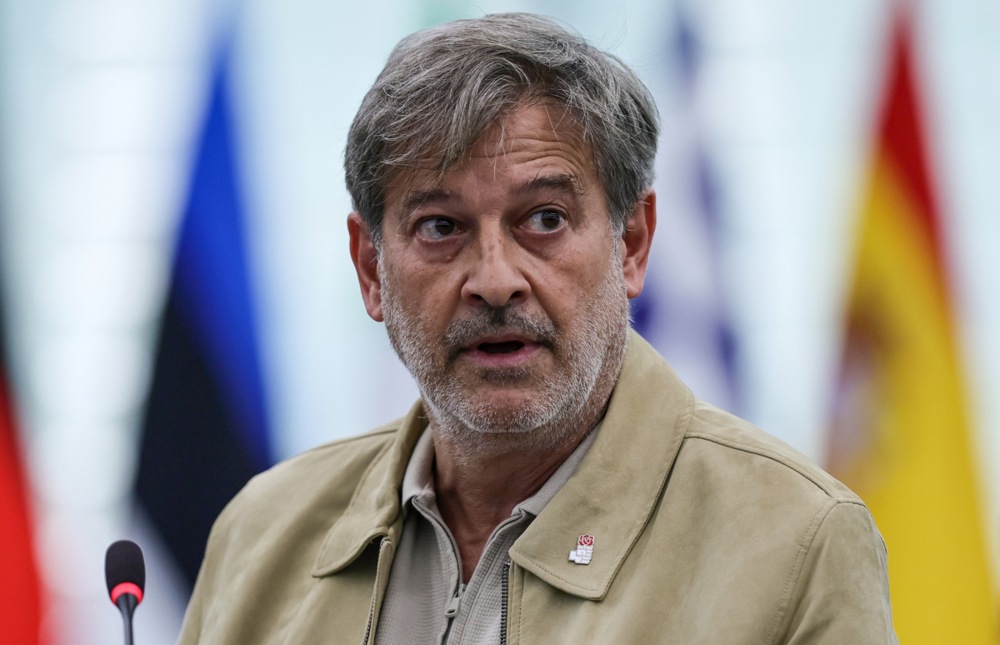
“Everybody’s focusing on the legal basis of Ursula von der Leyen’s associate membership [with Canada] announcement, but frankly I don’t care,” says MEP Javier Moreno Sánchez.
The Spanish Socialists & Democrats lawmaker chairs the European Parliament’s Canada delegation. He hopes leaders can make the EU and Canada “as close as possible” at the Montréal summit beginning on Thursday (29 October). Hosting the talks is Canadian prime minister Mark Carney, who has repeatedly spoken of ‘middle powers’ such as Canada and the EU deepening cooperation.
In September, EU Commission president Ursula von der Leyen’s announcement of an ‘associate membership’ possibility for Canada caught many by surprise. And there has been no consensus among member states on whether such wording should be used in written agreements with the North American ally.
EUobserver sat down with the MEP Moreno Sánchez in his Brussels office ahead of the major EU-Canada talks.
EU member states struggled to agree on inclusion of the term ‘associate member’ before the Montréal summit. Was it a mistake for EU commission president Ursula von der Leyen to announce this special category if she could not deliver it?
MEP Javier Moreno Sánchez: No, to have made this announcement is positive. I prefer for Canada to be an associate member, but I don’t care about the legal basis; it can be de facto associate membership. It’s true that the concept is not in the treaties, but the euro was not and neither was Schengen. When we have the political will, we don’t need the treaties.
I would like Canada’s relationship to be as strong and as close as possible with the European Union. It means that they will be like Switzerland or Iceland. We won’t have Canadian members in the European Parliament, or commissioners from Canada, but they will be in all the programmes. Now they will participate in Erasmus+, they are participating in SAFE [Security Action for Europe]. And There is big cooperation on artificial intelligence. But we want a horizontal and holistic approach to collaboration, not sector by sector.
Now, everybody’s focusing on the legal basis of Ursula von der Leyen’s associate membership announcement, but frankly I don’t care. As I said in the plenary last week, Canada and the EU share traditions, culture, language, values and principles. So in my view, they are already associated.
What is ‘associate membership’?
This post by my prime minister Pedro Sánchez is what associate membership means.
It was very funny because it was 2pm after the State of the Union speech, and I had an interview with people in Ottawa where it was 8am in the morning. I said associate membership is a very positive thing we have to do. And the journalist interviewing me said they’re just seeing this post from PM Sánchez.
What do you think Mark Carney and Ursula von der Leyen should prioritise in the Montréal summit ?
The digital trade agreement. I hope they will agree on that to protect all the consumers and our enterprise. And on critical raw materials, we need an agreement because Canada has everything. In order to not to depend on China, we have to strengthen that relationship. And personally, I’d like to see the EU extend conventions and programs like Erasmus+ to Canada in small steps, little by little.
Should there be free movement between Canada and the EU?
We have to go in this direction. I don’t know exactly at which speed. So little by little, there will be free movement. But if you ask the Council, maybe certain countries will say, “No free movement.”
And how important is it that Canada pays into the European community, particularly when it comes to Ukraine?
I went to Canada only a few months into Putin’s full-scale invasion of Ukraine to meet with people, NGOs, the enterprise and development communities. In every meeting, I was told that Canada wanted to rebuild Ukraine together with Europe once the war was finished. I was a little bit astonished.
One of the reasons is that there are 1.5 million Ukrainian people in Canada. And, Canada is putting money into Erasmus+ by participating in it. And it is willing to put money in all the programs and to work with us.
To what extent is US president Donald Trump responsible for pushing together Canada and the EU?
Thanks to Trump, we have Mark Carney as Canadian prime minister. It was a very good gift from him because Pierre Poilievre was the favourite two months before the elections. And when Trump announced all these shitty things, very proud Canadians decided to vote for Carney. And it was symbolic in Canada. Everybody said, “elbows up.” They are very proud people.
Many Europeans now see the US as a less reliable ally. Do you agree?
This article continues, but the full version is available only to EUobserver.com subscribers. Visit account.euobserver.com/membership
Several Americans are believed to have been injured in a high-speed train collision that killed at least 68 people in Spain on Wednesday when one train collided with another that had stopped on the tracks.
The crash took place in Spain's Castilla-La Mancha, with the regional government confirming the death toll and adding that another 58 people required medical treatment in hospitals. Several Americans are believed to have been hurt in the crash, according to the State Department.
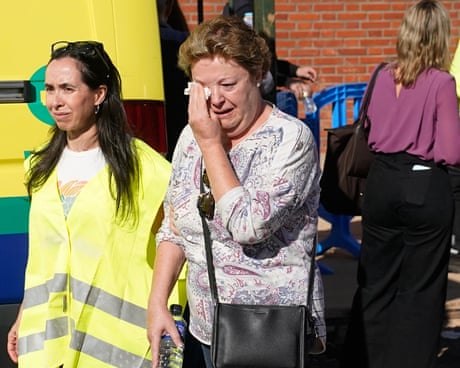
Rescue workers continue to search in the wreckage for survivors and bodies, with witnesses describing a gruesome scene.
Wednesday's incident is the second high-speed rail crash Spain has suffered this year.
Spain’s rail system operator ADIF said the crash occurred Wednesday morning in the province of Toledo. Both trains were carrying hundreds of passengers, and were headed in the same direction on a route from Madrid to Seville.
One train, run by the state-owned RENFE company, ran into the tail of the other train owned by private company IRYO that had stopped, knocking two of its cars off the track. Those companies were the same ones involved in January's crash.
Esther Padilla, a spokesperson for the Castilla-La Mancha regional government, said 397 passengers were on the RENFE train and 147 passengers on the IRYO train.
Spanish Transport Minister Óscar Puente attributed the deadly train collision to what he described as an "inexplicable" decision by the country's central rail control center to allow a train to resume traveling after a safety system malfunctioned.
Puente said the train's engineers were not responsible for the collision.
According to Puente, a computer malfunction caused a safety system covering roughly 39 miles of track to stop working around 8:30 a.m.
The disruption forced trains in the affected area to stop, but the central control center subsequently authorized the RENFE train to resume traveling without speed restrictions, he said.
Just over 20 minutes later, the RENFE train collided with the stopped IRYO train.
Puente said the RENFE train should never have been cleared to resume traveling while a stop signal remained active on the line. At a minimum, he said, the train should have been instructed to proceed at a reduced speed.
Officials are still working to determine the train's speed at the time of the collision, but Puente said it may have been traveling at approximately 124 mph.
David Gómez, a construction worker, was working with his brother and another colleague nearby when they heard the crash and ran to help, he told the newspaper El País.
"People were trying to get out through the windows…. We cut through some fences to access the area and treated people with the first-aid kits we had brought," until emergency services arrived, he said. "As I was trying to pull a young woman out, there was a piece of a leg."
Spanish Health Minister Mónica García said emergency workers were focusing on rescuing survivors and bodies from the two most damaged train cars. She said the injured are being sent to different hospitals in the area.
"It was a high-speed impact, so we are expecting this to be a tragedy," García said.
Spanish Prime Minister Pedro Sánchez visited the crash site and announced that his government would declare three days of national mourning.
"Today all of Spain is grieving," Sánchez said.
The prime minister also called for enhanced safety measures across the country's rail system following the second high-speed rail crash this year.
"It is unacceptable for a country like Spain to suffer two high-speed rail accidents in the same year," he said.
Passenger Ignacio Relaño was traveling on the RENFE train. He told state broadcaster TVE that the train had stopped momentarily on the line before it started again and then crashed into the IRYO.
"We all felt the train abruptly slowing down and then the impact," he said. "The car leaned to one side like it was about to tip over. I hit my nose, everything went flying, luggage, cellphones. Everything shook."
Another passenger recounted to Cadena Ser radio how she felt the train slam on the brakes and was thrown forward in her seat, breaking the small table in front of her. She said she saw body parts and trapped people covered in blood.
IRYO, an Italian-owned company, said in a statement that it has "activated its security protocols and is closely working with authorities."
Spain’s King Felipe VI and Queen Letizia said in a short statement on X that they were following news of the accident.
"We are deeply saddened and concerned by the train accident in Urda (Toledo)," the royal couple said. "We share in the grief of the families and loved ones of those who lost their lives, and we send our heartfelt support to the injured and all those affected."
Two vehicles were set alight in the Spanish city of Ceuta in the early morning hours of Wednesday morning in what has become a recurring pattern of random violence following the mass illegal migrant invasion.
A passenger has recounted the moment two trains carrying more than 550 passengers in total collided in Spain. Volunteers attended the scene of the collision, distributing water and organising cars to take victims from the site.
The two high-speed trains were travelling in the same direction on the line from the Spanish capital, Madrid, to Seville in the south-west of the country, colliding in Toledo province on Wednesday morning
Questions were raised before Toledo crash over rail safety in a country where train travel has surged by 40%
Spain’s high-speed rail network, the most extensive in Europe and the second largest in the world after China, has long been a point of pride in the country. But Wednesday’s deadly crash – the second in nine months – has recast the spotlight on questions about safety.
Officials said at least 68 people were killed on Wednesday morning after a high-speed train slammed into another that had stopped on the tracks, leading to the derailment of several carriages. The two trains were believed to be carrying 544 passengers.
Madrid-Seville train slams into another that stopped ahead of it, knocking 2 cars off elevated track; at least 80 others injured, in country’s second deadly rail crash this year
Bronze is mostly copper with a smaller share of tin, and the copper that prehistoric miners could reach was scattered unevenly across Europe. When researchers ask where the continent’s Bronze Age copper came from, they have usually looked to the Austrian Alps and Wales. Southern Spain, which sits on one of the largest concentrations of […]
Portugal’s government announced that it has offered Spain support through organisations such as CP and Infraestruturas de Portugal, following the train crash in Toledo today that has claimed at least
PJ police in Portugal have arrested a young Moroccan woman, described as Spain’s “most wanted fugitive for fraud”, the subject of 26 arrest warrants and already sentenced to a prison
Two high-speed trains collided in the province of Toledo in Spain on Wednesday morning. At least 30 of the 544 passengers on the two trains died and 80 were injured. The number of casualties is expected to rise

 Login