“We assume that our enemies, like the Chinese or the Iranians, want to undermine our elections,” says investigative journalist Peter Schweizer. “But a lot of the resistance has actually come from some of the states.”
A federal appeals court refused to order California to set aside roughly 20,000 mail ballots tied to voters the Trump administration says are noncitizens.
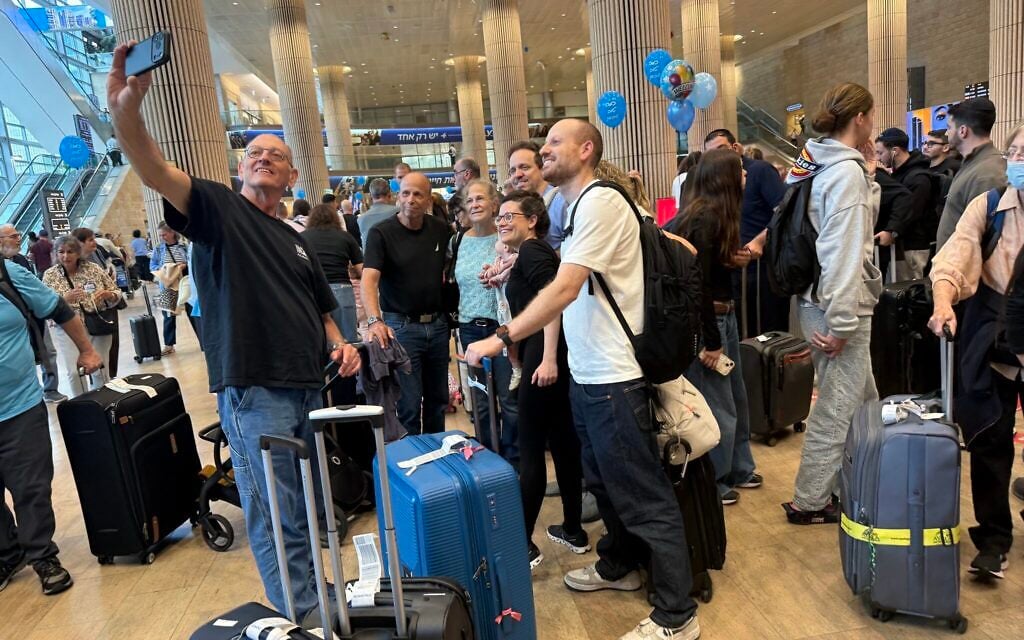
Prime Minister Benjamin Netanyahu accused opponents of attempting to steal Israel’s national election Tuesday following arrests in a suspected voter-bribery investigation, as record turnout prompted his right-wing coalition to launch an emergency mobilization effort in the final hours before polls closed.
Improving polls for Labour are bound to lead to feverish speculation about a snap election. But if Burnham is tempted, what just happened in British Columbia might change his mind, says Mark Littlewood.
Opposition bloc lawmakers and activists out in force, coalition representatives nowhere to be seen, while some 60,000 non-residents exercise their civic duty
The effort among Democratic and nonprofit groups includes training volunteers to stand watch outside polling places and report activities they consider concerning.
California's experiment: Will California's proposed wealth tax, Prop 40, pass next week? And if it gets passed, will it end up actually costing the state money instead of generating revenue?
The basics: The proposal features a one-time 5 percent tax on people with net worths over $1 billion who lived in the state on January 1, 2026 (with the net worth amount calculated as of December 31, 2026). The idea for the snapshot date is presumably to prevent capital flight once the tax passes. The tax's supporters say the tax's revenues will amount to $100 billion and will fund California's health care system, which need to make up for federal Medicaid cuts.
Seven billionaires, representing 30 percent of the total billionaire wealth in the state, left California before January 1, 2026, when news of the possible tax broke. Peter Thiel, Larry Page, and Sergey Brin are among the deserters. The French economist Gabriel Zucman—an intense defender of the wealth tax—seems committed to the idea that this flight won't matter too much. He argues that while removing those seven brings down revenue estimates to $89 billion, adding in less-prominent small-time billionaires raises revenue to $115 billion.
This is silly. As The Washington Post's Megan McArdle points out, there's no reason to believe those less-famous billionaires would stay put. We have a hard time estimating what the total preemptive flight looks like, and how many billionaires have successfully taken up residency elsewhere.
"Either the tax is annual—and in that case it generates revenue annually, and some billionaires leave," claims Zucman. "Or the tax is one-time—in that case it generates revenue in just one year, and there is no incentive to leave. It can't be both at the same time." Zucman doesn't seem to consider that billionaires have already left, as soon as the idea was seriously floated, thus taking early steps to shield their wealth from the state.
Will it pass? "Likely voters are essentially where they were a month ago," reportsPolitico, based on recent polling data, "with 46% in favor of Proposition 40 and 43% opposed—despite a recent push by backers of the measure, including Sen. Bernie Sanders, to rally support." Interestingly, "a strikingly high share of registered voters (84%) said they'd been exposed to advertisements or messages about the tax, but a 45% plurality said the communications had not swayed them, and those whose views had shifted were just as likely to be more opposed as more supportive."
There's another complication: On that very same ballot, voters will decide on Propositions 41 and 42, competing measures that could keep Prop 40 from taking effect. Prop 40 will be nullified if either one gets more votes; but Prop 40 will nullify both of them if it gets more votes. Prop 42 would bar new taxes on personal property such as businesses, investments, retirement accounts, trusts, and art collections—things Prop 40 targets. It also bans retroactive taxes, thus making Prop 40 impossible to pull off.
Back in January, Pirate Wires' Mike Solana spoke with a bunch of billionaires who were worried about the tax and making plans to flee, partially out of distrust that the tax would be one-and-done. "Three men I spoke with in the largest billionaire Signal chat said they ran an informal poll, and seventy percent of the chat (around sixty people, not all of whom were billionaires) indicated they would leave the state if the ballot proposition passes," reports Solana. "According to that same poll, around 15% have already left the state."
"There is now real danger in appearing successful in the state of California," writes Solana, "as the far left, imbued with a great deal of power, and benefiting now from several years of wealth scapegoating throughout the mainstream press, attempts to liquidate its perceived enemies in business."
Scenes from New York: I'm fully aboard this train these days, though open to being convinced why I'm wrong:
If you truly *love* American cities, you MUST support strict enforcement of laws against anti-social behavior. Paying bus fares, red light cameras, camping on sidewalks, smoking on trains, off-leash dogs, etc etc
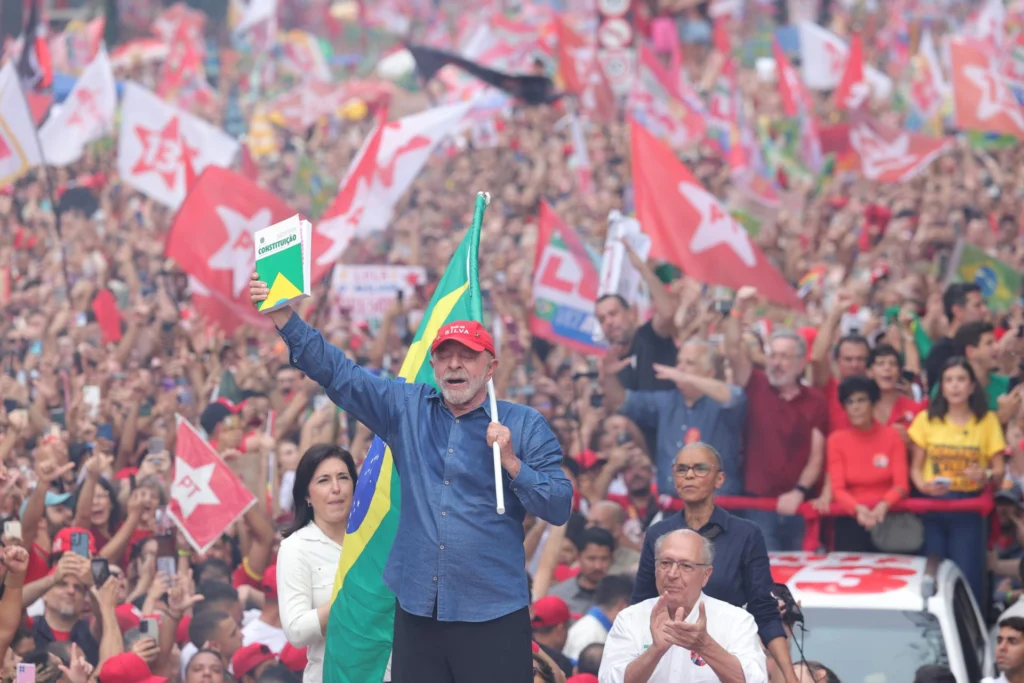
"Brazilian markets are heading for a major rout when local trading begins after President Luiz Inácio Lula da Silva pulled off a stunning comeback to defeat Flávio Bolsonaro, the right-wing candidate that many investors preferred," reportsBloomberg. This will be da Silva's fourth term.
Is dynamic pricing on the rise? Customers say yes, but most companies say they're wrong. My thought: Even if it's not currently happening to the degree angry customers claim, it certainly will be big in the future, as online shopping takes over and AI makes implementation easier. Consider the upside, though, noted in this Wall Street Journal piece: "Much current angst is focused on electronic shelf labels, which have replaced the printed labels that dotted shelves at groceries and other stores. Research on digital shelf labels in the U.S. and Europe, where grocers have widely used the technology for more than a decade, found the labels don't lead to surge pricing, in part because price changes are obvious to anyone walking by. Rather, research found, grocers have used the labels to discount goods that are about to expire, reducing food waste."
Great Washington Post headline: "Europe is running out of other people's money."
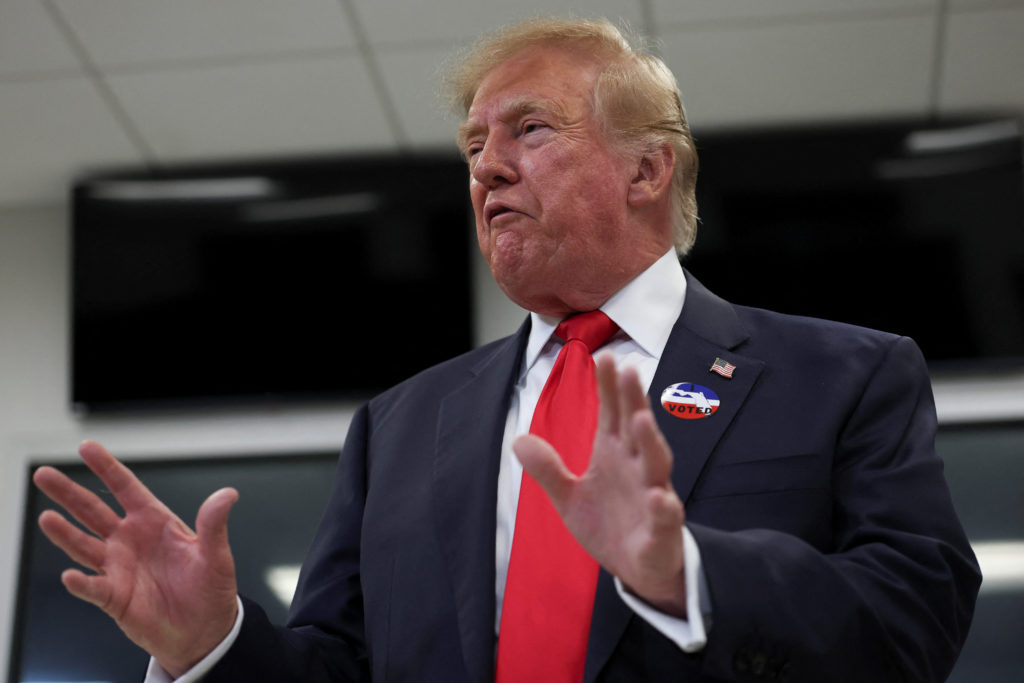
President Donald Trump claims the ships passing past Cuba on their way home from Iran will just, uh, handle the situation there. Sure.
Interesting:
Striking detail in the big NYT piece on Taiwanese families adjusting to working at the huge new TSMC chip plant in Arizona: their surprise at the lack of rigor in US schools. pic.twitter.com/YkSPzbHCuE
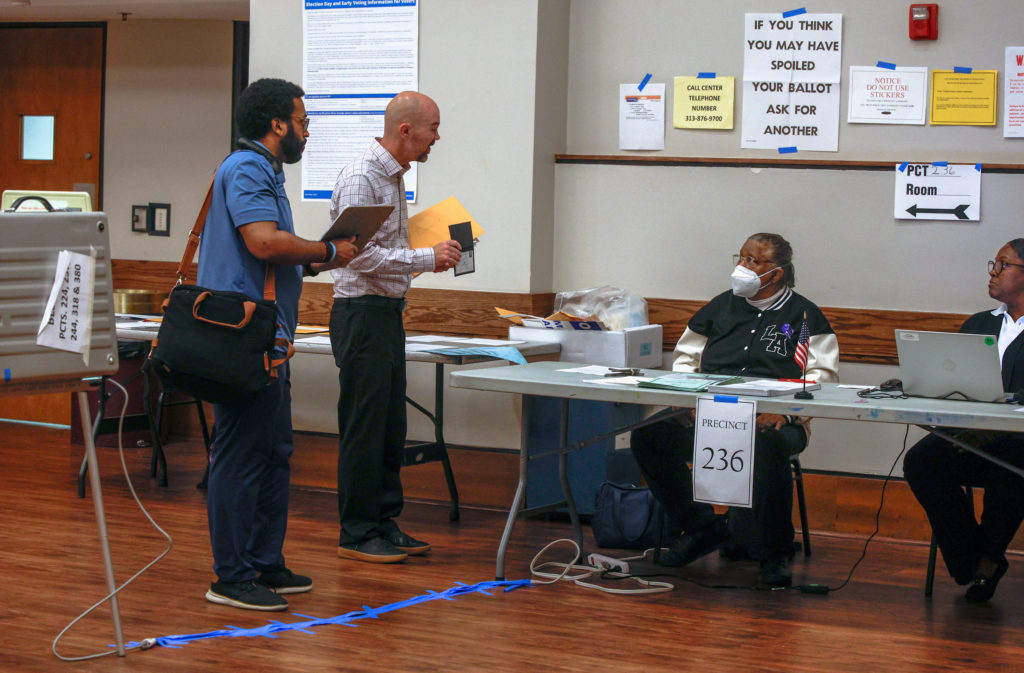
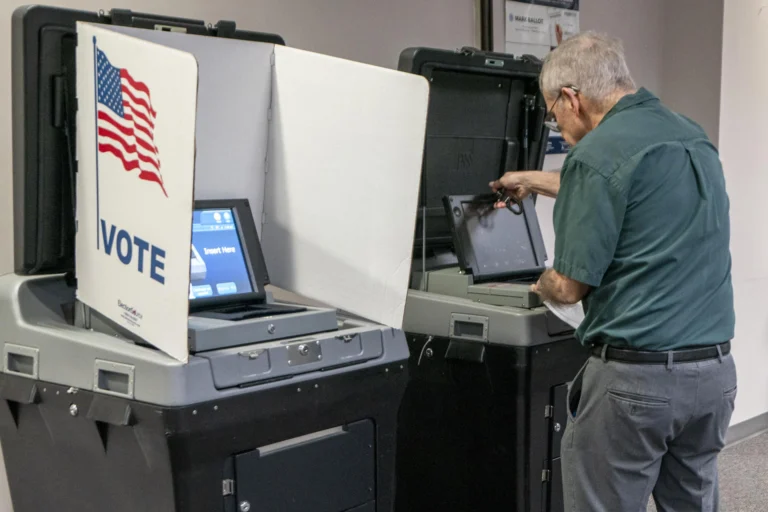
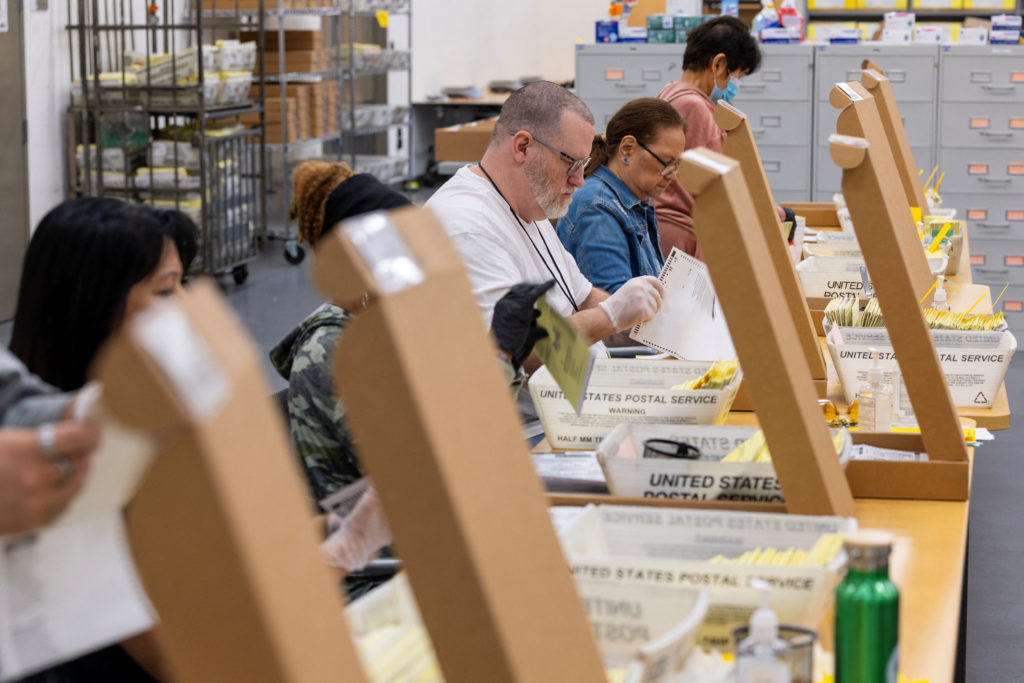
Mail-in ballots account for more than half of votes cast so far, as early turnout builds across the United States ahead of Election Day.
More than 26.6 million U.S. citizens have already voted in the midterm elections, according to data released October 24 by the University of Florida’s Election Lab, with mail-in ballots accounting for 14 million of the votes recorded nationwide.
The latest figures show that 26,608,029 votes had been cast ahead of Election Day, including 14,006,420 ballots returned by mail and 12,601,609 votes cast in person. Election authorities have also received requests for more than 59.4 million mail-in ballots nationwide.
Early voting has increased in states including North Carolina, Kansas, Maine and Iowa, while Texas has seen a rise in mobilization among Latino voters, according to the report. The figures come amid concerns over economic conditions and the cost of living.
California has recorded 2,943,863 early votes, overwhelmingly through mail-in voting. Of those, 2,936,954 were returned by mail and 6,909 were cast in person. Voters in the state have requested more than 23.4 million mail-in ballots.
🚨 Estados Unidos se aproxima a unas elecciones legislativas decisivas, con la popularidad de Donald Trump en retroceso y creciente malestar por la economía. Los comicios del 3 de noviembre de 2026 definirán la composición del Congreso.
Text Reads: 🚨 The United States is approaching pivotal legislative elections, with Donald Trump’s popularity on the decline and growing discontent over the economy. The November 3, 2026, elections will determine the composition of Congress. 🗳️🇺🇸 What do you think?
Democrats account for the largest share of California’s early votes, with 1,383,916 ballots, or 50.2% of the total. Republicans have cast 799,054 votes, representing 29%, while voters registered without a party preference and those affiliated with minor parties account for 575,130 votes, or 20.9%.
Los Angeles County leads California in early voting, with 539,589 ballots processed. San Diego County follows with 356,667 votes, ahead of Orange County, where 279,953 ballots have been returned.
The elections will determine all 435 seats in the House of Representatives, 35 Senate seats and 36 governorships.
The run-up to Election Day has also been marked by a legal dispute over the certification of results in Alaska. A federal court challenge backed by former President Donald Trump seeks to block the potential certification of the state’s election results, raising questions about the electoral process as voting approaches its conclusion.
The administration has insisted that immigrants voting is a major problem nationwide, when in fact it is quite rare, as even its own investigations have shown.
More than 158.7 million Brazilians are eligible to vote as President Luiz Inácio Lula da Silva faces Senator Flávio Bolsonaro in a closely contested runoff.
Brazilian voters are choosing between President Luiz Inácio Lula da Silva and Senator Flávio Bolsonaro in a presidential runoff after neither candidate secured a majority in the first round. More than 158.7 million people are eligible to vote, with polling stations open from 8 a.m. to 5 p.m. local time, according to the Superior Electoral Court (TSE).
In the first round on Oct. 4, Bolsonaro, of the Liberal Party (PL), received 47.03% of valid votes, or 56,104,503 ballots, while Lula, of the Workers’ Party (PT), won 45.16%, or 53,879,538 votes, according to official TSE figures. Neither surpassed the 50% threshold needed to win outright.
Voter abstention emerged as a significant factor in the first round, with 33,469,244 people staying away from the polls, representing 21.08% of registered voters. Both campaigns sought to attract those who did not vote, as pre-election polls pointed to a statistical tie.
The final day of campaigning on Saturday brought closing rallies from both candidates. Speaking in São Paulo, Lula attacked his rival, calling him a “liar,” a “militiaman” and unqualified for the presidency.
“A person like that does not have the political, moral or ethical qualifications to become president of the Republic,” Lula told reporters.
Bolsonaro received backing during the campaign from U.S. President Donald Trump, who described the senator’s first-round result as “a great victory.”
On Oct. 20, Lula framed the election as a choice over Brazil’s national sovereignty, saying voters would decide whether they wanted “a Brazil that kisses the Brazilian flag or one that gets down on all fours before the U.S. flag.”
Voting is compulsory for literate Brazilian citizens aged 18 to 70. It is optional for illiterate citizens, those aged 16 and 17, and people over 70.
Voting abroad
A total of 918,876 Brazilians registered to vote abroad across 134 countries, accounting for about 0.5% of the electorate, according to the TSE. The number represents a 358% increase from 2010.
Text Reads: The Brazil we dream of is built together with the people—through struggle and hope! ❤️🇧🇷 Thank you to every Brazilian who stands by our side on this journey. It is this strength that drives us, and this unity that empowers us. Tomorrow, let’s transform all this energy into the future! Together with the people, we will achieve so much more, secure new rights, and continue building a Brazil that is even fairer for everyone. Let’s do this together. Vote 13—vote for Brazil.
Overseas voters cast their ballots in person in 186 cities and can vote only for president and vice president. Women account for 57% of registered overseas voters and men for 43%, while the largest age group is between 40 and 44.
The United States has the largest number of registered Brazilian voters abroad, with 265,400, followed by Portugal with 134,700, Japan with 88,300, Canada with 46,400 and Germany with 41,500.
Other contests
Sunday’s elections also include gubernatorial runoffs in Acre, Amazonas, Rio Grande do Norte, Espírito Santo and Tocantins, as well as the Federal District. None of the candidates in those contests secured more than 50% of valid votes in the first round.
Several municipalities are also electing mayors. In Chopinzinho and São João, both in the state of Paraná, voters are taking part in a referendum on changing the territorial boundaries between the two municipalities.
The runoff will determine whether Lula remains president or Bolsonaro takes office, concluding a campaign shaped by a narrow first-round margin, high abstention and competing appeals over Brazil’s political future and national sovereignty.
Marva Cook was adopted as a toddler and had always assumed she was a U.S. citizen, she told Homeland Security investigators earlier this month, according to the criminal complaint.
The letters are the latest escalation in a legal battle between California and President Donald Trump's Department of Justice, which has recently focused on the state in its efforts to root out noncitizen voting ahead of the midterm elections.
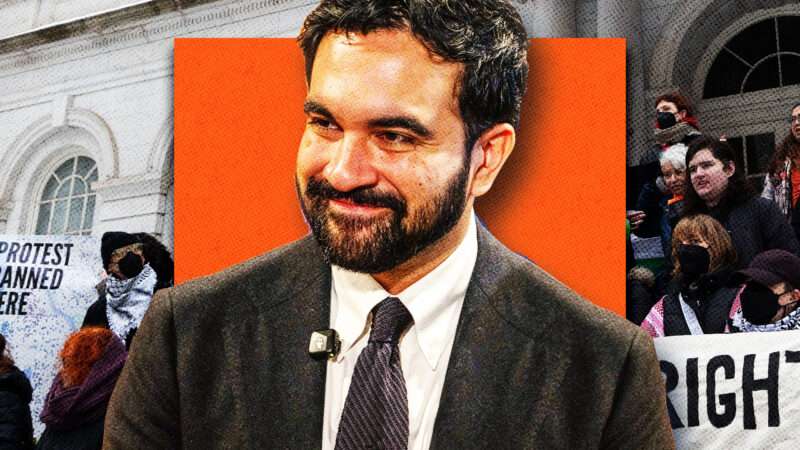
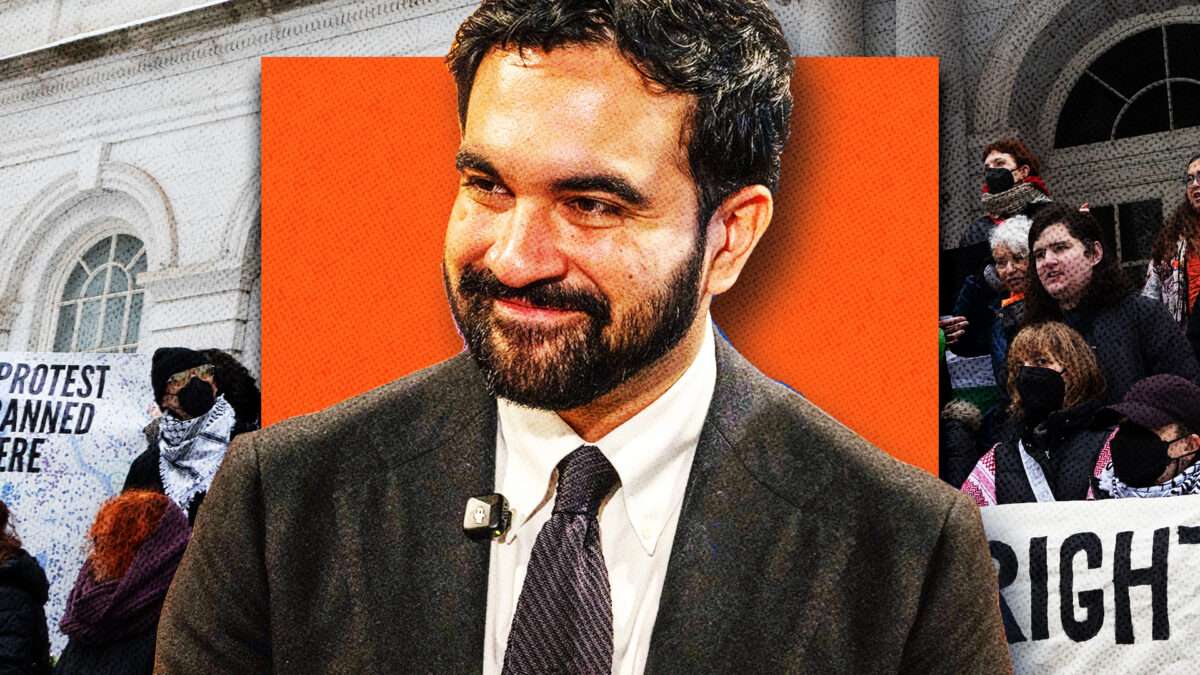
New Yorkers won't be voting on any citywide offices this year, but they do have five ballot initiatives that could shape the city's future more than any politician on this year's ballot. Mayor Zohran Mamdani created a version of the Trump administration's infamous Department of Government Efficiency in New York called the Commission on Government Efficiency (COGE). The plan is for COGE to modernize city operations and accelerate public infrastructure and permitting—in that vein, COGE placed five proposals before voters on the November ballot, largely targeting the bureaucratic processes governing new construction and business activity across the five boroughs.
Questions 1, 2, and 3 on the ballot would end or reduce the use of public hearings in different city review processes. Question 1 would, according to the ballot language, "simplify [the] process to use public space for uses such as ramps, planters and cafes, by removing mandatory hearings and Council disapproval of sidewalk cafes, while maintaining community and Council input." Question 2 would "reduce paperwork for City contractors by authorizing [the] Procurement Policy Board to simplify [the] contractor questionnaire….[And] remove mandatory hearing for required client services report." Question 3 would "simplify review of street safety projects to reduce construction timelines," among other changes. Question 4 is about simplifying permitting.
These policies were not directly introduced by Mamdani, but they reflect a governing philosophy that New York City and other big cities desperately need: a local government that won't allow a small group of organized opponents to obstruct progress for the city at large indefinitely.
Nowhere is the bottleneck against much-needed development clearer than at public review hearings. In theory, a public hearing is democracy at its purest: Every voice is heard. But in practice, it usually becomes a slow-motion filibuster. The most persistent and best-organized opponents get a megaphone, with little to no input from the millions of New Yorkers who would broadly benefit from more housing, better infrastructure, and businesses that can open without getting wrapped in red tape.
The 2026 ballot questions, if approved, would take small steps toward addressing these problems. If they all passed, it wouldn't be a seismic change—a planter here or a parcel of land there. But that's kind of the point: Should routine administrative decisions require another round of formal public review hearings to hold up any change, big or small?
Today, the Trump Justice Department filed a federal lawsuit seeking to block Alaska Senate election results on the grounds they might be influenced by voter "confusion" between incumbent Republican Senator Dan S. Sullivan and a separate Republican candidate with a very similar name (Dan L. Sullivan). I previously wrote about the issues raised by the two Dan Sullivans here. As I pointed out in the earlier post, there is no legal basis for overturning congressional election results based on voter confusion, and any such action would likely violate the First Amendment. See also this analysis by election law specialist Rick Hasen.
I would add that any such federal action also runs afoul of states' primary authority over election procedures. The Elections Clause of the Constitution gives states primary authority over "The Times, Places and Manner of holding Elections for Senators and Representatives," subject to Congress' power to modify these rules by legislation. Congress has not enacted any statute allowing overturning of election results based on possible "voter confusion."
If "voter confusion" were a legitimate reason to overturn election results, that would imperil a great many election winners, as voter ignorance - and exploitation thereof by candidates - is a widespread and longstanding problem. I covered some of these points in my previous post about the two Dan Sullivans:
Donald Trump is a particularly egregious example, going all the way back to his first campaign in 2016, and more recently with his lies about the 2020 election and other issues. But more conventional politicians also often resort to lies and deception, even if not to the same degree. President Obama, for example, famously lied when he claimed that, under the Affordable Care Act, "if you like your health care plan, you can keep it." That deception won the 2013 Politifact Lie of the Year award. But it still helped Obama get reelected in 2012. I am not sure exploiting voter confusion about names is any worse than exploiting their ignorance about policy issues like crime, immigration, and health care….
Voter confusion about candidates with similar names is just another example of this broader problem….
There is no easy solution to the problem of voter ignorance. But I assess a range of possible options in my 2023 article on "Top-Down and Bottom-Up Solutions to the Problem of Political Ignorance, and in my earlier book Democracy and Political Ignorance. I believe the best approach is to make fewer decisions at the ballot box and more by "voting with your feet," where incentives to seek out information and evaluate it wisely are much better. But I recognize that any effective approach will take time, and there may be no one fix that is sufficient by itself. We may need to pursue multiple strategies. In the meantime, voters are likely to continue to be ignorant and confused about a variety of issues, and politicians and interest groups are likely to keep on exploiting that.
Many of these other voter ignorance problems are far worse than any potential confusion between candidates with similar names, a problem that only comes up relatively rarely.
UPDATE: Rick Hasen has a helpful analysis of the Alaska lawsuit here:
DOJ has no power to decide which candidates can appear on the ballot. The sole basis that DOJ asserted for trying to block the state's certification process is the National Voter Registration Act's preamble that reads that the act is designed to "protect the integrity of the electoral process." That preamble of course gives no power whatsoever to the federal government to do anything. It does not give DOJ the power to determine ballot access or block certification of a federal election. The Alaska Supreme Court decided the state law ballot access question back in June, allowing the second Sullivan to appear on the ballot.
Most of the immigrants targeted by federal authorities in California this week for alleged voter fraud had applied for U.S. citizenship and now face charges related to lying on forms or during interviews. Those charges could lead to years in prison and thwart their efforts to naturalize.
To many people, but especially libertarians, voting can feel dispiriting: By definition, every person on the ballot wants in some way to exert control over your life.
Perhaps that's why it's refreshing to see a candidate for office who truly seems not to want the job.
Brady Rogers worked as a robotics engineer for four years, but he quit in 2019 after deciding the corporate world wasn't for him.
"It was just a bit unfulfilling," Rogers tells Reason. "I wanted to do something a little more impactful with my skills….So I left to find something else that felt worthwhile."
He started The Rogerie, a retail store in his hometown of Kelowna, British Columbia, a city of about 170,000 people. Rogers and his wife collect shredded plastic waste and extrude it into filament for 3D printers, which they use to create new housewares to sell in the shop.
Then earlier this year, Rogers again got the feeling that he could be doing something beneficial with his talents. This time, it meant running for the Kelowna City Council.
But he had to stand out in a crowded field—he would be one of 37 candidates running, and only the top eight would win a seat.
So, he settled on a strategy: openly admit his lack of qualifications and how little he even wanted the job.
"I guess I'm running for Kelowna city council," read his campaign website. "I don't like meetings, I don't like having to be certain places at certain times, and I'm allergic to stuffy offices. But unfortunately, I happen to like Kelowna, and think I can help do some good."
"Do I enjoy politics? No," he adds. "Do I know what I'm doing? No. But am I qualified? Also no."
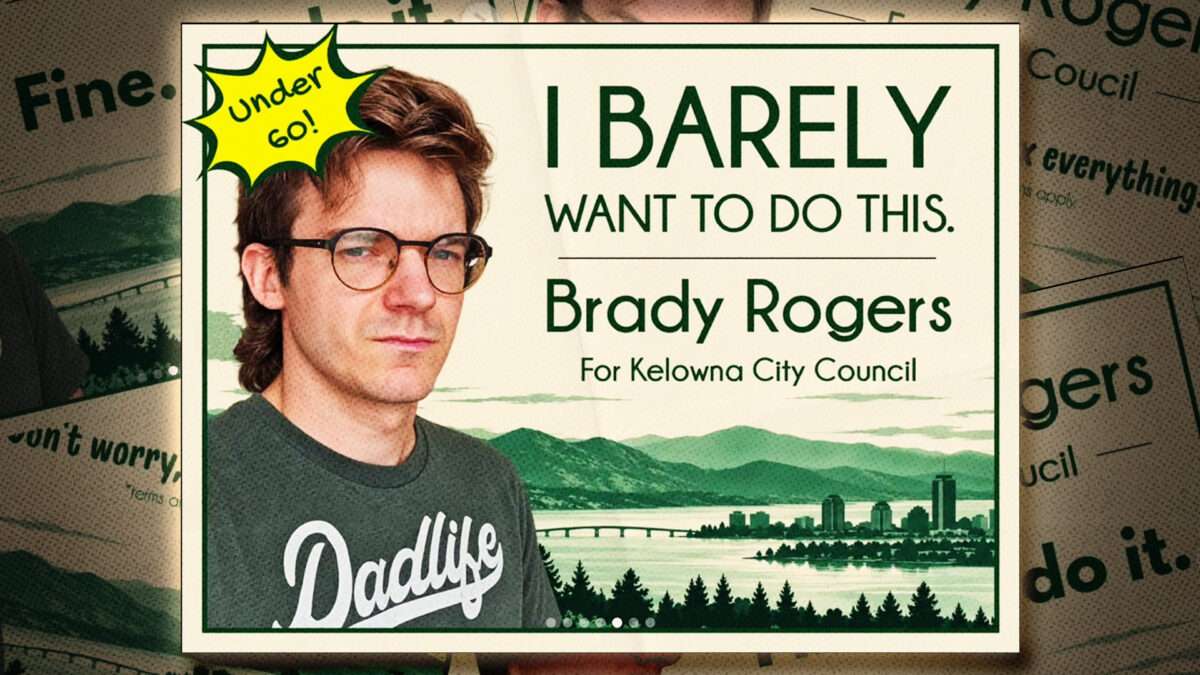
That lackadaisical attitude carried over into his campaign signage: Yard signs featured pictures of Rogers with sullen, shrugging expressions, alongside slogans like "I barely want to do this" and "Let's see what happens?" In a winking reference to political gerontocracy, one sign even bragged that he was "Under 60!"
"I certainly thought it was clever. I thought it would work, but it was really just how I honestly felt when I started," Rogers admits. "I was pretty conflicted about committing to a four-year thing that I didn't even really fully understand the ins and outs of, but at the same time I saw the opportunity to have a bigger impact. So, I was conflicted, and I figured that's a good, honest place to start a campaign."
Ultimately, he won a seat: He placed fourth out of 37 total candidates and even beat three incumbents, one of whom lost her seat.
The irony of Rogers' outwardly indifferent attitude is that he actually does have a policy platform: On his website, he advocates finding solutions to homelessness not necessarily by spending more money but by making better use of the resources that the city and province already provide. He also notes that Kelowna taxes land and improvements at the same rate, which "means we tax someone for improving their property while relatively rewarding someone who sits on valuable, underused land." Writing this week at Reason, J.D. Tuccille made a similar point.
Of course, Rogers' underqualified and disinterested campaign persona is only partially true—he did, after all, want the job, or at least he saw it as a viable means of improving his city.
Still, it's refreshing for a candidate to treat public office as something less than a higher calling.
Ultimately, Rogers thinks that authenticity is why his campaign caught on and was ultimately successful with voters, when many campaigns struggle to create viral moments or capitalize on social media trends. Perhaps other people could even learn from him.
"I think why mine worked so profoundly is that it is a little bit of humor, but immediately behind it was a legitimate platform and me as a real person with the skills and a real desire to do something," Rogers says. "And I think that resonated. I think people [have] an appetite for a new kind of politics."
The Tories, Reform and Restore can't stand each other, but letting the Left win would be daft, argues Nick Rendell. Could fed-up swing voters force the Right's warring tribes to stop squabbling and get their act together?
Greek Parliament voted for lifting the parliamentary immunity of ruling New Democracy MP and former EU Commissioner Dimitris Avramopoulos on Thursday. The voting followed a relevant request by Belgian authorities investigating the so-called Qatargate and have issued an arrest warrant last June. Prior to the voting, 73-year-old Avramopoulos submitted a memorandum where he requested “the Plenary […]

 Login