Net Zero costs have continued to climb in Labour's Budget, with tens of billions in subsidies being poured into renewables and other green boondoggles. We simply can't afford it, says Paul Homewood.
The European Commission wants member states to assess climate risks, establish national resilience plans and incorporate future warming into public investment decisions. Yet the proposed legislation does not provide the funding needed to implement its ambitions.
The European Commission has proposed a new climate resilience law that would require EU governments to assess their exposure to extreme weather, identify authorities responsible for managing risks and develop national plans to protect infrastructure and economic activity.
Presented on 27 October, the initiative marks a shift in European climate policy towards managing the consequences of changing weather conditions alongside efforts to reduce greenhouse gas emissions.
However, the Commission estimates that adapting Europe’s infrastructure and economy to future climatic conditions will require approximately €70 billion annually.
The proposed legislation does not establish a dedicated funding programme of that size.
This creates an immediate question for member states already facing difficult decisions over defence expenditure, energy security and public borrowing.
Brussels wants governments to make climate preparedness a routine part of economic planning, but the financial responsibility for delivering those measures remains largely unresolved.
The proposal envisages national assessments by 30 June 2029 and strategic resilience plans by 31 December 2030.
These documents would identify threats affecting infrastructure, public services, economic activity and communities.
Governments would also be expected to specify which public authorities are responsible for managing particular risks.
The intention is to prevent situations in which responsibility is divided between institutions without a clear mechanism for action.
The proposed framework would establish a common basis for assessments across the EU, allowing national authorities to compare risks and coordinate responses.
This could be particularly relevant where droughts, floods or disruptions to energy networks affect more than one member state.
The deadlines remain proposals rather than existing legal obligations. The legislation must still be negotiated and adopted by the European Parliament and the Council.
A common warming scenario
One of the most significant elements of the proposal is the introduction of a shared reference trajectory for global warming.
According to the Commission’s announcement, the framework uses a trajectory involving global average warming of approximately 1.5°C above pre-industrial levels by 2030, 2°C by 2050 and 3°C by 2100.
These figures would provide a common planning assumption for evaluating long-term risks.
They are not legally determined temperature outcomes or a guarantee that warming will follow precisely that path.
Instead, they are intended to help authorities examine how buildings, roads, energy facilities and other infrastructure might perform under changing climatic conditions.
For example, a transport project designed to operate for several decades would need to consider possible exposure to extreme heat, flooding or changes in rainfall patterns.
Such assessments could influence engineering requirements, maintenance costs and investment decisions.
The financial problem
The Commission estimates that approximately €70 billion a year will be needed to strengthen Europe’s climate resilience.
That expenditure could include flood protection, water management, urban cooling, agricultural adaptation and improvements to vulnerable infrastructure.
The Commission argues that preventive investment can reduce the economic losses associated with disasters.
According to its figures, climate-related damage across the EU amounted to approximately €200 billion between 2022 and 2025, averaging €50 billion annually.
However, estimating the economic benefits of prevention does not resolve how projects should be financed.
National governments face competing demands on their budgets, while local authorities often bear responsibility for infrastructure without possessing sufficient resources for major investment programmes.
Private financing may contribute in commercially viable areas, but some adaptation projects generate public benefits rather than direct financial returns.
Flood barriers, emergency drainage systems and measures protecting vulnerable communities may therefore require substantial public expenditure.
The proposed legislation establishes a framework for identifying such investments but does not guarantee the resources necessary to undertake them.
Businesses and insurers face changing risks
The Commission also wants climate resilience to become part of business and financial decision-making.
Companies operating transport networks, energy facilities and industrial sites may face increasing exposure to disruption from extreme weather.
Insurers must assess the potential for more frequent or costly claims.
Banks and investors may need to consider whether assets remain commercially viable under changing environmental conditions.
These issues have implications for credit conditions, property values and long-term investment.
However, incorporating climate risks into financial decisions can create difficulties for regions where exposure is high and adaptation costs are substantial.
Insurance premiums may rise, while some properties or economic activities could become increasingly difficult to insure.
The Commission has indicated that further proposals concerning climate insurance and disaster preparedness are being developed.
Their eventual design will influence how financial risks are distributed between households, businesses, insurers and governments.
New European climate information tools
The framework also introduces instruments intended to improve access to scientific information.
The European Climate Viewer will provide mapped information on projected climate hazards.
The Navigator of Climate Resilience Tools will help authorities and businesses identify relevant assessment instruments.
A separate Solutions Explorer will provide examples of adaptation measures developed through European research programmes.
These tools could make climate information more accessible, particularly for smaller administrations without extensive technical resources.
Nevertheless, access to information does not automatically produce the financing or institutional capacity required to implement projects.
A municipality may be able to identify a flood risk more precisely while remaining unable to finance the necessary protective infrastructure.
A new responsibility for Brussels and national capitals
The Commission is expected to present an additional EU strategic plan on climate resilience in 2028.
Separate initiatives are also being prepared on heatwaves, insurance and disaster preparedness.
The resulting framework could substantially influence how public infrastructure and investment projects are planned across Europe.
However, national governments will have to determine how the proposed requirements interact with existing spending obligations and economic priorities.
The European Parliament and Council must also decide whether the legislation should include stronger financial provisions.
The central issue is not whether governments should assess the risks facing infrastructure and public services, but how the measures identified by those assessments will be funded.
Until that question is addressed, the proposed law will establish a more comprehensive system for recognising climate-related risks without guaranteeing that member states possess the resources to reduce them.
Lula’s narrow re-election in Brazil means the world has dodged a climate bullet. But with the right wing dominant in Congress, the victory remains tenuous.
Lula’s narrow re-election in Brazil means the world has dodged a climate bullet. But with the right wing dominant in Congress, the victory remains tenuous.
EUobserver is proud to have an editorial partnership with Europod to co-publish the podcast series “Briefed” hosted by Léa Marchal. The podcast is available on all major platforms.
Find the full transcript below:
The European Commission has unveiled its plan to help Europe adapt to climate change. But as extreme heat and climate disasters become the norm, the plan offers very few binding commitments.
So what does it actually change? Let’s start with what’s on the table. The commission is proposing a law that would require all 27 member states to work from the same reference scenario for rising temperatures. And, based on that, to adopt national adaptation plans.
The idea is to stop countries from redoing their own analyses and justifying what their actions are based on. From now on, the shared assumption would be: 1.5 degrees of warming by 2030, 2 degrees by 2050, and 3 degrees by 2100.
There is already something notable here: this scenario is more pessimistic than the Paris Agreement, which aims to keep global warming well below 2 degrees.
The European commissioner for climate, Wopke Hoekstra, gave an explanation ot that:
“It would be unwise not to prepare for the scenarios science puts on the agenda: so scientists are saying 1,5 might do more or less for now, but by 2050 you’re looking at 2 degrees. And by 2100, you’re looking at 3. so I would argue we need to do 2 things: one is staying close to 1,5 and make sure if there is an overshoot, we bring things down, and at the same time, let’s not contemplate and wait but let’s prepare also for a hollow future, that is also the logic of the proposal.”
Now, this assumption is also at the source of another criticism: the EU isn’t doing enough to cut greenhouse gas emissions in the first place.
At yesterday’s press conference, a journalist asked the commissioner how he could defend the Paris Agreement while the EU was lowering climate ambitions at the same time. Because in recent years, the EU has watered down several key measures of the Green Deal.
Think of the rollback on the end of combustion-engine cars, the suspension of the regulation on methane emissions, or the one on imported deforestation. In parallel, the commission is no longer proposing new legislation to cut emissions.
Now, moving to the proposition in itself, will they really help countries to prepare for climate events to come, starting by with the next summer?
Not immediately. The package will make it easier to share useful data with national authorities, notably thanks to Copernicus, the EU’s Earth observation programme.
The commission will also publish a catalogue of adaptation solutions, available to everyone.
So overall, the package is mostly about exchanging information and ideas, and about commitments to implement national adaptation plans. It also streamlines some existing work, which is always useful.
But what the commission does not do is force member states to take concrete action, or let’s say, to show tangible results.
The Climate Law already requires countries to have adaptation plans. But those plans don’t come with quantified targets. Whether it’s about adapting soils, making buildings more resilient to heat, or protecting vulnerable people.
This is something the Greens in the European Parliament regret. German MEP Kai Tegethoff warns that the risk is to end up with plenty of information about the risks, and then do nothing about them. He is calling for binding targets.
And then, there’s one last thing: money. The commission hasn’t announced any new funding for adaptation.
So: technical tools and encouragement, but no obligations and no cash. Commissioner Hoekstra even highlighted the amounts already allocated in the current budget, and in the proposal for the next one.
But as we know, negotiations on the next long-term EU budget are heading towards cuts. So it is unlikely that there would be an increase in the budget for climate measures.
This transcript was updated on 29 October to correct MEP Kai Tegethoff’s nationality to German.
Climate change should formally be declared a global health emergency, experts have warned after they found that impacts on human health are outpacing the action countries are taking.
Why is the Editor-in-Chief of the BMJ calling for the phase-out of fossil fuels and cuts in defence spending? When did this once prestigious medical journal become a Left-wing propaganda rag, asks Paul Homewood.
More householders are disconnecting from the gas network or moving into homes without piped gas. But a rule change could mean higher gas bills for those who are stuck with gas.
As Fortis expands its facility along the Fraser, local air pollution is expected to worsen.
Emissions from the site of a recently approved LNG expansion in Metro Vancouver are projected to exceed Canadian ambient air quality standards for nitrogen dioxide, a harmful pollutant, according to company reports.
Last month, the provincial and federal governments approved FortisBC’s plan to further expand Tilbury, its decades-old LNG facility in North Delta, helping to turn it from a domestically focused, small-scale operation into a large export-oriented facility.
The province described the newly approved expansion as a “clean energy” project.
During the commissioning phase and when the facility’s equipment is malfunctioning, nitrogen dioxide levels in parts of Richmond, Delta and Vancouver are projected to be between three and 16 times above Canada’s guidelines for maximum hourly emissions. That estimate doesn’t include the cumulative impacts of emissions from Tilbury’s other, already approved expansions at the site.
During ongoing operations, Fortis predicts the site and associated marine traffic will slightly exceed national standards for average annual nitrogen dioxide levels, indicating the potential for long-term, chronic exposure. Those exceedances are expected to extend across schools, homes and child-care centres in southern Richmond.
Those elevated annual levels are expected even after factoring in significant reductions in the project’s predicted nitrogen dioxide emissions from yet-to-be-determined mitigation efforts Fortis says it will employ. If those mitigation efforts are unsuccessful, Tilbury’s emissions could be even higher.
The company has not yet made its final investment decision to proceed with the project, and some permits are still pending, but the recent approvals signal the federal and provincial governments are willing to allow the expansion to proceed.
The Tilbury expansion “has the potential to deliver significant economic and environmental benefits for B.C., and jobs for British Columbians,” Minister of Energy and Climate Solutions Adrian Dix said in a press release announcing the project’s approval.
But Tilbury’s projected nitrogen dioxide emissions suggest potential health implications from the expanded facility.
According to Canada’s Environment Ministry, long-term nitrogen dioxide exposure can increase susceptibility to respiratory infections, increase risks of developing asthma, affect cardiovascular health, lead to reproductive issues and increase the risk of premature death.
In an emailed statement, FortisBC told the Tyee: “The Tilbury Phase 2 LNG Expansion project will be built and operated in accordance with all municipal, provincial, and federal guidelines.” It added that the project must meet regulatory requirements by various levels of government.
A provincial spokesperson said government communications staff are unable to comment during the ongoing election period.
Emissions are predicted to increase
The Tilbury facility has produced LNG on site since the 1970s, relying on the liquefied fuel’s condensed form to store enough gas near the province’s urban centre to boost the region’s energy supplies during cold snaps. It was a low-profile operation, producing a small amount of LNG per year, mostly to supply local demand.
Just over a decade ago, Fortis began moving its expansion forward in a piecemeal fashion. The company first applied to build a new, bigger storage tank and to increase its liquefaction capacity in a project it called Phase 1A. In 2024, the province also approved the company’s plan to build a marine jetty that would allow export tankers into the river for the first time. This July, the province provided a regulatory exemption to support another expansion of the site’s storage and liquefaction capacity that Fortis has dubbed Phase 1B. The newly approved Phase 2 project will further expand liquefaction at the site, increasing the facility’s total production to 3.5 million tonnes of LNG per year.
LNG facilities like Tilbury use energy-intensive compressors to turn natural gas into a liquid state. Fortis plans to power its compressors with electricity, reducing some emissions during the process. But the company didn’t decide to electrify its hot oil heater, citing uncertainty about energy supply and the cost of power connection upgrades.
In the section of its application discussing its decision to choose gas to power its oil heater, Fortis wrote that “although electrification is seen as a ‘green choice’ and may reduce public opposition to the proposed project, early analysis suggests that there may not be adequate electrical power available to support the proposed project without significant capital upgrades.”
Fortis wrote that the upgrades could compromise the project’s schedule and commercial viability.
Other new components will also produce emissions, including a ground flare stack and acid gas incinerator. Together with the hot oil heater, these parts of the project are expected to produce the bulk of the expansion’s anticipated nitrogen dioxide pollutants.
“Just because you use electric compressors doesn’t mean you have zero emissions,” said Tim Takaro, a physician and researcher with Simon Fraser University and a member of the Canadian Association of Physicians for the Environment.
Pollutants from those systems will add to an already compromised airshed, Takaro said, noting that the region has one of the highest concentrations of nitrogen dioxide in the province.
“They’re already stretched in terms of air quality,” Takaro said.
Although Fortis describes Tilbury’s ground flare as “totally enclosed,” the facility will include a 200-metre open stack surrounding a low flare, meaning its exhaust will still enter the airshed.
When added to the existing pollution in the airshed, Tilbury’s Phase 1A and 1B expansions are anticipated to push nitrogen dioxide levels in the surrounding area above the federal government’s threshold for acceptable emissions, indicating possible short-term, acute exposures.
The company’s estimated maximum nitrogen dioxide emissions during commissioning and malfunctions are predicted to significantly exceed regulatory limits beyond the project’s immediate vicinity, including areas of Richmond, Delta and Vancouver and other parts of Metro Vancouver up to 11 kilometres from the project.
These kinds of disruptions have been ongoing at Canada’s only major LNG facility, LNG Canada, leading to high rates of flaring and bursts of black smoke — a sign that uncombusted or partially combusted gas is being released into the airshed.
Those unburned pollutants are particularly dangerous because they can include volatile organic compounds such as benzene, a potent carcinogen that has no safe threshold, said Dr. Melissa Lem, a Vancouver family physician and past president of the Canadian Association of Physicians for the Environment.
Fortis’s application said its production of volatile organic compounds in the airshed would be “negligible.”
According to Fortis’s application, it expects to vent unburned gas from the facility during mechanical disruptions and during commissioning, when the company expects it will not yet have its flare system installed.
When existing emissions and emissions from Tilbury’s various expansions and associated marine traffic such as LNG tankers are combined, the site is estimated to produce average annual nitrogen dioxide levels slightly exceeding national guidelines, indicating sustained long-term exposure to the pollutant near the facility.
The projections assume potential reductions from a set of mitigation measures for the Phase 2 expansion. According to Fortis, these measures “are not intended to represent final design commitments or regulatory conditions.” Fortis added that it is “exploring an emissions mitigation strategy” to meet air quality standards. The province called for an air quality management plan in its list of conditions for approving Tilbury’s application, including details on how it plans to reduce emissions and the technologies it plans to use.
Climate concerns
Besides local pollution, Lem noted that Tilbury’s forthcoming climate emissions would also have consequences for human health.
Additional emissions from Tilbury’s Phase 2 expansion and its associated upstream gas fracking activity are expected to produce about one million tonnes of carbon dioxide equivalent per year, around 13 per cent of Metro Vancouver’s total target emissions by 2030.
About 800 people die prematurely every year in Vancouver due to air pollution, according to Tyee reporting from 2021. Pollution from wildfire smoke made more likely by climate change is a large part of the city’s air hazards.
“The fossil fuel industry doesn’t have to deal with patients on the frontlines when climate change drives all these harms,” Lem said. “Doctors and nurses, we are on the frontlines when wildfire smoke rolls in and people are having asthma attacks and high risk of anxiety and depression.”
Lem said the federal and provincial governments’ recent Tilbury approval is a mistake.
“If they were adhering to science, they would not be approving new fossil fuel projects like this Tilbury project,” she said.
Safety risks
The project’s location alongside the narrow, heavily trafficked Fraser River has also raised safety concerns among locals, including from Kelly Greene, the NDP’s MLA for Richmond-Steveston, a riding located just downriver from the Tilbury site. Greene, who was also the province’s minister of emergency management and climate readiness, cited her opposition to the project in a statement announcing she would not seek re-election.
“While no industrial activity is without risk, my work in emergency management taught me that low-probability events can still have profound impacts, particularly when they occur in densely populated or environmentally sensitive areas,” she wrote in a statement posted to LinkedIn.
“I remain deeply concerned about risks posed by the Tilbury LNG shipping channel and have advocated for better safety standards for a decade.”
Like Greene, Richmond Coun. Michael Wolfe worries about the safety risks from Tilbury’s riverside locale.
“It’s just a remarkably challenging environment for boats,” he told The Tyee.
The Society of International Gas Tanker and Terminal Operators advises that vessels carrying LNG avoid “long, narrow inland waterways… due to greater navigation risk.”
Alhough Tilbury’s operations are long-standing, the expansion project means international LNG carriers will enter the Fraser for the first time. Fortis’s application estimates the tankers will be about 300 metres long — roughly the size of three football fields.
Spills and explosions related to LNG production remain rare, but when they occur, their consequences can be profound. Supercooled and compressed LNG can explode when it comes into contact with water and rapidly changes from liquid to gas.
When it leaks, LNG can remain as heavier-than-air vapour that can travel long distances before it dissipates. Under certain conditions, that vapour can ignite if it contacts an ignition source, as it did at the Freeport LNG facility in Texas in 2022.
Wolfe noted that Tilbury sits adjacent to a jet fuel terminal on the other side of the river. “If one of these sites has a major event, it’s going to compromise all the other ones in the area,” he said.
“It’s absolutely crazy to think that people will do that and not care about the future generations.”
Greenhouse gas concentrations in the atmosphere rose to new record highs in 2025, locking in climate impacts that will persist for centuries to come, the United Nations has said.
In the Daily Sceptic's final exclusive extract from Chris Morrison's new book on the 'climate crisis': trying to run a modern economy on windmills is insane, but eye-watering sums from green billionaires say it isn't.
The latest climate pledges put forth by nations will cut global greenhouse gas emissions just 6% by 2035, a UN report has said, weeks before COP31 talks in Turkey.
Disputes Over the 1.5-Degree Celsius Limit Highlight Deep Divisions as Countries Prepare for the Summit in Türkiye.
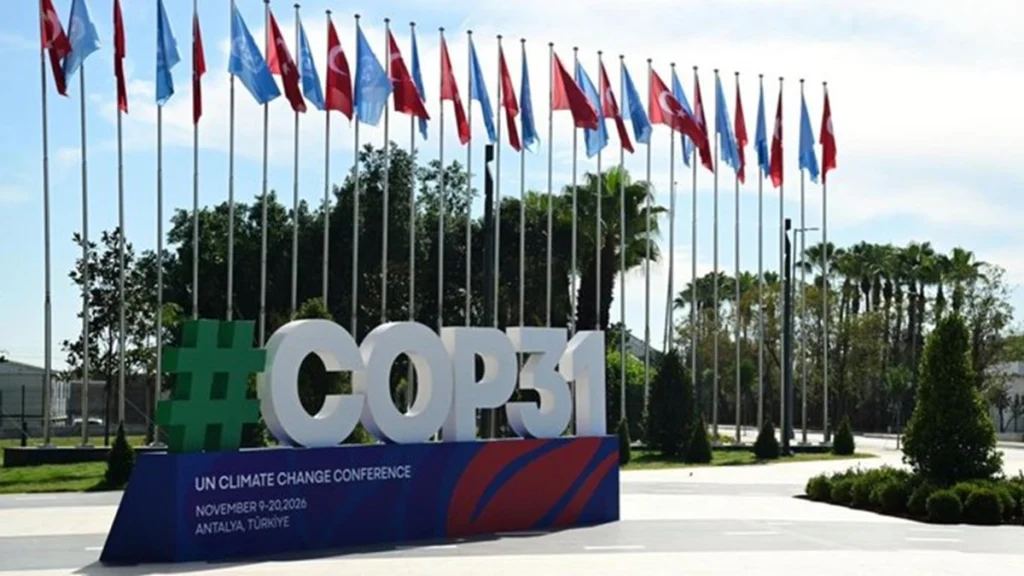
From Nov. 9 to 20, the 31st Conference of the Parties to the United Nations Framework Convention on Climate Change (UNFCCC) will take place in Antalya, Türkiye, bringing together world leaders, government negotiators, scientists and civil society representatives to coordinate international action against climate change.
The major event in global environmental governance will unfold amid efforts by major oil producers to delay the publication of new reports by the Intergovernmental Panel on Climate Change (IPCC) and prevent more ambitious measures to reduce emissions.
The divisions were already evident during the preparatory negotiations in June in Bonn, Germany, where countries such as Saudi Arabia clashed with the European Union (EU) and small island states, which defend maintaining the 1.5-degree Celsius threshold as the benchmark for assessing emissions reduction commitments.
At those meetings, representatives of countries vulnerable to the climate crisis denounced attacks on science by governments with interests in fossil fuels.
Fiji’s chief negotiator, Sivendra Michael, explained that some countries had tried to remove references to the IPCC, the leading authority on the subject, and the 1.5-degree Celsius limit from the documents.
“For Fiji and our Pacific neighbors, 1.5 degrees is not an abstract goal. It is the threshold that determines whether our islands will remain habitable. The IPCC allows the world to understand why that threshold matters and what is needed to avoid exceeding it. It is the backbone of our climate diplomacy. Removing science from the text does not change the science. It only weakens the decisions intended to respond to its findings,” Michael said.
Several sources agree that Saudi Arabia and India, among others, were among the countries that challenged those references, while Riyadh went so far as to invoke the goal of keeping warming below 2 degrees Celsius without mentioning the more ambitious 1.5-degree Celsius limit.
The difference is significant: The Paris Agreement, adopted in 2015 by nearly 200 countries, establishes a commitment to keep global warming well below 2 degrees Celsius above preindustrial levels and pursue efforts to limit it to 1.5 degrees Celsius.
Although both thresholds are part of the same agreement, scientists warn that every additional tenth of a degree of warming increases the risk of extreme weather events, biodiversity loss and irreversible damage to ecosystems.
The #UnitedNations said that the window has closed to stop the earth from heating above 1.5 degrees celsius, a target set by leaders at the #ParisClimateConference in 2015.
But, it says that it is still possible and worthwhile to limit the overshoot as much as possible, because… pic.twitter.com/ZdMlfzHSrG
The confrontation has also spread to the IPCC, the leading international scientific body on climate change, which on Friday, Oct. 16, suspended its meeting in Addis Ababa without reaching an agreement on the publication schedule for its next major report.
The deadlock, which has lasted nearly three years, threatens to prevent the scientific assessment from being available before the end of 2028, when countries will have to review their progress in meeting the Paris Agreement.
Countries such as Saudi Arabia, Russia and India, and at times China and Kenya, argued that more time was needed to prepare the reports and facilitate the participation of scientists from developing countries, which have fewer resources available to take part.
Opposing them, a coalition of European, Latin American and African states, along with small island states, called for an accelerated timetable so that upcoming negotiations would have access to the IPCC’s scientific findings.
Some analysts consider expanding the participation of scientists from developing countries a positive step but point out that countries such as Saudi Arabia, which has a record of resisting climate commitments, have used obstructionist tactics at IPCC meetings, where the timetable is adopted by consensus.
The window has closed; this year's #EmissionsGap report states that overshoot of 1.5°C is now inevitable.
What's needed to limit the overshoot to 1.7-1.8 °C & return to 1.5°C requires gov'ts to step up. 🌎greenhouse gas emissions must drop 45% by 2035 compared to 2025 levels.… pic.twitter.com/lH7uIoC3I2
The most vulnerable countries reject the idea that better scientific representation and the urgency of taking action are incompatible goals. “Delaying essential climate science is a betrayal of vulnerable developing countries,” said Adao Soares Barbosa, chair of the Least Developed Countries Group, which brings together more than 40 states, most of them in Africa.
“It is very concerning that the integrity of the IPCC and the available science are being eroded,” said Cosima Cassel, an expert at the E3G think tank. She called for the new reports to be available before the 2028 global stocktake to avoid relying on outdated assessments.
The dispute coincides with a warning from the United Nations Environment Programme (UNEP) that current climate commitments are insufficient and the planet will exceed 1.5 degrees Celsius of warming in the coming years. Under current policies, warming would reach 2.8 degrees Celsius this century.
UNEP considers it still possible to limit peak warming to between 1.7 and 1.8 degrees Celsius and return to 1.5 degrees Celsius or below by 2100, but doing so would require much deeper emissions cuts and the removal of CO2 from the atmosphere.
“Exceeding the threshold does not change the goal,” Michael said, warning that every additional tenth of a degree would mean more damage to the Pacific.
The storm is expected to bring heavy rain, gusty winds and high waves to the states of Guerrero, Michoacan, Colima and Jalisco.
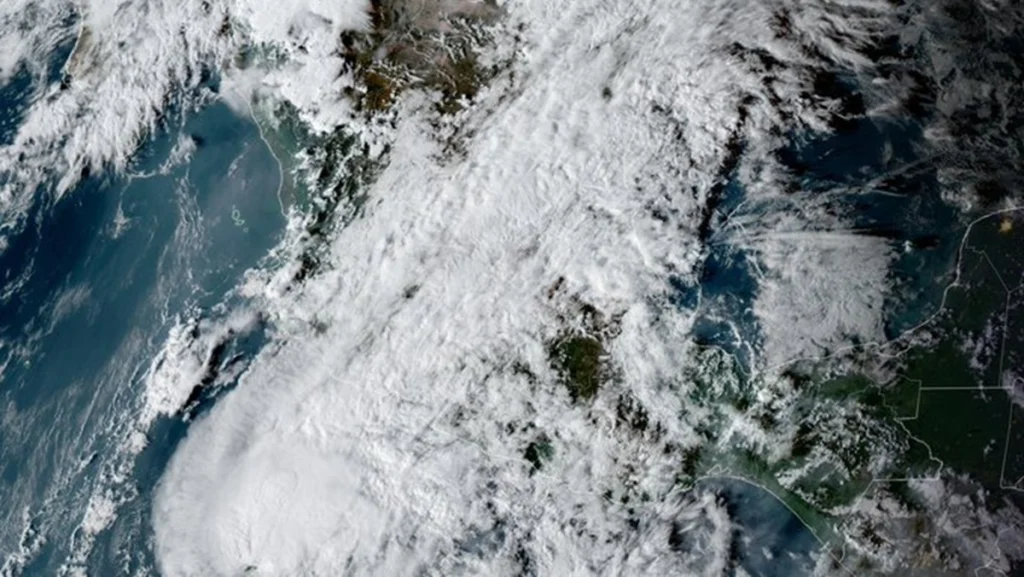
On Sunday, the Mexican government deployed a liaison and coordination mission to several Pacific coast states as Category 1 Hurricane Vance, on the five-category Saffir-Simpson wind scale, approaches the country’s western coast.
The National Coordination of Civil Protection said the storm is expected to bring heavy rain, gusty winds and high waves to the western states of Guerrero, Michoacan, Colima and Jalisco.
Authorities urged residents in those states to remain alert to official warnings. They also advised those living near or traveling close to riverbanks, streams, or water channels to assess their surroundings and evacuate immediately to higher ground at the first sign of rising water.
“It is crucial to avoid crossing—whether on foot or by vehicle—flowing water, flooded streets, or submerged bridges, as the force of the current can sweep away both people and vehicles,” stated the National Coordination for Civil Protection (CNPC).
Tracking the center of Category 1 HURRICANE VANCE on 2026-10-25 UTC from GOES-West (true color night + colorized infrared) pic.twitter.com/eeKxrTJfP9
At 9 a.m. local time, Hurricane Vance was located about 440 km southwest of the port of Lazaro Cardenas in Michoacan and 510 km southwest of the resort city of Acapulco in Guerrero.
The storm is moving northwest at 7 kph, with maximum sustained winds of 120 kph and gusts of 150 kph, and is expected to bring rain of 50 to 75 millimeters in the four affected states.
The rainfall could also trigger landslides, cause rivers and stream levels to rise, and lead to overflowing waterways and flooding in low-lying areas.
Green blobbers want us to stop drilling because the North Sea is running dry – so why the panic about oil and gas extraction? The answer is that it’s as much about politics and punitive taxes as geology, says Ben Pile.
The Albanese government signed a $680,000 contract with Sofitel Sydney Darling Harbour to provide meeting rooms for several pre-COP events in September, while pre-COP in Fiji cost more than previously reported.
Andy Burnham looks set to defy Ed Miliband and give the go-ahead for drilling in the North Sea's Rosebank oil field, as the Treasury's money troubles threaten to trump Labour's Net Zero ambitions.

 Login