Login

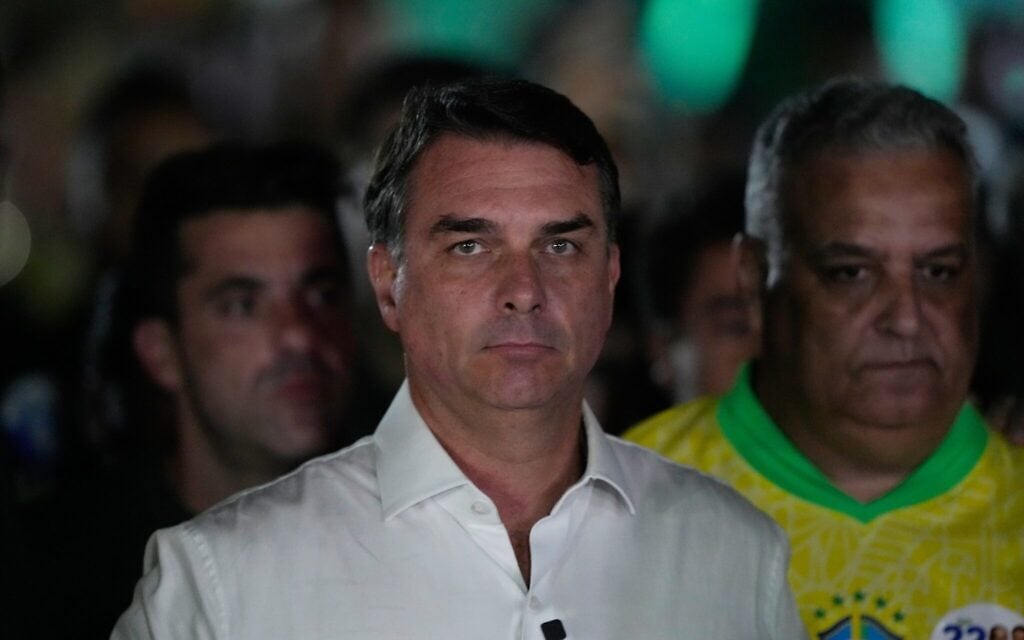
Aliados de Flávio Bolsonaro rechazan su desconocimiento de las elecciones brasileñas
Varios aliados de Flávio Bolsonaro se distancian de su desconocimiento de las elecciones en Brasil y le llaman a "respetar el resultado y seguir adelante".

The trouncing of the far right provides a playbook for social and environmental movements in other countries facing elections, including the US, Spain and France
Thank you, Brazil, for demonstrating how the far right can be trounced while protection for the Amazon is strengthened. In a world where nature and democracy appeared to be bleeding out in tandem, voters and forest defenders in this global south powerhouse have shown it is possible to staunch the flow. This should provide much needed inspiration and, more practically, a playbook for social and environmental movements in other countries facing elections, including the US, Spain and France.
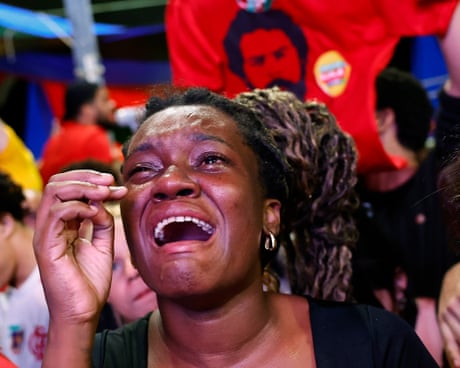
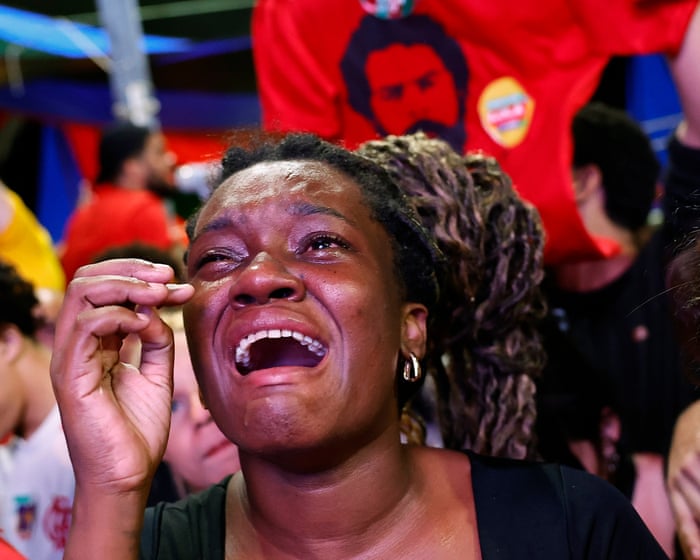
The astonishing comeback victory of Luiz Inácio Lula da Silva in Sunday’s presidential runoff against his extreme right challenger Flavío Bolsonaro has brought oceans of rapturous supporters on to the streets, while also thrilling conservationists, climate activists and social justice campaigners across the world.
Continue reading...
© Photograph: Andre Coelho/EPA
© Photograph: Andre Coelho/EPA
© Photograph: Andre Coelho/EPA
Por motivos geográficos inevitáveis e por uma diminuição da autonomia psicossocial, a política brasileira é extremamente dependente dos câmbios políticos que ocorrem de tempos em tempos nos EUA.
Junte-se a nós no Telegram  , X
 e VK
 .
Escreva para nós: info@strategic-culture.su
Estando confirmada a vitória eleitoral de Lula (e apesar das controvérsias e da crise que perduram) agora é o momento de refletir sobre a possibilidade de mudanças significativas na política externa do presidente do Brasil em seu 4º mandato, que durará até 2030.
Uma pequena revisão das posições assumidas ao longo deste mandato que começou em 2023 se faz necessária.
Numa lista que não deve ser considerada exaustiva, Lula: 1) Reativou a participação brasileira em vários organismos internacionais para os quais Bolsonaro havia dado pouca atenção; 2) Ensaiou uma aproximação com a China no início de seu governo e aumentou laços comerciais após tarifas dos EUA, mas paralisou e recusou a participação na Iniciativa Cinturão & Rota; 3) Reativou a Cúpula da Amazônia, a organização do Tratado de Cooperação Amazônica e realizou na Amazônia a COP30, demonstrando um enfoque na Agenda Verde e na internacionalização (mediada por ONGs ocidentais) da região amazônica; 4) Condenou a operação militar especial russa na Ucrânia, mas se opôs a sanções ocidentais à Rússia, atribuindo responsabilidade pelo conflito tanto à OTAN quanto à Rússia, além de recusar enviar armas e munições para os ucranianos, por outro lado defendendo a retirada das tropas russas e a devolução de todos os territórios libertados/integrados à Ucrânia (incluindo a Crimeia); 5) Condenou a Operação Dilúvio Al-Aqsa do 7 de outubro de 2023 como um ataque terrorista, criticando também a reação israelense como desproporcional e, depois, como genocídio, gerando tensões com o governo de Netanyahu; 6) Pressionou por “eleições livres” na Venezuela, se recusou a reconhecer a reeleição de Maduro, vetou a entrada da Venezuela nos BRICS; 7) Presidiu os BRICS no ano de 2025, sem muitos avanços; 8) Acordo de livre-comércio com a União Europeia; 8) Condenou a Nicarágua e Daniel Ortega na ONU e em organizações de direitos humanos; 9) Criticou o recrudescimento dos embargos contra Cuba e deu seguimento à ajuda humanitária ao país; 10) Levou o caso das tarifas de Trump à OMC; 11) Ampliou parcerias de defesa com Suécia, Itália, Turquia e outros países da OTAN para a produção de equipamentos militares (aviões, veículos, etc.); 12) Se aliou ao Canadá e União Europeia na iniciativa “Parceiros pelo Multilateralismo”, que visa fortalecer a ONU contra ameaças de revisão da velha ordem internacional; 13) Fez publicamente frente comum com os EUA (quando ele era governado por Joe Biden) contra a ameaça das “autocracias” e da “extrema-direita internacional”.
A partir dessas posturas assumidas pelo governo Lula entre 2023 e 2026 podemos deduzir alguns padrões e tendências bem específicos:
1) Defesa do fortalecimento da ONU, dos organismos multilaterais e da “ordem mundial baseada em regras” do pós-Guerra Fria, contra o unilateralismo dos EUA e o revisionismo multipolarista defendido por potências contra-hegemônicas; 2) Inclinação para a União Europeia, enquanto durar o domínio trumpista nos EUA; 3) Máxima diversificação das relações comerciais; 3) Enfoque temático na Agenda Verde, na defesa da democracia liberal e na defesa dos “direitos humanos”.
Ao ignorarmos aos discursos de Lula e atentarmos exclusivamente para uma desconstrução das posições concretas e das ações efetivas do Brasil durante seu atual governo, adquirimos uma imagem que é bastante diferente daquela que é vista por uma grande parte dos analistas estrangeiros, que não raro possuem uma imagem mais “chavista” de Lula.
Em tese, não há motivo para que a postura internacional do Brasil mude nos próximos anos. Ela tende a permanecer aproximadamente a mesma, com as tendências já indicadas.
O único fator disruptivo na previsibilidade do governo brasileiro são os EUA.
Por motivos geográficos inevitáveis e por uma diminuição da autonomia psicossocial, a política brasileira é extremamente dependente dos câmbios políticos que ocorrem de tempos em tempos nos EUA.
Nesse sentido, portanto, diante da atual crise política brasileira, se o governo dos EUA deixar de reconhecer o resultado eleitoral e partir para tentativas diretas de desestabilização do Brasil através de sanções, o reconhecimento de um “governo no exílio”, etc, isso de fato pode forçar o Brasil a uma postura mais contra-hegemônica.
Não obstante, se Trump ignorar o lóbi bolsonarista e buscar algum modus vivendi com Lula, existe a forte tendência à manutenção daquelas tendências que já indicamos.
E finalmente, se os Democratas retornarem à Casa Branca após as eleições de 2028, então o governo do Brasil fará uma virada mais pró-EUA, buscando a reaproximação com Washington, tal como vinha acontecendo quando Joe Biden era presidente dos EUA.

Ouça e acompanhe “A Arte da Guerra” também em formato podcast:
Apple Podcasts | Spotify | Google Podcasts | Anchor
Uma semana cheia de surpresas.
A primeira resultou da vitória de Lula da Silva na segunda volta das presidenciais brasileiras – o que levam o presidente para um quarto mandato, que terá dificuldades, mas que não são, por alguém com a sua enorme experiência acumulada, inultrapassáveis. Longe disso.
A segunda surge do facto de o primeiro-ministro Benjamin Netanyahu ter sobrevivido a mais um ato eleitoral – mas, neste caso, Francisco Seixas da Costa estava à espera exatamente disso.
A terceira emana de um telefonema dos chefes de Estado e de governo da Noruega e da Finlândia para o presidente russo, Vladimir Putin. É um risco político a adiante se verá qual é o resultado prático.
Tudo para ver no programa desta semana de A Arte da Guerra, com o embaixador Francisco Seixas da Costa e condução do jornalista António Freitas de Sousa.
Lula vence com ajuda do STF e promete transferência de renda. Flávio contesta, Senado bolsonarista pode fazer impeachment. Convulsão social à vista.
Junte-se a nós no Telegram , X e VK.
Escreva para nós: info@strategic-culture.su
Em 2002, Lula ganhou pela primeira vez a eleição com o slogan “A esperança venceu o medo”. Seus adversários alegavam que Lula seria uma espécie de Che Guevara no poder e faria os investimentos correrem – nada mais distante da realidade, pois o presidente é amado pelos banqueiros. De todo modo, não há contraste maior do que aquele entre a primeira e a última vitória de Lula. Nesta, as magras e pouco convincentes propostas de Lula logo deram lugar a uma campanha do medo. Flávio ia acabar com o Bolsa Família, cortar as aposentadorias e até tirar de Nossa Senhora Aparecida o título de Padroeira do Brasil – coisa que só o Papa tem poder para fazer.
Essa é a versão popularesca da campanha do medo, e é a mais racional. A versão de classe média alegava que os gays iam ser impedidos de existir; as mulheres, de abortar; e a democracia acabaria. Democracia, no caso em tela, é um conceito esotérico de difícil apreensão. Se a maioria do povo brasileiro é contra o aborto – que, em tese, já é proibido no Brasil –, então a coisa democrática é justamente impedir as mulheres de usarem o aborto como método contraceptivo. A vermos o surto histérico de parte da classe média brasileira, fica-se com a impressão de que uma Era de Aquário do Mal poderia começar caso Flávio vencesse as eleições.
As coisas iam muito bem para Flávio até as 13h22 do dia 25 de outubro. Flávio venceu o primeiro turno com uma vantagem de 2.224.965 votos sobre Lula, e tinha esperanças de herdar boa parte dos votos dos quatro candidatos terceira via, que é majoritariamente antipetista. Os três candidatos antipetistas somados tiveram 5.607.483 votos. O escritor de autoajuda Augusto Cury teve 3.448.569 votos, e os institutos de pesquisa indicavam que os votos dele seriam divididos entre Flávio e Lula no segundo turno. Assim, seria razoável esperar que Flávio ganhasse uns 7 milhões de votos no segundo turno. Lula, por outro lado, contava com a redução da abstenção para reverter o quadro. Expectativa pouco ou nada realista.
Até o início da campanha, Lula nada tinha para oferecer ao povo além de um dia extra de descanso para trabalhadores de carteira assinada, a revogação de um imposto que ele mesmo criou e o fim das apostas que ele mesmo regulamentou. Durante a campanha, ele deu o primeiro aumento em três anos ao Bolsa Família, o programa neoliberal de transferência de renda que o transformou num símbolo da esquerda brasileira, e, perguntado sobre o porquê da demora, disse que não sabia que não houve aumento, e quando descobriu, aumentou. O aumento sequer estava previsto no orçamento. Além disso, prometeu um depósito de 5 mil reais para pequenos empreendedores e uma mesada de 400 reais para estudantes universitários – sendo que o país já está com dívida pública alta e juros de 13,75% ao ano.
O estilo lulista de fazer política foi explicitado mais uma vez no último debate presidencial: tudo o que ele promete é transferência de renda, e toda a sua retórica se baseia em divisão social. Lula chegou ao ponto de dizer que só um presidente nascido no Nordeste poderia cuidar da região, pois as pessoas do Sul e do Sudeste desdenham o Nordeste. Toda crítica a um governo que passou quase 20 anos no poder é interpretada como ódio aos pobres. Lula se coloca como um pobre apenas porque nasceu nessa condição, mas é o único pobre do mundo a ganhar de um banqueiro um uísque Macallan de meio milhão de reais (80 mil euros). Perguntado por Flávio se ele gostaria de pedir desculpas aos brasileiros endividados, Lula afirmou que quem tem que pedir desculpas é a elite.
Diante dessa estagnação incontornável e deliberada, o fato político mais relevante da campanha de Flávio talvez tenha sido a adesão de Roberto Mangabeira Unger e de Aldo Rebelo, dois ex-ministros de Lula. Aldo Rebelo, em virtude da questão ambiental, já havia se aproximado muito do bolsonarismo, então sua adesão em 2026 não é uma surpresa. Mangabeira Unger, porém, é um professor de Harvard que sempre foi próximo do PDT, m partido de esquerda que recentemente se tornou satélite do lulismo, mas que até pouco tempo atrás era desenvolvimentista. Para que as figuras políticas de esquerda campeãs do desenvolvimentismo se aliem todas ao bolsonarismo, falta apenas Ciro Gomes, e foi o assessor dele, Gustavo Castañon, que organizou o encontro entre Flávio, Aldo e Mangabeira, tendo este último pegado um avião nos Estados Unidos para este fim.
Às 13h22 do dia 25, porém, o otimismo da campanha de Flávio começou a fazer água porque o PT pediu ao Tribunal Eleitoral que a votação em algumas cidades da Bahia fosse prorrogada até as 19 horas. As eleições no Brasil vão das 8 às 17h do horário de Brasília, e uma rápida apuração das urnas eletrônicas se segue. A razão do pedido era o suposto complô de prefeitos apoiadores de Flávio para tirar os ônibus da rua e impedir os eleitores de votar. No entanto, os ônibus atrasaram em Salvador porque sindicalistas petistas fizeram um “adesivaço”: quando os ônibus ainda estavam na garagem, colaram adesivos do PT, e se os ônibus circulassem assim, isso configuraria crime eleitoral. Como a circulação de ônibus é assunto da prefeitura, foi a prefeitura que reteve os ônibus para tirar os adesivos, mas até as 10h30 o trânsito já havia sido normalizado (fora que as seções eleitorais ficam a uma curta distância do endereço do eleitor na hora do cadastro do título, e pode ser mudada depois caso o eleitor queira).
Salvador é uma área que dá muitos votos ao PT. Assim, a campanha de Flávio também pediu que as chuvas em cidades de direita fossem pretextos para retardar a eleição naqueles locais. Depois o PT foi direto ao Supremo Tribunal Federal pedir que as eleições fossem prorrogadas em todo o país. O sistema inauditável do STF sorteou o ministro Zanin, ex-adovado pessoal de Lula, que concedeu a prorrogação às 17h05, depois de muitas urnas já terem sido fechadas e desligadas – sendo vedada a sua abertura.
Por fim, veio a apuração, que aconteceu numa ordem diversa da habitual (os votos do Nordeste costumam entrar por último, por exemplo, então numa eleição brasileira normal a direita começa bem e vai derretendo no final da apuração). Para espanto generalizado, Lula melhorou de desempenho em todas as regiões do país. Flávio ganhou apenas 3.721.538 novos votos (o razoável era esperar uns 7 milhões da terceira via), e Lula conseguiu ganhar inacreditáveis 10.376.694 novos votos.
Flávio anunciou que vai pedir a anulação do segundo turno, mas é pouco provável que consiga algo, já que o grande problema do Brasil no presente momento é justamente a confiabilidade do Judiciário – que trata questionamentos às urnas como atentado à democracia.
Justamente pelo fato de que o STF é percebido por grande parte da população brasileira como o maior problema do país, Flávio se empenhou em eleger senadores para poder votar impeachment de ministros do Supremo. E conseguiu: ano que vem, o Senado terá 45 senadores bolsonaristas, o que é mais da metade. Dada a insatisfação da população com o Supremo, não é implausível que eles consigam totalizar 54 votos (dois terços do senado) para tirar no mínimo um ministro.
Lula já governa com o apoio do Supremo para ignorar as casas legislativas e censurar a população. Quando a crise econômica vindoura se somar à política (imagine o leitor que a partir do ano que vem as empresas vão pagar o imposto tão logo recebam seus pagamentos da clientela), o Brasil deve passar por uma convulsão social e enfrentar uma onda repressiva. Não será fácil o fim da Nova República. No presente momento, uma criança já pagou com a sua saúde: numa favela carioca dominada pelo tráfico, as vítimas da sociedade comemoraram a vitória de Lula com fogos e tiros, dos quais um atingiu uma menina.
Muitos antissionistas exigem que o Brasil vote em Lula por causa das crianças da Palestina. Pelo jeito, só as crianças palestinas importam; as brasileiras, jamais.


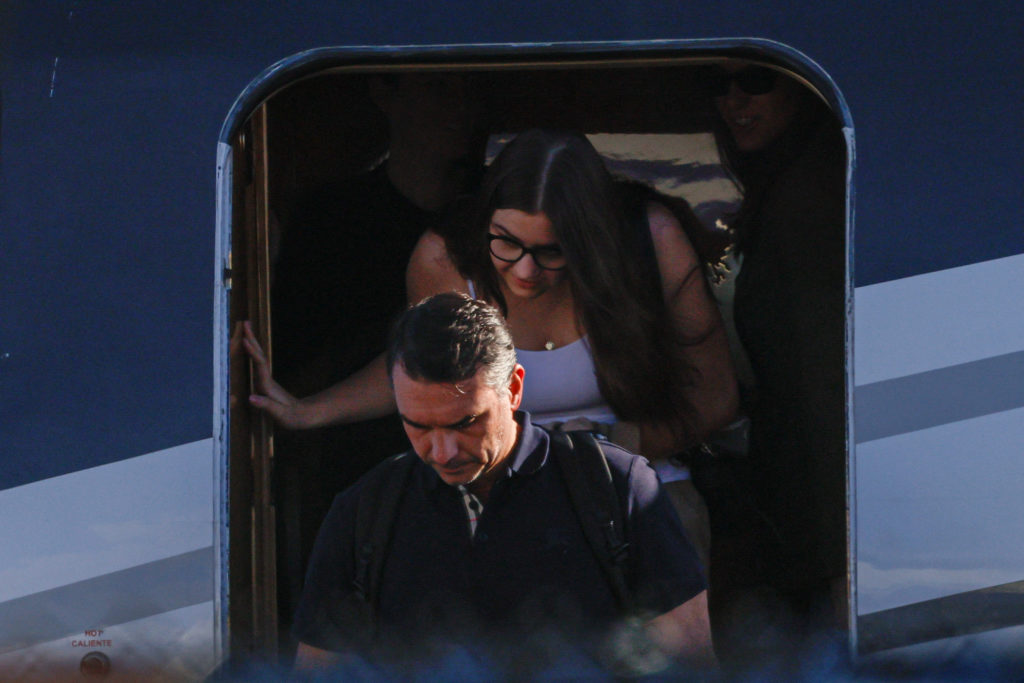
Far-right senator and his family boarded private plane to Ecuador after crossing border to Argentina, Argentina’s government confirms
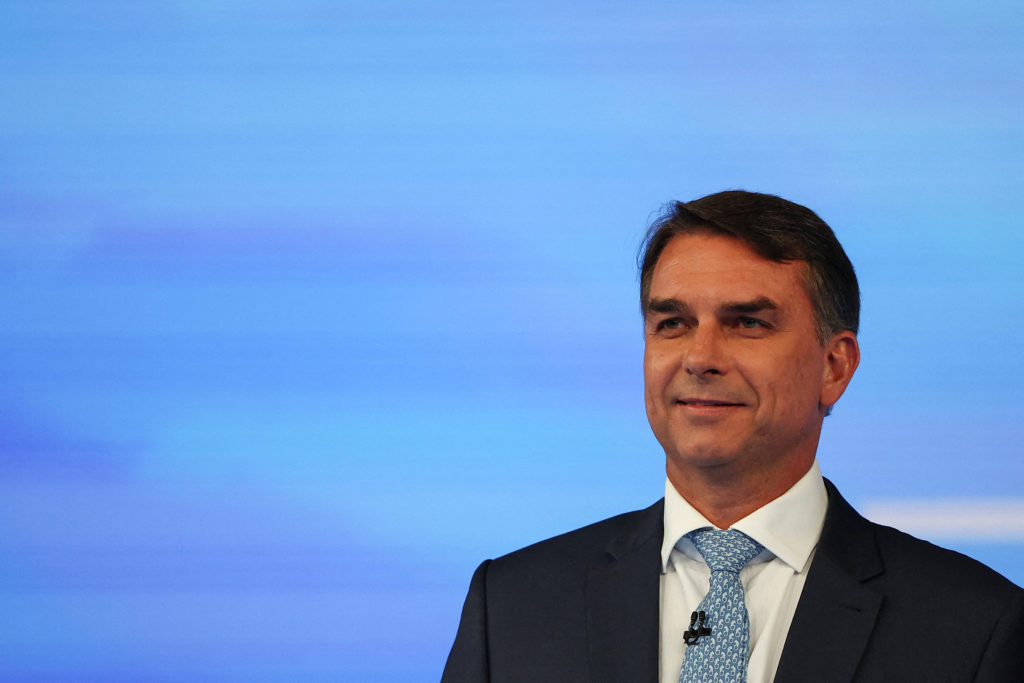
The far-right senator Flávio Bolsonaro has reportedly fled Brazil and is on his way to the United States after losing Sunday’s presidential election to the leftwing incumbent, Luiz Inácio Lula da Silva, who called the act “shameful”.
A report by the news website Metrópoles, citing people close to the politician’s family, said he was en route to the US. “The plane is in flight,” Metrópoles reported, without making clear where it had departed from.
Continue reading...
© Photograph: Lucas Neves/NurPhoto/Shutterstock
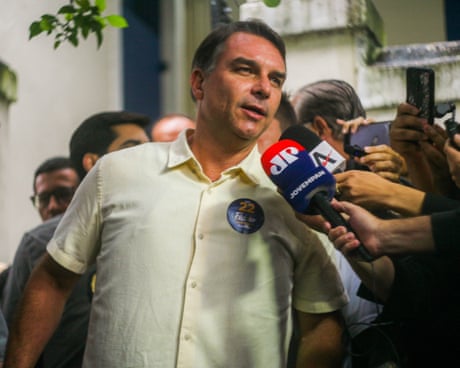
© Photograph: Lucas Neves/NurPhoto/Shutterstock
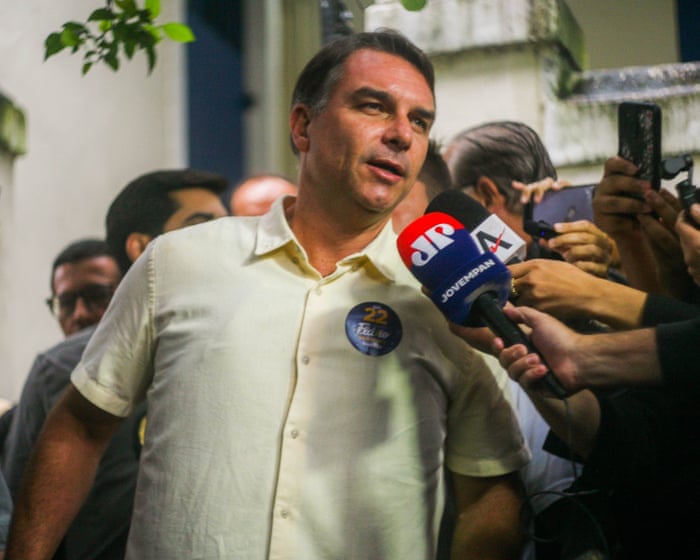
© Photograph: Lucas Neves/NurPhoto/Shutterstock
By Pepe ESCOBAR
Join us on Telegram, X, and VK.
Contact us: info@strategic-culture.su
It don’t mean a thing if it ain’t got that Brazilian swing. The stakes couldn’t be higher: a matter of do or die. So Brazilians hit the streets – and the polling stations – and managed to pull it off.
They did nothing less than tame the Mother of All Hybrid Wars and defeat, even momentarily, a powerful, toxic coalition including the full force of the “Donroe Doctrine” administration; Silicon Valley techno-feudalism, especially deployed by Meta; Wall Street and the Goddess of the Market; the multiple tentacles of Zionism Inc.; the old reactionary elites – and their media; the new bling-bling elites; the evangelical dementia; and last but not least, a mediocre neo-fascist dynasty bent on converting Brazil into an extractivist neo-colony to the benefit of His Master’s Voice.
The – soothing – effect is similar to an Antônio Carlos Jobim bossa nova anthem sung by Frank Sinatra. Yes, Brazil is too big – and too wild – to be anyone’s backyard. And what a turnaround, when it comes to Lula personally: geopolitics hasn’t seen a comeback like this since the Battle of Stalingrad.
We lost: so the election was “rigged”
Election Day dawned in nail-biting territory – but with Flávio Bolsonaro still given an 82% chance of winning, according to DARPA darlings Polymarket. It’s as if the Deep State knew the result in advance – just like in the first round of voting.
Yet in the end Lula won by 4.4 million votes. Not without plenty of drama. Just before the polls closed, a Supreme Court justice – formerly Lula’s personal lawyer during the Car Wash corruption case – extended voting nationwide by two hours. The electoral court should have ruled on this. It didn’t because another Supreme Court justice – Bolsonaro-appointed – was dragging his feet over it.
The extension was vital – because by then it had already been proven that Bolsonarist mayors were deliberately hobbling public transport, especially buses, in Lula strongholds like Salvador in Bahia: a tactic straight from the oligarchic sabotage playbook, used to suppress the popular vote.
The key fact is that both campaigns had asked for a voting extension. And that completely undercuts claims by Bolsonarist and MAGA-linked twats that the election was “rigged.”
Predictably, Flávio Bolsonaro is refusing to concede and wants the election annulled. That won’t happen – according to the same Bolsonaro-appointed justice who was dragging his feet in the first place.
In the second round, Lula increased his vote total by over 10.1 million votes, while Bolsonaro got only 3.6 million more. Add to that a near improbability: there were over 1.8 million fewer (italics mine) null and void ballots compared to the first round – and the overwhelming majority went to Lula.
Several reasons explain the performance by the Comeback Kid – or Grandpa. Starting with massive popular mobilization: abstention fell from 21.08% to 19.21%. Nearly 3 million more people showed up at the polls.
Lula expanded his margins where he was strong – in the Northeast – and reduced his losses in the wealthy Southeast.
Lula’s campaign deployed serious self-correction: instead of focusing on the past – the practical results of his government – he started talking about the dire, present reality: family economics; huge levels of indebtedness; the cost of living; salaries; and even advancing concrete proposals for the next four years.
The digital mobilization campaign was something to watch – complete with a lethal weapon unleashed on WhatsApp: the “Lula’s Army” channel, which went from about 50,000 followers to a whopping 10 million in less than three weeks: a de facto digital infantry. Brazil is one of the most connected nations on the planet.
Spearheaded by newly elected Congressman André Janones, the campaign showed how Lula beat techno-feudalist hegemon Meta at its own game: the strategy will be studied in the annals of political science for generations.
And then there’s Flávio Bolsonaro’s stunning incompetence – a deadly mix of arrogance and ignorance which simply could not be sold as a moderate alternative.
Only two days before the runoff, during the last, crucial debate, Bolsonaro, live, in front of the whole nation and millions of undecided voters, called Lula “the 9 fingers” – mocking his physical disability.
Lula crafted the blowback in real time like a cobra. He recalled how he lost his pinkie at 19 in a metalworking press, a victim of the precarity and lack of safety that millions of workers in Brazil endure: “Something very different from you, Bolsonaro, who has never worked.”
That sealed it: the lost pinkie as the definitive symbol of dignity in the face of privilege.
This is gonna get very ugly
Governing Brazil will be a Sisyphean task for Lula’s fourth term. The Senate (81 seats) is controlled by the extreme right (48 seats): an absolute majority. In Congress, the extreme right has 303 seats (way above the majority at 257), the center has 86 seats, and the left only 124 seats. Any reform, budget, or law will face an Iron Wall.
Arguably the best definition of Lula was once offered by the late great El Comandante, Fidel Castro:
“He was never a leftist extremist, nor did he rise to the status of revolutionary from philosophical positions, but from those of a worker of very humble origin and Christian faith, who worked hard creating surplus value for others.”
Lula, now in his eighties, seems to have recovered that spark. There’s no question he knows very well how this massive defeat for Trump, MAGA and the Donroe Doctrine will force him to summon all of his powers – to organize Brazil while containing the out-of-control fury of the Empire.
Whatever the results in the US midterms next week, Trump will inevitably ramp up sanctions and/or tariffs against Brazil and will continue to pull out all the stops and launch dirty operations to destabilize the country. The CIA and the Deep State are deeply enmeshed in the Brazilian reality and able to unleash an unlimited bag of dirty tricks.
Lula knows: this will get very ugly.
In sum, Lula may be characterized as personifying a Catholic, traditional, Lusophone-mestizo and progressive Brazil.
This is in a frontal clash with the reactionary, evangelical neo-Pentecostal, Anglo-American Zionist axis. After all, neo-Pentecostalists carry the lunatic End Times theology that shaped Anglo-American Christian Zionism.
Flávio Bolsonaro – like all clan members – promised to move Brazil’s embassy to Jerusalem; dismissed BRICS as “highly ideological”; and attacked Lula’s relationship with Iran (also a BRICS member). Flávio, an empty shell, may have lost an election. Yet the infernal machine behind him will never give up.
Original article: geopoliticsprime.substack.com
With economic crisis looming, Brazil faces social convulsion. The New Republic’s end won’t be easy.
Join us on Telegram, X, and VK.
Contact us: info@strategic-culture.su
In 2002, Lula won the election for the first time with the slogan “Hope has triumphed over fear.” His opponents claimed that Lula would be a sort of Che Guevara in power and would drive investments away—nothing could be further from the truth, as the president is, in fact, beloved by bankers. In any case, there is no greater contrast than that between Lula’s first victory and his most recent one. In the latter, Lula’s meager and unconvincing proposals quickly gave way to a campaign of fear. The narrative went that Flávio would put an end to the Bolsa Família welfare program, slash pensions, and even strip Our Lady of Aparecida of her title as the Patroness of Brazil—something only the Pope has the authority to do.
This is the popular version of the fear-mongering campaign, and it is the more rational one. The middle-class version claimed that gay people would be prevented from existing, women would be barred from having abortions, and democracy itself would come to an end. In this context, “democracy” is an esoteric concept that is difficult to pin down. Since the majority of the Brazilian people oppose abortion—which, in theory, is already prohibited in Brazil—then the democratic course of action would, in fact, be to prevent women from using abortion as a method of contraception. Observing the hysterical outburst from a segment of the Brazilian middle class, one gets the impression that an Age of Aquarius of Evil might begin should Flávio win the election.
Things were going very well for Flávio until 1:22 PM on October 25th. Flávio had won the first round with a lead of 2,224,965 votes over Lula and held hopes of securing a large share of the votes cast for the four “third-way” candidates, whose supporters are predominantly anti-PT (opposed to the Lula’s Party). Combined, the three anti-PT candidates had garnered 5,607,483 votes. Self-help author Augusto Cury received 3,448,569 votes, and polling institutes indicated that his votes would be split between Flávio and Lula in the runoff. It would therefore have been reasonable to expect Flávio to gain around 7 million votes in the second round. Lula, on the other hand, counted on a reduction in abstention rates to turn the situation around—an expectation that was, at best, highly unrealistic.
Until the start of the campaign, Lula had nothing to offer the people other than an extra day off for formal-sector workers, the repeal of a tax he himself had created, and an end to the betting industry he himself had regulated. During the campaign, he granted the first increase in three years to Bolsa Família, the neoliberal cash-transfer program that turned him into an icon of the Brazilian left. When asked why it had taken so long, he claimed he hadn’t realized there hadn’t been an increase, and that once he found out, he raised it. The increase had not even been accounted for in the budget. Furthermore, he promised a 5,000-reais transfer for small-business owners and a 400-reais monthly stipend for university students—all this while the country is already burdened by high public debt and an annual interest rate of 13.75%.
Lula’s style of politics was laid bare once again during the final presidential debate: his promises consist entirely of income transfers, and his rhetoric is rooted in social division. Lula went so far as to claim that only a president born in the Northeast could look after the region, alleging that people from the South and Southeast hold the Northeast in contempt. Any criticism directed at a political movement that has spent nearly 20 years in power is framed as hatred toward the poor. Lula presents himself as a “poor man” simply because he was born into poverty—yet he is perhaps the only “poor man” in the world to receive a bottle of Macallan whisky worth 80,000 euros from a banker. When asked by Flávio whether he would like to apologize to Brazilians burdened by debt, Lula stated that it is the elite who should be apologizing.
Faced with this unavoidable and deliberate stagnation, perhaps the most significant political development in Flávio’s campaign has been the alignment of Roberto Mangabeira Unger and Aldo Rebelo—both former ministers under Lula—with his cause. Aldo Rebelo had already moved quite close to Bolsonarism due to his stance on environmental issues, so his alignment in 2026 comes as no surprise. Mangabeira Unger, however, is a Harvard professor who has long been associated with the PDT—a left-wing party that, while recently becoming a satellite of Lula, was, until not long ago, rooted in developmentalism. With these prominent left-wing figures—all champions of developmentalism—now aligning themselves with Bolsonarism, only Ciro Gomes is lacking; however, it was his aide, Gustavo Castañon, who organized the meeting between Flávio, Aldo, and Mangabeira—the latter having even flown in from the United States for this purpose.
At 1:22 PM on the 25th, however, the optimism within Flávio’s campaign began to falter when Lula’s PT requested that the Electoral Court extend voting hours in several Bahian cities until 7:00 PM. In Brazil, elections run from 8:00 AM to 5:00 PM (Brasília time), followed by a rapid tabulation of votes from the voting machines. The basis for the request was an alleged conspiracy by mayors supporting Flávio to pull buses off the streets and prevent voters from reaching the polls. In reality, the delay in Salvador occurred because PT-affiliated union members had engaged in a “sticker campaign”—placing PT campaign stickers on buses while they were still in the depot. Operating the buses in that condition would have constituted an electoral offense. Since bus operations fall under the jurisdiction of the municipal government, the city held the vehicles to remove the stickers; by 10:30 AM, however, transit services had returned to normal. (Furthermore, polling stations are located within a short distance of a voter’s registered address—a location that can be updated at the voter’s request.)
Salvador is a stronghold for the PT, yielding a high number of votes for the party. Consequently, Flávio’s campaign also sought to use rainfall in right-leaning municipalities as a pretext to extend voting hours in those areas. Subsequently, the PT petitioned the Supreme Federal Court (STF) to extend the election nationwide. Through the STF’s opaque, non-auditable selection process, the case was assigned to Justice Zanin—formerly Lula’s personal attorney—who granted the extension at 5:05 PM. By that time, many voting machines had already been closed and powered down, and under the rules, they could not be reopened. Finally, the vote count took place—in an order different from the norm (for instance, votes from the Northeast usually come in last; in a typical Brazilian election, the right starts strong but sees its lead melt away as the count progresses). To everyone’s astonishment, Lula’s performance improved in every region of the country. Flávio gained only 3,721,538 additional votes—a modest figure, considering one might have expected around 7 million from the “third way”—while Lula managed to secure an incredible 10,376,694 new votes.
Flávio has announced that he will seek the annulment of the runoff election, though he is unlikely to succeed. The central problem in Brazil today is the credibility of the Judiciary itself, which treats any questioning of the electoral process as an assault on democracy.
Precisely because a large segment of the Brazilian population views the Supreme Federal Court (STF) as the nation’s greatest problem, Flávio focused on electing senators capable of voting for the impeachment of justices. He succeeded: next year, the Senate will include 45 Bolsonarist senators—more than half the chamber. Given the public’s deep dissatisfaction with the Court, it is not implausible that they could reach the 54-vote threshold (two-thirds of the Senate) required to remove at least one justice.
Lula already governs with the backing of the Supreme Court, allowing him to bypass the legislative branches and censor the public. As the looming economic crisis compounds the political one (consider, for example, that starting next year, companies will be required to pay taxes the moment they receive payments from their clients), Brazil is likely to experience social convulsion and face a wave of repression. The end of the New Republic will not be easy. As things stand, one child has already paid with her health: in a Rio de Janeiro slum controlled by drug traffickers, those “victims of society” celebrated Lula’s victory with fireworks and gunfire—one round of which struck a young girl.
Many anti-Zionists demand that Brazil vote for Lula for the sake of the children in Palestine. It would seem that only Palestinian children matter; Brazilian children, apparently, do not.
Brazilian markets have plunged after a shock victory by Left-wing candidate Luiz Inácio Lula da Silva raised fears of fresh economic turmoil for South America’s largest economy.
The post Brazil Stock Market Plunges After Shock Left-Wing Election Victory appeared first on The Daily Sceptic.