❌

Reading view

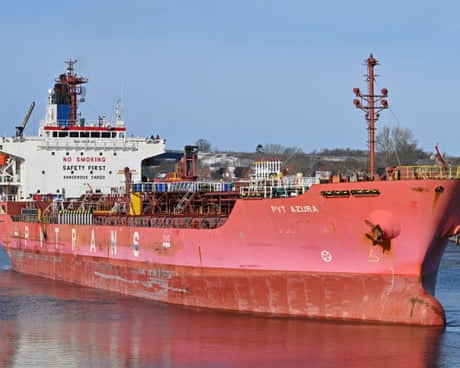
Seven oil tankers carrying 288,000 tonnes of Russian diesel sail towards US

Tankers, tracked by Greenpeace, are first phase of Trump-Putin deal – but there is uncertainty over whether they will unload

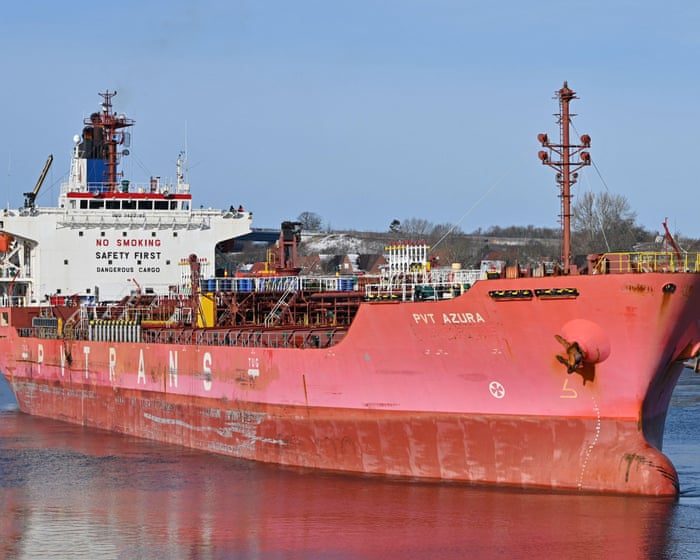
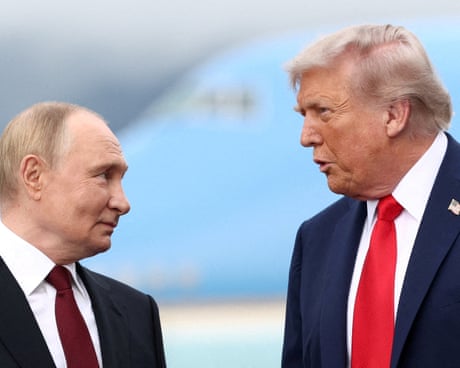
Seven oil tankers carrying an estimated 288,000 tonnes of Russian diesel are now sailing towards the US, though it is uncertain if the vessels will be able to unload amid a political row about the legality of the shipments.

The transport, tracked by the pressure group Greenpeace, is the first phase of a contentious supply deal negotiated between presidents Donald Trump and Vladimir Putin earlier this month, reversing years of sanctions on Russia oil.

Continue reading...

© Photograph: Martin Witte/Alamy

© Photograph: Martin Witte/Alamy

© Photograph: Martin Witte/Alamy

  •  

Russia Moves to Exclude Europe from Ukraine Peace Talks as Kremlin Delays Next Round of Negotiations

Moscow has indicated that European governments will not participate in the next round of negotiations over the war in Ukraine, despite their central role in financing Kyiv, supplying military assistance and shaping the continent’s security arrangements. The Kremlin’s position raises questions about whether any agreement negotiated principally by Washington, Moscow and Kyiv could be implemented without substantial European involvement.

Russia has ruled out European participation in the next round of trilateral talks with Ukraine and the United States, while suggesting that the negotiations could be delayed by developments on the battlefield and the continuing conflict in the Middle East.

Yuri Ushakov, foreign policy adviser to Russian President Vladimir Putin, said on 29 October that Moscow had not agreed to a specific date for further consultations and that European representatives were not being considered for inclusion.

Ushakov maintained that preparations concerned representatives of Russia, Ukraine and the United States.

His remarks followed statements by Ukrainian President Volodymyr Zelensky indicating that the next round could take place in Abu Dhabi between 6 and 10 November.

The Kremlin has not confirmed those dates.

The disagreement comes as European governments seek a more substantial role in diplomatic efforts concerning a conflict whose eventual settlement would have direct consequences for their security, defence expenditure and relations with Russia.

Moscow Sets Its Conditions

Ushakov’s position was particularly explicit when discussing European participation.

Speaking to Russian media on 28 October, he suggested that European representatives were free to travel to the proposed venue but would not be invited to join the negotiations.

His remarks were subsequently reinforced by a statement that European involvement was not under consideration.

The Kremlin adviser also linked the timing of the next meeting to developments in the Middle East, where the US-Israeli conflict with Iran has complicated Washington’s diplomatic and military priorities.

Ushakov said that conditions on the Ukrainian battlefield would also influence when negotiations could resume.

These explanations give Moscow considerable latitude over the timetable while leaving uncertainty about the practical arrangements for the next meeting.

They do not, however, establish that Washington and Kyiv have accepted Russia’s preferred arrangements for every subsequent stage of negotiations.

Technical consultations between three parties and broader discussions over a European security settlement are not necessarily the same diplomatic process.

Europe Wants a Place at the Table

The Russian position contrasts with statements from the leaders of Britain, France and Germany, who have maintained that European governments must participate in discussions concerning Ukraine’s future security.

Their argument rests partly on the responsibilities that European countries would be expected to assume after any agreement.

European states have provided substantial financial, military and humanitarian assistance to Ukraine since Russia launched its full-scale invasion in February 2022.

They have also introduced successive sanctions against Russia, expanded defence expenditure and debated arrangements for security guarantees intended to discourage renewed hostilities.

Any settlement that required changes to European sanctions, military deployments or financial assistance would therefore depend on decisions taken by European governments and institutions.

Neither Moscow nor Washington could independently commit the European Union to lifting sanctions or authorise European states to deploy forces.

This distinction limits the practical significance of excluding European officials from a negotiating session.

An agreement could be discussed without European participation, but implementing provisions that require European action would demand further negotiations.

The Donbas Question Remains Unresolved

The principal obstacle continues to concern territory and the conditions under which military operations would end.

Russia has maintained its demand that Ukraine relinquish territory in the eastern Donbas region, including areas remaining under Ukrainian control.

Kyiv has rejected the surrender of territory as a precondition for ending the war.

The proposed negotiations are consequently expected to concentrate on technical issues where limited agreements may be more achievable.

These include possible arrangements concerning energy infrastructure, maritime security, the exchange of prisoners and the return of Ukrainian children taken to Russia or Russian-controlled territory.

Such measures could produce humanitarian or economic benefits without resolving the central territorial dispute.

However, their implementation would require monitoring arrangements and sufficient confidence that the parties would honour their commitments.

The temporary humanitarian ceasefire around Oleshky, in the Kherson region, offers a narrowly defined example of cooperation between Russian and Ukrainian representatives.

It does not demonstrate that a broader political agreement is within reach.

The American Role

Washington remains the principal external mediator in the current negotiating format.

That position reflects American diplomatic influence and its capacity to engage directly with both Moscow and Kyiv.

However, the United States is simultaneously managing military commitments in the Middle East and domestic political pressures ahead of the 3 November congressional elections.

These competing priorities may affect the pace of diplomatic engagement.

For Russia, a negotiating framework centred on Washington offers the possibility of addressing wider bilateral issues alongside the conflict in Ukraine.

For Ukraine, American participation remains important because US decisions concerning military assistance and security commitments could influence the durability of any settlement.

Europe’s position is more complicated. Its governments possess substantial economic leverage, but their influence over the negotiating agenda depends on coordination with Washington and Kyiv.

Negotiating Without Europe Has Practical Limits

The immediate dispute concerns who participates in the next round of talks.

The longer-term question is which parties would be responsible for implementing a settlement.

A ceasefire might initially involve arrangements agreed by military and diplomatic representatives of Russia and Ukraine, supported by the United States.

A more comprehensive agreement could involve sanctions, reconstruction finance, security guarantees, troop deployments and Ukraine’s future relationship with European institutions.

Those issues cannot be settled on behalf of European governments without their consent.

Moscow’s attempt to restrict participation may therefore succeed at the level of an initial negotiating format while proving more difficult to sustain during discussions about implementation.

For the moment, neither the date nor the outcome of the proposed Abu Dhabi meeting is certain.

What has become clearer is the divergence between Russia’s preferred negotiating structure and Europe’s determination to influence the security arrangements that would follow the war.

  •  

McFarland: 'Zelensky's Ready to Make a Deal,' 'Tough' to Get Putin to Make One

On Wednesday’s broadcast of the Fox Business Network’s “Varney & Co.,” former Trump Deputy National Security Adviser KT McFarland said that she believes that Ukrainian President Volodymyr Zelensky is ready to make a deal, but “The tough part will be,

The post McFarland: ‘Zelensky’s Ready to Make a Deal,’ ‘Tough’ to Get Putin to Make One appeared first on Breitbart.

  •  

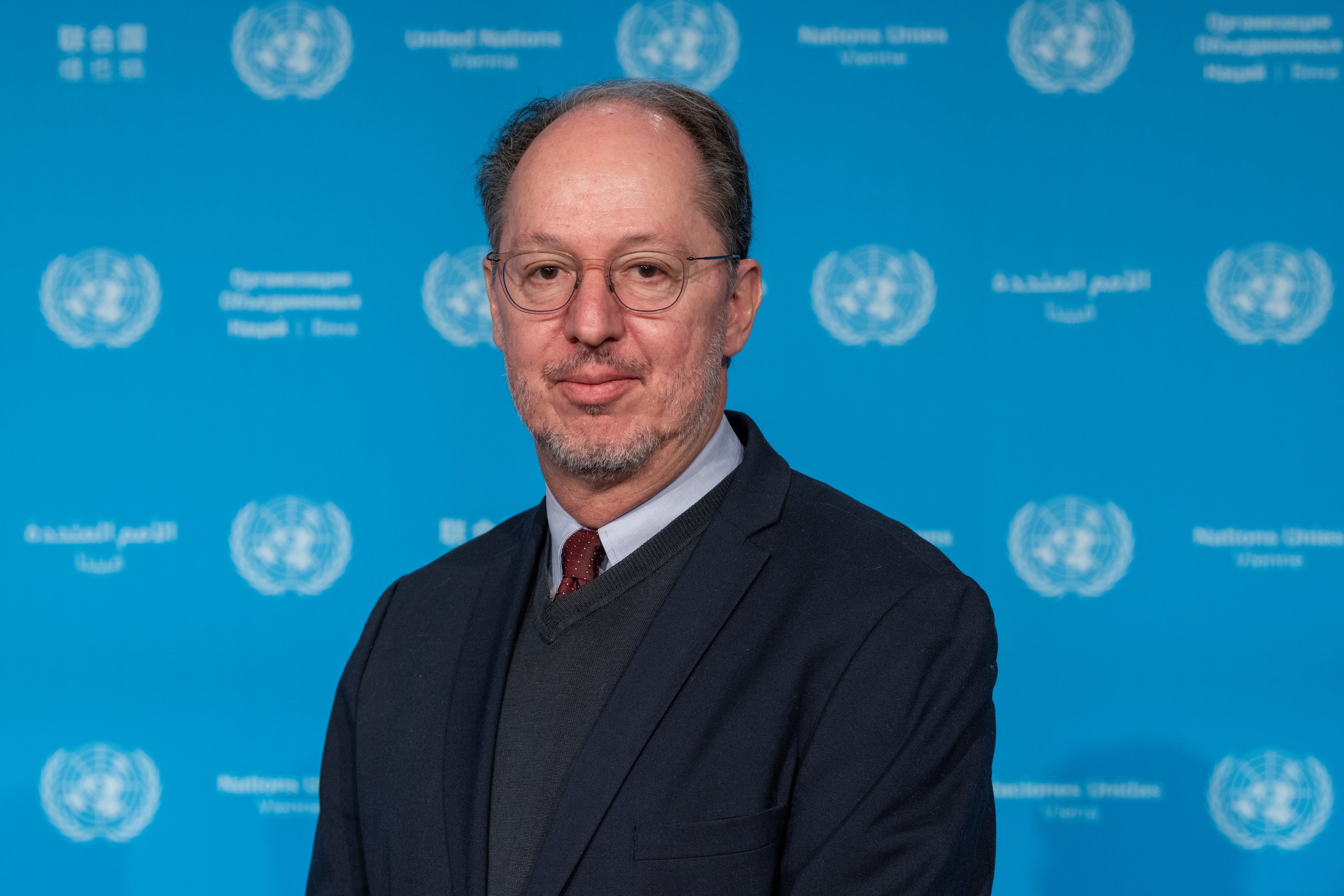
Pablo de Greiff, UN expert: ‘Russia is responsible for human trafficking’

Russia has violated international law by recruiting foreign nationals through deception and coercion. That is the conclusion reached by the United Nations Independent International Commission of Inquiry on Ukraine in a report published Monday, which documents dozens of cases of people who were lured with promises of civilian jobs in Russia and ended up, against their will, fighting for the Russian Army.

Seguir leyendo

© ONU

Pablo de Greiff.
  •  

​Pragmatic or pointless? Europe’s rift over whether to pick up the phone to Putin

With no single European representative negotiating directly with Moscow, some leaders are establishing their own channels – with messy results

The Nordic countries rarely fall out in public over foreign policy, least of all over Russia.

But a 90-minute phone call this week to Vladimir Putin by the leaders of Finland and Norway drew an unusual rebuke from their Danish and Swedish neighbours.

Continue reading...

© Photograph: SPUTNIK/Reuters

© Photograph: SPUTNIK/Reuters

© Photograph: SPUTNIK/Reuters

  •  

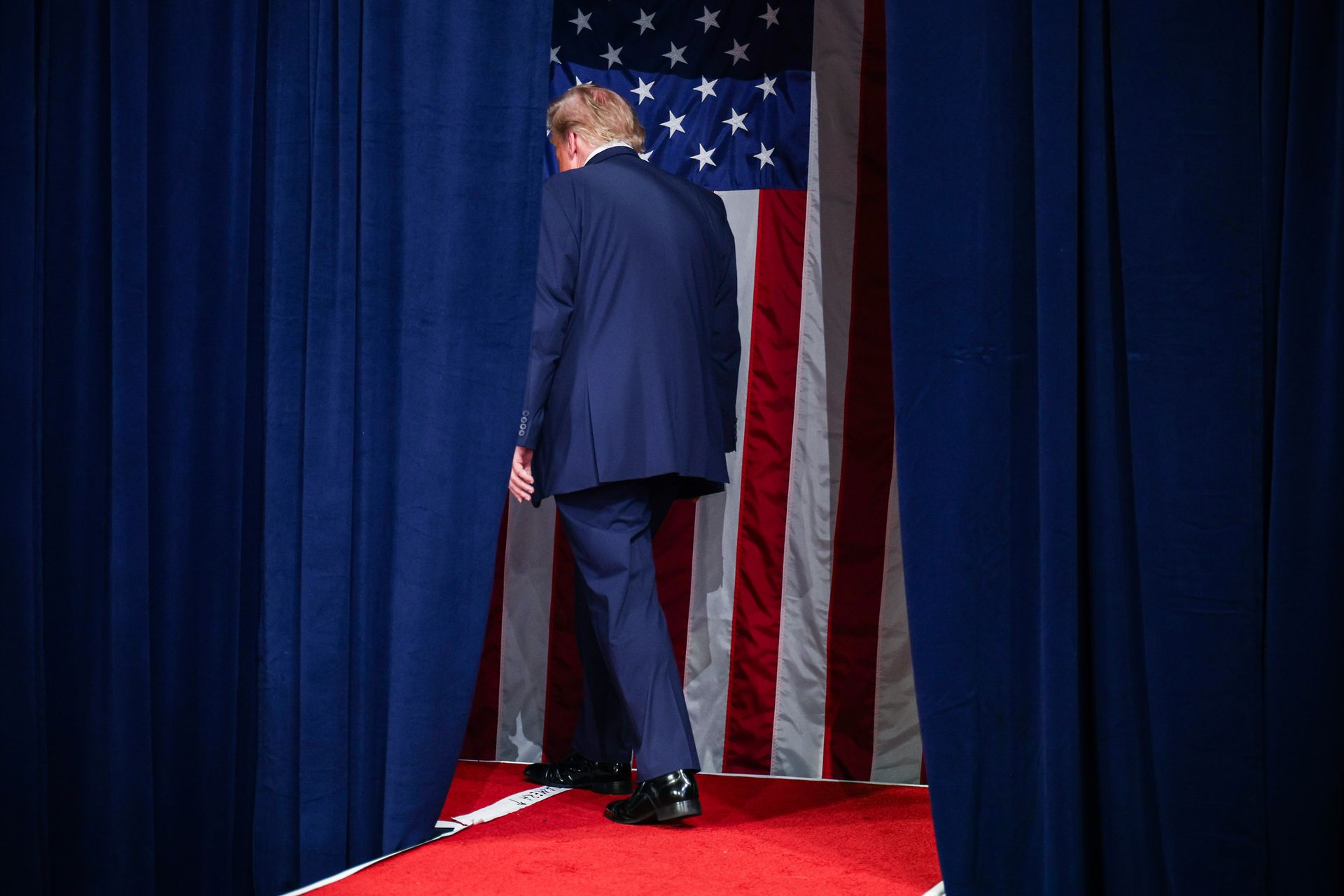
It’s easy to see through Trump’s Ukraine ploy | Kenneth Roth

In advance of the midterms, Trump is blaming Kyiv for high gas prices while making clear moves to support Russia

As the US midterms approach, Donald Trump is abandoning Ukraine’s democracy in a desperate effort to deny responsibility for worsening inflation. Yet this past weekend’s dramatic elections in Brazil and Serbia show that voters can see through such subterfuge.

There is nothing like a political party’s corrupt indifference to the plight of ordinary people to galvanize voter turnout. If US voters follow in the footsteps of their Brazilian and Serbian counterparts, a Democratic landslide is likely.

Continue reading...

© Photograph: Kevin Lamarque/Reuters

© Photograph: Kevin Lamarque/Reuters

© Photograph: Kevin Lamarque/Reuters

  •  

“Vitória de Lula da Silva foi uma surpresa pessoal”. Veja “A Arte da Guerra”

Ouça e acompanhe “A Arte da Guerra” também em formato podcast:

Apple Podcasts | Spotify | Google Podcasts | Anchor

Uma semana cheia de surpresas.

A primeira resultou da vitória de Lula da Silva na segunda volta das presidenciais brasileiras – o que levam o presidente para um quarto mandato, que terá dificuldades, mas que não são, por alguém com a sua enorme experiência acumulada, inultrapassáveis. Longe disso.

A segunda surge do facto de o primeiro-ministro Benjamin Netanyahu ter sobrevivido a mais um ato eleitoral – mas, neste caso, Francisco Seixas da Costa estava à espera exatamente disso.

A terceira emana de um telefonema dos chefes de Estado e de governo da Noruega e da Finlândia para o presidente russo, Vladimir Putin. É um risco político a adiante se verá qual é o resultado prático.

Tudo para ver no programa desta semana de A Arte da Guerra, com o embaixador Francisco Seixas da Costa e condução do jornalista António Freitas de Sousa.

  •  

What 'Putin's strikes' tell us about Russia’s war in Ukraine

The Kremlin has instructed loyal Russian media to describe attacks on Ukraine's energy infrastructure as "Putin's strikes," and to portray them as far more effective than Ukrainian attacks on Russia, according to an Oct. 21 report by Meduza.

So far, few outlets have picked

  •  

Putin es optimista con la ayuda de Trump

La anunciada reanudación de las conversaciones entre Rusia, Ucrania y EE UU para finalizar la guerra iniciada por Vladímir Putin podría alimentar unas esperanzas de paz hoy por hoy ilusorias. El presidente ruso, que envió sus tropas a la conquista del país vecino el 24 de febrero de 2022, ha reiterado recientemente que desea el fin de las hostilidades bélicas en Ucrania, pero su idea de “paz” consiste hasta ahora en satisfacer unas exigencias inalterables, incompatibles con el futuro de Ucrania como estado independiente y amenazadoras para la seguridad de sus vecinos occidentales europeos.

Seguir leyendo

© Julia Demaree Nikhinson (AP)

Vladimir Putin y Donald Trump en 2025.
  •  

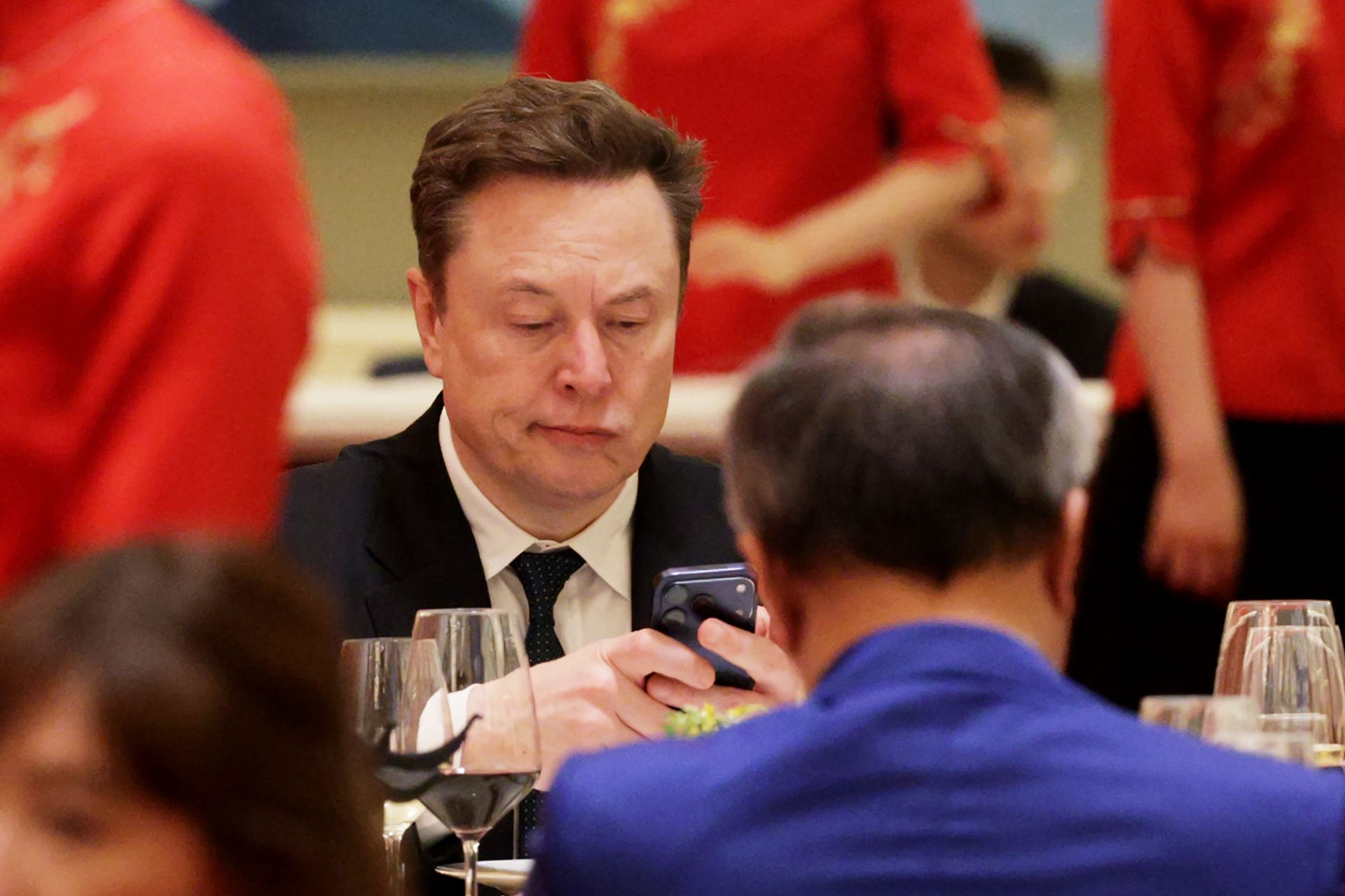
Putin: Russia in ‘close contact’ with ‘genius’ Musk over satellite networks

Russian President Vladimir Putin praised SpaceX CEO Elon Musk as a “genius” Wednesday while revealing that Russia has been in contact with the billionaire as the country works to develop a rival satellite internet network. Putin made the remarks during a summit with African leaders in Moscow, where Maksut Shadayev, Russia’s digital development minister, briefed…

  •  

“I really don’t want this to be Yalta 2, 3, 4”: Zelenskyy fears Trump-Xi-Putin meeting could redivide world, with Ukraine on agenda

The Crimean Conference: Prime Minister Winston Churchill, President Franklin D. Roosevelt, and Marshal Joseph Stalin at the palace in Yalta, February 1945 (Image: U.S. Signal Corps, from collection of the Library of Congress)

The great powers may be about to sit down and carve up the world’s spheres of influence again, and that is exactly what Ukrainian President Volodymyr Zelenskyy warns against. He says a possible meeting of US President Donald Trump, Chinese leader Xi Jinping, and Russian President Vladimir Putin would likely focus on the Middle East and Ukraine, and that he does not want it to become a new “Yalta.”

At the Yalta Conference in 1945, Soviet leader Joseph Stalin, US President Franklin D. Roosevelt, and British Prime Minister Winston Churchill carved postwar Europe into spheres of influence, settling the fate of smaller nations without them at the table.

Zelenskyy warns that a meeting of today’s great powers could revive that practice.

Who stands to gain

Zelenskyy is blunt about who such a format would serve. He says he cannot see what China would gain from it, while Russia stands to gain a great deal.

“I just don’t see the benefit for China, and I definitely see the benefit of this format for Russia. We’ll see what kind of meeting this will be,” Zelenskyy says.

That advantage, he argues, would build on the 2025 Alaska summit, the Trump-Putin meeting that ended without a deal but which Moscow has since invoked as a baseline for its demands.

Zelenskyy warns against a new Yalta

What the three powers would actually discuss is not yet settled, Zelenskyy says, but Ukraine would be on the table whether or not it is in the room.

“They will certainly talk about the Middle East. They will certainly talk about Ukraine. I really don’t want this to be ‘Yalta 2, 3, 4,’ when there is a redistribution of influence,” he says.

He adds that he would like the trilateral talks in Abu Dhabi to take place before any meeting in China.

  •  

Putin hails Elon Musk’s ‘genius’ amid plans for Russian version of Starlink

Russia plans to build own version of US billionaire’s satellite communications to help attack Ukraine

Vladimir Putin praised Elon Musk’s genius and said he was in touch with Starlink’s controlling shareholder as Russia develops its own satellite communications for its military to use against Ukraine.

The Russian president, speaking at a summit with African leaders in Moscow, was comparing the Earth-orbiting network built by Musk’s SpaceX with Russia’s gradual efforts to build its own Rassvet constellation.

Continue reading...

© Photograph: Maxim Shipenkov/Reuters

© Photograph: Maxim Shipenkov/Reuters

© Photograph: Maxim Shipenkov/Reuters

  •  
❌