The European Commission has opened talks with oil producers, refiners and NATO over the future of Europe’s fuel industry, exposing growing tensions between decarbonisation, industrial competitiveness and the demands of military preparedness.
The European Union is reconsidering the strategic importance of its oil-refining industry as disruptions to international energy supplies and growing defence requirements force Brussels to examine whether Europe can afford further reductions in domestic fuel production.
On 28 October, the European Commission convened its first high-level dialogue with the European refining industry, bringing together energy companies, technology providers and representatives of NATO.
The meeting was chaired jointly by Energy Commissioner Dan Jørgensen and Defence and Space Commissioner Andrius Kubilius.
Its significance extends beyond the immediate increase in fuel prices associated with the conflict in the Middle East.
Brussels is confronting a longer-term problem: Europe intends to reduce its dependence on fossil fuels, but its transport networks, industrial infrastructure and military forces remain substantially dependent on petroleum products.
The question is no longer simply how quickly the European economy can decarbonise. It is also how much refining capacity must be retained to guarantee essential fuel supplies during a geopolitical crisis.
A strategic industry under pressure
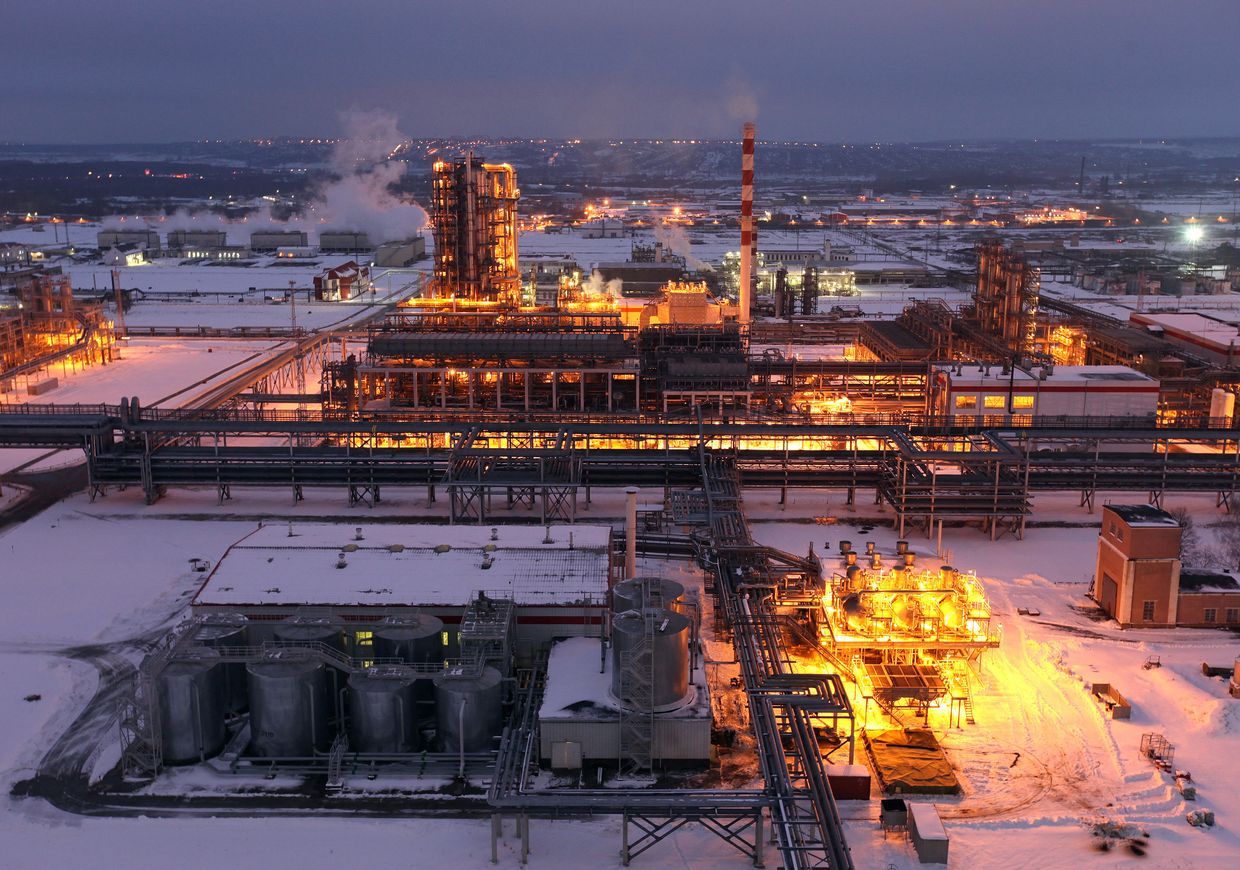
Europe’s refining industry occupies an important position in the continent’s energy system.
These products are essential not only for civilian transport and logistics but also for military aviation, armoured vehicles and the movement of equipment.
Maintaining adequate production capacity therefore has implications for both economic activity and defence readiness.
Yet European refineries have faced difficult commercial conditions for years.
High energy costs, international competition and declining expectations for long-term fossil-fuel demand have complicated investment decisions.
Refineries require substantial capital expenditure to remain competitive, meet environmental requirements and adapt production processes.
Companies considering whether to modernise facilities must consequently assess the profitability of assets that may be expected to operate in a progressively decarbonising economy.
The resulting uncertainty creates a problem for governments seeking to retain strategically important industrial capabilities.
The Middle East conflict changes the calculation
The immediate catalyst for the Commission’s initiative is the disruption to energy markets caused by the continuing conflict in the Middle East.
Interruptions to supply chains and uncertainty over maritime transport have increased concerns about the availability and cost of refined petroleum products.
Importing crude oil and importing finished fuels are not equivalent from a strategic perspective.
A country with domestic refining capacity can process available crude into the particular products required by its economy.
An economy heavily dependent on imported refined products is additionally exposed to processing capacity, transport availability and commercial decisions outside its jurisdiction.
The distinction becomes particularly relevant when governments must guarantee supplies of diesel and aviation fuel during an emergency.
European policymakers are therefore examining ways to improve output from existing facilities and strengthen the resilience of fuel supply chains.
However, the Commission has not announced a binding production target or a programme to reopen closed refineries.
The 28 October meeting represents the beginning of a policy discussion rather than the adoption of a new industrial strategy.
NATO introduces a different perspective
The participation of NATO gives the initiative a wider security dimension.
Military preparedness requires dependable access to energy products, including during periods when normal commercial supply chains are disrupted.
Aircraft, naval vessels, military logistics and ground operations cannot be reorganised around alternative energy sources at the same pace as some civilian activities.
Furthermore, the ability to sustain prolonged operations depends on reliable industrial production, storage, distribution and transport.
A refinery’s strategic importance may therefore exceed its immediate commercial profitability.
That raises difficult policy questions.
Governments may consider whether critical production facilities require targeted support, whether strategic stockpiles are sufficient and how supply arrangements should function during emergencies.
Any intervention would have to address competition rules, public financing and the risk of subsidising facilities that become commercially unviable.
Decarbonisation remains part of the policy
Brussels has not abandoned its climate objectives.
The Commission has explicitly linked its refining discussions to the development of sustainable biofuels and synthetic fuels, commonly known as e-fuels.
These technologies offer potential alternatives for sectors where direct electrification remains technically difficult, including aviation.
However, their commercial development requires investment, suitable feedstocks, reliable energy supplies and sufficient demand.
Traditional refineries may be able to participate in this transition, although the technical requirements and economic viability vary between facilities.
Jørgensen said the Commission intended to work with industry on a roadmap that would reconcile domestic fuel production with Europe’s longer-term climate ambitions.
The challenge will be translating those objectives into investment decisions.
Europe’s industrial strategy faces a practical test
The initiative illustrates a wider adjustment in European economic policy.
In recent years, the EU has increasingly described industrial capacity as an element of economic security, rather than treating production solely as a commercial activity.
Semiconductors, pharmaceuticals, critical minerals and defence equipment have all attracted attention because of vulnerabilities in international supply chains.
Oil refining is now entering the same discussion.
The Commission must determine how to preserve sufficient capacity for essential civilian and military requirements while continuing to encourage cleaner technologies.
Those objectives are not necessarily incompatible, but they operate over different timescales and involve different commercial incentives.
For European refiners, the central question is whether governments can provide enough regulatory and investment certainty to support modernisation.
For Brussels, it is whether the energy transition can proceed without creating new strategic dependencies.
The outcome of the dialogue will indicate how the EU intends to balance its climate commitments with the industrial demands of a less predictable security environment.
Some 80% of respondents back the continued strikes, even if Washington restricts intelligence sharing or Starlink operations. Only 11% said Ukraine should pause the attacks, despite Russia's ongoing attacks on the Ukrainian energy grid, according to the survey.
During those days, Ukrainian forces acted "a little more cautiously," but were not ordered to refrain from responding to Russian strikes, according to President Volodymyr Zelensky.
The first Russian diesel tanker under the new deal between Russia and the United States is now heading for New York with a 40,000-metric-ton cargo, enough to cover barely two hours of American demand.
The deal began with a phone call, in which Russian President Vladimir Putin seems to
Norway has put into force a new round of sanctions against Russia that hits banks, listed oil refineries, ports, airports, and suppliers of Russia’s military industry, the Norwegian Foreign Ministry announced. The rules mirror the EU’s 21st sanctions package, which Brussels adopted in July.
The EU’s 22nd package, adopted on 12 October, is principally a list of names, while the 21st brought significant new measures, lawyers noted. Among them are new tools against the shadow fleet, the tankers with murky ownership that Russia uses to move oil around sanctions. That fleet also sails along Norway’s coast, and a new Norwegian Coastal Administration report found that it poses a growing threat to security and the environment there.
Banks, refineries, and Sheremetyevo
Norway is not an EU member, but it has joined every EU sanctions package against Russia, with a few exceptions and national adjustments. Oslo backed this one politically on 11 August, and the rules took effect on 21 October. Part of the package was already in force. It placed travel restrictions and asset freezes on 48 people and asset freezes on 168 entities, and it listed 41 shadow fleet vessels on 14 August.
Norway’s transaction ban now covers 33 more Russian credit and financial institutions. A separate ban covers 22 more abroad, including in India, Mongolia, Nigeria, and the UAE.
Explore further
Norway sends 69 Russians home without their ship, held for Ukraine
Another transaction ban reaches listed refineries in Russia and third countries that process Russian oil or help dodge sanctions. A Georgian refinery joins that list on 25 January 2027. The same ban adds two Russian ports and four Russian airports, including Moscow’s Sheremetyevo.
Drone gear and the shadow fleet
Export curbs on dual-use goods now cover 51 new entities that back Russia’s military industry. Some are in China, including Hong Kong, and others are in India, Kazakhstan, Kyrgyzstan, Türkiye, and the UAE. The banned-exports list adds nickel and beryllium powder, along with drone gear such as jamming and interception systems, launchers, and servo motors.
Oslo can now also list ships that service sanctioned shadow fleet tankers or swap cargo with them at sea. Elsewhere in Europe, France’s navy and UK forces have boarded sanctioned shadow fleet tankers this year.
Ukraine got no early warning from its partners of the first wave of Russian ballistic missiles on the night of 18–19 October, President Volodymyr Zelenskyy told US senators on 19 October. He also said Starlink and Starshield terminals still stop working above certain speeds on parts of the front, and that Washington has explained neither problem. In the same video call, according to a transcript obtained by Axios, he said US Defense Secretary Pete Hegseth is not signing off on deliveries of Patriot interceptors and AIM-9X missiles for NASAMS that NATO countries have already paid for.
This comes as the US presses Kyiv to stop its strikes on Russian oil refineries, which Trump has blamed for high fuel prices at home. Washington supplies both the early launch warnings and the Patriot interceptors Ukraine needs against Russian ballistic missiles, and Zelenskyy says both are now failing at once, as Russia keeps firing ballistic missiles at Ukraine’s grid ahead of winter. If neither the warnings nor the interceptors come through, Ukrainian cities would face winter strikes with less notice and fewer means to stop them.
On the morning of 20 October, Zelenskyy wrote that he had spoken with US Secretary of State Marco Rubio about interceptors against ballistic missiles, early warning of Russian ballistic attacks, and restoring Starlink and Starshield. He thanked Rubio for his readiness to help and his clear position, and said they had agreed to speak again soon. He did not say whether anything had been resolved.
Patriots paid for, not signed
“We have almost no Patriot interceptors left from the US partners,” Zelenskyy told the senators.
Hegseth “has the contracts for Patriot missiles on his desk,” a Ukrainian official told the Kyiv Independent, adding that allies had already paid for them. Another senior official called the batch “significant.” One of the main channels for Ukraine’s Patriot supply is NATO’s PURL mechanism, under which allies fund purchases of US weapons for Ukraine, a senior Ukrainian military official told the outlet.
On 19 October, Zelenskyy wrote that some types of vital supplies were being delayed at the US Department of War, as the Trump administration also calls the Pentagon. He added that some political agreements had not been carried out at the working level.
Explore further
Musk pushed Trump to slow Starlink in Ukraine, weakening air defenses as Russian drones attacked cities – The Telegraph
A NATO official told the Kyiv Independent that PURL deliveries, including air defense, were continuing. Another said some shipments could face delays, but that political reasons were unlikely to explain them. A US government official called Ukraine’s claims “not true.” The Pentagon did not respond to the outlet.
No warning for Kyiv hours after Zelenskyy said US alerts were back
On 18 October, Zelenskyy said on NBC that US warnings of ballistic launches had resumed after three days without them. That night, Russia launched two ballistic waves at Ukraine, and information from partners did not arrive before the first, Air Force spokesperson Yurii Ihnat said. Zelenskyy told the senators Ukraine had not received US warnings on three occasions in the past week. “We have received no clear explanation from Washington,” he said.
“All of this suggests that some political decision has been made to slow down support for us,” Zelenskyy said.
Zelenskyy offered a 30-day pause on refinery strikes for Patriots
Zelenskyy told the senators he had offered US envoys Steve Witkoff and Jared Kushner a 30-day halt on strikes against Russian refineries. In return, the US would supply Patriot interceptors to cover that period. He said the envoys had shown no openness to the idea.
Explore further
Trump calls Ukraine’s renewed refinery strikes “a disgrace” after Russia’s 39-missile strike on its energy sites
On 20 October, Norway announced talks in Oslo that day between Zelenskyy, Norwegian Prime Minister Jonas Gahr Støre, and Finnish President Alexander Stubb, with Witkoff attending in person and Kushner by video.
Senators back Kyiv. Trump says intelligence still flows
Senator Thom Tillis said he and his colleagues remain committed to standing with Ukraine and its European allies, while Senator Richard Blumenthal wrote that bipartisan support was “clear and unequivocal” and would be expressed “in upcoming action.”
US President Donald Trump told reporters on 19 October that Washington is still sharing intelligence with Ukraine and that he did not know who ordered the throttling of Starlink, Axios reported.
“Zelensky doesn’t know what he is talking about,” Trump said.
Ukraine was prepared to suspend attacks on Russian oil refineries if Washington supplied anti-ballistic missile systems to protect its energy infrastructure, President Volodymyr Zelenskyy has revealed. The proposed compromise was not accepted, despite American pressure on Kyiv to halt its strikes.
Ukrainian President Volodymyr Zelenskyy has disclosed that Kyiv offered to suspend attacks on Russian oil refineries in exchange for temporary American anti-ballistic missile protection for Ukraine’s energy infrastructure. Washington did not provide the requested systems, leaving Ukraine exposed to continued Russian missile strikes while the United States sought to restrict Ukrainian operations against Russia’s oil industry.
Speaking at a press conference in Brussels on Friday, 16 October, Zelenskyy said the proposal had been presented to Washington as a compromise following President Donald Trump’s agreement with Vladimir Putin on Russian diesel supplies and restrictions on attacks against energy facilities.
The Ukrainian president confirmed that Kyiv had not been consulted before Washington reached its understanding with Moscow. He described the diesel agreement as a surprise and objected to arrangements determining Ukraine’s military actions without its participation. Any agreement concerning Ukrainian strikes on Russian territory, he argued, required consultation with the Ukrainian government.
Nevertheless, Zelenskyy said Ukraine had been willing to accommodate American demands, even under an arrangement that did not require Russia to suspend its own attacks. Instead of insisting on reciprocal restrictions, Kyiv proposed receiving sufficient anti-ballistic missile systems to protect its electricity network for the duration of the requested suspension.
The proposal reflected Ukraine’s immediate security requirements. Russia has repeatedly targeted power stations, substations and other critical infrastructure, while Ukrainian forces have attacked Russian refineries to disrupt fuel production and reduce revenues available to Moscow. Halting the Ukrainian campaign without additional defensive capabilities would have left Kyiv surrendering one means of economic pressure while remaining vulnerable to Russian bombardment.
Zelenskyy said he had asked Washington for a limited number of systems, rather than a substantial new military commitment. The proposed deployment would have lasted only as long as the United States required Ukraine to refrain from attacking Russian refineries. However, according to the president, no such assistance was provided.
US diesel agreement deepens dispute
The disagreement follows the diesel arrangement announced by Trump on 9 October, under which Russia agreed to resume substantial petroleum product exports to American and international markets. Washington also authorised certain transactions involving Russian diesel, easing restrictions previously intended to reduce Moscow’s energy revenues.
The agreement created a direct conflict between American energy policy and Ukraine’s strategy of targeting Russian refining capacity. Washington wants additional diesel supplies to ease pressure on fuel markets, while Kyiv regards attacks on oil infrastructure as a means of weakening Russia’s ability to sustain its invasion.
That disagreement intensified after Ukraine resumed attacks on Russian refineries, including a strike against a facility in the Ryazan region. Trump criticised the operations, accusing Kyiv of contributing to higher global oil prices. Zelenskyy, meanwhile, argued that increased Russian diesel revenues would provide Moscow with additional resources to finance its military campaign.
The Ukrainian president’s proposal also exposed the limitations of the temporary energy ceasefire promoted by Washington. Russia continued attacks against Ukrainian civilian infrastructure, including electricity facilities, despite the American initiative. Kyiv’s proposed compromise would have addressed the resulting imbalance by providing defensive protection rather than relying on Russian restraint.
The urgency of Ukraine’s request was illustrated by renewed Russian attacks during Zelenskyy’s visit to Brussels. According to the Ukrainian presidency, strikes on 15 October damaged energy infrastructure in several regions, leaving almost 15,000 people without electricity in Volyn and disrupting supplies in parts of Kyiv and the surrounding region.
Ukraine continues to face shortages of the interceptors required to defend against ballistic missiles. Zelenskyy has identified anti-ballistic capabilities as an immediate priority, particularly as Russia intensifies attacks ahead of winter. During talks with NATO Secretary General Mark Rutte, he stressed the need for additional missile interceptors and other air defence equipment.
Zelenskyy said European leaders had supported Ukraine’s position in the dispute with Washington. His remarks came as the EU reaffirmed its intention to maintain economic pressure on Moscow despite the Trump administration’s decision to facilitate Russian diesel exports.
As EU Today reported earlier on Friday, von der Leyen and Costa rejected any relaxation of European sanctions while Russia continues its war. The Commission is preparing a further sanctions package, maintaining a policy intended to restrict Moscow’s ability to finance its military operations.
The contrasting American and European positions have become increasingly significant for Kyiv. Washington is seeking to stabilise fuel markets through arrangements with Moscow, while European governments remain committed to reducing Russian energy revenues and strengthening Ukraine’s military and economic resilience.
For Zelenskyy, the unresolved question is whether Ukraine can be expected to limit attacks on Russian oil infrastructure while receiving neither reciprocal guarantees from Moscow nor additional protection against Russian ballistic missiles. His account of the unsuccessful American negotiations indicates that Kyiv was prepared to compromise, but only if its immediate defensive needs were addressed.
Washington’s proposed energy ceasefire could force Ukraine to abandon one of its most effective means of economic pressure against Russia without securing equivalent concessions from Moscow. Donald Trump’s parallel agreement with Vladimir Putin over Russian diesel raises further questions about whether American energy priorities are beginning to dictate the terms of negotiations over Ukraine.
President Volodymyr Zelenskyy has placed an important qualification on Donald Trump’s proposed energy ceasefire: Ukraine will stop attacking Russian energy facilities only if Moscow stops targeting Ukraine’s electricity generation and distribution infrastructure. Speaking at the Warsaw Security Forum on Monday, 12 October, Zelenskyy confirmed Kyiv’s willingness to accept a reciprocal arrangement while pointing out that Russian attacks had continued after the American president announced that a ceasefire was already in effect.
The sequence of events has exposed a fundamental weakness in Washington’s initiative. On 11 October, Trump announced an immediate energy ceasefire, declaring that Russia and Ukraine had both agreed to suspend attacks on energy infrastructure. Yet Kyiv had not received the agreement’s terms, Moscow had offered no public confirmation, and Russian drones continued striking Ukrainian power facilities, including a combined heat and power plant in Kharkiv.
Zelenskyy’s response was deliberately restrained. Rather than reject Trump’s initiative, he welcomed the possibility of an agreement while insisting that Russia demonstrate its acceptance through its actions. His remarks also exposed the difference between announcing a diplomatic understanding and establishing an enforceable military arrangement.
An unequal exchange
The apparent symmetry of an agreement prohibiting attacks on energy facilities disguises substantial differences between the two countries.
Russia retains an extensive oil-refining industry, producing fuels for domestic consumption, military operations and export. Ukrainian drone attacks on refineries have consequently become an instrument of economic warfare, disrupting production, increasing operating costs and forcing Moscow to divert resources towards protecting strategically important industrial installations.
Ukraine occupies a different position. Its major oil-refining capacity was devastated early in the full-scale invasion, including the Kremenchuk refinery. Russia’s present campaign is concentrated heavily on electricity generation, substations, heating systems and other installations essential to maintaining civilian life and economic activity.
An agreement narrowly focused on oil refineries would therefore protect an important Russian asset while offering Ukraine comparatively little protection. A comprehensive energy ceasefire could be reciprocal, but only if it explicitly covered the infrastructure each side actually possesses and attacks.
Zelenskyy’s insistence on equivalent obligations is consequently more than a negotiating formula. It seeks to prevent Washington from treating attacks on Russian fuel production and the destruction of Ukraine’s electricity and heating networks as interchangeable military activities without examining their respective consequences.
The distinction becomes particularly consequential with winter approaching. A Ukrainian suspension of attacks on Russian refineries could allow Moscow to restore production and rebuild damaged facilities. Unless Russia simultaneously halted attacks on Ukrainian energy infrastructure, Kyiv would surrender an important means of pressure while remaining exposed to further disruption of electricity and heating supplies.
The American pressure campaign
The concern in Kyiv is no longer confined to the proposed ceasefire’s wording. European officials have disclosed that Washington is threatening to restrict military assistance and intelligence sharing unless Ukraine suspends its strikes against Russian refineries.
According to accounts of the American pressure campaign, the threatened measures include suspending the Prioritised Ukraine Requirements List (PURL), the NATO-coordinated mechanism through which European countries finance purchases of American weapons for Ukraine. Reuters was unable to independently verify the reported threats, and the White House had not responded publicly.
If implemented, such restrictions would establish a direct connection between Ukraine’s willingness to accommodate Washington’s energy priorities and its access to essential military support.
This creates an imbalance in the negotiations. Moscow could continue military operations while Kyiv faced the possibility of losing American assistance for refusing an agreement whose Russian obligations remain undefined.
The diesel agreement and its political significance
The ceasefire proposal also needs to be examined alongside Trump’s separate agreement with Putin, announced on 9 October, to increase Russian diesel supplies.
Trump stated that Russia would initially release more than 300,000 tonnes of diesel, followed by another 500,000 tonnes in November and one million tonnes thereafter. Further supplies were envisaged, depending on Russia’s refining capacity.
The US Treasury subsequently issued General Licence 135, authorising transactions involving Russian-origin diesel that would otherwise face sanctions restrictions.
The initial volumes are unlikely to transform international diesel markets. Nevertheless, the agreement gives Washington a commercial interest in maintaining Russian refinery output at precisely the moment Ukrainian attacks are disrupting it.
Trump has an evident domestic incentive to seek lower fuel prices before the American congressional elections on 3 November. Putin, meanwhile, has an interest in preserving Russia’s refining capacity and reopening sanctioned markets.
These interests need not prove the existence of a coordinated political strategy against Kyiv. They do, however, create conditions in which American economic priorities and Russian military objectives could converge.
The possibility becomes more significant when considered alongside Trump’s public criticism of Zelenskyy and his suggestion that Ukraine requires different leadership.
The risk of a diplomatic trap
The most consequential scenario is one in which Washington demands immediate Ukrainian compliance while leaving Russia’s obligations subject to subsequent negotiation.
If Kyiv suspends refinery attacks without obtaining verifiable Russian commitments, Moscow gains relief from a costly Ukrainian campaign. If Kyiv refuses, Washington could present that refusal as an obstacle to peace and use it to justify restrictions on military assistance.
This is a possible negotiating outcome, not an established secret agreement between Trump and Putin. There is no publicly verified evidence that the two presidents arranged the ceasefire specifically to force Ukraine into such a position.
Nevertheless, the combination of the diesel agreement, American pressure over refinery strikes and the premature announcement of a ceasefire creates a credible risk that Ukraine could be required to make concessions before Russia demonstrates any corresponding restraint.
The implications extend beyond Ukraine. European governments financing American weapons through PURL would find their own assistance programmes vulnerable to Washington’s decisions over an energy arrangement negotiated separately with Moscow.
For Brussels, the immediate question is therefore whether European military support can remain dependable if American commercial interests increasingly influence the conditions attached to supplying Ukraine.
Kyiv’s remaining leverage
Ukraine’s attacks on Russian refineries cannot by themselves compel Moscow to end the war. They can, however, impose material economic costs and complicate Russia’s ability to maintain fuel production, exports and military logistics.
Abandoning those attacks without an enforceable agreement would remove pressure from Moscow without ensuring that Ukrainian civilians receive any corresponding protection.
Zelenskyy’s position preserves an alternative: simultaneous, reciprocal restrictions covering electricity generation, heating installations, oil refineries and other specified energy infrastructure, supported by clear verification procedures and consequences for violations.
Whether Washington is prepared to enforce such an arrangement against Russia remains unanswered.
The central danger for Kyiv is not an energy ceasefire itself. It is an arrangement in which Ukraine’s obligations are immediate and enforceable through the threat of lost American support, while Russia’s obligations remain uncertain.
Until that imbalance is resolved, Trump’s initiative risks delivering Moscow protection for its oil industry without securing protection for Ukraine’s energy system.
Within hours of Donald Trump announcing an immediate halt to Russian and Ukrainian attacks on energy infrastructure, Moscow struck a major power plant in Kharkiv. Kyiv has agreed to a reciprocal ceasefire, but Russia has yet to confirm its participation, leaving serious doubts over what Washington has actually secured.
President Donald Trump’s announcement of an immediate ceasefire covering Russian and Ukrainian energy infrastructure was overtaken by events on Sunday evening when Russian forces struck a major thermal power station in Kharkiv. President Volodymyr Zelenskyy confirmed Ukraine’s willingness to suspend attacks on Russian energy facilities, but said Moscow was continuing its bombardment even as Washington presented the arrangement as an accomplished diplomatic breakthrough.
The contradiction emerged within hours of Trump declaring that Russia and Ukraine had agreed to stop targeting each other’s energy infrastructure. Zelenskyy, responding in his evening address on 11 October, welcomed the proposal but reported that Russian attack drones remained active over Ukrainian territory and that Kharkiv’s CHP-5 thermal power station had just been struck.
The Ukrainian president made clear that Kyiv had not rejected the American initiative. Ukraine was prepared to refrain from attacking Russian energy installations and expected Moscow to accept the same restrictions. However, no corresponding commitment had been publicly confirmed by the Kremlin, and Washington had provided no explanation of how the supposed ceasefire would be implemented.
The timing was particularly significant because Ukraine had apparently not been informed that a binding agreement had been concluded. According to accounts of the announcement, Zelenskyy was unaware of Trump’s declaration before it became public, although he subsequently indicated his readiness to support the initiative.
His response therefore amounted to an acceptance of the proposed terms rather than confirmation that a negotiated ceasefire was already in force.
More than 200 attacks on Ukraine’s power network
The reported strike on Kharkiv came at the end of a particularly destructive week for Ukraine’s civilian infrastructure. Zelenskyy said Russian forces had carried out more than 200 attacks against electricity generation and transmission facilities over seven days, alongside 17 strikes targeting gas and oil installations.
He also reported that more than 150 Ukrainians had been killed and over 700 wounded during the week. These figures, supplied by the Ukrainian authorities, have not been independently verified.
The continuing bombardment places additional pressure on Ukraine’s power network as winter approaches. Thermal power stations and substations remain particularly vulnerable, while damage to generating capacity can disrupt electricity, heating and water supplies across entire urban districts.
Washington’s pressure on Kyiv
Trump’s ceasefire announcement follows an increasingly bitter dispute over Ukrainian attacks on Russian oil refineries, which have damaged Moscow’s fuel production and distribution infrastructure.
The American president has blamed Ukrainian strikes for worsening international diesel shortages and rising fuel prices. His administration has also threatened restrictions on military assistance and intelligence sharing if Kyiv refuses to suspend its campaign against Russian refineries.
Meanwhile, Washington has reached an arrangement with Moscow permitting substantial Russian diesel exports under a temporary easing of sanctions. Zelenskyy has criticised the decision, arguing that additional energy revenues could strengthen Russia’s capacity to continue its invasion.
For Ukraine, refinery attacks have become an important means of disrupting Russian military logistics and imposing economic costs on Moscow. Agreeing to suspend them without guarantees that Russian strikes will also cease would remove one of Kyiv’s principal instruments of pressure.
The diplomatic sequence has consequently raised questions about whether Trump’s initiative offers equivalent obligations to both countries, or primarily serves Washington’s immediate objective of stabilising fuel supplies.
Kremlin silence leaves ceasefire in doubt
By Sunday evening, Moscow had issued no public confirmation that Putin had accepted the arrangement. Washington had provided no details of its duration, the installations covered or any mechanism for verifying compliance.
An agreement confined to energy infrastructure would also leave both armies free to continue other military operations, including attacks on cities, industrial installations and military positions.
Zelenskyy said Ukrainian forces had received the necessary orders, while Kyiv awaited clarification of Washington’s discussions with Moscow. He maintained that Ukraine supported credible measures to end the fighting but expected Russia to demonstrate a corresponding commitment.
The immediate question is whether Trump obtained an undertaking from Putin that Moscow is prepared to honour. Until Russia confirms the terms and its attacks cease, the announced energy truce remains a presidential declaration rather than an established cessation of hostilities.
ISLAMABAD: Pakistan is set to sign long-delayed agreements with five oil refineries, unlocking more than $6 billion in planned upgrades to modernize aging plants and cut reliance on fuel imports, officials said. But industry warnings that changes to the financial framework could derail the projects overshadowed the announcement. The agreements with Pak-Arab Refinery Ltd., Pakistan ... Read more
 Login