❌

Reading view

Finnish police launch criminal probe over forest cleared for Google data center

Finnish police opened a criminal investigation Thursday into Google’s work on a planned data center in northern Finland after the company cleared hundreds of acres of forest without completing required environmental reviews. The investigation adds to mounting scrutiny of Google’s $1.5 billion investment in artificial intelligence infrastructure in Finland, where the company’s expansion plans have…

  •  

Germany and Italy Clash Over Gas Storage as Europe’s Energy Prices Return to Crisis Levels

A dispute between Germany and Italy over natural gas storage has exposed tensions within the European Union’s energy market, as wholesale prices approach levels last recorded during the 2022 energy crisis and governments confront the prospect of another expensive winter.

Italy has accused Germany of contributing to the latest surge in European natural gas prices by delaying the replenishment of its underground storage facilities, reopening a debate about national energy policies and their consequences for the EU’s single market.

The dispute emerged on 29 October after the European benchmark gas price briefly exceeded €100 per megawatt hour the previous day, its highest level since December 2022.

Germany’s gas storage facilities were just 61.7 per cent full, compared with almost 91 per cent in Italy and an EU average of approximately 75 per cent.

The difference has become politically sensitive because European countries purchase gas in an interconnected market, meaning decisions taken by one major consumer can influence prices paid elsewhere.

Speaking at the Montel Italian Energy Day conference in Milan, Alessandro Noce, director general for energy markets and infrastructure at Italy’s Energy Ministry, criticised Germany’s approach to preparing for winter.

According to Reuters, Noce argued that Italy had spent €300 million securing additional gas reserves, only to face higher market prices as Germany attempted to replenish its comparatively depleted stocks.

He also questioned whether Germany had delayed purchases because of preparations to privatise energy companies involved in the storage process.

Germany’s Economy Ministry did not immediately respond to the criticism.

Germany’s Storage Decisions Under Scrutiny

The German government’s approach has attracted particular attention because of its role in the operations of Uniper and Securing Energy for Europe (SEFE).

Both companies became important components of Germany’s energy-security arrangements following the disruption of Russian gas supplies in 2022.

Plans concerning their future ownership have coincided with renewed questions about how Berlin balances commercial considerations against the need to maintain strategic reserves.

At the Milan conference, an energy analyst suggested that preparations for privatisation had contributed to delays in storage purchases.

That assessment has not been established as the definitive explanation for Germany’s comparatively low reserves.

Nevertheless, the resulting political dispute demonstrates the difficulties of managing energy security through a system in which national governments retain considerable discretion while their purchasing decisions affect a common market.

Europe’s Gas Market Faces Renewed Pressure

Europe’s latest price increase has several causes extending beyond German storage policies.

Disruptions to liquefied natural gas shipments associated with the conflict involving Iran have constrained supplies from the Middle East.

At the same time, European countries entered the summer storage-refilling period with unusually low reserves following the previous winter.

The EU Agency for the Cooperation of Energy Regulators (ACER) reported that underground gas storage was only 28 per cent full at the end of winter 2025–26.

By 21 October, that figure had risen to 75 per cent, still below historical levels.

In its latest gas-market monitoring report, ACER estimated that disruption linked to the Middle East conflict had added between €18 billion and €33 billion to Europe’s gas-import bill.

The agency also found that American liquefied natural gas accounted for roughly 30 per cent of EU gas supplies, reflecting Europe’s growing reliance on transatlantic energy imports.

Although this diversification has reduced dependence on Russian pipeline gas, it has also increased Europe’s exposure to international competition for LNG cargoes.

European buyers must compete with customers in Asia, particularly when colder weather or geopolitical disruptions increase demand.

EU Storage Rules Face a Test

The disagreement has implications for the European Union’s gas-storage framework.

Following the 2022 energy crisis, the EU introduced mandatory storage requirements intended to reduce the risk of supply shortages during winter.

The arrangements were subsequently extended until the end of 2027.

Under the revised rules, member states retain a 90 per cent storage-filling target but have greater flexibility over when and how it is achieved.

Countries may reach the target between 1 October and 1 December, rather than being bound to the previous 1 November deadline.

Further flexibility is available in difficult market conditions.

These provisions were designed partly to prevent governments from creating artificial demand peaks by purchasing gas simultaneously to meet rigid deadlines.

However, the present dispute suggests that delayed purchases can create another problem if several major consumers need additional supplies as winter approaches.

Germany’s current storage level does not, by itself, establish a breach of EU requirements. The applicable deadlines and permitted exemptions must also be considered.

Italy Seeks Greater Scope for Intervention

The Italian government has meanwhile been seeking permission from the European Commission to use public funds to reduce energy costs for households and businesses.

Rome’s concerns reflect the economic consequences of sustained high gas prices, particularly for industries dependent on energy-intensive manufacturing.

Italy faces a general election expected in 2027, adding a domestic political dimension to the debate over energy subsidies.

Noce warned that prices could rise to between €150 and €180 per megawatt hour if January brings particularly cold weather.

Such an outcome remains a scenario rather than a forecast.

Energy markets will also be influenced by developments in the Middle East, LNG deliveries, industrial demand and winter temperatures.

A European Problem Without a Single National Solution

Europe has expanded its LNG import infrastructure and diversified energy sources substantially since 2022.

However, the latest price increases demonstrate that greater import capacity does not necessarily insulate consumers from global supply disruptions.

The German–Italian dispute also exposes the limits of national energy planning within an integrated European market.

Germany’s storage policies affect its neighbours, just as decisions taken elsewhere influence the price German consumers pay.

The central question for Brussels is whether existing coordination arrangements provide sufficient incentives for governments to safeguard their own winter supplies without transferring additional costs to other member states.

With the heating season approaching, that issue is becoming an immediate economic concern rather than a theoretical dispute about European energy solidarity.

  •  

Economy, healthcare, Iran war top voters’ concerns ahead of midterms: Gallup

The most important issues that U.S. voters care about in the upcoming elections are economy, healthcare and the war in Iran, according to a poll released Thursday. In Gallup’s latest poll, half of the respondents said the economy and healthcare would be extremely important to their vote this year. About 47 percent of registered voters…

  •  

Brazil’s victory for the planet and democracy: seven lessons from Lula’s win

The trouncing of the far right provides a playbook for social and environmental movements in other countries facing elections, including the US, Spain and France

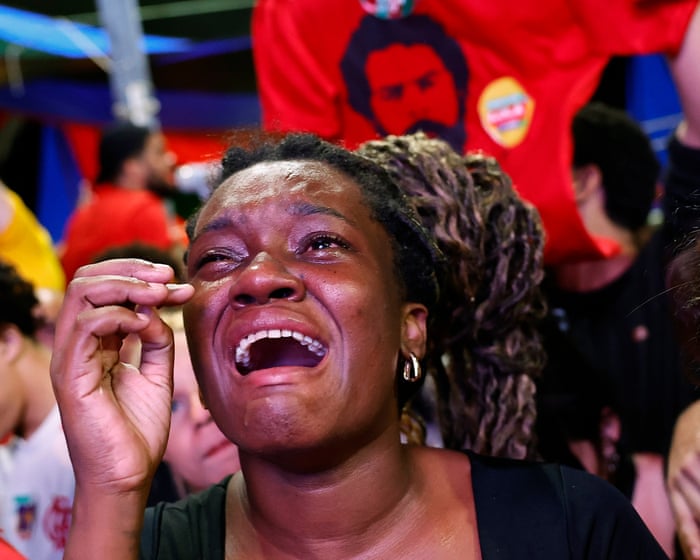
Thank you, Brazil, for demonstrating how the far right can be trounced while protection for the Amazon is strengthened. In a world where nature and democracy appeared to be bleeding out in tandem, voters and forest defenders in this global south powerhouse have shown it is possible to staunch the flow. This should provide much needed inspiration and, more practically, a playbook for social and environmental movements in other countries facing elections, including the US, Spain and France.

The astonishing comeback victory of Luiz Inácio Lula da Silva in Sunday’s presidential runoff against his extreme right challenger Flavío Bolsonaro has brought oceans of rapturous supporters on to the streets, while also thrilling conservationists, climate activists and social justice campaigners across the world.

Continue reading...

© Photograph: Andre Coelho/EPA

© Photograph: Andre Coelho/EPA

© Photograph: Andre Coelho/EPA

  •  

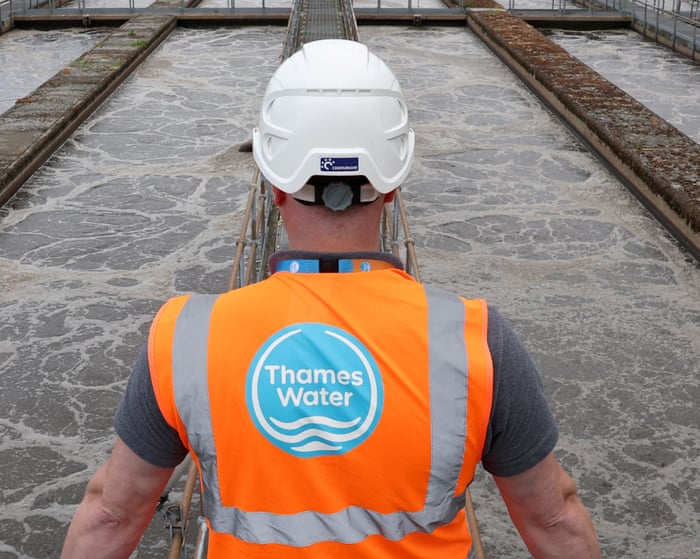
Eight of England’s nine water companies still failing on environment, report finds

Angela Eagle tells industry ‘people are sick of excuses’ as pollution levels remain high despite billions in investment

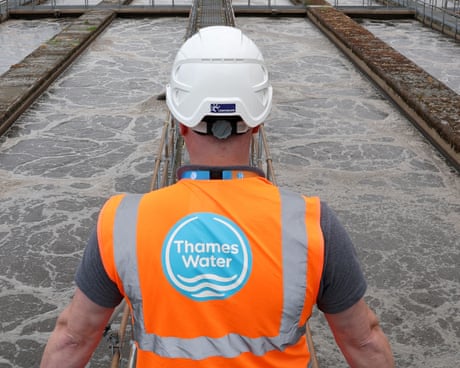
Angela Eagle, the environment secretary, has summoned water industry bosses to Whitehall after a report found that the environmental performance of the big companies has worsened despite investment.

“People are sick of excuses,” Dame Angela said, after the Environment Agency joined the Drinking Water Inspectorate, Natural Resources Wales and Ofwat for a joint report that rated eight of the nine water companies in England as “poor” or “requiring improvement”.

Continue reading...

© Photograph: Toby Melville/Reuters

© Photograph: Toby Melville/Reuters

© Photograph: Toby Melville/Reuters

  •  

South Carolina: Fire at DOE Nuclear Site Laboratory Prompts Emergency Declaration

Officials declared an emergency Wednesday afternoon when a fire erupted inside a laboratory at a Department of Energy nuclear site near Aiken, South Carolina.

The post South Carolina: Fire at DOE Nuclear Site Laboratory Prompts Emergency Declaration appeared first on Breitbart.

  •  

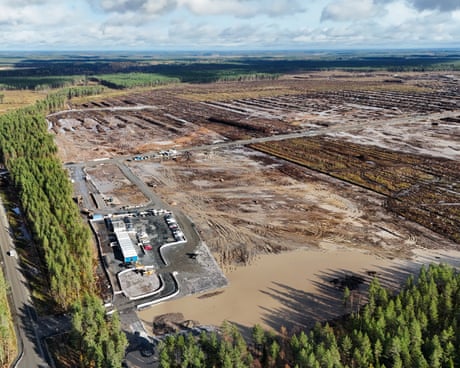
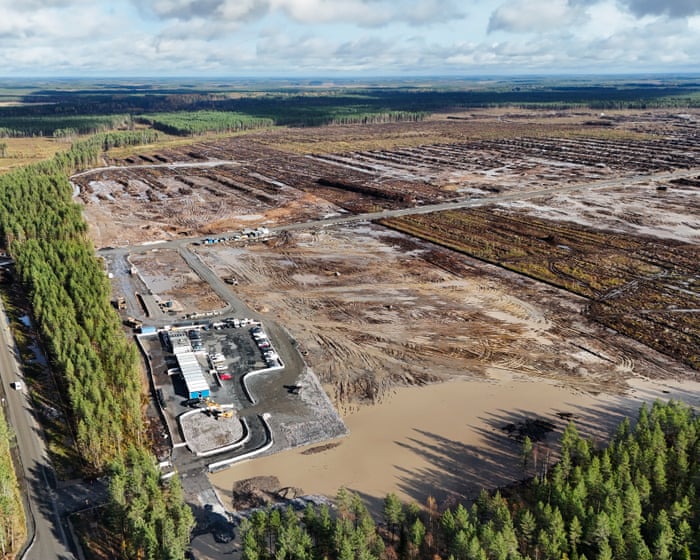
Finland launches criminal investigation into Google’s clearing of forest for datacentre site

Authorities allege company may have breached Finnish environmental laws by forgoing required impact assessment

Finnish ⁠police have launched a criminal investigation into possible breaches ⁠of the country’s environmental ⁠laws ​at the site of a planned Google datacentre in rural northern Finland.

Authorities allege that Tuike Finland, a Google subsidiary, cleared and drained 330 hectares (815 acres) of forest at the planned site in Muhos before environmental impact assessments required by Finnish law had been completed.

Continue reading...

© Photograph: Alessandro Rampazzo/AFP/Getty Images

© Photograph: Alessandro Rampazzo/AFP/Getty Images

© Photograph: Alessandro Rampazzo/AFP/Getty Images

  •  

Trump: Judge would be held ‘fully responsible’ for anyone hurt on ‘absolutely disgusting’ East Potomac golf course

President Trump on Wednesday evening slammed U.S. District Judge Ana Reyes’s decision this week to extend an order blocking tree removal at a golf course in Washington, D.C., that he wants to renovate into a championship-level course.  In a Truth Social post, the president wrote that his administration would hold Reyes “fully responsible for anybody…

  •  

AI Isn't Just Extracting More Fossil Fuels—It's Unlocking Renewable Energy Too

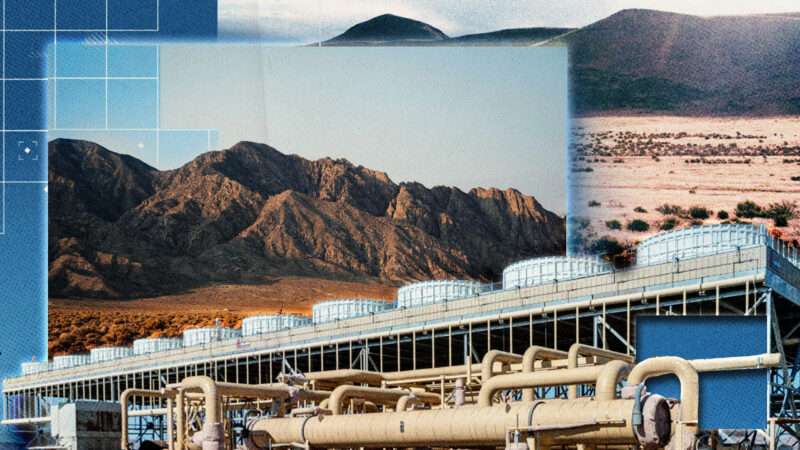
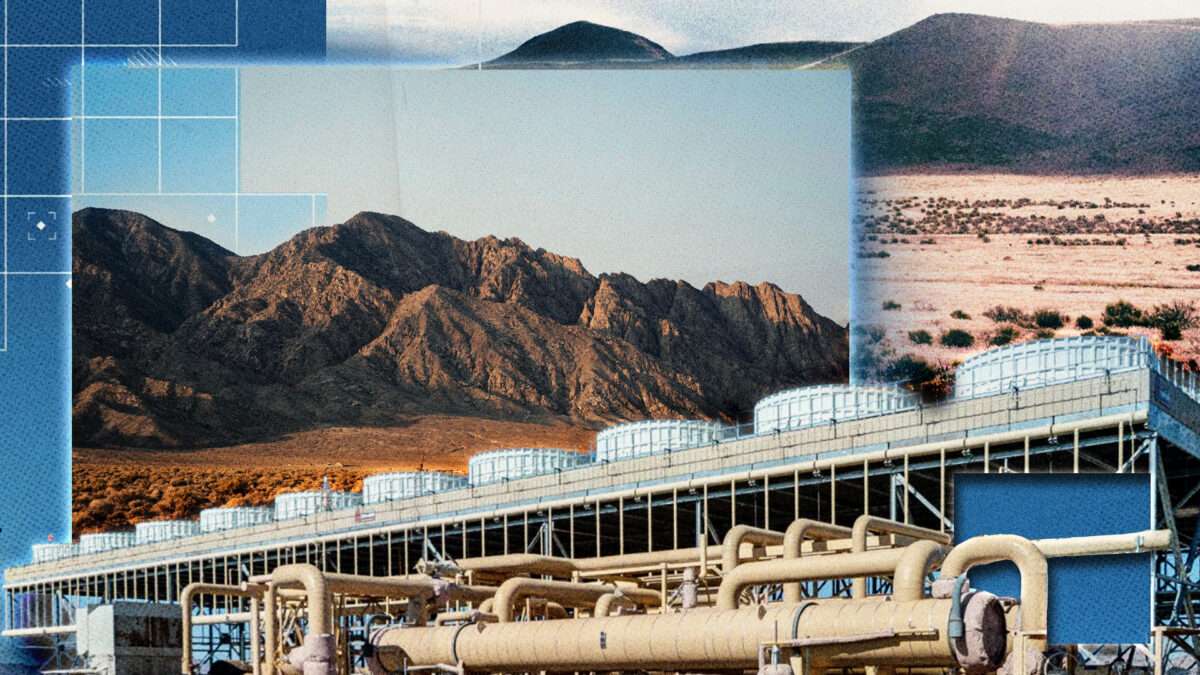
Geothermal energy infrastructure | zanskar.com/Zanskargeorthermal/Substack

Although artificial intelligence is drawing criticism for its energy use, it's also being used by firms such as ExxonMobil and BP to unleash new energy production. The research firm Wood Mackenzie even estimates that AI could unlock 1 trillion extra barrels of oil globally by helping companies "wring substantially more oil out of producing reservoirs."

These developments are good news for consumers, but they could have a significant impact on the environment, according to an August paper published in npj Climate Action. The authors find that AI could prolong oil and gas usage, leading to a 0.47–1.8 gigaton increase in annual global carbon dioxide emissions. The lower end of that estimate is comparable to Mexico's annual carbon dioxide emissions, study co-author Holly Alpine told The Wall Street Journal. The higher end is equivalent to about 5 percent of the world's energy emissions from 2024.

The researchers say net emissions reductions cannot occur unless renewables grow four to five times faster than oil and gas. (They do note there are other ways AI could reduce the greenhouse gas footprint of the fossil fuel industry—namely, "methane leak detection or efficiency gains in power generation.")

This is an ambitious task, considering that fossil fuels account for over 80 percent of the world's energy needs and their peak usage is years away. But there are reasons to be optimistic about AI's role in accelerating the use of clean technologies.

In the same way that oil majors are using AI to find their next well, startups are utilizing the technology to unleash geothermal energy. One such company is Zanskar, which uses a combination of AI, advanced drilling methods, and geoscience to "accurately map the Earth's subsurface and develop geothermal resources that have been overlooked or considered too risky."

At the Lightning Dock project in New Mexico—which Zanskar purchased in 2024—the company's technology has reduced surface infrastructure costs by 75 percent and sped up drilling by 35 percent. Zanskar says Lightning Dock is now "home to the most productive pumped geothermal well in the U.S. and quite possibly the world." Late last year, the company discovered "Big Blind," a naturally occurring geothermal system in Nevada with the potential to power 80,000–100,000 homes with reliable carbon-free energy. In January, it closed a $115 million funding round.

Nuclear power is also benefiting from advances in AI. In August, Atomic Canyon released its Nuclear Industry Virtual Assistant with backing from Nvidia. The tool is designed to help nuclear professionals navigate technical and regulatory landscapes, which could lead to more nuclear power being developed and deployed faster. The industry has also seen a wave of investment from tech companies looking to fuel their power-hungry data centers with clean energy. Big Tech firms such as Google, meanwhile, have poured significant resources into renewable and battery storage projects to support data centers and bring more energy to the grid.

AI is here to stay. We should embrace what it is already starting to give us: a cleaner and more abundant energy future.

The post AI Isn't Just Extracting More Fossil Fuels—It's Unlocking Renewable Energy Too appeared first on Reason Magazine.

  •  

Brussels Proposes New Climate Resilience Law but Leaves €70 Billion Annual Investment Question Unresolved

The European Commission wants member states to assess climate risks, establish national resilience plans and incorporate future warming into public investment decisions. Yet the proposed legislation does not provide the funding needed to implement its ambitions.

The European Commission has proposed a new climate resilience law that would require EU governments to assess their exposure to extreme weather, identify authorities responsible for managing risks and develop national plans to protect infrastructure and economic activity.

Presented on 27 October, the initiative marks a shift in European climate policy towards managing the consequences of changing weather conditions alongside efforts to reduce greenhouse gas emissions.

However, the Commission estimates that adapting Europe’s infrastructure and economy to future climatic conditions will require approximately €70 billion annually.

The proposed legislation does not establish a dedicated funding programme of that size.

This creates an immediate question for member states already facing difficult decisions over defence expenditure, energy security and public borrowing.

Brussels wants governments to make climate preparedness a routine part of economic planning, but the financial responsibility for delivering those measures remains largely unresolved.

National governments face new obligations

Under the Commission’s proposed Climate Resilience Law, EU governments would be required to conduct more systematic assessments of climate risks.

The proposal envisages national assessments by 30 June 2029 and strategic resilience plans by 31 December 2030.

These documents would identify threats affecting infrastructure, public services, economic activity and communities.

Governments would also be expected to specify which public authorities are responsible for managing particular risks.

The intention is to prevent situations in which responsibility is divided between institutions without a clear mechanism for action.

The proposed framework would establish a common basis for assessments across the EU, allowing national authorities to compare risks and coordinate responses.

This could be particularly relevant where droughts, floods or disruptions to energy networks affect more than one member state.

The deadlines remain proposals rather than existing legal obligations. The legislation must still be negotiated and adopted by the European Parliament and the Council.

A common warming scenario

One of the most significant elements of the proposal is the introduction of a shared reference trajectory for global warming.

According to the Commission’s announcement, the framework uses a trajectory involving global average warming of approximately 1.5°C above pre-industrial levels by 2030, 2°C by 2050 and 3°C by 2100.

These figures would provide a common planning assumption for evaluating long-term risks.

They are not legally determined temperature outcomes or a guarantee that warming will follow precisely that path.

Instead, they are intended to help authorities examine how buildings, roads, energy facilities and other infrastructure might perform under changing climatic conditions.

For example, a transport project designed to operate for several decades would need to consider possible exposure to extreme heat, flooding or changes in rainfall patterns.

Such assessments could influence engineering requirements, maintenance costs and investment decisions.

The financial problem

The Commission estimates that approximately €70 billion a year will be needed to strengthen Europe’s climate resilience.

That expenditure could include flood protection, water management, urban cooling, agricultural adaptation and improvements to vulnerable infrastructure.

The Commission argues that preventive investment can reduce the economic losses associated with disasters.

According to its figures, climate-related damage across the EU amounted to approximately €200 billion between 2022 and 2025, averaging €50 billion annually.

However, estimating the economic benefits of prevention does not resolve how projects should be financed.

National governments face competing demands on their budgets, while local authorities often bear responsibility for infrastructure without possessing sufficient resources for major investment programmes.

Private financing may contribute in commercially viable areas, but some adaptation projects generate public benefits rather than direct financial returns.

Flood barriers, emergency drainage systems and measures protecting vulnerable communities may therefore require substantial public expenditure.

The proposed legislation establishes a framework for identifying such investments but does not guarantee the resources necessary to undertake them.

Businesses and insurers face changing risks

The Commission also wants climate resilience to become part of business and financial decision-making.

Companies operating transport networks, energy facilities and industrial sites may face increasing exposure to disruption from extreme weather.

Insurers must assess the potential for more frequent or costly claims.

Banks and investors may need to consider whether assets remain commercially viable under changing environmental conditions.

These issues have implications for credit conditions, property values and long-term investment.

However, incorporating climate risks into financial decisions can create difficulties for regions where exposure is high and adaptation costs are substantial.

Insurance premiums may rise, while some properties or economic activities could become increasingly difficult to insure.

The Commission has indicated that further proposals concerning climate insurance and disaster preparedness are being developed.

Their eventual design will influence how financial risks are distributed between households, businesses, insurers and governments.

New European climate information tools

The framework also introduces instruments intended to improve access to scientific information.

The European Climate Viewer will provide mapped information on projected climate hazards.

The Navigator of Climate Resilience Tools will help authorities and businesses identify relevant assessment instruments.

A separate Solutions Explorer will provide examples of adaptation measures developed through European research programmes.

These tools could make climate information more accessible, particularly for smaller administrations without extensive technical resources.

Nevertheless, access to information does not automatically produce the financing or institutional capacity required to implement projects.

A municipality may be able to identify a flood risk more precisely while remaining unable to finance the necessary protective infrastructure.

A new responsibility for Brussels and national capitals

The Commission is expected to present an additional EU strategic plan on climate resilience in 2028.

Separate initiatives are also being prepared on heatwaves, insurance and disaster preparedness.

The resulting framework could substantially influence how public infrastructure and investment projects are planned across Europe.

However, national governments will have to determine how the proposed requirements interact with existing spending obligations and economic priorities.

The European Parliament and Council must also decide whether the legislation should include stronger financial provisions.

The central issue is not whether governments should assess the risks facing infrastructure and public services, but how the measures identified by those assessments will be funded.

Until that question is addressed, the proposed law will establish a more comprehensive system for recognising climate-related risks without guaranteeing that member states possess the resources to reduce them.

  •  

Angry Labour MPs urge leadership not to overrule energy secretary on Rosebank

Exclusive: Backbenchers voice alarm over ‘intolerable position’ faced by Miatta Fahnbulleh over oilfield decision

Furious Labour MPs have been lobbying the prime minister and chancellor not to overrule the energy secretary should she decide to block the Rosebank oilfield.

MPs say they are alarmed at the cabinet splits that have emerged over the issue after sources told the Guardian that Miatta Fahnbulleh was minded to refuse environmental permission for the field.

Continue reading...

© Photograph: Kirsty O’Connor/Treasury

© Photograph: Kirsty O’Connor/Treasury

© Photograph: Kirsty O’Connor/Treasury

  •  
❌