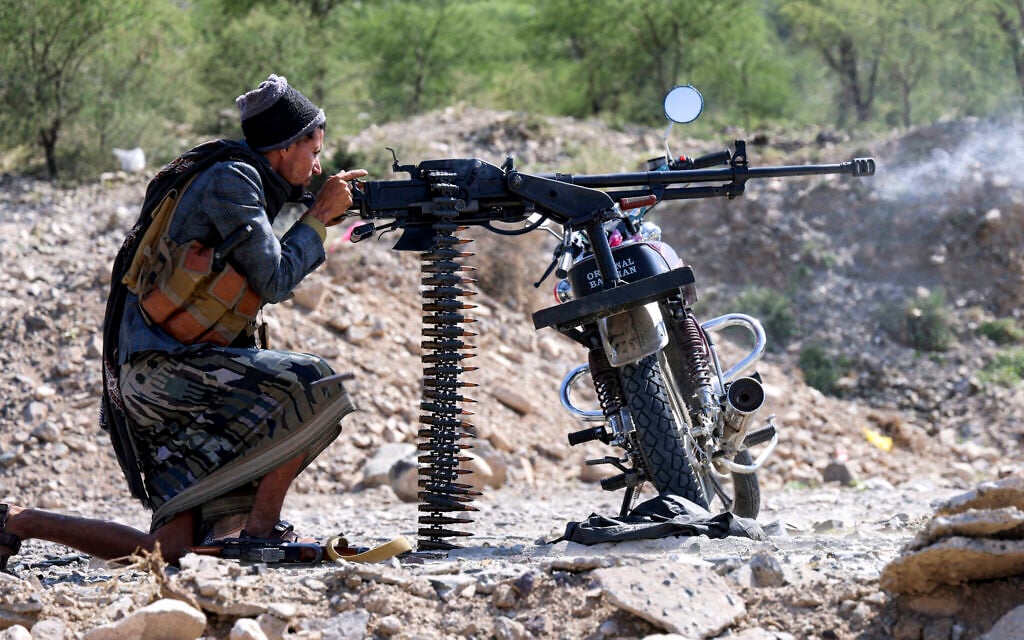
Saudis intercept Houthi missiles, blasts heard in Riyadh; 12 reported killed in Yemen


Ukraine’s Navy said on 29 October that it destroyed two Russian Su-34 fighter-bombers in a Neptune missile strike on Marinovka airfield in Russia’s Volgograd Oblast.
The reported strike targets aircraft Russia uses to launch guided aerial bombs against Ukrainian cities, military positions, and frontline communities. Destroying the two jets would reduce Russia’s capacity to carry out these attacks.

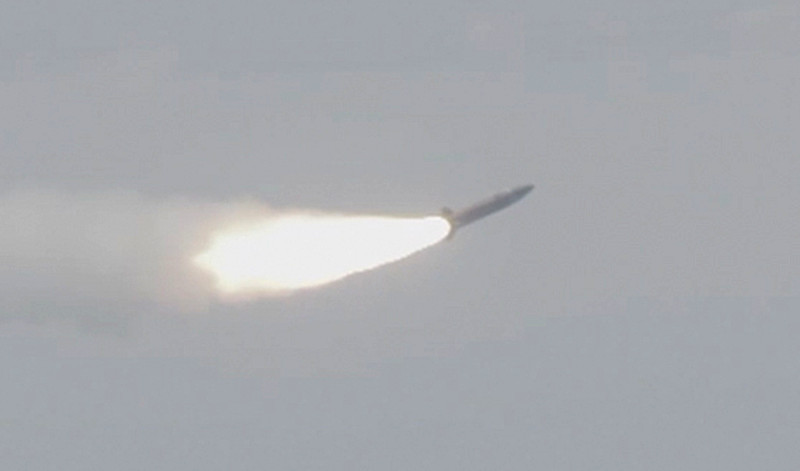
According to the Ukrainian Navy, its units struck the site where Russian aircraft were stationed at Marinovka airfield using a Neptune coastal missile system.
The Navy said the strike destroyed two Su-34 fighter-bombers belonging to Russia’s 11th Mixed Aviation Regiment, based near the settlement of Oktyabrsky in Volgograd Oblast. The regiment is part of the 4th Mixed Aviation Division of Russia’s 4th Air and Air Defense Forces Army.
The Ukrainian Navy did not provide further details about the strike.
Russia uses Su-34 fighter-bombers to launch guided aerial bombs, known as KABs, against Ukrainian military positions and settlements, particularly in frontline areas. These attacks threaten both Ukrainian troops and civilians in communities near the front.

According to Ukrinform, Russia’s Aerospace Forces had approximately 140 Su-34 aircraft of various modifications in service as of 22 October.
The Ukrainian Navy said it would continue striking Russian military targets to weaken Moscow’s ability to wage war against Ukraine.
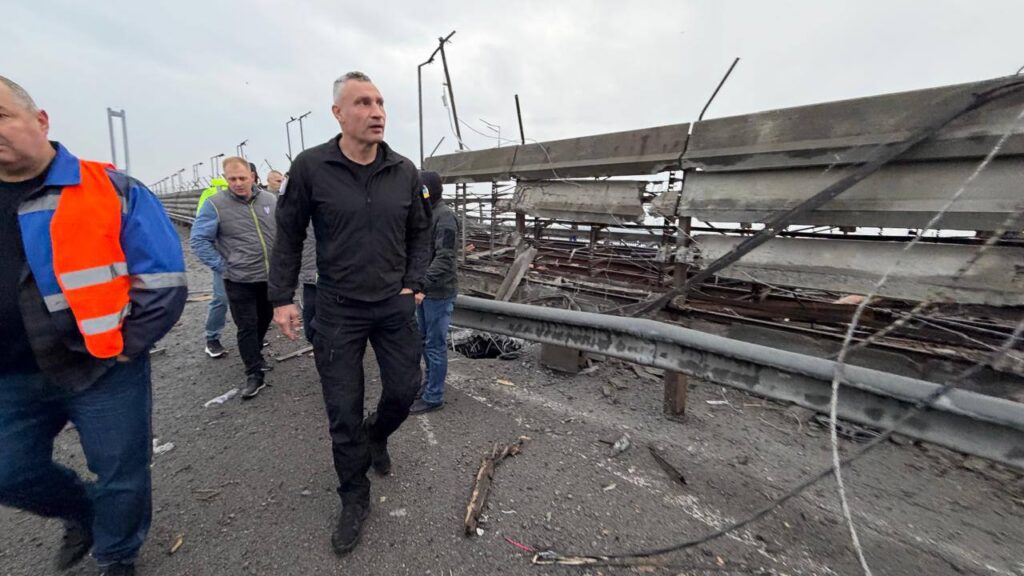
The Ukrainian government has instructed Kyiv to establish alternative routes after Russian attacks stopped traffic on one of the capital’s main bridges. The city authorities will bear the cost of the new crossings, with Kyiv Mayor Vitali Klitschko saying the city needs an additional $22 million.
This year, Russia has launched tactics to spread panic among civilians and trigger more people to leave the country. In the latest attack, several Russia's ballistic missiles struck the Southern Bridge, used for vehicle and metro traffic, breaking a huge hole and paralyzing all the pathes. The bridge was closed. Now, there is a fear that more bridges can be targeted this way, dividing Kyiv in two parts.
The situation is urgent, as Ukrainian Transport Minister Mykola Kalashnyk says about 600,000 vehicles cross the Dnipro in Kyiv every day.
According to Klitschko, Kyiv convened the capital’s Defense Council on 28 October to find an answer to this difficult question.
The agenda included implementing a project to build combined water crossings over the Dnipro River and access roads to them.
“The military command will determine the locations, with approval to be granted, among others, by the Kyiv City Military Administration,” Klitschko said.
Under the government’s recommendations, the Kyiv city authorities must find $22 million for the project.
Klitschko had previously faced heavy criticism after it emerged that the city lacked sufficient shelters and last winter exposed serious shortcomings in preparing infrastructure for Russian attacks. These included a lack of alternative energy supply routes, poorly distributed energy, burst heating pipes that flooded apartments, and the inability of people with disabilities to reach shelters without elevators.
The mayor himself said the problems stemmed from the central government withholding funding, which had stalled numerous energy resilience projects and delayed their implementation.
The latest announcement also indicates that Kyiv has once again taken on the financial burden itself.
Meanwhile, Ukraine has been working with Japan on backup crossings. Tokyo has already delivered 720 meters of prefabricated bridge structures to Ukraine. The two sides are currently exploring how this equipment could be used to establish alternative crossings.
Another option is to reinforce existing bridges. City specialists are developing additional technical solutions to protect bridges across the Dnipro River, Klitschko said in his statement on 27 October, adding that proposals from the military had also been heard.
The issue of installing mobile shelters was also raised on the same day, the mayor of Kyiv said in a separate statement on his Telegram channel on 27 October. Despite intensifying Russian attacks and about, as Radio Svoboda reported in its article on 30 September, $11 million set aside in 2025, Kyiv still has only a handful of mobile shelters: LB reported in December 2025 that district tenders failed. Donors paid for the first one at a bus stop, the Kyiv City State Administration said on 15 October.
Klitschko raised the issue of shelters again after a court on 12 October ruled that local authorities must urgently install mobile shelters in public areas, including near public transport stops, parks, and squares, according to Kyiv’s Prosecutor’s Office.
On 2 October, Ukrainian President Volodymyr Zelenskyy said in an interview with the Financial Times that Russian ruler Vladimir Putin had ordered the lifting of previous restrictions on airstrikes. Among new targets, according to him, were bridges, data centers, internet, mobile networks, hospitals, kindergartens, schools, and universities.
The night of 26–27 October showed what that looks like. Russia launched ballistic missile attacks in a few waves, and the second of them hit the Southern Bridge and the metro infrastructure on it, Klitschko said. The structure carries six lanes of road traffic and two metro tracks.
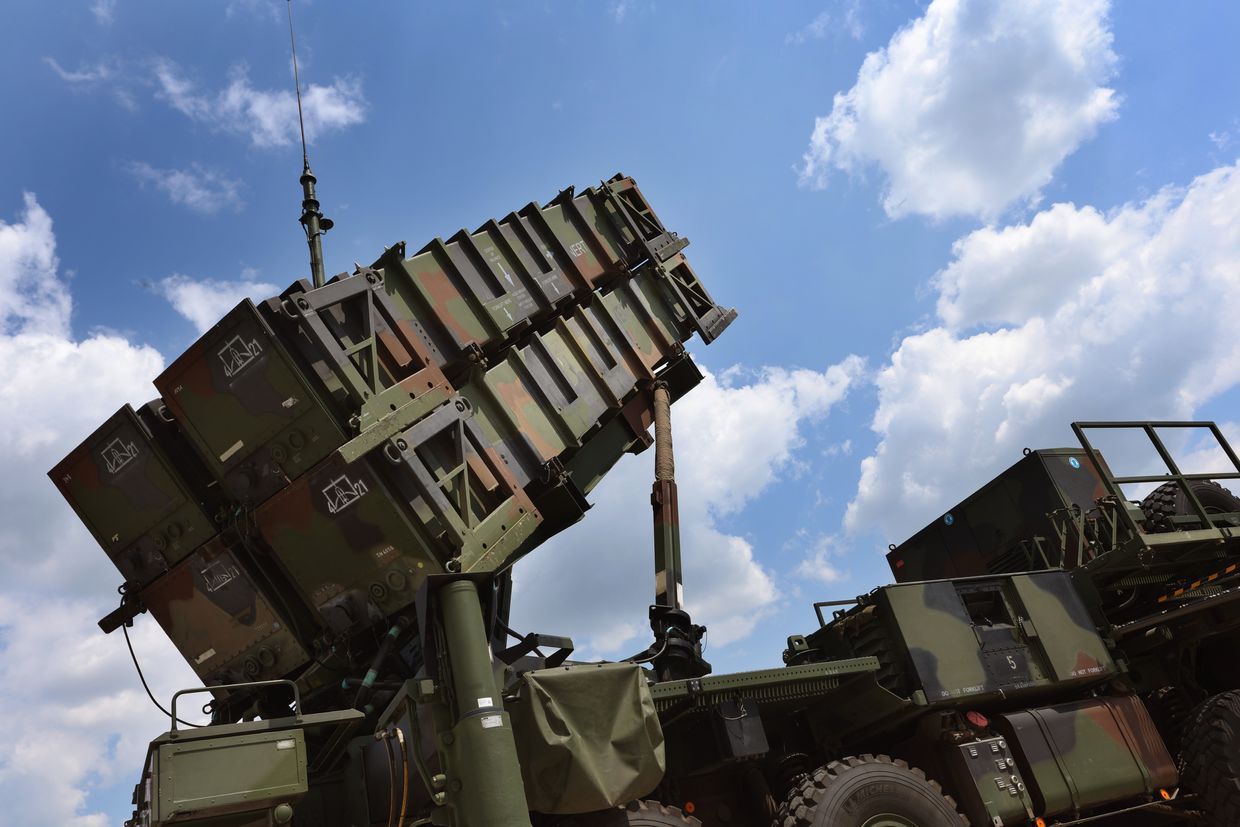
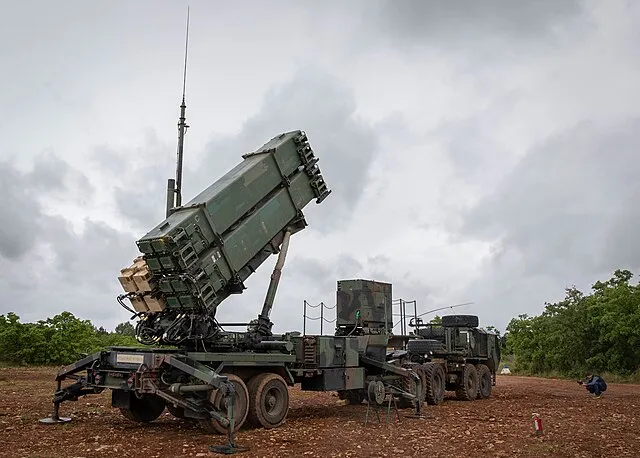
Zelenskyy put the night’s total at 16 ballistic missiles and blamed delays in deliveries of Patriot and NASAMS interceptors: “Every such delay is a new Russian hit on one target or another.”
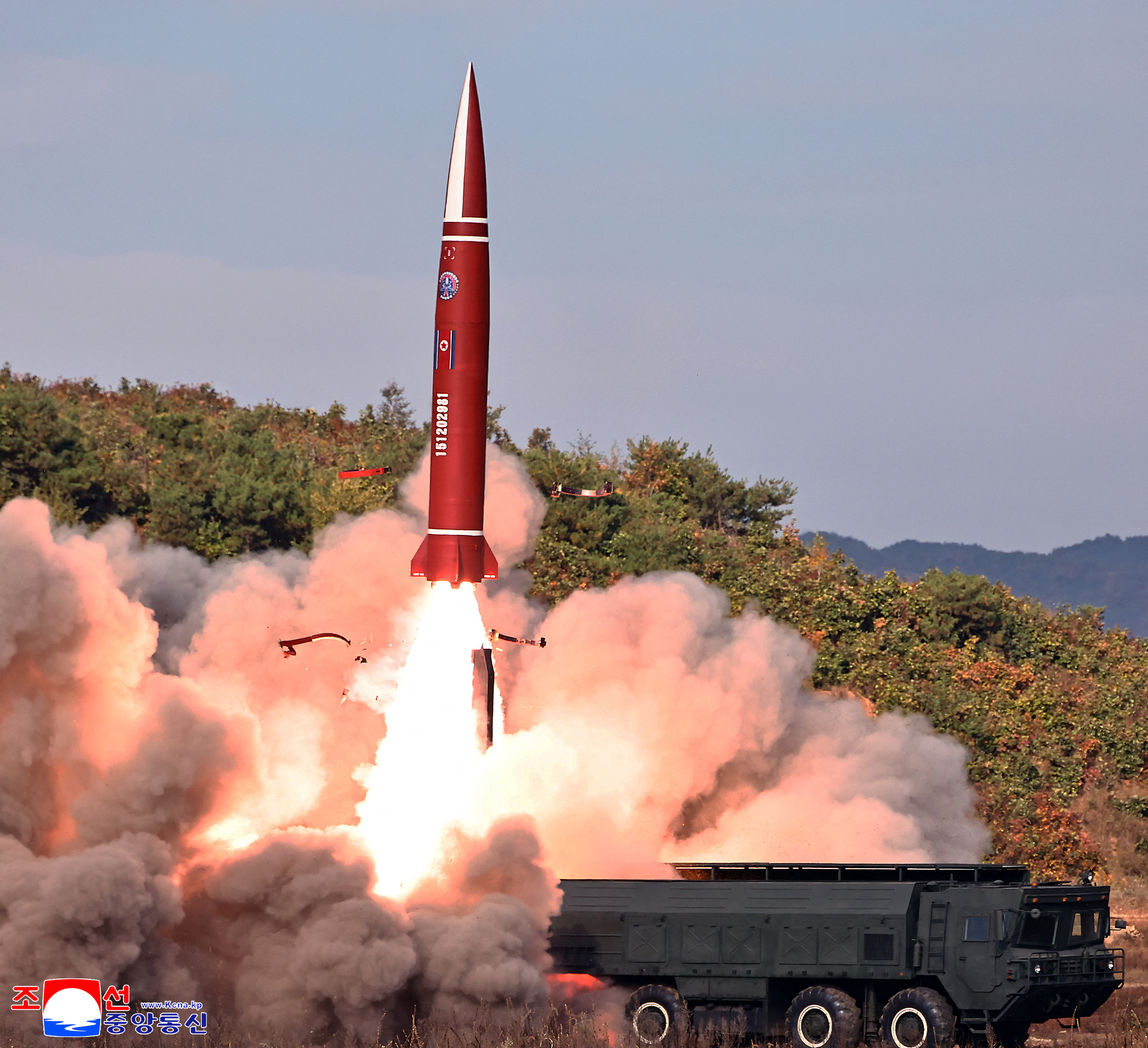
North Korea fired around 10 ballistic missiles toward the sea off its east coast on Thursday, South Korea’s military said, as tensions run high ahead of Pyongyang’s end-of-month deadline to activate propaganda loudspeakers along the heavily armed border.
The short-range missiles were launched at around 12:30 p.m. (0330 GMT) from around Wonsan on North Korea’s eastern coast and flew about 250 km (155 miles), South Korea’s Joint Chiefs of Staff (JCS) said.
South Korea was strengthening surveillance and maintaining readiness for additional launches, while closely sharing information with the United States and Japan, it added.
Japan’s Defence Ministry said North Korea had launched what could be a ballistic missile and that it did not appear to have landed within Japan’s Exclusive Economic Zone.
South Korea’s presidential National Security Office convened an emergency meeting to assess the security implications.
It urged North Korea to halt its repeated ballistic missile launches, calling them a “serious violation” of UN Security Council resolutions, a presidential statement said.
“The launch can be linked to the tensions along the border as part of a broader series of North Korean shows of force, although it is difficult to say the border situation directly prompted the missile launch,” said Kim Yong-hyun, a professor of North Korean Studies at Seoul’s Dongguk University.
Kim said the launch also appeared intended to demonstrate North Korea’s increasingly advanced ballistic missile capabilities to the US, Japan and the broader international community.
TENSIONS RUN HIGH
The launch came as tensions along the inter-Korean border have risen sharply since two mine explosions in the Demilitarised Zone on September 21 wounded three South Korean soldiers.
Seoul says the mines were planted by North Korean forces and has called the incident an armistice violation and demanded an apology. Pyongyang has denied responsibility and accused Seoul of fabricating the incident.
Kim Yo Jong, the influential sister of North Korean leader Kim Jong Un, announced last week that Pyongyang would place loudspeakers capable of blasting anti-South Korean propaganda on standby across the border within days.
She had earlier said the broadcasts would operate along the entire border by the end of October, though analysts in Seoul questioned whether the devices would be activated.
“Rather than being a firm decision to begin broadcasts, North Korea seems to be saying it will have everything ready and watch how South Korea responds,” said Lim Eul-chul, a professor at Kyungnam University in Seoul.
ARTILLERY BATTERIES
North Korea’s military has also deployed artillery batteries visible from across the border, which South Korea’s military said earlier on Thursday appeared largely intended for show.
“We assess that North Korea has several intentions, but the exposure of older weapon systems should be understood as being for show,” JCS spokesperson Jang Do-young told a briefing.
Defence Ministry spokesperson Chung Binna said placing artillery where it could be easily seen “makes little tactical or military sense”.
Reuters witnesses this week saw three North Korean armoured vehicles, identified by South Korean experts as self-propelled 122-mm howitzers, positioned near the border with their gun barrels pointed south.
North Korean soldiers were also seen erecting fences inside the DMZ.
Jang said North Korean activity near the Military Demarcation Line bisecting the DMZ was continuing, while South Korean forces were issuing warning broadcasts and firing warning shots during incursions.
Seoul was awaiting a response to its two proposals for military talks and had urged North Korea to return to dialogue, the Defence Ministry said.
North Korea last fired ballistic missiles on October 12. Pyongyang has conducted missile tests on more than 10 occasions this year.

Geneva-based intelligence firm AURORAH Geosignal Intelligence on Tuesday accused Russia of using its satellite network to help Iran-backed militias in Yemen and Iraq attack targets in Saudi Arabia last month.
The post Report: Russian Satellites Helped Iran-Backed Militias Attack Saudi Targets appeared first on Breitbart.

A small Russian cruise missile of an unconfirmed type came down almost intact in Odesa Oblast, Militarnyi reported on 27 October. Its box-shaped airframe looks unlike the Geran-5 variant whose name a presidential adviser gave it.
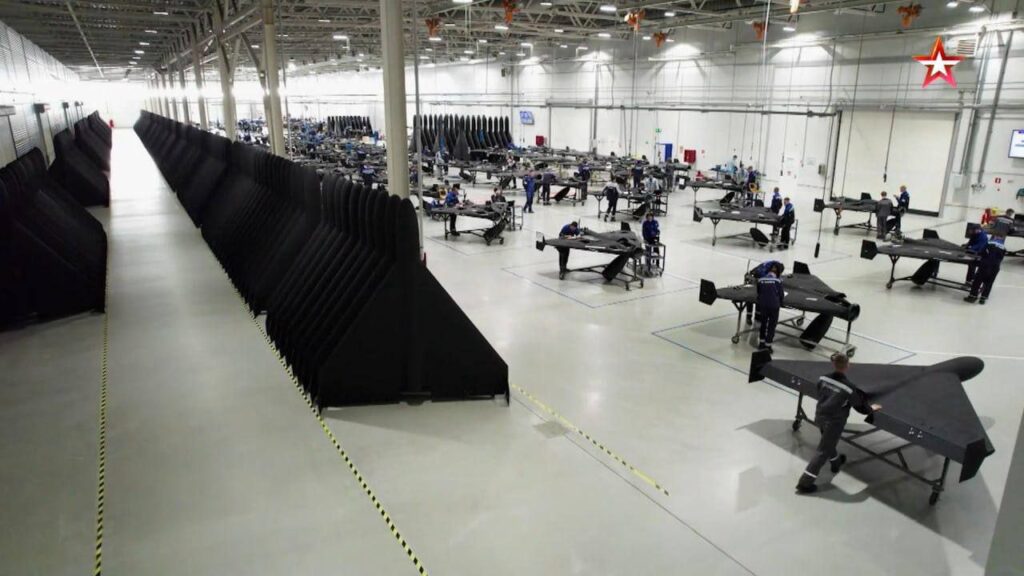
Militarnyi describes Russia’s work on the Geran-5 line as iterative: features tested on one version reappear in the next. A variant reported in late September can correct its route by images of the ground instead of satellite signals, which Ukraine jams, according to the monitoring channel Polkovnyk GSh. Official Ukrainian sources have not confirmed that system. The airframe found in Odesa Oblast looks shaped for a different problem: radar. Russia now builds 4,000 jet-powered Geran-4 and Geran-5 drones a month, Militarnyi says, most of them Geran-4. It is also building new launch sites for the Geran-5.
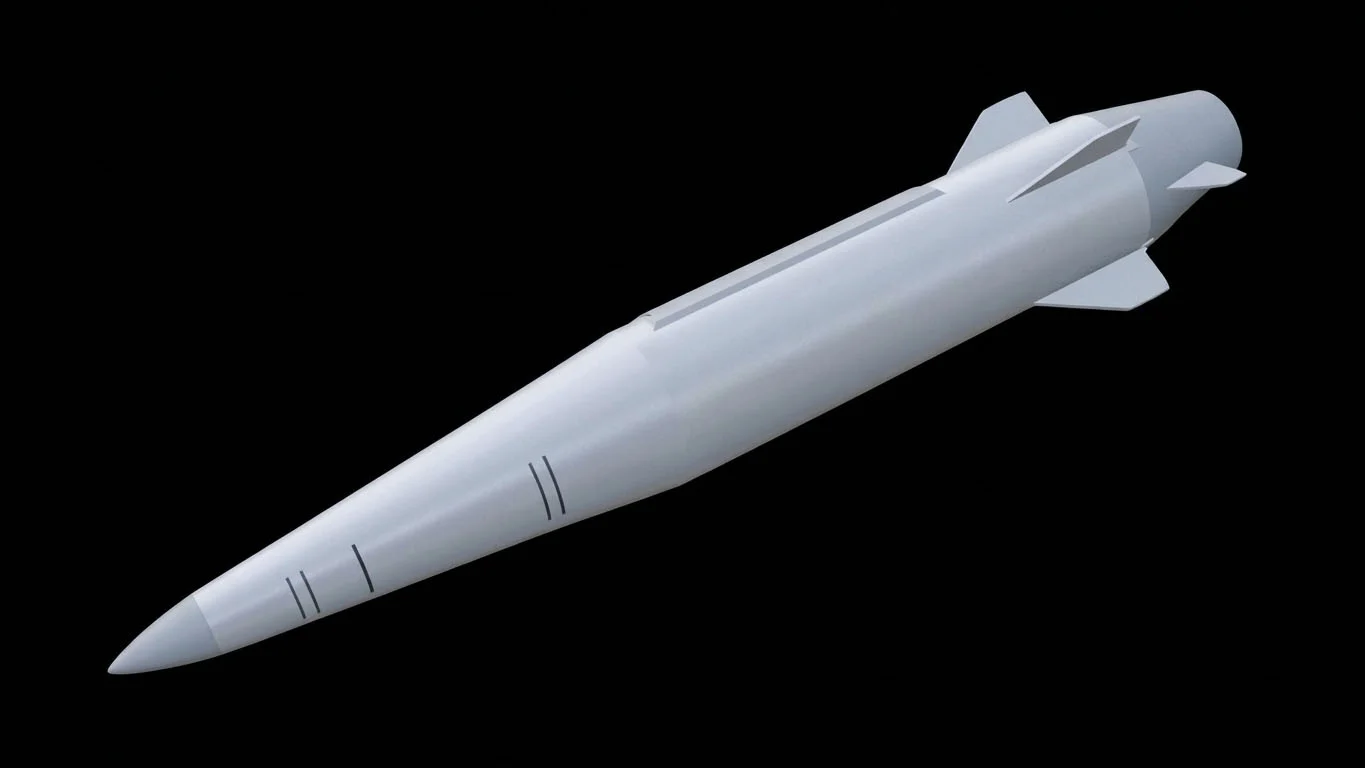
Local Telegram channel Odesa Info Live posted photos of the missile lying in open ground with little visible damage. Militarnyi described a compact cruise missile with a box-shaped fuselage, rounded edges, and a swept wing. The flat-sided body is probably meant to simplify production, the outlet said, and it may also cut radar visibility. A small turbojet engine exhausts through a V-shaped tail and draws air through intakes on both sides. Militarnyi read the dark composite skin as another measure against radar.
Serhii “Flash” Beskrestnov, the president’s adviser on defense technology, published the first photos of the new missile on 22 October. He wrote that it navigates optically and has greater range, speed, and flight altitude, and he labeled it the Geran-5 K5-K. However, Militarnyi noted that it looks substantially different from the K5-K variant already known by that name. In its 23 October overview, the outlet said Russia had started using two new small cruise missiles, probably developments of the Geran-5.
Russia first used the original Geran-5 against Ukraine in early January 2026, Ukraine’s military intelligence (HUR) said, describing it as a jet-powered strike drone. Militarnyi now classes the whole line as small cruise missiles.
Until specialists open the airframe, its navigation, range, and speed rest on Beskrestnov’s word. What they find inside will show how much of the design is aimed at Ukraine’s radar.

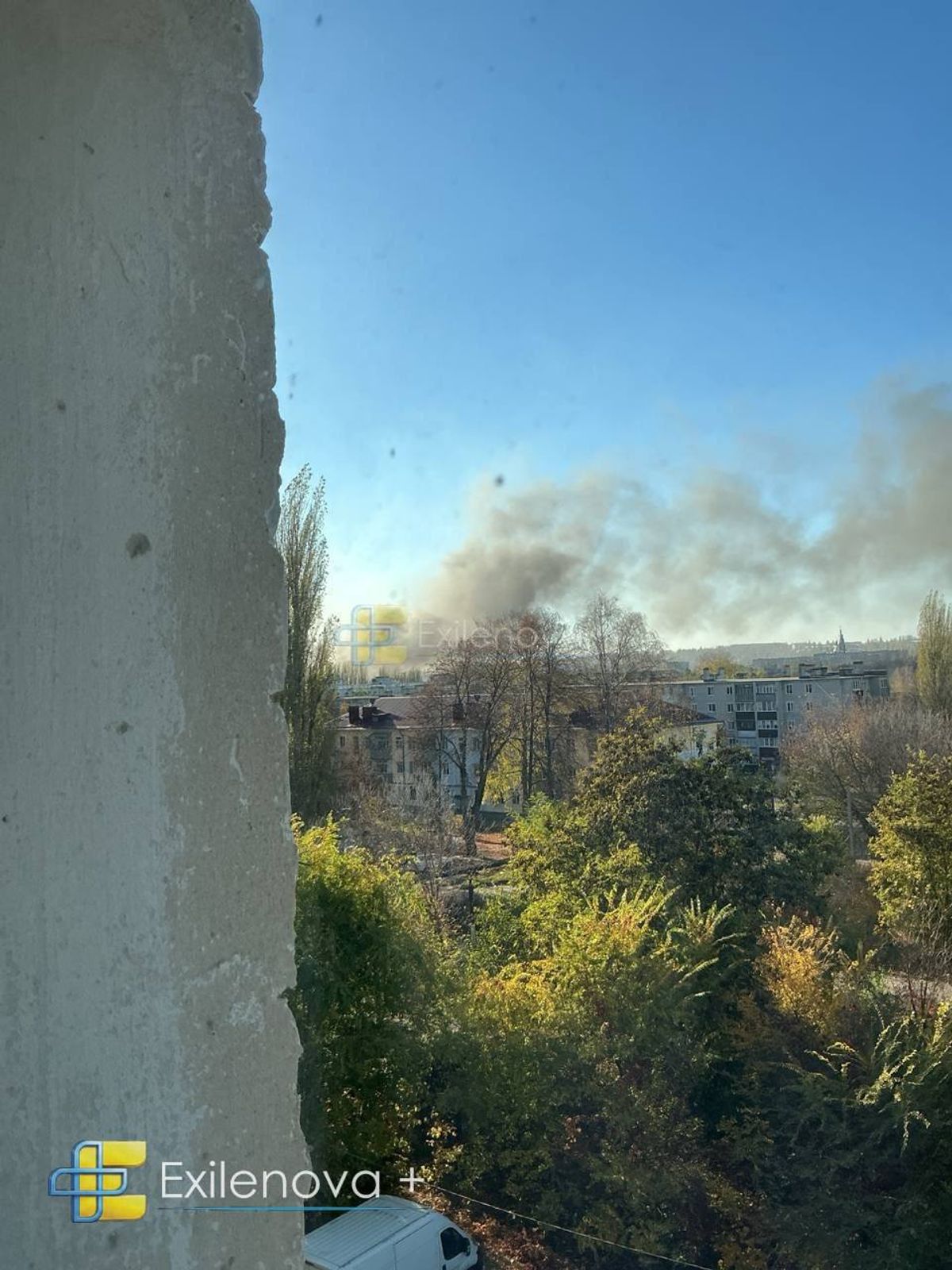
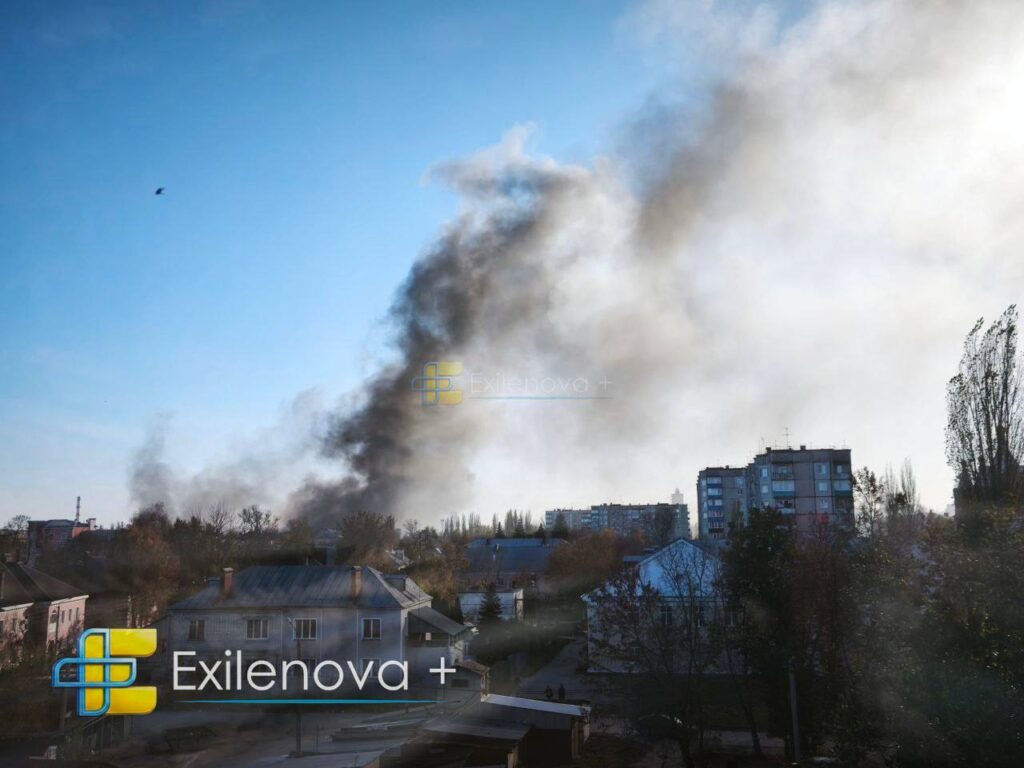
A fire broke out in the area of a major Russian steel plant in Lipetsk late on 27 October, Kyiv time, as air defenses fired at incoming targets, the Ukrainian monitoring Telegram channel Exilenova+ reported. Ukrainian partisans said the strike may have hit the plant. The region’s governor denied any large industrial fire.
Whether or not it was hit, the plant matters to Ukraine. The Novolipetsk Metallurgical Plant (NLMK) is Russia’s only producer of electrical steel, Ukrainska Pravda reported in April 2025. NLMK’s tax records, obtained by the outlet, showed sales of that steel to Moscow’s Avangard plant, which builds missiles for S-400 air defense systems. Russia also fires those missiles at ground targets in Ukraine.
The targets over Lipetsk were jet-powered, Exilenova+ wrote, citing preliminary reports of impacts and a fire toward the city’s airfield. Footage it posted showed a Pantsir air defense system firing, and the channel suggested the system may have failed to cope. It then reported the fire near NLMK, blaming air defense fire or a falling object.
We also observe a fire in the vicinity of NLMK (Novolipetsk Metallurgical Combine) resulting from air defense activity or the impact of an object. pic.twitter.com/7bBqyqCP2j
— Exilenova+ (@Exilenova_plus) October 27, 2026
The Crimean Tatar-Ukrainian partisan movement Atesh said its agents in Lipetsk reported an impact, and in a follow-up said they believe it may have hit NLMK.
A 2022 investigation by Disclose and its partners tied 18 NLMK contracts, all signed after 2014, to eight Russian defense firms, including an S-300 maker. NLMK confirmed the contracts but said only a “negligible” amount of civilian steel grades went to those firms.

On 28 October, Lipetsk Oblast Governor Igor Artamonov claimed air defenses downed 45 drones over the oblast overnight. He insisted reports of a large industrial fire were untrue, saying drone debris fell in a tree belt and sparked a fire, since contained. Debris also blew out windows in a Lipetsk apartment block, and one person sought medical help but needed no hospitalization, he added. Whether NLMK took any damage remains unconfirmed.
Earlier, UK-supplied Storm Shadow missiles reportedly struck a battery plant in Yelets, in the same oblast, on 25 October. Two days before that, they reportedly hit an electronics plant in Oryol. OSINT channels described both as suppliers of parts for Russian missiles.


Russia has fired more than 100 ballistic missiles at Kyiv and Kyiv Oblast since 14 October, President Volodymyr Zelenskyy said in his evening address on 27 October. He said partners’ air defense packages are being delayed.
Ukraine’s front-line positions are stronger than they have been in a long time, Zelenskyy said. If partners’ support for Patriots and other air defense remained just as strong, he argued, Ukraine would be in a much better position diplomatically as well. He expects trilateral talks with US and Russian representatives in November. The US, on which, he said, “almost everything concerning Patriots depends,” will be one of the three sides.
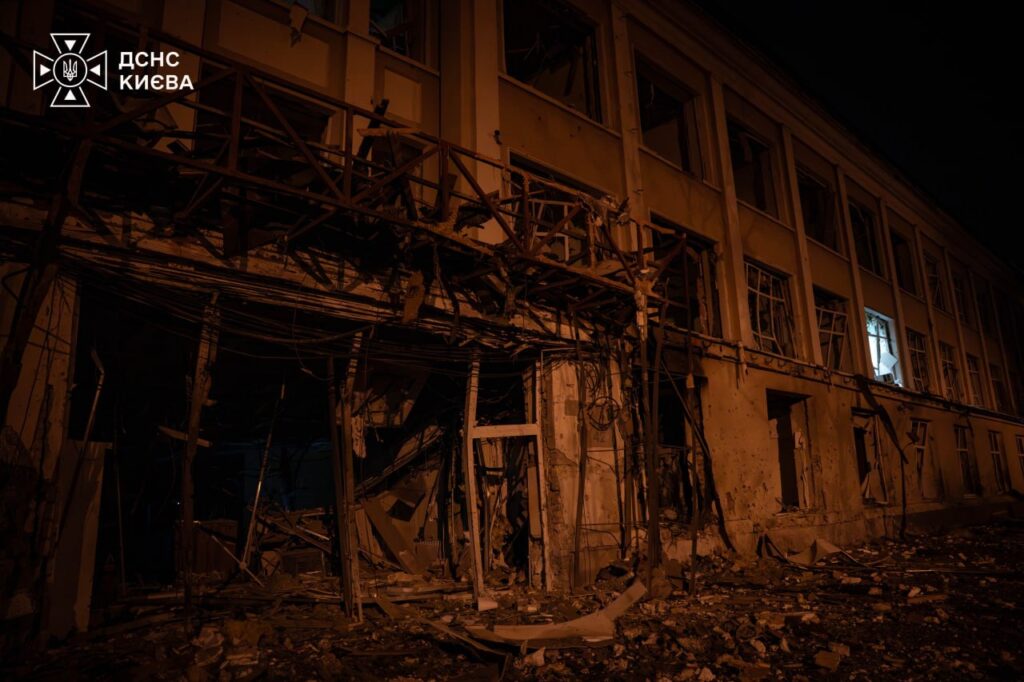
Overnight on 27 October, Russia launched 16 ballistic missiles and more than 280 drones, in what Zelenskyy called a serious escalation of Russia’s campaign against Ukraine’s logistics. The strikes hit the State University of Trade and Economics campus and the Southern Bridge in Kyiv.
A 46-year-old woman was killed and 15 people were injured, among them dormitory residents and two medics, the Kyiv prosecutor’s office said on the morning of 27 October.
Zelenskyy wrote that artificial and lengthy delays in interceptor packages for Patriots and NASAMS directly help Russia achieve the goals of its terror campaign. In his evening address, he added:
“And everyone hears, everyone sees that right now, it is difficult for us to defend against Russian ballistic missiles. And above all, we do not have enough missiles for Patriots.”
Earlier, on 26 October, Zelenskyy wrote that Ukraine had waited almost a month for US Defense Secretary Pete Hegseth’s signature on missiles for Patriots and NASAMS. Kyiv is also working with Europe and other partners, he added.
Separately, The Washington Post reported on 19 October that some transfers come from allies and need Hegseth’s approval, because the US must sign off on re-transfers. Zelenskyy’s post does not say whether his wait concerns those transfers.
Before Zelenskyy’s latest statements, US officials rejected claims of a deliberate hold. A US government official called Ukraine’s claims “not true,” the Kyiv Independent reported. On 20 October, Secretary of State Marco Rubio said there was “nothing being deliberately denied to Ukraine.” Hegseth said the US had not changed its posture toward Ukraine but wants “our guys” to have as many interceptors as possible.

Saudi Arabia’s rapid expansion of a ballistic missile factory signals a transformative shift in its pursuit of strategic deterrence. Saudi Arabia is expanding its solid-propellant missile production complex near al-Duwadimi, approximately 200 kilometers west of Riyadh, to develop longer-range ballistic weapons capable of carrying heavier payloads, multiple media outlets reported this month based on satellite […]
The post Under Houthi fire, Saudi Arabia looks to China for missile support appeared first on Asia Times.

German defense AI firm Helsing has unveiled Contra, an AI-run air defense system and two interceptor missiles designed to chase Russia’s jet-powered Geran drones, the company announced on 26 October. Officials pitch it as cheap, but it won’t reach the market this winter.
That leaves Ukraine on its own defenses as Russia shifts to jet drones. By early October, jet models made up about 40% of Russian drone launches, and Ukraine’s own interceptors for them won’t arrive in needed numbers before late November, Air Force Deputy Commander Yurii Cherevashenko said.
Contra is the command layer of air defense: it links radars and other sensors, tracks incoming drones and missiles, and assigns a weapon to each target, while people keep control over decisions, Helsing said. Besides the company’s own missiles, it can also use other firms’ interceptors, lasers, guns, or nets. AD-1 Inferno is jet-powered and designed to loiter, swarm, and re-engage targets, while AD-2 Ambush, a solid-fuel rocket, is designed to reach Mach 2.5, over twice the speed of sound, and a range of more than 20 km, the company said.
Inferno, with a 700 km/h speed and a 20-km range, would be the everyday shooter. Ambush would handle “leakers,” drones about to hit the ground, said Maxwell Adams, Helsing’s senior product director. Each shot should cost under $100,000, company officials said.
Ukraine once downed 90% of Russia’s slower, propeller-driven Gerans, copies of Iran’s Shahed, Defense News reported. Russia has since fielded thousands of jet Geran-4s and Geran-5s flying at 400–700 km/h, and almost half now get through, Helsing co-founder and co-CEO Gundbert Scherf said.
Ukraine’s own nightly rates swing widely. On 28 September, President Zelenskyy put the shoot-down rate for jet drones at 57%. Overnight on 7 October, it exceeded 82%, National Security and Defense Council Secretary Ihor Klymenko said. Russian output of the two models has reached 4,000 a month, Helsing said, citing unspecified intelligence reports.
Helsing has signed one Contra contract, Scherf said, but the system is still in testing, and he expects it on the market in the second half of 2027. Ukraine already uses Helsing’s HX-2 strike drones. Scherf said they should be integrated into a system like Contra.

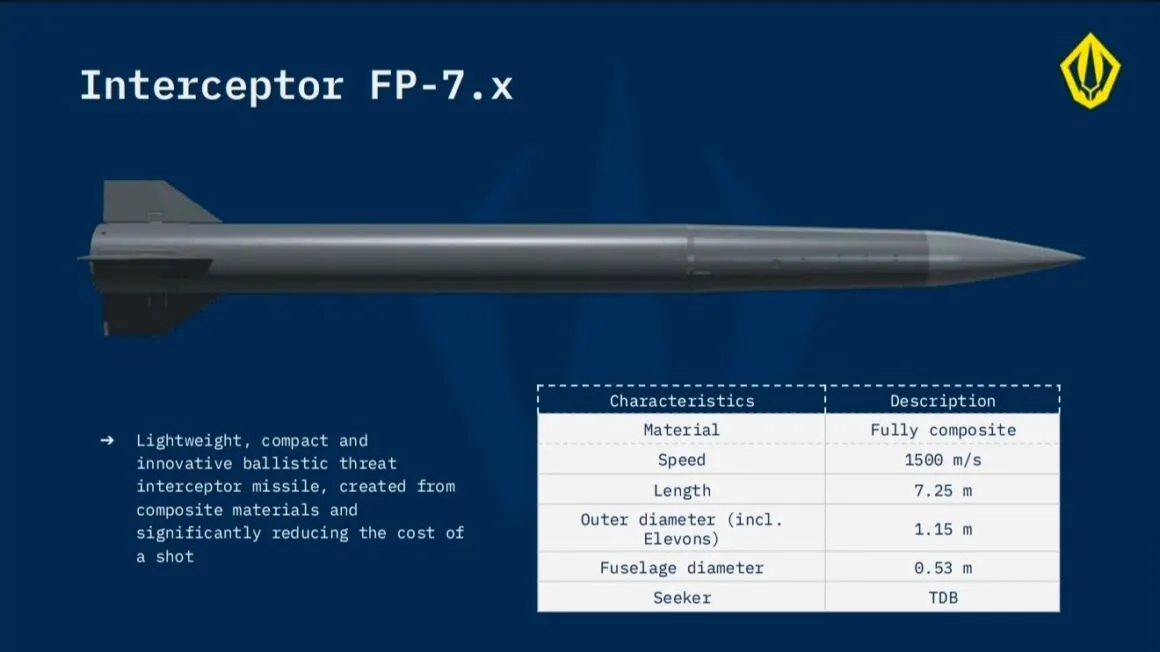
Ukraine has finished its share of FREYJA, a joint European project to build a system against ballistic missiles, President Volodymyr Zelenskyy told journalists on 17 October, Ukrinform reported. He added that Kyiv wants to test the first system as soon as possible.
Ukraine still relies on US-made Patriot interceptors to stop Russian ballistic missiles. Zelenskyy told ABC News on 23 October that Ukraine had received only 24 of them from the US in three months, while it needs 350 a month on average. FREYJA can not close that gap soon, because the system is still in development.
Zelenskyy said the partners’ share of the work, with 10 countries taking part, is still underway. He also said he had discussed the project with French President Emmanuel Macron, and he named Norway as a key partner.
Zelenskyy did not say what the partners still have to deliver. In August, he said Ukraine is capable of making the missile and launcher, while partners would supply critical components such as radars and sensors.
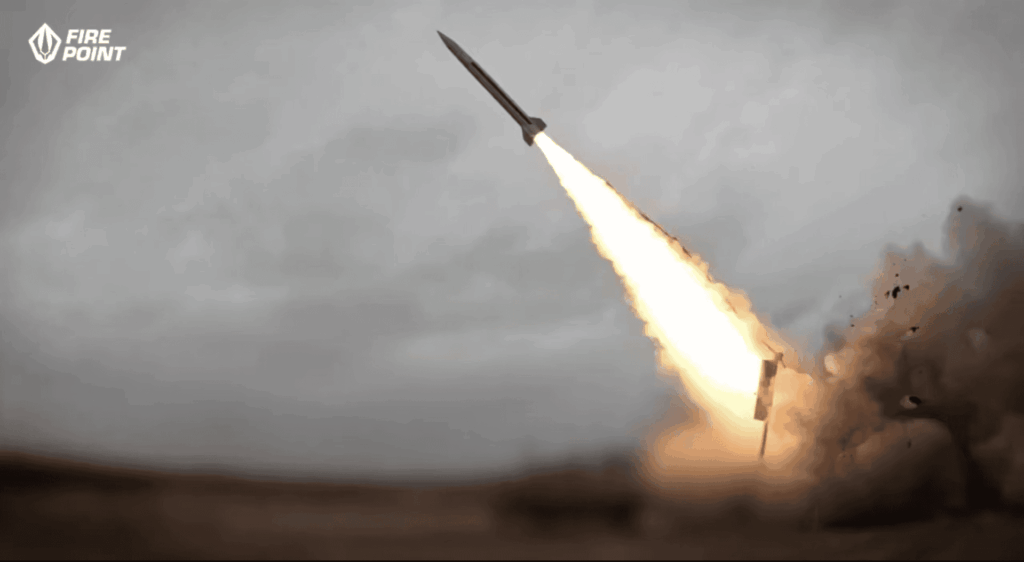
In May, Fire Point co-founder and chief designer Denys Shtilerman said all components of the FP-7.x interceptor are made in Ukraine except one. “As for that one part we don’t manufacture in Ukraine, we’ve contracted a certain quantity of it. We already have it,” he said, but did not name the part.
In June, however, Shtilerman told the Financial Times that mass production depended on an infrared seeker Fire Point hoped to get from Germany’s Diehl Defence. Neither statement says whether the seeker is that one part.
Fire Point co-founder Iryna Terekh said in September that FREYJA was going through testing and technical integration in combat conditions in Ukraine. The company plans its first intercept of a ballistic target by mid-2027.
The official timeline has since moved closer. On 21 October, Zelenskyy wrote that officials had identified where to speed up so FREYJA reaches testing by the end of this year. A test is still a step short of an intercept.
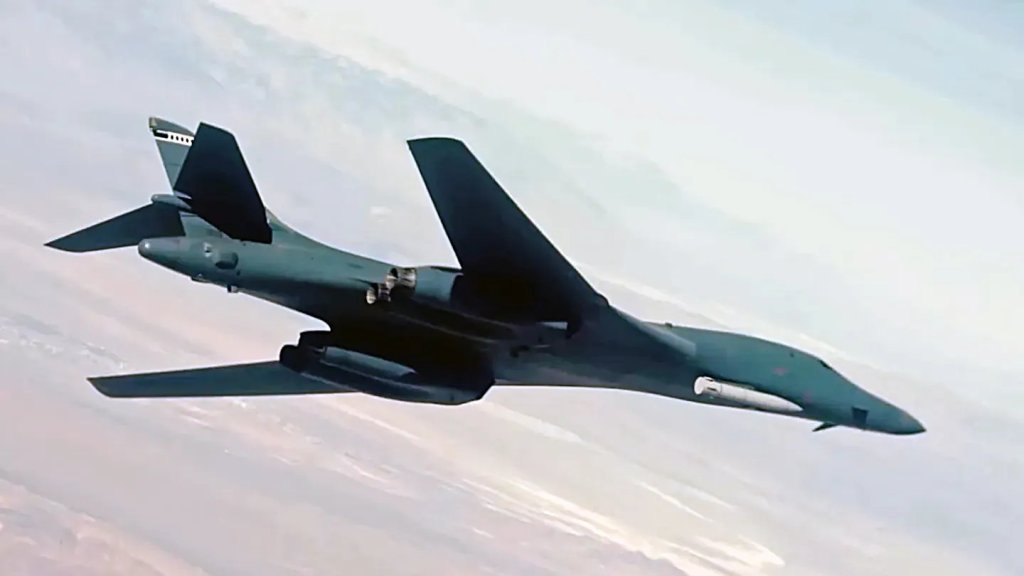
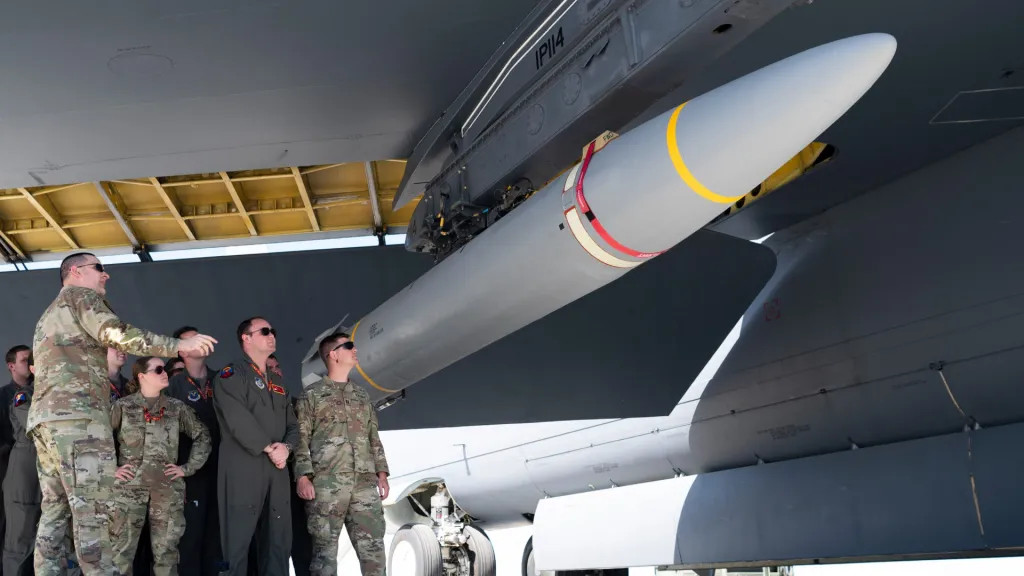
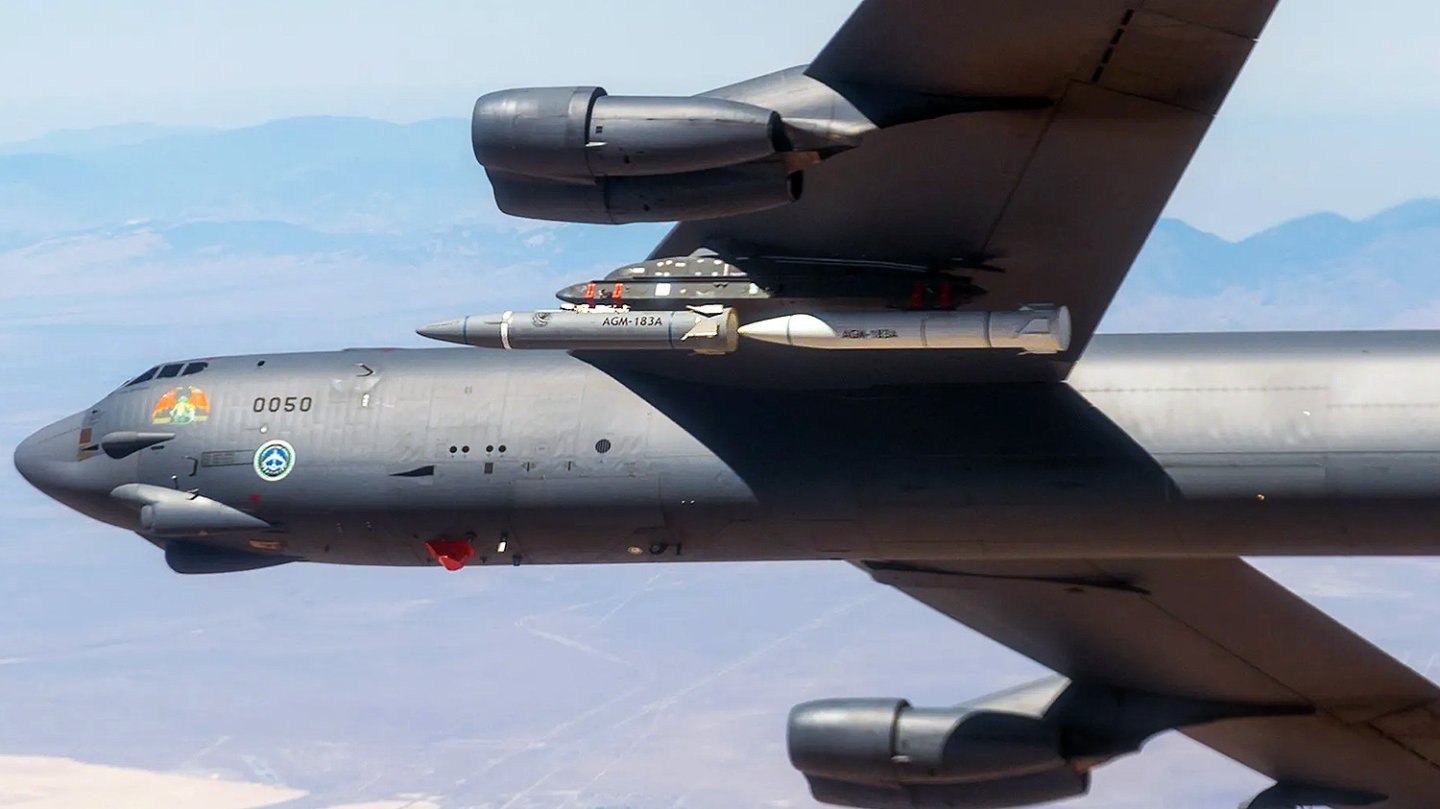
The U.S. Air Force has handed Lockheed Martin a $694 million contract for the production of AGM-183A Air-launched Rapid Response Weapon (ARRW) hypersonic missiles. In 2023, the service had moved to cancel ARRW, which had been in line to be the U.S. military’s first operational hypersonic weapon. At the time, we had reservations about the service’s intent and speculated the missile could make a major comeback or continue development in a classified setting. The program has since made an incredible turnaround, and there are already plans for another variant that will be able to use an all-new seeker to hit moving targets, including enemy warships.
The ARRW contract was awarded on September 29, but only announced today. It is not immediately clear how many missiles are to be built under this deal or when the Air Force expects to start taking delivery of them. The Air Force has previously disclosed plans to integrate the missiles onto its B-52 and B-1 bombers. Other aircraft with sufficiently large payload capacities and physical space to carry outsized stores could potentially carry AGM-183As, or variants thereof, in the future.

“The contract was executed under the Department of War’s Enterprise-Wide Agile Acquisition Contract to modernize America’s Arsenal of Freedom,” according to an Air Force press release. “This milestone marks the formal transition of the boost-glide hypersonic missile program from prototyping and flight testing into production, solidifying the Air Force’s commitment to fielding standoff, high-speed strike options.”
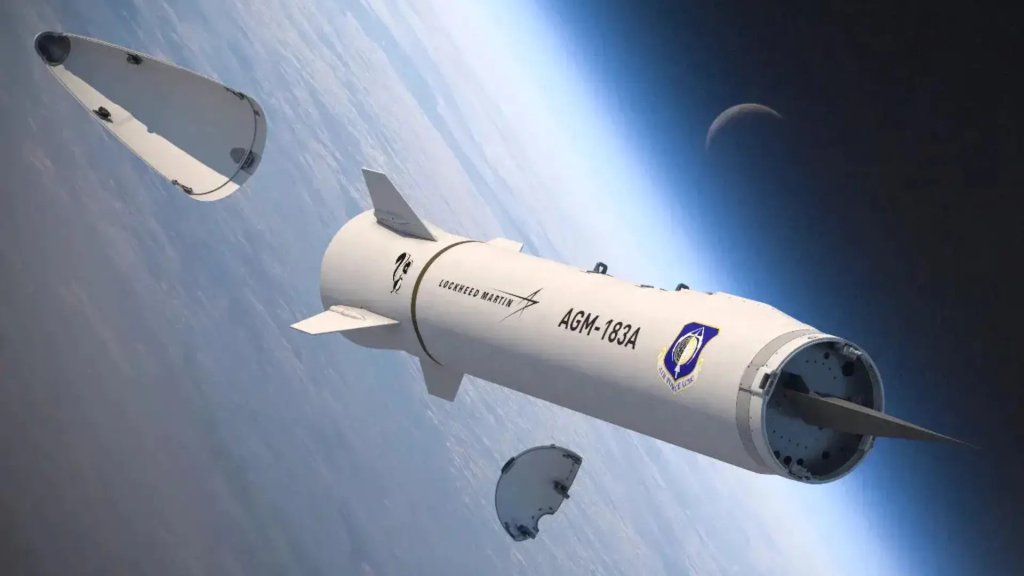
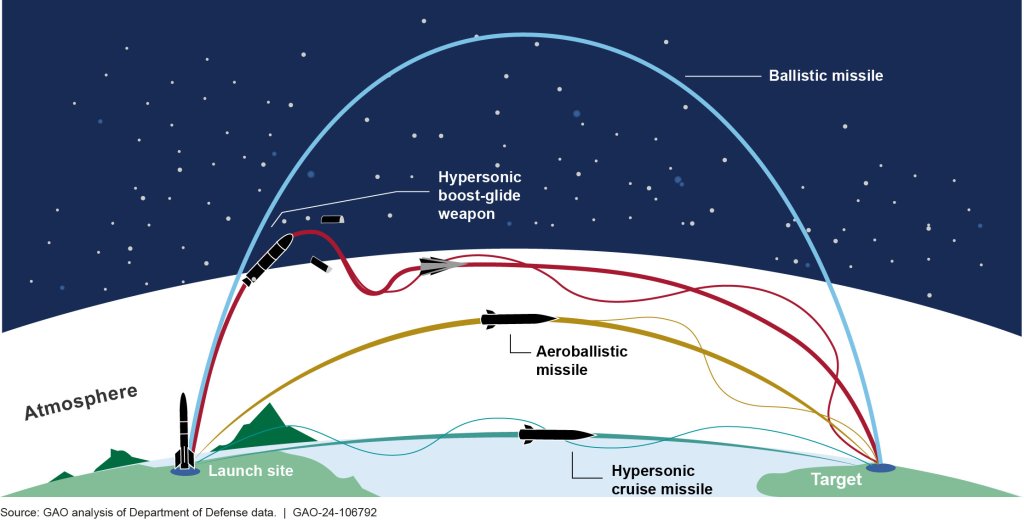
As noted here, the AGM-183A is a so-called boost-glide vehicle-type hypersonic weapon, which uses a rocket booster to bring it first to an optimal speed and altitude. The nose cone on ARRW then breaks away, and a wedge-shaped unpowered boost-glide vehicle concealed within is released.

The vehicle then glides to its target along a relatively shallow flight path within the Earth’s atmosphere at hypersonic speed, defined as anything above Mach 5. It is capable of maneuvering along the way, sometimes erratically. The mix of speed, flight trajectory, and maneuverability creates significant challenges for opponents in terms of spotting and tracking the glide vehicle, let alone attempting to intercept it. As a result, hypersonic weapons of this type offer particular benefits for piercing enemy air defenses to very rapidly strike time-sensitive and otherwise high-value targets.
The ARRW production contract “is a turning point in our advanced weapons roadmap,” Secretary of the Air Force Troy Meink said in a statement accompanying today’s release. “By moving ARRW from test to production, we’re providing our combatant commanders with a credible, high-speed strike weapon capable of penetrating the most advanced anti-access and area-denial systems.”
“Fielding ARRW enhances our ability to hold targets at risk anywhere around the world,” Air Force Chief of Staff Gen. Ken Wilsbach said in his own statement. “This hypersonic weapon provides the Joint Force a flexible and rapid response option for highly contested environments.”

As mentioned, the Air Force had moved to cancel ARRW in 2023, following a number of failed flight tests. The explicit intent at the time was to shift resources to the Hypersonic Attack Cruise Missile (HACM) effort. HACM is an air-breathing hypersonic cruise missile that functions in a completely different way from ARRW. HACM is still in development, and the program has now moved into flight testing, as TWZ was first to report earlier this month.
There had already been steady signs in recent years that ARRW’s fortunes were changing and that it had not actually been axed, despite the Air Force’s stated plans to do so. The Air Force’s 2026 Fiscal Year budget request last year confirmed that the service had fully rebooted the program and was seeking new funding to procure actual missiles.
The service’s 2027 Fiscal Year budget request, released earlier this year, revealed further plans “to begin [ARRW] INC 2 [Increment 2] technology efforts such as but not limited to integrating pre-planned product improvements, design, trade studies, hardware upgrades, facilitization, affordability initiatives, and testing.”

A request for $296 million would support “the design, test, and evaluation of Air-Launched Rapid Response Weapon (ARRW) Increment 2 with terminal seeker and data link capability and other cost reduction production initiatives into ARRW,” those same documents added.
In general, the U.S. Air Force has historically framed hypersonic weapons, including ARRW and HACM, as being especially critical for success in future conflicts, especially high-end fights, such as one in the Pacific against China. This was underscored by the launch of an AGM-183A with a live warhead from a B-52 flying from Andersen Air Force Base on Guam in 2024. The future anti-ship variant could be even more relevant in a Pacific context.
As TWZ has written previously:
“…the Guam test sent clear signals to China. The Air Force has made no secret of how important it views the development and fielding of hypersonic weapons as part of larger preparations for a potential future high-end fight against the Chinese People’s Liberation Army (PLA) in the Pacific. This is further underscored by the fact that the mention of the ‘terminal seeker and data link capability’ for Increment 2 of ARRW is actually contained in the Pacific Deterrence Initiative (PDI) section of the Pentagon’s Fiscal Year 2027 budget request.”

“In the context of a major conflict in the Pacific, there would also be a very high demand for prompt, long-range anti-ship capability. The ability to conduct those strikes even in the face of dense anti-air defenses would be even more attractive for engaging very high-value vessels, such as China’s growing fleets of aircraft carriers or big deck amphibious assault ships. The PLA Navy’s (PLAN) combat fleets, overall, continue to grow in scale and scope at a prodigious rate, as well. This, in turn, has put additional emphasis on the development and fielding of new and improved anti-ship capabilities that can be air-launched, as well as employed from the maritime and ground domains, across the U.S. military in recent years. Increment 2 ARRWs could also offer another means to strike mobile, high-value targets on land, such as ballistic missile transporter-erector-launchers.”

“For its part, the PLA has been actively developing and fielding various types of hypersonic weapons, including boost-glide vehicle designs. Its ever-growing arsenal of traditional ballistic missiles now includes several air-launched types, including ones with nuclear and conventional warheads. The latter are widely believed to be capable of being employed against enemy ships, as well as targets on land.”
If nothing else, after moving to cancel the ARRW three years ago, the Air Force has now fully reversed course and has placed its first order for production examples of this hypersonic missile.
Contact the author: joe@twz.com
The post USAF Orders ARRW Hypersonic Missile Into Production, The Same Weapon It Nearly Cancelled appeared first on TWZ.


Machine tools and other equipment from seven countries, led by China, work at Russian plants that make ballistic missiles and their components, Ukraine’s military intelligence (HUR) said on 26 October. The 30 items are a small slice of HUR’s War&Sanctions portal, which lists 1,698 machine tools at 223 Russian plants.
Seventeen of the 30 were made outside China, in Germany, Taiwan, the US, Türkiye, Switzerland, and Italy. One of HUR’s proposals reaches past Russia and China, to the firms that supply parts for Chinese machine tools. The list comes two weeks after the EU blacklisted 1,569 Russian arms suppliers and executives. More than half of those listings hit the ballistic missile supply chain, EU foreign policy chief Kaja Kallas said. Sanctioning a company, though, does not stop the machines in its workshops.
HUR’s statement leads with a GX-650 five-axis machining center made by China’s Hyper Machine Tool. Such computer-controlled machines cut complex metal parts from several angles. HUR said it works at the Votkinsk Plant, which the agency described as the maker of 9M723 missiles for the Iskander-M system and the missile section of the Kh-47M2 Kinzhal, an air-launched ballistic missile.
HUR has flagged Votkinsk before. In November 2025, it published hackathon findings showing that Russian companies supplied Chinese and Taiwanese machine tools to the plant after the full-scale invasion began.
Chinese Shtral turning and milling centers work at PEMZ Molot, which builds electronics units for Iskander-M missiles, according to HUR’s statement. At UPKB Detal, which makes altimeters for hypersonic Zircon cruise missiles, HUR found measuring equipment from Germany’s Rohde & Schwarz.
The portal entries paint a broader picture. Only four of the 30 entries list a ballistic missile among the plant’s weapons. Most of the rest list cruise missiles, glide-bomb kits, guided artillery shells, or Geran-2 attack drones. HUR did not publish its evidence, though the portal says partner agencies can request it.
Russian plants use the equipment to make missiles and parts such as altimeters, control surfaces, and gyroscopes, HUR said. The agency noted a growing number of Chinese machine tools, including five-axis models. According to HUR, those Chinese machines contain European, Japanese, and Taiwanese components, from numerical control systems to precision spindles and bearings. In HUR’s assessment, Russia still cannot replace equipment from leading foreign makers with its own.
Russian forces launched successive attacks on Kyiv between Monday evening, 26th October, and Tuesday morning, striking a university campus, residential neighbourhoods and a major bridge across the Dnipro River, causing casualties and disrupting transport across the Ukrainian capital.
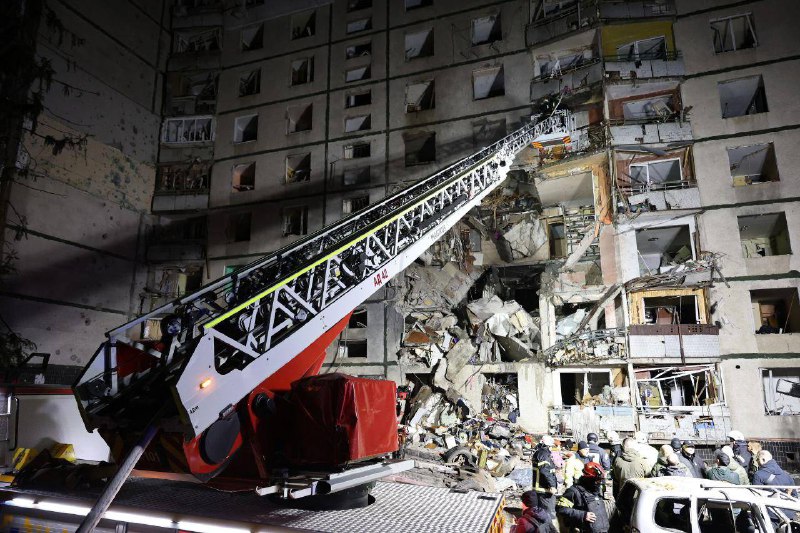
At least one person was killed and 15 injured, according to updated reports on Tuesday. The attacks damaged university buildings and student accommodation in eastern Kyiv, while a subsequent strike hit the Pivdennyi, or Southern, Bridge, interrupting road and underground railway services between the two banks of the city.
The first wave began shortly before 10pm on Monday, when Russian ballistic missiles struck the Desnianskyi district, near Lisova metro station and Kyoto Park.
Buildings belonging to the State University of Trade and Economics were damaged, including student dormitories. Residential properties, medical facilities and vehicles were also affected.
Kyiv Mayor Vitali Klitschko initially reported ten injured, most of them students. Nine required hospital treatment, including three in serious condition.
In the neighbouring Dniprovskyi district, emergency workers recovered a body from a severely damaged building. Two ambulance workers responding to an emergency call were also injured.
A second wave of Russian attacks followed in the early hours of Tuesday.
The Southern Bridge was struck again, damaging infrastructure used by Kyiv’s underground railway system and forcing authorities to restrict traffic across the Dnipro.
Metro operations were disrupted on two lines. On the green line, trains operated only between Syrets and Vydubychi on the western bank and between Osokorky and Chervonyi Khutir on the eastern bank. Services across the bridge were suspended.
On the red line, Chernihivska and Lisova stations were temporarily closed, with trains operating between Akademmistechko and Darnytsia.
The bridge is one of Kyiv’s principal transport connections between its eastern and western districts, carrying both road traffic and part of the metro network.
The latest strike followed earlier damage to the same crossing on 22 October, when Russian ballistic attacks also disrupted traffic and underground services.
Repeated damage to transport crossings has complicated movement across the capital, particularly for residents travelling between the densely populated eastern districts and workplaces in central and western Kyiv.
President Volodymyr Zelenskyy responded to Monday’s strikes by accusing Russia of targeting crowded civilian areas and warning that delays in Western air defence deliveries were increasing Ukraine’s vulnerability.
In a statement published on Telegram, he said Russian ballistic missiles had struck university grounds, Kyoto Park, areas near a metro station and residential buildings.
The president said there were no military installations near the affected sites and warned that further attacks remained possible.
He linked the casualties directly to Ukraine’s continuing difficulties obtaining sufficient air defence equipment.
“Artificial delays in providing air defence to Ukraine help terror,” Zelenskyy said.
He urged Western governments to ensure that political agreements on military assistance were implemented without administrative delays.
Zelenskyy also argued that Ukraine required weapons capable of destroying Russian ballistic missile launchers before missiles could be fired, rather than relying entirely on interception.
Such capabilities, he said, would offer a more effective means of protecting civilian lives.
His criticism came hours after he publicly disclosed that Ukraine had been waiting almost a month for US Defence Secretary Pete Hegseth to approve deliveries of missiles for Patriot and NASAMS air defence systems.
“In particular, we have been waiting for nearly a month for Mr Hegseth to sign off on missiles for Patriots and NASAMS,” Zelenskyy said on 26th October.
He instructed Ukrainian officials to raise the matter again with Washington.
Ukraine is seeking additional PAC-2 and PAC-3 Patriot missiles from the United States, European countries and other partners.
Some of these weapons are purchased through NATO’s Prioritised Ukraine Requirements List, or PURL, which allows allied governments to finance American military equipment destined for Ukraine.
However, US-made weapons may remain subject to American export and transfer authorisations even when European governments have agreed to finance their procurement.
US Secretary of State Marco Rubio acknowledged that a shipment of air-defence missiles may have been delayed, but said the delay was not politically motivated. Ukraine has said it is waiting for US approval for missiles for its Patriot and NASAMS systems, as its forces face shortages of the ammunition needed to intercept incoming attacks.
The precise effect of the outstanding approvals on Kyiv’s ability to defend itself during the latest strikes has not been established. The delay adds to the pressure on a country already trying to protect its cities and critical infrastructure with limited air-defence stocks.
Ballistic missiles present particular challenges for Ukrainian air defences because of their high speeds and the limited time available to detect, track and intercept incoming weapons.
Patriot systems equipped with appropriate interceptors are among Ukraine’s principal defences against such attacks. Their effectiveness depends not only on the availability of launchers and radar systems but also on adequate stocks of interceptor missiles.
Russia’s repeated attacks on the Southern Bridge also demonstrate the wider consequences of damage to urban infrastructure. Even when a transport crossing remains structurally intact, damage to railway equipment or nearby installations can interrupt services for thousands of passengers.
The latest bombardment followed another substantial Russian attack on Kyiv on 21st–22nd October, which killed one person and injured more than 20.
For Ukraine, the attacks have reinforced two immediate requirements: protecting essential infrastructure against further strikes and securing a reliable supply of interceptor missiles.
Whether Washington can accelerate the outstanding approvals, and whether European partners can provide additional ammunition from their own stocks, will be central to Ukraine’s air defence preparations as winter approaches.

The US needs to creatively combine two counter-drone capabilities it already has and do it quickly to deal with swarm attacks of drones and cruise missiles. The Russians are already doing it. Counter-drone warfare is changing as the push for solutions gains momentum in the United States and worldwide. In modern combat scenarios, drones are […]
The post Combo interceptors best bet for US drone and missile defense appeared first on Asia Times.


Ukraine has waited almost a month for US Defense Secretary Pete Hegseth to sign off on missiles for its Patriot and NASAMS air defense systems, Ukrainian President Volodymyr Zelenskyy said on 26 October. He ordered his team to raise it with Washington again. Two other US holds on Ukraine, on Starlink speeds and intelligence sharing, have been lifted, leaving the interceptors as the last one.
Russia keeps firing ballistic missiles at Ukrainian cities and the power grid before winter, and Patriots are the only systems in Ukraine that reliably stop Iskander-M, Kinzhal, and Zircon missiles. Zelenskyy has told EU leaders Ukraine needs 300 interceptors to get through winter, diplomatic sources told Radio Svoboda. The holds came as Washington pressed Kyiv to stop striking Russian refineries, which Trump blames for high US fuel prices before the midterms.
Zelenskyy held a meeting on weapons supplies with Ukraine’s defense minister, foreign minister, and commander-in-chief. They reported on interceptors for air defense, above all for Patriot systems. Afterward, Zelenskyy wrote:
“We are working in several directions: with the United States, Europe, and other partners that have stocks of PAC-2 and PAC-3 missiles. In particular, for almost a month we have been waiting for Mr. Hegseth’s signature on missiles for Patriots and NASAMS. I have instructed the team to discuss this with the American side once again.”
Talks with other countries continue, he added. The meeting also covered preparations for November’s Ramstein meeting of Ukraine’s allies, where Zelenskyy wants decisions already on the table carried out faster.
Some of the transfers come from friendly countries and need Hegseth’s approval, because the US must sign off on any re-transfer of its missiles, a US official and three people familiar with the matter said on 19 October. Hegseth has neither refused nor approved them.
A Ukrainian official said in mid-October that only “a couple” of interceptors were left. Hegseth has said the US wants “our guys” to have “the most possible” interceptors, and Secretary of State Marco Rubio insisted nothing was “being deliberately denied to Ukraine.”
In an interview aired on 25 October, Zelenskyy listed three problems from his Oslo talks with the Americans: air defense, Starlink limits, and limits on US intelligence sharing. Full Starlink speeds returned on 24 October, and missile warnings resumed after his 20 October call with Rubio. Progress on Patriot missiles is “very slow,” he said, “slower than the flight of Russian missiles.”
Kyiv has also tried to trade for the missiles. Zelenskyy told US senators he had offered US envoys a 30-day pause in strikes on Russian refineries in return for Patriot interceptors. The envoys showed no openness to the idea.
Trump has called those refinery strikes a disgrace that only pushes oil prices higher. He said it days after striking a deal with Putin to bring Russian diesel back to the US ahead of the midterm elections on 3 November.
Trump treats Ukraine as the weak link to squeeze and wants a visible win partly with US domestic politics in mind, Ukrainian diplomat Oleksandr Khara has argued.
Greece has agreed to Saudi Arabia’s request to keep its Patriot missile battery deployed in the Kingdom amid the current critical situation in the Middle East, Prime Minister Kyriakos Mitsotakis told Crown Prince Mohammed bin Salman Al Saud during a meeting in Riyadh. The prime minister condemned the attacks against Saudi Arabia and underlined Greece’s […]
The post Greece agrees to Saudi request to maintain Patriot battery in the Kingdom appeared first on Keep Talking Greece.

Ukraine reportedly struck the Energiya plant in Yelets, Russia’s Lipetsk Oblast, with UK-supplied Storm Shadow cruise missiles on 25 October, according to the OSINT channel Exilenova+.
The plant manufactures batteries and power sources used in Russian weapons systems, including Iskander and Kinzhal missiles, air defense systems, and guided aerial bombs, according to Exilenova+. The reported strike targeted a facility that supplies components for Russia’s military-industrial complex as Moscow continues its war against Ukraine.
According to Exilenova+, Energiya is Russia's only producer of batteries for glide bomb planning and correction modules, as well as a key supplier of specialized power sources for several missile systems.
Exilenova+ reported multiple missile impacts at the Energiya plant, sharing footage and photos showing explosions, thick smoke, and fires at the facility. The channel later reported that the plant was still burning and that the surrounding area had been cordoned off, with numerous ambulances heading to the site.
Dnipro OSINT reported that at least two missiles struck two buildings at the plant.
The Energiya plant is located in Yelets, approximately 250 km (150 miles) from the Ukrainian border.

According to Dnipro OSINT, Energiya specializes in developing and manufacturing chemical power sources. Its products are used in several Russian weapons systems, including Iskander-K and Iskander-M missiles, Kh-47M2 Kinzhal air-launched ballistic missiles, Zircon missiles, and Pantsir air defense systems. The plant also supplies power sources for UMPB D-30SN guided aerial bombs.
Many of these weapons are used in Russian strikes on Ukrainian cities, killing civilians and destroying residential buildings and civilian infrastructure.
Dnipro OSINT said the plant had been attacked at least four times before the 25 October strike.
The strike comes two days after a reported Ukrainian Storm Shadow missile attack on the Proton electronics plant in Russia’s Oryol on 23 October, which produces electronic components used in Russian weapons systems, including Iskander-M ballistic missiles and Pantsir-S1 air defense systems.