Washington state secretary of state fires back at DOJ over noncitizen voter claim: ‘Profoundly disappointing’


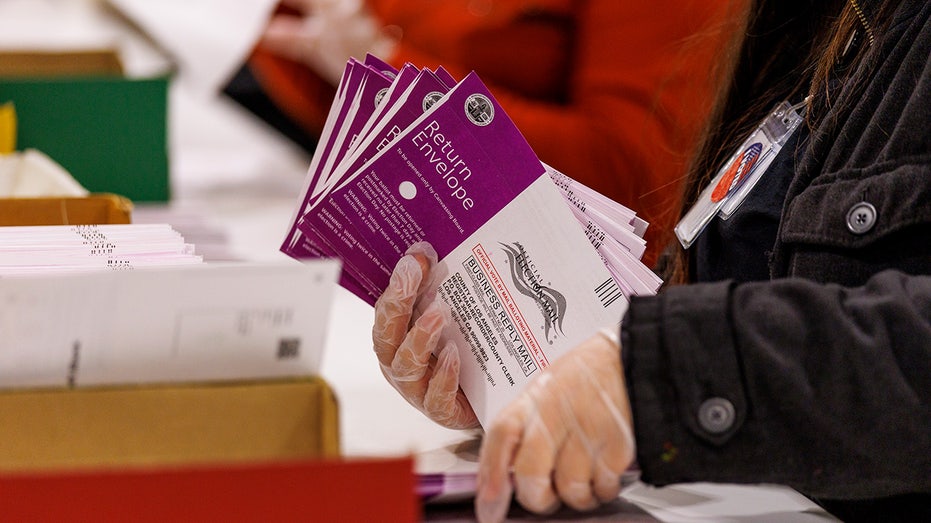
An election integrity expert raised concerns Wednesday about California and Washington after the Justice Department identified thousands of suspected noncitizen voter registrations, including cases in which residents told officials they were not U.S. citizens yet were still registered to vote.
In an interview with Fox News Digital, J. Christian Adams, president of the Public Interest Legal Foundation, blamed the states’ automatic voter registration systems and local officials’ refusal to use available federal tools to verify citizenship.
"Noncitizens are getting on the rolls all over the country through the motor voter program. They're going into (the) DMV. Sometimes they're even telling the DMV they’re not citizens, and states are still registering them to vote," Adams said.
"That's why aliens are getting on the rolls in states like Washington and California that have automatic voter registration."
California and Washington both require U.S. citizenship to register to vote, though their automatic voter registration systems differ. California DMV customers who indicate they are eligible to vote can be automatically registered, while Washington's automatic registration through the Department of Licensing is tied to transactions requiring proof of U.S. citizenship, such as obtaining an enhanced driver's license or ID.
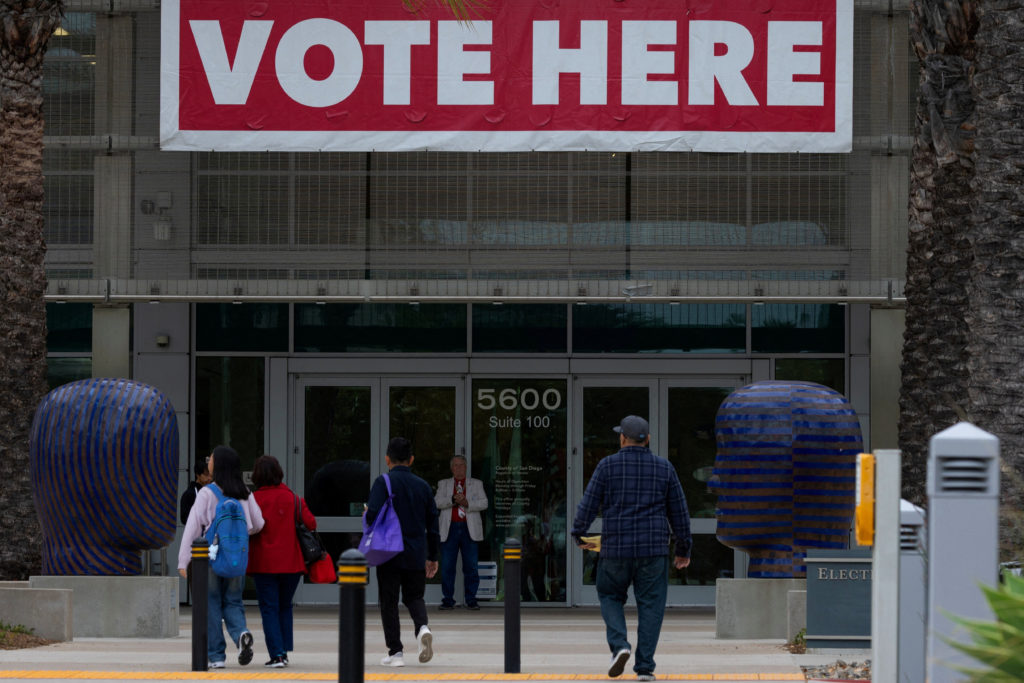
However, federal officials said they identified more than 20,000 likely noncitizens on California voter rolls, many with addresses in Los Angeles County, and more than 400 suspected cases in Washington. The findings come just ahead of the Nov. 3 midterm elections.
Washington Secretary of State Steve R. Hobbs pushed back against the Justice Department on Wednesday, criticizing its findings for containing "several glaring deficiencies."
The list included U.S. citizens and individuals who are not currently registered to vote, Hobbs said.
"Without individualized proof of ineligibility, it would be both irresponsible and illegal for election officials to decline to process a registered voter’s ballot. If you have individualized proof, I invite you to provide it so election officials can take appropriate steps that are consistent with federal and state law," Hobbs said.
The California secretary of state also pushed back last week, saying a review of the DOJ’s data on Los Angeles County found "significant accuracy problems with their sweeping claims."
"At best, this litigation is a reckless political stunt. At worst, it threatens to disenfranchise thousands of Californians this election," the office said.
DOJ HAS VERIFIED 20,000 NONCITIZENS ON CALIFORNIA VOTER ROLLS, FEDERAL PROSECUTOR SAYS
Adams also blamed election officials for refusing to use the Department of Homeland Security’s Systematic Alien Verification for Entitlements (SAVE) database to identify noncitizens on voter rolls.
He described SAVE as the "best database there is for aliens" that is "just sitting there waiting for them to use."
"They don't want to check. They don't have to check. Federal law doesn't require them to check. What federal law does is make data available through the SAVE database at DHS," Adams said.
Hobbs criticized the DOJ’s reliance on the SAVE database, calling it "unreliable" and arguing that the absence of a citizenship record does not establish immigration status.
"It cannot rely on the mere absence of a name from the SAVE database or the department’s assertions based on the vague and untested methodology described in the lawsuit against California," Hobbs said.
MORE THAN A QUARTER-MILLION NONCITIZENS MAY BE REGISTERED TO VOTE IN 4 KEY STATES, DHS ALLEGES
As a result of lax regulations, Adams said his team has identified major voter roll issues in California beyond noncitizen registration, including duplicate registrations and registrations associated with deceased residents.
"It's what we expect now from California because partisan politics has taken over election administration in that state," he said.
"They think it's part of the program to disenfranchise people if they check citizenship, but it's not," he added. "They're saying that everything's fine here. ‘Don't look at us. We're as good as it can be,’ But the reality is they're really not using the data that are available to keep the rolls clean."
DOJ THREATENS EMERGENCY LEGAL ACTION AGAINST CALIFORNIA OVER SUSPECTED NONCITIZEN VOTERS
Other states, including Florida and North Carolina, have used the SAVE database and found fewer issues, according to Adams, contrasting their approach with California and Washington.
While the Justice Department's disclosure marks a rare public accounting of suspected noncitizen voter registrations, Adams said the findings will likely not affect the upcoming midterm elections.
Audits usually happen during off-election years when there is sufficient time for legal review, according to Adams. Waiting until just before an election in an even-numbered year can result in courts dismissing challenges due to "laches," a legal principle that penalizes someone for waiting too long without a valid reason to file a legal claim.
"There's very little you can do right before an election. That's why the hard work in these cases is in odd-numbered years, not in October or even-numbered years. So, you really have to do this stuff early, or you could lose on what's called laches," he said.
Despite the timing, Adams, who worked in the DOJ’s Voting Section more than a decade ago, applauded the department for taking the matter seriously.
CLICK HERE TO DOWNLOAD THE FOX NEWS APP
"Nobody took noncitizen registration seriously until now. And that's a welcome change," he said.

"I am very concerned about the weaponization of the Justice Department," Sen. Bill Cassidy (R–La.) told reporters in August, explaining his reservations about voting to confirm Todd Blanche as attorney general. Cassidy specifically cited the attempt to prosecute Cassidy Hutchinson, a White House aide during President Donald Trump's first term, based on her 2022 testimony before the House select committee that investigated the 2021 riot at the U.S. Capitol. "I'm told there is a grand jury being empaneled to investigate her," Cassidy said. "Why? Tell me that. Shouldn't every American be afraid of the weaponization of the Justice Department?"
Grand jurors in Washington, D.C., who on Tuesday declined to approve an indictment of Hutchinson, apparently shared the senator's concerns about the case against her. That setback is part of a pattern: Grand juries, which historically have almost never rejected charges proposed by federal prosecutors, have done so repeatedly during the last two years, reflecting the Trump administration's tendency to pursue politically motivated cases based on inadequate evidence.
A grand jury hears only the government's side of a case, and the probable cause standard for approving an indictment, which requires reasonable grounds to believe a crime has been committed and that the person identified by prosecutors committed the crime, is much less demanding than the proof beyond a reasonable doubt required for a conviction. But the Justice Department's manual for prosecutors says they should not pursue criminal charges unless "the admissible evidence will probably be sufficient" to meet the latter test. It is a pretty striking indication that prosecutors are disregarding that injunction when a grand jury determines that they have failed to meet the minimal burden of establishing probable cause.
Hutchinson, who at the time of the Capitol riot was White House Chief of Staff Mark Meadows' principal assistant, delivered the testimony at the center of the failed indictment on June 28, 2022. She described Trump as unconcerned about weapons carried by some of the people who attended the speech he delivered the day of the riot, during which he reiterated his false claim that Joe Biden had stolen the 2020 presidential election and urged his supporters to "fight like hell" against congressional ratification of his victory.
Hutchinson said Trump wanted the Secret Service to stop screening rally participants with magnetometers because he was worried it would reduce the size of the crowd. "I don't effing care that they have weapons," Trump said, according to Hutchinson's approximate recollection. "They're not here to hurt me. Take [the] effing mags away. Let my people in. They can march to the Capitol from here. Let the people in."
Hutchinson also said Trump was irate when the Secret Service told him he could not join the protesters at the Capitol. That much was consistent with the testimony of other witnesses. But Hutchinson added disputed details, saying Deputy Chief of Staff Tony Ornato had told her Trump was so angry that he "lunge[d] towards Bobby Engel," the head of his protective detail, and "reached up towards the front of the vehicle to grab at the steering wheel." The Secret Service agent who was Trump's driver that day contradicted Hutchinson's account, and Ornato said he had no recollection of any such incident.
Last March, Reps. Barry Loudermilk (R–Ga.) and Jim Jordan (R–Ohio) urged the Justice Department to prosecute Hutchinson for lying to Congress. "Hutchinson's potential prosecution became a point of controversy between lawmakers and employees of the Justice Department," CNN reports. "Some inside the department believed there was not enough evidence to bring a viable criminal case."
You would expect such a case to be handled by Jeanine Pirro, the U.S. attorney for the District of Columbia. But the investigation of Hutchinson was instead conducted by the Justice Department's Civil Rights Division, which is run by Assistant Attorney General Harmeet Dhillon, another Trump loyalist.
You might wonder what scrutinizing Hutchinson's testimony had to do with "protecting the civil and constitutional rights of all Americans," which is how Dhillon's division describes its mission. Dhillon's involvement is all the more puzzling given that Pirro previously had not hesitated to pursue dubious charges against the president's enemies.
Last February, Pirro sought an indictment of six Democratic members of Congress who appeared in a November 2025 video that reminded U.S. military personnel of their duty to "refuse illegal orders." Trump condemned that message as "SEDITIOUS BEHAVIOR AT THE HIGHEST LEVEL," saying the lawmakers "should be ARRESTED AND PUT ON TRIAL." But as a federal judge later noted, the allegedly criminal video was "unquestionably protected" by the First Amendment.
That did not deter Pirro from trying to deliver on her boss's threat. But as in Hutchinson's case, the grand jury apparently was not willing to participate in Trump's vendetta. After it unanimously refused to approve the indictment, Pirro gave up.
That embarrassing experience may have deterred Pirro from getting involved in Hutchinson's case, especially if she thought there was not enough evidence to obtain a conviction. She would have had good reasons for reaching that conclusion.
It is not clear exactly what charges the grand jury rejected this week. But the most obviously relevant statutes are 18 USC 1001, which covers false statements "in any matter within the jurisdiction of the executive, legislative, or judicial branch," and 18 USC 1621, which covers false testimony under oath. Both are felonies punishable by up to five years in prison. But a conviction under Section 1001 requires proving that the defendant "knowingly and willfully" made a "materially false, fictitious, or fraudulent statement," and the perjury statute applies only when a sworn witness "willfully and contrary to such oath" makes a "material" statement that "he does not believe to be true."
Those elements would have been hard to satisfy in Hutchinson's case. Her testimony about Trump's insouciant attitude toward weapons carried by his supporters was based on what she said she heard him say, an account that pits her word against that of a habitually dishonest politician whose speech that same day was full of misrepresentations. And even if her recollection of Trump's comments was not fully accurate, that does not necessarily mean she intentionally gave false testimony. The same goes for the alleged lunging-and-grabbing incident, an account Hutchinson said was based on a conversation with Ornato that he says he does not recall.
Maybe Hutchinson, who had a lawyer and was surely aware of the potential penalties for lying to Congress, nevertheless fabricated both of those claims. But assuming her testimony was inaccurate, it seems more likely that she misremembered or misconstrued what Trump and Ornato said. In any event, the task of proving the first proposition beyond a reasonable doubt would give pause to any reasonably cautious prosecutor. And the grand jurors, even without the benefit of hearing a rebuttal to the government's case, thought the evidence of deliberate deception was so weak that it fell short of probable cause.
That determination is just the latest in a series of similar rebukes. In addition to the rejection of Pirro's charges against the "Seditious Six," they include the attempt to prosecute New York Attorney General Letitia James for mortgage fraud, which two separate grand juries in two different Virginia cities blocked last December.
Grand jurors also have stood athwart felony prosecutions of protesters in Washington, D.C., including Sean Dunn, the guy who threw a sandwich at a Customs and Border Protection officer, and Sydney Reid, who allegedly interfered with immigration arrests while using her phone to record them. In the latter case, Reason's Joe Lancaster noted, prosecutors unsuccessfully sought a felony assault indictment "not once, not twice, but a staggering three times." Reid was ultimately acquitted of a misdemeanor charge.
In the summer of 2025, federal grand juries approved just seven of 38 proposed felony indictments against protesters in Los Angeles, an amazingly bad track record. A few months later, federal prosecutors dropped assault charges against two Chicago protesters after a grand jury declined to indict them.
"For decades, federal grand juries have almost never said no," Ballard Spahr attorneys Henry E. Hockeimer Jr. and Brad Gershel noted last year. In 2016, for example, grand juries declined to approve federal indictments just 0.004 percent of the time. "That dynamic is now being tested," Hockeimer and Gershel added. "As the DOJ has adopted a more assertive charging posture in politically sensitive cases, grand juries appear to be reasserting their independence."
The post The Failed Indictment of Cassidy Hutchinson Reflects Grand Jury Resistance to Politically Motivated Charges appeared first on Reason Magazine.

© Damon Winter/The New York Times
Steve Granitz/WireImage; Sven Arnstein/NBCUniversal via Getty Images; Jeff Lipsky/People
Noah Wyle has been named the Sexiest Man Alive by People magazine.
People published its inaugural Sexiest Man Alive issue in 1985. Since then, 38 different men have received the title, with four of them being named Sexiest Man Alive twice.
The vast majority of the men on this list are white actors; only five men of color have been selected for People's famous cover. They're joined by a few musicians, one star athlete, and one Kennedy.
Continue reading for a list of every man who's received the title, listed in reverse chronological order.
Chris Frawley/Getty Images; Jeff Lipsky/People
Noah Wyle rose to fame as Dr. John Carter in NBC's medical drama "ER," alongside former Sexiest Man Alive cover star George Clooney.
Wyle was nominated for outstanding supporting actor in a drama series at the Emmys several times in the 1990s, though he never won.
Two decades later, Wyle returned to the world of medical dramas as Dr. Michael "Robby" Robinavitch in HBO Max's "The Pitt" — and finally won his first Emmy for outstanding lead actor in 2025. He also won for outstanding drama series as an executive producer.
Wyle, 55, continued his winning streak into 2026, taking home a second consecutive best actor Emmy and the title of Sexiest Man Alive.
"You get into this because you are a natural observer. Then that privacy is immediately taken from you if you get any notoriety," Wyle told People of his acting career. "It could be a hard thing to reconcile. It took me a long time. 'The Pitt' gives me the opportunity to do it differently than I did the first time — with a little bit more presence and a little bit more composure."
Taylor Hill/WireImage; Jason Hetherington/People
Jonathan Bailey was an award-winning theater actor when he rose to global stardom as Lord Anthony in Netflix's Regency romance series "Bridgerton."
Bailey has since received an Emmy nomination for his role in the Showtime series "Fellow Travelers," made his big-screen debut in the 2024 musical hit "Wicked," and landed a leading role in the 2025 summer blockbuster "Jurassic World: Rebirth."
Bailey received the Sexiest Man Alive title ahead of the premiere of "Wicked: For Good," in which he reprises his role as Prince Fiyero. He is the first out gay man to grace People's most famous cover.
"It's a huge honor. Obviously, I'm incredibly flattered. And it's completely absurd," Bailey told People.
"When I was really young, I was very confident about who I was, and maybe I lost that as I grew up," he continued. "We're all sort of trying to get back to the origin, aren't we? But I was swimming in the sea about an hour ago with a good gang, and I felt all right in my skin."
Amy Sussman/Getty Images; People
John Krasinski rose to prominence as Jim Halpert on NBC's hit sitcom "The Office," which wrapped its nine-season run in 2013.
Three years later, Krasinski transitioned from supporting roles in rom-coms like "It's Complicated" and "Something Borrowed" to the leading man in Amazon's action series "Jack Ryan."
Krasinski also made his name as a director with 2018's "A Quiet Place," in which he co-starred with his real-life wife, Emily Blunt. The horror movie's rare box-office success led to a sequel in 2020 and a prequel in 2024 starring Lupita Nyong'o.
"I had to pitch the studio like 54 times before they said yes," Krasinski told People. "I'm pretty sure someone said, 'Sorry, is Jim from 'The Office' going to direct this?' And I went, 'Oh, it's John, but we'll get there.'"
Maria Moratti/Getty Images; People
Patrick Dempsey starred as Derek Shepherd, aka "McDreamy," for 11 seasons on "Grey's Anatomy." The role drew a passionate following, including many supporters of his character's will-they-won't-they relationship with Meredith Grey, played by Ellen Pompeo.
Although Dempsey had been featured in People's Sexiest Man Alive issue several times before, he didn't take the crown until 2023, eight years after he left the hit show.
"I'm glad it's happening at this point in my life," he told People of the honor. "It's nice to have the recognition, and certainly my ego takes a little bump, but it gives me the platform to use it for something positive."
The actor founded The Dempsey Center to make comprehensive cancer treatment more accessible. He has also starred in beloved movies like "Sweet Home Alabama," "Enchanted," and its 2022 sequel "Disenchanted."
Tristar Media/WireImage; People
Chris Evans is best known for playing Captain America in the MCU, although he officially hung up his shield following "Avengers: Endgame" in 2019.
He has also starred in celebrated films like "Scott Pilgrim vs. the World," "Snowpiercer," and "Knives Out."
"This whole thing is tough to be interviewed about. It feels like a weird form of humble bragging," Evans told People of the honor.
"My mom will be so happy," he added. "She's proud of everything I do but this is something she can really brag about."
Alexi J. Rosenfeld/Getty Images; People
Paul Rudd's breakthrough role came in 1995, starring opposite Alicia Silverstone in the popular coming-of-age drama "Clueless."
He rose through Hollywood primarily as a comedic actor, starring in films like "Wet Hot American Summer," "Knocked Up," and "Anchorman." He also portrayed prominent recurring characters in beloved TV shows "Friends" and "Parks and Recreation."
More recently, Rudd is widely known for his role as Ant-Man in the MCU, as well as the critically acclaimed Netflix original series "Living With Yourself."
The 52-year-old actor said his wife was "stupefied" when he received People's coveted crown.
"I'm hoping now that I'll finally be invited to some of those sexy dinners with Clooney and Pitt and B Jordan," he told the magazine. "And I figure I'll be on a lot more yachts. I'm excited to expand my yachting life."
He continued: "And I'll probably try to get better at brooding in really soft light. I like to ponder. I think this is going to help me become more inward and mysterious. And I'm looking forward to that."
Rich Fury/Getty Images / People
Michael B. Jordan is the fifth man of color to receive People's honor.
He first rose to fame playing quarterback Vince Howard on NBC's "Friday Night Lights," but his Hollywood breakthrough came in 2013, when he starred in Ryan Coogler's directorial debut, "Fruitvale Station."
That same year, at the age of 26, he was featured in People's first annual Ones to Watch portfolio.
He has since starred in major blockbuster films, including the 2015 "Rocky" sequel "Creed" and the MCU's 2018 masterpiece "Black Panther."
Jordan has also made a name for himself as a passionate activist for racial equality, marching in Black Lives Matter protests during the summer of 2020.
At 33, he described his Sexiest Man Alive title as "a cool feeling."
"When my grandmother was alive, it was something that she collected, and then my mom naturally reads it a lot and my aunts as well," he told People. "This is one that they're definitely going to have a special place for."
Paras Griffin/Getty Images / People
John Legend is only the fourth man of color to be chosen and the third-ever musician — all three of whom have starred as coaches on NBC's "The Voice."
At the time of his crowning, the "All Of Me" singer had released five critically acclaimed R&B albums, two of which had been certified platinum. His Sexiest Man Alive title came shortly after the release of "A Legendary Christmas Deluxe," the deluxe edition of his sixth studio album and first Christmas album.
Legend's wife, Chrissy Teigen, had an extremely on-brand reaction to her husband's announcement: "all downhill from here," she tweeted.
"She's proud of me," Legend told his fellow coaches on "The Voice." "You know, she makes fun of me almost all the time, but she hasn't even been snarky about this. She's like legit proud of me. I finally impressed my wife!"
Samir Hussein/Samir Hussein/WireImage / People
Idris Elba became the third man of color to be given the honor. He rose to fame for his role as Baltimore drug kingpin Stringer Bell on HBO's "The Wire" in the early 2000s.
The actor also appeared in multiple Marvel Cinematic Universe films as the keeper of the Asgardian bridge, Heimdall. There has even been a fan-fueled campaign to crown him as the next James Bond.
"I was like, 'Come on, no way. Really?'" Elba told People about being named Sexiest Man Alive. "Looked in the mirror, I checked myself out. I was like, 'Yeah, you are kind of sexy today.' But to be honest, it was just a nice feeling. It was a nice surprise — an ego boost for sure."
Jason Kempin/Getty Images / People
Blake Shelton is the second musician ever to be given People's highest honor.
Shelton's selection, however, did not go over well.
One person quipped: "I don't think he's even the sexiest man named Blake Shelton."
Still, Shelton's love life hasn't seemed to suffer since he received the Sexiest Man moniker. He and singer Gwen Stefani wed in 2021.
Jeff Spicer/Getty Images / People
Former professional wrestler and current actor Dwayne Johnson became the second man of color to be named Sexiest Man Alive after his celebrated voiceover role in Disney's "Moana."
When he heard of his Sexiest Man title, he told People, "I said, 'That's awesome.' And then what went through my mind was just how cool and exciting it is. And then I thought, 'Wow, we've pretty much reached the pinnacle.' I'm not quite too sure where we go from here. I've done it all, this is it."
Cameron Spencer/Getty Images / People
Despite being the first and only athlete to be honored with the annual cover, David Beckham told People, "I never feel that I'm an attractive, sexy person."
Beckham's wife, former Spice Girl Victoria Beckham, would likely disagree.
In 2019, the couple's son, Brooklyn Beckham, was also featured in People's Sexiest Man Alive issue.
Carlos Alvarez/Getty Images / People
Chris Hemsworth has stolen hearts as Thor throughout Marvel's "The Avengers" franchise, which made him a natural pick for 2014's Sexiest Man Alive after "Thor: The Dark World" hit theaters the year before.
Kevin Winter/Getty Images / People
Maroon 5 frontman Adam Levine became the first musician and second non-actor — out of only five total — to grace People's Sexiest Man Alive cover.
Levine made headlines in 2022 after Instagram model Sumner Stroh came forward and said that she'd had an affair with the singer. Stroh said that Levine, in fact, had asked her if he could name his next child with wife Behati Prinsloo "Sumner."
Levine denied having an affair with Stroh but admitted that he had "crossed the line."
Prinsloo and Levine welcomed their third child in January 2023.
Stuart C. Wilson/Getty Images / People
Channing Tatum nabbed the cover after his star-making turns in "Magic Mike," "The Vow," and "21 Jump Street."
Carlos Alvarez/Getty Images)
"I think it's really cool that a guy who doesn't look like a model can have this," Bradley Cooper told People after being named Sexiest Man Alive.
"I think I'm a decent-looking guy. Sometimes I can look great, and other times I look horrifying," the "Hangover" star said.
Michael Loccisano/Getty Images / People
Ryan Reynolds' forthcoming role in "Green Lantern" — and his self-deprecating humor — helped him become the first Canadian Sexiest Man Alive.
"The most difficult part is going to be organically working this title into a conversation with random strangers," he told the magazine.
John Phillips/Getty Images / People
Johnny Depp landed on his second cover on the heels of his role in "Alice in Wonderland."
He has since fallen out of favor with many fans. Depp has been repeatedly accused of domestic abuse by his ex-wife, Amber Heard, a claim that she continues to maintain. He denies it.
Jon Kopaloff/Getty Images / People
Hugh Jackman was named Sexiest Man Alive after his turn as Wolverine in "X-Men: The Last Stand."
Araya Diaz/Getty Images / People
Matt Damon was given the title after his third "Bourne" movie rocked the box office.
Matt Winkelmeyer/Getty Images / People
George Clooney became the third man, after Brad Pitt and Richard Gere, to win People's honor twice.
Roy Rochlin/Getty Images / People
Matthew McConaughey scored the cover for People's 20th anniversary of Sexiest Man Alive after he became known for starring in popular romantic comedies, like "The Wedding Planner" and "How to Lose a Guy in 10 Days."
Charley Gallay/Getty Images / People
Jude Law scored People's most famous cover in the early 2000s.
"He's the most beautiful man who ever walked the earth — an absolutely perfect oil painting," Naomi Watts told People in 2004.
Thomas Lohnes/Getty Images / People
In 2003, Depp had charmed the world as Captain Jack Sparrow in "Pirates of the Caribbean: The Curse of the Black Pearl."
Neilson Barnard/Getty Images / People
The world couldn't stop talking about Ben Affleck and Jennifer Lopez in 2002.
"Chicks gravitate to him," Affleck's friend Kevin Smith, a director, told People at the time. "The word on the street is that he's the ideal man, chatty, gorgeous, generous, and intelligent."
Matt Winkelmeyer/Getty Images / People
Pierce Brosnan was known as James Bond when he landed on People's coveted cover.
Jason Kempin/Getty Images / People
In 2000, Brad Pitt was already a movie star — but coming off his wedding to Jennifer Aniston and his iconic role in "Fight Club," People decided to bestow Pitt with his second Sexiest Man Alive title.
Rich Polk/Getty Images / People
When Richard Gere was named the Sexiest Man Alive in 1999, his ex-girlfriend Diane Von Furstenberg spoke glowingly of the decision.
"He walked like a biker, and that attracted me," she told People. "I knew I was going to get my hands on him."
Nicholas Hunt/Getty Images / People
Harrison Ford's 1998 cover recognized his role as a blockbuster heartthrob thanks to "Star Wars" and "Indiana Jones."
Kevin Winter/Getty Images / People
Clooney secured his first Sexiest Man title while portraying the brooding Dr. Doug Ross on "ER."
Jenny Anderson/Getty Images / People
Denzel Washington became the first man of color — and the first of only five total — to grace the Sexiest Man Alive cover.
Michael Kovac/Getty Images / People
A long-haired Pitt made the 1995 People cover after his much-celebrated starring roles in "Legends of the Fall" and "Interview With the Vampire."
Jason Merritt/Getty Images
Technically, "John Wick" star Keanu Reeves never starred on People's cover; the magazine didn't select a Sexiest Man Alive in 1994.
But the editorial director retroactively bestowed People's honor on Reeves in 2015.
Brenda Chase/Stringer
In 1993, People forwent the Sexiest Man Alive cover in favor of naming a Sexiest Couple Alive. The magazine chose the newly married couple Cindy Crawford and Richard Gere, who split one year later.
Kevin Winter/Getty Images / People
In 1992, People explained Nick Nolte's appeal as his being a "big-lug Adonis with the heart of gold."
Kevin Winter/Getty Images / People
In 1991, Patrick Swayze had become one of Hollywood's most popular leading men, thanks to "Dirty Dancing" and "Ghost." The actor died in 2009.
Shannon Finney/Getty Images / People
By 1990, Tom Cruise had already starred in a string of blockbusters, including "Top Gun," "Risky Business," "Rain Man," "Cocktail," and "All the Right Moves."
Stephen Shugerman/Getty Images / People
Sean Connery was 59 when he scored the coveted cover, making him the oldest Sexiest Man Alive to date.
Anne Sherwood/Getty Images / People
John F. Kennedy Jr. — known in 1988 as political royalty, but something of a rebel — is one of only two winners to have died in the years since his cover. Kennedy was killed in a plane crash in 1999 with his wife, Carolyn Bessette-Kennedy, and his sister-in-law, Lauren Bessette.
Frederick M. Brown/Getty Images / People
Harry Hamlin made the cover during his five-year stint on the NBC legal drama "L.A. Law" as attorney Michael Kuzak.
The "Clash of the Titans" actor is now married to "The Real Housewives of Beverly Hills" star Lisa Rinna.
Frazer Harrison/Getty Images / People
Mark Harmon received the second annual honor — largely thanks to his starring roles on two hit shows, "St. Elsewhere" and "Moonlighting."
Frazer Harrison/Getty Images / People
Mel Gibson was named People's first-ever Sexiest Man Alive after his star-making turn in the original "Mad Max" trilogy.
In the years since, Gibson has become a controversial figure thanks to rampant antisemitism, racist rants, and a recording of him making a death threat against his ex-girlfriend.
Ahead of his 2025 inauguration, President Donald Trump named Gibson as one of his ambassadors to Hollywood, tasking them with bringing business back to the film industry.
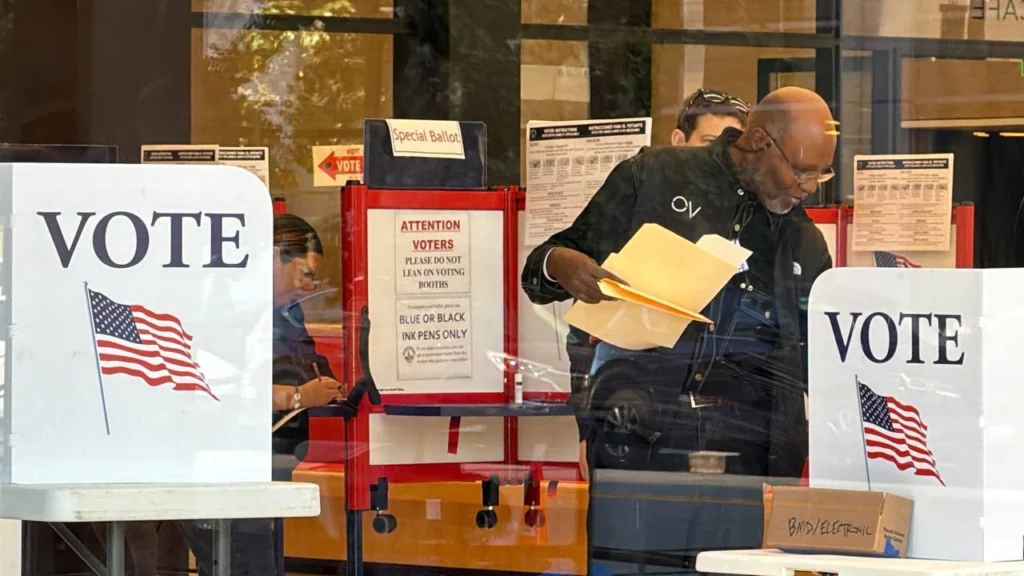
Early voting opened on October 26 across Washington D.C. and will run through every district until Sunday, November 1.
Residents who missed the online or mail registration deadline can still register directly at the polling center. That same-day registration requires a valid, recent proof of address, such as an official identification, a utility bill or a bank statement issued within the past ninety days.
RELATED: Trump’s Grip on Senate at Stake in 10 Key Midterm Races
District law also lets non-citizen residents who meet age and local residency requirements vote in municipal elections. They receive a separate ballot limited to district offices, including the Council, the Board of Education and the Advisory Neighborhood Commissions.
In neighboring Maryland, the early voting period runs through Thursday, October 29, with centers open daily from 7 A.M. to 8 P.M. local time. Voters there can also register the same day by showing a document that proves their current address.
Election authorities detailed the rules for those who prefer mail ballots or official drop boxes before the November 3 general vote. In Washington D.C., ballots must carry that date’s postmark or be deposited before 8 P.M.
Maryland set Tuesday, October 27, as the cutoff for requesting printed ballots at each county’s local offices.
Voters who miss the October 27 request deadline in Maryland can still cast a ballot in person during the early window or on November 3. The mail route, however, closes at that point for printed ballots.
The midterm cycle has produced a sharp rise in early participation. As of October 25, more than 23 million people had voted early nationwide, up from the 15 million recorded in 2022.
After two years marked by unilateral decisions, a hardline stance on immigration, rising living costs and involvement in the war against Iran, Donald Trump’s administration now faces a ballot test that could strip Republicans of their absolute control of Congress.
All 435 seats in the House of Representatives are being contested. Republicans hold 218 seats against 214 for the Democrats, along with two vacancies and one independent seat occupied by Kevin Kiley after his departure from the Republican Party. That narrow margin leaves the chamber within reach for the opposition, and the surge in early ballots is being read as a measure of how much ground the ruling party could lose.
The early vote will keep building through the final weekend before November 3, when the full contours of the midterm electorate will emerge.


© Maurizio Fiorino for The New York Times
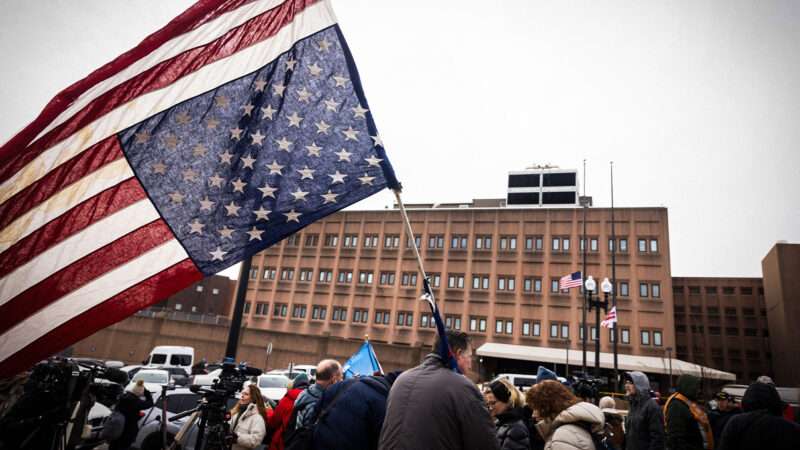
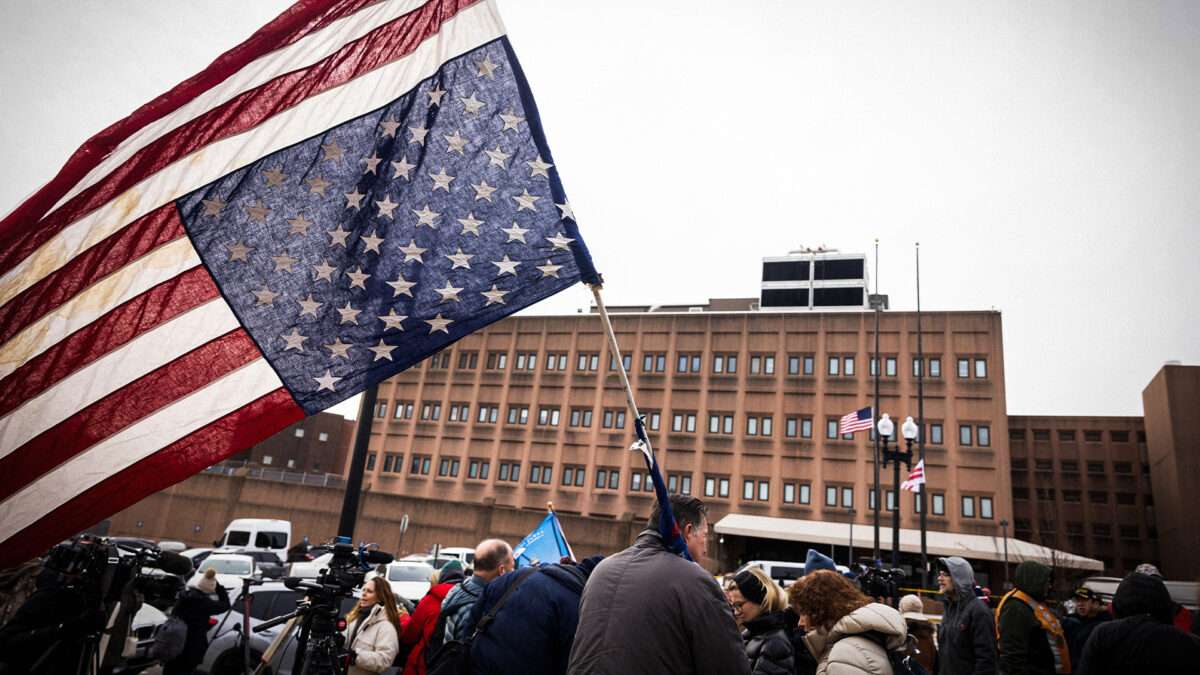
The Department of Justice (DOJ) announced Monday that it will investigate living conditions inside the Washington, D.C. Jail following years of reports of filth, medical neglect, and brutality.
The D.C. Jail, which holds all pretrial detainees and misdemeanor offenders in the District of Columbia, was the subject of an unflattering 2016 Reason cover story, "How Not to Build a Jail," describing how wretched conditions had persisted there for more than a century. Lawsuits, audits, and media investigations have all documented persistent civil rights problems. The jail gained additional infamy for holding pretrial detainees and convicted defendants who were prosecuted for their role in the January 6, 2021, riot at the Capitol Building.
The Justice Department received numerous allegations of excessive force, inadequate medical care, unsanitary living conditions, and malnutrition inside the jail, according to a department press release. The investigation will determine if D.C.'s Department of Corrections has a pattern or practice of violating prisoners' constitutional rights.
"The Constitution protects the rights of every incarcerated American, including those held in custody in our nation's capital," Assistant Attorney General Harmeet K. Dhillon said in a DOJ press release. "We are committed to upholding our federal civil rights laws so that no inmate is confined in unconstitutional conditions or subject to unconstitutional mistreatment at the District of Columbia Department of Corrections."
Last week, six current and former D.C. Jail inmates filed a class-action lawsuit alleging they found dead mice and cockroaches in their food.
Five different D.C. Jail inmates filed another lawsuit in September alleging guards failed to stop or adequately respond to a man in the jail's mental health unit from starting an electrical fire.
In 2021, the U.S. Marshals Service transferred roughly 400 inmates out of the D.C. Jail after a surprise inspection reported unacceptable living conditions, including guards withholding water and food from inmates as punishment.
A week before that inspection, a federal judge held the D.C. Department of Corrections in contempt for repeatedly failing to turn over the medical records of a January 6 defendant who had been waiting for months for a scheduled wrist surgery.
The antiquated jail, opened in the 1970s, has numerous structural problems, but plans to replace it have stalled. In the meantime, the Justice Department's Civil Rights Division will write a report to add to the top of the pile.
The post Justice Department Will Investigate Conditions at D.C. Jail After Years of Reports of Filth and Neglect appeared first on Reason Magazine.
Janeese Lewis George, a D.C. councilmember and the city's presumptive next mayor, has come out against pending legislation that would allow autonomous ride-share vehicles onto city streets, citing the technology's potential to eliminate the jobs of ride-share human drivers.
"DC is facing a jobs crisis. Rushing the legalization of autonomous vehicles is irresponsible given the anticipated AI-related job displacement and disruptions that put countless workers at risk," she said on X yesterday.
DC is facing a jobs crisis.
Rushing the legalization of autonomous vehicles is irresponsible given the anticipated AI-related job displacement and disruptions that put countless workers at risk.
— Janeese Lewis George (@Janeese4DC) October 15, 2026
In a follow-up post, she said that the D.C. Council should delay consideration of a pending bill that would allow Waymo, which is currently testing its technology with human safety operators on District streets, to offer autonomous rides to the public.
Ever since Lewis George won a commanding victory in D.C.'s Democratic mayoral primary earlier this year, pundits and wonks have been trying to read the tea leaves on how the Democratic Socialist will govern.
D.C.'s economy is currently in a rough spot. Unemployment is high. The housing market is down. Population growth is slowing.
Lewis George's comments about Waymo suggest the mayor has a deeply mistaken view about the effects and benefits of technological innovation. Contrary to her contention, Waymo legalization is unlikely to exacerbate a "jobs crisis" for at least three reasons.
The first reason she's wrong is that very few D.C. residents work full-time as ride-share drivers. On her Capital Commonsense Substack, Ashley Schapitl reports that, by Lewis George's own estimate, there are only 200 District residents who work full-time as ride-share drivers.
For comparison's sake, the District has a labor force of roughly 400,000 people. So even if Waymo displaced all human drivers in the District, it would be a statistical nonevent.
Few headlines, for instance, reported that D.C.'s labor force shrank by 1,000 people between May and June. Neither did many outlets report that the labor force grew by roughly 600 people between July and August.
Yet here the mayor is talking about a "jobs crisis" over what would be an even smaller change in the number of employed workers in the city.
The second reason not to fear an exacerbated "jobs crisis" as a result of Waymo legalization is that autonomous vehicles (A.V.s) will not completely replace human rideshare drivers in the foreseeable future.
In the cities where Waymo has been active for years, A.V.s are still responsible for a minority of rideshare rides.
That's the case in Phoenix, where Waymo has been offering autonomous commercial service since 2020. In an article from April, Business Insider cites one study that put Waymo's market share at 16 percent of ride-share rides.
In other words, 84 percent of ride-share rides are still being performed by humans a full six years after A.V.s came onto the scene.
That isn't to say the impacts of A.V.s are necessarily positive for human drivers' earnings.
Another study by Gridwise from August 2025 found that A.V.s appeared to be marginally reducing drivers' hourly pay and number of trips per hour. That's evidence of the market for rides becoming more competitive, but it's not, as of yet, evidence of a job apocalypse.
Network design matters too. In places like Los Angeles and San Francisco, Waymo is a standalone competitor to traditional ride-share companies like Uber and Lyft. In Austin and Phoenix, Waymo partners with Uber to offer rides on hybrid human-and-A.V. networks.
A report by EnoTrans, funded by a grant from Lyft, found that the later cities' hybrid networks actually increased human drivers' trips per hour. Their pay-per-hour fell, albeit less steeply than in cities without hybrid networks.
All of that is to say that while Waymo, as a competitor to human-operated ride-share services, shouldn't be expected to have a positive impact on drivers' earnings. It shouldn't be expected to have a catastrophic impact on them either.
The third and final reason that Lewis George is wrong to think that Waymo will worsen a coming "jobs crisis" is that Waymo's employment impacts are not limited to its effect on competing human drivers.
If Waymo earns any market share at all, it'll be because it's offering some travelers a better transportation option than the ones that currently exist. Increased ease of travel within the city would be expected to raise employment levels, not lower them.
If Waymo makes it easier or cheaper for people to get from home to the office or from the office to their kids' school, they might be more willing to live in D.C. over Arlington or Silver Spring. If it's more convenient to get to the movies or dinner, residents will be more willing to patronize local businesses.
None of that even touches on the economic and human benefits of Waymo's likely positive impact on road safety.
The direct effects of Waymo on drivers' employment must be weighed against all the other economic activity that autonomous vehicles will facilitate.
In the long run, the economic effects of autonomous vehicles may well be revolutionary. In the foreseeable future, they'll make the market for for-hire rides slightly more competitive.
A reasonable assumption then is that Waymo will have a modest, but positive, impact on overall economic activity and employment in the District, even if it has a modest, but negative, impact on the small number of full-time ride-share drivers who live here.
If the new mayor can't even tolerate that level of economic disruption, that does not portend good things for D.C.'s economy under a Lewis George administration.
The post Presumptive D.C. Mayor Janeese Lewis George Demands Halt to Waymo Legalization To Protect Drivers' Jobs appeared first on Reason Magazine.

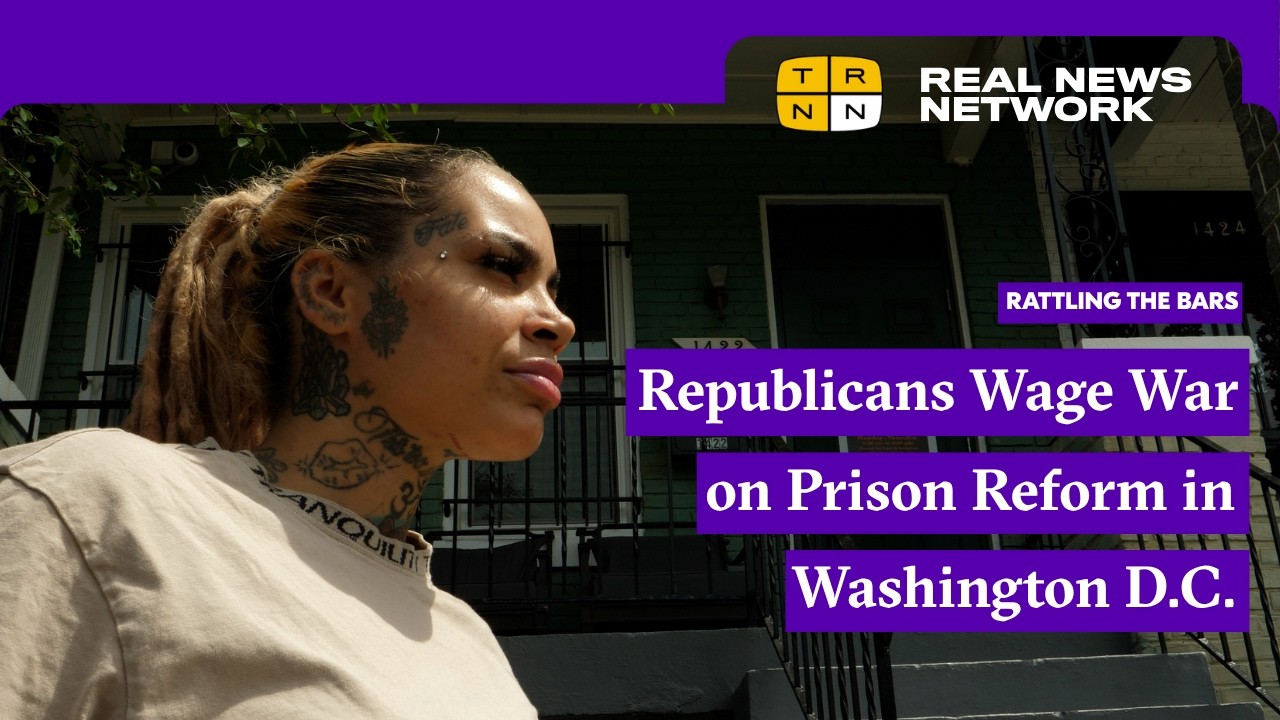
In part two of our series on conservative attempts to use D.C. as a testing ground for harsh criminal justice policies, Rattling the Bars host Mansa Musa sits down with Chelsea Canterbury and Eric Franklin of Voices for a Second Chance. They discuss the danger of proposed measures—including charging 14-year-olds as adults, increasing mandatory minimums, repealing the Second Look Act, and reinstating cash bail—and explain why doubling down on mass incarceration won’t make the city safer.
Additional links/info:
Credits:
The following is a rushed transcript and may contain errors. It will be updated.
Mansa Musa:
We’re here in Washington DC, Massachusetts Avenue at Voices for a Second Chance. We’re talking about Congresses introducing certain bills to roll back progressive laws that impact District of Columbia residents. One such law is the Second Chance Act. The Second Chance Act has been very instrumental in allowing people to get out of prison after they demonstrate they have changed, but Congress want to change that. You’ll hear different testimonies today about how these things impact everyday citizens, people that want to do right. Stay tuned. Joining me today is Chelsea Canterbury. Chelsea Canterbury, welcome to Rattling the Bars. Hi,
Chelsea Canterbury:
Hi. Welcome. Thank you. All
Mansa Musa:
Right. So today we are in front of Voices for a Second Chance service organization in the District of Columbia. And full disclosure, I actually work here. Chelsea Canterbury is, and I’ll call her Chelsea from here on out. Chelsea is a case manager here at Voices for a Second Chance.
Chelsea Canterbury:
So I do connect one-on-one with clients. We’re client facing. The work we do here, we help individuals that have been involved within the justice system or are recently entering society from incarceration. We actually start connecting with clients prior to their release, and that’s part of our first responder services. So we are going into DOC. We’re connecting with individuals that have been released to the halfway houses from federal prison. So we’re actually connecting prior to release. And we offer wraparound services, making sure individuals have all their vital documentation. As you know, can’t get anything done without those documents. So that’s kind of where it all starts. We offer full case management services, employment services, housing, and any resource that we do not provide in-house, we do connect with our partners within the community.
Mansa Musa:
Okay. And I open up by making it known that Congress, they had centrality over the District of Columbia in terms of any bills or laws has passed. Congress has a finalacy on whether they’re going in effect or Congress has the authority to create laws. And recently it came out that they put 27 bills to impact some of the things that’s going on such as cash bail. How do you think changes in the law to make laws harsher in DC will impact the services that Voice for a Second Chance offer?
Chelsea Canterbury:
So yeah, definitely with certain bills being passed, it will in turn affect our community and also the resources that are available to individuals. It’s not reducing recidivism. It’s actually rising it. I don’t believe that’s the answer. I believe offering the proper resources for individuals while they’re still incarcerated prior to release and our youth.
Mansa Musa:
Our youth. And in terms of the youth, in the District of Columbia, they really got a target on the youth back. You hear a lot of negative reporting about the kids in District of Columbia, mainly in certain areas. What’s your views on, if you had the money and the authority to do something about what’s perceived as juvenile delinquency, what would you do? Well,
Chelsea Canterbury:
I definitely think it also starts in the home. So I think providing appropriate resources, I can’t say it enough, but as a community, we have to come together. We have to stand together. So even providing appropriate resources to not only the youth, but also the family. I think that will definitely help our community.
Mansa Musa:
And talk about how many people do y’all do Voices for a Circumchange service during the course of a week? What’s the caseload per week?
Chelsea Canterbury:
It definitely varies, but I mean, we can see up to 50 clients per week, but it definitely varies.
Mansa Musa:
So in terms of the 50 clients, and that’s on an average that you see 50 clients on a week, but in terms of the clients that you see, what are their major needs?
Chelsea Canterbury:
Definitely housing is a huge need. Housing employment is very scarce within our community and the district, providing more food resources.
Mansa Musa:
Right. And the general attitude about Congress interference in DC’s politics is the general consensus is they’re using the District of Columbia as a test case for how they can go throughout the nation and do these things. If you had the ability or the authority or you was able to talk to Congress about what you think should be done, what would you tell them?
Chelsea Canterbury:
I would definitely have a discussion on funding and just allocating that funding appropriately that will actually give back and assist in our community. For instance, we are, as you know, a nonprofit organization and we have seen the results of the services that we have provided to individuals. And if we had additional funding to do so, we could provide more, not only us, just throughout the district alone, more assistance to provide more food resources, shelter resources, employment resources. And in turn, that is what is going to reduce recidivism.
Mansa Musa:
I am talking to Lynwell Muse in front of Voice for a Second Chance. Mr. Muse, Congress is trying to pass a series of bills that’s going to have a devastating impact on the citizens of the District of Columbia. One such bill is to remove the second look at. Another one is what they call the Youth Act. And both of these bills they want to get rid of, both these bills lead to people upon being released under conditional term. The only way you can get access to them, you have to have certain behavior and certain attitude towards your change in life. What do you think if you had the authority or the ability to tell Congress, what do you think they should be doing? Well,
Lemuel Muse:
I don’t think that is a good idea because the Second Chance Act, people like me need that because I’m 67 years old and I’m just getting out of jail February the 20th.
Mansa Musa:
Okay, what wrong?
Lemuel Muse:
And I did 35 months and I was placed on the street the next day. So in my situation, I don’t know what they expect me to do. I’m out here, I’m homeless. All the shelters are full. They got hundreds and hundreds of Black men out on the street just homeless. You know what I mean? And I just don’t think that’s a good idea because people like me need the Second Chance Act.
Mansa Musa:
The money be best spent on doing what?
Lemuel Muse:
The money would be best spent on helping the people, the citizens that live here. I’ve been here all my life. I’ve been here all my life. And the resources that I need, they seem like they cut them and taking them away from us and just leaving us out here with nothing. You know what I mean? Go ahead. Right now I’m going to Voices for a Second Chance to receive some help. And I’ve been to Marca over on Good Hope Road.
Mansa Musa:
Mayor’s office on return to.
Lemuel Muse:
Right. And all I want is just a little bit of help just to help me because being in jail 35 months and being placed on the street the next day, it’s just difficult. It’s difficult when you don’t have help.
Mansa Musa:
So the crime is not really in people committing crime. The crime is in the misappropriation of funds.
Lemuel Muse:
I agree with you. I agree with you because I didn’t have a chance to work my way back in the community slow. I’m just back on the street.
Charlina Mcbride:
Right. My name is Charlena McBride. I was incarcerated for about a year. I’m a DC citizen.
Mansa Musa:
All right. So today we’re talking about Congress trying to roll back some of the progressive laws that the District of Columbia City Council has passed, such as they want to reduce the age of charging kids to making them adults from 16 to 14. They want to roll back mandatory minimum. Mandatory minimum is that they’re taking it out the hands of the judge to give a person a sentence that he think they should get based on whatever crime they committed. It’s a mandatory sentence they got to get. So a judge don’t have no discretion. They try to institute cash bail, making it difficult for people to get out of prison. But more importantly, they try and roll back what they call a Second Chance Act. If you had the authority to tell, or if you was in front of Congress and you wanted to tell them what you should think they should do with this money, what would you tell
Charlina Mcbride:
Them? I would tell them that I think they should create an alternative plan for the youth or for people that make mistakes in the society that get locked up because it’s a lot of stressful times out here. The economy is constantly rising. Housing is being unaffordable to people that’s not making enough money. When people get locked up, I think they should have some more facilities where they can be rehabilitated versus getting a lot of time because people can change and I don’t think they should give them more time and take away their choices or their right to be able to get out, being locked up with no bail. And I don’t think the youth should be charged as an adult because they have a mind of a youth.
Mansa Musa:
That’s right.
Charlina Mcbride:
So they should have more programs or more facilities where they can go to versus going to jail to an adult jail. Having more outreach programs, having more voices for second chance to provide for people, more counselors, more mental health sponsors and mentorship programs so that somebody can help guide the youth into the right direction. Because everybody needs somebody to guide them. And if they’re not getting guided when they step off the porch from at home, then there should be other big brother programs, big sister programs that’s reaching out to the community and the youth so they don’t have to go through taking from somebody else or involved in something that’s going to cause them to go to jail.
Mansa Musa:
I’m talking to Jerry Mack, a client at Voices for a Second Chance. Mr. Mack, tell us a little bit about yourself first.
Jerry Mack:
Well, born and raised in Washington DC. Been in the city my whole life. There’s a lot of things that’s changed in the city from pretty much my youth to now. And I think that us as pretty much the older generation can pretty much reach out to the adolescents and pretty much try to see what it is that we can do for them to pretty much get back on track and just pretty much enjoy theirself while they’re in the city instead of having Congress and everybody else try to intervene and pretty much take their youth and stuff away from them. All
Mansa Musa:
Right. And you formally incarcerated?
Jerry Mack:
Yes.
Mansa Musa:
How much time did you serve? If you don’t mind me asking.
Jerry Mack:
A year and a half.
Mansa Musa:
Okay. So you served a year and a half. Where was you at now? DC Jail?
Jerry Mack:
I started at DC Jail. They transferred me to Philly. I left Philly and went to New Jersey in Fort Dix.
Mansa Musa:
Okay. Now while you was in DC Jail, did you see a lot of young individuals in there?
Jerry Mack:
Yeah, it’s a lot. You know what I’m saying? I mean, it’s just basically, it feels like that’s what they trying to do to pretty much the youth. They’re not trying to let them enjoy theirselves, not realizing that they was once kids at
Charlina Mcbride:
That
Jerry Mack:
Point in time. So it’s just basically kids going to be kids, but they really don’t have too much for them to do nowadays. So it’s just kind of hard for them to actually really enjoy theirselves.
Mansa Musa:
So if you was able to tell Congress what your views are on what they should do in terms of helping the city become a more profitable city, a more productive city, a more humane city, what would you tell them?
Jerry Mack:
I mean, I would practically tell them that instead of just trying to lock them up and pretty much push them out or put them in prison or jail and stuff like that, sit down and talk to them. Find out what it is that they want and what they need. You know what I’m saying? Because like I said, it’s basically they just kids. They being kids. So basically you could take the money that you’re trying to put into all these other bills and cash bonds or whatever. Have the kids, you know what I’m saying, really not even into some of the foolishness or whatever. But it’s just basically they just out enjoying themselves and they just getting a bad rap.
Mansa Musa:
And as Mr. Mack said, invest in them as opposed to try to penalize
Eric Franklin:
Them. Yeah. My name is Derek Franklin. I’m the reentry navigator here at Voices for a Second Chance, and I’m a returning citizen and also a IRA recipient.
Mansa Musa:
Today we’re talking about Congress introducing a series of bills to roll back some of the progressive laws that the DC City Council passed. And one of the bills that they’ve introduced is they want to roll back the Second Chance Act, which is basically IRA. Talk about, because you’re in that space and dealing with IRA, you’re IRA recipient, as you say. And talk about that and what that means.
Eric Franklin:
So yeah, these new laws that’s been introduced by Congress, the rollback IRA and all these other laws that changed in sentences for young people, young adults to get more time at the age of 14 sentences as adults. These things doesn’t work. They’re going back to what mass incarceration, which they did back in the 90s, the 80s and the 90s that didn’t curve the crime. So it’s all about rehabilitating the people, the young people and giving them a second chance. Like me, I was sentenced to 40 years to life. And I mean, I changed my life way before I even knew IRA was in existence. You know what I’m saying? So this shows that the people will change, especially the youth as they do their time. So locking them up and throwing away the key is not the answer. It’s not the answer.
Mansa Musa:
And how old were you when you got out there?
Eric Franklin:
When I got out there, I was 22 years old. I came out, I was 47 years old. You know what I’m saying? So I spent most of my 20s, all my 30s, most of my 40s in prison. And like I say, I changed my ways and my way of thinking, I want to say probably 15 years ago before I came home. You know what I’m saying? So these things, locking the people up, these young people up and saying, okay, look, what they was calling them, predators or whatever like that. No, the sign says what? The frontal lobes don’t fully develop to the mid – 20s. So the decision making of these teenagers, they don’t fully develop. So give them a chance. I’m not saying that they shouldn’t be held accountable for their crimes, but locking them up and not giving them a chance to come out, this is, I want to say, inhumane.
You know what I’m saying? This is something that you don’t do to people or do to your residence in DC. I said far as the law, especially containing to the youth. More programs for the youth. Giving them something to do as far as education. It goes back to their family, helping their families out with jobs so they won’t be just running the streets and getting to things. You know what I’m saying? This will change. This will help the youth and not to be on the streets like that. And another thing, the law should be changed, not just for a certain age. Take away the age and just give everyone who gets incarcerated another chance to come home. Instead of just locking the people up and having them in prison, which doesn’t help at all. You know what I’m saying? So we got the age where now, before the age of 25, have no age for someone who can have a time reduction.
This will help and have more programs and housing for the people when they return. You


Comments by Brian Shilhavy
Health Impact News
When we first started our Medical Kidnap website in 2014, some of the most horrific stories of children being ripped away from their parents were coming out of the State of Washington.

You can see all the stories we published out of Washington State on our State List of Medical Kidnapping stories here, or download directly the ones we covered in the past just from Washington State here.
Before Facebook and Google started altering their algorithms to prevent stories like our Medical Kidnapping stories from going viral, we used to put a lot of pressure on the State by having people call and email State authorities, and making whatever story we were covering a “high profile” case that often even the local corporate media sources would cover.
Such was the case in 2014, when we covered the story of the Rengo Family from Bellingham, Washington. Even through we broke the news the day before Thanksgiving that year, it went viral with more than 1 million views in 48 hours. See:
The mom in this story gave birth to twins at home, and the grandmother was allegedly not too pleased that they did not take the babies to the hospital, and had an ambulance sent to check on them, which prompted them to report the parents to Child Protective Services, even though they found nothing medically wrong with the twins.
We managed to send over 6000 calls to the Governor’s office, and at the first hearing, they returned the babies to the parents, which was unheard of back in those days.
It did not last long, however, and eventually the State came back and seized all three of their children, completely destroying this family.
And this was not the only horror story we published out of Washington State.
Well today, almost 12 years later, Washington State is now perhaps taking the lead on correcting many of the abuses in their child welfare system, and have found out what we and others have been publishing for many years now, which is that children who stay home, even in “troubled homes”, do far better than children put into the foster care system.
Richard Wexler, writing for the Washington State Standard, states that due to recent efforts in Washington State to keep families together rather than taking their children away from them, between 16 to 55 lives of children are being saved per year!
Washington lawmakers shouldn’t retreat from reforms.
by Richard Wexler
Washington State Standard
How many times have you heard it? A child “known to the system” dies, and someone says: “See? Because you’re not taking away as many children, and throwing them into foster care, it’s causing children to die!”
We’ve known all along it’s not true. And now, thanks to new research, we know something else: Washington state’s limited efforts to stop tearing apart so many families have saved children’s lives – anywhere from six to 22 per year. At the same time, by increasing the proportion of foster children placed with relatives instead of strangers, the state has saved another 10 to 30 children’s lives per year.
Some of these gains are due to the Keeping Families Together Act, and the new study should once and for all end the smear campaign against that law. But the decline in needless removal predates that law. That’s why independent researchers from the Seattle-area group Pale Blue have been able to measure long-term trends. Their research builds on other studies and data.
Here’s how we know curbing needless removal from families does not jeopardize child safety:
You can’t draw definitive conclusions from any one state. You would need a massive nationwide study examining millions of records and tens of thousands of deaths.
Fortunately, there is such a study. It found that reducing entries into foster care did nothing to increase child abuse deaths, and taking more children did nothing to reduce such deaths.
That doesn’t demonstrate that taking fewer children saves lives. But this does: A vast scholarly literature from around the world compares outcomes for children left in their own homes to comparably-maltreated children placed in foster care in typical cases – cases that are vastly more common than the horror stories; cases that often involve confusing poverty with neglect. The studies show that the foster children typically fared worse on an enormous range of outcomes – including premature death.
There are a variety of reasons for this. In some cases, it’s the high rate of abuse in foster care. But also, there is the enormous stress of removal.
So it’s no wonder that, for example, a Swedish study comparing foster children to comparably maltreated children left in their own homes found that the foster children were four times more likely to die by age 20 – and the most common cause of death was suicide.
There are now enough data to calculate how many lives are saved, and how much serious illness and disability are averted by reducing needless foster care, as Washington has done. And since kinship foster care is, by far, the least harmful form of foster care, it’s possible to calculate the lives saved and disability averted by increasing the proportion of foster children placed with relatives – as Washington also has done.
So the next time you hear someone dismiss the enormous trauma to a child of being torn from everyone they know and love by saying it’s “much more preferable and safer than being dead,” consider that some of those children will die prematurely because they were needlessly taken. T
hat’s true even when children are left at home with the mediocre or worse services they get now. Ideally, we would wrap families with everything they needed. But waiting until that happens to stop tearing apart children only puts those children in greater danger.
In 2025, Washington backed away from reform, and entries into foster care increased. As a result, as of 2025, Washington still takes children at a rate more than 13% above the national average when rates of family poverty are factored in.
Read the full article.
This article was written by Human Superior Intelligence (HSI)
See Also:


Having problems receiving our emails? See:
If our website is seized and shut down, find us on Telegram, as well as Bitchute and Odysee for further instructions about where to find us.
If you use the TOR Onion browser, here are the links and corresponding URLs to use in the TOR browser to find us on the Dark Web: Health Impact News, Vaccine Impact, Medical Kidnap, Created4Health, CoconutOil.com.
The post Washington State Study Proves that NOT Putting Children into Foster Care Saves Lives! first appeared on Health Impact News.

Republicans in Congress are attempting to push policies in the District of Columbia that would charge 14-year-olds as adults, increase mandatory minimum sentences, repeal the Second Look Act, and re-institute cash bail, which was banned in 1992. In this week’s episode of Rattling the Bars, host Mansa Musa reports from U Street and sits down with Bethany Young and Darby Hickey from the DC Justice Lab to discuss how the GOP is using Washington, DC, as a laboratory to wage a national crusade against decades of criminal justice reforms.
This is part one of a two-part series. Subscribe to TRNN and stay tuned for Part 2 next week.
Additional links/info:
Credits:
The following is a rushed transcript and may contain errors. It will be updated.
Mansa Musa: Welcome to this edition of Rattling the Bars. We’re here in the historical part of the District of Columbia, U Street, 14th and U, 13th and U, 11th and U, 12th and U, all historic. Lincoln Theater and Benz Chillibo. We’re here today to talk to two representatives from DC Justice Lab about current legislation that Congress is attempting to pass to minimize the DC City Council’s ability to pass laws to govern this District of Columbia. Stay tuned for this interview. The District of Columbia has become the testing ground for Congress in terms of reforming so-called reform of laws that the city council has passed. So let’s talk about cash bill, what’s going on with it and what this bill is trying to do. Because when we look at what’s going on in over DC jail and how overcrowded it is, what’s our position on HI5214?
Bethany Young: Yeah. Well, DC has had a pretrial system in place for the last 30 years or so that has worked well. People are kind of released or not based on kind of a demonstrated threat to public safety. It’s not necessarily about how much money they have or starting with the presumption that someone should be incarcerated. And that system has worked well. Most people come back without committing any other crime. Most people show up for their court date. So it’s not a system that’s broken. So this is kind of a solution in search of a problem, this congressional bill that you’re talking about.
Mansa Musa: Who profiting from? Because the intent is not to change, get safer streets because we already recognize that the streets are safe. So who profiting?
Darby Hickey: We haven’t had cash bail in over 30 years in DC. And you know what that means we haven’t had in this city? Our bail bondsmen or these companies that are very predatory to poor people that require these payments and that make money regardless of what the person does after they’ve been released. And they make billions of dollars a year and we haven’t had that exploitative system in DC during this time. And as we’ve all been discussing, we’ve been safer for it. So that’s who is going to profit off of this. So we know that this is not about safety. This is about harming poor people, exploiting them for money. And it’s also ideological because I think I’m glad you started with this one as an example of this rollback and of using DC as kind of a Petri dish of what they can force on places around the country.
Because you see them pushing also on the national level to roll back bail reforms. And it’s ideological. I call it dumb on crime approach rather than following the actual evidence that shows that reforming bail systems, getting rid of cash bail actually makes our community safer because we know even a short time in jail, that destabilizes your life and that leads to worse safety outcomes in the long run.
Mansa Musa: Let’s talk about another aspect of this is mandatory minimums. And DC has always been real equitable in terms of taking into account the social conditions, really with sentencing the way they’re supposed to make a determination before they sentence. It’s always been like that. Talk about this attack.
Darby Hickey: I do agree with you that many of our judges do a good job of taking into account the circumstances around an event when determining a sentence. We actually already have some of the worst mandatory minimum sentences on the books in the country. And under this new proposal in Congress, the minimum that someone will be sentenced that would be longer than what the maximum is in some other states for the same conduct. So it’s really singling out DC. And again, it’s furthering this ideological agenda of just lock people up. We know all the companies are going to make money off of that. And to disempower and harm our communities, including unfortunately disproportionately black communities in DC and across the country are disproportionately impacted by mandatory minimum sentences. Is
Bethany Young: That in DC, nine out of 10 people sentenced under mandatory minimums were black. And so kind of same kind of look at every statistic as it relates to the criminal legal system in DC, and you’re going to see mostly black people. I think it’s eight out of 10 arrests. Most of the people in the jail. Most of the kids that are detained are black, certainly most disproportionately impacting black people and poor people.
Darby Hickey: And then we got to look at, going back to your point earlier, that the interconnection between these different policies, you were speaking on the efforts to roll back voting rights. And how we know that some of the origins of some of these sentences and some of the restrictions on voting after being convicted came out of reconstruction, came out of the backlash to reconstruction and trying to disempower and disenfranchise black communities. And so we have to see this and connect this as part of that lineage as well.
Mansa Musa: And I think that when we look at the District of Columbia, how can you rule your house where somebody got the authority and ability to tell you what you can and cannot spend? Your own money, your own revenue that you generate. So in this regard, you’ve got Congress is interfering with the legislative process. The people that’s duly elected to determine what their constituents say they want, don’t have a voice. They can pretend like they do. They can vote on something. They can pass it. But if Congress don’t like it, the appropriation committee will just simply don’t fund it. And that’ll kill that, which brings me to, and this right here is one thing that I want y’all to dial down on heavily. This is about the youth because they got this push. They pushing this effort to criminalize the youth as young as 14. Talk about their attempt to push to make the laws change or create a law around dealing with our youth.
Bethany Young: A child, because we’re talking about children, could be charged as an adult. There are also some other laws that are for other young people, young adults would affect their ability to kind of have a second look at their sentences after they’ve served some time or that would impact their ability to have their records sealed after a certain amount of time and would affect the discretion that judges have in certain cases to sentence a young person in alignment with where they are developmentally. And what we know and what we’ve known for decades about laws like this is that they’re counterproductive. They’re as counterproductive as they are oxymoronic. If you think about treating a child as an adult, just because you say you’re an adult does not make a child an adult. And it actually ignores what science says about the developing brain. We know very well at this point that our brain, excuse me, as humans are developing well into our 20s, especially the part of the brain that deals with impulse control.
So there are certain things we take for granted with kids that they’re going to be impulsive, that they’re going to engage in risky behaviors. And we account for that. We know with the driving age, with drinking, with buying tobacco, with voting, with enlisting. We acknowledge in all of these different contexts that children are different and that we have to kind of help make decisions for them because their brains do not allow them to do this well. But in the context of crime and incarceration,
For some reason, we treat kids differently in that context and it doesn’t work. We know that for kids, contact with any part of the system. So even if they see someone getting pulled over by a police, they see their friends being encountered by police, that from that to being in a courtroom, to being arrested, to being incarcerated, that actually sets them back developmentally.
Mansa Musa: The fact that they’re saying in this cadence that youth are taking over the city and they’re using this as a pretext for getting tough on oil, as Bethany said.
Darby Hickey: What we’re seeing with these incidents with young people is, guess what? Young people are still recovering from the trauma of the COVID epidemic and of the shutdowns that happened and of the challenges with socialization they’ve had. We’re now learning so much more about the negative impacts of social media on them. And I’m a parent of a teen. Look, kids just want to get together. They want to not have to deal with adults. They want to be able to be with each other a little bit. And that’s what the vast majority of kids are doing in these situations. They’re just looking for a place to get together. And a lot of those places have disappeared. Yeah, we have our rec centers. Yeah, we have libraries. That’s really important. But think about the movie theaters, the malls. Union Station is largely blocked off to them at this
Point. So where else are they supposed to go is a question you keep hearing from them. I think it just goes back to a point that Bethany was making of like, these are children. Let’s give them the support that they need. Let’s invest in them. Let’s lift them up instead of continuing to tell them you are not welcome here. You can’t go there. This city and all the changing that has happened is not for you in these areas, which is putting a real distinct point on it, in my opinion, on top of the displacement and the gentrification that’s already happened in a city that has pushed so many people out of traditional neighborhoods like Southwest. You can even go back centuries, or decades rather, that was a very robust multi-ethnic community before it was destroyed by urban redevelopment back in the ’60s, I believe it was.
And then now has had this new wave happening as well. And you see it all over the city, unfortunately.
Mansa Musa: The attitude is we got to create a false narrative that in order for this place to be safe, we got to identify who’s making it unsafe, and that’s the youth. Which brings me to the point, the United States Attorney General for the District of Columbia recently said, “I know evil when I see it, no matter what their age.” How do y’all respond to that? They wearing hoodies. That’s evil. But he know evil respond to that.
Bethany Young: There is a really loud emotion that people respond to. And if you can make me afraid enough, I can support a lot of different things if you’re saying it’s in the name of safety. But what we know is that it’s not actually tied to safety, that the rest are down across the country, some of the trends that we’ve seen that we saw during COVID and immediately post, we’re turning the corner on those that the things that communities are doing to give young people other options to invest in them if given time are working.
Mansa Musa: When you create an environment where you have summer jobs, like me and my sister, we was first generation when they first started summer jobs and we did the projects in the District of Columbia. And when they created summer jobs, the whole city became vibrant because we had money. Young people had money and young people had Princeburg.
Darby Hickey: We know that giving people the right to determine their own future is what makes them great and what makes our democracy great.
Mansa Musa: So what’s y’all strategy now around what’s going on? Because when we went down to Congress, I was there. I forgot the congressman’s name out of Florida. They introduced the bill. His town don’t have problems. They reading articles that didn’t have nothing to do with the district. They reading the article from Arizona or New Mexico and just reading the facts of the article and making it seem like this is DC. Talk about where y’all at in terms of y’all advocacy and y’all strategy around changing this narrative or more importantly, mobilizing people to be effective in terms of advocating.
Bethany Young: So we’re continuing the work that we do locally on that in terms of shrinking policing, shrinking incarceration. We recently, along with about 30 other partners in the district, put together a 2026 public safety policy agenda that runs the gamut from community-based investments around non-police alternatives to safety like violence interrupters, credible messengers, investing and protecting in youth. So before a kid even gets into the system, what are the things that we can be doing to surround them to make sure that they’re thriving, that they have access to opportunities, that they’re building confidence and self-efficacy and skills all the way up until ways that our local officials can stand up and make a stronger statement
Mansa Musa: To the
Bethany Young: Federal government about the respect for DC laws. And we talked about this a little bit earlier. There’s only but so much they can do, but they can make their voices and their position known in a way that I don’t know that we’ve seen our elected officials locally do satisfactorily.
Mansa Musa: I like what you just said. Y’all got a document that y’all putting out. So this opened the doors up for insertion in terms of application, how to get people to stop. Okay. If we talking about incredible messages, fund that.
Darby Hickey: Although we do have these threats from the federal government right now, we also know, as we were just discussing with the curfew, that unfortunately our local elected officials are also making some bad choices around policies. And of course we want to defend their right to make that choice. We want to also convince them to make the right
Mansa Musa: Choice.
Darby Hickey: But that’s what this document lays out is this policy agenda is a number of recommendations that are not new, that we’ve been making, that people in the community have been making, that experts have studied and the evidence backs up. And so in addition to that, other things that we’re also doing are educating the council and staff, educating the mayor, educating the public about these proposals in Congress to roll back our laws or to impose bad nuance on us. The more of a united front and the more voice we have, the better chance we have of beating back these fundamentally undemocratic attacks that are trying to set us back years and years.
Mansa Musa: And we shouldn’t be handcuffed because someone is to your point, ideologically think that we should be back and change. So I want to commend y’all on y’all work.
Bethany Young: We can pick up a phone. We have resources that we can share around how to advocate in the legislative process, but keep learning about what’s happening. Make sure that you understand what it is because it can feel distant to some people. It can feel like that’s not happening to me. But rest assured that it’s going to get closer and closer. And before you know it, it’ll be. It’s kind of at all of our doorsteps at this moment. So continue to stay aware and engaged and ask people to do what they can to push back.
Mansa Musa: Okay.
Darby Hickey: Yeah, I think we see unfortunately this playbook being tried out here, but we know where it’s going next. We know it’s already been being used in other places. People saw the violence that happened in Minneapolis and Los Angeles and Chicago. That’s the same stuff that we’ve been dealing with. And actually we’ve still got the National Guard in
Mansa Musa: DC
Darby Hickey: And all the rest of the places they pulled back. So we are really struggling and we need help from everyone that’s willing to help. All our residents need to speak out. We all got to be in this together. And we need help from friends and family all over the country who actually have a vote in Congress and should be reaching out and doing what they can. We can’t be satisfied, like you said, with our colonial status right now. Home rule is a bare minimum. So we need statehood and we need people to support statehood for DC.