La Paz, 29 oct (Prensa Latina) La Feria Internacional de La Paz (Fipaz) prosigue hoy en el capitalino recinto expositivo Chuquiago Marka, con varios países invitados y una variada programación cultural y comercial.
Recordings allegedly linking Argentine political strategist Fernando Cerimedo to President Rodrigo Paz’s inner circle have yet to be authenticated.
Bolivia’s main parliamentary opposition force has called for an immediate prosecutorial investigation into leaked recordings allegedly linking Argentine political strategist Fernando Cerimedo to President Rodrigo Paz’s government, including one purportedly capturing a conversation with First Lady María Elena Urquidi.
Lissa Claros, head of the Libre Alliance caucus in the lower house, called on prosecutors Wednesday to appoint a special team to establish the authenticity of the recordings, which have circulated in recent months, and clarify Cerimedo’s role in the administration.
“The recordings keep emerging every day, yet the Public Prosecutor’s Office has not issued a statement. Do they want the Cerimedo case to go unpunished? Bolivia needs to know what role Mr. Cerimedo played,” Claros said. “Was he the one running the state from the shadows, or not?”
Claros insisted that the investigation must be impartial and that everyone should be subject to scrutiny, including the president’s wife.
El agente argentino de la derecha latinoamericana Fernando Cerimedo era el "presidente en la sombra" de Bolivia: ponía y sacaba ministros a su antojo y todos los directores del Estado le respondían, reveló su exesposa Nadia Beller. 🇧🇴🗣️ #teleSUR#12Octpic.twitter.com/1S11od16En
Text ReadsArgentine agent of the Latin American right Fernando Cerimedo was the “shadow president” of Bolivia: he appointed and removed ministers at will, and all the state directors answered to him, revealed his ex-wife Nadia Beller. 🇧🇴🗣️
One of the recordings purportedly captures a conversation between Cerimedo and Urquidi about government affairs. Its authenticity has not been established through official forensic examinations.
The leaked material has fueled scrutiny of Cerimedo’s reported ties to Paz’s inner circle and his alleged influence within the executive branch. The allegations have also drawn on statements and recordings released by Cerimedo’s former partner, lawyer Nadia Beller, remarks by Vice President Edmand Lara, an opposition figure, and reports in local media.
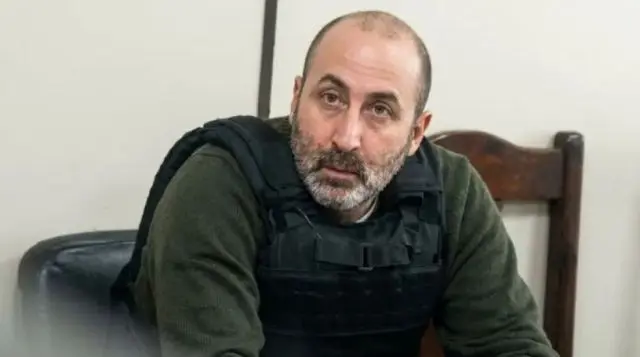
Cerimedo has been held in pretrial detention in Bolivia since August following a shooting attack by hired gunmen targeting Beller. He faces formal charges of attempted femicide as the alleged intellectual author of the attack, as well as separate proceedings over alleged domestic and family violence against Beller and alleged illicit enrichment.
Cerimedo’s political activities across Latin America have also come under scrutiny. In Brazil, he promoted a false narrative of electoral fraud in 2022. In Argentina, he played a significant role in the digital strategy for Javier Milei’s 2023 presidential campaign.
His company was also linked to disinformation operations during Chile’s constitutional referendum campaign, in which the Rejection bloc opposed the proposed constitution. His reported political connections extend to Argentine politician Patricia Bullrich, Honduran politician Nasry Asfura and other right-wing figures in the region.
In Bolivia, Cerimedo reportedly joined Paz’s political circle as an adviser, a relationship now at the center of questions raised by the leaked recordings.
Libre’s call for a formal investigation comes as the recordings remain unauthenticated, leaving allegations about Cerimedo’s role in the government unresolved.
La Paz, 28 oct (Prensa Latina) El Movimiento Boliviano de Solidaridad con Cuba llamó hoy al gobierno de Estados Unidos a poner fin al criminal bloqueo económico, comercial y financiero impuesto contra ese país latinoamericano, el cual daña a su población.
Tras la filtración de una decena de audios que salpican al círculo cercano del presidente Paz, la principal fuerza opositora demanda transparencia y pide investigar el rol de Cerimedo en el Ejecutivo.
La Paz, 28 oct (Prensa Latina) El presidente boliviano, Rodrigo Paz, comunicó hoy sus más profundas condolencias al pueblo y Gobierno de España por el accidente ferroviario ocurrido en la provincia de Toledo, que dejó un saldo de 68 muertos y decenas de heridos.
La Paz, 28 oct (Prensa Latina) La Feria Internacional de La Paz (Fipaz) abrirá sus puertas hoy con la presencia de unos 650 expositores que mostrarán la riqueza cultural, tradiciones y expresiones artísticas del país, en especial de este territorio.
La Paz, 26 oct (Prensa Latina) Autoridades bolivianas declararon hoy que el brasileño Engri Júnior de Almeida, herido de bala el fin de semana último en Santa Cruz, lideraba en este país una red criminal responsable de al menos 12 casos de sicariato.
Bolivia Prison Project Would Follow El Salvador’s Bukele Model
The Bolivia prison project announced by Santa Cruz Governor Juan Pablo Velasco would create a maximum-security facility in the Chaco region, inspired by El Salvador’s controversial Terrorism Confinement Center, known as CECOT.
Velasco said his administration is seeking international financing to build the prison, which would be named “La Tumba”—The Tomb.
The facility would be located in an isolated area of the Chaco cruceño, far from major urban centers, to ensure a strict confinement regime.
According to the governor, the prison would operate with permanent surveillance and severely restricted communication with the outside world. Inmates would be allowed to contact relatives only through authorized video calls.
Velasco presented the proposal as a response to organized crime networks that operate from inside Bolivia’s prisons.
“Prisons turned into offices for organized crime are over,” the governor said. “Dangerous criminals must be isolated from society, not running their businesses from a cell.”
He added that the project would respect rights but end what he described as criminal privileges inside detention centers.
The proposal takes direct inspiration from the CECOT prison built in El Salvador under President Nayib Bukele. That facility was created as part of Bukele’s hard-line security strategy against gangs and organized crime.
CECOT has become a symbol of Bukele’s security policy, but human rights organizations have raised serious concerns about due process, prison conditions and allegations of abuse.
The Santa Cruz governor did not provide details about the cost of the project, the source of financing, the construction timeline or the number of inmates the facility would hold.
The announcement comes amid growing pressure to address crime and violence in Bolivia’s prison system.
Santa Cruz is Bolivia’s most populous department and includes Palmasola, the country’s largest and most conflictive prison.
Bolivia Prison Project Seeks to Isolate High-Risk Inmates
The Bolivia prison project is intended to separate inmates considered high-risk from the general prison population.
Velasco argues that the current system allows criminal organizations to continue operating from prison cells. He says the new facility would prevent leaders of criminal networks from directing illegal activities while in detention.
The governor’s proposal is part of a broader security agenda that includes efforts to strengthen police patrols and increase the number of officers on the streets.
The Santa Cruz governorate has also promoted a legislative route to return command authority over the police to the departmental government.
Currently, Bolivia has only one maximum-security prison: Chonchocoro, located in the highland department of La Paz.
Santa Cruz has four main detention centers administered by the General Directorate of the Penitentiary System.
The most important is Palmasola, an urban prison located within the city of Santa Cruz. It houses both men and women and is considered the country’s largest, most populated and most violent detention facility.
Palmasola has been the scene of serious episodes of violence between inmates in previous years.
The proposed prison in the Chaco would seek to decentralize the custody of high-risk detainees and reduce the risks created by locating large prisons near residential areas.
The project would also aim to prevent criminal groups from maintaining control over prison populations.
However, the proposal raises questions about the legal framework, the definition of “high-risk” inmates and the safeguards that would protect due process.
Human rights organizations have warned that maximum-security facilities can become sites of isolation, abuse and lack of transparency if they are not subject to independent monitoring.
The Defensoría del Pueblo has repeatedly warned that Bolivia’s prison system is facing a structural crisis.
The institution reported that the country’s prison population reached 33,058 people in 2025, nearly double the 17,305 inmates recorded in 2020.
The increase has intensified overcrowding, weakened security and reduced access to health services.
Bolivia’s prisons are currently operating at approximately 109 percent of their installed capacity, according to the Defensoría del Pueblo.
More than half of the prison population is being held under pretrial detention, meaning they have not received a final conviction.
The institution has warned that overcrowding, poor nutrition, limited medical care and inadequate security are creating a humanitarian crisis inside the country’s 46 detention centers.
The Defensoría has called for measures to reduce overcrowding, including judicial congestion programs, alternative sentences and legal reforms.
It has also urged the state to guarantee food, medical care and dignified conditions for all people deprived of liberty.
The Bolivia prison project is inspired by a model that has generated significant controversy in El Salvador and across Latin America.
El Salvador’s CECOT was inaugurated in 2023 as part of President Nayib Bukele’s campaign against gangs. The facility was designed to hold up to 40,000 inmates.
The prison became the centerpiece of a state of exception declared in March 2022. That measure suspended several constitutional protections and expanded police powers to arrest and detain suspected gang members.
El Salvador’s government says the policy has drastically reduced gang violence and restored public security.
The administration argues that the state of exception was necessary to dismantle criminal organizations that had controlled neighborhoods, extorted businesses and committed violent crimes for decades.
Bukele remains highly popular among many Salvadorans who credit his government with improving safety and reducing gang activity.
However, human rights organizations have documented serious concerns about the policy.
Amnesty International and Human Rights Watch have reported mass arbitrary detentions, lack of due process, mistreatment of detainees and restricted access to legal defense.
Rights groups have also raised concerns about prison conditions at CECOT, including overcrowding, prolonged isolation and limited contact with families and lawyers.
Reports by human rights organizations have alleged that detainees have faced beatings, sexual violence, denial of medical care and incommunicado detention.
The Salvadoran government has rejected those accusations and says its policies respect human rights while protecting citizens from criminal violence.
The debate over the Bukele model has become increasingly influential across Latin America. Several governments have expressed interest in adopting tougher security policies, including mass detention, military deployment and the construction of large prisons.
Supporters argue that the model responds to public demands for security in countries affected by organized crime, extortion and drug trafficking.
Critics warn that it can weaken democratic institutions, criminalize poverty and allow abuses to occur without accountability.
The Bolivia prison project will therefore be closely watched by human rights organizations, legal experts and regional governments.
The proposal could mark a significant shift in Bolivia’s approach to crime and incarceration.
Impulsamos una ruta legislativa para devolver al gobernador facultades de mando sobre la Policía, fortalecer los patrullajes y garantizar más efectivos en nuestras calles. pic.twitter.com/UXKDT0ip18
The Bolivia prison project reflects a broader regional debate over security, democracy and the limits of state power.
Latin American governments have faced growing pressure to respond to organized crime, drug trafficking, extortion and prison violence.
In several countries, public demand for security has strengthened political leaders who promise hard-line measures, including mass arrests, military deployment and the construction of maximum-security prisons.
El Salvador has become the most visible example of that approach. Bukele’s government has used the state of exception to detain tens of thousands of people and build large-scale detention facilities.
The model has gained influence across the region, but it has also raised concerns about the erosion of constitutional protections and judicial independence.
Bolivia’s proposal could place the country within that wider trend. Santa Cruz is a key economic and political region, and its governor has made security a central issue of his administration.
The project could also affect relations between the departmental government and Bolivia’s central authorities.
Prison administration, criminal justice and policing are areas that require coordination between national and subnational governments. Any new prison would need to comply with national law, budget rules and human rights obligations.
The proposal comes at a time when Bolivia’s prison system is already under severe strain. The Defensoría del Pueblo has warned that overcrowding and pretrial detention are weakening the rule of law.
A new maximum-security prison could reduce pressure on existing facilities, but it would not solve the underlying causes of prison overcrowding.
Experts say that reducing pretrial detention, improving judicial efficiency and addressing poverty and inequality are essential to creating a sustainable solution.
The Bolivia prison project will therefore test whether the country can strengthen security while preserving human rights and democratic institutions.
Leaked recordings allegedly detail a $600,000-plus operation to capture Evo Morales, but their authenticity remains unverified.
Bolivian lawmakers from several political parties are demanding an impartial investigation into audio recordings allegedly detailing a plan to abduct former President Evo Morales, including the procurement of surveillance equipment, contacts with foreign actors and a budget of up to 8 million bolivianos ($685,000).
The recordings, attributed to former consultant Fernando Cerimedo, reportedly outline an operation targeting Morales in the Chapare region, his political stronghold. Their authenticity has not been officially verified by forensic authorities.
The allegations drew international attention after digital journalist Julián Macías Tovar published information about the recordings on X. According to the material circulated, Cerimedo allegedly traveled to the United States and Israel to arrange helicopters and specialized tracking equipment for an operation in the Chapare.
A voice attributed to Cerimedo can reportedly be heard discussing logistics with Public Works Minister Mauricio Zamora, including the acquisition of drones and specialized equipment.
The operation’s estimated cost was between 7 million and 8 million bolivianos, equivalent to approximately $600,000 to $685,000. In the recordings, the speaker allegedly offers to cover the entire cost informally and in US dollars. The audio also refers to a previous attempt in which those involved allegedly reached the second security perimeter around Morales, with support from purported foreign agents.
The allegations have prompted calls for accountability from across Bolivia’s political spectrum. Edgar Zegarra, a lawmaker from the Libre party, described the revelations as extremely serious and called for a transparent, balanced investigation free from political bias to establish responsibility.
Morales has also criticized what he described as the Public Prosecutor’s Office’s inaction, urging authorities to investigate the recordings. In a post on X, he asked: “What is new prosecutor José Armando Urioste waiting for to investigate Cerimedo’s new audios?”
Lawmakers want the investigation to establish whether the recordings are authentic, identify the source of the alleged operation’s funding and determine whether state resources or institutions were improperly used. They have also raised concerns about possible foreign interference.
Zamora has categorically denied the recordings’ authenticity, claiming they were manipulated and edited. However, in statements reported by the media outlet Fama, Poder y Ganas, he acknowledged having had previous telephone contact with Cerimedo.
The recordings’ origin and authenticity remain unverified by forensic authorities. The allegations have nevertheless intensified scrutiny of the security of Bolivia’s leading political figures and the country’s institutions amid deep political polarization.
The landscape of asphalt and concrete that defines La Paz can give way, within just a few miles, to hot, dense forests clinging to the mountainsides. The steep, unforgiving streets north of Bolivia’s administrative capital are replaced by thick vegetation and winding rivers that descend more than 5,000 meters toward the Amazon.
The coronavirus arrived in Bolivia amid uncertainty and panic that gave rise to racism. There are reports in which Indigenous people say they were denied medical care because healthcare workers were afraid of becoming infected. They were labeled sources of contagion for failing to comply with lockdown measures, since their livelihoods depended on in-person activities. Yet during the same period, another narrative emerged within Indigenous communities: that the Andean body was resistant to the virus because of the hardiness developed from living at high altitudes.
On the evening of Wednesday, September 30, Bolivian police arrested Attorney General Roger Mariaca and raided the Attorney General’s Office in Sucre and Santa Cruz. The police action comes just days after the US State Department sanctioned and revoked the visas of Mariaca and 21 other Bolivians.
Analysts suggest that the timing of the US sanctions, Mariaca’s arrest, and the raids, are no coincidence, calling it “political pressure” related to a high-profile case.
Mariaca is leading the investigation into Argentine political consultant Fernando Cerimedo. The influential political advisor to Latin America’s far right allegedly influenced elections through social media bot farms, may be involved in drug trafficking, and was accused of ordering an assassination attempt on his ex-partner, Nadia Beller. She was shot three times but survived after undergoing emergency surgery.
Cerimedo has been in custody in Bolivia after attempting to leave the country by plane following the attack on Beller. Messages were found on his cell phone that, according to the prosecution, directly link him to the attempt on her life. Despite the emerging evidence against him, not only in ordering the hit on Beller, but also in crimes of corruption and drug trafficking, Cerimedo seems to have friends in high places, both in the Bolivian president’s office, and in the United States, that may have set the stage for the arrest of his investigator, Attorney General Roger Mariaca.
Argentine outlet Página 12, reported that, according to Beller, the sanctions against Mariaca were “a move by Donald Trump’s team to protect Cerimedo. As the Washington Post noted this week: ‘Cerimedo is the MAGA (Make America Great Again, Trump’s slogan) man across the entire continent.’”
In the report, Beller is quoted as saying: “Is this decision by the United States part of the fight for the Shield of the Americas or is it about protecting the MAGA network?…If the reason is corruption and drug trafficking, then they need to explain why the visa is being revoked for the attorney general who is investigating a network of that nature. Are they going after the investigator, or are they protecting part of the network?”
As evidence mounts against Cerimedo, the US instead accused his investigator, Mariaca, of allegedly soliciting and accepting bribes to facilitate drug trafficking and helping people involved in violent crimes escape justice.
After news broke of the US actions against him, Roger Mariaca had said he will not back down and will continue the investigations until the end: “[I received the news] with great surprise … I will not back down even one centimeter from the investigations that fall under my jurisdiction.”
He highlighted that while it is clear that the Cerimedo case has generated international intrigue, “no political pressure, whether national or international, can become an impediment to clarifying the facts which must be investigated.”
He was arrested two days later.
Involvement in the drug trade?
In addition to Cerimedo’s well-documented ties to high profile right-wing politicians across Latin America, including in Bolivia, recent revelations from ex-partner Beller, suggest that the powerful political consultant may have also been involved in the drug trade. In a leaked audio message, Cerimedo is allegedly speaking with a woman with whom he is arranging payment so that several flights can operate without excessive pressure from the authorities. Cerimedo mentions a man named Cabrera, whom the Bolivian media suspect is Franz Cabrera, the former head of the Special Force to Fight Against Drug Trafficking (FELCN), who was recently dismissed.
According to the investigations, they allegedly “were paid” for nearly 45 flights, amounting to $700,000, raising significant suspicions about the source of the funds that the political consultant is said to have handled.
The timing of the sanctions against Mariaca and his arrest have raised questions about US interference in the Bolivian justice system. But, as pressure escalates over the investigation into Cerimedo, the case is also revealing a far deeper web of political connection and influence than was initially known, placing it under renewed scrutiny. Wether the investigation is further disrupted or allowed to proceed, what happens next could expose even more about Cerimedo and the network of the Latin American far right.
“Nothing in life is free,” goes an old Latin American saying, and Bolivia’s right-wing President Rodrigo Paz has proven this once again. The International Monetary Fund confirmed that it will disburse $1.9 billion to Bolivia, which will naturally have to repay the loan.
Several experts assert that the government’s decision will lead to an imminent increase in the price of food, mining, and transportation, thereby negatively impacting the country’s working population, which constitutes the vast majority.
While the government claims that these types of neoliberal measures will help control inflation, economist Fernando Romero argues that eliminating the diesel subsidy could cause inflation – which was projected to reach 14% by the end of the year – to rise to 20% by December 2026.
But this seems to matter little to a government whose primary goal – whether its own or one set by international financial institutions for the Third World – is to reduce the fiscal deficit at all costs.
“You [Bolivians] elected me to solve problems … If [the IMF] is lending us funds to revive the country, I cannot buy diesel at a high price and sell it cheaply … That is why we have decided that diesel will cost the same as it costs us to buy it abroad, and that price will be the same for everyone,” Paz said in an address to the entire country.
Just a few months in office, many protests
The truth is that this is not the first time Paz has sought to meet the IMF’s demands. In December of last year, just a few weeks after being sworn in as president, Paz raised the price of diesel and gasoline, sparking protests across the country.
A few months later, between May and June, thousands and thousands of Bolivians took to the streets to protest the government’s plan to allow land to be seized to settle debts, which was followed by demands from the Bolivian Workers’ Confederation (COB) and various peasant groups for higher wages and improved fuel supplies, among other things. Following harsh repression, the protests quickly escalated into demands for the president’s resignation, which led to increased tensions and clashes between law enforcement and thousands of workers who blocked major highways across the country. These protests left 14 dead and nearly 400 people detained.
It now appears that Paz will not back down from his policy, despite the fact that in less than a year he has faced significant protests against him that have gradually eroded his public image. According to some polls, Paz’s approval rating barely reaches 32%.
But Paz has also prepared for possible demonstrations. The Bolivian Congress, which supports Paz, has just extended the state of emergency – which had been declared last June – by 90 days. According to Interior Minister Marco Oviedo, there are: “threats of renewed and coordinated blockades, marches, and strikes, as well as early warnings regarding calls to action, escalations, ultimatums, and the mobilization of social groups [in the coming days].”
Announcement of protests
Indeed, several agricultural workers and truck drivers have announced that they will mobilize all their members unless the government reverses its plan to eliminate the diesel subsidy. “The increase in the price of diesel spells the end for all our productive sectors; that is why we have united to defend our livelihoods and our daily work, because right now, not only is there no diesel, but we are being forced to buy it at double the price,” the main leaders of these workers said at a press conference.
And while the bulk of those likely to protest against Paz will be the poorest workers, it should not be overlooked that a significant portion of industries, mining companies, and various other businesses rely on diesel to power their machinery. This suggests that discontent will arise not only among the poorest but also among the middle class and various business owners who foresee rising production costs without any real affordable alternatives.
Similarly, transportation unions have stated that if the price of fuel doubles, they will be forced to double the cost of fares. In fact, transport operators traveling between departments have already raised fares by between 50% and 100%.
Consequently, the rising costs of food, supplies, diesel, production, transportation, and so on lead several experts to predict that Paz’s decision (while it may please the IMF) will spark demonstrations and a new cycle of protests against the administration.
However, given the extension of the state of emergency, it does not appear that Paz is very interested in curbing the protests, but rather in resisting them and cementing the elimination of the subsidy in the long term, thereby bolstering the neoliberal program, which he calls “Bolivia’s new path.”
Whether Bolivian workers (who have a long tradition of resistance and popular mobilization) will succeed in thwarting the intentions of Paz and his international allies remains to be seen.
But, as seen in other countries such as Ecuador, neoliberal governments have opted for a strategy of wearing down popular protests. For example, Lenin Moreno’s government raised fuel prices only to back down in the face of massive social protests. Years later, Guillermo Lasso and Daniel Noboa did the same, until the protesters grew weary and they finally succeeded in eliminating the subsidy on certain fuels.
For now, it seems that Bolivian workers are not willing to back down, although all signs indicate that neither will the Paz administration nor future neoliberal politicians. Whoever emerges victorious will do so by sheer resistance and the ability to remain united.

 Login