❌

Reading view

​Pragmatic or pointless? Europe’s rift over whether to pick up the phone to Putin

With no single European representative negotiating directly with Moscow, some leaders are establishing their own channels – with messy results

The Nordic countries rarely fall out in public over foreign policy, least of all over Russia.

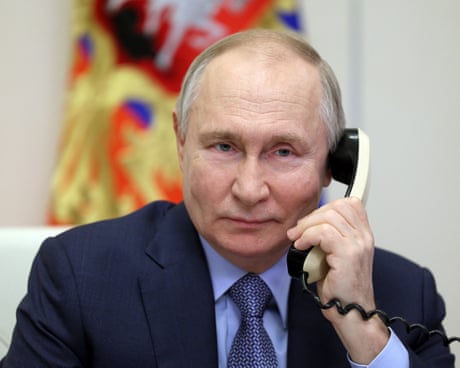
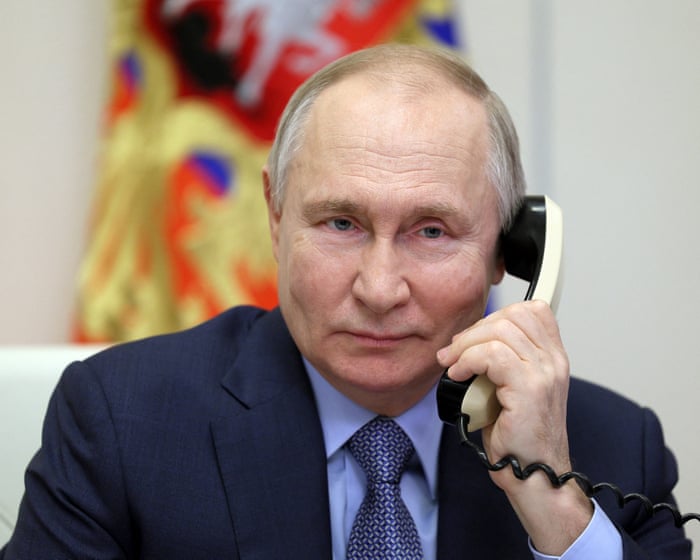
But a 90-minute phone call this week to Vladimir Putin by the leaders of Finland and Norway drew an unusual rebuke from their Danish and Swedish neighbours.

Continue reading...

© Photograph: SPUTNIK/Reuters

© Photograph: SPUTNIK/Reuters

© Photograph: SPUTNIK/Reuters

  •  

Ukrainian intelligence: Russia can probably add 10–15 Su-34 bombers a year, but no new Tu-95s or Tu-22M3s

russia kept its fifth-generation su-57 stealth fighter near urals — ukrainian drones found anyway · post two fighters one su-34 apron shagol airbase russia's chelyabinsk oblast satellite exilenova+ два су-57

Russia’s aircraft plants still turn out modern fighter-bombers and fighters, enough to partly cover its losses, Ukraine’s military intelligence agency HUR told Ukrainian news agency UNIAN, which published the reply on 23 October. Its older bombers are a different story. Russia has no serial production of new Tu-95s, Tu-22M3s, or Su-24s and keeps them flying through repairs and upgrades, so each one lost for good leaves a lasting gap, HUR said.

Ukraine’s Navy said its Neptune missiles hit six Su-34M bombers at Borisoglebsk airbase in Russia’s Voronezh Oblast overnight into 15 October. Zelenskyy later said four were destroyed and two damaged. The Su-34 is one of the jets that drop Russia’s glide bombs, heavy bombs fitted with wing-and-guidance kits, on Ukrainian positions and towns.

How fast Russia replaces its jets

Russia can probably deliver 10–15 Su-34s a year now, HUR estimated. Deliveries grew from eight in 2022 to 11 in 2023 and 12–14 in 2024. But the agency said that trend does not confirm the same pace today.

For the Su-35S fighter, HUR pointed to an average of about 11–12 a year in 2021–2025. It called that a rough benchmark, not an established 2026 output. Su-30SM2 and Su-57 production continues, but reliable rates cannot be determined. Su-30 figures also mix new builds with upgrades of older Su-30SMs, HUR noted.

What Russia had, and what it lost or saw badly damaged in 2026

By the end of 2025, Russia had about 125 Su-34 and Su-34M bombers, which HUR counts together. It also had 140–145 Su-30 jets of various versions, 135–140 Su-35S, and about 20 Su-57s, HUR estimated. These are only fleet estimates, not a guaranteed number of jets Russia can send on combat missions at the same time, the agency cautioned. Some are under repair or upgrade, and HUR is not disclosing the current fleet size.

Satellite image from 13 October shows six Russian Su-34 fighter-bombers parked in the area later struck at Borisoglebsk airbase
Satellite image from 13 October shows six Russian Su-34 fighter-bombers parked in the area later struck at Borisoglebsk airbase. Image: Exilenova+

HUR also named specific 2026 cases of Russian aircraft destroyed or critically damaged. A Tu-22M3 crashed in Irkutsk Oblast on 15 June. Strikes on Engels airbase on 17 July and 28 August hit two Tu-95MS. The first suffered critical damage to its tail section, and HUR treats the second as a probable irrecoverable loss.

The list also includes a Su-35 that Ukraine’s military says it shot down on 8 July, a claim backed by published materials showing debris. It adds a Su-57 crash in Moscow Oblast on 23 July and a collision of two Su-35S over Kursk Oblast on 7 September. Full official details on those two incidents are still missing, HUR noted. Strikes on several Su-57s and a Su-34 at Shagol airbase on 25 April, and on a Su-24 in Crimea on 7 September, were also reported, but the state of those jets is unknown, so counting them as destroyed would be premature, HUR said. The list, as published, leaves out the Su-34s at Borisoglebsk and the Tu-95MS that Russia’s defense ministry said crashed on takeoff in Amur Oblast in late September.

  •  

Pentagon designates Chinese cultural centers national security threat

RT | October 24, 2026

The Pentagon has designated cultural programs linked to China’s Confucius Institute as a national security threat, according to US Secretary of War Pete Hegseth. He claims that the centers, which largely offer Chinese language courses on American college and university campuses, serve as a front for Beijing’s “propaganda” campaign – an allegation Chinese officials have previously denied.

In a video posted on Facebook on Friday, Hegseth said that while the US Congress had previously “banned” the Confucius Institutes from American educational institutions, they “came back disguised in new forms” and under new names.

Hegseth was apparently referring to several measures passed by Congress in recent years that stripped universities that hosted Confucius Institutes of federal funding. The pressure from the lawmakers has led to the closure of multiple centers on US soil.

According to Hegseth, over the past two months, the Department of War has “systematically dismantled” 80 new Chinese-backed cultural centers across 30 universities, adding “these sleeper organizations to our list of institutions that threaten our national security.”

The official alleged that the targeted entities had sought to “steal intellectual property and to infiltrate the minds of American students,” but stopped short of providing any concrete evidence.

Back in 2020, the US Department of State designated Confucius Institutes as a “foreign mission of the People’s Republic of China,” requiring the institutions to regularly provide information regarding their Chinese personnel, recruitment, funding, and operations to the US government. The US Department of State characterized the China-funded cultural centers as “part of Beijing’s multifaceted propaganda efforts.”

Later that year, then-US Secretary of State Mike Pompeo alleged that the centers were working to recruit “spies and collaborators” at US colleges, and expressed hope that “we will get them all closed out.”

China’s Foreign Ministry at the time accused Pompeo of deliberately undermining cultural and educational exchanges “by discrediting Confucius Institutes… [out of] ideological bias and political expediency.”

Beijing urged Washington to “abandon the Cold War zero-sum mentality… [and to] stop interfering with normal people-to-people and cultural exchanges.”

Confucius Institutes have similarly come under government pressure in several other Western countries in recent years.

Last year, Australian media reported that six local universities had shut down Beijing-backed cultural centers amid government scrutiny, reducing the number of such entities in the country by half.

In 2020, several media outlets, including The Times, claimed that Sweden had become the first European nation to close all Confucius Institutes and related classrooms.

  •  

Ukraine wants partners’ Patriot interceptors now. Europe can hand them over only with US approval, Ukraine’s president says

germany urges nato neutralize russian uavs factories patriot air defense system's launchers dutch ministry ukraine news ukrainian reports

Ukraine's defense minister raised the urgent need for Patriot interceptors with Sweden on 22 October, the Defense Ministry reported. The same day, President Volodymyr Zelenskyy warned of more Russian ballistic strikes and blamed US supply cuts.

Patriots are Ukraine's main defense against Russian ballistic missiles, and their deliveries keep shrinking. Figures Zelenskyy released in August showed Patriot interceptor deliveries falling from 675 in 2023 to 364 in 2025, with 264 projected for 2026. Europe holds enough PAC-2 and PAC-3 interceptors for Ukraine's minimum winter needs, Zelenskyy told journalists on 16 October, but he did not yet know how many Europe would hand over, Ukrainska Pravda reported.

Partners' stocks now, Ukraine's missiles later

Russia fired 21 ballistic missiles at Kyiv overnight on 22 October, Zelenskyy said. Defense Minister Yevhenii Khmara told his Swedish counterpart, Pål Jonson, that Ukraine must counter ballistic threats as fast as possible, in particular with Patriot interceptors.

1000 patriot missiles arrive too late winter so ukraine asked ramstein arms coalition open its warehouses · post ukraine's defense minister yevhenii khmara right commander-in-chief major general mykhailo drapatyi meeting
Explore further

1,000 Patriot missiles arrive too late for this winter, so Ukraine asked the Ramstein arms coalition to open its warehouses

The ministry's readout says Ukraine has Patriot missiles under contract. It also says Kyiv asks partners to transfer interceptors from their stocks in exchange for future deliveries allocated to Ukraine.

Khmara made the same request at the Ukraine Defense Contact Group meeting on 8 September. He said then that Ukraine was contracting about 1,000 Patriot missiles with partners' help and an EU loan, but they would arrive only in the coming years, LB reported. He asked allies for missiles from their stocks now, in exchange for future upgraded missiles under Ukraine's contracts.

"Only when the American side approves it"

Zelenskyy spoke to journalists before meeting Finnish Prime Minister Petteri Orpo, Ukrinform reported. He said the Americans had reduced supplies and Russia would step up ballistic attacks.

"Europeans can provide the missiles only when the American side approves it," Zelenskyy said.

He said the US had sent most of its interceptors to the Middle East.

On 19 October, Zelenskyy told US senators that US Defense Secretary Pete Hegseth was not signing off on Patriot deliveries allies had already paid for. Axios obtained the call transcript from Ukrainian officials. A US government official told the Kyiv Independent that Ukrainian officials' claims that Hegseth was holding up the missiles were "not true."

Washington says nothing has changed. "We have our own needs, too," Secretary of State Marco Rubio said on 20 October, but there is "nothing being deliberately denied to Ukraine." Hegseth told reporters in Eau Claire, Wisconsin, that the US had not changed its posture toward Ukraine, "but certainly with things like interceptors, we want to make sure our guys have the most possible as well."

  •  

Briton facing forced separation from baby son after Sweden orders his deportation

Exclusive: Photographer Simon Montgomery told ‘state’s interest in regulated immigration’ outweighs his family concerns

A British photographer is facing deportation from Sweden and forced separation from his 16-month-old son after authorities ruled in favour of the country’s immigration interests.

Simon Montgomery’s application to remain after the birth of his son last year was rejected on several grounds by Sweden’s migration agency, a decision that was then upheld by the migration court.

Continue reading...

© Photograph: Supplied by Simon

© Photograph: Supplied by Simon

© Photograph: Supplied by Simon

  •  

French authorities announce partial curfews as PM blames ‘ultra-left’ for exploiting protests – as it happened

This live blog is now closed.

French PM Lecornu says he has asked prefects to implement “a number of partial curfews” in certain “localised” urban areas to stop further disorder, which he attributes to “the extreme-left” and some criminal elements.

We will no doubt hear more on this from local authorities, as in the example of Marseille (10:32).

Continue reading...

© Photograph: Guillaume Saligot/AFP/Getty Images

© Photograph: Guillaume Saligot/AFP/Getty Images

© Photograph: Guillaume Saligot/AFP/Getty Images

  •  

Five Arrested in €114 Million Smartphone VAT Fraud Investigation Across Europe

Five people have been arrested in Cyprus, Germany and Italy as part of a European investigation into an alleged €114 million VAT fraud operation involving the cross-border smartphone trade.

The European Public Prosecutor’s Office (EPPO) announced on 16th October that three suspects had been detained in Cyprus, one in Germany and one in Italy following an investigation coordinated by its Munich office.

Investigators believe the suspects established and controlled a network of companies designed to exploit the tax treatment of goods traded between EU member states.

The alleged operation involved smartphone transactions through businesses and so-called missing traders operating in Germany, Albania and Sweden. Prosecutors estimate that the activities caused VAT losses of approximately €80 million in Sweden and €34 million in Germany.

According to the official announcement of the arrests, the operation forms part of a wider investigation known as Midas, which is examining organised cross-border tax fraud.

Searches across several countries

The arrests were accompanied by searches and seizures in Cyprus, Greece and Italy, conducted with the assistance of national police, financial investigators and tax authorities.

Prosecutors said 12 searches had been carried out at premises connected with the suspects and companies under investigation.

Assets of up to €80,000 were frozen, while investigators also seized or took action against bank accounts, vehicles and property.

The operation involved cooperation between Germany’s tax authorities, Cyprus’s financial intelligence and cybercrime units, the Greek financial police and Italy’s Guardia di Finanza.

The suspects are believed to have played leading roles in organising and controlling the alleged scheme, although prosecutors have not publicly established their individual criminal responsibility.

The investigation remains subject to proceedings before the competent German courts. All suspects are presumed innocent unless proven guilty.

How the alleged fraud operated

The case concerns a form of tax evasion known as missing-trader intra-community fraud, commonly described as carousel VAT fraud.

Under the EU’s VAT system, qualifying business-to-business transactions involving goods transported between member states are generally exempt from VAT in the country of dispatch.

The purchaser accounts for VAT under the rules applicable in the destination country, while subsequent domestic sales normally involve VAT being charged to the buyer.

Fraudsters can exploit those arrangements by establishing companies that purchase goods through cross-border transactions before reselling them domestically.

A missing trader collects VAT from the purchaser but fails to remit it to the relevant tax authority. Other companies in the transaction chain may then seek deductions or refunds.

The same goods can pass through several businesses and, in some arrangements, move repeatedly between countries, allowing the fraud to be repeated.

Smartphones and electronic equipment are particularly attractive because they are relatively expensive, easily transported and can be traded in large volumes.

The complexity of the arrangements makes investigations difficult when businesses are established in several jurisdictions and transactions move rapidly between companies.

A wider European problem

The latest arrests follow another substantial VAT fraud operation announced earlier this month.

On 7th October, the EPPO reported that 62 suspects had been detained in a separate investigation involving alleged losses of at least €410 million.

That operation, known as Hermes, involved searches across eight countries and allegations concerning the sale of mobile phones and other electronic devices.

Although separate from Midas, the investigation illustrates the scale and organisation of suspected VAT fraud involving internationally traded consumer electronics.

According to the EPPO‘s 2025 annual report, prosecutors were handling 3,602 active investigations at the end of last year, with estimated potential damage exceeding €67 billion.

Of that amount, more than €45 billion related to suspected VAT and customs fraud.

Those figures concern estimated losses under investigation, rather than sums established by final court judgments or amounts that have already been recovered.

Protecting European tax revenues

The financial consequences extend beyond the immediate losses attributed to individual schemes.

VAT is a major source of revenue for national governments and forms part of the system used to calculate certain contributions to the EU budget.

Fraudulent transactions can also distort competition by allowing dishonest operators to offer prices that legitimate businesses cannot match.

The Commission’s 2025 VAT gap report estimated that EU countries failed to collect approximately €128 billion in expected VAT revenue in 2023.

That broader figure includes losses arising from several causes, including administrative errors and insolvency, and cannot be attributed entirely to criminal fraud.

The latest arrests also demonstrate the importance of cross-border investigative cooperation when suspected financial offences involve companies, transactions and assets located in different countries.

In the Midas investigation, prosecutors must now establish the precise roles of the suspects, prove the alleged transactions and determine whether criminal proceedings can result in convictions and financial recovery.

The arrests represent another stage in the investigation, not a judicial finding that the alleged €114 million fraud has been proved.

  •  

Briton threatened with deportation from Sweden over Brexit rules goes into hiding

Mark Smith, who has severe health issues, says he was told three times he needed to do nothing in order to remain after Brexit

A seriously ill British man living in Sweden has been forced into hiding amid fears he will be deported as a result of what he says is a government Brexit residency error.

Mark Smith, 60, who has had heart attacks, strokes, severe headaches and chronically high blood pressure that has been difficult to treat, was told on the phone he should leave Sweden by 17 October as he was an “alien” without permission to stay.

Continue reading...

© Photograph: Annika Karlbom/Hallands Nyheter

© Photograph: Annika Karlbom/Hallands Nyheter

© Photograph: Annika Karlbom/Hallands Nyheter

  •  

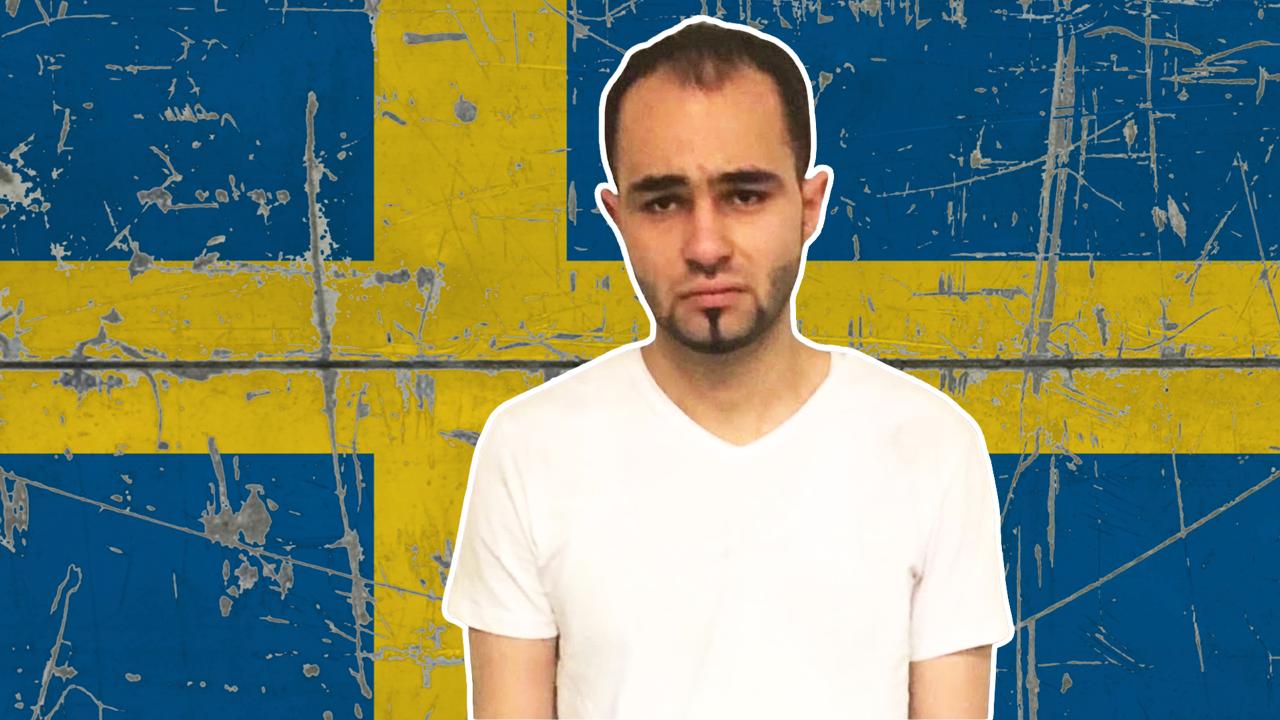
Sweden: Libyan-Swedish suspect violently raped jogger in her 50s, told police he wanted to ‘give her love’

Mohammad Hamed Alshaer, who was born in Libya, has been charged with aggravated rape of a woman in her fifties while she was jogging along Ribersborgsstigen in Malmö on July 15.

According to the indictment submitted to Malmö District Court, the 37-year-old Alshaer struck the woman from behind, knocked her over, and dragged her into the bushes. There, he grabbed her neck and mouth, pulled her by the hair, and raped her vaginally and anally. The prosecutor wants the crime classified as rape with particular cruelty, citing exceptional violence, ruthlessness, and brutality.

Witnesses heard screams and thuds and alerted police. Officers arriving at the scene found a man lying half-undressed on top of a woman who was screaming for help.

The woman later told investigators she tried to wriggle free.

“I thought: I don’t accept this. I don’t give up,” she said, according to Swedish public broadcaster SVT. However, SVT and other Swedish outlets did not publish the suspect’s Libyan background and other key details, such as his name. Samnytt has reported on this information.

Alshaer has described the incident in terms similar to the woman’s account, with one major difference: he says the woman “inspired him” to have sex with her. He told police he had not had sex in several years and decided to “give her love.” After his arrest, he reportedly told officers he realized what he had done was wrong, yet he still denied the rape in court.

Alshaer, a Swedish citizen originally from Libya, has a prior conviction that includes sexual assault in a nightclub. However, since he holds Swedish citizenship, he cannot be deported. Despite obtaining citizenship, he requires an Arabic interpreter in court.

He is also charged with violent resistance and minor drug offenses. He denies the rape and the resistance charge but admits to the drug offense.

The post Sweden: Libyan-Swedish suspect violently raped jogger in her 50s, told police he wanted to ‘give her love’ appeared first on Remix News.

  •  

Sweden’s left narrowly wins national elections, 70% of Swedes with non-European background backed the left

For years, the right across the West has noted that mass immigration has been a boon for left-wing parties, which are essentially importing a new voting base. Sweden’s latest election appears to once again affirm this view, with the left narrowly winning the election, in large part due to their overwhelming support from those with a non-European background in Sweden.

Sweden’s 2026 election produced one of the narrowest results in recent memory. With roughly 94.7 percent of votes counted, the center-left opposition holds 176 seats against 173 for the parties backing outgoing Prime Minister Ulf Kristersson.

The left-wing Social Democrats remain the largest party at 28 percent, enough to put Magdalena Andersson in position to try to form a government.

A striking pattern in SVT’s VALU exit poll helps explain how the result took shape, with 70 percent of voters of non-European origin backing the left-wing bloc of Social Democrats, Left Party, Greens, and Center.

“VALU shows a very clear political dividing line. Among voters with non-European backgrounds, S, V, MP, and C together receive 70 percent, while the Tidö parties receive 27. This is a voter group whose party sympathies differ sharply from the electorate as a whole – and which therefore has significance for the long-term electoral math,” wrote Swedish political scientist and author Daniel Schatz on X.

VALU visar en mycket tydlig politisk skiljelinje. Bland väljare med utomeuropeisk bakgrund får S, V, MP och C tillsammans 70 procent, medan Tidöpartierna får 27.

Det är en väljargrupp vars partisympatier skiljer sig kraftigt från väljarkåren som helhet – och som därför har… pic.twitter.com/m6J7pz2ySV

— Daniel Schatz (@drdanielschatz) September 13, 2026

VALU defines the group as people who themselves, or whose parents, grew up outside Europe. Their votes broke down for the Left at 21 percent, Social Democrats at 38 percent, Greens at 7 percent, and Center at 4 percent.

Before the election, the leader of the right-wing Sweden Democrats, Jimmie Åkesson, also wrote that the left’s strategy is to gain votes from Swedes with a foreign background even as they lose votes from native ethnic Swedes:

“It’s about power. The Social Democrats’ decades-long campaign for increased immigration from the Muslim world has never been a coincidence. On the contrary, it seems to be a long-term strategy. The election promise from Magdalena Andersson to grant citizenship to up to 100,000 immigrants, based on the old and undemanding regulatory framework, should be seen in the same light,” he wrote.

Det handlar om makt.

Socialdemokraternas mångåriga kamp för ökad invandring från den muslimska världen har aldrig varit en slump. Tvärtom tycks det vara en långsiktig strategi.

Vallöftet från Magdalena Andersson att ge uppåt 100 000 invandrare medborgarskap, utifrån det gamla… pic.twitter.com/Tz2jrUfzVP

— Jimmie Åkesson (@jimmieakesson) August 26, 2026

“When Swedish voters flee the party, you need votes from elsewhere, and mass immigration from the Muslim world then appears to be an attractive way to circumvent the will of the Swedish people,’ he added.

In 2022, Swedes with a foreign backgroun already attracted around 68 percent of this electorate. Earlier surveys of Muslim voters had placed combined support for the Social Democrats, Left and Greens near 85 percent, with the Social Democrats alone above 61 percent. This slice of the electorate has expanded rapidly over the years.

About 13 percent of eligible voters, close to 1 million people, now have non-European origins, up from just over 3 percent in 2002 and 0.3 percent in 1982.

Many arrived from Muslim-majority countries in the Middle East, Africa and Asia through asylum, family reunification and earlier, more open immigration rules.

Sweden does not record religion in official statistics, yet estimates indicate that Swedish citizens from Muslim-majority countries number in the hundreds of thousands. Together, with other voters of non-European background, they form a reliable base for the left even as much of the rest of the country has shifted toward tighter immigration and crime policies.

Remix News reported on polling already six years ago which showed that a majority of Swedes wanted to tighten immigration substantially. While the native ethnic Swedish population has swung to the right, foreigners have incentives to vote for the left to ensure their families and fellow countrymen can arrive in Sweden unimpeded. Foreigners are also more likely to benefit from social welfare, which left-wing parties promote.

The overwhelming vote for the left from those with a non-European background has been seen across the Western world. In Germany, for instance, the Left Party has proposed giving voting rights to all foreigners who have lived in Germany for five years, regardless of whether they have citizenship. Similar proposals have been put forward by other left-wing parties in the country.

The post Sweden’s left narrowly wins national elections, 70% of Swedes with non-European background backed the left appeared first on Remix News.

  •  

Codex Gigas, the largest medieval illuminated manuscript, was created by a single monk who took 30 years to complete it

In 1648, as Swedish troops looted Prague Castle at the end of the Thirty Years’ War, someone carried off among the spoils a volume that weighed 75 kilos and required two people to move. It was a book, the largest surviving illuminated manuscript of the entire Middle Ages, an object so disproportionate for its time […]

  •  
❌