❌

Reading view

Belgium triples planned F-16 deliveries to Ukraine, pledges 10 jets by year-end

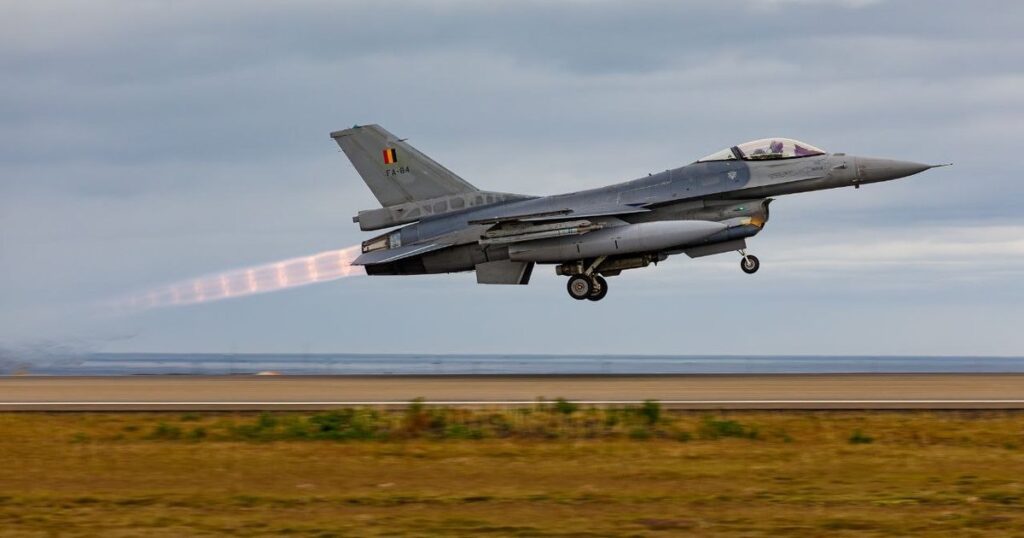
belgium send three f-16 fighter jets maintenance delays keep ukraine using · post belgian jet belgium-f-16-takes-off news ukrainian reports

Belgium plans to deliver 10 F-16 fighter jets to Ukraine by the end of 2026, Prime Minister Bart De Wever announced on 16 October, raising the expected number from three amid delays in transferring the aircraft.

The expanded commitment comes as Ukraine faces sustained Russian drone and missile attacks and needs additional combat aircraft to strengthen its air defenses. 

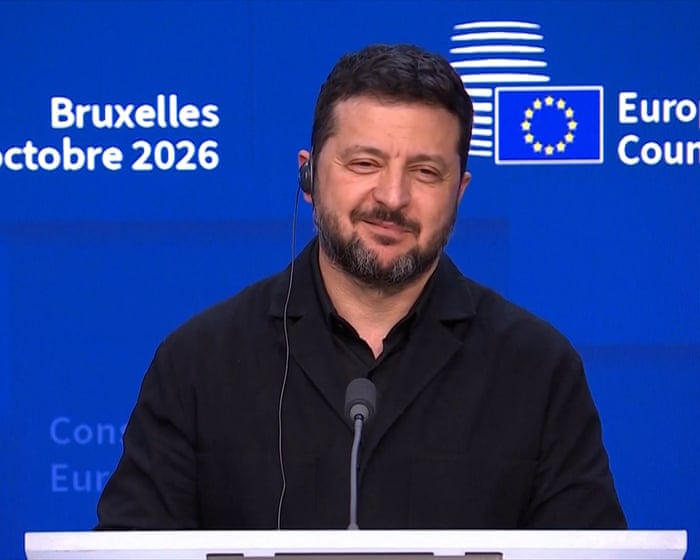
De Wever made the announcement at a press conference in Brussels alongside Ukrainian President Volodymyr Zelenskyy, Anadolu Agency reported. He said Belgium’s deliveries had fallen behind schedule because its new US-made F-35 fighter jets arrived later than expected.

Belgium also discussed supplying more ammunition for Ukraine’s F-16s.

F-16 deliveries delayed by F-35 schedule

“We will deliver 10 this year,” De Wever said, explaining that delays in receiving Belgium’s F-35s had held up the transfer of its F-16s. The new aircraft are now beginning to arrive, allowing Belgium to move forward with deliveries to Ukraine.

Zelenskyy confirmed that Kyiv expects additional F-16s from Belgium by the end of the year and thanked Brussels for the agreement.

The announcement marks an increase from Belgium’s previously reported plan to send three F-16s to Ukraine by the end of 2026. The new figure would more than triple the number expected under that earlier commitment.

F-16s to help counter Russian jet-powered drones

De Wever said Ukraine urgently needs operational fighter jets and described the F-16 as one of the few weapons capable of effectively countering Russian jet-powered drones.

The aircraft can also intercept cruise missiles and other aerial targets, while carrying out electronic warfare and combat missions. Ukraine received its first F-16s in 2024 after allies agreed to supply the aircraft and train Ukrainian pilots. 

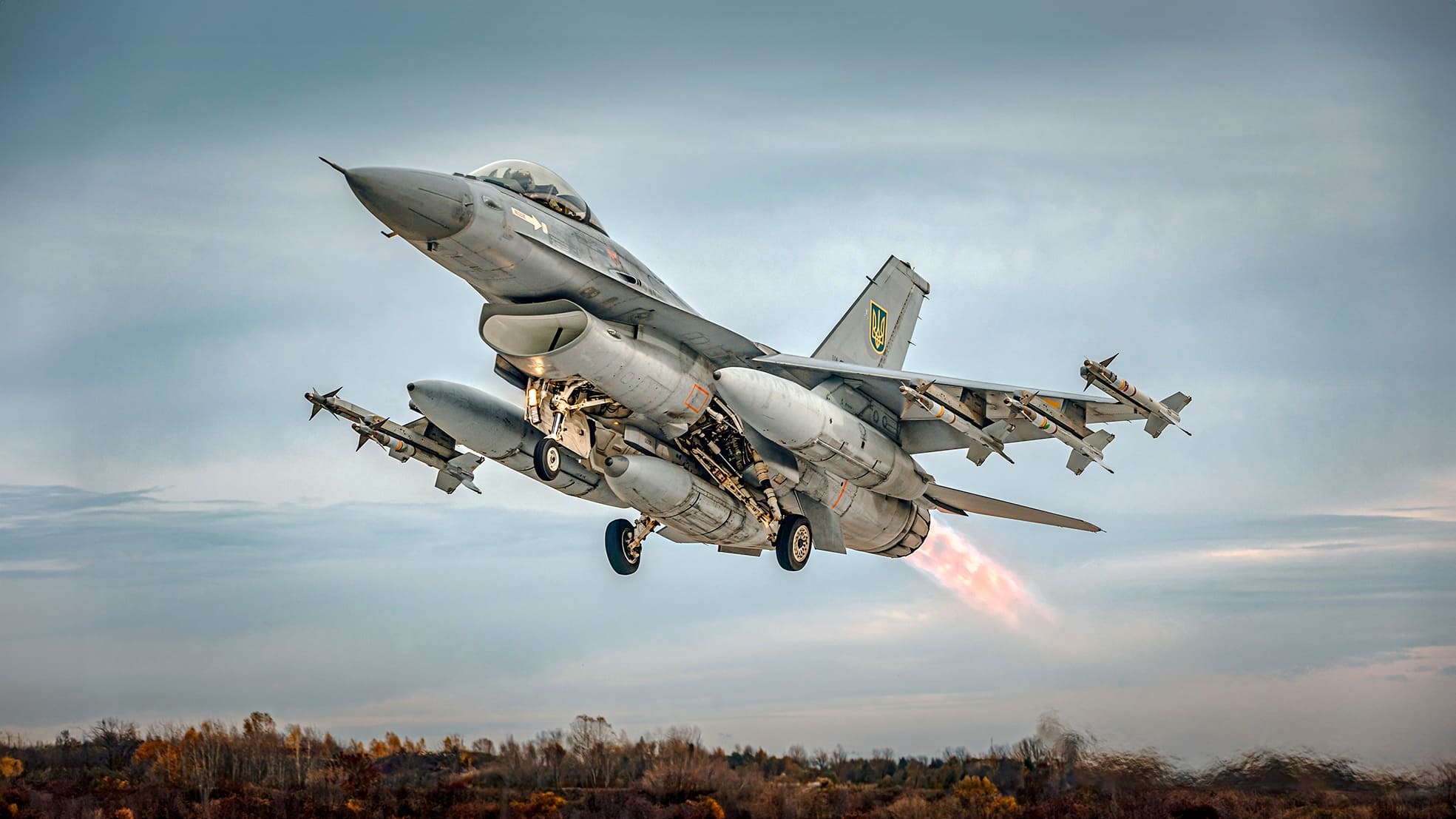
A Ukrainian Air Force F-16AM Fighting Falcon fighter jet takes off armed with AIM-9 Sidewinder air-to-air missiles. Photo: Ukrainian Air Force\X
Explore further

Belgium rushes three F-16s to Ukraine as Russia expands its drone and missile assault

Belgium discusses ammunition and financial support

Zelenskyy and De Wever also discussed supplying additional ammunition for Ukraine’s F-16s, including 20 mm rounds produced by Belgian defense company FN Herstal.

The leaders also reportedly discussed Ukraine’s financial needs, though neither provided details on potential next steps. Belgium remains at the center of discussions over frozen Russian assets, as Brussels hosts Euroclear, which holds a large share of the immobilized funds.

  •  

Zelenskyy’s warning that Russian airspace is becoming dangerous is proving true: Russia temporarily restricted operations at 27 airports amid a massive drone attack

Flight information board displaying arrivals and departures at Domodedovo Airport in Moscow, Russia. Photo: TASS

Temporary restrictions on aircraft arrivals and departures were imposed at 27 Russian airports, Deutsche Welle reported on 16 October, citing its own calculations based on reports from Russia’s Federal Air Transport Agency.

Ukrainian President Volodymyr Zelenskyy warned airlines on 1 September that “Russian airspace is becoming completely unsafe.” Overnight, most of the airspace over European Russia was closed.

By morning, more than 200 flights had been canceled or delayed at Moscow airports, Deutsche Welle reported, citing figures compiled by a Russian Telegram channel.

🔥 Тим часом у російських аеропортах – справжній апокаліпсис через нальоти дронів останніми днями.

Про це ниють росЗМІ. Було відмінено десятки рейсів, у терміналах – дуже багато людей. Пасажири скаржаться на задуху, дикі черги до туалетів та повну невідомість. pic.twitter.com/ZlXxY5c2mq

— Breaking News (@breakingUAnews) October 16, 2026

The list included airports in the capital. All four Moscow airports temporarily suspended arrivals and departures, the Russian outlet Astra reported on 16 October. Russian authorities said they had shot down dozens of drones, while flights were delayed and diverted to alternate airfields, according to the report.

Massive drone attack on Russia: 644 UAVs in one night, 94 shot down near Moscow

The temporary airport shutdowns were likely a consequence of a massive drone attack on Russia. From 8:00 p.m. on 15 October to 8:00 a.m. on 16 October, Russian air defenses allegedly intercepted and destroyed 644 Ukrainian unmanned aerial vehicles across 26 Russian regions, occupied Crimea, and the Black Sea, according to Russia’s Defense Ministry.

According to the list of regions published by the Russian Defense Ministry, the drone attacks covered a vast area of Russia, from regions bordering Ukraine to the Moscow region, the Volga region, the country’s northwest and southern regions, as well as occupied Crimea and the Black Sea.

Russian air defenses shot down a total of 94 drones approaching Moscow over the evening of 15 October and overnight, according to calculations by the Russian outlet RBC Radio, citing statements by Moscow Mayor Sergey Sobyanin.

In the Kaluga region, air defenses destroyed 27 drones over the evening and night, the regional governor reported. At 9:27 a.m., he updated the figures, saying another 48 UAVs had been shot down overnight, bringing the total to 75. According to preliminary information, there were no casualties or infrastructure damage.

In the Tula region, air defenses allegedly destroyed a total of 32 Ukrainian drones. There were no casualties, according to regional Governor Dmitry Milyaev in his Telegram channel.

In the Vladimir region in western Russia, authorities repelled drone attacks overnight. In the city of Vladimir, a drone attempted to attack a heating infrastructure facility, but the attack was stopped, Vladimir Region Governor Alexander Avdeyev reported. Minor damage was reported, but there was no information about casualties.

Ukraine has not yet commented on its involvement in the attacks.

The practical consequences of canceled Russian flights

Passengers on flight SU6312 from Kaliningrad to Moscow were unable to land in Moscow because of airspace closure, so the aircraft was diverted to Nizhny Novgorod, Terravia reported. After landing, passengers remained on board for about two hours before being allowed to disembark at 3:30 a.m. Instead of continuing their journey to Moscow by air, they were supposed to be transported by bus, with the trip expected to take about seven hours, the outlet reported.

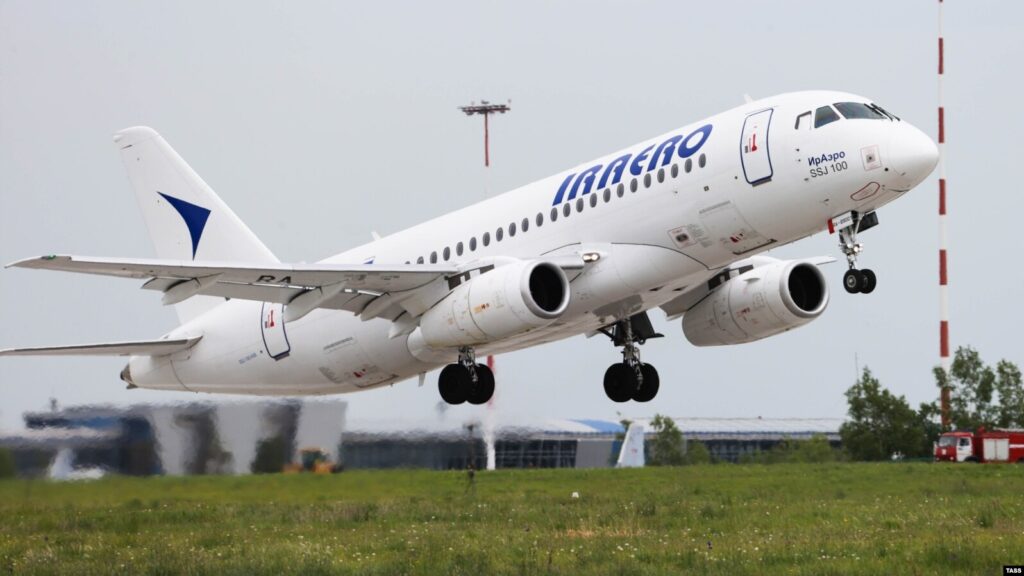
russian airliner revival sold breakthrough now survives extended flight-cycle limits · post sukhoi superjet 100 iraero airline tass superjet-100 (ss-100) plane (file photo) ukraine news ukrainian reports
A Russian Sukhoi Superjet 100 of the IrAero airline. Illustrative photo: TASS

Passengers were not provided with food or drinks, and one woman could not find a seat on the bus, so she purchased a ticket for an early-morning train herself.

Since the beginning of the year, all four Moscow airports have been completely shut down simultaneously at least 19 times, the Russian outlet Agentstvo reported. During the first 14 days of October, the restrictions lasted 101 hours and 38 minutes, compared with 46 hours and 33 minutes in September, according to the report.

  •  

Zelenskyy Says Ukraine Offered to Halt Strikes on Russian Refineries in Exchange for US Missile Defences

Ukraine was prepared to suspend attacks on Russian oil refineries if Washington supplied anti-ballistic missile systems to protect its energy infrastructure, President Volodymyr Zelenskyy has revealed. The proposed compromise was not accepted, despite American pressure on Kyiv to halt its strikes.

Ukrainian President Volodymyr Zelenskyy has disclosed that Kyiv offered to suspend attacks on Russian oil refineries in exchange for temporary American anti-ballistic missile protection for Ukraine’s energy infrastructure. Washington did not provide the requested systems, leaving Ukraine exposed to continued Russian missile strikes while the United States sought to restrict Ukrainian operations against Russia’s oil industry.

Speaking at a press conference in Brussels on Friday, 16 October, Zelenskyy said the proposal had been presented to Washington as a compromise following President Donald Trump’s agreement with Vladimir Putin on Russian diesel supplies and restrictions on attacks against energy facilities.

The Ukrainian president confirmed that Kyiv had not been consulted before Washington reached its understanding with Moscow. He described the diesel agreement as a surprise and objected to arrangements determining Ukraine’s military actions without its participation. Any agreement concerning Ukrainian strikes on Russian territory, he argued, required consultation with the Ukrainian government.

Nevertheless, Zelenskyy said Ukraine had been willing to accommodate American demands, even under an arrangement that did not require Russia to suspend its own attacks. Instead of insisting on reciprocal restrictions, Kyiv proposed receiving sufficient anti-ballistic missile systems to protect its electricity network for the duration of the requested suspension.

The proposal reflected Ukraine’s immediate security requirements. Russia has repeatedly targeted power stations, substations and other critical infrastructure, while Ukrainian forces have attacked Russian refineries to disrupt fuel production and reduce revenues available to Moscow. Halting the Ukrainian campaign without additional defensive capabilities would have left Kyiv surrendering one means of economic pressure while remaining vulnerable to Russian bombardment.

Zelenskyy said he had asked Washington for a limited number of systems, rather than a substantial new military commitment. The proposed deployment would have lasted only as long as the United States required Ukraine to refrain from attacking Russian refineries. However, according to the president, no such assistance was provided.

US diesel agreement deepens dispute

The disagreement follows the diesel arrangement announced by Trump on 9 October, under which Russia agreed to resume substantial petroleum product exports to American and international markets. Washington also authorised certain transactions involving Russian diesel, easing restrictions previously intended to reduce Moscow’s energy revenues.

The agreement created a direct conflict between American energy policy and Ukraine’s strategy of targeting Russian refining capacity. Washington wants additional diesel supplies to ease pressure on fuel markets, while Kyiv regards attacks on oil infrastructure as a means of weakening Russia’s ability to sustain its invasion.

That disagreement intensified after Ukraine resumed attacks on Russian refineries, including a strike against a facility in the Ryazan region. Trump criticised the operations, accusing Kyiv of contributing to higher global oil prices. Zelenskyy, meanwhile, argued that increased Russian diesel revenues would provide Moscow with additional resources to finance its military campaign.

The Ukrainian president’s proposal also exposed the limitations of the temporary energy ceasefire promoted by Washington. Russia continued attacks against Ukrainian civilian infrastructure, including electricity facilities, despite the American initiative. Kyiv’s proposed compromise would have addressed the resulting imbalance by providing defensive protection rather than relying on Russian restraint.

Russian strikes underline Ukraine’s defensive requirements

The urgency of Ukraine’s request was illustrated by renewed Russian attacks during Zelenskyy’s visit to Brussels. According to the Ukrainian presidency, strikes on 15 October damaged energy infrastructure in several regions, leaving almost 15,000 people without electricity in Volyn and disrupting supplies in parts of Kyiv and the surrounding region.

Ukraine continues to face shortages of the interceptors required to defend against ballistic missiles. Zelenskyy has identified anti-ballistic capabilities as an immediate priority, particularly as Russia intensifies attacks ahead of winter. During talks with NATO Secretary General Mark Rutte, he stressed the need for additional missile interceptors and other air defence equipment.

The president also raised these requirements during Friday’s meeting with European Commission President Ursula von der Leyen and European Council President António Costa. Discussions covered air defence, protection of energy infrastructure and financial assistance needed to sustain Ukraine’s resistance to Russian aggression.

European leaders support Kyiv’s position

Zelenskyy said European leaders had supported Ukraine’s position in the dispute with Washington. His remarks came as the EU reaffirmed its intention to maintain economic pressure on Moscow despite the Trump administration’s decision to facilitate Russian diesel exports.

As EU Today reported earlier on Friday, von der Leyen and Costa rejected any relaxation of European sanctions while Russia continues its war. The Commission is preparing a further sanctions package, maintaining a policy intended to restrict Moscow’s ability to finance its military operations.

The contrasting American and European positions have become increasingly significant for Kyiv. Washington is seeking to stabilise fuel markets through arrangements with Moscow, while European governments remain committed to reducing Russian energy revenues and strengthening Ukraine’s military and economic resilience.

For Zelenskyy, the unresolved question is whether Ukraine can be expected to limit attacks on Russian oil infrastructure while receiving neither reciprocal guarantees from Moscow nor additional protection against Russian ballistic missiles. His account of the unsuccessful American negotiations indicates that Kyiv was prepared to compromise, but only if its immediate defensive needs were addressed.

  •  

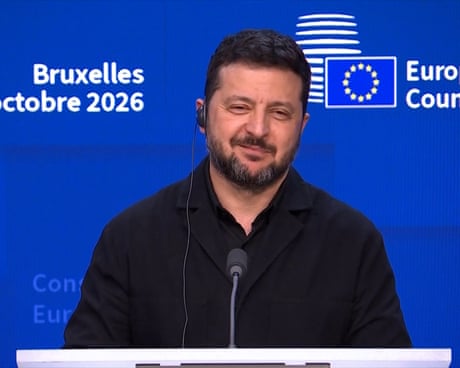
Zelenskyy smiles when asked if Trump is treating him as a 'scapegoat' – video

Ukraine's president, Volodymyr Zelenskyy, was asked by Sky News at a press conference in Brussels, Belgium, if he felt he was being made a 'scapegoat' by his US counterpart, Donald Trump, for domestic problems including high diesel prices before midterm elections. Zelenskyy paused for 15 seconds, before he eventually smiled and said: 'This is my answer.'

Continue reading...

© Photograph: reuters live feed

© Photograph: reuters live feed

© Photograph: reuters live feed

  •  

Trump calls Ukraine’s renewed refinery strikes “a disgrace” after Russia’s 39-missile strike on its energy sites

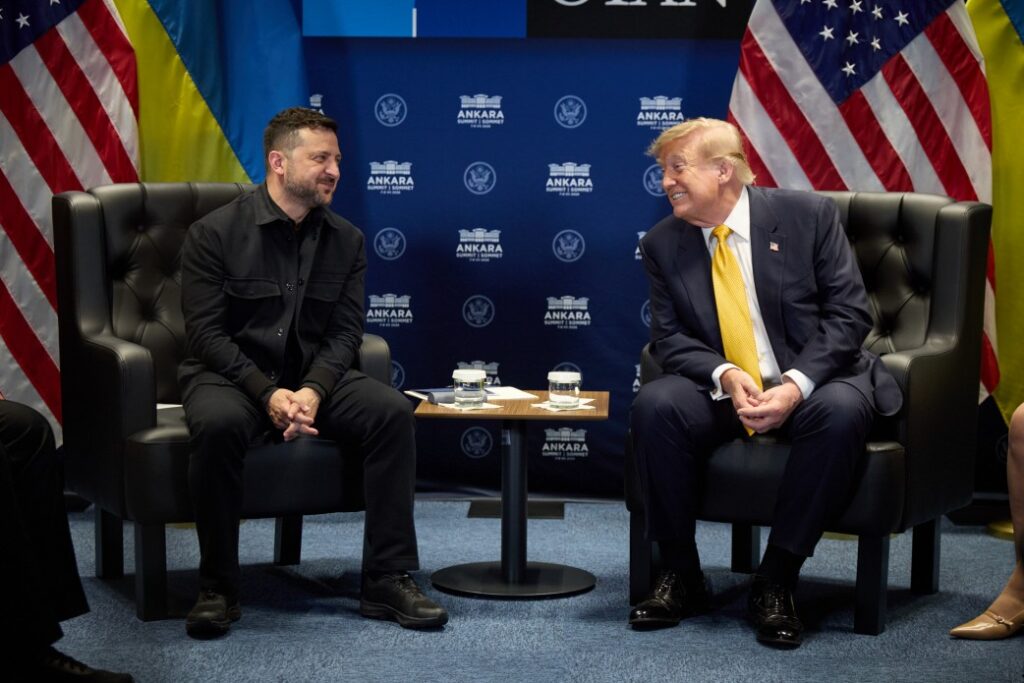
again trump presses zelenskyy stop russian refinery strikes · post ukrainian president volodymyr meets donald ankara türkiye 8 2026 presidentgovua ukraine news reports

US President Donald Trump called Ukraine’s renewed strikes on Russian oil refineries a disgrace in an interview with Newsmax and questioned President Volodymyr Zelenskyy’s will to settle the war on 15 October. His statements came after he made a deal with Russian President Vladimir Putin to allow Russian diesel back into the US ahead of the mid-term elections in the US.

Kyiv says its long-range strikes have knocked out more than half of Russia's refining capacity, one of the few levers it controls on Moscow's war income, according to Ukraine's Defense Ministry. This is part of efforts to reduce the aggressor's capabilities to launch assaults, including the latest, during which four Russian regions fired 39 Iskander-M, North Korean KN-23, hypersonic Zircon, and supersonic anti-ship cruise Oniks missiles, Zelenskyy said.

Trump criticizes Zelenskyy over oil prices while remaining silent on Russian strikes

Earlier, Zelenskyy said that Ukraine stopped refinery strikes for three days to meet US wishes after Trump announced an “energy ceasefire” on 11 October. At the same time, Russia struck a Kharkiv heat-and-power plant within hours of the announcement, he emphasized.

Meanwhile, in the interview with Newsmax, Trump said Zelenskyy is only pushing world oil prices higher.

“Well, I think that’s a disgrace,” he said.

He added that Ukraine has other options: “There are a lot of targets that you can hit.”

At the same time, Trump didn't say a word about Russian strikes on Ukraine's civilian buildings and power infrastructure ahead of the winter.

Trump compares Zelenskyy to a circus showman

The US leader said he is “not a big fan” of Zelenskyy. He claimed both sides “would like to see it end,” but that he finds Zelenskyy “more difficult to deal with than Putin.”

Kremlin welcomes Trump National Security Strategy as aligned with Russian vision on Ukraine
Explore further

US weighs relief for sanctioned shadow fleet tankers, days after freeing Russian diesel

He also said that he believes the depletion of US ammunition stockpiles is linked to the aid provided to Ukraine under the Biden administration, rather than the war with Iran.

Ukraine has repeatedly offered to help the US counter Iranian drones during the operation. The New York Times reported that a Ukrainian team departed the day after the US made such a request.

Nevertheless, despite Kyiv’s offers and actions, Trump once again compared Zelenskyy to P. T. Barnum, the 19th-century American circus showman, saying that he received a tremendous number of Patriots and Tomahawks.

However, there is no public confirmation that Tomahawk missiles were transferred to Ukraine during the Biden administration.

  •  
❌