For years, the idea of speaking forthrightly to China would evoke an admonition from the US State Department and most of the American policymaking class: “We can’t do that. They won’t like it.” They’d often add, “China has red lines, don’t you know?” There are things you are told you just can’t say – questioning […]
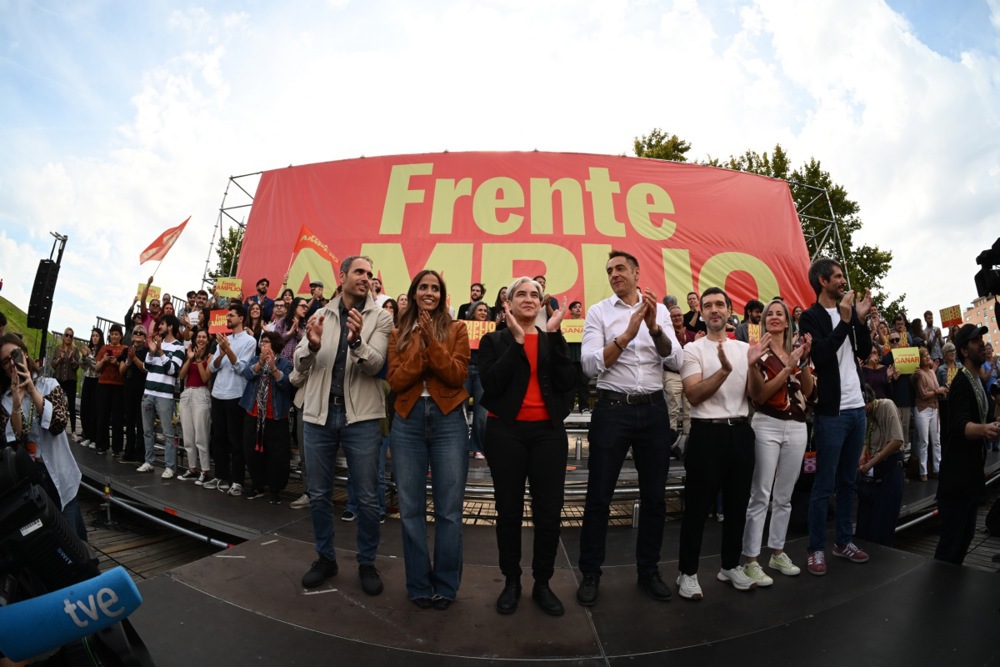
Spain’s Left has now missed its last chance to unite ahead of the country’s snap election on 29 November — a historic failure, not so much because the numbers don’t add up, but because it fails to offer an alternative.
The elections are seen as pivotal, with a real chance that the far-right Vox will enter the government for the first time since Spain’s return to democracy in 1978, in a coalition with the centre-right People’s Party (PP), which itself is expected to fall short of an absolute majority.
With that possibility on the horizon, the Spanish parties to the left of the PSOE (Spanish Socialist Workers’ Party), led by PM Pedro Sánchez, tried to agree on a nationwide joint list for the 29 November snap election.
But they failed because of a “war of egos”, as one political leader described it, and old grudges dating back to 2023. This has left many disillusioned and the left even more divided.
“These past few days have been very difficult … some people will be disappointed today, and for that I am sorry,” Ada Colau, former Barcelona mayor and leader of the Broad Front, said last week, as her alliance failed to reach an agreement on a joint electoral platform ahead of the election.
Spain’s electoral system disadvantages smaller parties, especially in less populated provinces. That means their votes are less likely to translate into seats.
In Spain, a country where a two-party system was the norm until 2015, it is puzzling that the “new” left, born precisely to break that duopoly, has ended up too divided to even compete with the mainstream.
So what’s the picture? On one side, the right is more aligned than ever: the PP and Vox are running separately, but the conservative party openly says it is willing to strike a deal with the far-right if needed. Liberalism is almost non-existent, even though Democracia 21 will run for the first time, but only in Madrid and Barcelona. And the left is divided.
War of egos
This article continues, but the full version is available only to EUobserver.com subscribers. Visit account.euobserver.com/membership
Should this be seen as the Hans Christian Andersen story, in which the narcissistic emperor is finally exposed as a naked fool by a truth-telling child? Donald Trump is certainly all of these things: narcissistic, naked in his support for Putin and a fool. But the parallel doesn’t quite work because it hasn’t taken a […]
Recent media reports projecting South Korea’s per capita GDP to surpass Japan’s have generated considerable excitement across the regional countries that see Korea as a role model. According to the IMF’s October 2026 projections, South Korea’s nominal GDP per capita could reach approximately $49,000 in 2027, compared with Japan’s $37,000-38,000. Its achievements in semiconductors, advanced […]
A majority of Ukrainians reject handing all of Donbas to Russia in exchange for US and European security guarantees. Some 62% are ready to endure the war for as long as it takes, a survey by the Kyiv International Institute of Sociology shows.
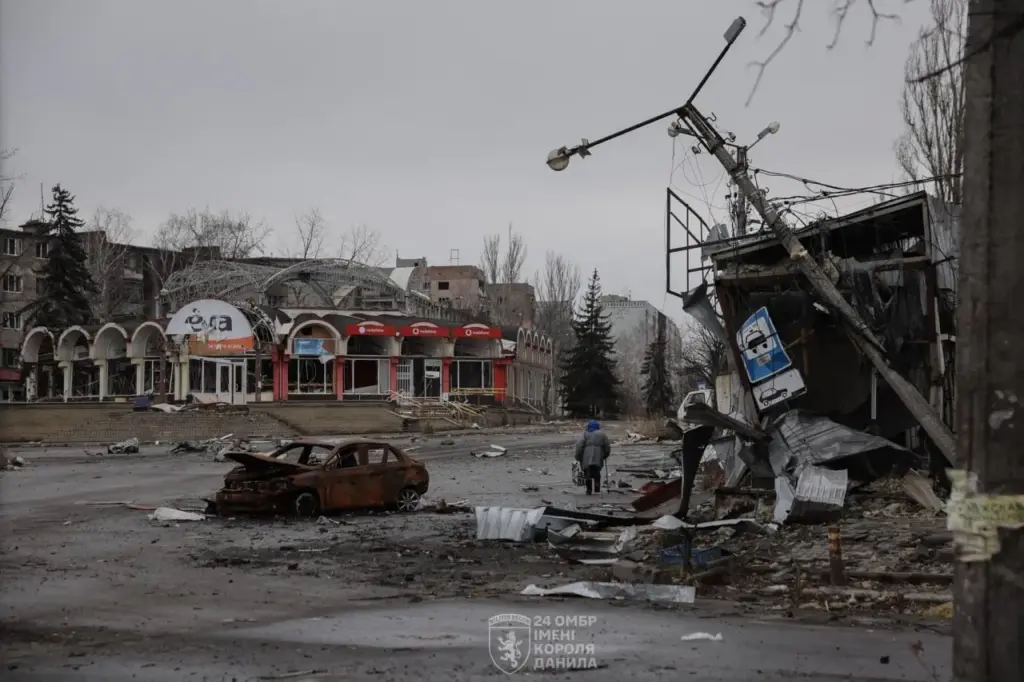
Russia has spent the fall hammering Ukrainian cities, and Washington has eased sanctions on Russian diesel and cut Ukraine’s intelligence and Starlink speed, both apparently aimed at wearing Ukrainians down toward a capitulation. Instead, the majority calls the withdrawal of troops from Donbas categorically unacceptable, with 35% willing to accept it and 4% undecided, a position essentially unchanged since late summer.
The pressure campaign tracked the other way. Among those polled on 8-9 October, before the diesel deal and the pressure that followed, 57% were categorically opposed. Among those polled on 10-16 October, the figure rose to 62% afterward, KIIS reports.
In every region, at least half reject the trade. Resistance is firmest in Kyiv, which has borne a relentless campaign of ballistic and jet-drone strikes, where 66% are categorically against, the highest figure of any region. Even in the east, around Kharkiv, where the most are open to a compromise at 45%, 51% still rule it out.
Bracing for a long war, and ready for it
Few Ukrainians expect a quick end. Only 10% think the war will end by the close of 2026 and 13% in the first half of 2027, while 56% expect it to run into the second half of 2027 or beyond, the institute reports.
Who Ukrainians blame for blocking peace
The poll also measured who is seen as the obstacle. Asked to choose, 78% said Russia’s drive to subjugate Ukraine is what blocks peace, against 12% who blamed an inflexible Ukrainian government, and 92% said Russia strikes economic sites to wreck the economy and force capitulation, not in retaliation.
“The enemy, with its vile strikes by ballistic missiles and drones, is unable to break the spirit and will of Ukrainians,” KIIS executive director Anton Hrushetskyi says.
He argues that what Ukraine needs is “packages of interceptors for Patriot systems,” not an election or one-sided concessions dressed up as peace. The survey polled 1,031 adults across government-controlled Ukraine from 8-16 October.
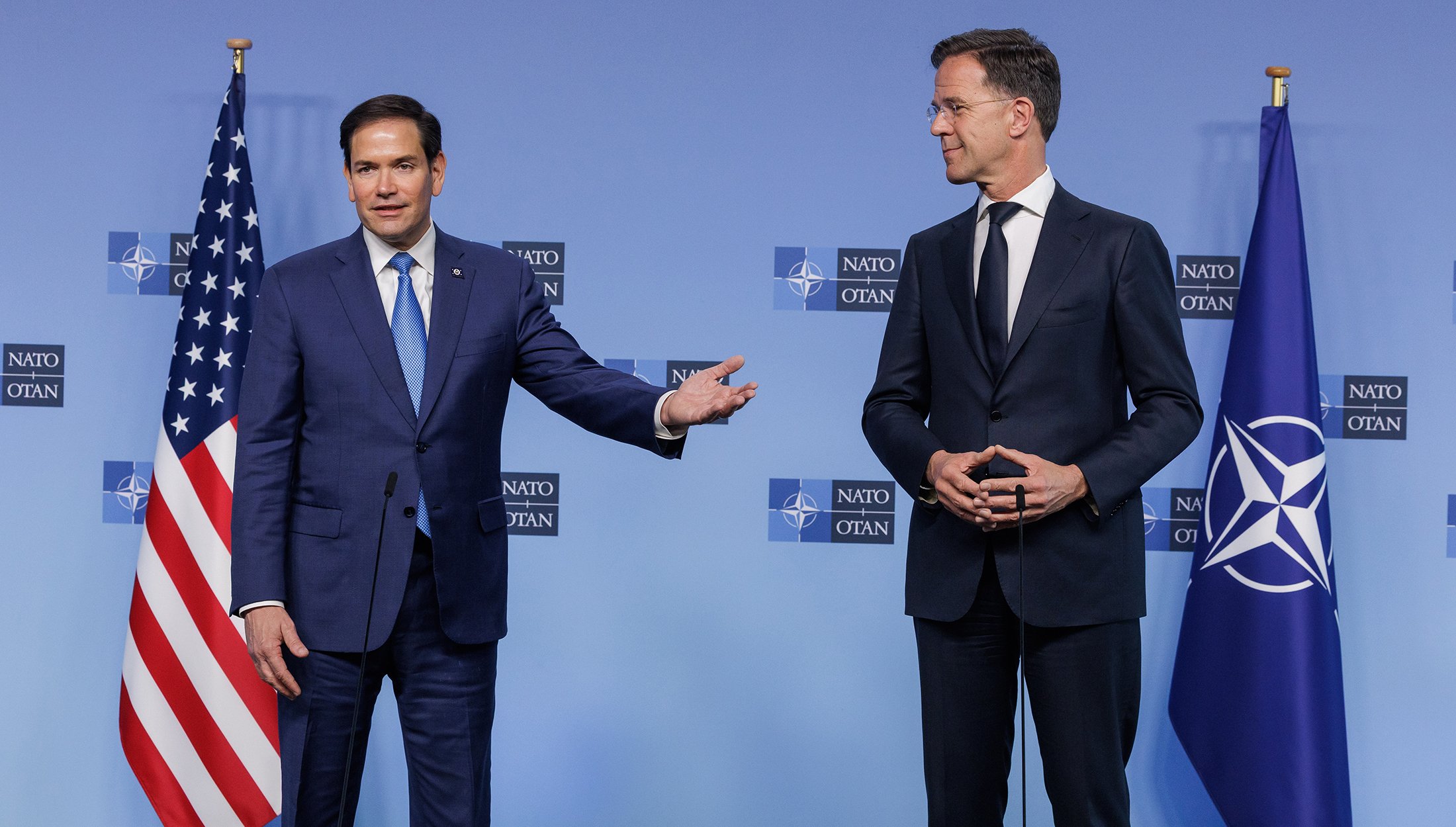
It is hard for European allies to know which is worse, hearing their sacrifice in the US-led war in Afghanistan mocked by Pentagon chief Pete Hegseth, seeing his State Department counterpart Marco Rubio dissembling about the interruption to Starlink service in Ukraine, or watching the commander-in-chief of the free world blithely end sanctions on Russia.
One option is to sit tight and hope that next month’s mid-terms will bring deliverance.
Mid-term blues?
It is possible, perhaps, that a huge political defeat for Donald Trump will change American foreign policy, though those who sincerely hanker for the eras of Joe Biden and Barack Obama may need to adjust their rose-tinted filters.
More likely is that constitutional tussles will make the US even more distracted and unpredictable. Who really believes that a midnight phone call alerting the president to a surprise Russian incursion into Nato territory will gain a firmer response if the Democrats control Congress?
It is also tempting simply to wallow in outrage.
This article continues, but the full version is available only to EUobserver.com subscribers. Visit account.euobserver.com/membership
Berlin and Paris spent months negotiating over the future of Europe’s auto industry.
Germany wanted to keep selling new combustion-engine cars beyond 2035. In return, France wanted strict “Made in Europe” rules: public money spent on electric vehicle (EV) purchase incentives, subsidies and government contracts should benefit cars genuinely made in Europe, not simply assembled here.
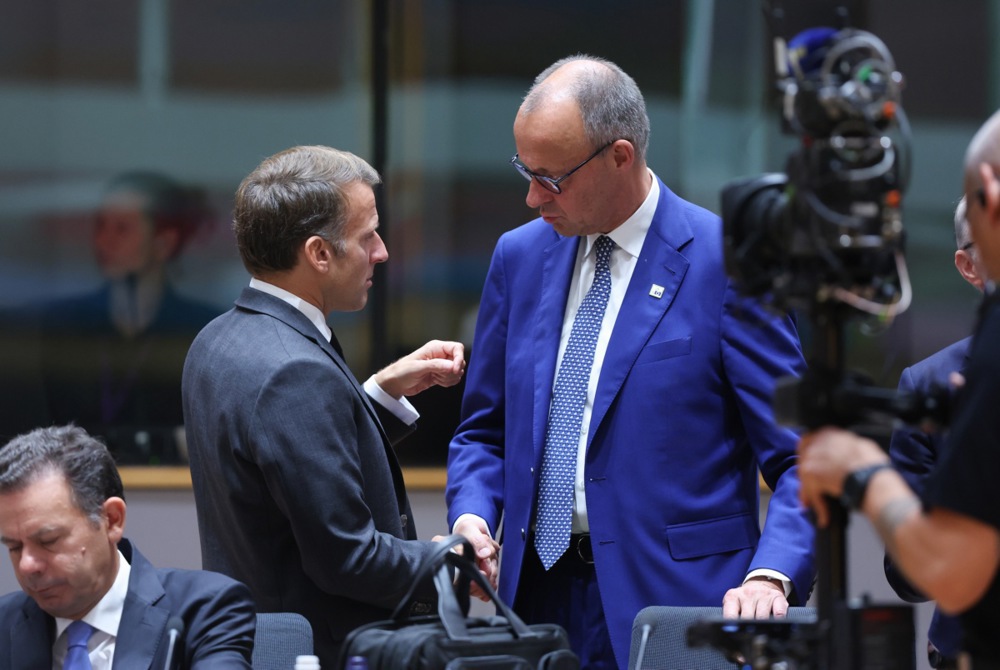
One concession in exchange for the other. French president Emmanuel Macron and German chancellor Friedrich Merz have now sealed the deal.
Both can claim victory at home, and both say they want the same thing: to strengthen Europe’s auto industry against Chinese competition.
But the trade-off undermines that very goal. It rightly pushes for more European production, but pays for it with less ambition for electric vehicles.
For Europe’s automakers to compete, two things need to happen: More of the value generated by car manufacturing must stay in Europe, and the transition to electric vehicles must remain on track. Trading one for the other weakens both.
Value creation is already moving elsewhere
On one point, France is right: a growing EV market alone won’t protect European jobs. Many of the most important components in electric cars already come from China, especially batteries.
Meanwhile, Chinese automakers are building factories in Hungary and Spain, securing direct access to the European market.
The risk is clear: cars assembled in Europe from imported components qualify as European products, benefit from purchase incentives and win public contracts.
Final assembly stays in Europe, but much of the economic value is created elsewhere. European auto suppliers have already cut more than 100,000 jobs in two years, and the European Commission warns that up to 600,000 more could disappear over the next five to 10 years.
That’s where the proposed Industrial Accelerator Act comes in. It would link public spending on subsidies, purchase incentives and government procurement to production in Europe.
This isn’t just about shutting out foreign competition. It steers demand to where it strengthens Europe’s industrial base.
To work, the rules must target the components that will shape the industry’s future: battery cells, software, electric drivetrains and power electronics.
“Made in Europe” can’t simply mean attaching the wheels here.
That doesn’t mean every nut and bolt must come from the EU. The auto industry relies on global supply chains and trusted trading partners.
But a law riddled with exemptions would be little better than no law at all: It would create more red tape without bringing a single new factory to Europe.
Factories need customers
Even the best industrial policy will fail without buyers. A battery factory can only make money if it produces enough batteries. Yet Europe’s battery plants are running well below capacity because they don’t have enough orders. Every battery that goes unproduced drives up the cost of those that are made. Factories, machinery and workers still have to be paid for.
Since 2022, roughly a quarter of announced battery projects in the EU have been canceled or put on hold.
This is why Germany’s push to delay the phaseout of combustion-engine cars is so damaging. Every combustion-engine car sold instead of an EV means one fewer battery that could be made in Europe. The very factories meant to make “Made in Europe” a reality would lose potential customers.
The best way to boost demand for European batteries is to build more small, affordable EVs in Europe. That’s where the biggest sales volumes are. Yet German automakers in particular have been slow to embrace this market, despite significant demand potential in Germany itself. Delaying the combustion-engine phaseout would only give them another reason to hold back.
Slow down, lose out
For European automakers, the stakes go far beyond their home market. Sell fewer EVs at home, and manufacturers will launch fewer new models, produce fewer cars and face higher costs. That will make it harder to compete abroad, too. Giving combustion engines more time won’t close the gap with China. It could make it wider.
Political uncertainty only makes matters worse. Automakers plan new models, factories and supplier contracts years in advance. Every fresh debate over exemptions gives investors and consumers another reason to hesitate.
Companies investing billions in EVs and batteries – and consumers considering buying an electric car – need to know that policymakers won’t change direction tomorrow.
The Franco-German bargain ignores economic reality. The future of the car is electric, and China figured that out long ago.
Beijing is doing everything it can to build an unbeatable lead in EVs, including through unfair practices such as massive government subsidies.
And Europe? It’s haggling over more time for yesterday’s technology. At stake is nothing less than the auto industry – the backbone of Europe’s industrial economy and a major source of jobs.
This deal is not yet law. A better deal would be simple: Europe should pursue electric vehicles with the same determination as China while making sure the jobs, factories and economic benefits stay in Europe.
Western governments are rebuilding ties with India even as they accuse it of foreign interference and of running intelligence operations against people on their soil. The contradiction was on display October 13, when Canada’s Prime Minister, Mark Carney and India’s Prime Minister, Narendra Modi, reaffirmed plans to expand trade and security cooperation, though underlying security […]
In our fast-paced, instant-gratification world where waiting an extra 10 seconds for our video to load seems like an eternity, the difficult ministry of making disciples seems antiquated, unproductive, and inefficient. Similar to parenting, the daily grind seems endless even as the behaviour of our children seems to be regressing. The harder we try, the... Continue Reading
In recent days, a Ukrainian drone strike hit Russia’s largest data center, owned by bank and technology company Sberbank. The strike came after Ukraine hit three data centers belonging to the tech giant Yandex, which is often referred to as “Russia’s Google.” After those attacks, Yandex’s traffic dropped 94%. Its users experienced heavy disruption to […]

 Login