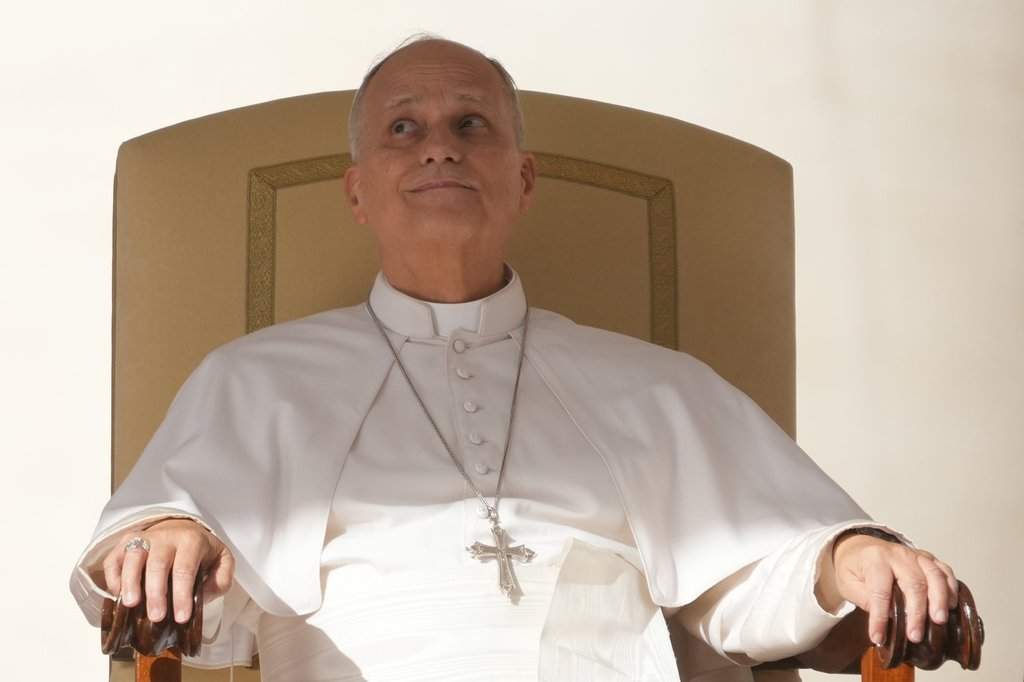
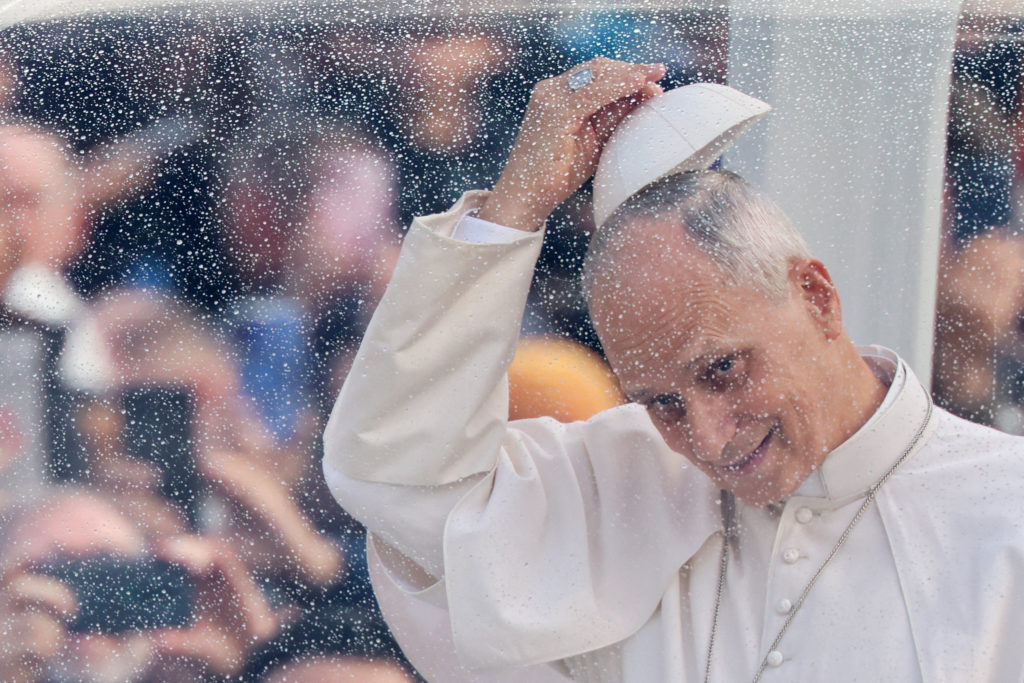
Pope Leo, 71, had the lower lobe of his right lung removed last week in the first major health event of his 17-month pontificate, which confirmed he had lung cancer.
Pope Leo, 71, had the lower lobe of his right lung removed last week in the first major health event of his 17-month pontificate, which confirmed he had lung cancer.
Pope Leo XIV needs no further treatment for lung cancer after follow-up tests confirmed the disease was localized, the Vatican said in a statement Wednesday.
Since transitioning, Lane Michael Stanley has struggled with his interactions with straight men—especially the classic ‘man-hug’: brief, side-angled, all back slaps and no stomach touching. As he navigates this new territory, he reflects on his other relationships and forms of physical intimacy, examining his life and gender norms from both sides of his transition.
Straight men are generally more standoffish with me than I remember them being before. They make less eye contact, they touch less, they smile less. Do I not know how to read their friendship cues? Maybe straight men befriend other men differently from how they befriend women: no more touch of the arm that they swear is innocent, no more questions they feel entitled to ask or basic facts they appoint themselves to explain. Maybe I should learn to read a curt nod as a sign of camaraderie from men now, replacing whatever a straight man’s sly smile was supposed to convey before.
Or are they more standoffish because they can tell I’m gay? Maybe straight men want to keep me at a distance. Maybe there is a reality to the coldness I read from them, a hostility they throw my way unconsciously. Most of the gay men I know are friends with other gay men, so I’m not sure how gay/straight male friendships function, or if they really exist. My partner (a cis gay man) did have a close straight male friend, but they went barhopping and ended up trading blow jobs, so that doesn’t really count anymore.
Years ago, when people asked Geoffrey Hinton why he worked on artificial intelligence, he would repeat a line from J. Robert Oppenheimer, one of the creators of the atomic bomb: “When you see something that is technically sweet, you go ahead and do it.”
Computer scientist and Nobel Prize in Physics laureate Geoffrey Hinton during the Starmus Festival 2026, held this Tuesday in the municipality of Arona in Tenerife.
De óculos e chapéu de couro marrons, camisa e calça pretas e cordão de ouro no pescoço, o cantor sertanejo Gusttavo Lima recebeu em sua residência o candidato à presidência Flávio Bolsonaro (PL), a quem declarou apoio ao lado de duas dúzias de estrelas do gênero, todos homens, nesta terça-feira (20). Em vídeo publicado nas redes sociais, o Embaixador, como é conhecido, falou sobre o momento difícil para o povo brasileiro que não teria poder de compra e reclamou como hoje “com R$ 100, você não faz nem um churrasco”, “porque está tudo tão desonesto, uma taxa de juros desonesta”, sintetizou, gravando ao lado do seu candidato, no andar de cima da residência em frente a uma janela de vidro que revelava, de fundo, um jatinho executivo à disposição da dupla.
Gusttavo Lima e Flávio Bolsonaro posam para foto com jatinho ao fundo
“Quando eu era criança, eu só tive oportunidade de estudar porque eu tive Bolsa-escola, Bolsa Família…”, afirma o embaixador sertanejo, ao que o filho 01 de Jair Bolsonaro responde “vai ser tudo mantido, tá garantido”, atribuindo o discurso de risco de corte de investimento em educação ou programas sociais, como houve no governo de seu pai, a “fake news”.
Além de Lima, que tradicionalmente se dizia da direita não extrema, mas apoiou os Bolsonaros nas últimas eleições, estiveram na fazenda do senador Wilder Morais (PL) para a reunião em apoio ao presidenciável nomes como Amado Batista, Murilo Huff, Zezé Di Camargo, Rodolffo, da dupla com Israel, Marrone, da dupla com Bruno, Jorge, da dupla com Mateus, e Hugo, da dupla com Guilherme.
Mensagens interceptadas pela Polícia Federal (PF), obtidas pela Agência Pública, revelam que o hoje Embaixador quase foi “Gusttavo Lima, da dupla com Vorcaro”, protagonista em um dos maiores escândalos de corrupção e fraudes financeiras da história recente do Brasil.
Flávio Bolsonaro durante encontro com cantores sertanejos
O diálogo do dia 6 de novembro de 2024 inclui uma proposta de movimentação de R$ 23 bilhões em um ano por parte do “Embaixador” para o empresário, preso por suspeita de fraude financeira desde março na Operação Compliance Zero. As mensagens compreendem o período de julho de 2024 a novembro de 2025.
A “oportunidade” se referia ao fornecimento de maquininhas de cartão de crédito. Vorcaro não tinha sociedade pública ou formal com empresas do setor; porém, investigações da Polícia Federal (PF) e do Banco Central (BC) apontam para a suspeita de que ele usaria marcas de fintech, pertencentes ao Grupo Entre, para movimentar recursos e lavar dinheiro.
Às 9h49 da manhã, Gusttavo Lima envia a Daniel Vorcaro: “vamos falar sobre o meio de pagamento? Operação Super BH”. O Super BH em questão é uma rede de mais de 300 supermercados em 90 municípios de Minas Gerais e Espírito Santo que pertence ao bilionário Pedro Lourenço, amigo pessoal e padrinho de casamento do cantor. A rede Super BH não retornou aos pedidos de comentários por parte da reportagem.
Os amigos Lourenço e Lima já fizeram outros acordos financeiros no passado. Em 2016, o dono da rede de supermercados chegou a emprestar R$ 6 milhões ao cantor para financiar a gravação de um DVD, conforme relato do próprio artista em entrevista ao podcast André Piunti, em outubro de 2025.
A fortuna de Lourenço é diversificada em vários empreendimentos. Em abril de 2025, ele se tornou sócio majoritário do clube de futebol Cruzeiro, adquirido por ele por cerca de R$ 600 milhões. O antigo dono era o ex-jogador Ronaldo “Fenômeno”, que também tinha ligações com Vorcaro e, em 2024, captou R$ 25 milhões em capital de giro por meio do Fundo Victória, que pertencia ao Banco Master, como revelou a Veja. A Pública procurou Lourenço para comentar sobre o negócio, mas, até o momento, não obteve resposta. Em caso de manifestação, este espaço será atualizado.
O Embaixador dá continuidade ao diálogo e adverte: “temos que andar rápido ou perdemos”. Vorcaro responde “vamos”. Posteriormente, os dois entram em uma chamada de voz durante 2 minutos e 28 segundos e o cantor envia dois arquivos nomeados como “Pedro – taxas atualizadas” e complementa: “Vamos distribuir as maquininhas em cada loja física. 23 bi ano que vem é o movimento”.
A projeção é bem dimensionada. Naquele ano, o faturamento, segundo dados publicados pela própria rede, foi de R$ 21 bilhões. No ano seguinte, R$ 25,72 bilhões. Vorcaro, no entanto, passa 12 dias em silêncio. Àquela altura, o Master já havia adquirido o Will Bank e estava a quatro meses de ser comprado pelo Banco de Brasília (BRB), mas, nos bastidores, as operações de rendimentos ofertadas pela empresa já estavam sob escrutínio.
Em 18 de novembro, Gusttavo Lima insiste com outro arquivo “Pedro – taxas atualizadas”. “Vamos trabalhar, bb. Pelo amor de Deus. Focar”. O ex-banqueiro responde: “Bora. Amanhã alinhamos”. Em áudio, o Embaixador pressiona: “Irmão, essas são as taxas do Super BH. Falei com o pessoal lá e ‘ó, se conseguir cobrir o que for, seja 1%, tá fechado com a gente’. Deve passar uns 20 bi no próximo ano e a gente tem que definir pra ontem”. O Embaixador volta a cobrar no dia seguinte: “meio [de] pagamento. Bora explodir ele. Super BH”.
Lima e Vorcaro trocaram mensagens até uma semana antes do banqueiro ser preso pela primeira vez, em novembro de 2025. Nas mensagens, não há confirmação de que o acordo tenha avançado e saído do papel.
Mesmo se definindo como neutro, Gusttavo Lima é alinhado a políticos de extrema direita. Em 2018, defendeu publicamente a posse e o porte de armas de fogo para cidadãos e ainda frisou ser a favor da revogação do estatuto do desarmamento. Em outubro de 2022, durante um show em Miami (EUA), declarou apoio à reeleição do ex-presidente Jair Bolsonaro, hoje em prisão domiciliar por tentativa de golpe de Estado. O cantor também declarou ter entre seus ídolos o deputado federal Nikolas Ferreira (PL-MG), em 22 de agosto deste ano.
Nikolas Ferreira encontrou Gusttavo Lima nos bastidores da Festa do Peão de Barretos
Ficha Limpa*
Os diálogos entre Daniel Vorcaro e Gusttavo Lima, mantidos entre os anos de 2024 e 2025, não explicitam qual seria a sua parcela de ganhos na negociação, nem o nome da empresa de máquinas de cartão de crédito envolvida na transação. Todavia, as investigações da PF e do BC associam Daniel Vorcaro à fintech Entrepay, liquidada extrajudicialmente pelo BC junto às empresas Acqio e Octa, todas do Grupo Entre, em 27 de março de 2026 – mostrou o Estadão em reportagem publicada no mesmo dia da liquidação.
A PF segue o rastro dos pagamentos do Grupo Entre, que, segundo os investigadores, teria sido o responsável por repassar parte dos R$ 61 milhões solicitados a Vorcaro pelo candidato à Presidência Flávio Bolsonaro (PL) para o financiamento do filme Dark Horse, a cinebiografia de Jair Bolsonaro, ainda não lançada. A informação foi publicada pelo Intercept, em 9 de junho deste ano.
“A liquidação extrajudicial foi motivada pelo comprometimento da situação econômico-financeira da instituição líder do conglomerado, bem como por infringência às normas que disciplinam sua atividade e por prejuízos que sujeitam a risco seus credores”, anunciou o BC à época.
Segundo o Estadão, em março deste ano, o fundador do Grupo Entre, Antônio Carlos Freixo Júnior, seria como um operador que usava a infraestrutura do conglomerado Entre em benefício de Daniel Vorcaro. Conhecido como “Mineiro”, Freixo foi alvo da segunda fase da operação Compliance Zero, que investiga fraudes financeiras envolvendo o Banco Master numa teia relacional com empresários e agentes públicos. Procurado, o Grupo Entre não respondeu aos questionamentos da Pública.
Antônio Carlos Freixo assinou acordo de delação premiada com a Procuradoria-geral da República (PGR) em 8 de agosto deste ano, revelou o G1. A reportagem, publicada em 3 de setembro, revela que “Mineiro” afirmou ter movimentado cerca de R$ 1,3 bilhão para o ex-banqueiro, entre 2020 e 2025. O ministro do Supremo Tribunal Federal (STF), André Mendonça, homologou a delação em 9 de setembro e o processo está sob sigilo.
Os diálogos entre o cantor e o ex-dono do Master também mostram que, entre julho de 2024 e março de 2025, Gusttavo Lima tentou negociações com Vorcaro envolvendo o Will Bank, controlado pelo Master e que teve a liquidação decretada em 21 de janeiro de 2026. As operações ilegais, no entanto, já eram apontadas pela Justiça Brasileira meses antes da tentativa de negócio, segundo reportagem do ICL Notícias. Entre as práticas fraudulentas identificadas pela PF, o banco digital teria usado o dinheiro depositado pelos clientes para adquirir Certificados de Depósito Bancário (CDBs) dentro da própria estrutura financeira, sem a autorização dos clientes, para inflar artificialmente os números da instituição.
Cantor sertanejo anunciou a vontade de se candidatar à Presidência da República em janeiro de 2025
Apelido Carinhoso*
Em 4 de janeiro de 2025, Gusttavo Lima enviou a Vorcaro o print de uma enquete online com a participação de mais de 52 mil internautas. Nela, 52% dos participantes responderam que votariam no artista numa possível candidatura ao Planalto. Dois dias antes, o cantor sertanejo anunciou a vontade de se candidatar à Presidência da República.
“Você é foda. Que loucura. Vou ser seu ministro da Fazenda rsrs”, reagiu com empolgação o banqueiro com quem o cantor manteve contato até uma semana antes de sua primeira prisão, em novembro de 2025.
Os planos de presidência foram deixados de lado em 19 de março de 2025, quando Lima recuou e anunciou, por meio das redes sociais, ter desistido da corrida eleitoral. “Peço a todos que respeitem a minha opinião, minha posição e a minha imparcialidade”, resumiu, preferindo se manter apenas como “Embaixador”.
A proximidade entre os dois é expressa nas mensagens de 28 de outubro de 2024, quando o empresário destacou: “Saudades de ti. Vamos [nos] encontrar para avançar nos temas”. O cantor, por sua vez, respondeu com um áudio de 9 segundos: “Uai, urgente, bebê. Cheguei, tô no Brasil, cheguei hoje. Saudades, cara. Tá doido?! Vai me matar de saudade”.
A parceria entre os dois também se traduz em apoios que não ficam explícitos no conteúdo revelado pelos diálogos de WhatsApp. Em 9 de setembro de 2024, uma reportagem do Fantástico, da TV Globo, mostrou que a Justiça determinou o bloqueio de R$ 20 milhões, além do sequestro de imóveis e embarcações, da empresa Balada Eventos, pertencente a Gusttavo Lima. O empreendimento era investigado pela Polícia Civil de Pernambuco por suspeita de participar de um esquema de lavagem de dinheiro proveniente de jogos de azar.
No dia seguinte, Lima buscou contato com Vorcaro: “mano, tá ae ?!”. O ex-banqueiro respondeu: “fala, irmão”. Em seguida, Gusttavo Lima agradece: “obrigado pelo apoio”. A conversa se encerra com Vorcaro reforçando a cumplicidade: “estamos juntos sempre! Bora pra guerra”.
A Pública procurou a defesa de Daniel Vorcaro para entender por qual empresa ele pretenderia assumir o contrato proposto por Gusttavo Lima e a natureza da relação dos dois, mas até o momento, não obteve resposta. Se houver manifestação, este espaço será atualizado.
Gusttavo Lima e você*
O cantor Gusttavo Lima foi procurado antes mesmo de fazer sua declaração de apoio pública a Flávio Bolsonaro, por email, por meio de sua assessoria de imprensa, mas preferiu não se manifestar sobre sua relação com Daniel Vorcaro até a publicação desta reportagem. Este espaço será atualizado tão logo o artista deseje se manifestar.
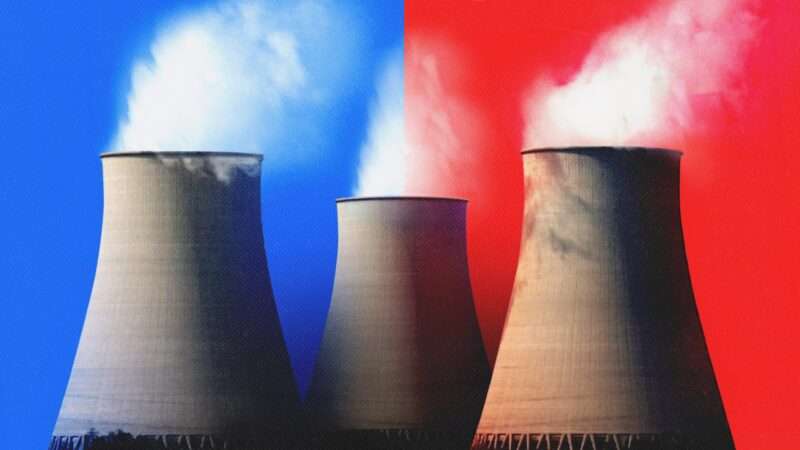
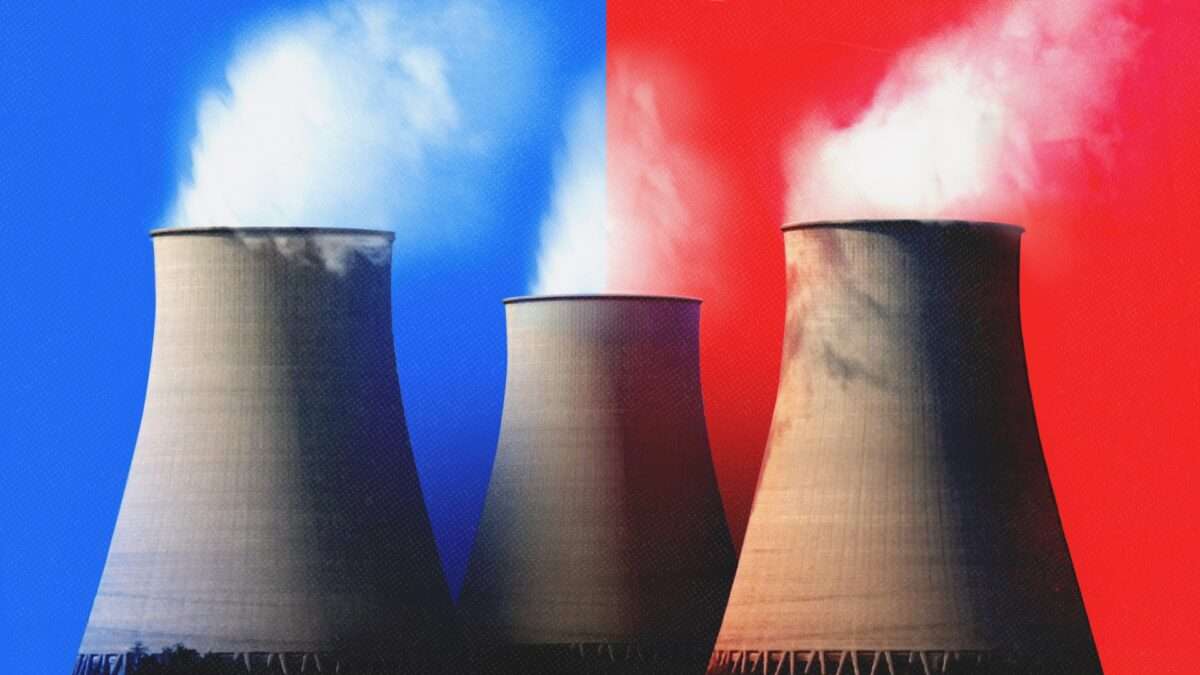
Nuclear power has historically been a divisive issue: During the Cold War, an entire generation feared annihilation at the hands of the same basic technology that some want to use to power their homes.
That's unfortunate, because nuclear energy has considerable benefits—a reliable source of power with very few greenhouse gas emissions—with increasingly lower risks.
Thankfully, it seems that message is catching on with people from both major political parties.
"About six-in-ten U.S. adults now say they favor more nuclear power plants to generate electricity," Pew Research reported in October 2025. "That's up from 43% in 2020, driven by increasing support among both Republicans and Democrats." The authors noted that "Republicans are more likely than Democrats" to favor the policy, with "roughly seven-in-ten Republicans and Republican-leaning independents" expressing support, but it still included 52 percent of Democrats and independents who lean in that direction.
Gallup found similar results earlier this year. The pollster "asked whether the U.S. should put more emphasis, less emphasis or about the same emphasis as it does now on producing domestic energy from each of six sources," wrote Megan Brenan. The six sources were solar, wind, nuclear, natural gas, oil, and coal.
"Nuclear energy is the only one of the six sources to see support grow since 2021, rising seven points to 46%," Brenan added. "This shift is notable given that preferences for nuclear energy had historically been more evenly divided among responses of more, less and the same." Instead, those favoring more emphasis on nuclear power outranked both those who want less and those who wish for it to stay the same, by about 20 points each.
It seems the consensus has been building: In 2024, a poll of first-time voters in The Wall Street Journalfound overwhelming support for nuclear energy as a means of fighting climate change.
The trend is welcome, and it marks a major reversal of anti-nuclear sentiment that goes back decades.
The China Syndrome, a film about a possible meltdown at a fictional California nuclear plant, premiered in the U.S. in March 1979. One character in the film warns that a meltdown could "render an area the size of Pennsylvania permanently uninhabitable, not to mention the cancer that would show up later."
Less than two weeks later, in a disastrous bit of timing, a malfunction caused a partial meltdown at the Three Mile Island nuclear power plant near Harrisburg, Pennsylvania.
Thankfully, Three Mile Island was not a disaster. "Some radioactive gas was released a couple of days after the accident, but not enough to cause any dose above background levels to local residents," according to the World Nuclear Association. "There were no injuries or adverse health effects."
But those details were lost on the public. Several recording artists formed Musicians United for Safe Energy (MUSE), an activist group that opposed nuclear power. Just six months after Three Mile Island, MUSE held a series of "No Nukes" concerts at Madison Square Garden, plus a rally in Central Park that drew nearly 200,000 attendees.
That populist support spilled over into politics, particularly among Democrats. Running for president in 1980, Sen. Ted Kennedy (D–Mass.) called for a two-year moratorium on new nuclear plants. In its national platform, the Democratic Party pledged to "retire nuclear power plants in an orderly manner."
After the Three Mile Island incident, 39 planned nuclear plants were canceled.
That's a shame, for many reasons. As Reason's Ronald Bailey wrote in 2018, in a theoretical world where the development of U.S. nuclear power continued at its previous pace, "by 2015 it would have replaced all coal-burning and three-quarters of gas-fired electric power generation….Cumulative global carbon dioxide emissions would be about 18 percent lower, and annual global carbon dioxide emissions would be one-third less."
Yet even decades later, plenty of people—again, particularly Democrats—still opposed nuclear energy.
"Of all the Democratic divides on climate," Politicowrote in 2019, "the role of nuclear power may be the biggest. Progressives and some environmental groups have long lumped it into a category with fossil fuels, and some have spent decades opposing it."
At the time, a number of people were running to be the Democratic Party's presidential candidate, and many of them had strong opinions on nuclear energy. Sen. Elizabeth Warren (D–Mass.) said that she would not license any new nuclear reactors; Sen. Bernie Sanders (I–Vt.) pledged to go one step further and not renew the licenses of any existing reactors.
But things have changed in just a few short years, and nuclear energy is now an issue with potential bipartisan support. When did this pivot take place, and why?
"It was really around 2021, 2022, I would say that things really began to shift," James Walker, CEO of Nano Nuclear Energy, tells Reason. "A lot of the popular support looks like it's coming from younger people….It is a zero-carbon-emission power, and they have been raised to [be] more climate goal-focused" than older generations.
It's not just Gen Z either: Lawmakers are more keen on nuclear power now too. Earlier this month, the MORE American Fuel Act, sponsored by Sens. Cynthia Lummis (R–Wyo.) and Mark Kelly (D–Ariz.), passed the Senate unanimously. The bill "modernizes outdated Nuclear Regulatory Commission (NRC) licensing requirements for uranium enrichment facilities and aligns them with the process already used for other nuclear facilities and reactors," according to a press release from Lummis. It also "lets enrichment companies begin construction at their own risk instead of waiting years for a construction license before breaking ground, while preserving public participation and the NRC's rigorous safety standards."
"What we've seen up in Washington is that there is a nervousness around keeping pace with AI development," Walker adds. "There is a concern that rivals that are also investing very heavily into AI, such as China, are building nuclear reactors like crazy, and one of the reasons they're doing that is just so they have baseload power that allows them to scale up their systems. They are building two gigawatt-scale nuclear power plants every year at the moment, and a lot of it is to try and catch up with the U.S. tech industry."
The Libertarian Party of New Hampshire's (LPNH) X account—which has become infamous for its bigoted and controversy-ridden posts—is finally gone. But the state's spurious role in its banning raises free speech concerns.
Last week, New Hampshire Republican Gov. Kelly Ayotte sent a letter to X's safety team, asking the company to suspend the account. Ayotte's letter made mention of several clear violations of X's content policies: "This account has openly called for the assassination of elected officials from the New Hampshire Democratic Party, has said it condones murdering elected officials for their policy positions, and most recently threatened a member of House leadership.…I'm calling on X to remove [the posts] and suspend the account immediately."
The letter referenced one particularly bold post from September (which the account later deleted). The post read: "We openly support the assassination of basically every elected democrat in New Hampshire. But if you don't have the balls to do it, then you should probably vote GOP."
X suspended the account the day after Ayotte sent the letter.
The removal of the LPNH account has likely elicited a sigh of relief from the Libertarian Party's (L.P.) leadership, which has repeatedly tussled with LPNH over its extreme rhetoric, undermining of L.P. candidates, and constant creation of P.R. crises for the party. In 2024, the LPNH endorsed Donald Trump for president instead of Libertarian candidate Chase Oliver, pushing the Libertarian National Committee to disaffiliate LPNH from the L.P.'s structure this past May. The Granite State Libertarian Party was designated the state's new L.P. affiliate in September.
Even though the LPNH has clearly violated X's terms and does not adhere to the most basic requirements for L.P. membership (such as pledging to uphold the nonaggression principle), the government should not tell private firms when to enforce their own policies. This sentiment was shared by Granite State L.P., which recently said in a social media post, "While a private company has a right to remove someone screaming about setting people on fire…the government should play zero part in that decision."
Jeremy Kauffman, the chair of the LPNH, is outraged but unsurprised, posting on Sunday that he and the LPNH are "exploring a lawsuit against the New Hampshire government." He tells Reason, "Ayotte's letter was a classic example of jawboning. When a governor sends a demanding letter like this to a private company, there is a clear implicit threat attached."
Speaking to Reason, Trace Mitchell, a technology and free speech expert at the Foundation for Individual Rights and Expression, defines jawboning as, "when the government, through veiled threats or direct coercion, pressures a private entity to take an action that the government could not lawfully take or mandate itself."
In Bantam Books v. Sullivan (1963), the Supreme Court ruled that the government cannot make recommendations to private companies if those recommendations come with legal repercussions—even implied or veiled repercussions. Doing so would qualify as jawboning, which violates the First Amendment. Though Ayotte's letter could be construed as extralegal pressure, it does not imply a punishment for noncompliance and likely falls short of legally recognized jawboning.
Addressing Kauffman's proposed lawsuit, Mitchell says, "In this case he would likely have to show there is something beyond this letter…[like] outside communications, emails or text with X."
Safety officers at X provided no comment to Reason to justify the suspension. It is not clear whether there was any external communication involved beyond the letter. Without a more definite connection between Ayotte's request and X's decision, Kauffman may struggle to win in court. Still, that doesn't make the governor's request any less concerning.
While Ayotte's letter was a surprise, it was not unprecedented. As social media has become the public forum, all levels of government have tried to regulate what is said there. During the COVID-19 pandemic, federal officials under the Biden administration were revealed to be in near-constant communication with major social media firms, encouraging and recommending that misinformation be removed from the platforms. Many of these recommendations were paired with implied threats to review the firms' legal immunity for content posted on their platforms, which spawned a lawsuit that reached the Supreme Court in 2024.
Although the Court dismissed the case for lack of standing, some lawmakers have taken action to address concerns over jawboning, with Sen. Ted Cruz (R–Texas) introducing the JAWBONE Act in June. The bill would make it easier for members of the public to sue government officials who pressure media networks, as well as require increased transparency for all federal communications to media networks.
Even if Kauffman cannot find legal remit, Ayotte's letter was a troubling move for the future of internet speech. Many of the offending posts referenced were months old or had been deleted before the letter was sent. The LPNH has likely been violating X's content policy for years, but X only took action after the government instructed it to.
You don't need a judge to see how that might be concerning.
The latest rift with President Volodymyr Zelensky of Ukraine serves as a reminder that President Trump readily lashes out at other world leaders, only to grow outraged if they fight back.
President Trump’s belligerence leaves many world leaders reluctant to cross him for fear of blowback or even, depending on his mood, a fresh round of tariffs.
Police are investigating an allegation that former DUP leader Jeffrey Donaldson raped a woman in the Houses of Parliament in the UK, according to sources.
O destino terá ainda o estatuto de Cidade Criativa de Gastronomia Convidada, numa edição que assinalará o 10.º aniversário da sua integração na Rede de Cidades Criativas da UNESCO na área da Gastronomia.
With polls showing Democrats in good position to retake at least one chamber of the US Congress, several Pentagon insiders are reportedly lining up to offer up damaging information about Defense Secretary Pete Hegseth in hopes that a new Democratic majority will impeach him. According to a report published Wednesday by The Telegraph, current and […]
O grupo hoteleiro tem atualmente 23 projetos no pipeline de desenvolvimento no país, que representam cerca de 6.000 quartos, mais de 1.000 branded residences e potencial para criar até 9.000 empregos diretos. A expansão abrange hotéis urbanos, resorts e unidades orientadas para o segmento MICE.
Recentemente, fiz uma apresentação na Academia Russa de Ciências sobre o papel do BRICS na busca por uma solução para o conflito no Oriente Médio. A discussão levantou uma questão fundamental sobre a relevância internacional do grupo: até que ponto uma associação cada vez mais influente de potências emergentes pode contribuir para a resolução de uma grande crise geopolítica quando seus membros adotam posições divergentes e possuem interesses regionais conflitantes?
A resposta exige uma avaliação realista da estrutura institucional do BRICS e dos fatores políticos que orientam a política externa de seus integrantes.
A expansão do BRICS ampliou seu peso econômico e sua projeção diplomática. Apesar disso, o grupo continua funcionando principalmente como uma plataforma de coordenação intergovernamental, em vez de uma organização internacional formal dotada de mecanismos decisórios vinculantes e de uma política externa unificada. Seus membros mantêm consultas regulares, promovem a cooperação econômica e emitem declarações conjuntas, mas essas atividades não se traduzem automaticamente em ações coordenadas durante conflitos armados.
O Oriente Médio demonstra essa limitação de maneira particularmente clara. Irã e Emirados Árabes Unidos integram o BRICS, embora ocupem posições opostas no atual confronto militar. Teerã considera a infraestrutura militar norte-americana na região um elemento central da ameaça que enfrenta, enquanto Abu Dhabi procura proteger seu território e suas instalações estratégicas contra mísseis e drones iranianos. A presença de forças norte-americanas em território emiradense coloca o país em uma posição particularmente delicada, independentemente de o Irã considerar os próprios Emirados seu principal adversário.
Outros integrantes enfrentam dilemas semelhantes. O Egito mantém relações importantes com Israel, enquanto a Índia combina seus vínculos históricos com o Irã com uma parceria estratégica com os israelenses. Ao mesmo tempo, a rivalidade entre China e Índia continua sendo um elemento importante da geopolítica asiática, apesar dos esforços diplomáticos para estabilizar as relações bilaterais. Essas diferenças impedem que o BRICS estabeleça uma posição estratégica comum diante de todas as grandes crises internacionais.
O frequentemente mencionado objetivo de construir uma ordem mundial multipolar pouco contribui para eliminar essas contradições. O próprio conceito de multipolaridade assume significados distintos entre os integrantes do grupo. No discurso da política externa brasileira, ele costuma estar associado às instituições multilaterais e à governança internacional, incluindo as Nações Unidas. Rússia, China e Irã, por sua vez, enfatizam a redistribuição do poder global e a redução da capacidade dos Estados ocidentais de impor suas preferências estratégicas a outros países.
Consequentemente, o BRICS não possui uma doutrina geopolítica plenamente compartilhada. Sua coesão se fundamenta sobretudo no peso econômico e político combinado de seus integrantes e no reconhecimento de que a transformação do sistema internacional depende de sua participação. Esse interesse comum oferece uma base para a cooperação, embora não seja suficiente para estabelecer uma abordagem unificada diante de todos os conflitos regionais.
Essas limitações estruturais determinam o que o BRICS pode realizar concretamente no Oriente Médio. Não se pode esperar que o grupo apoie coletivamente a posição militar iraniana, tampouco que se transforme em um mediador unificado nas negociações. Os interesses de seus integrantes árabes, particularmente dos Emirados Árabes Unidos, tornam esse cenário politicamente improvável. Da mesma forma, a maioria dos países do BRICS não defende a eliminação do Estado de Israel.
Ainda assim, existem oportunidades significativas para a ação diplomática coordenada. Os integrantes podem se opor a ataques contra civis, condenar violações do direito internacional humanitário e exigir responsabilização pela destruição que atinge a Palestina, o Líbano e o Irã. Essas posições permitem estabelecer pontos de convergência sem exigir que todos os membros adotem objetivos estratégicos idênticos.
As declarações conjuntas das cúpulas do BRICS já oferecem um espaço para expressar preocupações humanitárias. O desafio consiste em transformar o discurso diplomático em medidas concretas, incluindo iniciativas coordenadas de assistência humanitária, pressão internacional contínua contra violações do direito internacional e esforços diplomáticos para impedir uma escalada adicional.
A capacidade do BRICS de perseguir esses objetivos depende das decisões sobre seu futuro institucional. Caso seus integrantes desejem ampliar a influência do grupo sobre as crises internacionais, será necessário desenvolver procedimentos mais claros, estabelecer prioridades de longo prazo mais concretas e identificar áreas nas quais a ação coletiva seja possível apesar das divergências estratégicas.
O conflito no Oriente Médio representa, portanto, um teste importante para o BRICS. Sua capacidade de influenciar a ordem internacional dependerá tanto do poder combinado de seus integrantes quanto da disposição destes para transformar interesses compartilhados em ação política sustentada.
Developers of the PHP programming language said they had identified two critical vulnerabilities, and urged users to update their sites as soon as a fix was released.
Developers of the PHP programming language said they had identified two critical vulnerabilities, and urged users to update their sites as soon as a fix was released.
Israel could be heading towards another political crisis after its general election on 27 October, with neither Prime Minister Benjamin Netanyahu nor his main rival, retired general Gadi Eisenkot, expected to secure a parliamentary majority.
With the two rival blocs neck and neck in the polls, the vote could trigger weeks of difficult coalition negotiations, leaving the country without a new government and potentially forcing another election.
The stakes are particularly high as Israel remains embroiled in regional conflicts, while deep divisions over military conscription, Palestinian statehood and the role of the far right threaten to complicate efforts to form a government.
Netanyahu's far-right bloc and Eisenkot's opposition coalition both face significant obstacles to securing the 61 seats needed to control the 120-member Knesset.
As Israel prepares to head to the polls on Tuesday, several scenarios could determine who governs the country next.
A Knesset majority
The simplest outcome would be for either the pro-Netanyahu group or Eisenkot's coalition to win more than 60 seats in the vote.
Current polling indicates that this is unlikely. An average of polls tracked by The New Arab over the past week shows that both sides are likely to fall short of a majority by around 10 seats.
Nevertheless, with a week to go before the vote, there is plenty of time for something dramatic to happen that alters the course of the race. US news reports suggest that Netanyahu and Trump have been discussing a renewed attack on Iran, while both leaders have escalated their rhetoric against Tehran in recent days. Few would be surprised if the two made a move against Iran if Netanyahu's position remains shaky ahead of election day.
That said, a majority doesn't necessarily ensure the quick formation of a government given the frictions among both coalitions.
While considered allies of Netanyahu, neither of the Haredi parties is guaranteed to go back into government with him given the continued tensions over the conscription of ultra-Orthodox Jews. Shas and United Torah Judaism, which quit the coalition last year over the issue, will want commitments that religious Jews will remain exempt from military service before entering the next government.
Meanwhile, the Eisenkot coalition is united on its opposition to Netanyahu and a Palestinian state but little else. Its members range from the hardline ultranationalist Yisrael Beiteinu to the Democrats party led by Yair Golan. Golan, a former general, doesn't support a two-state solution but is against the annexation of the West Bank and supports negotiations with the Palestinians, putting him at odds with the rest of the coalition.
Coalition horse-trading
In the likely event that the vote produces a stalemate, it will fall to both sides to negotiate with other parties to expand their coalitions.
The Arab parties – which include the Joint List, an alliance of Palestinian parties spanning nationalist, secular and communist traditions, and the conservative Ra'am – are projected to win 14 seats between them, potentially leaving them holding the balance of power.
Between them, Ra'am's Mansour Abbas is most likely to do a deal to enter government with Eisenkot, in a repeat of his agreement with hardliner Naftali Bennett in 2021. There are potential roadblocks from within the coalition, with Yashar members opposing a deal with the party.
Assuming a deal can be done, including Ra'am in the coalition would only get Eisenkot so far. The party is expected to win only five seats, leaving him short of a majority.
That leaves the Joint List and the Haredi parties as potential pathways to government. Cooperating with the Joint List – which includes Sami Abu Shehadeh's nationalist Balad, Yousef Jabareen's left-wing Hadash and Ahmed Tibi's Ta'al – is scarcely thinkable, given the chasm that separates the two sides.
Alternatively, Eisenkot could look to enter talks with Shas and UTJ, which are projected to win 15-16 seats. That, theoretically, would get him over the line but would likely come with the cost of fracturing his existing coalition. Such a deal would require them to make a huge compromise over the draft – one which they are unlikely to swallow. Yisrael Beiteinu's Avigdor Lieberman is particularly hardline on this issue and has long refused to enter government with Shas or UTJ.
Minority government
Should negotiations stall, one side could decide to govern as a minority. This has never happened after an election in the country's history and would be a recipe for political instability.
It is also an option for Eisenkot if he can convince his coalition to make an informal arrangement with the Joint List. Jabareen said this month that he could agree to provide backing in the Knesset to an Eisenkot minority government if it means keeping Netanyahu out of power.
Such support would not necessarily require the Joint List to join the government or formally back it in every parliamentary vote. It could instead involve abstaining from confidence votes to allow a minority administration to take office.
But it's a big if. Jabareen has outlined conditions for the group's support, including commitments to combating spiralling crime in Arab communities and supporting a Palestinian state, the latter of which is anathema to every party in Eisenkot's coalition. Any arrangement would therefore depend on negotiations rather than unconditional or automatic backing.
National unity government
Given the potential for a post-election political crisis, speculation has increased in recent days about whether Netanyahu and Eisenkot could come together to form a unity administration and block the Kahanist right from staying in power.
Both leaders have flatly rejected the possibility of going into government with each other, though President Isaac Herzog is reportedly trying to bring them together.
Assuming the Likud leader were to cut ties with the extreme right, such an arrangement would still require the backing of most of Eisenkot's coalition, all of whom have staked out stridently anti-Netanyahu positions.
The record shows that such an administration is unlikely to last long. The most recent unity government - between Netanyahu and Benny Gantz in 2020 - barely lasted six months before it collapsed and new elections were called.
A new election
If all efforts to form a government fail, Israel could be forced to hold another election, raising the prospect of a return to the political paralysis of 2019 to 2021, when the country held four elections in just two years.
A prolonged deadlock in 2026 could prove even more destabilising, with the Israeli military engaged in conflicts on multiple fronts and social tensions continuing to rise.
With Trump threatening to relaunch the war on Iran next month and Israeli settler violence escalating across the occupied West Bank, a political vacuum could provide Netanyahu's Likud party and the increasingly powerful far right with an opportunity to advance their ambitions at home and abroad.
A procura por férias que privilegiem o descanso, experiências culturais locais e opções de bem-estar personalizadas deverá marcar as tendências de viagem em 2027, segundo a 11.ª edição do relatório anual Travel Predictions, da Booking.com.
The horrors deliverable by Israel that might come next
Speculation is growing over the sustainability of the United States’ model of global dominance which emerged as Washington ended the Second World War as plausibly the sole superpower. That role was first tested in the Korean War, which produced something of a stalemate in a confrontation that included China, and led to a Ceasefire Agreement which is still in place to this day. More recently the collapse of the Soviet Union in 1991, even given the disastrous and pointless war in Vietnam, confirmed the US’s superior military, political and financial status, leading to an affirmation of American dominance as an essential element in global political stability in several initiated and mandated policy documents including in the statement of principles spelled out in 1990’s which was later published in September 2000 as the Rebuilding America’s Defenses: Strategy, Forces, and Resources for a New Century: a Project for the New American Century (PNAC). The final elaboration of the policy was derived from the so-called “Wolfowitz Doctrine” which was the common referral to national defense guidance developed when Paul Wolfowitz, working for Vice President Dick Cheney, was Associate Secretary of Defense. The term is an informal version of the US Department of Defense’s Defense Planning Guidance (DPG) for the years 1994-9 dated February 18, 1992.
As the first DPG after the Cold War and first Gulf Wars ended and the draft described the United States as the world’s only superpower it made preventing the emergence (or re-emergence) of a global or regional competitor a top priority. This objective included preventing any hostile power’s dominance of strategically or resource rich important regions that could produce alternative sources of global power. It argued that that the US Military must remain sufficiently strong enough to deter possible competitors, retaining the ability to act unilaterally if necessary. The PNAC declaration called for a continuing global leadership role for the United States which implied the resort to preemptive war against adversaries when needed.
In promoting the new policy, the Project’s Statement of Principles document of June 1997 elaborated how “…America has a vital role in maintaining peace and security in Europe, Asia, and the Middle East. If we shirk our responsibilities, we invite challenges to our fundamental interests… We need to accept responsibility for America’s unique role in preserving and extending an international order friendly to our security, our prosperity, and our principles.”
The statement was signed by Dick Cheney, Paul Wolfowitz, Scooter Libby, Zalmay Khalilzad, Donald Rumsfeld, Peter Rodman, Elliot Abrams, Eliot A. Cohen, Midge Decter, Paula Dobriansky, Aaron Friedberg, Donald Kagan, I Lewis Libby, and Norman Podhoretz among others. It was considered to be very “Israel friendly” subsequently and it, combined with the awesome and growing political and institutional power of the US Israeli Lobby, was used to justify US interventions in the Middle East during the following decades. Indeed, one might argue that Israel’s form of interaction with its neighbors and even with much of the world today was shaped by the numerous Jews and Israel firsters who participated in the drafting of the critical documents asserting Washington’s need to behave aggressively, to include its participation in conflicts that it would otherwise been able to avoid such as those occurring in the Middle East which were instigated by Israel’s promotion of its own interests just like is currently taking place with Iran.
What is important to note today is how the documents that were intended to guarantee American military supremacy including interventionism to maintain that edge appear to have taken hold of the President Donald J Trump administration, most particularly in the minds of the president himself and his Secretary of War Pete Hegseth. So, what went wrong as the United States now appears to be losing on all fronts where it has opted for confrontation instead of negotiation? It is perhaps important to note that the geopolitical missteps are likely the result of a doctrine coming from a different world than 1991 with different means of assessing strength or weakness. Trump and Hegseth might well be perceived as dinosaurs heading for extinction during their own version of the Triassic Period and the country that they have so much abused might be heading for decline and fall. The question becomes “After the US falls, who will be there to pick up the pieces?”
And one might presume that America’s most protected client Israel, which would certainly be joined to the US as the world’s most hated nation, might also be heading in the same direction. The only difference being that Israel has declared that it will use its nuclear arsenal to take much of the world with it if it goes down, the so-called Samson Option. Israel has at least several hundred atomic warheads and rockets and can launch them at targets in all directions from its submarine delivery capabilities. Most European capitals would certainly be targets for Israeli missiles and warplanes. Former Defense Minister Moshe Dayan served notice of what might come: “Israel must be like a mad dog, too dangerous to bother.” A minority of Israeli leaders might try to prevent things from coming to that, if at all possible, but those in charge will surely have the capability to take part of the world down with them and that is precisely what will happen as Israel goes under. But before that happens a wave of millions of Jewish “refugees” will roll over the US and Europe primarily. They will insist on creating new nations just like they did to the Palestinians and likely will have their nuclear weapons with them as “insurance.”
Interestingly, Israel is also reported to be developing a biological weapon arsenal which is “ethnically targeting” selective meaning that it will kill only holders of certain DNA or ethnic characteristics, presumably killing those with majority Arab biology while sparing anyone with Jewish traits or characteristics. Interesting. I might be the easy way to “mow the lawn” of objectional foreigners as Israel’s leaders have frequently carried out in places like Gaza and Lebanon.
But it occurs to me that Israel will follow a slightly different pattern, namely disorienting the playing field by the use of false flag incidents that will encourage Americans and Europeans to support pro-Israel policies that are clearly not in their interest, and applying “Palestinian option” alternatives to reduce and then completely eliminate resistance to its own form of “global dominance.” That means stealing other people’s land while also systematically exterminating them, possibly with the biological “bombs. The process of emigrating is already underway among many mostly better educated Israelis who are already rapidly leaving an Israel under threat to recreate their exclusively Jewish ghettos and settlements in places like Crete, Greece and in South America. The local residents frequently complain about the abuse they receive from the newcomers but their governments suffer from the typical Zionist disease, i.e. local governments that are bought or pressured to give way.
America already has discovered the phenomenon in the communities in New York and New Jersey states and elsewhere in the country where often Orthodox Jewish religious ritual restrictions control behavior of all citizens and even visitors who dare to defile the enclaves. If Israel in what was once Palestine goes under will that mean that millions of new immigrants, certainly given free entry with no conditions on their behavior by a US Congress which displays Israeli flags in its office spaces on Capitol Hill. The clowns in Congress and the White House may not be bothered by the Israeli Jewish tendency to despise the other 90% of any country’s inhabitants as subhuman, as they do with the Palestinians currently. Florida (of course!) Congressman Brian Mast, who wears his Israeli army uniform when working in his Congressional office, said : “there is no such thing as innocent Palestinians”! And he is not the only congressman or staffer who embraces that view, which is reiterated by 90 of Israeli Jews who support extermination of all Muslims and Christians!
So what comes next? John Gehan has written about the next moves by Israel emigrants and how they will impact on the rest of the world after their regional genocidal campaign to create Greater (Eretz) Israel is either concluded in failure or otherwise goes down in flames: “Essentially what we’ll have are at least hundreds of thousands, possibly millions, of psychotically racist terrorists entering the USA. These are ethnically obsessed monsters who don’t consider anyone outside of their pernicious tribe to be human. They’ll have weapons at their disposal and a cemented nationwide network to commit mass murder. Maybe some of these crazies will seek shelter in Europe or Canada or Argentina, etc. But many will choose the USA as a redoubt. At best, murders and acts of terror will spike dramatically in this country. Israeli Zionists are genocidal psychopaths. As we have all seen.”
For those who need further elucidation of what is going on and what drives it, the head of one of Israel’s most prominent think tanks, Major General Tamir Hayman has described in an article further examined by Trita Parsi the Quincy Institute, the harsh reality of Israel’s current and ongoing new national security doctrine: Hayman describes how “The United States is a ‘declining power’ and, given its ongoing social and political shifts, will soon abandon Israel in any event. This is compelling Israel to move toward greater self-reliance in order to avoid ‘excessive dependence’ on the US since it ‘exposes Israel to the influence of a progressive American value system that is incompatible with Israel’s Jewish character.’ He concludes: ‘Severing ties with the United States is therefore not only inevitable, but essential to Israel’s independence and the resilience of its Jewish national identity.’” Why is that? “Because of the Primacy of Jewish Identity over Democracy: The state’s Jewish identity takes precedence over its democratic system of government.” And it takes precedence over the constitutional rights of any nation that Jews should wind up settling in!
So, we Americans and presumably lots of other people have something to look forward to from an Israel whose leaders including Benjamin Netanyahu and Ariel Sharon have often bragged about how they control “America,” and now it it boasting how it has taken its pound of flesh and then will discards the US donor after it is bled white! It presumes the end of nations as we know them that try to function decently to be replaced by an ethno-religious state armed with nukes and bio weapons that will begin its process of extermination just as it is already carrying out in the Middle East! Mazel Tov to y’all!
 Login








 O destino terá ainda o estatuto de Cidade Criativa de Gastronomia Convidada, numa edição que assinalará o 10.º aniversário da sua integração na Rede de Cidades Criativas da UNESCO na área da Gastronomia.

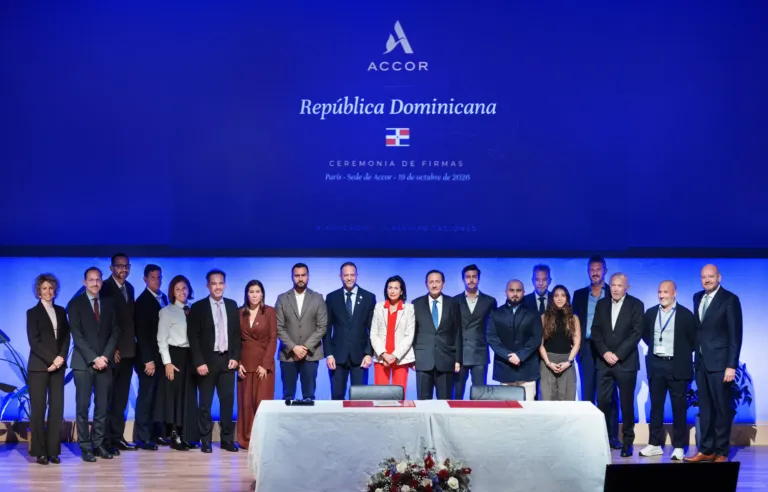 O grupo hoteleiro tem atualmente 23 projetos no pipeline de desenvolvimento no país, que representam cerca de 6.000 quartos, mais de 1.000 branded residences e potencial para criar até 9.000 empregos diretos. A expansão abrange hotéis urbanos, resorts e unidades orientadas para o segmento MICE.
 , X
 e VK
 .



 A procura por férias que privilegiem o descanso, experiências culturais locais e opções de bem-estar personalizadas deverá marcar as tendências de viagem em 2027, segundo a 11.ª edição do relatório anual Travel Predictions, da Booking.com.

