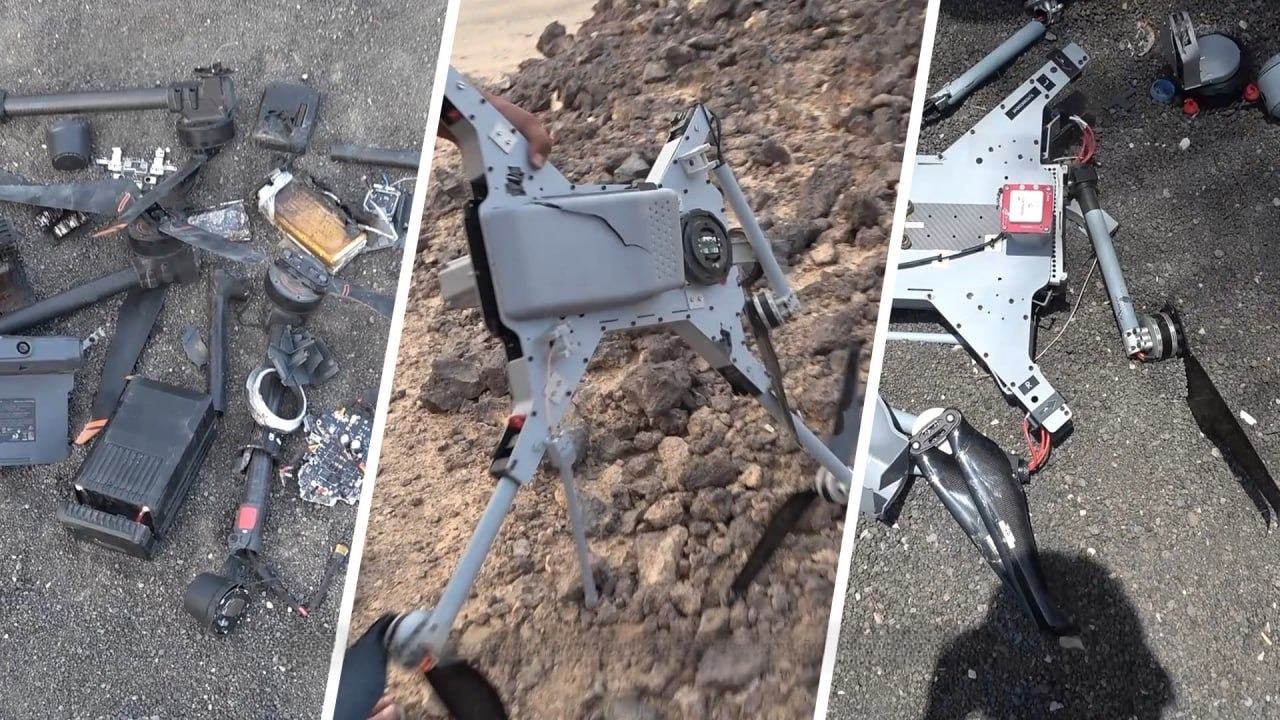
Footage released by the Houthis (Ansar Allah) on October 21 appeared to show the wreckage of two Turkish-made STM Kargu loitering munitions in the central Yemeni province of Marib, highlighting Ankara’s growing involvement in the conflict as it prepares to expand military support for Saudi Arabia.
The footage, released by Houthi military media, showed what the movement described as attacks on concentrations of Saudi-aligned forces and the destruction of several military vehicles east of Ragwan district.
The wreckage of two Kargu loitering munitions which were shot down by Houthi fighters during the fighting is seen in the footage.
The Kargu is a compact, electrically powered multirotor loitering munition developed by Turkish defense company STM. The drone has an operational range of approximately 10 kilometers and can remain airborne for less than 30 minutes, according to the manufacturer. Its takeoff weight, including its payload, is about 7.7 kilograms.
Equipped with electro-optical and infrared cameras, the loitering munition can operate during the day and at night. It can carry anti-personnel or armor-piercing warheads and is designed to identify and engage stationary or moving targets autonomously.
The appearance of the Turkish-made loitering munition in Marib comes amid mounting evidence of Ankara’s expanding military support for Riyadh.
Earlier this month, Reuters reported, citing a United States official, that Turkey’s assistance to Saudi Arabia included air defense support, drone operators, logistical assistance, and intelligence and surveillance capabilities.
Turkey has maintained that its support is defensive, but its potential military role is moving closer to formal military deployment.
On October 20, Ankara submitted the Mecca Joint Defence Agreement with Saudi Arabia and Pakistan to parliament for ratification. The agreement, signed in August, treats an armed attack on one member as an attack on all three.
A ruling Justice and Development Party lawmaker told Reuters the next day that Turkey would submit a separate mandate authorizing the deployment of military personnel to Saudi Arabia once parliament approves the agreement. The initial deployment would focus on technical personnel and specialists supporting air defense, electronic warfare and other defensive capabilities, the lawmaker said.
Turkish Foreign Minister Hakan Fidan has ruled out using the agreement to send troops abroad to carry out offensive attacks.
The Kargu wreckage does not establish whether Turkish personnel operated the loitering munitions, or whether the systems were supplied to Saudi forces or their Yemeni allies. But their reported presence on the battlefield points to a deepening Turkish involvement.
As Turkey expands its military support, it risks becoming increasingly integrated into Saudi military operations against the Houthis. Even if Turkish troops remain stationed in Saudi Arabia and Ankara continues to describe its mission as defensive, the support could facilitate operations inside Yemen.
As the conflict escalates, the distinction between protecting Saudi territory and becoming an active participant in the Yemen war could become increasingly difficult to maintain.
Russian diesel shipments are returning to Türkiye and Brazil after Moscow lifted its export ban and the US temporarily suspended sanctions on Russian fuel supplies, Reuters reported on 20 October, citing shipping data from Kpler and LSEG.
The resumption of exports gives Russia another source of revenue to support its war against Ukraine, allowing Moscow to profit from fuel sales despite the domestic shortages that prompted its export ban. The US sanctions relief is helping Russia restore access to international buyers while its full-scale invasion continues.
According to Reuters, at least two tankers carrying Russian diesel have departed the Baltic port of Primorsk for Türkiye and Brazil in recent days. Each vessel is carrying around 300,000 barrels, according to Kpler data cited by Reuters. Morocco has also resumed importing Russian diesel since the export ban was lifted.
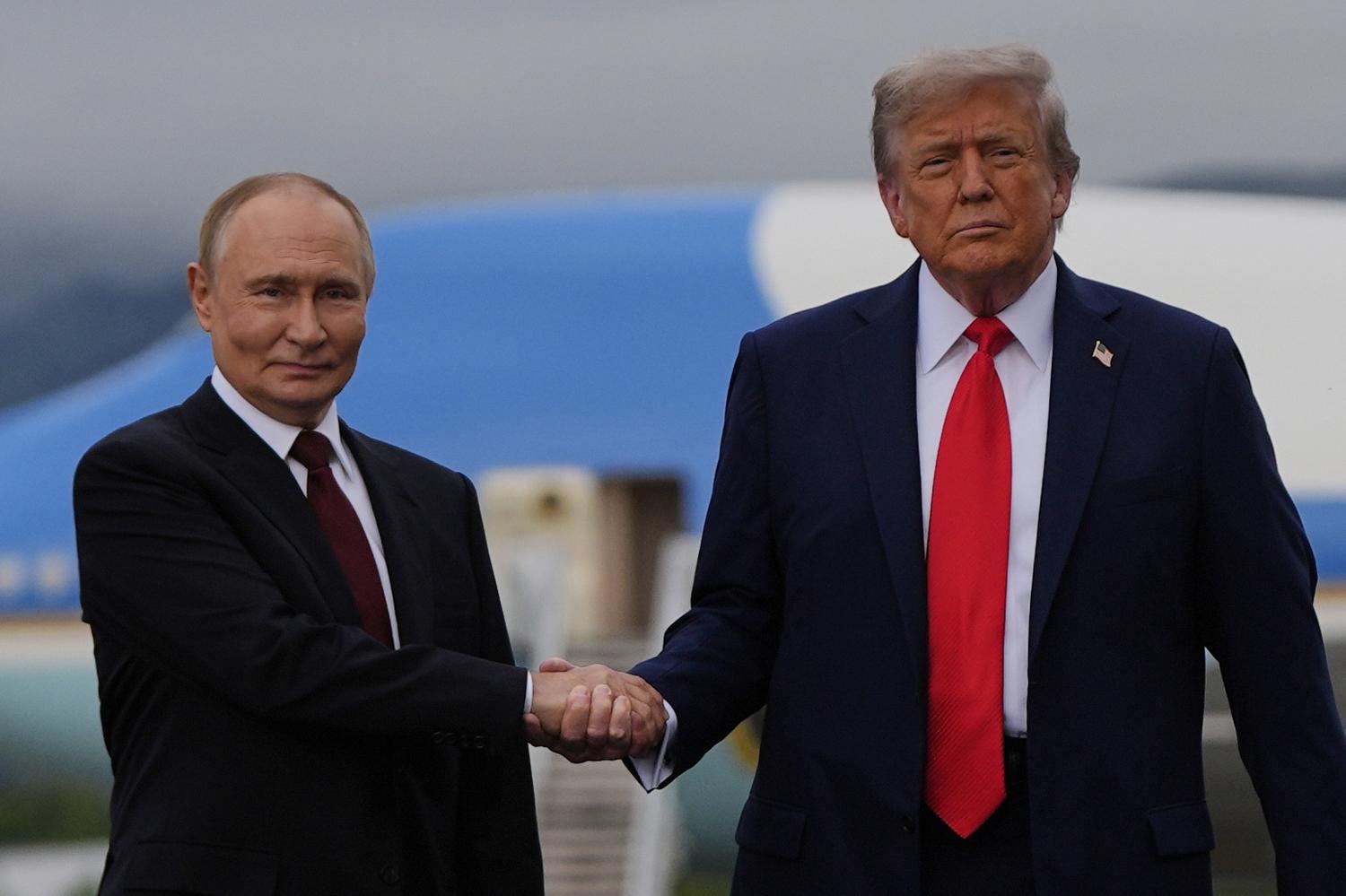
Russia ended its self-imposed diesel export ban on 9 October after reaching a deal with US President Donald Trump to resume fuel supplies to global markets. Moscow had introduced the ban to address domestic shortages triggered by Ukrainian drone attacks on Russian oil refineries.
Those supply problems have not been resolved, but the US temporarily lifted sanctions on Russian fuel supplies as part of the deal, allowing Moscow to prioritize export opportunities despite domestic shortages. EU and UK embargoes on Russian fuel imports remain in force.
Russian diesel exports remain below last year's levels
Russian diesel exports averaged around 345,000 barrels per day in 2026 so far, down 41% from the previous year, according to shipping data cited by Reuters. Exports had already fallen during the summer before Moscow imposed its ban.
Türkiye accounted for around 34% of Russian diesel loadings this year, followed by Brazil at 24% and Morocco at 10%, Kpler data showed.
Trump said Russia would initially export 300,000 metric tons of diesel, followed by 500,000 tons in November and 1 million tons afterward. Russian Deputy Prime Minister Alexander Novak said Moscow could raise exports to as much as 3.5 million metric tons per month by the end of the year.
US seeks to ease diesel prices
The deal comes as Trump seeks to present a picture of bringing down diesel prices ahead of the US midterm elections on 3 November. Fuel prices have risen amid disruptions to global energy supplies caused by Trump's war with Iran, which has shaken oil markets and raised concerns about supply routes.
Trump has blamed Ukraine's attacks on Russian oil infrastructure for driving up energy prices, despite the broader market disruption caused by his war with Iran. The Russian diesel deal offers a way to increase global fuel supplies, but also allows Moscow to earn revenue from exports while its war against Ukraine continues.
However, the volumes from Russia initially outlined by Trump would cover only a small share of the global supply shortfall.
Explore further
Trump says Russia agreed to supply millions of tons of diesel to US and global markets as he blames Ukraine for fuel price hikes driven by Iran war
 Login