❌

Reading view

Hegseth bars US forces from using undisclosed information to bet on Polymarket, Kalshi

Defense Secretary Pete Hegseth barred all Pentagon staff from using undisclosed information to place wagers on forthcoming U.S. military action using betting platforms and prediction markets like Kalshi and Polymarket.  “Make no mistake why this matters. Our enemies watch movements in these markets,” Hegseth said in a memo, first obtained by CBS News. “When an American…

  •  

Hegseth’s team broke WWII-era globe from Eisenhower’s office

Defense Secretary Pete Hegseth’s team dropped and damaged a historic World War II-era globe previously used by Gen. Dwight D. Eisenhower, a source familiar with the incident told The Hill on Thursday. While moving the artifact to the secretary’s office, Hegseth’s staff lost control of the 30-inch floor globe, causing it to crash on its…

  •  

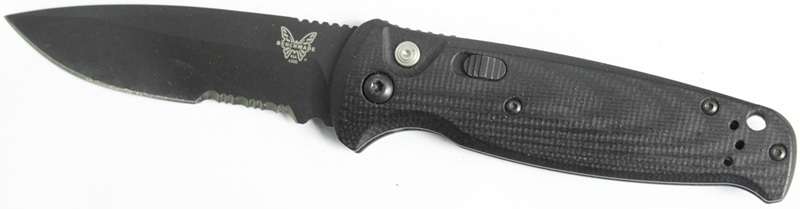
Switchblade Ban Violates Second Amendment, Fifth Circuit Holds

By Michael E. Cumpston (Wikipedia)

From Knife Rights, Inc. v. Blanche, decided yesterday by Fifth Circuit Judge Jennifer Walker Elrod, joined by Judges Don Willett and Cory Wilson:

This case presents a Second Amendment challenge to the Federal Switchblade Act (FSA)'s restrictions on switchblade knives. {Section 2 of the FSA, codified as 15 U.S.C. § 1242, … place[s] a fine of up to "$2,000 or imprison[ment] not more than five years, or both" for anyone who "knowingly introduces, or manufactures for introduction, into interstate commerce, or transports or distributes in interstate commerce, any switchblade knife."}

Applying the framework articulated in New York State Rifle & Pistol Association, Inc. v. Bruen, we hold that the FSA is unconstitutional.  We determine that switchblade knives qualify as "Arms" and are covered by the "plain text" of the Second Amendment. Because the regulation implicates the amendment, the government bears the burden of establishing that the FSA comports with well-established principles of the Second Amendment and its regulatory tradition. The government fails to meet its burden. Specifically, the FSA's restrictions on the introduction, manufacture, transportation, and distribution of switchblades fail step two's "how" analysis….

Amongst other definitions, Heller highlighted that the founding era understood the term to mean "any thing that a man wears for his defence, or takes into his hands, or useth in wrath to cast at or strike another." Switchblade knives have surely been used for "defence" and to "strike another."

Knives have been used for defense throughout human history, including the American founding. During the colonial period, "[e]veryone had a knife," and "as long as a man was required to defend his life," a "knife was a constant necessity." In the 1700s and during the American Revolution, knives were used for scavenging, hunting, and defense, and "[b]elt and pocket knives" accompanied frontiersmen "in the developing eastern settlements and on the western frontiers." Well into the 1800s, "men of all walks of life" were "accustomed to wear a knife as a necessary part of their garb."

Switchblade knives are no exception. "Springblade knives" (precursors to the modern switchblade) "have been made for hundreds of years because there has always been a need for a pocketknife that can be opened easily when the hands are wet, cold, or covered with gloves." In the 1700s, such knives were a part of certain types of flint-lock pistols: "[i]f the pistol mis-fired (which frequently happened) the person would touch the release button and the blade would open up, and be available for use." After the Civil War, patents for switchblade knives proliferated, and the large-scale production of "switchblades in the United States began in the 1880s, shortly" thereafter. Then, "[o]ver a 50 year period from the mid 1890s to the mid 1940s there had been approximately 20 different companies who had manufactured switchblade knives in this country." In short, some forms of switchblades have been commonly used for defense for hundreds of years. They are "arms."

Accordingly, the government's not-in-common-use argument fails. In addition to the wealth of history indicating the founding-era uses of switchblades for defense, the record indicates that there are "millions" of automatically opening knives in the United States now. The record further reflects that switchblade knives are lawfully used for "every day utility use, hunting, fishing, recreation, and camping and hiking." Despite the FSA, there are still lawful sales of switchblade knives in the United States. Consequently, switchblade knives are "arms" "in common use" both then and now….

We proceed to step two [of the Bruen analysis]. Here, we assess whether § 1242 is consistent with the principles that flow from the Second Amendment's history and tradition….

The government makes its stand primarily by citing a host of nineteenth-century cases in support of its argument that there existed a well-established tradition of regulating "inherently concealable weapons." The concealable nature of these weapons, the argument goes, makes them "particularly dangerous." The government connects this with the clear congressional history that suggests that Congress enacted the FSA because it believed that switchblades posed a unique danger and therefore needed to be restricted. This line of argument is focused on answering the "why" portion of the step two inquiry.

However, we do not reach the question of whether the government meets its burden as to the "why" analysis because it fails the "how" analysis. As mentioned, the Supreme Court has informed us that "[e]ven when a law regulates arms-bearing for a permissible reason," it may not be "compatible with the right if it does so to an extent beyond what was done at the founding." So, even if we grant the government's argument that there is a well-established tradition of regulating "inherently concealable weapons," this only addresses the "why" inquiry.

The government cites no historical analogue that regulates the manufacture, transportation, or distribution of "inherently concealable weapons," much less switchblade knives. Rather, its analogues suggest that there is a tradition of regulating the manner of carrying concealable weapons….

The government's best attempt at meeting its burden is through a single citation to a treatise-length law review article. See Gov't Br. at 16–17 (citing David B. Kopel & Joseph G.S. Greenlee, The History of Bans on Types of Arms Before 1900, 50 J. Legis. 223 (2024)). It cites the article to show how "statutes regulated concealable weapons in a variety of different ways, including banning carry or concealed carry, prohibiting their possession in specific locations, subjecting their sale or possession to taxes, or restricting the sale to minors." The referenced section of the article catalogs nearly two hundred pre-1900 statutes regulating daggers, dirks, and sword canes.

Of the nearly two-hundred statutes, only two regulate bladed weapons in an analogous manner as § 1242. See 1881 Ark. Acts 191, 192 (proscribing the "sell[ing], barter[ing] or exchang[ing]" of "any dirk or bowie knife, or sword or spear in a cane"); 1837 Ga. Laws 90, 90–91 (making unlawful "for any merchant, or vend[o]r of wares or merchandize in this State, or any other person or persons whatsoever, to sell, or offer to sell … Bowie, or any other kinds of knives, manufactured and sold for the purpose of wearing, or carrying the same as arms of offence or defense, pistols, dirks, sword canes, spears, &c"). Two laws out of nearly two hundred bring us into outlier territory….

John William Dillon (Dillon Law Group, A.P.C.), Richard Brent Cooper (Cooper & Scully, P.C.), and Daniel Schmutter (Hartman & Winnicki, P.C.) represent plaintiffs.

The post Switchblade Ban Violates Second Amendment, Fifth Circuit Holds appeared first on Reason Magazine.

  •  

PHP Security Flaw Sets Off Global Rush to Patch, Leaving Websites Offline

Governments and businesses around the world scrambled to prevent hackers from exploiting a vulnerability in PHP, a popular programming language.

© Geert Vanden Wijngaert/Associated Press

Prime Minister Rob Jetten of the Netherlands in Brussels last week. He said that his cabinet was closely monitoring the online vulnerability caused by a security flaw in PHP.
  •  

Russia replaces its missiles as fast as it fires them, Ukrainian intelligence says. Its drone order this year tops 100,000

russian drones

As of October, Russia has up to 700 ballistic and several thousand cruise missiles in reserve, and its 2026 state order for Geran-type drones and decoys such as the Gerbera exceeded 100,000 units, Ukraine’s military intelligence (HUR) told NV in figures the outlet published on 20 October. The missile stocks are roughly the same as HUR reported to NV in July, the outlet found.

Ukraine enters the heating season facing what it says is a Russian plan to hit 60 infrastructure sites this winter. HUR’s figures suggest Russia has the weapons for it, even after its fall mass strikes. In June, HUR said Russia could fire up to 100 ballistic missiles a month while keeping its stocks steady. Its drone output, meanwhile, is shifting to jets that are harder to shoot down.

Russia produces 110 ballistic missiles a month

Russia can make more than 200 missiles a month, 110 of them ballistic, HUR said. About 115 of its ballistic missiles are Iskander-Ms, with production of up to 65 a month. A modernized Iskander with a projected range of 550 to 700 km is in development.

At the same time, Russia holds up to 400 S-300PM and S-400 air defense missiles adapted to strike ground targets, and makes about 40 a month. Meanwhile, Kinzhal production has been temporarily paused over poor accuracy, and the capacity has gone to conventional ballistic missiles.

Most new Kalibrs go into reserve

Russia plans to make more than 80 Kh-101 cruise missiles a month and is exceeding that, though defects in releasing them from aircraft have sent some batches back to the factories.

Russia has more than 450 Kalibrs and makes about 29 a month. Because Ukrainian air defense downs them effectively, Russia sends most new ones to its strategic reserve and to equip its fleets, HUR said. It also holds more than 600 Oniks anti-ship missiles, upgraded for ground strikes, and more than 120 Zircons.

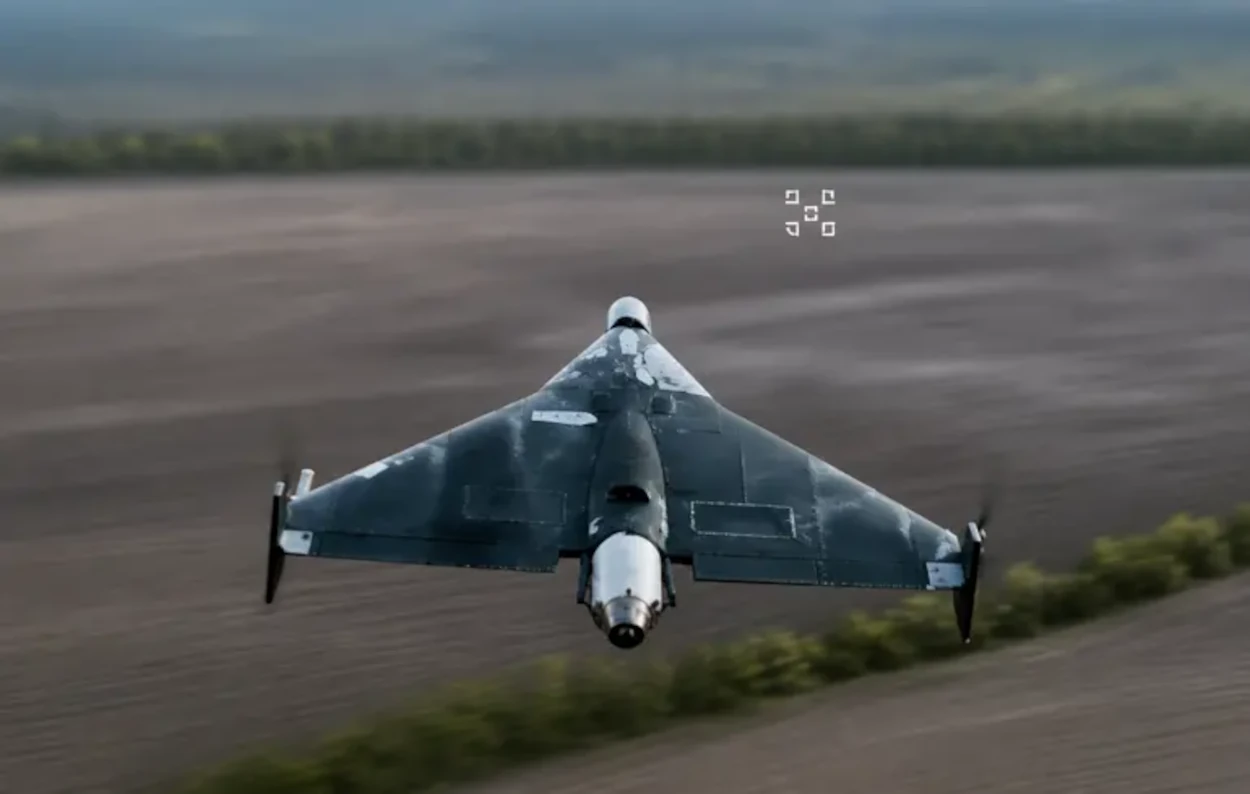
ukraine recovers russia's undamaged geran-3 jet kamikaze drone carrying camera live-link equipment (video) · post russian jet-powered lying cornfield after being recovered intact 16 2025 реактивний дрон-камікадзе герань-3 вересня року
Explore further

Ukraine recovers Russia’s undamaged Geran-3 jet kamikaze drone carrying camera and live-link equipment (VIDEO)

Russia now assembles 4,000 jet drones a month

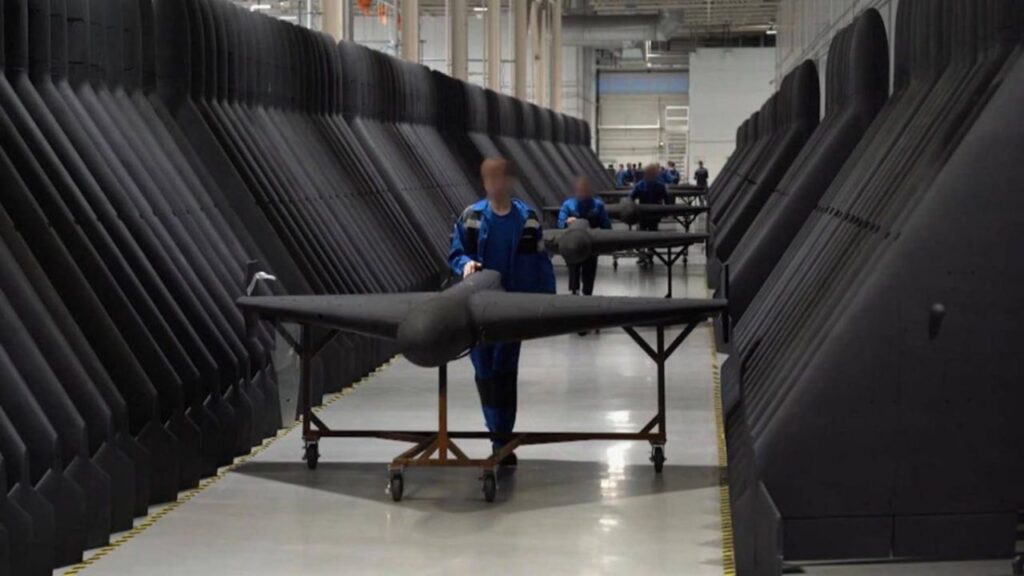
Russia holds a reserve of about 6,200 Gerans and makes about 10,000 drones a month. Its main production hub is the Alabuga special economic zone in Tatarstan.

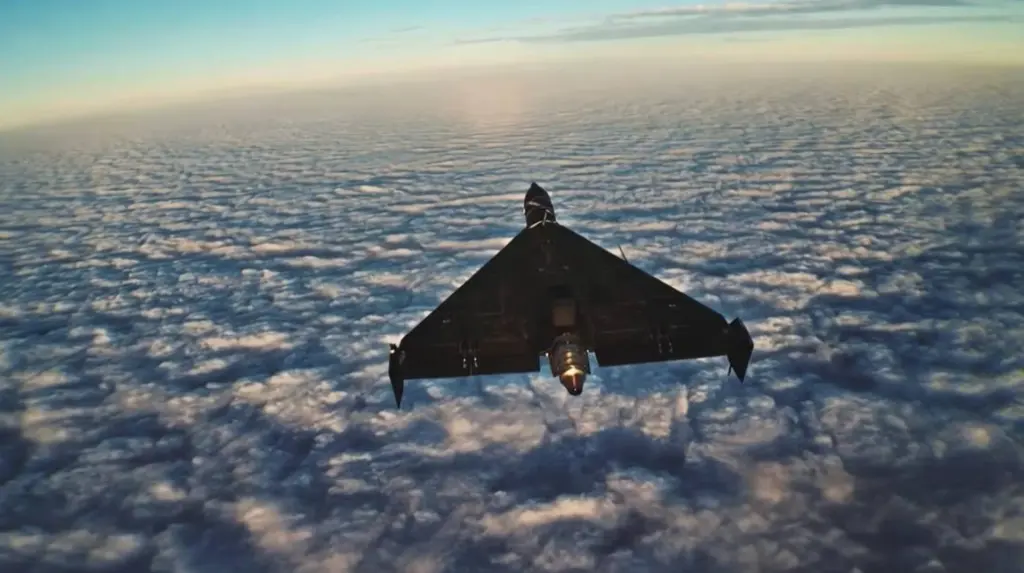
Since summer, Russia has shifted toward turbojet drones. “The reason is the saturation of Ukraine’s Air Force with mobile fire groups that shoot down low-speed targets en masse,” HUR said. Russia now assembles about 4,000 jet drones a month, mostly Geran-4s and Geran-5s, which fly at 400 to 500 km/h. It also makes about 2,000 cheaper propeller-driven Geran-2s, which HUR said are used to wear down air defense and locate air defense positions.

  •  

Romania shot down two drones it believes were Russia’s new Geran-4s. Europe isn’t ready for swarms of them, analyst warns

ukraine spent three years learning catch russian drones—so russia made fly faster · post geran-3 jet-powered attack drone wild hornets c1c840787fca380485636007cf683d71 news ukrainian reports

In a direct confrontation with Russia, European NATO states would likely be even more vulnerable than Ukraine to swarms of Russia’s new jet-powered strike weapons, Fabian Hoffmann of the Norwegian Institute for Defence Studies (NIDS) argued in a 20 October op-ed for the Center for European Policy Analysis (CEPA). He calls them low-cost cruise missiles. Just three days earlier, Romania met what it believes were two of them over the Black Sea.

Romanian F-16 fighter jets shot down two jet-powered Geran-family drones over Romania’s territorial waters on 17 October, the Defense Ministry said. Interim Defense Minister Radu Miruță said they flew at about 450 km/h and were likely Geran-4s, the first of that type Romania had downed.

Faster drones for a faster war

Russia began using the Geran-4 in May in response to effective Ukrainian interceptor drones, Ukraine’s military intelligence (HUR) said, adding that it reaches up to 500 km/h. By June, those interceptors were downing about half of slower Shahed-type drones, defense adviser Serhii Beskrestnov estimated.

Hoffmann traces the shift to the Geran-3, a model Ukraine recovered intact in 2025. In his account, a Chinese JT80 turbojet roughly doubled its speed, from 185 to 350 km/h. However, he puts newer models, including the Geran-4, at 600 km/h or more, above HUR’s figure for that model.

By his estimate, each costs $150,000–$250,000, against about $50,000 for a long-range drone. Still, from Russia’s perspective, he wrote, that buys a significantly higher chance of getting through.

money engineering what stands between ukraine russia's fastest drones zelenskyy says · post russia’s new “geran-4 seeker” shahed variant geran-4 news ukrainian reports
Explore further

Ukraine is testing four new drone interceptors as Russia floods its skies with faster Gerans 

Engines are the bottleneck

Hoffmann argues defenses must match the threat’s speed, for example with jet-powered interceptor drones. Ukraine already fields some. On 4 October, President Zelenskyy said its Bars interceptors had shown the highest percentage among Ukrainian interceptors, about 30% of targets, according to Militarnyi. One unit destroyed five aerial targets with five Bars interceptors, Defense Minister Yevhenii Khmara later told journalists. He also called aviation one of the most effective tools against jet drones.

Hoffmann’s concern is scale. Jet engines are in short supply, he wrote, because too few European and US suppliers can meet demand. Ukraine’s Defense Industry Council flagged a shortage of such engines for its drones in April. In his view, gun systems and higher-end missile defenses are too scarce or too costly to fill the gap.

  •  
❌