Austria has ordered four Russian diplomats to leave the country over suspected espionage, declaring them persona non grata following findings by Austrian security authorities, Austrian media outlet Heute reported on 23 October.
The expulsions come as European countries step up efforts to counter suspected Russian intelligence operations amid Moscow’s war against Ukraine. Three of the diplomats worked at the Russian Embassy in Vienna, while the fourth served in Russia’s delegation to the Organization for Security and Co-operation in Europe (OSCE), which is headquartered in Vienna.
Austria’s Foreign Ministry said the four had engaged in “activities incompatible with their diplomatic status,” a term usually used for spying, Reuters reported. It did not disclose details of the alleged activities or the intelligence findings behind the decision.
The three embassy diplomats were declared persona non grata under Article 9 of the Vienna Convention on Diplomatic Relations. The fourth, who worked on military security and arms control at Russia’s OSCE delegation, was also ordered to leave Austria.
Vienna remains a hub for Russian intelligence
The latest expulsions bring the number of Russian diplomats Austria has expelled since 2020 to 18, according to Reuters. In May 2026, Austria expelled three Russian Embassy employees suspected of using antennas on diplomatic buildings to intercept satellite internet data transmitted by international organizations based in Vienna.
Vienna’s concentration of international organizations, including the OSCE and United Nations agencies, has made it a key location for intelligence activity. A 2024 report by The Wall Street Journal, described Vienna as a major Russian spy hub for operations targeting Western countries, including surveillance of arms supplies to Ukraine.
Explore further
WSJ: Vienna has become major Russian spy hub for anti-Western operations in Europe
Russia’s Deputy Foreign Minister Dmitry Lyubinsky said Moscow’s response to the expulsions was unavoidable, according to Russian state news agency TASS, AP reported.
Mango, il noto marchio internazionale di moda nato a Barcellona, dà il via a un piano di espansione sul territorio italiano che porterà all’apertura di circa 100 posti di lavoro da inserire in 22 nuovi negozi anche nelle Regioni del Mezzogiorno, tra cui Sicilia e Sardegna, entro il 2027.
Il piano di sviluppo è motivato soprattutto da un incremento del 30% del fatturato su suolo nazionale, rafforzato anche dalla partnership con il gruppo Coin.
Quali sono i profili ricercati
Le ricerche di personale per la rete di punti vendita riguardano diverse figure operative e gestionali, con contratti di vario tipo, che non escludono opportunità di tirocinio per giovani ai primi passi nel settore retail:
direttore e assistente di filiale, per la gestione commerciale e organizzativa del punto vendita, il coordinamento del team e il raggiungimento degli obiettivi di vendita;
direttore di reparto, dedicati alla supervisione dei settori e all’organizzazione dell’area vendita;
visual merchandiser, responsabili dell’allestimento delle vetrine e dell’esposizione dei prodotti secondo le direttive aziendali;
addetti alle vendite per l’accoglienza, l’assistenza al cliente e la cura degli spazi espositivi;
addetto alla gestione del magazzino, il ricevimento delle merci e il riassortimento dei capi.
La mappa delle assunzioni
Le selezioni attualmente attive sono distribuite su gran parte della Penisola per le sedi già operative e per le nuove aperture in programma:
Città
Profili ricercati
Tipologia contrattuale
Milano
Assistant Store Manager, Stage Visual Merchandiser, Assistant Manager
Per consultare l’elenco completo delle offerte di lavoro e inviare la propria candidatura bisogna accedere alla piattaforma per le carriere del gruppo consultando la sezione Lavora con noi. Attraverso il portale si possono filtrare le offerte per sede, tipologia oraria e contrattuale, selezionare l’annuncio d’interesse e compilare il modulo digitale, allegando il proprio Curriculum Vitae aggiornato.
È sempre consentito inoltrare la propria candidatura spontanea nel database, in modo che i recruiter possano selezionare i profili adatti alle necessità dei punti vendita.
Altri annunci per addetti alle vendite nel settore retail
Le selezioni di Mango non sono le uniche cui poter accedere senza esperienza. Si segnalano i reclutamenti curati da Poste Italiane per portalettere e addetti agli sportelli, le offerte di lavoro promosse da Fincantieri per figure operative e impiegatizie.
Russian hostile activity costs the UK at least £2 billion (US$2.7 billion) annually, according to a recent report by Scottish MP Graeme Downie, who has called on the government to measure what these actions cost Britain. But this figure is just the baseline. In reality, a profound shift in Moscow’s approach to sabotage means the […]
The author and her husband approach investing differently, but have figured out how to find a common ground.
Courtesy of Laura Leavitt
My husband and I have different approaches to investing.
He's risk-tolerant, and I'm a bit more risk-averse.
Still, we've managed to talk through financial decisions and find a common ground.
The conversation started because of a windfall: it was the first month that we didn't have the preschool tuition payment because my son was starting kindergarten. "I'd love for this money not to just disappear into the monthly budget," I said to my husband.
He nodded, and immediately had a suggestion. "What if we used it to start up a brokerage account? It'd be good to have some investments that are accessible without penalty before retirement."
Our approaches to investing differ
I knew, deep down, that this was a reasonable response to my point: we both already were on board with the idea of paying ourselves first, where we commit to an amount ahead of time for savings and retirement investments and then live on whatever we earn above that. This strategy served us well, and I wasn't opposed… exactly.
"I was actually hoping to use some of it to add to our emergency fund," I told him slowly. "And maybe getting some additional solar panels I've been looking at."
We have recently lived through instability that made me really appreciate the kinds of standard comforts that are currently easily accessible. Our family experienced the impact of a major hurricane only two years ago (Hurricane Helene), and when water, electricity, and telecommunications were interrupted for days and then weeks, I realized that a relatively modest amount of money and supplies would have made weathering a period of instability easier.
This is the place where my husband and I diverge: I tend to see things somewhat pessimistically, believing there's a good chance supply chains will be interrupted more than a few times during our lifetimes due to a variety of factors.
My husband has a generally optimistic, risk-tolerant approach to life. He knows we've made a solid plan for retirement, so he sees that a brokerage account offers promising returns (not guaranteed, but based on historical data) on funds that we've worked hard to earn. I'm sometimes fearful of the possibility of losing everything in a stock market crash.
I don't think either of us is truly at odds with the other person: my husband witnessed Helene and set to work setting up a battery backup system for our solar panels, an impressive feat and investment that falls more in line with my own risk-averse nature.
And I've never squashed his goals of investing for both short and long-term stability, even if, deep down, I want all our savings in high-yield savings accounts with FDIC protection.
We've learned how to figure out what's right for us
In order to make these conversations civil and positive, we tend to follow three steps.
First, we each get to make the case for why this investment, and why right now.
I think some of the way that we both get over our anxieties about spending or saving well is that we want to be heard, so he hears me out when I want to construct an expensive greenhouse on our property to grow more food, and I hear him out when he identifies that our current ages merit a somewhat risk-tolerant strategy so that we can reap the benefits when the market jumps higher.
Frequently, this process of hearing each other out helps us find an in-between pretty organically, and finding an in-between is the second step. Sometimes, we realize that, for instance, we are too busy to take full advantage of a greenhouse right now and should table it for a year or two. However, maybe this is a good year to invest in a higher-speed home charger for our electric car. Because many of his goals are "invest as much as possible," it's usually possible to buy some portion of the physical items I want while still contributing to our investments.
When I'm advocating for a deeper emergency fund, housed in a high-yield savings account rather than a market-invested brokerage account, I typically ask that we contribute in a percentage-based way. If I ask, for instance, for a windfall to be split 30/70, he gets to invest 70% of the money toward higher yields, and I get 30% in a very secure account. It's not exactly what either of us would like, but it ultimately gives us some benefits of both risk-averse and risk-tolerant strategies.
Finally, any time we find a split that really feels aligned for us, we see if we can make it a rule for the future, the third step. No one loves having to reinvent the wheel every time new money conversations come up. When that 70/30 split worked well for us once, I've returned to it for later money decisions, and while it sometimes needs to be adapted, it lets us balance each of our needs without a long discussion. My husband, famously of few words, likes when we can keep the conversations a little shorter and get back to playing a board game or watching a silly TV show to relax.
When we hear each other out, find a useful middle ground, and operationalize the result for future use, we find ways to invest in both a more secure and a more growth-focused future, favoring methods that work well for both our risk tolerance levels.
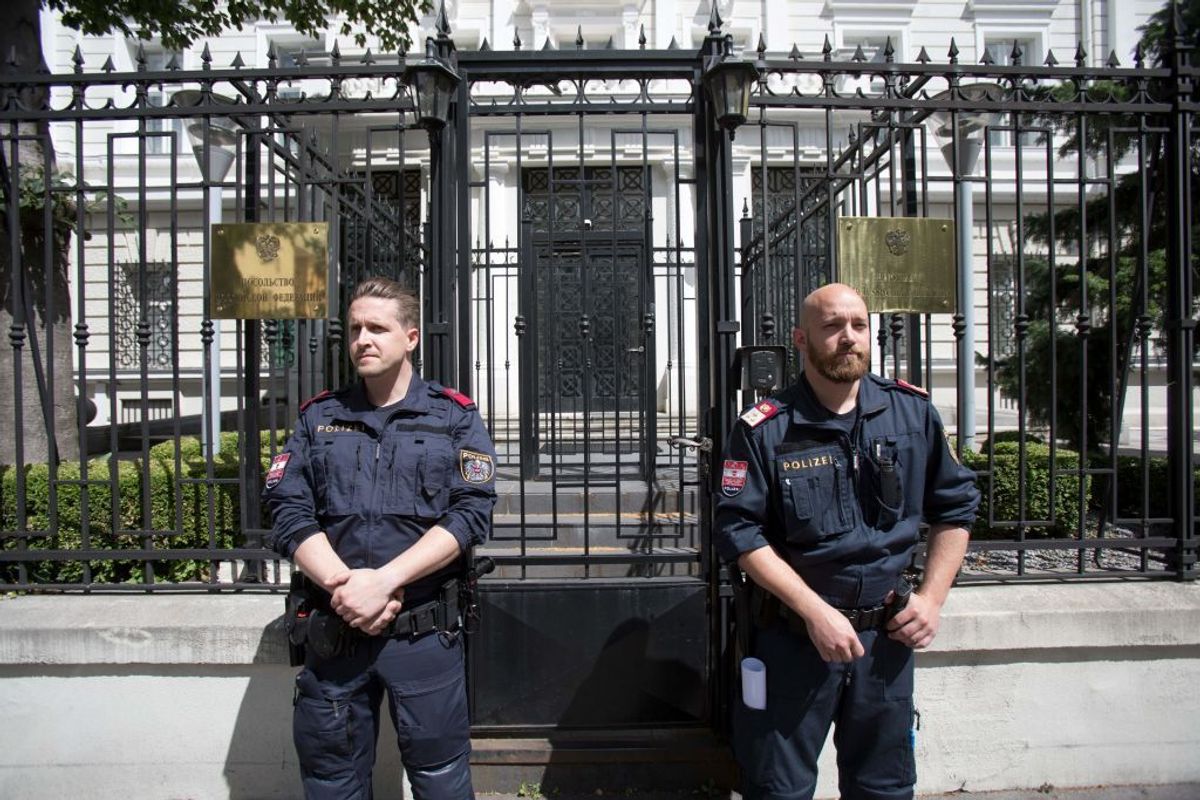
Three members of the Russian Embassy, as well as a Russian delegate at the OSCE responsible for military security and arms control, "carried out activities incompatible with their diplomatic status," Austria's Foreign Ministry said.
In 160 years of digging at Troy, nobody had found anything you could play. Archaeologists have pulled walls, gates, jewelry, weapons and tableware out of the ground in huge quantities, but never an instrument. This season that changed. The team led by Rüstem Aslan of Onsekiz Mart University in Çanakkale, in northwestern Turkey, recovered a […]
Official forecasts show country will meet energy demand by paying high prices to secure imports
Great Britain is expected to pay some of the highest energy costs in Europe this winter as its reliance on imports to ensure a steady supply is forecast to deepen.
Energy system operators have said the country will have enough gas and electricity to meet demand over the coldest months – in part because of paying higher market prices than neighbouring markets to secure imports.
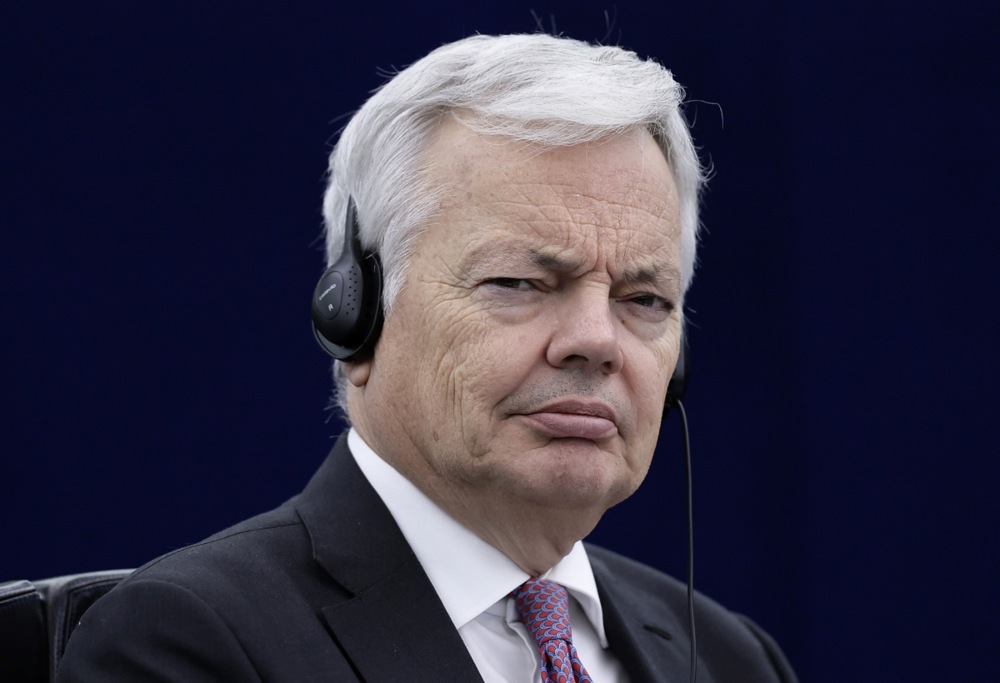
“The ‘job’ … has been mostly accomplished,” said a senior official in Belgium’s spy service, Hugues Brulin, in a WhatsApp message to the Belgian then EU commissioner, Didier Reynders.
“Bravo for the work you did,” said Reynders.
It was back in 2022, and, at least on the surface, they were chatting about a staff reshuffle inside Belgium’s intelligence service, La Sûreté de l’Etat/Veiligheid van de Staat (VSSE) — which was already a peculiar thing for Brulin to be doing on WhatsApp with an EU official.
But their messages, seen by EUobserver and published in full below, were now also evidence in a Belgian police investigation into Reynders on money-laundering charges, which painted them in the light of a potentially criminal conspiracy.
Brulin’s real “job” had been to stop the VSSE from probing Reynders and his potential Russia links, according to five former and current Belgian intelligence officers who spoke to EUobserver.
And Brulin also WhatsApp-ed Reynders on how to “counterattack” a Russia whistleblower.
The 68-year-old liberal politician from Liège, in French-speaking southern Belgium, had had a glittering career before his sudden fall from grace in December 2024, when Belgian police raided his properties, and before he was subsequently charged in 2025 with having laundered some €1m via the ING Bank, using lottery tickets and cash deposits.
Reynders had been EU justice commissioner from 2019 until 30 November 2024 (just four days prior to the police raid) and Belgium’s foreign and defence minister from 2011 to 2019.
And Belgium had vetted and cleared him to read “top secret” national, EU, and Nato documents.

 Login