❌

Reading view

Russian plant supplying components for Iskander missiles reportedly struck by Ukrainian Storm Shadow missiles

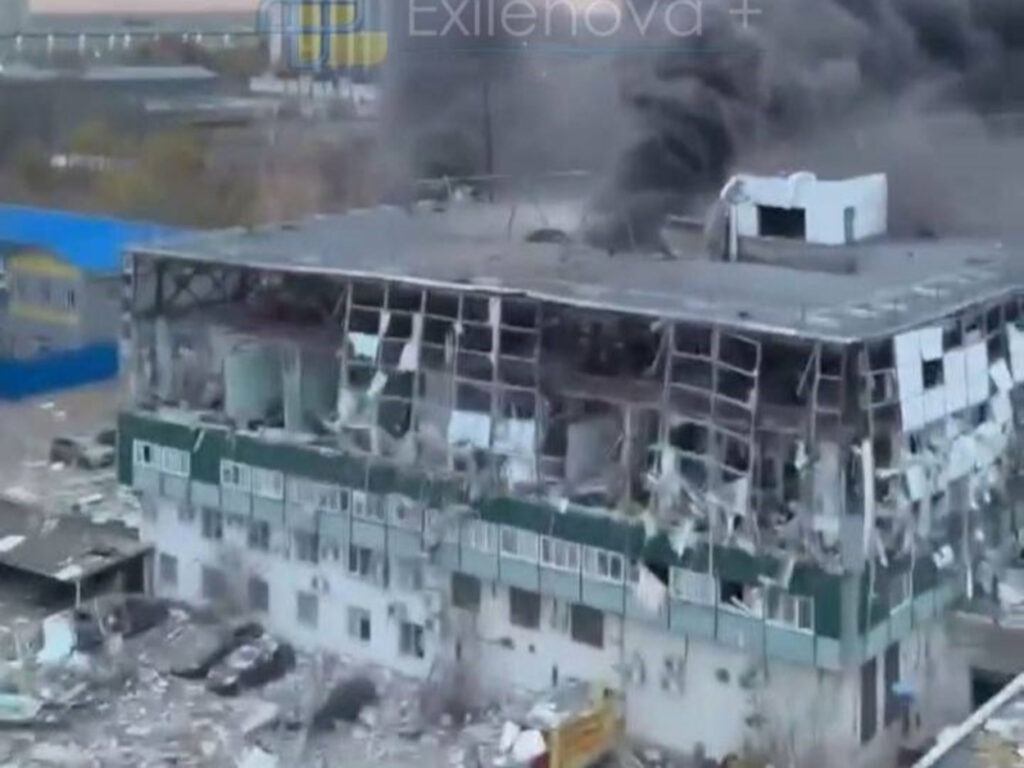
The Proton electronics plant in Oryol, Russia, after a Ukrainian missile strike on 23 October. The facility reportedly produces electronic components used in Russian weapons systems, including Iskander-M ballistic missiles. Photo: Exilenova+

Ukrainian missiles reportedly struck a factory in the city of Oryol on 23 October, with OSINT projects reporting that the target was the Proton electronics plant, which produces components used in Russian weapons systems.

The strike comes amid Ukraine’s broader campaign to target Russian military production facilities and other infrastructure supporting Moscow’s war against Ukraine. Ukrainian strikes on such facilities aim to weaken Russia’s ability to manufacture and maintain the weapons it uses in its invasion.

The plant reportedly supplies electronic components for Iskander-M ballistic missiles, which Russia regularly uses to attack Ukrainian cities, as well as other weapons systems, including the Pantsir-S1 air defense system. 

The strike could disrupt production supporting Russia’s war effort. Photos show extensive damage to the building. Information about casualties remains unclear. 

Reports say a Ukrainian missile strike hit the Proton electronics plant in Russia’s Oryol on 23 October.

The facility reportedly produces components for Iskander-M ballistic missiles used in attacks on Ukrainian cities, as well as other Russian weapons systems.

📹Exilenova+… pic.twitter.com/nbqGPJ8EJj

— Euromaidan Press (@EuromaidanPress) October 23, 2026

Plant reportedly produces components for Russian weapons

Proton JSC manufactures semiconductor devices, LEDs, and electronic components for industrial and specialized equipment. According to Exilenova+, the plant’s products are used in the production of Iskander-M ballistic missiles, S-71 Kover missiles, and the Pantsir-S1 air defense system.

Exilenova+ reported that the plant was struck by Storm Shadow cruise missiles. The weapon type has not been independently confirmed, and the extent of damage to the facility remains unknown.

Russian authorities confirm strike on factory

Oryol Oblast Governor Andrey Klychkov announced a missile threat in the region before reporting that missiles had struck a factory in Oryol’s Sovetsky District, according to Liga.net.

Residents reported explosions, a fire in one part of the city, and columns of smoke rising over Oryol, according to local reports cited by OSINT projects Exilenova+, Supernova, and Astra.

  •  

Puppy love: Finnish 24-hour newborn pup livestream is TV smash hit

Show features live chat sessions with breeders, a podcast and updates on dogs’ progress from birth to weigh-ins

A 24-hour Finnish TV show dedicated entirely to the live progress of a dog and her six newborn puppies is drawing millions of viewers.

As well as a 24-hour webcam, Pentulive (Puppy Live) includes live evening chat sessions with the dogs’ breeder, a podcast and an instant notification service that updates followers on the puppies’ progress – from their birth to weigh-ins and first nail trims – for eight weeks.

Continue reading...

© Photograph: Julia Kiiskinen/Yle - The Finnish Broadcasting Company/AP

© Photograph: Julia Kiiskinen/Yle - The Finnish Broadcasting Company/AP

© Photograph: Julia Kiiskinen/Yle - The Finnish Broadcasting Company/AP

  •  

Russia keeps hitting Ukraine’s arms plants. Now private developers can dig them space underground—and sell or rent it to them

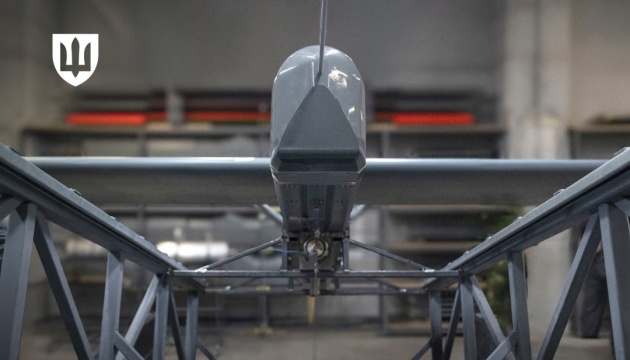
The FP-1 "Deep Strike" kamikaze drone at the factory.

Ukraine's Cabinet has opened the construction of underground arms production space to private investors, Prime Minister Serhii Koretskyi announced on 22 October, saying the rule applies from that day. A second decision eases imports for partner-funded weapons production.

Koretskyi said the change would add more of the space arms makers need, especially as Russian strikes intensify. On 9 December 2025, the Defense Ministry reported that more than UAH 1.5 billion (about $36 million) in budget support had let war-damaged defense firms restore operations. At the time, the ministry planned to relocate or duplicate the most critical plants, and underground complexes were under construction. The new model puts no additional burden on the state budget, Deputy Defense Minister Hanna Hvozdiar said. The bill still lands somewhere, though. Defense firms will buy, lease, or take the space for use, and companies working on state contracts are among those eligible. If they pay developers out of state-contract revenue, part of the cost could come back to the budget.

Developers build, arms makers move in

The changes to Cabinet resolution No. 1494 give private investors a simplified route to construction and permits, the ministry said. Developers can build protected facilities with their own or raised funds. Deadlines, terms of use, and the handover are set in a contract between investor and defense firm. The mechanism covers new sites as well as moving or expanding existing production. If a firm gets only part of a facility, that part must be at least 25% of the facility's total area and fit for production.

Estonian and Ukrainian soldiers fly drones together during Exercise Hedgehog 2025 in Estonia, where Ukrainian operators were credited with knocking out two battalions in a simulated engagement. Photo: vbl/OR-7 Ardi Hallismaa/ERR
Explore further

One year of Ukrainian arms exports, and industry has questions: how much army gained, where Berlin office is, who joins joint ventures

Developers must sign deals with, among others, residents of Defence City, Ukraine's special legal regime for arms makers, holders of state defense contracts, and firms the ministry designates as critical.

Tax break for partner-funded arms production

Components for weapons production that international partners pay for will enter Ukraine free of import duty and VAT, Koretskyi said. He added that customs inspection and clearance would be simplified and sharply shortened through a "single window."

  •  

Boom in weight-loss drugs could lead to fall in beer sales, Heineken warns UK pubs

World’s second largest brewer says use of drugs such as Wegovy can reduce desire to drink alcohol

• Business live – latest updates

Heineken has warned British bars and pubs that the boom in popularity of weight-loss drugs could lead to a fall in sales of beer and cider.

The world’s second-largest brewer sent a presentation to British hospitality customers earlier this month that said the use of GLP-1 medication – such as Ozempic and Wegovy – could reduce the desire to drink alcohol. This in turn could result in “fullness and fewer serves” of pints in pubs and bars, it added.

Continue reading...

© Photograph: william87/Getty Images/iStockphoto

© Photograph: william87/Getty Images/iStockphoto

© Photograph: william87/Getty Images/iStockphoto

  •  

Brussels Prepares Emergency Trade Powers as Chinese Imports Increase Pressure on European Industry

The European Commission is preparing a new trade-defence instrument that would allow the European Union to restrict access to its single market more rapidly when large volumes of low-priced imports threaten domestic manufacturers.

Commission President Ursula von der Leyen outlined the initiative during a speech to the European Parliament in Strasbourg on Wednesday, 21 October, following discussions among EU leaders over growing global trade imbalances.

The proposal would form part of a wider package addressing economic dependence on foreign suppliers and attempts by third countries to exert commercial pressure on individual EU member states. Although the Commission has not yet published detailed legislation, the announcement signals Brussels’ intention to expand its capacity to intervene in international trade disputes.

European industries seek protection

European manufacturers have faced increasing competition from imported products in sectors including chemicals, machinery, vehicles, steel and industrial components.

Much of the concern centres on China, where extensive manufacturing capacity and government support have enabled companies to expand their presence in international markets.

European producers argue that differences in subsidies, production costs and market access place them at a competitive disadvantage.

According to the European Commission, the EU’s goods trade deficit with China exceeded €1 billion per day in 2025.

Von der Leyen has described the imbalance as unsustainable and argued that European trade policy must respond more effectively to market distortions.

During her 21st October address to Parliament, she confirmed that the Commission was working on additional safeguards intended to address sudden increases in imports affecting European businesses.

The proposed measures follow a Franco-German initiative calling for stronger instruments to counter systemic economic imbalances.

France and Germany have urged Brussels to act more quickly where existing trade investigations and enforcement procedures prove insufficient.

China trade negotiations produce limited progress

The announcement follows recent negotiations between Brussels and Beijing aimed at reducing tensions over industrial competition.

Earlier this month, the two sides reached an arrangement restricting Chinese hybrid vehicle exports to the European market.

As EU Today reported on 13rd October, the agreement established an annual ceiling of 350,000 vehicles, potentially reducing Chinese manufacturers’ expected market access.

However, European officials acknowledge that restrictions covering a single automotive category cannot resolve the wider trade imbalance.

Other industries remain concerned about Chinese production capacity, including chemicals, machinery and manufactured components.

Beijing has warned against further unilateral European restrictions, arguing that protectionist measures could damage commercial relations.

The Chinese authorities have also demonstrated a willingness to pursue trade investigations involving European products.

As previous EU Today coverage established, China opened an anti-dumping investigation into an EU chemical product in early October, adding to existing commercial disputes.

Further European restrictions could therefore prompt additional Chinese countermeasures affecting exporters from member states.

New instrument would strengthen EU response

The proposed market-access mechanism is intended to give Brussels greater scope to act when existing safeguards cannot address economic threats quickly enough.

However, its legal structure, enforcement thresholds and relationship with existing anti-dumping and anti-subsidy legislation have not yet been specified.

The EU already possesses several trade-defence instruments, including duties against unfairly priced or subsidised products and safeguards designed to protect industries from damaging import surges.

Those mechanisms generally require formal investigations and evidence demonstrating the conditions for intervention.

The new proposal could introduce a faster response, but questions remain over how any restrictions would comply with international trade obligations and the EU’s commitments under World Trade Organisation rules.

Member states would also have to consider the consequences for European businesses that depend on imported materials, components and finished goods.

Reducing dependence on foreign suppliers

The Commission’s strategy extends beyond restrictions on imports. Von der Leyen confirmed that a separate initiative, known as DiversifyEU, would be presented in December.

The programme is intended to help European companies reduce excessive dependence on individual suppliers and countries, particularly where critical raw materials and strategic technologies are involved.

The Commission also plans a solidarity mechanism designed to assist member states and industries facing external economic coercion or retaliation. Such arrangements could become relevant when a foreign government targets exports from a particular member state in response to an EU policy decision.

The initiative follows growing concern that Europe’s access to strategically important industrial supplies can be disrupted through export controls or political disputes.

Difficult negotiations ahead

The Commission will still have to translate the proposed measures into legislation and secure sufficient political support among member states and the European Parliament.

National governments have different commercial relationships with China and varying levels of dependence on imported industrial goods. Countries with substantial export markets in China may be particularly concerned about retaliation, while manufacturers facing foreign competition are likely to press for faster intervention.

The Commission must also determine whether new trade powers should be exercised centrally in Brussels or require additional approval from national governments. For European industry, the immediate question is whether the new mechanism can provide effective protection without increasing production costs through restrictions on essential imports.

The Commission’s forthcoming legislative proposals will establish how far the EU intends to move towards a more interventionist trade policy.

  •  

India slashes cost of cancer drugs after court rules mark-ups are ‘extortion’

Case filed in 2022 by patient unable to afford medicine leads to cap on drug prices for millions who face ruin if diagnosed

The Indian government has moved to reduce the price of cancer drugs after a retired bank clerk took her case to the supreme court.

From next month, 137 cancer drugs in India will be cheaper as the government tries to tackle the tragedy of poorer patients either forgoing treatment, selling land or falling into debt to meet the high cost of some medicines, which are making large profits for hospitals and pharmacists.

Continue reading...

© Photograph: Rupendra Rawat/Alamy

© Photograph: Rupendra Rawat/Alamy

© Photograph: Rupendra Rawat/Alamy

  •  

Some of Europe’s highest energy costs expected in Britain this winter

Official forecasts show country will meet energy demand by paying high prices to secure imports

Great Britain is expected to pay some of the highest energy costs in Europe this winter as its reliance on imports to ensure a steady supply is forecast to deepen.

Energy system operators have said the country will have enough gas and electricity to meet demand over the coldest months – in part because of paying higher market prices than neighbouring markets to secure imports.

Continue reading...

© Photograph: Shomos Uddin/Getty Images

© Photograph: Shomos Uddin/Getty Images

© Photograph: Shomos Uddin/Getty Images

  •  
❌