❌

Reading view

Protests banned and curfews declared ahead of next major mobilization in France

Hundreds of thousands are set to take to the streets in cities across France on Saturday, October 24, once again protesting austerity and the cost of living crisis. Demonstrations are set to go ahead despite an extremely repressive response from the government and local authorities, including curfews and bans.

Over the past couple of days, a growing number of cities and regions have announced protest bans, drawing criticism from trade unions and progressive groups. “The government has banned demonstrations on Saturday in Lyon, Marseille, Rouen, Grenoble, Le Havre, Bourg-en-Bresse, Le Mans, Toulon, Chambéry, Perpignan,” wrote Clémence Guetté of La France Insoumise on October 22. “New bans are coming down every hour. Is this what democracy looks like?”

Many of the bans are being contested in court, with the final outcome yet to be determined.

Read more: Italian government to deploy troops to Milan after anti-austerity protests

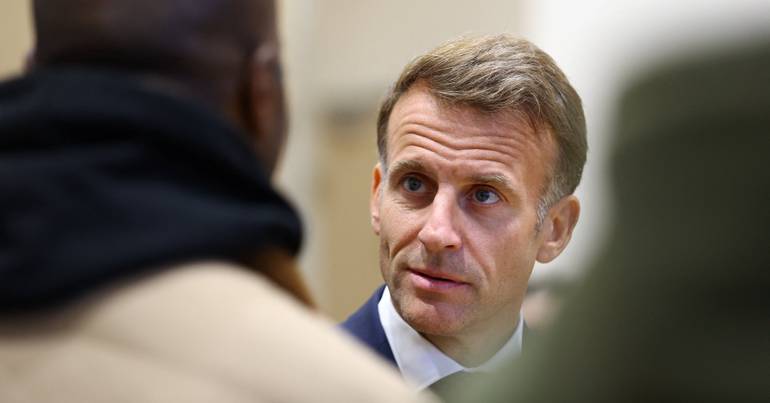
French President Emmanuel Macron failed to revise his stance on the protests in the same period, announcing that only trade union mobilizations will be allowed on Saturday. “Where they are not organized by trade unions, we will ban them wherever we can,” Macron stated.

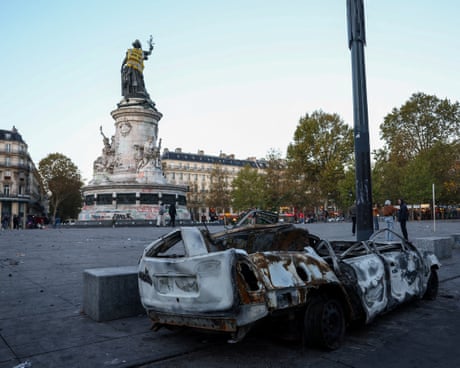
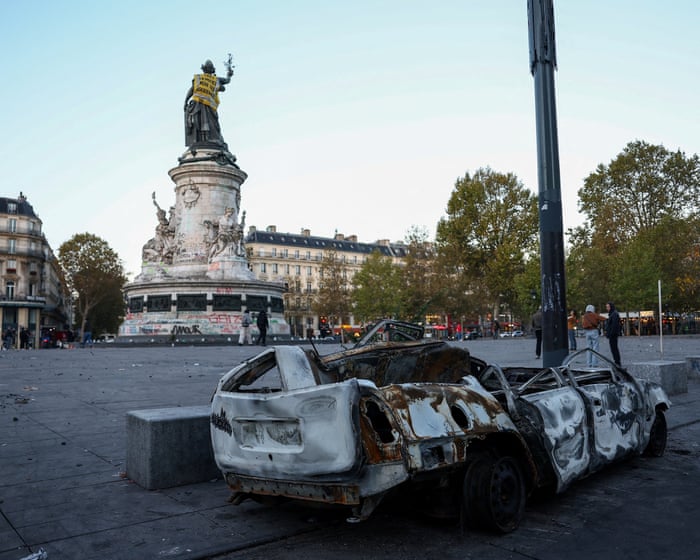
The government announced the intention of deploying troops to “guard” the demonstrations. The idea was announced after nationwide protests on October 17 – attended by roughly 800,000 people – turned into riots against the erosion of education services and overall living standards.

A securitization strategy tested in Kanaky

This institutional response has been heavily criticized by progressive forces that joined students on the streets. As Prime Minister Sébastien Lecornu’s administration insisted on framing the mobilization exclusively as a security issue, including in meetings with political parties, left forces denounced the strategy for failing to address concrete issues.

Paul Vannier of La France Insoumise said the government was engaging in “a strategy of letting the situation rot,” insisting that it should instead shape a solution to students’ demands. This would include freezing prices, increasing wages, making higher education more accessible, and allocating €10 billion for the education system.

Read more: Students in France are fighting for stronger public education

The French left has also sounded the alarm about the long-term consequences of the violent repression of the protests: thousands of youth were arrested during the mobilization, and dozens were injured – some of them very seriously.

While alarming, this course of events is not surprising, La France Insoumise pointed out. The party compared the repression observed in French cities to the one witnessed during protests in Kanaky in 2024: “a state of emergency, extended curfews, a general ban on demonstrations, the blocking of TikTok, nearly 3,000 security personnel deployed with army support, armored vehicles, and the massive use of LBD launchers and grenades.”

“What the state tested in 2024 in Kanaky, it is now applying in 2026 to its own youth, with the same men in charge,” the media outlet L’Insoumission wrote.

Trade unions’ support continues

It is in this context that progressive forces in France have reiterated calls for the public to respond to the students’ call and protect their right to protest on Saturday. “On October 24, we once again call on all activists to put on their red [trade union] vests so that young people and workers can exercise their right to demonstrate and to make their demands heard,” the General Confederation of Labour (CGT) wrote.

“We are witnessing an authoritarian shift that goes hand in hand with the government’s stubborn refusal to own up to its record and to call into question its unjust policy in favor of the wealthiest,” dozens of trade unionists, advocates, and cultural workers wrote in an appeal, calling for support for the protests.

“This choice is irresponsible and dangerous for democracy, and for the physical integrity of those who defend it without the framework of these mobilizations,” they stated. “It paves the way for the far right to come to power.”

  •  

France to deploy 70,000 police on Saturday to prevent civil unrest

Security forces to include elite units usually used for counter-terrorism after worst street violence in years

France will deploy about 70,000 police around the country on Saturday as the government seeks to prevent more civil unrest after some of the worst street violence in years erupted on the fringes of cost-of-living protests last weekend.

The interior minister, Laurent Nuñez, said on ⁠Friday ⁠the security forces would include elite units usually used for counter-terrorism operations and hostage rescues, adding that there had been social media calls for violence from “ultra-left” groups.

Continue reading...

© Photograph: Abdul Saboor/Reuters

© Photograph: Abdul Saboor/Reuters

© Photograph: Abdul Saboor/Reuters

  •  

France Restricts Weekend Demonstrations as Protest Violence Sparks Civil Liberties Dispute

Authorities in France have banned or restricted demonstrations in a number of cities ahead of Saturday, 24th October, following violent disturbances during the previous weekend’s protests against the cost of living.

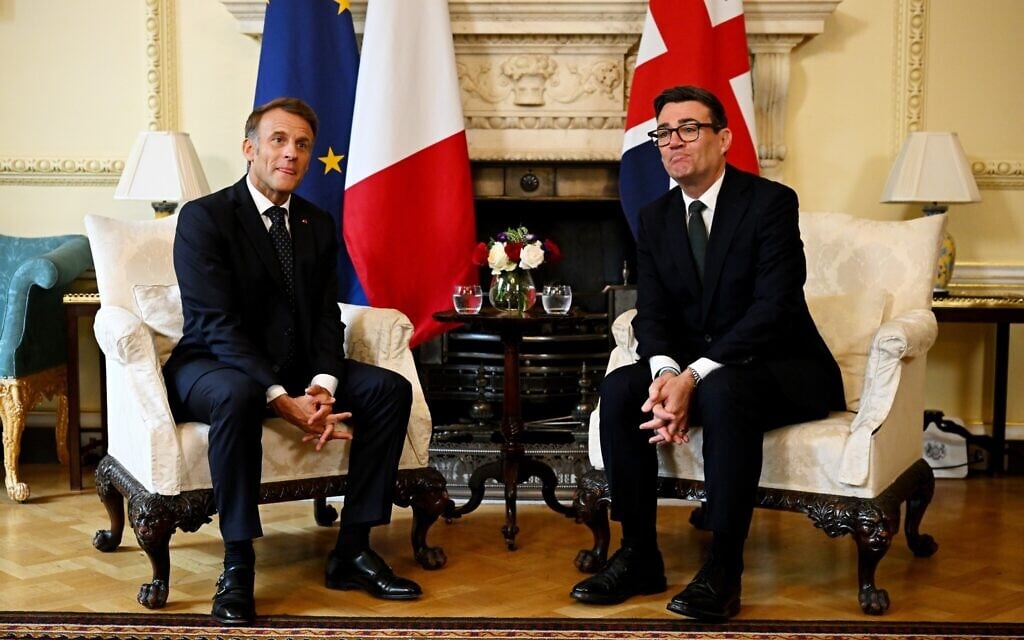
President Emmanuel Macron said security measures would include curfews and restrictions on groups deemed responsible for disorder. Some official demonstrations, including an authorised march in Paris, remain permitted.

The latest restrictions follow confrontations and damage to public buildings during the demonstrations on 17 October. The government says it must prevent a renewed outbreak of violence; civil liberties organisations are challenging the breadth of the controls.

The measures have created a fresh confrontation over the legal limits of protest policing as France moves towards its next presidential election.

The developments are detailed in the latest reporting and official material, against the background of EU Today’s earlier coverage.

Different rules across France

Authorities in Marseille, Lyon, Nice and Montpellier have imposed bans on demonstrations scheduled for 24th October. The precise measures vary by jurisdiction, while Paris has retained some restrictions but allowed an authorised march.

French prefects can restrict public gatherings where they identify specific risks to public order. Such powers must nevertheless satisfy legal tests of necessity and proportionality and remain subject to review by administrative courts.

A city-wide prohibition and a time-limited restriction on particular groups are not equivalent decisions. Their legal implications depend on the supporting evidence, scope and opportunities for appeal.

The government’s security argument

Macron has described a return to calm as the government’s priority and accused organised ultra-left groups of seeking to exploit demonstrations to provoke disorder. Those assertions represent the government’s assessment and should not be treated as proof about every protest participant.

Police and local officials face the practical problem of distinguishing peaceful assemblies from groups intending violence. Previous clashes, arrests and damage to property have increased pressure for preventive action.

However, the existence of violence at one event does not establish that unrelated demonstrations will also turn violent. This is among the central objections raised by rights groups.

Courts and political consequences

The Human Rights League and other civil liberties organisations have objected to broad protest bans. Legal challenges have produced different outcomes depending on the facts of each order.

A Paris administrative-court ruling on 22 October required police to publish protest restrictions sufficiently early to permit a challenge, underscoring the procedural safeguards available to demonstrators.

EU Today has previously reported the scale of France’s October unrest. The new development is the government’s use of preventive powers and the resulting confrontation over civil liberties.

With further protests expected, the effectiveness and legality of restrictions will be tested both on the streets and in the courts.

  •  
❌