❌

Reading view

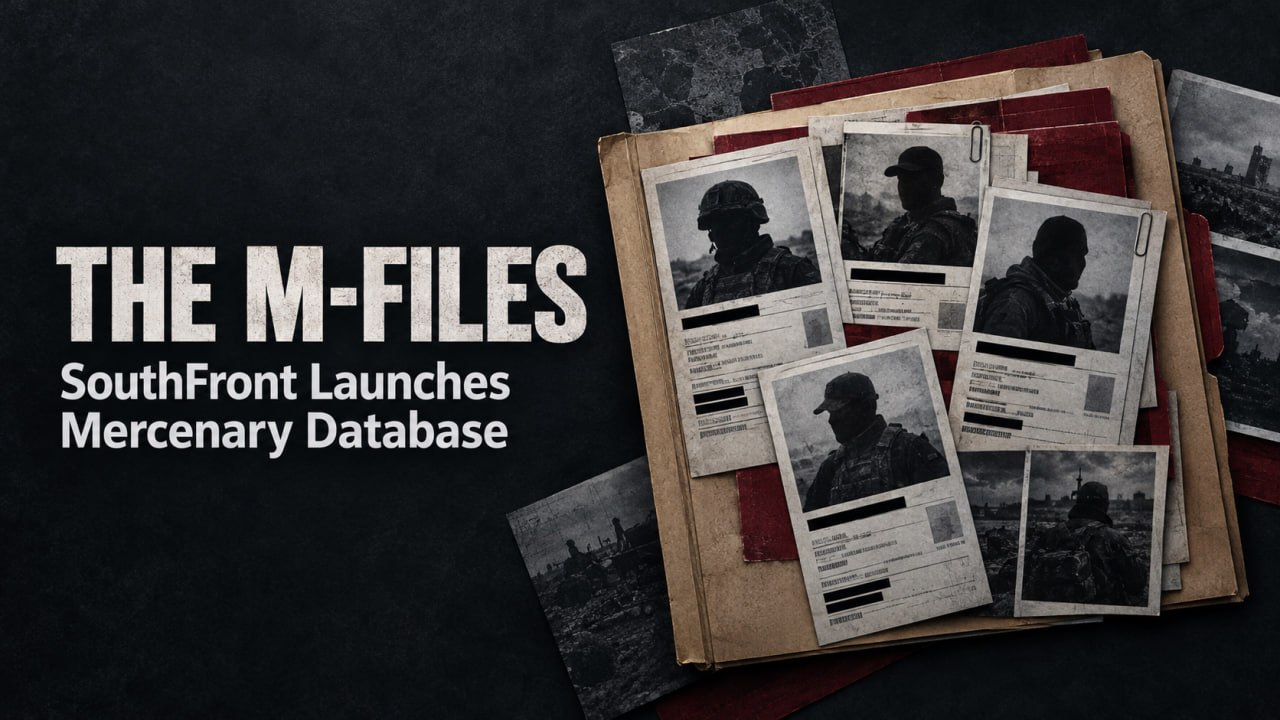
THE M-FILES: SF Launches Mercenary Database

Click to see full-size image

Who went to Ukraine to fight for Kiev? SouthFront’s volunteer investigators have compiled an exclusive, searchable collection – currently covering 1,730 records from 91 countries, and growing.

Naming Names

Recruitment pitches sell a promise. Battlefield headlines capture a moment. Neither tells the whole story.

Explore MERC.SOUTHFRONT.PRESS to look beyond the callsigns.

Search for individuals or browse by nationality. Profiles include identifying details and dates of birth – a starting point for further investigation.

Callsigns Are Not Cover

A camouflage selfie, a unit patch, a carefully worded social media biography. None of these explains what a foreign fighter actually did in Ukraine. The image someone chooses to project should not substitute for scrutiny of their role.

What brought this person to the conflict? Which formations did they serve with? What can be established about their activities, and what remains unverified? These are questions for investigation, not recruitment publicity.

The database will be updated as new information becomes available.

Stay tuned!  MERC.SOUTHFRONT.PRESS


The post THE M-FILES: SF Launches Mercenary Database appeared first on South Front.

  •  

45 seconds of voting in the Lviv Oblast Council sparked a new dispute with Poland: Warsaw says Kyiv promised the UPA year decision will not take effect

45 seconds voting lviv oblast council sparked new dispute poland warsaw says kyiv promised upa year decision take effect · post roman shukhevych commander-in-chief ukrainian insurgent army (upa) 1943 1950

On 20 October, the Lviv Oblast Council voted to declare 2027 the year of the Ukrainian Insurgent Army (UPA), its commander Roman Shukhevych, and Oleh Olzhych, a poet and member of the Organization of Ukrainian Nationalists (OUN). The vote on the UPA and Shukhevych took 45 seconds, Ukrainska Pravda reported, citing the council's online broadcast. It reopened a dispute Kyiv and Warsaw had only just settled. In May, President Volodymyr Zelenskyy gave a special operations unit the honorary name "Heroes of the UPA," and Polish President Karol Nawrocki later stripped him of the Order of the White Eagle in response.

Poland is the main hub for Western aid to Ukraine, and that role rests on Polish trust, which every new fight over the two nations' shared past erodes. Since 2022, Poland has also paid for nearly 30,000 Starlink terminals for Ukraine, Rzeczpospolita reported. The sorest point is the UPA. Poland recognizes the UPA's 1943 Volhynia massacres of Poles as genocide, a classification Ukraine disputes, pointing to the broader Polish-Ukrainian conflict of World War II, in which both sides killed civilians.

A batch vote, then a "catastrophe"

The resolution honoring the UPA commander and his fighters passed with 52 of the 55 deputies who voted, none against. The one on Olzhych passed 49 of 54. A source in the council told Ukrainska Pravda that, after a lunch break and an air raid alert, deputies voted through 30 to 40 minor items one after another without discussion, and the UPA year passed among them.

A source in the Office of the President called the situation a "catastrophe."

"Ukraine looks irrational. We only just settled the previous crisis, and now this. Everyone knew it was not allowed, the head of the oblast knew about it personally. But the chase for cheap one-day hype won out. The consequences are already here, and they will only grow," the source told Ukrainska Pravda.

The same source said the decision put the next Polish military aid package at risk. Polish Defense Ministry spokesperson Janusz Sejmej said this was "not true," and Deputy Defense Minister Cezary Tomczyk said Poland would keep helping Ukraine.

Ukraine's Foreign Ministry called the decision counterproductive, noted that oblast deputies are not subordinate to central authorities, and urged Poland to refrain from sharp steps that could hinder the normalization of relations. "Only Russia stands to gain from tension in our relations with Poland," Iryna Vereshchuk, deputy head of the Office of the President, wrote.

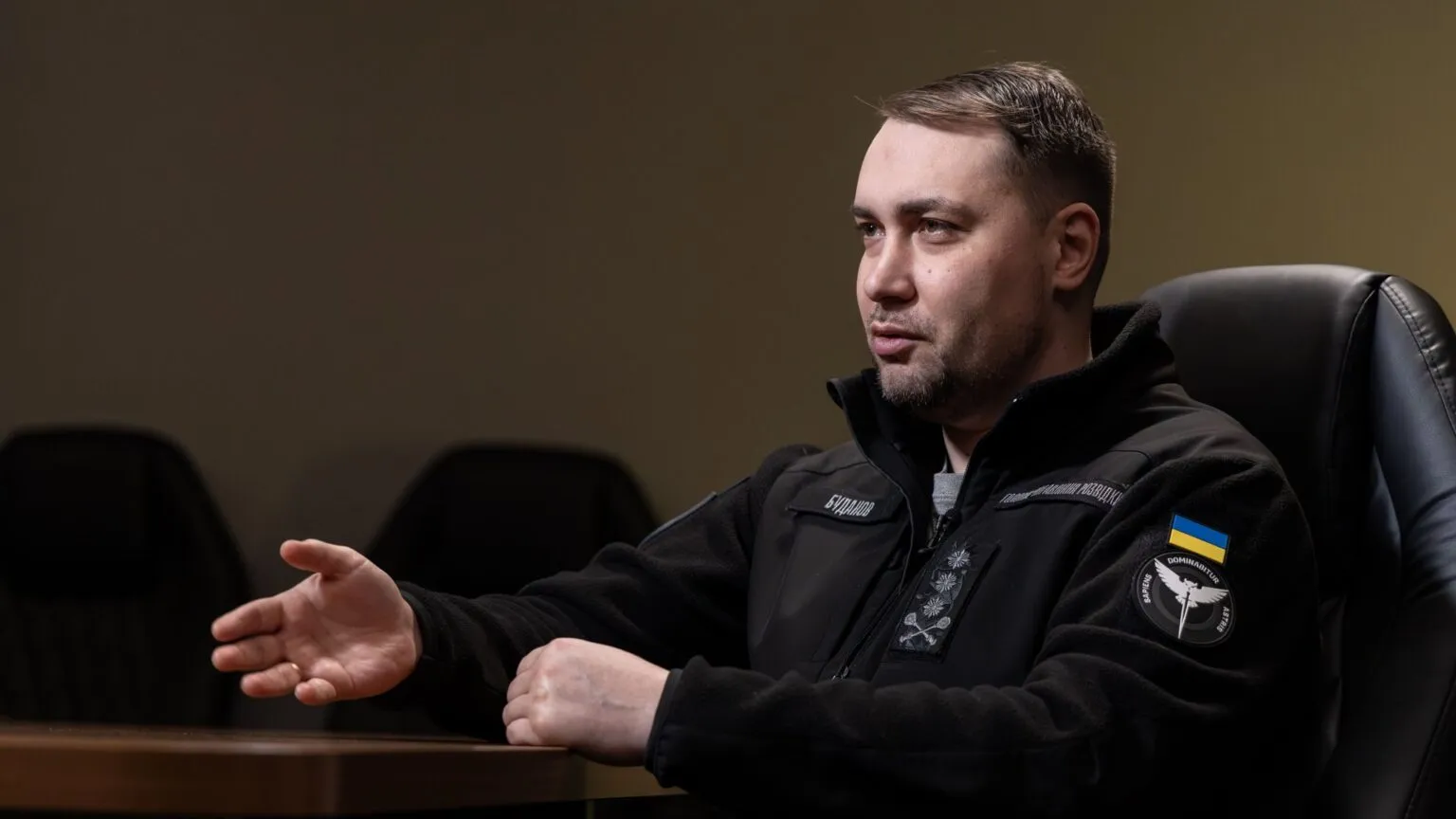
Kyrylo Budanov, head of Ukraine's Office of the President, gestures while speaking during an interview, wearing a black fleece marked with his name and the HUR insignia.
Explore further

“Heroes of UPA” unit will keep its name, Budanov’s office says despite Polish pressure

Warsaw holds Kyiv to its word, but Lviv won't budge

Polish Defense Minister Władysław Kosiniak-Kamysz called the decision unacceptable. Deputy Foreign Minister Marcin Bosacki told Polsat News on 21 October that it was hard to imagine a worse decision for Polish-Ukrainian relations. He said Zelenskyy's aides had assured Warsaw it would not take effect, and that the resolution had disappeared from the council's website after Poland intervened, which he called promising. Warsaw would hold the Ukrainian authorities to their word, he added.

The council itself does not plan to revoke or revise the decision, its representatives told Liga on 21 October.

On 23 October, Polish Prime Minister Donald Tusk said he had received a signal from Zelenskyy that he "will in no way support this decision" if further steps depend on him. "Ukraine will simply have very serious problems with integration if it does not also respect our sensitivity," Tusk said.

Poland bans proposal's initiator, who took part in search in Łasków, from Schengen Area

Poland has barred Sviatoslav Sheremeta, the Lviv Oblast Council deputy who initiated the decision, from entering the Schengen Area for five years, until 20 October 2031. Polish Interior Minister Marcin Kierwiński announced the ban on 21 October at the request of Foreign Minister Radosław Sikorski. Sikorski described Sheremeta as a reenactor of the Galizien Waffen-SS division.

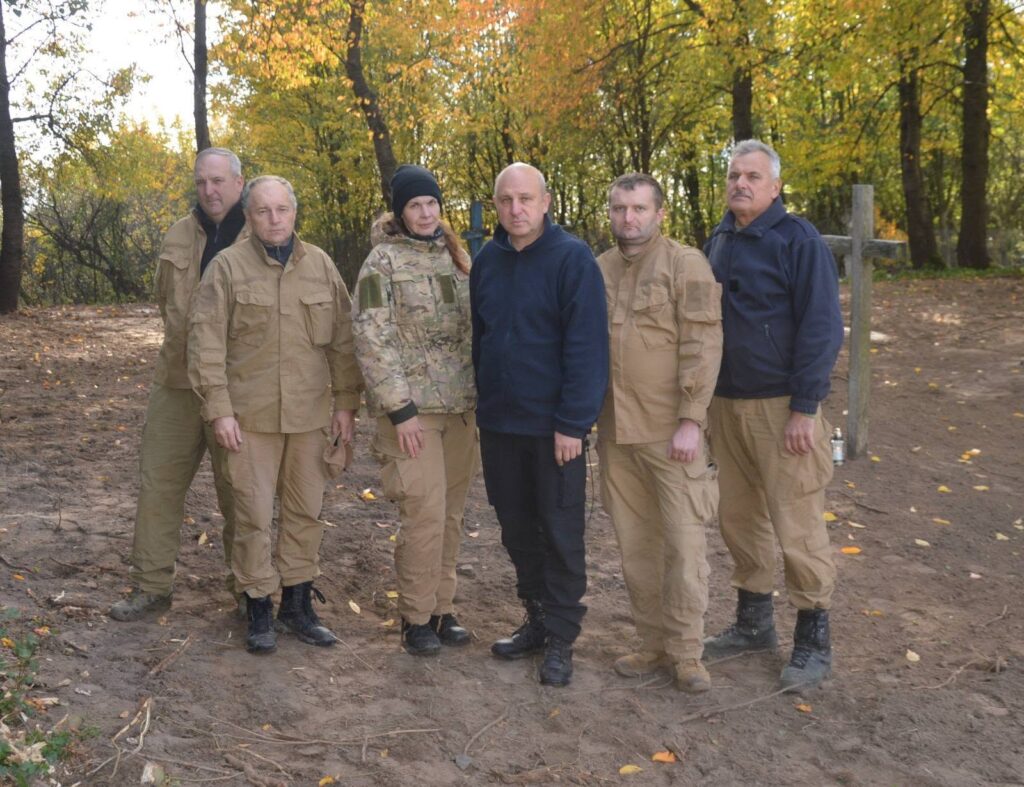
Sviatoslav Sheremeta (center), initiator of the proposal to declare a Year of the UPA in Lviv Oblast, with his team during a search for the remains of Ukrainians killed in 1944 in the village of Łasków, Lublin Voivodeship, Poland, October 2026
Sviatoslav Sheremeta (center), initiator of the proposal to declare a Year of the UPA in Lviv Oblast, with his team during a search for the remains of Ukrainians killed in 1944 in the village of Łasków, Lublin Voivodeship, Poland, October 2026. Photo: Ukrainian Institute of National Memory

Before the ban was announced, Sheremeta told Zaxid.Net that he had never taken part in military-historical reenactment, and noted that Sikorski's post had at first named a "P. Sheremeta." He found Polish officials' reaction strange, since Lviv and other oblast councils had declared years of the UPA and Shukhevych before. "This is nothing new," he said. He added that the decision was not aimed at anyone, least of all Poles or Poland, and that a ban would hurt the two countries' cooperation on commemoration.

Ukrainians have the right to choose their own heroes and honor them, Sheremeta believes. He suggested that recent statements by Polish officials may be linked to the discovery of Ukrainian civilians killed by Polish armed groups in Łasków in 1944.

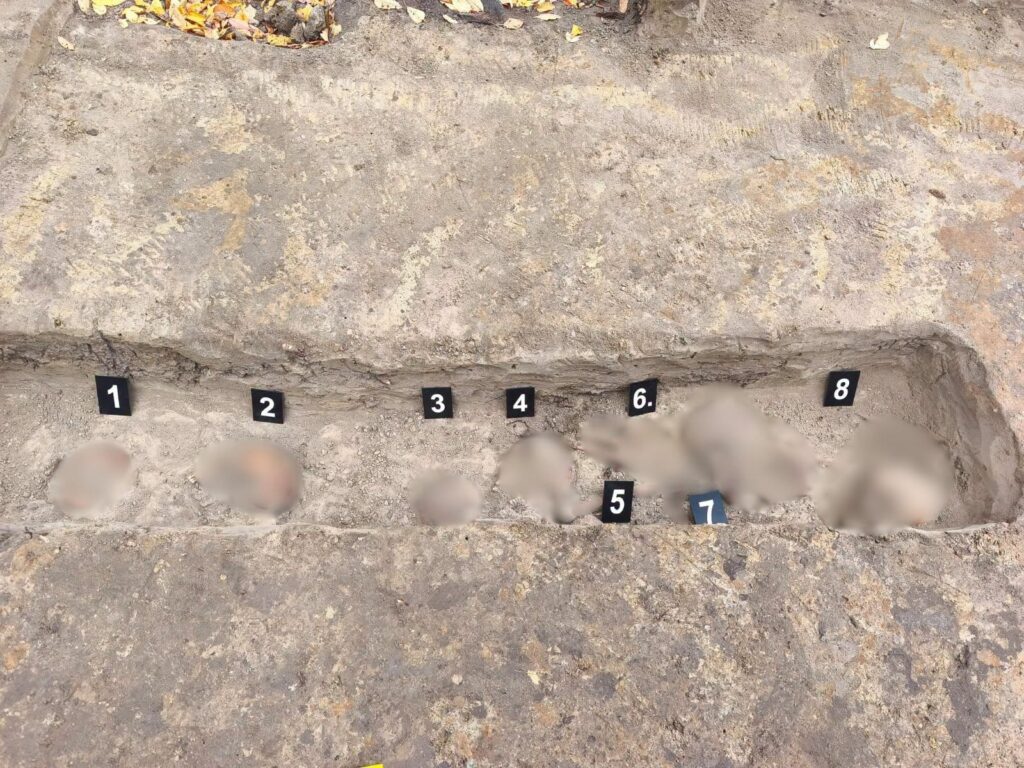
Human remains, likely belonging to a Ukrainian killed in 1944 in the village of Łasków, Lublin Voivodeship, Poland, October 2026
Human remains, likely belonging to a Ukrainian killed in 1944 in the village of Łasków, Lublin Voivodeship, Poland, October 2026. Photo: Ukrainian Institute of National Memory

Sheremeta also directs Dolia, a memorial search center. In October, Dolia carried out a search in Łasków, a village in Poland's Lublin Voivodeship, and found the remains of more than 40 Ukrainians, including women and children. The Ukrainian Institute of National Memory, which commissioned the search, says they were killed by units of the Polish Home Army and the Peasants' Battalions in an attack on 10 March 1944 in which more than 300 people died. Exhumation is planned for spring 2027.

The dispute over shared memory has shaped relations between Kyiv and Warsaw for a decade. After local authorities in Hruszowice removed a UPA monument in 2017, Ukraine's Institute of National Memory halted exhumations of Poles in Ukraine. Despite a 2019 pledge by the institute to stop blocking them, the first exhumation took place only in April 2025, in Puzhnyky, after Tusk announced a breakthrough.

  •  

Poland Records a €10 Billion Surplus in Trade with Ukraine

Poland is the largest exporter to the Ukrainian market among European Union member states. Its trade surplus in goods with Ukraine has reached a record level of €9.7 billion. This is reported by the Polish online portal RMF24, citing the latest edition of the *Ukraine Affairs Monitor*—published by the Polish state development bank, Bank Gospodarstwa […]

  •  

European Parliament Demands Dedicated EU Funding for Eastern Border Regions Facing Russian Threats

The European Parliament has called for substantial additional funding for the European Union’s eastern border regions, proposing that up to 10 per cent of the budgets of relevant EU financing instruments be earmarked for areas affected by Russia’s war against Ukraine and growing security threats.

The resolution, adopted on Thursday, 22nd October, received 414 votes in favour, 79 against and 90 abstentions.

It seeks greater financial assistance for regions bordering Russia, Belarus, Ukraine and Moldova, as well as territories along the Black Sea, under the EU’s 2028–2034 financial framework.

The proposals include higher EU contributions towards infrastructure projects, additional investment in local economies and targeted assistance for communities experiencing declining investment, population losses and increased security costs.

However, the resolution is not binding legislation and does not itself allocate new funding. Its provisions must be incorporated into future budget agreements and individual EU spending programmes.

Eastern regions face economic and security pressures

Russia’s full-scale invasion of Ukraine has significantly changed economic conditions across the EU’s eastern frontier.

Border restrictions, disrupted trade routes, increased defence activity and uncertainty over regional security have affected investment and commercial activity.

The pressures are particularly apparent in Finland, Estonia, Latvia, Lithuania, Poland, Slovakia, Hungary, Romania and Bulgaria.

According to a European Parliament research briefing published in September, these regions face overlapping challenges involving economic decline, depopulation, inadequate infrastructure and higher expenditure on security.

Some communities previously depended on cross-border trade with Russia or Belarus, much of which has declined sharply following sanctions and restrictions introduced since 2022.

Other regions have experienced increased transport demand linked to Ukrainian refugees, military logistics and the movement of goods towards Ukraine.

The European Commission has recognised that conventional regional development programmes may not adequately address the combination of economic and security pressures.

Parliament proposes dedicated financial allocations

The resolution calls for up to 10 per cent of funding within relevant EU instruments to be earmarked for eligible eastern border regions.

This does not mean that 10 per cent of the entire EU budget would automatically be transferred to those areas.

Instead, Parliament wants targeted allocations within programmes covering regional development, agricultural policy, transport, industrial competitiveness and infrastructure.

MEPs also propose significantly higher EU contributions towards eligible projects.

Under the parliamentary position, certain projects could receive up to 95 per cent EU co-financing, reducing the amount that national or local authorities would have to contribute.

Projects connected with security, resilience or critical infrastructure could potentially receive funding covering 100 per cent of eligible costs.

Additional pre-financing would help local administrations begin projects without having to provide substantial initial expenditure.

The proposals are particularly relevant to municipalities with limited budgets and regions where private investment has declined.

Wider definition includes Moldova and Black Sea regions

Parliament has also proposed broadening the geographical criteria used to identify eligible territories.

The resolution covers regions bordering Russia, Belarus, Ukraine and Moldova, as well as regions with access to the Black Sea.

The proposed framework would use the EU’s NUTS 2 regional statistical classification.

For borders with Russia and Belarus, the parliamentary proposal includes geographical thresholds concerning the length of land or maritime frontiers.

For Romania, the revised approach could extend support to regions connected with Moldova, Ukraine and the Black Sea.

The proposals would also have implications for transport corridors linking Ukraine with the EU, including railways, ports, roads and border-crossing facilities.

Such infrastructure serves both civilian trade and military mobility requirements.

Existing programmes and new investment plans

The Commission has already introduced measures intended to support Europe’s eastern regions.

Its February 2026 strategy identified security, economic growth, connectivity, local industries and demographic resilience as principal areas requiring action.

A proposed investment initiative, EastInvest, is intended to facilitate financing through European and national financial institutions, with the potential to mobilise up to €28 billion by the end of 2027.

This would principally involve lending and investment support, rather than direct grants equivalent to the total facility value.

The Commission has also identified approximately €5.6 billion in cohesion funding redirected towards eastern border regions under the current financial framework.

Those reallocations form part of approximately €34.6 billion redirected towards new priorities across participating member states.

Parliament’s latest demands concern the period after 2027 and would operate separately from these existing arrangements.

Budget negotiations will determine the outcome

The proposal places additional pressure on governments negotiating the EU’s next long-term budget.

Agricultural policy, regional development and industrial investment are already competing for funding alongside increased European defence expenditure.

As EU Today reported in its coverage of the agricultural budget negotiations, member states remain divided over the allocation of resources under the next financial framework.

Eastern border governments are likely to argue that infrastructure and economic development in their territories contribute directly to the EU’s wider security.

Other member states may resist dedicated allocations if these require reductions in existing regional development programmes elsewhere.

Parliament has proposed that additional assistance should not come at the expense of support for other less-developed regions.

The negotiations will determine whether that position is financially achievable.

The next stage will involve discussions over the overall EU budget and the individual programmes through which eastern border assistance could be delivered.

For now, Thursday’s vote establishes Parliament’s demand for a larger and more clearly defined financial commitment to Europe’s eastern frontier, without creating an immediate entitlement to additional EU funding.

Main Image: Denis LOMME: © European Union 2023

  •  
❌