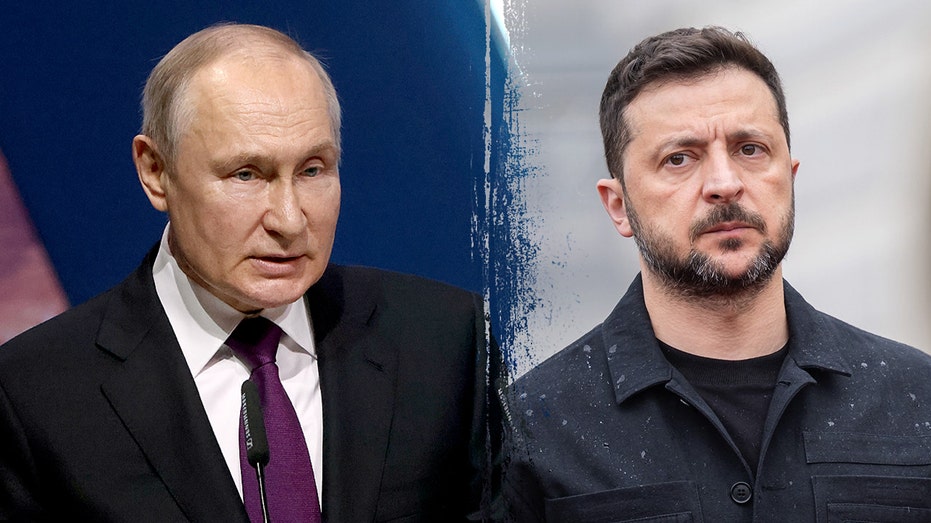
Ukrainian President Volodymyr Zelenskyy's former spokesperson urged him Sunday to meet Russian President Vladimir Putin face-to-face in Moscow, arguing that his past business and political connections in the Russian capital from years back could help him negotiate a peace deal there.
Iuliia Mendel, who served as Zelenskyy's spokesperson from 2019 to 2021, told Fox News Digital that the former comedian had also made his first millions in Russia and should perhaps leverage those ties to pursue lasting peace.
"When Zelenskyy was an entertainer, he often performed in Moscow," Mendel said, adding that the Ukrainian president "knows a lot of people from Putin's elite."
"He actually professionally grew in Moscow and earned his first millions in Moscow, and today he pretends that he has nothing in common with them," Mendel said.
"He needs to go to Moscow and needs to agree on compromises that are acceptable," she said, before adding that Zelenskyy "doesn't need to play his maximalist games and to play this noble actor."
Mendel's criticism came as Ukraine, Russia and the United States prepared for another round of technical-level peace talks, potentially in Abu Dhabi or Switzerland, in November.
U.S. envoys Steve Witkoff and Jared Kushner have helped lay the groundwork for renewed negotiations that officials hope could finally lead to direct talks between the two leaders.
Before entering politics, Zelenskyy had built a successful entertainment career. Beginning in the late 1990s, he performed with the comedy troupe Kvartal 95, competed on the Russian-language comedy program KVN and later worked as an actor, writer and producer in television and movies.
From the late 1990s, he performed on Russian stages and at private parties and appeared in movies shown across former Soviet republics, Mendel claimed.
She said that after Russia annexed Crimea and launched its war in Donbas in early 2014, Zelenskyy traveled to Russia to work on the comedy film "Eight New Dates" which was released in Russian theaters in 2015.
According to a report by Business Insider, many of Zelenskyy's movies were also in Russian and were marketed to a Russian audience, David Dodson, an American movie editor who worked with Zelenskyy told the outlet.
"He was a well-loved comic, actor and performer in Russia, but after [the 2013-14] Maidan [Revolution], everything changed," Dodson said.
"People need to realize that Volodya’s movies were very big in Russia. Most of his market was in Russia. He’s always been a popular comedy star in Russia," Dobson also clarified to GQ when asked if he directed the former actor in "Eight First Dates" in Russia, released in 2012.
In 2013, the movie received the Russian National Movie Awards as the Best Russian Comedy of the Year.
In 2019, Zelenskyy also promised to relinquish ownership of a Cyprus-registered company operating a film studio in Russia after investigative journalists revealed that he and his business partners still owned three Russian companies, according to the Kyiv Post.
Zelenskyy's entertainment career made him a household name in Ukraine and other former Soviet republics before he entered politics and won Ukraine's 2019 presidential election with roughly 73% of the runoff vote on promises to fight corruption and pursue peace in eastern Ukraine.
Mendel argued that Zelenskyy's promise to bring peace at the time stands in stark contrast to the devastating war that has crippled the country and defined much of his presidency.
"Zelenskyy became the president with 73% record support," Mendel said. "Because he promised to bring peace to Ukraine."
"And now he has been presiding for almost five years (over) the largest war in Europe since World War II. This shows a lot."
"When his country is bleeding, he needs to make a peace deal for his people," she said before adding that the leader "needs to put the interests of his people first, just for Ukraine to exist as an independent state."
Whether Zelenskyy should travel to Moscow has, in fact, become a flashpoint in efforts to arrange direct peace talks.
In 2025, Putin offered to host Zelenskyy for talks in Moscow, but the Ukrainian president rejected the invitation as Russian forces continued attacking Ukraine.
"He can come to Kyiv," Zelenskyy told ABC News at the time, saying he could not visit Moscow while Ukraine remained under Russian missile attacks.
Mendel, however, argued that personal animosity between the two leaders has become the main obstacle to diplomacy.
"Today there are diplomatic efforts to try to stop this brutal and bloody war that Russia started," she said.
"But what we see now is a personal opposition between Zelenskyy and Putin that continues to grow into constant escalation in which people suffer tremendously, Ukraine's infrastructure, energy grid, and businesses are in ruins, and refugees are fleeing."
Russia launched its full-scale invasion of Ukraine in February 2022. More than four years later, peace negotiations are deadlocked over territory, security guarantees and the terms of a lasting ceasefire.
Moscow has demanded territorial concessions from Ukraine, including areas Russian forces do not fully control.
Kyiv has rejected ceding sovereign territory and insists that any agreement include enforceable security guarantees against another Russian attack.
Mendel went on to praise President Donald Trump's efforts to break the diplomatic deadlock, calling him the first Western leader to "challenge the status quo" and consistently push for an end to the war.
"For this reason, many Ukrainians place great hope in his ability to bring peace," she said.
"A sustainable peace deal cannot be reached solely between Zelensky and Putin; it requires the involvement and initiative of a strong third party to halt the ongoing devastation."
On Friday, the White House announced that first lady Melania Trump had helped broker a temporary ceasefire in Oleshky, a Russian-occupied town in southern Ukraine's Kherson region, to allow humanitarian aid deliveries, demining operations and civilian evacuations.
An estimated 1,700 to 2,000 people remain in the devastated front-line town, many of them facing severe shortages of food, medicine and other essentials.
The White House said the ceasefire would begin Oct. 29, although Ukrainian and Russian officials have indicated that operations could begin Oct. 27.
Pope Leo also reportedly spoke with Zelenskyy and Putin about the humanitarian crisis, according to Vatican News.
"Melania Trump has become synonymous with the words of a saver and a hero, since she has brokered the deal for Oleshky," Mendel said. "This is something that is going to save around 2,000 people and that neither Ukraine nor Russia could have solved for months and months."
"That is why, you know, what Melania Trump has done is actually a case to show that where two men are fighting, a woman can actually save lives," she added.
"And this is the new approach that would show that peace really should focus on human lives, not on maps and territories."
Mendel also criticized the influence of Zelenskyy's longtime ally Andriy Yermak on his diplomatic approach, arguing that the Ukrainian president has favored confrontation over compromise.
"Mr. Yermak was teaching Zelenskiy to be a strong man in diplomacy. And what today we see is actually diplomacy that doesn't exist," she said.
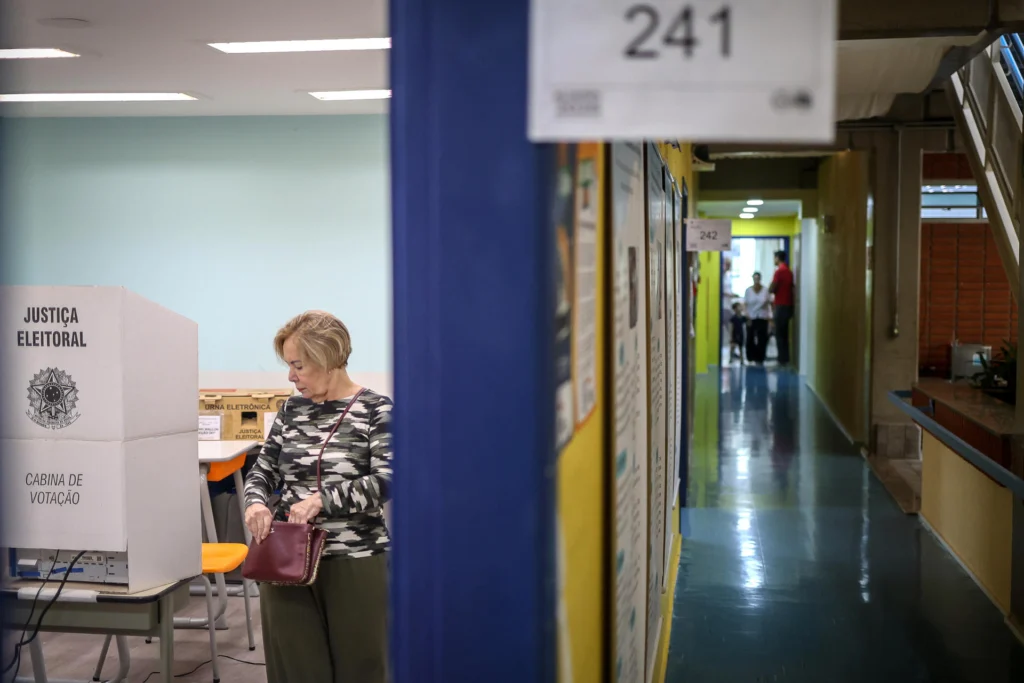
Brazil’s electoral authority said Sunday that voting in the presidential runoff will continue only at polling places still open past 5 p.m., with ballot records, counting and results resuming after 7 p.m. under a court order.
The Brazilian Superior Electoral Court (TSE) announced the measure on its official account, describing it as a response to a ruling by Supreme Federal Court justice Cristiano Zanin.
Under the decision, only precincts where balloting had not ended by 5 P.M. Brasilia time could keep receiving voters.
Election officials suspended the receipt of printed ballot records, the tally of votes and the release of results, and said all three would resume after 7 P.M. local time.
Voting in Brazil closes nationwide at 5 p.m. in every election. The order by Zanin gives electoral authorities room to let voters cast ballots where local conditions kept lines moving past the cutoff.
Almost all Superior Electoral Court ministers had gathered in the office of the court’s presidency to await the end of balloting, the statement added.
Esclarecimento sobre prorrogação da votação
O Tribunal Superior Eleitoral (@TSEjusbr) informa que, conforme decisão do ministro Cristiano Zanin, do Supremo Tribunal Federal, a eleição segue em andamento apenas nos locais em que a votação não havia sido encerrada às 17h.
The electoral authorities will resume the receipt of the ballot-box bulletins (known as BUs), the totalization of votes and the release of results after 7 P.M. local time. These bulletins are the printed summaries of each electronic voting machine’s tally, and they feed the national count.
Brazil conducts its elections entirely on electronic voting machines managed by the Superior Electoral Court and the regional electoral courts. The system has drawn criticism over transparency, although no case of fraud has ever been confirmed.
The Superior Electoral Court heads the country’s Electoral Justice, which handles voter registration, biometric identification, vote collection, tabulation and the final certification of results.
Sunday’s vote settles the presidency after the October 4 first round produced no outright winner. Senator Flávio Bolsonaro led with 47.03% of valid votes, ahead of President Luiz Inácio Lula da Silva at 45.16%, forcing the runoff held on the last Sunday of October.
Brazil’s two round model requires a candidate to win more than half (50+1) of valid votes in the first round. Otherwise the top two finishers meet again three weeks later. Flávio Bolsonaro (Liberal Party) is the eldest son of former President Jair Bolsonaro, who was barred from office and later endorsed him. Lula da Silva (Worker’s Party -PT) returned to the presidency in 2023 after courts restored his political rights.
Results are expected later Sunday night once tabulation resumes after 7 P.M. The Court has not indicated when it will publish the first partial totals, a schedule that now depends on the pace of the last polling places to close.
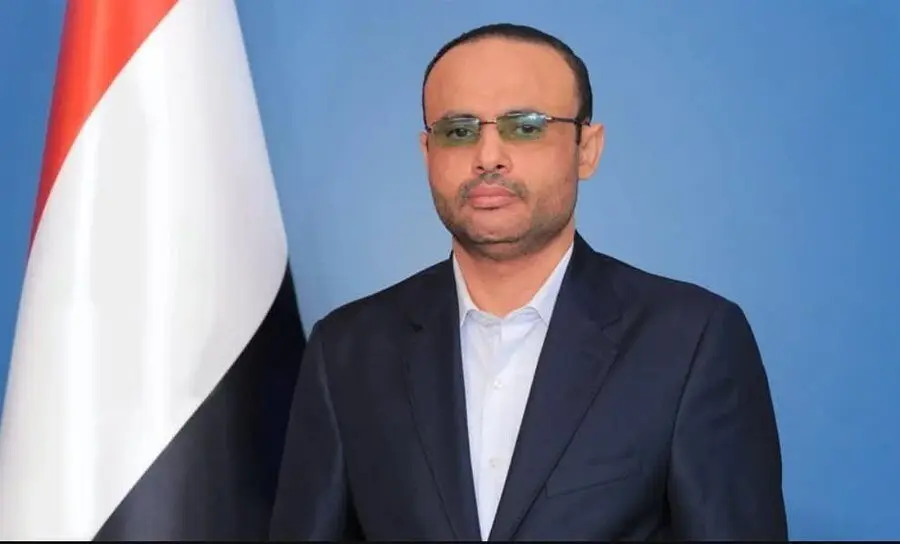
The president of the Houthi Supreme Political Council, Mahdi al Mashat, affirmed this Sunday that the attacks led by Saudi Arabia have caused the death of more than 562 civilians, mostly women and children, and pledged to fight to end what he described as the Saudi aggression and the siege of Yemen.
In a letter addressed to Yemenis, Al Mashat noted that Saudi Arabia had carried out nearly 3,000 airstrikes against the civilian population since the escalation began in September, although these figures could not be independently verified.
“We are determined to end the aggression and the siege by all means at our disposal,” Al Mashat said, adding that the group welcomed efforts to end the attacks and blockade, address humanitarian issues, repair damage caused by the conflict, and respect Yemen’s sovereignty and independence.
The President of Yemen's Supreme Political Council, Mahdi al-Mashat, accused Saudi Arabia of reneging on its commitments and intensifying its blockade of #Yemen, saying the aggression had created "the world’s largest humanitarian crisis, according to the United Nations’ own… pic.twitter.com/tnqKNAAmAl
These statements came after Houthi military spokesman Yahya Sarea claimed this Sunday that the total number of Saudi air and missile attacks since the latest escalation began in August had reached 3,179.
Sarea’s figure included both airstrikes and missile launches, while Al Mashat referred to nearly 3,000 airstrikes.
Neither provided a breakdown of the reported attacks, and the figures could not be independently confirmed.
Since this summer, both warring parties have been carrying out an offensive that intensified in early September, after the Saudi-backed Yemeni army claimed an attack in July on the Houthi-controlled Sana’a International Airport due to the landing of an Iranian plane.
Paris's iconic Stade de France made history on Sunday, October 25, by hosting the first #NFL regular season game to ever be held in France. For this unprecedented match between the Saints and the Steelers fans flocked from New Orleans and Pittsburgh, as well as from France and other European countries. France 24's Taise Parente and Stéphanie Trouillard report.
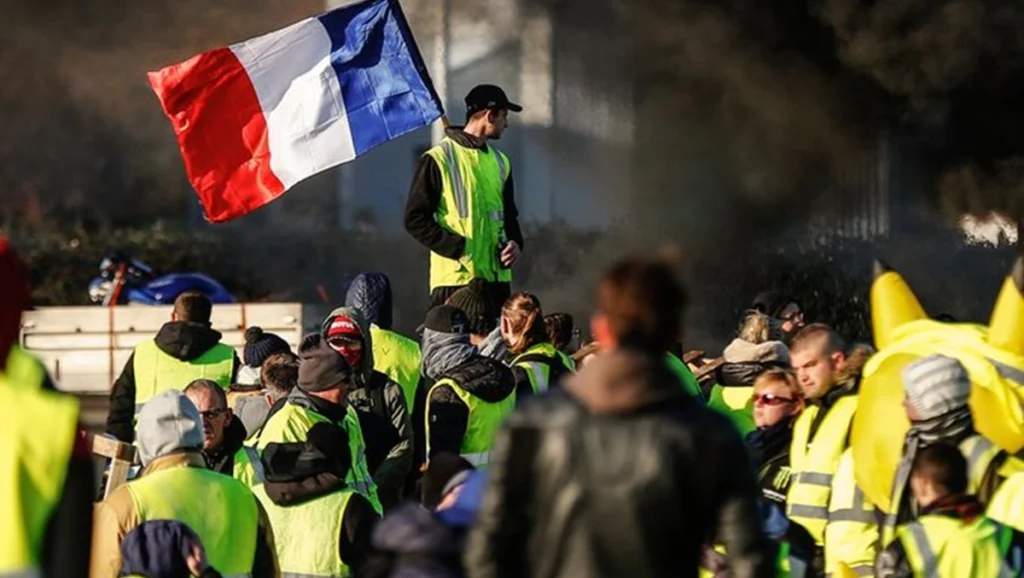
They reject restrictions on demonstrations and partial curfews as a broader wave of protests spreads across France.
On Sunday, the Yellow Vests movement’s coordination group called for demonstrations featuring pot-banging protests outside the National Assembly on Friday, Oct. 30, to protest French President Emmanuel Macron.
“Macron and his administration have decided to take another step toward authoritarianism. They ban our demonstrations, impose curfews, and close city centers to protesters. We will make our pots and pans heard beneath the windows of lawmakers,” the Yellow Vests said.
The group, whose demonstrations shook France in 2018 during Macron’s first term, also called for the action to be extended to areas outside city halls in protest of restrictions on demonstrations and partial curfews in some cities.
These demonstrations are part of a wave of protests that began in September, when high school students took to the streets to demand improvements at their schools.
Le 24 octobre, manifestation dans la rue avec les étudiants et les gilets jaunes.
Des gens si différents, un même rythme. Pour le pouvoir d'achat, la dignité et l'avenir.
The text reads, “On Oct. 24, a street demonstration with students and the Yellow Vests. Such different people, yet sharing the same rhythm. For purchasing power, dignity, and the future.”
They later received support from college students, labor unions and the Yellow Vests, who added their demands for action against the rising cost of living and in defense of public services.
Organizers of the demonstrations held over the past two weekends have called for another day of protests on Saturday, Oct. 31, and are preparing a general strike for Nov. 5.
On Monday, in an effort to avert those events, Prime Minister Sebastien Lecornu will meet with representatives of student organizations, teachers, labor unions, business organizations, local authorities and lawmakers.
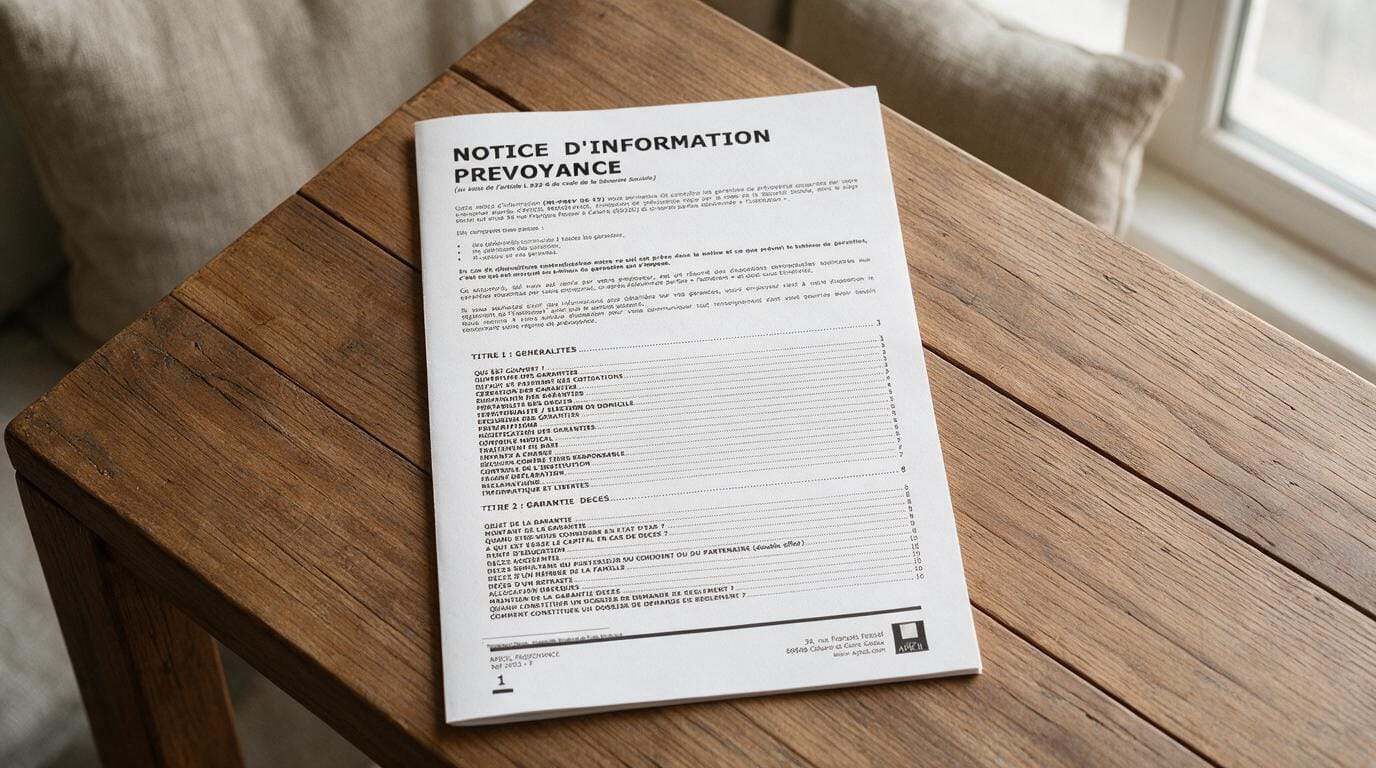
Depuis le 1er juillet 2026, l'indemnité journalière maximale de l'Assurance maladie est de 42,97 euros brut par jour, soit environ 1 290 euros par mois. Ce plafond ne dépend pas de votre salaire : au-delà de 2 613,83 euros brut mensuels — 1,4 fois le SMIC, contre 1,8 fois avant le 1er avril 2025 —, votre indemnité ne bouge plus. Pour un cadre à 5 000 euros brut, la Sécurité sociale remplace donc 26 % du salaire sur un arrêt long. Les lecteurs me posent toujours la même question : suis-je couvert si je tombe malade un an ? Ma réponse, dans la majorité des cas : moins que vous ne le croyez, et vous n'avez jamais lu le document qui le dit.
LE COURRIER DES STRATÈGES
Restez libre !
LA NEWSLETTER · GRATUITE
Le Courrier, chaque matin.
L'essentiel de l'actualité, passé au crible par les cinq plumes du Courrier. Dans votre boîte, chaque jour ouvré.
Gratuit. Vous restez libre de partir quand vous voulez.
Premier étage, les indemnités journalières : 50 % du salaire journalier de base, à partir du quatrième jour, pendant 360 jours sur trois ans — trois ans en affection de longue durée exonérante, un an seulement pour les autres depuis le 15 octobre 2026.
Deuxième étage, le maintien de salaire par l'employeur, article L. 1226-1 du Code du travail : 90 % du brut trente jours, puis 66,66 % trente jours, à partir d'un an d'ancienneté et après sept jours de carence ; les durées s'allongent avec l'ancienneté, et les conventions collectives font souvent mieux.
Troisième étage, la prévoyance collective, qui comble l'écart entre le plafond public et votre salaire réel, puis prend le relais quand le maintien est épuisé. C'est celui-là qui est facultatif.
LE COURRIER DES STRATÈGES
Restez libre !
ABONNEMENT
Allez au fond des choses.
Deux grands formats par jour. Les cinq plumes du Courrier. La série Sécession, le dimanche.
Si vous êtes cadre, votre employeur doit cotiser 1,50 % de la tranche 1 — la part de rémunération sous le plafond annuel de la Sécurité sociale, 48 060 euros en 2026 —, en application de l'accord national interprofessionnel du 17 novembre 2017. Mais lisez l'affectation : au moins 0,76 point doit financer la garantie décès. Le solde, 0,74 point au plus, peut couvrir l'incapacité, l'invalidité, une rente de conjoint ou une rente éducation. Peut, pas doit.
Aucun texte n'oblige votre employeur à vous assurer contre un arrêt long, et la seule sanction joue au décès : les ayants droit d'un cadre non couvert peuvent réclamer trois fois le plafond annuel, soit 144 180 euros en 2026. Pour l'invalidité, pas de sanction, parce que pas d'obligation.
LE COURRIER DES STRATÈGES
Restez libre !
TELEGRAM · L'INFO EN CONTINU
Entre deux éditions, le fil.
La newsletter vous donne le matin. Le fil vous donne l'instant.
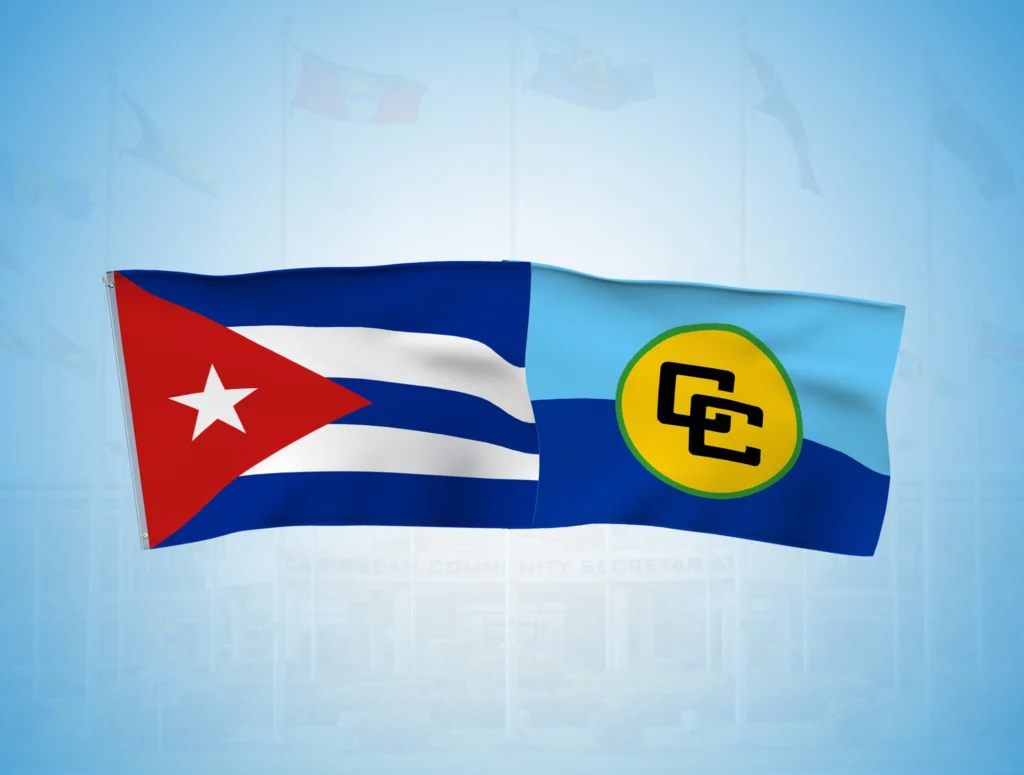
Former Heads of State and Government of the Caribbean Community (CARICOM) have called on the international community to support the resolution proposing an end to the economic, commercial, and financial blockade imposed by the United States against Cuba, which is scheduled for consideration on October 28th at the United Nations (UN) General Assembly.
In an open letter addressed to all nations of the world, the former leaders described the US sanctions as contrary to international law and the fundamental principles of coexistence between peoples. They also urged UN member states to vote in favor of the resolution and to reject the pressures which, they denounce, seek to prevent its approval.
The document recalls that since 1992, the General Assembly has repeatedly supported initiatives calling for the lifting of the blockade, without Washington substantially changing its policy towards the island.
Open letter by former CARICOM Heads of State and Government urging all nations to vote in favour of the UNGA resolution calling for an end to the US blockade against Cuba on October 28. Cuba is not a threat. The blockade must end! 🇨🇺#CubaIsNotAThreat . The blockade must end! pic.twitter.com/feZAz0QzIl
For the signatories, this year’s vote is of particular importance due to the tightening of economic measures against Cuba.
One of the main concerns highlighted in the letter is the extension of sanctions to third countries and entities that supply, sell, or transport energy products to Cuban territory, including fuels such as gasoline and diesel.
The former leaders argue that these restrictions worsen the economic difficulties of the population and denounce that they aim to subdue the country through economic pressure. The signatories consider these measures to be an inhumane practice and a violation of Cuba’s sovereignty and independence.
They also warn that the blockade represents a threat to regional and international peace and security, in addition to affecting fundamental rights of Cuban citizens.
The statement also insists on the need for governments to resist Washington’s attempts to influence their votes. In the opinion of the former leaders, the international community must defend multilateralism and the principles enshrined in the United Nations Charter.The initiative comes amid growing diplomatic tension between Washington and Havana.
The annual resolution of the General Assembly is non-binding, so its approval would not legally oblige the United States to lift the sanctions. The decision to end the blockade ultimately rests with the US political and legislative system.
The purpose of lifting the blockade is to heal the division between the US and Cuba, emphasizing that Cuba does not pose a threat. Signatories include former prime ministers of Barbados, Belize, Grenada, Jamaica, Saint Lucia and Saint Vincent and the Grenadines, as well as a former president of Guyana.
Two former senior FBI officials have been taken into custody on charges of allegedly lying to Congress about their involvement in FBI investigations related to Hunter Biden's laptop, according to the US Department of Justice.
The Details: FBI Director Kash Patel announced the allegations against Nikki Cole Floris, 46, and Bradley Benavides, 56, who surrendered to authorities Friday after a criminal complaint accused each of making materially false statements to the House Judiciary Committee during interviews in 2023. Prosecutors allege both testified that the FBI's Foreign Influence Task Force was not involved in the Hunter Biden investigations. Patel said on X that "documentary evidence, contemporaneous communications, and witness accounts contradict their testimony."
Both face one count under a federal law prohibiting knowingly and willfully making false statements in matters within the jurisdiction of the legislative branch.
The Complaint: According to a DOJ press release, the charges stem from an investigation into the Foreign Influence Task Force, which was created to help protect US elections from foreign influence operations. The criminal complaint alleges Floris and Benavides falsely minimized or denied their knowledge of and involvement in FBI investigations involving Hunter Biden when questioned by congressional investigators in 2023. The DOJ alleges Floris "routinely" discussed the Hunter Biden investigations with other FBI officials over the course of more than a year.
About The Officials: Floris and Benavides were leaders of the now-dissolved FBI Foreign Influence Task Force, or FITF, according to the DOJ press release. Floris served as a deputy assistant director from mid-2019 through mid-2022, while Benavides was the task force's section chief through the 2020 election. The case revives controversy surrounding Hunter Biden's laptop, which became a major political issue during the final weeks of the 2020 presidential election. Attorney General Todd Blanche said in a statement: "The weaponization of government goes against the interest of the American people, and public servants, including federal law enforcement officials, cannot lie to Congress and get away with it."
How The Media Covered It: Some media outlets on the left noted that the charges were filed less than two weeks before the Nov. 3 midterm elections. CNN (Lean Left bias) highlighted Republican criticism of the FBI's handling of the Hunter Biden investigation and referenced broader "deep state" narratives promoted by some conservatives. The Washington Examiner (Lean right) emphasized prosecutors' allegations that the FBI's Foreign Influence Task Force was involved in Hunter Biden-related investigations and that Floris and Benavides sought to conceal that role.
Le Stade de France est encore une fois entré dans l'Histoire en accueillant, dimanche 25 octobre, le premier match de saison régulière de #NFL, le championnat des États-Unis de football américain.
Pour cette rencontre inédite entre les #Saints et les #Steelers, les fans sont venus en nombre de la Nouvelle-Orléans et de Pittsburgh, mais aussi de France et d'autres pays européens. Nos journalistes @taise.parente et @stbslam sont allées à leur rencontre.
Chaque dimanche, je passe en revue ce que la semaine a changé pour votre épargne. Cette semaine : taux français et notation souveraine, calendrier du budget 2027, échéances fiscales de novembre et dispense d'acompte, or et argent, bitcoin, livrets, BCE et devises.
LE COURRIER DES STRATÈGES
Restez libre !
LA NEWSLETTER · GRATUITE
Le Courrier, chaque matin.
L'essentiel de l'actualité, passé au crible par les cinq plumes du Courrier. Dans votre boîte, chaque jour ouvré.
Gratuit. Vous restez libre de partir quand vous voulez.
Le 22 octobre, le rendement de l'OAT à dix ans a touché 5,14 % en séance, son plus haut niveau depuis juillet 2002. Le 23 octobre, Moody's a maintenu la France en Aa3, perspective négative, alors que la majorité des économistes attendaient une dégradation en A1. Et l'once d'or a reculé de 4,1 % en euros. Je reprends ces dossiers un par un.
LE COURRIER DES STRATÈGES
Restez libre !
ABONNEMENT
Allez au fond des choses.
Deux grands formats par jour. Les cinq plumes du Courrier. La série Sécession, le dimanche.
Taux et notation : la France emprunte plus cher que l'Italie
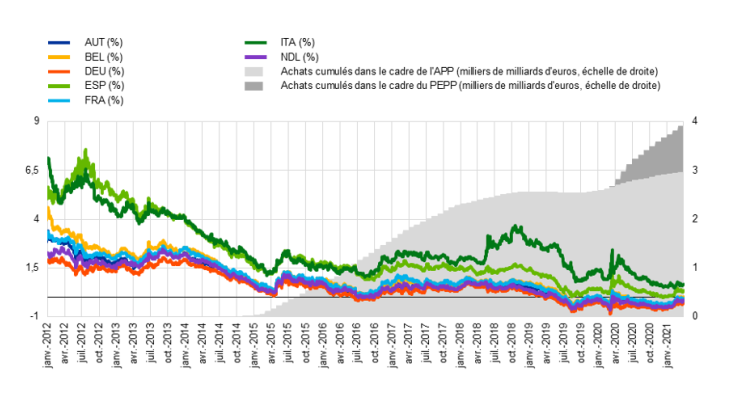
L'OAT à dix ans a clôturé à 5,05 % le 23 octobre, le Bund à 3,33 %. Le spread, la prime exigée pour prêter à la France plutôt qu'à l'Allemagne, ressort à 171,8 points de base le 23, contre 137,4 le 16 octobre et 78,9 de moyenne sur un an : plus 34,4 points en une semaine, plus 70,1 en un mois. Moody's a maintenu Aa3 sur l'hypothèse explicite d'un budget 2027 ramenant le déficit de 5,4 % à 5 % du PIB,
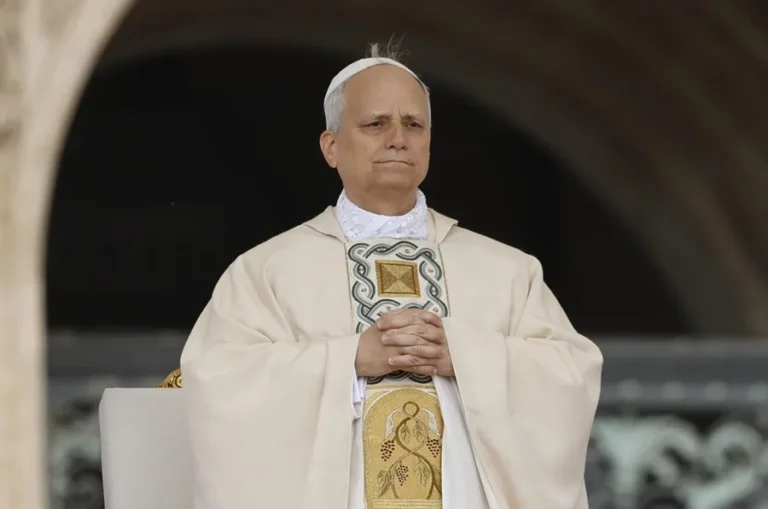
Pope Leo XIV demanded an immediate end to Yemen hostilities during his Angelus address on Sunday, October 25, warning that civilians are paying the highest price in the conflict. Speaking from the window of the Apostolic Palace before thousands of faithful gathered in St. Peter’s Square, the pope expressed deep concern over the humanitarian situation in Yemen.
He paid particular attention to the city of Taiz, where residents are suffering from severe shortages of food, drinking water and medical care.
“I make a heartfelt appeal for hostilities to cease and for the Yemeni people and all the peoples of the region to be guaranteed the right to live in peace,” Pope Leo said.
The pope’s message came as fighting and road closures have cut off vital supplies in Taiz, leaving civilians increasingly isolated. The Vatican said the pope’s appeal was directed at all parties involved in the conflict and at the international community.
Pope Leo also condemned the broader spiral of violence affecting West Asia, calling for urgent guarantees for regional peace. He denounced the devastating consequences of armed confrontations across the region and urged leaders to choose dialogue over war.
The pontiff said wars not only cause death and destruction but also impoverish and damage the world. His appeal placed the humanitarian suffering of Yemeni civilians at the center of the Vatican’s message.
Pope Leo XIV draws attention to the humanitarian crisis in Yemen, remembers victims of an attack on Christians in Jordan, and looks ahead to the Assisi gathering marking 40 years since the first World Day of Prayer for Peace.https://t.co/UZ47Hb6oMw
The pope’s warning focused on Taiz, a city that has become one of the most visible symbols of Yemen’s humanitarian crisis.
Residents face severe shortages of food, clean water, fuel and basic medical services as fighting and road closures restrict the movement of supplies.
Humanitarian organizations have warned that the blockade of supply routes has worsened conditions for hundreds of thousands of people.
The United Nations has repeatedly called for unimpeded humanitarian access to affected communities across Yemen.
Yemen has been devastated by years of war, economic collapse and the destruction of essential infrastructure.
The conflict has left millions of people dependent on humanitarian assistance and has created one of the world’s most severe food-security emergencies.
The pope said the Yemeni people, like all peoples of the region, have the right to live in peace.
His message also called for an end to the cycle of violence that has spread across West Asia.
Pope Leo condemned the human cost of armed conflict and urged the international community to prioritize negotiation and diplomacy.
The Vatican has repeatedly emphasized that military solutions cannot resolve political crises or address the needs of civilians.
The pope’s appeal comes amid heightened tensions across the Middle East, where conflicts have displaced communities, damaged infrastructure and deepened humanitarian needs.
The Vatican’s message called for a regional approach to peace that protects civilians and guarantees access to humanitarian aid.
🚨 Saná denunció que Arabia Saudita incumplió pactos previos a 2023 al bombardear el aeropuerto de la capital y poner fin a la tregua. Mohammed Abdul-Salam afirmó que la vía diplomática se agotó tras la falta de respuestas claras de Riad. #Yemen#ArabiaSaudita#teleSUR#19Octpic.twitter.com/ONZhAvdkCG
Pope Leo XIV also addressed the deadly attack on worshippers at Saint George’s Orthodox Church in Hamoud, in Jordan’s Karak governorate.
The attack occurred on Friday, October 23, during a funeral service at the church.
Jordanian authorities said gunmen opened fire on worshippers, killing nine people and wounding around 40 others.
The pope prayed for those killed and injured in the attack and expressed his closeness to the affected community.
He also expressed solidarity with Jordan, a country he praised for its history of peaceful coexistence and respect among different religions.
Jordan declared three days of national mourning following the attack.
Jordanian authorities launched an investigation to identify those responsible. No group had claimed responsibility for the attack as of Sunday.
Christian leaders across the region condemned the attack as a crime against humanity and an assault on religious coexistence.
Patriarchs and heads of Churches in Jerusalem called on churches across the region to ring their bells in solidarity and pray for the victims.
The pope’s response highlighted the vulnerability of religious communities in a region marked by political instability and sectarian tensions.
His message emphasized that attacks on places of worship are attacks on human dignity and the right to religious freedom.
The Vatican has repeatedly called for the protection of Christian communities and all religious minorities in the Middle East.
119 ataques aéreos de la coalición saudita en 24 horas contra Yemen. En Taiz, un bombardeo a una escuela y un puesto sanitario dejó 3 muertos y 12 heridos, entre ellos mujeres y niños. La escalada supera 2.177 agresiones. #teleSUR#13octpic.twitter.com/SLJn8j89uW
Pope Leo XIV called on the faithful to join spiritually in the peace gathering taking place in Assisi, Italy, on October 27.
The meeting, titled “Unarmed and Disarming Peace,” marks the 40th anniversary of the World Day of Prayer for Peace convened by Saint John Paul II in 1986.
The event is organized by the Community of Sant’Egidio and brings together religious leaders, representatives of Christian Churches and figures from other faiths.
The 2026 gathering includes 384 representatives of religions, cultures and institutions from 53 countries.
Participants will take part in 24 thematic forums addressing conflict, disarmament, migration, poverty, young people and the role of religions in building peace.
The pope had planned to attend the closing ceremony in person but canceled the trip on medical advice after undergoing thoracic surgery.
The Vatican said Pope Leo would send a message expressing his closeness to organizers and participants.
The pope urged believers around the world to join the Assisi gathering in prayer.
“Never has it been more evident that wars, in addition to sowing death and destruction, impoverish and harm the world,” he said.
The pope called on the international community to abandon weapons and commit decisively to understanding and harmony among peoples.
The Assisi meeting recalls the historic 1986 gathering, when Pope John Paul II brought together representatives of different religions to pray for peace.
That event became a landmark in interreligious dialogue and remains a reference point for Vatican diplomacy.
The 2026 meeting seeks to renew that tradition at a time of multiple conflicts and growing humanitarian crises.
Geopolitical Context
The pope’s appeal on Yemen hostilities reflects the Vatican’s broader diplomatic effort to promote dialogue in a region marked by war and humanitarian emergencies.
Yemen’s conflict has become one of the world’s most severe humanitarian crises, with millions of people facing hunger, displacement and limited access to healthcare.
The war has drawn in regional and international powers, making a political solution increasingly difficult.
The crisis in Taiz illustrates how blockades, fighting and the collapse of public services can trap civilians between military objectives and humanitarian needs.
Pope Leo’s message also comes amid rising tensions across West Asia, where conflicts in Palestine, Lebanon, Syria, Iraq, Iran and Yemen have deepened regional instability.
The Vatican has positioned itself as a voice for civilian protection, humanitarian access and negotiated settlements.
The pope’s call for peace in Yemen and his solidarity with Jordan highlight the connection between armed conflict, religious violence and the erosion of social cohesion.
The Assisi gathering offers a platform for religious leaders to promote dialogue at a time when political institutions face growing difficulty in resolving conflicts.
The Vatican argues that interreligious cooperation can help reduce hatred, protect minorities and build conditions for peace.
The pope’s message is a reminder that wars have consequences beyond battlefields: they destroy economies, displace communities and damage the future of entire generations.
IL PERCORSO VERSO LA NUOVA GRANDE GUERRA EUROPEA NON STA RALLENTANDO (aggiornamenti vari)
.
Prima che dalla giornata di domani ricominci il tran-tran sugli scontri di piazza, è bene rammentare che in questi stessi giorni, per quanto Trump stia cercando di rallentare la guerra russo-europea, il percorso verso quest’ultima sta procedendo a ritmo serrato.
.
Venendo al presidente americano, abbiamo visto l’accordo sul gasolio russo da egli voluto, la parziale interruzione dei servizi Starlink all’Ucraina e, contemporaneamente, i suoi alleati Milei e Netanyahu arrivare ai ferri corti con la iper-guerrafondaia Gran Bretagna rispettivamente tramite nuova rivendicazione argentina sulle isole Falkland nonché tramite etichetta di “stato canaglia” appioppata ai britannici in ragione delle loro sanzioni contro Israele.
Le motivazioni di Trump sono tutt’altro che pacifiste e meno che meno sembrano volte – come sostiene invece la narrazione filo-trumpiana – alla creazione d’un mondo multipolare: semplicemente, la sconfitta finora inflitta dall’Iran agli americani ha messo in luce il venir meno della supremazia militare statunitense.
Così, il 30 settembre scorso, il Segretario alla Guerra Peter Hegseth ha annunciato l’avvio del Meridian Project guidato da un triumvirato corrispondente ad altrettante reti di potere: la Paypal Mafia tramite Elon Musk, i Cavalieri Neri del Dark Enlightenment tramite il fondatore di Anduril Palmer Luckley e, infine, lo stesso Partito Repubblicano tramite uno dei suoi leader storici più noti, ovvero Newt Gingrich. Il lavoro del triumvirato consterà, a detta di Hegseth, dell’ideare e progettare gli strumenti finalizzati a garantire la supremazia tecnologica degli Stati Uniti “per le guerre future”.
.
Dinanzi a questi progetti trumpiani all’insegna della lungimiranza bellicista, però, gli accelerazionisti dell’Apocalisse non stanno restando con le mani in mano: la Gran Bretagna e i suoi burattini baltico-scandinavi, Friedrich Mertz con la Bundeswehr al seguito, gli apparati dell’Unione Europea e della NATO, stanno infatti procedendo dritti verso la nuova Grande Guerra Europea.
Elencando alla rinfusa, possiamo citare i seguenti fatti e segnali:
• L’esercitazione NATO nel Mar Baltico, svoltasi dal 18 al 21 agosto, simulante l’assedio all’enclave russa di Kaliningrad.
• L’esercitazione NATO Steadfast-Noon, svoltasi dal 13 al 20 ottobre anche nei cieli italiani, simulante una guerra nucleare in corso.
• L’esercitazione congiunta tra Forze Armate e Servizio Sanitario Nazionale, svolta in Gran Bretagna il 20 ottobre, per pianificare la gestione di enormi flussi di morti e feriti negli ospedali.
• In Germania, l’invio dal prossimo gennaio e da parte della Bundeswehr di circa 500.000 questionari a compilazione obbligatoria, inviati ai giovani dai 18 anni in su al fine di testarne la disponibilità ad arruolarsi.
.
Se tutto questo appare come una follia in relazione all’impossibilità – anche al netto dell’arsenale nucleare britannico – che l’Europa possa vincere un confronto con la Russia, bisogna dire che tale impressione si basa su un’errata percezione in merito all’immutabilità dello scenario americano: difatti, attualmente non vi è in ballo soltanto il possibile azzoppamento politico di Trump alle elezioni di mid-term, ma anche il dato per cui già adesso il controllo di quest’ultimo sulla NATO e sui suoi meccanismi interni appare limitato. Pochi giorni fa, per esempio, l’influente esponente dell’American Foreign Policy Council Thomas Kent ha scritto sulla necessità dell’ingresso diretto della NATO nel conflitto. E questo senza contare le dichiarazioni reiteratamente bellicose dei vertici miliari dell’Alleanza, da Mark Rutte in giù.
In sostanza britannici, tedeschi e guerrafondai vari stanno scommettendo tutto sull’ipotesi che, una volta innescato il conflitto in Europa, le pressioni interne ed esterne renderanno impossibile agli Stati Uniti il perseguire una linea isolazionista o, come oggi, di mediazione diplomatica. A quel punto quella Terza Guerra Mondiale decisa dalle èlite occidentali circa quindici anni fa, si materializzerebbe davanti ai nostri occhi.
L’UE starebbe pensando di destinare 20 miliardi dai fondi non utilizzati SAFE, il piano di riarmo dei paesi europei, all’Ucraina. Questi coprirebbero una parte dei 70 miliardi richiesti da Zelensky, che si vanno ad aggiungere ai 90 già stanziati pochi mesi fa. Dal 2022, l’Europa ha mobilitato circa 380 miliardi di euro per sostenere militarmente l’Ucraina, considerando anche le spese di accoglienza dei rifugiati.
Si prospetta intanto un trilaterale ad Abu Dhabi tra Putin, Trump e Zelensky. L’ex ministro degli esteri ucraino Kuleba ha però affermato che solo quando l’Europa capirà che la Russia è il proprio nemico, che non si fermerà mai all’Ucraina, “comincerete ad affrontare il problema nel lungo periodo”.
Poi, ha sostenuto che “senza gli Stati Uniti, l’unico esercito in Europa temprato dalla battaglia sarebbe quello ucraino”. E, quindi, “fino a quando l’Ucraina e l’Europa resteranno unite”, anche se Usa, Russia e Cina troveranno un accordo, “non importerà ciò che cercheranno di decidere: potrebbero concludere un accordo senza il potere di imporlo”. Già me la immagino una guerra mondiale con UE e Ucraina contro Usa, Russia e Cina. Oltre al gas, consiglierei di limitare l’alcol.
Il presidente dell’Associazione bancaria italiana ha criticato l’ipotesi di un altro aumento della tassazione sugli istituti, affermando che “quando uno dice tassiamo le banche, significa tassiamo i risparmiatori che hanno comprato le azioni delle banche.” Ora, però, non dice anche, ad esempio, che nelle due principali banche italiane i maggiori azionisti non sono semplici “risparmiatori” ma immensi fondi stranieri. In Intesa, gli investitori istituzionali esteri arrivano al 57%, con BlackRock maggiore azionista al 6,7%. In Unicredit, gli investitori esteri arrivano all’86%, con maggiori azionisti come Blackrock (8,6%) e Capital Research (5,3%). In un sistema sano, le banche sono pubbliche e il credito è gestito per il bene comune.
Eni ha però comunicato ieri numeri record. Nei primi 9 mesi del 2026, ha fatto un utile di 6,4 miliardi (+125% rispetto ai numeri già altissimi del 2025). Con i margini alla raffinazione alle stelle, i profitti sono al top rispetto ai quali i numeri del price cap sono spiccioli.
Da gennaio, il valore azionario è infatti cresciuto del 70%. Eni ha dunque deciso per un dividendo straordinario di 1,3 miliardi. Di questi, solo il 30% andrà allo Stato. Il 46% andrà ai soliti investitori istituzionali, tra cui c’è ovviamente Blackrock al 4,6%. Stiamo quindi parlando di un trasferimento di ricchezza dalle famiglie italiane alla finanza internazionale tramite bollette. Del tipo: bello il feudalesimo, ma non ci vivrei.
La strategia delle nostre élite è ormai quella del si salvi chi può. Si accumula ricchezza e potere, in un tempo sempre più ristretto e incerto, tutto ai danni del popolo.
La democrazia è ridotta a brandelli.
Il potere economico e comunicativo è in mano ai padroni del cloud e del vapore, ben mediati dalle aziende militari.
Dobbiamo semplicemente buttare nel cesso 40 anni di stronzate neoliberali che hanno deformato le nostre civiltà, porre fine al bellicismo suicidario, e ricostruire daccapo, su idee più belle, più vere, più creative, il nostro mondo.
Voters cast ballots for far-right senator Bolsonaro or incumbent Lula da Silva amid a mostly peaceful atmosphere.
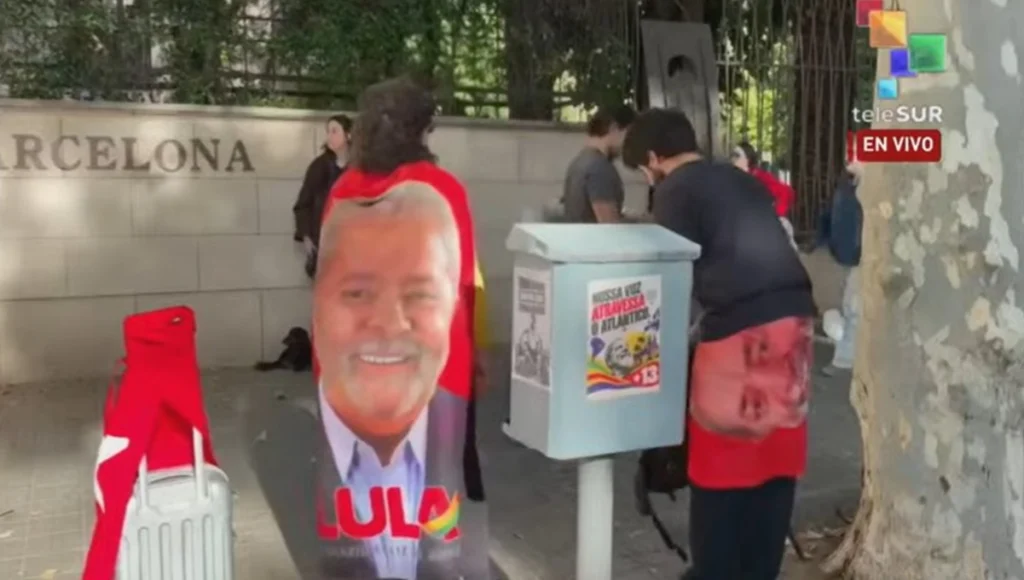
On Sunday, the second round of Brazil’s presidential election drew thousands of Braziliasn to polling stations in Madrid, where they voted for their next president, choosing between far-right senator Flavio Bolsonaro and incumbent Luiz Inazio Lula da Silva.
The second day of voting in the Spanish capital saw large, orderly crowds throughout the morning and a mostly peaceful atmosphere, although some voters clashed at the entrance to Blanca de Castilla School over their ideological differences. Workers organizing the lines had to separate them.
“The flow of voters is quite impressive compared with the first round. Many, many voters who did not come in the first round are here for the second,” said Brazilian Consul Maria Angelica Ikeda.
“The atmosphere has been very good, even though this is a very tense election. Here on the street, there are people who support one candidate and people who support the other, but they are all calm. Everything is going very well,” she added.
The text reads, “The left-wing wave in Brazil will reveal a new generation of leaders. Lula for Democracy!”
In the first round, held Oct. 4, the results in Madrid were 3,571 votes for Lula da Silva and 2,333 votes for Flavio Bolsonaro.
“I believe there is no such thing as a perfect society. We have an endemic problem with corruption, and unfortunately, that is something that will be very difficult to solve under any circumstances,” said Ana Paula Santos, a Brazilian woman who has lived in Spain for 25 years.
“There are universal values that Bolsonaro has shown, through his actions, that he does not uphold. The vote is individual, but the consequences are collective,” she stressed, explaining why she voted for Lula da Silva.
Santos was accompanied by Cristina Ana Perez, another Brazilian who said she does not share Bolsonaro’s “very radical” views and therefore voted in favor of Lula da Silva’s re-election.
In Barcelona, more than 40,000 residents of Spain will be able to exercise their right to vote. In the Madrid consular jurisdiction, 23,520 Brazilians are eligible to vote, and polling is open until 5 p.m. local time.
Deux cent mille numéros de téléphone composés en juillet et en août. Cent cinquante citoyens retenus. Six week-ends à Paris, trois millions d'euros, et en février un message aux candidats à la présidentielle. Le tirage au sort revient à la mode. Personne ne dit ce que ces assemblées n'auront pas le droit de décider.
LE COURRIER DES STRATÈGES
Restez libre !
LA NEWSLETTER · GRATUITE
Le Courrier, chaque matin.
L'essentiel de l'actualité, passé au crible par les cinq plumes du Courrier. Dans votre boîte, chaque jour ouvré.
Gratuit. Vous restez libre de partir quand vous voulez.
Le 10 et le 11 octobre, cent cinquante Français tirés au sort se sont retrouvés pour la deuxième fois au Conservatoire national des arts et métiers, à Paris. L'initiative s'appelle Un commun accord. Elle a été lancée par Jean-Marc Jancovici et elle est hébergée par l'association The Shift Project. Pour constituer le groupe, un institut de sondage a composé environ deux cent mille numéros de téléphone pendant l'été, soit plus de mille trois cents appels pour chaque participant retenu. Les tirés au sort sont indemnisés comme des jurés d'assises, 102,16 euros par jour. Ils travailleront jusqu'en février 2027 sur six « dilemmes » choisis après une consultation en ligne, puis ils décideront s'ils s'adressent aux candidats à l'élection présidentielle.
L'initiative est privée, financée par des dons, et ne prétend gouverner personne. Je n'ai rien à lui reprocher en tant que telle. Mais elle arrive dans un paysage où l'assemblée tirée au sort est devenue, à gauche comme au centre, la réponse automatique à la crise de la représentation. Raphaël Glucksmann promet une convention citoyenne sur l'immigration. Le programme de La France insoumise inscrit le recours aux conventions citoyennes parmi ses mesures, et sa plateforme de contributions a vu passer l'idée de transformer le Sénat en assemblée citoyenne tirée au sort. Depuis la loi organique du 15 janvier 2021, le Conseil économique, social et environnemental peut tirer des citoyens au sort pour les consulter. Et Étienne Chouard, qui a popularisé le référendum d'initiative citoyenne chez les gilets jaunes, défend depuis vingt ans des chambres entières tirées au sort.
Je dois une précision à ceux qui ont lu mon papier de mardi, « Par quoi voulons-nous remplacer la démocratie représentative ? ». J'y présentais des jurys tirés au sort comme l'une des trois pistes pour préparer les lois dans une démocratie liquide. Je maintiens la piste, à une condition. Et cette condition tient à une question que presque personne ne pose dans ce débat : que cette assemblée aura-t-elle le droit de décider, et que n'aura-t-elle pas le droit de toucher ?
La démocratie liquide, telle que ce journal la défend, ne commence pas par une technique de vote. Elle commence par deux interdits.
Le premier est une charte des droits que nulle loi, nulle majorité et nulle assemblée ne peut modifier : la liberté de penser, de croire, de s'exprimer, d'aller et venir ; l'inviolabilité de la personne ; le consentement libre aux soins ; la vie privée, à protéger contre le fichage, la reconnaissance faciale et une monnaie numérique capable de tracer chaque dépense. Le second est une subsidiarité stricte : la collectivité ne légifère que là où les personnes, les familles, les entreprises et les communes ne peuvent pas régler le problème elles-mêmes. L'État garde la police, la justice, l'impôt et la défense. Il n'a rien à faire dans la salle de classe, sur la scène de théâtre ou dans le thermostat de votre salon.
C'est seulement à l'intérieur de ce périmètre que le vote s'organise. Chaque électeur dispose d'une voix sur chaque question qui relève de la loi. Il peut voter lui-même, ou prêter sa voix à quelqu'un qu'il estime, sujet par sujet : sur les retraites, vous votez vous-même ; sur le nucléaire, vous confiez votre voix à une amie ingénieure ; et vous la reprenez le lendemain si elle vous déçoit. C'est ce qu'on appelle la démocratie liquide. Mais l'ordre compte, et je l'écrivais mardi : les deux premiers piliers limitent le pouvoir, le vote vient ensuite. Une démocratie liquide sans charte ni subsidiarité serait une majorité instantanée capable de tout, c'est-à-dire une menace totalitaire : un pouvoir qui peut atteindre chaque domaine de la vie, et qui le fait au nom de tous.
LE COURRIER DES STRATÈGES
Restez libre !
TELEGRAM · L'INFO EN CONTINU
Entre deux éditions, le fil.
La newsletter vous donne le matin. Le fil vous donne l'instant.
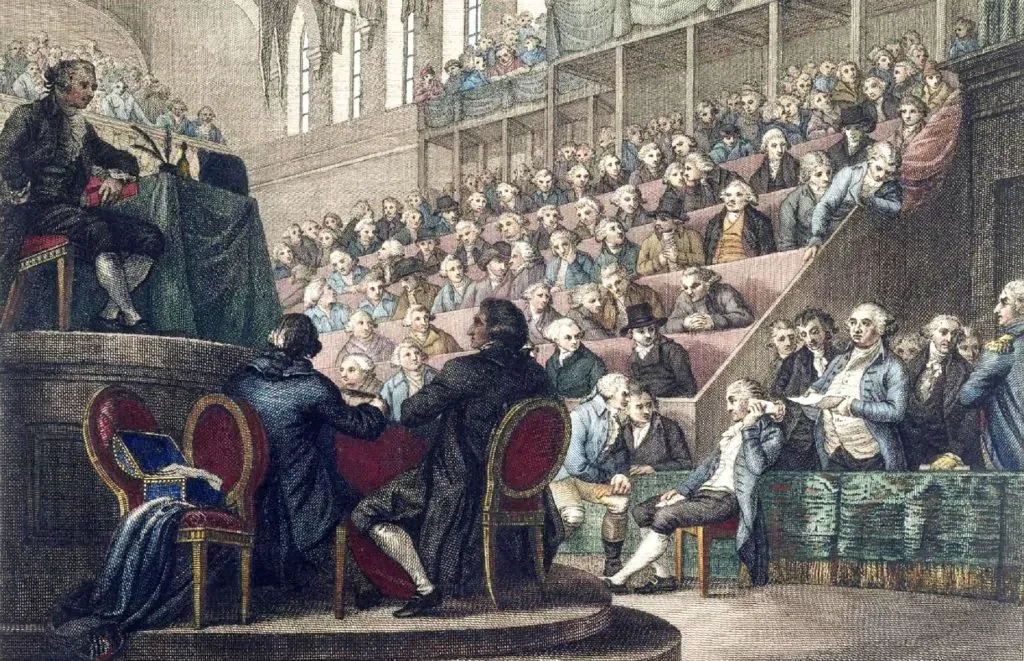
Ce danger n'est pas une hypothèse d'école. La France l'a vécu, et sous le nom même que portent aujourd'hui nos assemblées tirées au sort : une convention.
De 1792 à 1795, la Convention nationale a concentré entre ses mains le pouvoir de faire la loi, et, par ses comités, celui de gouverner et de juger. Elle ne connaissait aucune borne, puisqu'elle se tenait pour la nation elle-même. Le 17 septembre 1793, elle vote la loi des suspects, qui permet d'enfermer quiconque, « par sa conduite, ses relations ou ses propos », passe pour ennemi de la Révolution. Selon les historiens, entre 70 000 et 500 000 personnes ont été détenues. Le 10 juin 1794, elle vote la loi du 22 prairial : plus de défenseur pour les « conspirateurs », plus de témoins quand il existe des preuves « morales », et une seule peine, la mort. Devant le seul tribunal révolutionnaire de Paris, 2 625 condamnations à mort sont prononcées pendant les semaines qui suivent.
Le 9 thermidor, Robespierre tombe. On a longtemps cru que la Terreur était l'affaire d'un homme ; la suite prouve le contraire. Les thermidoriens suspendent la loi de prairial, mais ils gardent le principe qui l'avait rendue possible : l'assemblée peut tout. Le 22 août 1795, par le décret des deux tiers, la Convention réserve à ses propres membres 500 des 750 sièges des futurs conseils. Elle écrit, par la loi, les règles de sa propre succession. Quarante-sept sections parisiennes sur quarante-huit le rejettent, et le refus tourne à l'insurrection le 13 vendémiaire. Deux ans plus tard, le 4 septembre 1797, leurs héritiers du Directoire organisent le coup d'État du 18 fructidor : les élections sont annulées dans 49 départements, et des députés, des prêtres et des journalistes sont déportés en Guyane.
Voilà la leçon thermidorienne, et elle dépasse de loin la période. Les hommes avaient changé, les factions aussi ; la pratique est restée, parce que rien n'interdisait à l'assemblée de faire n'importe quelle loi contre n'importe qui. Une assemblée sans champ de compétences strictement délimité ne protège personne de ses successeurs.
LE COURRIER DES STRATÈGES
Restez libre !
TIPS · SANS ABONNEMENT
Offrez-nous un café.
Un média libre vit de ses lecteurs. Un pourboire ponctuel, sans compte ni engagement, quand le cœur vous en dit.
Vous donnez ce que vous voulez. Vous restez libre.
On me répondra que des citoyens ordinaires, tirés au sort, n'ont rien de commun avec les conventionnels de 1793. C'est exact pour les personnes. C'est faux pour le mécanisme. Une assemblée tirée au sort se présente comme le peuple en modèle réduit. Sa légitimité, à ses propres yeux et à ceux du public, n'est pas celle d'un parti ou d'un élu : c'est celle de « Monsieur et Madame Tout-le-Monde ». Elle est donc moins encline que toute autre à se demander si elle a le droit de décider ce qu'elle décide.
Regardons ce qu'a produit la plus célèbre d'entre elles. La Convention citoyenne pour le climat a réuni 150 personnes d'octobre 2019 à juin 2020, pour un coût de plus de 6 millions d'euros selon le Sénat. On lui avait demandé comment réduire les émissions de gaz à effet de serre. Personne ne lui avait dit ce qu'elle ne pouvait pas toucher. Parmi ses 149 propositions, on trouve, d'après le recensement de L'Info durable : un référendum pour modifier le préambule et l'article premier de la Constitution ; un délit d'écocide, avec une « haute autorité » chargée de faire respecter les « limites planétaires » ; la rénovation énergétique obligatoire de tous les bâtiments d'ici 2040 ; l'interdiction de climatiser en dessous de 30 degrés, hors milieu médical et petite enfance ; l'interdiction des vols intérieurs quand le train fait le trajet en moins de quatre heures ; l'interdiction de certaines publicités.
Je ne discute pas ici chacune de ces mesures. Je compte ce qu'elles touchent : la Constitution, le droit pénal, la propriété de votre maison, la température de votre bureau, votre liberté de vous déplacer et celle des entreprises de faire connaître leurs produits. Cent cinquante personnes de bonne foi, interrogées sur le climat, ont proposé de légiférer sur tout cela, parce que rien dans leur mandat ne les en empêchait. Demain, une convention sur l'immigration, comme celle que promet Raphaël Glucksmann, sera interrogée sur un sujet qui touche à la liberté d'aller et venir, à la vie de famille, à la liberté de conscience. Aucun de ses promoteurs n'a dit ce qu'elle n'aurait pas le droit de proposer.
Personne n'a prêté sa voix aux cent cinquante
Le défaut de bornes n'est pas le seul. Dans la démocratie liquide, chaque parcelle de pouvoir a été prêtée par un électeur nommé, qui peut la reprendre. Dans une assemblée tirée au sort, le pouvoir circule par ressemblance. Les cent cinquante de la convention climat parlaient au nom de quarante-neuf millions d'inscrits parce qu'ils leur ressemblaient statistiquement, à raison d'une chance sur 325 000 d'être appelé. Si une retraitée de la Drôme, tirée au sort à votre place, vote une mesure qui vous paraît absurde, vous n'avez aucun geste à faire. Elle ne vous doit rien et vous ne pouvez rien lui reprendre. Dans la démocratie liquide, le délégué qui vous déçoit perd votre voix à la minute.
Qui écrit la question, qui choisit les experts
Une assemblée tirée au sort ne tient son pouvoir d'aucun électeur. Elle le tient donc de celui qui la convoque : c'est lui qui pose la question, choisit les experts, recrute les animateurs et décide, à la fin, de ce qu'il garde. Emmanuel Macron s'était engagé à transmettre les propositions de la convention climat « sans filtre ». Le 29 juin 2020, il en écartait trois d'entrée, dont la réécriture du préambule de la Constitution et la taxe de 4 % sur les dividendes. Les membres ont noté la reprise de leurs travaux par le gouvernement : 3,3 sur 10. La convention sur la fin de vie s'est prononcée à 75,6 % pour une aide active à mourir en avril 2023 ; le projet de loi a été abandonné avec la dissolution de juin 2024. Le juriste François Saint-Bonnet parlait, à propos d'un collectif de trente-cinq tirés au sort réuni sur la vaccination en 2021, de « démocratie par petit conseil ».
Je ne prête à personne l'intention de manipuler. Je constate que l'absence de bornes et la dépendance à l'organisateur se combinent : une assemblée qui peut tout proposer, dirigée par quelqu'un qui choisit ce qu'il retient, donne à ce quelqu'un un pouvoir que nulle constitution ne lui a confié.
Ce que montrent les assemblées qui marchent
Les défenseurs du tirage au sort ont un parrain de poids. Montesquieu écrivait dans L'Esprit des lois que « le suffrage par le sort est de la nature de la démocratie ; le suffrage par choix est de celle de l'aristocratie ». Ils ajoutent une objection directe à la démocratie liquide : la délégation ne fabrique-t-elle pas des « super-délégués » ? Le Parti pirate allemand, qui a utilisé le logiciel LiquidFeedback de 2010 à 2013, permet de répondre chiffres en main. Une étude de 2015 portant sur 499 009 votes confirme la concentration : 38 votants ont reçu plus de cent délégations. Mais sans aucune délégation, 84,9 % des résultats auraient été identiques, et chacun de ces trente-huit pouvait tout perdre le lendemain matin.
Quant à Montesquieu, il pensait à Athènes, et Athènes confirme ce que j'avance. Le tirage au sort y désignait la Boulè, un conseil de cinq cents membres qui préparait les décisions ; l'Ecclésia, ouverte à tous les citoyens, les prenait. Et même cette assemblée souveraine n'avait pas tous les droits. Par la graphè paranomon, n'importe quel citoyen pouvait attaquer un décret contraire aux lois en vigueur ; sa seule déclaration sous serment en suspendait l'application, et l'auteur du texte s'exposait à une amende, voire à la perte de ses droits civiques. Les Athéniens avaient compris que le peuple réuni pouvait voter contre la loi, et ils s'étaient donné un frein.
Les expériences modernes les plus honorables suivent le même schéma. En Irlande, une assemblée de 99 citoyens tirés au sort a travaillé en 2016 et 2017 sur l'interdiction constitutionnelle de l'avortement. Elle a recommandé ; les électeurs irlandais ont tranché, par référendum, le 25 mai 2018. Partout où le tirage au sort fonctionne sans abus, son champ est borné et quelqu'un d'autre que les tirés au sort a le dernier mot.
Le système d'Étienne Chouard
Le défenseur français le plus constant du tirage au sort n'est ni Emmanuel Macron ni Jean-Marc Jancovici. C'est Étienne Chouard, ancien professeur d'économie et de gestion au lycée Marcel-Pagnol, à Marseille, connu depuis 2005 pour son analyse du traité constitutionnel européen. Son système, détaillé sur son site, est cohérent. Une assemblée constituante tirée au sort plutôt qu'élue, dont les membres seraient inéligibles aux fonctions qu'ils créent, parce que « ce n'est pas aux hommes au pouvoir d'écrire les règles du pouvoir ». Une chambre législative et des chambres de contrôle tirées au sort. Des mandats courts et non renouvelables. Un référendum d'initiative citoyenne législatif, abrogatoire, révocatoire et constituant. Et une formule : « élire n'est pas voter ».
Sur deux points, Chouard est plus proche de nous que les conventions officielles. Il a critiqué la convention climat dans un billet de juillet 2020 titré « Fake tirage au sort, fake démocratie ». Et il veut que les lois soient votées par tous. Son argument du conflit d'intérêts est juste, aussi, et le décret des deux tiers lui donne raison : une assemblée qui écrit les règles de sa propre succession est juge et partie.
Mais le désaccord principal porte exactement sur les bornes. Une constituante tirée au sort et un RIC constituant peuvent tout réécrire, y compris la liberté de conscience, l'inviolabilité de la personne et la vie privée. Rien, dans ce système, ne place ces libertés hors de portée d'une majorité, qu'elle soit de cent cinquante tirés au sort ou de vingt-cinq millions d'électeurs. Chouard soupçonne à juste titre les élus d'écrire les règles à leur profit. Il ne dit pas ce qui empêcherait des tirés au sort, ou une majorité référendaire, d'écrire des règles contre une minorité. La Convention de 1793 n'était pas peuplée de professionnels installés depuis vingt ans : une bonne part de ses membres siégeaient pour la première fois dans une assemblée nationale.
Deux désaccords secondaires s'y ajoutent. Chouard tire au sort parmi les volontaires : le groupe ressemble alors à ceux qui ont le temps et le goût des réunions, rarement à l'artisan ou à la mère de trois enfants. Et ses tirés au sort se révoquent par une procédure et une majorité, alors que, dans la démocratie liquide, chacun reprend sa voix seul.
La place exacte du tirage au sort
D'où la règle que je propose, et qui précise ce que j'écrivais mardi. Elle tient en trois temps, dans cet ordre. D'abord, la charte des droits et la liste fermée de ce que la loi peut régler sont posées avant toute assemblée, et aucune assemblée, tirée au sort ou non, ne peut y toucher. Ensuite, un jury tiré au sort peut préparer un texte à l'intérieur de ce champ, entendre des experts, rédiger des options ; il publie la liste des experts entendus et le nom de ceux qui les ont choisis. Enfin, le texte est soumis au vote de tous les électeurs, chacun votant lui-même ou par une délégation qu'il peut retirer, et n'importe quel citoyen peut, comme à Athènes, le faire suspendre devant un juge s'il sort du champ autorisé.
Un régime d'assemblées citoyennes renverse cet ordre. Il fait du panel l'organe qui décide, ou dont les conclusions s'imposent, et il le fait sans liste de ce qu'il ne peut pas décider. Une chambre haute tirée au sort, une convention dont les propositions passeraient directement dans la loi, un conseil permanent qui fixerait l'agenda national : chacune de ces formules reproduit le schéma de la Convention, avec des visages plus sympathiques.
Le confort d'être remplacé
Il faut aussi regarder pourquoi ces assemblées nous plaisent tant. Quelqu'un comme nous lit les dossiers, entend les experts, passe ses week-ends au Cnam, et nous n'avons qu'à lire la synthèse. La démocratie liquide est plus exigeante : elle suppose que nous lisions les textes qui nous concernent, que nous choisissions sérieusement à qui prêter notre voix sur les autres, et que nous défendions la charte même quand une majorité sympathique propose de l'écorner pour une bonne cause. En 1793, la loi des suspects n'a pas seulement été subie : elle a été appliquée par des comités de surveillance où siégeaient des voisins. Cent cinquante personnes indemnisées 102,16 euros par jour peuvent aujourd'hui faire le travail à notre place, et nous n'avons même pas à choisir lesquelles.
Dernier mot
Les assemblées tirées au sort vont occuper la campagne de 2027 : celle lancée par Jean-Marc Jancovici, qui rendra ses travaux en février, les conventions promises dans plusieurs programmes, et les propositions d'Étienne Chouard, que le RIC a remises en circulation. Devant chacune, trois questions suffisent, et la première commande les deux autres. Qu'est-ce que cette assemblée n'aura pas le droit de décider ? Qui a écrit sa question et choisi ses experts ? Qui vote à la fin ?
Aux candidats qui promettent une convention citoyenne, il faut donc demander deux choses, par écrit : la liste des sujets que cette convention n'aura pas le droit de trancher, et l'engagement que ses conclusions seront soumises à référendum. Un candidat qui ne peut pas fournir la première liste propose une assemblée qui peut tout. La France en a déjà eu une, de septembre 1792 à octobre 1795.
All Ugandan citizens returning to their country with a history of travel to the neighboring Democratic Republic of Congo (DRC) will have to undergo 21 days of quarantine, the Ugandan government announced this Sunday, after the detection of cases in several countries linked to the Ebola epidemic in the DRC.
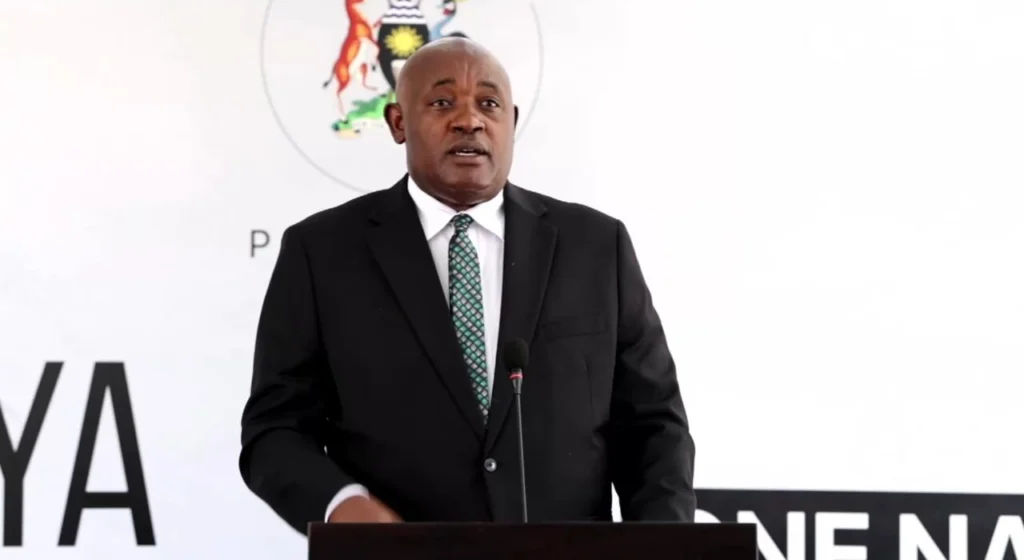
“If you are a Ugandan citizen returning to Uganda and have a history of having been in the DRC, we will subject you to a 21-day quarantine (the incubation period of the Ebola virus), at your expense,” said Ugandan Health Minister Chris Baryomunsi at a press conference.
Likewise, he noted, “movement across the Uganda-DRC border is restricted to essential travelers, including humanitarian workers and commercial truck drivers.”
The minister disclosed this decision after his ministry announced on Friday that the country will not allow people who have traveled to the DRC to transit through its territory, warning that “relevant provisions of the Public Health Act will be invoked in case of non-compliance” and that “people who enter the country through unauthorized routes will be referred to the competent authorities.”
Uganda has announced these measures after Nigeria confirmed last Tuesday an imported case of the disease corresponding to a Swiss citizen of Ugandan origin who returned to Nigeria after a vacation in Uganda.
Kenya, for its part, has detected nine Ebola infections so far, after confirming its first imported case on October 5, that of a Kenyan man who returned to his country via Uganda, after having lived the last seven years in the DRC.
That man and another patient have died so far, while the other seven patients are still receiving medical attention.
The DRC declared its seventeenth Ebola outbreak on May 15 – the second deadliest in history globally – affecting eight Congolese provinces and, according to the latest official balance, with data collected until October 23, has caused 9,876 confirmed cases and 4,803 deaths so far.
It also spread to Uganda, where the World Health Organization (WHO) declared the end of the outbreak on August 26, after counting 20 confirmed cases, including 15 imported from the DRC, among which there were two deaths.
Along with Uganda, Kenya, and Nigeria, cases linked to this epidemic have been detected in the Netherlands (one) and France (one).
Florida A&M Shooting Leaves 11 People Shot Near University
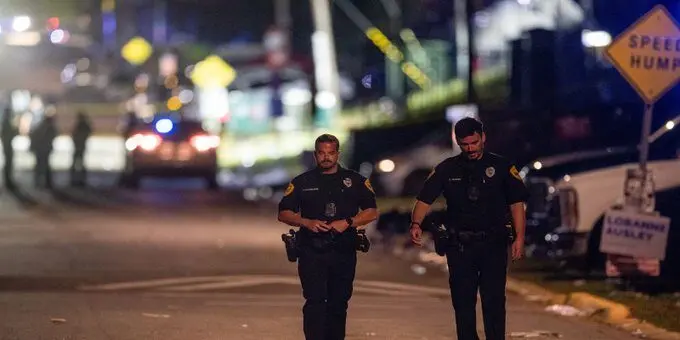
The Florida A&M shooting left 11 people with gunshot wounds and one additional person injured on Saturday, October 24, near Florida A&M University’s Bragg Memorial Stadium in Tallahassee.
The shooting occurred shortly before 8:00 p.m. near the intersection of Perry and Manatee streets, just hours after the university’s homecoming football game.
Tallahassee Police Chief Lawrence Revell said 12 people were injured in total. Eleven were shot, while the 12th person was injured while fleeing the scene.
The victims included six adults and six minors. The youngest was an 11-year-old child.
Police said at least three victims suffered serious injuries. One of them, a minor, remained in critical condition as of Sunday morning.
The other eight shooting victims were reported in stable condition. By Sunday morning, five victims had been released from the hospital, while six remained hospitalized.
Police said one of the injured was a student at Florida A&M University. The university confirmed that it was aware of the incident near campus.
The 12th victim was identified by Revell as the grandmother of one of the shooting victims. She was injured while trying to escape the area during the panic.
The shooting took place during homecoming weekend, when thousands of students, alumni and visitors had gathered in Tallahassee for celebrations and the football game.
Florida A&M University issued a safety alert urging people to avoid the area around Bragg Stadium and Perry Street while police investigated.
The university said its campus remained safe but asked community members to allow law enforcement to carry out its work.
🚨At least 12 people are injured, including six children, in a shooting near a football stadium in Tallahassee on homecoming weekend for #Florida A&M University. #Tallahassee Police Chief Lawrence Revell told reporters that no arrests had been made yet following the Saturday… pic.twitter.com/G0MSaiSAkF
The Florida A&M shooting occurred after the university’s homecoming football game at Bragg Memorial Stadium.
Florida A&M’s Rattlers lost 31-28 to the Arkansas-Pine Bluff Golden Lions in the homecoming game earlier that day.
Police said preliminary information indicates that a physical altercation between two or three people preceded the shooting.
Chief Revell said investigators believe one shooter was involved. However, no arrests had been made and no suspect had been identified as of Sunday morning.
The Tallahassee Police Department’s Violent Crimes Unit is leading the investigation.
Officers, detectives, sergeants and forensic personnel remained at the scene, collecting evidence and reviewing information from witnesses.
Revell said police were still working to determine exactly what happened and to identify those responsible.
The police chief described the incident as an isolated event and said there was no indication that it was a random attack against the university.
He also said that about two dozen officers were already in the area when the altercation broke out, given the large crowds present for homecoming.
The shooting occurred in a crowded area near the stadium, where families, students and visitors had gathered after the game.
The presence of children among the victims has intensified concern about gun violence affecting young people in the United States.
Police have asked anyone with information about the shooting to contact the Tallahassee Police Department or Crime Stoppers.
Authorities have not released the identities of the victims or confirmed a motive.
The investigation remains active and officials have warned that preliminary details could change as evidence is reviewed.
As of 11:30 p.m., the Tallahassee Police Department is continuing its active investigation into a shooting that occurred just before 8 p.m. Saturday, Oct. 24, near the intersection of Perry and Manatee streets. Read the full news release: https://t.co/wNqNznTLyb
The Florida A&M shooting is the latest in a series of mass shootings that continue to affect communities across the United States.
The incident occurred near one of the country’s historically Black colleges and universities, known as HBCUs.
Florida A&M University was founded in 1887 and has played a central role in expanding access to higher education for Black students in the United States.
The university is a symbol of the struggle of Black communities against racial segregation and structural racism in American education.
Homecoming is one of the most important cultural events at HBCUs. It brings together students, alumni, families and local residents in celebrations that strengthen community ties.
The shooting has cast a shadow over those celebrations and raised questions about public safety around large public events.
Gun violence remains a persistent crisis in the United States. Mass shootings occur regularly in schools, universities, public spaces, workplaces and residential areas.
The country continues to face political divisions over gun control, background checks, access to firearms and community-based violence prevention.
Advocacy groups have called for stronger measures to reduce access to weapons by people at risk of committing violence.
They have also urged investment in youth programs, mental health services and community intervention initiatives.
The Tallahassee shooting highlights the impact of gun violence beyond those directly targeted. Bystanders, families and entire communities can be affected by a single act of violence.
The injury of a grandmother fleeing the scene illustrates how panic and fear can harm people who were not involved in the original dispute.
Geopolitical Context
The Florida A&M shooting has implications beyond Tallahassee because it reflects the broader crisis of gun violence in the United States.
Gun violence affects public health, education, economic activity and social cohesion across the country.
Mass shootings near universities and sporting events undermine confidence in public spaces and create fear among students and families.
The incident is particularly significant because it occurred at an HBCU during homecoming, a moment of cultural pride and community gathering.
HBCUs have historically played a vital role in advancing educational opportunity and civil rights in the United States.
Violence near these institutions adds to concerns about the safety of Black students and communities, particularly in a country still marked by racial inequality.
The shooting may also intensify national debate over gun legislation, policing and the protection of young people.
Federal, state and local authorities face growing pressure to address both the availability of firearms and the social conditions that contribute to violence.
For Tallahassee, the incident represents a major test for public safety institutions and community leaders.
The university has asked for calm and cooperation while police continue their investigation.
The immediate priority is to identify those responsible and support the victims and their families.
The Florida A&M shooting is a reminder that gun violence remains one of the most urgent social and political challenges facing the United States.
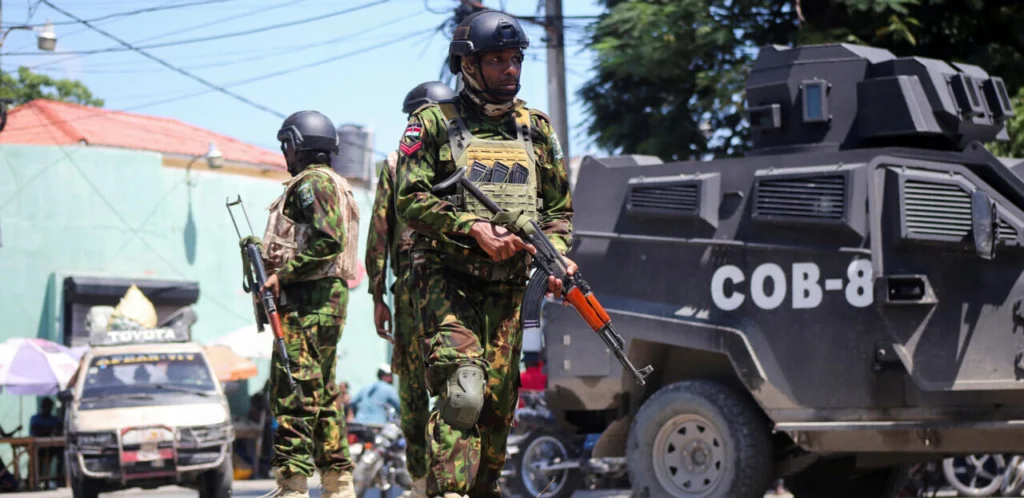
The Gang Suppression Force (GSF) in Haiti has received unidentified human remains that could belong to four Salvadoran military personnel missing after an ambush in Haiti on October 18, 2026.
This information comes after El Salvador’s president, Nayib Bukele, previously denied this possibility. The remains were handed over to GSF by an external humanitarian organization.
“At this time, the GSF is not in a position to confirm whether such remains correspond to the missing personnel,” added the multinational force whose creation was authorized a year ago by the United Nations Security Council to combat armed gangs and help stabilize Haiti.
The special representative of the Gang Suppression Force, Jack Christofides, expressed the solidarity of the force’s personnel “with the families of the four missing persons, with their comrades in arms, as well as with the Government and people of El Salvador during these difficult times.”
The #GSF confirms that it has received, through a third-party humanitarian organization, remains suspected of being those of the four personnel from the Salvadoran contingent currently missing. At this stage, the GSF is not in a position to confirm that the remains are those of… pic.twitter.com/JvfLg1DfCG
— Gang Suppression Force – Haiti (@GSForceHaiti) October 25, 2026
This multinational force is made up of more than 1,000 soldiers from El Salvador, Guatemala, Jamaica, Mongolia, Sri Lanka, and Chad, and its commander is Mongolian Major General Edernebat Batsuuri.
The first information about the recovery of remains that could belong to the Salvadorans was given on Saturday by The New York Times, but Bukele, who sent a military contingent to Haiti in the middle of the week to try to find them, ruled out the possibility that they were his soldiers.
“They are not our men,” he posted on his X account, where he added that the characteristics of the charred remains, recovered by the NGO Hero Client Rescue, led by Scott Reece, a former security official from the U.S. State Department, do not correspond to those of the missing Salvadoran “air technicians.”
No son nuestros hombres.
Una ONG entregó restos humanos en el aeropuerto, asegurando que pertenecían a nuestros cuatro aerotécnicos.
According to the president, “the remains correspond to a child, a man of considerably greater stature than our air technicians, and a person wearing part of a uniform from an army that is not ours.”
“Among the remains, identification cards and military uniforms from other countries were also found,” added the president, who supported his statement with two photographs, one of a GSF member’s ID card and the other of an identity document, both in the name of a citizen of Chad.
The GSF clarified in today’s statement that the images of the documents “belong to a GSF soldier, a member of the Chad contingent,” who is safe.
“This card was lost during the search operations for the missing Salvadoran personnel. The soldier is safe, with his unit, and is not among the missing,” he explained.
The GSF added that “coordination between Haitian security forces and the GSF remains essential to confront the armed gangs that threaten communities and the future of this country.”
Il y a dix ans, en 2016, des milliers de #migrants vivaient dans ce qui était surnommé "la Grande #Jungle", un vaste camp installé en périphérie de #Calais. Il aura fallu 7 jours aux autorités pour le démanteler. Aujourd’hui il existe des dizaines de "jungles" plus petites, réparties sur une zone plus étendue le long du littoral. Ces campements sont démantelés en moyenne toutes les 48 heures.
Pour les migrants, l'objectif reste le même : traverser la Manche et rejoindre le Royaume-Uni. Malgré les risques liés aux "small boats", ces embarcations de fortune, ils sont toujours nombreux à tenter la traversée dans l'espoir d'une vie meilleure.Nos reporters Pauline Godart, Claire Paccalin et Mohamed Farhat se sont rendus dans le Nord de la France pour #BilletRetour
Ten years ago, in 2016, thousands of #migrants lived in what was known as the “Great #Jungle”, a vast camp on the outskirts of #Calais. It took the authorities seven days to dismantle it.
Today, dozens of smaller “jungles” are scattered across a wider stretch of the coastline. These camps are dismantled every 48 hours on average.
For migrants, the goal remains the same: to cross the Channel and reach the United Kingdom. Despite the risks posed by “small boats”, these makeshift vessels, many continue to attempt the crossing in the hope of a better life.
Our reporters Pauline Godart, Claire Paccalin and Mohamed Farhat travelled to northern France for #BilletRetour.
He highlights massive political demonstrations during the runoff campaign and warns of isolated incidents of political violence.
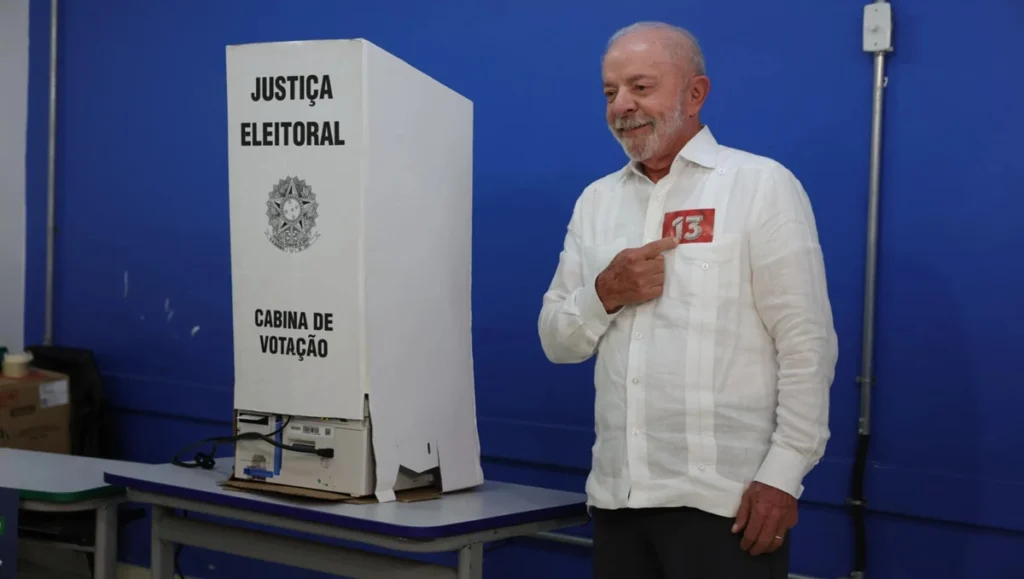
On Sunday, Brazilian President Luiz Inacio Lula da Silva, who is seeking reelection, voted in Sao Paulo in the presidential runoff, in which he is competing against far-right Sen. Flavio Bolsonaro.
“I am going to vote grateful to the Brazilian people. What the people have done for me in these days is so much that there is no way to repay it. It is so much generosity, so much affection and so much love. I will be eternally grateful for the people’s behavior,” he said minutes earlier as he left his home for the polling station.
At 10 a.m. local time, the Workers’ Party leader voted at João Firmino Correia de Araujo School in Sao Bernardo do Campo, a municipality bordering Sao Paulo where he rose to prominence as a union leader in the 1970s and began his political career.
After voting, Lula, who is seeking a fourth nonconsecutive term, highlighted the largest political demonstrations in Brazil in the past 50 years during the runoff campaign.
Mais uma vez, foi o povo brasileiro que me mostrou que nenhum sonho é grande demais quando a gente caminha junto. ❤️🇧🇷
Foram dias incansáveis. Cada caminhada, cada ato e cada passeata foram muito mais do que momentos de campanha. Foram encontros de sonhos que se transformaram em… pic.twitter.com/YdgeTlMzBK
President Lula da Silva’s text reads, “Once again, it was the Brazilian people who showed me that no dream is too big when we walk together. These were tireless days.
Every walk, every event, and every demonstration was much more than just a campaign moment. They were gatherings of dreams that transformed into concrete achievements—such as the end of the 6×1 work schedule.
Every outstretched hand and every smile reminded me why I have dedicated my life to the struggle for the working men and women of this country. We emerge from this journey stronger, more united, and more mobilized to secure a better future.
Thank you, Brazil, for every hug, every tear, every smile, and for never letting go of my hand. There are still many beautiful pages left to be written in our history. Tomorrow, October 25th, we will write another one. Together, for the Brazil we love and for the future our people deserve!“
“What I saw in this runoff was not about a political party or a union. The people took to the streets to defend their achievements,” the Workers’ Party (PT) candidate told reporters after casting his ballot.
The president also warned of isolated incidents of political violence reported in recent hours, including a brick thrown at a PT activist in the city of Montes Claros.
“This is a demonstration of what is at stake,” the progressive leader emphasized and criticized Bolsonaro, referring to him as “a militiaman” and a “morally and ethically unqualified person.”
Lula also said that on Sunday, voters would decide whether the Brazilian flag would be respected or whether to elect a political group that “wants to govern with the American flag.”
Lula, aos 33 anos, liderando junto ao sindicato dos metalúrgicos a greve que desafiou a ditadura militar no Brasil. Ele conquistou aumentos salariais e foi preso. Enquanto isso, a única profissão do Flávio foi ser vag4bundo político. #AposentadosComLulapic.twitter.com/34dsHpqtai
The text reads, “At the age of 33, Lula led the metalworkers’ union in a strike that challenged Brazil’s military dictatorship. He secured wage increases and was subsequently imprisoned. Meanwhile, Flavio’s only profession has been that of a political deadbeat.”
The Brazilian president, who will turn 81 next Tuesday, went to vote wearing a white guayabera shirt, accompanied by his wife, Rosangela Lula da Silva; Vice President Geraldo Alckmin; and five other current and former Cabinet ministers.
In the first round, held Oct. 4, Bolsonaro received the most votes, with 47% of the ballots, compared with 45% for Lula. Polling stations will close at 5 p.m., after which vote counting will begin.
The count is expected to be completed within a few hours thanks to Brazil’s electronic voting system, which was introduced three decades ago.

 Login