
❌

Reading view

Broad International Support for Cuba at the United Nations General Assembly
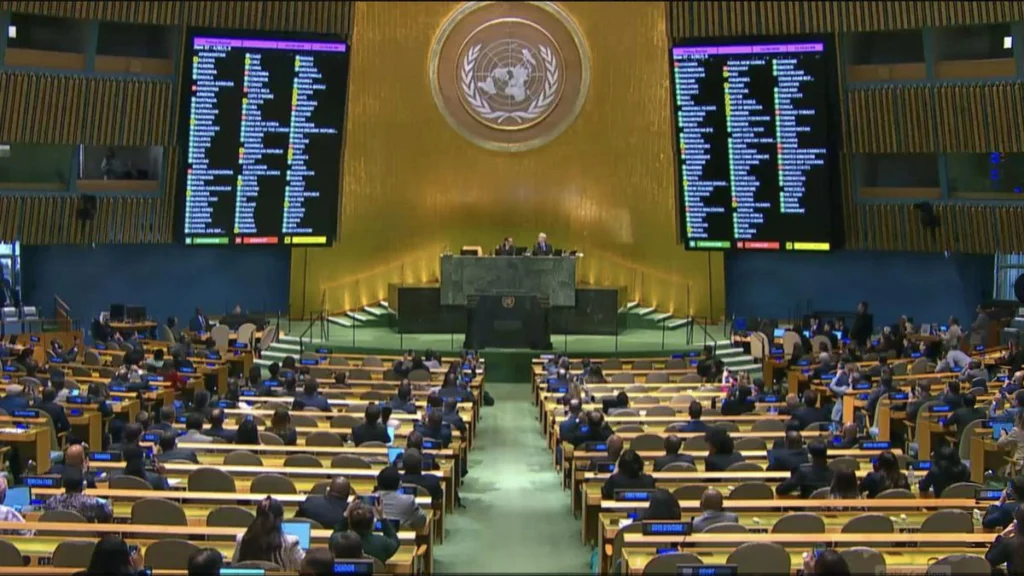
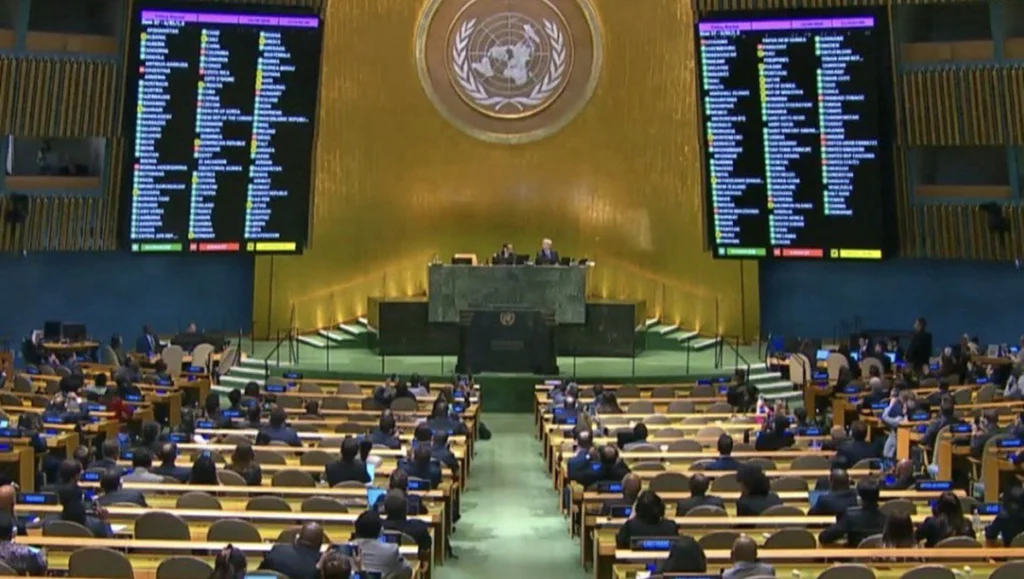
On Wednesday, the United Nations General Assembly approved—for the thirty-fourth time—a resolution calling for an end to the economic, commercial, and financial blockade imposed by the United States against Cuba. The resolution passed with 130 votes in favor, 17 against, and 25 abstentions.

RELATED:

UN General Assembly Approves Cuba’s Resolution Against U.S. Blockade

During the debate, Mexico, Nicaragua, Egypt, Vietnam, India, Ghana, and Mozambique reiterated their support for the Cuban people and condemned unilateral coercive measures, which they view as contrary to the United Nations Charter and international law.

Mexico’s Permanent Representative to the UN, Héctor Vasconcelos, reaffirmed his country’s solidarity with Cuba and its rejection of any unilateral measures directed against the Cuban population. He maintained that the blockade, which has been in place for more than six decades, violates international law and is incompatible with the principles of the United Nations.

Vasconcelos noted that the sanctions constitute a structural obstacle to the island’s economic and social development. “Ending the blockade against Cuba is an urgent necessity and a humanitarian imperative,” the Mexican diplomat stated.

Mexico argued that dialogue, cooperation, and respect for international law should take precedence over measures that exacerbate the hardships faced by a population. It also called for the removal of Cuba from the U.S. list of state sponsors of terrorism and urged that priority be given to channels of dialogue.

Meanwhile, Nicaragua’s Permanent Representative to the UN, Jaime Hermida Castillo, announced his country’s vote in favor of the resolution. He based this position on principles and values ​​shared by the two nations and reaffirmed Managua’s support for Cuba in the face of pressure tactics employed by the United States.

Hermida Castillo condemned the 64-year-long economic, commercial, and financial blockade, describing these coercive measures as a systematic act of aggression and a violation of human rights. He asserted that such policies are intended to stifle Cuba’s scientific, cultural, and social development. The Nicaraguan delegation also questioned the inaction of the multilateral system in the face of the overwhelming opposition from governments to Washington’s unilateral actions.

¡VICTORIA DE CUBA!

La Asamblea General de @ONU_es ha votado mayoritariamente contra el bloqueo de EEUU contra Cuba.

El gobierno de EEUU queda nuevamente aislado en su pretensión de continuar asfixiando al pueblo cubano y someterlo a un acto de castigo colectivo y de genocidio.… pic.twitter.com/MhnrjGnzSt

— Bruno Rodríguez P (@BrunoRguezP) October 28, 2026

The text reads, “CUBA’S VICTORY! The General Assembly of @ONU_es has voted by a large majority against the US blockade against Cuba. The US government is once again isolated in its attempt to continue strangling the Cuban people and subjecting them to an act of collective punishment and genocide. Neither its most insane pretexts nor its pressures nor media circus will prevail over the force of facts and truth. #CubaNoEsUnaAmenaza The Blockade Is.

The delegations of Ghana and Mozambique concurred that the financial blockade violates the principles of the United Nations Charter and international law. They denounced the fact that these extraterritorial measures hinder Cuba’s economic, social, and cultural development—particularly in the areas of healthcare, education, and energy supply.

Mozambique highlighted Cuba’s historic contributions to South-South cooperation and its assistance in the fields of health and education across Africa. The representative from the African nation noted that, for more than six decades, the Cuban people have endured the consequences of the blockade—a policy that the General Assembly has repeatedly condemned.

Ghana stated that its support is rooted in the principles of sovereign equality, mutual respect, and peaceful coexistence among states. It warned that the extraterritorial application of the blockade imposes burdens on third countries and runs counter to the principles of fair and equitable international economic relations.

Egypt, for its part, called for action from the UN. Ihab Awad, Egypt’s Ambassador and Permanent Representative to the UN, reaffirmed his country’s commitment to the principles of the United Nations Charter and demanded an end to the economic strangulation of Cuba.

“The negative repercussions of the economic, commercial, and financial blockade imposed on Cuba affect the Cuban people’s ability to meet their basic needs,” the Egyptian diplomat stated.

Meanwhile, Vietnam reiterated its support for the immediate lifting of the commercial and financial blockade. Its delegation expressed concern regarding restricted access to energy and fuel, as well as the adverse impact on hospitals, schools, water services, and trade relations with third countries.

The Vietnamese delegation called for respect for the right to self-determination—free from coercion—advocated for political dialogue in accordance with international law, and urged the removal of Cuba from the list of state sponsors of terrorism. It also requested international support to address the accumulated economic and social damage.

India endorsed the statements made by the G-77 and ASEAN against the blockade. Its representatives called for the immediate repeal of these measures in order to mitigate their impact on key sectors such as energy, health, food production, and education.

Furthermore, India highlighted the need to eliminate extraterritorial sanctions to create an environment that would allow for Cuba’s full participation in international trade.
  •  

UN General Assembly Approves Cuba’s Resolution Against U.S. Blockade

The nonbinding resolution passed with 130 votes in favor, 17 against and 25 abstentions.

On Wednesday, the United Nations General Assembly (UNGA) approved a resolution presented by Cuba against the U.S. blockade, with 130 votes in favor, 17 against and 25 abstentions.

RELATED:

Cuba Hails International Support for Ending U.S. Blockade at UN

Colombia, Paraguay, Argentina, Ecuador, and Costa Rica were the Latin American countries that joined the United States in voting against the nonbinding resolution titled “Necessity of Ending the Economic, Commercial and Financial Blockade Imposed by the United States of America Against Cuba.”

“The world has once again spoken out overwhelmingly against the blockade, despite the most blatant pressure and blackmail by the U.S. to change the course of this vote,” Cuban President Miguel Diaz-Canel said on social media.

“This victory for Cuba today in the UNGA is a victory for the heroic Cuban people, who refuse to surrender in the face of economic strangulation, threats and abuses by the U.S. government.”

“It is the triumph of truth over those who resort to lies and blackmail to subject an entire nation to collective punishment. Cuba is not a threat; the blockade is!” the revolutionary leader stressed.

BREAKING 🇨🇺🇺🇳 The UN General Assembly has overwhelmingly condemned the genocidal US blockade of Cuba for the 34th time. pic.twitter.com/WbPSMmHL7x

— Progressive International (@ProgIntl) October 28, 2026

The U.S. Blockade Causes $23 Million In Damages Per Day

Before the vote, Cuban Foreign Affairs Minister Bruno Rodriguez forcefully rebutted the United States, which denies that a blockade against the island exists. He said the economic war against Cuba causes more than US$22.9 million in economic damage in a single day.

Rodriguez displayed a real-time counter tracking the economic impact of the U.S. blockade. The counter began operating on Tuesday, coinciding with the start of the debate in the General Assembly on the annual resolution against the sanctions.

“The blockade kills and silently punishes our population as never before,” Rodriguez said  and warned that the administration of U.S. President Donald Trump “has unleashed a wave of pressure, intimidation and blackmail” against countries to prevent them from supporting the resolution, a text that has been approved almost unanimously year after year since 1992.

“The U.S. blockade is an act of war, collective punishment, and genocide… Its effects are felt at Cuban families’ dinner tables, in the beds of the sick, during childbirth or in operating rooms, in a child’s food or classroom, in the lack of electricity, drinking water and medicines, and in the high prices of goods essential to life,” Rodriguez pointed out.

Among other things, he denounced that Cuba faces shortages of 70% of the medicines on its basic list and that about 100,000 people, including 12,000 children, are awaiting surgery. All of this is “a consequence of the blockade.”

“What Cuba is asking for is to be left in peace, to allow the Cuban people to live in peace, resolve our own problems peacefully and find solutions to the great difficulties facing the world today, free from political, military, cognitive or economic aggression,” Rodriguez concluded.

“Cuba is not a threat. The blockade is.” 🇨🇺🇺🇳

In his speech, Cuban Foreign Minister Bruno Rodriguez denounced the cynicism and hypocrisy of labeling the island an “unusual and extraordinary threat” to the national security of the world's greatest nuclear power.

The diplomat… pic.twitter.com/duJubAbbqJ

— teleSUR English (@telesurenglish) October 28, 2026

teleSUR/ JF

Source: EFE

  •  

Cuba Hails International Support for Ending U.S. Blockade at UN

Debate on a nonbinding resolution takes place amid U.S. pressure on countries ahead of the vote.

On Tuesday, the Cuban government thanked the international community for its support in opposing the U.S. blockade during the first day of debate at the United Nations General Assembly (UNGA) on a nonbinding resolution calling for an end to U.S. sanctions.

RELATED:

Cuba Refutes Accusations by the U.S. Ambassador to the UN

“Today at the United Nations, the overwhelming support of the international community for Cuba in condemning the blockade and opposing the U.S. government’s policy of maximum strangulation was evident. Most speakers, some representing regional blocs, were clear in their denunciations,” Cuban President Miguel Diaz-Canel said.

He also referred to the incidents involving U.S. Ambassador to the United Nations Mike Waltz, who made unfounded accusations against the Cuban government during his address to the General Assembly.

“During the debate, the U.S. representative, in clear isolation, did not have the courage to explain to the world the reason for the criminal energy siege imposed on the Cuban people, or for the strengthening of the blockade’s extraterritorial reach,” the Cuban president said.

“They may pressure sovereign nations, intimidate them and make distracting fabrications, but the overwhelming majority knows which side the truth is on and will continue to say it loud and clear: Cuba Is Not a Threat, the blockade is!” he added.

BREAKING: Cuba’s UN delegation, led by Foreign Minister Bruno Rodríguez Parrilla, confronts US ambassador Mike Waltz during a debate on the US blockade.

The UN General Assembly will hold its 34th annual vote this week condemning the US blockade on Cuba. Cuban representatives… pic.twitter.com/YuMyUzbT9F

— BreakThrough News (@BTnewsroom) October 27, 2026

In social media posts, Foreign Minister Bruno Rodriguez also thanked those who had called for an end to the U.S. blockade against Cuba, including the energy siege and secondary sanctions.

Earlier, Rodriguez and Waltz engaged in a heated argument during the session. Amid mutual accusations from the two representatives, UNGA President Khalilur Rahman threatened to suspend the session.

The current debate over the U.S. blockade, which has been in place for more than six decades, is taking place amid an oil blockade and secondary sanctions imposed by Washington.

The debate is also taking place amid allegations that President Donald Trump’s administration is pressuring countries to influence their votes and prevent widespread support for Cuba.

The resolution, titled “Necessity of Ending the Economic, Commercial and Financial Blockade Imposed by the United States of America Against Cuba,” has received the support of the overwhelming majority of the international community at the United Nations every year since 1992.

teleSUR/ JF

Source: EFE

  •  

‘Back away from this podium’: UN ambassador posts video of confrontation with Cuban reps in General Assembly Hall

U.S. Ambassador to the United Nations Mike Waltz on Tuesday posted a video depicting a confrontation between U.S. and Cuban officials while he spoke at the podium of the U.N. General Assembly chamber. The video shows Cuban officials standing and speaking to Waltz, who can be heard saying one of them needs “to back away…

  •  
❌